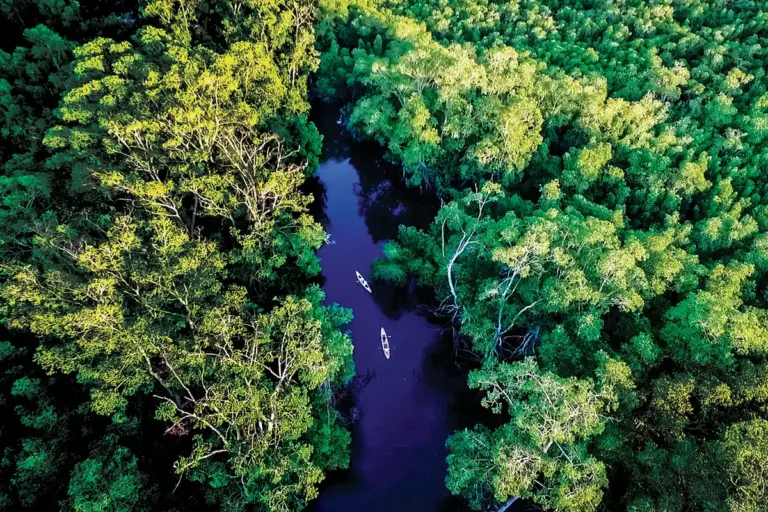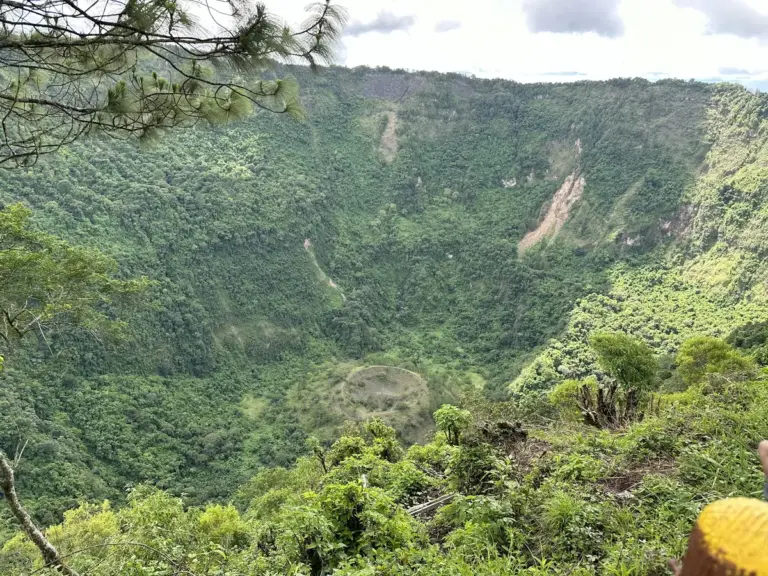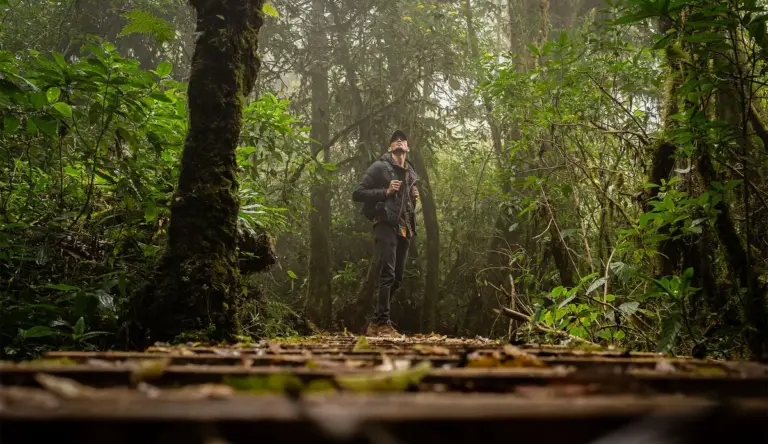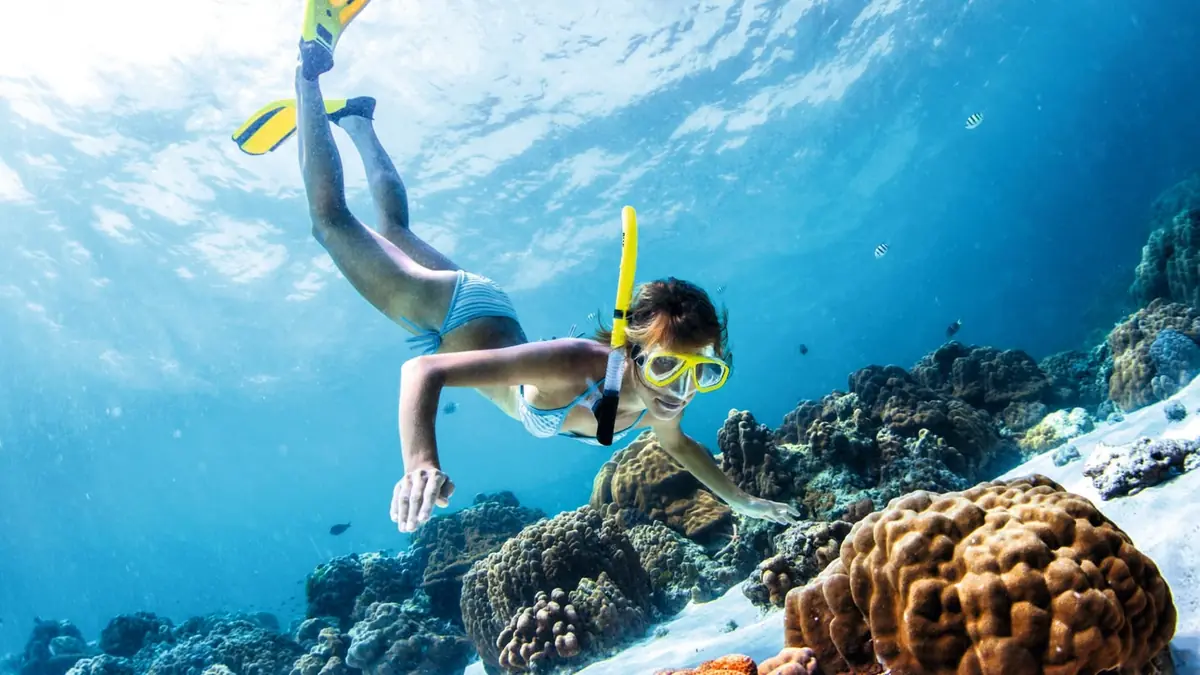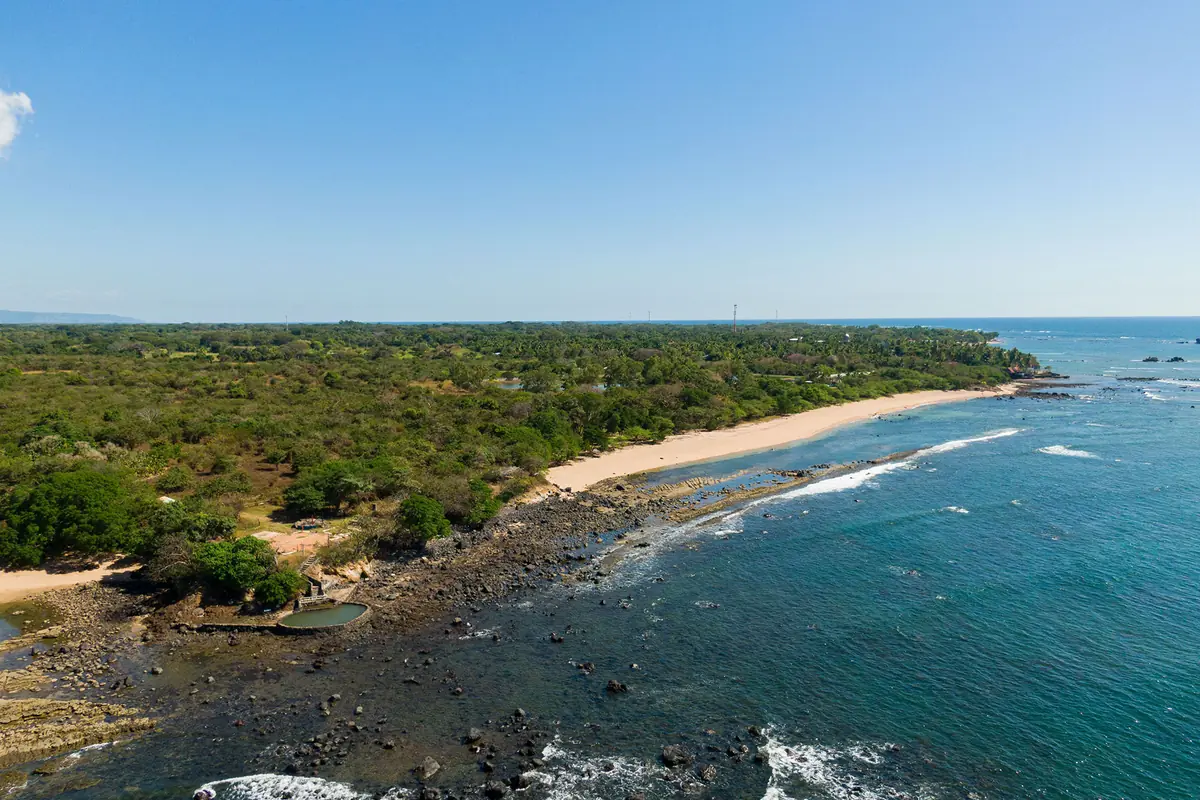
The beach in the photograph is a surf break. El Tunco is black rock under black sand with a shore break that gets serious at high tide, and travelers keep filing the same report: you can stand in it, you can’t swim in it. Families book a week there anyway, because it’s the picture the country sells.
Planning El Salvador with kids stopped being a courage problem some time ago. The State Department moved the country to Level 1, Exercise Normal Precautions, on April 8, 2025, and the homicide rate the government reports is now well below the US national rate. What hasn’t changed is that this stretch of Pacific drowns strong adults, that the roads go black at night, and that the tap water will put your children in a bathroom. Those are three ordinary operational problems. They are solvable. They are also the whole trip, and almost nothing you’ll read online is organized around them.
Which Water Your Kids Can Actually Get Into
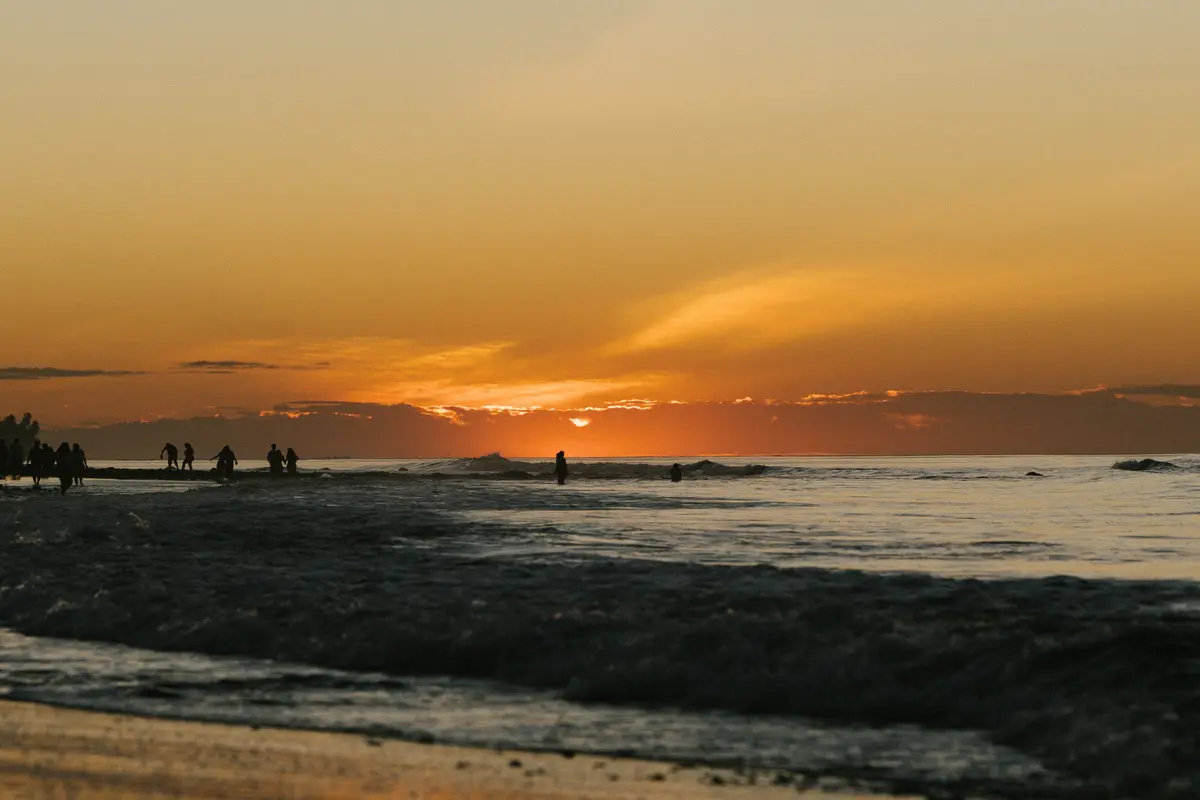
This is the question nobody answers properly, so here is the coast sorted by whether a child can swim in it.
El Tunco: no. The rocks are worst at high tide, which is also when it looks most like the brochure. It is still the most useful base on the west coast — walkable, food within a block, every tour picks up here. Just budget for a hotel pool, because that is the water your children will spend the week in.
El Zonte: it depends which side of the river you’re standing on. This is two beaches with one name. The surf side is close to unswimmable, rocks and waves together. Cross the river and there’s a sandy, calmer stretch that works for kids and for adults learning. The village markets itself as quiet and family-friendly and that half of it is true; the half that isn’t will be the half you walk to first if nobody tells you.
El Cuco, out east: yes. Wide, sandy, relatively calm, and named again and again by families as the best swimming beach in the country. Playa Las Flores next door is a point break, which is to say it is for the surfers in your group and not the six-year-old.
Costa del Sol: the resort strip, Decameron and similar. If what you want is a pool with a beach view and a wristband, that’s where it lives.
Now the part that applies everywhere. The State Department’s own line on the Pacific here is that currents and undertows are dangerous for swimming even for skilled swimmers, and that public beaches often have lifeguards but coverage depends on the season and how popular the beach is — less-touristed and private beaches may have none at all. Red and black flags mean out of the water, and they mean it. Black volcanic sand also runs genuinely hot, and shade is thin; the CDC’s ordinary advice about staying out of direct sun between 10 a.m. and 4 p.m. is harder to follow here than it sounds, because there is often nowhere to do it.
So: the sources give you a strong swim verdict on El Cuco, a strong no on the west-coast surf breaks, and a warning about lifeguards that applies to all of it. What they don’t give you is any beach on the west coast that a non-swimming child can be turned loose in. I’d treat that as the planning rule rather than a preference — if swimming is the point of the trip, base east or base at a pool and take the west coast as a day trip. I could be wrong about a specific cove that nobody has written up; nothing I found covers the whole coastline beach by beach, so treat the list above as the beaches with evidence behind them, not as the complete set.
Book the surf lessons for the kids who want them. Do not book the swimming.
Soldiers on the Corner, and the Numbers Behind Them
You will see soldiers with rifles in tourist areas. Not once — routinely. It is the thing that unsettles American parents most, and it is not aimed at you.
The context: El Salvador has been under a state of exception since March 2022, extended more than thirty-five times and still in force. Under it, constitutional protections are suspended. The government reports nearly 91,000 arrests of suspected gang members, around 8,000 of whom were later released, and human rights groups have documented more than 350 deaths in custody. The State Department notes that US citizens have been detained under it without trial. Locals, by most accounts, feel safer than they did. Both of those things are true at once and a guide that gives you only one of them is selling you something.
The crime numbers, attributed properly, because they come from the administration that benefits from them. The justice minister and the national police reported 82 homicides in 2025, a rate of about 1.3 per 100,000, and 114 in 2024, about 1.9. The Congressional Research Service puts the decline from 2015 to 2024 at more than 98 percent. For scale, the FBI put the US national homicide rate at 5 per 100,000 in 2024, and the worst American cities run far higher — St. Louis around 54, Jackson, Mississippi, around 78. Independent monitors corroborate the Salvadoran figures, but the figures originate with the government, and that’s worth saying out loud.
Two practical consequences. First, any guide still printing “Level 2” is out of date; the current rating is Level 1 at travel.state.gov, and because advisory levels move, check it rather than trusting this sentence in a year. Second, Canada and Australia have not followed. Both still advise a high degree of caution, citing violent crime and arbitrary enforcement. That divergence is real and it is mostly about the state of exception, not about street crime.
With kids: carry ID, be polite to anyone in uniform, and if you have a teenager who reads the news, have the civil-liberties conversation before you land rather than at a checkpoint.
The $12 Tourist Card Nobody Can Confirm
US passport, no visa. That part is settled. The fee is not, and the disagreement is between two governments.
Here is the conflict laid flat:
- The US Embassy in San Salvador and travel.state.gov both state that US citizens need a one-entry tourist card, purchased on arrival, for $12. One visa-service site prints $10.
- El Salvador’s own immigration authority, the Dirección General de Migración y Extranjería, is silent. Its public entry FAQ at migracion.gob.sv lists a valid passport in good condition and a check against the visa list. No tourist card. No fee, anywhere, for any nationality.
- The older Salvadoran regulation that created the card says it is issued free of charge, for a 90-day stay.
What broke is not a number. It’s that the US pages describing the charge have not been updated to match the authority that would collect it, and the Salvadoran pages carry no last-updated date, so nobody can tell you which one is current. What I would not do is print $12 as a fee, and what I would not do either is tell you it was abolished — the issuer publishes nothing, and silence isn’t repeal. Carry $12 in small bills. If a front-line officer applies the old rule out of habit, you’ve spent twelve dollars; if nobody asks, you have small bills, which you will want anyway.
Length of stay is a second unresolved point. The 90-day figure is the Central American tradition and is cumulative across the CA-4 bloc — El Salvador, Guatemala, Honduras and Nicaragua share the clock. Spain’s foreign ministry cites 180 days under the 2019 law. Travelers report being stamped for both. For a two-week family trip it doesn’t matter. If you’re planning a long stay, ask at the airport rather than relying on any published figure, including this one.
Traveling with a minor. For a short tourist visit by a US-citizen child, no consent letter is required. The rule that catches people is the long-stay one: a US-citizen minor in El Salvador beyond roughly six months to a year is treated as a resident, and then needs consent from any non-traveling parent notarized by a Salvadoran notary in order to exit. A US Embassy notarization is not accepted for this. Salvadoran and dual-national minors always need exit consent. If you are a single or divorced parent, carry a notarized consent letter and the child’s birth certificate regardless — the cost is an afternoon and it removes the only paperwork failure mode that can strand you at departure.
One thing to ignore: if you’ve seen a $1,130 airport charge referenced, it isn’t yours. That’s the airport authority’s improvement tariff, $1,000 plus 13 percent tax, and it applies to transit passengers holding passports from roughly 56 African, Indian and Middle Eastern countries. The ordinary departure tax for tourists is already inside your airfare.
At the airport, use the “Extranjeros” line. The officer asks purpose and length of stay. Customs is a green light/red light channel.
Drive It Yourself, and Be Parked Before Dark
Rent the car. The daytime road network is better than its reputation and better than several of its neighbors’ — one family of five who drove it over Easter 2025 said the roads were well paved with no delays even in peak week, and that Google Maps was right about 97 percent of the time, going wrong only deep in rural areas.
Real drive times, from the airport and the capital:
- SAL airport to El Tunco: about 25 miles, 35 to 45 minutes.
- San Salvador to Suchitoto: 44 miles, about 1 hour 20.
- San Salvador to Santa Ana: about 90 minutes.
- San Salvador to El Boquerón: 30 to 40 minutes.
Add 20 to 30 minutes for the construction detour around La Libertad on the coastal highway. No navigation app predicts it and it has been there through 2025 and 2026. More generally: the country is slightly smaller than Massachusetts and you can cross it in four to five hours, but a family who drove it warned that two hours’ worth of American distance can eat six to eight hours here, because there are few alternate routes and the terrain is vertical. Short distances, slow roads. Plan two moving legs a day, not four.
Do not drive intercity or rural roads after dark. US government employees are prohibited from intercity night travel outside the airport and La Libertad corridors, and the stated reasons are worth knowing because they change how you feel about the rule: no streetlights, hilly terrain, and rainy-season landslides. It isn’t a crime rule. It’s a physics rule, which means it doesn’t relax when the crime statistics improve. Short hops inside tourist towns after dark are fine.
Watch for túmulos — speed bumps, frequently unmarked and tall enough to matter — and rural potholes.
The legal part. Your US license is accepted for tourist stays up to 90 days. An International Driving Permit is not legally required and is rarely asked for, but some rental desks and checkpoints want one; it’s about $20 at AAA, it’s valid a year, and you have to get it before you leave the US. Since December 2024 the country has enforced a zero-tolerance DUI law: 0.00 percent blood alcohol, with prison terms of two to five years. That is not a warning about getting drunk. It means the driver has no beer with lunch.
Rental mechanics. Minimum age 21 with a surcharge under 25. An embossed credit card in the primary driver’s name for the deposit — a debit card or a flat-printed card will fail at the counter. Deductibles often run around $3,000. Insurance isn’t legally mandatory but the agencies require it. Budget $20 to $50 a day plus insurance, more if you collect at the airport.
Car seats are the open question. The law puts children under 12 in the back and a car-seat requirement exists, but enforcement is described as thin, and I could not establish that rental desks reliably stock seats — nobody has documented it, and the families who wrote up their trips all went around the desk entirely, using a baby-gear delivery service to drop seats, cribs and strollers at the hotel or the terminal. That’s the workaround with evidence behind it. Bring your own or book delivery; reserving a seat from the rental company and assuming it will be there is the one part of this plan I’d call unverified.
If you’d rather not drive: a private airport transfer to El Tunco runs $120 to $160, a rideshare $25 to $35, and a private driver for a full day trip about $150.
Phones. US carrier plans generally don’t include El Salvador and roaming is expensive. Either buy an eSIM before you fly, or pick up a Tigo or Claro SIM on arrival for $1 to $5 plus a data bundle — about $15 buys 12 GB from Claro. Coverage thins on the Santa Ana trail and around parts of Lake Coatepeque, so download offline maps before you leave wifi.
Bottled Water Is Not Optional Here
Don’t drink the tap, anywhere, including in the capital. San Salvador’s municipal water is chlorinated and still upsets foreign stomachs routinely; more than 90 percent of the country’s surface water is contaminated. This is the single most common way a family trip here goes wrong, and one family reported exactly the outcome you’re imagining, with two children.
Practical version:
- Buy a garrafón, the five-gallon jug, on day one of any beach stay. It costs almost nothing and it ends the problem.
- The ice rule travelers use: molded ice with a hole through the middle is factory-made from purified water and is fine. Chipped or irregular ice is homemade and is not.
- Expect the water supply itself to cut out for a few hours at a time in small coastal towns. El Tunco does this. It is an infrastructure fact, not a bad hotel.
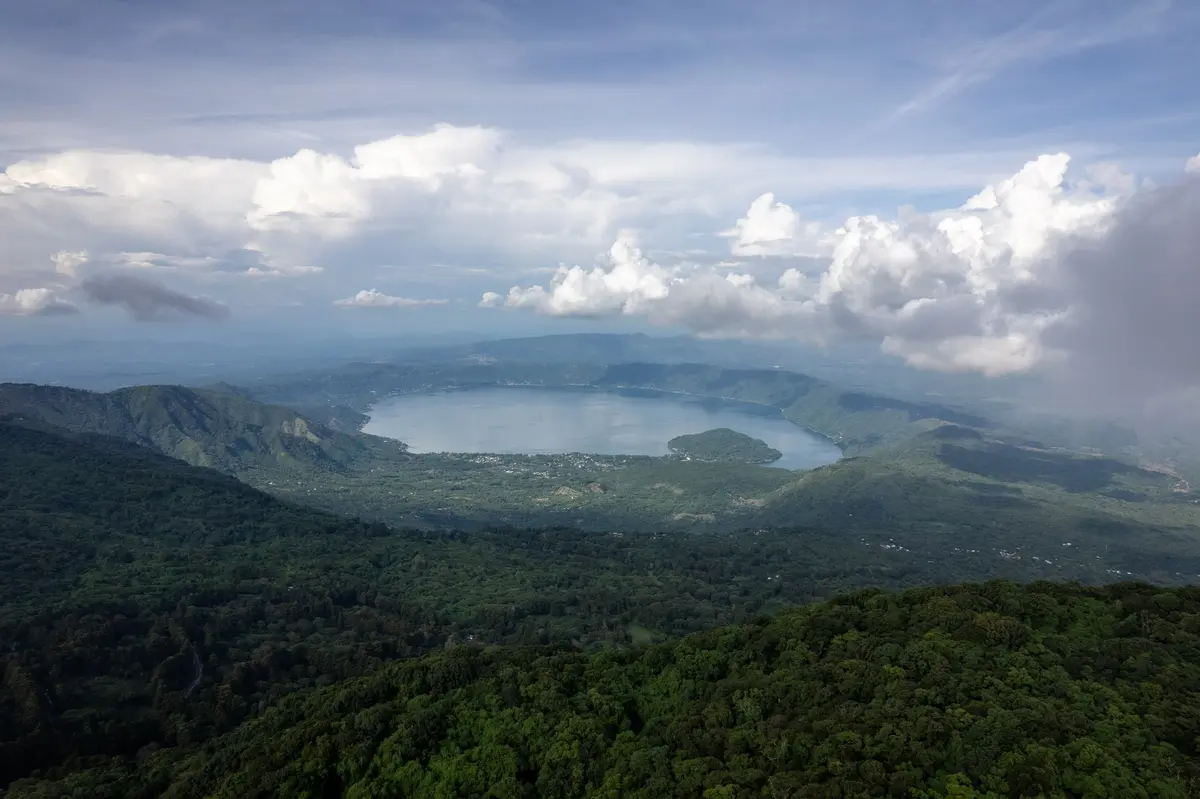
Fresh water is a separate issue. The CDC flags leptospirosis in untreated lakes and rivers and advises against swimming in them. That collides with something you’ll find in the family-hotel listings: the lakeside properties on Coatepeque advertise shallow swim areas as a selling point for small children. Nobody has tested Coatepeque and published the result, so this is me reasoning from a general health warning to a specific lake rather than reporting a fact about it — but given the choice between a pool and a lake at the same property, with kids, I’d take the pool and let them look at the water.
Skip the Malaria Pills, Pack the Repellent
El Salvador was certified malaria-free by the WHO in 2021. Any guide recommending prophylaxis for this country is working from an old map, and you can decline that conversation with your travel clinic.
What is actually here is mosquito-borne and year-round. Dengue circulates constantly. Zika is present, and the CDC advises pregnant travelers not to go. Chikungunya is present. There is no dengue or Zika vaccine available for American children. So the defense is unglamorous and entirely behavioral: repellent, covered arms and legs at dawn and dusk, screens or nets where the room provides them.
On vaccines, the CDC’s list for this country is routine immunizations plus hepatitis A and typhoid, with chikungunya, rabies and dengue worth discussing depending on where you’re going. Make sure everyone’s MMR is current.
And the boring one that costs the most when it’s wrong: your US health plan almost certainly does not cover you here. Buy travel medical insurance with medical evacuation included. Private care is genuinely good — Hospital de Diagnóstico, Hospital de la Mujer and Centro Médico Escalón all have solid reputations — but private hospitals expect payment up front, and public facilities are not where you want to be with a sick child.
Santa Ana Takes Four Hours and a Mandatory Guide
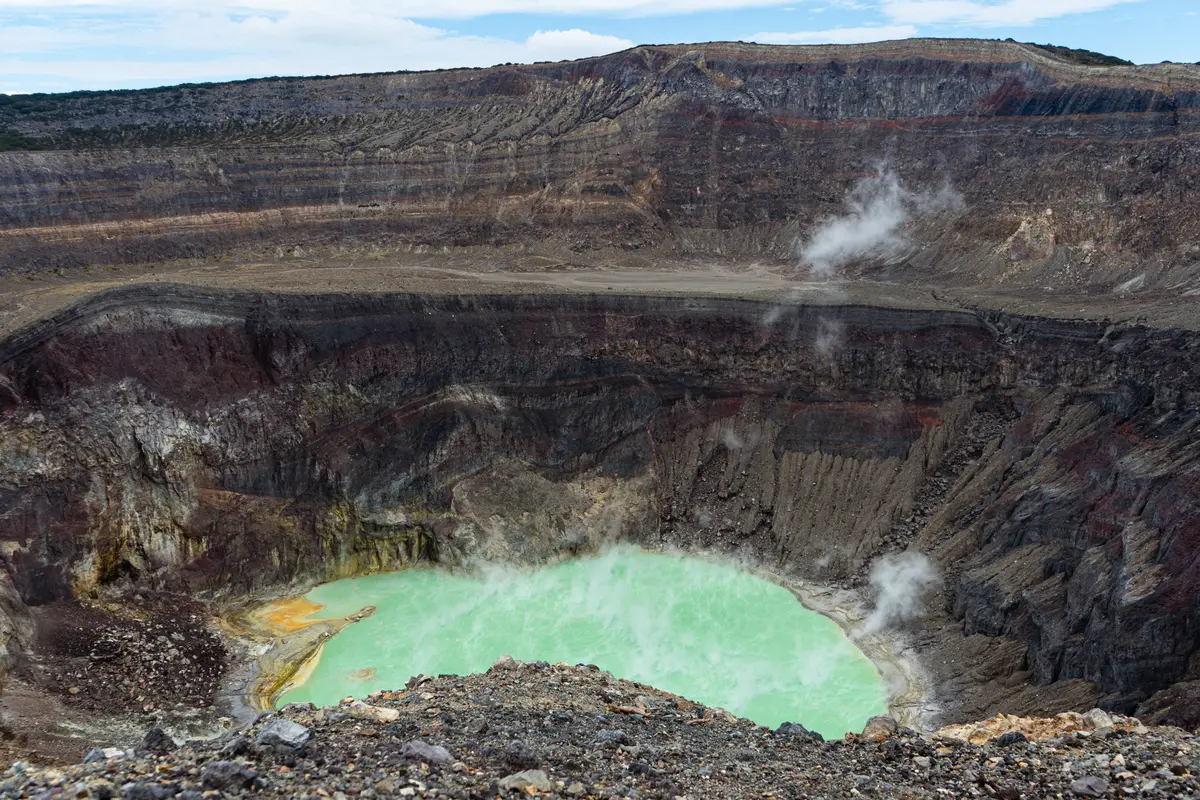
Santa Ana, or Ilamatepec, tops out at 7,812 feet (2,381 m). The hike is about 4.3 miles (6.9 km) round trip, three to four hours all in, with roughly two of those going up. A guide is mandatory under national park rules; a private one runs about $35 to $40.
Timing is where people lose the day. The tourism ministry’s own FAQ says guided walks leave Cerro Verde at 8:30 a.m., with Izalco at 10:30. A lot of blogs say 10 or 11. The park itself is open 8 a.m. to 4 p.m. The durable rule that survives the disagreement is simple: be standing at Cerro Verde by 8, ready to walk. If the later departure is running, you wait an hour. If the earlier one is, you’re on it.
The fee is an open gap and I’m not going to invent a number. The park authority’s page is dead — only an archived capture exists. The figures floating around are from 2023 and 2024 and conflict with each other: a foreigner park fee around $6 against $3 for nationals, a separate Cerro Verde entry around $5, plus small property tolls. Nobody has published a current official total. Bring $10 to $15 per adult in small bills and expect to be quoted something other than what you read. The two-tier pricing itself is real and official — foreigners pay more than Salvadorans at government sites, it’s printed on the ministries’ own pages, and it is not somebody improvising at a gate.
Whether your kids can do it. Steep stairs, loose volcanic gravel near the top, an exposed summit, and two hours of climbing. Fit older kids, yes. Small children, no. Toddlers, grandparents and anyone who doesn’t hike at home, definitely not — this is the single most oversold family activity in the country. Armed police and bag checks at the trailhead are standard and routine.
In the wet months, afternoon storms either fill the crater with cloud or cancel the walk. Go early or don’t go.
Where to Put a Wet Afternoon
Three places with hours and prices traced to the operators themselves, which is more than most of this country’s attractions can offer.
Tin Marín, the children’s museum in San Salvador, charges $3.50 a head for adults and children alike, free under two. A family of four is $14, or $20 with the planetarium combination at $5 each. Allow about two hours; it’s self-guided, flat and entirely indoor, which makes it the best rainy-day option for small kids in the country. Hours per the official booking site are Wednesday to Friday 1 to 5 p.m., Saturday and Sunday 9 to 5. Older listings showing Tuesday-to-Friday mornings are stale — they changed recently, so confirm on tinmarin.org before you cross the city, and arrive half an hour before your slot.
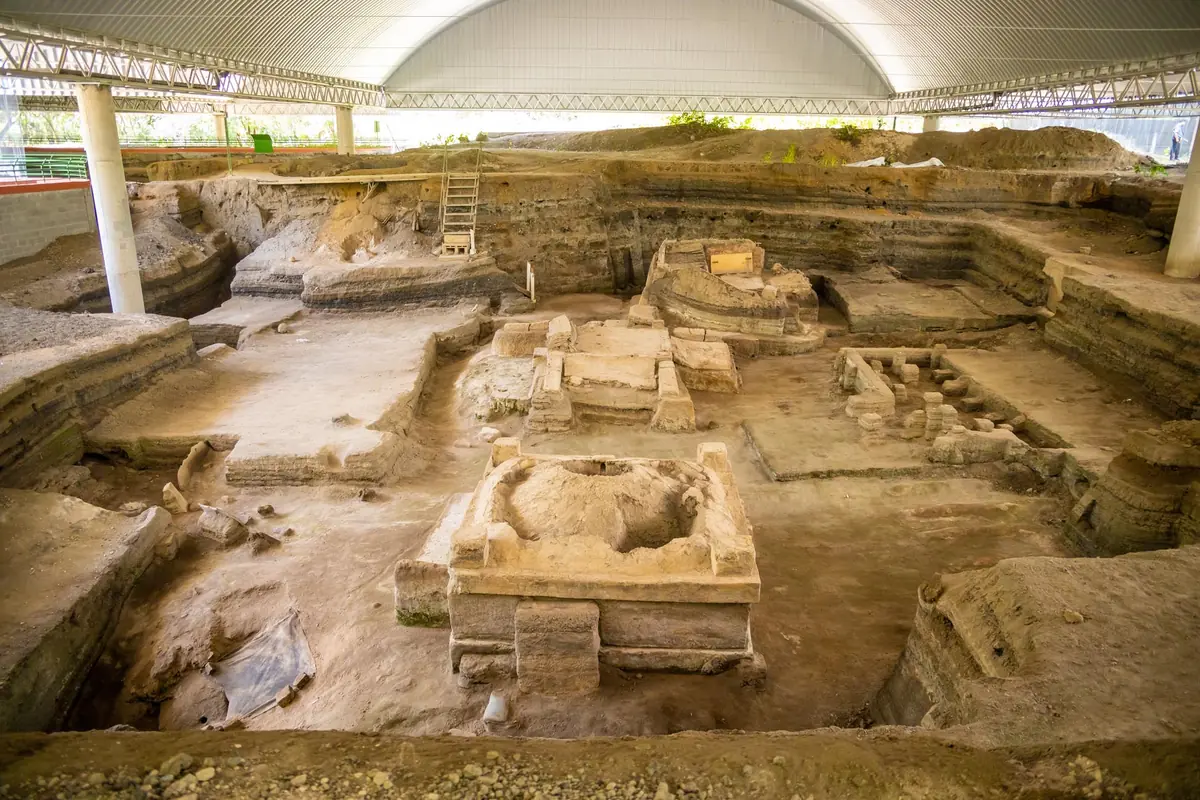
Joya de Cerén, the UNESCO site, opens Tuesday to Sunday 9 to 4 and closes Mondays. Non-resident adults pay $10, children free, so two parents and two kids is $20, with a guided visit included in the price. The other archaeological sites — San Andrés, Tazumal, Casa Blanca, Cihuatán — are $5 for non-resident adults on the same hours, also closed Mondays. Worth knowing for anyone traveling with a baby or a wheelchair: Joya de Cerén and San Andrés both hold the 2026 “Sello Family Friendly” certification, which covers lactation rooms, children’s areas, picnic space and disability access. That is not marketing; it’s a government scheme with criteria, and it’s the only accessibility signal this country publishes.
El Boquerón, the crater park above the capital, is open 8 to 5 every day of the year with no midday closure. Foreign adults pay $2, minors and seniors are free, and a sedan parks for $1 — five dollars for a family of four. Packed-stone paths, some stairs, and a glass-floored viewpoint over the crater. One traveler brought an 82-year-old up it without trouble, which tells you more about the grade than any signage does. One caveat: it reopened on July 16, 2026 after a closure, so confirm it’s operating on corsatur.gob.sv before you drive up.
What I could not pin down: current hours or admission for the national anthropology museum, the national zoo, Saburo Hirao, or the water parks at Apulo and Los Chorros. Nobody publishes them anywhere I could reach. Phone before you build a day around one.
You Won’t Change a Dollar
The currency is the US dollar. There’s no exchange rate to track, no conversion arithmetic, and nothing to hand back at the airport. That alone removes a layer of friction most family trips abroad carry.
Cards work in cities and at anything resembling a hotel. Small vendors are often cash-only or add a card surcharge, and the small-bill problem is real — breaking a $50 or a $100 is genuinely difficult, so ask your bank for twenties, tens and ones before you fly. ATMs are widespread but the State Department notes they’re frequently out of service and can charge steep fees. Use machines inside banks and malls; skimmers get reported on street units.
On Bitcoin: whatever you read in an older article, it is no longer legal tender. The Legislative Assembly repealed that status on January 29, 2025 by a vote of 55 to 2, effective May 1, as a condition of a $1.4 billion IMF loan. The IMF’s country report describes the change as removing both the public and private obligation to accept it and ending its treatment as a currency. Taxes can’t be paid in it, the state wallet is being wound down, and usage had already dropped to about 8 percent of Salvadorans by 2024. Nobody will expect it from you. One scam does persist: a stranger offering to help set up your wallet, then moving the balance to their own.
Tipping runs against American instinct here. The propina is frequently already printed on the bill — check before you add anything, and 20 percent on top is not expected.
For scale on everything else: pupusas run $0.50 to $1, a churrasco plate about $6, a local bus $0.25 to $1, an Uber across San Salvador about $5.
Pick Your Base by the Pool
Everything above points the same direction. The ocean is unreliable for children on most of the accessible coast, lake swimming carries a health caveat, and the days are long and hot. So the most useful filter when you’re comparing properties is not location or breakfast — it’s whether there’s a pool, and whether it’s maintained.
By base:
- Santa Ana is the popular western base and the one families keep recommending: rental houses with pools, close to a Walmart and a Super Selectos, which matters more than it should when you have a fussy eater. Hostal Casa Verde has a pool; Cardedeu and lakeside Equinoccio sit at the higher end.
- El Zonte is quieter and more tolerant of children than El Tunco. Palo Verde is the upscale option with a pool; Esencia Nativa is a hostel with one.
- El Tunco runs from very cheap to boutique, and the cheap end can be genuinely rough — one family logged no air conditioning, poor drainage, roaches, mosquitoes and an unfiltered pool in a single stay. Roca Sunzal is the mid-range choice that families use, central with a clean pool.
- El Cuco and Las Flores, out east, where the swimming is. Paradise Surf Hotel is modern, though guests report power outages; La Tortuga Verde is the backpacker end.
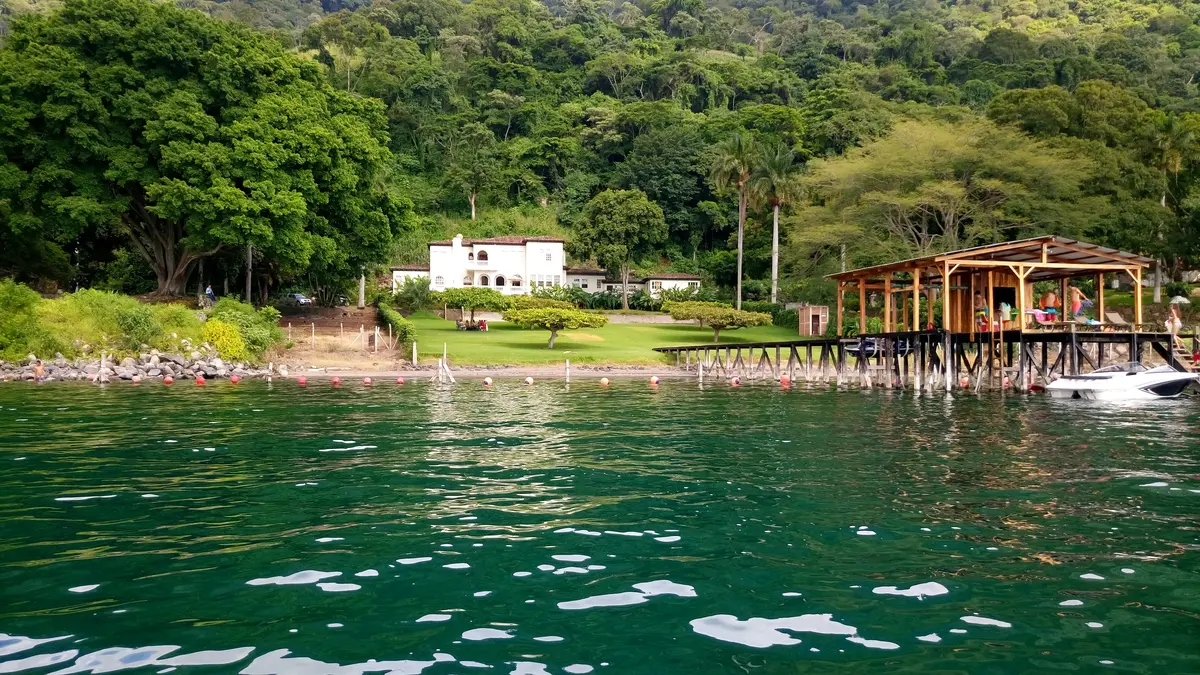
- Lake Coatepeque: Villas Noelia has a pool, a play area and a shallow lake swim section.
- San Salvador: the business hotels in Escalón, Santa Elena and Zona Rosa are safe and well positioned, and there isn’t much happening. One night is enough.
- Cerro Verde, if you’re doing the volcano: the state tourism institute rents cabins on site, sleeping four for $75, with others between $50 and $75.
When to come. Dry season is November through April and it is clearly the better window. May to October brings seventy-plus inches of rain, mostly as afternoon storms, with landslide risk on mountain roads. If you’re traveling in the wet months, book refundable and put the volcano early in the trip so you have a second attempt.
What sells out. Semana Santa is the busiest week of the year, followed by Christmas and New Year, September 15, and surf competition weekends. Book those several weeks out.
How long. A week is plenty for a first trip. The country is small enough that you’re choosing between places, not racing between them.
On feeding people: Super Selectos supermarkets stock recognizable American products, which solves the picky-eater problem cheaply. Restaurant service is slow by US standards, consistently. Budget ninety minutes for a sit-down dinner with children and stop being annoyed about it.
Plugs, and a Clock That Doesn’t Move
Type A and B outlets at 110 to 120 volts, identical to home. No adapter, no converter, nothing to buy.
El Salvador runs on US Central time and never changes it. In winter that’s exactly Central. From March to November, when American clocks jump forward and Salvadoran ones don’t, you’re two hours behind New York and one hour ahead of Los Angeles.
Who Should Book Somewhere Else
The honest list, because this destination is being oversold to the wrong families right now.
Skip it if you want a polished, turnkey, all-inclusive swim vacation — this country is raw, not resort-finished, and the gap between the two shows up in service, drainage and pool maintenance. Skip it if soldiers carrying rifles in the town where you’re staying will ruin your week; they are everywhere and they are not going away while the state of exception holds. Skip it if calm swimmable water on the popular west coast is non-negotiable, because it doesn’t exist there. Skip it if slow service, cash friction, bottled-water discipline and long slow drives will grind you down.
Reconsider if you have toddlers and expect to push a stroller. City sidewalks are broken and volcanic sand defeats wheels entirely; the gear-delivery services partly compensate, but the terrain doesn’t change. Reconsider Santa Ana specifically if anyone in the group is over seventy or under seven. And if what you want from a beach town is quiet, stay out of El Tunco proper.
Here’s the counterweight, and it’s the most consistent thing in every account I read. Salvadorans travel in large multigenerational family groups, and they receive other people’s children the same way. Travelers keep independently reporting the same experience of how open and helpful people were with kids in tow. That’s not a slogan; it’s the thing that repeatedly turns a hard logistics day into a manageable one, and it is not true of every cheap country within four hours of Houston.