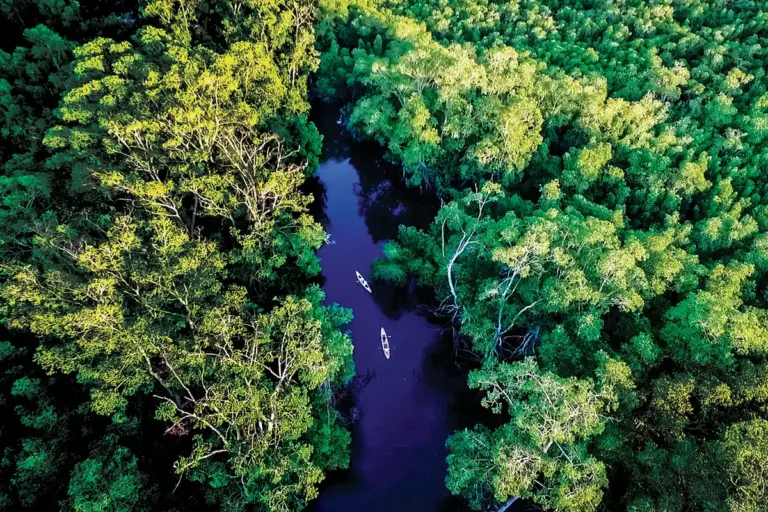
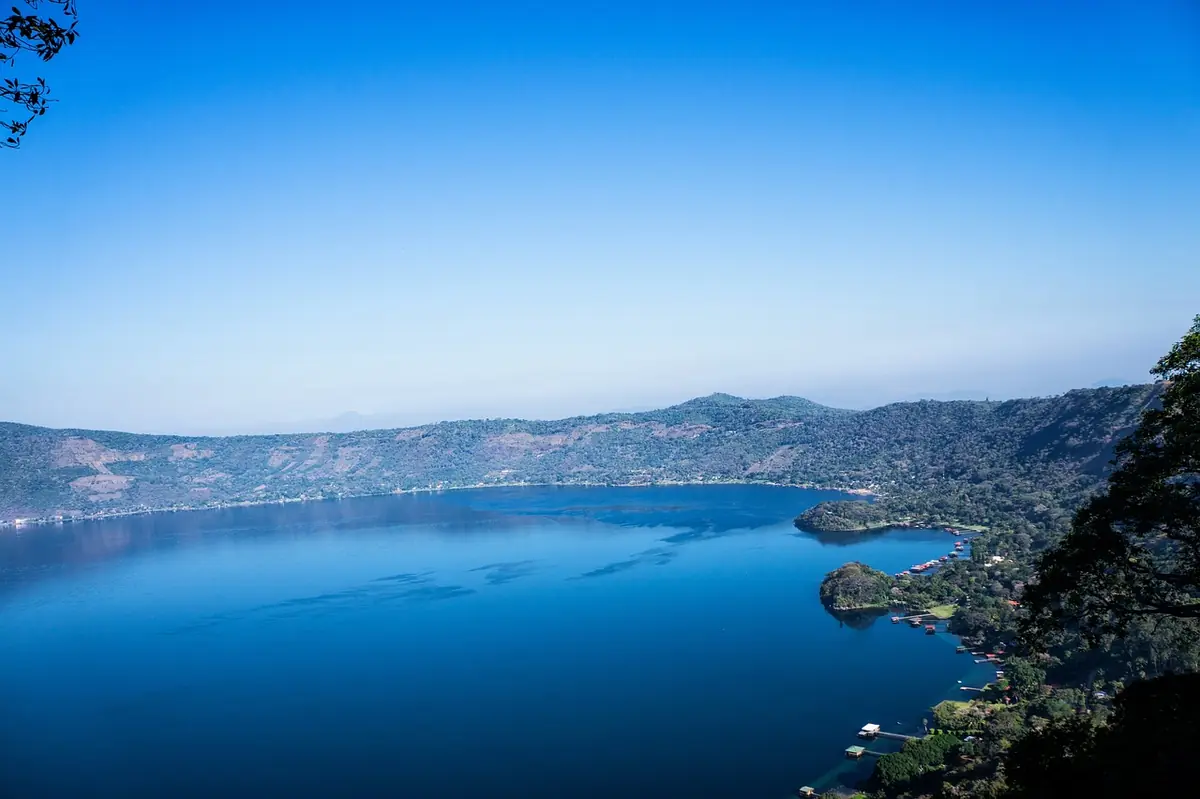
Lake Coatepeque is a turquoise volcanic crater lake about 45 minutes from Santa Ana — and almost its entire shoreline is private. From the rim road you can barely see the water behind tall brick walls. This guide covers how to get in for a few dollars, when to go, what it costs, and whether it earns the detour.
Lake Coatepeque (Lago de Coatepeque) is a 10-square-mile (26 km²) crater lake in western El Salvador, roughly 33 miles (53 km) from San Salvador and only 11 miles (18 km) from the city of Santa Ana. Most of the shore is fenced off, so you either stay at a lakefront hotel or pay a small day-pass fee — around $5 at a hostel or restaurant — to swim, paddle, or take a boat out.
Is Lake Coatepeque Worth Visiting?
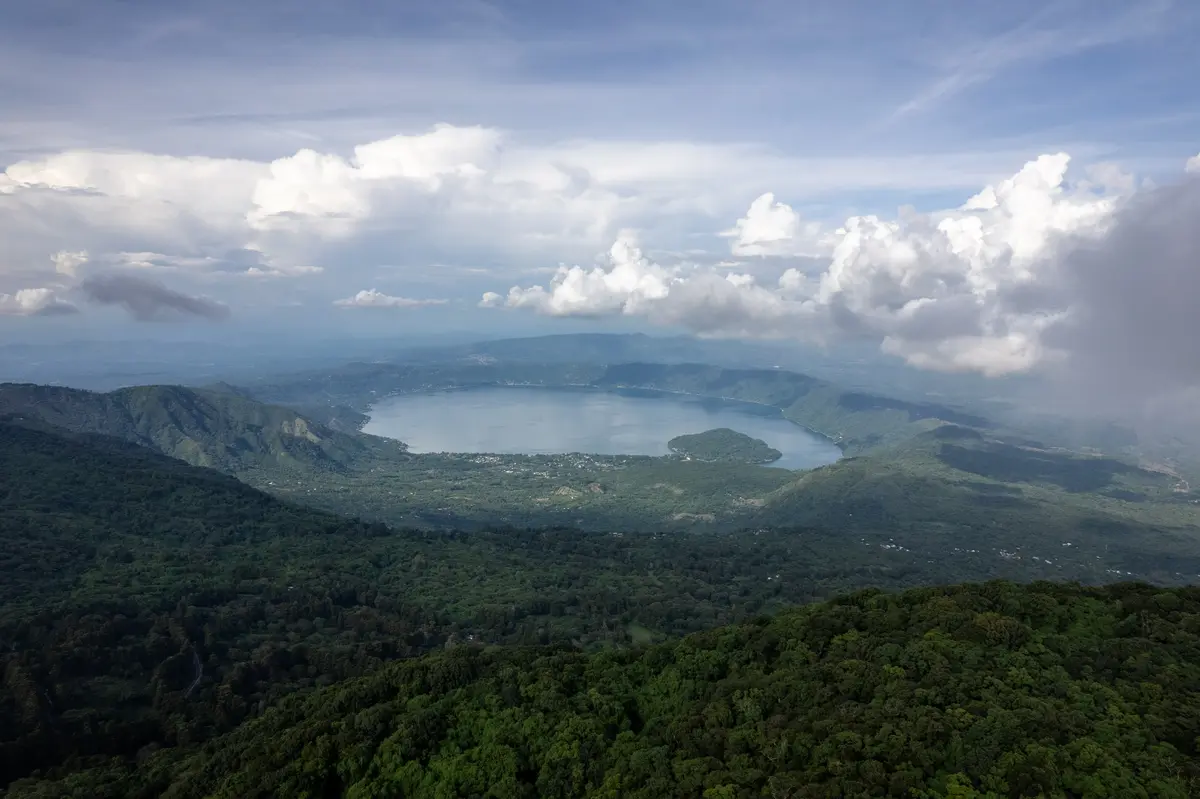
Yes — it’s one of Central America’s most beautiful crater lakes and an easy half-day from Santa Ana or San Salvador. But manage your expectations: there’s no public boardwalk and little to “do” beyond swimming, boating, and a long lakeside lunch. Treat it as a place to slow down, ideally paired with the Santa Ana volcano.
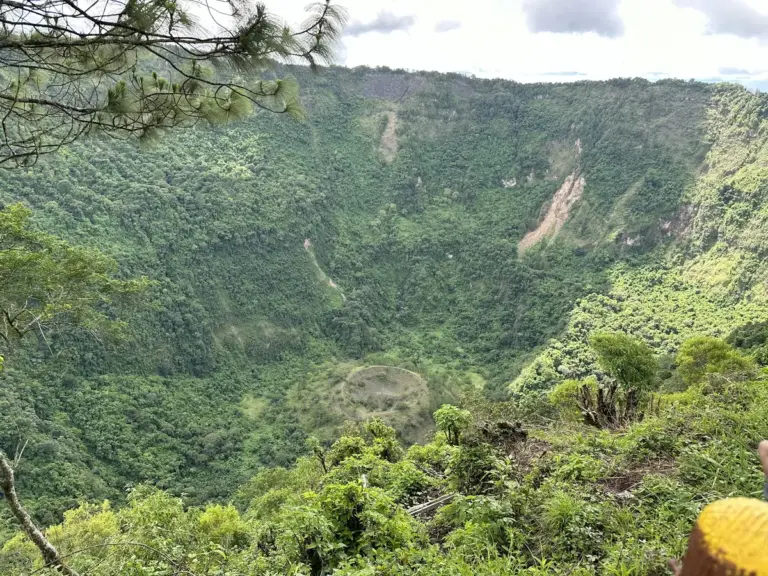
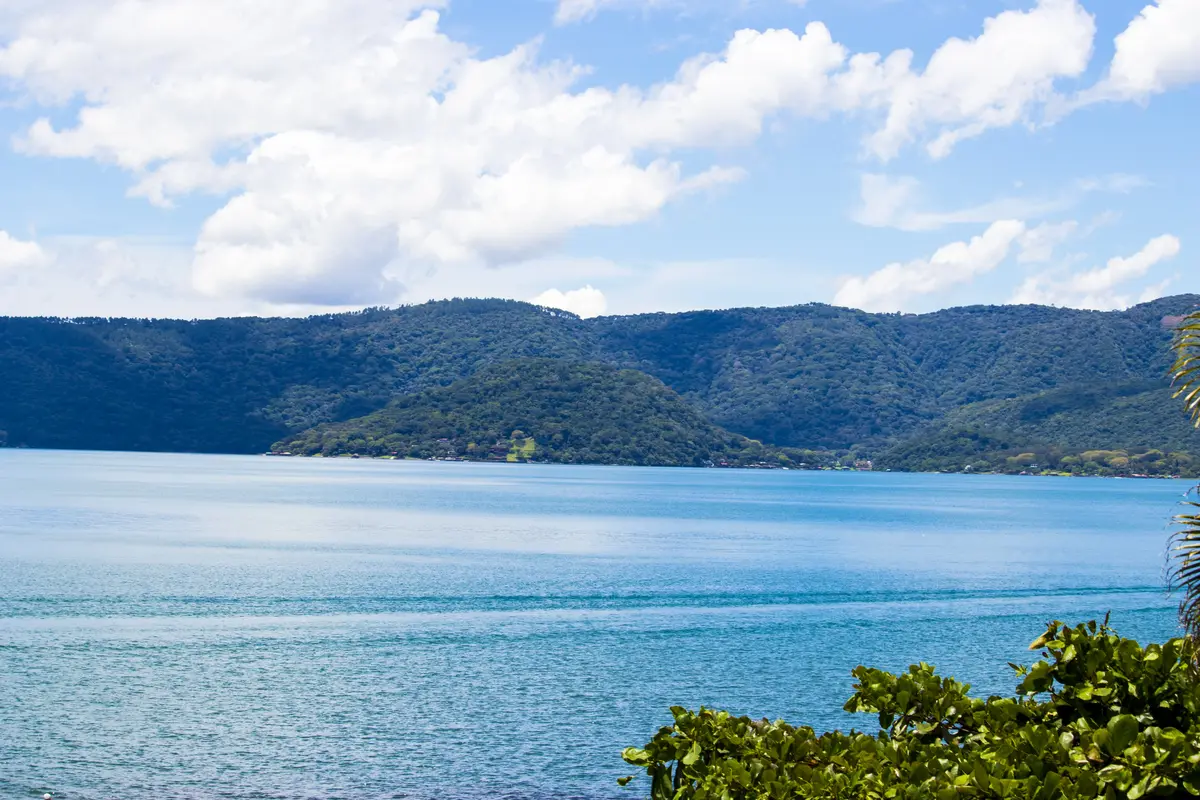
The lake sits inside a figure-eight caldera left by a supereruption tens of thousands of years ago, at an elevation of about 2,444 feet (745 m). Wealthy Salvadoran families own most of the waterfront, which is why locals half-jokingly call it the Hamptons of El Salvador.
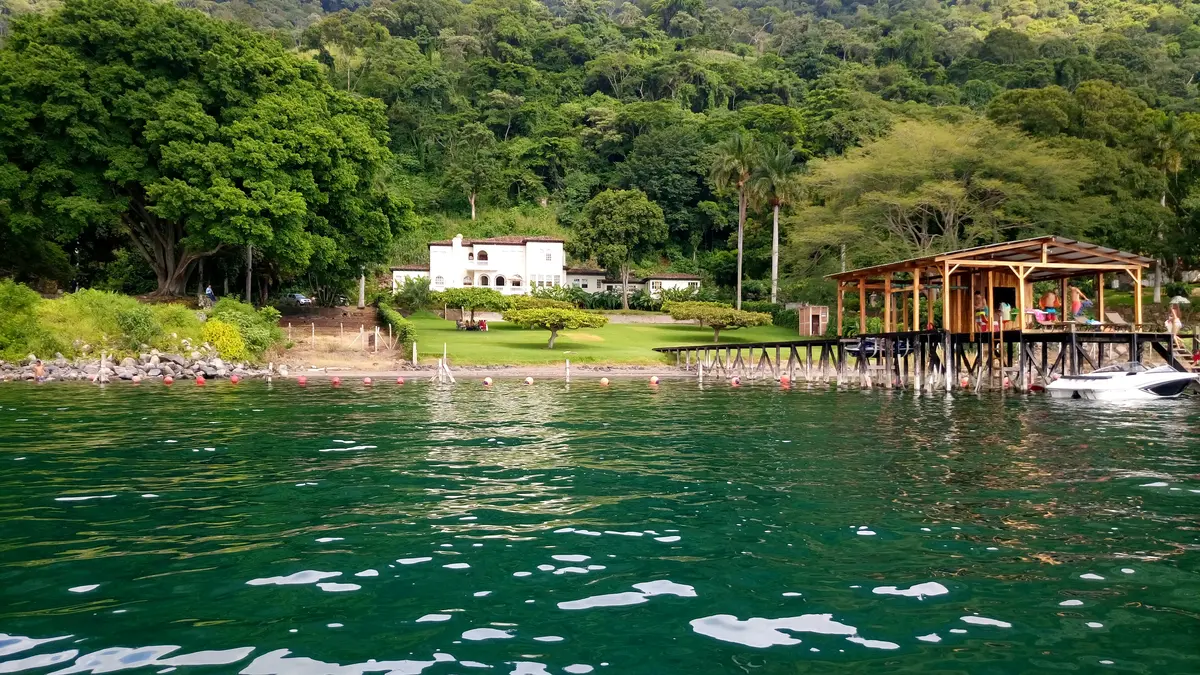
That ownership is the one thing first-timers get wrong. From the rim road you mostly see brick walls and gates, not water — the lake only opens up once you walk through a restaurant or hostel to its docks. So the real question isn’t whether the lake is beautiful (it is), but whether you’re willing to pay a few dollars to actually reach the water.
Pro Tip: Skip the cheap “tour from San Salvador” that only stops at a clifftop mirador for photos. A drive-by shot of the lake from above is a letdown. Either commit to a day pass and get in the water, or skip the lake entirely and just hike the volcano.
How Do You Get to the Lake From San Salvador?
The lake is about 33 miles (53 km) from San Salvador — a 50-minute to 1-hour-45 drive depending on traffic — and only about 45 minutes from Santa Ana. Driving or taking a private transfer is easiest; budget buses also work, routed through the gateway town of El Congo on the Pan-American Highway (CA-1).
By Bus — the Cheapest Route
- From San Salvador: Take bus 201 to El Congo (about $1), then transfer to bus 242 for the Captain Morgan side or bus 220 for the Las Palmeras and northeast shore.
- From Santa Ana: Bus 220 reaches the east shore, bus 248 the west.
- Total cost: Around $2 each way; total travel time runs 1.5 to 3 hours with the transfer.
Pro Tip: Tell the bus 242 fare collector the name of your hotel or restaurant when you board. The bus loops the shoreline and the stops are unmarked, so he’ll wave you off at the right dock.
By Car or Private Driver
A rental car or a hired driver cuts the trip to roughly an hour from San Salvador and about 45 minutes from Santa Ana. Uber works for the ride out, but cars are scarce for the return — line up your pickup in advance through your hotel.
By Organized Tour
Day tours, often combined with the Santa Ana volcano, handle the whole thing for hands-off travelers. Confirm the current price when you book.
| Option | Approx. cost (one way) | Time | Best for |
|---|---|---|---|
| Bus (201 + 242/220) | ~$2 total | 1.5–3 hrs | Budget travelers with time |
| Self-drive / Uber | ~$5–$9 gas, plus tolls | ~1 hr from Santa Ana | Flexibility and groups |
| Organized day tour | around $45–$90 (full day) | Full day | First-timers who want it handled |
What Is There to Do at the Lake?
The main activities are swimming off a dock, renting a kayak or jet ski, and taking a boat out to Teopán Island while the boatman tells the legend of El Tabudo. Most visitors buy a day pass at a lakeside restaurant or hostel, swim, and settle in for a slow lunch with volcano views across the water.
Here’s what things actually cost on the water:
- Boat tours: From about $5 per person for a short ride, up to $25–$80 for a 30-minute to 3-hour tour; roughly $50 for a 1.5-hour private boat for two.
- Kayak rental: Around $4/hour at budget spots like Hostal Amacuilco; $10–$15/hour elsewhere.
- Jet skis and motorboats: Around $70/hour at venues like Las Palmeras.
Teopán Island was once a Pipil temple site honoring the goddess Itzqueye, and the El Tabudo legend — a long-legged water spirit who rewards respectful fishermen — is the story most boatmen will tell you on the way out.
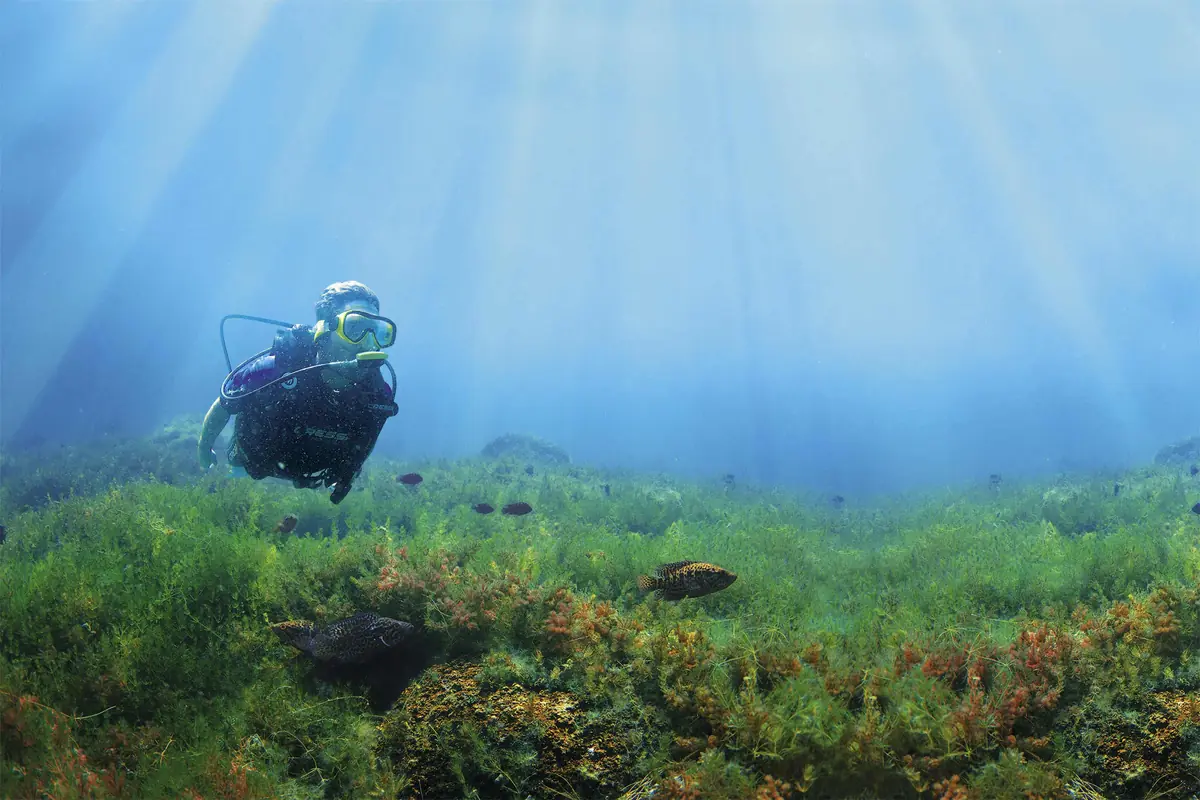
The water itself does something strange near the island. Swim toward Teopán and you’ll feel cold spring upwellings and warmer thermal patches within a few strokes of each other — the lake is geothermally active, and you can feel it on your skin.
Can You Swim in Lake Coatepeque?
Yes, and the water is pleasantly warm year-round — around 77°F (25°C) at the surface thanks to geothermal heating. Access is through hotel and restaurant docks, not a public beach. Occasionally an algae bloom clouds the shallows, so ask staff before jumping in and use the venue’s pool if the lake looks off that day.
Below the surface, deeper water drops to about 73°F (23°C), with a thermocline around 100–130 feet (30–40 m) down. Periodic cyanobacteria blooms have triggered local fishing bans, and the lake water carries sulfur and trace heavy metals, so it’s fine to swim in but not to drink.
In practice, the surface is bath-warm and local kids cannonball straight off the docks — but swim out a few strokes and you’ll notice it turn noticeably cooler underfoot.
Why Does the Water Turn Turquoise?
Every few years, usually between June and August, Lake Coatepeque shifts from deep blue to vivid turquoise for days at a time. El Salvador’s National Red Tide Commission attributes it to a bloom of microalgae — Microcystis aeruginosa, Oscillatoria limosa, and Ceratium furca — stirred together with volcanic minerals after seasonal rains. It’s unpredictable, so you can’t plan a trip around it.
The phenomenon has repeated over the decades and been captured from orbit by NASA and Copernicus Sentinel-2 satellites. Researchers at the Universidad de El Salvador’s Marine Toxins Laboratory studied the episodes and concluded the color shift is most likely the result of natural mineralization rather than pollution.
Here’s the honest take: the turquoise color is overhyped as a reason to visit. It’s rare, you can’t schedule it, and the same algae that creates the color can make the shallows murky for swimming. Plan your trip around the weather and the crowds instead, and treat a turquoise day as a lucky bonus.
Where Should You Stay — Day Pass or Overnight?
If you only have a day, skip a hotel entirely and buy a day pass — around $5 at Captain Morgan or a small cover at Las Palmeras. To wake up over the water, base yourself at budget-friendly Captain Morgan or Tiki Island, or upscale Cardedeu on the north shore. Villas suit groups but can top $300 a night.
One detail that decides everything: which shore you pick sets your view. West-shore stays like Captain Morgan catch glassy sunrise reflections, while north-shore spots are angled for sunset. Choose your side before you book.
Captain Morgan — Best Budget Base
- Location: West shore, about 60 miles (97 km) from the international airport
- Cost: ~$16–$25/night for a room; ~$5 day pass that includes a drink
- Best for: Backpackers and day-trippers
- Time needed: A few hours on a day pass, or one easy night
Cardedeu — Upscale North Shore
- Location: North shore
- Cost: Boutique rates — the priciest of the named options here; book direct for current pricing
- Best for: Couples and design lovers (the property’s pool reaches over the lake)
- Time needed: Overnight
Villas for Groups and Families
- Location: Scattered around the shore (Quinta Sunrise and Sunset, Tiki Island from ~$31)
- Cost: Up to ~$300/night for a full villa
- Best for: Families and groups splitting a rate
- Time needed: A weekend
When Is the Best Time to Visit Lake Coatepeque?
The best time is the dry season, November through April, with clear skies and warm days in the mid-80s°F. Visit on a weekday for calm water and empty docks; weekends bring crowds, loud music, and the floating bars and boat cruises that only run when it’s busy. For the turquoise color, aim for June to August — but it’s never guaranteed.
Across the year, air temperatures run roughly 62–92°F (17–33°C). April is the hottest month, with highs near 92°F (33°C), while December nights dip to around 65°F (18°C). Rain in the wet season mostly falls in afternoon bursts.
| Season | Months | Daytime highs | Crowds | Notes |
|---|---|---|---|---|
| Dry | Nov–Apr | 80s to low 90s°F | Busy on weekends | Clearest skies, best swimming |
| Rainy | May–Oct | 80s°F | Quieter overall | Afternoon downpours; turquoise window Jun–Aug |
Pro Tip: After about 4 p.m. the mosquitoes arrive in force. On my last overnight, opening a lit door for half a minute was enough to fill the room — keep the door shut and the lights off at dusk.
Is El Salvador Safe Enough for a Lake Day Trip?
Yes. El Salvador has gone from one of the world’s most dangerous countries to one of its safest, and the US State Department now rates it Level 1, “Exercise Normal Precautions” — its lowest risk tier. At the lake, the risks are ordinary: watch your belongings, swim with algae awareness, and arrange your return ride before dark.
To put the turnaround in numbers, the homicide rate has fallen by more than 98% from its peak. That Level 1 rating places El Salvador in the same category as Canada or Japan, and a step safer than how the US currently rates France, the UK, and Italy. Advisory levels are reviewed periodically, though, so check the current status before you book.
On the ground, petty theft is the main residual concern, tourist police (POLITUR) operate at popular sites, and the standard advice is to avoid public buses after dark and carry cash. Uber will drop you at the lake without trouble, but pickups are scarce — sort out your ride home through your hotel rather than hoping one appears.
What Currency Do You Need — and What About Bitcoin?
El Salvador uses the US dollar — it has since 2001 — so American travelers don’t need to exchange money. Bitcoin made headlines as legal tender, but a reform rolled that back: accepting it is now voluntary, and almost no lakeside business expects it. Bring small bills in cash, since docks, day passes, and boatmen rarely take cards.
A few practical notes on money here:
- Bitcoin can no longer be used to pay taxes, and acceptance is entirely up to each business; usage among Salvadorans had already dropped to a small fraction of the population.
- Cards work at larger hotels but not at docks, day-pass gates, or with boatmen.
- ATMs are scarce near the lake itself.
Pro Tip: There are no bank machines at the lakeshore. Pull out cash in Santa Ana or at the airport before you head down, and break your bills small — nobody at a dock wants to make change for a $20.
One Perfect Day: Santa Ana Volcano Plus the Lake
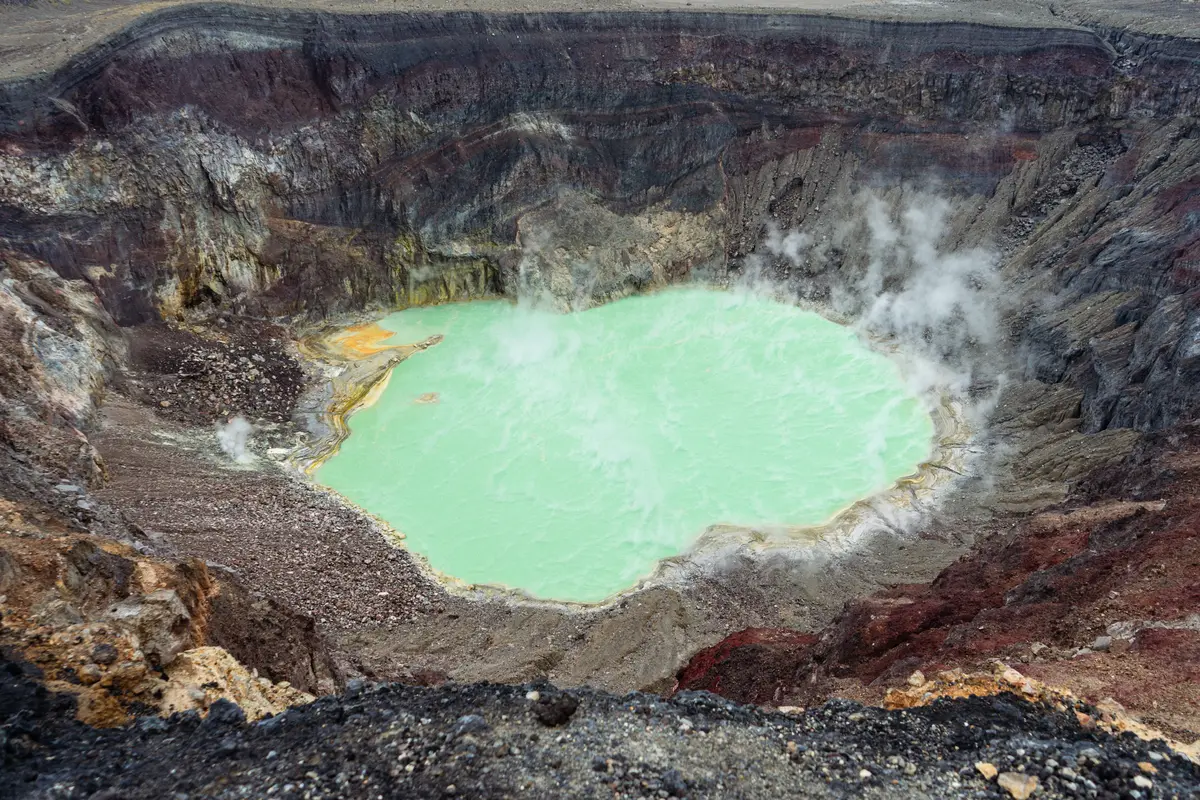
The best-value plan is to hike the Santa Ana volcano in the morning, then cool off at Lake Coatepeque in the afternoon. The guided hike runs about 4 miles round trip to a turquoise summit crater, and afterward it’s a 30-to-45-minute drive down to a lakeside restaurant for a swim and a late lunch.
The logistics that matter for the combo:
- Summit elevation: 7,812 feet (2,381 m) for Santa Ana, also called Ilamatepec.
- Hike rules: A guide is mandatory; foreigners pay about $6 park entry plus roughly $3 for the guide (around $9 total).
- Timing: Groups set off around 10–11 a.m. from Cerro Verde.
- Getting there: Bus 248 from Santa Ana costs about $0.90; combo tours from San Salvador handle both stops.
Pro Tip: The last return bus from Cerro Verde leaves around 1:15 p.m. Miss it and you’re waiting hours for the next one — this is the single best reason to have a car or driver for the volcano-plus-lake day.
The Bottom Line on Lake Coatepeque
Lake Coatepeque rewards travelers who slow down rather than chase a checklist. The scenery is the draw; the “things to do” are few and that’s the point.
TL;DR: Budget about $5 for a day pass, a couple of dollars for buses (or more for a driver), and $10–$20 for a lakeside lunch. Go on a weekday, line up your return ride before you arrive, and pair the lake with the Santa Ana volcano for the best western-El-Salvador day. Carry cash, because the docks don’t take cards.
The single best memory most people leave with isn’t the turquoise water or a boat tour — it’s a long, lazy lakeside lunch as the water shifts color with the moving light. That’s worth the few dollars it takes to get past the gate.
Which side are you leaning toward — a budget day pass and a chicken bus, or an overnight with a sunrise over the water? Tell me your plan in the comments and I’ll point you to the right shore.