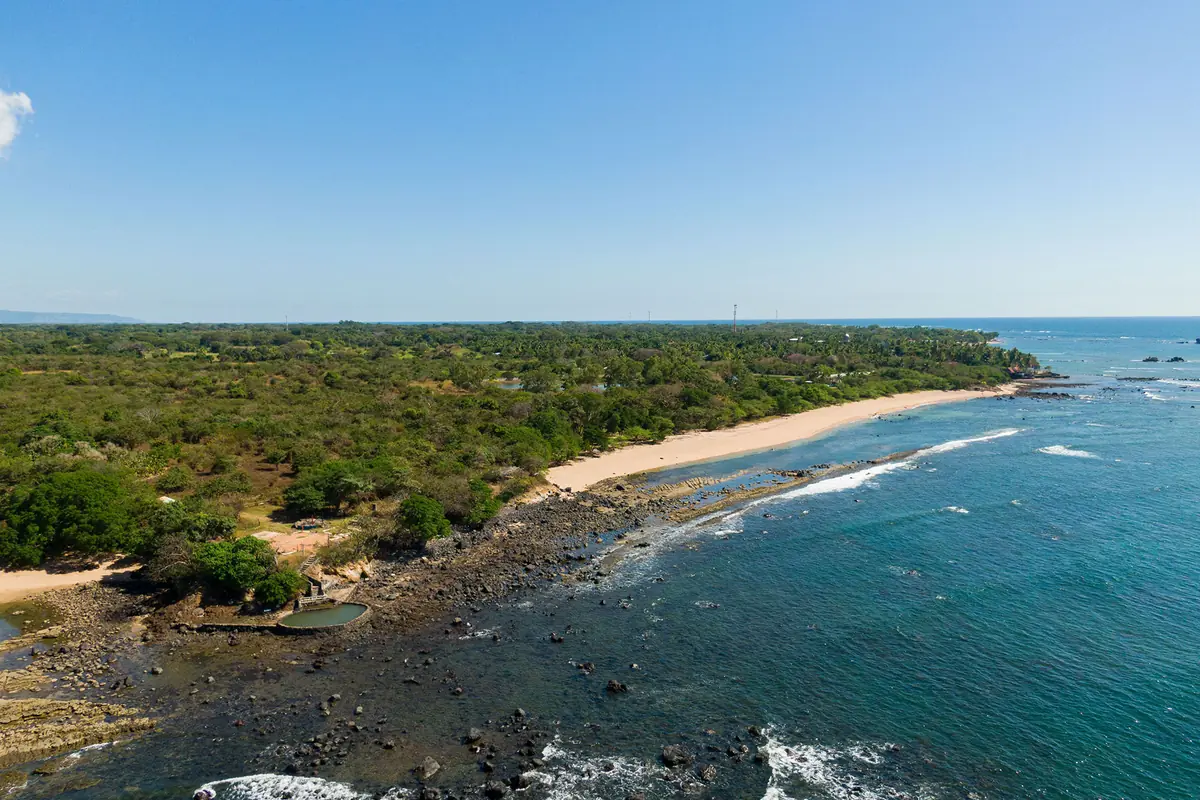
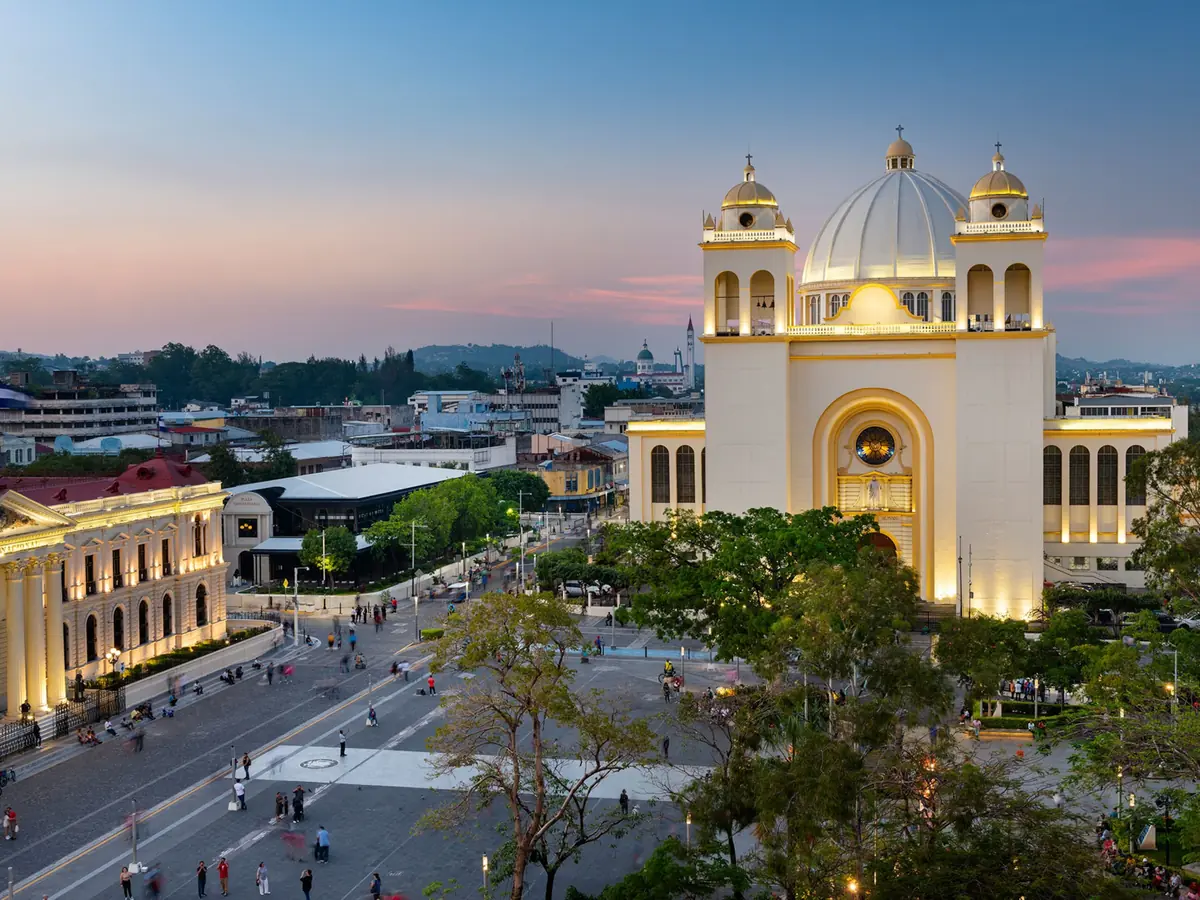
Renting a car in El Salvador is the best way to see a country that has gone from feared to genuinely safe. From the surf coast to the Ruta de las Flores, this guide covers what it costs, the paperwork you need, the insurance trap to avoid, and the road realities no one warns you about.
The short version: yes, renting a car here is safe, legal, and worth it for most travelers. A US license is accepted for 30 days, economy cars start around $25–$45 a day before the mandatory liability insurance, and the highways are toll-free and well-paved. Drive in daylight, carry your documents at checkpoints, and skip rural roads after dark.
Is it safe to drive in El Salvador?
Driving in El Salvador is safe in daylight on main routes. The homicide rate has fallen from about 107 per 100,000 at its peak to under 2 per 100,000, and the US State Department rates the country Level 1: Exercise Normal Precautions. The real risks are practical: night driving, speed bumps, and potholes, not crime.
This is the question that stops most people, and the honest answer is that the country you may have read about no longer exists. The change is not gradual — it is one of the steepest crime drops ever recorded.
- Homicide rate: down from roughly 107 per 100,000 at its peak (InSight Crime) to under 2 per 100,000 (National Civil Police)
- US travel advisory: Level 1, Exercise Normal Precautions — the State Department’s safest tier
- Tourist policing: POLITUR, a dedicated tourist police force, covers 19 destinations
- Gang activity: the State Department’s advisory notes it has dropped sharply
Some context worth keeping in mind: this turnaround happened under a state of exception, a government security measure under which more than 80,000 suspected gang members have been detained. Human-rights groups have raised due-process concerns about it, and it is worth understanding before you form an opinion of the place. For a tourist behind the wheel, the practical upshot is simple — the streets are calm and heavily policed.
What you will actually deal with on the road has nothing to do with crime. Night driving is the real hazard: unlit roads, unpainted speed bumps, and the occasional cow or pickup with no taillights. Stick to daylight for any drive between cities and you remove most of the risk.
Pro Tip: The first time you pass soldiers with rifles at a roundabout, it is startling. They are checking for gang members, not tourists — they glance at a rental sticker and wave you through. By day two it reads as normal background.
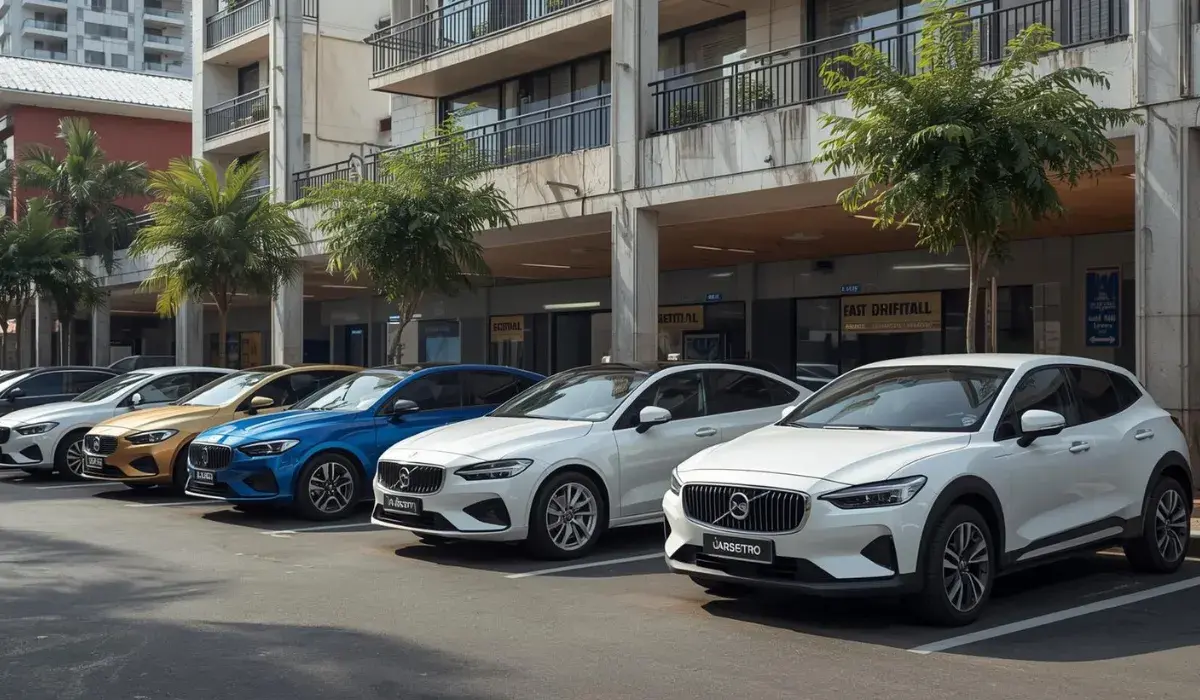
How much does it cost to rent a car in El Salvador?
Expect roughly $25–$45 a day for an economy car, $45–$65 for a compact SUV, and $70 or more for a 4×4. But the advertised rate is not the real cost: Salvadoran law requires third-party liability insurance — about $15–$17 a day on top — plus a refundable credit-card deposit that can run from a few hundred to several thousand dollars.
The cheap headline price you see on an aggregator is bait. Here is what the car itself runs by category, before insurance and fees:
| Vehicle type | Typical daily rate (USD) | Best for |
|---|---|---|
| Economy car | $25–$45 | Couples, solo travelers, paved routes |
| Compact SUV | $45–$65 | Small families, extra clearance |
| Pickup truck | $40–$50 | Gear, surfboards, rougher roads |
| 4×4 / premium SUV | $70+ | Rural tracks, rainy season |
| Passenger van | $90+ | Groups of six or more |
Then come the additions the advertised rate leaves off:
- Mandatory third-party liability insurance: about $15–$17 per day, not optional (see the next section)
- VAT: 13%, sometimes shown separately on the contract
- Airport concession fee: added on airport pickups, which run higher than city pickups
- Refundable deposit hold: $200–$2,500 on your credit card, and as high as $5,000–$10,000 at some agencies or if you decline the collision waiver
A few ways to bring the number down:
- Book about two weeks ahead — last-minute airport rates are the worst you will find
- Rent by the week or month; discounts of 15–30% are common
- Avoid the December and August peaks, when rates climb
- Pick up in the city rather than the airport if you are spending your first night in San Salvador anyway
Pro Tip: That $9-a-day “deal” evaporates at the counter the moment they add the liability line and put a four-figure hold on your card. Budget for the real all-in number — rate plus liability plus a deposit you will not see again for a week or two — and you will not be ambushed.
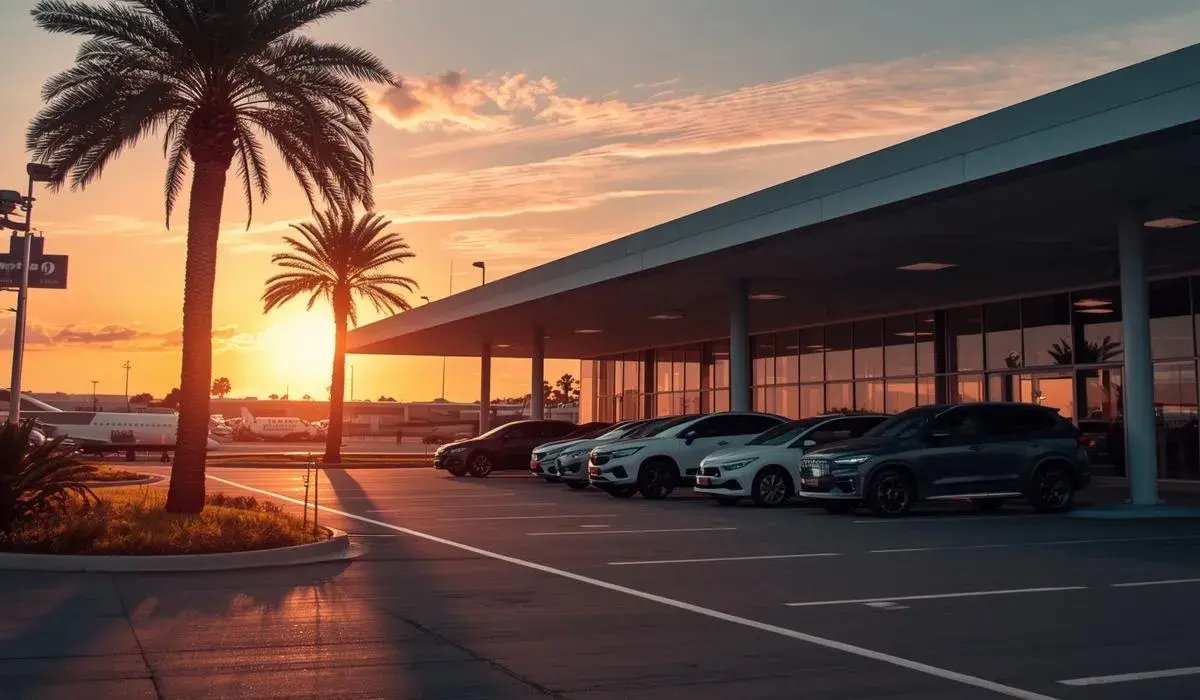
What insurance do you actually need? (CDW, TPL, and the deductible trap)
Third-party liability (TPL) is required by Salvadoran law, and your US credit card will not satisfy it — you buy it at the counter, usually $15–$17 a day. Collision Damage Waiver (CDW) is separate and carries a deductible up to $3,000, or $7,000 for theft. Paying for full coverage removes the deductible and shrinks the deposit hold.
Here is the part that catches Americans off guard: the credit-card rental coverage you rely on at home does not exempt you from the local liability requirement. You can still use your card’s CDW benefit, but you must buy the Salvadoran third-party liability separately, at the desk, every time.
The terms, decoded:
- TPL (third-party liability): legally required, around $15–$17/day, covers damage you cause to others
- CDW (collision damage waiver): covers your rental car, but with a deductible up to $3,000 ($7,000 for theft)
- Deductible-protection add-on: about $10/day, wipes out that deductible
- Full coverage: combines the above, lowers your deposit hold, and is the least stressful option
Pro Tip: A hairline taillight crack you did not log at pickup can turn into a four-figure charge on return. Photograph every panel — bumpers, mirrors, wheels, windshield — in good light before you drive off, and film a slow walk-around. Agencies do scrutinize the car when you bring it back.
Do you need an international driver’s license in El Salvador?
No. US visitors can legally drive in El Salvador for up to 30 days on a valid US license, and major rental agencies do not require an International Driving Permit for an English-language license. An IDP is optional — useful only as a translation backup at checkpoints. Carry your passport too; you will need it to rent.
The internet is full of sites that exist to sell you an International Driving Permit, and they make it sound mandatory. It is not. The official position is straightforward.
What the law and the agencies actually require:
- A valid US driver’s license — good for up to 30 days of driving
- A passport — required to rent, and useful as ID at checkpoints
- A credit card in the main driver’s name — for the deposit hold
- Minimum age 21, with a young-driver surcharge for drivers under 25
If you plan to stay and drive longer than 30 days, you will need a Salvadoran license. For a normal trip, your home license does the job.
Pro Tip: I carried an International Driving Permit and was never once asked for it across a week of driving and several checkpoints — my state license and passport did all the work. Get one only if it buys you peace of mind, not because a website told you it was required.
Where do you pick up a rental at San Salvador airport?
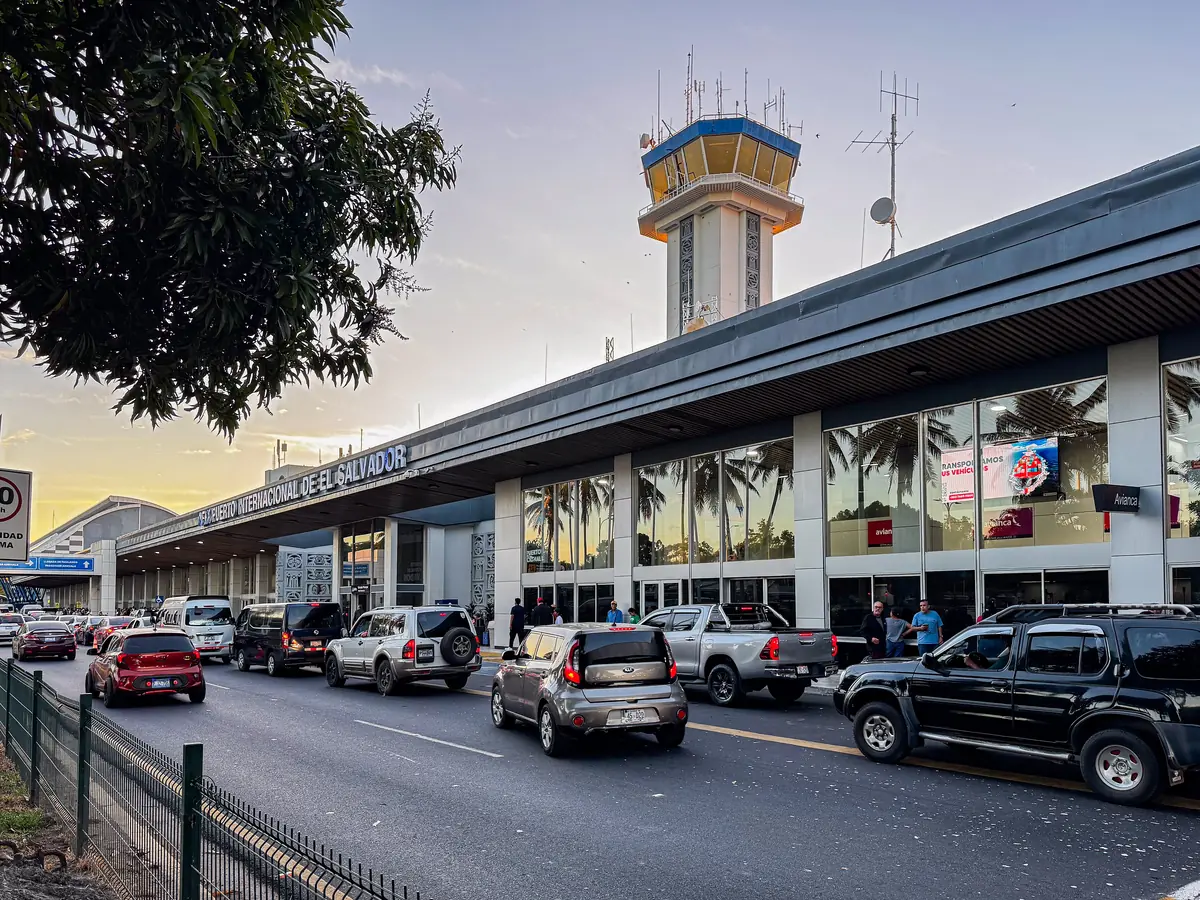
El Salvador International Airport (SAL) sits about 25 miles (40 km) southeast of San Salvador, a 40–50 minute drive. Several brands have greeting counters just past customs — Avis, Budget, Dollar, National, and Thrifty offer near-terminal pickup, while Alamo, Enterprise, and Sixt shuttle you to an off-site lot. Book ahead and confirm your pickup type.
The official name is Monseñor Óscar Arnulfo Romero International Airport, but everyone uses the code SAL. The setup is not as simple as “walk to your car” — here is how the main brands actually handle pickup:
| Brand | Pickup at SAL | Notes |
|---|---|---|
| Avis, Budget, Dollar, National, Thrifty | Near-terminal | Counters just past customs, cars close by |
| Alamo, Enterprise | Greeting desk inside, then shuttle | Desk in customs, short shuttle to their lot |
| Sixt | Off-airport (~1 mile / 1.5 km) | Free shuttle to the facility |
A couple of logistics worth planning around:
- Airport pickups average higher than city pickups, partly due to the concession fee
- If your first night is in San Salvador, renting in the city the next morning can be cheaper
- Build in extra time after a long flight before you are actually on the road
Pro Tip: Even the “in-terminal” desks often hand you off to a shuttle to a nearby lot. After a long flight, assume 20–30 minutes of paperwork and shuttling before you pull out of the gate — not the five minutes the website implies.
What is driving in El Salvador actually like?
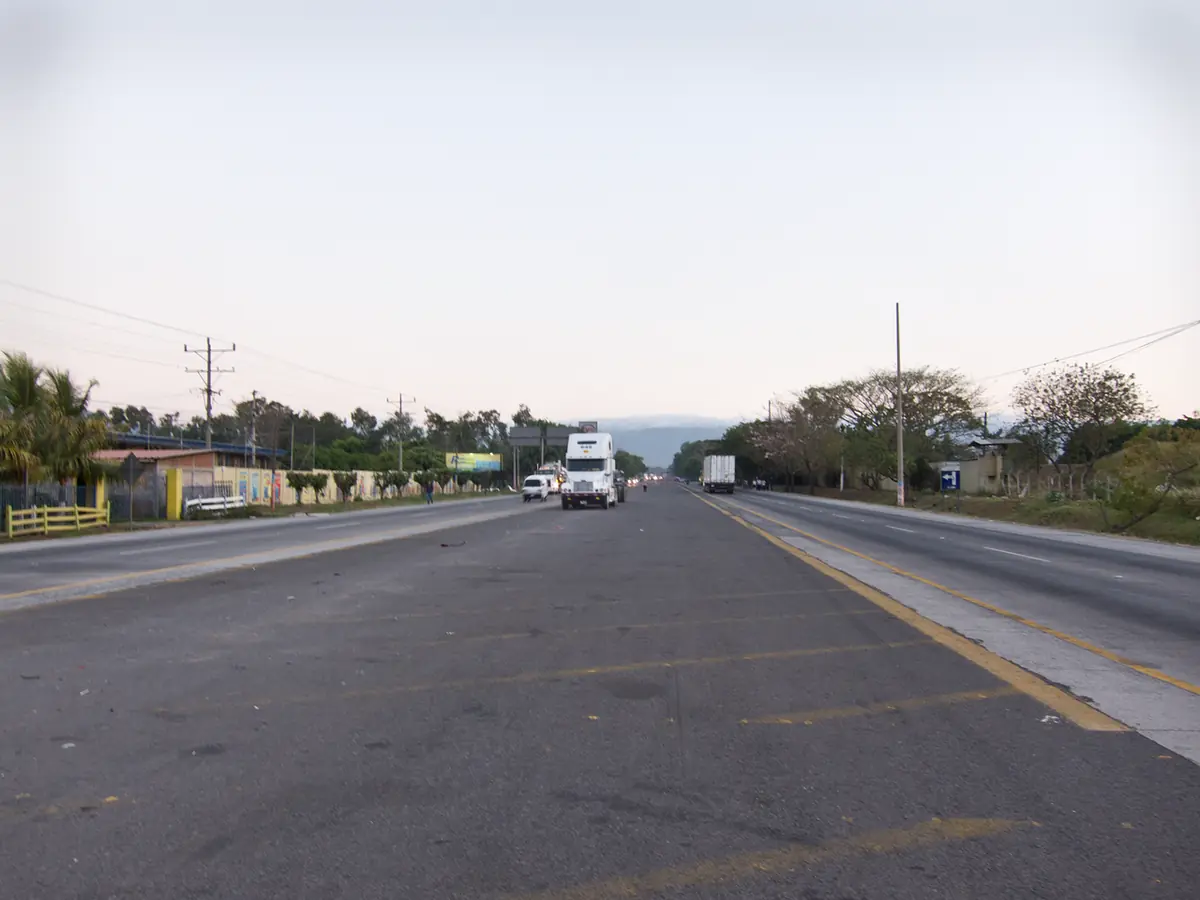
Main highways like the CA-1 Pan-American and the CA-2 Coastal are well-paved, well-signed, and toll-free, among the best in Central America. Expect occasional police and military checkpoints, frequent unmarked speed bumps (locals call them túmulos), potholes on rural roads, and livestock in the countryside. City traffic in San Salvador is chaotic; rural driving is calm and scenic.
Once you are out of the capital, driving here is calmer than most of Central America. The surprises are small and predictable once you know them.
Checkpoints are the thing first-timers fixate on. At one, you will see orange cones across the median and soldiers from the armed forces (FAES) waving cars down. Have these ready on the passenger seat:
- Your US driver’s license
- Your passport
- The rental agreement
- The vehicle registration card (the “Tarjeta de Circulación,” kept in the car)
The road hazards that actually matter:
- Túmulos (speed bumps): often unpainted and brutal — scan the road through every town
- Potholes: common on rural roads, where a little extra clearance helps
- Livestock and unlit vehicles: another reason to avoid driving after dark
- Rainy-season mudslides: May through October, mainly on mountain roads
One legal point you cannot ignore: El Salvador enforces a zero-tolerance DUI law. There is no “one beer is fine” margin here.
- Private-vehicle offenders face 2–5 years in prison
- First offenders face a 72-hour detention, a $150 fine, and a one-year license suspension
Speed limits run about 30 mph (50 km/h) in town and 55 mph (90 km/h) on the highways.
Pro Tip: At a checkpoint, slow down, lower your window, smile, and hand over your license and rental papers without being asked. Once they see the word “rental,” you are almost always waved on in under a minute.
Are there tolls in El Salvador, and how much is fuel?
El Salvador’s highways are completely toll-free — no toll plazas on the CA-1, the CA-2, or any major route. Fuel is sold in US dollars per gallon, with regular gasoline usually around $3.80 and premium near $4.10; the national regulator resets prices every two weeks. Keep small cash on hand for parking attendants.
Two numbers competitors almost never get right, so here they are clearly.
Tolls:
- There are zero toll plazas nationwide; the CA-1 and CA-2 are free end to end
- Road maintenance is handled by FOVIAL and the public works ministry (MOP)
- Future tolls have been studied but are not in place
Fuel, sold in US dollars by the gallon:
- Regular: around $3.80/gallon
- Premium: near $4.10/gallon
- Diesel: roughly $3.75/gallon
- The energy regulator resets these every two weeks, so they drift a little
Pro Tip: Keep a few singles in the console. Informal parking attendants will “watch” your car for a dollar or two almost everywhere you stop — at beaches, markets, and town plazas. It is expected, and it is cheap insurance against a scratched door.
The best road trips you can do with a rental car
El Salvador is small, so a rental unlocks the whole country in short hops. From San Salvador it is about 26 miles (42 km) to the El Tunco surf coast, 40 miles (64 km) to Santa Ana and Lake Coatepeque, and 29 miles (47 km) to colonial Suchitoto, with the Ruta de las Flores an easy day-loop in the western highlands.
This is the real reason to rent. The country is so compact that the marquee destinations are all day-trip close. Here are the drives that matter, with honest distances and times:
| Route | Distance | Drive time | What is there |
|---|---|---|---|
| San Salvador → El Tunco | 26 mi (42 km) | 40–60 min | Surf, black-sand beaches |
| SAL airport → El Tunco | 25 mi (40 km) | 35–45 min | Skip the capital, go straight to the coast |
| San Salvador → Lake Coatepeque | 36 mi (58 km) | ~50 min | Crater lake, swimming |
| San Salvador → Santa Ana | 40 mi (64 km) | ~1 hr | Volcano hike, colonial city |
| San Salvador → Suchitoto | 29 mi (47 km) | ~50 min | Cobblestone town, Lake Suchitlán |
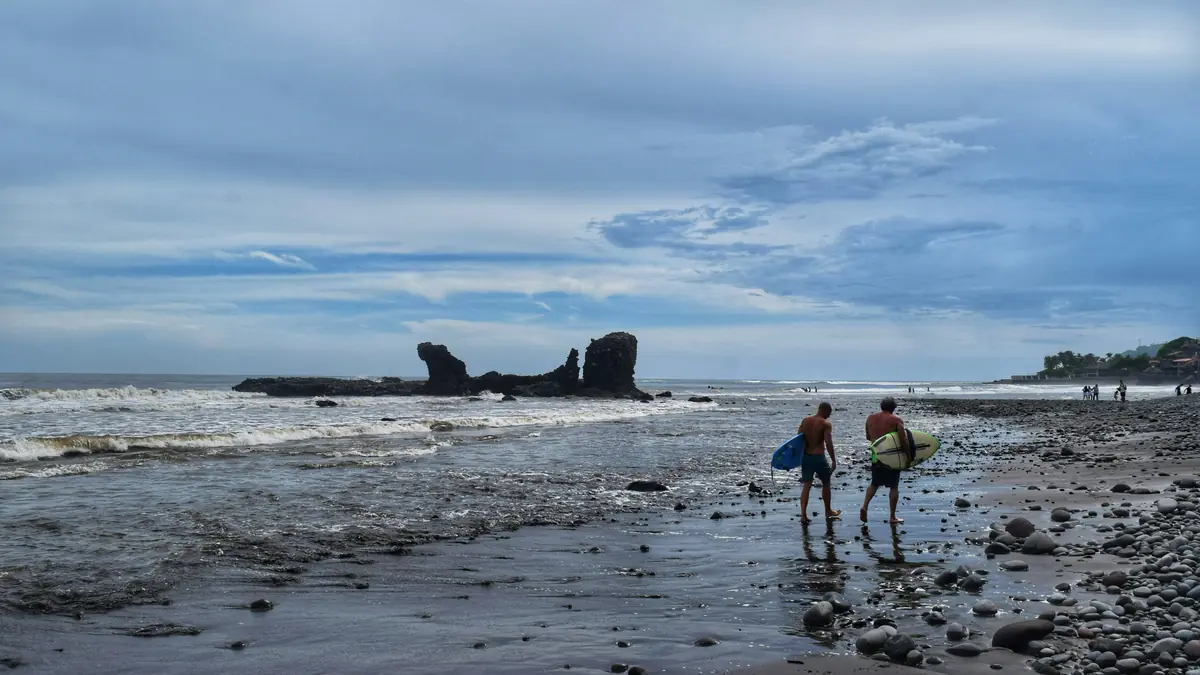
The surf coast is the easiest first drive — a straight run down the CA-2 Coastal Highway. El Tunco is the hub: black-sand beach breaks, a cluster of hostels and taco spots, and El Zonte (known as Bitcoin Beach) a few minutes further down the road.
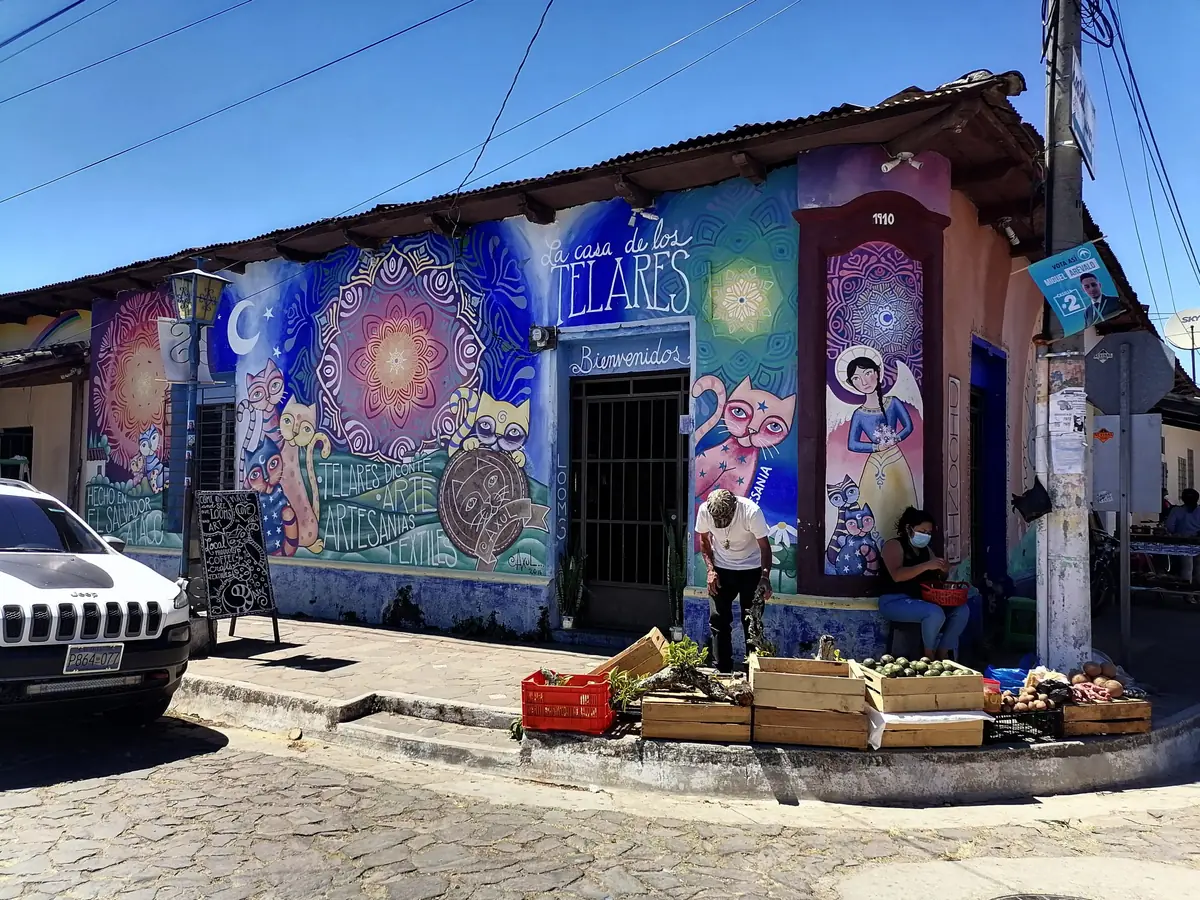
The Ruta de las Flores is the western highlands loop, a 22-mile (35 km) ribbon of road linking Nahuizalco, Salcoatitán, Juayúa, Apaneca, and Ataco. Flowers bloom November through February, and Juayúa’s weekend food festival is the natural anchor stop.
Santa Ana and Lake Coatepeque pair into one big day off the CA-1 Pan-American Highway. The Santa Ana Volcano (Ilamatepec) has a turquoise crater lake at the summit, reached by a guided morning hike that most people finish before lunch.
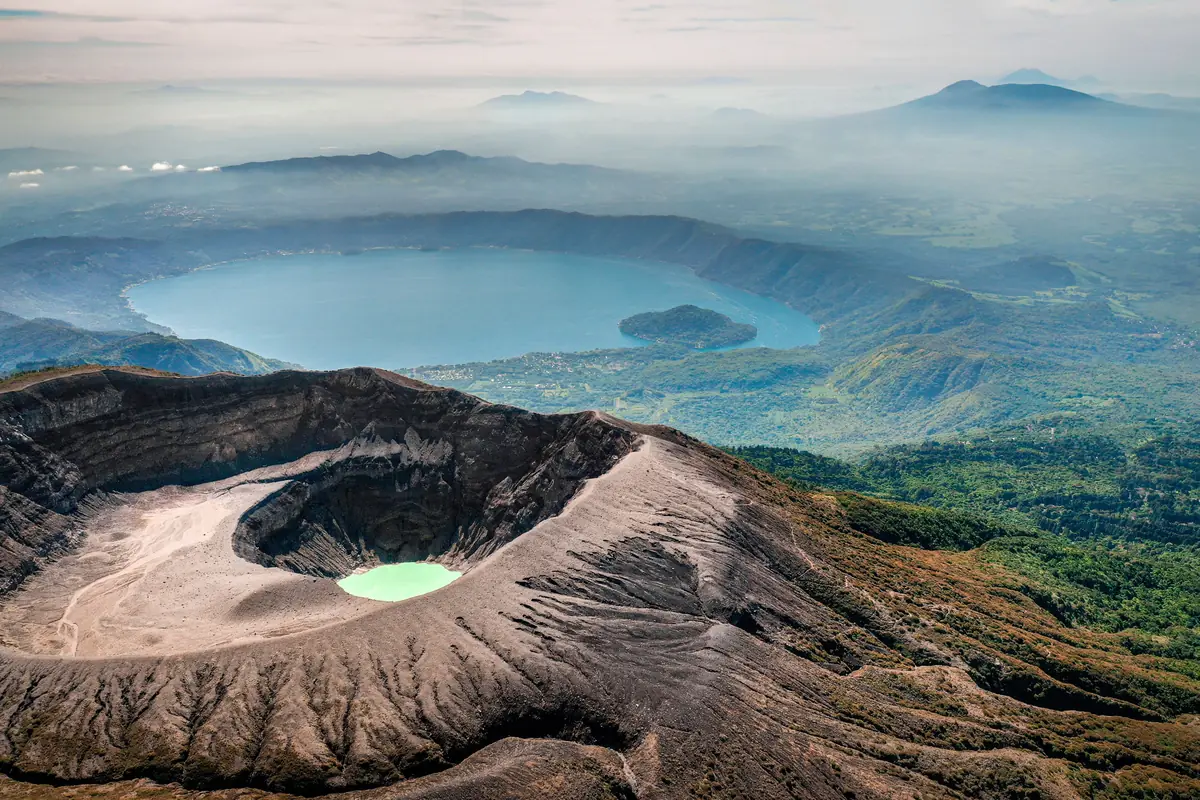
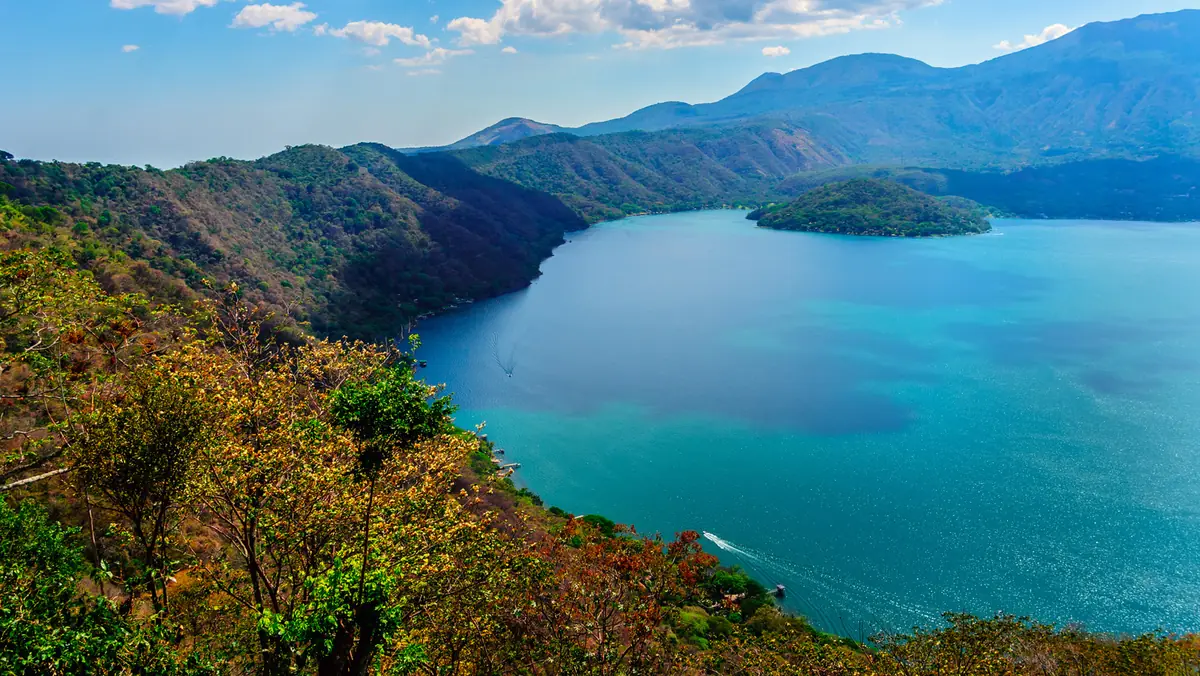
Below it sits Lake Coatepeque, a flooded volcanic caldera ringed by lakeside restaurants — the place to cool off after the climb.
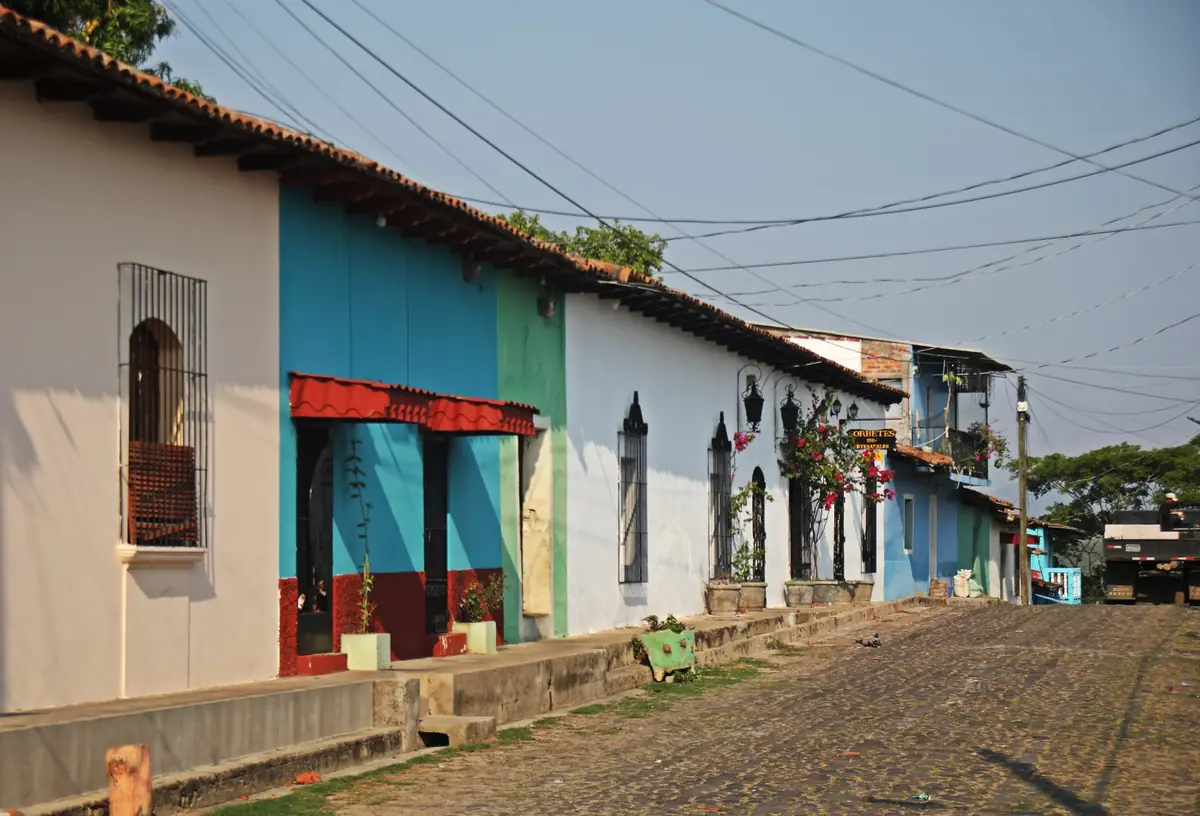
Suchitoto is the colonial counterpoint — cobblestone streets above Lake Suchitlán, an easy 50-minute drive north of the capital and the calmest of the day trips.
Pro Tip: You can surf El Tunco in the morning and be drinking coffee in a mural-lined Ataco plaza by mid-afternoon — the whole country fits in a tank of gas. Plan loops instead of out-and-backs and you will rarely repeat a road.
Do you need a 4×4, or will an economy car do?
For paved highways and towns — the surf coast, Santa Ana, Suchitoto, and the main Ruta de las Flores road — a small economy car is fine and cheapest. Choose a compact SUV or 4×4 only if you will tackle rough rural tracks, beach-access roads, or travel in the rainy season, when mudslides and potholes make the extra clearance worth it.
Counter agents push the SUV upsell hard, and most travelers do not need it. The decision is simple:
- Economy car: fine for every paved route above; cheapest and easiest to park
- Compact SUV: worth it for comfort, luggage, or light dirt roads — the most-rented category here
- 4×4: only for rough tracks, remote waterfalls, or rainy-season mountain roads
Pro Tip: A tiny hatchback handles the entire Ruta de las Flores and the surf coast without trouble. The only place you will wish for clearance is a washed-out track to a waterfall — which you can usually park beside and walk.
Should you rent a car, take Uber, or hire a private driver?
Rent a car if you want to explore beaches, volcanoes, and mountain towns on your own schedule. Use Uber if you are mostly staying in San Salvador or on the coast — it is cheap, tracked, and safe, with airport-to-city rides about $16–$25. Hire a private driver (around $100 a day) for door-to-door comfort without driving yourself.
There is no single right answer — it depends on how much you plan to roam. Here is the honest cost comparison:
| Option | Typical cost | Best for |
|---|---|---|
| Economy rental (all-in) | $45–$65/day | Multi-stop road trips, full flexibility |
| Uber, airport → San Salvador | $16–$25 | Getting into the city after landing |
| Uber, short city trips | $3–$8 | Staying put in the capital or a beach town |
| Private driver / chauffeur | ~$100/day (up to 12 hrs) | Door-to-door comfort, no parking stress |
| Private transfer (e.g., to Suchitoto) | $55–$75 | One-off intercity trips |
| Chicken bus | under $2 | Shoestring budgets, local color |
A few honest caveats:
- Uber is reliable in San Salvador, Santa Ana, and along the coast, but thin to nonexistent in rural areas
- A private driver is the stress-free option for non-drivers, but it adds up fast over a week
- The smartest play for many trips is the hybrid: rent only on the days you actually road-trip, and use Uber inside San Salvador. It comes out cheaper than a full week’s rental and spares you parking in the capital’s traffic — the one kind of driving here that genuinely is stressful.
Smart tips for a smooth rental and drive
Book about two weeks ahead for the best rate, budget for the mandatory liability insurance on top of the headline price, photograph the car at pickup, carry your license and passport for checkpoints, never drive between cities after dark, keep small cash for parking, and download offline maps. Avoid any alcohol before driving — enforcement is zero-tolerance.
The full checklist, from people who have made the mistakes:
- Book roughly two weeks ahead; airport walk-up rates are the worst you will find
- Budget the all-in number: rate + mandatory liability + a deposit hold
- Photograph and film the car at pickup, in good light, before you leave
- Keep your license, passport, and rental papers on the passenger seat for checkpoints
- Drive intercity only in daylight — night roads are the real risk
- Carry small cash for parking attendants and the occasional rural stop
- Download offline Google Maps before you leave wifi
- Drink zero alcohol if you are driving — the DUI law is unforgiving
- Watch for unpainted speed bumps through every town
- Heading to Guatemala? You need a cross-border permit (about $50 plus a roughly $100 surcharge), arranged about 72 hours ahead
Pro Tip: Screenshot or download your route before you leave wifi. Signal drops on the mountain roads around Apaneca and the Ruta de las Flores — exactly where you least want to be guessing at a turn.
The bottom line on renting a car in El Salvador
TL;DR: Renting a car in El Salvador is worth it for most travelers — the country is among the safest in the region, the highways are toll-free and good, and a rental puts the coast, volcanoes, and flower towns within short drives. Budget the real all-in cost (rate plus mandatory liability plus a deposit), drive by day, and you get the freedom that makes the trip.
The country that old guidebooks told you to avoid is now one of the easiest and most rewarding places to drive in Central America. Renting a car in El Salvador is no longer the risky move — clinging to the outdated fear is. Of everywhere I have driven in the region, El Salvador’s compact size and improved roads made it the least stressful and the most rewarding per mile.
Which drive would you point the car at first — the surf breaks of El Tunco, or the mural towns of the Ruta de las Flores?