Surf City El Salvador took a once-overlooked Pacific shoreline and turned it into Central America’s most talked-about surf coast. This guide covers where to base, which breaks match your level, what a trip costs in US dollars, and how the country’s safety turnaround made it possible — so you can be in the lineup within hours of landing.
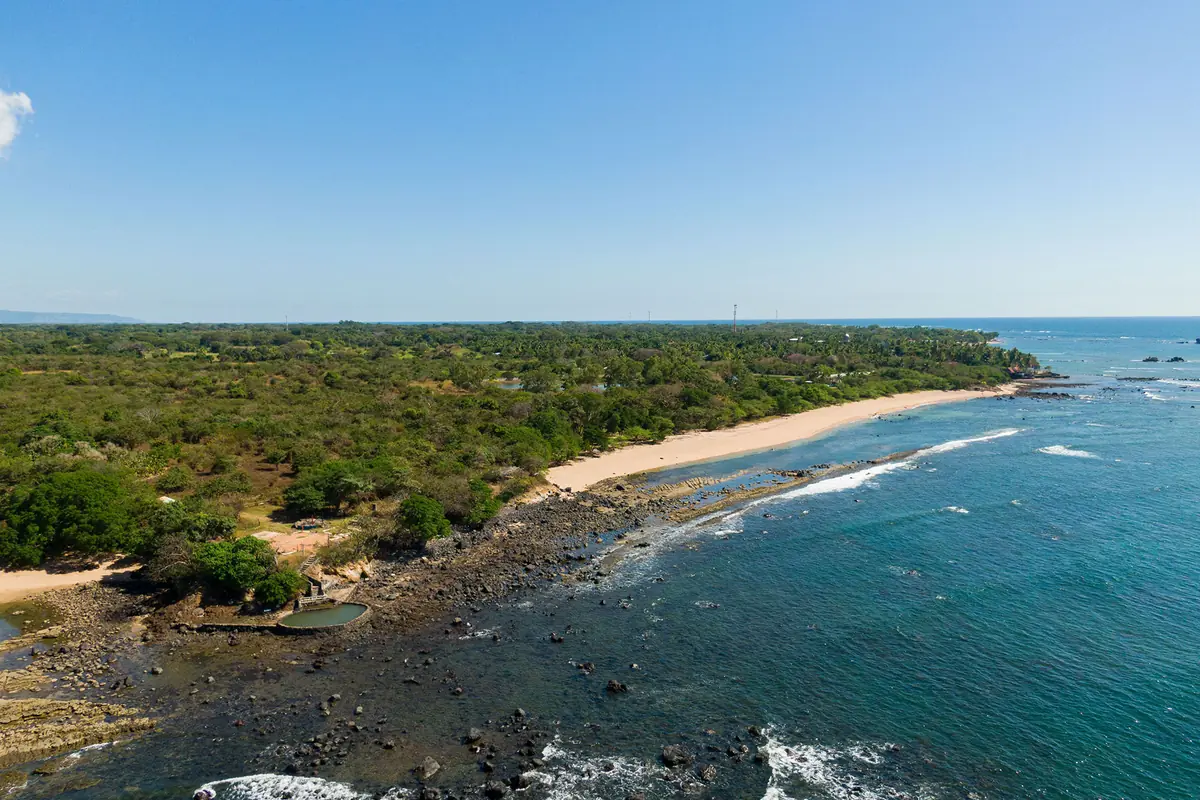
Surf City El Salvador is a government tourism initiative that brands the country’s Pacific coast as a surf destination. It centers on La Libertad — home to the long right point of Punta Roca and the small town of El Tunco — about 25 miles (40 km) from San Salvador’s airport, and stretches east to the remote Las Flores and Punta Mango coast. You can be paddling out within an hour of clearing customs, bags still smelling of the plane.
Where is Surf City, and what does it actually include?
Surf City is not a single town but a government-branded stretch of El Salvador’s south-facing Pacific coast. The western hub is La Libertad and El Tunco; the eastern “Wild East” runs through Las Flores, Punta Mango, and El Cuco. Together they cover several coastal departments known for long right-hand point breaks.
Here’s what trips up most first-timers: people search “Surf City” expecting a town with a main square, and instead find a 60-plus-mile coastline split into two circuits.
- West circuit: anchored by La Libertad and Punta Roca, plus the roughly 10-mile El Tunco-to-El Zonte run
- East circuit (“Oriente Salvaje”): links 11-plus beaches and carries World Surfing Reserve status
- Wave direction: the coast faces due south, so most waves peel to the right
- The name: “Surf City” was chosen in English on purpose, to court North American surfers
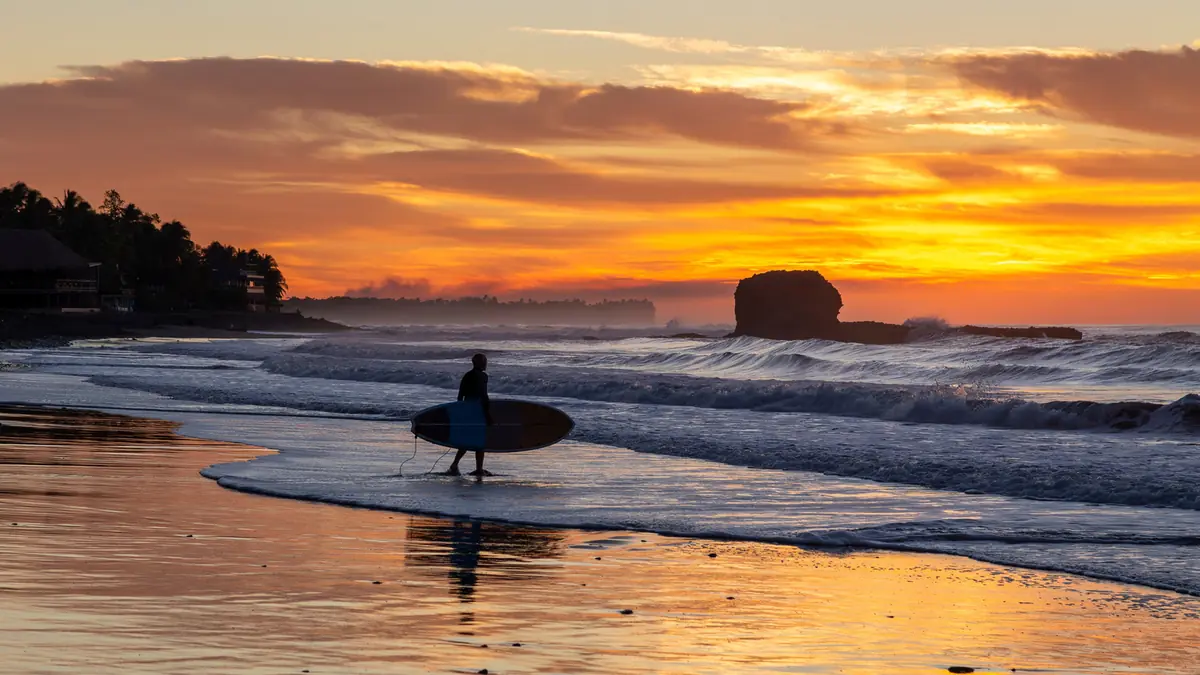
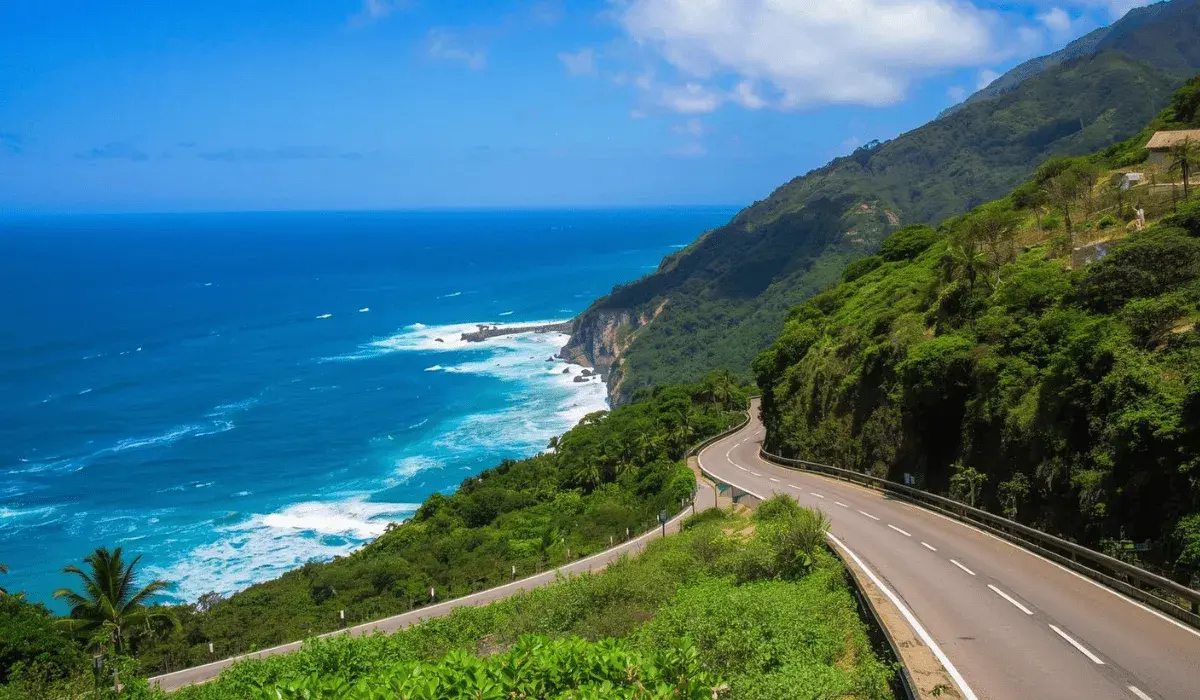
The Carretera del Litoral, the coastal highway, hugs cliffs and dives through short tunnels along the way. Locals compare the drive to California’s Highway 1, and once you’ve done it at dusk you’ll see why.
How do you get to Surf City from the airport?
Fly into Monseñor Óscar Arnulfo Romero International Airport (SAL). El Tunco sits about 25 miles (40 km) away, roughly 35 to 45 minutes by car, and La Libertad with Punta Roca is even closer at about 20 miles (32 km). Pre-booked private transfers run about $30 to $40, Uber is cheaper and reliable, and the air-conditioned #102A microbus costs around $1.50.
One detail that surprises people: the airport sits on the coastal side of the capital, so you reach the waves before you’d reach downtown San Salvador.
Your transport options, cheapest to priciest:
- Chicken bus: ~$0.25, slow, an experience in itself
- #102A air-conditioned microbus: ~$1.50, the easy public option
- Uber: ~$25 to $35, works well from the airport and capital
- Private shuttle: ~$30 to $40, pre-booked, door to door
Pro Tip: A roughly $1 community entrance fee applies when you drive into El Tunco. Keep a few coins in the door pocket so you’re not digging through luggage at the gate.
Sources disagree on the exact distance because the airport sits slightly east of the capital, which actually puts La Libertad and Punta Roca closer than El Tunco. Either way, you’re looking at well under an hour.
Is Surf City El Salvador safe?
Yes — Surf City’s beaches are considered very safe for tourists. El Salvador’s homicide rate has fallen to about 1.3 per 100,000, among the lowest in the Western Hemisphere, after a sweeping anti-gang crackdown. El Tunco has guarded entrance gates and a visible tourist-police (POLITUR) presence. Normal precautions still apply, especially with belongings and night driving.
The turnaround was dramatic and worth understanding rather than taking on faith. A government “state of exception” drove a homicide decline of more than 98% and led to the detention of roughly 84,000 people allegedly tied to gangs.
- US advisory: the State Department lists El Salvador at Level 1, “Exercise Normal Precautions,” its lowest tier — though advisory levels change, so confirm the current level before you book
- Main residual risk: petty theft, not violent crime
- Night driving: avoid intercity routes after dark
- Checkpoints: carry your ID, since soldiers run roadside stops
Seeing soldiers with rifles at beach checkpoints feels jarring on day one. Locals read it as reassurance, and after dark the tourist strip stays calm — you’ll watch families and travelers wander between bars without a second thought.
Surf City I vs Surf City II — which coast suits you?
Surf City I, the western La Libertad coast, is developed, social, and easy: El Tunco’s nightlife, El Sunzal’s beginner-friendly point, and Punta Roca all sit within minutes of each other. Surf City II, the eastern “Wild East” of Las Flores, Punta Mango, and El Cuco, is remote, quieter, and best for intermediate-and-up surfers chasing empty barrels about two hours farther east.
The two ends are separated by roughly a three-hour drive, so most first-timers pick one and commit.
- Surf City I (west): more lodging, more food, beginner options, busier lineups
- Surf City II (east): a paved 8-mile (13 km) coastal road, far fewer crowds, heavier waves, and “Oriente Salvaje” World Surfing Reserve status
Pro Tip: In the east, phone signal drops out for long stretches and the access road was a dirt track until it was paved. That isolation is exactly why the lineups stay empty — download maps offline before you leave El Tunco.
The best surf breaks, ranked by skill level
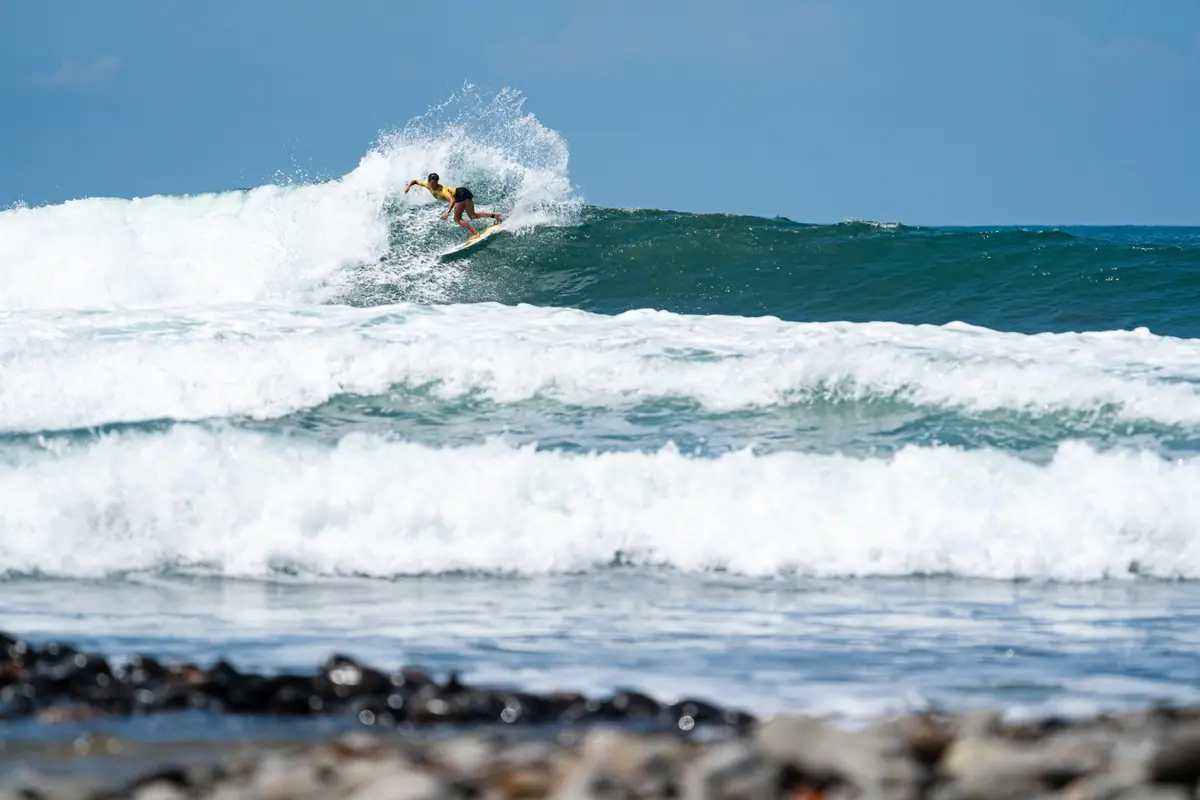
Surf City’s waves are overwhelmingly right-hand point breaks. Beginners belong at El Sunzal and El Zonte’s beach break; intermediates progress at El Zonte’s point and El Cuco; advanced surfers take on Punta Roca, La Bocana, and Punta Mango. Punta Roca, a long cobblestone right nicknamed “Central America’s J-Bay,” is the standout wave in the country.
Here’s the full lineup at a glance:
| Break | Wave type | Skill level | Drive from El Tunco | Watch for |
|---|---|---|---|---|
| Punta Roca | Right point | Advanced | ~10 min | Slippery cobbles |
| El Sunzal | Right point | Beginner–intermediate | Walkable | Crowded learner zone |
| La Bocana | River-mouth left | Advanced | ~5 min | Low-tide cobbles |
| El Zonte | Point + beach break | Intermediate | ~15 min | Rocky entries |
| Las Flores | Sand-bottom right | Intermediate–advanced | ~2 hrs | Remote, plan ahead |
| Punta Mango | Right point | Advanced | ~2.5 hrs | Often boat-access only |
At Punta Roca you clamber over slick cobbles to reach the takeoff — reef booties save your shins and your dignity.
Punta Roca — the advanced trophy wave
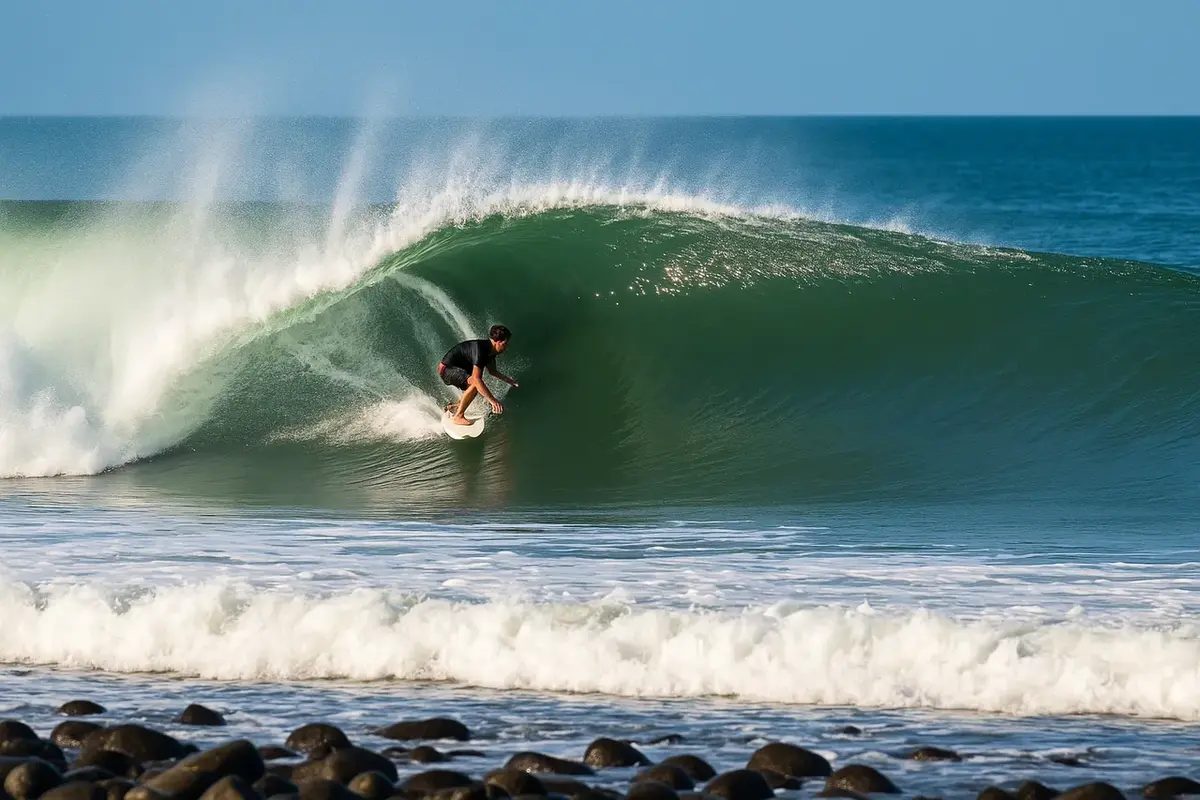
Punta Roca is the wave that put El Salvador on the surf map: a long, fast right that wraps around a rocky point and holds size when bigger swells arrive. The cobblestone bottom makes the takeoff zone genuinely slippery, and it draws the best surfers in the country on a good day.
It hosts a World Surf League Championship Tour stop, which tells you everything about the wave’s pedigree. On smaller days, though, the inside section softens enough that a confident beginner can find a few clean ones.
- Location: La Libertad point, ~10 minutes from El Tunco
- Wave type: Long right-hand cobblestone point
- Skill level: Advanced (gentle inside on small days)
- Best for: Experienced surfers wanting the trophy wave
El Sunzal — the beginner-friendly point
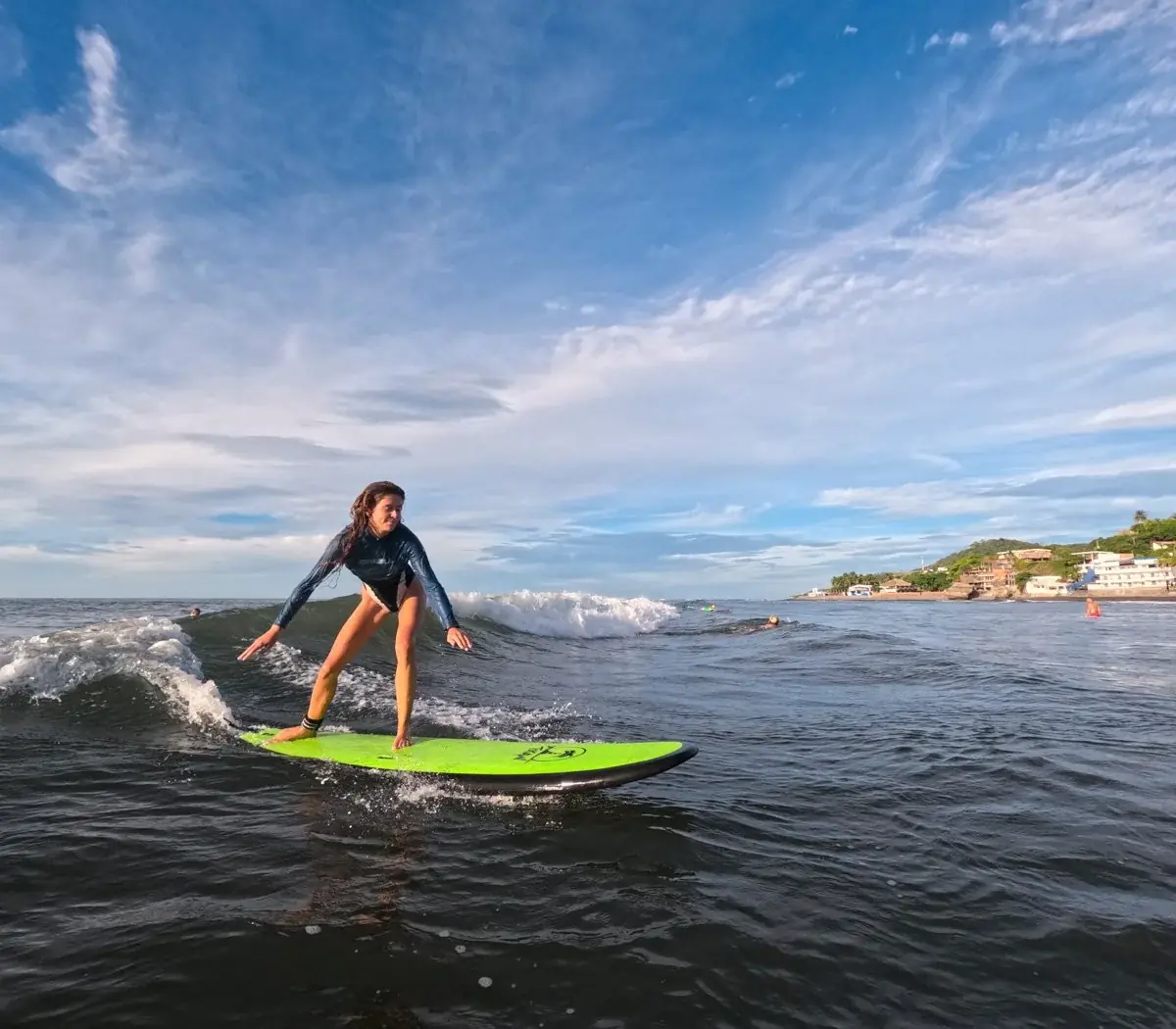
El Sunzal is the wave you learn on. It’s a long, mellow right point with a forgiving sand-and-reef bottom, and surf camps line the beach so lessons and rentals are steps from the water. It’s walkable from El Tunco, which makes it the obvious first paddle-out.
The rides here run so long your legs burn before you kick out — the kind of wave that makes a first-timer feel like they’ve finally got it.
- Location: El Sunzal beach, walkable from El Tunco
- Wave type: Long, mellow right point
- Skill level: Beginner to intermediate
- Best for: First lessons and longboarders
La Bocana — the punchy local left
La Bocana is the rare notable left on a coast full of rights, breaking at a river mouth right beside El Tunco. It’s fast and hollow when the tide cooperates, and it’s a favorite of the local crew rather than a learner’s wave.
Time your session wrong and you’ll find out the hard way: low tide exposes cobbles across the inside, and the wave doesn’t forgive a late drop.
- Location: River mouth beside El Tunco, ~5 minutes
- Wave type: Fast left-hander / A-frame
- Skill level: Advanced
- Best for: Intermediate-plus surfers who want a left
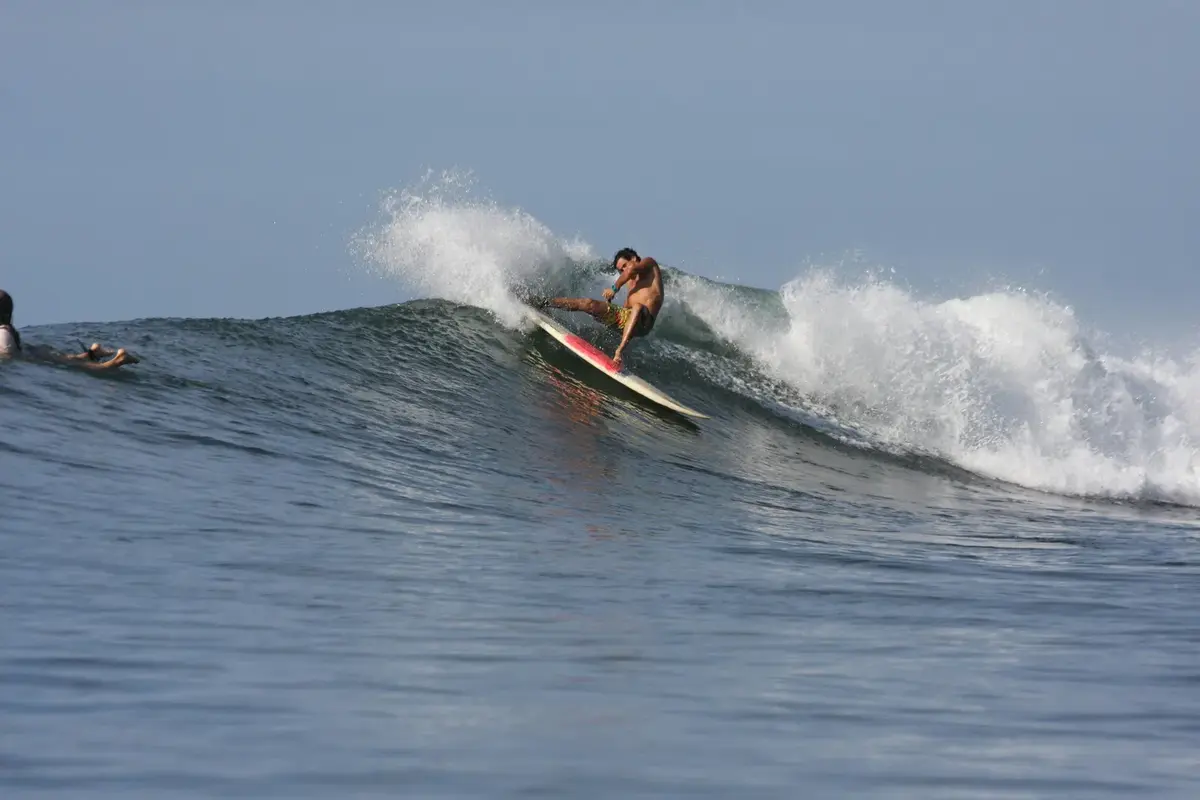
El Zonte (Bitcoin Beach) — the mellow intermediate pick
El Zonte sits about 15 minutes west of El Tunco and offers a right point plus a beach break, with far thinner crowds and a slower, bohemian pace. It earned the nickname “Bitcoin Beach” as the place where the country’s crypto experiment started, and a handful of businesses still take it.
The sandy streets and unhurried rhythm feel a world apart from El Tunco’s bars — this is where people come to swap the party for early sessions and hammock afternoons.
- Location: El Zonte, ~15 minutes west of El Tunco
- Wave type: Right point plus beach break
- Skill level: Intermediate
- Best for: Surfers wanting calm over nightlife
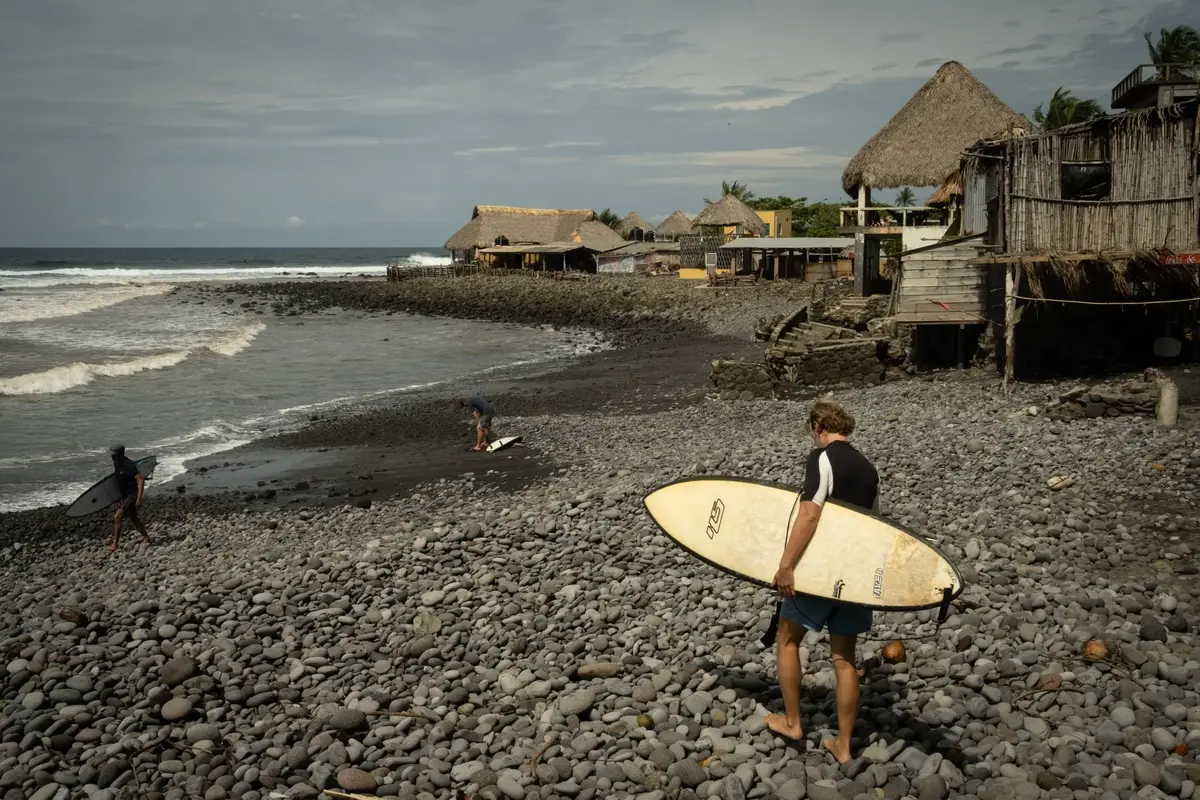
Las Flores and Punta Mango — the uncrowded Wild East
Las Flores and Punta Mango are the eastern circuit’s prize. Las Flores is a long, sand-bottom right about two hours from the airport; Punta Mango is a powerful, often boat-accessed right point that can run more than 500 yards (about 460 meters) on its best days.
In the small fishing village around Las Flores, the surf community has a reputation for hospitality that’s hard to find at busier breaks.
- Location: Eastern circuit, ~2 hours from the airport
- Wave type: Sand-bottom right (Las Flores) / boat-access right point (Punta Mango)
- Skill level: Intermediate to advanced
- Best for: Surfers chasing empty, powerful waves
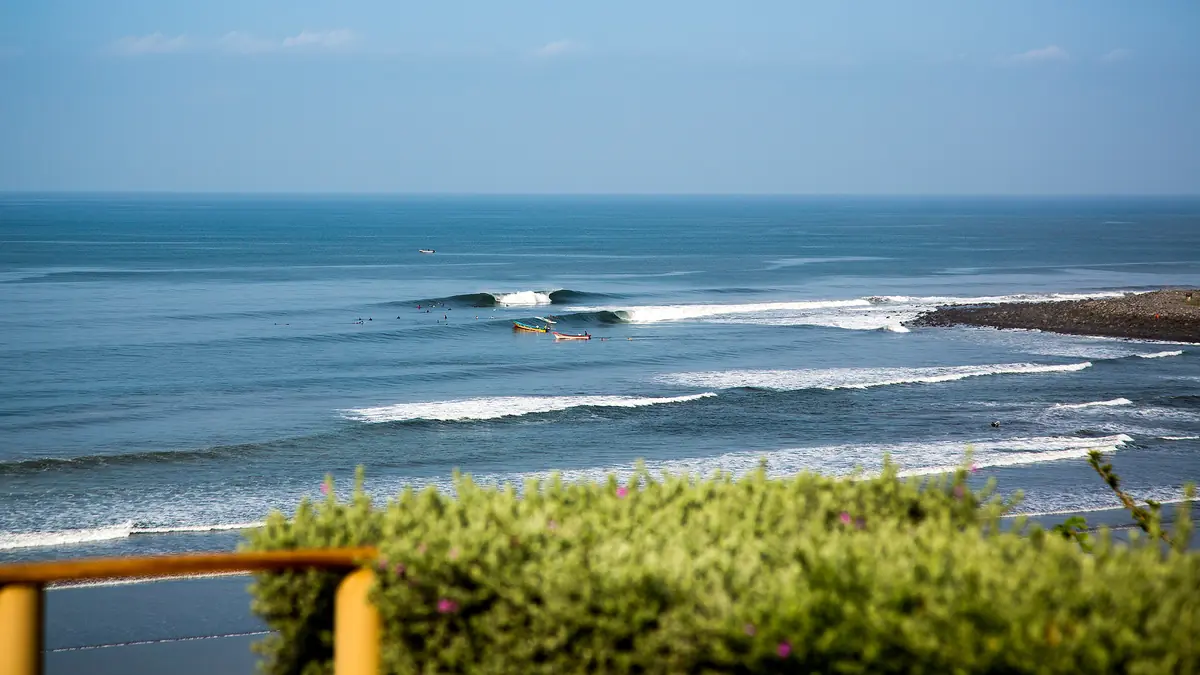
When is the best time to surf in Surf City El Salvador?
El Salvador has surfable waves year-round, but the biggest, most consistent swells arrive on south and southwest pulses from roughly March to October — prime time for advanced surfers, and also the rainy season. The drier stretch from November to April brings smaller, cleaner waves that suit beginners and intermediates, plus more reliable sunshine.
The single most useful timing trick: surf at dawn. Offshore winds usually blow in the morning and turn onshore by midday, so the glassy lineup empties fast once the breeze fills in.
| Months | Wave size | Crowds | Best for |
|---|---|---|---|
| March–October | Bigger, more consistent | Higher | Advanced surfers (rainy season) |
| November–April | Smaller, cleaner | Lower | Beginners and intermediates (drier) |
- Water temperature: about 84°F (29°C) on average, ranging 81 to 86°F (27 to 30°C) — boardshorts year-round
- Air temperature: daytime highs of 84 to 90°F (29 to 32°C)
- Wind pattern: offshore mornings, onshore afternoons
Where should you stay — El Tunco, El Zonte, La Libertad, or the Wild East?
Base in El Tunco for nightlife, walkable restaurants, and the widest lodging choice; pick El Zonte for a quieter Bitcoin Beach vibe 15 minutes west; choose La Libertad for proximity to Punta Roca; and head to El Cuco or Las Flores in the east for remote, uncrowded surf. El Tunco is tiny, so book early.
Demand outstrips supply on this coast, so quality varies more than the prices suggest, and weekends get loud.
- El Tunco: hostel dorms to resort villas — Boca Olas, Hotel Roca Sunzal, Mirasurf, Dos Palmas, Papaya Lodge
- El Zonte: Puro Surf plus budget hostels, calmer all week
- La Libertad: closest base to Punta Roca, more local and less touristy
- Eastern circuit: Las Flores Resort and a handful of remote stays
Pro Tip: Some hotels advertised as “El Tunco” are actually up the beach in El Sunzal, reachable only along the sand at the right tide. Confirm beach access and walking route before you book, or you’ll be hauling bags over rocks.
Power and water outages happen in El Tunco — fill a bottle and keep a power bank charged so an outage doesn’t end your night.
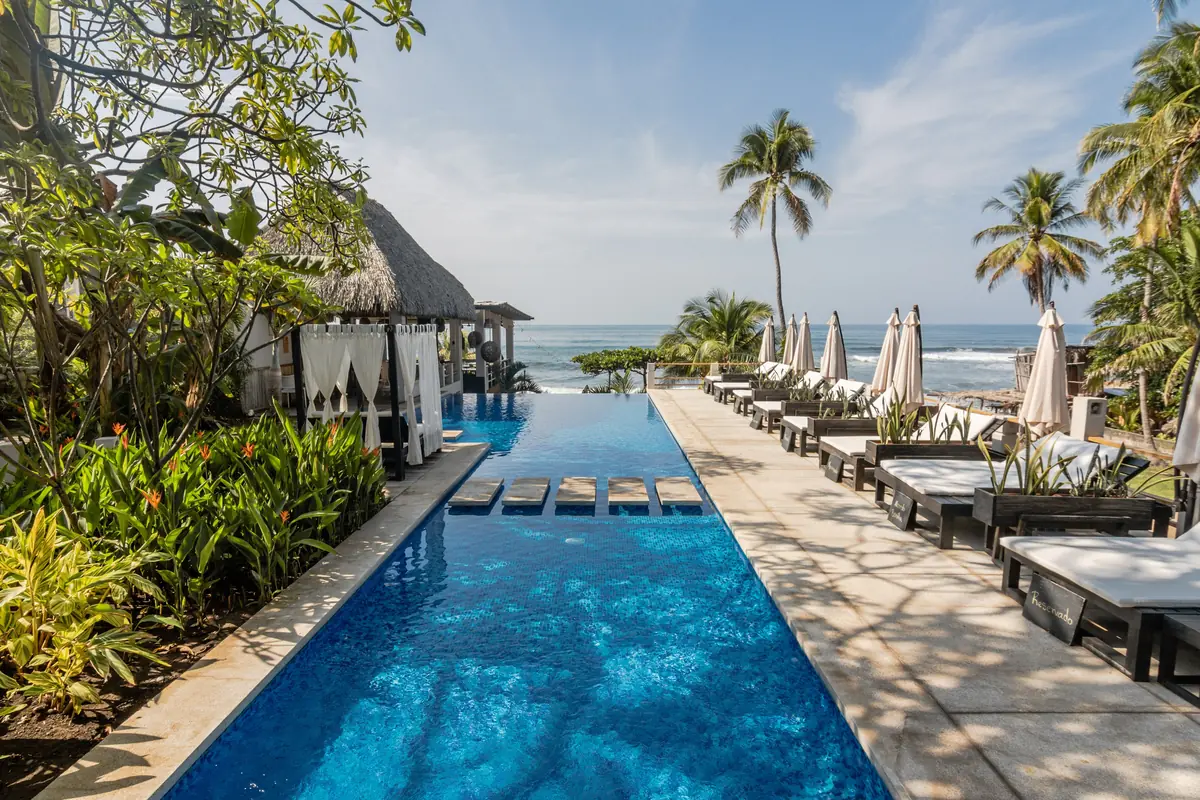
What does a Surf City trip cost — money, currency, and Bitcoin?
El Salvador’s official currency is the US dollar, so Americans skip currency exchange entirely — just bring small bills. A single-entry tourist card costs $12 on arrival and covers up to 90 days. Bitcoin is no longer mandatory currency: its legal-tender mandate was repealed, so acceptance is now voluntary and concentrated in El Zonte.
That last point matters because plenty of older guides still tell you to load a crypto wallet to pay everywhere. Ignore them. What you actually need is a stack of small US bills.
- Tourist card: $12 on arrival (cash), valid up to 90 days
- Exit tax: about $40, usually bundled into your airfare
- CA-4 zone: 90 days shared across El Salvador, Guatemala, Honduras, and Nicaragua
- Passport: must be valid 6-plus months
- Cards: accepted at larger venues; cash needed for small vendors
- ATMs: can run dry in El Tunco, so withdraw in the capital
Pro Tip: Vendors struggle to break a $20. Hoard $1 and $5 bills for pupusas, tuk-tuks, and tips — you’ll use them constantly and rarely see correct change for anything bigger.
How much are surf lessons and board rental?
Expect to pay roughly $25 to $35 for a surf lesson that includes a board, with El Tunco often a touch cheaper at $15 to $25 than El Zonte’s roughly $30. Standalone board rental runs about $10 a day, dropping to about $8 if you rent for several days. Lessons usually include transport to a safe sandy break.
- Surf lesson with board: ~$25 to $35 (El Tunco ~$15 to $25)
- Board rental: ~$10/day, ~$8/day multi-day
- Instructors: look for ISA-certified coaches
Pro Tip: Ask your hostel for a named local coach rather than walking up to the busiest stand on the beach. The good ones book out fast, and a personal recommendation gets you someone who’ll actually watch your session.
What should you eat in Surf City?
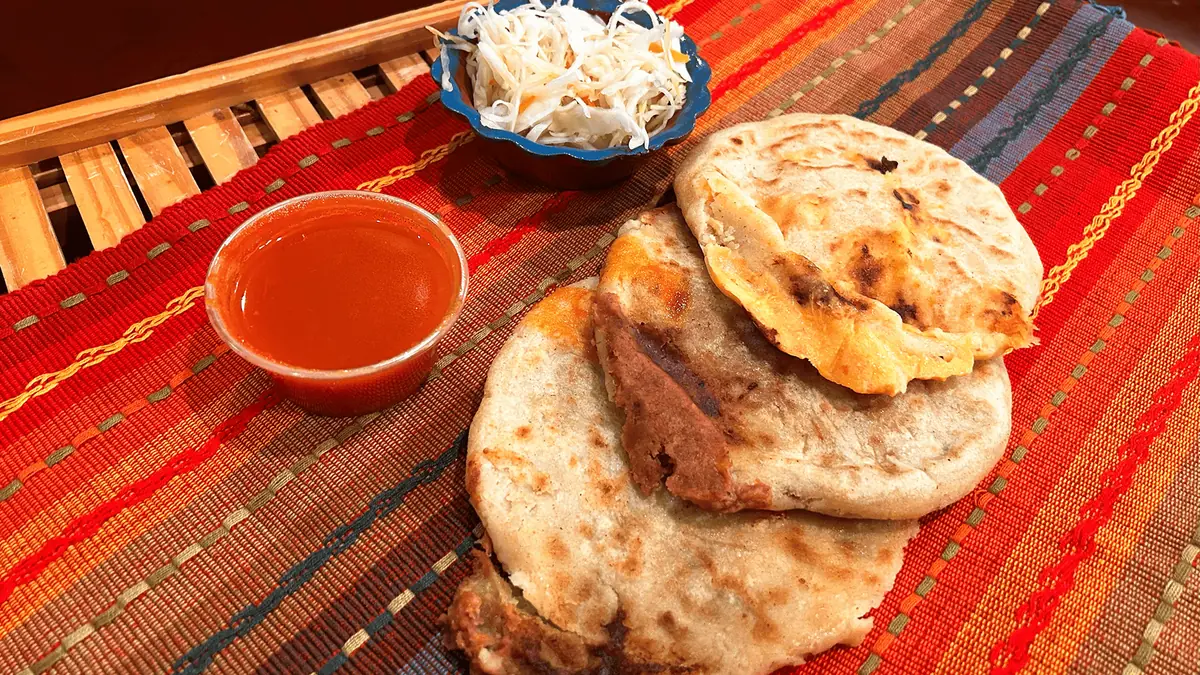
The must-eat is the pupusa — a stuffed corn flatbread served with curtido and tomato sauce, often around $1 each. The coast also delivers very fresh seafood: ceviche, whole grilled fish, and seafood soup (sopa de mariscada). Plan dinner around sunset, when El Tunco’s beachfront tables fill and the Tunco rock turns to silhouette.
- Pupusas: ~$1 each (loroco, bean-and-cheese, ayote)
- Ceviche: ~$7 to $9
- Local beer: ~$1.50 to $2
- Named spots: La Guanaquita (pupusas), Dale Dale Café, Bao House, Casa Miramar and Pargos (sunset seafood), Roca Sunzal
Pro Tip: Many bills add a roughly 10% service charge automatically, so check before you tip again. And grab two pupusas between sessions — they’re cooked all day here, not just at night.
What else can you do beyond surfing?
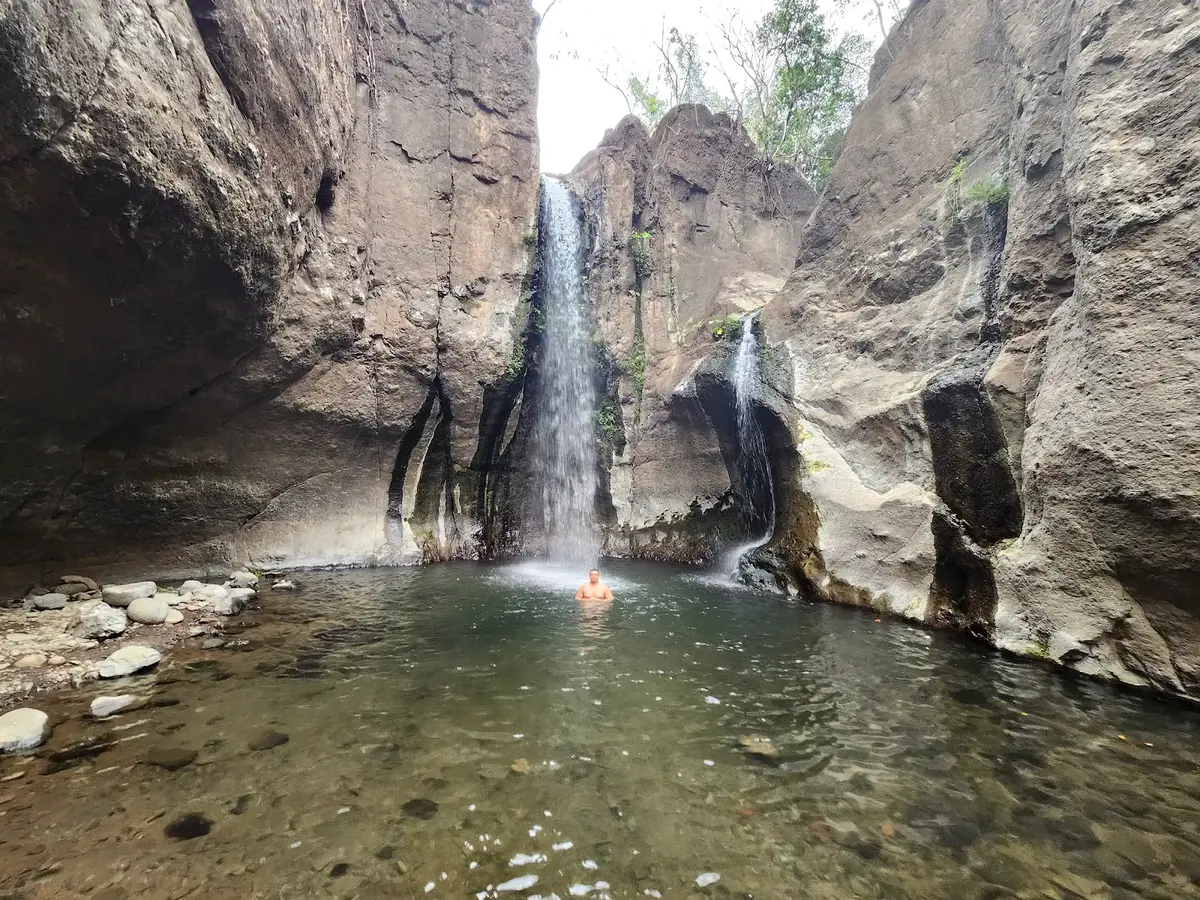
You don’t have to surf to enjoy Surf City. Hike the multi-tiered Tamanique waterfalls, browse La Libertad’s pier and the Mercado del Mar fish market, explore El Tunco’s tidal sea caves at low tide, or day-trip to a volcano or the Ruta de las Flores. Sunset-watching is a nightly communal ritual along the whole coast.
- Tamanique waterfalls: guided half-day hike with cliff-jumping
- La Libertad: pier walk plus the Mercado del Mar fish market
- El Tunco sea caves: reachable only at low tide
- Day trips: Santa Ana or Boquerón volcanoes and the Ruta de las Flores
- El Zonte extras: turtle releases and beachfront yoga
Pro Tip: Reach the caves by picking along the rocky shore southeast of the main street, and keep your phone in a dry bag — you will get wet getting there.
Do you need a car, and how many days should you plan?
You don’t need a car if you’re basing in one town — El Tunco is fully walkable, and tuk-tuks, buses, and Uber cover short hops. Rent a car or hire a surf-guide driver if you want to chase breaks along the coast or reach the eastern Wild East. For a first trip, plan four to five nights minimum to settle into the rhythm.
- In town: walkable, with tuk-tuks for short rides
- Coastal buses: run the highway for ~$0.25 to $2
- Uber: works from the airport and capital, but not for far-flung breaks
- Rental car: best arranged at the airport; allow extra time for La Libertad road construction
- Trip length: five nights lets you mix surf, rest, and one day trip
Pro Tip: To catch a highway bus, step to the road and wave — drivers stop almost anywhere along the route, and you pay onboard. No schedule, no app, no stress.
The bottom line
Surf City El Salvador is the safest, most convenient surf coast Central America has produced in a generation: long right-hand points, warm water year-round, US-dollar pricing, and El Tunco’s lineup within about 45 minutes of the airport. Base in El Tunco or El Zonte for an easy first trip, push east to the Wild East once you’ve found your feet, and go soon — the secret is well and truly out.
TL;DR: Fly into SAL, base in El Tunco (lively) or El Zonte (calm), pack reef booties and small US bills, surf El Sunzal as a beginner or Punta Roca if you can handle it, and budget around $25 to $35 for lessons. It’s safe, it’s cheap, and the waves are right-handers.
Which break would you paddle out to first — the long, forgiving rights at El Sunzal, or Punta Roca’s cobblestone point? Tell me in the comments.