Eating vegan in Portugal used to mean squinting at bread labels and falling back on olives at every meal. A national law mandating plant-based options in every public institution raised the baseline; a decade of passionate local chefs did the rest. This guide to eating vegan in Portugal covers what’s safe to eat, where to find the best options in each region, and the exact Portuguese phrases you need to navigate all of it.
Why Portugal is one of the easiest countries in Europe to eat vegan
Portugal passed Law 11/2017, requiring all public institutions — schools, hospitals, universities, prisons — to serve vegan options by law. That legal mandate created ripple effects into private restaurants, culinary school curricula, and supermarket shelf space. Eating vegan in Portugal today means more than surviving; it means eating genuinely well.
The practical effect is visible in places you wouldn’t expect: university cafeterias in Coimbra, health centers in rural towns, hospital canteens. The law normalized plant-based eating as a standard dietary category rather than a niche request.
Culinary schools responded by training chefs in plant-based nutrition. What was once a fringe choice became embedded in Portuguese food culture — state-recognized dietary infrastructure that the restaurant scene quickly followed.
What bread is actually safe to eat in Portugal?
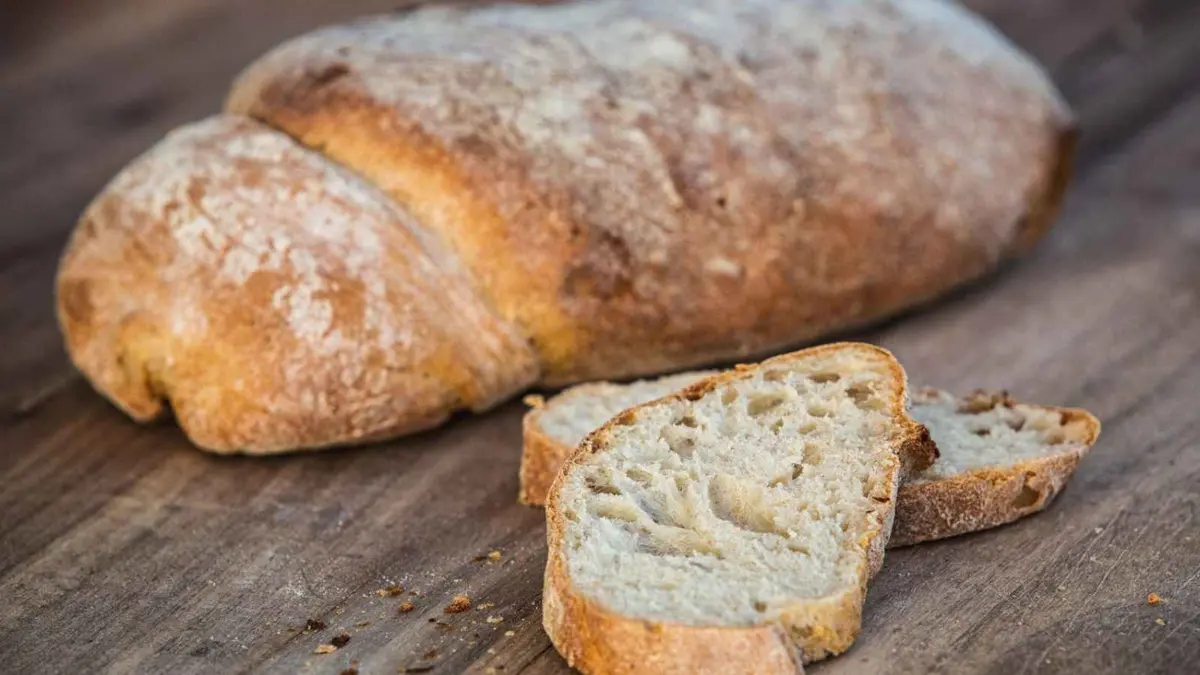
Portuguese bread is not standardized. The main risk factor is banha — pork lard — a cornerstone of traditional Portuguese food that artisanal bakeries use for texture and flavor. Supermarket bread typically relies on vegetable oils, making it reliably safe. But that rustic bakery you stumble into on a cobblestone street in Braga or Évora operates by different rules.
The safest choices
Pão de Mafra uses a high-water content and long fermentation that produces a chewy, open crumb. The recipe doesn’t require fat to work, so it’s almost always vegan. This is your baseline safe bet.
Broa de Avintes is a dense corn and rye bread from the north, traditionally vegan. It often arrives at the table alongside chorizo, so watch for cross-contamination on shared boards.
Pão Alentejano is a thick-crusted country loaf made from wheat flour, water, salt, and yeast. Reliable and safe across nearly every context.
Breads that need verification
Papo Seco is where traditional Portuguese food production matters most. The standard sandwich roll relies on lard in artisanal bakeries to achieve that crispy, blistered crust — supermarket versions skip it. A bakery version needs the question asked directly.
Folar should be avoided unless explicitly marked vegan. Savory versions contain embedded meat; sweet versions are packed with eggs and butter.
Bolo do Caco from Madeira is vegan by recipe — it’s a sweet potato bread — but it arrives slathered in garlic butter in nearly every context. Order it “sem manteiga de alho” (without garlic butter) the moment you sit down, not when the basket lands on your table.
The script to use at bakeries
Don’t ask “Is this vegan?” The term gets confused with vegetarian or misunderstood entirely in smaller towns.
Use this instead: “Desculpe, este pão leva banha, manteiga, leite ou ovos?” (Excuse me, does this bread contain lard, butter, milk, or eggs?)
If staff are unsure, look at the crust. A bubbly, blistered surface on soft rolls often signals lard. A flour-dusted hard crust is more likely water-based.
Pro Tip: The bread served at Lisbon’s tourist-facing restaurants is almost always supermarket Pão de Forma or Pão Alentejano — safe by default. Save the ingredient interrogation for actual local bakeries, where the traditional recipes still apply.
How should you handle the couvert (table appetizers)?
When you sit down in a Portuguese restaurant, appetizers appear on the table immediately. They are not complimentary — touching them means paying for them. Knowing what to keep and what to send back protects both your wallet and your plate.
Olives are always vegan. The bread is usually safe in tourist-facing restaurants. Everything else requires scrutiny.
The pâtés — those small tubs or ceramic dishes — contain sardine paste, tuna paste, or “vegetable pâté” bound with cheese or egg white. Even when something looks plant-based, assume it isn’t in a traditional restaurant. When in doubt, ask the waiter to remove the dish before you touch it: “Pode levar, por favor.” (Can you take this, please?) This removes it from the bill and eliminates cross-contamination risk.
The practical strategy: keep the olives, keep the bread if you’ve confirmed it’s safe, and wave away the pâtés immediately.
Pro Tip: Say “Pode levar o pâté, por favor” as soon as the waiter walks away after seating you. If you wait until you’ve already inspected it, staff often interpret hesitation as interest.
How to shop at Portuguese supermarkets as a vegan
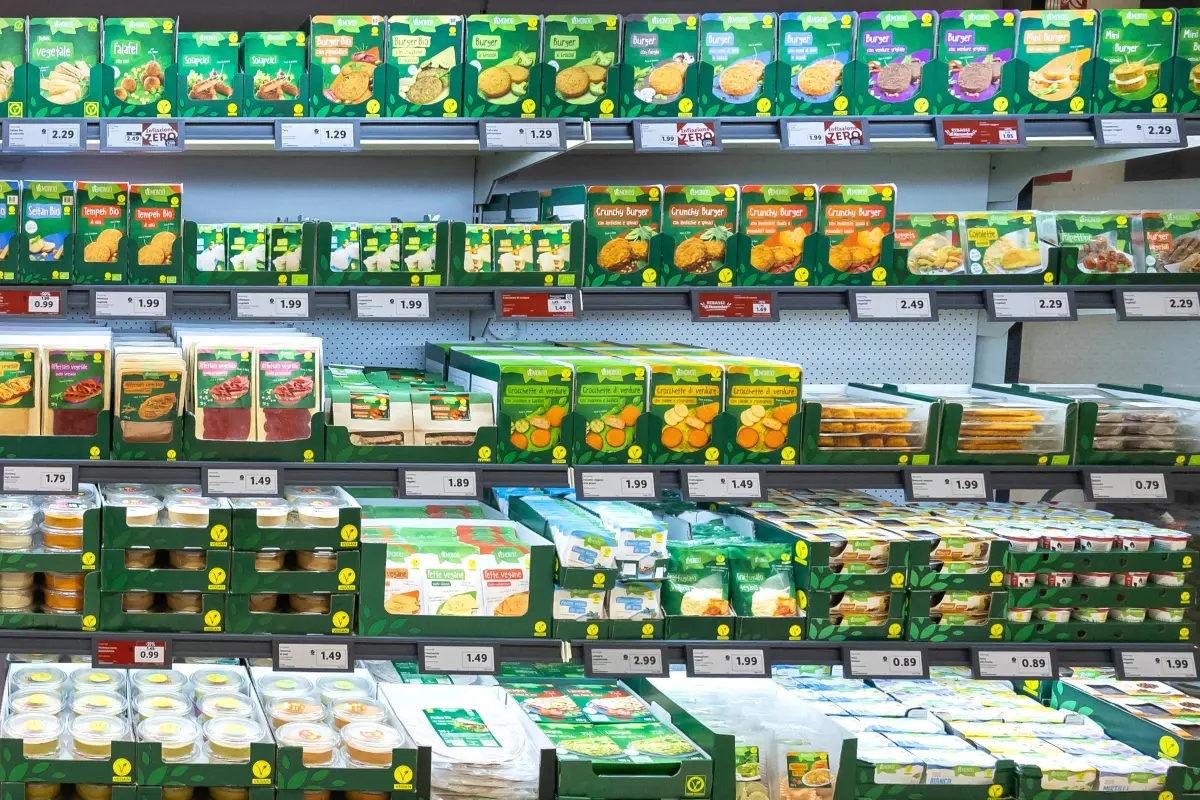
Portuguese supermarkets have invested seriously in plant-based private labels. Knowing which chain carries what saves time and money, particularly if you’re keeping an eye on Portugal travel costs outside major cities where specialty stores don’t exist.
Lidl (Vemondo) — best for budget travelers
The Vemondo range covers barista oat milk, soy yogurts, vegan pizzas, smoked tofu, and seitan. A liter of soy milk runs €0.80 to €1.20 (approximately $0.88 to $1.32) — meaningfully cheaper than branded alternatives. Even small-town Lidls stock the core range, making this your most consistent option across the country. If you’re self-catering in the Algarve or doing van life, this is your base camp.
Pingo Doce (Pura Vida / Go Active) — best for ready-to-eat convenience
The refrigerated section carries “Bolognese de Soja” and vegetable curries that you can eat straight from the container — genuinely useful for trains and long ferry rides where nothing else is open. Their liquid soy yogurts are good value. One caution: the “Go Active” line markets itself as “healthy” rather than vegan. Some products in that range contain egg whites. Check every label before you buy.
Continente (Equilíbrio) — best for variety outside major cities
Large Continente hypermarkets carry Violife and Nurishh alongside their private-label Equilíbrio range. The “Quinoa, beans and peppers” and “Barley, peas and spinach” ready meals are solid. This is where you’ll find the widest branded selection — Alpro, and so on — when you’re not near a specialty store. Look for the consistent “V” or “Vegan” label on Equilíbrio products; the certification is applied reliably.
Celeiro — the specialty shop
Think of Celeiro as Portugal’s version of a Whole Foods. It’s not budget-friendly, but it’s where you find nutritional yeast, vital wheat gluten, and tempeh. Most locations have a small cafeteria serving macrobiotic and vegan lunches — reliably executed and a good fallback in cities where Celeiro operates.
Where to eat the best vegan food in Lisbon
Lisbon is now a tier-one European vegan destination. The city splits between places recreating Portuguese classics in plant-based form and vegetable-forward fine dining that doesn’t reference meat at all.
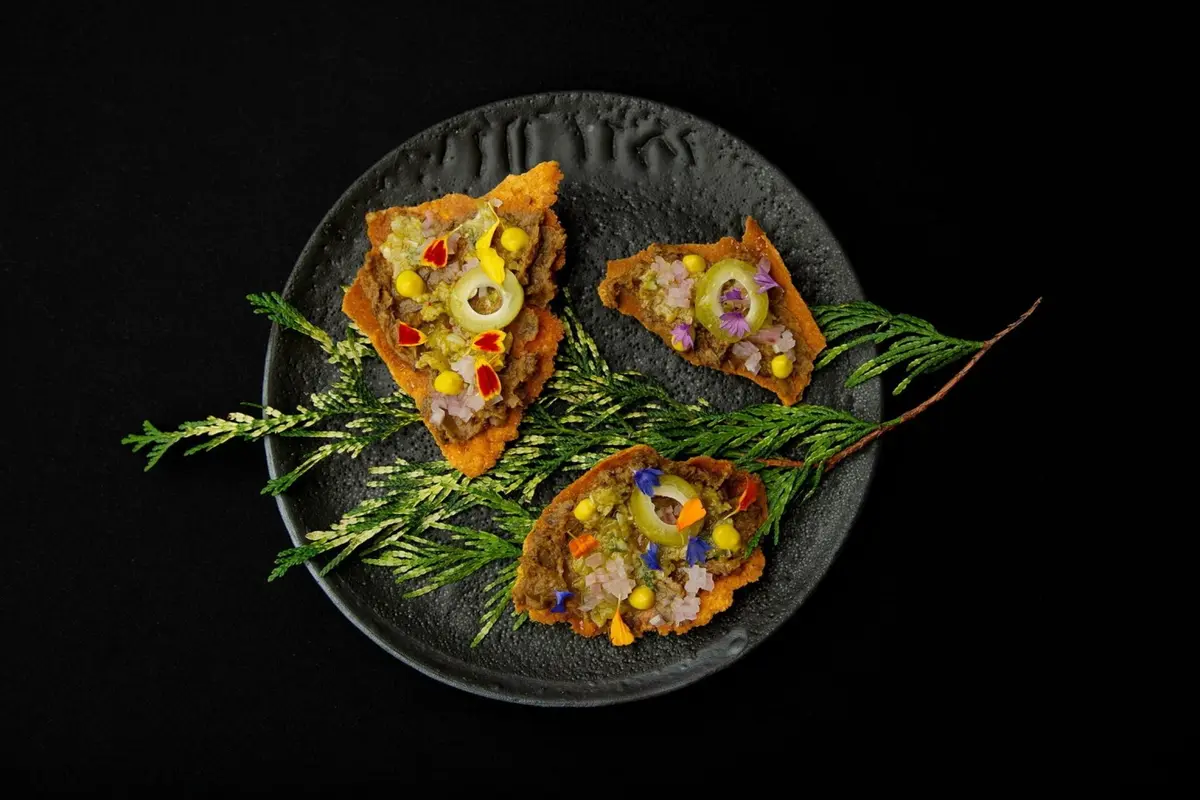
1. Encanto — Michelin-starred fine dining for plant-based guests
Encanto, José Avillez’s vegetable-focused restaurant, holds a Michelin star and a Green Michelin Star — the only restaurant in Portugal to hold both simultaneously. The kitchen runs a single 12-moment tasting menu that changes with the season, sourcing around 85% of ingredients from small Portuguese farmers practicing regenerative agriculture. Each course is served with an explanation from the floor team; the non-alcoholic pairing of housemade juices, infusions, and kombuchas is as thoughtfully constructed as the wine list.
The standard menu is vegetarian, and uses eggs and Azorean cheese in some moments. Fully vegan guests should specify “vegan tasting menu” when booking — the kitchen accommodates this without issue when given advance notice. Ring the bell at the entrance to be admitted.
- Location: Largo de São Carlos 10, Chiado (nearest metro: Baixa-Chiado)
- Cost: from ~€95 per person before drinks
- Best for: Special occasions, celebration dinners, couples and solo diners who want serious cooking
- Time needed: 3–4 hours
Reservations are mandatory and fill weeks out. Dinner only, Tuesday to Saturday.
2. Ao 26 Vegan Food Project — Portuguese classics, fully vegan
Ao 26 solves the problem of wanting to eat what everyone else in Lisbon is eating. Their “Polvo” (octopus) made from Eryngii mushrooms replicates the sea texture that defines Portuguese coastal cooking. The Francesinha and seitan “Bife au Paillard” let you participate in the country’s food culture without compromise. Average spend runs around €19 per person.
I went at dinner and the front room had the noise level of a packed weekend market — enthusiastic, not elegant. If you want a quieter experience, ask for a table in the back.
- Location: R. Horta Seca 5, Chiado
- Cost: ~€19 average per person
- Best for: Mixed groups of vegan and non-vegan eaters, anyone wanting Portuguese-style dishes
- Time needed: 1.5 hours
3. The Food Temple — Mouraria’s original vegan spot
The Food Temple was the first vegan restaurant in Lisbon, and it hasn’t left Mouraria since opening. In summer, the restaurant spills onto the cobblestone steps of Beco do Jasmim — you sit on cushions balanced against the stairs, plates balanced on narrow wooden slats, neighbors hanging laundry two stories above. It feels exactly like discovering something. The daily menu features cashew mozzarella, complex soups, and rotating vegetable dishes that change with the market.
Tapas run €3–9, mains around €12. A tasting menu covering most of the board costs about €28.
- Location: Beco do Jasmim 18, Mouraria
- Cost: Tapas €3–9; mains ~€12; tasting menu ~€28
- Best for: Atmosphere, couples, solo diners comfortable in tight spaces
- Time needed: 2 hours
- Hours: Wednesday–Sunday, dinner only
GPS fails reliably in Mouraria’s narrow lanes. Look for the blue door, walk toward the sound of conversation spilling down the steps.
4. VeganNata — the only certified vegan pastel de nata bakery
VeganNata is the only fully certified vegan bakery in Lisbon dedicated to the pastel de nata. The pastry is structurally indistinguishable from traditional butter-laminated versions — the custard sets correctly, the top scorches at the right temperature, the crust shatters. Pastéis start at around €1.20 each.
- Location: R. da Misericórdia 9, Chiado (also Campo de Ourique)
- Cost: Pastéis de nata from ~€1.20 each
- Best for: Anyone who wants zero cross-contamination risk from egg-based pastries at mixed bakeries
- Time needed: 15–20 minutes
Is Porto actually vegan-friendly? The Francesinha problem
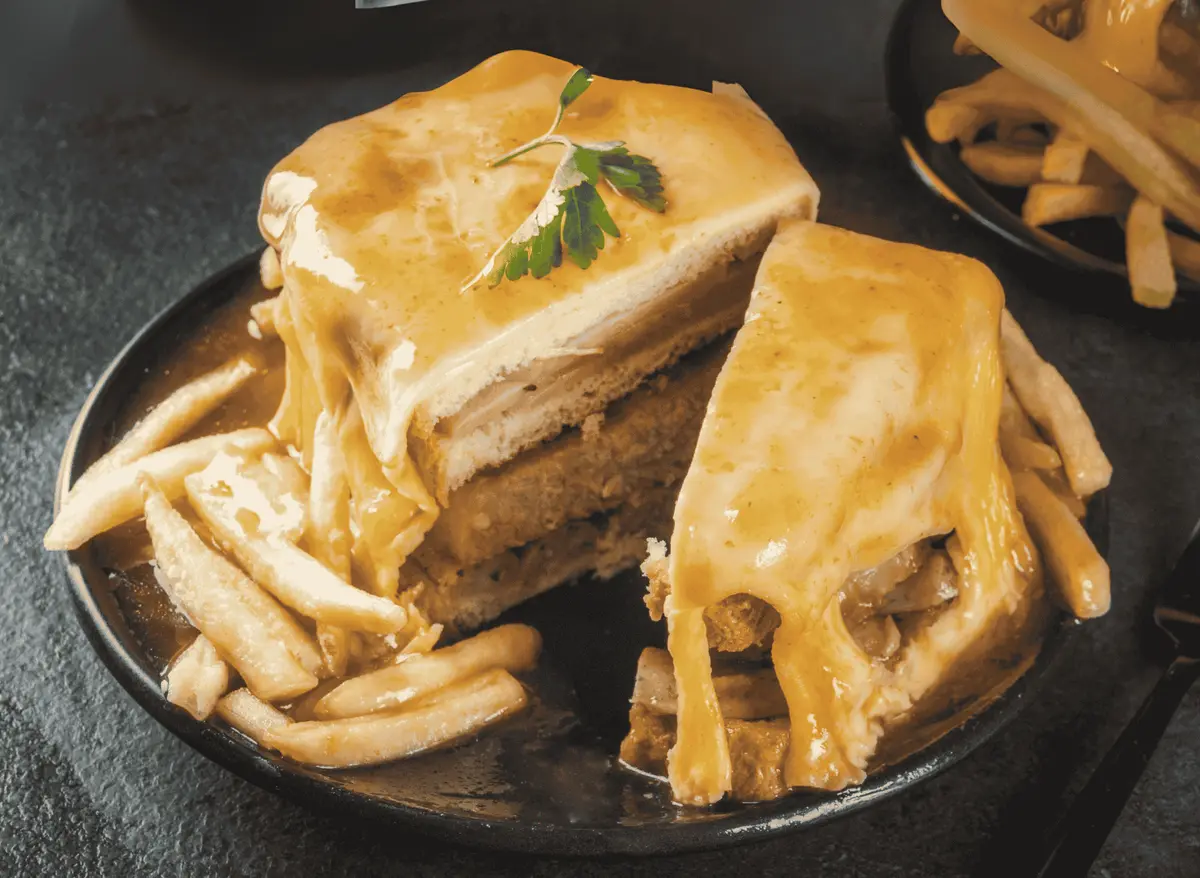
Porto’s culinary identity is anchored to the Francesinha — a sandwich of bread, ham, sausage, and steak, drowned in beer-tomato sauce under melted cheese. Vegans can eat one. The challenge isn’t replacing the meat; it’s replacing the sauce, which traditionally uses beef bone broth as its base.
Brasão Aliados has a vegetarian Francesinha option and is worth the visit for the full Porto atmosphere — wood paneling, long communal tables, Super Bock on tap, serious noise levels at lunch. DaTerra (buffet style) and Lado B both deliver respectable plant-based versions of the dish. Eating a Francesinha is a Porto rite of passage; these spots let vegans participate in it.
Pro Tip: Santa Francesinha near Bolhão metro has built a specific reputation for its fully vegan Francesinha — seitan steak, soy chorizo, portobello mushrooms, and a 100% plant-based sauce. It’s the version most Porto vegan regulars name first.
Does the Douro Valley work for vegan travelers?
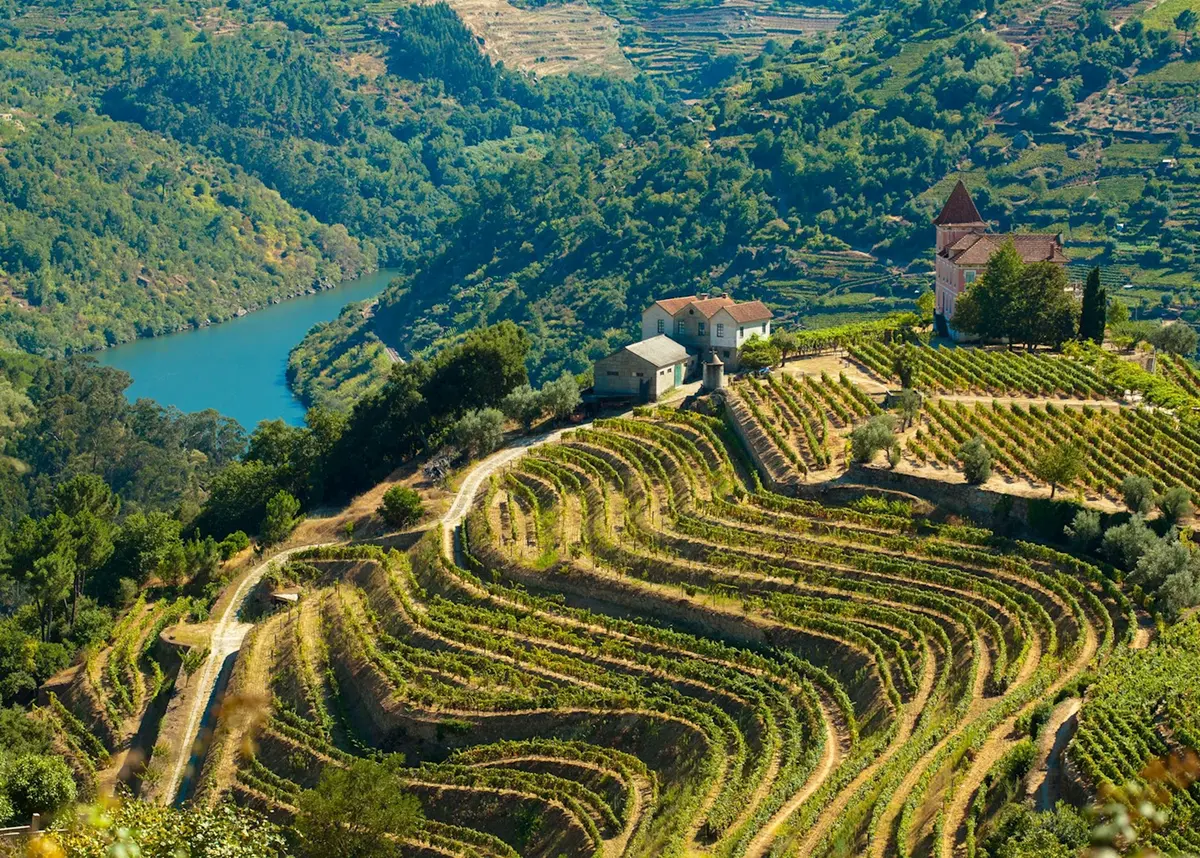
Traveling through the Douro Valley requires advance planning. As a wine region, vegetable agriculture takes second place to grapes, and traditional wine estate quintas run fixed menus designed around meat and fish. Arriving without prior communication about your diet will leave you eating bread and olive oil at €80-a-head dinners.
Communicate dietary restrictions 24 to 48 hours in advance, and be specific. Saying “vegetarian” in the Douro often results in an omelet. Write out the full restrictions and send them by email or WhatsApp before you arrive.
Six Senses Douro Valley’s “Terroir” restaurant is a plant-based sanctuary in otherwise meat-heavy territory. Expensive and flawless in equal measure.
LBV79 in Pinhão offers explicit vegan options — rare for a small riverside village with fewer than 800 residents.
One practical note on Portugal wine: Port is often fined using gelatin or egg whites. Look for vintage Ports labeled unfined or unfiltered if this matters to you.
What can vegans actually eat in the Alentejo?
The Alentejo is Portugal’s heartland of Porco Preto (Iberian black pork). The cuisine is bread-heavy, which sounds promising — until you understand how that bread gets cooked.
The Migas trap explained
Migas is fried bread crumbs cooked with garlic, olive oil, and water. It looks vegetarian. Traditional Alentejo Migas is cooked in banha (lard) or served with pork ribs dripping fat onto the bread. It is rarely vegan by default and rarely labeled clearly.
How to order it correctly: ask for “Migas com Azeite” (Migas with olive oil) and confirm there’s no meat garnish. Café Alentejo in Évora accommodates this request without issue.
Évora — the most vegan-friendly stop in the region
Évora‘s university population supports a vegan scene that makes no sense for a city its size, given the surrounding landscape of steakhouses and pork fat.
Salsa Verde runs a pay-by-weight vegetarian buffet. High volume, low cost, genuinely reliable. On my last visit, the legume dishes rotated three times across lunch service.
Dom Joaquim holds a Michelin recommendation for traditional cooking. The menu is meat-heavy, but with 24 hours’ advance notice, the kitchen will curate a vegan plate from the sides — asparagus, mushrooms, Alentejo bread — that’s worth ordering. Don’t just show up and ask.
How does the Algarve split for vegan travelers?
The Algarve runs two parallel food cultures depending on which coastline you’re on, and they don’t overlap much.
The resort coast around Albufeira and Portimão is tourist-trap territory: “Full English Breakfasts” and menus translated into six languages with no local content. Gandhi Palace in Albufeira is the strategic stronghold — authentic Indian cuisine that is naturally plant-based, open year-round, and doesn’t adjust the menu for tourist season.
The west coast around Costa Vicentina is surfer and van lifer territory. Viv’o Mercado in Lagos (every Wednesday) is essential for self-catering — organic producers selling fermented foods, vegan cakes, and local produce from trucks. Balance Café in Portimão and Vida Leve in Faro cater to the wellness demographic with macrobiotic bowls and tofu dishes if you need a sit-down option.
Madeira — Europe’s subtropical vegan garden
Madeira‘s subtropical climate produces passion fruit, bananas, and monstera deliciosa fruit that make eating vegan here feel genuinely abundant rather than strategic.
Fala Fala in Funchal is the dedicated vegetarian and vegan spot with a cult following among both locals and long-stay travelers. Reservations are recommended; it fills quickly on weekends.
Reid’s Palace offers a vegan afternoon tea on a cliffside terrace above the Atlantic — vegan scones, finger sandwiches, the works. It requires 24-hour advance notice and the price reflects the address. Worth it for the setting alone if you’re celebrating something.
Bolo do Caco again: the sweet potato bread is vegan. Order it “sem manteiga de alho” every time, without exception. It arrives buttered by default.

The Azores — plan your food carefully
The Azores are dairy country. The volcanic hillsides of São Miguel are covered in grazing cows; local dairy is everywhere and the cuisine reflects it. Outside the main city of Ponta Delgada, options narrow considerably.
Rotas da Ilha Verde in Ponta Delgada is destination dining — often fully booked, and worth calling ahead for. They serve vegan cheese fondue and vegetable curries that rival what you’d find in Lisbon, in a cozy converted house that feels far removed from any island cliché. Let staff know you’re fully vegan when you book, not when you sit down.
For self-catering: stock up on hiking snacks at supermarkets in Ponta Delgada before heading to Sete Cidades or Furnas. Remote areas of São Miguel have limited options, and the trails near the calderas are a long way from anything resembling a plant-based café.
- Rotas da Ilha Verde: Rua Pedro Homem 49, Ponta Delgada (closed Sunday–Monday; open Tuesday–Thursday and Saturday, lunch and dinner)
The Portuguese words that actually matter
Mastering a set of basic Portuguese phrases makes a material difference to how well you eat — especially outside cities where “sou vegano” (I am vegan) creates confusion because the term gets conflated with vegetarian.
The critical vocabulary:
- Banha: lard (used in beans, pastry, bread)
- Manteiga: butter (added to finish soups, rice, vegetables)
- Leite: milk
- Mel: honey (common in granola and “healthy” desserts)
- Ovo: egg (used to glaze pastries)
- Sem: without — the most useful word in the language (“sem queijo” = without cheese)
The sentence for restaurants: “Não como carne, peixe, lacticínios, ovos, ou mel. Tem opções veganas?” (I don’t eat meat, fish, dairy, eggs, or honey. Do you have vegan options?)
What non-vegan additives hide in Portuguese processed foods?
Portuguese food labeling uses EU E-numbers. These are the ones that appear frequently in supermarket snacks and packaged goods and are not vegan:
- E120 (Cochineal/Carmine): insects; found in red yogurts, sodas, and candies
- E441 (Gelatin): animal bones; gummy candies and some mousses
- E904 (Shellac): insect secretion; used as a shiny coating on fruit and chocolates
- E631 (Disodium Inosinate): derived from meat or fish; found in savory snacks and flavored chips
Check packaging on anything flavored, particularly in the supermarket snack aisle. These don’t appear on menus and staff rarely know they’re there.
What tools and strategies actually help vegan travelers?
HappyCow remains the standard for discovery across all regions. Download TheFork as well — it’s widely used in Portugal and offers meaningful discounts on bookings at vegan-friendly establishments. For trip logistics beyond the food — accommodation, transport, and what to plan before you fly — the Portugal travel guide covers every region in one place.
The “Prato do Dia” strategy: look for the daily lunch special board rather than the full menu. Even non-vegan restaurants often include a “Prato Vegetariano” (vegetarian plate) that’s almost always vegan by default, fresher than the à la carte options, and priced 30–50% lower.
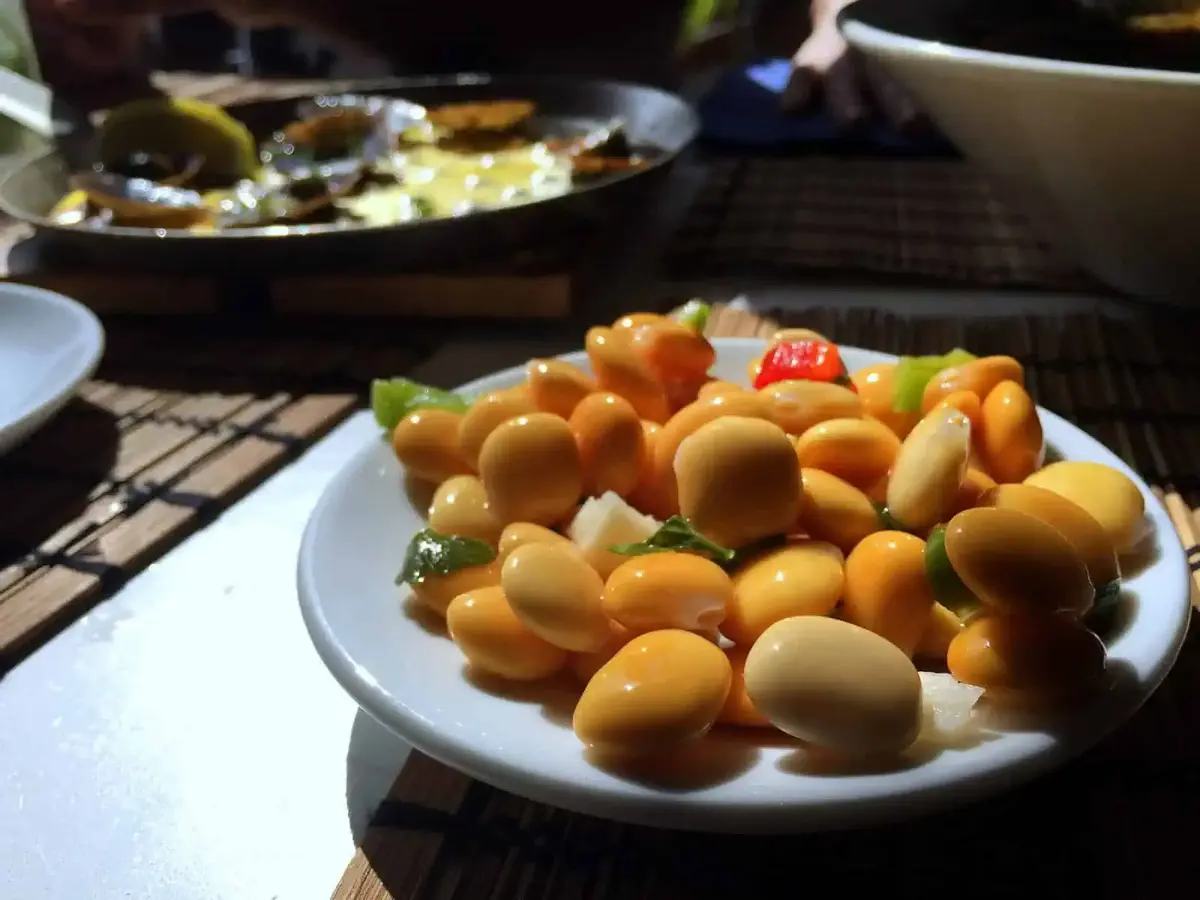
One snack worth knowing: tremoços are yellow lupin beans — salty, pickled, protein-dense, and served with beer at neighborhood tascas across the country. The ritual involves biting the skin to pop the bean directly into your mouth. They are everywhere once you know to look for them, and they are 100% vegan. Order them by name — “uma dose de tremoços, por favor” — and you’ll get them for a euro or two with minimal ceremony. Eating tremoços at a local bar, on a plastic stool, is a reliable signal you’ve stepped beyond the tourist circuit.
Before you go
Portugal has moved well past the “difficult for vegans” reputation that outdated travel advice still promotes. Law 11/2017 built the legal floor; the restaurant scene built the ceiling.
TL;DR: Know which bread to trust and which to interrogate, defuse the couvert before it hits your bill, and identify your safe havens in each region in advance. Portugal’s olives, wines, breads, and vegetables have been central to the culture for centuries — you’re just eating the part of the menu that was always there.
What’s your vegan Portugal experience? Did any of these spots surprise you, or did you find something better that isn’t on this list?