Comporta Portugal gets the filtered version in most travel guides — the thatched cabanas, the celebrity sightings, the soft-focus rice paddy views. This guide covers what they skip: the mosquito situation in August, the rental scams, why your compact car will strand you, and how to actually get a table at Sal.
Why does Comporta look nothing like the rest of Portugal?
Comporta Portugal is not Lisbon with a beach, and it is not the Algarve. This 12,500-hectare stretch about 90 minutes south of Lisbon was privately owned by a single banking family for decades, which accidentally preserved it from the high-rise hotel development that consumed much of Portugal’s southern coast.
The result is a cluster of villages — Comporta, Carvalhal, Brejos, Melides — scattered across rice paddies and pine forests, with strict building codes mandating the traditional cabana style. Billionaires hide in wooden huts here. The most exclusive restaurants have sand floors. That contrast is the entire point.
This “wild luxury” comes with real trade-offs. The rest of this guide covers all of them.
What does every Comporta guide leave out?
Most guides present Comporta Portugal as effortlessly glamorous. They skip the dusk mosquito window that runs from roughly 7:30 PM to 9:30 PM in August, the unpaved sand tracks that will defeat a compact rental car, and the Sunday evening ferry queues at Setúbal that can cost you two hours with no workaround. The three sections below cover each in detail.
Does Comporta have a mosquito problem?
Yes, and it is worse than most guides admit. Those rice paddies are flooded wetlands, and understanding the best time to visit Portugal matters here — mosquitoes peak hard in July and August. The worst window runs roughly 7:30 PM to 9:30 PM — exactly when you want to be dining outside. Properties near the fields or inside the pine forest get hit hardest; beachfront villas have it considerably better.
Hit a local pharmacy as soon as you arrive. Look for Bodyguard, Tabard, or Previpic with Icaridin or DEET. Electric plug-in repellents are available at any Mini Preço supermarket for a few euros. Before booking any rental, confirm all windows have intact mosquito nets — this is not optional.
Pro Tip: Buy a two-pack of electric plug-in diffusers (Dum Dum or Raid brand) at the supermarket on arrival day. One for the bedroom, one for the terrace. They make the 7 PM dinner question a non-issue.
How do you get to Comporta from Lisbon?
Two routes connect Lisbon Airport to Comporta: the Atlantic Ferries car ferry from Setúbal to Tróia, or the direct A2/A12 highway via the Vasco da Gama Bridge in about 1 hour 15 minutes. The highway is faster; the ferry is the better experience — and the smarter choice on the way back when you’re catching a flight.
The ferry route via Setúbal:
- Drive about 40 minutes from Lisbon to Setúbal’s Doca do Comércio terminal
- Take the 25-minute crossing to Tróia — around €26.50 one way for a car with driver and one additional passenger
- Drive south through the Tróia Peninsula into Comporta
- Watch for the resident pod of bottlenose dolphins in the Sado Estuary — sightings are common, not rare
Avoid Sunday evenings on the ferry route in summer. Queues at Setúbal stretch for hours with no warning and no workaround.
Pro Tip: On the ferry, get out of your car. The Sado Estuary crossing is one of the most underrated 25 minutes in Portugal — the Arrábida mountain range on one side, open Atlantic horizon on the other, and dolphins that treat the ferry wake as personal entertainment.
Do you really need a 4×4 in Comporta?
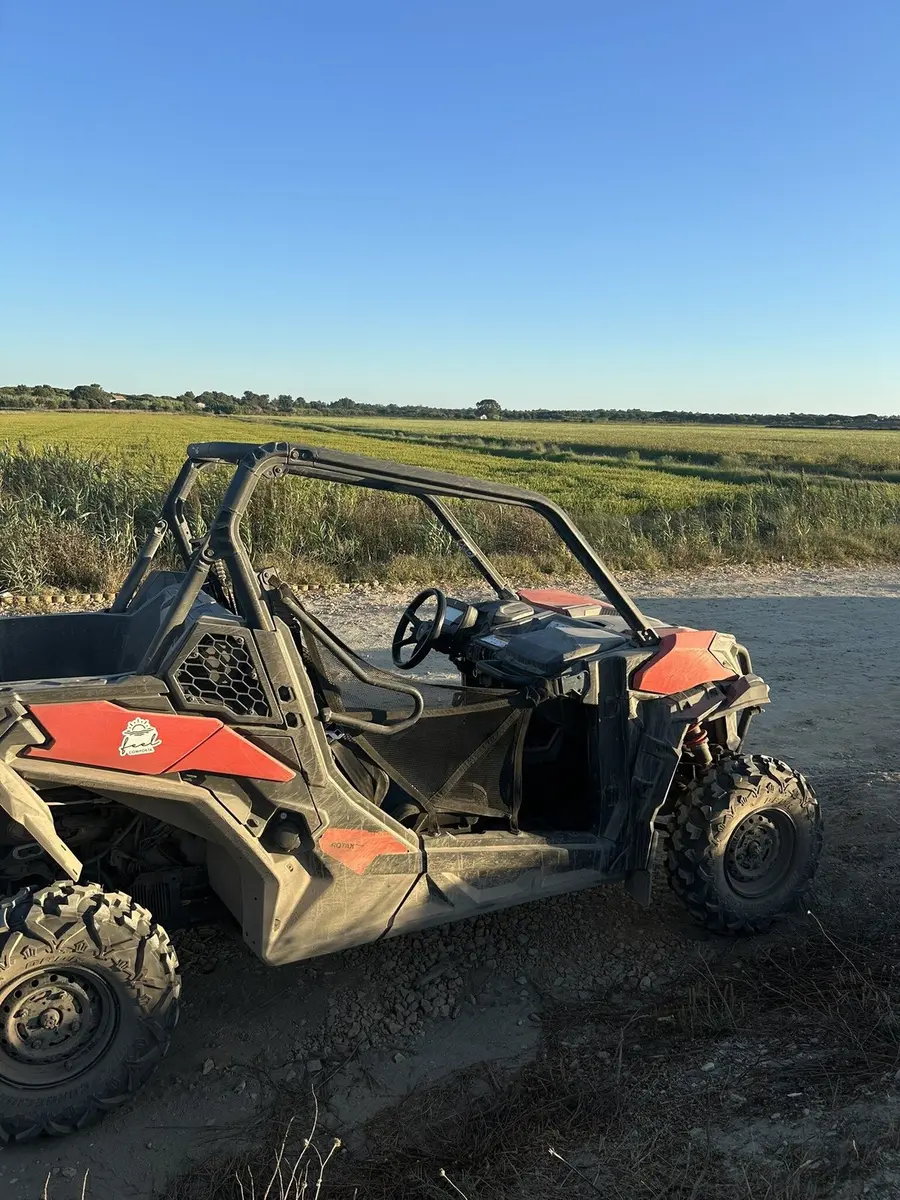
For the full experience, yes. Comporta is not walkable — villages sit 6 miles (10 km) or more apart, and the best beaches require navigating unpaved sand tracks. Before committing to a vehicle, review the full picture on renting a car in Portugal — compact options handle the main roads, but you will be locked out of Praia dos Brejos and certain villa access roads entirely.
If your car gets stuck in sand:
- Do not spin the tires — it digs you deeper
- Keep momentum; stay in second gear on soft patches
- Park with at least two wheels on hard ground whenever possible
Make sure your rental has a Via Verde transponder activated for electronic tolls on the A2 highway, or you will face administrative headaches on the back end of your trip.
Which Comporta hotel fits your trip?
Comporta has three main hotels, each serving a different traveler — Sublime Comporta for full-service resort structure in the pines, Quinta da Comporta for walkable access to Carvalhal village, and Vermelho in Melides for design-first travelers willing to trade beach proximity for seclusion. For broader context on how these compare to options across the country, our overview of Portugal hotels covers the full range. First-timers who want the resort safety net will be well-served by a hotel. Travelers chasing the authentic experience should look at villa rentals in the Brejos da Carregueira area — but vet the rental agency before you wire anything.
Sublime Comporta
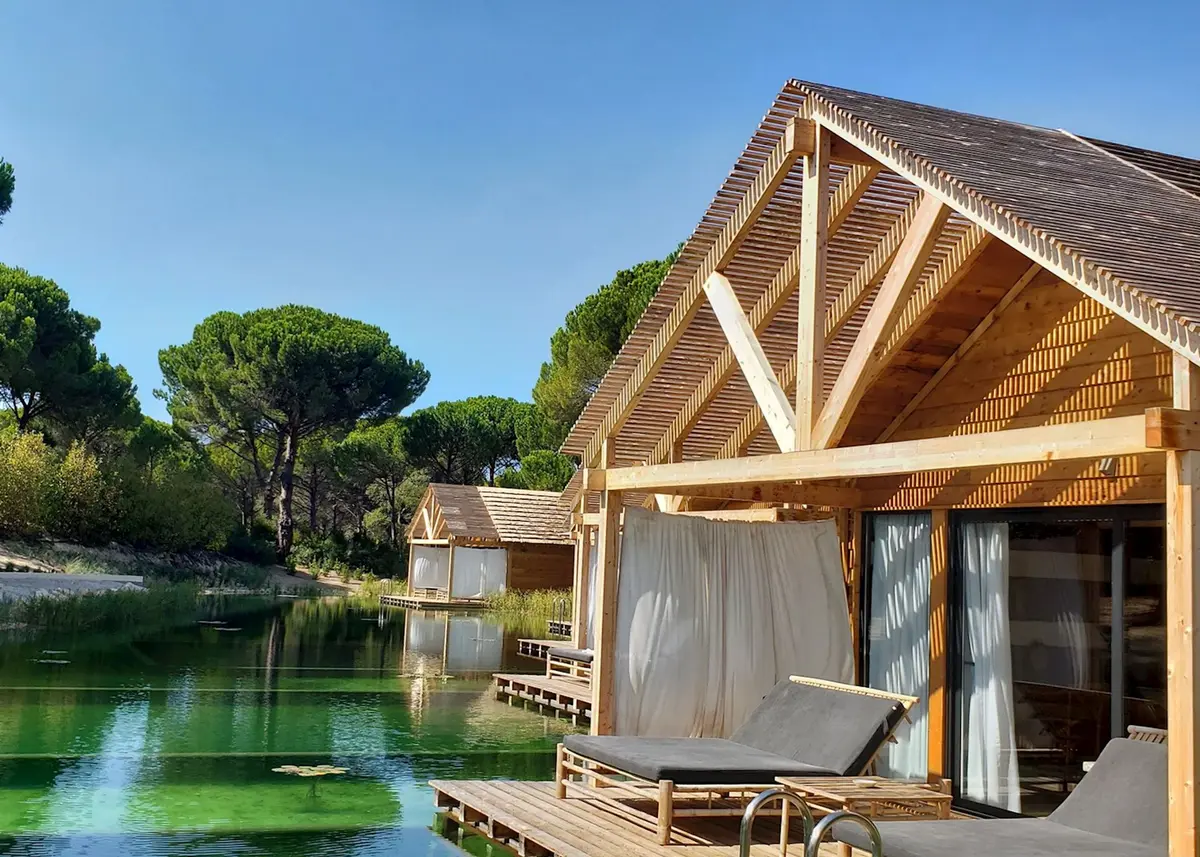
Sublime sits inland in the Muda pine forest, about 10 minutes by car from Carvalhal Beach. The Bio-Pool Suites built over natural swimming ponds are the kind of thing people fly here specifically to see — the water is dark and clear and the surrounding pines make the whole setup feel like a set piece from a different century.
The tradeoff: the pine forest location means higher insect activity at dusk, and rooms near the access road pick up traffic noise. For first-timers who want a resort safety net, it delivers consistently. The Food Circle chef’s table dinner is worth booking well ahead — it fills faster than the hotel itself.
- Location: Muda pine forest, about 10 minutes by car from Carvalhal Beach
- Cost: From €450/night for rooms; villas significantly higher
- Best for: First-time visitors, couples, anyone wanting full-service resort structure
- Time needed: Minimum 3 nights to settle into the pace
Quinta da Comporta
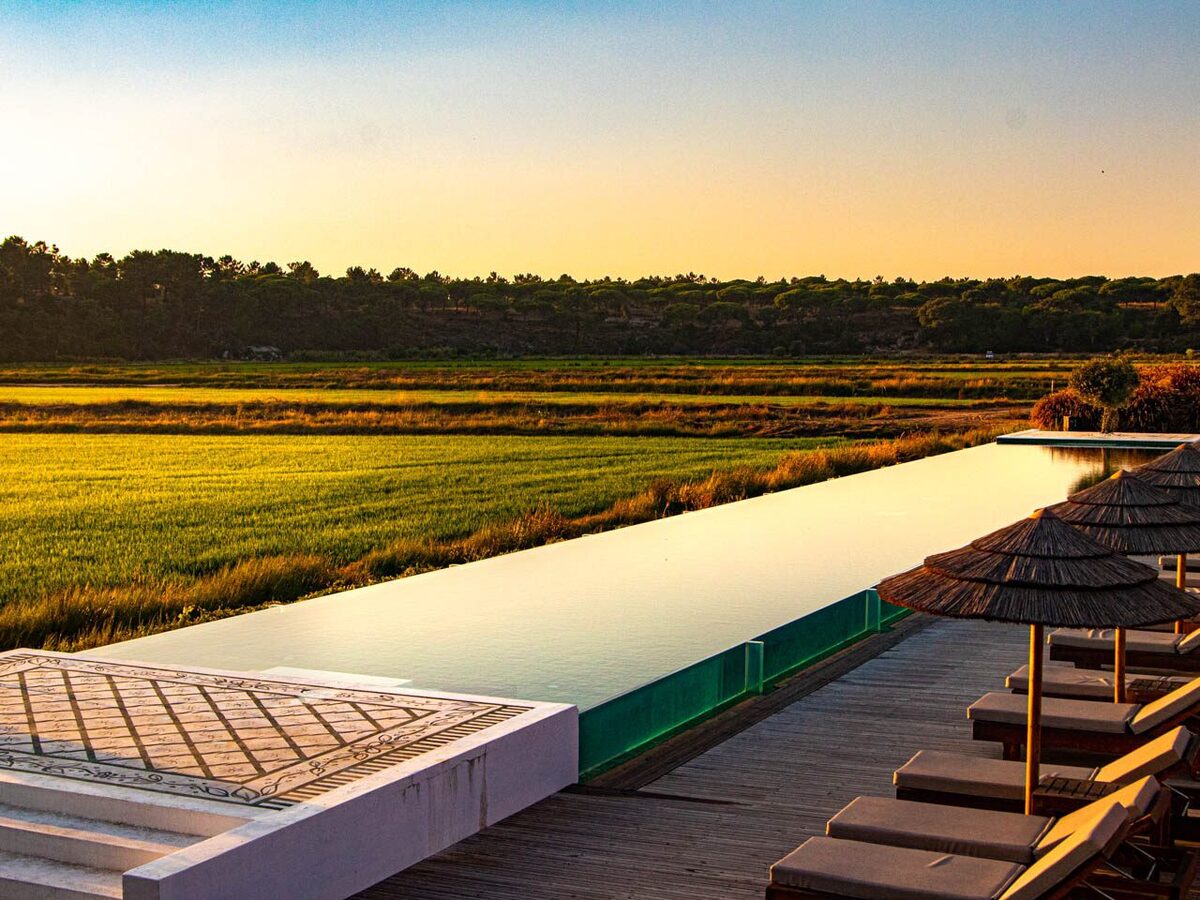
Designed by Miguel Câncio Martins to feel like a traditional farm estate, Quinta da Comporta offers something Sublime doesn’t: walkability into Carvalhal village. The infinity pool appears to bleed directly into the surrounding rice paddies — on a clear afternoon, the reflection line disappears entirely.
Those rice field views carry the mosquito risk in full. The design is quietly specific in a way that does not announce itself on arrival — it accumulates. For design-focused travelers who want to explore on foot without needing a car for every errand, this beats being entirely car-dependent.
- Location: Just outside Carvalhal village
- Cost: From €350/night
- Best for: Design-focused travelers, couples, walkable-location seekers
- Time needed: 3–5 nights
Vermelho, Melides
Christian Louboutin’s maximalist baroque project sits 30 minutes south of Comporta’s main action in Melides. It is not beachfront. If you are an art lover who prioritizes design and atmosphere over proximity to Sal and Carvalhal, Vermelho delivers something the other two properties don’t.
The trade: you are 30 minutes from Comporta’s main restaurants and beaches, which means committing to Melides as your base rather than treating it as a day trip.
- Location: Melides, 30 minutes south of Comporta village
- Cost: From €550/night
- Best for: Art and design lovers, travelers who prioritize seclusion and sophistication
- Time needed: 3+ nights
The private villa option — Brejos da Carregueira
For the authentic Comporta experience, you want Brejos da Carregueira — a network of sand tracks hiding large pine-forest compounds with restricted beach access via key card. The tracks here demand high clearance, and brushing up on driving in Portugal before arrival — toll systems, Via Verde transponders, coastal road conditions — prevents unnecessary headaches at both ends of the trip.
Rental scams are a serious issue here due to limited inventory and high demand. Use only verified agencies like Comporta Vacation Homes, Le Collectionist, or Alma da Comporta. If someone requests a direct wire transfer or refuses a video tour, walk away.
Pro Tip: Book villa rentals at least three months out for July and August. The best properties disappear before spring, and scam listings reliably fill the vacuum that legitimate supply cannot meet.
What are Comporta’s best restaurants?
Comporta has a handful of genuinely excellent restaurants and a longer list of places riding location and atmosphere harder than the food. The five below are the ones that actually deliver — each a useful reference point if you are already exploring Portugal’s food scene. Book ahead for all of them in peak season. This is not a suggestion; for Sal, it is a requirement.
1. Restaurante Sal — Praia do Pego
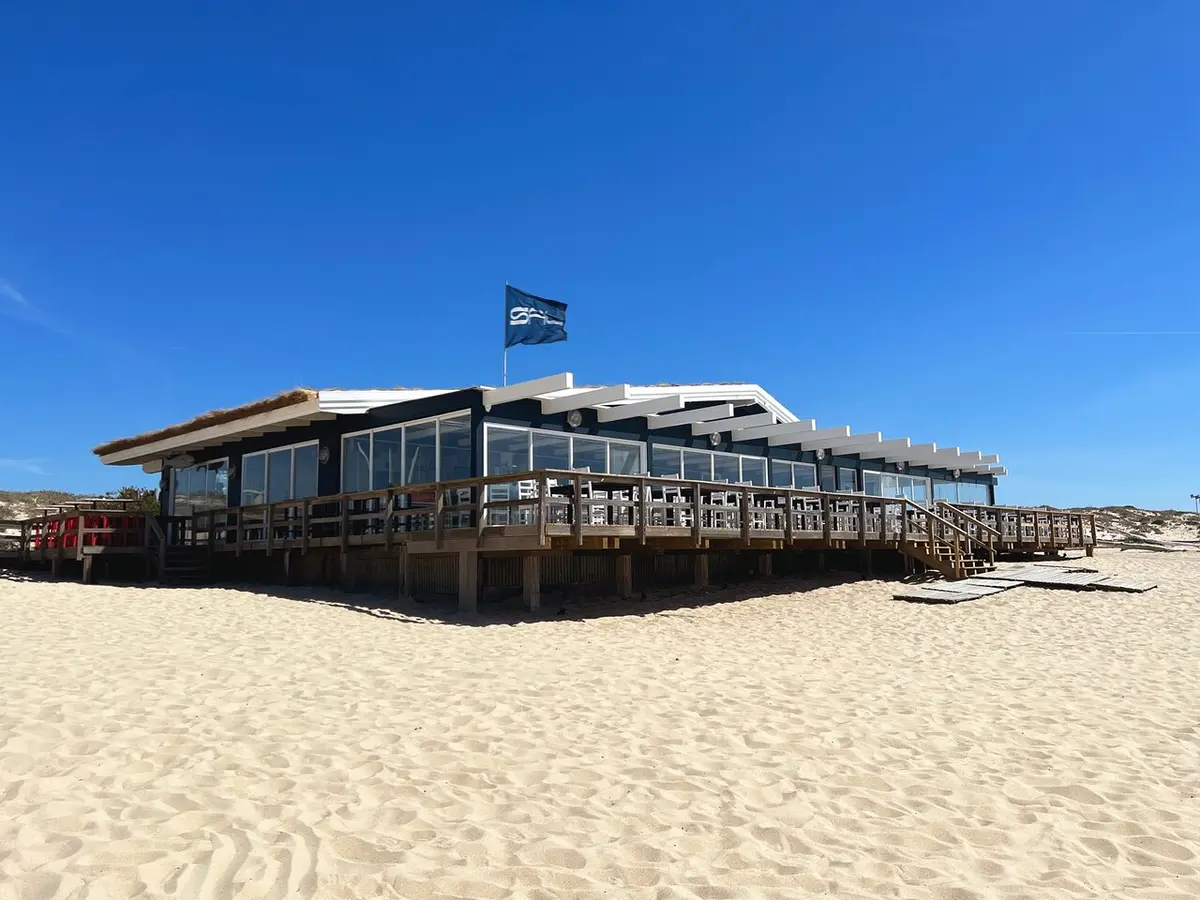
Sal is Comporta’s living room — the beach shack that has somehow hosted royalty while keeping the atmosphere relaxed. The Black Rice with Cuttlefish (Arroz Negro) and the Fish Pasta Stew (Massada de Peixe) are why people structure their entire trip around securing a table here.
The sunset deck gives you a straight-line view over the Atlantic with dune grass catching the last light. On my last visit, the kitchen was firing at a pace that felt effortless for the crowd it was managing.
The downside: you need to plan weeks — often months — ahead. Prices reflect the hype. The adjacent Sal Burger section feels like a consolation prize when the main room is full.
- Location: Praia do Pego, Carvalhal
- Cost: €60–€100 per person with wine
- Best for: Special occasions, food-first couples, anyone willing to plan ahead
- Time needed: 2–3 hours
2. O Dinis — Restaurante dos Pescadores
Founded by local fisherman Dinis Parreira, this wooden structure on Praia do Carvalhal has the soul that Sal sometimes loses when it is playing to the crowd. The charcoal-grilled Robalo (Sea Bass) comes off the fire with the skin just charred enough to crack. The Amêijoas à Bulhão Pato — clams in garlicky, lemony olive oil — are benchmark-level.
Service is simple and the facilities are rustic. There is no scene here. That is the whole point.
- Location: Praia do Carvalhal
- Cost: €30–€50 per person
- Best for: Food purists, families, travelers tired of paying for ambiance
- Time needed: 1.5–2 hours
3. Dona Bia — the Sunday institution
A Sunday lunch institution with iron-pot Arroz de Coentros (Coriander Rice) and Lulinhas Fritas (Fried Baby Squid) that hit a different register than the beach restaurant versions — closer in spirit to the best traditional Portuguese food you will find anywhere in the country. Traditional recipes, generous portions, pricing that reflects local rather than tourist economics.
The tradeoffs: service can tip into unfriendly during the summer rush, and parking is a disaster. Arrive at 12:30 PM or 3:00 PM to avoid the peak crush.
- Location: Roadside on EN261, Comporta area
- Cost: €20–€35 per person
- Best for: Local food seekers, lunch on a non-beach day
- Time needed: 1.5 hours
4. Cavalariça
Michelin Guide-recognized dining inside former horse stables, where you eat in actual wooden stalls. Pork Croquettes with Clam Mayonnaise and Alentejo Pluma pork represent what modern Portuguese cuisine can do when the kitchen takes it seriously. Sophisticated without being stiff, and the stable setting is genuinely interesting rather than a gimmick — though it is not for everyone.
- Location: Comporta village center
- Cost: €45–€70 per person
- Best for: Foodies, design-conscious diners, couples
- Time needed: 2 hours
5. Sublime Comporta Beach Club
Think St. Barths relocated to Portugal. The Oyster Bar is well-executed, and the Salted Caramel Tart is one of those desserts people specifically mention long after the trip. The design by the Michelin-recognized team works — beautiful without being cold.
What you are paying for is international luxury standards at a beach that happens to be in Portugal, not the Portuguese fishing village experience. That distinction matters when the bill arrives.
- Location: Praia do Carvalhal, 10 minutes by car from Sublime Comporta hotel
- Cost: €150–€200 for lunch for two; sunbeds €60–€80 (book separately)
- Best for: Luxury travelers, hotel guests, special-occasion splurges
- Time needed: Half a day
Which Comporta beach suits your trip?
Each beach serves a different traveler. Praia da Comporta is the family-friendly default with full services and lifeguards. Praia do Pego is where the money is. Praia dos Brejos is where you go when you want to disappear entirely. Praia do Carvalhal suits anyone serious about surfing and doesn’t mind an active, social atmosphere. The right choice depends on how much infrastructure you need and how far you are willing to walk.
Praia da Comporta
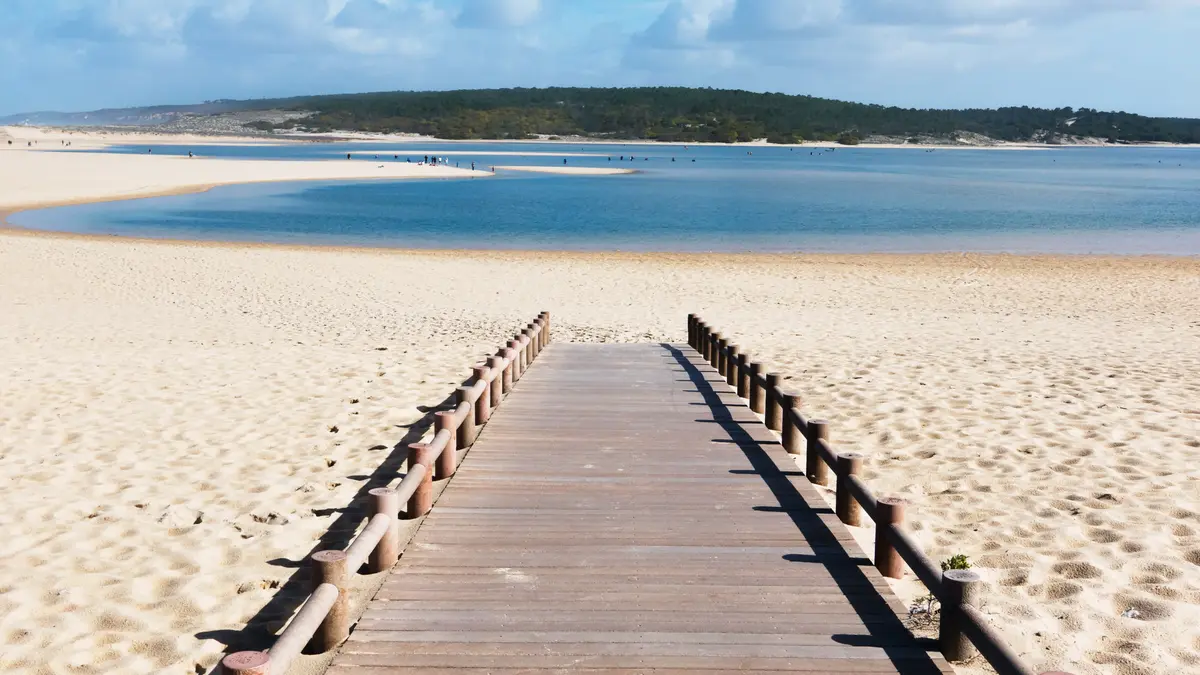
The accessible, family-friendly option with paved parking (€5), lifeguards, and showers. It gets lively in summer — not an isolated experience, but that energy means it is enjoyably social rather than lonely. If you have kids or need amenities, this is your beach.
Praia do Carvalhal
More active and energetic than meditative, with Sublime Beach Club and surf schools within walking distance. This is a natural base for anyone serious about Portugal surfing — the Nortada north wind builds reliable swell through the afternoon, so arrive before noon for the calmest water and least sand in your face.
Praia do Pego
The see-and-be-seen beach, where Sal and JNcQUOI Beach Club anchor the scene. Expect to pay €50 for a sun lounger or €80 and up for a cabana bed at JNcQUOI in peak season, with bookings required weeks ahead. This is Comporta at its most self-aware and most expensive.
Pro Tip: JNcQUOI’s restaurant operates separately from the sunbed area. You can eat at the Beach Club without a lounger reservation — the food is the same, the crowd is half the size on a Tuesday or Wednesday lunch.
Praia dos Brejos — the restricted beach
Here is what most guides skip: the direct paved roads to this beach are gated with magnetic key card access for residents only. Visitors must park at the public road end near the Vala Real canal and walk 20–30 minutes through sand and rice dykes.
The reward: total isolation even in August. The reality: zero services — no lifeguards, no bars, no shade structures. Pack water, food, and a realistic assessment of how that walk back will feel at 3 PM in the heat. The Atlantic averages 63–66°F (17–19°C) even in August — colder than the Mediterranean by about 10°F — so bring a wetsuit if you plan to stay in the water for more than 20 minutes.
Praia da Galé-Fontainhas — the cliff beach
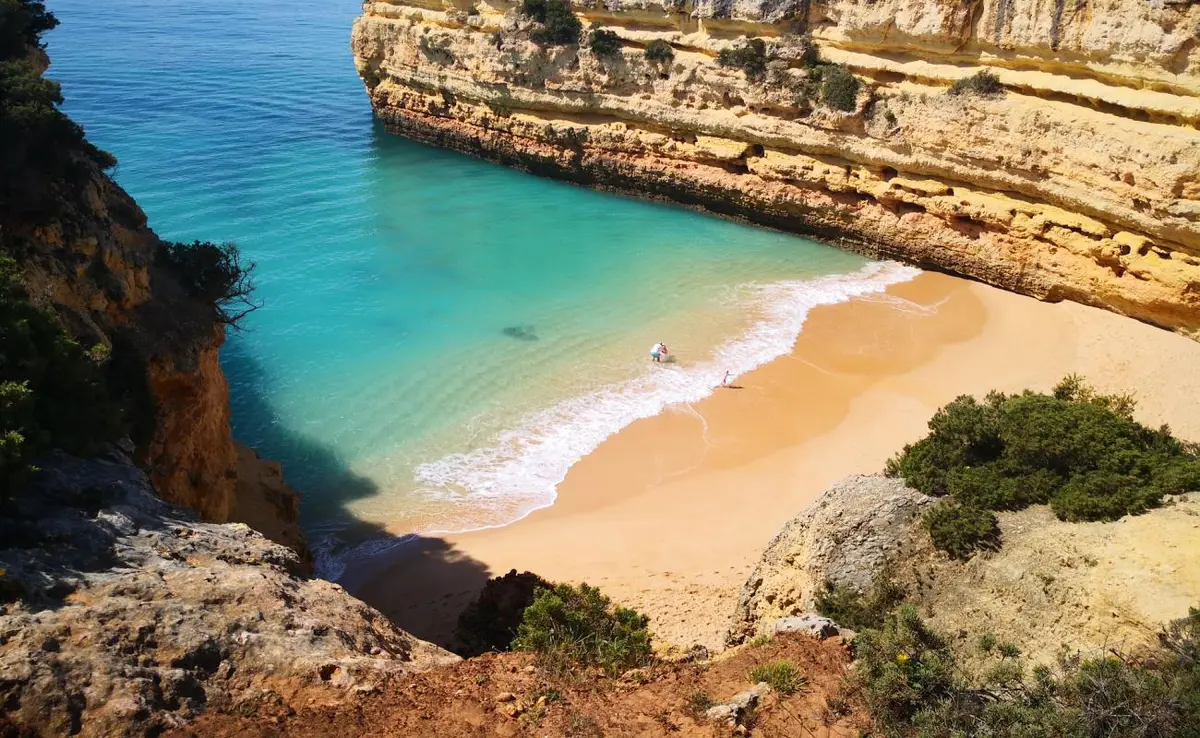
The geology changes here: dramatic red sandstone Fossil Cliffs dating back five million years break the flat visual monotony of the coastline. Access requires navigating dirt roads near the Fontainhas camping area, then descending steep wooden stairs. Visually unlike anything else in Comporta, but inaccessible for anyone with mobility concerns.
What is the couvert charge in Portuguese restaurants?
When you sit down in any Comporta restaurant — or anywhere in Portugal — the waiter places bread, olives, and sardine pâté on the table within minutes. This is the couvert, a standard charge of €3–€6 per person that goes on your bill automatically. It is not a scam; it is standard Portuguese dining culture. Say “Não, obrigado” before touching anything if you want to decline.
The couvert at better restaurants is often worth keeping. At Dona Bia, the bread alone costs more to make than what they charge for it.
A note on parking: unofficial attendants work the beach lots, directing cars and expecting a coin. Give €0.50 or €1 — think of it as informal parking oversight with a social contract. Your car will be there when you return.
What else does Comporta offer beyond the beach?
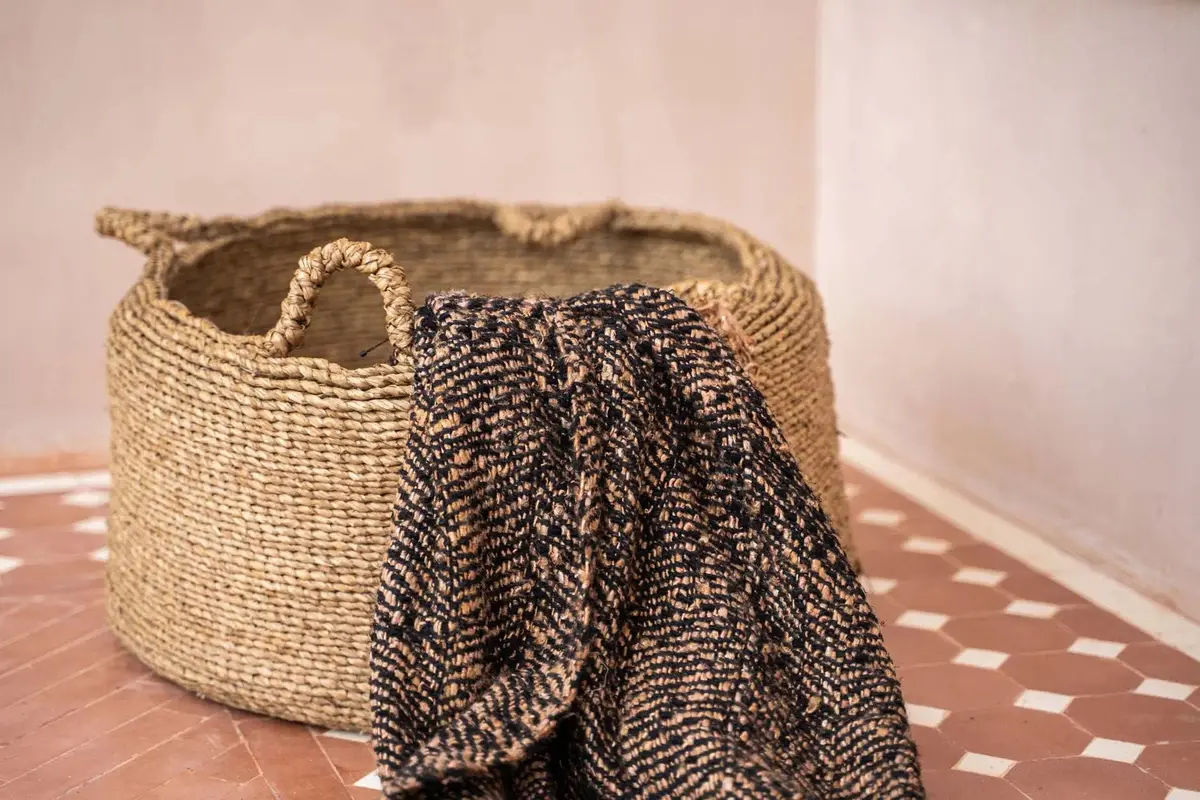
Shopping and activities center on Comporta village. Lavanda anchors the local boho-chic aesthetic with linen and woven baskets, and sits next to Colmo Bar — the social hub for early evening gin and tonics. Rice by Marta Mantero sells the high-end furniture that defines the Comporta interior look. For edible souvenirs, Gomes Casa de Vinhos & Petiscos covers sardines, mackerel, and smoked tuna in olive oil alongside regional wines and Alentejo olive oil.
For activities: Cavalos na Areia offers horseback riding through the rice paddies onto the beach — book at least two days ahead. Dolphin watching tours run from Setúbal into the Sado Estuary and are a legitimate experience rather than a tourist trap; the resident pod is active year-round.
If Comporta starts feeling too polished, the 20-minute drive south to Melides and lunch at O Fadista gives you a clear picture of what the area looked like before the money arrived.
What should you pack for Comporta?
The items below go beyond what a standard Portugal packing list recommends — Comporta has a few specific requirements of its own:
- Electric mosquito diffusers (Raid or Dum Dum brand) — buy at local supermarkets on arrival day
- DEET or Icaridin body spray (Tabard or Bodyguard)
- Antihistamine cream (Fenistil) for the bites you will get despite the above
- Offline Google Maps downloaded for the Setúbal District
- Windbreak (paravento) for blustery afternoon beach sessions — the Nortada builds hard after 2 PM
- High-SPF sunscreen — the Atlantic breeze makes UV exposure deceptive
- Cash in €10 and €20 notes for parking attendants and smaller cafes
The bottom line
TL;DR: Comporta Portugal rewards travelers who value pine forest silence over poolside service, and the freshness of grilled sea bass over thread count. The luxury is real, but so are the mosquitoes, the sand tracks, and the rustic service pace. Arrive knowing that and it delivers something few European destinations can match. Pair this guide with a broader Portugal travel guide to see how Comporta fits into the wider picture of what the country offers.
Bring bug spray, book Sal two months out, and rent that 4×4. You will need all three.
What is the one thing you wish someone had told you before your first visit to Comporta?