Lagos Portugal packs more coastline drama, fresh seafood, and historical weight into a small Algarve town than most destinations three times its size. This guide covers the best beaches, where locals eat, how to get here, and what other guides skip — including the cold-water truth, the cash-only restaurants, and a highway that’s now genuinely free.
When is the best time to visit Lagos Portugal?
September and October are the best months to visit Lagos Portugal. The Atlantic reaches its warmest temperatures (around 72°F/22°C after a full summer of sun), crowds drop after school holidays, and restaurants have tables available the same week you try to book. Daytime temperatures run around 77°F (25°C), and the Nortada — the aggressive northerly afternoon wind — calms considerably in shoulder season.
The same logic applies across the country: the best time to visit Portugal for most travelers lands in this window, not at the height of summer.
The math on summer is simple: July and August bring spectacular weather and a beach experience you’ll share with everyone who had the same idea. Restaurant reservations require days of advance planning, parking near the cliffs disappears by 9am, and you’ll pay a premium for everything from sunbeds to accommodation. The beaches remain beautiful. You just won’t have them to yourself.
January and February are the quiet months. The weather stays mild (59–64°F / 15–18°C), but many restaurants and tour operators close for annual rest. If you’re hiking the coastal trails or playing golf, it works fine. For the full Lagos experience — seafood, boat tours, busy tascas — the shoulder seasons are a better use of your time.
Pro Tip: Book your September trip at least 6 weeks out. The word is out about shoulder season, and the good accommodation fills faster than most people expect.
How do you get to and around Lagos Portugal?
From Faro Airport, Lagos is roughly 75 minutes by car on the A22 — the toll-free motorway that runs the length of the Algarve. It’s the obvious choice over the N125, a slow, accident-prone single-lane route through every town between Faro and Lagos.
The A22 is toll-free
The A22 (Via do Infante) charges no tolls for its full length. Rental agencies still offer transponder devices at €1.50–€2.00 per day — you don’t need one if your entire trip stays in the Algarve. If you plan to drive north toward Lisbon on the A2, a transponder makes sense: that route costs around €23.80 in tolls one way.
The manual transmission problem
Anyone who needs an automatic transmission is working with a constrained rental market — less than 20% of the fleet. These vehicles sell out 4–6 months ahead during peak and shoulder seasons, making renting a car in Portugal with an automatic particularly time-sensitive. If you can’t drive manual, book your automatic now, not the week before you fly.
Lagos has steep, cobblestoned hills that punish inexperienced clutch work. Burned clutches from tourists who planned to “figure it out” are a genuine thing. If automatics are unavailable, Uber and Bolt are a legitimate alternative for your entire stay.
Uber and Bolt in Lagos
Both apps operate legally and consistently run 20–30% cheaper than taxis. A ride from Lagos Marina to Praia da Dona Ana runs €3–€5 versus €6–€8 for a taxi. In the town center, wait times stay under 5 minutes. The gap is coverage after sunset in remote areas — Praia do Canavial and Burgau thin out quickly. For secluded beaches, schedule your return ride before you head down.
What are the best beaches in Lagos Portugal?
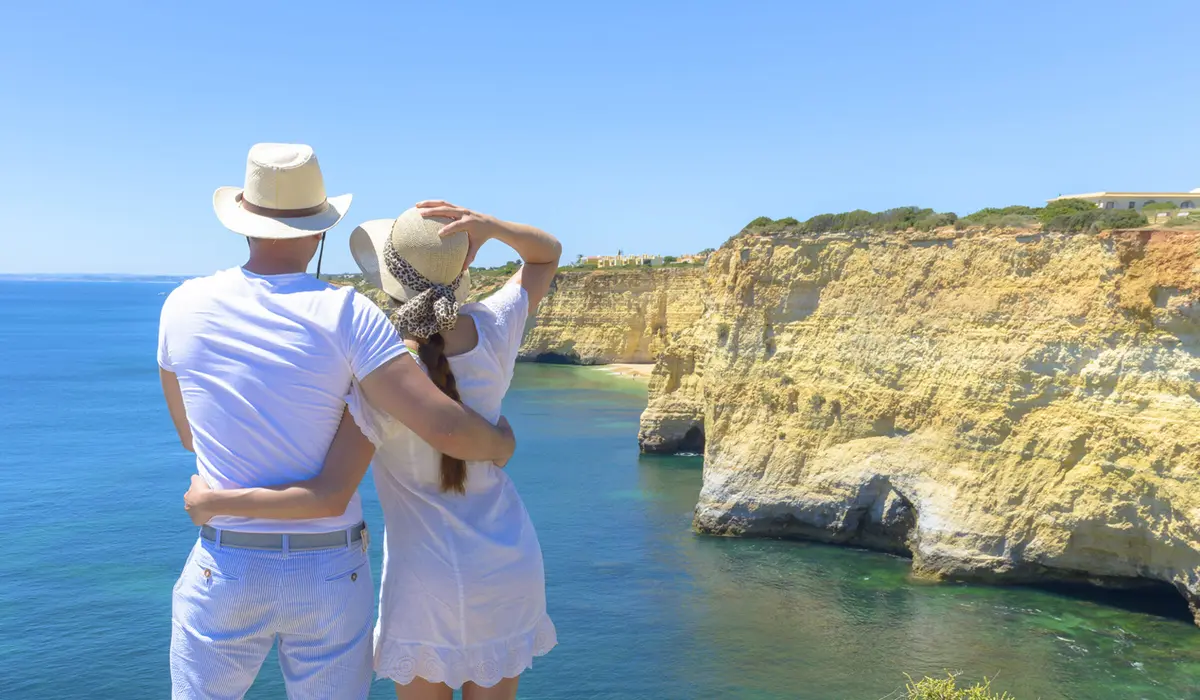
The Lagos coastline runs between dramatic limestone headlands and sheltered coves — a stretch that ranks among the most photogenic Portugal beaches in the Algarve. The five main beaches offer distinct trade-offs between accessibility, scenery, and crowds. Ponta da Piedade is non-negotiable. Camilo is the most sheltered and photogenic. Meia Praia is the one to pick when you need space.
1. Ponta da Piedade — dramatic rock formations
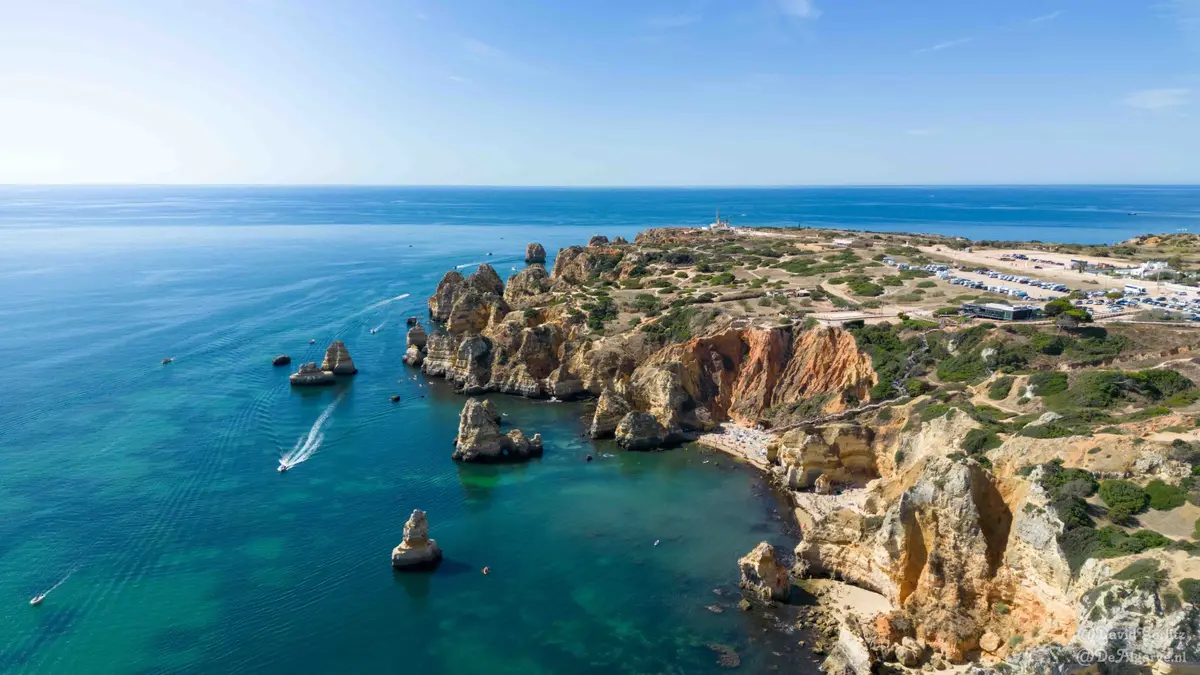
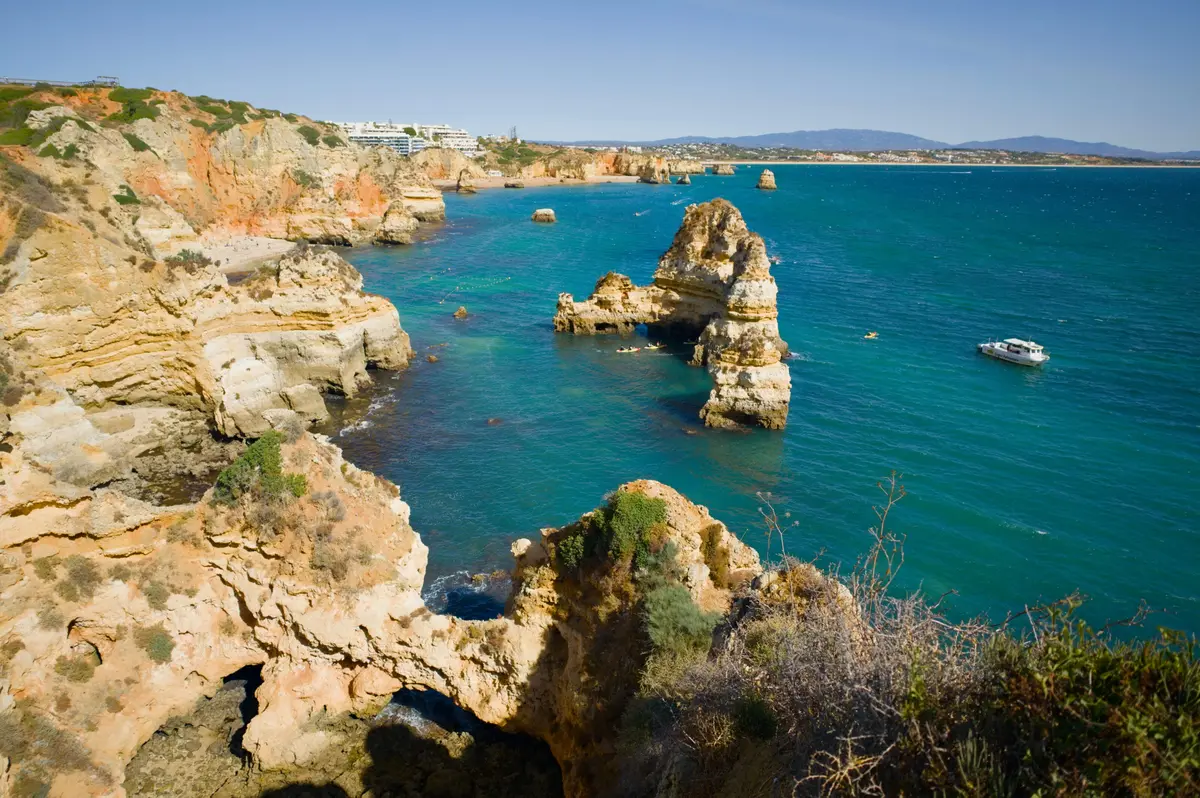
Ponta da Piedade is the defining geological feature of Lagos Portugal — a headland of arches, grottos, and sea stacks that no other stretch of the Algarve replicates in such concentration. The clifftop boardwalk is worth the visit on its own, but exploring by kayak from the water is a completely different experience.
The morning tours (8:45–9:00am) with Days of Adventure use a catamaran to carry you out, then launch kayaks directly into the caves and passages the guides call “the Kitchen” and “the Living Room.” By 11am, large tour boats turn the same water into a traffic jam. On my last visit, we were threading sea arches completely alone at 9:15am and sharing them with six other boats by 10:30am.
The downside is the cave tour’s own success — it’s become the signature Lagos activity, which means booking ahead is non-negotiable in high season.
- Location: Ponta da Piedade headland, 2 miles (3 km) south of Lagos town center
- Cost: Kayak tours run approximately €45–€50 per person
- Best for: Anyone visiting Lagos — this is the one non-negotiable activity
- Time needed: 2–2.5 hours for the kayak tour; 30 minutes for the clifftop walk
2. Praia do Camilo — the wooden staircase beach
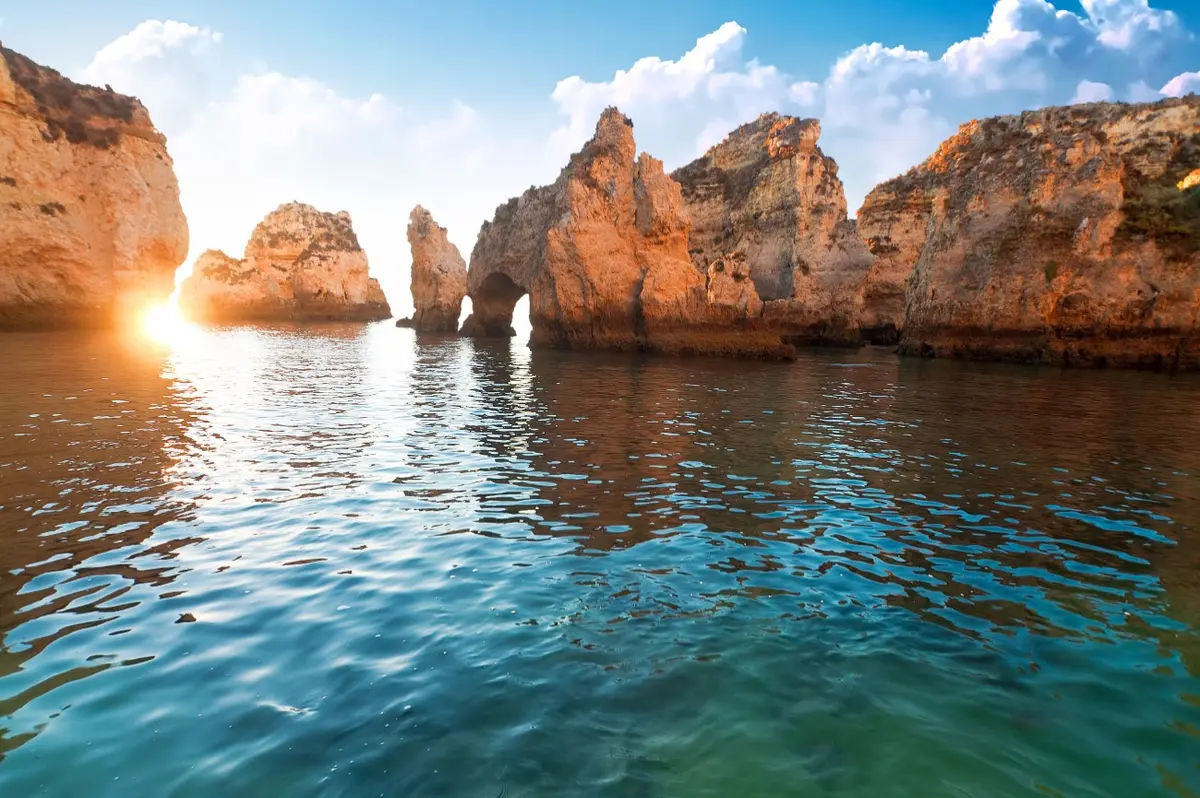
Praia do Camilo sits at the bottom of 200 wooden steps cut into the cliff face. The cove is small, sheltered by towering limestone walls that block the afternoon Nortada, and the water runs a cleaner turquoise than the more exposed beaches to the east. A beach bar and restrooms at the top mean you don’t have to pack everything in.
The climb back out in midday heat is brutal — genuinely unpleasant in August if you’ve spent three hours on the sand. Go early or go late.
- Location: 1.5 miles (2.4 km) south of Lagos center, signposted off the coastal road
- Cost: Free access; sunbeds available for hire
- Best for: Couples, photographers, anyone who wants cliff scenery without the Meia Praia wind
- Time needed: 2–3 hours
Pro Tip: The steps fill up mid-morning with a one-direction bottleneck. Get there before 9:30am or after 5pm to walk up and down without waiting.
3. Praia da Dona Ana — best for families
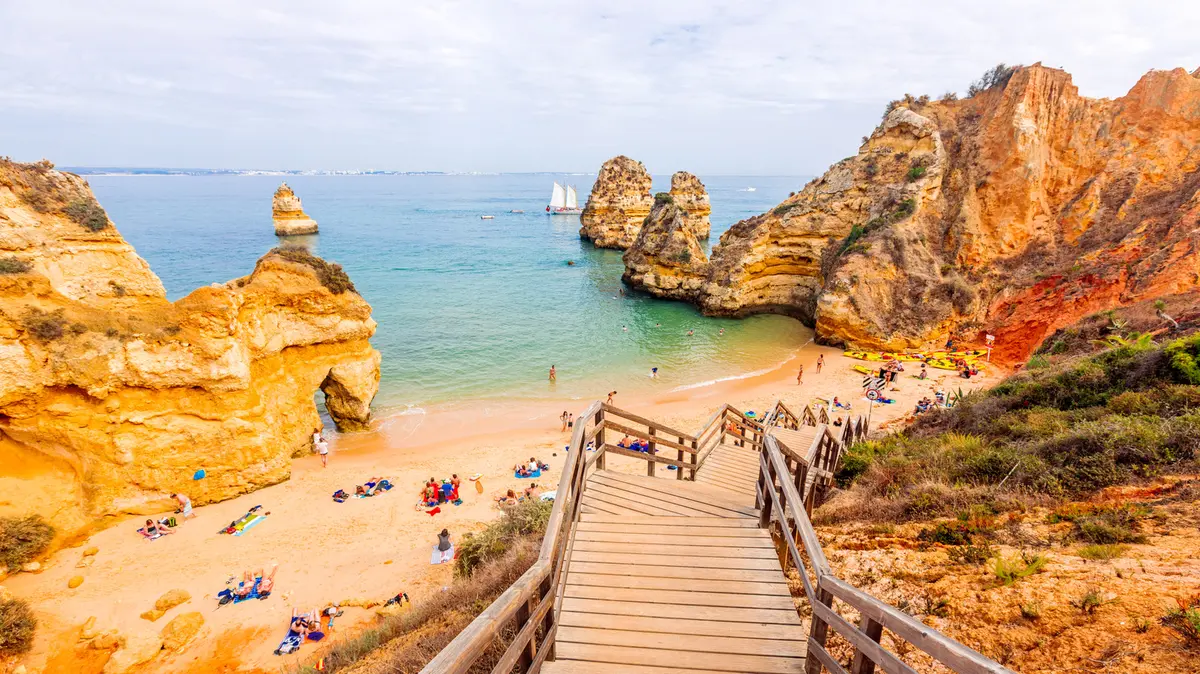
Dona Ana delivers the Lagos postcard shot: rust-red rock pillars rising from flat golden sand. The cliff height blocks the worst of the afternoon wind. The access staircase is gentler than Camilo’s, which makes it workable with young children or anyone not keen on a vertical descent.
The trade-off is crowds. Dona Ana is packed by mid-morning in summer, and two sunbeds with an umbrella runs €15–€20. It’s also the beach most likely to have tour groups working through at the same time.
- Location: 1 mile (1.6 km) south of Lagos center
- Cost: Free beach access; sunbed rental €15–€20 for two loungers and umbrella
- Best for: Families, first-timers wanting the “Lagos beach” experience
- Time needed: Half day
4. Praia do Canavial — the wild beach
Canavial is for travelers who value solitude over amenities. Access requires a rough, unmarked dirt path near Porto de Mós — no signage, no facilities, no lifeguard. The beach is de facto clothing-optional given the complete absence of infrastructure or oversight.
The cliffs above are active. Rockfalls happen, particularly after rain, and you need to keep real distance from the walls — not the polite distance, the actual distance. If those conditions suit you, the reward is a genuinely raw Algarve beach with no service staff, no loungers, and no tour groups.
- Location: Near Porto de Mós, accessible via dirt path; no car park or official access point
- Cost: Free
- Best for: Solo travelers and couples comfortable with zero facilities and nudist-adjacent crowds
- Time needed: Half day
5. Meia Praia — the long stretch
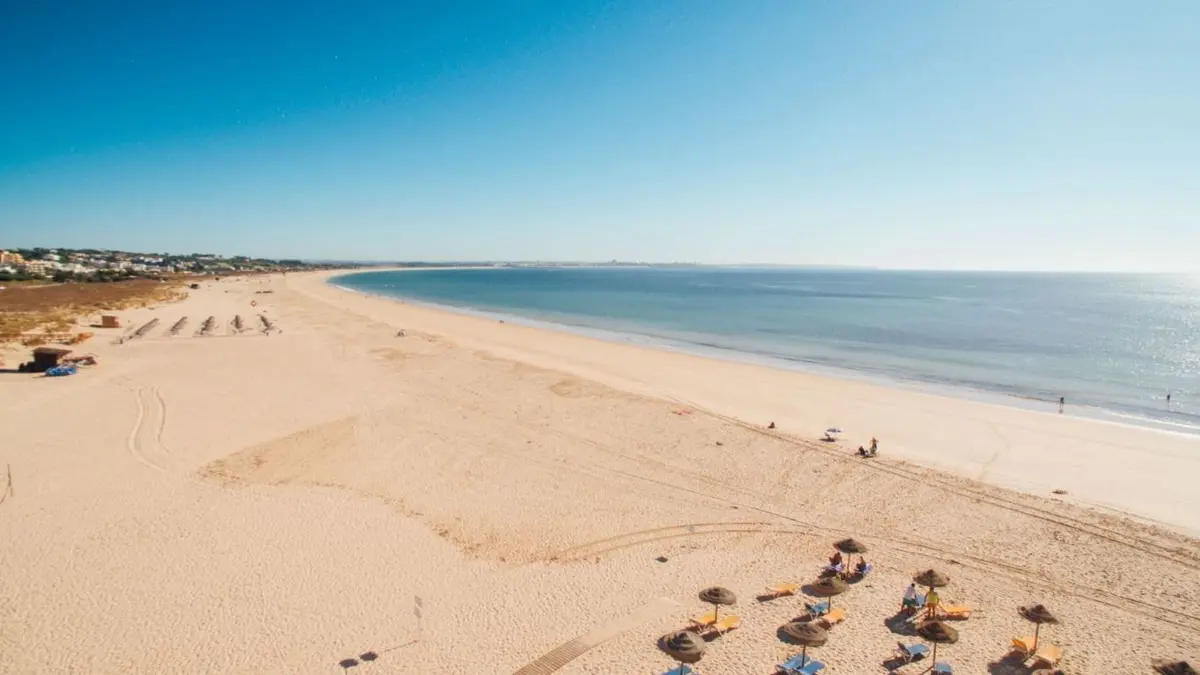
Meia Praia runs 4 miles (6.4 km) east of Lagos — long enough that even in August you can find space to spread out. The western end has beach clubs, water sports rentals, and kitesurfing and windsurfing operations that take advantage of the afternoon Nortada. The water entry is gentle and gradual, which is better for children than the cliff-access beaches.
The trade-off: zero natural windbreak. On a gusty afternoon, the sand moves horizontally and gets into everything. The scenery is open and flat rather than dramatic.
- Location: East of Lagos Marina, accessible by car or water taxi
- Cost: Free beach access; water sports and sunbed rental available
- Best for: Active travelers, families with young children, anyone who needs space
- Time needed: Full day
Where should you eat in Lagos Portugal?
The best meals in Lagos require some friction — a reservation at A Forja, cash for Casinha do Petisco, or a drive to A Barrigada on the N125. The restaurants that are easiest to walk into are rarely the ones worth eating at. Budget €20–€30 per person for a proper sit-down dinner; €10–€12 for a full Prato do Dia lunch at a tasca.
What is the couvert and will you be charged for it?
Arriving at any Lagos Portugal restaurant means bread, olives, and sometimes sardine pâté will land on your table before you’ve said a word. This is the couvert — one of the most misunderstood elements of Portuguese food culture. It’s not complimentary. Expect to pay €2–€5 depending on what they bring. If you don’t want it, say “Pode levar, por favor” or simply leave it untouched. You won’t be charged for what you don’t eat.
1. A Forja — the blue door institution
A Forja is the closest thing Lagos has to a restaurant that hasn’t changed in decades. The blue door on Rua dos Ferreiros marks a cramped, loud, cash-and-card dining room where the kitchen sends out Arroz de Lingueirão (razor clam rice) and Safio (conger eel) with zero fanfare and complete confidence. The decor is an afterthought. The food is the point.
Reservations are now accepted and recommended — the days of queueing outside at 6:20pm are largely over, though walk-ins still queue for remaining tables. Dinner service opens at 6:30pm.
- Location: Rua dos Ferreiros 17, Old Town
- Cost: €20–€25 per person
- Best for: Anyone wanting authentic Algarvian cooking without tourist-menu pricing
- Time needed: 1.5 hours
Pro Tip: Book 3–5 days ahead for weekday dinners, a week ahead for weekends in high season. The lunch service (noon–3pm) is rarely fully booked and uses the same kitchen, same quality.
2. Casinha do Petisco — the Cataplana benchmark
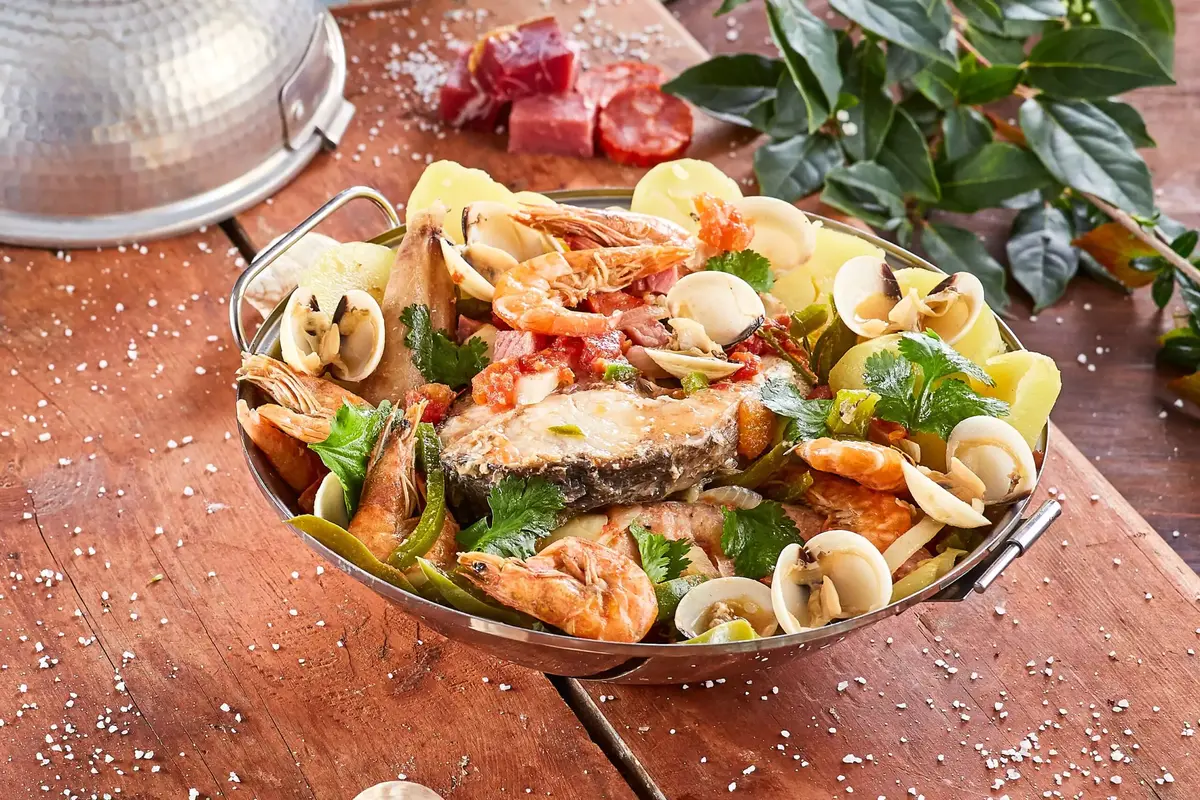
Eight tables, a queue that forms before the 5:30pm opening, and a Cataplana — the region’s copper-pot seafood and pork stew and one of the most celebrated dishes in traditional Portuguese food — that consistently draws people back the following evening. The portions are massive; ordering one Cataplana between two people and a starter is a legitimate strategy. Cash only, no card payments accepted.
Book two weeks ahead for summer weekends. For shorter notice, arrive at 5:15pm and add your name to the walk-in list.
- Location: Rua da Oliveira 51, Lagos
- Cost: €25–€30 per person; cash only
- Best for: Seafood lovers, anyone wanting the definitive Cataplana experience
- Time needed: 2 hours
3. A Barrigada — all-you-can-eat fish
A Barrigada sits on the N125 highway, well outside the town center, which tells you immediately that this place operates for the locals who know about it rather than the walk-in tourist trade. The Rodízio de Peixe — all-you-can-eat grilled fish — means servers keep bringing platters of whatever’s fresh (sardines, mackerel, sea bream, squid, sometimes octopus) until you signal to stop.
It’s loud, smoky, and chaotic in the best possible way. Arrive before 7:30pm or expect a wait. Cash preferred.
- Location: N125 highway, outside Lagos center
- Cost: Around €15–€18 per person for the rodízio
- Best for: Groups, anyone who wants maximum fish for minimum euros
- Time needed: 2 hours
Pro Tip: This is the contrarian call in Lagos — skip the clifftop sunset restaurants and spend an evening here instead. The price-to-quality gap between A Barrigada and anything near the Marina is significant.
4. Adega da Marina — the industrial option
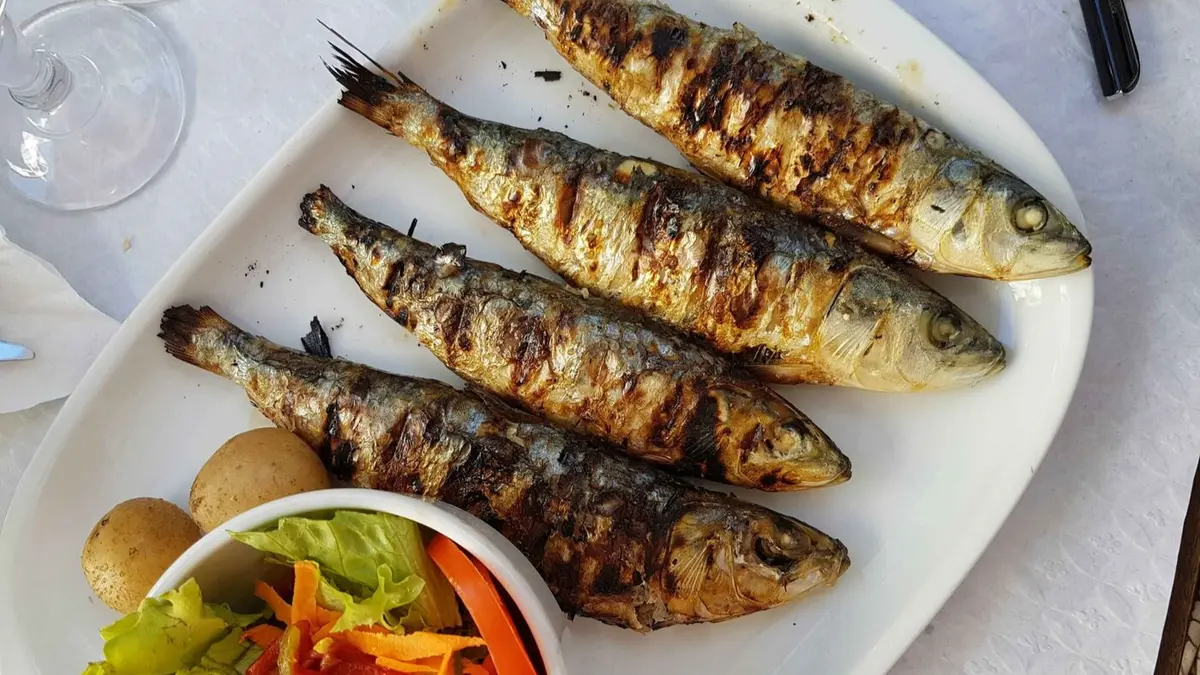
Adega da Marina operates at a scale that makes critics dismiss it and defenders appreciate it. Tour buses stop here. Turnover is high. The football is on. It’s not intimate and the service moves fast because it has to.
What it delivers: reliable, fresh grilled fish at predictable prices without a wait. For a solo traveler or a group that’s left planning too late, that’s a legitimate offering.
- Location: Lagos Marina area
- Cost: €20–€30 per person
- Best for: Travelers who want no-fuss grilled fish; groups who’ve left planning too late
- Time needed: 1 hour
The Prato do Dia: how to eat lunch for under €12
The Prato do Dia (Dish of the Day) is a full meal — soup, main course, drink, and coffee — for €10–€12 at tascas outside the main square. It’s a cultural institution that tourists who only dine at dinner miss entirely. The places that serve it don’t advertise it in English; look for the handwritten chalkboard outside.
What are the best things to do in Lagos Portugal?
Lagos Portugal rewards people who move on water before the crowds show up on land. The morning kayak tour at Ponta da Piedade is the single best use of a morning. The Seven Hanging Valleys trail is the best use of a full day. The Slave Market Museum is worth 45 minutes before dinner, and the Old Town has good ground-level exploring that most visitors skip in favor of the beach.
Kayak Ponta da Piedade in the morning
The kayak tours through the grottos and sea arches are the signature Lagos Portugal activity. Book the earliest departure (8:45–9:00am) with Days of Adventure — you’ll paddle through caves like “the Kitchen” and “the Living Room” before the water traffic arrives. By 11am, the same passages are bumper-to-bumper kayaks and tour boats.
Hike the Seven Hanging Valleys Trail
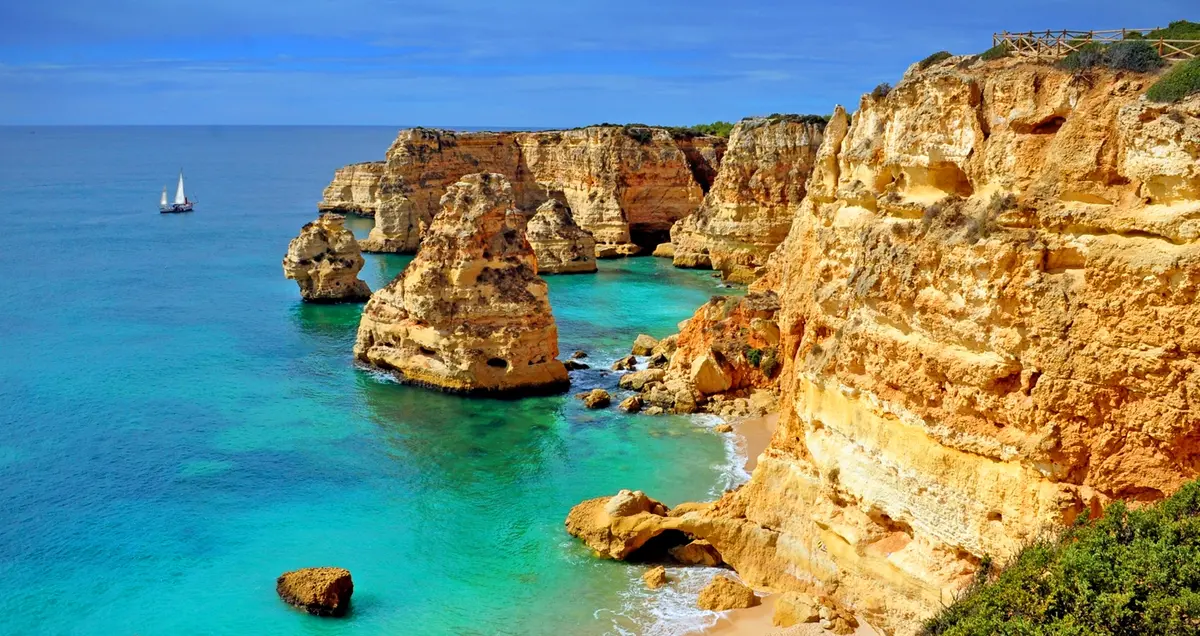
This 5.7-mile (9.2 km) linear trail runs from Praia da Marinha to Praia do Vale de Centeanes, about 25 minutes’ drive from Lagos. It’s not a loop — plan transport back (Uber or Bolt from Vale de Centeanes to your car at Marinha works cleanly). The trail offers a view down into Benagil Cave from above, though direct access to the cave floor is no longer permitted. Expect significant undulation, eroding cliff edges, and moderate physical difficulty. Proper hiking shoes, not sandals.
Explore the Old Town and Slave Market Museum
The Mercado de Escravos (Slave Market Museum) at Praça Infante Dom Henrique occupies the site where the first modern-era slave market in Europe operated, in 1444. It’s a small museum — the content is more contextual than immersive — but the historical grounding it provides for Lagos’ maritime past is worth the 45 minutes and €3 entry fee (€1.50 for students and seniors). Closed Mondays; open Tuesday–Sunday 10am–12:30pm and 2pm–5:30pm.
The city walls and the Forte da Ponta da Bandeira near the Marina are free to walk and offer clear views over the harbor and coast. Wandering the cobblestoned streets of the Old Town for an hour before dinner reveals tascas and grocery stores that operate completely outside the tourist loop.
Watch sunset from the lighthouse
The lighthouse at Ponta da Piedade is the classic Lagos sunset vantage point. Arrive 30 minutes before sunset to get a spot at the railing — it’s popular enough now that late arrivals watch over people’s heads.
What do you need to know before visiting Lagos Portugal?
Most surprises in Lagos are predictable once someone tells you about them. The Atlantic is colder than the photos suggest. The afternoon wind is stronger than it looks on a beach bar Instagram. And the restaurants worth eating at require a bit more effort than walking in off the street.
The water is cold
The Atlantic at Lagos runs around 68–72°F (20–22°C) even at its warmest, in September. US travelers expecting Greek island temperatures get a cold shock. The water is refreshing rather than bath-warm, and the sensation fades within a minute of getting in — but the first entry is bracing.
The Nortada wind
The afternoon northerly picks up reliably after lunch. On windy days, the cliff-backed beaches at Dona Ana and Camilo stay sheltered while Meia Praia and Porto de Mós turn into sandblasting corridors. Check the forecast before committing to a beach.
Don’t speak Spanish
Addressing Portuguese people in Spanish — “Gracias” in particular — registers as dismissive. It treats two distinct languages and national identities as interchangeable. English works everywhere tourists go. Learning a few basic Portuguese phrases — starting with “Obrigado” (masculine) or “Obrigada” (feminine) for thank you — goes a long way and avoids the dismissiveness that substituting Spanish conveys.
The bay leaf scam
Near the Marina, men approach visitors quietly offering what they describe as drugs. It’s almost always crushed bay leaves or pressed flour. The scam is a nuisance, not a physical danger. Ignore it completely — no engagement, no eye contact, no conversation. The only mistake is responding.
Cost reality
The reputation for cheap Portugal needs a recalibration for Lagos. An espresso costs €1.00–€1.20. A mid-range dinner for two with wine runs €40–€60. Fresh fish is priced by weight at premium restaurants — €55–€85 per kilogram — and a grilled fish dinner for two can exceed €100 if you don’t confirm the weight and price before ordering. For a fuller picture of what things cost across the country, the Portugal travel cost guide covers everything from transport to accommodation. Lagos remains affordable relative to Northern Europe or major US cities. It’s no longer a budget destination.
Cash for authentic spots
Casinha do Petisco is cash only. A Barrigada strongly prefers it. Bring small bills for Prato do Dia spots and for tipping — coins are standard for Portuguese tipping etiquette at these kinds of places.
What most guides won’t tell you
Lagos Portugal has matured in a way that rewards travelers who prepare and frustrates those who assume it’s still an undiscovered backpacker town. The toll-free A22 makes driving genuinely easy, but an automatic transmission rental requires months of advance planning. The beaches are as dramatic as advertised, with the water running colder than most American travelers expect and the afternoon wind stronger than most photos suggest.
The restaurants worth eating at — A Forja, Casinha do Petisco, A Barrigada — are all slightly awkward to access by accident. A Forja needs a booking. Casinha do Petisco needs cash and advance planning. A Barrigada is on a highway. That friction is the filter that keeps them operating for people who did their homework.
TL;DR: Come in September for warm water and thin crowds. Book an automatic vehicle well in advance if you need one, and book the morning kayak tour the same day you sort out where to stay in the Algarve. Eat lunch at the tascas, not on the main square.
What’s the one thing that surprised you most about Lagos when you arrived — or what are you most unsure about before you go?