The best pastel de nata in Lisbon looks identical to a mediocre one from across the counter. Bite into the wrong tart and you will wonder what the fuss is about. This guide covers which bakeries are worth your time, how to judge one like a critic, and how to get a box of six home without turning them into a soggy disaster.
The Big Three: Where to Start Your Pastel de Nata Tour
The three bakeries that generate the most debate among Lisbon locals are Pastéis de Belém, Manteigaria, and Castro. Each produces a genuinely good tart, but they deliver completely different experiences. Belém is history, Manteigaria is theater, and Castro is refinement. Most visitors make it to one; smart ones build all three into a 3 days in Lisbon itinerary, hitting Chiado in the morning and Belém after lunch.
1. Pastéis de Belém — the original, and still the benchmark
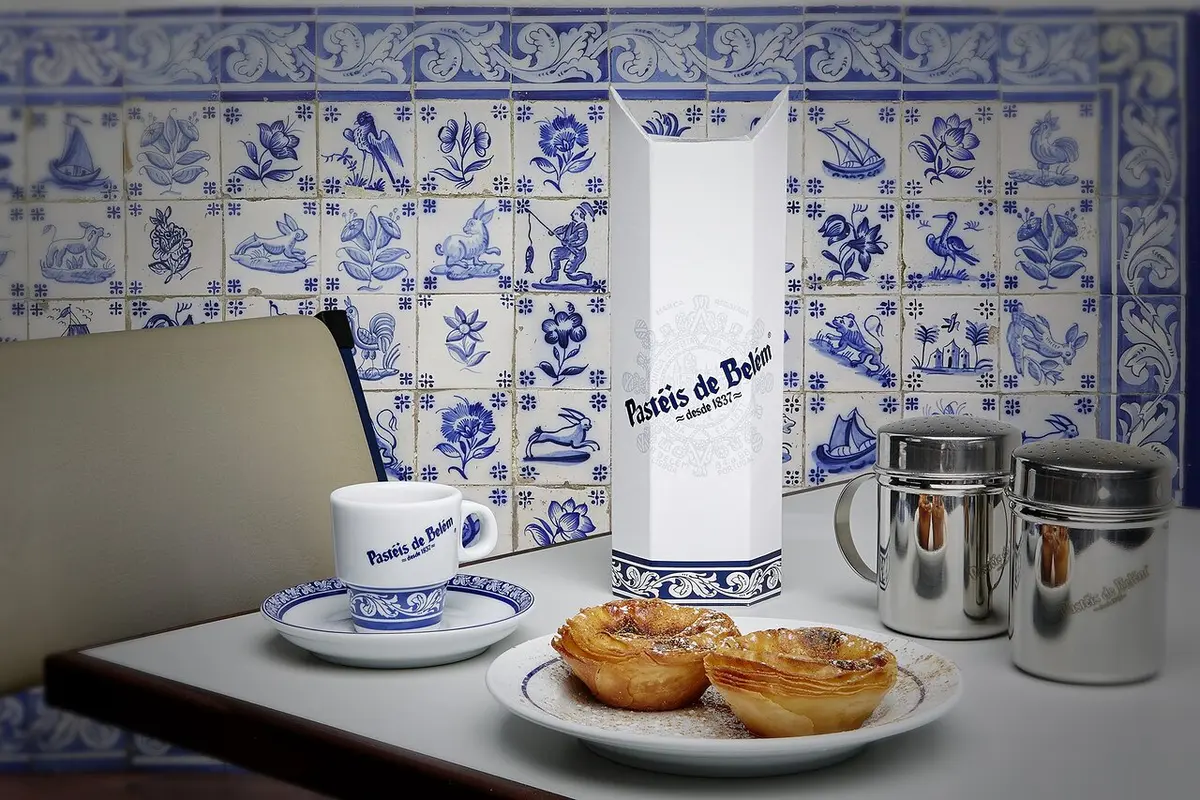
This is not just another bakery. The Antiga Confeitaria de Belém has been making tarts daily since 1837 using a formula protected inside what they call the “Oficina do Segredo” (Secret Workshop), where a handful of master confectioners guard the recipe. The name “Pastéis de Belém” is trademarked — legally, every other bakery in Portugal makes “pastéis de nata,” not this.
The rooms smell faintly of warm sugar and floor wax. On a weekday morning, the tile-lined corridors feel almost reverent, the background noise a low murmur of espresso cups and Portuguese conversation. By noon, it shifts into something closer to a school cafeteria at lunch rush.
Here is the insider move most tourists miss: do not join the takeaway line snaking out the front door. Walk past it, straight into the service area — a labyrinth of blue-and-white tiled rooms seating over 400 people. You get table service, a chance to sit down, and the same freshly baked tarts without the shoulder-to-shoulder chaos. The azulejo tiles depicting the original sugar refinery are not just decoration; they are historical documents.
The tarts here have a distinctly savory-crisp pastry with a lighter, less dense custard than you will find at Manteigaria. Local lore holds that the original recipe uses pork lard (banha) rather than pure butter, which gives that subtle salty undertone. The custard is eggy without being cloying, and the char on top is aggressive — those leopard spots are not accidents. The oven has to hit 572°F (300°C) to blister the cream before the pastry burns.
The historical atmosphere is genuine, but so are the friction points. Cruise ship arrivals turn the place into a controlled chaos, and the crowd can feel more like processing than dining. Sit-down service helps, but Belém is not where you go for a quiet moment.
The honest verdict: the tart is good, not transcendent. Go for the history and the sit-down experience. But Manteigaria, 6 miles (10 km) east in Chiado, produces a tart I would choose in a blind taste test.
Pro Tip: Walk past the outdoor takeaway queue and head for the sit-down entrance on the left. The wait for a table is typically shorter than the outdoor line, and you get table service and the same tarts.
- Location: Rua de Belém 84-92, Belém (next to the Jerónimos Monastery; tram 15E, stop Praça Afonso de Albuquerque)
- Cost: €1.50 per tart (about $1.65); box of 6 for €9
- Best for: First-timers, history enthusiasts, anyone visiting Belém for the monuments
- Time needed: 30-60 minutes including sit-down service
2. Manteigaria — the best show in Chiado
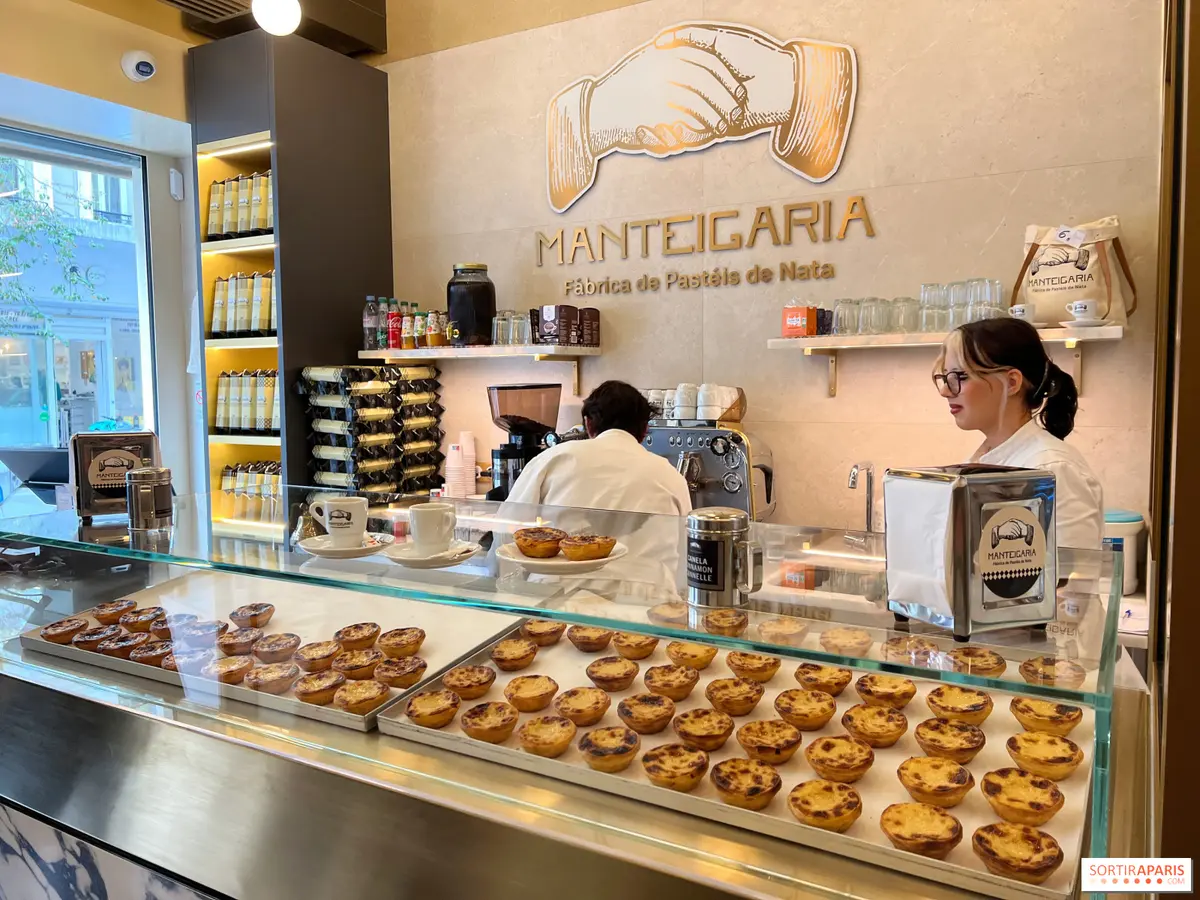
If Belém is a pilgrimage site, Manteigaria is a live performance. The original Chiado location strips away historical pretense for pure transparency: you stand at a marble counter watching bakers fold high-quality butter (manteiga — hence the name) into dough in real time. There is no seating at the Chiado original, which matters if you are traveling in Portugal with kids or anyone who cannot stand for long.
When a fresh batch emerges from the oven, a bell rings. The conditioned response is immediate — everyone in the shop shifts toward the counter. The tarts here are noticeably sweeter and butterier than Belém’s, with a hint of cinnamon infused directly into the custard rather than just sprinkled on top. The pastry is lighter, more delicate. The custard arrives genuinely molten. Wait at least 90 seconds before biting in, or you will scorch your palate and miss the texture entirely.
The standing-only setup keeps turnover fast, so queues move quickly. But it also means you cannot linger — efficient if you are moving through the city, joyless if you wanted to sit.
Pro Tip: The bell that rings when a fresh batch is ready is not decorative. Position yourself near the counter before you hear it — tarts sell within minutes of a new batch landing.
- Location: Rua do Loreto 2, Chiado; five Lisbon locations total, including Time Out Market and Belém
- Cost: €1.50 per tart (about $1.65)
- Best for: Solo travelers, anyone who wants to watch the baking process, grab-and-go visits
- Time needed: 10-15 minutes; no seating at the original Chiado location
3. Castro — the refined dark horse on Rua Garrett
Castro arrived in Lisbon in 2020 and positioned itself as the gourmet alternative to the classic options. Instead of tradition or transparency, it offers refinement. The custard is aged for 24 hours before baking, developing a more complex, less sweet flavor profile — distinctly eggier and more sophisticated than the immediate gratification you get at Manteigaria.
The Alice in Wonderland-inspired design stands out against the standard tile-and-counter aesthetic of most Lisbon bakeries: look for the upside-down chair legs in red shoes above the door on Rua Garrett. Inside, it is quieter and more contemplative. You are expected to order a coffee and settle in rather than grab-and-go. The caramelization on top runs lighter and more controlled, giving a golden sheen rather than the aggressive char of the traditional spots — a trade-off that will divide purists and convert photographers.
The 24-hour custard maturation creates depth you will not find in quick-turnover bakeries. The pastry is also engineered to stay crispy longer, making Castro the best option if you are boxing tarts up for later in the day.
The smaller batch sizes can sell out by early afternoon, and the smaller footprint means you will not feel rushed but also will not linger past two coffees.
- Location: Rua Garrett 38, Chiado; second location at Rua Áurea 254 (near Santa Justa Elevator)
- Cost: Approximately €1.50-€1.80 per tart (about $1.65-$2.00)
- Best for: Couples, afternoon coffee stops, anyone packing tarts for later
- Time needed: 20-30 minutes with seating
Which competition-winning bakeries are worth the detour?
The annual O Melhor Pastel de Nata competition — a blind judging event run by Edições do Gosto since 2009 — scores tarts on appearance, dough texture, filling, and consistency. Winning it is the highest recognition in traditional Portuguese food — the equivalent of a Michelin star for custard tarts. The results consistently point toward neighborhood bakeries far outside the tourist corridor, not the famous names that generate guidebook attention.
Pastelaria Aloma — the reigning champion
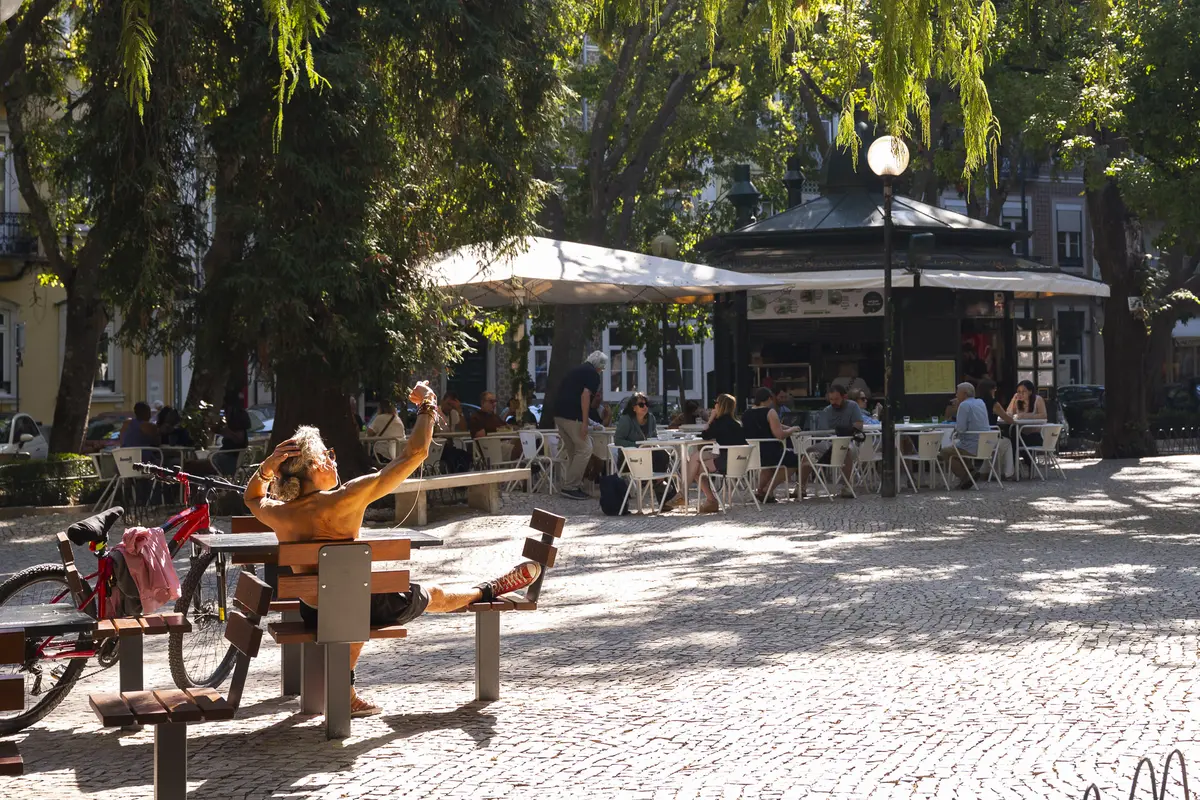
Aloma is the most decorated bakery in the competition’s history, having claimed the title multiple times and holding the most recent championship. It sits in a residential neighborhood rather than a tourist corridor, which means you eat alongside locals grabbing their morning pastry with a bica (espresso). No tour groups. No multilingual menus.
The consistency here is what wins competitions — not a single showstopper tart, but hundreds of identical ones per day. Each batch maintains the same ratio of crispy layers, the same degree of char, the same custardy wobble. Judges reward that. So do repeat visitors.
The downside is the location. Getting there requires a deliberate trip, not a casual detour. Budget the extra time and consider combining the visit with something else in the Campo de Ourique neighborhood.
Pro Tip: Aloma sells six-packs at Lisbon Airport, which makes them accessible without the detour — though eating them fresh at the source is a different experience entirely.
- Location: Rua Francisco Metrass 67, Campo de Ourique
- Cost: Around €1.40-€1.50 per tart (about $1.55-$1.65)
- Best for: Serious pastry seekers, anyone staying in or near Campo de Ourique
- Time needed: 15-20 minutes
Recent winners worth the extra travel
Other competition titles have gone to suburban and coastal bakeries that prove the best natas are rarely in the city center. Visiting these gives you verifiable insider status and supports small-batch artisans who prioritize quality over volume — and you will pay less than at any Chiado address:
- Confeitaria da Glória in Almada claimed a recent title, making it worth the short trip across the Tagus River if you are already heading south.
- O Pãozinho das Marias in Ericeira won a competition title, which launched the kind of overnight queue that reshaped this Portugal surfing hub’s Saturday mornings. Two branches opened shortly after to absorb the demand.
- Casa do Padeiro in Pontinha is another suburban winner that locals know by name and tourists rarely find.
How do you judge a great pastel de nata?
A proper pastel de nata passes four tests before you take a bite: a visual check of the char, an auditory crack test on the first bite, a wobble check of the custard, and a look at the spiral pattern on the base. Each signals something specific about the baking temperature, technique, and freshness of the tart.
Visual: the leopard spots
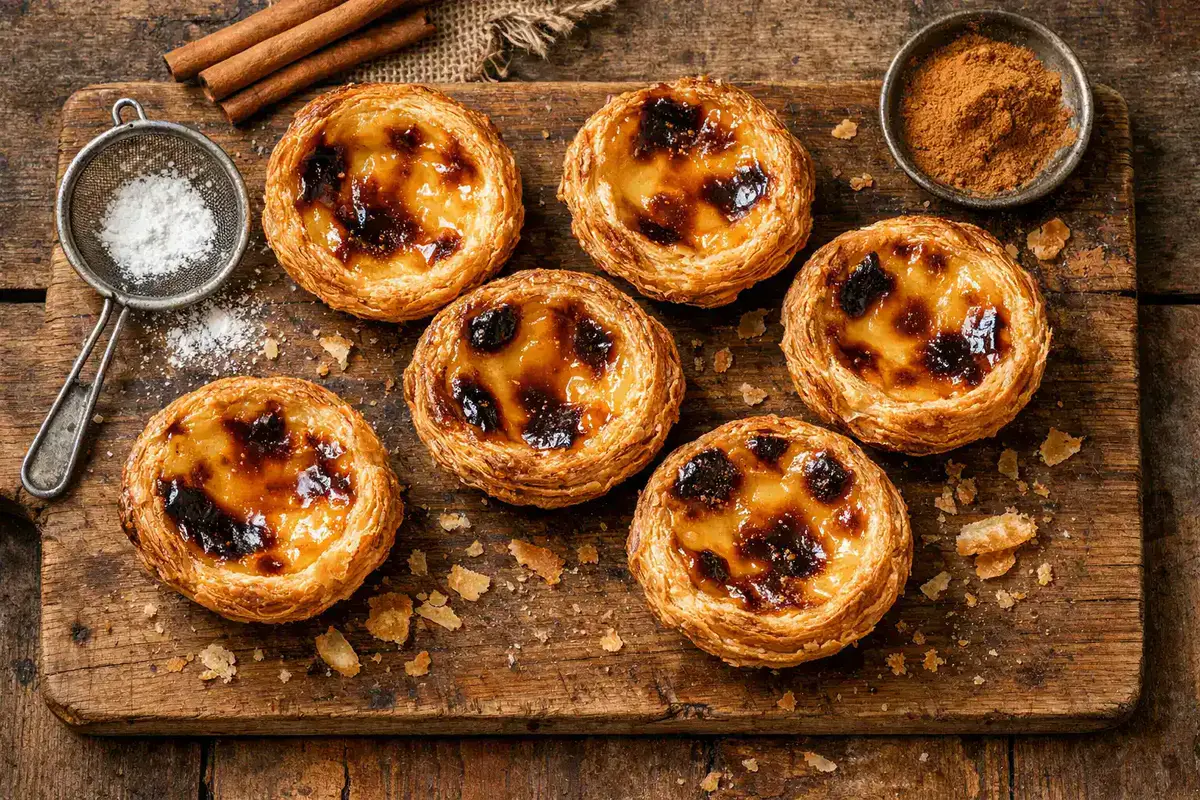
Those dark brown blister marks on top are not flaws — they are essential. They indicate the oven reached the necessary temperature (482-572°F / 250-300°C) to trigger the Maillard reaction, where sugars and amino acids caramelize under intense heat. A uniformly pale yellow top means the tart was baked too slowly, which typically results in overcooked custard with a rubbery texture. You want aggressive charring, just short of burnt.
Auditory: the crack test
When you bite down, listen. A proper tart produces a high-pitched crack similar to stepping on dry autumn leaves. If the pastry bends silently or makes a dull, soft crunch, it is either stale or was not baked hot enough. This test works best within the first two hours after baking. After that, the shell begins absorbing ambient moisture regardless of how good the bakery is.
Texture: the wobble
Before eating, give the tart a gentle shake. The custard should wobble like jello, not sit firm like scrambled eggs. This wobble indicates flash baking — the exterior set while the interior remained creamy and almost liquid. A firm, stationary custard was overbaked. The center should be on the verge of fluid when you bite in, contrasting with the crispy shell.
The spiral bottom
Flip the tart over before eating. A distinct spiral pattern on the base shows where the dough was rolled into a log, sliced, and pressed into the tin. This lamination technique creates vertical layers that puff upward during baking. A smooth or random bottom means traditional lamination was skipped, and the layers inside will be fewer and less defined.
How do locals actually eat a pastel de nata?
Locals eat their pastel de nata standing up, in under three minutes, with a short espresso. There is no ceremony — it is a daily habit, not an occasion. Tourists linger, which is perfectly fine, but the local ritual strips everything back to the tart itself: fresh from the oven, minimal additions, consumed immediately before the shell loses its edge.
Cinnamon: use it or skip it?
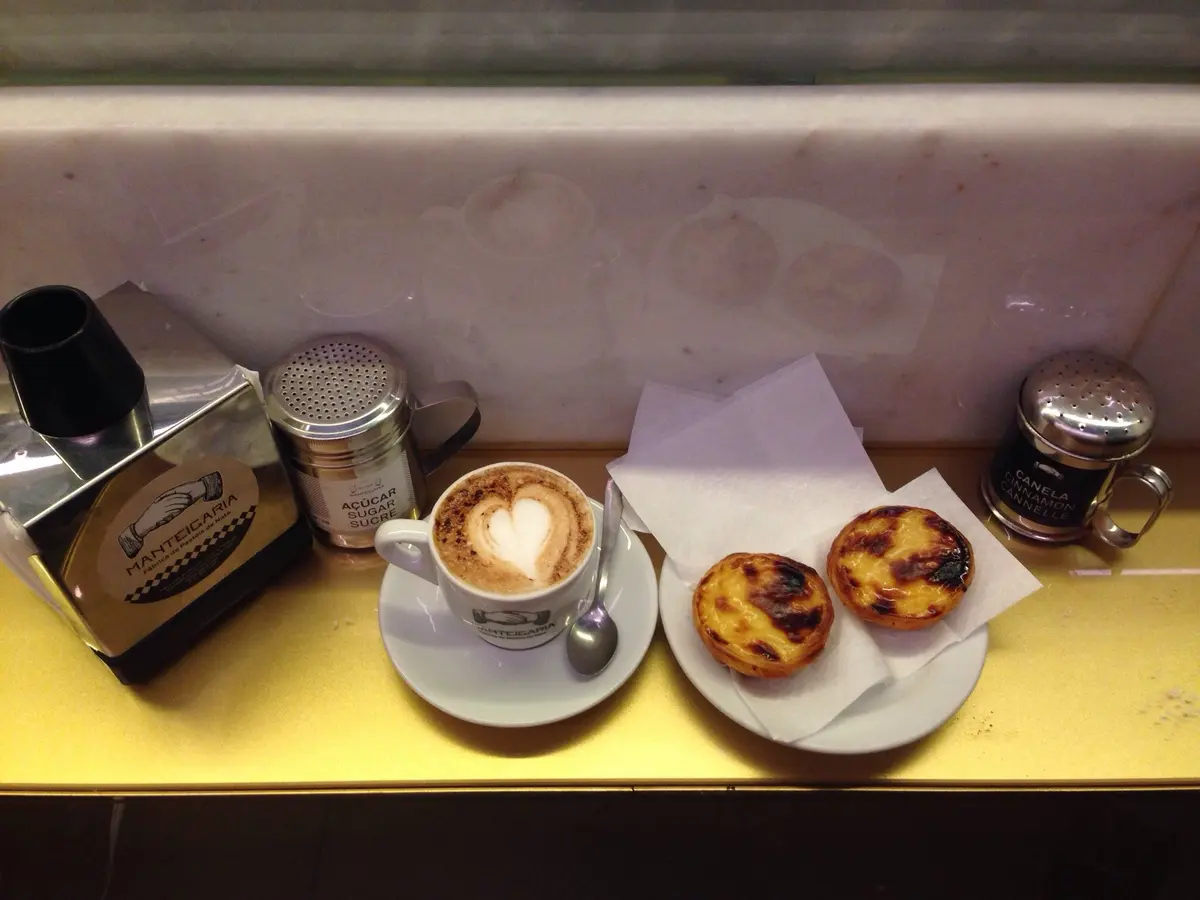
You will find shakers of cinnamon (canela) and powdered sugar on the table at most bakeries. These are optional — not pre-applied. Purists eat the tart straight to taste the custard and pastry without interference. Adventurous eaters add a light dusting of cinnamon for warmth or a touch of sugar for extra sweetness. Neither is wrong. Locals tend to use cinnamon sparingly, if at all, and rarely reach for the powdered sugar.
The pairing: bica vs. port wine
Order a bica — a short, strong espresso similar to Italian ristretto. The bitterness cuts through the custard’s richness and prevents palate fatigue if you are planning to eat more than one (and you should). Some cafés offer the tart alongside a glass of port wine, which follows tradition but lands sweet-on-sweet — not for everyone. For a back-to-back tasting session across multiple bakeries, the bica is the better pairing.
Spoon method vs. bite method
Two schools of thought exist. The spoon method scoops out the custard first, then eats the shell separately — maximizing the creamy experience without structural collapse. The bite method eats the tart whole, getting both textures in every mouthful. Neither is correct, but the bite method is faster and, when the custard is at the right temperature, delivers the contrast in a single movement that spoon-eaters spend two rounds chasing.
Can vegans and gluten-free visitors eat pastel de nata in Lisbon?
Dietary restrictions do not mean missing out entirely, but they do require adjusted expectations. The traditional pastel de nata relies on eggs for its custard wobble and wheat flour for its laminated pastry. Plant-based and gluten-free alternatives exist in Lisbon, but neither is a like-for-like substitute — and the gap in texture is real enough to mention honestly.
Vegan options: what to expect
Vegan Nata, a dedicated bakery with locations in Chiado and Campo de Ourique, has developed a plant-based tart using soy and oat milk combined with turmeric and lemon to replicate the color and tang of egg yolk custard. The pastry uses vegetable margarine instead of butter. The caramelization on top is achieved through torching rather than high-oven blistering, producing convincing leopard spots. The custard has more of a set-pudding texture than the flowing creaminess of the traditional version — egg proteins are what create the signature wobble, and no plant-based substitute replicates it exactly. The flavor is slightly less rich. But as a vegan approximation of the form, it is better than most people expect. You will also find plant-based options as part of the growing vegan in Portugal scene, including stalls at some food markets and progressive cafés in Príncipe Real.
- Location: Chiado and Campo de Ourique
- Cost: Around €1.30-€1.50 per tart (about $1.45-$1.65)
- Best for: Vegan travelers who still want to participate in the tradition
- Time needed: 10 minutes; can sell out quickly at peak times
Gluten-free: the honest reality
This is trickier. Gluten is the structural net that holds puff pastry layers together — it is what creates the flake. Without it, achieving authentic texture is not possible. Zaroca and Rice Me Deli offer rice flour alternatives that taste good but crumble like shortbread rather than shatter like puff pastry. If you have celiac disease, these are safe and satisfying desserts in their own right. But they will not satisfy the flaky-tart craving, and they are not widely available.
How do you get pastéis de nata home without wrecking them?
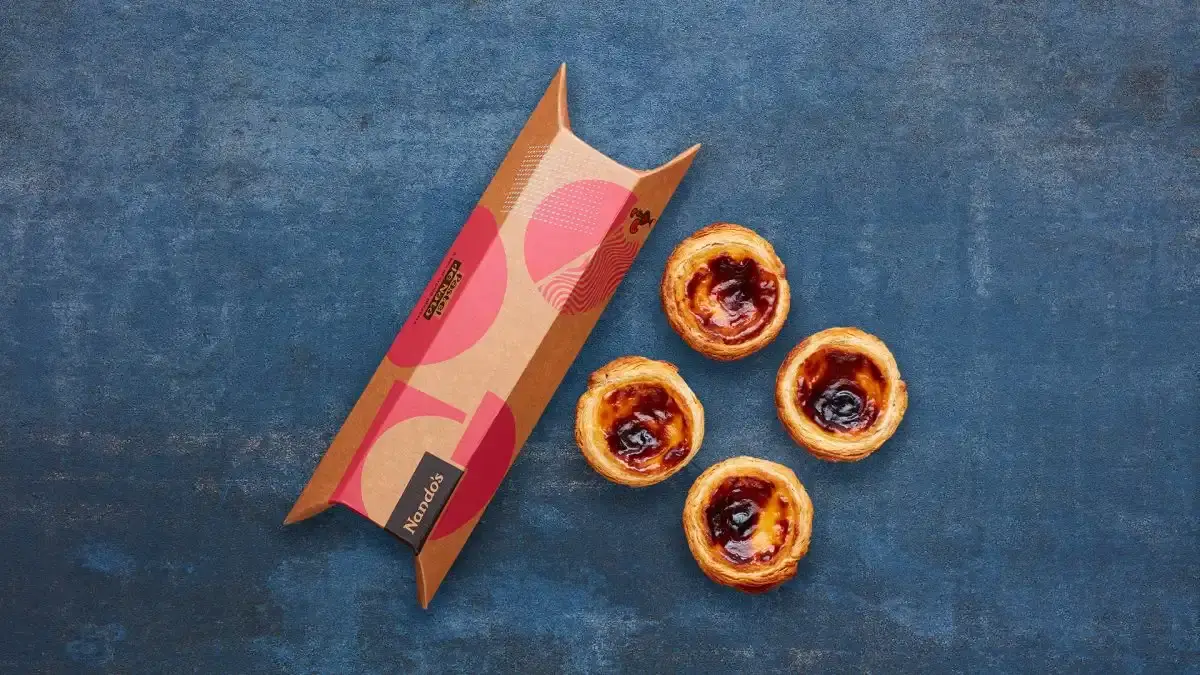
Pastéis de nata rank among the best what to buy in Portugal for travelers heading home — but the real threat is not a security officer, it is physics, moisture, and poor timing. Buy them the morning of your flight, pack them right, and they survive the journey in reasonable condition.
Will airport security confiscate them?
The question comes up constantly. Custard is technically semi-liquid, but when enclosed in a tart at reasonable quantities — a box of 6-12 — it passes through TSA and European security without triggering the 100ml (3.4 oz) liquid rule. The custard is not bulk liquid. On my last visit, two boxes went through without a second glance. Individual officers have discretion, so if you are carrying multiple boxes, be prepared to explain they are solid baked goods — not beverages.
Pro Tip: Buy tarts the morning of your flight, not the evening before. An extra 24 hours accelerates staleness faster than any amount of careful packing can compensate for.
Packing to survive the flight
The biggest threat is steam. Do not close the box while the tarts are still warm — trapped moisture turns the pastry from crispy to chewy before you reach the gate. Let them cool completely, which takes 20-30 minutes.
- Do not stack tarts on top of each other. The standard box of 6 (caixa) keeps them flat in a single layer. Stack boxes, not tarts.
- Place the box in the center of your carry-on, surrounded by soft clothing — sweaters and socks on all sides — to cushion against turbulence.
- Buy them the morning of the flight, not the evening before.
What’s the best way to reheat a pastel de nata at home?
The disappointment of eating a souvenir pastel de nata at room temperature comes down to one missing variable: heat contrast. The experience is built on hot custard against a crispy shell. Every reheating method achieves this to a different degree. One method destroys the tart entirely.
Air fryer: 350°F (180°C) for 3-4 minutes
Set your air fryer to 350°F (180°C) and heat for 3-4 minutes. Convection circulation actively strips moisture from the pastry surface while re-melting the butter in the layers, recreating the texture of a tart just out of the oven. The custard warms through without boiling, and the shell regains that shatter-crisp quality. This is the closest you will get to the original experience outside of Lisbon. The shell cracks audibly again. Use this method.
Oven: 400°F (200°C) for 5-7 minutes
Preheat to 400°F (200°C) and bake for 5-7 minutes. This works well but takes longer due to preheat time — inefficient for one or two tarts. It is the best option without an air fryer. Watch closely after the 5-minute mark. You want to crisp the shell without further browning the already-charred top. Significantly better than room temperature; not quite as crispy as the air fryer.
Microwave: do not
Microwaves work by exciting water molecules, steaming the pastry from the inside and turning those delicate laminated layers into a chewy, rubbery mass. The custard separates and becomes grainy. If you only have a microwave available, eat the tart cold — that is a better outcome than what the microwave produces.
Toaster oven: proceed with caution
Set to medium heat for about 4 minutes and watch it constantly. The proximity of the heating elements means the top can burn while the shell is still soft. Pull it the moment the pastry begins to crisp. It can work, but not reliably — skip it if you have another option.
Why does Lisbon take its custard tart this seriously?
The pastel de nata exists because of an economic crisis, a surplus of egg yolks, and monks who needed to survive the collapse of their religious order. What started as desperation became a trademarked recipe, a national obsession, and a defining piece of Portugal culture that fills local newspapers every spring.
The monastery origins
At the Jerónimos Monastery in Belém, the monks and nuns followed strict dress codes requiring their habits to be heavily starched. The traditional starching agent was egg whites. They also used egg whites to clarify wine, removing sediment from the barrels. This created an enormous surplus of yolks that spoiled quickly if not used. The monastic solution was doçaria conventual — convent sweets. Yolk-heavy desserts combined with sugar, almonds, and butter, their recipes closely guarded and passed down orally within religious communities. Pastries became a form of creative expression and discipline within the strict confines of monastic life.

The revolution that changed everything
The Liberal Revolution of 1820 challenged the power of the monarchy and the Catholic Church across Portugal. By 1834, religious orders were officially dissolved. Monks who had spent entire lives in prayer and pastry-making found themselves homeless and without marketable skills beyond their recipes. The monks at Jerónimos began selling their egg tart recipe to the nearby sugar refinery to survive. This was not a business venture — it was desperation. The refinery recognized the product’s value and began commercial production in 1837, becoming the Antiga Confeitaria de Belém. The monks’ survival mechanism became a national treasure, selling roughly 20,000 tarts per day today — a testament to the resilience embedded in Portugal’s history.
The secret room legacy
The recipe is kept in the Oficina do Segredo at Belém, where a small number of master bakers are permitted entry. The secrecy is not a marketing device — it is a continuation of the monastic tradition of treating culinary knowledge as intellectual property. The formula is taught through apprenticeship, not written documentation, ensuring the original flavor profile survives across generations.
That history transforms the act of eating a pastel de nata. It is not just a snack. It is a bite of resilience, resourcefulness, and cultural continuity stretching back two centuries.
The bottom line
TL;DR: Go to Manteigaria first for context, then Belém for history, then Castro if you want refinement and a seat. If you have time for one neighborhood detour, Pastelaria Aloma is the most decorated bakery in Lisbon’s annual blind competition. Reheat at 350°F (180°C) in an air fryer for 3-4 minutes, buy the morning of your flight, and never touch the microwave. Still planning your trip? Our where to stay in Lisbon guide covers every neighborhood from Chiado to Campo de Ourique.
Have you found a neighborhood nata spot in Lisbon that deserves more attention — or one that is wildly overrated? Leave your verdict in the comments.