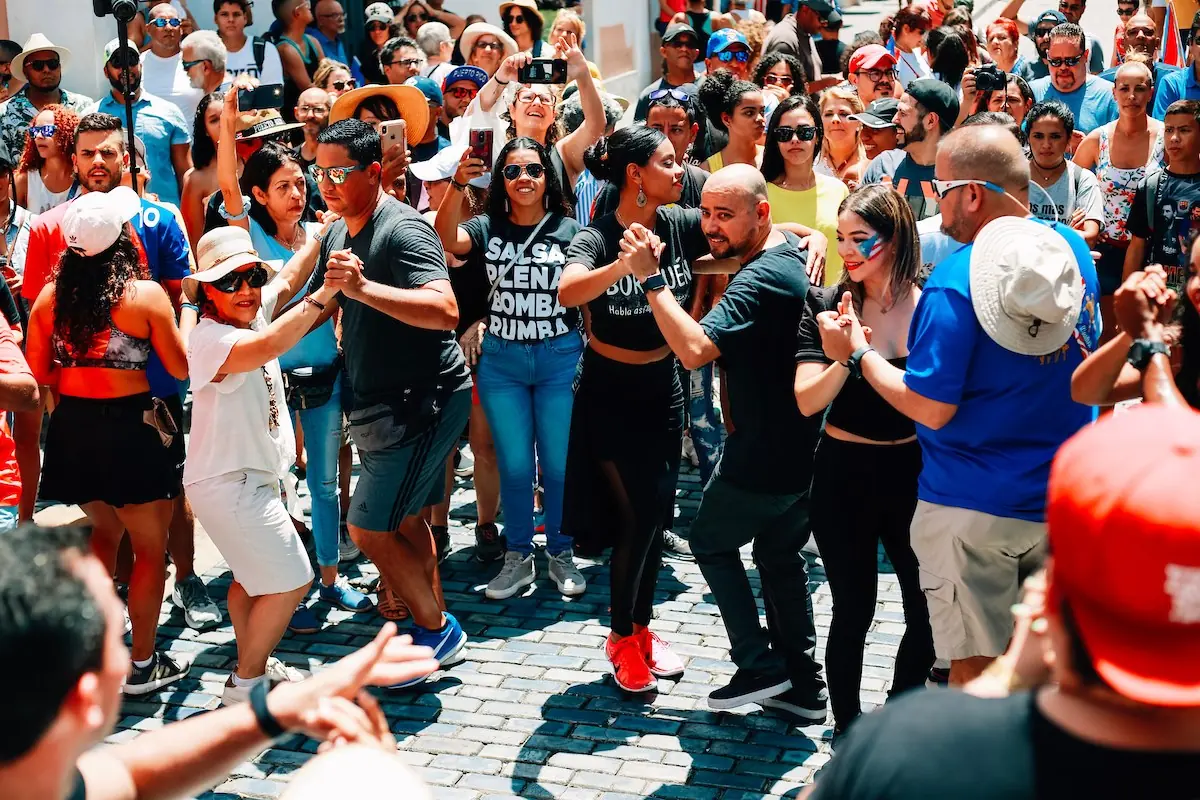
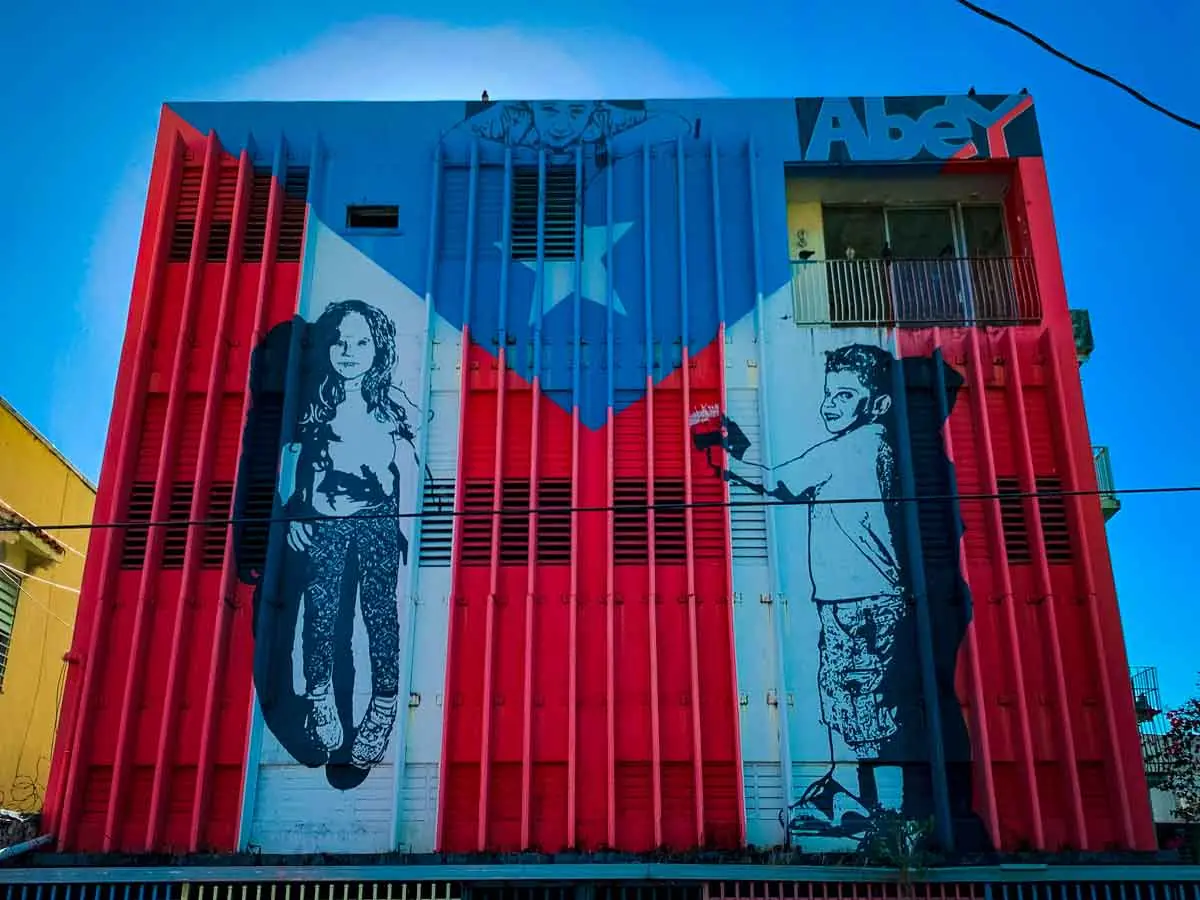
Old San Juan gets the cruise ships. Santurce’s street art gets the artists — and anyone who wants to understand modern Puerto Rico. This guide covers the exact walking route along Calle Cerra, how to arrive for $0.75 on the T3 bus, and where to eat without breaking stride.
The Santurce street art district starts at the intersection of Calle Cerra and Fernández Juncos Avenue. Get there by Uber in 10 minutes from Old San Juan (3.8 miles / 6.1 km) or by T3 bus for $0.75. Walk north along Calle Cerra and budget two hours for the full loop, including photography stops. For broader context on the capital, our San Juan travel guide maps the neighborhoods worth your time.
Why did Santurce become the street art capital of the Caribbean?
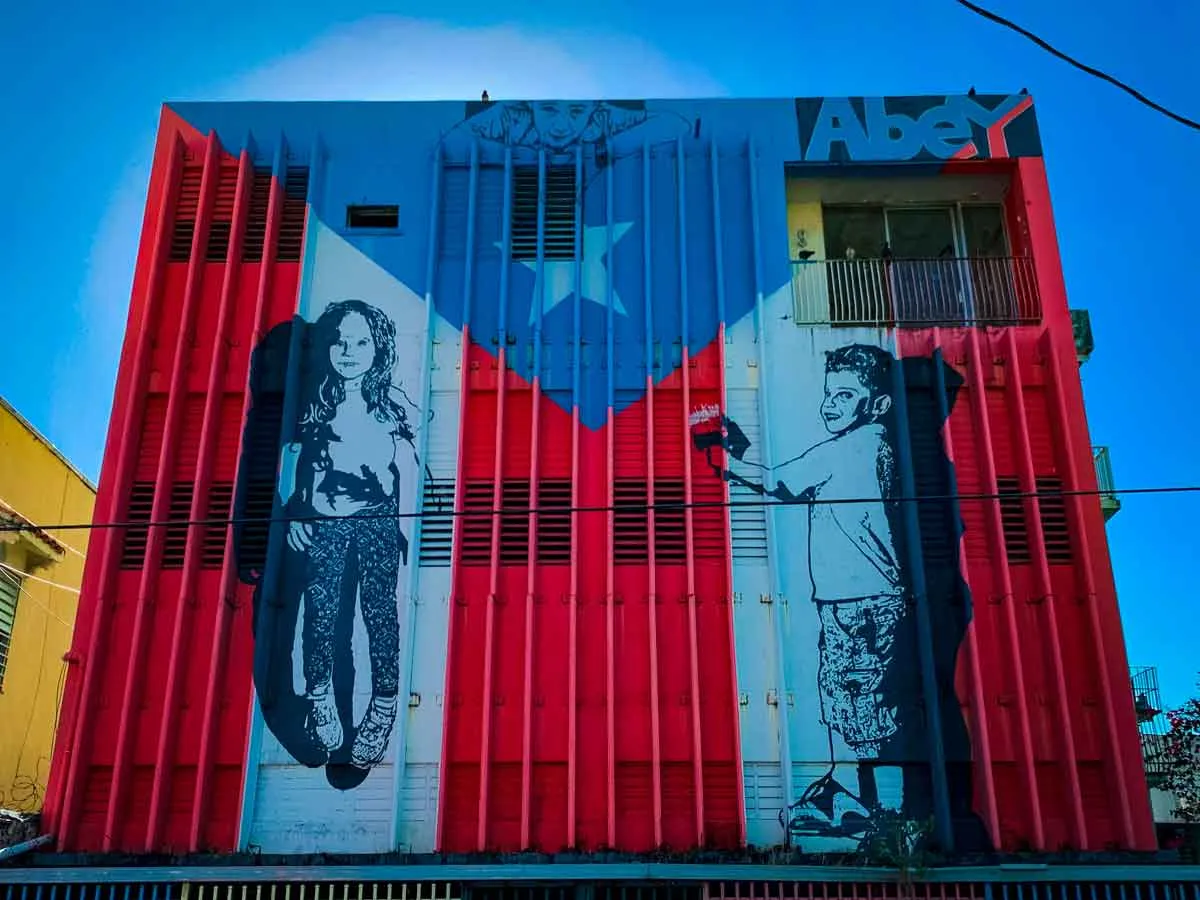
Santurce earned its reputation for street art through grassroots momentum, not government tourism investment. Local and international artists turned abandoned commercial facades into a sprawling open-air gallery, catalyzed by the Santurce es Ley and Los Muros Hablan festivals. The neighborhood shifted from a neglected working-class barrio to the home of the Museo de Arte Contemporáneo, with individual murals now reaching 50 feet (15 m) tall.
The transformation began when artist and organizer Alexis Bousquet founded the Santurce es Ley festival, an annual street art event that pulled global talent — Fintan Magee, Farid Rueda, Iker Muro (Mur0ne) — to paint on derelict walls alongside Puerto Rican muralists like Ana Marietta, Danae Brissonnet, and Bik Ismo. What started as a weekend festival compounded into a permanent gallery with no closing time. It now sits alongside the island’s other major Puerto Rico festivals on any serious cultural calendar.
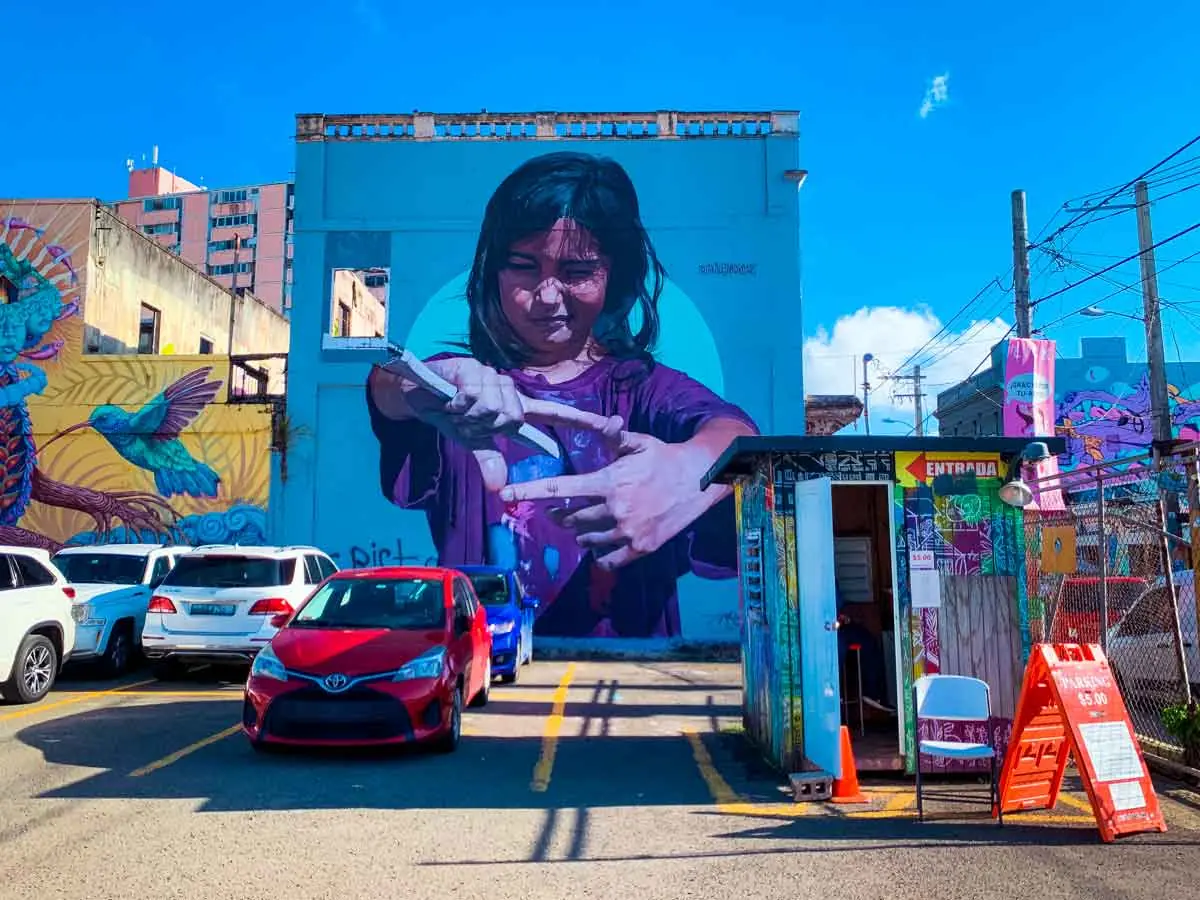
The contrast inside a single block is startling. You walk past the Museo de Arte Contemporáneo (MAC), climate-controlled and hushed, then step back onto sun-baked concrete where a 40-foot (12 m) mural is actively peeling at the lower corners from years of tropical humidity. The outdoor art isn’t maintained or protected. That rawness is precisely what makes it serious.
Pro Tip: The Santurce es Ley festival draws the largest crowds and produces the freshest work. If your visit overlaps with it, that week delivers the highest concentration of active artists and newly completed pieces on the Calle Cerra corridor.
What is the best Calle Cerra walking tour route?
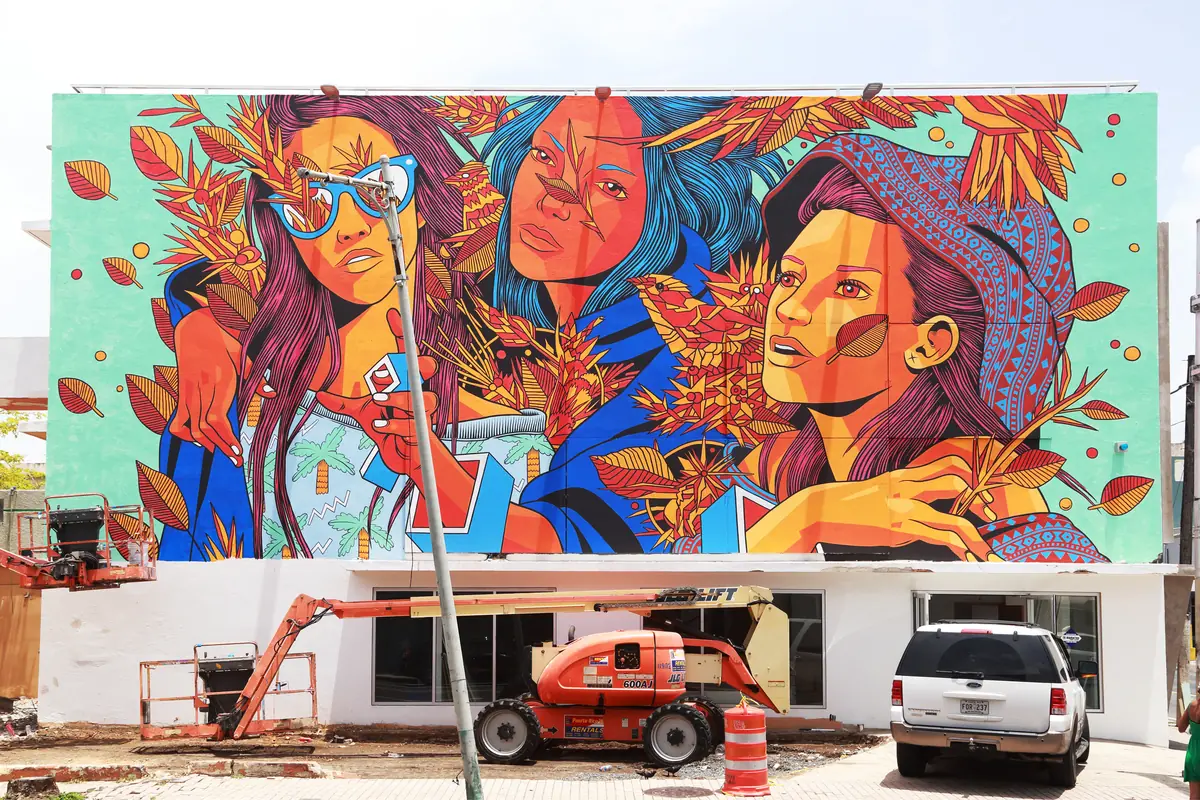
The essential Calle Cerra walking tour begins at the intersection of Fernández Juncos Avenue and Calle Cerra. Walk north along Calle Cerra toward Las Palmas Avenue — this corridor covers the highest density of monumental murals in the Santurce street art district. The primary route takes roughly two hours at a relaxed pace, including time to back up into the street for wide-angle photos.
Start at Fernández Juncos and face north. The first few blocks deliver the largest commissioned pieces — multi-story works on residential buildings and blank commercial walls that served as canvases because they were too deteriorated to lease. As you move north toward Calle Progreso and then toward Las Palmas Avenue, the art shifts from sweeping figurative murals to dense graffiti lettering, stencil work, and smaller-scale collaborations on metal shutters.
One immediate physical reality: the sidewalks on Calle Cerra are narrow, often less than 4 feet (1.2 m) wide, with cracked concrete and occasional utility equipment blocking the path. You will step into the street regularly — not because you want to, but because you have no choice when trying to frame a 50-foot mural. Stop before you step back. Traffic moves without warning.
Pro Tip: Download an offline map of Santurce before leaving your hotel. The concrete density of the neighborhood drops cell signal at the worst moments, and you do not want to be navigating by instinct at the point where residential side streets start to look identical.
What do the Santurce murals actually mean?
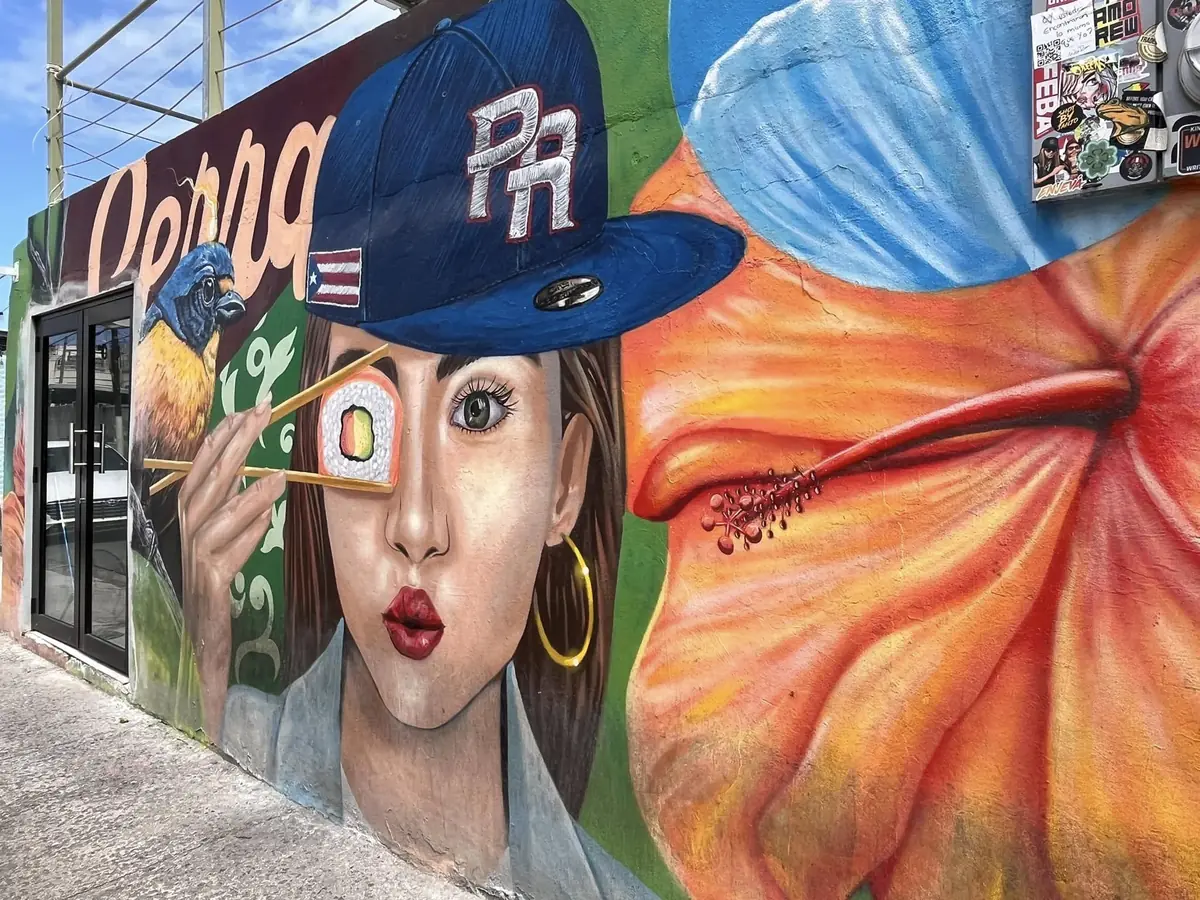
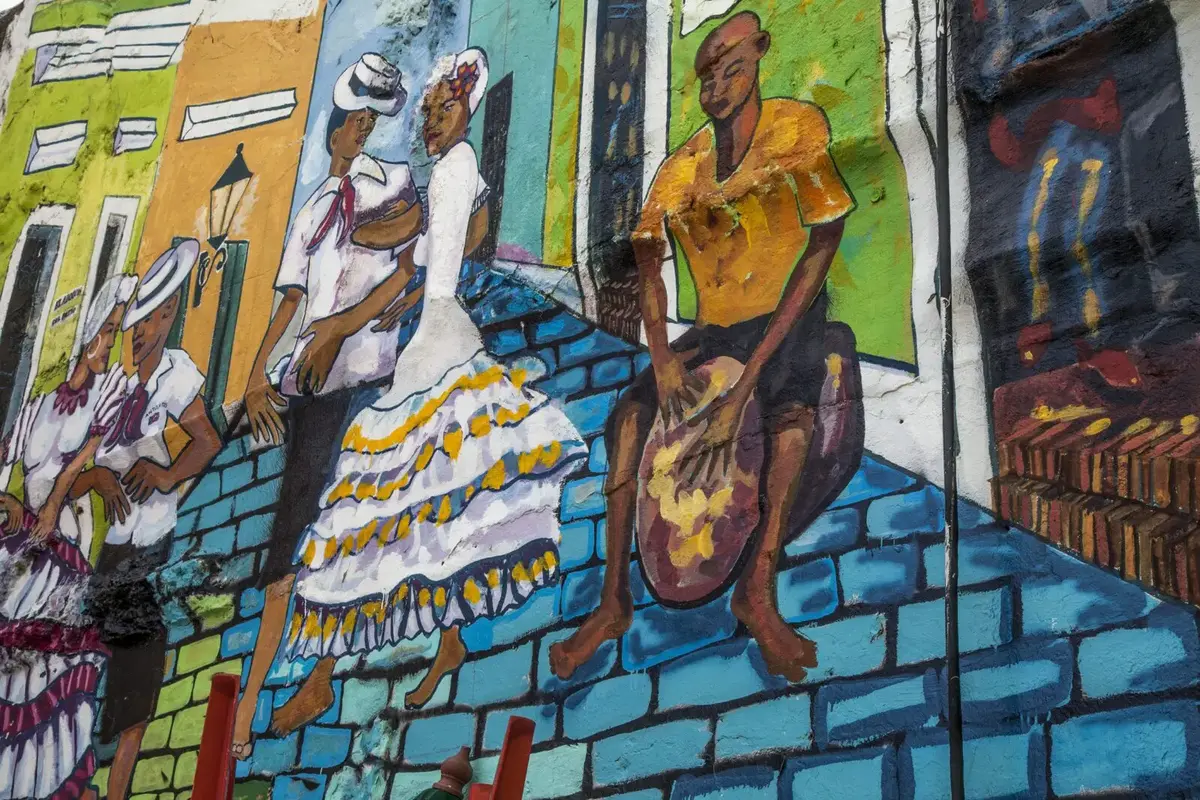
The murals in Santurce function as serious socio-political commentary on climate change, Puerto Rican cultural identity, and the legacy of colonialism. International and local artists treat these public walls as a medium for subjects that museums rarely platform — environmental collapse, the displacement of indigenous heritage, and the defunding of arts infrastructure on the island. They form one of the most important bodies of public art in Puerto Rico today.
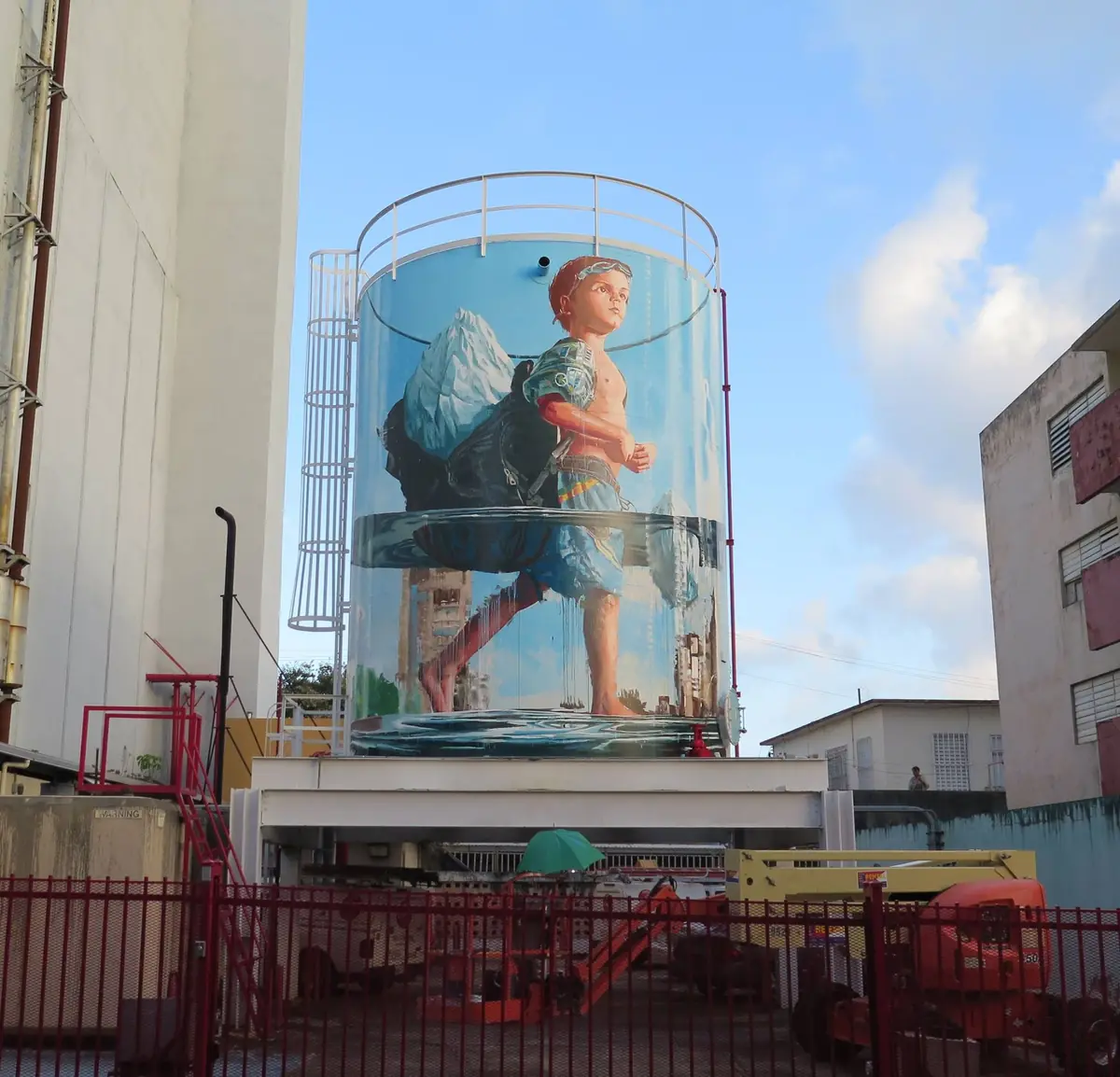
Fintan Magee’s glacier mural
Australian artist Fintan Magee painted one of the most discussed works on the route: a boy hunched under the weight of a melting glacier strapped to his back. The scale makes it oppressive in the right way — the boy looks small not because of how he’s painted, but because the building is enormous. The irony of placing a climate collapse image in the Caribbean, a region acutely threatened by sea-level rise, is not accidental. Tropical heat and humidity are visibly weathering the mural itself, adding a layer of unintentional meaning to the message.
Ana Marietta’s anthropomorphic cranes
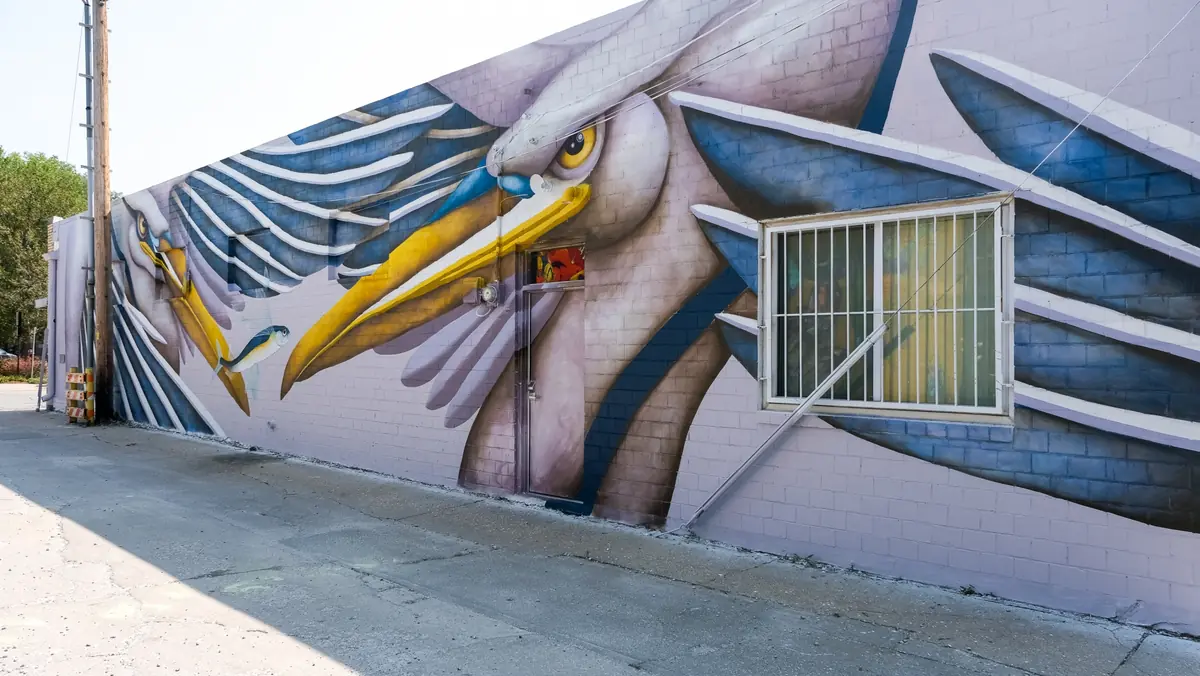
Puerto Rican artist Ana Marietta’s recurring motif — regal, human-faced cranes — appears across multiple walls in the district. The birds carry the posture of royalty and the gaze of people who have been underestimated. They read as a direct assertion of dignity, painted large enough that no one can ignore them.
The 1442 mural and historical commentary
The 1442 mural flips the framing of colonial arrival by depicting the Niña, Pinta, and Santa María not as vessels of discovery but as instruments of disruption. The number, one year off from 1492, signals that the work is not about accident. Luis Alejandro Rodríguez’s mural addressing the defunding of Puerto Rican public arts programs lands differently in person — the specific institutional names and budget figures incorporated into the design make it a document, not just a painting.
Pro Tip: Look down before you look up. Tiny stencil works and wheatpaste graphics cluster near building baseboards and utility meters — the kind of detail only someone with their phone already down would catch. Most visitors walk past dozens of them.
How do you expand the art walk to Calle Loíza?
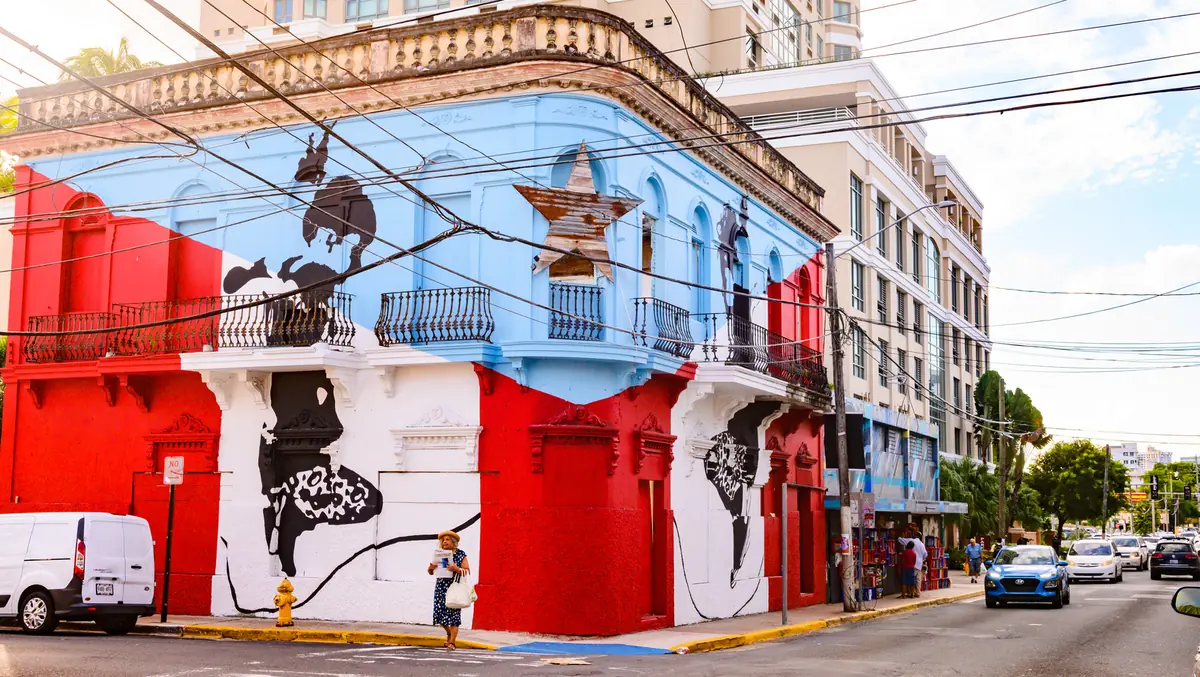
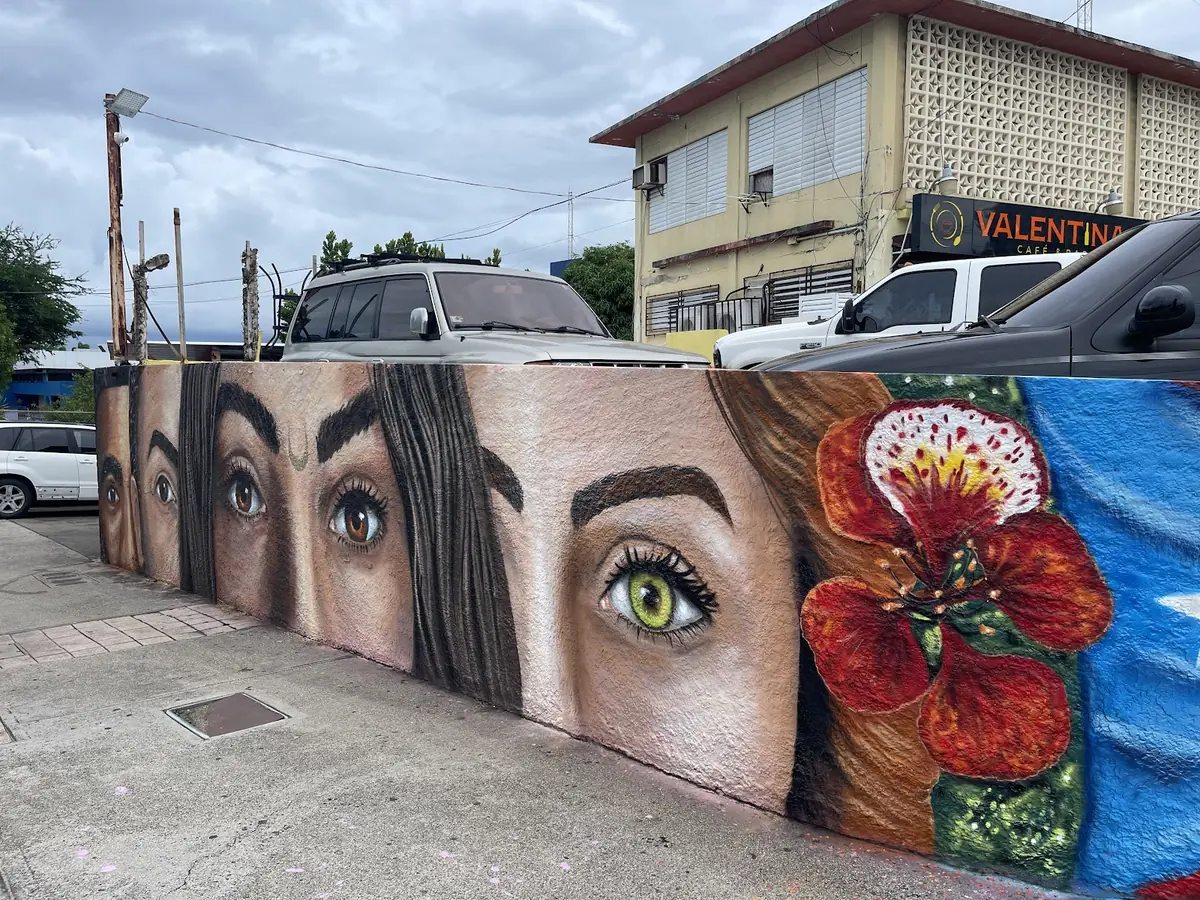
Beyond Calle Cerra, Calle Loíza runs parallel and slightly north as the dining and boutique stretch of Santurce. Murals here are integrated into commercial facades — the sides of cafes, boutique storefronts, and brunch spots carry pieces ranging from the Loíza Brinca Puerto Rican flag mural to Natalia Rodríguez’s Tropical Paradise near Café Tresbé. The art is less monumental, the context more social.
If Calle Cerra is the gallery, Calle Loíza is the opening reception. The streets are wider, the shade slightly more generous, and the ratio of coffee shops to empty lots is dramatically better. Natalia Rodríguez’s Tropical Paradise sits near Café Tresbé — a useful orientation point when the route starts to feel like one long blur of spray paint. The scent shifts noticeably on Loíza: alcapurrias frying from open kitchen windows overlay whatever solvent smell follows you off Cerra’s walls.
Is a guided street art tour worth it over walking solo?
Choosing between a guided Santurce street art tour and self-guided walking comes down to two variables: budget and context. Independent walking is free, highly flexible, and sufficient for anyone who researches the artists before visiting. Companies like The Art Walk PR run two-hour guided excursions for around $75 per person, with private options on platforms like Viator reaching up to $225 — and that money buys something specific: a guide who stops at the walls most people walk past.
The guided tour advantage has nothing to do with finding the murals — they are on public streets that Google Maps handles fine. It has everything to do with the small, uncelebrated pieces. Local guides point out stencil work near utility boxes, alley collaborations behind dumpsters, and pieces by Rey X, Defy, Celso, and Vero Rivera that appear on no published map. Guided tours typically meet at El Axolote or a nearby venue on Calle Cerra.
On my last visit, the guide stopped at a building I had walked past twice. A piece by Annex Burgos was tucked into a recessed doorway, only visible from a 30-degree angle at the sidewalk’s edge. Without the guide, it would not have registered.
- Cost (guided): from $75/person for a 2-hour tour; private options up to $225
- Cost (self-guided): free
- Duration: 2 hours either way for the primary Calle Cerra loop
- Best for (guided): First-time visitors, photographers wanting artist context, groups
- Best for (self-guided): Return visitors, independent researchers, budget travelers
- Meeting point (guided): El Axolote on Calle Cerra; confirm with operator at booking
Where should you eat and drink along the Santurce art walk?
Integrating culinary stops into the Santurce art walk converts a viewing tour into a full-day cultural experience. Calle Cerra and the surrounding blocks host restaurants at a density that makes it easy to build a route around food without backtracking — and the dishes you’ll see here slot directly into the broader Puerto Rican food scene. The challenge is not finding somewhere to eat — it is choosing, and then surviving the walk to get there without overheating first.
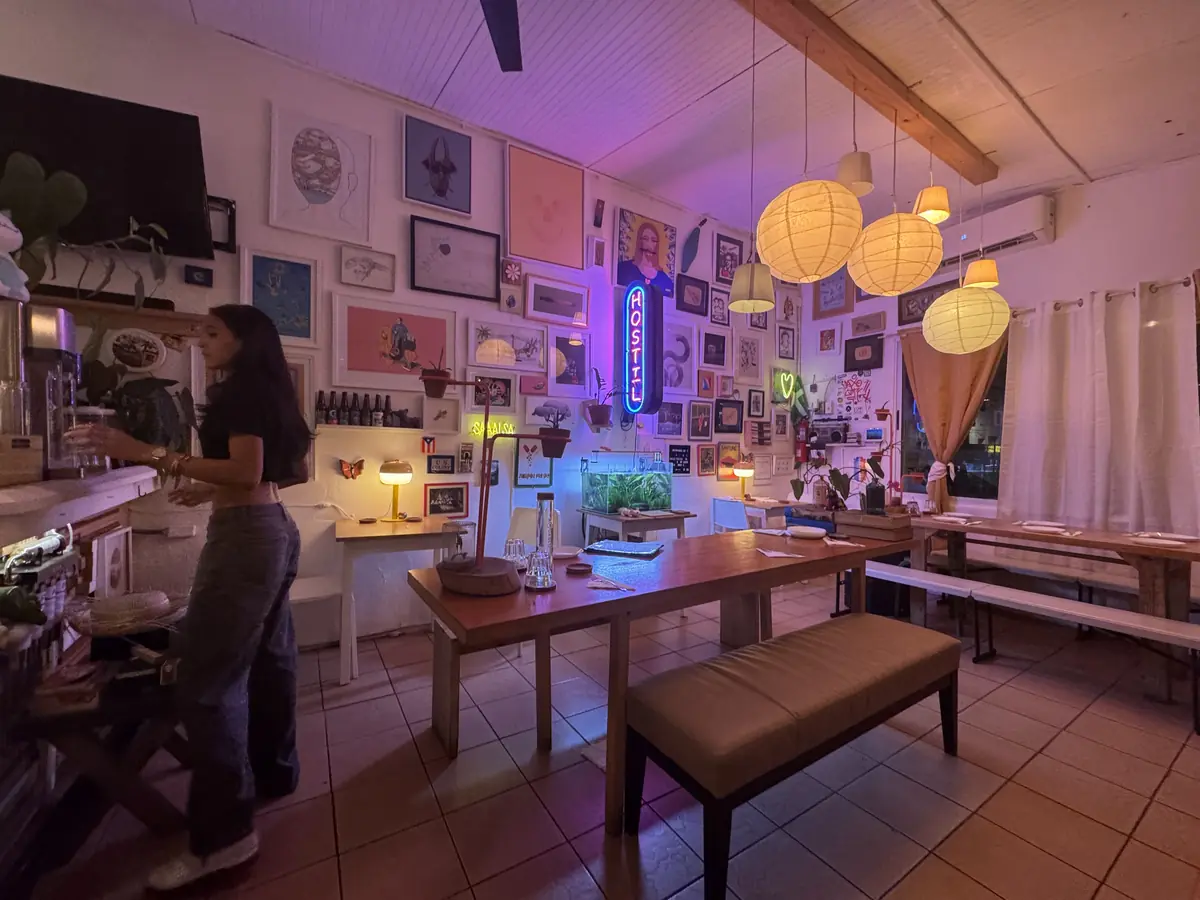
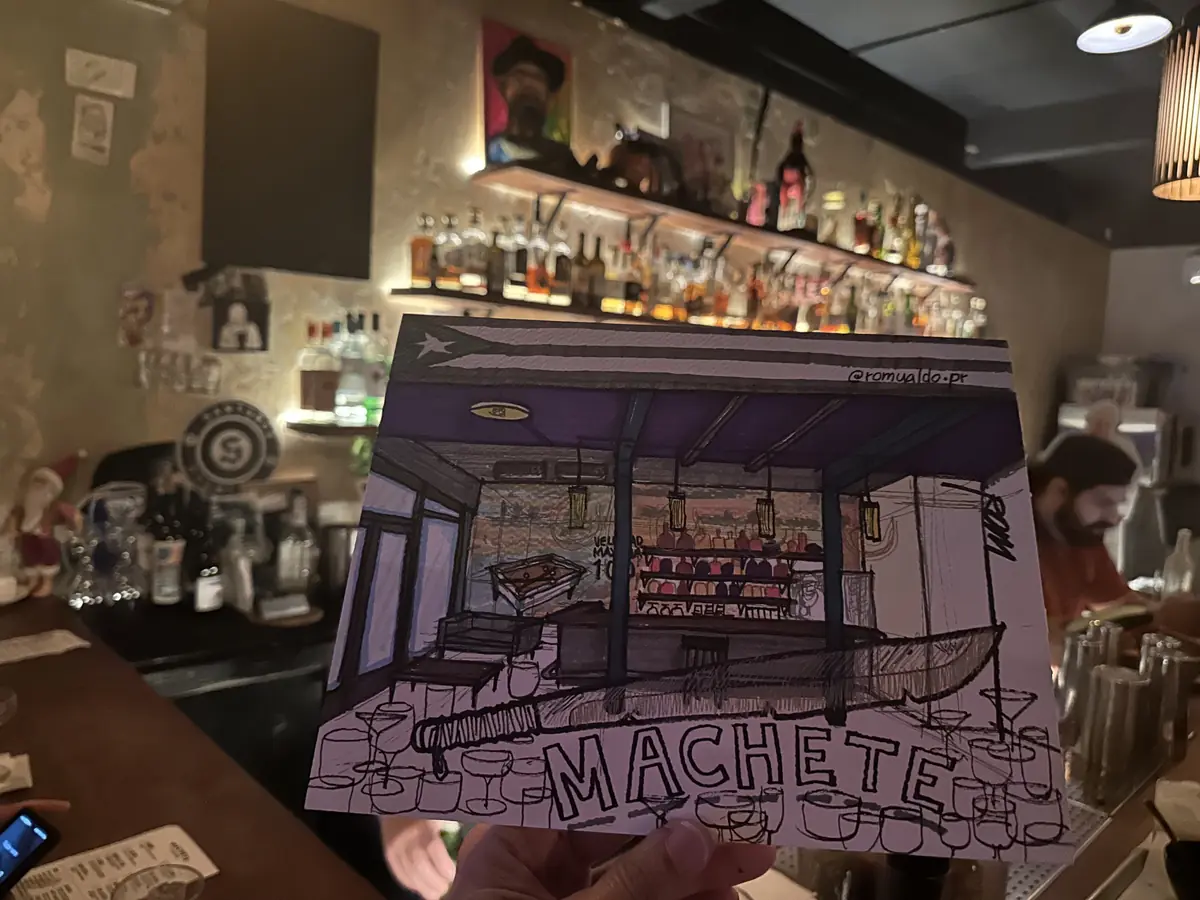
Machete is the most practical air-conditioning stop on the route. After an hour on sun-baked, unshaded concrete, the shift from 90°F (32°C) street heat to a dim, cool interior is physically dramatic. The kitchen runs upscale street food and the bar program takes craft cocktails seriously. Selva Cocina Salvaje runs Latin-fusion in a setting where the interior walls carry as much visual weight as anything outside. PROLE Cocina & Barra skews local and seasonal; Peko Peko handles ramen with the seriousness the format requires.
For something open-air, El Patio de Solé integrates its dining room directly into the neighborhood’s visual texture. Sitting outside there, you are still inside the art district — the walls around the patio are not blank.
- Machete: air-conditioned recovery stop, craft cocktails, upscale street food; on Calle Cerra corridor
- Selva Cocina Salvaje: Latin-fusion, art-filled interior; Santurce
- PROLE Cocina & Barra: local ingredients, seasonal menu; Santurce
- Peko Peko: ramen; reliable and fast if you want to keep moving
- El Patio de Solé: open-air dining room, art-integrated setting; best for an unhurried lunch
How do you get to Santurce from Old San Juan?
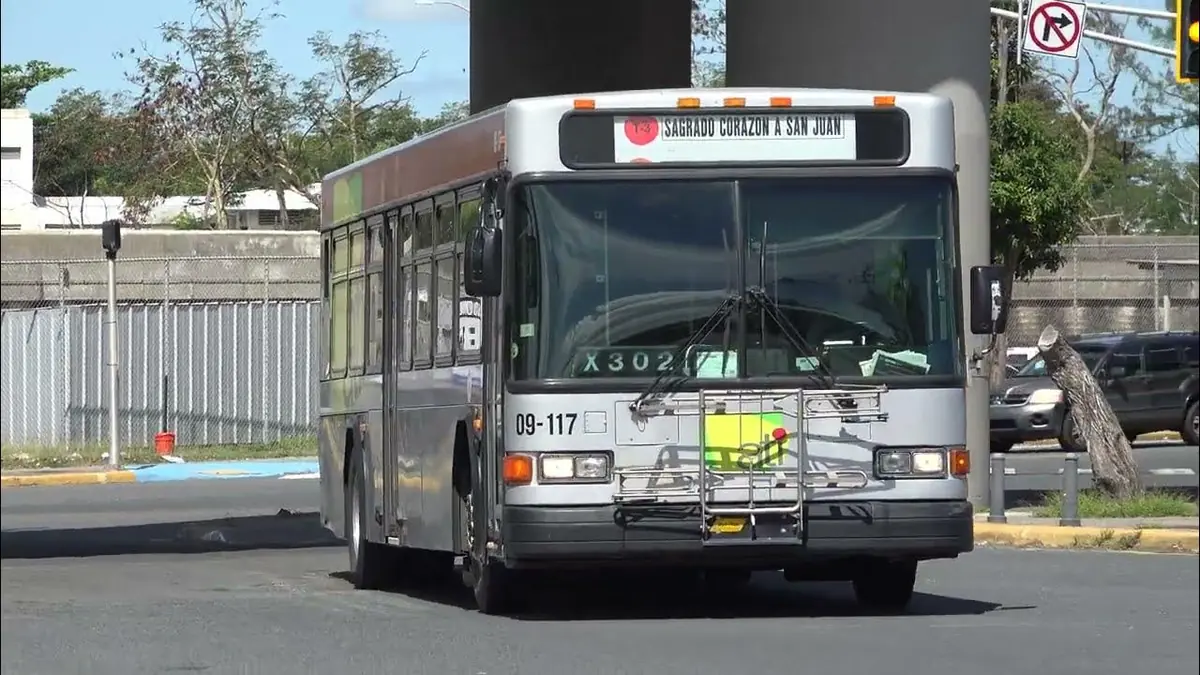
Getting from Old San Juan to Santurce takes roughly 10 to 15 minutes by Uber or rideshare, covering 3.8 miles (6.1 km). Budget travelers can take the T3 bus from the Old San Juan Covadonga terminal directly through Santurce for $0.75. The Tren Urbano metro system exists but does not put you on Calle Cerra — the T3 bus is the most direct public option for this specific route.
The $0.75 fare requires either exact change in coins or a contactless tap — bank card, Apple Pay, or Google Pay all work on the newer fare system. Drivers do not make change for larger bills. The buses are heavily air-conditioned — the contrast with the street humidity when you step off near Avenida Diego is immediate and welcome.
If you are using a rideshare, traffic along Condado and around the convention district can stretch a standard 10-minute estimate to 20 minutes during morning hours. Drop-off at the Fernández Juncos and Calle Cerra intersection puts you at the exact start of the walking route.
- Uber / rideshare: variable cost, 10–15 min, direct drop-off at route start
- T3 bus: $0.75, ~15 min, exact coins or contactless tap, drops in central Santurce
- Walking: free, ~75 min, not recommended in heat with no shade on route
Where do you park for the Santurce murals?
Securing parking in Santurce requires a direct plan. The Marshalls parking garage near Calle Cerra is the most reliable option for visitors arriving by rental car — it provides a secure, fixed location to return to after walking the route, with easier access than on-street alternatives. Metered street parking exists along Calle Cerra during weekday off-peak hours, but availability is unpredictable and the meters are inconsistently marked.
Secondary street parking between the expressway and Wilson Street opens up during early morning hours before local traffic builds, but this requires comfort navigating a dense residential grid where side streets narrow to a single lane. The ramps in local parking structures have tight turning radii, and the neighborhood side streets frequently require pulling in both mirrors to avoid clipping parked cars. A mid-size SUV will fit; anything larger creates real difficulty.
Leave nothing visible in a parked rental car. Not a bag, not a charging cable, not a receipt. This is standard practice across all of San Juan’s urban neighborhoods, not a specific indictment of Santurce.
- Best option: Marshalls parking garage near Calle Cerra — paid, secure, walkable to the route
- Secondary option: Street parking on Wilson Street side, off-peak weekday mornings only
- Cost: Garage rates vary; check signage on arrival
- Avoid: Leaving any valuables visible in the vehicle
Is Santurce safe for tourists?
Santurce is generally safe during daylight hours, particularly along the active main corridors of Calle Cerra and Calle Loíza. The neighborhood retains a raw, unpolished urban character — which is exactly why the art here is genuine and not a commissioned tourism project — and petty theft is the primary concern, not violent crime against visitors. Solo female travelers visit the day route without issue and in significant numbers.
The residents sitting on porches along the residential blocks play dominoes and observe everything. This is not a neighborhood that ignores its streets. For visitors arriving from suburbs on the mainland, the physical environment — deteriorating buildings, heavy graffiti on uninhabited facades, uneven sidewalks — reads as more dangerous than it actually is during the day.
The boundary to respect: stay north of Highway 26, stick to Calle Cerra and Calle Loíza during your walking tour, and use rideshare for any movement after dark. The La Placita de Santurce area draws evening crowds and operates as a social hub, but walking from there back to a hotel at midnight is not worth the savings over a $6 Uber.
Pro Tip: For solo female travelers — the street art corridor on Calle Cerra between Fernández Juncos and Las Palmas Avenue is active, public, and walked by photographers and visitors throughout the day. The risk profile changes after sundown, not dramatically, but enough to matter.
What is the best time of day to photograph the murals?
The optimal window for photographing the Santurce murals is between sunrise and 9:00 AM. During this period, light is soft and directional, shadows add dimension to the wall textures, and the narrow sidewalks are empty enough to position freely. The heat is also still manageable — the concrete surface and lack of tree canopy make midday in Santurce significantly hotter than the 85°F (29°C) ambient temperature suggests.
By 1:00 PM, the midday sun hits the light-colored concrete walls at a flat angle that washes out pigmentation and creates contrast that even manual camera settings struggle to compensate for. The heat radiating off the asphalt is not metaphorical. Smartphone highlights blow out; experienced photographers stop shooting and start looking for shade.
The golden hour before sunset works as a secondary window — the low-angle light comes from the west and catches the textured surfaces of the murals in ways the morning does not. The trade-off is that the neighborhood fills with foot traffic in the early evening, which complicates clean wide-angle shots of the bigger pieces.
The correct approach: arrive at sunrise, complete the full Calle Cerra walking route by 10:00 AM, and then move to an air-conditioned restaurant before reconsidering any afternoon photography.
Pro Tip: The massive multi-story murals face different compass directions. On Calle Cerra specifically, check which walls face east — those pieces are lit directly at sunrise and poorly lit for the rest of the day. Plan your shooting sequence by orientation, not just by route order.
Before you book
TL;DR: The Santurce street art district is the most substantive cultural experience in San Juan that most tourists skip by staying in Old San Juan one day too many. Start at Calle Cerra and Fernández Juncos at sunrise, walk north toward Las Palmas, and be sitting in an air-conditioned restaurant by 10:00 AM. The T3 bus handles transit for $0.75; the Marshalls garage handles parking. Two hours covers the primary route. Add Calle Loíza for food and a different visual register.
One perspective most guides won’t offer: Old San Juan is worth your first evening and morning. After that, it is largely infrastructure for cruise passengers. The murals in Santurce are what the city is actually saying about itself right now — and they repaint them, argue about them, and add to them constantly. That kind of living cultural record does not exist behind fortification walls. For everything else on the island, our full Puerto Rico travel guide picks up where this walk ends.
What surprised you most on the Calle Cerra walk? Leave your experience in the comments — especially if you found a piece the guides missed.