The best things to do in Tirana fit inside a 20-minute walk of Skanderbeg Square: descend a five-floor nuclear bunker, climb the stepped Pyramid at sunset, drink espresso where Hoxha’s Politburo once lived, then ride the Balkans’ longest cable car to a pine-forested summit. It’s the capital of Albania — small, strange, cheap, and moving fast.
The quick answer: 2 days, 9 picks
Spend two days in Tirana. Day one walks Skanderbeg Square, Et’hem Bey Mosque, Bunk’Art 2, House of Leaves, the Pyramid, and Blloku for dinner. Day two rides the Dajti Ekspres cable car, tours Bunk’Art 1, and closes at Pazari i Ri. Add a third day for a Berat or Kruja day trip.
Tirana at a glance — the 60-second orientation
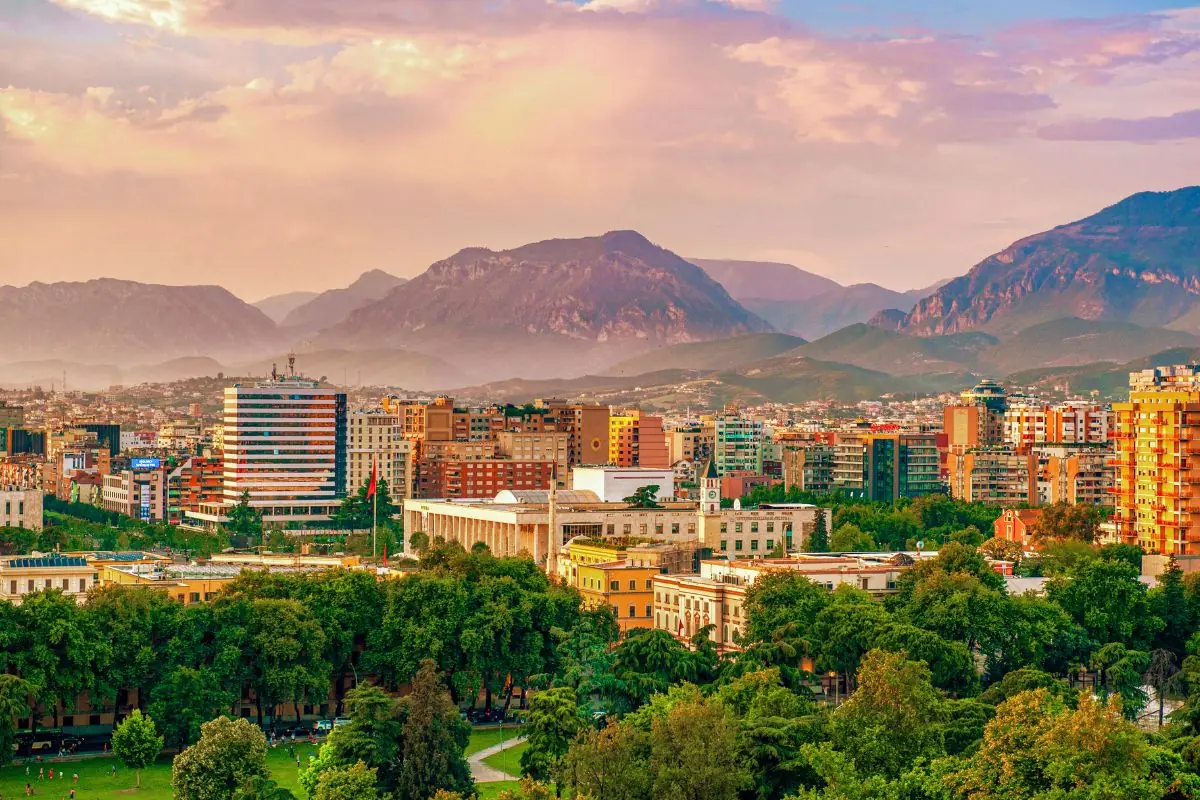
Tirana is Albania’s compact, walkable capital of roughly 560,000 people, built around Skanderbeg Square and ringed by Mount Dajti. The center is flat, most headline sights sit within a 20-minute walk, and the city makes sense as a two-day stop plus one day trip — not a weeklong destination.
Fast facts:
- Population: ~560,000
- City center radius: ~1.5 miles (2.4 km)
- Elevation: 360 feet (110 m)
- Mount Dajti summit: 5,292 feet (1,613 m)
- Language: Albanian (English common among under-40s)
- Currency: Albanian lek (ALL), roughly 82-86 ALL to US$1
Pro Tip: In July the pavement of Skanderbeg Square is cooled by an under-plaza water system. Stand still on the stone for a minute and you can feel the cool pulse through thin shoes.
How many days do you need in Tirana?
Two full days is the sweet spot for Tirana. Day one covers Skanderbeg Square, Bunk’Art 2, House of Leaves, and the Pyramid. Day two takes the Dajti Ekspres cable car and Bunk’Art 1. A third day unlocks a Berat, Kruja, or Bovilla day trip. One day works only for a tight layover.
Time breakdown:
- 6-hour layover: Skanderbeg Square, Et’hem Bey Mosque, Bunk’Art 2, and a byrek lunch
- 2 days: everything above plus House of Leaves, the Pyramid, Dajti Ekspres, and Blloku dinner
- 3 days: add a Berat, Kruja, or Shkodra day trip
- 4+ days: only worthwhile if using Tirana as a base for Albanian road-tripping
On a short stop, the walk from the airport bus drop to Bunk’Art 2 takes 4 minutes. That matters if you arrive on a morning flight.
Is Tirana worth visiting?
Yes, Tirana is worth visiting — especially if you’re curious about communist history, café culture, and a capital mid-transformation. Prices are low by European standards, the food scene is sharpening fast, and the walkable core holds your attention. Skip it only if you have under six hours and want beaches rather than a city.
Honest caveats:
- The skyline is a forest of cranes; expect construction noise before 8 a.m. in central hotels
- It’s not a beach city — Durrës is 40 minutes west for that
- A week is too long unless you’re using it as a Balkan base
Tirana won’t give you the Dubrovnik postcard. It will give you five-floor bunkers, espresso at a dollar, and a Pyramid you climb.
How do you get from the airport into Tirana, and around the city?
Fly into Tirana International Airport “Nënë Tereza” (TIA), 11 miles (17 km) from Skanderbeg Square. For the trip from the airport into Tirana, the Rinas Express bus runs around the clock, hourly, for 400 lek (about $4.85), dropping behind the Opera House. The center is walkable, taxis are cheap through the Merr Taxi and Patoko apps, and cash lek is still essential outside hotels.
Airport transfer options:
- Rinas Express bus: $4.85 (400 ALL), hourly, around the clock, drops behind the Opera House
- Taxi: $24-30 (2,000-2,500 ALL), 25-40 minutes depending on traffic
- Ride apps: Uber and Bolt do not operate in Albania — download Merr Taxi or Patoko on airport Wi-Fi
City transport:
- City bus: $0.48 (40 ALL), pay on board
- Walking: the best option for the center
- Metro: none exists
Pro Tip: The Rinas Express drops you behind the Opera House, a 90-second walk from the Skanderbeg statue. If your hotel is central, the bus beats a taxi on speed once you factor in rush-hour traffic on the Unaza ring road.
Do you need cash in Tirana, or do cards work?
Carry cash in Albanian lek for taxis, cafés, byrek stands, and the three big history museums — Bunk’Art 1, Bunk’Art 2, and House of Leaves are all cash-only at the door. Cards work at hotels, mid-range restaurants, supermarkets, and the Dajti cable car. Decline Dynamic Currency Conversion at ATMs to avoid a worse rate.
Money basics:
- Exchange rate: roughly 82-86 ALL per US$1 (verify at Wise before you go)
- ATM fees: $3-10 per foreign withdrawal — pull larger amounts less often
- Euros: accepted informally at around 1€ = 100 ALL, slightly worse than the ~96 market rate
- Lek limits: not freely convertible outside Albania — spend or exchange it before you leave the country
Every bunker museum I’ve visited in Tirana has refused cards at the door. Pull 3,000-5,000 lek the morning of your museum day and you won’t scramble.
Communist Tirana: bunkers, surveillance, and the Pyramid
Tirana’s most distinctive sights come straight from its Cold War dictatorship: two cavernous nuclear-bunker museums, a secret-police surveillance museum, a reopened Pyramid built as Enver Hoxha’s personal memorial, and a neighborhood (Blloku) that was walled off to house the Politburo. Half a day here changes how you read the whole country.
Context worth knowing:
- Hoxha ruled for roughly four decades until his death in the mid-1980s
- The regime built roughly 175,000 bunkers nationwide
- Religion was officially banned for nearly a quarter century
- The Sigurimi secret police surveilled roughly 1 in 3 Albanians
- The transition to democracy came at the end of the Cold War
You walk on the dictator’s original marble inside the Pyramid’s new concrete steps — the MVRDV team crushed the old cladding into aggregate.
1. Bunk’Art 1 — the 106-room nuclear bunker
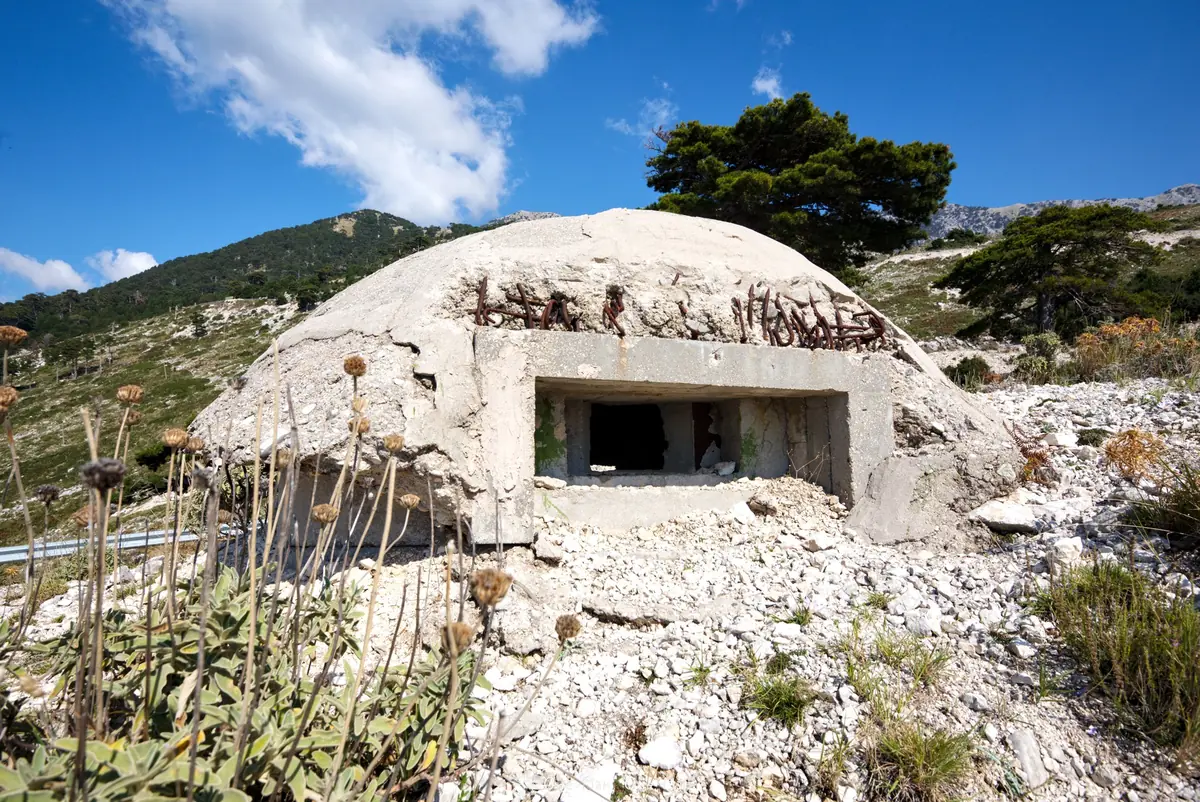
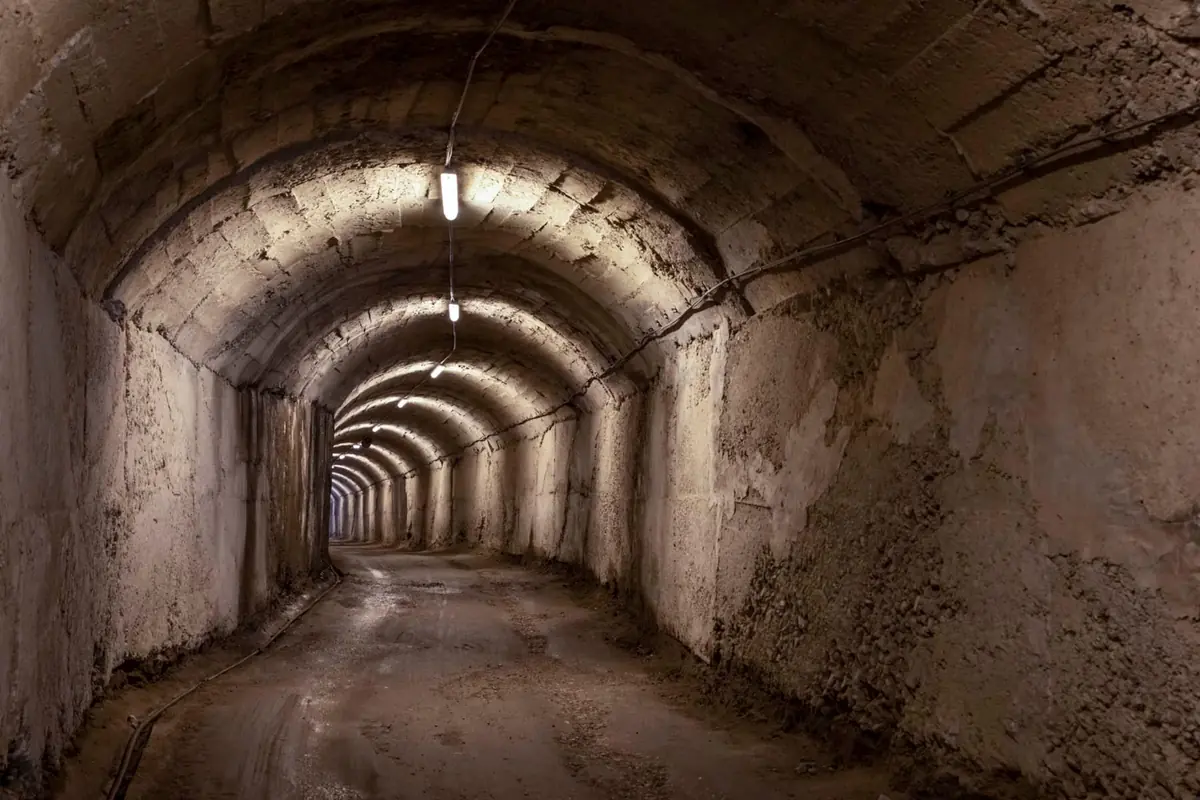
Bunk’Art 1 is a 106-room, five-floor nuclear bunker at the foot of Mount Dajti, built for the Politburo during the Cold War and now open as a museum. Allow two hours minimum. Entry is 900 lek (~$11), cash only; a combined ticket with Bunk’Art 2 costs 1,300 lek (~$16).
In August the long entry tunnel drops you from 95°F (35°C) outside to a damp 60°F (16°C) inside within 30 seconds. Bring a light jacket even on a summer day. The exhibition runs through Hoxha’s office, an underground theater, and rooms staged with chemical-warfare suits that have not aged well.
- Location: Rruga Fadil Deliu, foot of Mount Dajti (near the lower cable car station)
- Cost: $11 (900 ALL), cash only; combined Bunk’Art 1+2 ticket $16 (1,300 ALL)
- Best for: Travelers who want the full scale of the bunker program
- Time needed: 2-3 hours
Common confusion: Bunk’Art 1 is at the lower cable car station, not the summit. Take city bus Line 11 (“Qender–Porcelan”) for 40 lek, or a taxi for 700-1,000 ALL.
2. Bunk’Art 2 and the House of Leaves
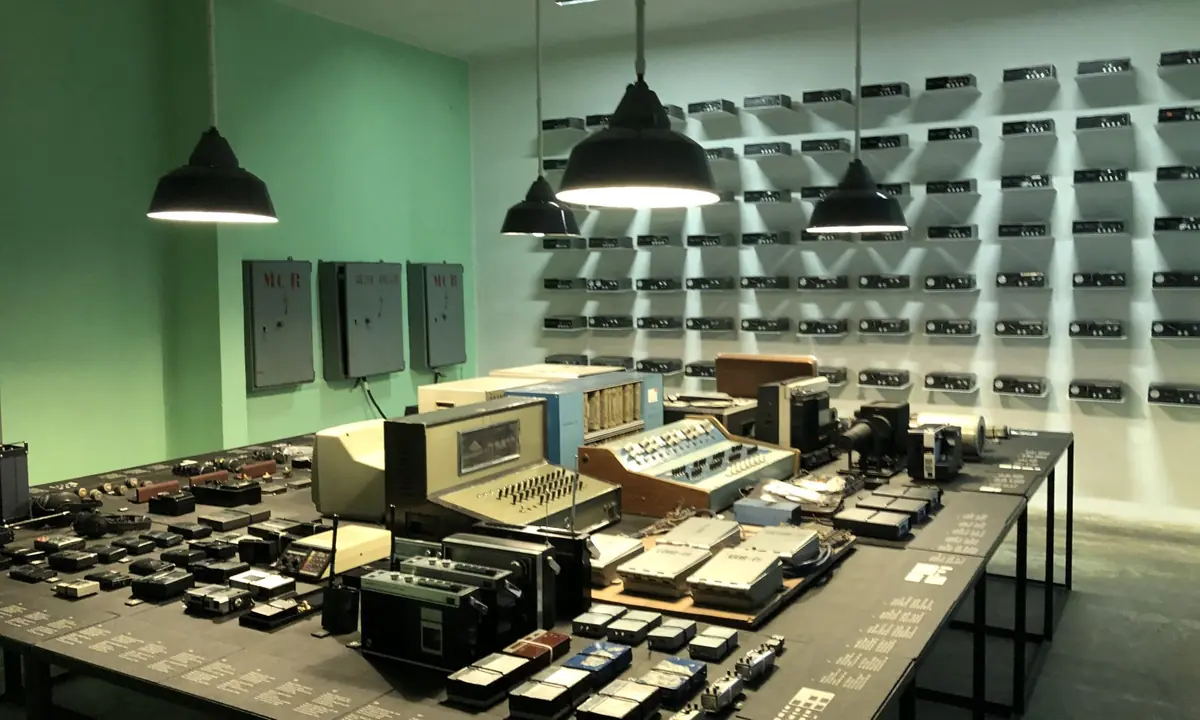
Bunk’Art 2, a smaller bunker three minutes from Skanderbeg Square, focuses on the Sigurimi secret police. Entry is 500 lek (~$6). House of Leaves, eight minutes further on foot, is the former surveillance headquarters and a Council of Europe Museum Prize winner — 700 lek (~$8.50), cash only, no photos. Together, about three hours.
House of Leaves staff will ask you to pocket your phone before entering the listening-room exhibit. The permanent collection walks you through actual bugged flower vases, disguised cameras, and typed personal files on musicians and priests.
- Location: Bunk’Art 2 — Rruga Abdi Toptani (3 min from Skanderbeg); House of Leaves — Rruga Ibrahim Rugova 4 (8 min from Skanderbeg)
- Cost: Bunk’Art 2 — $6 (500 ALL); House of Leaves — $8.50 (700 ALL); free on the last Sunday of the month at House of Leaves
- Best for: Adults; travelers interested in Cold War history
- Time needed: 3 hours combined
Neither is appropriate for children under 12 — both cover torture and political executions in explicit detail.
3. The Pyramid of Tirana — climbable at last
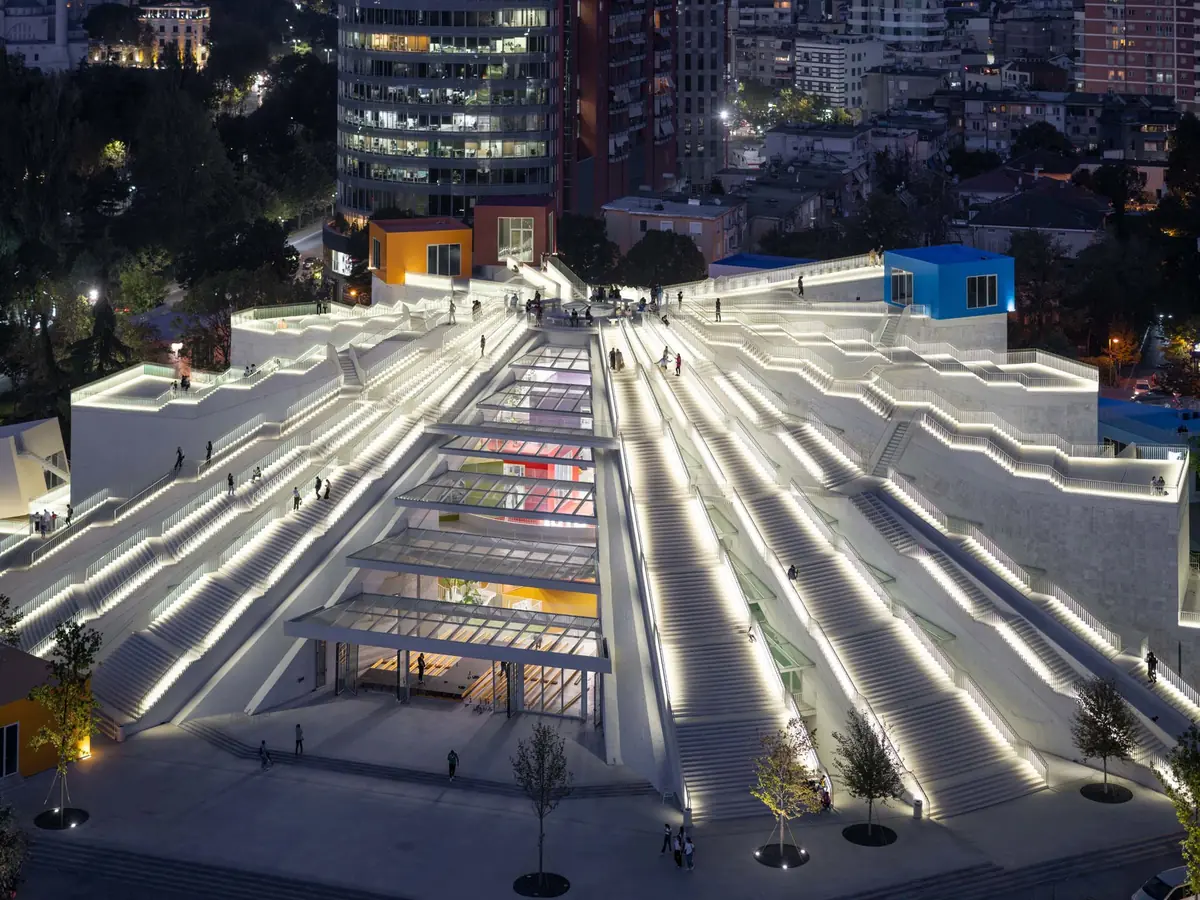
The Pyramid of Tirana reopened after a radical MVRDV redesign. Concrete steps now climb every sloped face, an elevator serves the west side, and 32 colored modular boxes house TUMO Tirana, a free tech school for teenagers. Exterior access is free and always open. Go at sunset.
- Location: Bulevardi Dëshmorët e Kombit (10-15 min walk south of Skanderbeg Square)
- Cost: Free exterior access, open around the clock
- Best for: Everyone, especially at sunset
- Time needed: 30-60 minutes
One preserved glass panel is still a slide. Local teenagers use it at dusk, and the polish on that one panel has been worn smooth. The old Hoxha memorial has become, almost by accident, a working community space.
The walkable core: Skanderbeg Square, mosques, and monuments
A tight loop from Skanderbeg Square hits Et’hem Bey Mosque, the Clock Tower, Tanners’ Bridge, the Resurrection Cathedral, and the new Namazgja Grand Mosque — roughly 90 minutes on foot. All are free or near-free. Time the square for sunset, when locals fill it for the xhiro evening stroll.
4. Skanderbeg Square and Et’hem Bey Mosque
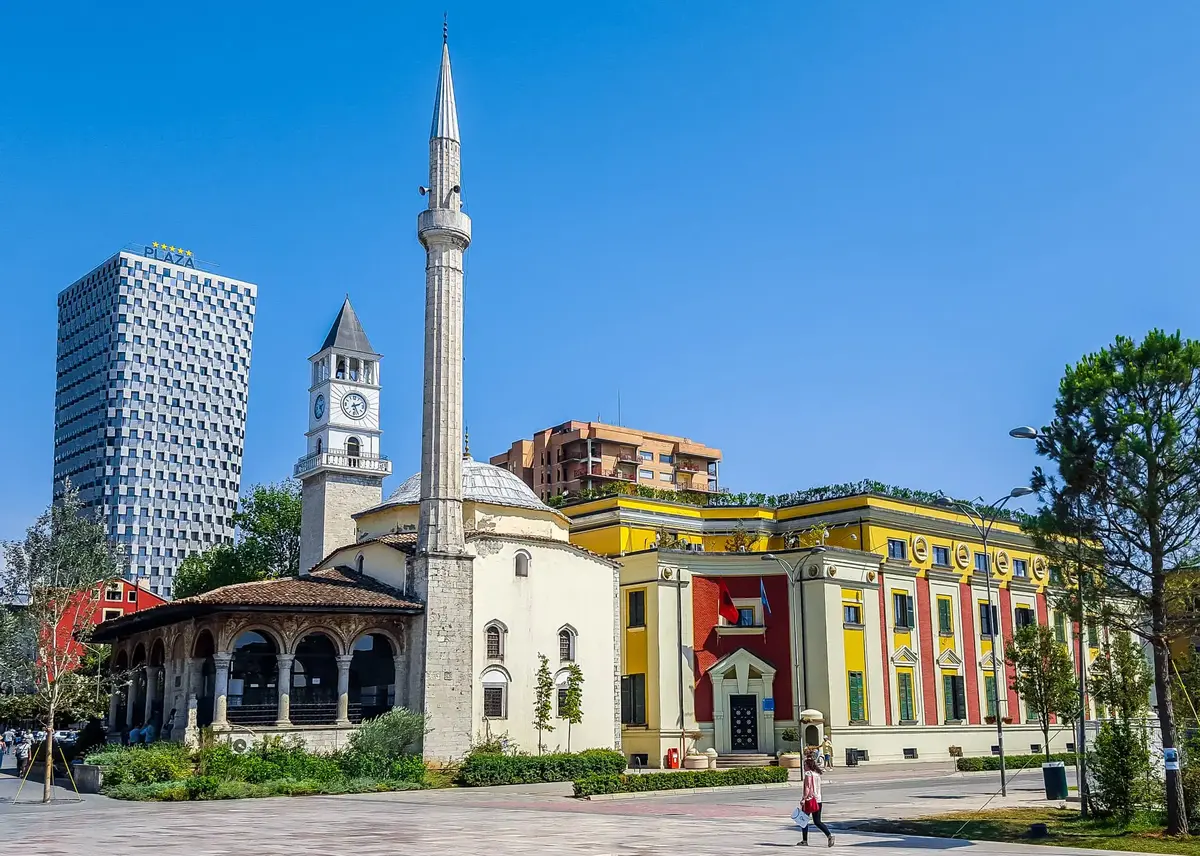
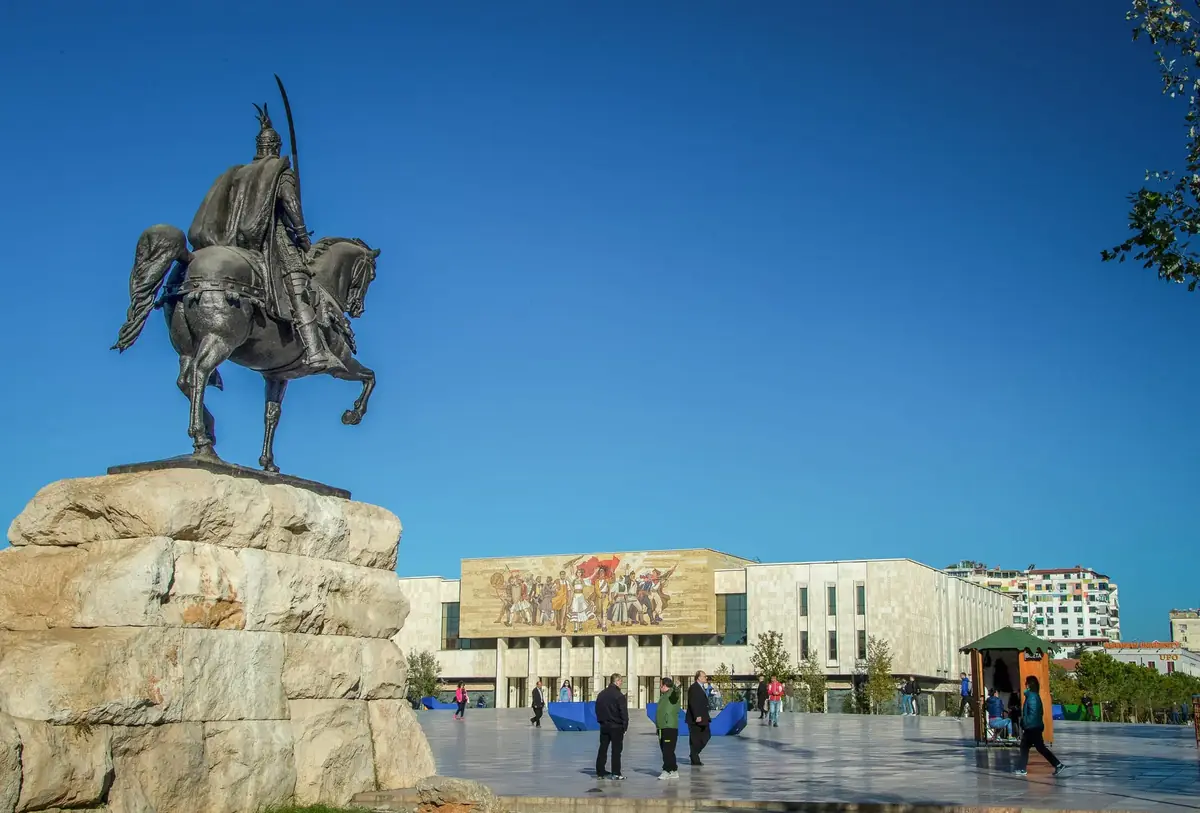
Skanderbeg Square is the largest pedestrian plaza in the Balkans at roughly 430,000 square feet (40,000 m²). The Skanderbeg equestrian monument anchors the center; the 18th-century Et’hem Bey Mosque sits on the north side — free to enter, with modest dress required.
At 7 p.m. in May, the square smells like roasted corn and the fountains fire in sequence. Teenagers skate the edges, families walk slow laps, and the xhiro (evening stroll) pulls most of the city outside.
- Location: City center; all roads lead here
- Cost: Free (Clock Tower climb $1.20 / 100 ALL for 90 steps)
- Best for: Sunset, people-watching, orientation
- Time needed: 45 minutes
5. The Namazgja Grand Mosque (Great Mosque of Tirana)
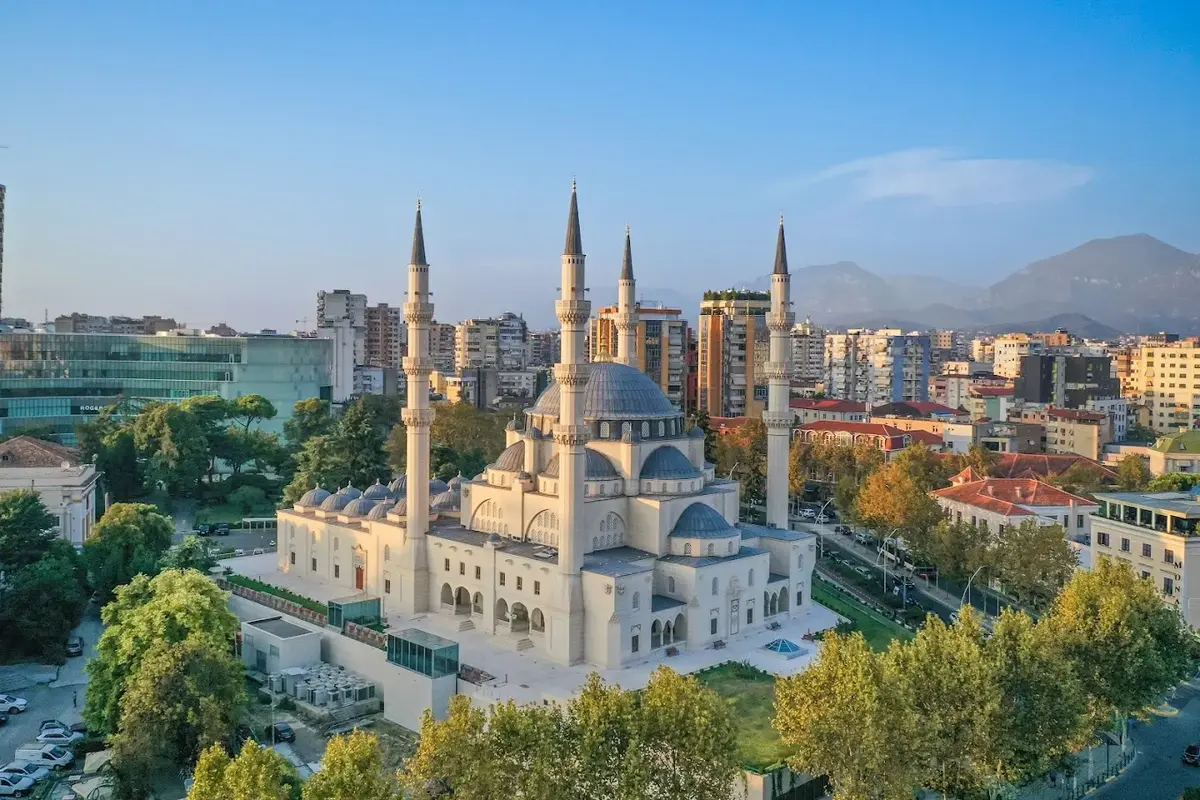
The Namazgja Grand Mosque, also called the Great Mosque of Tirana, is the largest mosque in the Balkans, with room for 10,000 worshippers. It sits a 10-minute walk east of Skanderbeg Square, across from the parliament. Non-Muslim visitors are welcome outside prayer times; dress modestly and remove your shoes.
- Location: Namazgah Square, across from the parliament (10-min walk east of Skanderbeg)
- Cost: Free
- Best for: Architecture, religious-history context
- Time needed: 30-45 minutes
Pro Tip: Stack the Namazgja mosque after Et’hem Bey on the same walk. You’ll see the Ottoman-era pocket mosque and the modern mega-mosque back-to-back, which is the whole story of religion in this country in 45 minutes.
Should you skip the National Historical Museum?
Yes, skip it for now. The National Historical Museum closed for a full renovation expected to run several years, so there’s nothing to see inside. The mosaic façade “The Albanians” is still viewable from Skanderbeg Square. For communist history, go to Bunk’Art and House of Leaves instead. The separate National Art Gallery stays open.
Rope barriers and construction tarps ring the entrance; only the mosaic is photographable. Nearly every other Tirana guide still tells you to go in — save yourself the walk.
Where should you eat and drink in Tirana?
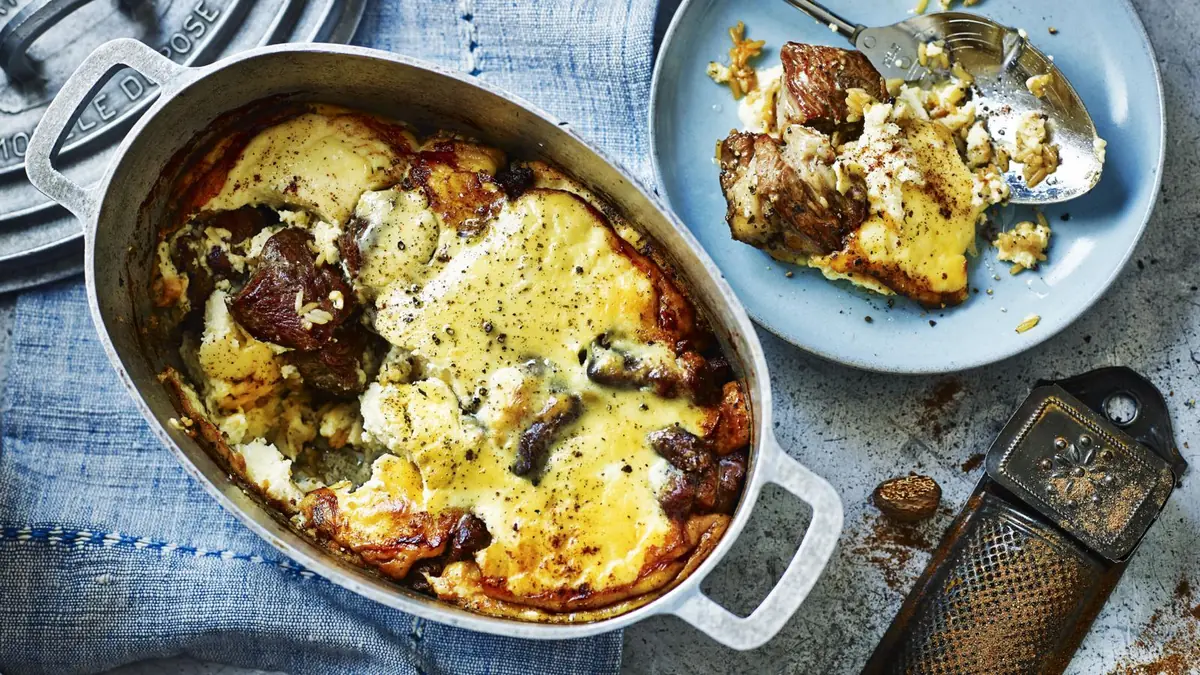
Tirana’s best restaurants run the full range: byrek at Byrek Special Luani (about 300 lek for two), tavë kosi at Oda near Pazari i Ri, and a slow-food tasting menu at Mullixhiu — chef Bledar Kola’s ex-Noma project at the edge of Grand Park. Seven courses start around €30 (~$35). Drink raki at Komiteti and espresso on Murat Toptani.
Price ranges by meal type:
- Street byrek: $1-2 (80-150 ALL)
- Casual sit-down meal: $6-11 (500-900 ALL)
- Mid-range dinner: $20-25 per person
- Mullixhiu tasting menu: from $35 (€30)
- Espresso: $0.60-1.50 (50-120 ALL)
- Domestic draft beer (Korça, Tirana): $1.80-4 (150-320 ALL)
- Raki shot: $0.60-1.20 (50-100 ALL)
Pro Tip: Mullixhiu’s doorway sits below a Burger King sign. I walked past it twice on my first visit. Look for the unmarked wooden door at the park corner — if you hit the fast-food chain, you’ve walked a few steps too far.
6. Blloku nightlife, bar by bar
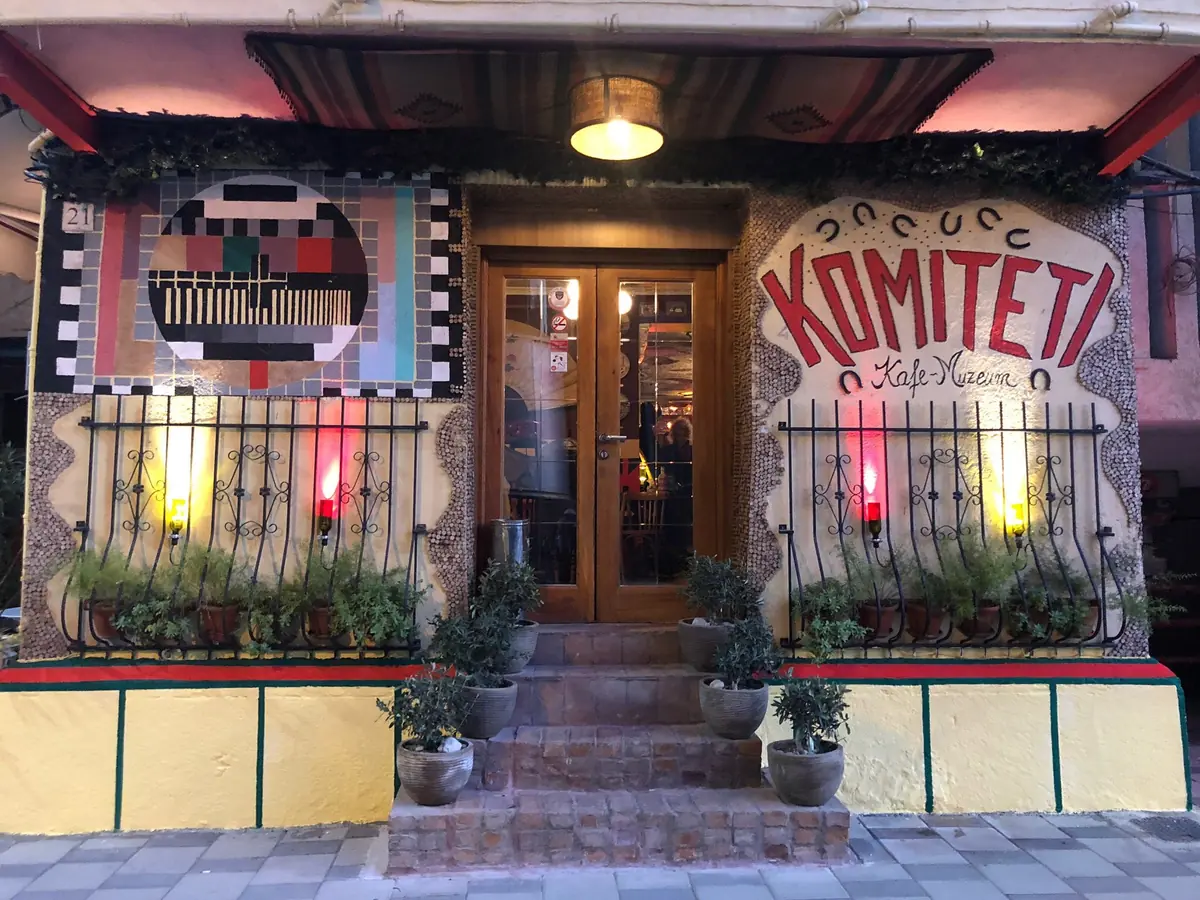
Blloku was the fenced-off, Politburo-only neighborhood during the regime. Today it’s Tirana’s densest nightlife block: Radio Bar (retro Albanian radios line the walls), Hemingway Bar (speakeasy with live jazz on weekends), Komiteti (communist memorabilia and raki flights), Tiki Bar (warm-weather terrace), and LIFT rooftop. Thursday through Saturday are the big nights; bars close around midnight, clubs later.
- Location: Rruga Ismail Qemali, 10-15 min walk from Skanderbeg
- Cost: Cocktails $7-15 (600-1,200 ALL)
- Best for: Couples, solo travelers, anyone over 25
- Time needed: A full evening
Hemingway fills by 9 p.m. on Fridays — reserve earlier or take the terrace. The neighborhood is well-lit, and police officers stand on most corners after dark.
Parks, markets, and the cable car: Tirana’s outdoor day
Day two moves outdoors. Start at Pazari i Ri (New Bazaar) for morning coffee and grilled qofte on Avni Rustemi Square, loop through Grand Park and the Artificial Lake, then catch the Dajti Ekspres cable car in the afternoon for the 15-minute ride up to pine forest and panoramic views.
7. Pazari i Ri (New Bazaar)
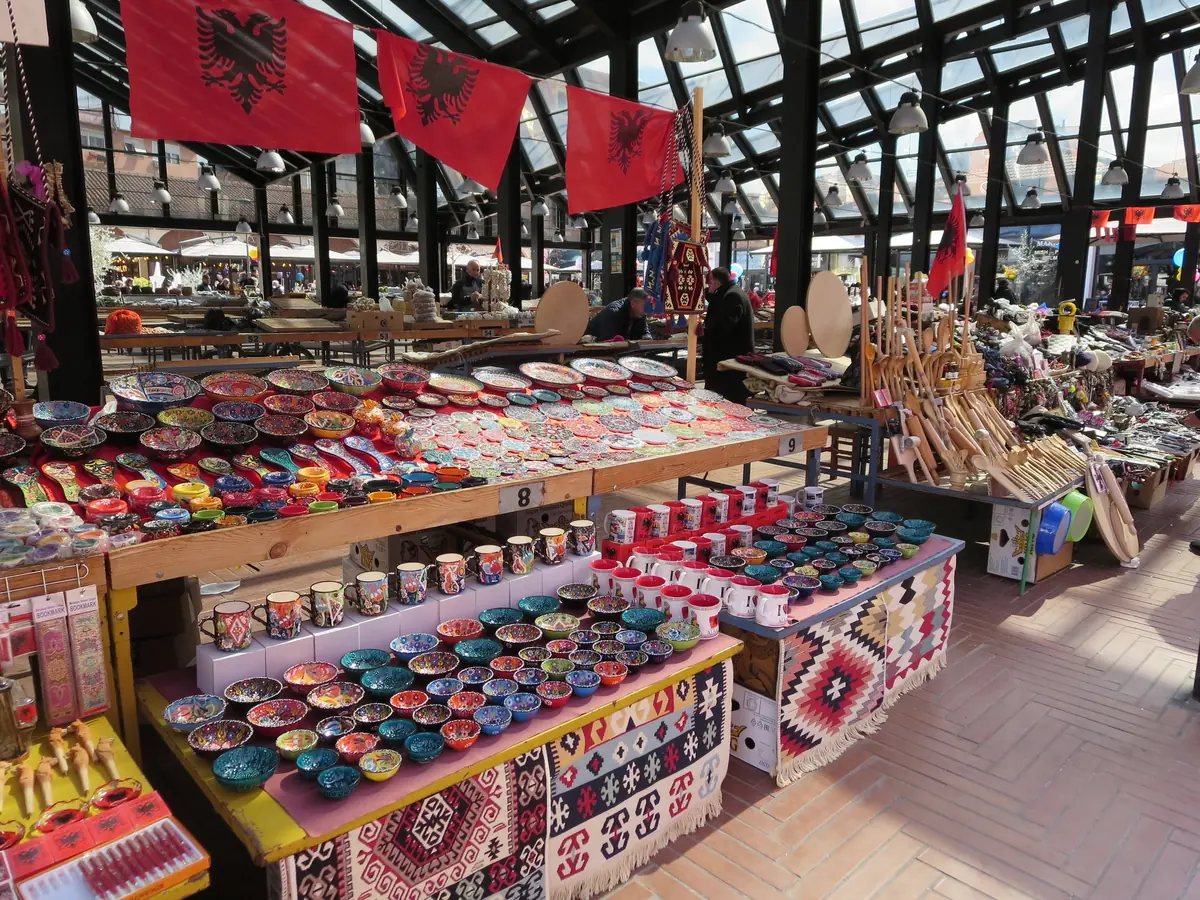
Pazari i Ri reopened after a full restoration as an Ottoman-style market square ringed by restaurants and coffee shops. The covered market sells spices, honey, mountain tea, and homemade fig jam. Morning is best — 8 a.m. to noon on weekdays — for the real local-market feel.
- Location: Avni Rustemi Square, 8-10 min walk northeast of Skanderbeg
- Cost: Free to walk; coffee $0.80, full meal $8-12
- Best for: Morning coffee, produce shopping, a relaxed lunch
- Time needed: 1-2 hours
8. Grand Park and the Artificial Lake
The Grand Park of Tirana (Parku i Madh) covers 570 acres (230 hectares) on the city’s southern edge, with a 1.9-mile (3 km) loop trail around the Artificial Lake. Locals run laps, paddleboat, and rent electric scooters. The Postbllok Memorial — chunks of the Berlin Wall next to a Hoxha-era bunker — sits at the northern park entrance.
- Location: Southern city limits, 15-min walk from Skanderbeg
- Cost: Free
- Best for: Morning runs, afternoon picnics, families
- Time needed: 1-2 hours
9. The Dajti Ekspres cable car
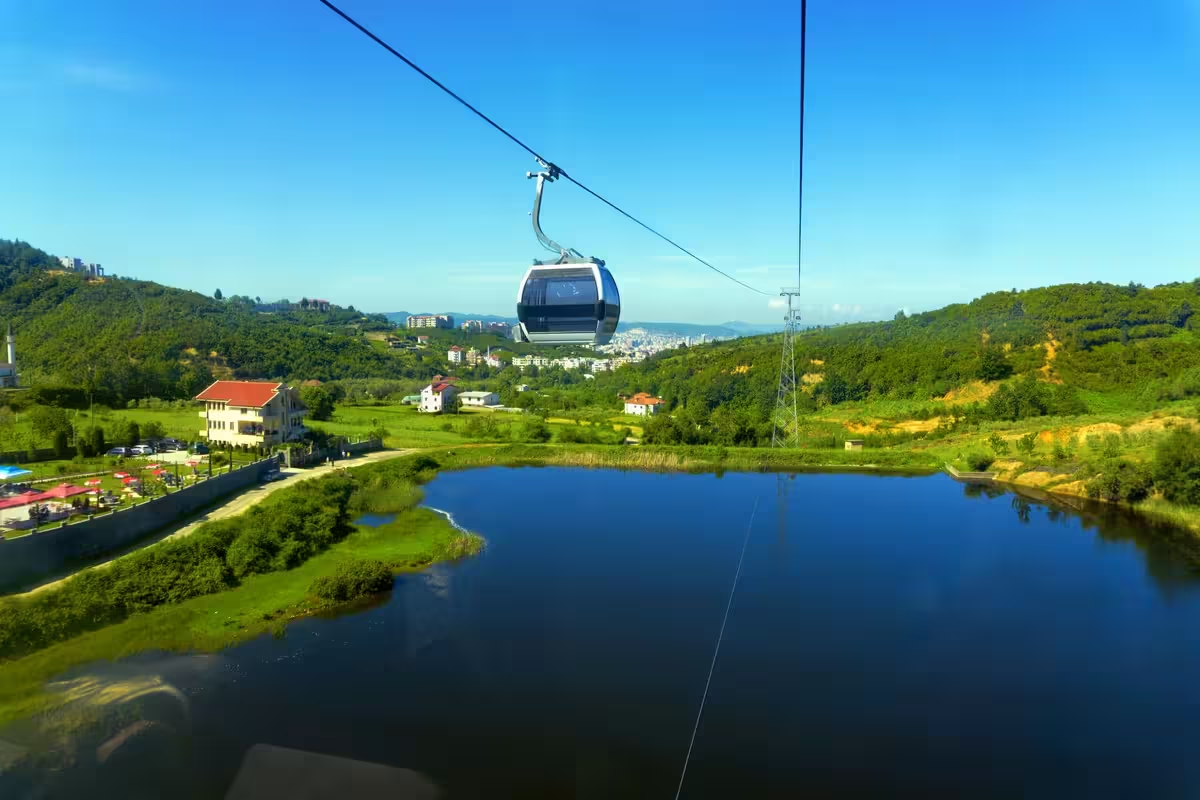
The Dajti Ekspres runs from the foot of Mount Dajti to the 5,292-foot (1,613 m) summit — a 15-minute ride covering 2.9 miles (4.7 km), the longest cable car in the Balkans. A round-trip ticket is 1,500 lek (~$18), card or cash. It closes on Tuesdays. The summit has a rotating bar (a full 360° in 45 minutes) inside the Dajti Tower Hotel, several hiking trails, and a kids’ adventure park.
- Location: Lower station — Rruga Dibrës, northeast edge of town (taxi 800-1,000 ALL / $10-12 from Skanderbeg)
- Cost: $18 (1,500 ALL) round-trip, card or cash
- Best for: Clear days, couples, families with kids over 6
- Time needed: 3-4 hours including ride time
Is the Dajti Ekspres cable car worth it?
Yes on a clear day, no in rain. The 15-minute ride climbs 2,625 feet (800 m) to a pine-forested ridge with a rotating bar, easy hikes, and Adriatic views when skies are clear. The panoramic windows fog over within a minute of rain, so check the forecast before committing the afternoon.
The summit runs about 15°F (8°C) cooler than the city and can be windy even in August, so pack a layer. Queues are longest on Sunday afternoons. If you can schedule this for a weekday morning, you’ll walk straight onto a cabin.
What are the best day trips from Tirana?
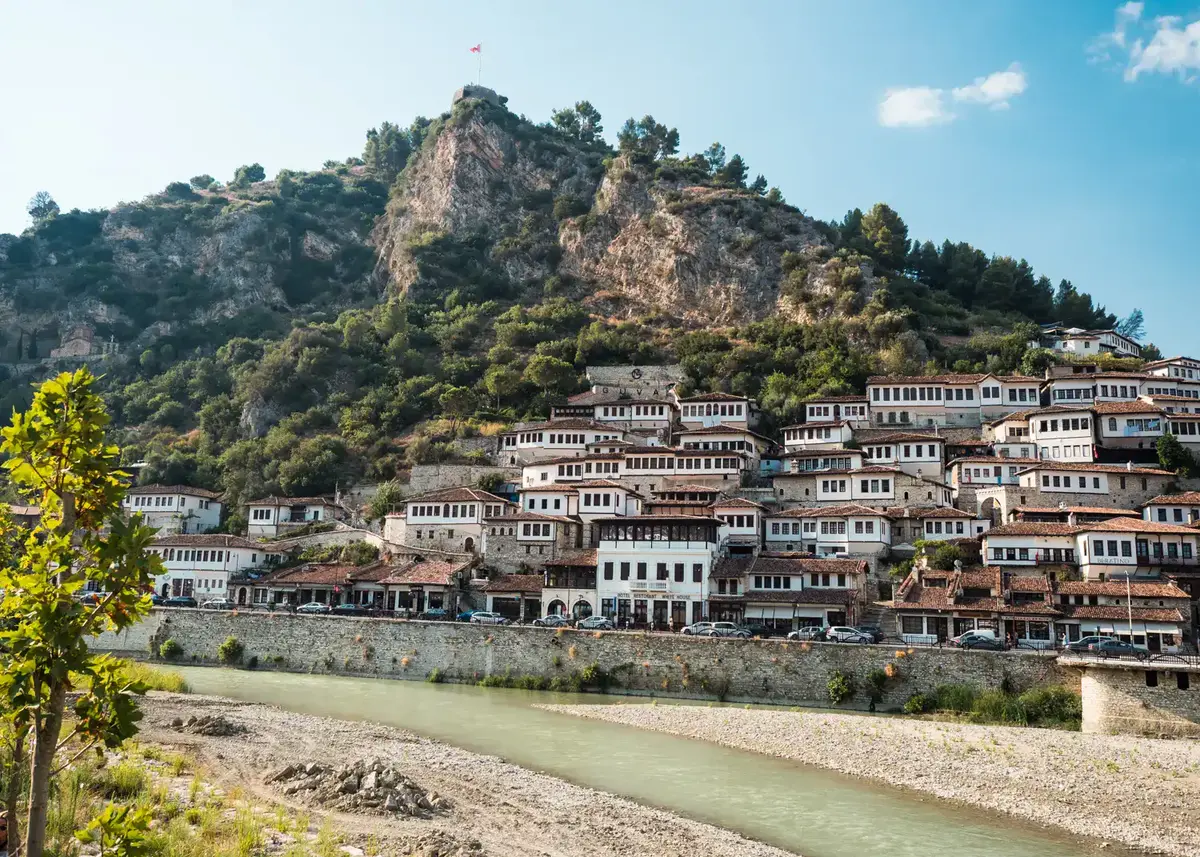
The four best day trips from Tirana all run by public bus: Kruja (castle and Ottoman bazaar, 55 min, 200 lek), Berat (the UNESCO “City of 1,000 Windows,” about 2 hours 15 min, 400 lek), Shkodra (lakes and the northern gateway, 1h 45m, 400 lek), and Durrës (Roman amphitheater and beach, 40 min, 150 lek).
Day trip comparison:
| Destination | Distance | Bus time | Bus fare (one way) | Why go |
|---|---|---|---|---|
| Kruja | 20 mi (32 km) | 55 min | $2.50 (200 ALL) | Skanderbeg’s castle, Ottoman bazaar |
| Durrës | 23 mi (37 km) | 40 min | $1.80 (150 ALL) | Roman amphitheater, Adriatic beach |
| Berat | 75 mi (120 km) | 2h 15m | $5 (400 ALL) | UNESCO old town, “1,000 windows” |
| Shkodra | 68 mi (109 km) | 1h 45m | $5 (400 ALL) | Lake Shkodra, Rozafa Castle |
| Bovilla Lake | 16 mi (25 km) | No direct bus | Tour $22-35 (€20-30) | Gamti Mountain hike, turquoise reservoir |
Pro Tip: The last direct Berat return bus leaves between 3 and 5 p.m. depending on the operator. Miss it and you’re paying a $65 taxi back or sleeping in Berat. Confirm return times with the driver when you arrive.
Is Tirana safe for tourists and solo travelers?
Yes. Tirana is one of the safer European capitals for tourists and solo female travelers. Violent crime is rare, the center stays busy late, and Blloku is well-lit and patrolled. Normal city precautions apply: watch your drink in bars, avoid Grand Park after midnight, and pre-book taxis through an app.
Safety context:
- Albania sits at US State Department Level 2 (“exercise increased caution”) — the same level as France, Italy, Germany, and the UK, citing petty crime rather than any threat aimed at tourists
- Petty theft is rare but possible on crowded buses
- No Uber or Bolt — use the Merr Taxi or Patoko apps late at night
- LGBTQ+ acceptance is improving but not universal; public affection draws looks outside Blloku
Police officers stand on most Blloku corners after 9 p.m., and the Rinas Express runs the airport route through the night. Solo female travelers I’ve spoken with consistently rate Tirana above Sarajevo and Skopje for night walkability.
When is the best time to visit Tirana?
The best months to visit Tirana are May, June, and September: highs of 73-84°F (23-29°C), long daylight, and the lowest rainfall of the year. April and October are pleasant but wetter. July and August regularly hit 95-105°F (35-40°C). November and December are the wettest months.
Monthly temperature highs:
- January: 50°F (10°C)
- April: 68°F (20°C)
- July: 88°F (31°C)
- October: 72°F (22°C)
Heat records push 109°F (43°C), and a July noon on Skanderbeg Square feels like a pizza stone. If you must travel in summer, build indoor museum time into the 11 a.m. to 4 p.m. window. November rainfall runs 4.7-6.3 inches (120-160 mm) — bring a real jacket, not a hoodie.
Where should you stay in Tirana?
Where to stay in Tirana splits into three areas: Blloku for nightlife and restaurants, around Skanderbeg Square for easy sightseeing, or Pazari i Ri for a quieter, local-feel base. Budget pick: Trip’n Hostel, $12-20 dorm. Mid-range: Tirana International Hotel, around $87. Upscale: Rogner Hotel (garden, pool) around $125, or Maritim Plaza (central, tallest building) $180-250.
Neighborhood verdicts:
- Blloku: noisiest until 1 a.m., closest to the bars, best for under-35s
- Skanderbeg Square: morning traffic noise, most central for sightseeing, best for tight itineraries
- Pazari i Ri: fewer late options but more authentic cafés, best for solo travelers and repeat visitors
All three are within a 15-minute walk of each other. Rooms at Maritim Plaza above the 20th floor catch the cranes starting before 8 a.m. — request a lower floor on the garden side if you’re a light sleeper.
The bottom line
TL;DR: Tirana rewards two days and a slightly open mind. See Bunk’Art 1 or 2, House of Leaves, the climbable Pyramid, and Skanderbeg Square at sunset. Ride the Dajti cable car, eat Albanian food like byrek and tavë kosi, drink raki in Blloku. Use cash lek, ignore Uber (it isn’t here), and add a Berat or Kruja day trip on day three.
The city is mid-transformation. The climbable Pyramid, the Namazgja mosque, the MVRDV-designed tech school, the newer bars in Blloku — none of it is old, and most guidebooks haven’t caught up. These are the things to do in Tirana right now. Go before the prices do.
What’s first on your Tirana list — Bunk’Art, the Pyramid, or a raki tour through Blloku?