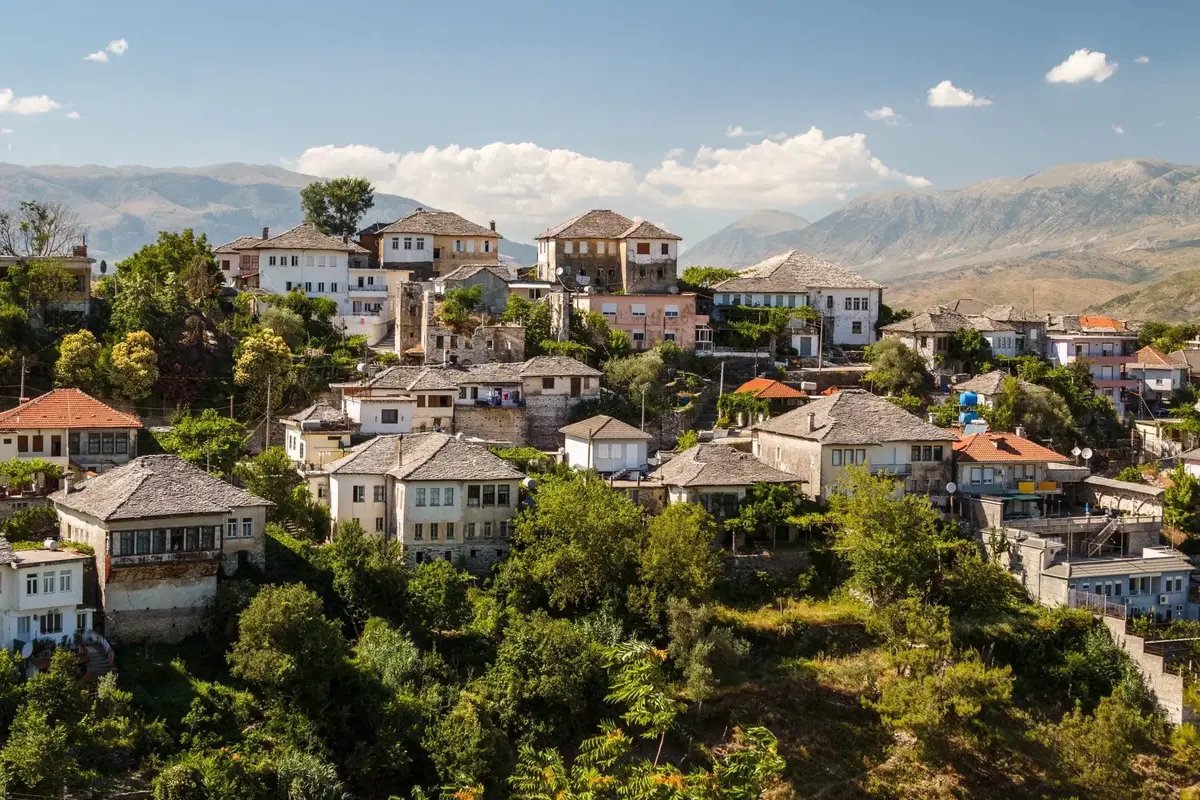
The best things to do in Gjirokaster sit on one steep slope, where slate-roofed Ottoman tower houses climb Mount Mali i Gjerë and the cobblestones double as stairs. The UNESCO Stone City packs Albania’s second-largest castle, a half-mile Cold War bunker, two restored kullë mansions, and rice-ball food you’ll find nowhere else. Here’s how to spend a day or three — and where the Stone City fits into a longer Albania trip.
What are the top things to do in Gjirokaster?
The top things to do in Gjirokaster are climbing the castle, walking the Old Bazaar, touring Skenduli or Zekate House, descending into the Cold War Tunnel, hiking to Ali Pasha’s Bridge, eating qifqi in the bazaar, and day-tripping to the Blue Eye spring. Allow one full day; two is better.
Is Gjirokaster worth visiting?
Yes. Gjirokaster is worth visiting for anyone who likes UNESCO old towns, Ottoman architecture, or 20th-century history. The Stone City packs a Balkan-best castle, a working bazaar, two restored tower houses, and a Cold War bunker into a walkable hill. Skip it only if you want beach time and zero history.
The city was inscribed as a UNESCO World Heritage Site jointly with Berat in 2005, sits at roughly 985 feet (300 meters) of elevation, and has a population of about 23,000. It’s the birthplace of Albania’s communist dictator Enver Hoxha and Booker International–shortlisted novelist Ismail Kadare.
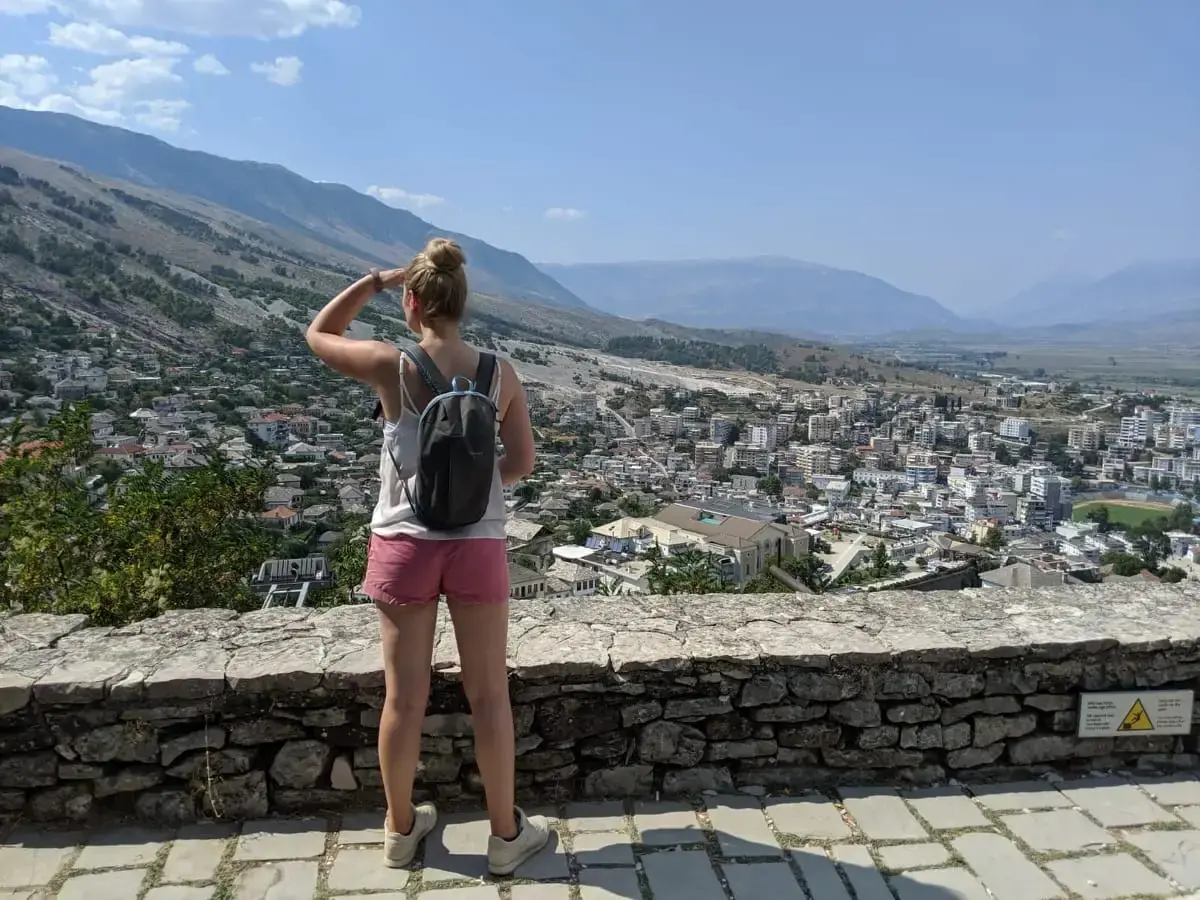
The first time you crest the cobblestone ramp at Çerçiz Topulli Square and the slate roofs cascade down to the Drino Valley, you understand the nickname instantly.
Pro Tip: Pick up Ismail Kadare’s novel Chronicle in Stone before you go. Half the streets in this article appear in it by name, and the book turns the city into a literary map you can read while you walk.
Climbing Gjirokaster Castle (Kalaja e Gjirokastrës)
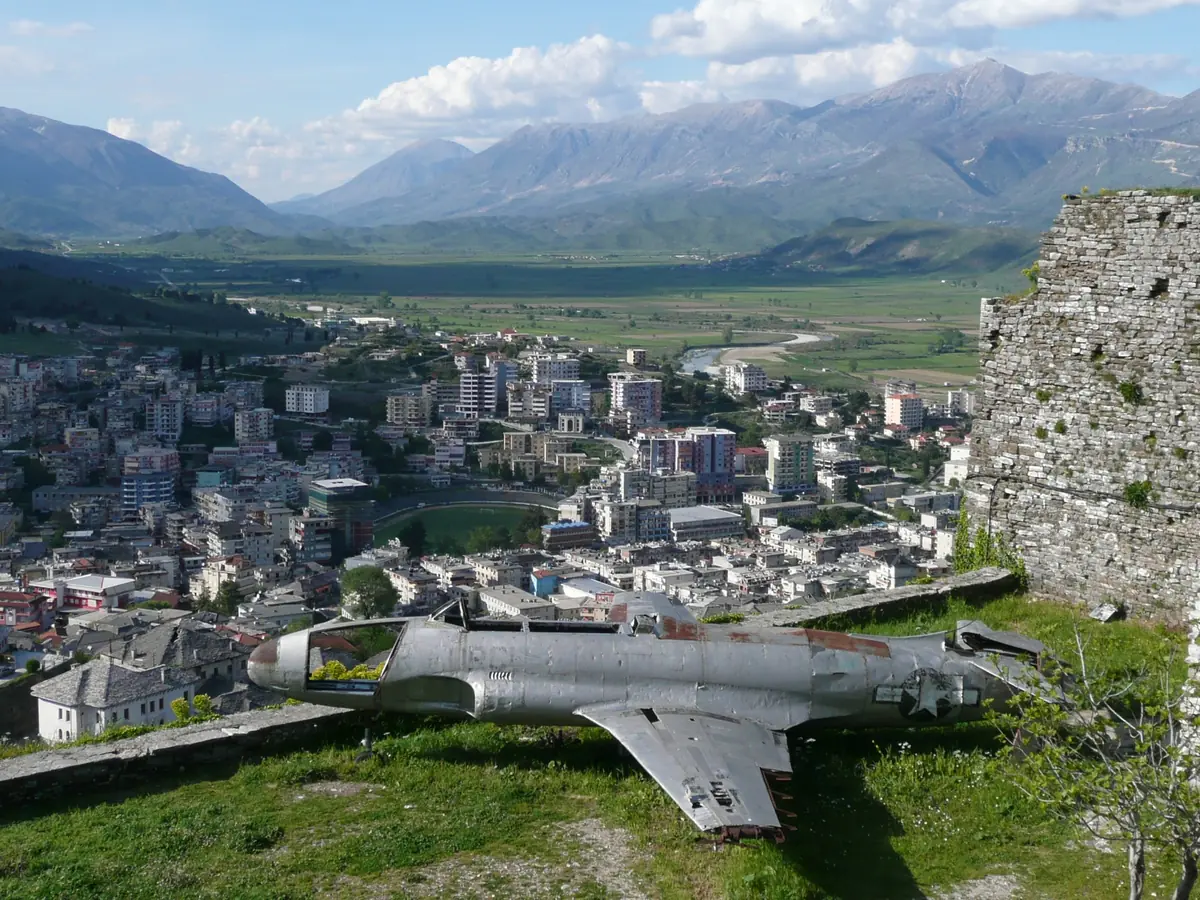
Gjirokaster Castle, perched 1,102 feet (336 meters) above the Drino Valley, is Albania’s second-largest fortress and the city’s defining sight. Adult entry is $4.80 (400 lek) and gets you onto a 1,640-foot (500-meter) rampart walkway, an open-air artillery gallery, the famous clock tower, and a captured US Air Force T-33 trainer.
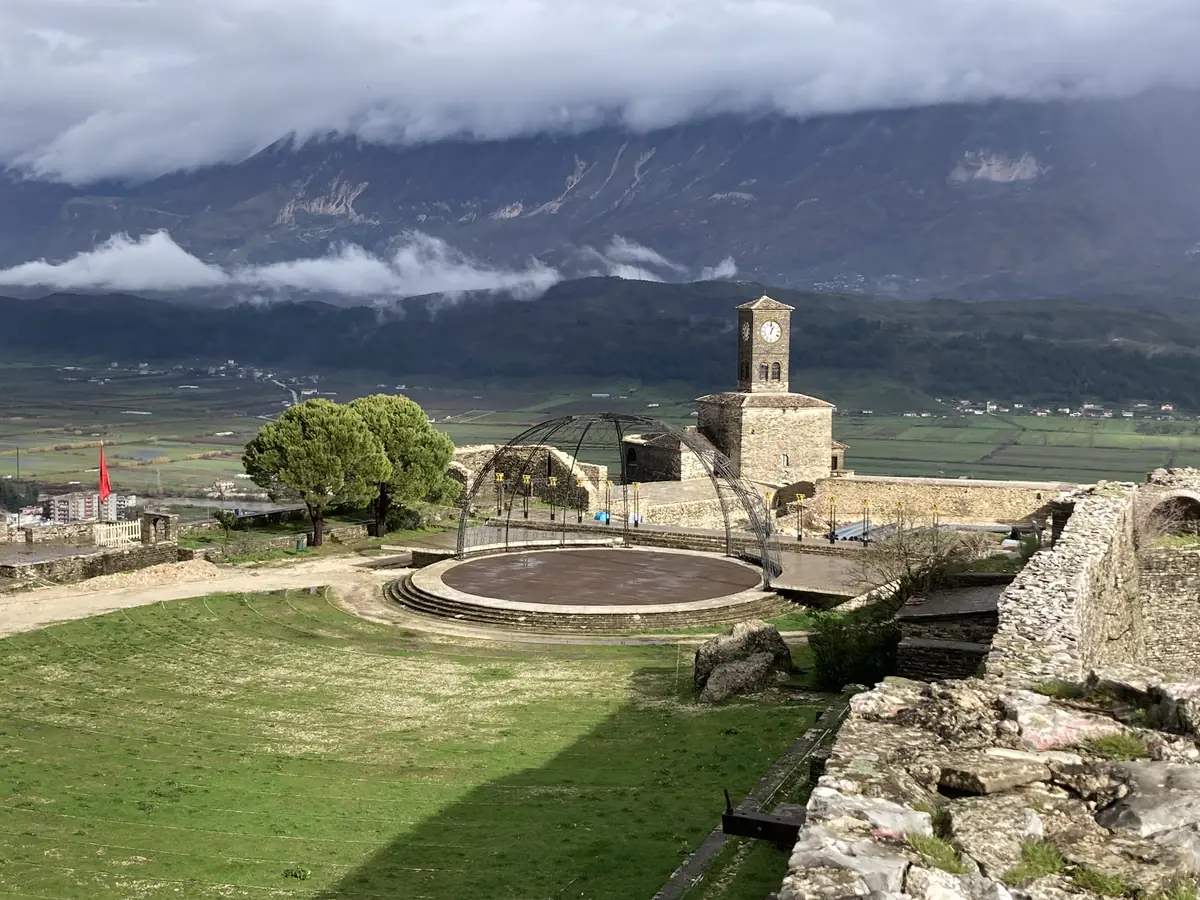
The fortress has been used and rebuilt by every regional power since the 12th century, but the bones you see today are mostly Ali Pasha’s 19th-century reinforcements plus King Zog’s 1930s prison wing. The political prison cells held both anti-communist dissidents and Nazi prisoners during World War II.
Quick stats:
- Adult entry: $4.80 (400 lek)
- Children under 12: free
- Students: $1.45 (120 lek); pensioners $2.40 (200 lek)
- Castle museum supplement: $2.40 (200 lek)
- Hours: April–September 09:00–19:00; October–March 09:00–17:00
- Time needed: 1.5–3 hours
- Free for Albanian citizens: on the last Sunday of every month
- Payment: cash only — no cards; euros sometimes accepted reluctantly
The US Air Force T-33A “Shooting Star” parked on the lower terrace landed at Tirana airport in December 1957 — the official Albanian story is “spy plane forced down,” the US version was “navigational error.” It was moved here from Tirana in the mid-1970s and is the most photographed object in the castle.
Pro Tip: Walk past the clock tower to the southwestern corner of the rampart for the postcard shot of the slate-roofed bazaar layered in front of the Drino Valley. Time it for golden hour about 30 minutes before sunset; the limestone glows pink-gold for roughly 12 minutes.
The two on-site museums are not equal. The Gjirokaster Museum (the historical one, included with the castle ticket plus the $2.40 / 200-lek supplement) is one of the strongest castle museums in the Balkans, with gripping panels on the city’s communist-era residents. The National Museum of Armaments — the second museum, also inside the castle — is overrated. The exhibits have almost no labels, captured German and Italian artillery sits in the open without context, and the upcharge is better spent on a coffee at Te Kubé.
How do you get up to the castle without melting?
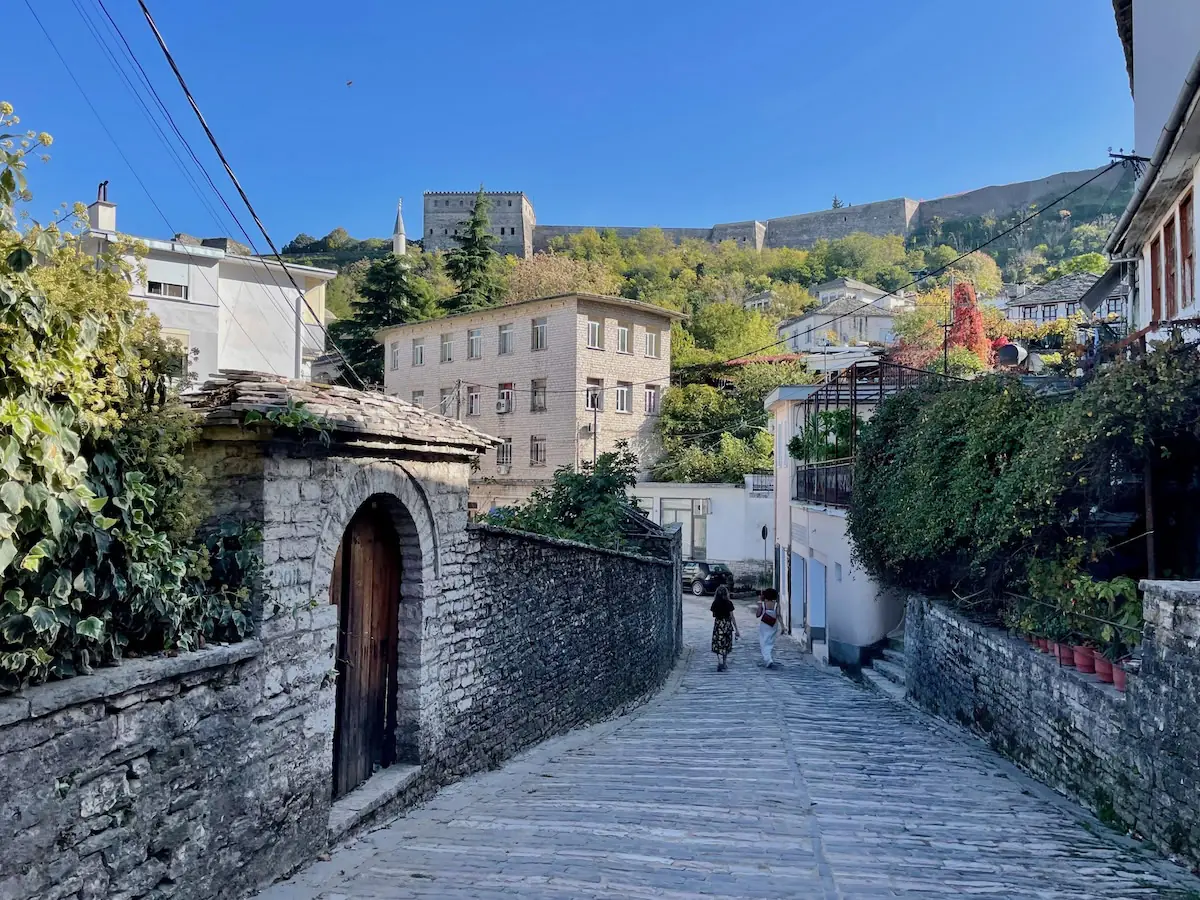
From Çerçiz Topulli Square in the Old Bazaar, the castle is a 30- to 40-minute climb on stone-slab pavement that turns slick in rain. A taxi shaves it to under 10 minutes for $3.60 to $6 (300–500 lek). In summer heat above 90°F (32°C), take the taxi up and walk down.
The steep pitch isn’t classic cobblestone — it’s smooth limestone slabs, and after a thunderstorm locals slow to a heel-down shuffle. Rubber-soled shoes are essential. The total vertical gain from the bazaar entrance to the castle gate is about 295 feet (90 meters), but most of it is concentrated in two short sections.
Walking the Old Bazaar (Pazari i Vjetër)
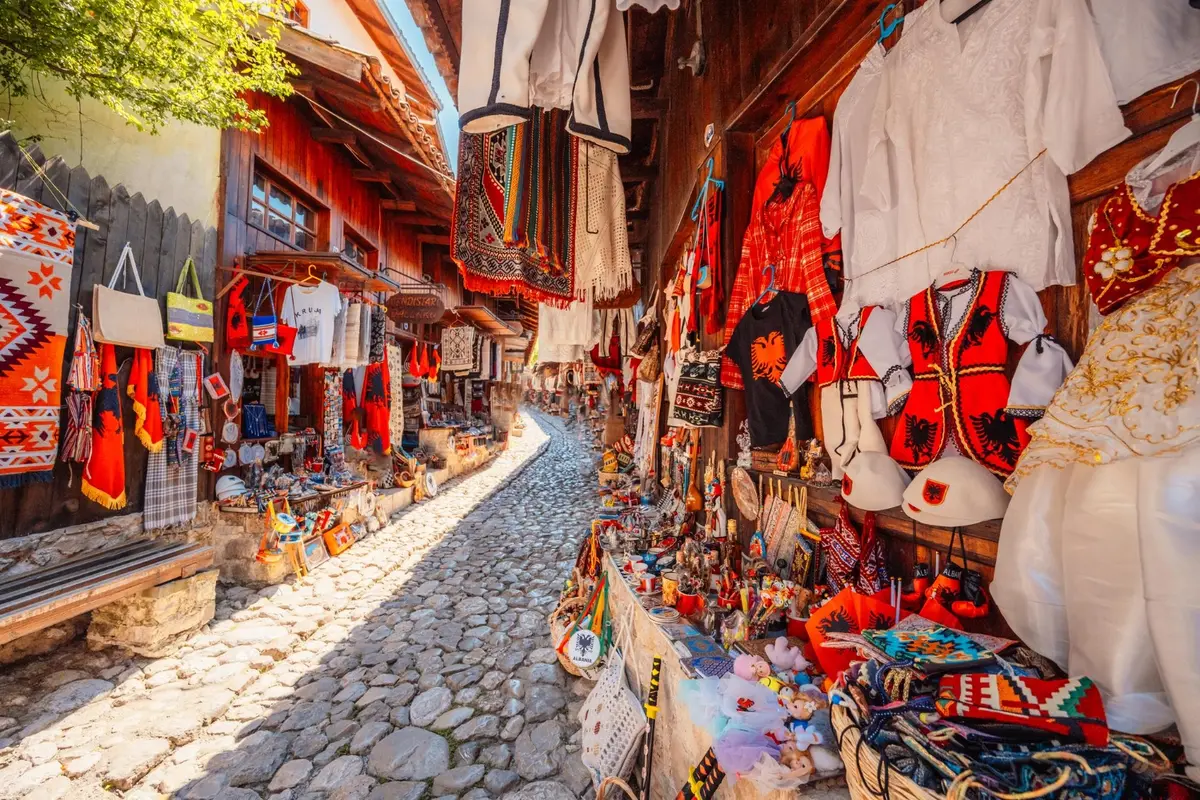
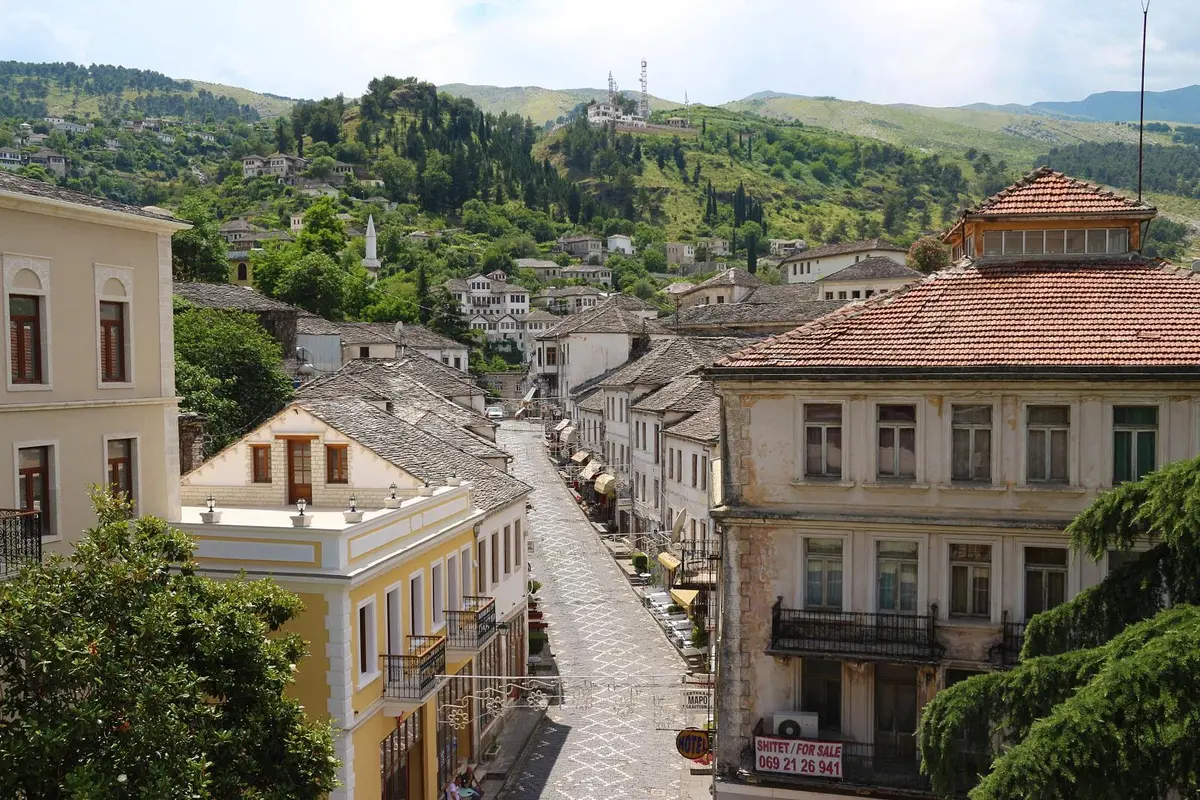
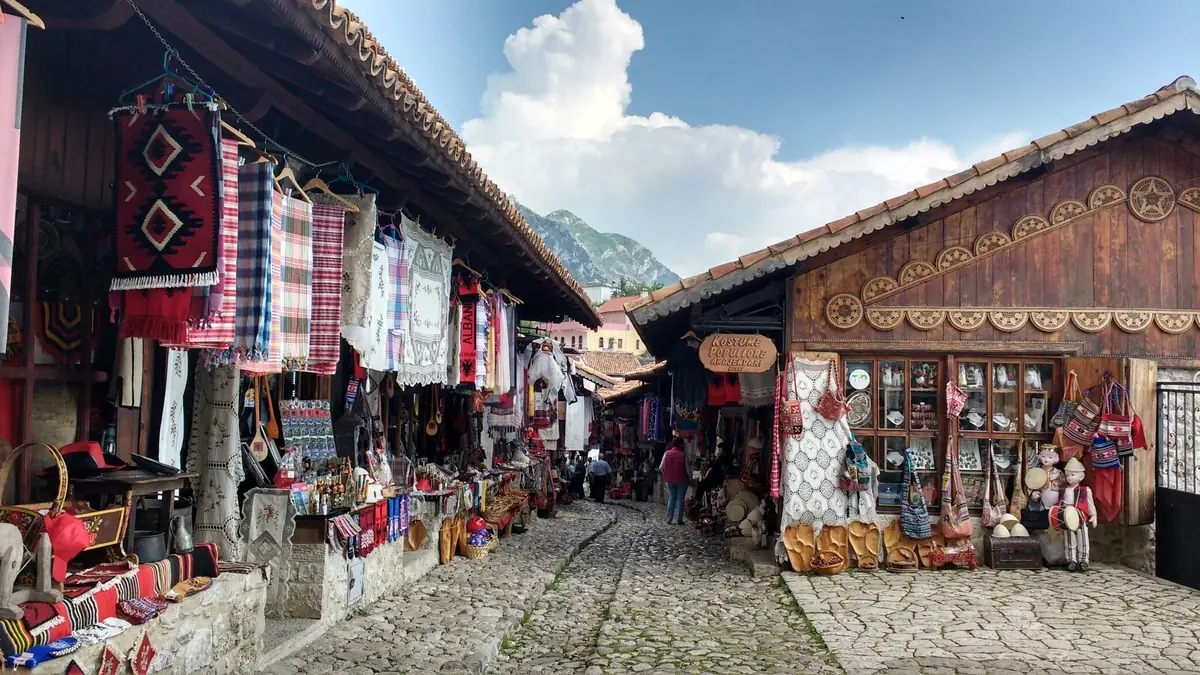
The Old Bazaar is a five-street pedestrian arcade radiating from Çerçiz Topulli Square. The current buildings replaced the originals after a 19th-century fire, but the trade tradition reaches back to the 17th century. It’s free, open whenever the shops are, and best walked twice — once in morning quiet, once at golden hour.
The bazaar gets dismissed in some guides as “five streets of souvenir shops,” which is wrong. It’s still the social heart of the city — where wedding processions form, where men play dominoes outside the cafés on Sunday mornings, and where the textile shops at the back row sell hand-stitched qeleshe (the Albanian wool hat) made in this region.
A useful shopping rule: the front-row stalls with double-eagle T-shirts and machine-printed scarves are mass-produced in Turkey. The hand-stitched qeleshe and antique kilims at the third or fourth shop in are the real thing — the Albanian souvenirs actually worth buying. Ask the owner where the wool comes from and prices typically fall by about 30%.
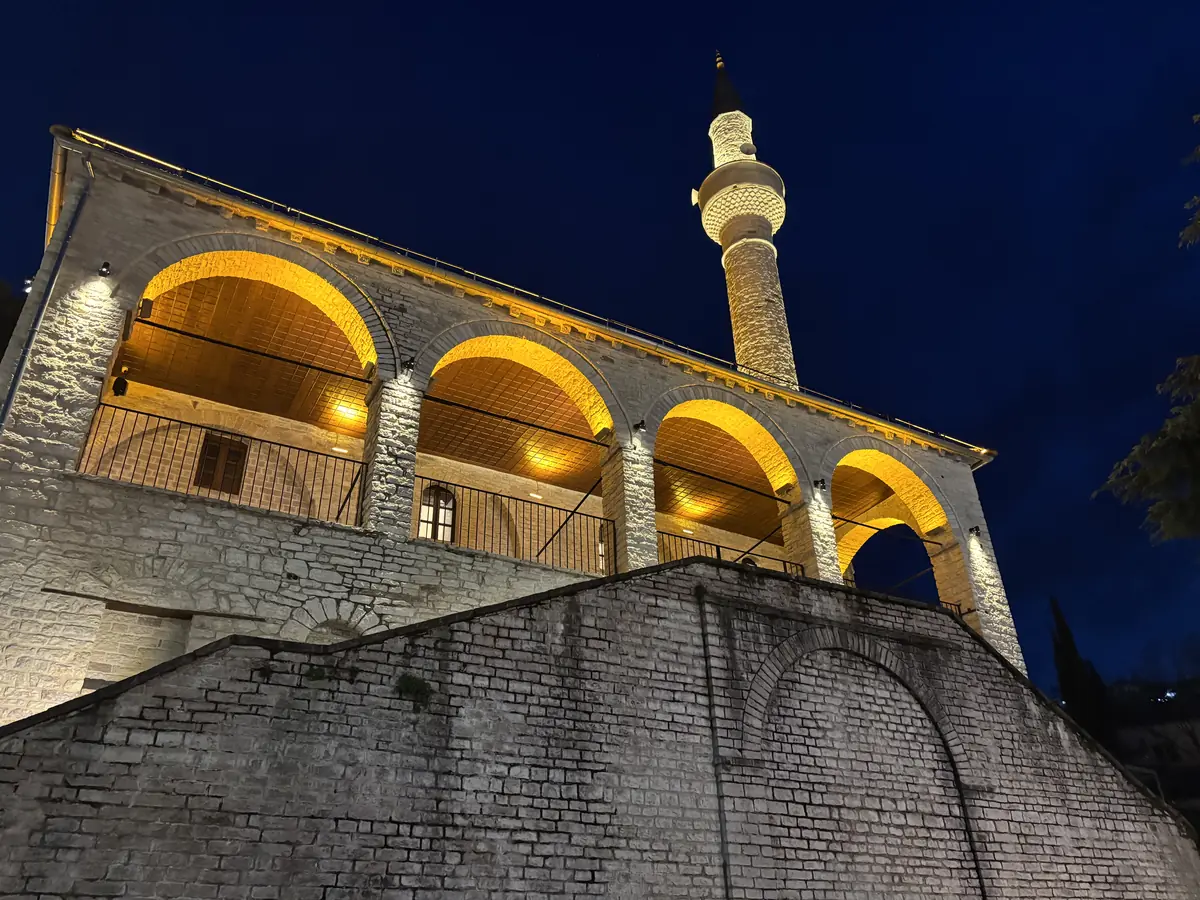
Pro Tip: Te Kubé sits in the vaulted arcade under the Bazaar Mosque. The acoustics are otherworldly — you can hear the imam’s call to prayer rumble through the stone above your espresso, and the shelves stock English-language Kadare novels.
Touring an Ottoman tower house: Skenduli or Zekate
Two of Gjirokaster’s restored kullë (fortified tower houses) are open to walk-in visitors. Skenduli House is the more theatrical, with a member of the family guiding you through 64 windows, 44 doors, and 9 fireplaces. Zekate House is the architectural showpiece, built in 1811–1812 with twin defensive towers. Doing both back-to-back takes about two hours total.
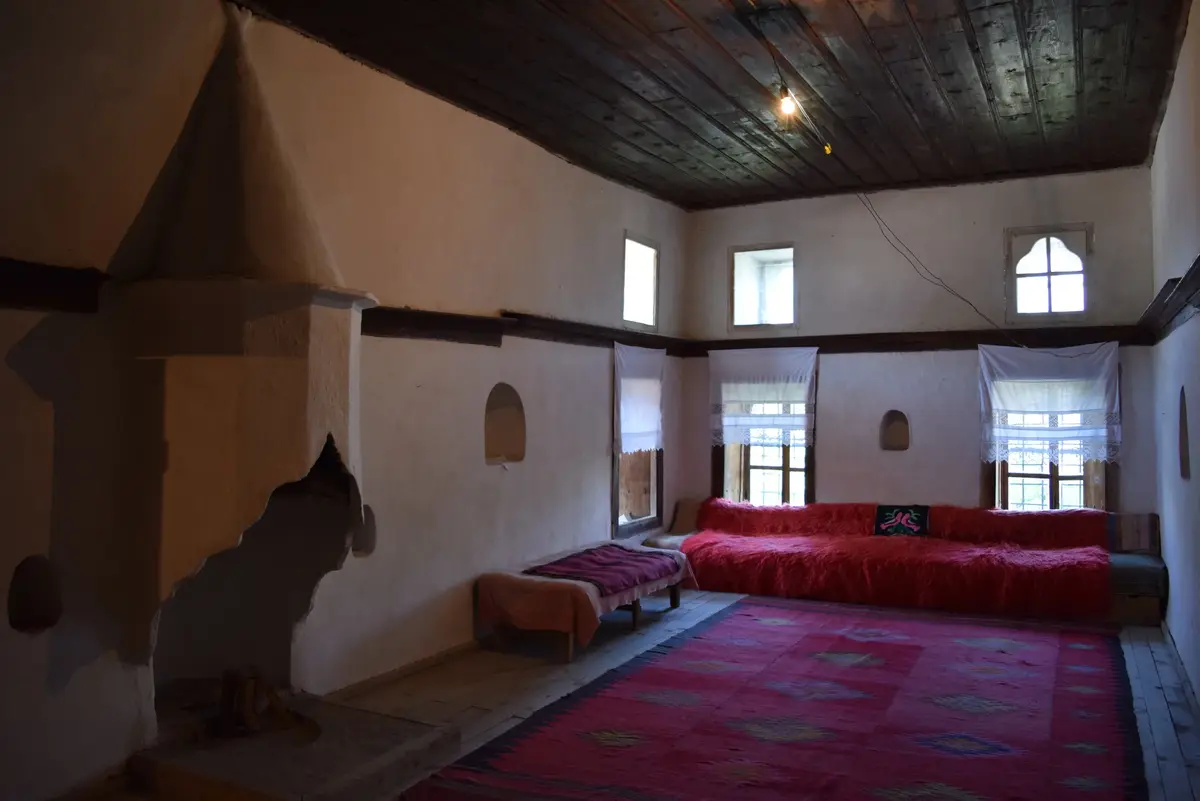
Skenduli House — the guided, theatrical one
Quick stats — Skenduli House:
- Entry: $3.60 (300 lek)
- Built: ~1700; partially renovated in the 1890s
- Tour: family-led, included in entry, lasts 30–45 minutes
- Hours: roughly 09:00–19:00 daily
- Best for: travelers who want a guided narrative
Pro Tip: In the Skenduli wedding room, ask to see the secret bunker stairwell behind the cupboard. The family added the WWII hideout themselves and the standard tour skips it unless you ask.
Zekate House — the architectural showpiece
Quick stats — Zekate House:
- Entry: $2.40 (200 lek)
- Built: 1811–1812 by Beqir Zeko, a vizier under Ali Pasha
- Tour: self-guided; uphill walk past Hotel Kalemi
- Hours: roughly 09:00–18:00; no electric light inside, so visit before 16:00
- Best for: travelers who want architecture without a script
If you only have time for one more house museum, the Ethnographic Museum (the former Hoxha family home, fully remodeled) costs $2.40 (200 lek) and walks you through Ottoman domestic life rather than communist propaganda. Ismail Kadare’s house, now a museum, is $6 (500 lek) and is most rewarding if you’ve already read his novels.
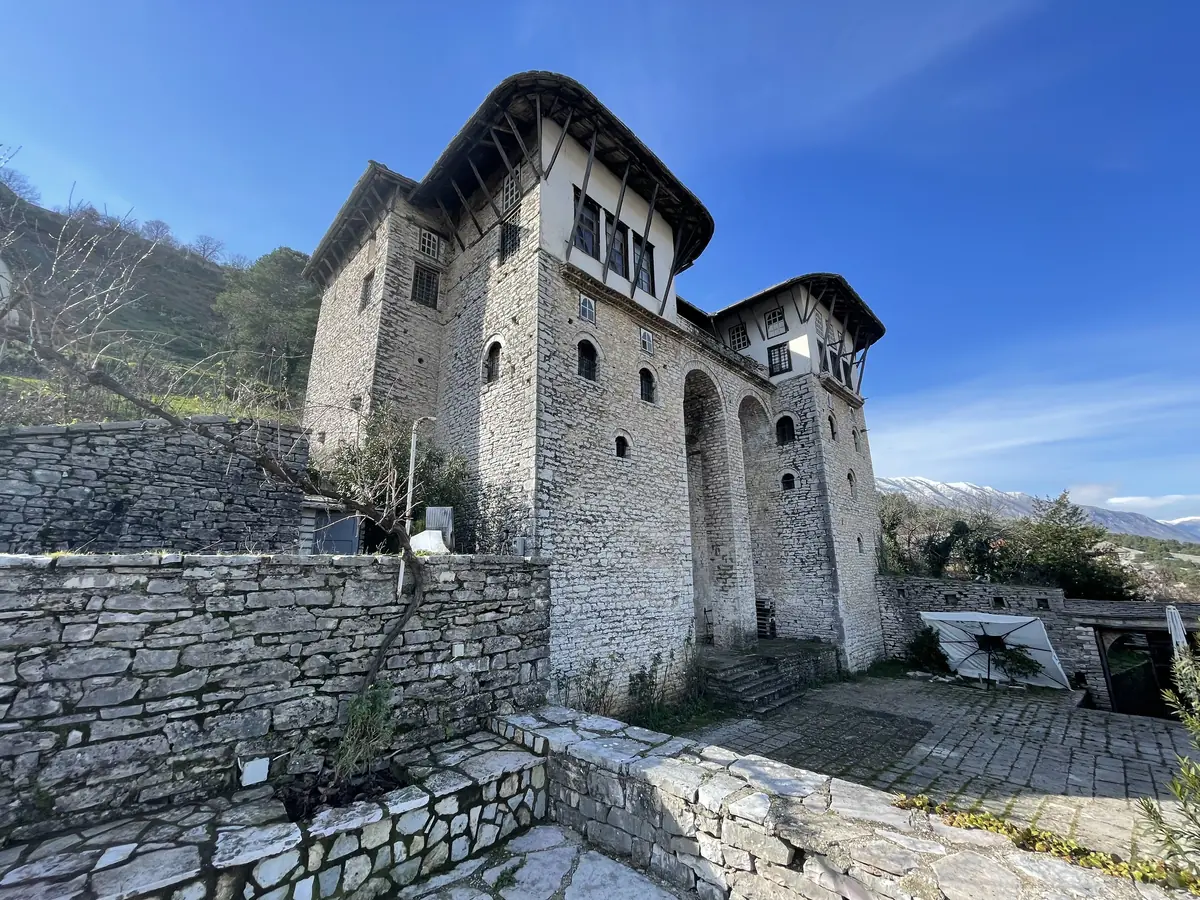
Descending into the Cold War Tunnel
Beneath the castle hill runs a half-mile (800-meter) nuclear bunker with 59 rooms, built in secret in the 1970s for 200 to 300 communist officials. Locals only learned of it in 1991. Entry is $2.40 (200 lek) and includes a 20-minute guided tour that runs hourly from the information center on Çerçiz Topulli Square.
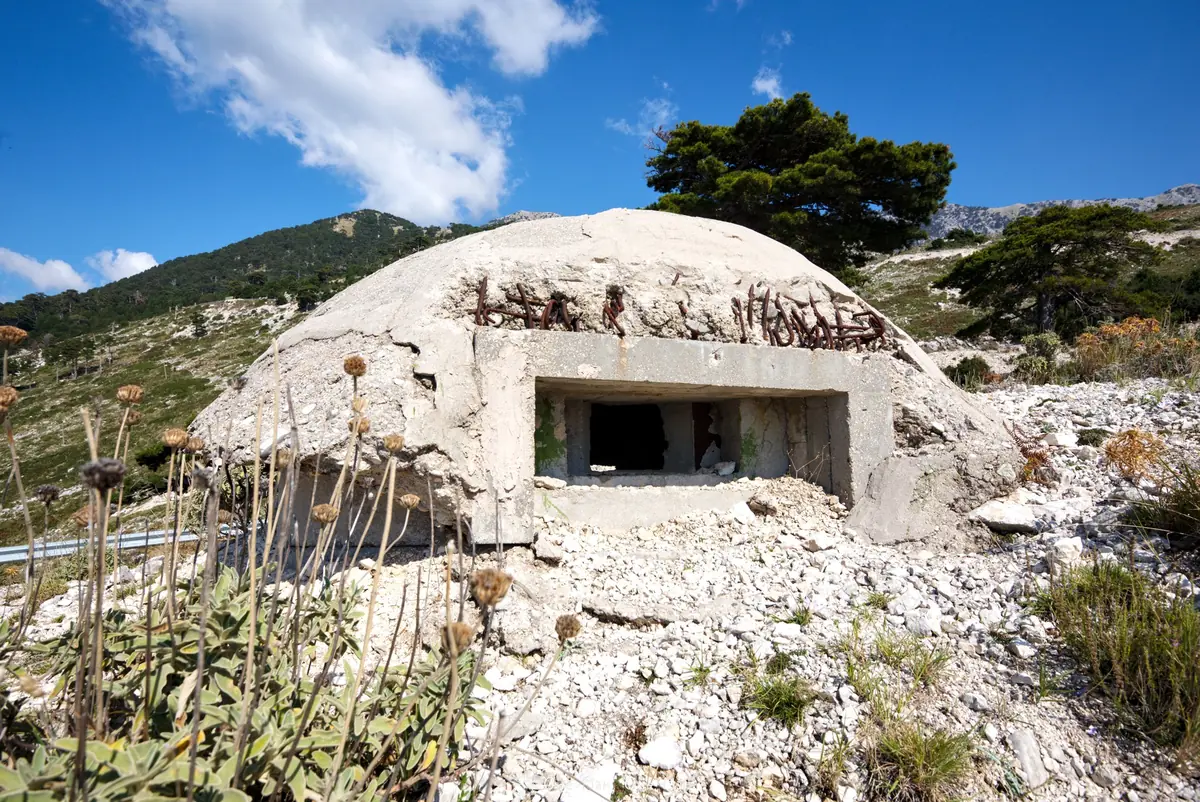
The tunnel is not the same as Tirana’s Bunk’Art — those are former military bunkers turned art spaces. This is a working political shelter with command rooms, sleeping quarters for the regional party leadership, and dead-end corridors that were never finished. It’s a slice of Albanian paranoia in concrete: dictator Enver Hoxha had roughly 700,000 small bunkers built across the country during his 40-year rule, but this one was meant for the people he trusted.
Quick stats:
- Entry: $2.40 (200 lek)
- Tour length: ~20 minutes
- Hours: April–October 09:00–17:30; November–March 08:00–14:00
- Temperature inside: ~55°F (13°C) year-round
- Tour cap: officially small, but groups can balloon to 40 in peak season
- Meeting point: information center on Çerçiz Topulli Square
Pro Tip: The temperature inside drops to about 55°F year-round, so bring a light layer even in August. On my last visit a midday July tour hit 30-plus people in corridors barely wide enough for two — arrive at 09:00 or in the last hour before closing for a quieter group.
After you resurface, Kalimera Patisserie is a two-minute walk away and serves the best Basque cheesecake in southern Albania. Treat it as part of the tunnel ritual.
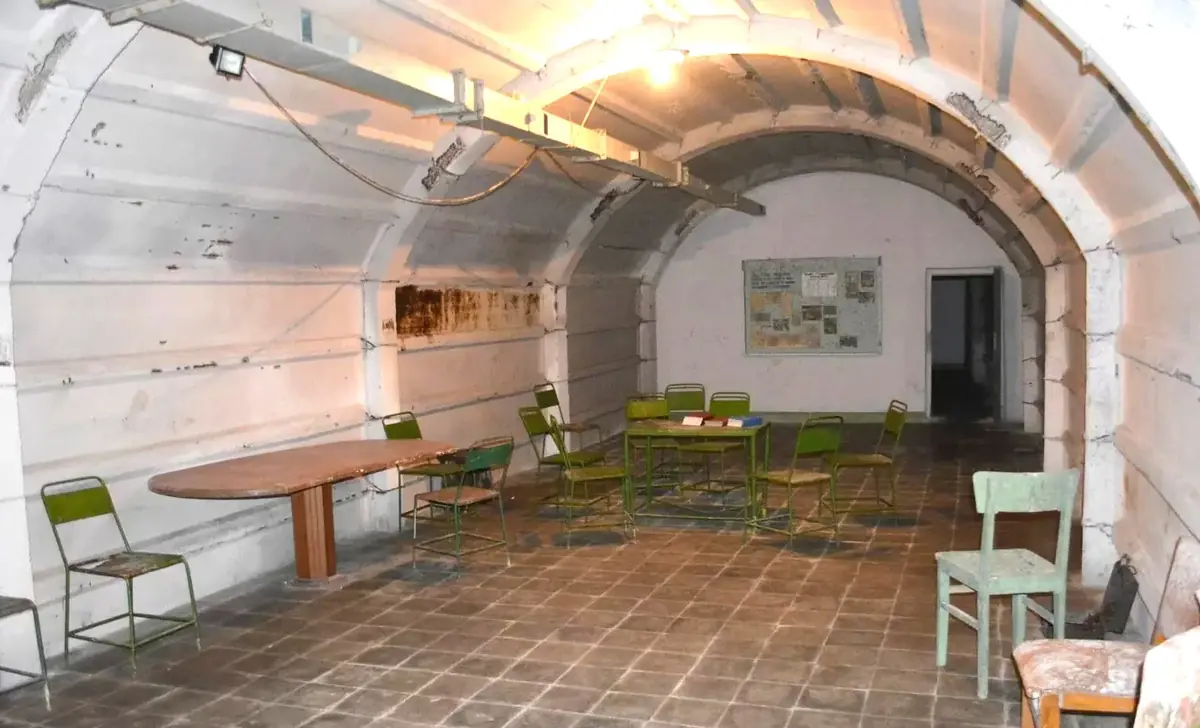
Walking to Ali Pasha’s Bridge and the Obelisk
Two free walks frame the city. The Gjirokaster Obelisk is a five-minute uphill stroll from the bazaar to a 23-foot (7-meter) stone marker honoring Albanian-language education. Ali Pasha’s Bridge — the surviving span of a 7.5-mile (12-kilometer) Ottoman aqueduct in the Dunavat quarter — is a 30- to 45-minute walk one way that locals share with foraging goats.
The Gjirokaster Obelisk
Quick stats — the obelisk:
- Entry: free
- Walk from bazaar: 5 minutes uphill
- Time needed: 15 minutes (longer for photos)
- Best for: catching the panoramic frame of bazaar, mosque, and castle in one shot
Ali Pasha’s Bridge
Quick stats — Ali Pasha’s Bridge:
- Entry: free
- Walk from castle gate: ~1.2 miles (2 km) round trip
- Time needed: 90 minutes round trip
- Bring: water and an offline map (the last 650 feet are unmarked)
The bridge stands as the only intact piece of the 7.5-mile (12-kilometer) aqueduct Ali Pasha commissioned to bring water to the castle. Most of it was dismantled in 1932 for stone reuse during a public-works push. What remains is a single Ottoman-era arch in a meadow that, depending on the season, is either dry yellow grass or knee-high wildflowers.
Pro Tip: Time the bridge for sunset and you may catch a herd of goats silhouetted on the span — the unofficial postcard shot, and one almost no other guidebook flags.
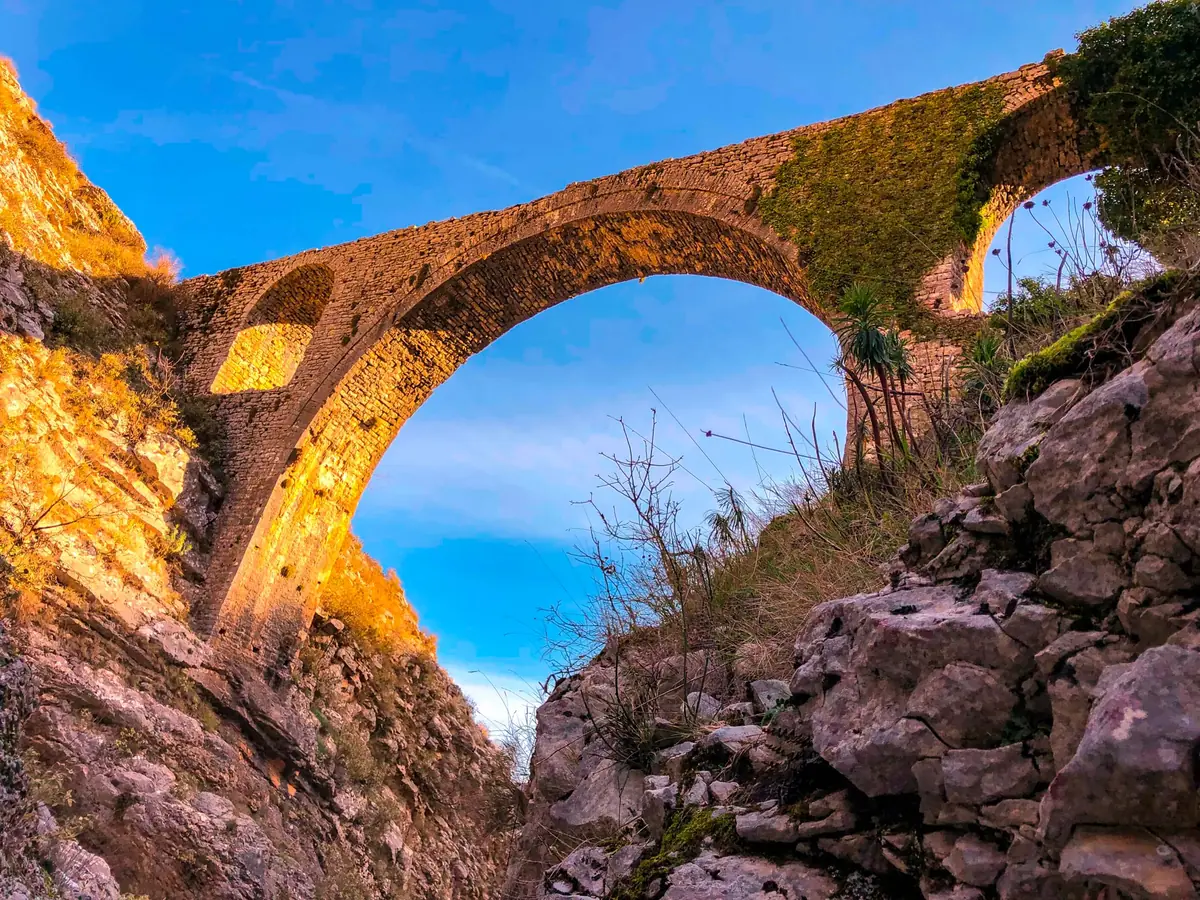
The Bazaar Mosque and the museums you can skip
Of the 15 mosques that once stood in Gjirokaster, only the Bazaar Mosque (1757) survived the communist religion ban. Entry is free outside prayer times — cover shoulders and knees, take off shoes. Inside the castle, prioritize the Gjirokaster Museum over the National Armaments Museum unless you actively love old rifles.
Two more quick stops worth the detour:
- Holy Transfiguration Church (1784): free, modest dress required, official Cultural Monument with a small Orthodox icon collection
- Heroines Monument: free, five-minute walk from the bazaar, useful for context on the city’s WWII resistance role
Pro Tip: Around 12:30 the imam often steps out and chats with respectful visitors in better English than his English-language pamphlet implies. He’ll point out the original 1757 column capitals if you ask.
Where to eat in Gjirokaster (and what to order)
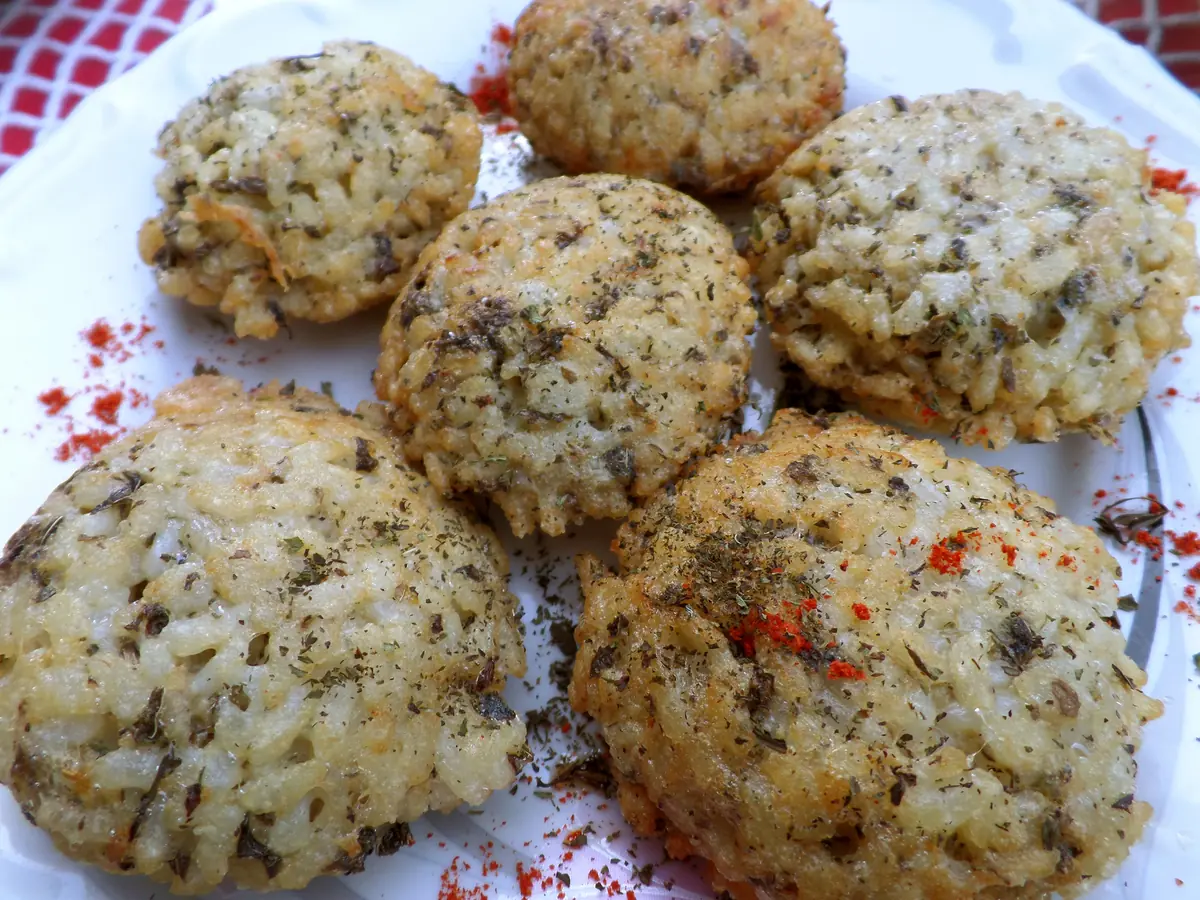
Gjirokaster’s standout traditional Albanian dishes are qifqi (mint-and-egg rice balls), pasha qofte (meatball-rice soup), shapkat (cornmeal-and-greens pie), and oshaf (fig-and-milk pudding). A full traditional dinner with wine runs about $10 to $15 per person at family-run tavernas. Tipping 10% is appreciated but not expected.
Where to eat what:
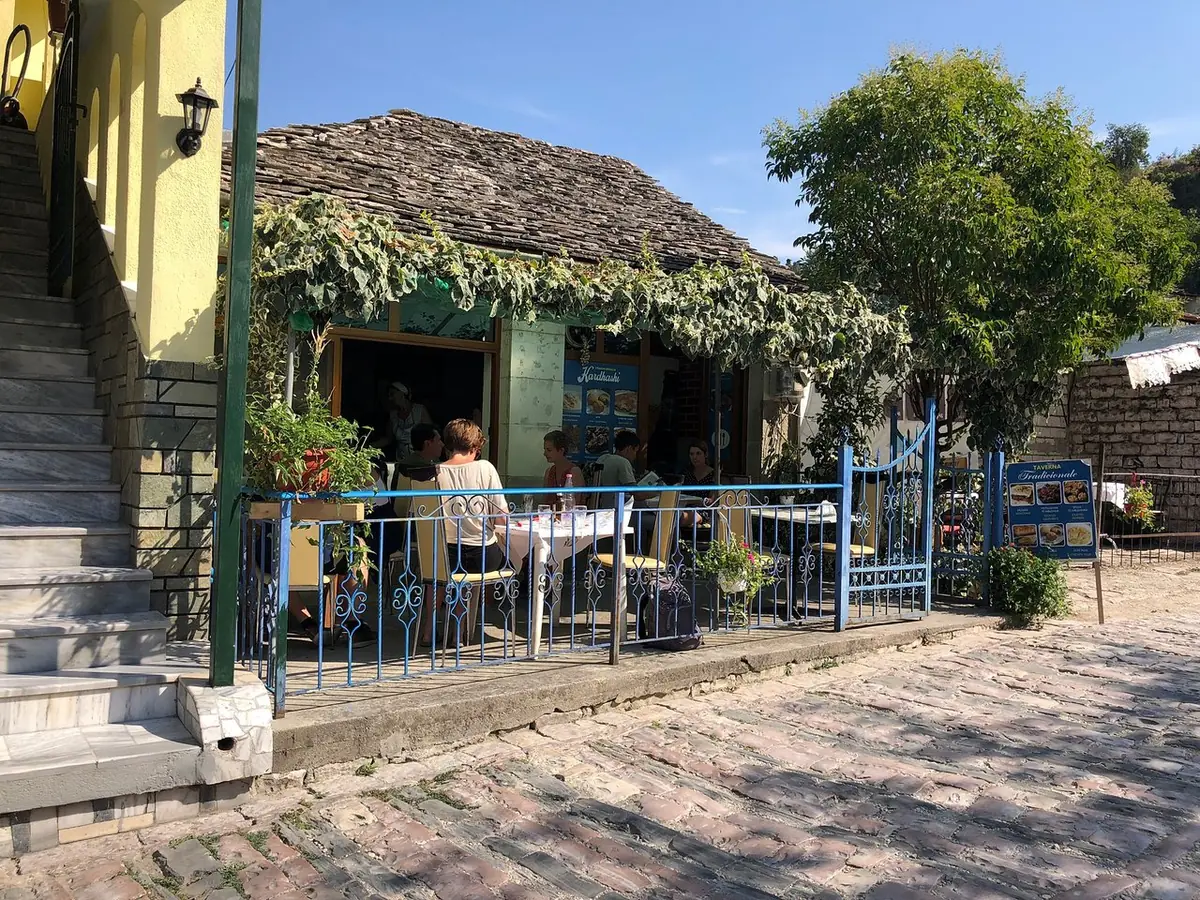
- Taverna Tradicionale Kardhashi: gold-standard qifqi; mains $7–$11 (600–900 lek); courtyard seating
- Restaurant Tradicional Odaja: vegetarian-friendly; the byrek is the order
- Taverna Kuka: quiet courtyard; wild-boar stew in season
- Kujtim Restaurant: best tave kosi (lamb baked in yogurt); shaded vine canopy
- Restaurant Gjoça: tiny, family-run; the locals’ default
- Kerculla Resort restaurant: book ahead for the hilltop view; mains $15–$20; modern Albanian
- Mapo Restaurant: most reliable steak and pasta; sunset terrace
- Te Lefteri: old-school home cooking on the climb to the castle
- Te Kubé: café-bookshop under the Bazaar Mosque; cakes, cordial, and quiet
- Kalimera Patisserie: Basque cheesecake and espresso, 2 minutes from the tunnel exit
The dish you can’t leave without is qifqi at Kardhashi. The recipe is short — short-grain rice, eggs, fresh mint, salt, fried in oil — but it’s so specific to this city that even Tirana restaurants get it wrong. I’ve ordered it there and it’s never the same. A plate of six is about $4.80 (400 lek).
What is Albanian raki, and where do you drink it?
Raki is Albania’s homemade fruit spirit, often grape or mulberry, usually 40% ABV but sometimes much higher. A 1-ounce (30-milliliter) shot at a Gjirokaster taverna costs $1.20 to $2.40 (100–200 lek) and is the universal welcome drink at family-run kitchens. Decline politely with a hand on the heart if you’re driving.
The mulberry raki at Stone City Hostel’s family-style dinner is the gentlest introduction; the village stuff at Kardhashi is significantly stronger and will sit you down. Be warned: a refusal at the table can offend, but raising your glass and taking a sip is enough — you don’t have to finish.
Where should you stay in Gjirokaster?
Stay inside the Old Bazaar for atmosphere or in the new town near the bus station for cheaper, quieter rooms. Expect $20 to $30 a night for a hostel dorm, $50 to $90 for a heritage guesthouse, and $100 to $150 for a boutique hotel with castle views. Most rooms include breakfast.
Tiered options:
- Stone City Hostel: $21–$35/night; dorms and two privates; 9.9 Hostelworld rating; free walking tour and family-style dinner ($11)
- Bed and Breakfast Kotoni: $45–$65/night; mother-and-son operation; one of the best breakfasts in town
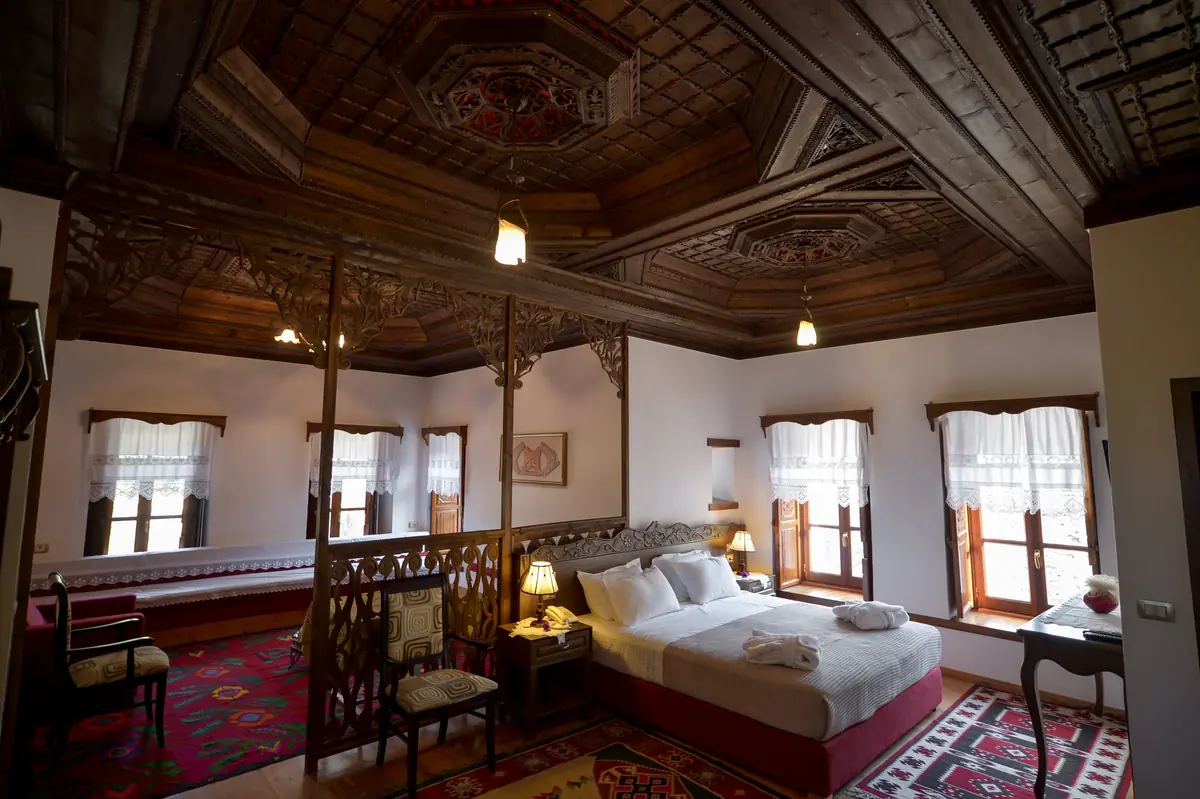
- Hotel Kalemi (and Kalemi 2): $56–$110/night; 19th-century Ottoman house; carved wooden ceilings; free parking
- Hotel Cajupi: $60–$90/night; new town; modern, business-style
- Boutique Hotel Musée: $90–$140/night; ten rooms in a restored kullë
- Kerculla Resort: $100–$160/night; pool and panoramic restaurant; 30-minute uphill walk or 5-minute taxi from the bazaar
- Hotel Gjirokastra: $80–$110/night; central, swimming pool
- Camping Ora: $18/night (1,500 lek) for a campervan slot with electricity and showers
Pro Tip: Ask Stone City Hostel for the room called “Argjiro” — it’s the only one with a balcony framing the castle squarely between two slate roofs. There are exactly two of those balconies in the building, and one is the kitchen.
What are the best day trips from Gjirokaster?
The three best day trips from Gjirokaster are the Blue Eye spring (45 minutes south), the Antigonea Archaeological Park (30 minutes east), and Permet’s Vjosa river rafting (1 hour north). With a rental car you can chain the Blue Eye into the drive to Saranda and skip the backtrack.
The contender list:
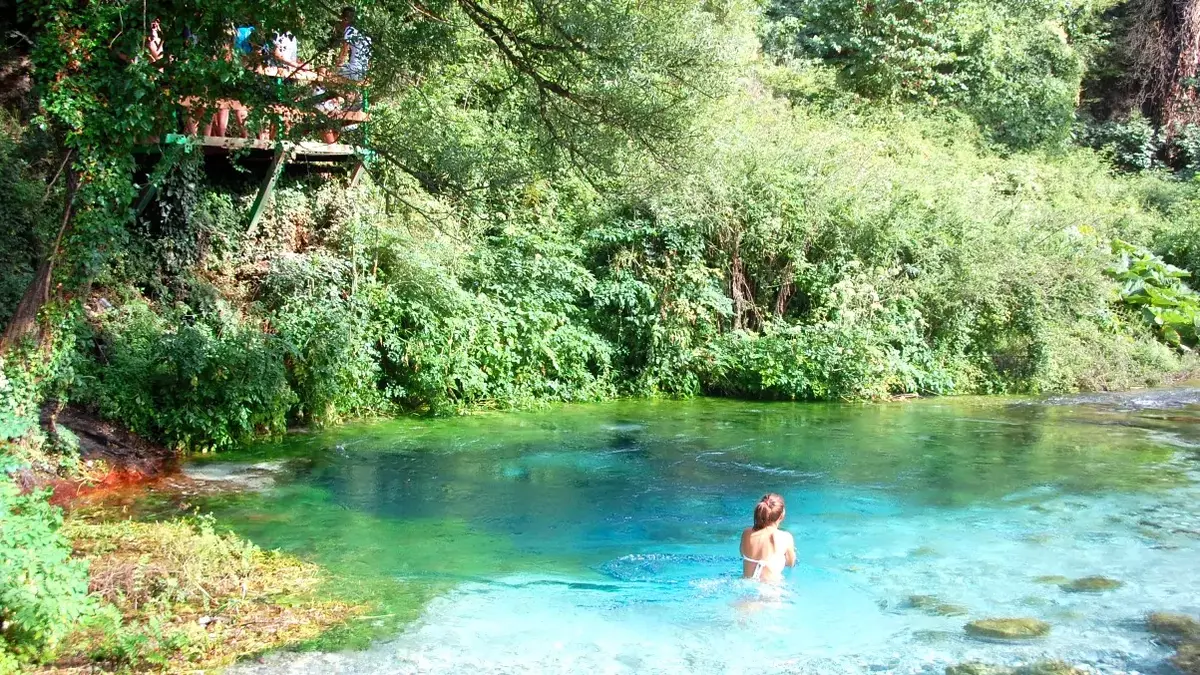
- Blue Eye (Syri i Kaltër): 28 miles (45 km) south; entry $0.60 (50 lek) plus $1.20 (100 lek) parking; tourist train from car park to spring $2.40 (200 lek); swimming officially banned
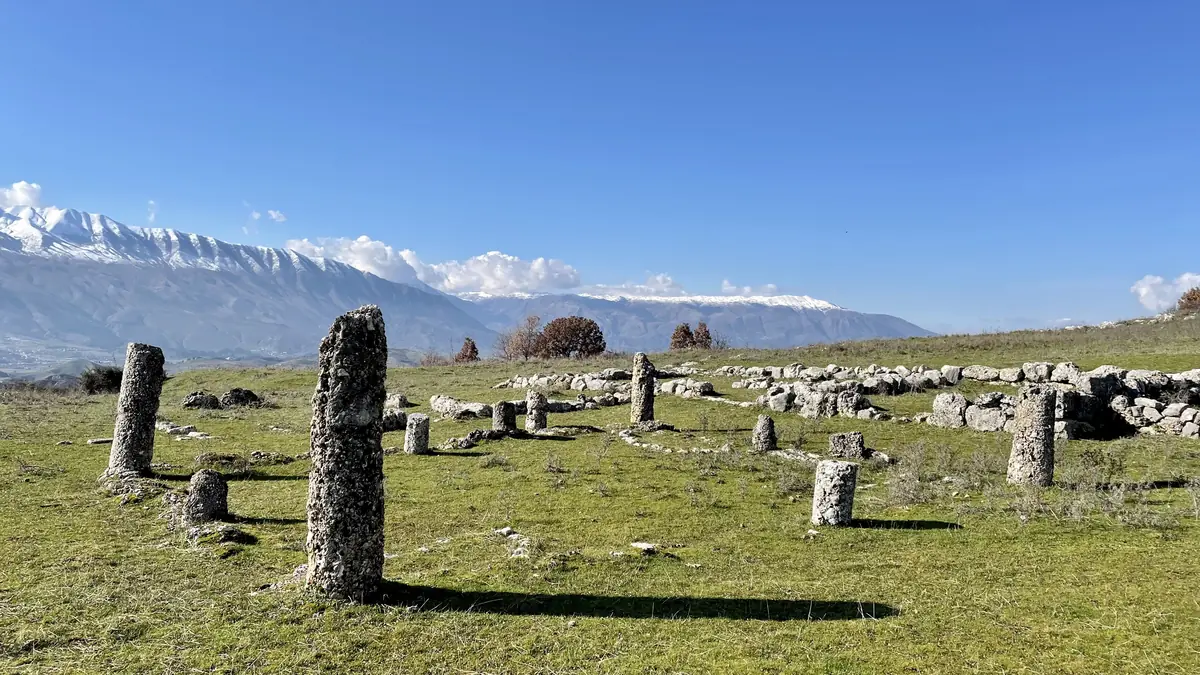
- Antigonea Archaeological Park: 9–10 miles (14–16 km) east; entry $2.40–$3.60 (200–300 lek); 08:00–16:00; 4WD recommended on the last 1.2 miles (2 km)
- Hadrianopolis Roman theatre at Sofratika: 9 miles (14 km) south; free; partially excavated
- Permet and Vjosa rafting: 37 miles (60 km) north; 3- to 4-hour float trips $35–$50; pair with the Bënja thermal pools
- Sotira Waterfalls: ~16 miles (25 km) southwest near Lazarat-Sotirë; 2-hour return hike from car park
- Viroi Lake: 1.9 miles (3 km) northwest of town; free; family-style café on a tiny island reached by wooden footbridge
A useful clarification: Lekursi Castle is outside Saranda, not Gjirokaster. Travel forums confuse the two constantly. If you want a sunset castle near Saranda, that’s the one; it has nothing to do with Gjirokastra Castle.
Common myth busted: many guides imply you can swim at the Blue Eye. You cannot. Swimming has been officially banned to protect water clarity since the area was designated a protected nature monument. The 10-foot (3-meter) jump platform you may see in older photos is technically illegal use, and rangers have begun fining offenders. Plan to look, photograph, and walk on.
Pro Tip: At Antigonea you have a 227-acre (92-hectare) archaeological park essentially to yourself most days — bring a picnic and 2 quarts (2 liters) of water, because there’s no shop, no café, and no toilet on site.
How do you get to Gjirokaster?
There’s no airport or train station in Gjirokaster. Most travelers arrive by bus or rental car from Saranda (1 hour, 32 miles), Tirana (4 hours, 143 miles), Berat (2.5 hours, 112 miles), or the Greek border at Kakavija (30 minutes, 19 miles). Furgon minibuses run all four routes.
Side-by-side gateway logistics:
- From Saranda: 32 miles (51 km); bus $4.80 (400 lek); 1–1.5 hours; multiple operators (Trans Butrinti, Argjiro, Best Travel, Trans Dea); buses depart 06:00–17:00 from a stop on Rruga Flamurit beside the synagogue ruins
- From Tirana: 143 miles (230 km); bus $14.45 (1,200 lek); 4 hours; departs Tirana North & South Bus Terminal hourly 05:00–20:30; taxi ~$170
- From Berat: 112 miles (180 km); furgon $8.40–$12 (700–1,000 lek); 2.5 hours; usually requires changing in Fier
- From Greece via Kakavija: KTEL Greek buses to Kakavija border (19 miles / 30 km from Gjirokaster), then taxi or furgon
- From Corfu: ferry to Saranda (30 minutes, ~$25), then bus or taxi to Gjirokaster
If you’re relying on Albania bus travel, the Gjirokaster bus stop is at the petrol-station roundabout in the lower new town. From there it’s a 30-minute uphill walk or a $2.40 to $3.60 taxi (200–300 lek) to the Old Bazaar. With luggage, take the taxi.
Pro Tip: Furgons leave when full, not by clock — show up at the Saranda stop by 10:00 and you’ll always get on one before noon. After 16:00 you may end up waiting for two hours or paying for the empty seats.
When is the best time to visit Gjirokaster?
Visit Gjirokaster from late April to mid-June or in September and October — the same shoulder seasons that mark the best time to visit Albania overall. May highs sit around 72°F (22°C) and October still averages 70°F (21°C). July and August spike to 90 to 104°F (32–40°C) and the cobblestones bake. November is the wettest month, with about 16 inches (400 mm) of rain.
Seasonal breakdown:
- May–June and September–October: highs 68–78°F (20–26°C); pleasant; National Folklore Festival of Gjirokaster held inside the castle every five years
- July–August: highs 84–93°F (29–34°C), lows 55–59°F (13–15°C); driest at ~1 inch (25 mm) of rain; best for sunset rooftops, worst for midday castle climbs
- November–February: highs 48–55°F (9–13°C); rainy; some attractions on shorter winter hours; snow possible at the castle
- Daylight: 9.7 hours in January; peak 15 hours in June
The record high in Gjirokaster is 109°F (42.8°C), set in July 2021. If you arrive during a heat dome, do the indoor stuff (tunnel, museums, tower houses) between 11:00 and 17:00 and save the castle ramparts for after 18:00.
How many days do you need in Gjirokaster?
One full day covers the headline sights: castle, Old Bazaar, one tower house, and the Cold War Tunnel. Two full days adds Ali Pasha’s Bridge, a second museum, a long lunch, and a sunset rooftop. Three days lets you slot in Antigonea, the Blue Eye, or a Permet rafting day trip.
Sample one-day plan:
- 09:00 — Castle gate at opening (taxi up, walk down)
- 11:30 — Coffee at Te Kubé
- 12:00 — Skenduli House tour
- 13:30 — Qifqi lunch at Kardhashi
- 15:00 — Cold War Tunnel
- 16:30 — Old Bazaar shopping window
- 19:00 — Sunset rooftop dinner at Mapo or Kerculla
Sample two-day plan: add Zekate House, Ali Pasha’s Bridge, the obelisk, and either the Ethnographic Museum or Kadare’s house.
Sample three-day plan: add a full day for the Blue Eye plus Antigonea, or for Permet rafting and the Bënja thermal pools.
Pro Tip: If you arrive on a furgon at 14:00 you can still bag the castle, the bazaar, and a qifqi dinner. The Cold War Tunnel can wait until breakfast — it opens at 09:00 in summer.
Is Gjirokaster better than Berat?
If you have to pick one, Berat wins for windows-on-windows photography and church-heavy history; Gjirokaster wins for castle drama, Cold War history, and a more dramatic mountain setting. Travelers with seven or more days in Albania should do both — they only feel similar from a distance.
The honest tradeoffs:
- Berat: closer to Tirana (2 hours), flatter walking, “thousand windows” Mangalem and Gorica facades, more religious-heritage density
- Gjirokaster: closer to the southern beaches (1 hour to Saranda), steeper terrain, the better single museum (the castle’s Gjirokaster Museum), more 20th-century history (Hoxha, Kadare, the Cold War Tunnel)
Pro Tip: Visit them at least three days apart on your itinerary. Back-to-back, the second one always disappoints unfairly — your eyes get tired of slate and stone, and you stop noticing what makes each city different.
What is Gjirokaster famous for?
Gjirokaster is famous for being a UNESCO-listed Ottoman “Stone City,” for its hilltop castle and the Cold War bunker beneath it, and as the birthplace of Albania’s communist dictator Enver Hoxha and Booker International–shortlisted novelist Ismail Kadare. It’s also known for qifqi rice balls and the National Folklore Festival held inside the castle every five years.
The festival was first held in 1968 and rotates between Gjirokaster and other Albanian cities; when it lands here, the castle’s open amphitheater fills with polyphonic singers from across the country. Polyphonic Albanian singing was added to UNESCO’s Intangible Cultural Heritage list in 2005, the same year the city itself was inscribed.
Is Gjirokaster safe for tourists?
Gjirokaster is one of the safer small cities in the Balkans, and Albania is broadly a safe destination for tourists. Petty crime is rare, locals are famously hospitable, and solo female travelers consistently report no concerns walking the Old Bazaar at night. The actual risks are slippery cobblestones, unguarded drops at the castle, stray dogs on the new-town outskirts, and aggressive driving on the Tirana–Saranda highway.
What you should know:
- Tap water is technically safe to drink in Gjirokaster, but most travelers stick to bottled
- ATMs are in the new town; cards rarely work at attractions, so withdraw enough lek before going up
- Emergency number: 112 (works for police, ambulance, and fire)
- The castle has multiple unfenced edges and 30-foot (9-meter) drops; keep small children on a tight grip
- After 21:00 the bazaar empties out and feels almost too quiet — totally safe, just bring a layer
Cash, SIMs, and getting around Gjirokaster
Carry cash in lek — most attractions and many tavernas are cash-only. Wear grippy shoes for the cobbles. Tip 5 to 10% if service is good. Greet shopkeepers with “mirëdita” and you’ll get warmer prices on textiles. Don’t honk in residential alleys — locals will glare for blocks.
Quick logistics:
- Currency: Albanian lek (ALL); 1 USD ≈ 83 lek (think 100 lek ≈ $1.20)
- ATMs: Credins and Raiffeisen are reliable; expect ~$7.20 (600 lek) per withdrawal in fees
- SIM cards: Vodafone or One; ~$8.40 (700 lek) for 10 GB; passport required at the shop
- Rideshare: Uber and Bolt do not operate in Gjirokaster
- Local taxi: Elio Taxi (+355 69 234 0033) is the most-recommended driver for day trips and airport runs
- Parking: lower car parks off Rruga 18 Shtatori in the new town; the lot beside Hotel Cajupi is the safest after dark
Pro Tip: On the steep alleys, give the right of way to anyone carrying firewood. That’s the unwritten rule, and ignoring it marks you instantly as a tourist who doesn’t get how the city works.
Before you book
TL;DR — Gjirokaster is a UNESCO-listed Ottoman Stone City and is worth a one- to two-night stop on any Albania trip. The headline sights are the castle ($4.80), the Old Bazaar (free), Skenduli or Zekate House ($2.40–$3.60), the Cold War Tunnel ($2.40), and Ali Pasha’s Bridge (free). Budget about $40 to $80 a day per person, in line with typical Albania travel costs. Best base: Hotel Kalemi for heritage or Stone City Hostel for atmosphere on $21+. Best gateways: Saranda (1 hour, $4.80 bus), Tirana (4 hours, $14.45 bus), or the Greek border at Kakavija. Best months: late April to mid-June and September to October. Best food: qifqi at Kardhashi.
Have you been to Gjirokaster, or are you trying to decide whether to fit it into a Berat-Saranda loop? Drop your itinerary in the comments — I’ll tell you whether the math works.