Most guides treat Butrint National Park like a checklist of stones. After multiple visits across two seasons, I’ve learned which ruins deserve your time, which mosaics are buried under sand, and why a Corfu day trip is more rushed than the brochures admit. Here’s the honest playbook for visiting Albania’s first UNESCO World Heritage Site.
What is Butrint National Park, and why is it special?
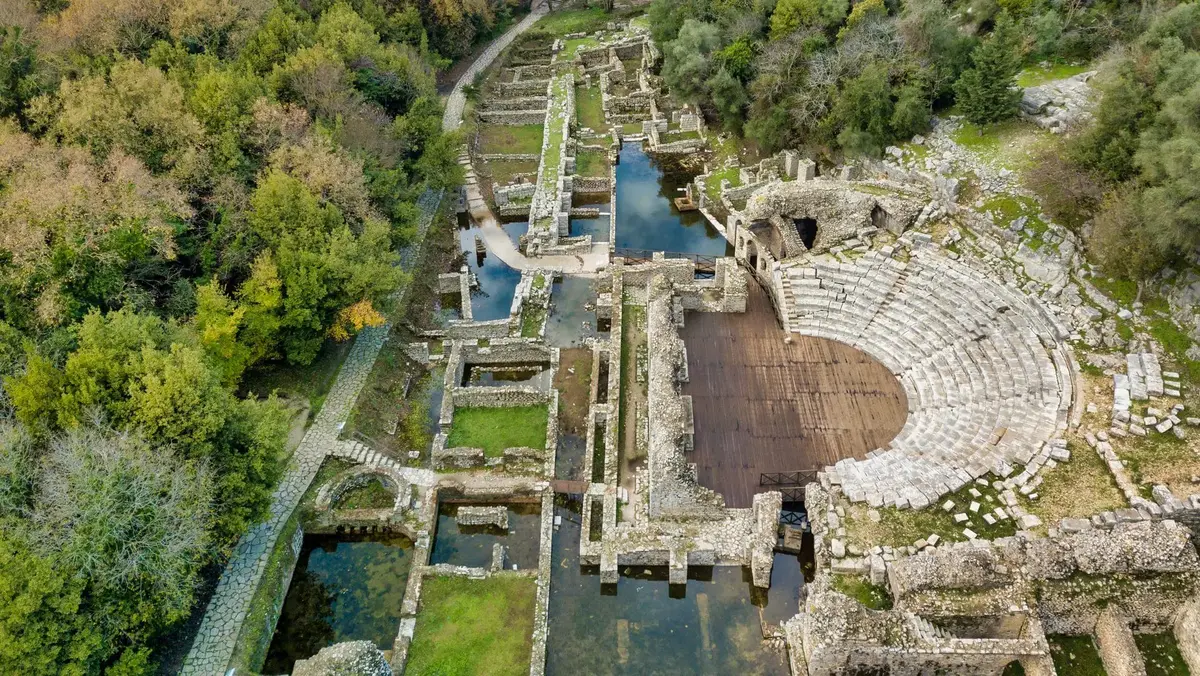
Butrint National Park is Albania’s first UNESCO World Heritage Site, a layered ancient city on a forested peninsula about 11 mi (18 km) south of Saranda. Visitors walk through Greek, Roman, Byzantine, Venetian and Ottoman ruins on a single 1.2-mile (2 km) loop — roughly 2,500 years of Mediterranean history in two hours. The wider park covers 36 sq mi (94 km²) of wetlands, oak forest and lake shoreline.
What makes Butrint different from Pompeii or Ephesus isn’t a single monumental ruin — it’s the stacking. A 4th-century BC Greek theatre sits a few hundred feet from a 6th-century Christian baptistery, both inside walls reused by Venetian engineers a thousand years later. UNESCO inscribed the site in 1992 under cultural criterion (iii), expanded the property in 1999 to include the wider Butrint Bay, and removed it from the World Heritage in Danger list in 2005 after a major restoration push.
The park is also a Ramsar Wetland of International Importance. Birders count 246 recorded species across the lagoon and oak forest, including white-tailed sea eagles wintering off the lake.
Pro Tip: The official park website is butrint.al, but most of it is in Albanian only. For English-language updates on opening hours and special events, the Albanian National Tourism Agency’s social channels are more reliable.
Where is Butrint National Park?
Butrint sits on a small peninsula in Vlorë County, southern Albania, at coordinates 39.7458° N, 20.0211° E. The site is bracketed by Lake Butrint (Liqeni i Butrintit) to the north and east, the Vivari Channel that drains the lake to the Ionian Sea on the south, and the Vrina Plain across the channel.
- South of Saranda: 11 mi (17-18 km) by road
- South of Ksamil: 3 mi (5 km)
- From the Greek border (Qafë Botë crossing): 11 mi (18 km)
- From Corfu Town across the Strait: 17 mi (28 km, 15 nautical miles)
- From Tirana International Airport: 168 mi (270 km), about 4-5 hours by car
The closest large town is Saranda. Ksamil — Albania’s most photographed beach village — sits halfway between Saranda and the park, which makes it the most efficient overnight base if you want both ruins and beaches.
How do you get to Butrint National Park?
The most common starting points are Saranda, Ksamil and Corfu Town. Self-drivers can also approach from Tirana or Gjirokastër. There is no train station, no airport within 155 mi (250 km), and no direct international bus service to the park itself — every route ends in a road transfer down the SH81 coastal highway.
From Saranda
Saranda is the practical gateway. The road south runs along the Ionian, past Ksamil, and dead-ends at the park entrance.
- Drive: 25-35 minutes via the SH81. Free parking at the gate (about 60 spaces).
- Local minibus (furgon): 100-200 lek (about $1-2) one-way. Departures roughly every 30-60 minutes from the port roundabout in Saranda; first run around 6:30 a.m., last return around 5-6 p.m. in shoulder season, later in summer. The driver shouts “Butrint” — wave and board.
- Taxi: €10-30 (about 1,300-3,000 lek) one-way. Negotiate before you sit down. Round-trip with a 2-hour wait usually runs €40-50.
Pro Tip: The furgon stop in Saranda is informal — there’s no ticket booth. Stand at the roundabout outside the port and flag any minibus heading south. Pay the driver in cash on board.
From Ksamil
Ksamil is closer, easier and the smartest base if you want a beach-and-ruins itinerary in one short stay.
- Drive: 10-15 minutes
- Furgon: same Saranda-Butrint line, about 50-100 lek for the shorter leg
- Bicycle: roughly 25 minutes; the road has a narrow shoulder and no bike lane
- Walk: about 1 hour, but the road is exposed and lacks a sidewalk for long sections — not recommended in summer heat
From Corfu by fast ferry
The Corfu day trip is the single most popular cross-border excursion in the Ionian. It’s also the most rushed.
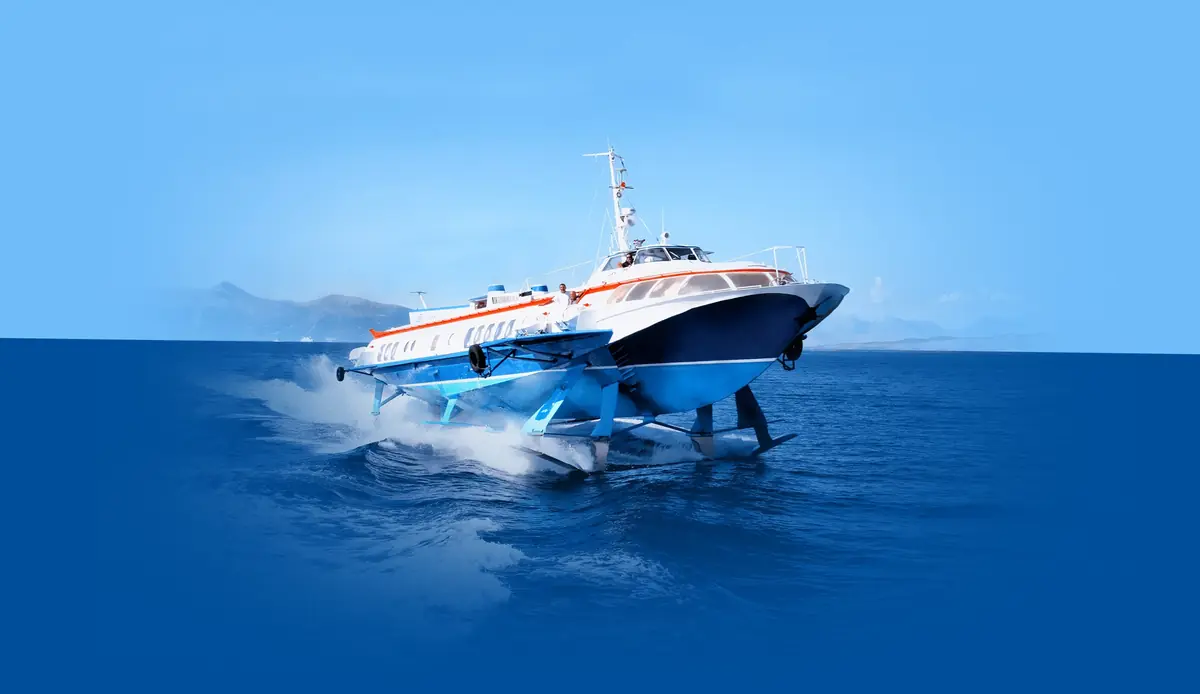
- Crossing: Corfu New Port to Saranda, 25-30 minutes by hydrofoil (vessels include the Santa, Stavros, Kristi); about 1 h 15 min on a conventional vehicle ferry
- Operators: Finikas Lines, Ionian Seaways, Albania Luxury Ferries, Kerkyra Seaways
- Frequency: a dozen-plus daily departures from Corfu in peak summer (more counting return sailings); as few as 1-2 per day in winter
- One-way fare: from about €15 ($18) for foot passengers; closer to €25-30 in high season; €45+ with a car
- Passport: required for all non-EU visitors; US citizens enter Albania visa-free and can stay up to a year — far longer than the 90 days most nationalities get
- Time difference: Albania is one hour behind Greece — your phone will not always update automatically
A typical independent day trip looks like this: 9 a.m. ferry from Corfu, arrive Saranda 9:35, clear passport control by 10:15, taxi or furgon to Butrint by 10:50, ~3 hours on site, return to Saranda by 2:30, late lunch, board the 4:00 or 5:00 p.m. ferry back. That’s roughly 5-6 hours on the ground in Albania.
If you’d rather not coordinate the logistics, Ionian Cruises and Sarris Cruises offer combined ferry-plus-coach packages from Corfu Town for around €60 ($65) including a buffet lunch in Saranda. The trade-off: you’ll get only 90-110 minutes inside the park.
From Tirana
Tirana is a 4-5 hour drive south on the SH4 then SH8/SH81, mostly on smooth two-lane highway with stretches of hairpin coastal road past Llogara Pass. There’s no direct bus from Tirana to Butrint — you’ll need to break the journey in Saranda or Gjirokastër.
From Gjirokastër
Gjirokastër — the UNESCO-listed Ottoman stone city — is 1 h 45 min west by car (about 50 mi / 80 km) on the SH99 then SH81. Public buses go to Saranda; from there, transfer to a furgon for the final leg.
How much does it cost to enter Butrint National Park?
Entry to Butrint is 1,000 lek (about $11 USD) for adult foreign visitors. Children aged 12-18 pay 500 lek; under 12 enters free. Groups of 12 or more pay 800 lek per adult. Older blogs still listing 700 lek are out of date. Cash is strongly recommended — both lek and euros are accepted at the gate, but the card terminal is unreliable, so it’s worth knowing how Albania’s currency and ATMs work before you arrive.
Hours and additional tickets:
- Park gates: 8 a.m. to sunset, daily (effectively ~7-8 p.m. in summer, ~4-5 p.m. in winter)
- Butrint Museum (inside the Acropolis Castle): 9 a.m. to 4 p.m., extended to 7 p.m. in high summer
- Adult entry: 1,000 lek (~$11)
- Child 12-18: 500 lek (~$5.50)
- Group rate (12+ pax): 800 lek per adult
- Disabled / pensioner: 500 lek
- Children under 12: free
Free-entry days (foreigners pay nothing on these dates):
- April 18: International Day for Monuments and Sites
- May 18: International Museum Day
- May 21: European Heritage Days warm-up
- September 29: World Heritage Day in Albania
The last Sunday of every month is also free for Albanian citizens only.
Pro Tip: There’s a single ATM in Ksamil (often empty) and several in Saranda. Withdraw cash before heading to Butrint. Trying to negotiate the entry fee in dollars without lek or euros will get you a polite refusal.
How long do you need at Butrint?
Most visitors need 1.5 to 3 hours to walk the full archaeological loop. That covers the Venetian Tower, the baptistery, the basilica, the Lion Gate, the Greek theatre and the climb to the Acropolis Castle. Add another 30-45 minutes if you want to read every interpretive panel or take the cable ferry across the Vivari Channel to the Triangular Castle.
A realistic time budget by traveler type:
- Cruise passengers / rushed day-trippers: 1.5 hours (skip the museum, skip the Triangular Castle)
- Average independent visitor: 2-2.5 hours
- History-curious visitor: 3 hours including the museum
- Archaeology fan reading every panel: 3.5-4+ hours
Going slower than 2 hours rarely makes sense — the loop is short, the panels are well-written, and you’ll feel under-stimulated. Going faster than 90 minutes means missing the theatre or the climb to the castle. Both are mistakes.
What to see at Butrint National Park: an 8-stop walking route
Butrint is a single waymarked loop, beginning and ending at the entrance gate. Walk it counter-clockwise: forest cover lasts longer that way, and the Acropolis climb at the end gives you the lake-and-Corfu view as your reward, not a sweaty preamble. Here are the eight stops worth your attention, in order.
1. Venetian Tower and the park entrance
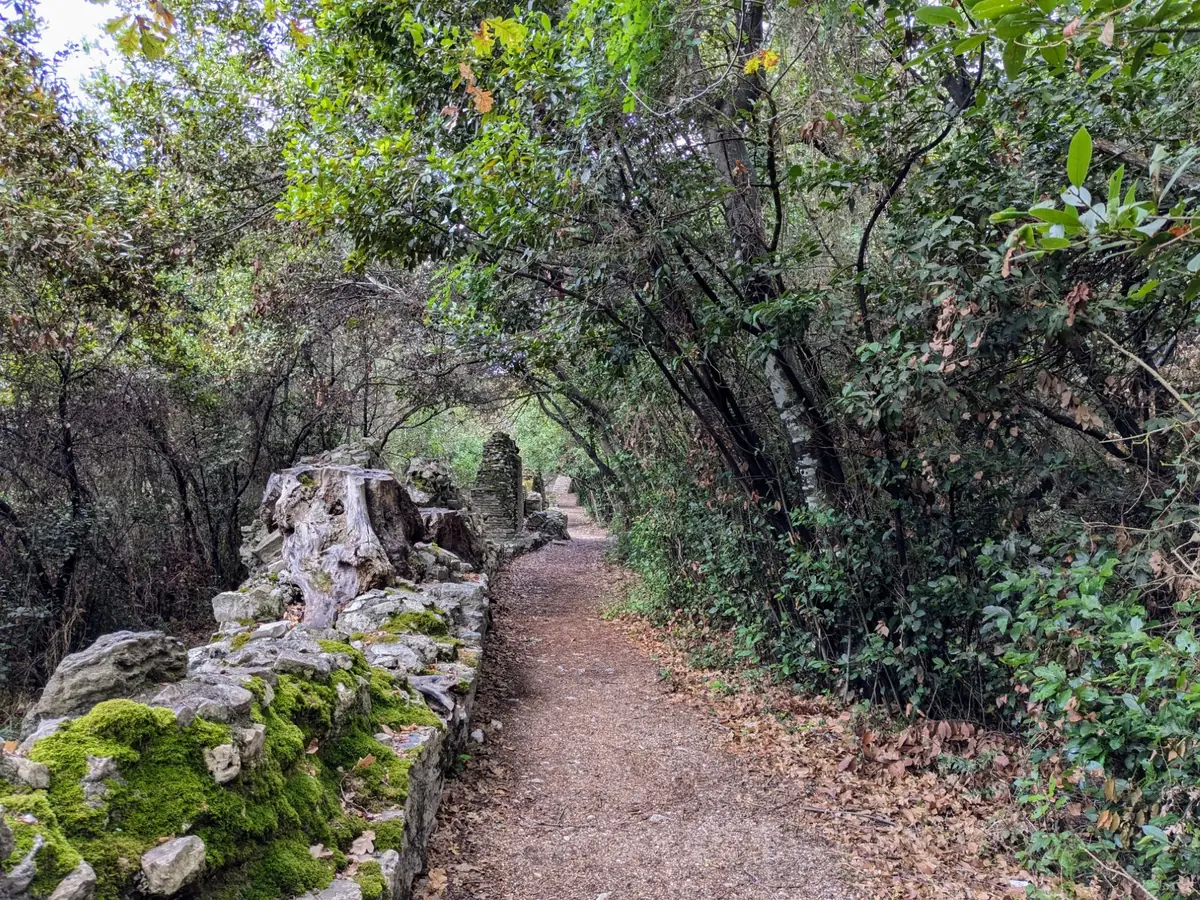
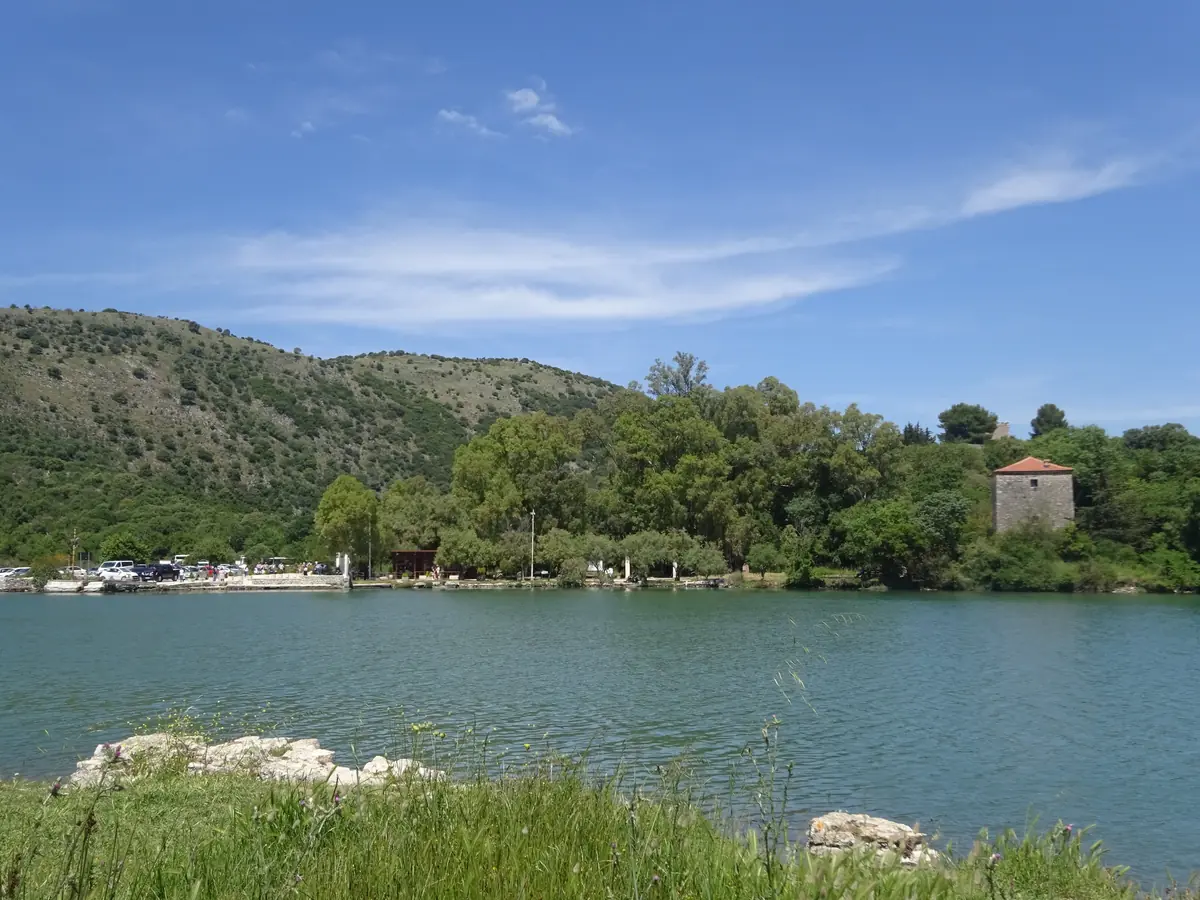
The 15th-century Venetian Tower marks the start of the loop, perched directly on the Vivari Channel where the cable ferry crosses to the Triangular Castle. It’s a square stone block with a pitched roof — easy to walk past in 30 seconds. The real purpose of stopping here is orientation: channel on your left, lake ahead, forested hill where the rest of the city climbs.
- Period: 15th century AD
- Look for: reused ancient masonry in the lower courses
- Time: 5 minutes
2. The baptistery (and the buried mosaic question)
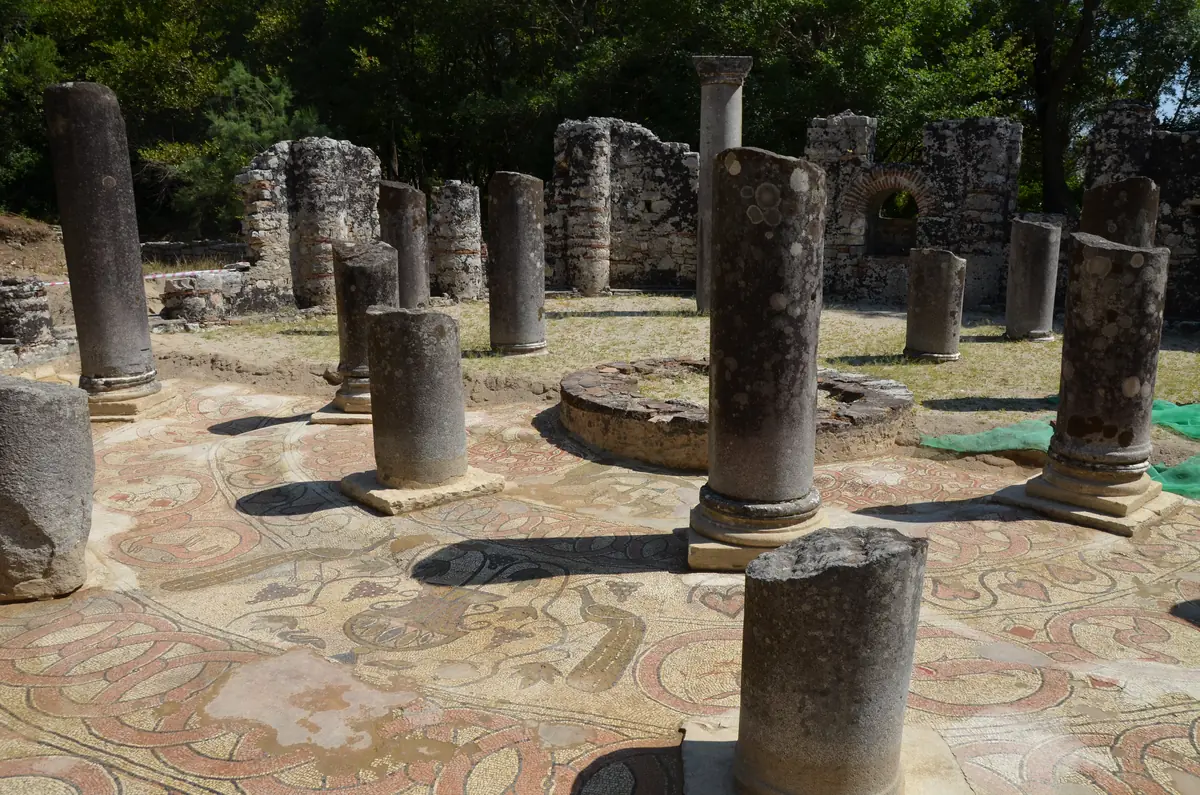
The Baptistery is one of the largest paleochristian baptismal halls in the eastern Mediterranean — second only to Hagia Sophia in size. Built in the early 6th century, it’s a circular hall ringed by 16 columns of Egyptian granite, with a sunken font in the center and a famous mosaic floor of peacocks, stags and fish in seven concentric bands.
Here’s what most blogs gloss over: the mosaic is buried under a layer of sand and protective sheeting most of the year. Conservation teams uncover it for a brief window in late summer — typically between mid-August and mid-September — and announcements come from the Albanian Ministry of Culture rather than the park itself. Visit any other time, and you’ll see what looks like a bare dirt floor inside a beautiful octagonal stone shell. A photographic reproduction is on display at the museum on top of the hill.
Pro Tip: If seeing the mosaic uncovered is your main reason for visiting, check the Albanian Ministry of Culture’s Facebook page two weeks before your trip. The uncovering rarely aligns with peak summer travel — most travelers planning around the mosaic miss it.
- Period: Early 6th century AD (~520-540s)
- Look for: 16 granite columns, sunken font, mosaic reproduction at the museum
- Time: 15-20 minutes
3. Great Basilica
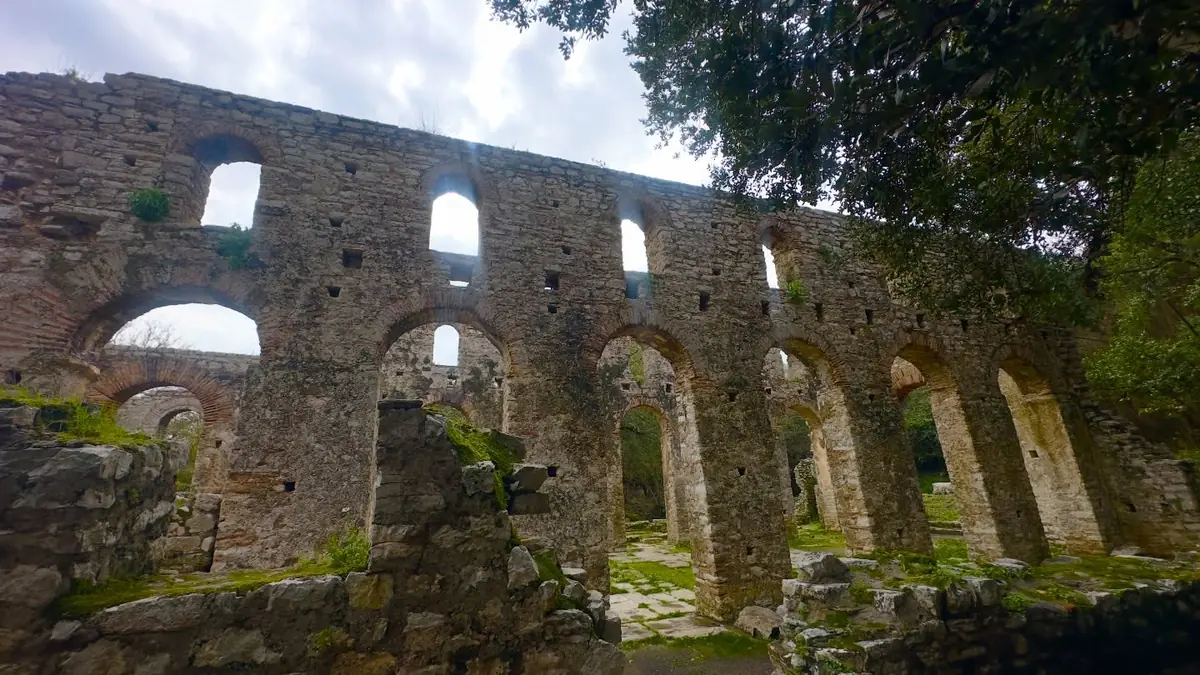
A short walk uphill from the baptistery brings you to the Great Basilica, a three-nave church built in the late 5th to 6th century AD. It served as a Christian church into the 18th century — one of the longest continuous use spans of any building on site. The roof is gone but the apses, side aisles and bishop’s seat are intact enough to read.
- Period: Late 5th-6th century AD
- Look for: Three-nave layout; semicircular apse at the east end
- Time: 10-15 minutes
4. Lion Gate and the city walls
The Lion Gate gets disproportionate hype because it’s photogenic and named. The relief itself — a lion devouring a bull, repurposed from an earlier Hellenistic frieze and set into a 5th-century AD blocking wall — is small, weathered, and easy to miss without paying attention to the panel beside it. The walls themselves are more impressive: massive cyclopean blocks fitted without mortar, dating to the 4th century BC.
- Period: Hellenistic walls (4th century BC); relief reused circa 5th century AD
- Look for: The lion-and-bull relief above the lintel; the size of the wall blocks
- Time: 10 minutes
5. Greek theatre and Sanctuary of Asclepius
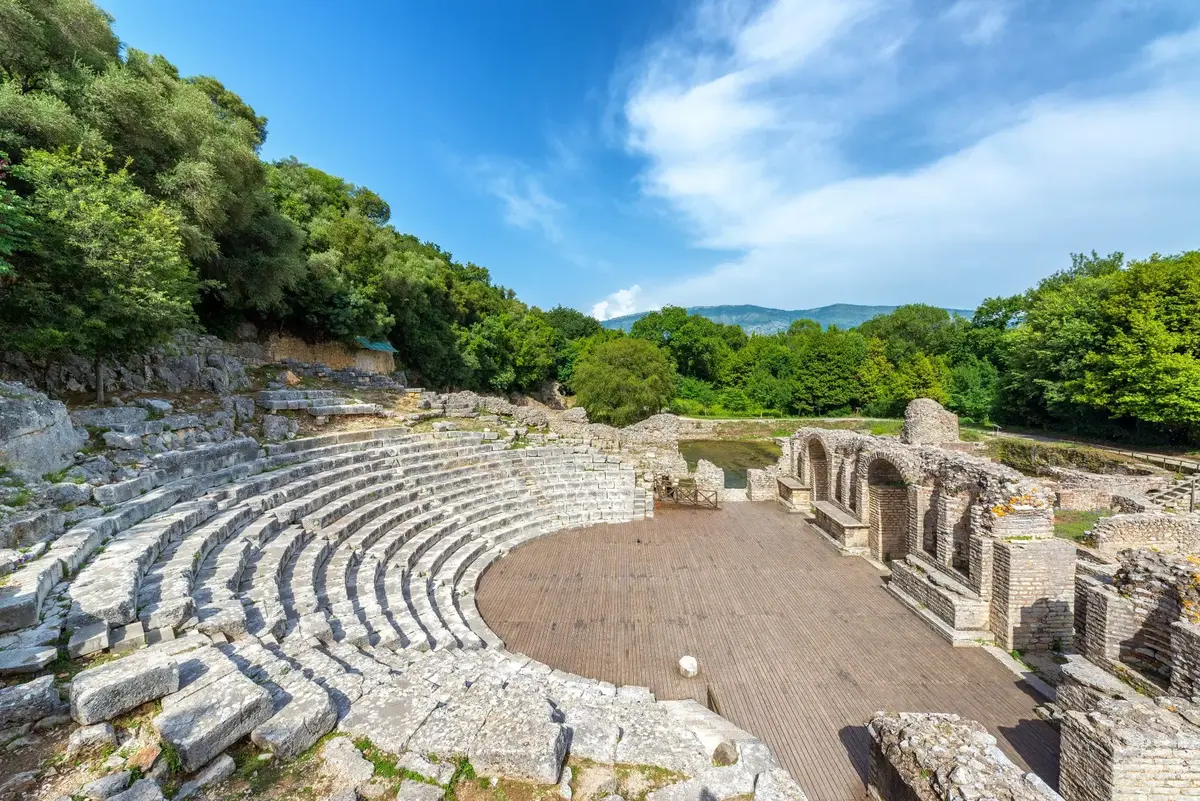
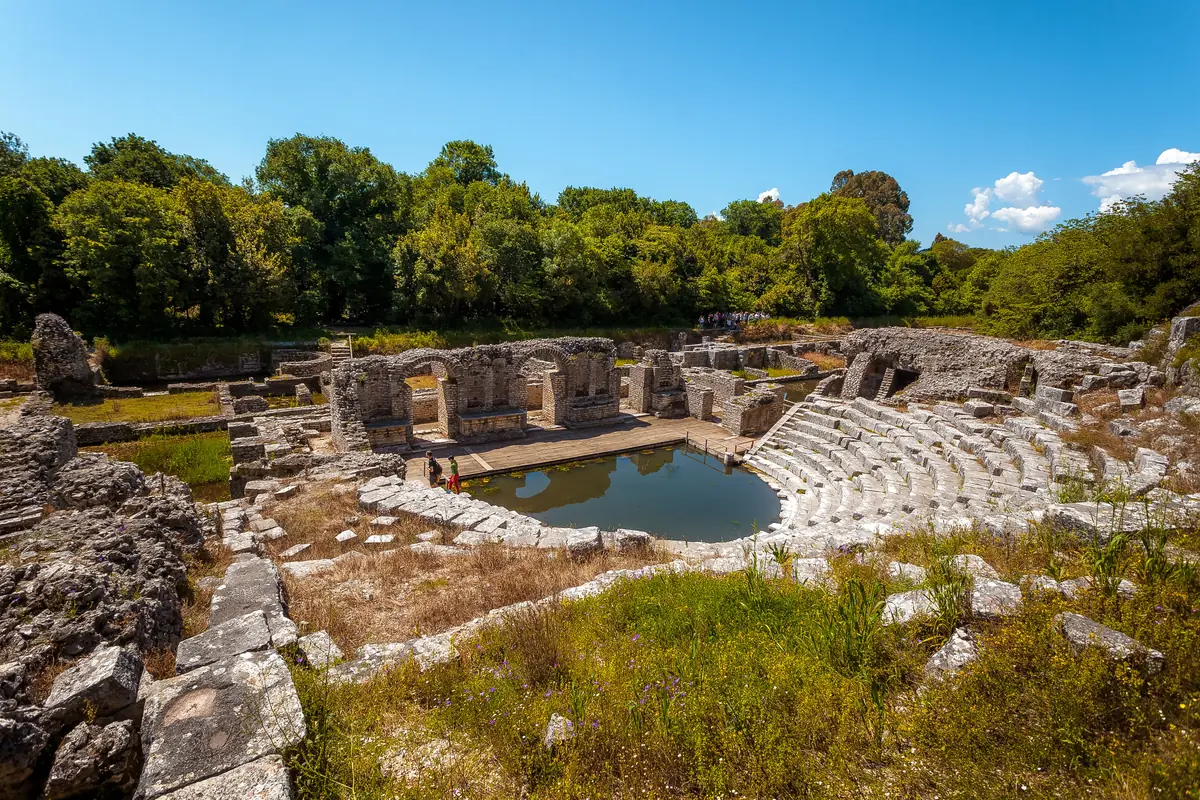
The 3rd-century BC Greek theatre is the emotional center of the site. Built into the natural slope below the Acropolis, it seated about 2,500 people after a Roman expansion. The lower seats are still partly underwater — a small spring flooded the orchestra centuries ago and the water has never fully drained.
What most visitors miss: the theatre was directly adjacent to the Sanctuary of Asclepius, the Greek god of medicine. Pilgrims came here for “dream incubation” — sleeping inside the sanctuary in hopes of receiving a healing dream from the god. Inscriptions on the theatre walls record the names of slaves freed by their owners as offerings to Asclepius.
- Period: Theatre 3rd century BC; Asclepius sanctuary 4th century BC
- Look for: Submerged front rows; freedman inscriptions on the orchestra wall
- Time: 20-25 minutes
6. Roman Forum, Bath and Triconch Palace
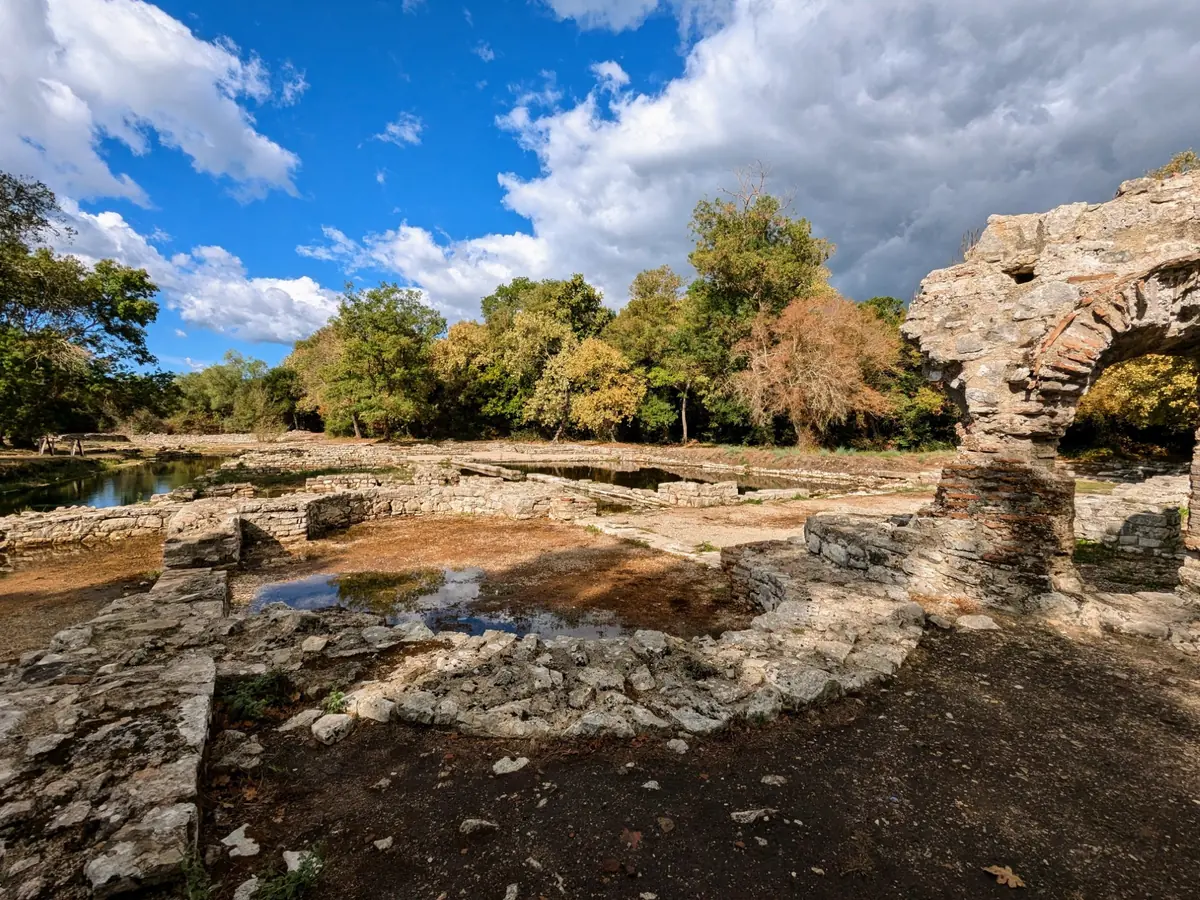
A boardwalk takes you through the lower Roman city: the forum (designated a colony by Julius Caesar in 44 BC and expanded under Augustus), a bath complex with a working hypocaust visible under raised floor tiles, and the Triconch Palace — a 4th-6th-century AD villa with three rounded dining apses, mosaic fragments, and a clear view of how Roman luxury living worked at the edge of the empire.
The Triconch is among the most-photographed spots in Butrint after the theatre. The mosaic floors are partially exposed, partially under sand for protection, similar to the baptistery situation.
- Period: Roman colony 44 BC onwards; Triconch 4th-6th century AD
- Look for: Hypocaust tiles in the bath; the three rounded apses of the Triconch
- Time: 25-30 minutes
7. Acropolis Castle and the Butrint Museum
The climb to the top of the hill is about 200 stone steps and takes 5-8 minutes. The reward is the Venetian Acropolis Castle (14th-15th century, rebuilt in 1930) and the small but well-curated Butrint Museum housed inside it.
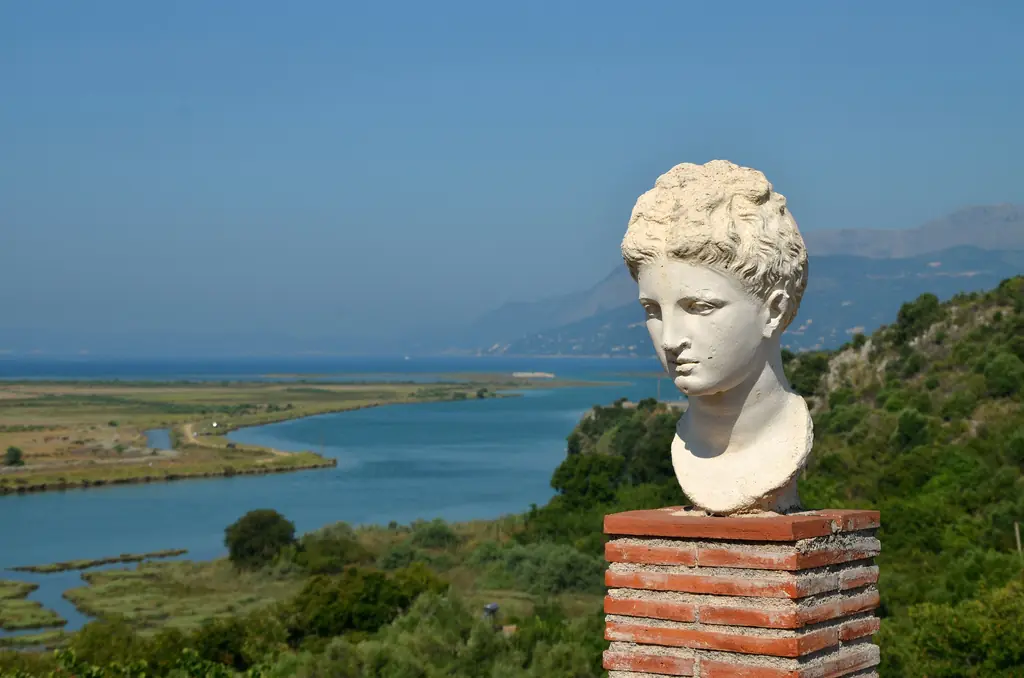
The museum is the single best 30 minutes you’ll spend at the site. Highlights include the bust of Livia (the so-called “Goddess of Butrint,” found by Italian archaeologist Luigi Maria Ugolini in 1928), Hellenistic pottery, a chronological wall-text narrative from the Iron Age to the medieval period, and the photographic reproduction of the baptistery mosaic.
The view from the castle terrace covers Lake Butrint, the Vivari Channel, the Vrina Plain, and on a clear morning, the mountains of Corfu across the strait.
- Period: Castle 14th-15th century AD; museum collection spans Iron Age to medieval
- Look for: Bust of Livia; theatre inscriptions on display; the lake-and-Corfu view from the terrace
- Time: 30-45 minutes including the climb
8. Triangular Castle (optional, via cable ferry)
Across the Vivari Channel from the main park entrance sits the smaller 15th-century Venetian Triangular Castle. The crossing is via a small cable ferry — locally called the trapit or Platforma e Lundrës — that uses two steel cables to pull a 4-car platform across about 200 ft (60 m) of water. The crossing takes about 3 minutes.
Honest take: skip this unless you have spare time and the queue is short. The castle is small, exposed to sun, and largely ruined. The cable ferry itself is a fun novelty if you’ve never seen one operate.
- Crossing fares: about 75 lek pedestrian; 150 lek bike; 700 lek car; 1,400 lek camper
- Hours: roughly sunrise to sunset
- Time on the other side: 30-45 minutes if you go
When is the best time to visit Butrint?
The best months to visit Butrint National Park are late April through May and September through early October — the same shoulder-season window that defines the best time to visit Albania more broadly. Daytime highs sit around 65-80°F (18-27°C), rainfall is low, mosquitoes are manageable, and the cruise/tour-bus crowds haven’t arrived in full force. Summer is hot and humid, winter is wet but quiet, and the mosaic-uncovering window typically falls in late August through mid-September.
Month-by-month reality:
- April-May: 60-75°F (15-24°C), occasional rain, fields full of wildflowers, light crowds. The strongest overall window.
- June: 75-85°F (24-29°C), school holiday crowds beginning, hot midday on the theatre and Acropolis climb.
- July-August: 85-90°F (29-32°C) and humid, peak crowds, mosaics potentially uncovered for part of the period, mosquitoes serious at dusk.
- September: 75-85°F (24-29°C), crowd numbers drop after the first week, sea still warm enough for Ksamil swimming.
- October-November: 60-70°F (15-21°C) early, rain increases, museum hours shorten.
- December-March: cool, wet (heaviest rain November-December), park empty but ferries from Corfu drop to 1-2 sailings a day.
Pro Tip: Arrive at the gate by 8:00-8:30 a.m. in summer. The first cruise-excursion buses from the Corfu ferries land around 10:30, and tour groups bunch up at the theatre and baptistery between 11 and 1. Two hours of cool-air solitude before the buses arrive is the single best upgrade you can make to your visit.
What should you know before visiting Butrint?
Come prepared, because the site has no drinking fountain, the card terminals fail, and the on-site café is unreliable. Bring cash in small lek and euro notes, water, closed shoes for uneven stone, sun protection for the exposed sections, mosquito repellent in summer, and your own toilet paper — the Butrint-specific additions to a broader Albania packing list. The gate brochure doubles as a usable map. Here’s the longer list of things I wish someone had told me before my first visit.
- Bring cash. Card terminals at the gate fail regularly. Small lek and euro denominations are easiest.
- Pack water. There’s no drinking fountain on the loop. The on-site café is inconsistently open and overpriced when it is.
- Wear closed shoes. The trail is uneven stone, dirt and occasional mud. Sandals slip on wet boardwalks.
- Bring mosquito repellent in summer. The wetlands surrounding the park are a known mosquito habitat — afternoon and dusk are the worst.
- Hat and sunscreen. The theatre seating, the Roman forum and the climb to the Acropolis are fully sun-exposed. The forest sections are well-shaded.
- Don’t count on the on-site café. Hotel Livia, directly across from the park entrance, has a reliable sit-down restaurant and clean toilets.
- BYO toilet paper. The two toilet blocks (one near the entrance, one near the museum) are free but rarely stocked.
- Take the free map. The brochure handed out at the ticket booth is a fully usable map. Don’t pay for an audio guide unless you genuinely want narration.
- Allow buffer time on Corfu day trips. Passport control on the Saranda side regularly takes 30-45 minutes in summer; if you have a 4 p.m. ferry, leave the park by 2:15.
Should you hire a guide at Butrint?
You don’t strictly need a guide at Butrint. The bilingual Albanian-English signage is clear, the brochure handed out at the gate is well-illustrated, and the museum at the top of the hill provides chronological context. Solo travelers and self-directed history fans can do the full loop confidently without one. That said, a one-hour private guide at the entrance — typically negotiable from €20-40 ($22-44) — is the single best upgrade for first-time visitors who can’t tell a Hellenistic agora from a Roman forum.
When a guide is worth it:
- First visit to a layered ancient site, with little background in Mediterranean archaeology
- Family with school-age kids who’ll glaze over at the panels
- Cruise day-trippers with only 90-110 minutes on site (a guide compresses the highlights)
- Photographers who want to know which corners catch the morning light
When to skip:
- You’ve read this guide and know what each ruin is
- You prefer to set your own pace at the theatre and museum
- You’re watching your Albania travel budget — the park’s signage genuinely covers the basics
Audio-guide rentals are sometimes available at the gate for around 500 lek ($5.50), though stock is unreliable. Apps like Rick Steves Audio Europe and izi.TRAVEL have free audio tours of Butrint that download to your phone — these are a solid backup.
How do you combine Butrint with Ksamil, Saranda and the Riviera?
Butrint is a half-day, not a full day. Pair a cool early-morning visit with a Ksamil beach afternoon, a Saranda waterfront lunch, or a sunset drink at Lekursi Castle. With more time, link it to the Blue Eye spring or an overnight in UNESCO-listed Gjirokastër. The common mistake is treating Butrint as a full-day commitment, which leaves the rest of the day wasted.
Half-day and full-day pairings:
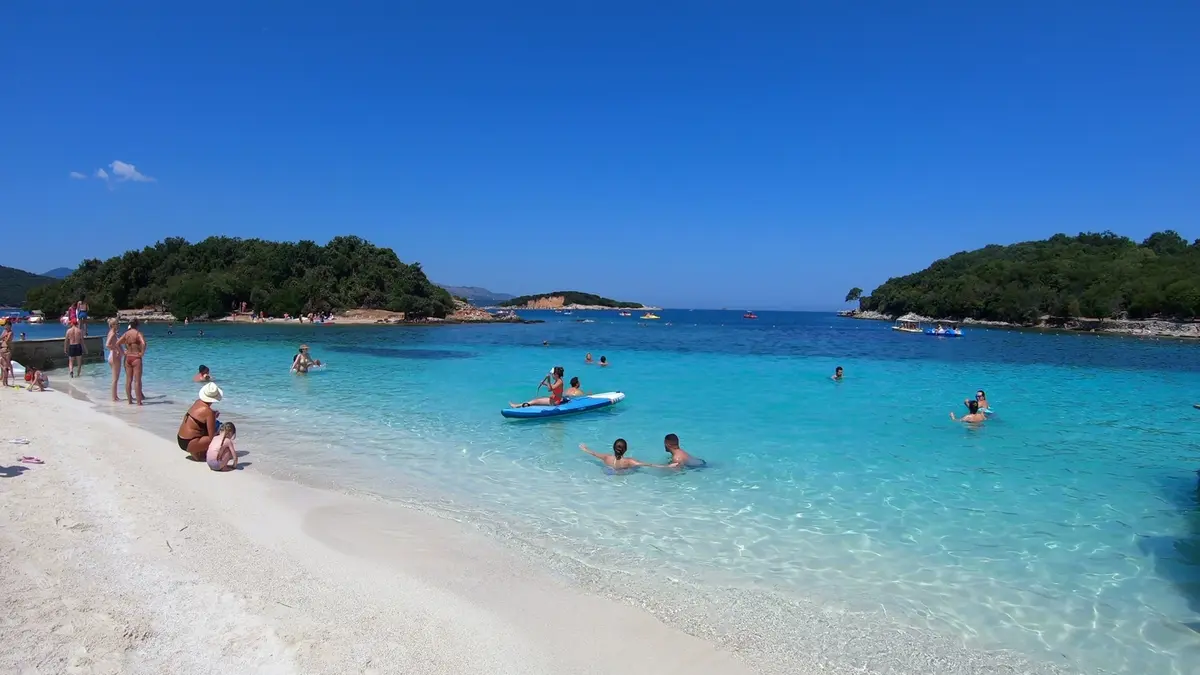
- Butrint morning + Ksamil afternoon (the classic combo): morning at the ruins before the heat, lunch at one of the seafront grills in Ksamil, afternoon swim at Pasqyra Beach or one of the Ksamil Islands.
- Butrint + Saranda waterfront + Lekursi Castle sunset: lunch on the Saranda promenade, drinks at Lekursi Castle for sunset over Corfu.
- Butrint + Blue Eye (Syri i Kaltër) day: 50-minute drive northeast to the freshwater spring, swimming if you’re brave (the water is 50°F / 10°C year-round).
- Butrint + Gjirokastër overnight: the two UNESCO sites together as a single overnight loop from Saranda.
A clean two-day plan for this stretch of the Albanian Riviera looks like this: Day 1 — arrive Saranda, lunch on the harbor, afternoon at Lekursi Castle, dinner in Ksamil. Day 2 — Butrint at 8 a.m., back to Ksamil for lunch and a beach afternoon, sunset drive north along the SH8.
Skip this, do this instead: honest picks at Butrint
Most guides won’t tell you which corners of the site reward your time and which don’t. Here’s the contrarian read after walking the loop multiple times.
- Skip the Triangular Castle ferry crossing → Spend that 45 minutes at the Butrint Museum instead. The museum’s Iron Age and Roman pottery collections, the bust of Livia, and the photographic reproduction of the baptistery mosaic give you more substance per minute than the small ruined castle across the water.
- Don’t queue at the Lion Gate for a photo → Walk 80 feet further to the cyclopean wall section. The blocks fitted without mortar are far more impressive than the small weathered relief.
- Don’t eat at the on-site café → Pack a picnic from a Saranda or Ksamil supermarket, or eat at Hotel Livia by the entrance. Café hours are unreliable and prices are tourist-marked.
- Skip the Corfu day-trip package if you can spare a night → Two days based in Saranda or Ksamil cost less than one cruise-tour package and let you see Butrint at sunrise without bus crowds.
- Don’t bother with the audio guide → Read this guide, take the brochure at the gate, and use izi.TRAVEL on your phone if you want narration.
- Skip Butrint entirely if you have only 4 hours from Corfu → A round-trip ferry plus passport control eats 3 hours. You’ll spend more time queuing than walking ruins. Better to spend that day on Corfu’s old town and save Butrint for a proper Albania trip.
Before you book
TL;DR: Butrint National Park is a 1.2-mile (2 km) loop through Greek, Roman, Byzantine and Venetian ruins, about 11 mi (18 km) south of Saranda. Adult entry is 1,000 lek (about $11), budget 2-3 hours, bring cash, and pair the morning with a Ksamil beach afternoon. Skip the on-site café, the Lion Gate queue, and any day-trip package that gives you under 2 hours on site.
The single best version of this trip is two days based in Ksamil: ruins at 8 a.m. when the air is cool and the cruise buses haven’t arrived, beaches in the afternoon, and a sunset drink at Lekursi Castle in Saranda with Corfu floating across the strait. Everything else is a compromise.
What’s your plan — the Corfu day trip, or a longer stay in Ksamil? Tell me in the comments and I’ll suggest tweaks based on your dates.