San Salvador rewards travelers who scope it right. Most of the best things to do in San Salvador cluster in a few neighborhoods and along one volcano rim — the city works as a sharp two- to three-day base, not a week-long stay. This guide splits what earns your time from the day trips other lists pass off as in-city sights.
Is San Salvador Safe to Visit?
San Salvador is far safer than its old reputation suggests. El Salvador sits at the U.S. State Department’s Level 1 — Exercise Normal Precautions, the lowest of four tiers and the same rating as much of Western Europe. Stick to San Benito, Escalón, Santa Tecla and the secured historic center, use Uber, and skip city buses.
The turnaround is real and dramatic. The country went from one of the highest murder rates on earth to under 2 killings per 100,000 residents — among the lowest in the Americas. Travelers routinely report feeling comfortable in the main tourist zones, even after dark.
Two caveats matter, though. Safety here is block-specific: the neighborhoods worth your time are well-policed, while dense working-class districts like Soyapango, Apopa, Mejicanos and Ilopango have little for visitors and are best skipped. The drop in crime also rests on an ongoing State of Exception — emergency powers that suspended certain civil liberties. Human-rights groups have documented tens of thousands of detentions and hundreds of deaths in custody under it. You likely won’t notice any of that as a tourist, but it’s the backdrop to the calm you’ll feel.
- Stay in: San Benito / Zona Rosa, Colonia Escalón, Santa Tecla, the secured Centro Histórico core
- Avoid: Soyapango, Apopa, Mejicanos, Ilopango
Pro Tip: Don’t ride public buses or drive between cities after dark. The U.S. State Department bars its own staff from local buses, and rural highways aren’t lit. Uber covers the city cheaply, and a private driver handles day trips for a flat rate.
How Many Days Do You Need in San Salvador?
Two to three days covers San Salvador’s in-city sights comfortably. The city has a compact set of attractions — a striking church, a revived historic center, a volcano park and a cluster of museums. Most travelers use it as a base, spending mornings in town and afternoons on day trips to the coast, volcanoes and colonial towns.
Here’s the honest version other guides bury under “15 best things” lists: the city of San Salvador is a gateway as much as a destination. Give a relaxed day to the historic center and museums, a half-day to El Boquerón, and an evening to pupusas in the hills — and you’ve seen the core. The reason to stay longer is everything within a 90-minute drive: surf beaches, crater lakes, the country’s prettiest colonial town. If you’re choosing between more city time and a day trip, take the day trip.
Pro Tip: Repeat visitors tend to land on the same number — few recommend more than two full days in the city itself before the day trips become the main event.
The Best Things to Do in San Salvador
The city’s highlights fall into three pockets: the volcano rim above town, the historic center downtown, and the museum-and-monument cluster in San Benito. None are far apart by Uber. Here’s what’s worth your time, roughly in order of how much each rewards the trip out.
1. El Boquerón National Park and the Volcano Crater
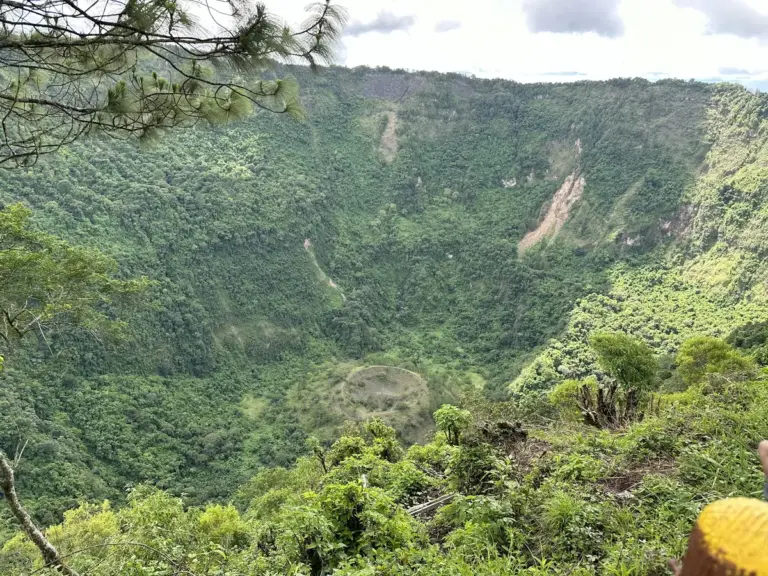
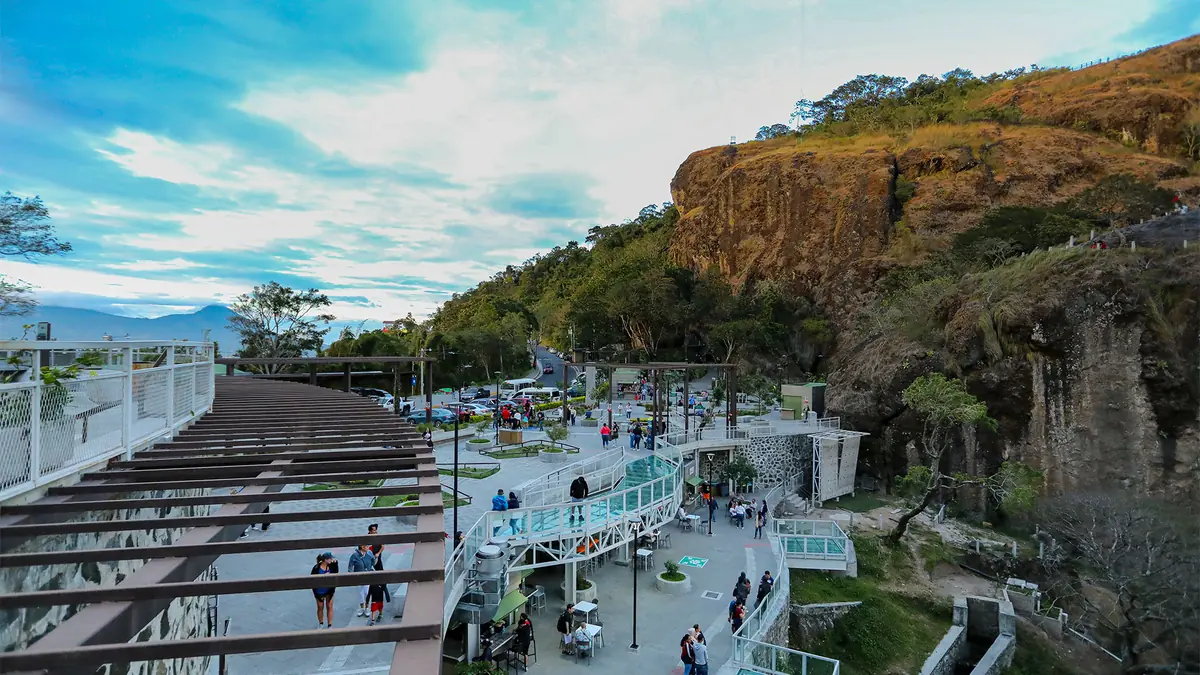
El Boquerón sits on the rim of the San Salvador Volcano, a dormant stratovolcano whose last eruption left a crater nearly 3 miles wide and around 1,830 feet deep. A short paved path — under a 10-minute walk — leads to a glass observation deck on the edge. On clear mornings you look straight down into the green crater and across to Lake Ilopango.
The crater itself can underwhelm if you’re expecting smoke or lava. There’s none — it’s long dormant. The payoff is the cool air at nearly 5,900 feet, the city-and-lake panorama, and the hillside cafes clustered by the entrance. Go early; cloud rolls in by afternoon.
Pro Tip: Getting a return Uber from the entrance is the real catch. Cars are scarce up there, and the wait back down can stretch past half an hour. Ask your driver to wait, or pad your schedule.
- Location: Boquerón, about 11 miles (17 km) west of downtown
- Cost: around $2 foreigner entry (some sources cite $3); parking about $1-2/hr
- Best for: Crater and city views, plus a cool-air coffee stop
- Getting there: 30-40 min by car; Uber roughly $5-6 from San Benito
- Hours: roughly 8 a.m.-5 p.m. (some entrances run shorter — confirm locally)
- Time needed: 1-2 hours, plus a coffee stop
2. Iglesia El Rosario
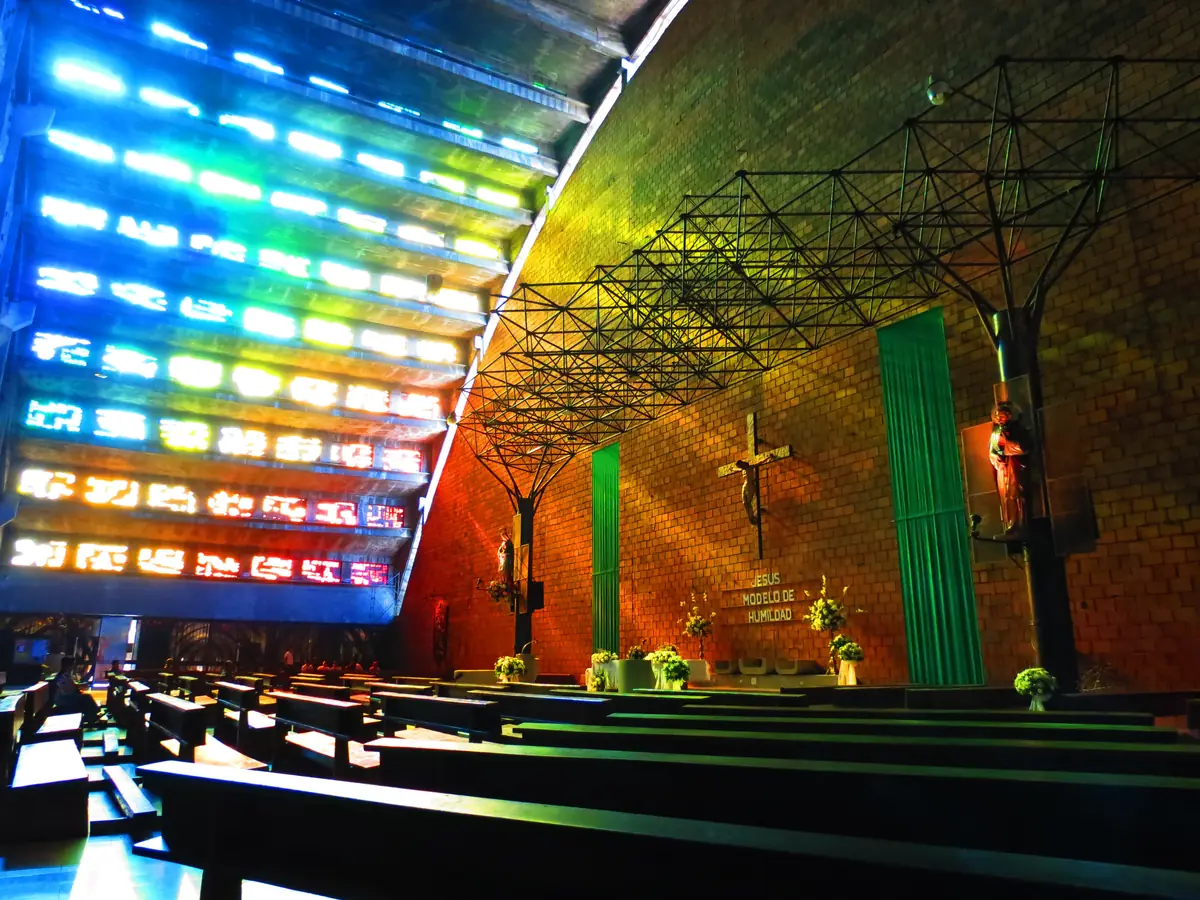
From the street, El Rosario looks like an unfinished concrete bunker — a slab of brutalist gray on the east side of Plaza Libertad. Step inside and the whole back wall dissolves into color: panels of stained glass throw red, blue and gold across the raw concrete in a band locals call the stairway to heaven.
This is the most visually surprising building in the country, and it’s free to enter. It also holds the tomb of independence hero José Matías Delgado. Come early morning or in the last hour before sunset, when low light drives the color deepest.
- Location: East side of Plaza Libertad, Centro Histórico
- Cost: Free; a small donation is appreciated
- Best for: Architecture and the stained-glass interior
- Best light: Early morning or the hour before sunset
- Time needed: 20-30 minutes
3. The Historic Center (Centro Histórico)
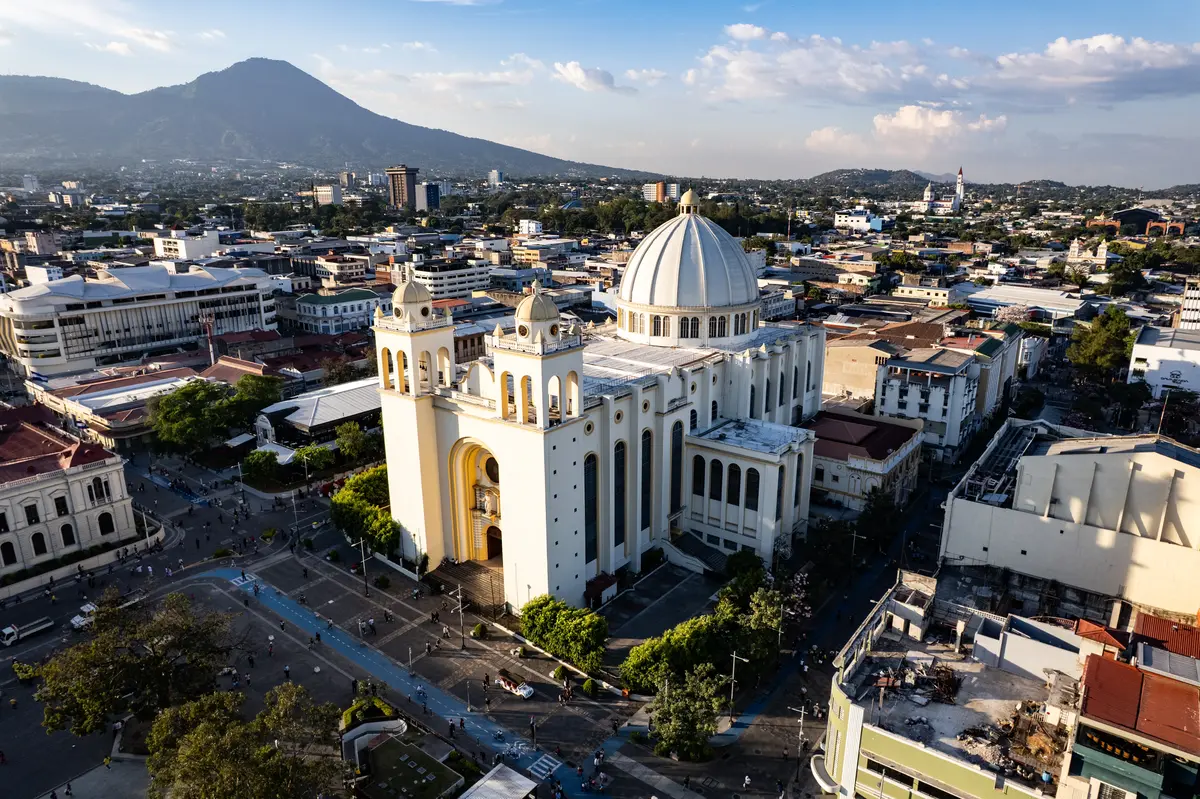
A government-led overhaul turned the once-chaotic downtown into a pedestrianized, secured core of roughly 10 blocks, watched by cameras and police day and night. Within a few minutes’ walk you hit Plaza Barrios, the Metropolitan Cathedral, the neoclassical National Palace and the National Theater.
The cathedral holds the crypt of Saint Óscar Romero, the assassinated archbishop the city’s airport is named for — a genuine pilgrimage site. The renovated plazas are pleasant and safe by day and increasingly into the evening. One honest edge: step outside the secured blocks into the informal market streets and the order frays fast.
- Location: Centro Histórico, around Plaza Barrios and Plaza Libertad
- Cost: Plazas free; National Palace about $3 for foreigners
- Best for: History, architecture, the Romero crypt
- Time needed: 2-3 hours on foot
4. Monumento al Divino Salvador del Mundo
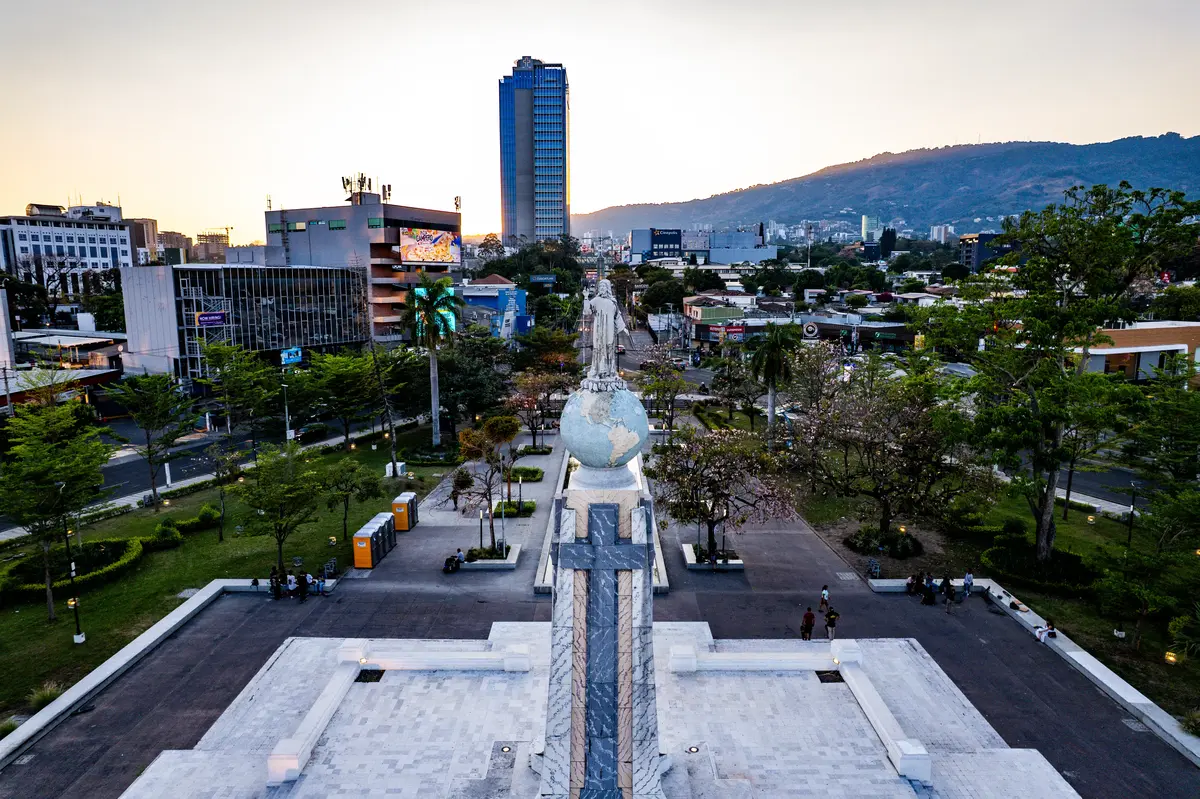
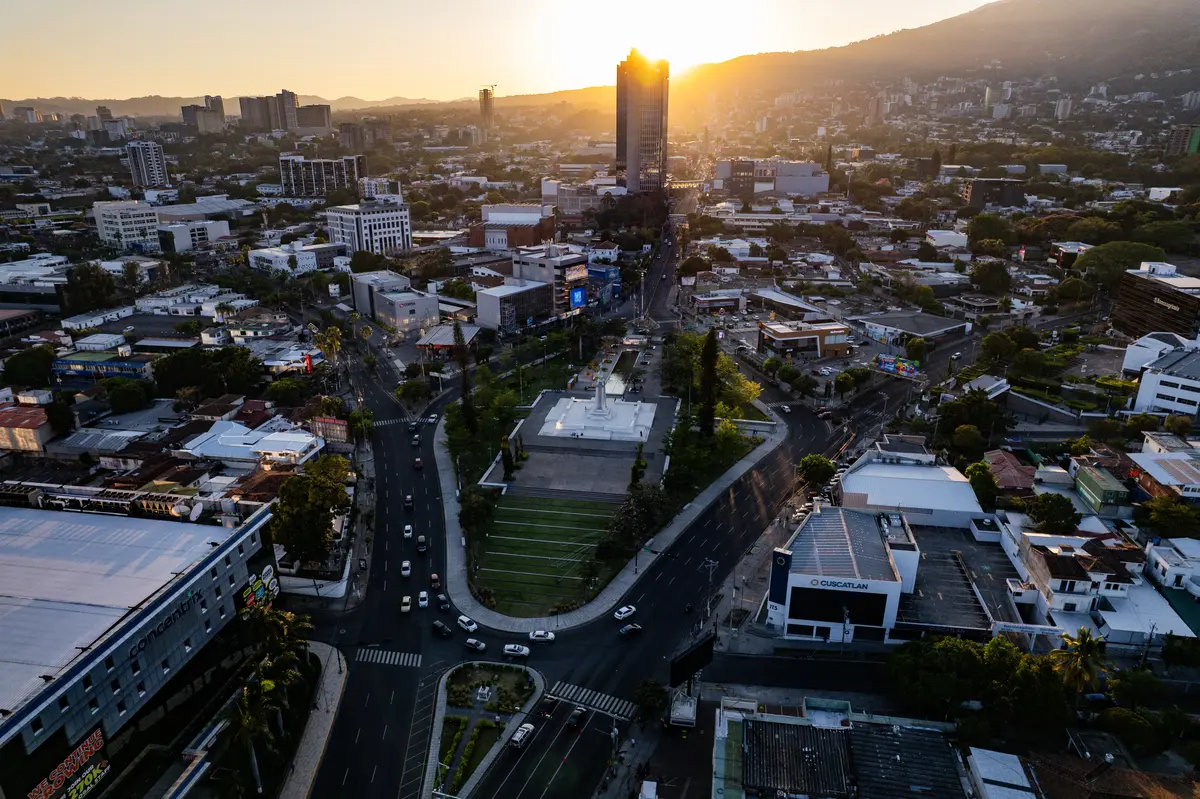
The statue of Christ standing on a globe — El Salvador del Mundo, the country’s namesake monument — anchors a busy traffic circle on Paseo General Escalón. It’s the image that shows up on postcards and news footage alike.
You won’t spend long here, but it’s the city’s defining landmark and a natural sunset photo stop. Treat it as a quick pull-over between the historic center and the San Benito museums, not a destination in itself.
- Location: Plaza El Salvador del Mundo, Paseo General Escalón
- Cost: Free
- Best for: A quick landmark photo, sunset
- Time needed: 15-20 minutes
5. The San Benito Museums: MARTE, MUNA and Tin Marín
Three of the city’s best museums sit within walking distance in leafy Colonia San Benito. MARTE covers Salvadoran modern and contemporary art; MUNA, the national anthropology museum, runs through six halls of pre-Columbian and cultural history; Tin Marín is a hands-on children’s science museum with a planetarium.
MARTE is the standout for adults — small, well-lit, cheap. One catch: the wall text is Spanish-only and there’s no English audio guide, so brush up or keep a translation app handy. Tin Marín is a solid rainy-day option with kids, though some exhibits can be under repair. The outdoor monuments around MARTE, including the mosaic Monument to the Revolution, are free to see.
- Location: Colonia San Benito / Avenida La Revolución
- Cost: MARTE about $1.50; MUNA $3-10 for foreigners; Tin Marín $3.50 (about $5 with the planetarium)
- Best for: Art lovers (MARTE), families (Tin Marín)
- Time needed: 1-2 hours per museum
- Note: MARTE signage is Spanish only
6. The City Markets
For food and street life, skip the malls and head to the markets. Mercado San Miguelito is the easiest for visitors — rows of stalls turning out pupusas, grilled meats and fresh fruit juices. Mercado Central downtown is bigger and more frenetic, and Mercado Hula Hula reopened after a rebuild.
This is where you eat well for a few dollars and watch the city feed itself. Go hungry, carry small bills, and keep an eye on your phone in the denser aisles.
- Location: Mercado San Miguelito and Mercado Central, central San Salvador
- Cost: Pupusas and snacks roughly $0.25-2 each
- Best for: Cheap eats and street-food atmosphere
- Time needed: 45-60 minutes
7. Parque Cuscatlán and the Night Bike Ride
Parque Cuscatlán is the city’s main green space, reworked into a modern urban park with a memorial wall to civil-war victims. On Thursday nights it becomes the meeting point for the Ciclistas Urbanos, a group ride that rolls through the city with a police escort.
A weekday afternoon here is a low-key way to see locals at ease — joggers, families, skaters. If you’re around on a Thursday evening with a bike, the escorted ride is the kind of thing no booking-site listicle will mention.
- Location: Parque Cuscatlán, central San Salvador
- Cost: Free
- Best for: A break from sightseeing; the Thursday-night ride
- Time needed: 30-60 minutes (more if you join the ride)
What Should You Eat in San Salvador?
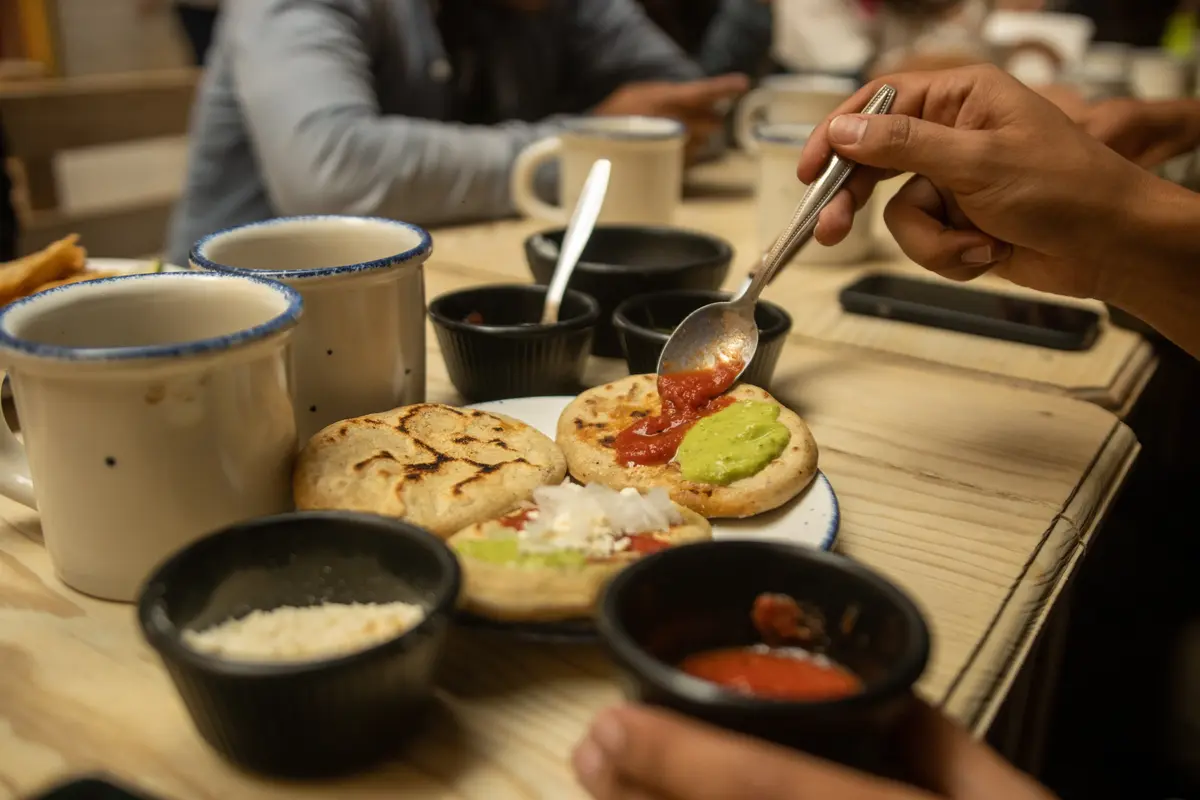
Eat pupusas — the national dish. They’re thick corn or rice tortillas stuffed with cheese, beans, chicharrón or loroco, griddled and served with curtido (a tangy slaw) and salsa. They cost between a quarter and two dollars each. El Salvador takes them seriously enough to mark National Pupusa Day on the second Sunday of November.
For the best version with a view, head up to Los Planes de Renderos, the hilltop pupusa strip south of the city. El Ático is the name to know — rustic, first-come-first-served, with pupusas around $1-2 and a wide look back over the city lights. It runs pricey by local standards, and the open-air seating gets cold in the rainy months, but locals still rate it.
Pro Tip: The town of Olocuilta, east toward the airport, is the self-styled capital of pupusas de arroz (rice-flour pupusas). If you’re driving in or out of the airport, it’s an easy, worthwhile stop.
The Best Day Trips From San Salvador
This is where the city earns its keep as a base. Everything below is within roughly 30 minutes to 2 hours, and most works as a half- or full-day trip by Uber, private driver or tour.
- Puerta del Diablo: A rock formation about 8 miles (13 km) south, with three peaks and views over the Pacific, Lake Ilopango and the San Vicente volcano. There’s a glass viewpoint and a 508-foot (155 m) zipline. Entry to the peaks runs $1.50-3; Uber about $5 and up.
- Los Planes de Renderos: The pupusa hills above town (see the eating section above) — 20-30 minutes up.
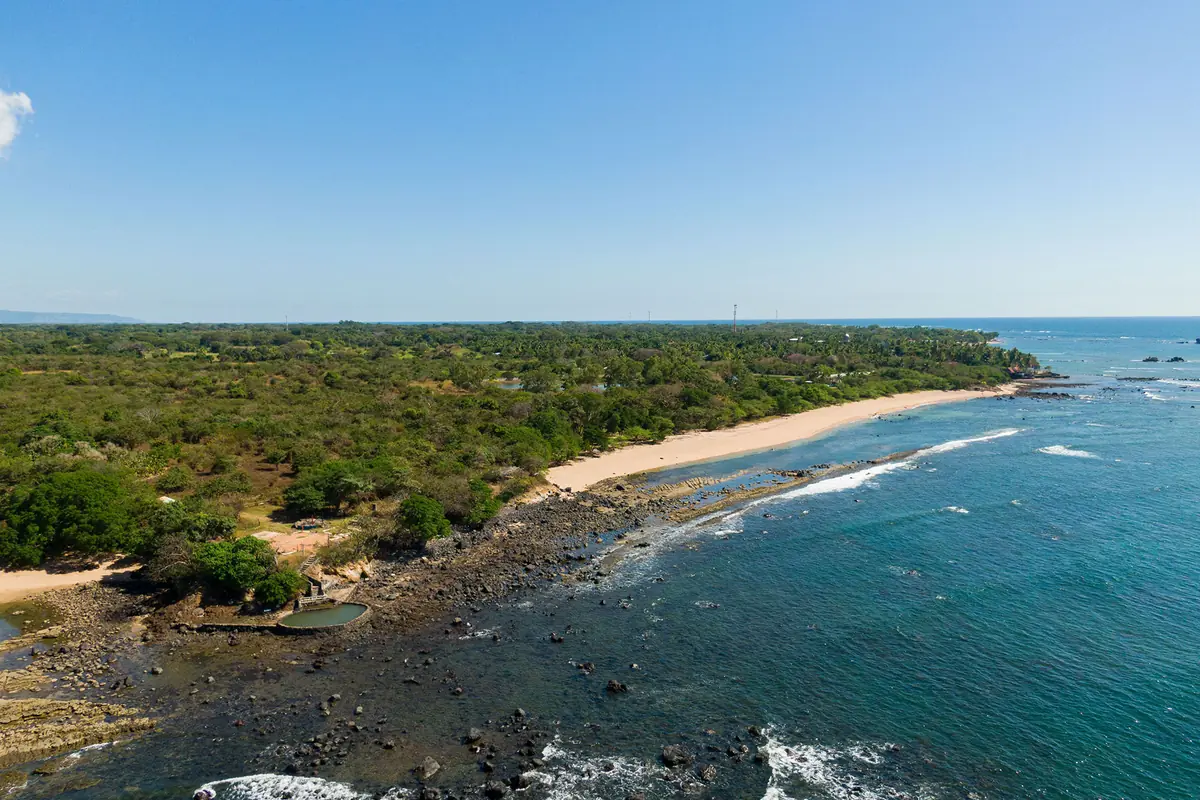
- El Tunco and La Libertad: The country’s best-known surf-and-sunset beach town, about 23-26 miles (40-50 min) southwest. A private car runs around $40; shuttles $10-20.
- Suchitoto: A cobblestoned colonial town above a lake, 1-2 hours north — the prettiest day trip from the capital.
- Joya de Cerén: A UNESCO-listed “Pompeii of the Americas,” a farming village buried and preserved by volcanic ash.
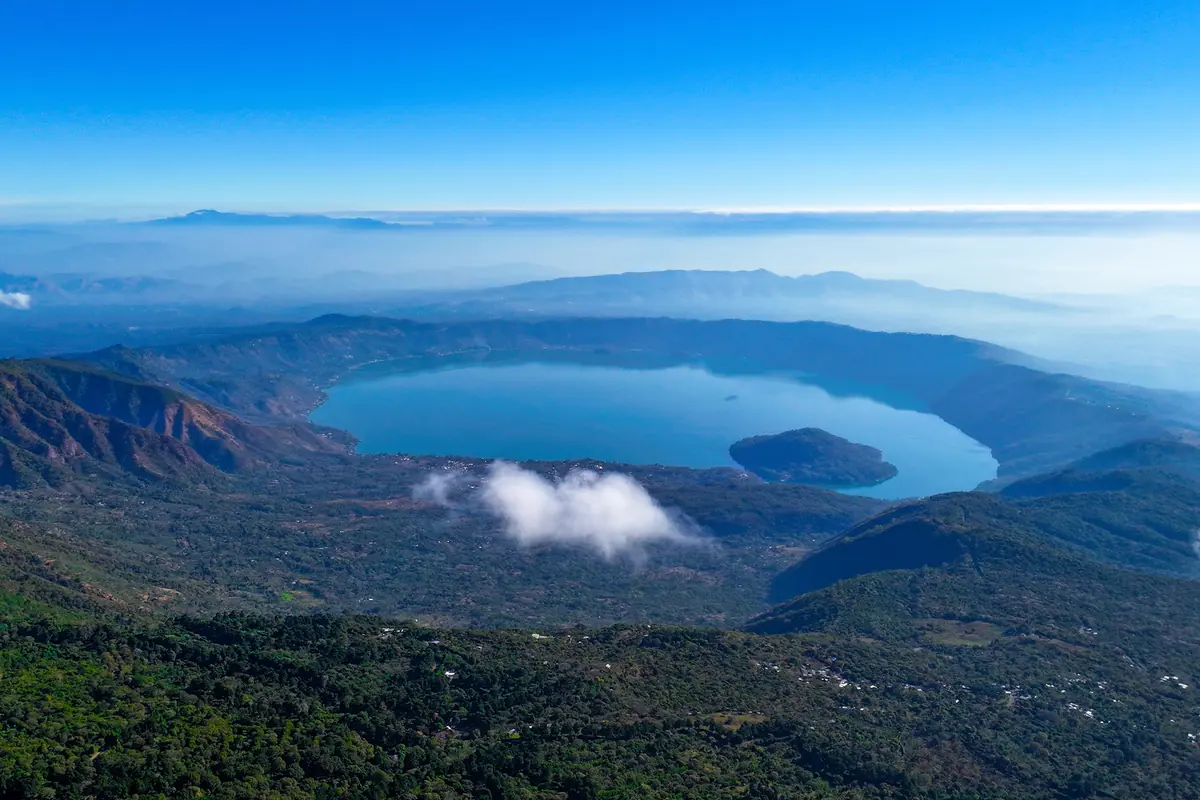
- Santa Ana Volcano and Lake Coatepeque: A turquoise crater lake and a summit hike, about 90 minutes west.
Pro Tip: Use Uber inside the city and save a rental car for open-road day trips. City traffic and parking aren’t worth the hassle, but a car gives you real freedom on the highways.
Cost, Hours and Drive Times at a Glance
One thing no other guide pulls together: a single matrix of what each stop costs, how long it takes to reach, and when it’s open. Use it to plan a tight two- or three-day run. Treat fees and hours as approximate — both shift, and local posted hours are more reliable than what Google shows.
| Stop | Drive from San Benito | Typical cost (foreigner) | Hours | Time needed |
|---|---|---|---|---|
| El Boquerón | 30-40 min / Uber ~$5-6 | ~$2-3 entry | ~8 a.m.-5 p.m. | 1-2 hrs |
| Iglesia El Rosario | 10-15 min | Free (donation) | Daytime | 20-30 min |
| Centro Histórico | 10-15 min | Free; Palace ~$3 | Daytime | 2-3 hrs |
| El Salvador del Mundo | 5-10 min | Free | Anytime | 15-20 min |
| San Benito museums | 5 min | $1.50-10 | Check locally | 1-2 hrs each |
| City markets | 10-15 min | Pupusas $0.25-2 | Daytime | 45-60 min |
| Puerta del Diablo | 30-40 min / Uber ~$5+ | $1.50-3 | Daytime | 2-3 hrs |
| Los Planes (pupusas) | 20-30 min | Pupusas $1-2 | Evenings | 1-2 hrs |
Where Should You Stay in San Salvador?
Stay in Colonia San Benito (Zona Rosa) on a first visit. It’s the main hotel, dining and nightlife zone, has dedicated tourist-police coverage, and puts you walking distance from the best museums. Escalón is a safe, upscale residential alternative; Santa Tecla suits travelers who want a quieter suburb with good restaurants.
- San Benito / Zona Rosa: The best base — central, walkable to museums, with a tourist-police presence
- Colonia Escalón: Safe, upscale and residential, near El Salvador del Mundo
- Santa Tecla / Paseo El Carmen: A quieter suburb with a lively dining-and-bar street
On price, San Salvador is one of Central America’s more affordable capitals. A 4-star hotel runs around $80/night, hostel dorms about $13-25, and a mid-range dinner about $20.
How Do You Get Around San Salvador?
Use Uber. It’s reliable, GPS-tracked and cheap across Greater San Salvador — short city rides run about $3-8, and the airport is $16-25. Public buses are cheaper but widely discouraged for visitors, and the U.S. State Department bars its own staff from using them. Don’t drive between cities after dark.
- From the airport: Monseñor Óscar Arnulfo Romero International (airport code SAL) is roughly 26-31 miles (42-50 km) southeast, a 30-40 minute drive on a 4-lane highway. Use the official Taxi Amarillo/ACACYA fixed-fare booth inside arrivals (about $30-40) or grab an Uber from the parking area ($16-25).
- Currency: The US dollar is the only official currency. Bring small bills, since cards aren’t accepted everywhere outside the city. Tip around 10%, but check whether “servicio” is already on the bill.
- Bitcoin: It’s no longer legal tender. The country once made it mandatory, then reversed course; acceptance is now voluntary and the dollar runs everything. You don’t need a crypto wallet.
- Entry: US citizens buy a tourist card on arrival for around $12, valid 90 days. A $40 exit tax is usually bundled into your airfare. Carry a passport valid at least six months.
- Water: Don’t drink the tap water — stick to bottled or purified.
Pro Tip: Uber fares surge 40-100% at peak times and in the rain. If your day-trip schedule is packed, a hired private driver at a flat day rate often beats stacking surge fares.
When Is the Best Time to Visit San Salvador?
Visit in the dry season, roughly November through April, when rain is rare and days are bright. San Salvador sits at about 2,238 feet, so daytime highs hold at a comfortable 88-93°F (31-34°C) and nights cool to 60-73°F (15-23°C). The wet season runs May to October, with September the rainiest.
- Dry season (Nov-Apr): Best weather; book ahead around December and Holy Week, the busiest and priciest stretches.
- Wet season (May-Oct): Afternoon downpours, greener hills, fewer crowds. Mornings often stay clear, so plan outdoor stops early.
- Year-round: The elevation keeps the city milder than the coast. Pack a light layer for cool evenings up at El Boquerón or Los Planes.
Common Questions About Visiting San Salvador
Do US Citizens Need a Visa for El Salvador?
No. US citizens buy a tourist card on arrival for around $12, valid for 90 days. Bring a passport with at least six months’ validity.
Is San Salvador Expensive?
No — it’s one of Central America’s more affordable capitals. Pupusas cost a dollar or two, a mid-range dinner about $20, a 4-star hotel around $80/night, and city Ubers $3-8.
Is Bitcoin Still Used in El Salvador?
Not in practice. Bitcoin is no longer legal tender and acceptance is voluntary. The US dollar is used everywhere, so you don’t need crypto.
Is the Tap Water Safe to Drink?
No. Drink bottled or purified water, which is cheap and sold everywhere.
What Is San Salvador Known For?
Its volcano-rim park, the brutalist El Rosario church, the revived historic center with Saint Óscar Romero’s crypt, and pupusas — the national dish you’ll eat everywhere.
Before You Book
TL;DR: San Salvador is a safe, affordable two- to three-day city stop built around a striking church, a revived downtown, a volcano park and a museum cluster — and it shines brightest as a base for day trips to the coast, crater lakes and colonial towns. Use Uber, stay in San Benito, eat pupusas in the hills, and don’t expect a week’s worth of in-city sights.
The travelers who leave disappointed are the ones who expected a major capital’s worth of attractions. The ones who leave impressed scoped it right: a couple of city days, then out to everything within a 90-minute drive.
What’s pulling you to San Salvador — the historic center, the volcano views, or using it as a launchpad for the coast and Suchitoto? Tell us in the comments.