Joya de Cerén rewards the right expectations. Come for pyramids and you’ll leave puzzled. Come for the only place on Earth where you can stand inside an ordinary Maya household frozen mid-chore, and it lands. This guide covers what you’ll see, the real cost, how to get there, and whether it earns your half-day.
This Is a Buried Village, Not a Pyramid Site
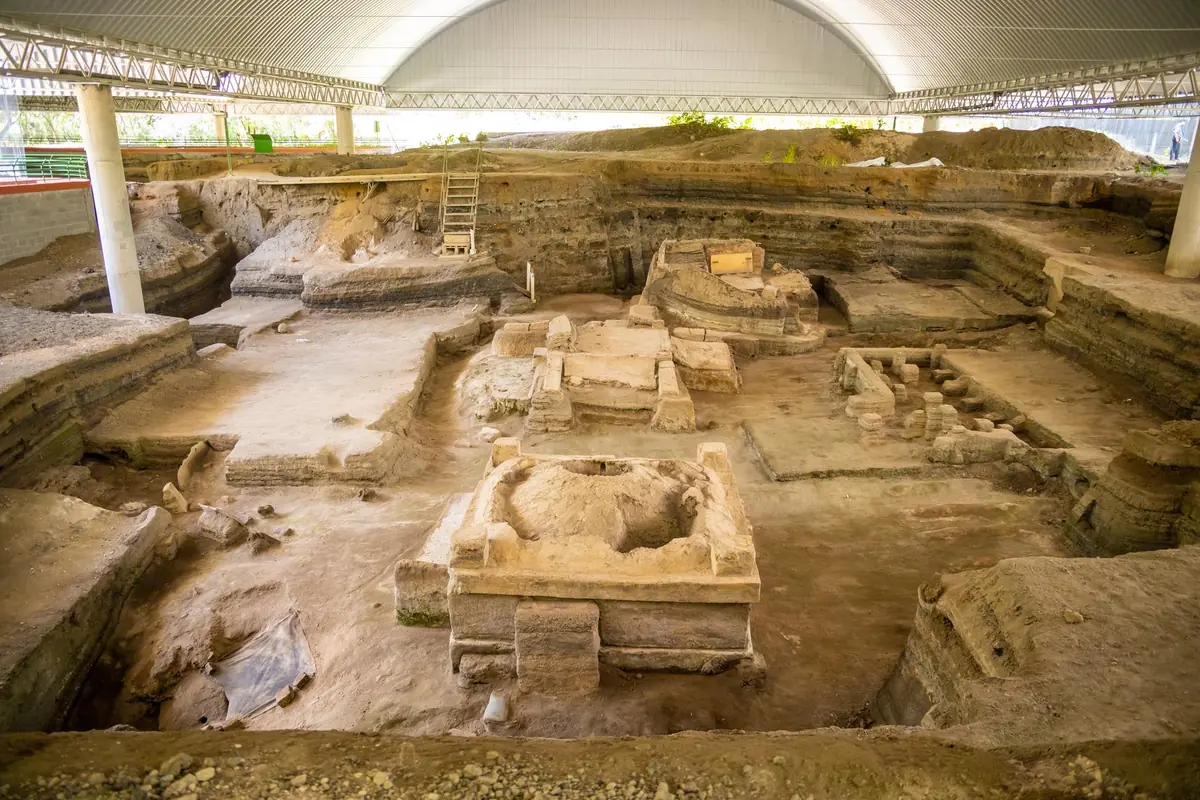
Joya de Cerén is the buried remains of an ordinary Maya farming village, the best-preserved in the Americas and El Salvador’s only UNESCO World Heritage Site. Plan on a compact one- to 1.5-hour visit: low adobe structures under protective roofs, plus a small museum. Come for the rare human story, not monumental grandeur.
That framing matters more here than at almost any other ruin. Nobody leaves Tikal or Copán disappointed by the scale. People do leave Joya de Cerén underwhelmed, and it’s almost always because they pictured stone temples and found knee-high mud walls under corrugated roofing instead. Walk out of the air-conditioned museum expecting a household, not a monument, and the site clicks.
What you’re looking at is genuinely singular. Most Maya sites preserve what elites built to be seen for centuries: ceremonial platforms, ball courts, carved stelae. Joya de Cerén preserves what regular people never meant to leave behind: a sleeping room, a kitchen with pots still on the shelves, a workshop, a garden mid-harvest. That’s the trade. You give up the wow of height and get the intimacy of a village caught in the middle of an afternoon.
Pro Tip: Take the free guide and start in the museum before you walk out to the ruins. Visitors who skip both consistently call the site boring; the context is the whole experience.
What Is Joya de Cerén, and Why ‘Pompeii of the Americas’?
Around 600 AD the Loma Caldera vent erupted next to a small Maya farming village in the Zapotitán Valley, burying it under several meters of ash within hours. The low-temperature ash sealed homes, tools, gardens, and even food, preserving a snapshot of everyday commoner life found nowhere else in Mesoamerica. That’s the reason for the “Pompeii of the Americas” nickname.
The comparison is fair in one sense and misleading in another. Fair, because both sites were flash-preserved by a volcano. Misleading, because Pompeii was a Roman city and this was a hamlet of roughly 200 people. There’s no forum, no amphitheater, no marble. There is something Pompeii can’t match, though: at Joya de Cerén, no human remains have ever been found. The residents appear to have felt the ground shaking and run, leaving dishes of food and half-finished meals behind. One ceramic dish still shows fingerprints pressed into an interrupted meal.
The rediscovery was an accident. A bulldozer clearing ground for grain silos struck a buried wall in the 1970s. University of Colorado archaeologist Payson Sheets examined the site not long after and dated the thatch roofing to roughly 1,400 years old, and he has led research there ever since. Ash depths of about 13 to 26 feet (4 to 8 m) buried the village, with debris reaching close to 33 feet (10 m) in places.
A few numbers that anchor the story:
- Buried: around 600 AD by the Loma Caldera eruption
- Residents: roughly 200 people
- Structures: about 18 identified, roughly 10 excavated
- Human remains found on site: none
- UNESCO World Heritage status: El Salvador’s only such site
How to Get to Joya de Cerén From San Salvador
Joya de Cerén sits about 22 miles (36 km) northwest of San Salvador, near San Juan Opico in the La Libertad department. Driving or taking an Uber runs roughly 30 to 45 minutes via the Pan-American Highway (CA-1). Budget travelers can ride bus 108 from Terminal de Occidente for about $0.50, a one- to 1.5-hour trip.
Here’s how the options compare:
| Option | Cost | Time | Best for |
|---|---|---|---|
| Car or rental | Gas plus about $1 parking | 30–45 min | Combining several sites in one day |
| Uber | App-metered, varies | About 30 min | Door-to-door with no driving |
| Bus 108 | About $0.50 | 1–1.5 hours | Budget travelers who aren’t rushed |
| Private tour | From about $85/person | Half to full day | First-timers wanting multiple stops |
By Car or Uber
This is the simplest approach and the one worth paying for if you plan to pair the site with San Andrés or Lake Coatepeque. Head northwest on the CA-1 toward Santa Ana, then take the San Juan Opico exit. Parking on site costs about $1. Uber operates reliably in and around San Salvador, so a one-way ride out is easy; getting a return ride from the site itself can be slower, so ask your driver to wait or arrange a pickup time.
By Public Bus: The Chicken-Bus Route
Bus 108 leaves from Terminal de Occidente and costs around $0.50, but budget the better part of an hour and a half each way. The landmark to watch for is the orange bridge over the Río Sucio; the stop is just past it, and the entrance is a short walk from there.
It’s the cheapest way in by a wide margin, and it’s genuinely doable, but it eats most of a day once you count both directions and waiting.

By Organized Tour
Tours make sense if you don’t want to drive and you’d rather see several ruins in one outing. Operators like Salvadorean Tours, El Salvador Positive Tours, and Pure Travel El Salvador run combos, and platforms such as Viator, GetYourGuide, and Pelago list them. A two-site private tour pairing Joya de Cerén with San Andrés has been advertised around $85 per person including transport and entries. Prices shift by operator and group size, so confirm what’s included before you book.
Tickets, Hours, and What’s Included
Joya de Cerén is open Tuesday to Sunday, 9 a.m. to 4 p.m., and closed Mondays for maintenance and research. Admission is tiered by nationality, so foreign non-residents pay the top rate plus a small parking fee. A free on-site guide and the museum are included in the ticket. Bring U.S. dollars in small bills.
Admission set by El Salvador’s Ministry of Culture:
| Visitor type | Admission (about) |
|---|---|
| Salvadorans | $1 |
| Central Americans | $3 |
| Foreign residents | $7 |
| Foreign non-residents (most U.S. visitors) | $10 |
| Parking | $1 |
One thing to clear up, because half the internet gets it wrong: older guides still list a $3 foreigner price. The non-resident rate is about $10. If a page tells you it’s a couple of dollars, it’s out of date. Fees are set by the Ministry of Culture and reviewed periodically, so treat any figure as a guide rather than a guarantee.
What the ticket buys you is more than the number suggests. The museum is included, the guide is free, and interpretive signage runs in Spanish, English, and French. Tipping the guide isn’t expected, but it’s appreciated.
Pro Tip: Carry small bills. El Salvador runs on the U.S. dollar, and neither the ticket booth nor the parking attendant will thank you for a $20. Bitcoin is no longer legal tender, so don’t count on paying that way.
What You’ll Actually See on the Ground
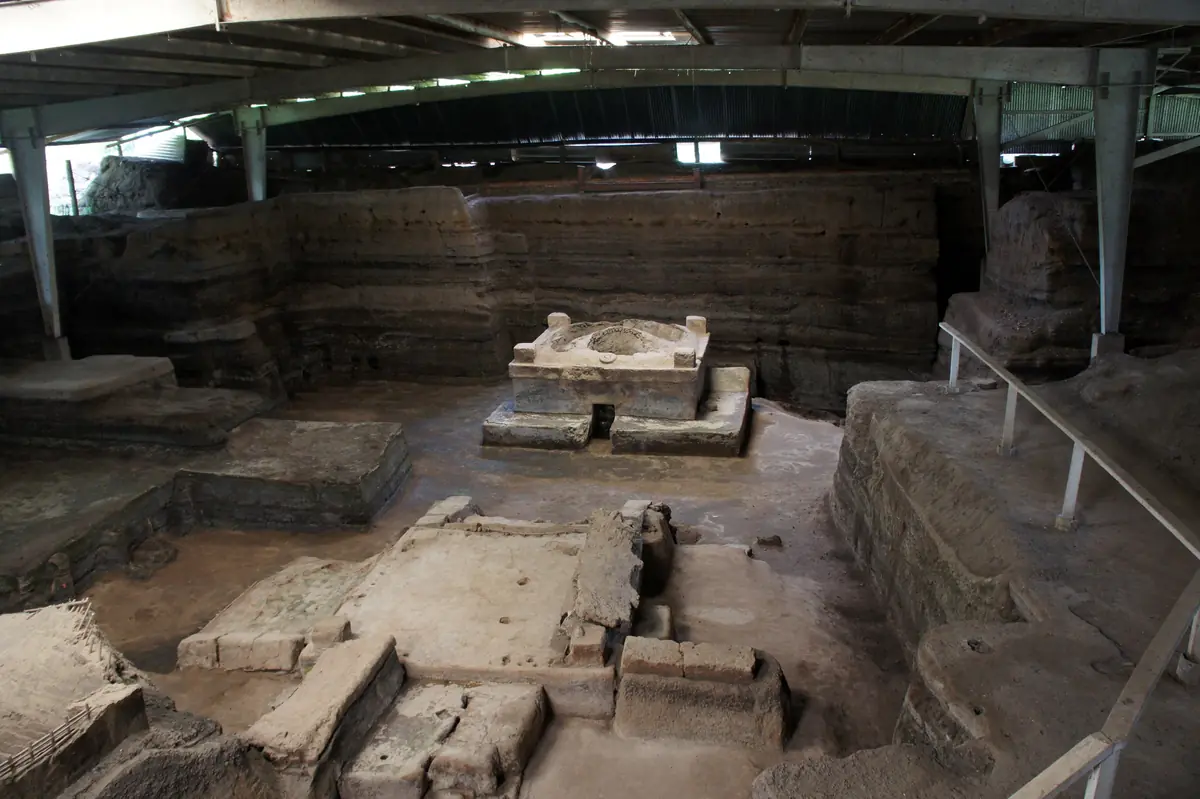
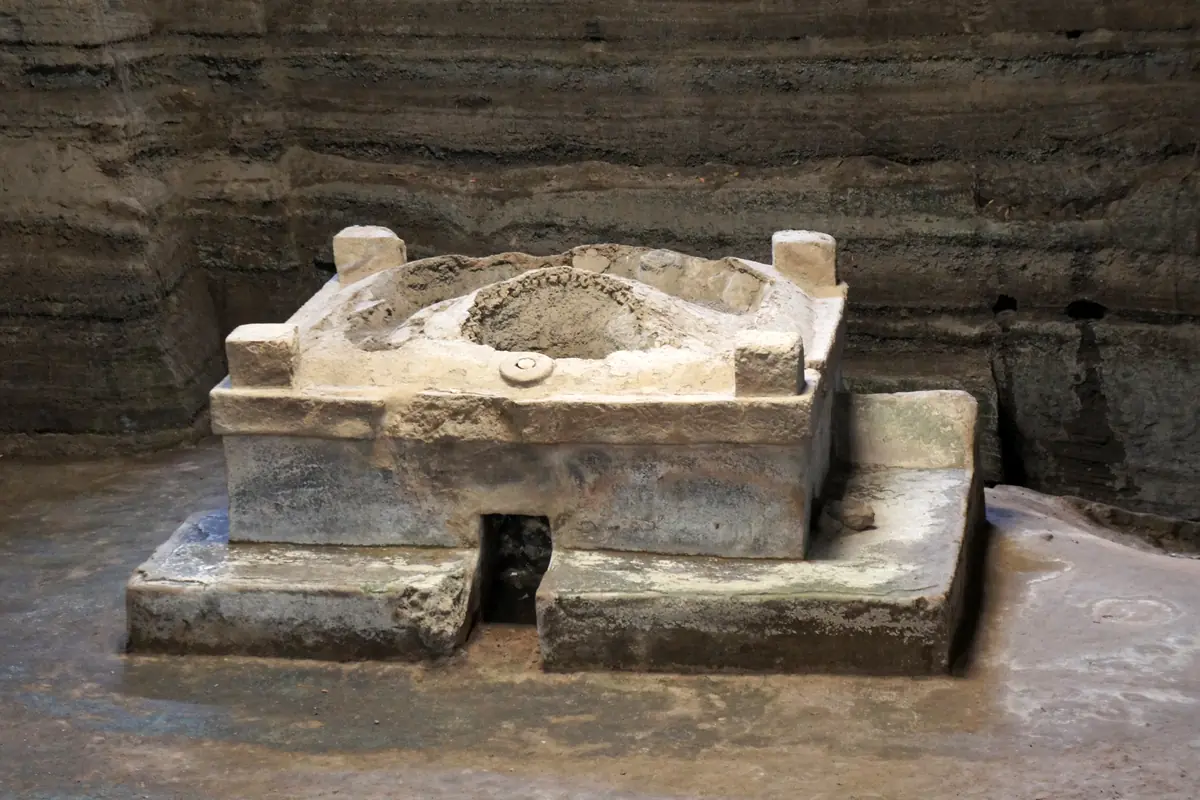
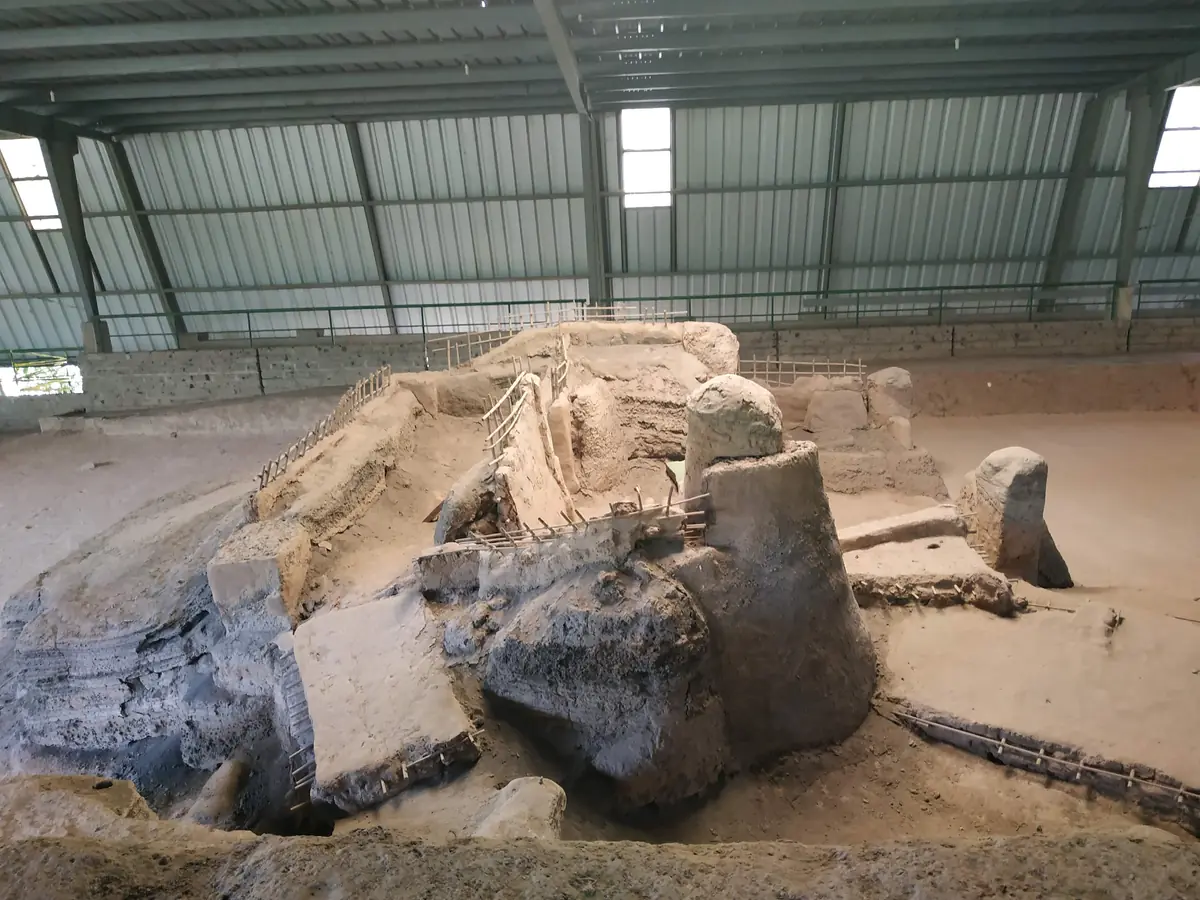
The site is a compact loop of elevated walkways over roughly ten excavated structures, each under its own roof. You’ll pass a sleeping quarters, a kitchen and storehouses that held beans and maize, a workshop, and garden plots that once grew the village’s food. The standout building is the temazcal, a domed sweat lodge, and there’s a replica beside it you can crawl into on your knees.
Start in the museum. It’s small, but it holds the pieces that make the low walls outside legible: carbonized corn, ceramics, and the everyday objects that turn a mud footprint into a home. The House of the Shaman, catalogued as Structure 12, is tied to a woman who appears to have led maize-harvest rituals, one of the more specific human details you’ll get at any Maya site.
The honest catch is photography. The protective canopies that keep the site alive also flatten every shot, and the ruins themselves are modest in height. If you’re chasing dramatic ruin photos, you won’t find them here. If you’re the kind of traveler who leans in to read what a garden bed or a storage jar tells you about how people lived, the payoff is real. Keep an eye out for the torogoz, El Salvador’s national bird, which visitors regularly spot around the grounds.
Pro Tip: Aim for a weekday morning. Midday sun beats down between the canopies with little shade, and the site is quiet enough that mornings feel almost private.
The Discoveries That Made This a World Heritage Site
Here’s what a knee-high village hides. The ash that erased Joya de Cerén also sealed it airtight, and researchers have pulled details out of it that no temple site can offer. This is where the trip earns its place for anyone who likes their history specific.
The headline find is agricultural. Sheets’s team identified the first large-scale manioc, or cassava, cultivation known anywhere in the ancient Americas, roughly 10 tons of it, grown in ridged fields right beside the houses. For decades archaeologists debated what ordinary Maya actually farmed and ate; Joya de Cerén answered part of that question directly.
There’s also infrastructure you’d expect at a grander site. Excavators traced a sacbe, a raised white road, running beneath about 17 feet (5 m) of ash, evidence that even a farming village was tied into a wider built network.
Then there’s the sound. When researchers measured the domed temazcal’s acoustics, they found the chamber’s dominant resonance sits at about 64 hertz, a pitch so low that even bass singers struggle to reach it. Whether the builders engineered that on purpose is an open question, but standing where a 1,400-year-old room still tunes a human voice is the kind of detail that sticks longer than another photo of a pyramid.
Is Joya de Cerén Worth It? An Honest Verdict
Yes, if you come for the intimate story of everyday Maya life rather than monumental architecture. Reviewers consistently call it small, often finishing in 30 to 90 minutes, and note that low ruins under canopies make dramatic photos hard. They also praise the museum, the gardens, and the rare “ordinary village” perspective no temple site can give you.
The split in reviews is real and worth respecting. Travelers who used the guide and museum come away impressed; those who rushed through cold call it dull, and at least one flatly warns it can bore younger kids. The gripes cluster around the same few things: it’s small, the canopies fight your camera, the café is sometimes closed, there are no souvenirs nearby, and $10 feels steep to some for a half-hour walk.
So the verdict depends on who you are:
- History and archaeology fans: worth a dedicated trip; the daily-life angle is genuinely rare
- Trip planners with a spare half-day near San Salvador: an easy yes, especially paired with San Andrés
- Families with restless kids: manage expectations, lean on the guide, and keep it short
- Travelers chasing dramatic ruins: skip it and go straight to Tazumal or a larger Maya site
Pairing It With San Andrés, Tazumal, and Lake Coatepeque
The smart move is to treat Joya de Cerén as one stop, not the whole day. San Andrés sits under 6 miles (10 km) away and delivers exactly what Joya de Cerén doesn’t: pyramids, an acropolis, and a history of indigo processing. The two pair into a natural half-day, which is why combo tours bundle them.
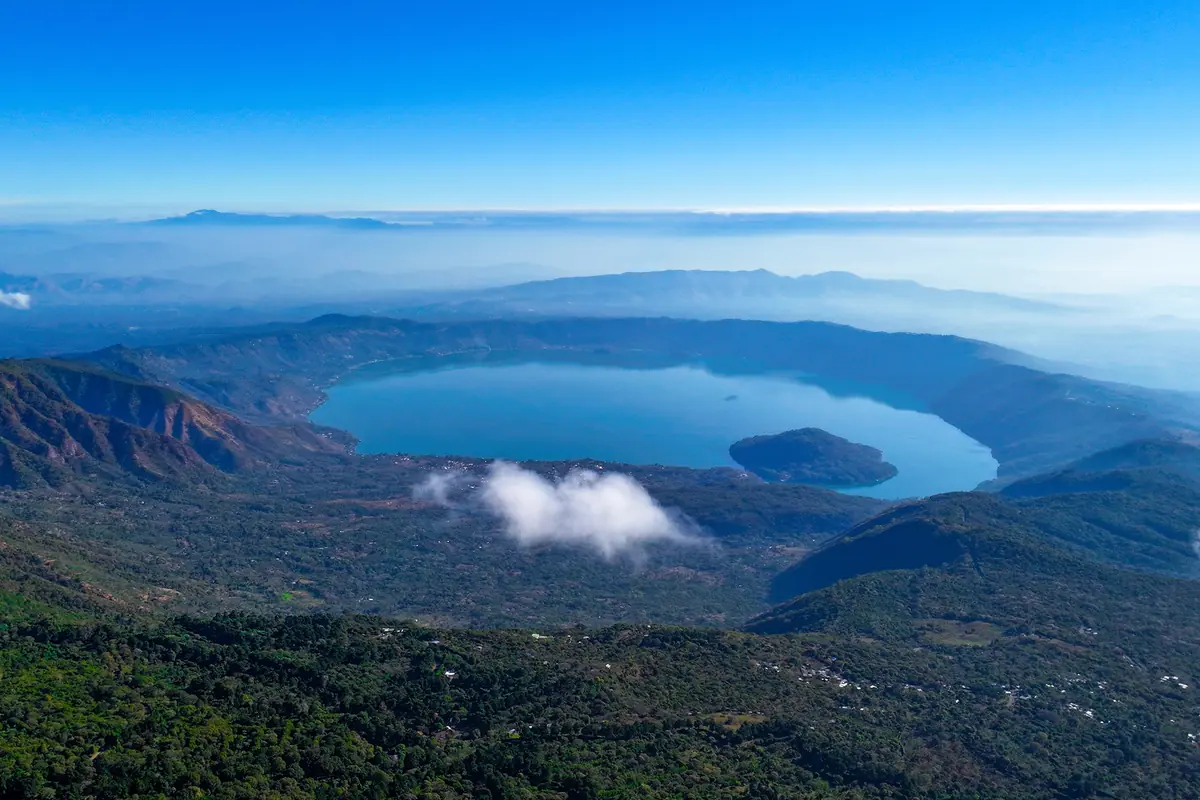
From there you can build outward. Tazumal, in Chalchuapa about 40 minutes on, holds El Salvador’s tallest pyramid at roughly 75 feet (23 m). And Lake Coatepeque, a crater lake with lakeside restaurants, makes the obvious scenic lunch stop to cap the loop.
A realistic day, driving your own or a rented car:
- Morning: Joya de Cerén (about 1.5 hours with the guide and museum)
- Late morning: San Andrés, under 6 miles away (about an hour)
- Lunch: Lake Coatepeque, lakeside
- Afternoon: Tazumal in Chalchuapa, if you still have energy
Do all four by bus and you’ll spend more time waiting on the roadside than looking at ruins. This is the itinerary where a car or a combo tour pays for itself.
When to Go, What to Wear, and Safety for U.S. Travelers
The dry season, roughly November through April, is the most comfortable time to visit; the rainy months from May to October bring heavy afternoon storms. Midday is hot with limited shade between the canopies, so plan for morning. On safety, El Salvador now carries the U.S. State Department’s Level 1 advisory, its lowest tier, and petty theft is the main residual concern for visitors.
Dress for sun and dust: light layers, a hat, sunscreen, and comfortable closed shoes for the walkways. Interior valleys can push into the mid-90s °F (mid-30s °C), and there’s not much cover once you leave the museum.
The safety question deserves a straight answer, because it’s the one U.S. travelers ask most. El Salvador’s homicide rate, once among the highest in the world, has fallen to low single digits per 100,000, a drop of an order of magnitude over the past decade that put the country in the same broad range as many peaceful destinations. The State Department’s advisory reflects that. POLITUR tourist police patrol visitor areas. Two honest caveats: the country has operated under a prolonged State of Exception, which the State Department flags, and normal precautions against petty theft still apply, especially on buses and in crowds. For a farming-village ruin northwest of the capital, though, the practical risk profile is low. Check the current State Department page before you travel, since advisories can change.
Before You Book
TL;DR: Joya de Cerén is a compact, one- to 1.5-hour visit, a buried Maya farming village rather than a pyramid complex. Take the free guide, start in the museum, budget about $10 for non-resident entry plus $1 parking, and pair it with San Andrés under 6 miles away for a fuller half-day. Come for the human story, not the height.
If there’s one thing to carry into the trip, it’s the expectation reset. Managed right, it’s one of the most quietly memorable ruins in Central America. Managed wrong, it’s a short walk past some mud walls. The difference is almost entirely in what you walked in expecting, and whether you took the guide.
Are you building it into a San Salvador day trip, or stretching to Lake Coatepeque and Tazumal too? Tell me where else you’re headed in El Salvador and I’ll tell you what’s worth the detour.