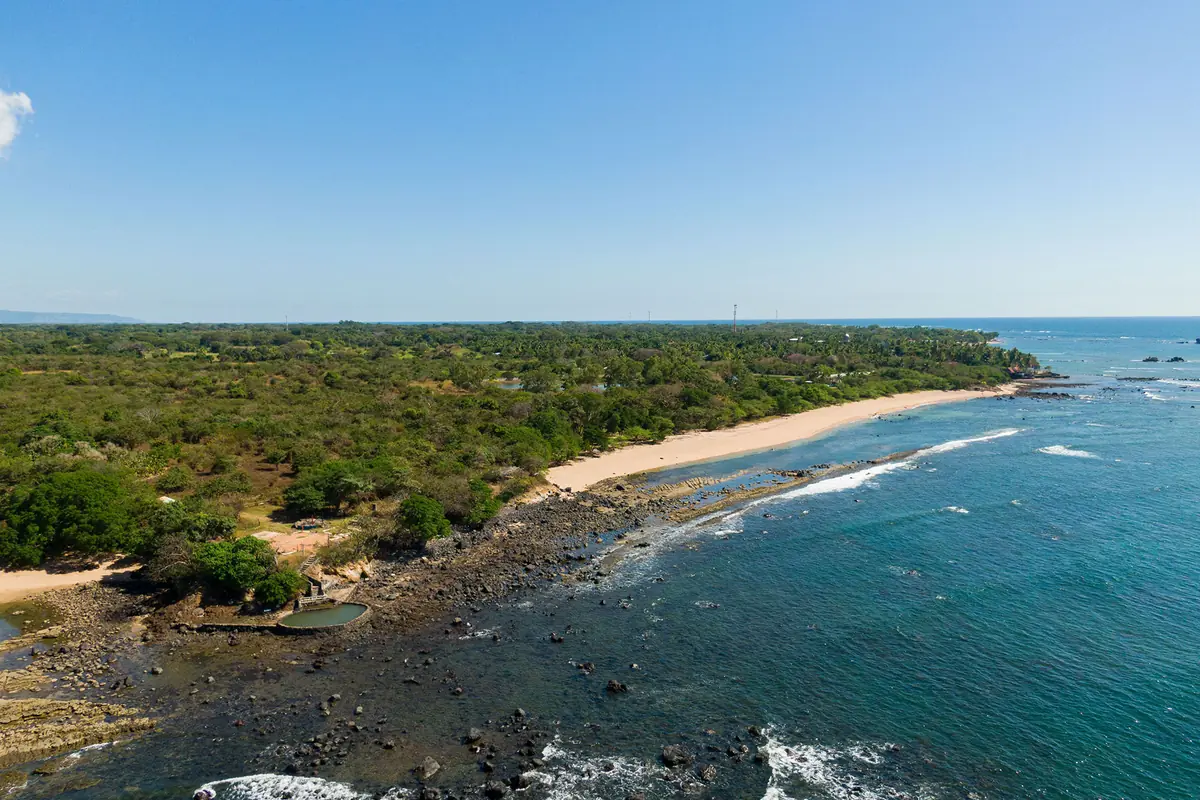
The Museum of the Revolution in Perquín sits in the pine hills of northeastern El Salvador, where ex-guerrillas walk you past a shot-down helicopter, a bomb crater, and the clandestine radio that once taunted an army. It tells the country’s civil war through the people who fought it — and hands US travelers a history their own government helped write.
What Is the Museum of the Revolution in Perquín?
The Museo de la Revolución Salvadoreña sits in Perquín, in the northeastern department of Morazán. General admission runs about $2, students about $1, and former combatants lead the tour, mostly in Spanish. It opens weekday mornings through late afternoon, and a little longer on weekends. Plan one to two hours, plus the reconstructed guerrilla camp next door.
Here is what a planner needs before the drive out:
- Location: Calle Los Héroes, a few blocks north of Perquín’s central park, Morazán
- Entry: around $2 general, $1 students; guides work for tips
- Hours: roughly 8:30 a.m.–5:00 p.m. weekdays, 7:00 a.m.–5:30 p.m. weekends
- Guides: former FMLN combatants, mostly Spanish only
- Time needed: 1–2 hours, plus the reconstructed guerrilla camp (about $1 extra)
Small museums adjust both prices and hours, so treat those numbers as a close guide rather than a guarantee.
Pro Tip: Call the ticket line (+503 7310 1378) before the long mountain drive. Hours at small Salvadoran museums shift around holidays, and a two-minute call beats a wasted afternoon.
What You’ll See Inside the Museum
The collection is arranged across five thematic halls: the causes of the war, daily life in the guerrilla camps, the international solidarity movement, conventional weaponry, and Radio Venceremos alongside the Peace Accords. It is a small building. It does not take long to walk, but it takes a while to leave.
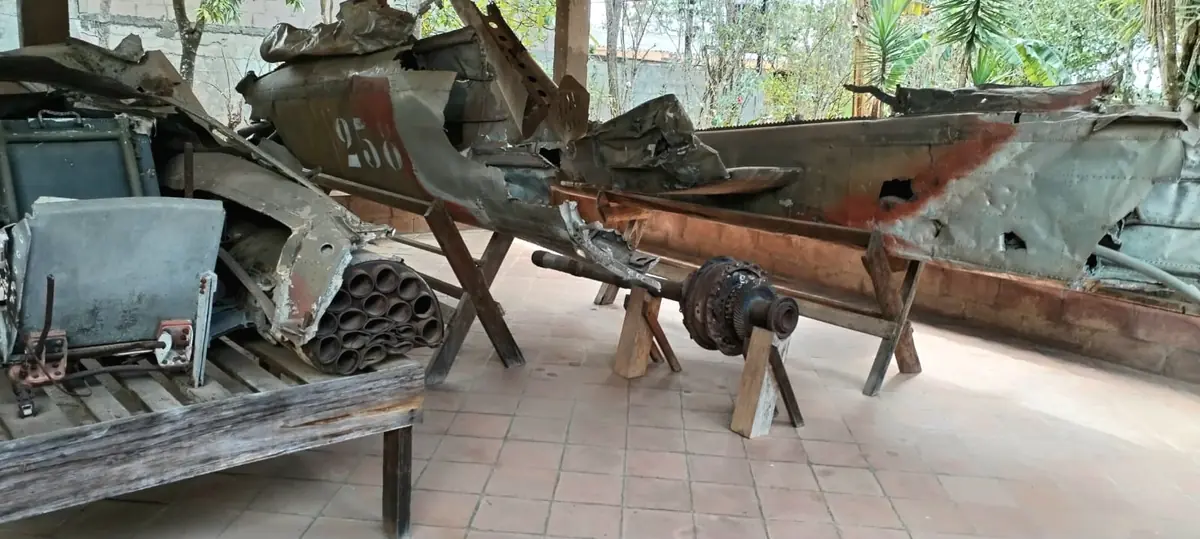
The signature piece is outside and impossible to miss: the wreckage of a helicopter that carried Colonel Domingo Monterrosa, a commander the guerrillas spent years trying to kill. According to the account the guides tell, fighters let him capture a Radio Venceremos transmitter they had rigged with explosives; the aircraft went down when the trophy detonated. The twisted metal is now a war memorial you can stand next to.
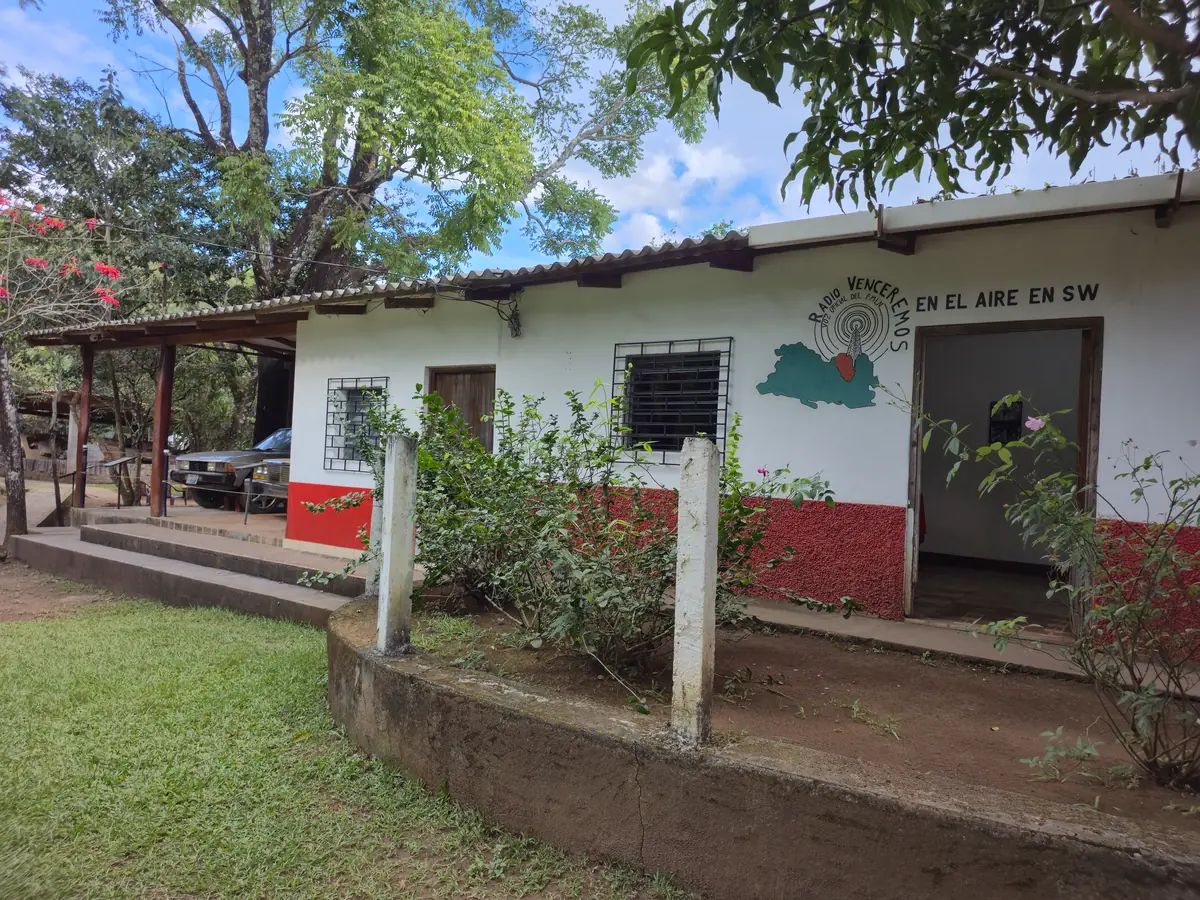
Inside, the Radio Venceremos studio has been recreated with original equipment — the transmitter that broadcast guerrilla news the government kept trying to jam. Reviewers who have stood in the room note the low-tech soundproofing: egg cartons pinned across the walls. The station was the FMLN’s voice, and its founder, the Venezuelan journalist Carlos Henríquez Consalvi, known by the alias “Santiago,” is a fixture of the museum’s story.
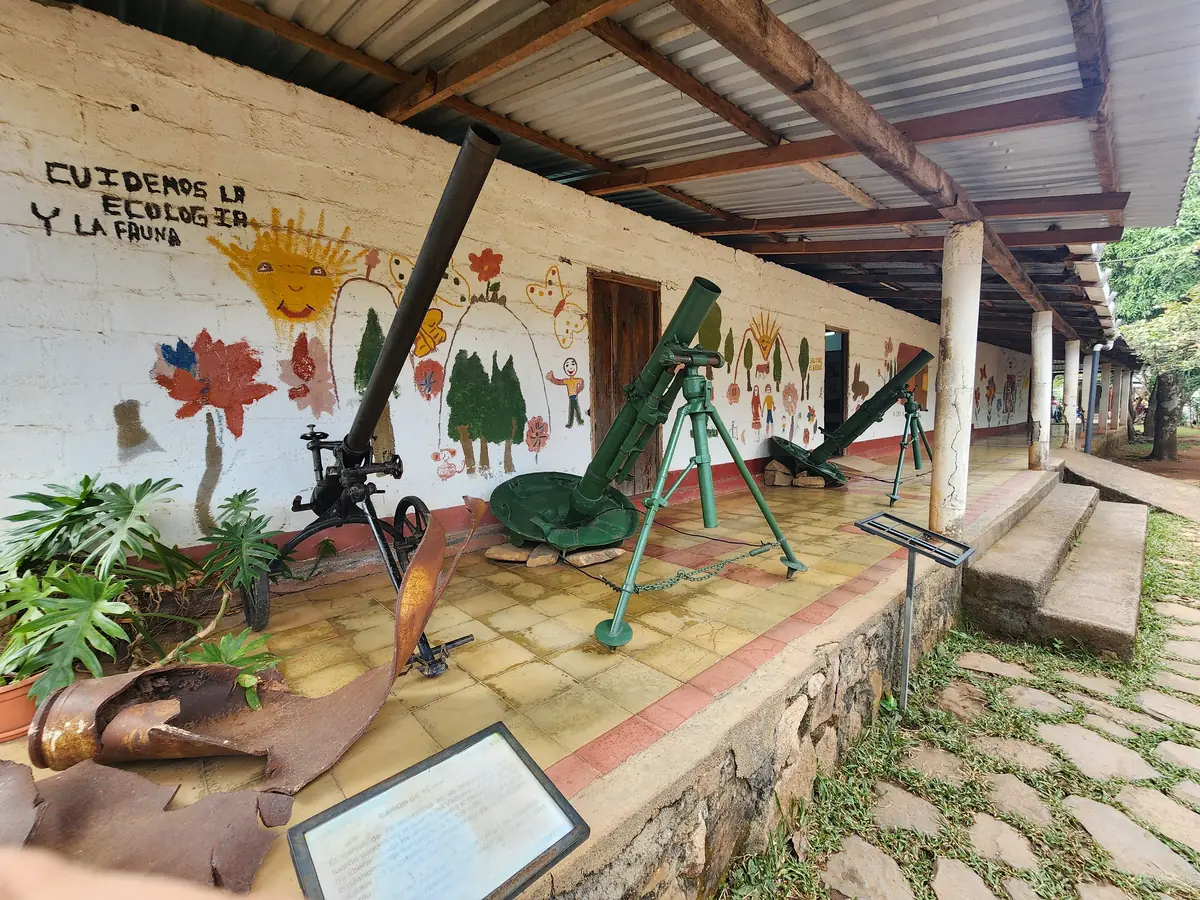
The rest of the halls hold the hardware and the human cost side by side. There are Soviet and US-made weapons, anti-war posters gathered from around the world, and a wall of photographs of the dead that visitors consistently describe as the hardest room to move through quickly.
Step back outside and you reach the artifact that lands hardest for a US reader: a crater left by a 500-pound (230 kg) US-made bomb, with a disarmed example displayed beside it. The abstraction of “military aid” becomes a hole in the ground.
Who Runs the Museum, and Why the Guides Matter
The museum opened after the Peace Accords, and it is staffed and guided by former FMLN combatants — the people who lived the war narrate it. That is the whole point, and it is what separates this place from any conventional history exhibit. The exhibit, in a real sense, is the person walking beside you.
Its director and founder, Rolando Cáceres, has pushed back on the idea that this is one-sided propaganda, framing it instead as an effort to rescue the memory of an entire society rather than a single faction. The guides give first-person accounts. One published traveler account describes being led through the halls by a former fighter named Carlos.
Two honest caveats. Most guides speak Spanish only, and tips are expected rather than optional. The guides can also help arrange a trip to El Mozote, which is the practical reason most visitors start here.
Pro Tip: The guides’ war stories are the real exhibit, and most of it comes in Spanish. A companion who speaks the language, or a translation app loaded for offline use, is the difference between a museum walk and a witness account.
The Civil War Context US Visitors Should Know
El Salvador’s civil war ran from 1980 to 1992 and killed more than 75,000 people. The United States backed the government against the leftist FMLN, funneling in roughly $1 million a day. The Chapultepec Peace Accords ended the fighting on January 16, 1992. Perquín was the guerrillas’ capital, which is why its museum tells the war from their side.
A 1979 coup tipped the country toward open conflict. The FMLN formed in 1980 out of five leftist groups, and Perquín’s mountains became rebel-held ground. The UN Truth Commission that examined the war later attributed the overwhelming majority of wartime killings — on the order of 85 percent — to state forces, drawn from more than 22,000 complaints it registered.
The US role is the part most guides on Page 1 skip, and it is the reason this museum matters to an American audience. Washington sent roughly $6 billion over the course of the war — about a million dollars a day, in journalist Mark Danner’s phrase. Twenty-one US personnel were killed in action. The Atlácatl Battalion, the unit tied to the worst atrocity of the war, was trained by US advisors and at the School of the Americas at Fort Benning, Georgia.
You do not have to arrive with a political opinion to feel the weight of that crater outside. The museum tells the war from the FMLN’s vantage point; the honest thing to know before you go is that it is also, in part, a US story.
What Happened at El Mozote, and How to Combine the Visit
El Mozote lies about 5 miles (8 km) south of Perquín, where the US-trained Atlácatl Battalion killed hundreds of civilians over two days in December 1981 — among the worst massacres in modern Latin American history. The museum is the usual contact point for reaching it, and most travelers see the museum first, then El Mozote.
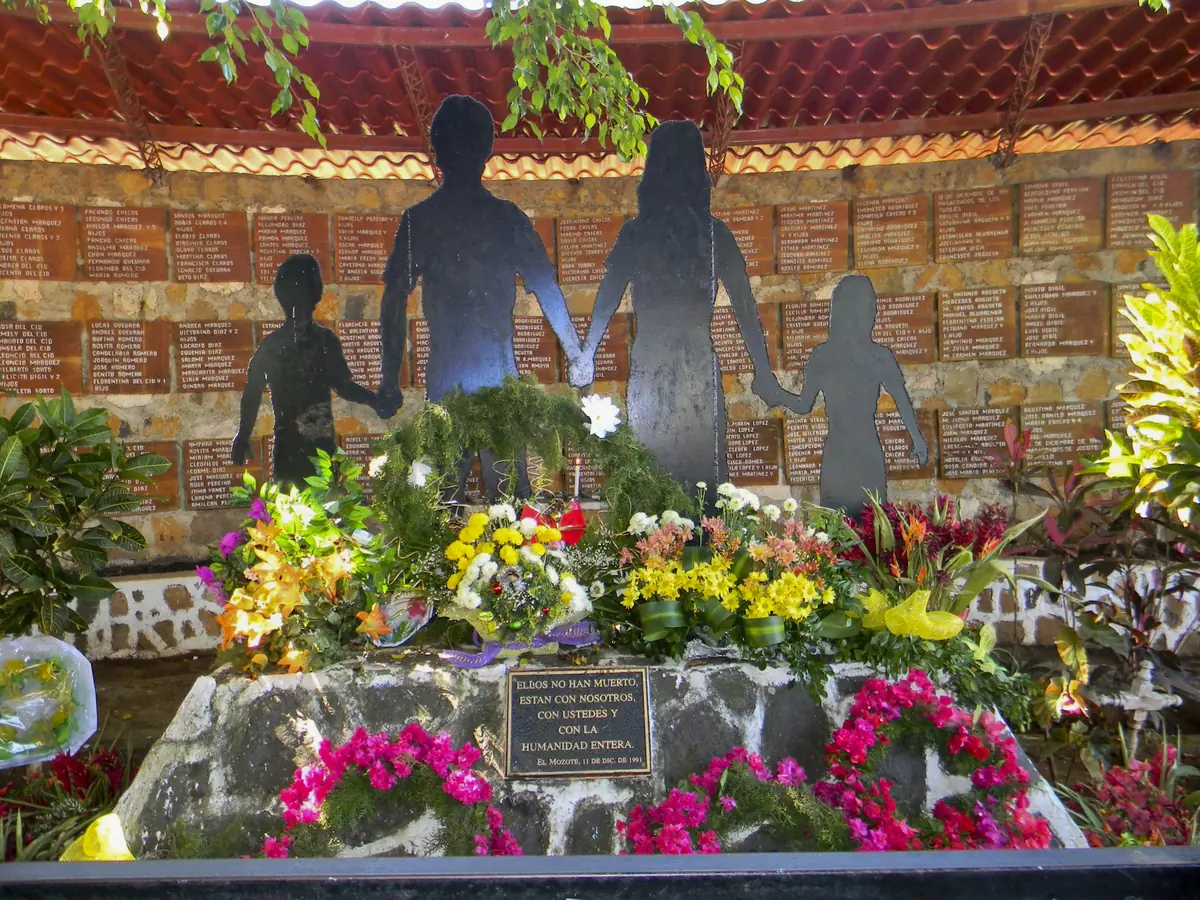
The killings took place on December 11–12, 1981. The lone adult survivor, Rufina Amaya, spent the rest of her life testifying to what she saw, and her account is central to how the massacre is remembered. The memorial at the village lists victims’ names, and a garden beside the church honors the children who died. An annual commemoration runs December 11–13.
The death toll is contested, and honest sources give a range rather than a single figure. The Truth Commission and Wikipedia cite more than 811 killed; the University of Washington’s Center for Human Rights puts the count at at least 978 across El Mozote and the surrounding hamlets; Human Rights Watch notes that Tutela Legal tabulated 794 named victims. Present it to yourself as a range, not a rounded number.
There is no reliable public transport to El Mozote, so you will need a pickup, a microbus, or a car. A rough half-day sequence:
- Start at the museum for context — one to two hours (it opens earlier on weekends).
- Arrange a guide or driver for El Mozote at the museum desk.
- Ride or drive the roughly 5 miles (8 km) south, and visit the memorial and church garden — about an hour.
- Return via Arambala on the way back to Perquín.
Doing the museum first is not a formality. El Mozote makes far more sense once you have the war’s shape in your head.
How Do You Get to Perquín and the Museum?
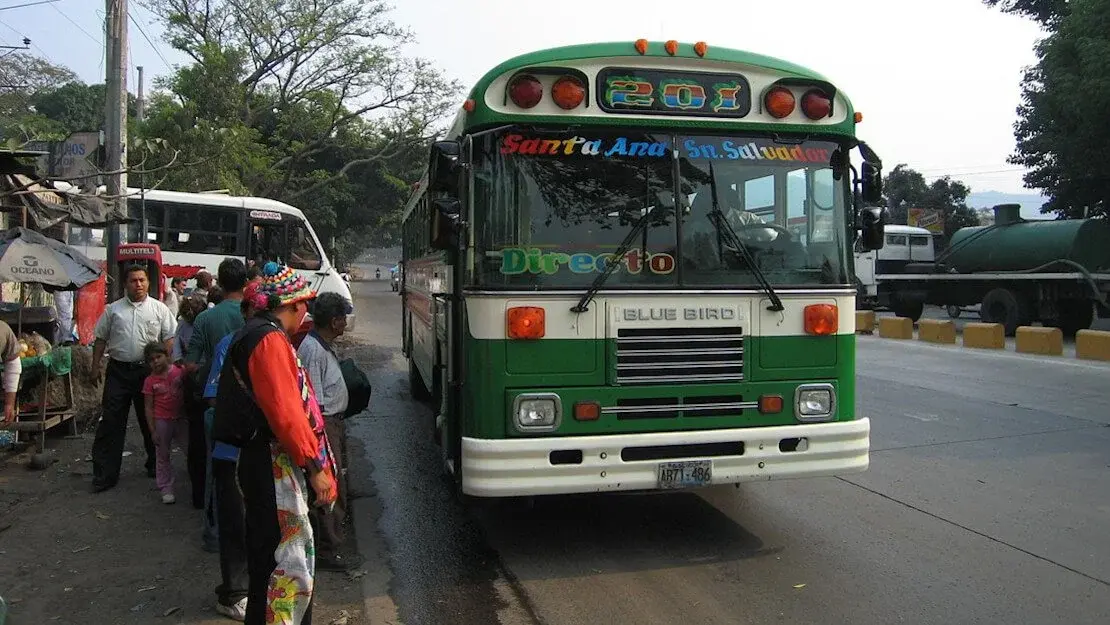
Most visitors reach Perquín by car or by the 332 bus from San Miguel. Driving from San Miguel takes about an hour; from San Salvador, closer to three. There is no direct San Salvador bus — you transfer through San Miguel and San Francisco Gotera. The museum sits a few blocks north of Perquín’s central park.
| Route | Distance | By car | By bus | Best for |
|---|---|---|---|---|
| San Miguel → Perquín | ~44 mi (71 km) | ~1 hour | Bus 332 — take the 332-F; the 332-D stops short | Backpackers, day-trippers |
| San Salvador → Perquín | ~108 mi (174 km) | ~2 hr 50 min | No direct bus; transfer via San Miguel and Gotera (up to ~7 hrs) | Drivers, guided tours |
| Via San Francisco Gotera | Gotera is the regional hub | — | Bus 328 to Gotera, then pickups roughly every 30 min | Budget travelers piecing it together |
A day trip from San Salvador on public buses is technically possible and practically brutal — plan on a very long day, or base yourself closer. From San Miguel, a same-day return is realistic.
Pro Tip: On the San Miguel–Perquín route, the letter suffix on bus 332 is not decoration. The 332-F runs all the way to Perquín; other suffixes drop you short. Check that the destination sign reads Perquín before you board, and confirm the current schedule locally, since routes change.
Where to Stay and Eat in Perquín
Perquín is small, the food is regional, and the lodging is modest. That is not a knock — it is the character of a mountain town that runs on pine forest, cool air, and a handful of family-run places. Two nights lets you pair the museum with El Mozote and the hills without rushing.
Hotel de Montaña Perkin Lenca
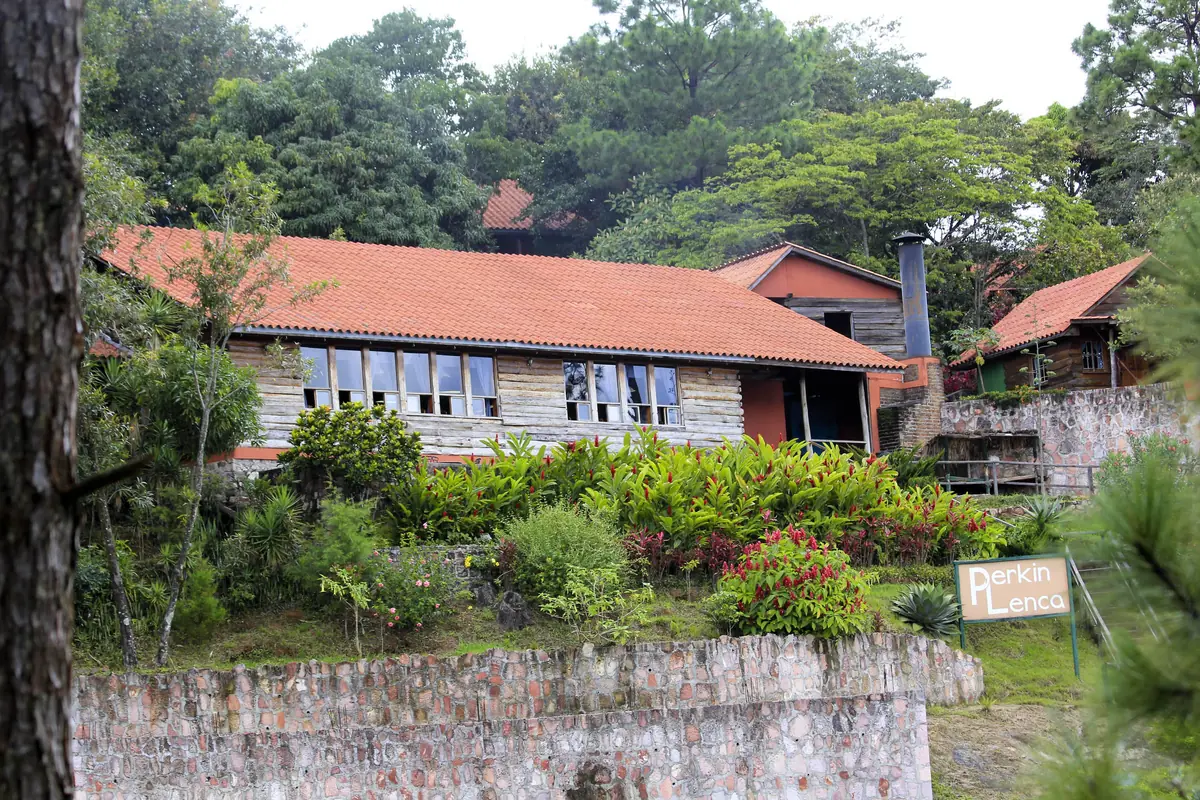
Wooden cabins and bungalows sit in the pines at about 4,100 ft (1,250 m), where the air averages a cool 66°F (19°C) and mornings can genuinely need a jacket. Breakfast is included, and the lodge is a short drive or a roughly 15-minute walk from the museum. The US-born owner, Ron Brenneman, has run it for decades and is a fixture of the local travel story.
The honest read: English is limited, the setting is rustic rather than polished, and that is exactly why people like it. It is the comfortable base near the museum, not a resort.
- Location: Km 205½, Carretera a Perquín — a short drive or ~15-minute walk from the museum
- Cost: mid-range mountain lodge; confirm current rates directly, as they vary by cabin
- Best for: Travelers who want comfort and a real breakfast at altitude
- Time needed: One to two nights to link the museum, El Mozote, and the hills
Budget Beds and Where to Eat
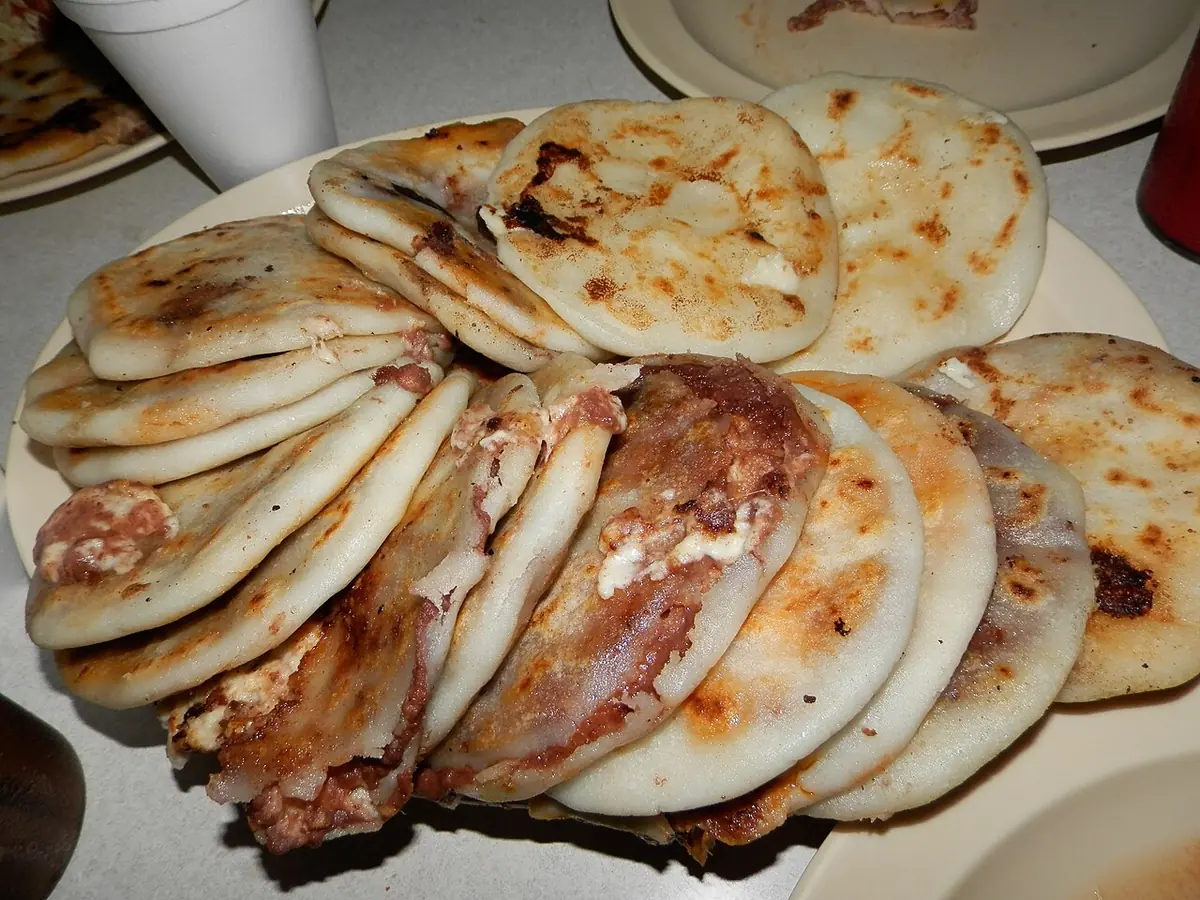
For a cheaper night, Hostel Perquín Real covers the basics. For food, the Perquín Lenca restaurant and La Cocina de la Abuela serve local plates, and pupusas are the regional staple almost everywhere. In nearby Arambala, El Chalé Cocina Artesanal is worth the short hop.
- Budget bed: Hostel Perquín Real — simple and inexpensive
- Local meals: Perquín Lenca, La Cocina de la Abuela — pupusas and típico plates
- Nearby: El Chalé Cocina Artesanal, in Arambala
- Reality check: menus and English are limited, so carry small US bills
Beyond the Museum: Cerro de Perquín, Río Sapo, and the Murals
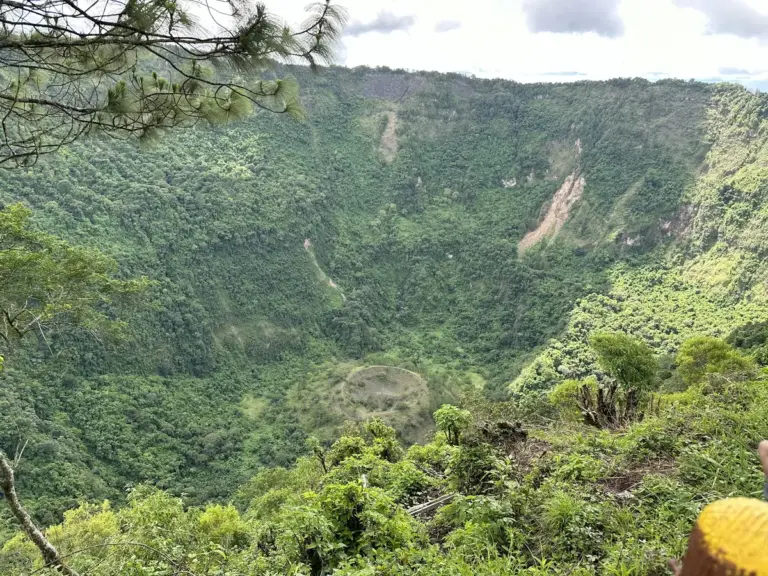
The museum is the reason to come, but the hills give you a reason to stay a full day. Cerro de Perquín rises to 4,334 ft (1,321 m), a short climb of 10 to 15 minutes on defined trails from near the museum, with wide views toward the Honduran border and the Sierra de Nahuaterique. Nearby, the Río Sapo protected natural area draws travelers who want the cloud-forest and pine scenery without the crowds.
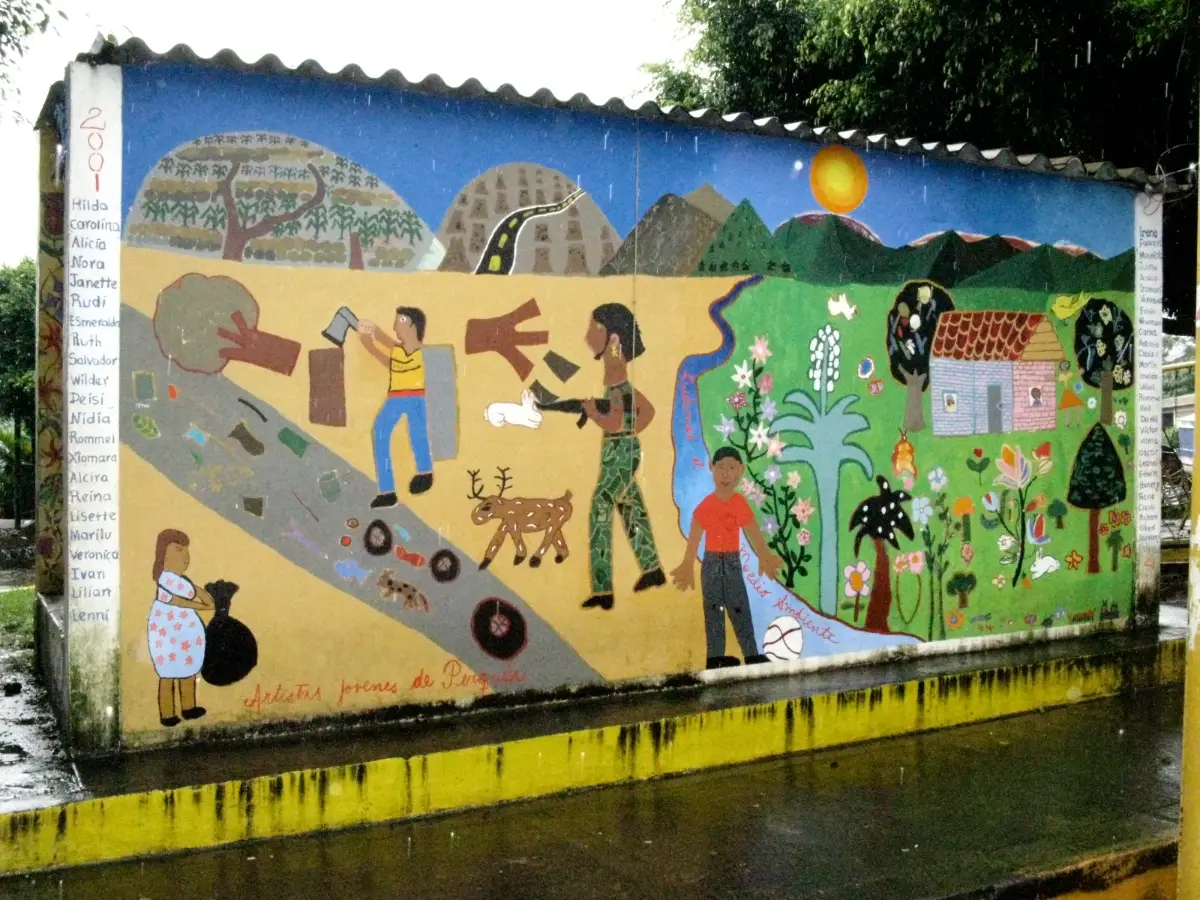
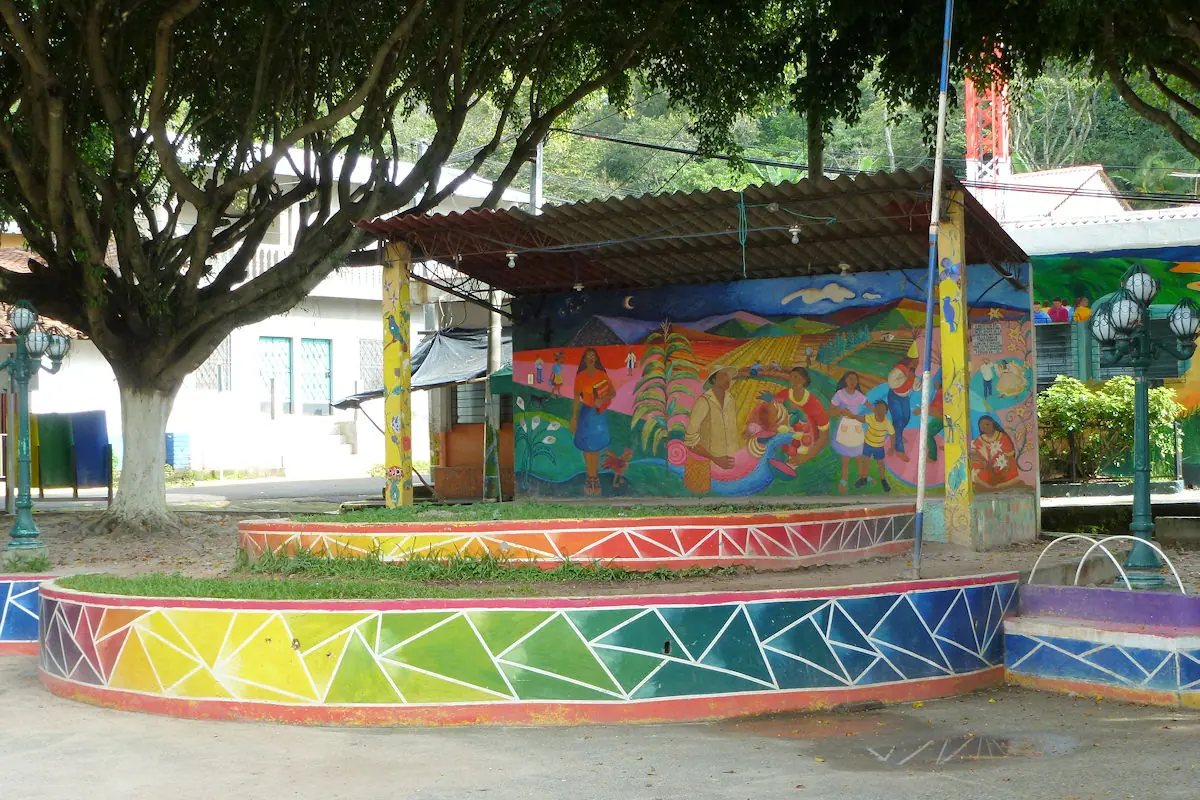
In town, artists from across Latin America have painted murals along the streets, many carrying war-and-peace themes that pick up where the museum leaves off. The climate helps too: this is highland El Salvador, cooler and greener than the coast, and it feels it.
Time your visit right and you catch the Festival de Invierno, held the first week of August every year since the war ended and drawing an estimated 10,000 visitors — a lot of people for a town this size, so book a bed early if you aim for it.
Pro Tip: Climb Cerro de Perquín early. The trail from near the museum takes only 10 to 15 minutes, and the light toward Honduras is clearest before mid-morning haze settles over the ridges.
Is Perquín Safe? Money, Language, and Practical Tips
El Salvador’s security has shifted dramatically, and the US State Department now rates the country Level 1, “Exercise Normal Precautions” — its lowest tier. Perquín is a quiet mountain town. Bring cash in US dollars, expect Spanish-only signage, carry ID for the occasional checkpoint, and travel between towns in daylight. Advisory levels move, so re-check before you go.
That Level 1 rating followed a sweeping anti-gang crackdown carried out under a “State of Exception,” which grants authorities expanded arrest powers and suspends some ordinary legal protections. Homicide numbers have fallen sharply; human-rights organizations have also criticized the crackdown’s due-process record. Both things are true, and a fair-minded traveler can hold them together. For a visit to Perquín, the practical upshot is simple: carry your passport or a copy, and don’t drive rural roads at night.
On money and language:
- Currency: US dollars everywhere; carry small bills ($1, $5, $10)
- Bitcoin: accepted voluntarily where offered, never required
- Entry: a $12 tourist card on arrival; passport valid at least six months
- Cards: many small places are cash-only, and rural ATMs are unreliable
- Language: Spanish; little English in Morazán
On timing and packing:
- Best season: the dry months, roughly November–April
- Bring: layers for cool highland nights, comfortable shoes, water, and cash
- Documents: keep ID on you for checkpoints between towns
Pro Tip: Break large bills before you head into the mountains. Change for a $50 or $100 is scarce in small Morazán towns, and rural ATMs are hit-or-miss — arrive with a stack of ones and fives.
Before You Make the Drive
TL;DR: The Museum of the Revolution in Perquín is a small, powerful, ex-guerrilla-run museum where El Salvador’s civil war is told by the people who fought it, for around $2 and mostly in Spanish. Pair it with El Mozote 5 miles (8 km) south, spend a night in Perquín’s pine hills, and come with small US bills and a translation app.
What stays with most visitors is not the hardware — it is who is holding it. A former fighter narrating the war he survived, standing beside the crater of a bomb his enemy was paid to drop, in a country the United States spent a million dollars a day to arm. You can read all of that in a book. Standing in the room where the radio still sits is a different thing.
If you’ve walked those five halls or driven the road to El Mozote, what stayed with you — and what did the guidebooks leave out? Share it in the comments; the practical details from real visits are what help the next traveler most.