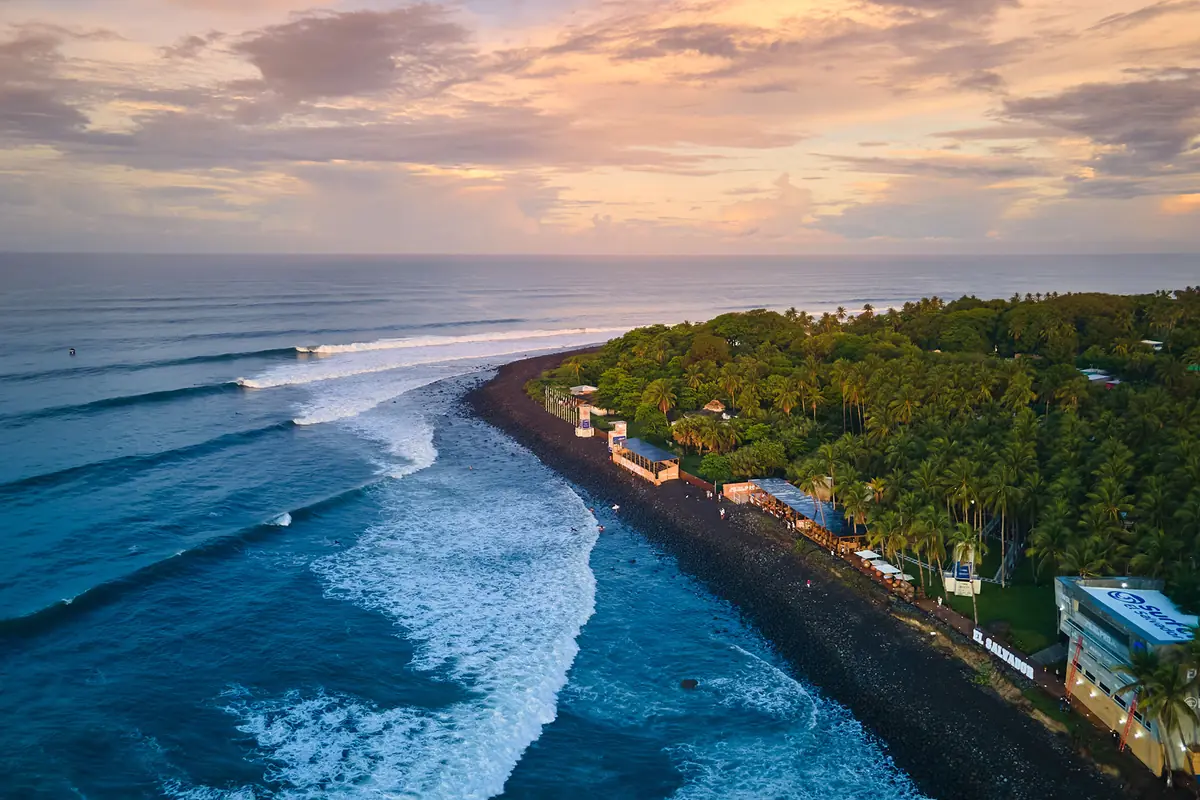
Most travelers who land in El Salvador point the car toward the surf breaks. Los Cobanos is the reason to go the other way.
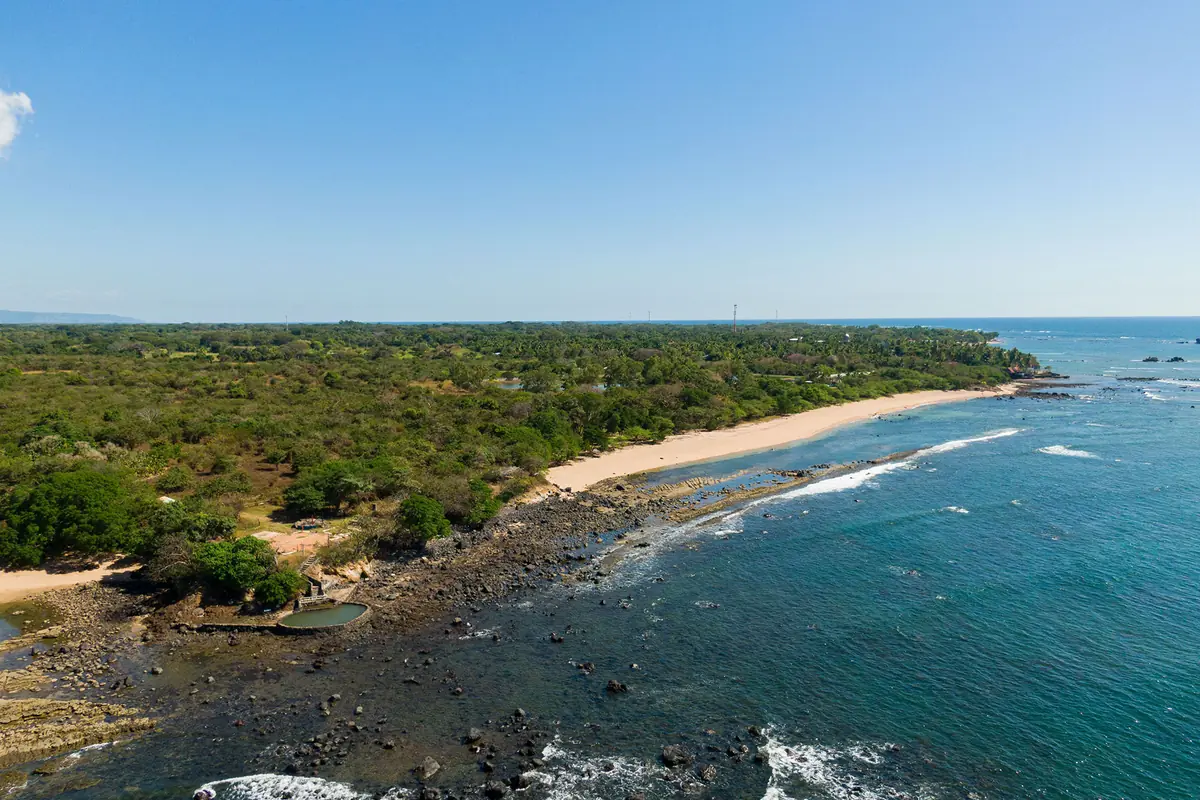
It sits on the western coast, in Sonsonate department, roughly 57 miles from San Salvador and about 7 miles east of the port of Acajutla. What sets it apart is visible the moment you step onto the sand: it is pale gold, not the black volcanic gray of nearly every other Salvadoran beach. The color comes from the water. A rocky-coral reef sits just offshore, waves break shell and coral into grit, and that grit becomes the beach.
That reef shapes the entire trip. It flattens the swell, which makes the water calm enough for small kids and useless for surfers. It draws divers to century-old shipwrecks and snorkelers to shallow pools full of fish. Beyond it, in deeper water, humpback whales pass through every winter.
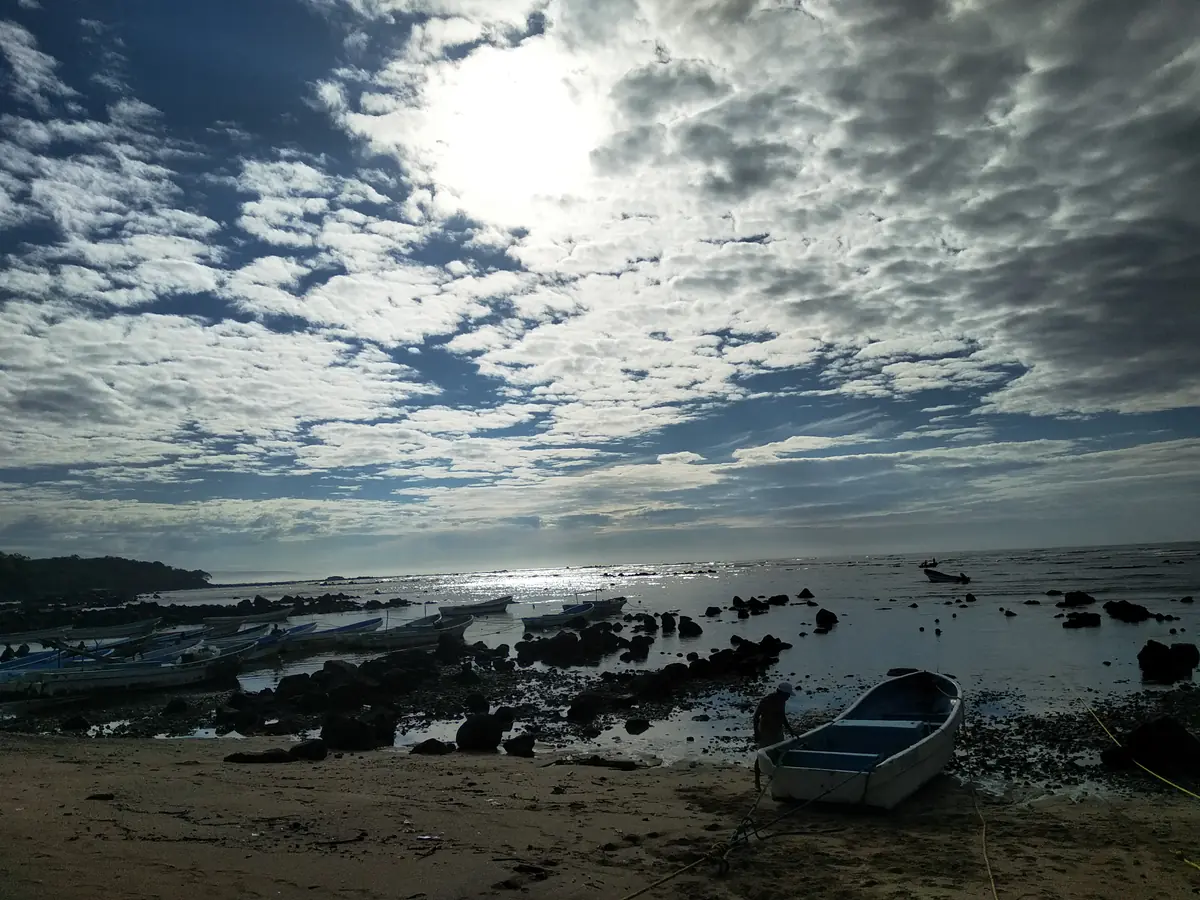
Los Cobanos is a working fishing village first and a beach destination second. Pangas get dragged up the sand at dawn, the day’s catch goes straight to the restaurants along the shore, and nobody has curated the place for foreign visitors. If you want reef time, seafood, whales and quiet, this is a strong pick. If you want surf, nightlife or a polished beach-town scene, book El Tunco instead and come here for a day.
Where Los Cobanos Is and Why the Reef Matters
Los Cobanos sits inside Complejo Los Cobanos, El Salvador’s first officially declared coastal-marine protected area. It was designated by Executive Decree No. 22, published in February 2008, and later listed as Ramsar Site No. 2419 in February 2019, making it the country’s eighth Wetland of International Importance.
The protected complex covers 21,312 hectares (about 82 square miles), and roughly 97 percent of that is ocean. It stretches from Santa Agueda, just south of Acajutla, southeast about 12 miles to the Barra Salada mangroves, and runs offshore to a depth of about 200 feet. That makes it the largest protected area in El Salvador’s national system.
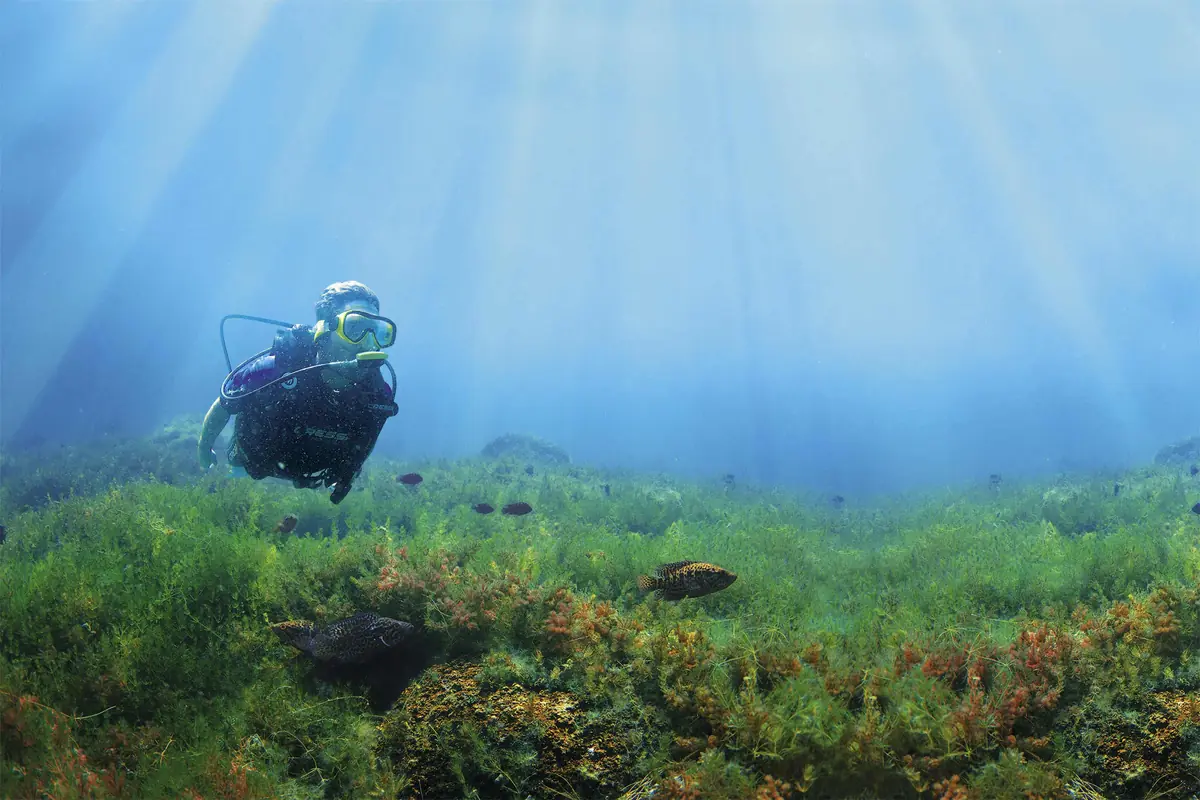
The headline fact, and the one every tour operator repeats, comes from Ramsar itself: this is the only coral reef formation between Mexico and Costa Rica. Reef-building coral, mostly Porites lobata, grows nowhere else in the country. The reef platform covers roughly 15,860 hectares at depths from the waterline down to about 65 feet, with an irregular bottom full of shallow basins, grottoes and rock fissures.
It is worth being honest about the condition of that reef, because most guides skip this part. Salvadoran researchers tracked live hard-coral cover falling from about 6 percent to 2 percent between 2014 and 2016, and it stayed near that level through 2020, driven by El Niño bleaching events, overfishing of herbivorous fish and river sedimentation. What you will see is a rocky reef with coral patches, gorgonian sea fans, algae and a lot of fish, not a Caribbean coral garden. Set expectations accordingly and you will enjoy it more.
Los Cobanos vs. El Tunco: Which One Fits Your Trip
| Los Cobanos | El Tunco / El Zonte | |
|---|---|---|
| Water | Reef-protected, calm, rocky underfoot | Beach break, real currents |
| Sand | Pale coral sand, rock at low tide | Black volcanic sand |
| Best for | Diving, snorkeling, whales, fishing, quiet | Surfing, nightlife, meeting people |
| Crowd | Salvadoran families and weekenders | International travelers and surf schools |
| Nightlife | A couple of beach bars, then silence | Bars, hostels, live music |
| From SAL airport | About 2 hours | About 45 minutes |
| Food and room prices | Noticeably cheaper | Higher, priced for foreigners |
Plenty of people do both. The drive between them is about an hour and 15 minutes.
How to Get to Los Cobanos From San Salvador and the Airport
Driving from San Salvador takes 1 hour 20 minutes to 1 hour 30 minutes and covers about 57 miles. Take the highway west toward Sonsonate, then follow signs for Acajutla and turn off at the Kilometer 5 marker; from there it is roughly 4 miles to the water. From San Salvador International Airport (SAL), it is about 75 miles and closer to two hours, since you skirt the capital.
Public transportation works, and it is cheap, but budget the time. Route 205 leaves San Salvador’s Terminal de Occidente for Sonsonate and costs around $2 for a two-hour ride. In Sonsonate you transfer to bus 257, which runs directly to Los Cobanos in 30 to 45 minutes for well under a dollar. Total fare lands around $3 to $4. Frequency on the 257 is not published anywhere reliable, so ask at the Sonsonate terminal rather than trusting a timetable you found online.
Uber works well in San Salvador and at the airport. It does not work out at the beach, so do not plan on hailing a ride home.
| Option | Time | Cost | What to know |
|---|---|---|---|
| Rental car from San Salvador | 1 hr 20 min to 1 hr 30 min | Rental plus fuel | Best choice if you want Playa El Flor, Barra Salada or day trips |
| Private shuttle from SAL airport | About 2 hours | $120 to $190 | Door to door; English-speaking drivers available through transfer companies |
| Bus 205 then bus 257 | About 2 hr 20 min plus transfer wait | $3 to $4 | Slow, safe, very cheap; not ideal with dive gear |
| Taxi from Acajutla | 15 to 20 minutes | $10 to $15 | Useful if you bus to Acajutla instead of Sonsonate |
| Uber | Not available to the beach | n/a | Reliable in cities and at SAL only |
Do you need a car? For a two-night reef-and-seafood trip where the dive shop picks you up, no. For anything that involves exploring the coast or linking Los Cobanos with the Ruta de las Flores, yes.
The Best Time to Visit Los Cobanos
The short answer: come between November and March. That window overlaps the dry season, the clearest water of the year and the humpback whale migration all at once.
Water temperature stays between 79°F and 84°F year-round, so a shorty or even a rash guard is enough for most divers. Visibility is the variable. During the May-to-October rains, rivers dump sediment into the bay and turbidity climbs, which is exactly when the reef looks worst. Local guides also warn that very hot, flat, windless days can drop visibility even in the dry season, so a calm forecast is not automatically a good one.
| Months | Weather | Water and visibility | Wildlife | Crowds |
|---|---|---|---|---|
| November to February | Dry, warm days, cooler nights | Best of the year | Humpback whales; turtle nesting winds down | Busy over Christmas and New Year |
| March to April | Dry and hot | Good early, slipping by late April | Whale season closes in March | Semana Santa is the single busiest week |
| May to June | Rains begin, usually afternoon storms | Runoff starts cutting visibility | Quiet stretch | Low |
| July to August | Rainy, with a mid-summer dry spell | Murky | Turtle nesting begins | Salvadoran August holidays fill the beach |
| September to October | Wettest months | Poorest visibility of the year | Turtle nesting peaks | Lowest |
If your trip is fixed for the rainy season, come anyway for the seafood, the tide pools and the turtle hatchling releases. Just do not book an expensive dive package around it.
Diving the Reef and the Shipwrecks
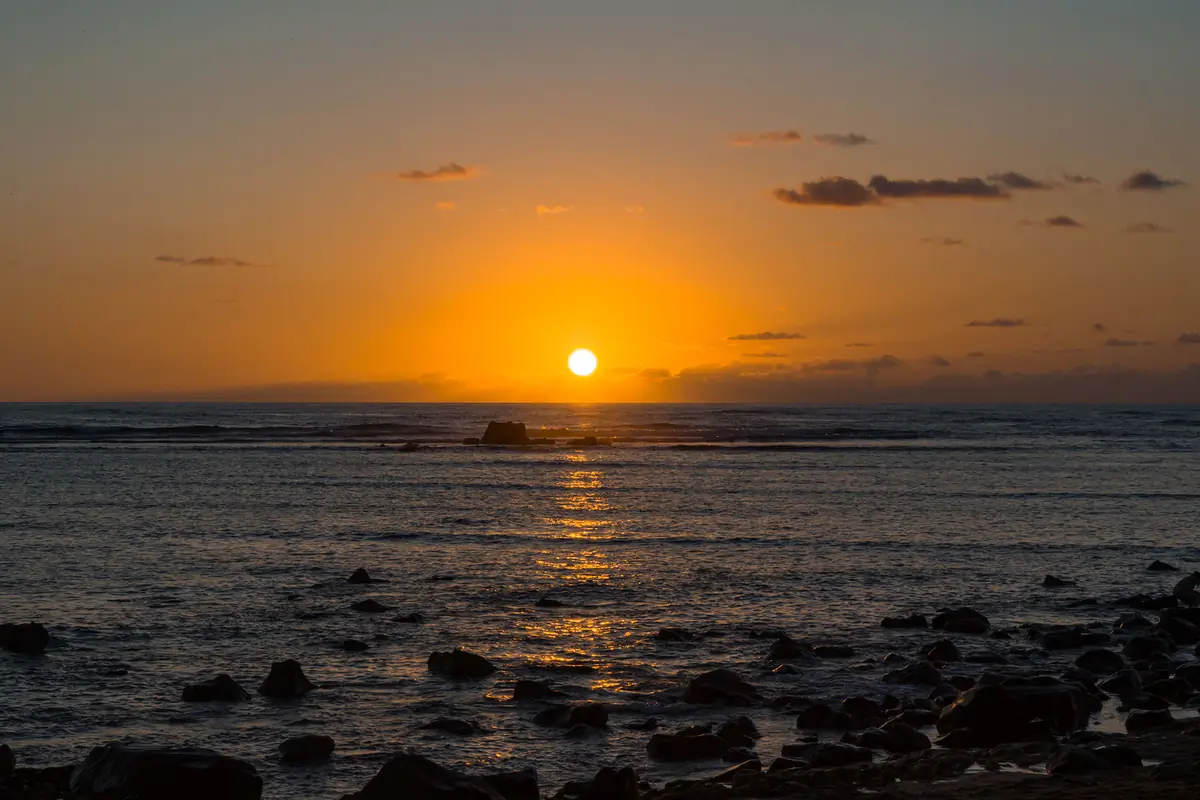
Diving here is the reason most foreign visitors show up. The reef runs from the surface down past 65 feet, with rock walls, swim-throughs and shallow basins. Regulars report barracuda, green moray eels, parrotfish, angelfish, rays and the occasional dolphin, plus green and olive ridley turtles.
Pacific diving is not Caribbean diving, and the better operators say so upfront. Visibility is often intermediate, the landscape is rockier and sparser, and the marine life is the draw rather than the coral scenery.
The Wrecks: SS Douglas, SS Cheribon and SS Arce
Three shipwrecks sit inside the bay, and they have been colonized into artificial reefs.
The SS Douglas and the SS Cheribon both rest at recreational depths, which puts them within reach of any certified open-water diver. The SS Arce sits at about 100 feet and requires an advanced certification. All three are more than a century old, and they hold more concentrated fish life than the surrounding reef.
Dive Operators and What You Will Pay
Two established operators run ocean dives at Los Cobanos.
El Salvador Divers is the country’s oldest PADI 5-star center, run by Mick O’Connor, a PADI Master Scuba Diver Trainer who has been based in El Salvador since 2016. The shop caps groups at four divers per professional guide inside the marine park, which is unusually strict and worth paying for. Acquarius Diving SV, run by Romeo Esquivel, also runs Cobanos trips, typically with a pickup around 6:30 a.m. and a drive of about an hour.
| Experience | Operator | Price | Notes |
|---|---|---|---|
| Los Cobanos ocean fun dive | El Salvador Divers | Not published | Listed as seasonal; email or message for a current quote |
| Los Cobanos ocean dive | Acquarius Diving SV | Not published | Early morning pickup from San Salvador |
| Two-tank dive, Lake Ilopango | El Salvador Divers | $65 | Gear rental $12 extra; useful price anchor |
| PADI Open Water certification | El Salvador Divers | $415 | Full course |
| Reef snorkeling tour | Local guide, los-cobanos.com | From $75 | Cash or Bitcoin; meet at the operator’s lot in Los Cobanos |
Ocean fun-dive pricing at Los Cobanos is not posted publicly by either shop, and the trips are seasonal. Message them directly with your dates before you build a trip around diving.
Snorkeling the Reef
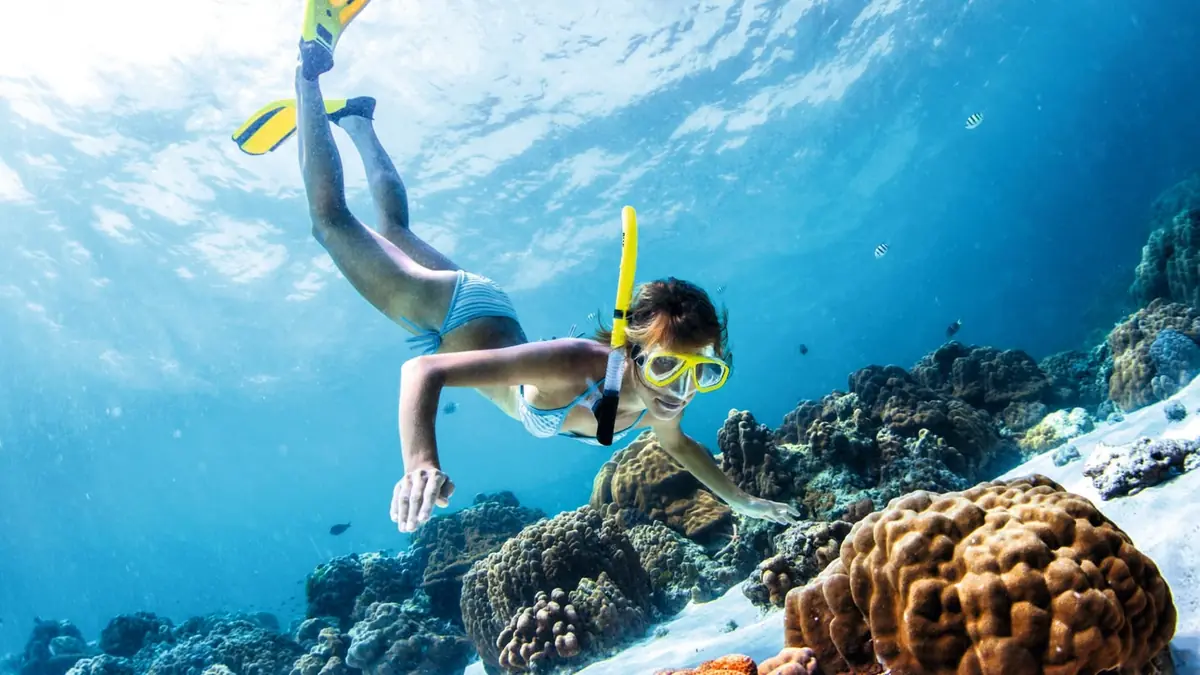
Snorkeling is the cheapest way to see what makes this place unusual, and you can start from the sand. The reef sits close enough to shore that a decent swimmer reaches structure in a few minutes.
Tides govern everything. Low tide exposes rock and shallow pools, concentrating fish into readable pockets; high tide gives you more water over the coral but spreads everything out. Check a tide table for Acajutla before you commit to a morning.
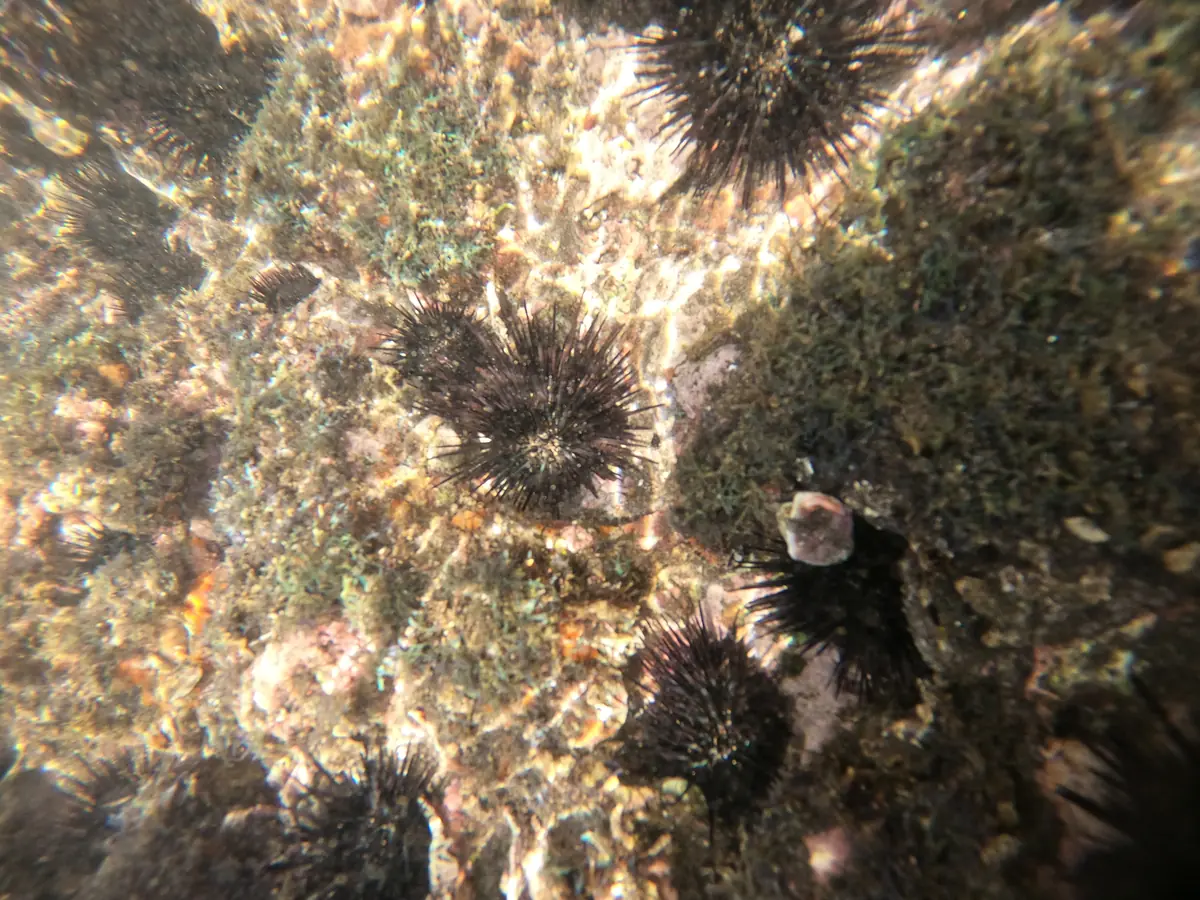
Two practical notes. First, gear rental is limited and inconsistent, so bring your own mask and snorkel if you own them. Second, wear water shoes. The entry is rock, not sand, and the reef hosts Diadema mexicanum, a long-spined sea urchin that lives in exactly the crevices you would put a bare foot into.
Whale Watching and the Rules That Govern It
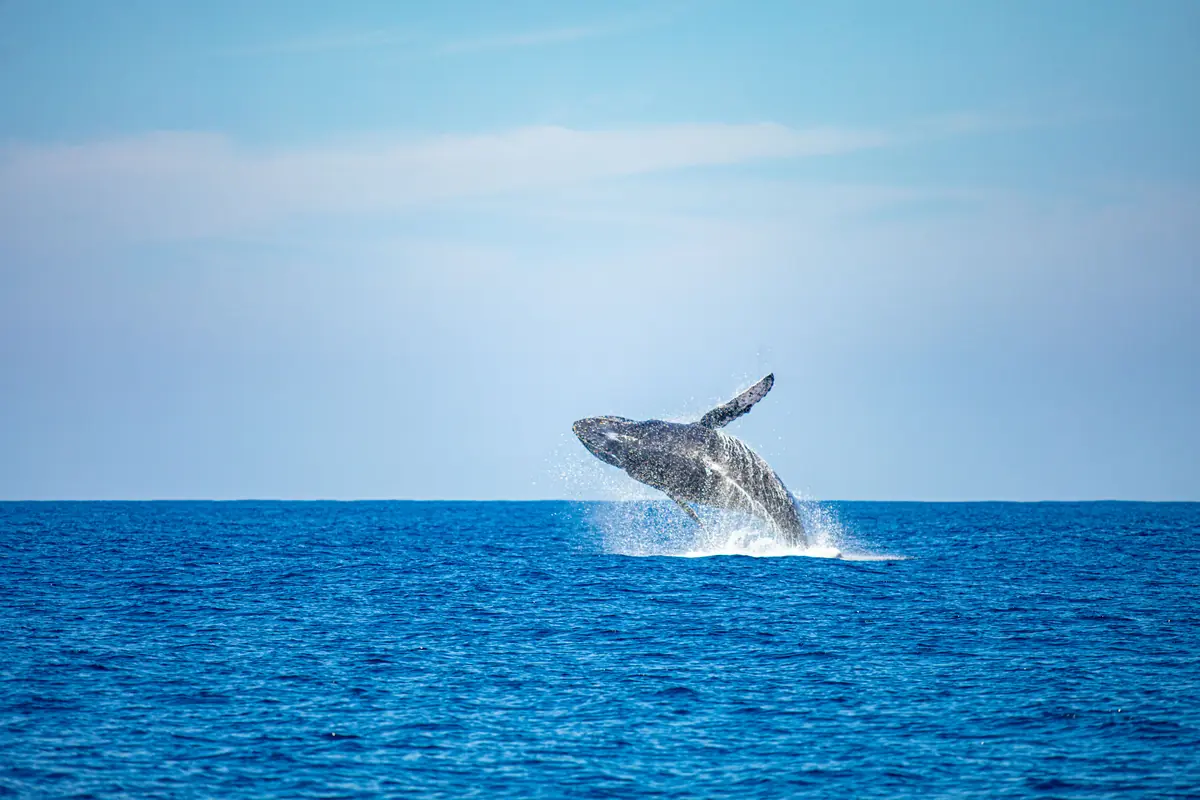
Humpback whale season at Los Cobanos runs November through March, with January and February the reliable months. These are animals on the long migration between Alaska and Ecuador, and the nutrient-rich water off this coast gives them a place to feed and rest.
El Salvador’s environment ministry, MARN, regulates the tours tightly, and the rules are worth knowing before a captain talks you into something:
- Only MARN-authorized guides may run whale-watching trips. There are 43 licensed guides working the season.
- Boats must stay at least 330 feet (100 meters) from the animals.
- That distance doubles to 660 feet (200 meters) when a calf is present.
- Observation is capped at roughly 30 minutes.
- Swimming or diving with the whales is prohibited.
- The number of boats allowed near a single whale is limited.
Sightings are never guaranteed. Ask what the operator does if you see nothing; some run a reduced-rate second trip, and the ones who promise whales are the ones to avoid.
The same boats spot bottlenose dolphins, pantropical spotted dolphins and false killer whales, all documented inside the protected area, so a blank whale day is rarely a blank day.
Sea Turtles and Nesting Season
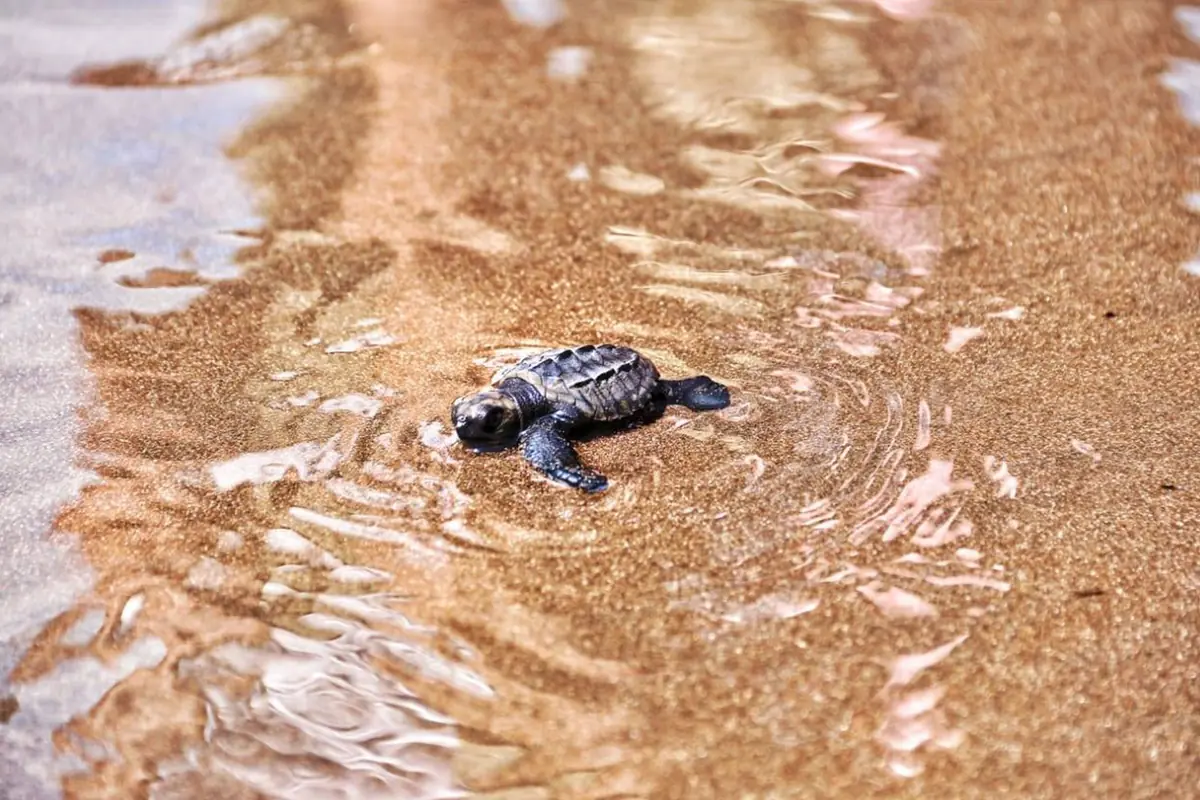
Four sea turtle species use these waters: olive ridley, green, hawksbill and leatherback. The hawksbill matters most here. Complejo Los Cobanos is a nesting site for that critically endangered species, and it is one of the reasons the area got Ramsar status in the first place.
Nesting runs roughly July through January, peaking September through November. Community hatchery programs collect eggs, incubate them and release hatchlings, and visitors can usually join a release for a small donation. Ask your hotel; these are informal, community-run and not something you book online months ahead.
Other Things to Do Around the Bay
The reef is the main event, but a two-night stay fills easily.
Deep-sea fishing is a genuine local specialty. Trenches sit only a few miles offshore, and local fishermen charter their boats for mahi-mahi, sailfish, wahoo, tuna and marlin. Negotiate directly on the beach.
Kayaking and paddleboarding work well over the shallow reef on calm mornings, since you can see coral and fish without getting in the water. Tide pooling at low tide is genuinely good, with urchins, small fish and anemones trapped in the rock basins. Walk south along the shore for the lighthouse and, on clear days, a view inland toward the Izalco volcano. Iguanas hang around the parking area and the scrub behind the beach.
For more sand, Playa El Flor and Barra Salada are both a short drive away, the second being a mangrove estuary rather than a swimming beach.
Day Trips Worth Taking
Los Cobanos works well as a quiet base for western El Salvador.
- Ruta de las Flores (Juayua, Ataco, Apaneca): about an hour inland. Juayua’s weekend food festival is the anchor.
- Santa Ana volcano and Lake Coatepeque: roughly 90 minutes, and the best hike in the country.
- El Tunco and El Zonte: about an hour and 15 minutes east for surf and nightlife.
- El Imposible and Cerro Verde national parks: under two hours.
- Joya de Ceren, the Maya village buried by ash and the country’s only UNESCO World Heritage Site: about an hour.
Where to Stay in Los Cobanos
Lodging splits cleanly into a big all-inclusive, a handful of small beachfront hotels and a large pool of vacation rentals.
| Property | Type | Nightly range | Trade-off |
|---|---|---|---|
| Los Cobanos Village Lodge | 3-star, private beach and pool | About $41 to $121 | Central, doubles as a tour meeting point; reviews are mixed and rooms are dated |
| Royal Decameron Salinitas | Large all-inclusive | About $173 to $232+ | Six restaurants, private beach, nightclub; under a mile away but a self-contained world |
| Las Veraneras Villas & Resort | Mid-range resort | Varies by season | Good for families wanting pools |
| Punta Diamantes | Small beachfront | Varies | Quieter, fewer amenities |
| Airbnb and vacation rentals | Around 120 listings | From about $50 | Best value for groups; confirm beach access, not just “beach area” |
Rates swing hard by season and booking platform, and Semana Santa pricing bears no relationship to the rest of the year. Book that week months out or skip it.
For phone bookings, Los Cobanos Village Lodge is reachable at +503 2600 0200.
What and Where to Eat
Eating here is the easiest part of the trip. A row of open-air ranchos and comedores lines the beach, and most of them buy their fish off the boats the same morning.
Restaurante La Ballena is the name that comes up most often, sourcing daily from local fishermen and serving fried whole fish, garlic shrimp and stuffed lobster with a direct ocean view. Bar Ballena, Mar de Plata Restaurante y Cabañas and Rancho El Ancla are all on the same stretch. El Cangrejito Playero sits over at Playa El Flor if you want a reason to drive.
What to order:
- Pescado frito: whole fried fish, usually snapper, served with tortillas, salad and rice.
- Mariscada: a rich seafood soup with shrimp, fish, crab and shellfish. The dish to get if you order one thing.
- Coctel de conchas: black clam cocktail with lime, cilantro and onion, sold cold and cheap.
- Pupusas: the national dish, thick stuffed corn cakes, best in the evening from a comal rather than a restaurant kitchen.
Bring cash. Card acceptance at the beachfront ranchos is inconsistent, and the ones that take cards sometimes cannot process them when the connection drops.
Is Los Cobanos Safe? A Practical Brief for American Travelers
Yes. The US State Department lowered El Salvador to Level 1, “Exercise Normal Precautions,” in April 2025 and has kept it there. That is the same tier as Japan, Switzerland and Australia, and a lower risk rating than France, Germany or the United Kingdom.
The numbers behind that shift are not marginal. El Salvador closed 2024 with 114 homicides, a rate of 1.9 per 100,000 residents, and national police reported 2025 finishing lower still at roughly 82 homicides. For most of the past three decades this was among the most dangerous countries in the hemisphere; it is not anymore.
One piece of context American travelers should understand: a State of Exception has been in force since March 2022, suspending certain constitutional protections. In practice this does not affect a beach trip, but it means you should avoid political demonstrations entirely, carry ID, and know that foreign nationals have been detained under those emergency powers.
The realistic risks at Los Cobanos are ordinary beach risks. Rocky entries and urchins, sun exposure, mosquitoes at dusk, and petty theft if you leave a phone on a towel. Rip currents are less of a concern here than at open-swell beaches, precisely because of the reef, but stay aware near channels in the rock.
Money, Cards and Bitcoin
El Salvador uses the US dollar, so there is no exchange and no conversion math. Bring small bills; a $50 at a beach comedor will cause problems.
Bitcoin’s legal-tender status was revoked in January 2025. Merchants may still accept it, and some tour operators here do, but nobody is required to, and you should not plan to pay that way. ATMs exist in Acajutla and Sonsonate rather than at the beach itself, so withdraw before you arrive.
Tipping runs about 10 percent, and many restaurants add it to the check automatically. Check before you double up.
Entry Requirements
US citizens need a valid passport. A tourist card historically cost $12 cash on arrival, though some reporting indicates the fee has been dropped for visa-exempt nationals. Carry $12 in small bills as insurance and confirm at immigration.
El Salvador belongs to the CA-4 agreement with Guatemala, Honduras and Nicaragua, which grants 90 days across all four countries combined rather than 90 days each. Proof of onward travel is occasionally requested.
What a Day Costs
- Budget: $45 to $70 per person, covering a simple room or hostel bed, three local meals, bus travel and shore snorkeling.
- Mid-range: $110 to $180, covering a beachfront hotel room, restaurant meals, a rental car and one paid activity.
- All-inclusive at Salinitas: $175 and up per night before activities.
English is spoken at dive shops, the larger hotels and by licensed guides. At the ranchos and on the buses, it is not. A translation app and a few Spanish phrases go a long way.
How to Visit Without Damaging the Reef
This is a protected area under active management by MARN, and the reef is measurably stressed. A few habits matter more than they would elsewhere:
- Never stand on, touch or kick coral. Live coral cover here is already down to a few percent, and a fin strike undoes decades of growth.
- Use mineral sunscreen with non-nano zinc oxide, or cover up with a rash guard instead.
- Take every piece of plastic back out with you. Trash accumulates after busy weekends, and the beach cleanup falls on the community.
- Book licensed guides. For whale watching this is a legal requirement, not a preference.
- Hire local. Fishermen, boat captains and comedor owners are the people with an economic reason to keep the reef alive.
- Skip the shell and coral souvenirs. Those are the beach.
Who Should Skip Los Cobanos
Surfers should look elsewhere; the reef kills the swell that makes this coast famous, and the outer reef breaks 800 yards offshore are for experienced surfers on big-swell days only. Anyone who wants powdered white sand and a swim-up bar will be happier at an all-inclusive. Travelers expecting Caribbean-grade visibility will be disappointed most of the year.
Everyone else, meaning divers, snorkelers, fishermen, whale watchers, families with young kids who need calm water, and anyone who would rather eat mariscada at a plastic table than order room service, will find this one of the better-value stretches of coast in Central America. It has not been packaged yet. That is the whole appeal, and it will not last forever.