Albania visa requirements look simple on paper, then turn into a paperwork maze the moment you stay longer than a beach week. This guide breaks down who walks in passport-free, who applies online before flying, and what remote workers actually face when chasing a long-term permit — the visa layer of planning a trip to Albania.
Do you need a visa for Albania?
Whether you need an Albania visa depends on your passport. US citizens stay one full year with no application. Citizens of the UK, EU, Canada, and Australia get 90 days within a 180-day window. Most South Asian and African passport holders apply for an electronic visa before flying.
A few universal rules apply to everyone:
- Passport validity: at least 3 months beyond arrival (airlines often enforce 6 months)
- Blank passport pages: minimum 1 for the entry stamp
- Currency declaration: required above €10,000 or equivalent (roughly 1,000,000 lekë / about $10,800) — worth reading up on Albania’s currency and ATMs before you arrive
- Return ticket: border officers occasionally ask for proof of onward travel
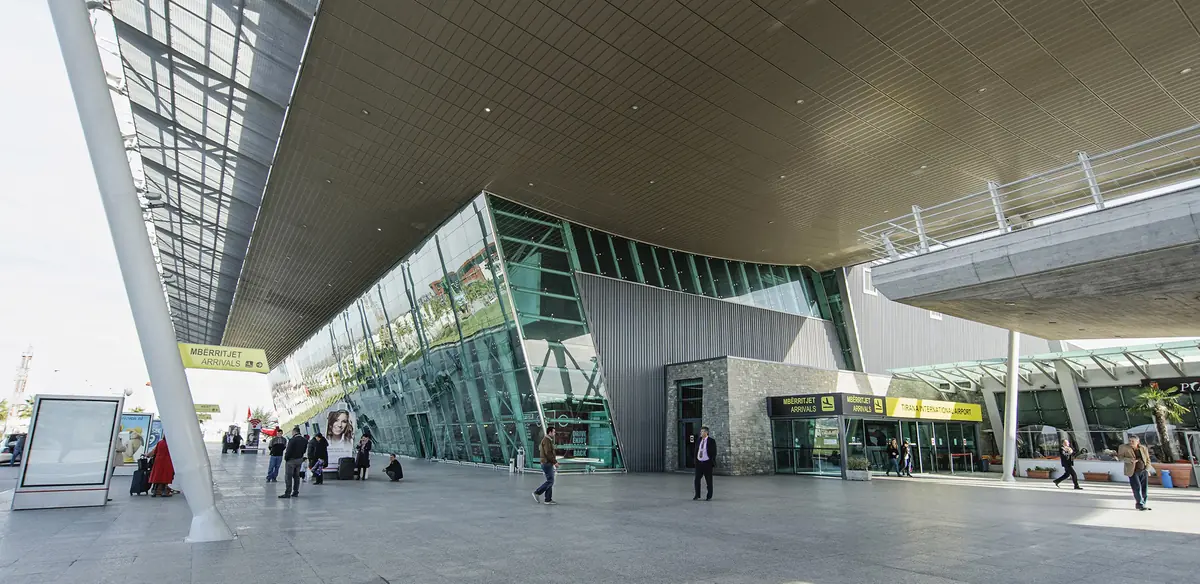
Pro Tip: Border guards at Tirana International Airport are quietly switching to electronic logging instead of physical stamps. If you don’t get a stamp on entry, save your boarding pass — it’s your only proof of arrival date if a future officer questions your stay.
Who actually needs a visa to enter Albania?
Most Western travelers do not need a visa for Albania. US passport holders get a one-year visa-free stay under a bilateral agreement. UK, EU, Canadian, and Australian citizens get 90 days visa-free. Nationals of India, China, South Africa, and most African and South Asian countries must apply for an electronic visa before traveling.
There is one loophole worth knowing. If you hold a passport that normally requires an Albania visa but you also carry a valid, previously used multiple-entry visa from the US, the UK, or any Schengen country, you can enter Albania visa-free for up to 90 days. The visa just needs to have been activated at least once in its issuing country.
Albania passport validity: 3 months or 6 months?
The legal minimum is 3 months of passport validity from your arrival date, and that is the rule Albanian border police actually enforce. The 6-month figure floating around online comes from airline check-in policies, not Albanian law. Your departure airport, not the Albanian border, is where a short-dated passport becomes a problem — worth confirming when you book flights to Albania from the US.
Those carriers — Lufthansa and Wizz Air among them — often deny boarding if your passport sits under 6 months, even though Albania itself would let you in.
If your passport is in that gray zone between 3 and 6 months, call your airline directly before flying. The border will not be the problem. The check-in desk in your departure city will be.
How does the US one-year visa-free stay work?
US citizens stay in Albania up to one year (365 days) without applying for any residence permit. To reset the one-year clock, an American must leave Albania and stay entirely outside the country for at least 90 consecutive days. Short weekend trips to Montenegro or Greece reset nothing.
Here is what trips Americans up most often:
- Quick hops out: a weekend in Kosovo or a week in Italy does nothing to the one-year counter
- Hard reset only: you must be physically outside Albania for 90 straight days to start a fresh year
- Overstay penalties: staying beyond 365 days without applying for residency triggers fines at the border on departure
- No registration: for stays under one year, no check-in with local police or municipalities is required
Pro Tip: I’ve watched mixed-passport families get caught at the border because one parent miscounted the year. The 365 days is calculated per person, not per family. If one of you is on day 370, that traveler pays the fine even if everyone else is fine.
What counts as “leaving Albania” for the reset?
Crossing into a neighboring country and coming back the same day does not count. The 90-day exit clock only starts when you are fully outside Albanian territory, and it resets to zero if you re-enter even briefly. Most travelers fold the reset into a long European summer or a winter trip home to the US.
How does the 90-day rule work for UK, EU, and Commonwealth travelers?
For citizens of the UK, EU, Australia, and Canada, Albania allows a maximum of 90 days within any rolling 180-day period. Leaving briefly does not reset the allowance — it only pauses the count. The math mirrors the Schengen rolling window, even though Albania is not part of Schengen.
A concrete example helps. If you stay 85 days, leave for 5 days, then come back, you have only 5 days of legal stay left. The 180-day window is always counted backward from your current date.
Overstaying as a 90-day visitor is not a forgivable mistake. The standard fine sits around 30,000 ALL (roughly $320) and must be paid in cash before border police process your physical departure. Paying it does not retroactively legalize your overstay — it is purely a punitive exit tax.
Pro Tip: The “weekend visa run” to North Macedonia or Greece is one of the most expensive myths in the Balkans. It does not buy you another 90 days. If you want to stay longer, your only legal path is the Unique Permit application route below.
What are the different types of Albanian electronic visas?
Travelers who are not visa-exempt apply through Albania’s official electronic visa portal. The Type C visa is a short-stay permit for tourism or business, valid for up to 90 days. The Type D visa is a long-stay permit required for anyone planning to apply for residency, including remote workers and family reunification cases.
Quick breakdown of the visa categories:
- Type A: airport transit visa for specific routing connections (around €35 / ~$38)
- Type C: short-stay tourism or business visa, up to 90 days (around €60 / ~$65)
- Type D: long-stay visa for residency, work, or study applications (around €100 / ~$108)
- Processing time: around 15 working days, up to 30 in busy periods
- Application window: must be submitted within 90 days of intended travel
Some business, medical, and family-visit categories run higher, around €120 (~$130) — one line item among the broader costs of traveling in Albania. All fees are non-refundable, even if your application is rejected. And there is one logistical trap that wipes out hundreds of applications each month: once your application is approved for the next stage, you have exactly 15 days to pay the processing fee. Miss that window and the system flips your status to “Not paid” and issues a permanent refusal.
How do you apply for the Albania Unique Permit (digital nomad visa)?
Albania does not officially issue a document called a “digital nomad visa.” Remote workers apply instead for the Unique Permit, a residency category that combines work and stay authorization — the practical backbone of life as a digital nomad in Albania. It requires proof of foreign remote income, a local Albanian bank account, full expat-grade health insurance, and a clean criminal background check from your home country.
Income and insurance thresholds
The numbers are stricter than most blogs admit:
- Minimum income: roughly €9,800/year (about $10,600), often expressed as meeting Albania’s minimum wage of around 40,000 ALL/month (~$430)
- Recommended buffer: applicants reporting closer to $1,500/month see noticeably faster approvals
- Health insurance: minimum €30,000 in coverage (~$32,500), valid inside Albanian territory
- Criminal record: certified background check covering the last 5 years
- Translations: all foreign documents must be apostilled and translated into Albanian by a certified translator
Pro Tip: Standard travel insurance like World Nomads or basic SafetyWing tiers gets rejected more often than not. Immigration officers want full expat-grade health coverage. Genki and the higher SafetyWing Remote Health plans are the ones I’ve seen approved without pushback.
The application steps
The full Unique Permit workflow looks like this:
- Apply for a Type D long-stay visa from your home country before arrival
- Enter Albania on the Type D visa once approved
- Open an Albanian bank account in person (see the next section)
- Gather apostilled documents: background check, proof of income, insurance, rental contract
- Submit the residence application through the e-Albania platform
- Attend the in-person biometric appointment at the Regional Directorate of Border and Migration Police
- Collect the physical Unique Permit card on a Friday pickup window
Internal processing through e-Albania takes up to 55 days from submission. Plan accordingly — your tourist allowance keeps ticking down while you wait.
How do you open an Albanian bank account as a non-resident?
Securing the Unique Permit requires depositing income into an Albanian bank account, but many banks refuse to open accounts without an existing residence permit. The workaround is to apply in person at specific branches that accept non-residents, using a passport plus a valid rental contract or hotel booking as proof of address.
These banks are generally the most flexible for non-resident applications:
- Banka Kombetare Tregtare (BKT): largest network, most consistently non-resident friendly
- Credins Bank: solid second option, faster appointment availability in Tirana
- American Bank of Investment (ABI): smaller network but English-speaking staff at central branches — handy while you get a feel for English in Albania
When you walk in, tell the teller directly that you are opening the account to apply for a digital nomad visa. That phrase gets recognized across most branches and shortcuts the back-and-forth about why you don’t have a residence card yet.
Pro Tip: Banking decisions in Albania are wildly inconsistent between branches of the same bank. If one BKT branch turns you down, walk three blocks to the next BKT branch and try again. I’ve watched the exact same paperwork get rejected and then approved within an hour at two branches on the same street.
What is the difference between the e-Visa and e-Albania portals?
Albania runs two separate government portals, and confusing them is a costly mistake. The electronic visa portal is strictly for entry clearance, applied for from outside the country. The e-Albania platform is the internal system used by people already inside Albania who need residence permits, business registration, or other domestic services.
Key differences:
- e-Visa portal: must be used from outside Albania, for Type C and Type D entry visas
- e-Albania platform: used inside the country for residence permits, processing up to 55 days
- Document format: both portals require PDF uploads only
- Payment: e-Visa fees are non-refundable and locked to a 15-day payment window after approval
Submitting on the wrong portal forfeits the fee and resets your timeline by weeks. The e-Visa site is for getting in. The e-Albania site is for staying.
Pro Tip: When uploading to e-Albania, compress your PDFs before submission. Files over a few megabytes regularly cause server timeouts that look like submission failures, and there is no clean way to recover a half-uploaded application. Aim for under 1 MB per document.
What are the Albania visa photo requirements?
Albanian visa photos differ noticeably from US or UK passport standards. The required dimensions are 47 mm tall by 36 mm wide (about 1.85 x 1.42 inches), with a pure white background, and your face must fill roughly 80% of the frame. Submitting a standard 2 x 2 inch US passport photo triggers an automatic re-upload request.
Full technical specs:
- Physical dimensions: 47 mm (h) x 36 mm (w) — about 1.85 x 1.42 inches
- Digital dimensions: 555 pixels (h) x 425 pixels (w) at 300 DPI
- File format: JPG, JPEG, or PNG
- File size: under 120 KB
- Background: pure white only, no shadows
- Face coverage: approximately 80% of the frame, neutral expression
If you are in the US, photo shops at CVS or Walgreens will not produce this size by default. Either ask them to print custom dimensions or use an online service like ePassportPhoto that supports international biometric formats. Walking into a photo studio in Tirana itself is often the cheapest option, around $4-6.
What happens at the Regional Directorate of Border and Migration Police?
After your online application is approved through e-Albania, you finalize your residence permit in person at the Regional Directorate of Border and Migration Police. You bring a printed and signed copy of your accepted application, two physical passport photos, your original passport, and your rental contract. The visit covers biometric registration and document verification.
Logistics worth knowing:
- Main Tirana office: Rruga Rexhep Preza, reachable by city bus or a 10-minute taxi from the center
- Documents to bring: printed application, passport, photos, rental agreement, insurance proof
- Minors: anyone under 18 must be accompanied by a legal parent or guardian — useful to know if you’re traveling to Albania with kids
- Pickup: completed permit cards are issued on Fridays only
Pro Tip: Do not show up at the directorate on a Friday hoping to start a new application. Fridays are reserved exclusively for handing out finished permits, and the front desk will turn you away. Tuesday and Wednesday mornings before 10 a.m. are the quietest windows for new submissions.
What are the most common Albania visa application mistakes?
Most Albania visa rejections come from clerical errors, not policy denials. The biggest culprits are missing apostille certifications on foreign documents, untranslated paperwork, missing the 15-day fee payment window, submitting basic travel insurance instead of expat-grade coverage, and providing weak proof of accommodation.
Mistakes I see repeatedly:
- Apostille shortcut: assuming a notarized US document is enough — it must carry an apostille from your home state
- Wrong translator: using Google Translate or an uncertified translator instead of a licensed professional
- Travel insurance instead of health insurance: trip-cancellation policies are not the same thing
- Hotel booking instead of a lease: a 3-night Airbnb is rarely accepted as proof of address for the Unique Permit
- DIY paperwork without checking the rejection list: the Ministry publishes refusal categories that most applicants never read
Avoid paying any “facilitator” who promises to grease the wheels at the border or the directorate. Bribery and unlicensed brokers are aggressively monitored, and getting caught buys you a permanent entry ban — not a faster permit.
Which nationalities need a visa for Albania?
Whether you need prior authorization comes down to your passport. US citizens get the longest visa-free window at one full year; UK, EU, Schengen, Canadian, and Australian travelers get 90 days per 180-day period; and most other nationalities apply for an electronic Type C or Type D visa before traveling.
| Nationality | Prior authorization required? | Maximum stay | Visa type |
|---|---|---|---|
| United States | No | 1 year (365 days) | Visa-free |
| UK / EU / Schengen | No | 90 days per 180-day period | Visa-free |
| Canada / Australia | No | 90 days per 180-day period | Visa-free |
| India / South Africa | Yes | 90 days | Type C (electronic) |
| China | Conditional | 90 days | Type C (electronic) |
| Third-country remote workers | Yes | Long-term | Type D / Unique Permit |
Holders of valid, previously used multi-entry visas from the US, UK, or Schengen area can enter visa-free for up to 90 days regardless of nationality.
The bottom line on Albania visa requirements
TL;DR: US citizens get an unmatched one-year visa-free stay in Albania, while UK, EU, and Commonwealth travelers are capped at 90 days within a 180-day rolling window. Remote workers chasing a long stay must apply for the Unique Permit, which means apostilled documents, expat health insurance, and a local bank account. Always confirm the latest rules on the official e-Visa and e-Albania portals before you book a flight.
If you take only one thing from this guide: respect the 15-day payment window on every electronic application, and never trust a weekend border run to reset your clock. Those two mistakes cost more travelers their Albania plans than any policy change ever has.
Have you already applied for the Albania Unique Permit, or are you still trying to figure out which bank to walk into first? Drop your situation in the comments and I’ll point you toward the branch most likely to say yes.