The best time to visit Albania comes down to one decision: shoulder season or summer. Get the timing right and you get warm seas, open infrastructure, and prices a US traveler can actually justify. Get it wrong and you get 95°F heat, 45-minute traffic jams, and Ksamil at full crush. Here’s how to choose.
Pro Tip: Lock in May, June, September, or October before anything else. Those four months deliver the best balance of warm weather, open infrastructure, and sane accommodation prices across the entire country.
What is the best time to visit Albania?
The best time to visit Albania is during the shoulder seasons of May through June and September through October. Temperatures average a comfortable 70°F to 80°F (21°C to 26°C), the Ionian Sea stays warm enough for swimming, and the Accursed Mountains are safely accessible for hiking — without the heat, crowds, or price spikes of peak summer.
July and August routinely push above 90°F (32°C) in inland cities, making sightseeing in places like Berat and Gjirokaster genuinely punishing in the midday hours. The coast offers some relief, but tourist infrastructure gets stretched thin and accommodation prices climb sharply.
November through March is largely off-limits for coastal resort travel. Hotels and beach clubs in the south shut down almost entirely, and the northern mountain passes become snowbound — accessible only to winter specialists.
On my last drive over the Llogara Pass in late September, the difference from August was night and day. The coastal highway was calm, I could actually pull over to take in the view, and the one-lane sections that back up for 45 minutes in peak season were nearly empty.
When is the best time for a beach trip to the Albanian Riviera?
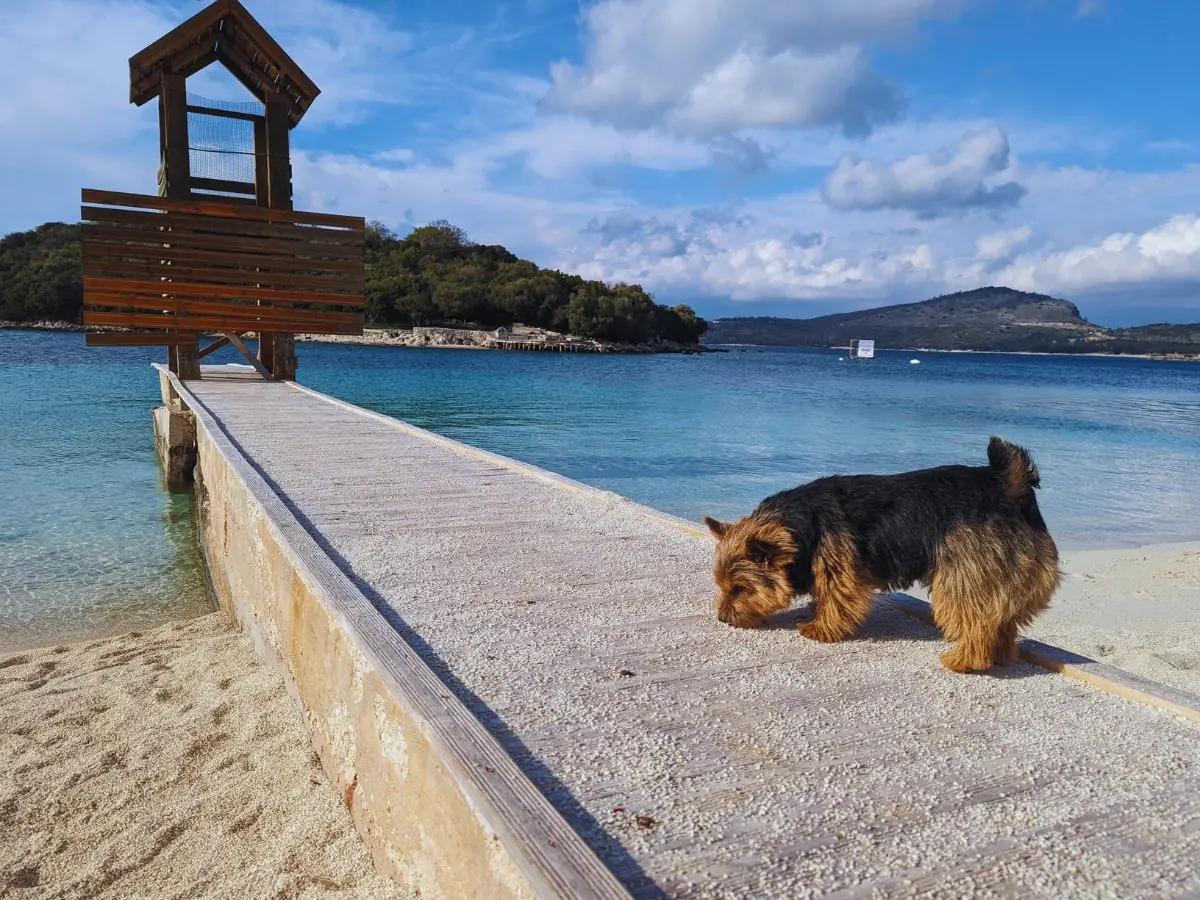
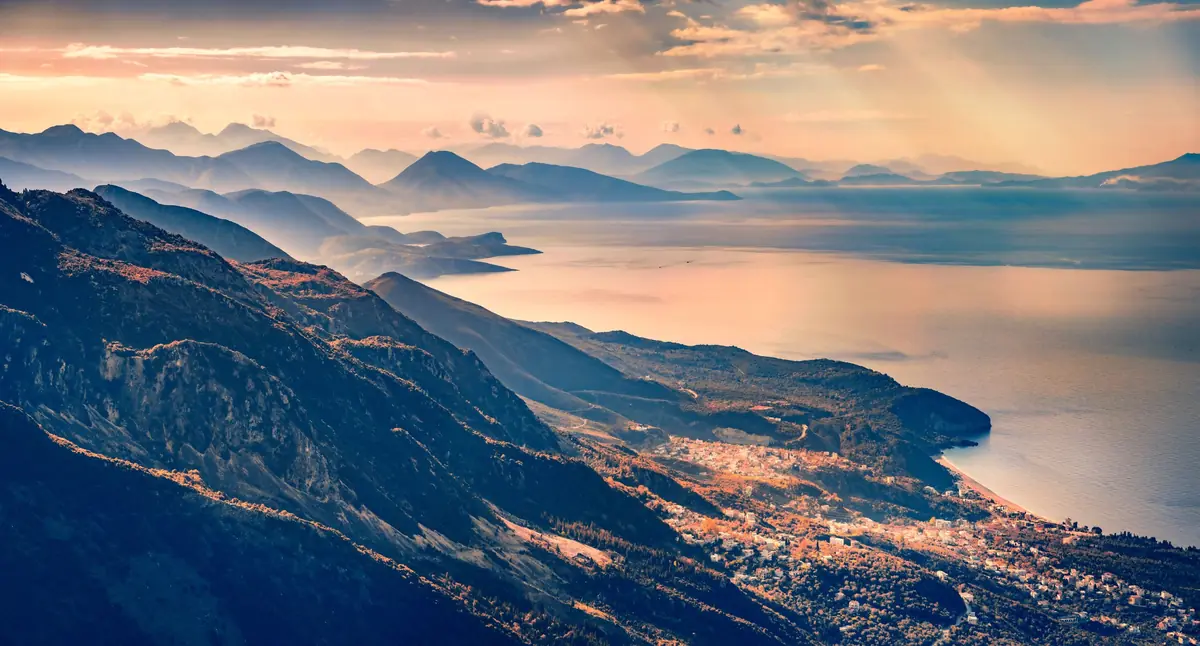
For the Albanian Riviera, early June or mid-September is the sweet spot. The Ionian Sea is warm enough for comfortable swimming, the sun stays strong, and the full coastal infrastructure — beach clubs, boat trips, restaurants — is operational. You get everything the coast offers without the overcrowding that defines July and August.
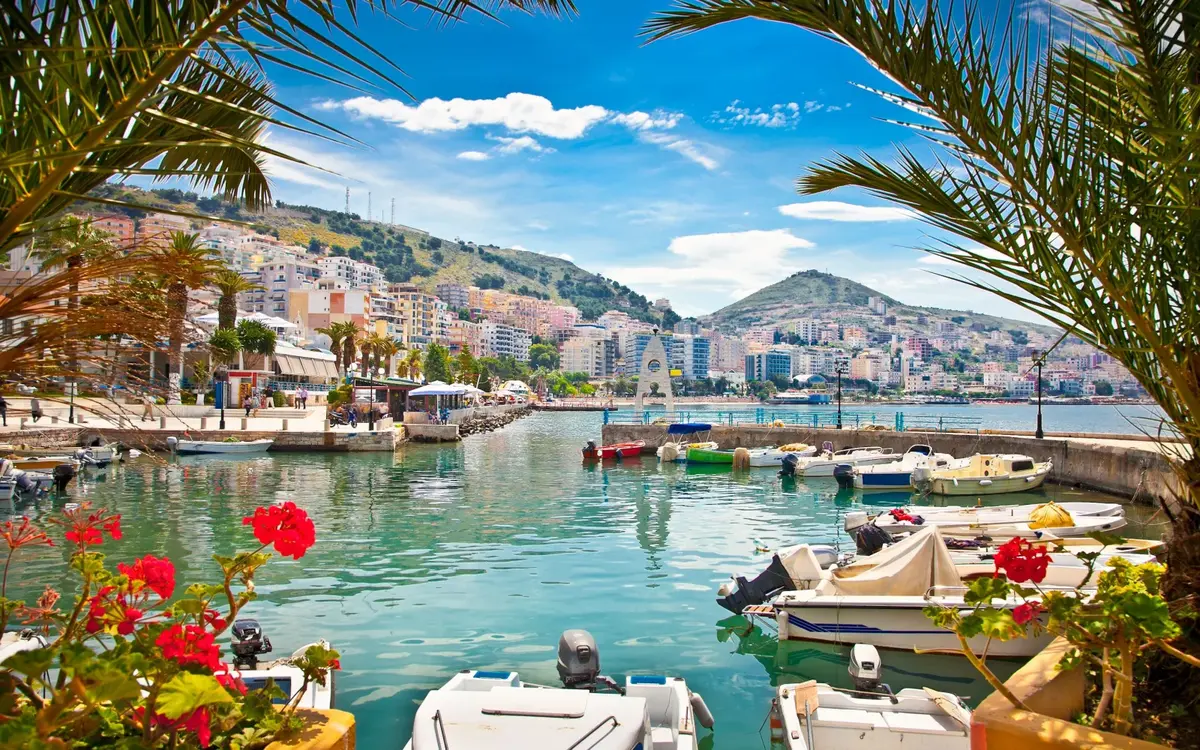
The Riviera runs from Vlore south through the Llogara Pass down to Ksamil, near the Greek border. The southern stretch, from Himara to Saranda, consistently has the clearest water and the most dramatic coastline.
Ksamil — worth visiting, but not in peak season
Ksamil gets more social media attention than anywhere else in Albania, and that attention has completely transformed the experience in July and August. Finding an empty patch of public sand is nearly impossible. Expect to pay upwards of 1,500 Albanian Lek ($18 USD) for a mandatory private sunbed just to gain physical access to the water — on top of drinks and food. TikTok and Instagram rarely show that logistical reality.
A national rule now requires roughly 30% of every beach to stay free of charge, and Ksamil has a couple of designated free plots as a result. Enforcement is inconsistent in practice — the free zones are small and fill early — but it gives you a legal foothold. The reliable workaround: walk past the last row of umbrellas, where the sand is open to anyone.
For a summer trip to the far south, Himara or Borsh are better choices. Both have excellent water, far fewer crowds, and restaurants where you pay for the food rather than the real estate.
Gjipe Beach — the free alternative
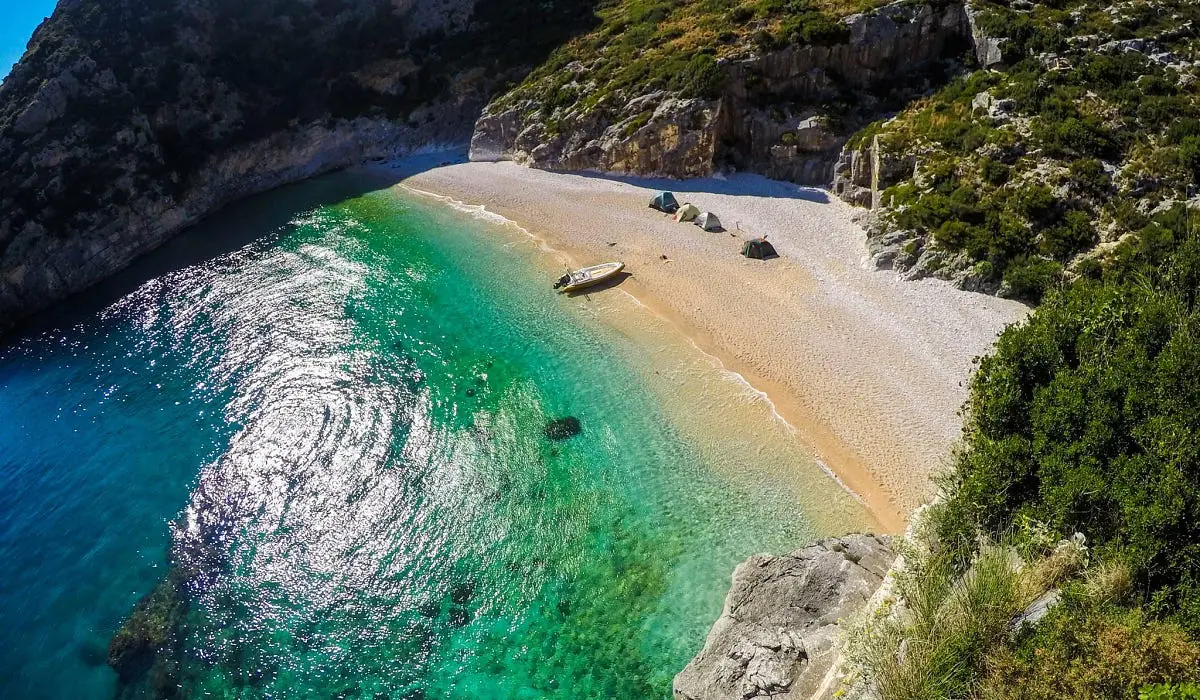
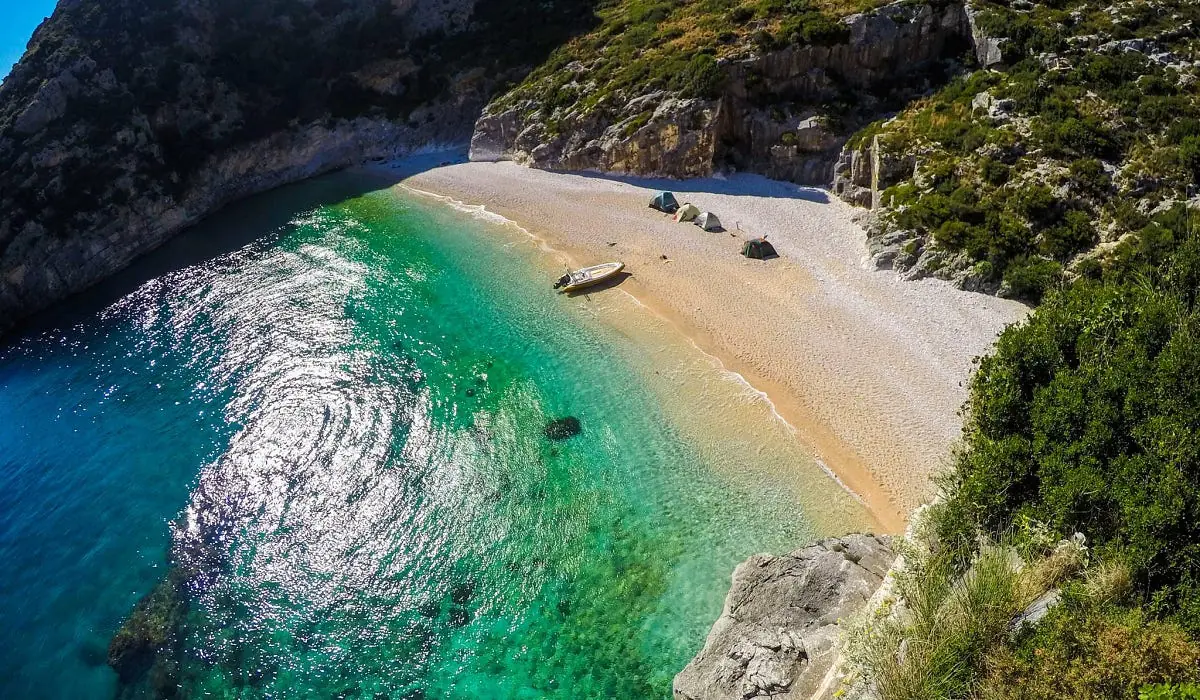
Gjipe Beach requires a 30 to 40-minute hike down a canyon and has no sunbed operators. Just free pebble beach access and genuinely clear water. It is one of the few Riviera beaches that hasn’t been turned into a full commercial operation, and the hike in keeps the crowd levels manageable even in summer.
Pro Tip: Plan your southern itinerary around a Tirana arrival and a drive south. Vlora International Airport was built to cut out that long drive, but its commercial passenger launch keeps getting postponed — so don’t count on flying into Vlore until you can see live scheduled service for your dates.
- Location: Southern Albanian Riviera, between Vlore and Saranda
- Best for: Travelers prioritizing clear water over beach-club convenience
- Shoulder-season water temp: Around 75°F (24°C) in June and September
- Peak-season caution: July and August bring severe traffic between Saranda and Ksamil
When can you hike the Accursed Mountains?
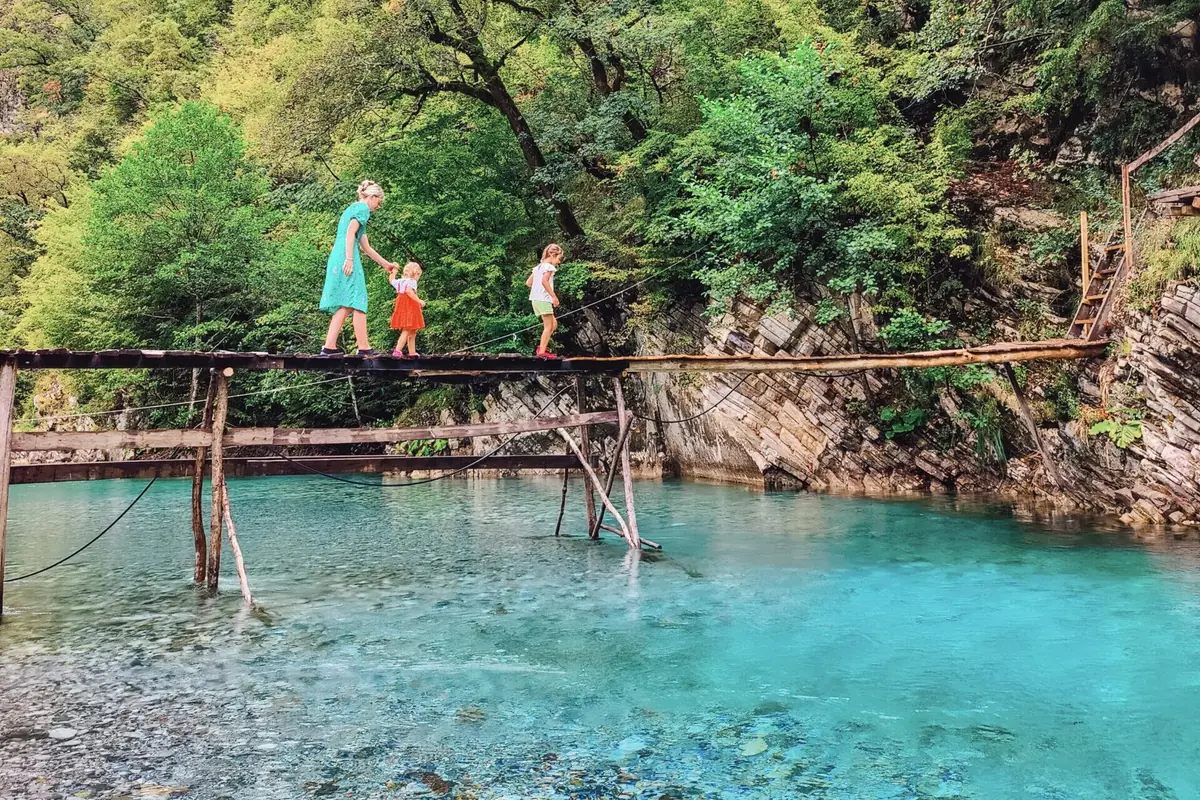
The safest window for hiking the Accursed Mountains in northern Albania runs from late June through early September. High-altitude trails — including the popular route between Theth and Valbona — remain blocked by snowmelt and genuinely impassable until the final weeks of June. Family-run guesthouses in Theth close entirely from November through April.
This creates a much shorter accessible season than most guides suggest, and it fills up fast.
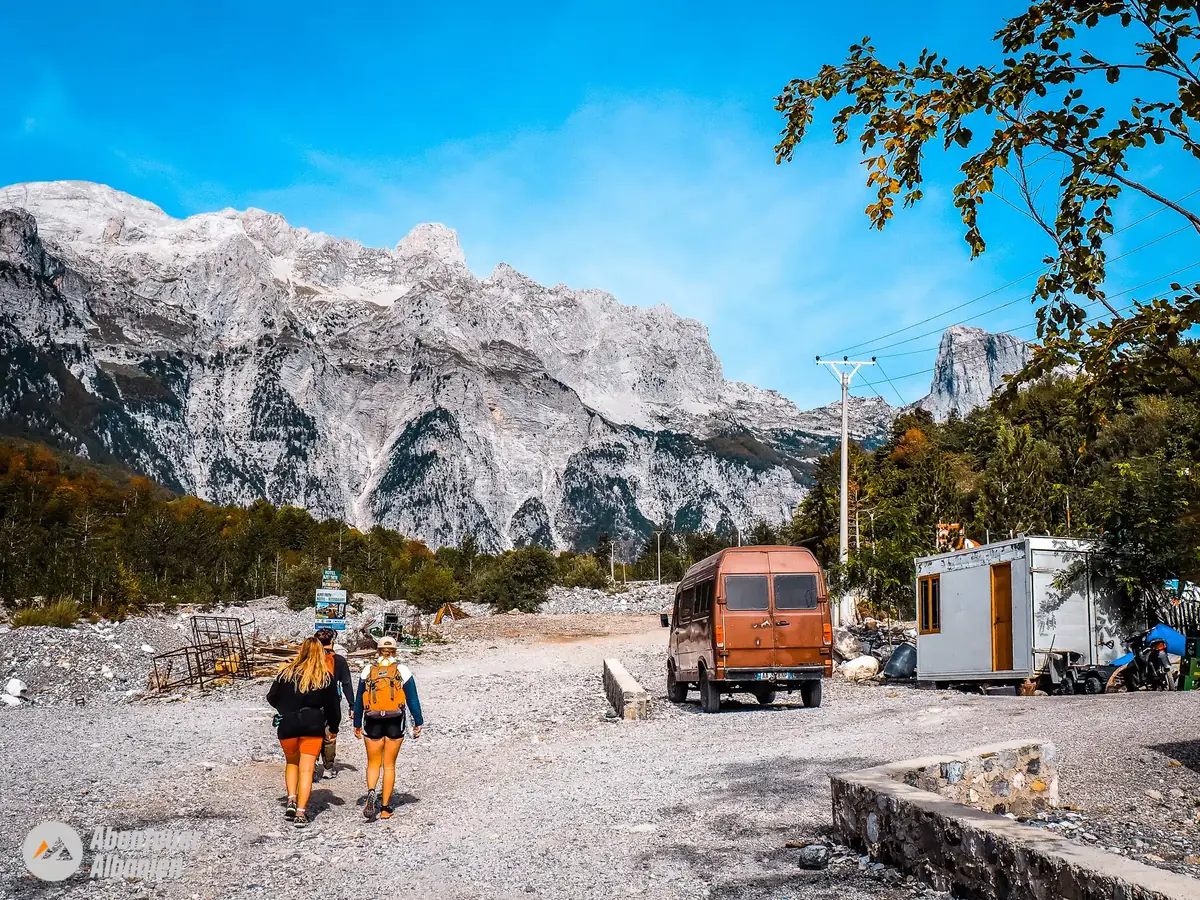
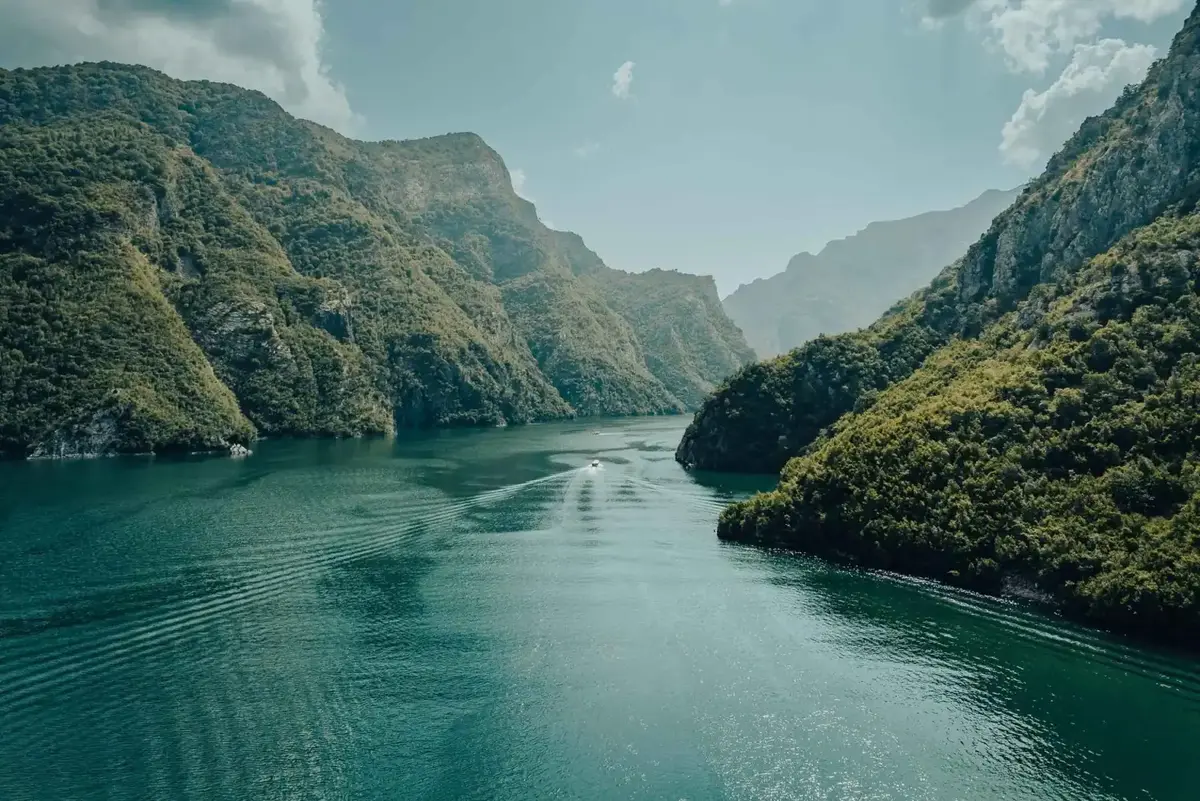
The Theth to Valbona route anchors most northern hiking itineraries. To reach either trailhead from the south, you need to factor in a ferry crossing of Komani Lake — one of the practical reasons the northern circuit requires at least two full travel days in each direction. Book the Komani Lake ferry well in advance during the summer window; it operates on a strict schedule and fills up.
The first time I hiked into Theth in mid-July, the early morning air in the valley was cold enough to see my breath. The sun drops behind the towering peaks early in the afternoon and the valley floor shifts from warm to uncomfortably cold within an hour. Pack a dense fleece regardless of what the Tirana forecast shows.
Pro Tip: Add a minimum of two full travel days to your schedule for the northern mountains. Roads in and out of Shkoder and up to the mountain villages are winding and slow — 60 miles (97 km) can take 3 hours.
- Best months: Late June through early September
- Closest transit hub: Shkoder, then onward via furgon or private transfer
- Key route: Komani Lake ferry to Fierze (book ahead in summer)
- Guesthouse availability: Limited entirely to the summer window
What’s the weather like in Albania each season?
Albania runs on two separate climate systems that barely speak to each other. The coast follows a Mediterranean rhythm — dry, warm summers and wet winters. The northern interior runs on an alpine calendar — short summers, harsh winters, and snowpack that lingers well into spring. Your ideal month depends on which Albania you’re chasing.
Spring (April to May)
April and May are the most underrated months in Albania for inland exploration. Temperatures sit in the high 60s°F (around 19°C), wildflowers cover the hillsides, and the steep cobblestone streets of Berat and Gjirokaster are genuinely pleasant to walk for hours without overheating.
The Ionian coast is still coming alive in April — some hotels and beach clubs haven’t opened yet, and the sea sits around 63°F to 65°F (17°C to 18°C), which is swimmable only if you’re determined. By mid-May, the coast is fully operational and the water has warmed to a comfortable level.
Mountain passes in the north may still be blocked by snow in April and early May. Verify conditions before planning any Accursed Mountains hiking before late June.
Summer (June to August)
June is the sweet spot of the season. Beach infrastructure is open, the Ionian Sea is warm, and the crowds haven’t peaked yet. It’s also when the major electronic music festivals activate, which dramatically changes the atmosphere in specific coastal towns.
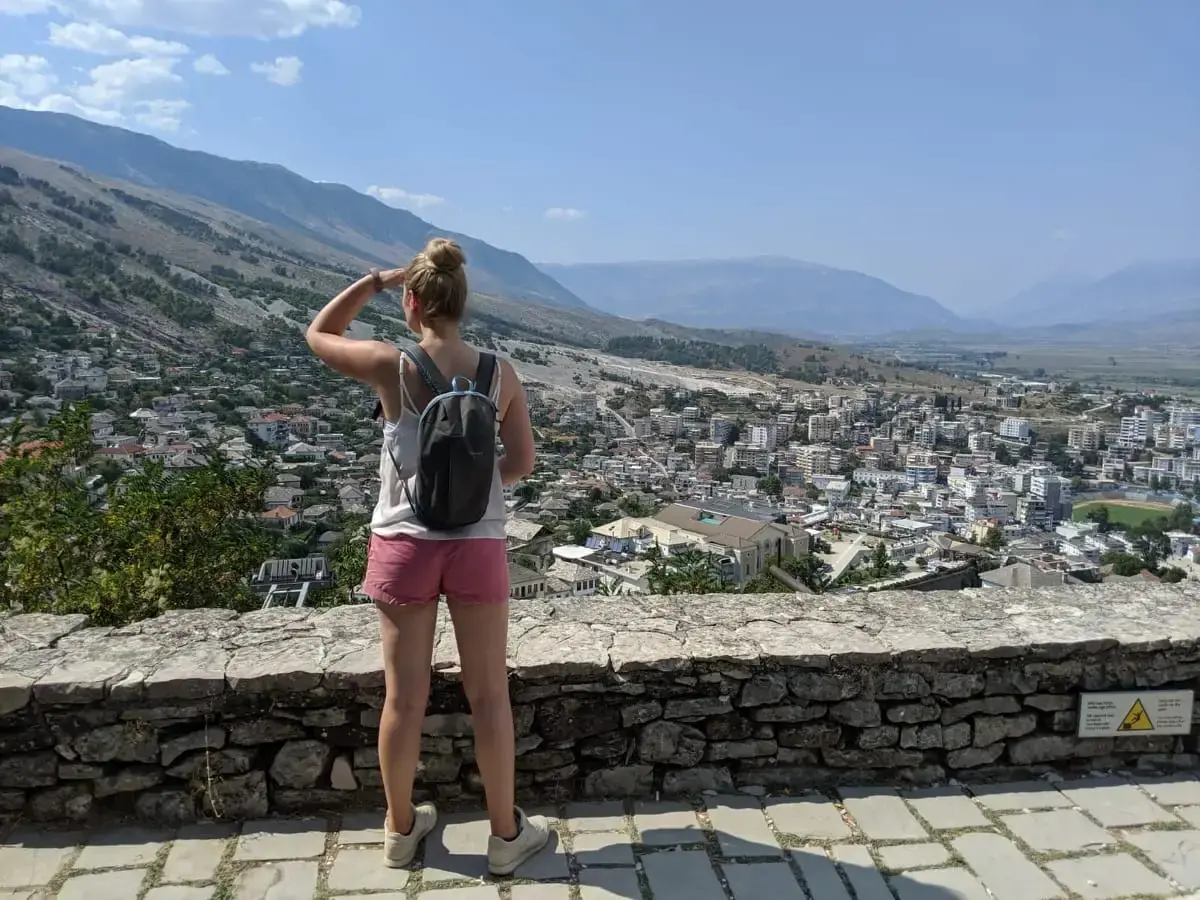
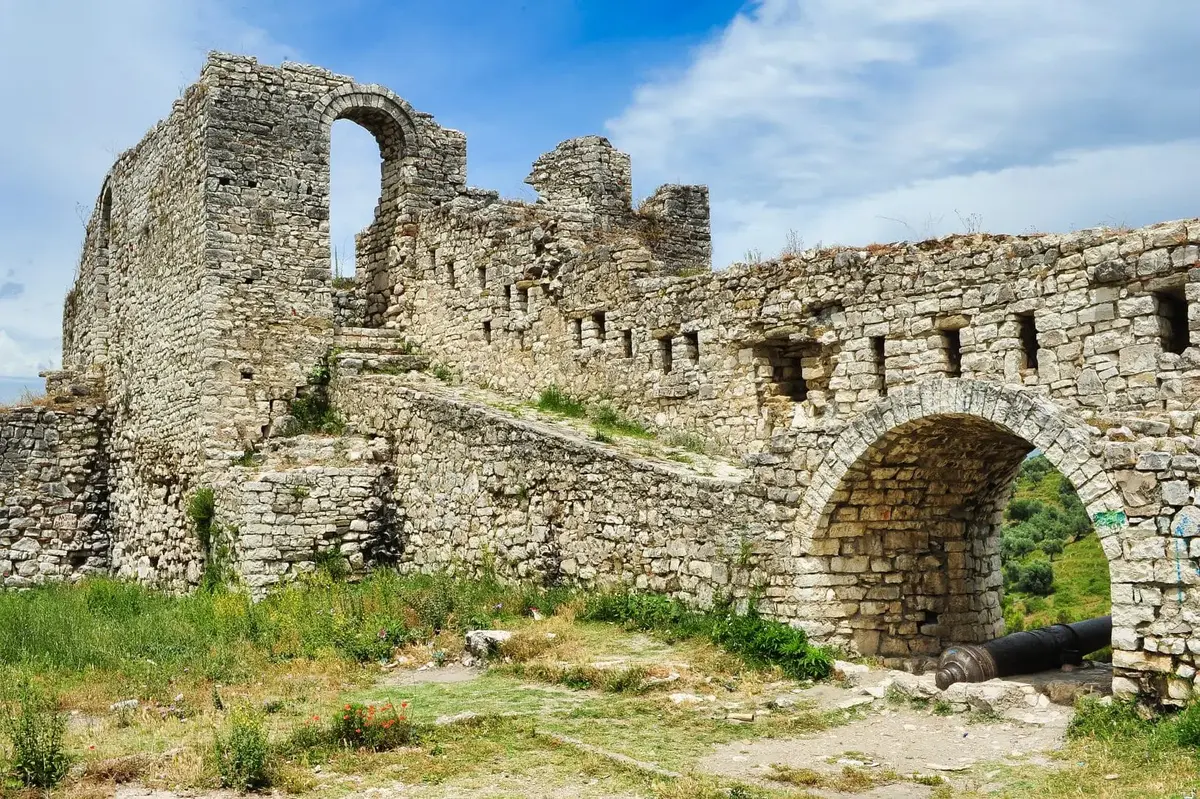
July and August bring the full Mediterranean summer. The coast fills up, prices hit their highest point, and temperatures inland regularly exceed 90°F (32°C). If you’re visiting Tirana, Berat, or Gjirokaster in August, limit active sightseeing to before 10 a.m. or after 5 p.m. The heat radiating off the cobblestone path up to Berat Castle in the middle of an August afternoon is genuinely punishing.
Autumn (September to October)
September and October are the most underappreciated months in Albania. The Ionian Sea holds the heat of summer — water temperatures in September average around 77°F (25°C) — while air temperatures drop to the mid-70s°F (23°C to 24°C). Crowds have thinned, accommodation prices drop noticeably, and the atmosphere along the coast is considerably more relaxed.
By late October, street vendors are selling roasted chestnuts on Tirana‘s boulevards as the air turns crisp. The autumn grape harvest begins in the inland valleys, and the UNESCO heritage cities become genuinely enjoyable to explore again after the intensity of summer.
Winter (November to March)
The coast turns cold, damp, and rainy. Most Riviera resort hotels close entirely. The northern mountains go under deep snow, which creates conditions for winter snowshoeing if you can arrange the logistics — but eliminates all standard summer hiking options.
Tirana stays open and functional year-round. A winter city break in the capital — with a strong dining scene, lively café culture, and almost no other tourists — is a solid option for budget travelers who don’t need beach access.
How much does a trip to Albania cost each season?
The cost of a trip to Albania during the shoulder season doesn’t just feel better — it comes in significantly lower. A mid-range traveler spending $70 to $90 USD per day in August can cut that to $40 to $50 USD per day in May or October on the exact same itinerary, almost entirely driven by accommodation pricing.
All prices below are in USD, with Albanian Lek (ALL) equivalents noted.
Accommodation by season
- Hostel dorm (year-round, coastal towns): $10 to $14 (830 to 1,160 ALL) per night
- Budget private hotel (shoulder season): $25 to $35 (2,100 to 2,900 ALL) per night
- Budget private hotel (peak August, Riviera): $50 to $80 (4,150 to 6,640 ALL), often higher, per night
- Mandatory private sunbed fee (peak August, Ksamil): from $18 (1,500+ ALL) per day
Transit costs
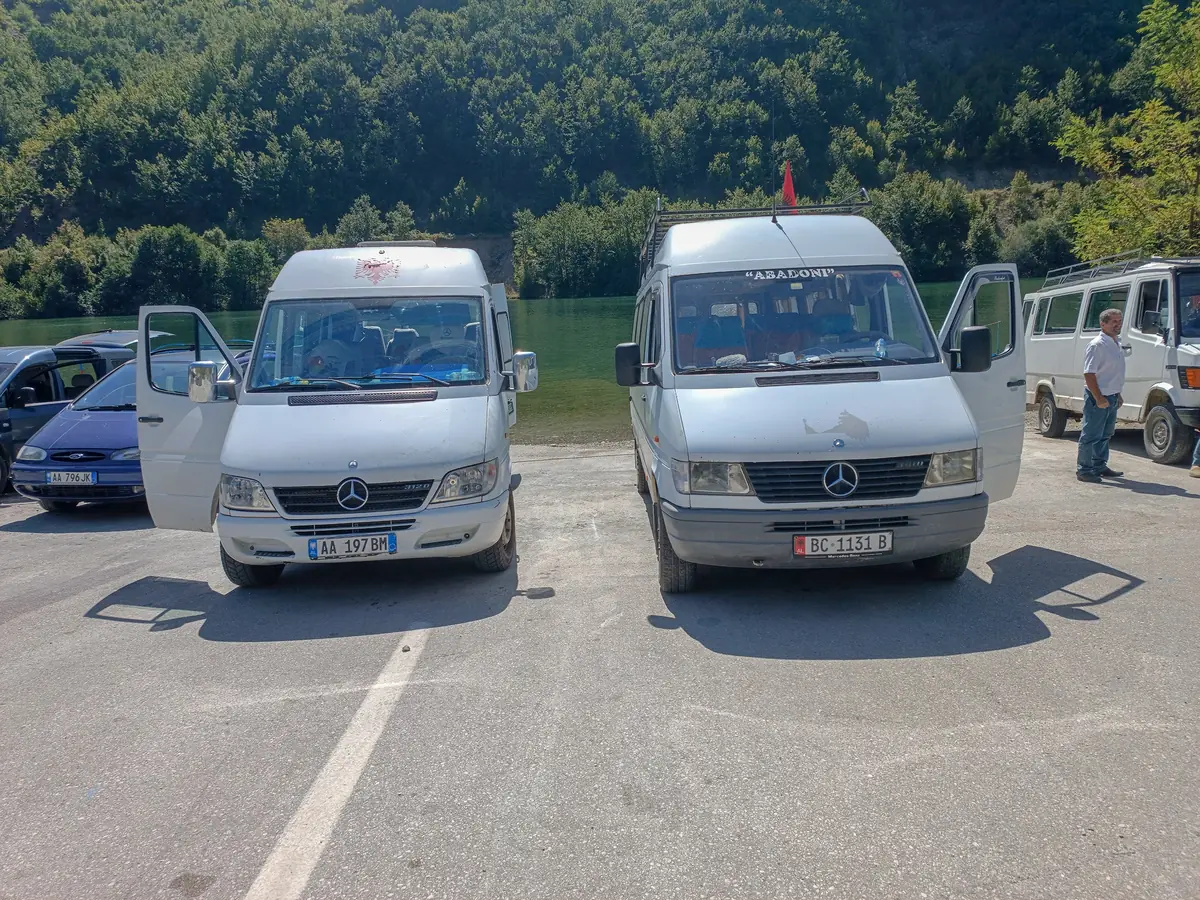
Public transit prices stay mostly stable year-round, which is one of the genuine advantages of using furgons. The route from Vlore to Saranda — a 3.5 to 4.5-hour ride — costs around $24 USD (approximately 2,000 ALL).
There is no ticket booth for a furgon, no digital terminal, and no app to consult. You board the minibus, claim a seat, and hand your Lek directly to the driver or the attendant once the vehicle is already moving down the highway. Have exact change ready — the exchange rarely goes smoothly otherwise.
- Vlore to Saranda furgon: around $24 (approximately 2,000 ALL), 3.5 to 4.5 hours
- Payment: cash only, handed to the driver mid-route — carry exact change in Lek
Pro Tip: The Patoko app functions as a local ride-hailing service in Tirana and some larger cities. For shorter urban trips, it’s considerably more reliable than flagging down taxis.
Dining costs
Street food and casual tavernas cost $4 to $8 USD per meal year-round. Coastal seafood restaurants in tourist areas run $15 to $25 USD per person in the shoulder season and noticeably higher in August — particularly anywhere near the water in Ksamil or Saranda.
- Street food / casual taverna: $4 to $8 per meal, year-round
- Coastal seafood restaurant (shoulder season): $15 to $25 per person
- Coastal seafood restaurant (August, waterfront): noticeably higher
Which Albanian festivals are worth timing your visit around?
Timing your visit around a local event gives you a fundamentally different experience of the country. June dominates the festival calendar on the coast, autumn brings harvest traditions inland, and the daily rhythm of the xhiro is available year-round in any Albanian town. Just know that the big coastal festivals also wreck accommodation availability for the surrounding week.
The Kala Festival takes place in Dhermi in early June and draws tens of thousands of international visitors to a stretch of Riviera coastline that isn’t built for that volume. The UNUM Festival runs a similar electronic music format further north, in Shengjin on the Adriatic coast, around the same period. Both festivals cause accommodation shortages and price spikes in their host towns for the entire surrounding week. Most page-one travel guides ignore both events entirely, which leads unsuspecting travelers directly into the congestion without warning.
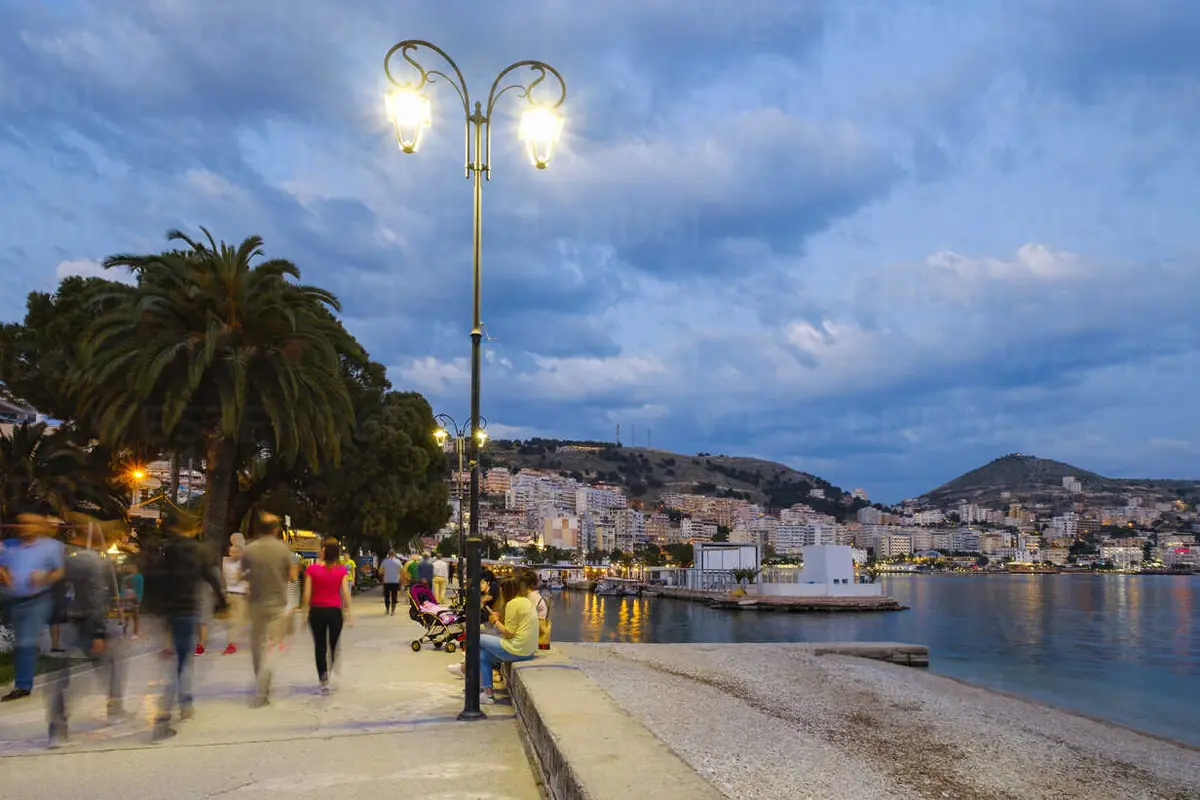
The xhiro is something else entirely. In coastal cities like Durres and Vlore, the seaside promenades fill at sunset with families, teenagers, and older couples all walking slowly and socializing. Street carts selling toasted popcorn and roasted seeds line the concrete seafronts. There is no admission, no tourist element, and no agenda. You just walk with everyone else. It is the clearest unfiltered window into everyday Albanian social life.
The code of besa — the traditional Albanian ethic of hospitality and honor — means that being invited to share raki and meze with locals at a taverna happens more organically than anywhere else in Europe. Accept it when it happens. The interaction isn’t transactional.
Pro Tip: Kala and UNUM typically sell out weeks before the event. If your dates overlap with either festival, check accommodation availability immediately after lineup announcements — lodging within 10 miles of either venue disappears first.
How do you get to Albania and around it? Flights, buses, and entry rules
Getting to Albania is straightforward; moving around once you’re inside the country takes a specific kind of flexibility most Western travelers aren’t prepared for. The entry rules, on the other hand, are exceptional for US passport holders: no visa, and a one-year allowance. Below are the three logistics points that trip people up most.
US citizens do not need a visa to enter Albania. The allowance covers stays of up to one full year — 365 days — without requiring a formal residency permit. That makes Albania one of the most accessible long-stay destinations in Europe for American travelers, and particularly attractive to remote workers and extended-stay visitors. To reset the clock, you need to leave the country for at least 90 days before re-entering visa-free.
The Tirana bus station problem
The single biggest logistical trap for independent travelers in Albania is finding the correct bus station in Tirana. Mapping applications frequently send you to the wrong terminal, and the ground-level situation is considerably more informal than most guides describe.
The Regional Bus Station operates as separate North and South terminals located on the outskirts of the city — not near the center. This is the departure point for intercity furgons heading to Shkoder, Vlore, Saranda, and most other major destinations. Expect a large, busy dirt-and-concrete lot with drivers shouting city names and handwritten cardboard destination signs propped in minibus windshields. There is no digital departures board.
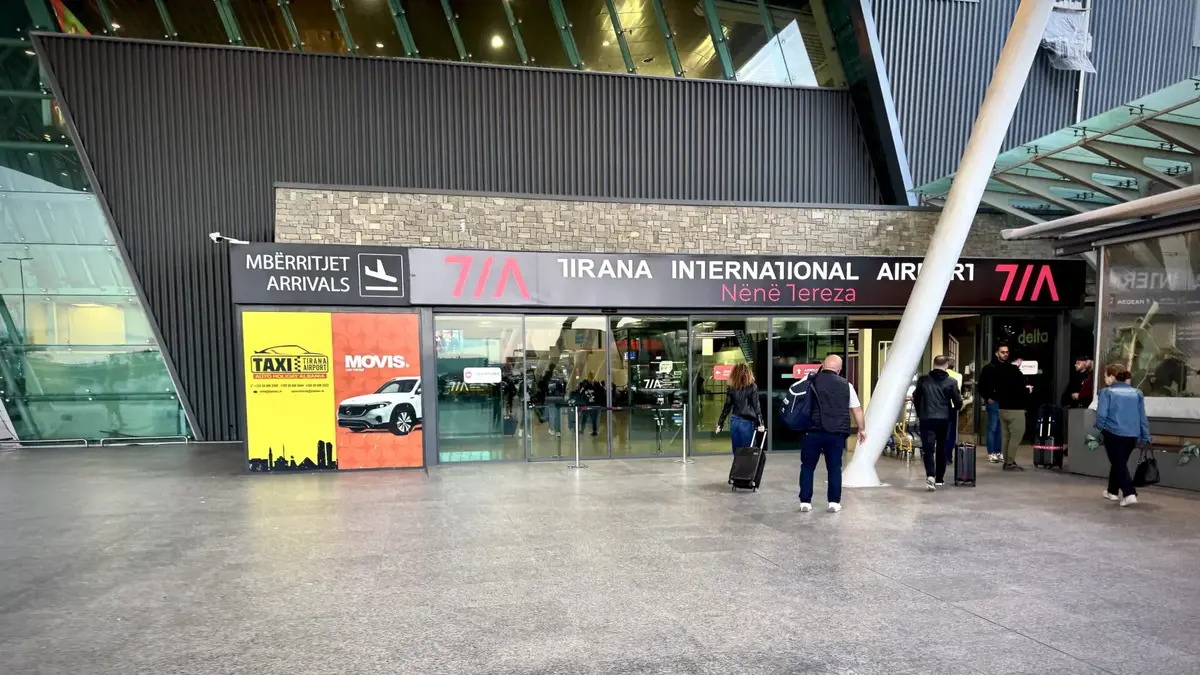
A separate terminal handles the airport route. A third hub near the TEG shopping center covers a different set of regional connections. The eTransport platform provides some official timetable data, but treat it as a rough starting point. On-the-ground schedules shift constantly.
Flying into Vlore — check before you count on it
For travelers whose primary goal is the southern Riviera, Vlora International Airport was supposed to change the practical math. Sitting about 10 km north of Vlore, it was built to put arrivals on the coast within an hour and cut out the long drive south, including the Llogara Pass crossing.
The catch: it isn’t a reliable option yet. The airport completed a certification flight but has had its commercial passenger launch postponed more than once, with charter programs canceled. Until you can see scheduled, bookable flights for your actual travel dates, plan to land in Tirana and drive south. Treat any Vlore connection as a bonus to verify at booking — not a route to build an itinerary around.
Pro Tip: At the Tirana Regional Bus Station, arrive at least 30 minutes before you plan to leave, carry exact change in Lek, and find your bus by reading the cardboard windshield sign — not by looking for an electronic board or asking for a schedule.
Is Albania too hot in August?
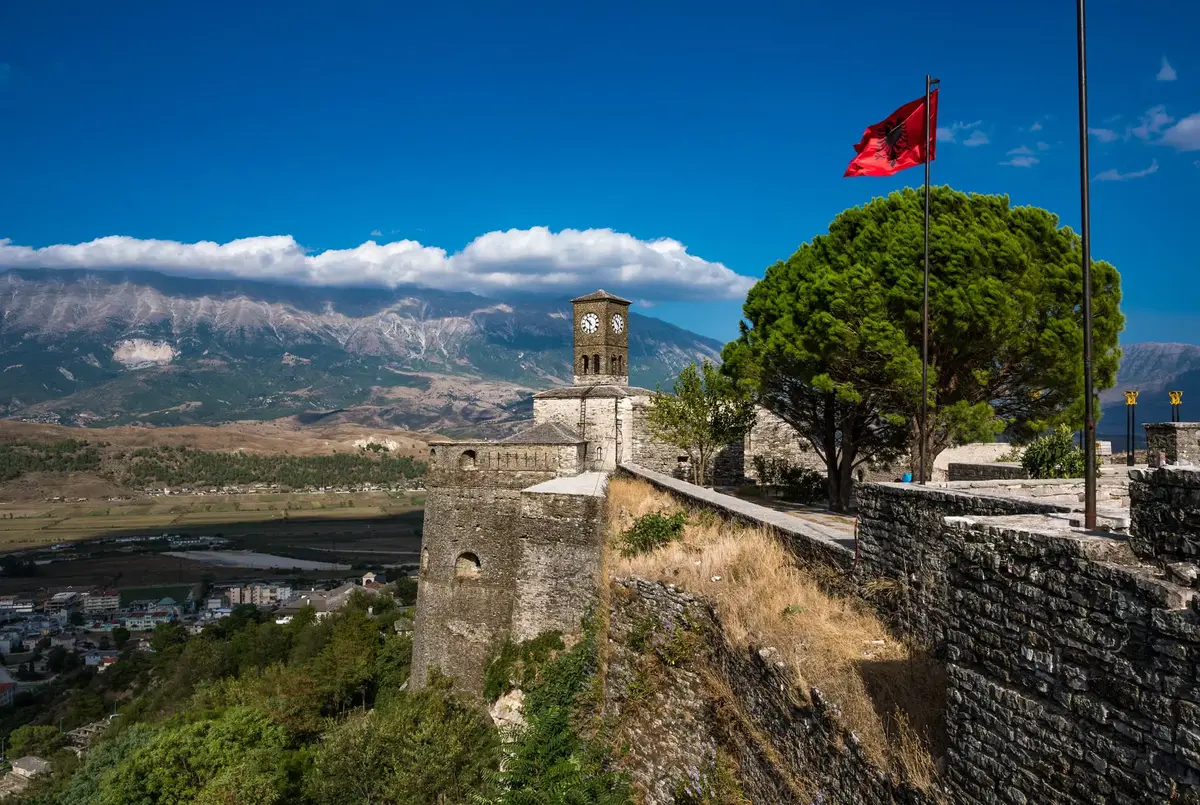
Yes, Albania can be genuinely uncomfortable in August, particularly inland. Temperatures in Tirana, Berat, and Gjirokaster regularly exceed 90°F (32°C), and the stone streets of the historic cities trap and radiate heat well into the evening. For inland sightseeing in August, the practical window for being outside is before 10 a.m. and after 5 p.m.
The coast is more manageable. Sea breezes keep the Riviera from feeling as severe as the inland cities, but the UV index stays extremely high throughout summer. The combination of direct sun, water reflection, and white pebble beaches means burning happens faster than expected, even on overcast days.
If August is your only viable option and you want to explore the UNESCO heritage cities, both Berat and Gjirokaster are still worth doing — just do them early. The cobblestone climb to Berat Castle at 2 p.m. in August is a different physical challenge than the same walk at 8 a.m.
Does it snow in Albania?
Yes, heavily — but almost entirely in the northern highlands and elevated interior. The Accursed Mountains receive significant snowfall from November through March, and passes above 5,000 feet (1,524 m) stay blocked well into May in most years. The alpine valleys around Theth become genuinely isolated in winter; traditional tourism stops completely.
The coastal Riviera is a different environment. Saranda, Himara, and Ksamil see cold, wet, and rainy winters with temperatures that rarely drop below freezing at sea level. Snow at the coast is rare. The towns don’t disappear under snowpack, but most tourist infrastructure closes and there is nothing beach-related to do.
Tirana sits in the middle — occasional light snow, persistent rain, and gray skies for much of winter. The city stays livable and functional year-round, but it’s not a weather destination.
For travelers specifically interested in snowshoeing or winter mountain scenery, the northern highlands offer real possibilities. Logistics are harder to arrange independently in the off-season, but guided winter hiking does operate in the Theth area when conditions allow.
How many days do you need in Albania?
To experience Albania’s major highlights without feeling rushed, a minimum of 7 to 10 days is the practical baseline. That duration covers Tirana, at least one UNESCO heritage city — Berat or Gjirokaster — and several days on the southern Riviera. It’s tight, but workable with focused planning.
For anyone adding the northern hiking routes — Theth, Valbona, or the Komani Lake ferry — budget at least 14 days. The mountains consume two full travel days in transit each direction due to road conditions, and trying to rush the northern circuit defeats the point of going.
The most common itinerary mistake is underestimating travel times. Albania is a relatively small country — roughly 11,100 square miles (28,748 sq km) — but road infrastructure makes distances feel much longer. The drive from Tirana to Saranda covers about 150 miles (240 km) and takes 4 to 5 hours under normal conditions. In August traffic, add another hour.
Pro Tip: Plan your itinerary with the mountains first and the coast second. If you start on the Riviera, it is very easy to lose track of days in the sun and run out of time for the north. The Accursed Mountains require energy and full, committed days — save the beaches for the end of your trip.
The bottom line on timing your Albanian trip
TL;DR: The best time to visit Albania is May, June, September, or October. You get warm weather, a fully open country, manageable prices, and enough breathing room to enjoy both the coast and the mountains. July and August deliver the full beach-club experience at the cost of heavy crowds, intense inland heat, and accommodation prices that have climbed sharply — especially on the southern Riviera.
If the Accursed Mountains are on your list, your window narrows to late June through early September. If the trip is purely coastal, early June and mid-September give you the best version of the Riviera without the August logistics.
Albania’s popularity has accelerated faster than its infrastructure. Timing your visit well matters more here than in countries with more developed tourism systems — the difference between a frustrating trip and a great one often comes down to which month you chose.
What aspect of Albania are you building your trip around — the coast, the mountains, or the historic cities?