
Planning to fill your suitcase with cork products in Portugal while hopping between Lisbon and Porto? The wrong purchase could hit you with a painful customs bill at the border — or leave you with a tourist-trap bag that falls apart in six months. This guide cuts through every logistics, authenticity, and shopping question so you spend your travel budget smarter.
How do you claim a Portuguese VAT refund on cork?
As a US citizen traveling outside the European Union, you are eligible for a VAT refund in Portugal on cork goods — but the rules are strict. The minimum threshold is €50 from a single store on the same day. You cannot bundle receipts from different shops or different days. Your goods must physically exit the EU within three months from the end of the month in which you bought them.
At Lisbon Airport, the process works in a specific order:
- Timing: Arrive at least 3–4 hours before your international flight. The queue at the e-TaxFree kiosks during peak summer travel can swallow 45 minutes without warning.
- For checked luggage: Tell your check-in desk agent you have items to declare. They will direct you to an e-TaxFree Portugal kiosk before security. Bring your passport, boarding pass, the proof of purchase with its registration code, the physical goods, and original invoices.
- For carry-on items: After clearing security, locate the e-TaxFree Portugal kiosks in the departures area of Terminal 1. Most VAT refund operators — Global Blue, Innova Tax Free, Planet Tax Free, and Travel Tax Free — have desks there after passport control. Terminal 2 has Global Blue only.
- The result: A green code approves you automatically. A red code sends you to the customs desk for manual inspection of your goods.
- The digital shortcut: If you enroll in Global Blue membership before your trip, a digital barcode at checkout populates your data automatically, saving time at the kiosk.
Pro Tip: No validated stamp, no refund. Whether confirmed digitally at a kiosk or physically by a customs officer, your form must be validated before you leave EU territory. There are no exceptions and no appeals if you miss this step.

What US customs duties apply to cork products from Portugal?
Cork goods from Portugal are not uniformly duty-free when you re-enter the US. The duty you pay depends on how US Customs and Border Protection classifies the specific item under the Harmonized Tariff Schedule of the United States — and the current tariff environment has added an additional layer of cost that travelers need to factor in before buying.
The legal distinction comes down to what the item is, not simply that it is made from cork.
- Cork handbags and purses: HTSUS code 4503.90.6000 — 14% ad valorem base duty rate (CBP Ruling N196104). On a €245 (~$270) cork tote, that translates to roughly $38 in duty owed at the border before any additional tariff layers.
- Natural cork wall tiles: HTSUS code 4503.90.4000 — 0% duty rate (CBP Ruling N253991). Architectural cladding panels enter the US duty-free.
- Raw cork and wine stoppers: Exempt at 0%.
One material update: US tariff policy has shifted significantly. A global import duty has been applied to goods from most countries entering the United States, and how that interacts with the product-specific HTSUS rate for finished cork goods is subject to ongoing change. Check the CBP website or consult a US customs broker for the current applicable rate on cork fashion items before your trip. The 14% figure above reflects the HTSUS base rate under the specific CBP rulings cited — your total duty at the border may differ, and is worth factoring into your Portugal travel budget before committing to a purchase.
Pro Tip: Declare absolutely everything honestly at CBP. The penalty for misrepresentation far outweighs the duty itself. Budget whatever duty applies into your purchase decision before you fall in love with a bag in the shop.
How do you spot genuine Portuguese cork?
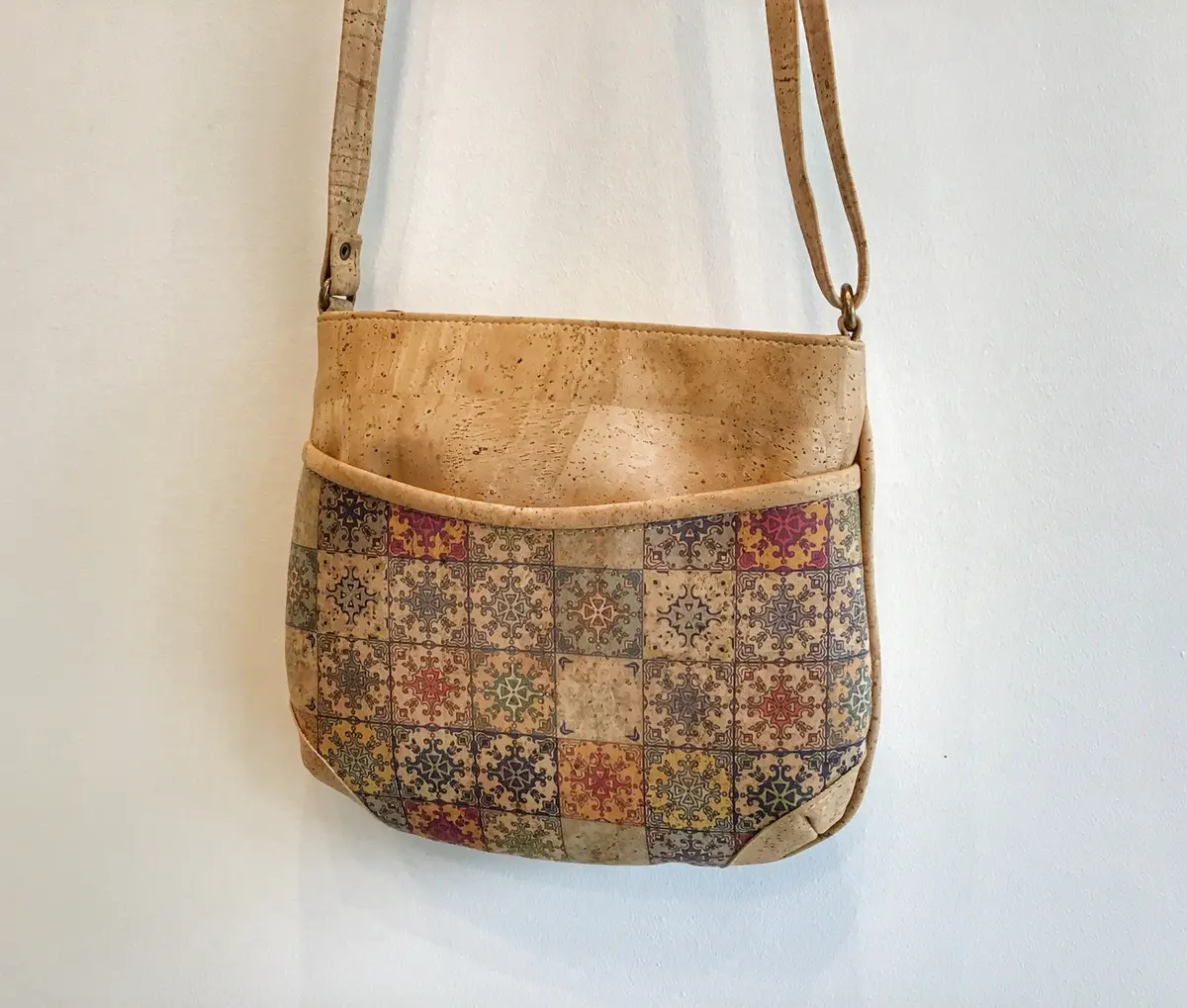
You spot genuine cork leather by looking for a visible honeycomb cellular structure, feeling for softness and elasticity, and confirming an exceptionally light weight. Authenticity is the real shopping challenge in Lisbon. Walk down Rua Augusta or through the streets of Alfama and you will find souvenir shops selling a €15 cork wallet right next to a boutique charging €45 for something that looks identical.
That price gap is not random. It is a quality signal. Many shops in high-foot-traffic tourist corridors sell goods manufactured outside Portugal, using inferior agglomerated or chemically treated materials dressed up with a thin surface veneer — a quality gap that matters across what to buy in Portugal more broadly.
Here is what high-grade cork leather actually looks and feels like in person:
- The visual test: The honeycomb cellular structure is visible to the naked eye — tiny, uniform cells across the entire surface. If it looks like a smooth laminate, it is.
- The tactile test: Soft, flexible, and elastic when you handle it. If the material feels brittle, stiff, or coated in a thick plastic film, put it down.
- The weight test: A full-size structured handbag should feel almost impossibly light on your shoulder. If it has real heft, the backing material is doing most of the work.
- The scent test: Premium cork is naturally hypoallergenic and has no chemical or synthetic smell.
- The durability tell: A product where the thin cork surface peels from its fabric backing within months is almost always a cheap import. Well-manufactured cork leather, like the best traditional Portuguese crafts, lasts for years.
Why Porto rivals Lisbon for serious cork shopping
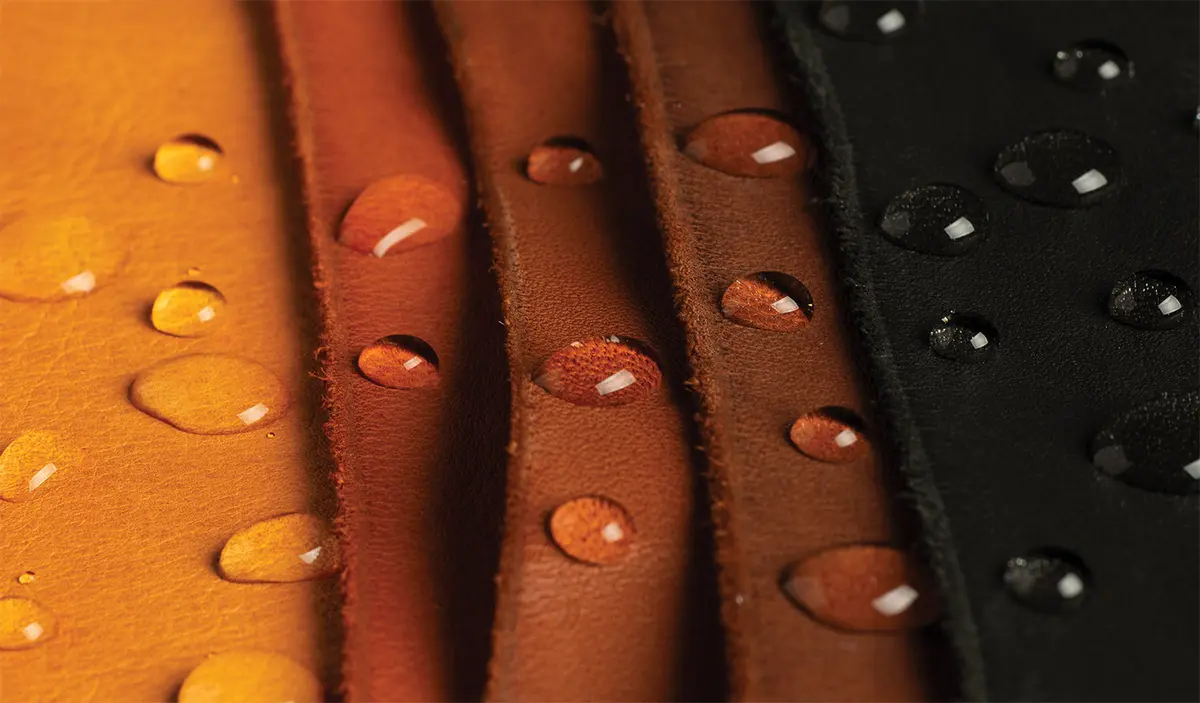
Most travelers assume the capital has the best of everything. For cork leather, that assumption costs you quality. Lisbon is Portugal’s financial and political hub — not its manufacturing center. The textile and footwear manufacturing Portugal is internationally known for happens in the north, around Porto. Retailers based there source directly from local manufacturers, maintaining tight control over raw material selection and construction quality.
This is not a vague claim. Cultura Portuguesa in Porto legally certifies that every product and component originates from northern Portugal — not just assembled there, but fully sourced there. That supply chain guarantee is exactly what separates a piece that lasts a decade from one that deteriorates in two seasons.
If your itinerary covers Lisbon and Porto, save serious investment purchases for Porto. Treat Lisbon shopping as supplementary, or stick to the two vetted Lisbon boutiques listed below, both of which have verified supply chains.
What are the best cork products to buy in Portugal?
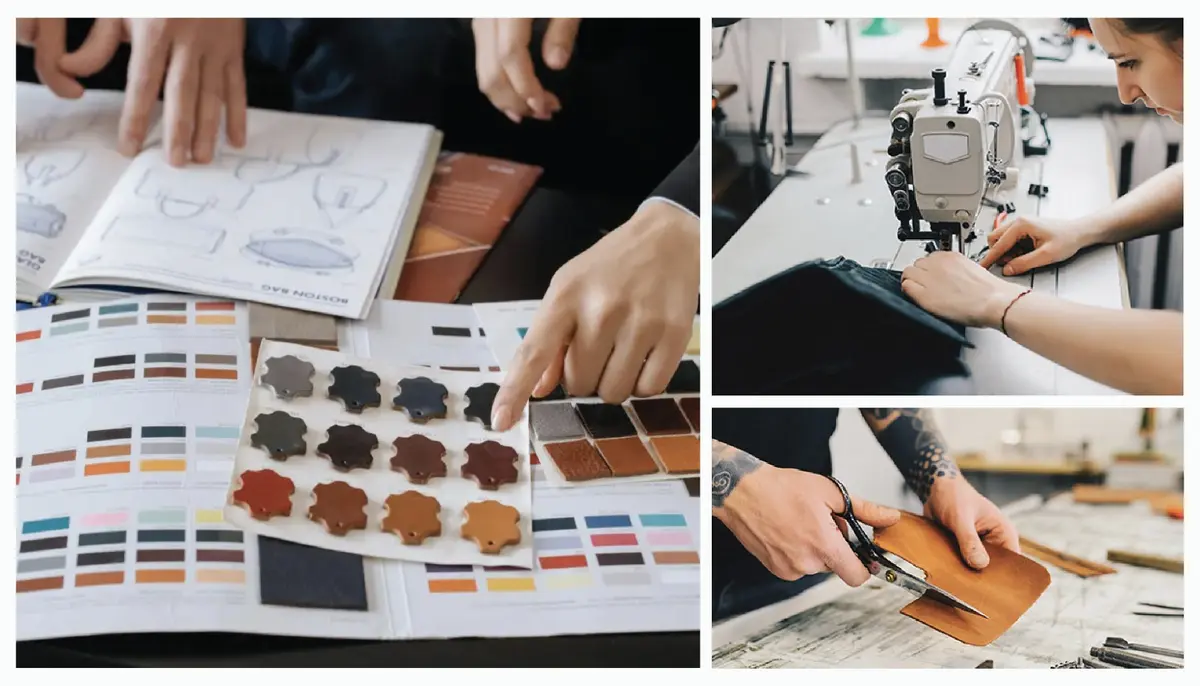
The range on offer goes far beyond wine stoppers. Every consumer product category — from coin purses to full tailored jackets — exists in high-grade cork leather across Portugal’s specialty shops.
1. Cork handbags and crossbody bags
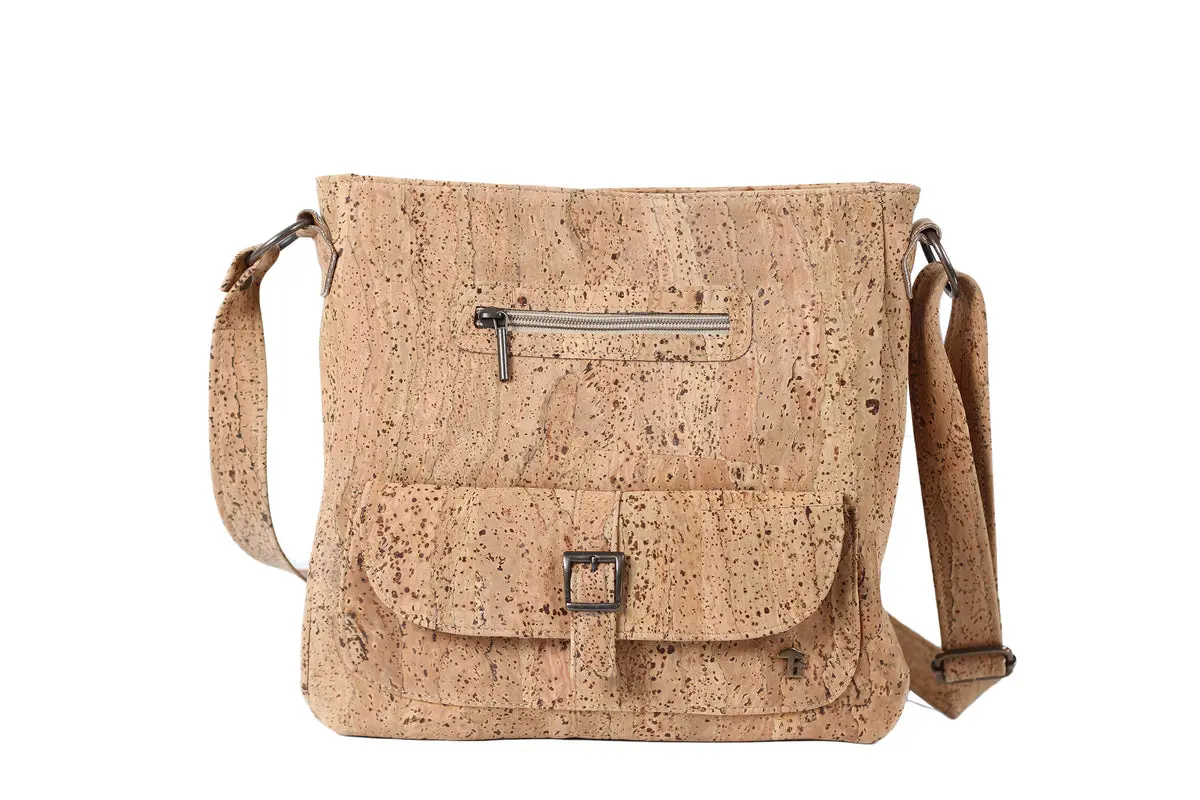
Pick up a structured cork tote and the first reaction is always the same: you check the price tag again because a bag cannot weigh this little. The natural surface has a warmth that synthetic materials cannot replicate, with the fine cellular texture visible right across the grain. The conversation-starter factor back home is real. What to watch for: thin, plasticky-feeling bags in tourist-corridor shops delaminate within months. Weight is your fastest filter — if it feels substantial in your hands, the cork layer is thin over a heavy base material.
- Location: Cork & Co and Cork House in Lisbon; Cultura Portuguesa in Porto
- Cost: €75–€245+ (~$82–$270+)
- Best for: Fashion-forward travelers, eco-conscious shoppers, gifts for women
- Time needed: 20–30 minutes to browse and compare construction quality across multiple shops before committing
2. Wallets, belts, and small accessories
Cork wallets are the low-risk introduction to the material. They are compact, priced for an impulse buy, and impressive to hand over as a gift. The slim profile compared to a traditional leather wallet is immediately noticeable. These are also the smart play from a US customs standpoint: their lower declared value keeps total duty exposure minimal. Avoid the packs of three wallets for €10 at street stalls — that is printed paper, not cork leather.
- Location: Reputable boutiques across Lisbon and Porto; Tiradia Cork ships worldwide
- Cost: $25–$45
- Best for: Gift buyers, first-time cork shoppers, budget-conscious travelers
- Time needed: 10–15 minutes
3. Cork placemats and Azulejo coasters
Cork’s natural heat resistance is the selling point here, not just the look. The combination of raw cork texture with hand-painted Portuguese tile motifs produces a table accessory that looks nothing like mass-produced tourist ceramics. These items also enter the US completely duty-free under the home goods classification. The only downside: weight adds up fast when buying multiple sets.
- Location: Cork & Co and Cork House in Lisbon
- Cost: €19–€35 (~$21–$38) per set
- Best for: Home decorators, host and hostess gifts, budget-conscious shoppers
- Time needed: 10 minutes
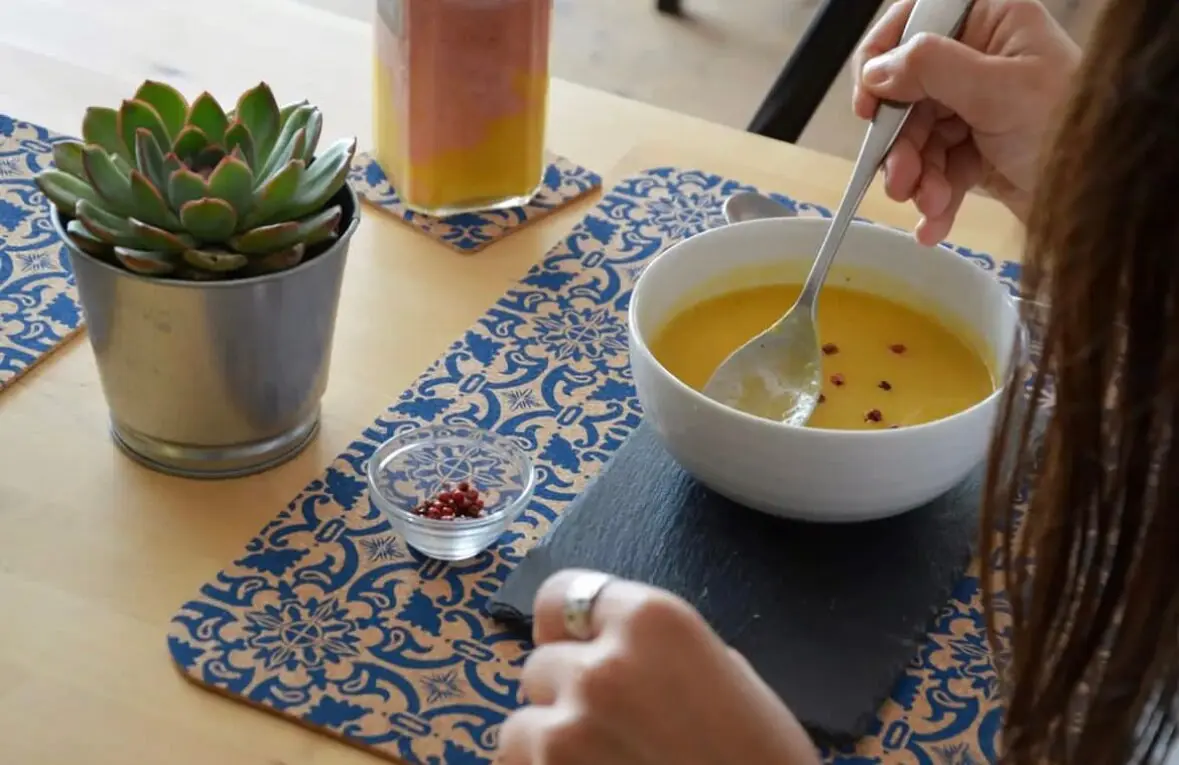
4. Architectural cork wall tiles and cladding
These structural cladding panels function simultaneously as acoustic insulation, thermal regulation, and wall art. If you are mid-renovation on a home, this is an extraordinary find — and one that ships to the US duty-free under HTSUS 4503.90.4000. Straight-edge interior cladding runs between €21.78 and €35.34 per square meter (~$24–$39 per 10.76 square feet), depending on panel thickness.
- Location: MB Cork, a wholesale platform that ships internationally
- Cost: €21.78–€35.34 per square meter (~$24–$39 per 10.76 square feet)
- Best for: Architects, interior designers, homeowners mid-renovation
- Time needed: Browse online before or after your trip; not available in retail boutiques
Where to buy cork in Portugal: five vetted shops
If a shop in Lisbon’s busiest tourist corridors does not openly state where their goods are manufactured, that silence is your answer. Legitimate retailers are direct about their supply chain — an important filter when shopping in Lisbon on a limited schedule.
Cork & Co — Lisbon
The most design-forward premium retailer in the capital. Their curation skews contemporary and minimal, and their environmental credentials are substantive — their verified supply chain supports harvesting practices that generate significantly more carbon absorption than unharvested trees. Worth a specific trip for the home goods and accessories range.
- Address: Rua das Salgadeiras 10, Bairro Alto (near Largo de Camões)
- Hours: Monday–Saturday 11am–7pm, Sunday 2pm–6pm
Cork House — Lisbon
A solid all-rounder with strong product depth across fashion accessories and home goods. Better for tired travelers who want to browse a wide range in one air-conditioned location rather than hunting across multiple boutiques on a hot Lisbon afternoon.
- Address: Rua de Santa Justa 25, Lisbon
- Hours: Monday–Saturday 9:30am–7pm
Cultura Portuguesa — Porto
The benchmark for supply-chain authenticity. Every product and component is certified to originate from northern Portugal’s manufacturing region. If you are spending serious money on a handbag or structured accessory, this is the right shop. They offer free shipping to North America, so you can order after your trip if you second-guessed yourself at the register.
- Address: Rua Mouzinho da Silveira 312, Porto
Tiradia Cork — Online
Sustainably sourced lifestyle products handcrafted by local Portuguese seamstresses, with strong international shipping. A good option for post-trip digital shopping.
MB Cork — Online wholesale
The top destination for commercial volume buyers or travelers wanting architectural building materials shipped to the US. PETA Approved Vegan certified, with an extensive wholesale inventory of home products.
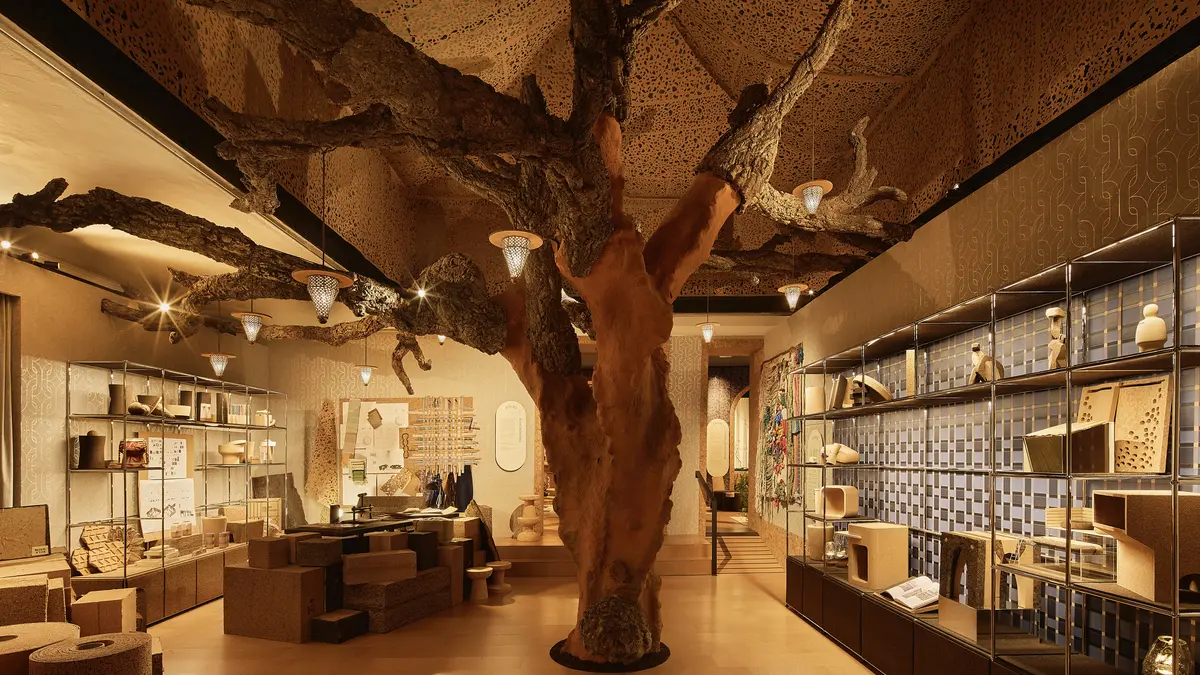
Can you visit a cork farm in the Alentejo?
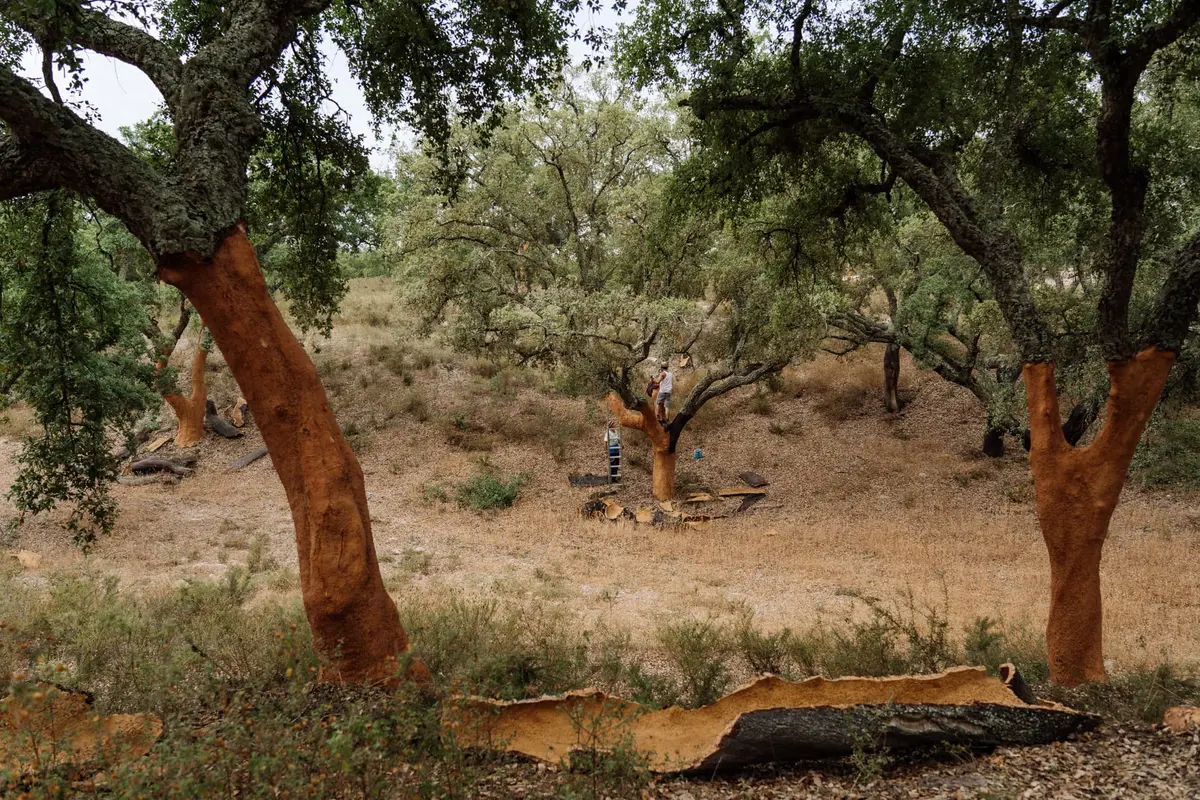
Yes — and no amount of boutique shopping fully prepares you for what you are buying until you have stood in a Montado. The Alentejo region, east of Évora around the municipality of Redondo, is where the global industry is rooted. The landscape is unmistakable: wide, sun-baked plains broken by ancient groves of the Quercus suber — Portugal’s legally protected national tree, whose thick bark is the raw material for everything you have been admiring in Lisbon shop windows.
The biology of this production demands real patience. A tree cannot be harvested until it is at least 25 years old. After the first cut, the bark regenerates over a 9-year cycle before it can be legally harvested again. These trees live for over 200 years and are never cut down for timber — every harvest leaves the tree intact.
The physical contrast between the raw bark on a living tree and the finished fabric on a Porto shop shelf is striking. The bark is rough, deeply fissured, and aggressively textured. It looks nothing like the supple material sitting in the display case.
If you visit in June or July, there is a strong chance you will witness a live harvest. The sound of the tiradores striking the trunks with curved steel axes carries across otherwise quiet hills, mixed with the earthy smell of exposed wood drying in the summer heat. It is one of the more grounding experiences in Portuguese travel — the kind that makes a steep price tag feel entirely logical.
Three operators run organized farm visits:
- Portugal Farm Experience offers two-hour guided hikes balancing nature, cultural history, and agricultural education. Well-suited for families and older travelers who want structured learning without an intense physical commitment in the heat.
- Corktrekking operates four-by-four jeep tours and hiking expeditions into remote Alentejo backcountry, often combining harvest education with vineyard tastings and encounters with the Black Iberian Pig — whose acorn-based diet in the Alentejo produces some of the finest cured pork in Europe.
- L’AND Vineyards in Montemor-o-Novo offers multi-day luxury itineraries combining personalized winemaking sessions with Montado agricultural workshops at private estates, including Herdade Freixo do Meio — a 1,334-acre (540-hectare) property in the Serra d’Ossa foothills.

Who are the tiradores, and why does it matter?
The tiradores are the skilled laborers who perform cork extraction entirely by hand. Portugal controls a dominant share of global cork production — the Alentejo alone accounts for more than half of the world’s raw supply — and every summer harvest remains fully manual. There is no machine that can do their specific job without killing the tree.
The technique demands precise, sustained effort. The tirador scores and peels the bark away in heavy slabs using a specialized curved steel axe, executing each strike to avoid piercing the cambium layer — the thin living tissue beneath the outer bark. A single miscalculation permanently damages or kills a tree that may have been growing for a century. This work happens exclusively in June and July, the optimal summer travel months in Portugal, when the bark separates most cleanly from the inner wood.
When you pick up a €145 bag in Porto, you are holding somewhere between nine and fifteen years of a tree’s slow growth, harvested by a skilled craftsperson who has very likely been doing this since adolescence. That human context matters when you are calibrating whether the price is fair. I looked at one of these bags next to a tirador who had just finished a tree — the contrast between the rough bark still damp in his hands and the polished surface of the finished bag is not something a product description captures.
How do you clean and maintain cork leather?
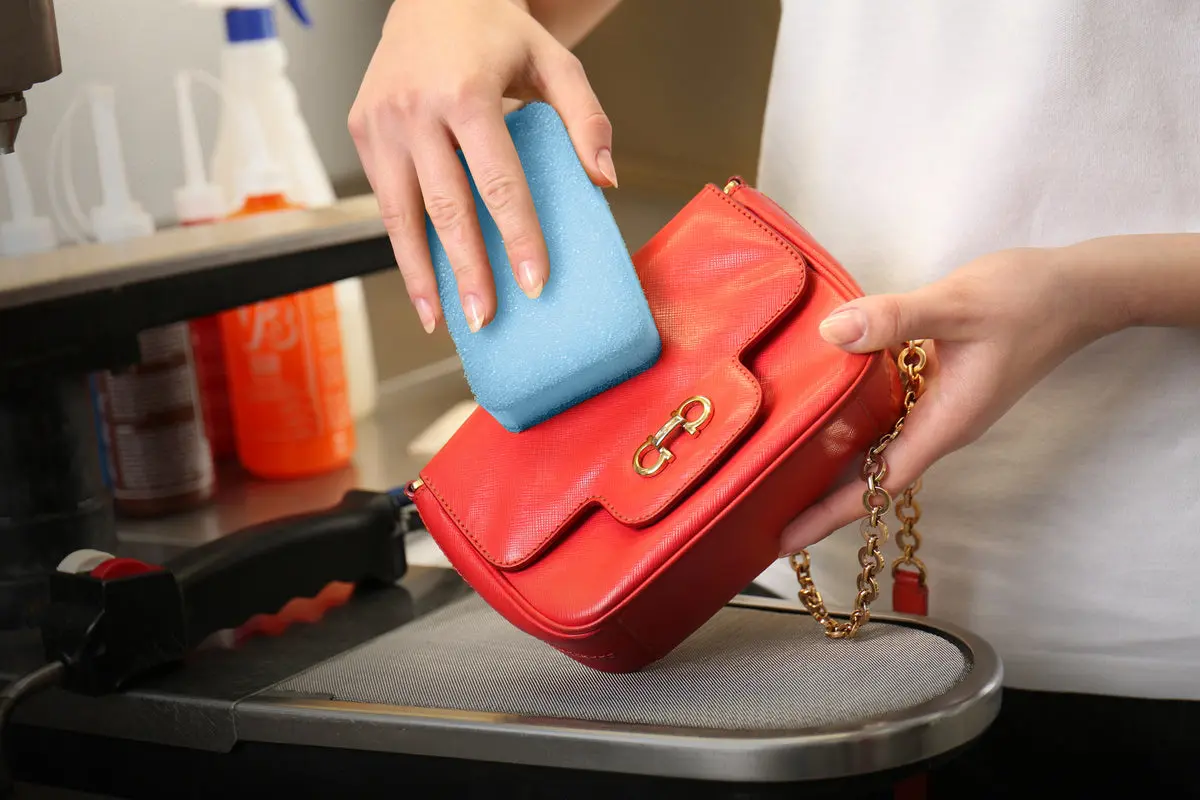
You clean and maintain cork leather by wiping it with mild soap and water, avoiding any harsh chemical cleaners, and conditioning the material every three to four months to prevent cracking. Most travel guides stop at the purchase. This one does not. The material is far more resilient than it looks, but it requires specific care. Get it wrong and a genuinely durable material degrades fast.
The non-negotiable rules:
Never machine wash the product. The agitation scratches the surface permanently and causes the glued layers to delaminate — an irreversible result. Never use harsh chemical sprays, bleach, or abrasive scrubbing pads. They destroy the cellular structure of the fabric.
Routine cleaning: Dampen a soft cloth with warm water and add a few drops of mild liquid detergent — high-quality saddle soap is ideal. Wipe gently in small circular motions. For emergency stain removal on the go, biodegradable baby wipes with 99% water content work immediately on coffee or wine spills. Always keep a travel pack in your bag for rapid response. Remove excess soap with a clean dry cloth, then air dry naturally in a ventilated space.
Conditioning (every 3–4 months): Apply a leather conditioner or a natural product such as Smiths All Natural leather balm to preserve softness and elasticity. If you use the bag daily in hot, dry climates — think Phoenix summers — increase the frequency. For interior fabric linings, mix the juice of half a lemon into cool water and apply gently with a damp cloth to remove odors.
Storage: Keep products in their natural, uncompressed shape. Use the cloth dust bags provided by premium retailers when the item is not in use — also worth adding to your Portugal packing list if you’re buying early in your trip. Store in a cool, dry, dark space — direct sunlight fades dyes permanently, high heat causes surface cracking, and humidity encourages mold.
Pro Tip: The conditioning step is what separates a bag that looks pristine after five years from one that looks trashed after two. Set a recurring calendar reminder and treat it like a seasonal ritual.
Cork vs. traditional leather: the sustainability case
The environmental case for cork leather is not marketing language designed for tourists. The data behind it is factual and worth understanding.
Traditional animal leather faces scrutiny on two fronts: the source material requires animal slaughter, which disqualifies it entirely for a large and growing consumer segment. The dominant production method — chrome tanning — uses toxic chemicals that damage local waterways and pose long-term health risks for manufacturing workers.
Cork leather operates on a different model. No toxic chemicals are required at any stage of processing. The material is 100% recyclable — end-of-life material can be ground down and manufactured into new industrial material. Most importantly, the harvested trees are never cut down and continue living for centuries.
The most significant data point is carbon sequestration. The act of harvesting the bark actively stimulates the tree’s carbon absorption process. Protected Montado forests sequester an estimated 14.7 tons of CO₂ per hectare (roughly 14.7 tons per 2.47 acres) — approximately five times more than unharvested trees. The broader Montado ecosystem supports thousands of rare and endangered plant and animal species while providing sustainable livelihoods for over 100,000 people across the Mediterranean basin.
| Metric | Traditional leather | Portuguese cork leather |
|---|---|---|
| Raw material | Animal hide (requires slaughter) | Bark only (tree survives) |
| Processing | Chrome tanning (toxic) | Zero chemicals required |
| CO₂ impact | High emissions (livestock) | Sequesters 14.7 tons CO₂/hectare |
| End of life | Slow biodegradation | 100% recyclable |
| Worker safety | High chemical exposure risk | Traditional hand-harvesting |
The bottom line
TL;DR: Buy your investment pieces from certified northern Portuguese manufacturers — Cultura Portuguesa in Porto is the benchmark. Claim your VAT refund at Lisbon Airport using the e-TaxFree kiosks and allow three to four hours before departure. Check CBP for the current applicable US duty rate on finished cork goods before your trip, as tariff policy has shifted — our Portugal travel guide covers broader pre-trip logistics. Condition your cork bag every three to four months and it will still look sharp a decade from now — which is more than most traditional leather goods can promise.
Which product are you shopping for first — a handbag for yourself, something for the house, or gifts? Drop it in the comments and I will point you to the right shop.