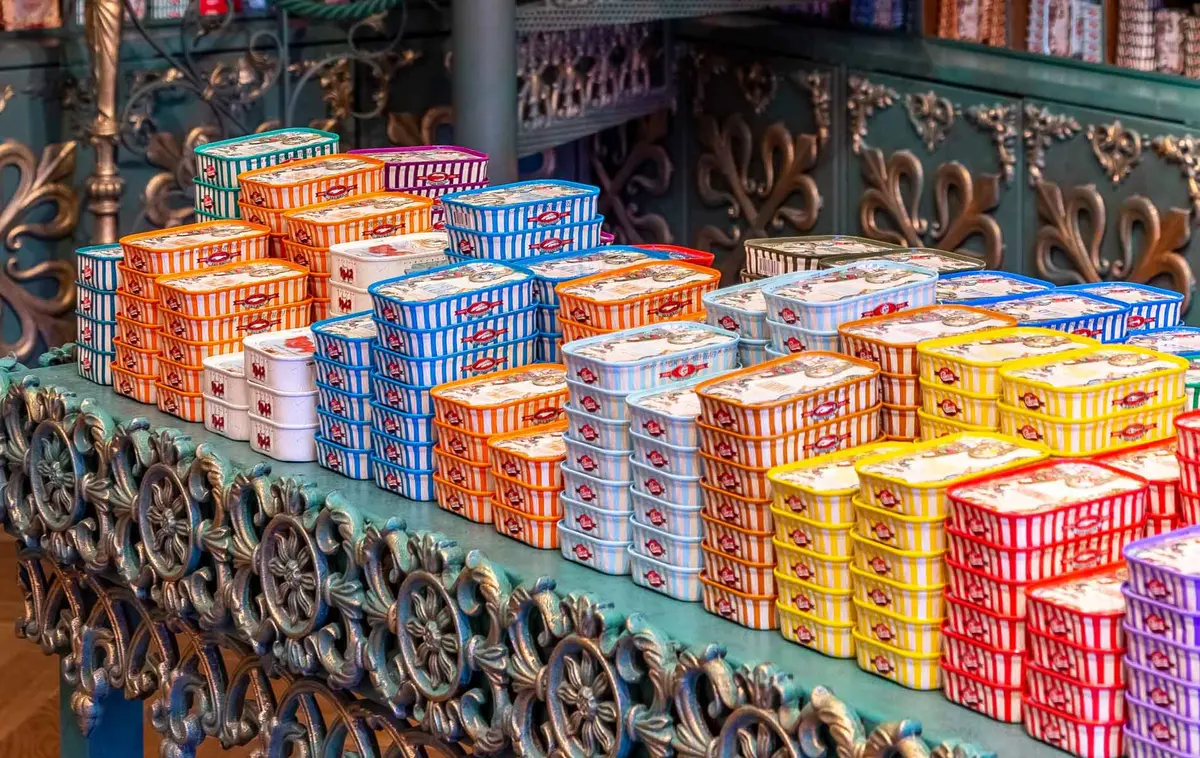
Most travelers lose their entire haul at airport security — not at customs. This guide covers the exact TSA and US Customs rules for bringing Portuguese canned fish home, where to buy the real thing in Lisbon and Porto, which brands to seek out, and how to eat them like a local once you’re back.
Can you bring Portuguese canned fish to the US?
Yes, you can bring Portuguese canned fish to the United States — but the rules are specific and the consequences of ignoring them are immediate. TSA will confiscate sealed factory tins at Lisbon security, and US Customs requires you to declare every tin on arrival. Follow both sets of rules correctly and you will clear both checkpoints without losing a single sardine.
What are the TSA rules for carrying conservas on a plane?
The short answer: every tin goes in your checked bag, no exceptions. The longer answer explains why this catches so many travelers off guard.
Carry-on baggage — why every tin gets confiscated
TSA classifies the liquid inside a sealed tin — olive oil, spring water, tomato sauce — not the aluminum itself. Standard Portuguese conservas tins almost universally exceed the 3.4 oz (100 ml) carry-on liquid limit. The factory seal is irrelevant. The price tag is irrelevant. The tin goes on the X-ray, the dense rectangular profile flags immediately for secondary screening, and the inspector pulls it. You watch it disappear into a plastic confiscation bin.
Pro Tip: Never attempt to carry conservas in your personal item or backpack either. TSA agents are trained to spot the dense, rectangular profile of aluminum tins on baggage scanners — it reads exactly the same whether the tin is in your jacket pocket or buried under clothes.
Checked baggage — the only safe option
Pack every tin in your checked luggage before you reach security. The rule applies at Lisbon Airport exactly as it does at any US departure point. Get this one step right and the TSA side of the equation is settled.

What does US Customs require when you arrive?
When filling out your CBP declaration form on the return flight, check “Yes” for food items every single time. Pure tinned seafood — fish, octopus, squid — is largely unregulated by the USDA’s Animal and Plant Health Inspection Service (APHIS). Your sardines will not be seized for being sardines.
The critical exception is breaded seafood containing milk or eggs in the breading, which falls under APHIS regulation. Keep original packaging and your store receipts to prove Portuguese origin and confirm the contents are pure fish. The general personal-use food allowance is 50 pounds (22.7 kg), which is a far larger quantity of tins than anyone can realistically carry.
Pro Tip: Never lie on the CBP declaration form. The penalty for smuggling undeclared agricultural goods far outweighs the value of any tin of fish. Declare everything, carry your receipts, and you will walk through without issue.
TSA and CBP compliance at a glance
| Transportation Phase | Regulatory Body | The Rule | What To Do |
|---|---|---|---|
| Airport security (EU departure) | TSA / EU Security | Tins contain liquid exceeding 3.4 oz (100 ml) | Pack in checked baggage only |
| US Customs (arrival) | CBP / APHIS | All food must be declared | Check “Yes” on declaration form |
| Agricultural inspection | USDA / APHIS | Pure seafood: unregulated. Breaded seafood with dairy/egg: regulated | Keep original packaging and receipts |
How do you pack conservas so nothing leaks?
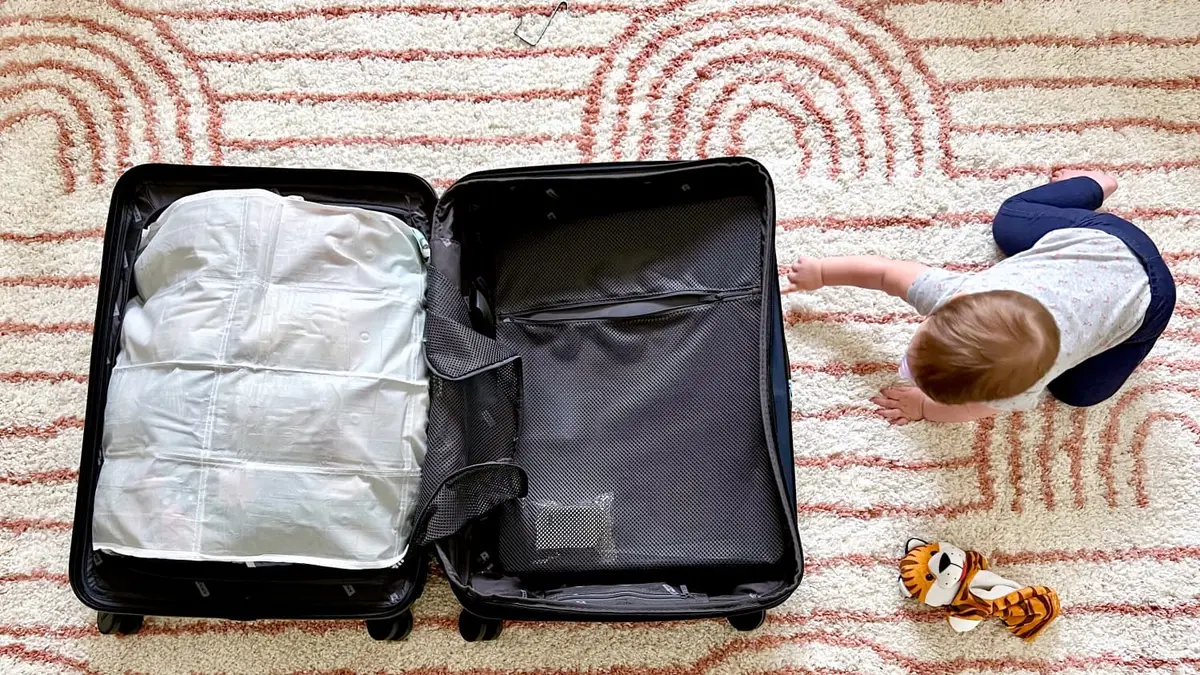
International checked baggage gets thrown, compressed, and depressurized at altitude. Aluminum foil seals on conservas tins are not built for that environment. Protecting them is a packing problem worth thinking through before you finalize your Portugal packing list — because how you organize the bag determines whether the tins survive the flight.
The Shoe Fortress Method works reliably: double-bag every tin in heavy-duty zip-seal plastic bags, wrap them in dense clothing like used socks or worn pajamas, then pack the bundles tightly inside your shoes. The shoe walls absorb blunt-force impact; the plastic bags contain anything that escapes.
Pro Tip: Buy a small roll of stretch wrap at a Portuguese pharmacy before you pack. A few wraps of stretch film around the outside of the tin costs almost nothing and adds a second layer of leak protection that the zip-seal bag alone does not provide.
Where should you buy Portuguese canned fish in Lisbon?
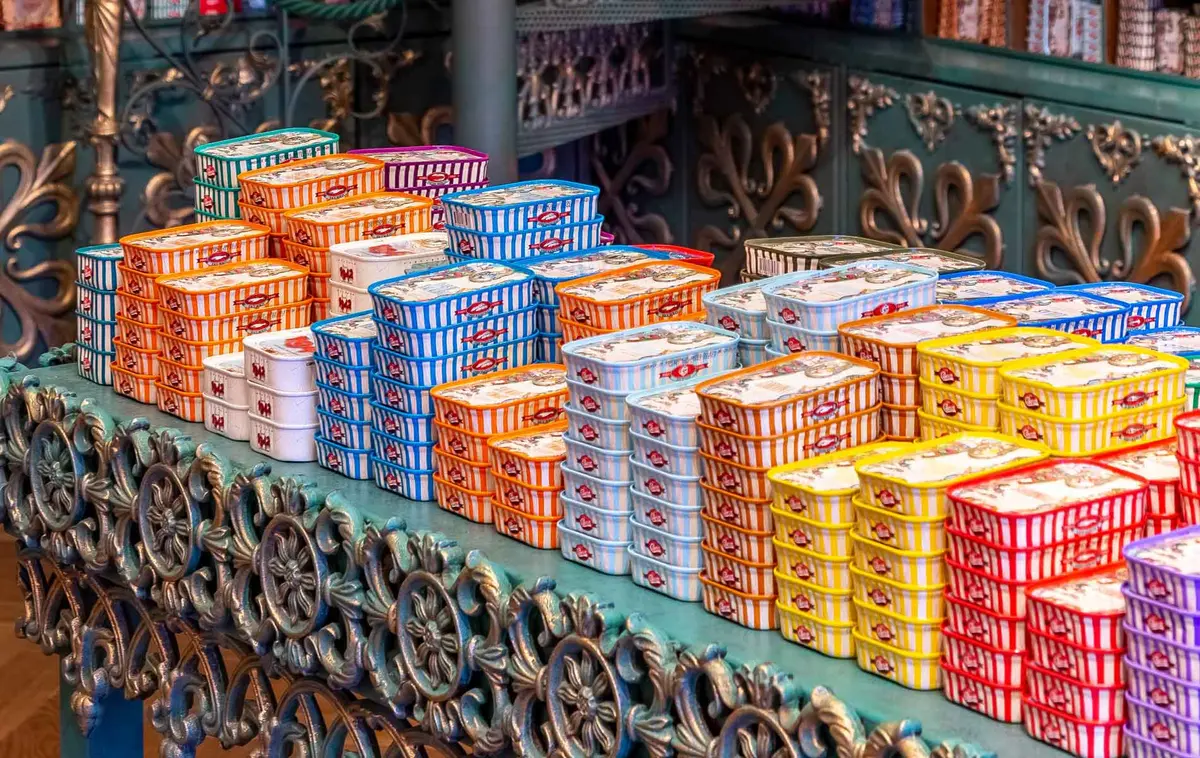
The best conservas in Lisbon come from three legitimate shops and one bar that doubles as a pantry — none of which overlap much with the tourist-facing retail you encounter while shopping in Lisbon generally. Before you spend anything, know this: O Mundo Fantástico da Sardinha Portuguesa is visually spectacular and sells mid-tier fish in circus-themed novelty packaging at serious markups. It is designed entirely for the photo, not for eating. The real conserveiras are quieter, older, and far less theatrical.
1. Conserveira de Lisboa
Step inside and the first thing you notice is the low, warm light bouncing off floor-to-ceiling shelves of neatly stacked tins. This shop has been operating since the 1930s, and the atmosphere has not changed — heavy wooden counters, the faint mineral tang of olive oil in the air, and staff who know every product by hand. The signature move is the wrapping: each purchase folded in retro-colored paper, then secured with a sharp snap of heavy twine. You hear that snap before you see it.
The biggest exclusive is that Conserveira de Lisboa is the only place in the world where you can buy Tricana, a heritage brand they own outright. If you are only making one dedicated conservas stop, this is the one.
- Location: Rua dos Bacalhoeiros 34, Alfama, Lisbon
- Cost: €3–€8 ($3.30–$8.75) per tin
- Best for: Serious collectors, first-time buyers who want one authoritative shop
- Time needed: 20–30 minutes
2. Loja das Conservas
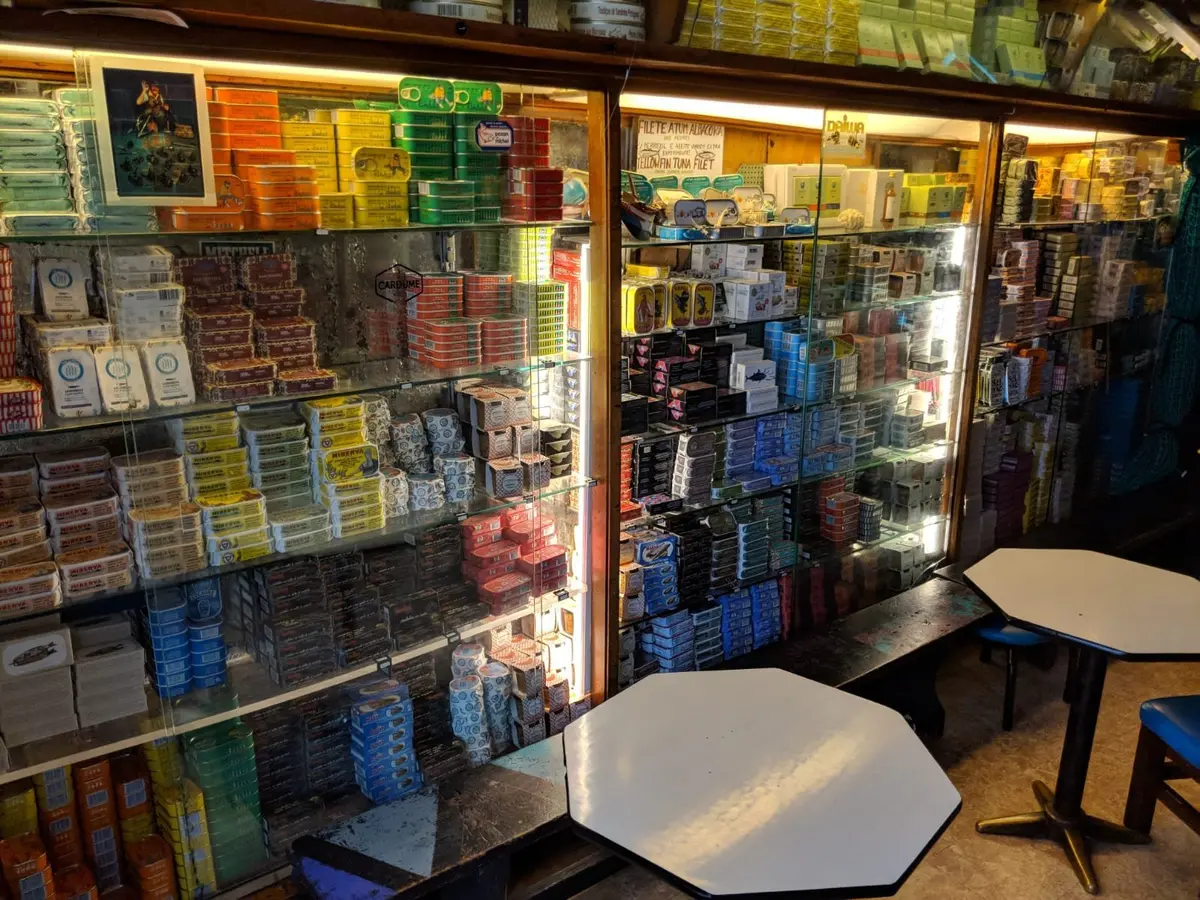
Run by the National Association of the Fish Canning Industry, this shop represents 22 different Portuguese artisanal canneries under one roof. The layout is deliberate — each shelf section maps to a different region or producer. It is the single best place to taste your way across the full national spectrum before committing to a bulk buy. Think of it as a comparative tasting room with price tags — and the single most efficient way to decide what to buy in Portugal if conservas have a place in your luggage.
- Location: Rua do Arsenal 130, Baixa, Lisbon
- Cost: €2.50–€12 ($2.75–$13.20) per tin
- Best for: First-time buyers, anyone wanting to understand the regional differences before spending serious money
- Time needed: 30–45 minutes
3. Sol e Pesca
The past life of this place is half the story. Sol e Pesca used to be a fishing tackle shop. Today it is a low-lit bar on Lisbon’s Pink Street where every table is stacked with tins you can order directly from the menu, eaten with bread and butter while drinking wine. The walls are still covered in fishing gear — rods, hooks, nets, floats — which is exactly the kind of detail that makes it feel like a bar that has always been here, not one that was designed to look that way. Anthony Bourdain ate here. The tin-eating format is the single best way to figure out what you actually like before loading your checked bag.
- Location: Rua Nova do Carvalho 44, Pink Street, Lisbon
- Cost: €8–€18 ($8.80–$19.75) for a tin-based meal with wine
- Best for: Solo travelers, anyone wanting to try before buying
- Time needed: 1–2 hours
4. Miss Can
A fourth-generation family business with its roots going back to 1911, Miss Can operates out of a small petiscaria in the Alfama neighborhood near São Jorge Castle. The space is tiny — a few outdoor tables in a sloped courtyard that most tourists walk straight past, which makes it one of the quieter spots in an otherwise packed district. Order a tin of stuffed squid or mackerel, ask the staff what they recommend pairing it with, and they will give you a real answer. Cash only. The tin you eat here can be purchased to take home.
- Location: Largo do Contador Mor 17, Alfama, Lisbon (near Castelo de São Jorge)
- Cost: €5–€22 ($5.50–$24.20) for on-site dining; individual tins from €5
- Best for: Families, solo travelers wanting a quieter alternative to Sol e Pesca
- Time needed: 1–1.5 hours
- Hours: 11 AM–7 PM daily; cash only
Is it worth visiting Porto and Matosinhos for conservas?
Porto and its coastal suburb of Matosinhos are where Portugal’s canning industry was actually built, and a day trip from Porto to see the Pinhais factory is a fundamentally different experience from buying tins off a shelf in Lisbon. Step off the Metro in Matosinhos and the air shifts immediately — salt, coastal brine, and the distant smell of grilling fish hit you before you reach street level.
5. Conservas Pinhais factory tour
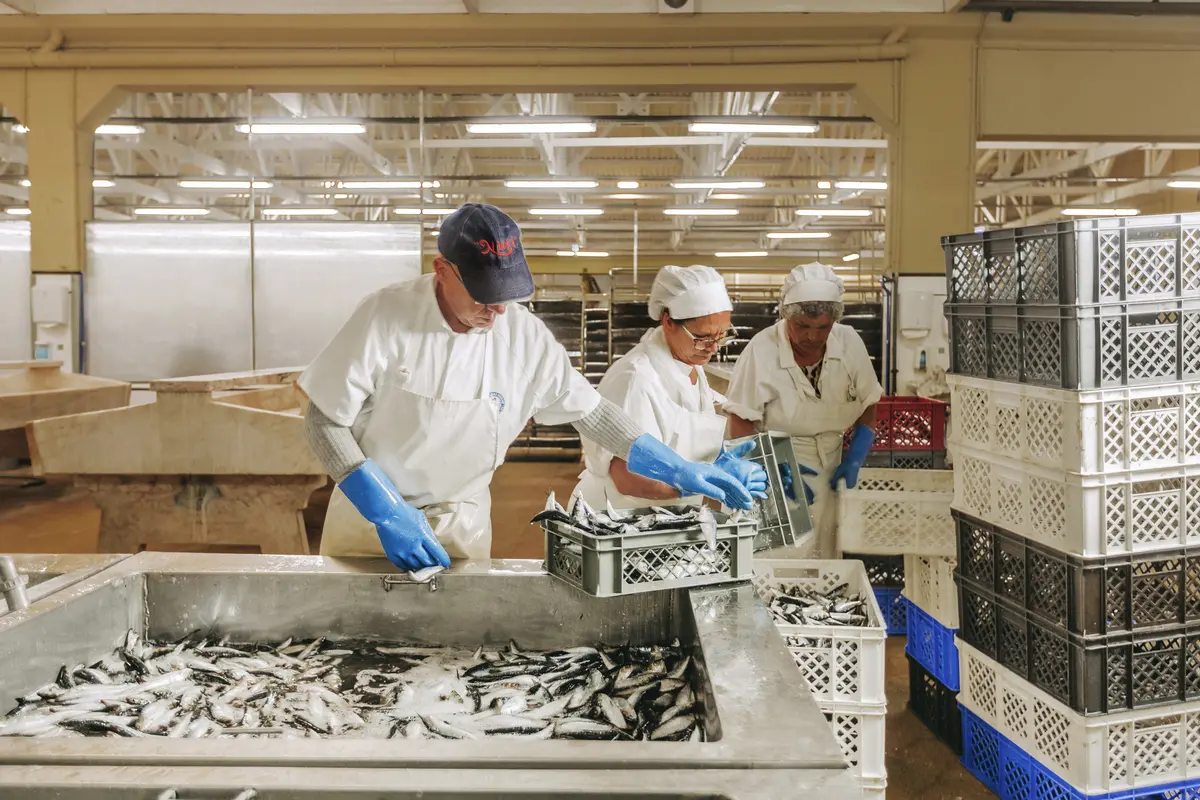
Conservas Pinhais has been producing in Matosinhos since 1920, and a visit here reframes everything you think you know about tinned fish. The factory floor is built around marble sinks, water-worn and smooth from over a century of use, where workers gut, clean, and prepare sardines entirely by hand. Each tin is filled manually, sealed, and wrapped in retro labels that have barely changed since the factory opened. The spicy variants get a single salt-cured chili, a few peppercorns, and whole cloves added by hand before sealing.
The Nuri brand — the one you see in specialty shops worldwide — comes straight from this factory. One block away is Conservas Portugal Norte, producer of the Porthos brand, meaning you can hit two factory visits in one efficient afternoon.
Advance booking is essential. Tours sell out, especially in summer and on weekends.
- Location: Avenida Menéres 700, Matosinhos (Metro: Câmara de Matosinhos)
- Cost: approximately $29–$30 per person; ticketed, book online in advance
- Best for: History enthusiasts, culinary travelers, families
- Time needed: 90 minutes for the tour; allow extra time for the shop and tasting
Pro Tip: Book a weekday tour if you want to see live production. Weekend visits offer access to more exclusive factory areas but may not coincide with active canning.
Which Portuguese canned fish brands are worth buying?
The honest answer is that the quality spectrum runs from extraordinary artisanal product to superb everyday value — and the everyday supermarket options are far better than most travel guides suggest.
| Brand | Market Tier | Average Price | Known For |
|---|---|---|---|
| Nuri (Pinhais) | Premium gourmet | $5.50–$9 | High-acidity olive oil, firm texture, whole chili spicy variants |
| Jose Gourmet | Boutique artisanal | $6.50–$11 | Striking label design, exclusive local sourcing |
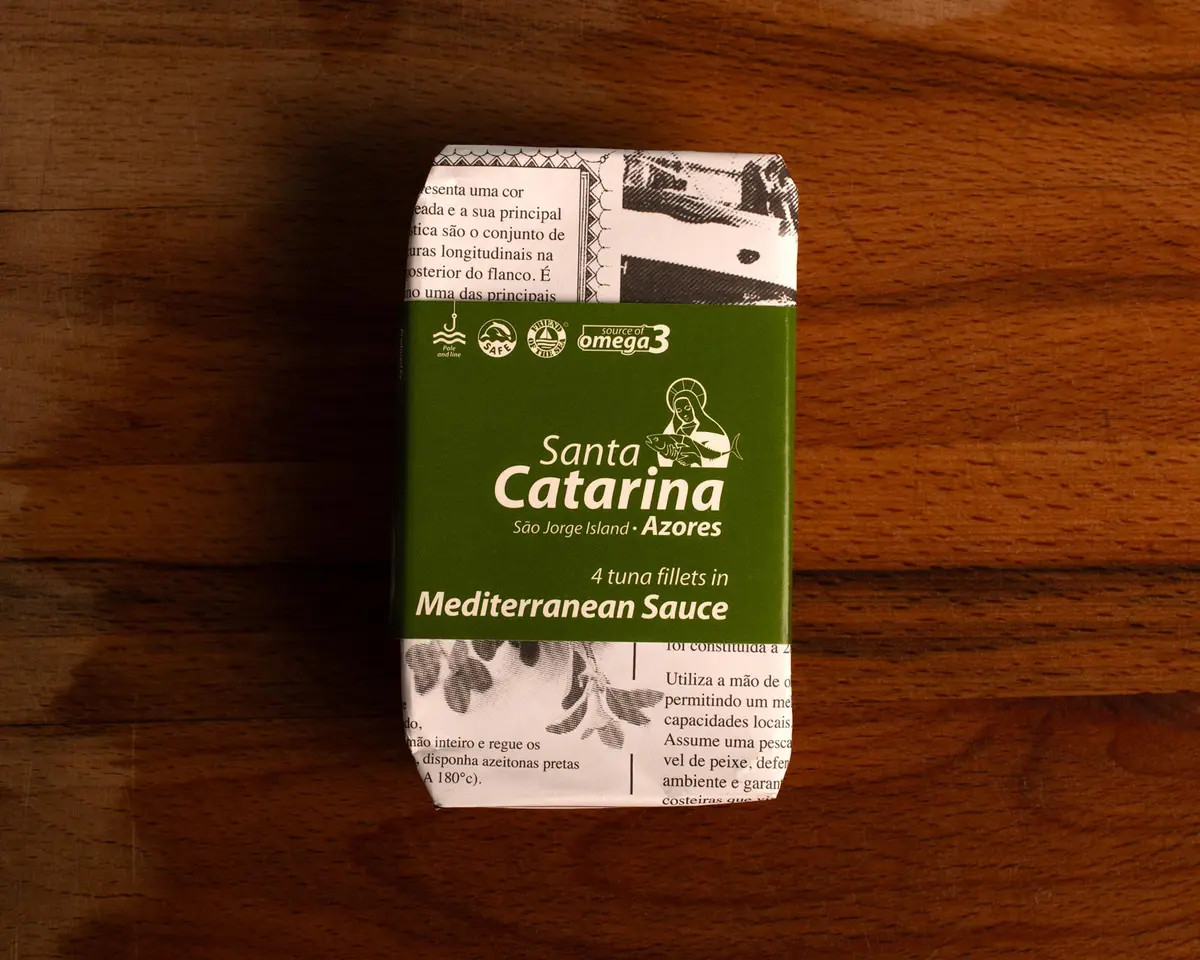
| Santa Catarina | Sustainable premium | $4.50–$8 | Pole-and-line Azores tuna, dolphin-safe certified |
| Tricana | Historic exclusive | $4.50–$7 | Only at Conserveira de Lisboa, hand-wrapped paper aesthetic |
| Ramirez / Manná | Supermarket staple | $1.65–$3.50 | Ramirez: oldest cannery in the world (est. 1853); excellent everyday value |
Premium gourmet conservas worth the price difference
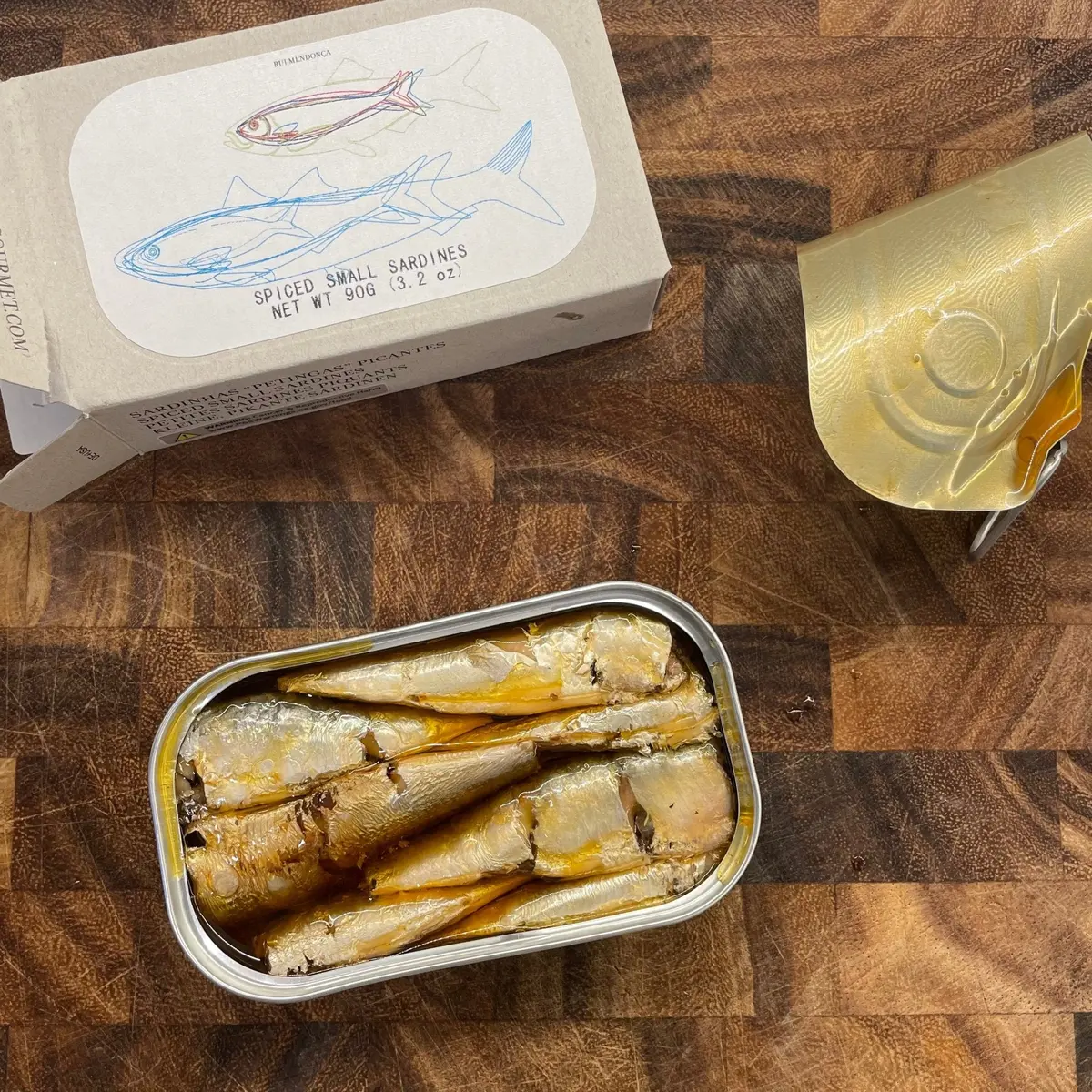
Nuri is the gateway brand that converts sardine skeptics. Peel back the lid and the first thing you smell is the sharp intensity of high-acidity Portuguese olive oil — nothing like the cheap vegetable oil used in American grocery store brands. The sardines are firm and intact, with a slightly creamy density from the slow curing process. On my last visit to Porto, a Pinhais staff member explained that the specific oil they use is chosen for its ability to pull flavor from the fish during the sterilization process. You taste the difference immediately.
Jose Gourmet is as much a design object as a food product. The label artwork is deliberate and distinctive, sourcing is hyper-local, and the flavor profiles lean sophisticated — subtle, complex, and rarely aggressive.
Luças, operating since the 1920s, is the quiet favorite of professional chefs in Portugal. You will not see it heavily marketed. It simply appears on the shelf and professionals recognize it.
Supermarket staples: genuinely good fish at budget prices
Pingo Doce and Continente supermarkets stock excellent tinned fish for under €2 a tin. Ramirez is the oldest continuously operating fish cannery in the world, founded in 1853, and it sells at Lisbon grocery stores for the price of a cheap coffee. The fish is fantastic. Bom Petisco and Manná from Conserveira do Sul offer similar value. Stock up here for everyday pantry use and reserve the boutique budget for the truly artisanal product — both have their place in a kitchen that takes traditional Portuguese food seriously.
Pro Tip: Supermarkets near Cais do Sodré station in Lisbon are well-stocked and within walking distance from most central hotels. The Pingo Doce on Rua do Arsenal is two blocks from Loja das Conservas — hit both in the same trip.
What is Azores pole-and-line tuna — and why does it matter?
Most Portuguese canned fish guides focus entirely on sardines. That is a significant miss. The Azores archipelago, located roughly 930 miles (1,500 km) off the Portuguese mainland in the mid-Atlantic, produces some of the finest tinned tuna available anywhere, caught using a method that almost no large commercial operation still uses.
Fishermen use binoculars to spot tuna schools, cut the engine, spray water to mimic a baitfish surface, and catch each fish individually on a single hook — one fish at a time. No nets, no bycatch, zero dolphin casualties. The result is certified dolphin-safe by the Earth Island Institute and supported by the APASA association. The tuna itself, particularly from Santa Catarina and Tenório on São Jorge Island, is dense, clean-flavored, and completely different from anything in the commercial tuna aisle back home.
Pro Tip: Look for the words “Pole & Line” or “Linha” on the label to identify authentically caught Azores tuna. It is the clearest quality signal printed on the tin and is worth prioritizing over any marketing language on the front.
How do you read a Portuguese conservas label?
| Portuguese Term | What It Means | Flavor and Texture Notes |
|---|---|---|
| Sardinhas | Adult sardines (Sardina pilchardus) | Rich fat content, deep marine flavor, firm |
| Petingas | Juvenile sardines | Delicate, mild, more tender than adult |
| Cavala | Mackerel | Meatier, firmer, very versatile |
| Polvo | Octopus | Becomes silky and tender through sterilization |
| Lulas | Squid | Light, slightly chewy, mild flavor |
| Bacalhau | Codfish | Foundational Portuguese ingredient; canned version is flaky and subtly salty |
| Em azeite | In olive oil | The premium standard; higher flavor depth |
| Em escabeche | In vinegar/wine marinade | Bright, acidic, great as a salad component |
What wines pair best with Portuguese conservas?
The high fat content and sharp acidity of Portuguese olive oil require wines with enough structure to cut through both. The local pairings are correct for a reason — they were developed alongside the food, not matched to it after the fact. For a deeper look at the regions producing these bottles, the Portugal wine guide covers the full picture.
Vinho Verde is the default for good reason. Its light effervescence, green apple crispness, and low alcohol lift the salt without competing with delicate fish. It works with virtually every tin on this list.
Dão Branco is a more elegant option — citrus-forward and slightly fruit-driven, with enough body to handle richer preparations like spiced sardines or smoked mackerel.
Albariño, sourced from Spanish Galicia just north of Portugal’s Minho River, brings bracing acidity and a natural salinity that mirrors the ocean character of the fish.
For a local Porto alternative, order the Portonic — white Port served over ice with tonic water and a lemon wedge. It is the correct aperitif alongside lighter tins like petingas in olive oil, and the combination is far better than it sounds on paper.
How do you build a conservas board at home?
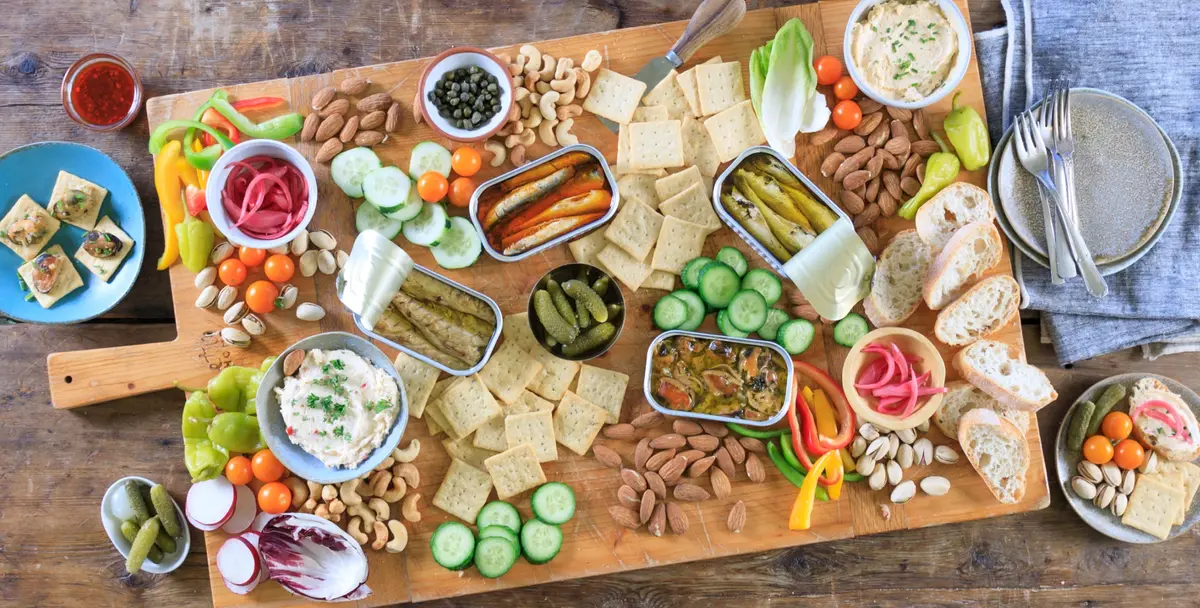
You need a tin, a few good accompaniments, and absolutely zero cooking — the formula below works every time, and it draws on the same instincts that define Portuguese food culture more broadly.
- The base: Thick, crusty sourdough or a seeded rye with enough structure to hold dense fish without turning to mush
- The fish: One tin of premium sardines or mackerel, drained slightly but not fully — reserve the oil
- The acid: A fresh lemon cut in half, squeezed directly over the open tin the moment the lid comes off
- The salt: A few crystals of high-quality flaky sea salt scattered directly over the top
- The cheese parallel: Hard aged cheese — Parmigiano Reggiano or a good Portuguese Queijo Serra — placed on the same board. Both products exist because of the same culinary logic: controlled preservation creating concentrated flavor
Pro Tip: Never discard the olive oil at the bottom of the tin. Pour it into a small bowl and use it as a dipping sauce for the bread or as a dressing for a simple green salad. That oil has been infusing with the fish for months. It is one of the best things on the board.
The bottom line
Portuguese canned fish is one of the few food souvenirs that justifies its price, survives international travel intact, and actually improves the longer you wait to open it. The two rules that matter most: pack every tin in your checked bag before airport security, and declare everything on your CBP form when you land. Beyond that, buy from Conserveira de Lisboa if you want one authoritative source, walk through Loja das Conservas if you want to compare the full national spectrum, and get to Matosinhos if you want to understand where all of it comes from. For everything else your trip involves, the Portugal travel guide is the place to start.
TL;DR: Every tin goes in checked luggage — no exceptions. Declare all food on your CBP form. Buy Tricana at Conserveira de Lisboa, try before buying at Sol e Pesca, and book the Conservas Pinhais factory tour in Matosinhos at least a week in advance.
Have you found a Portuguese canned fish brand or shop that belongs on this list? Drop it in the comments.