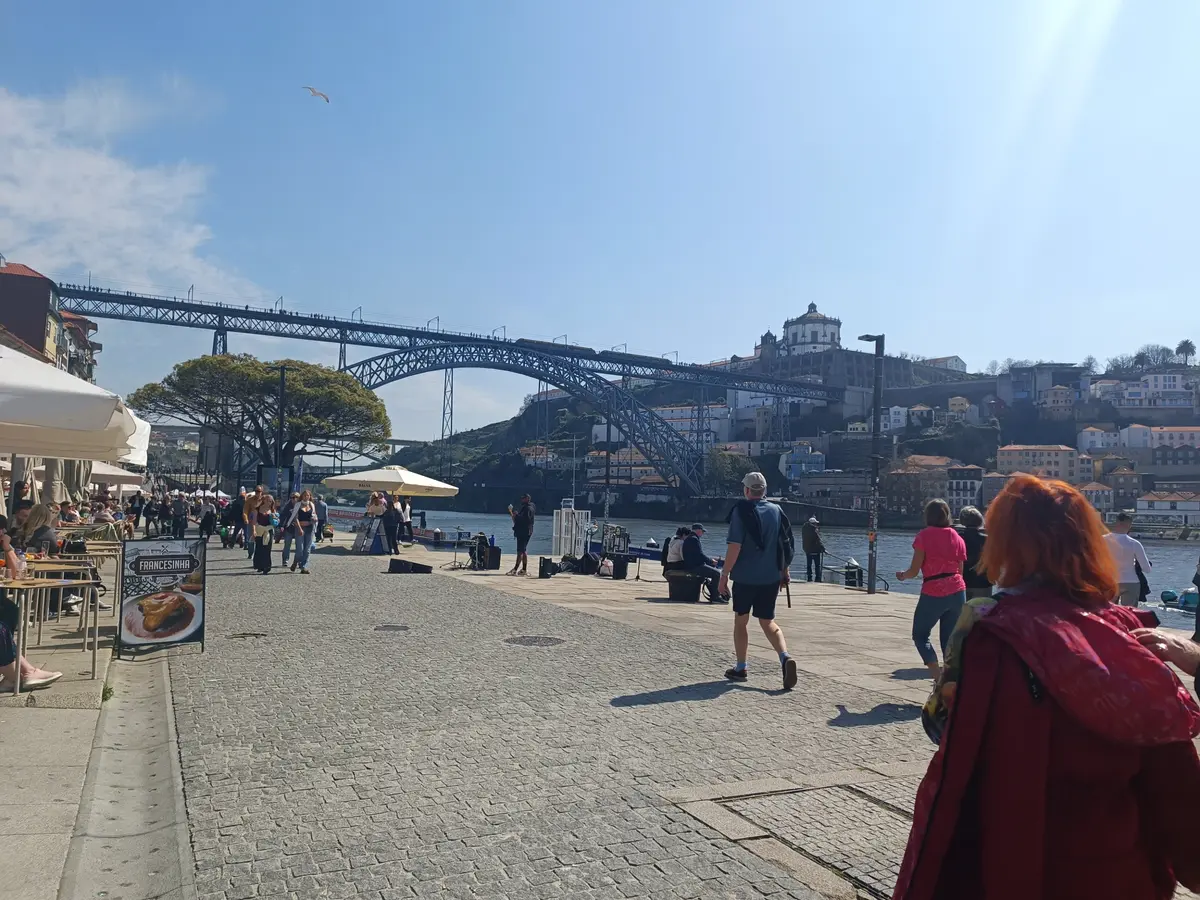
Uber in Lisbon works — but the city’s access-restricted historic districts, cobblestone hills that shred polycarbonate suitcase wheels, and a permanently cancelled airport bus route you will still find recommended online will catch you completely off guard. This guide covers the P2 pickup protocol, ZER zone drop-off realities, and the specific scams targeting airport arrivals so you can move through Lisbon like someone who has done it before.
Does Uber work in Lisbon?
Yes. Uber in Lisbon operates legally under Portugal’s TVDE framework alongside Bolt and Free Now. UberX, Uber Green, and Uber Black all run actively throughout the city. That said, Lisbon’s steep topography, access-restricted historic neighborhoods, and periodic labor disputes mean the app behaves very differently here than it does in a typical US city — context our full Lisbon travel guide puts in broader perspective.
TVDE stands for Transporte em Veículo Descaracterizado a partir de Plataforma Eletrónica — Portugal’s governing framework for ride-hailing vehicles licensed through digital platforms. Drivers must hold a TVDE certificate issued by the national Mobility and Transport Authority (AMT) and vehicles must carry a valid TVDE license. This is why your driver will sometimes show a different car brand than what you see on the street: TVDE licensing requirements push operators toward specific vehicle categories.
How do you get an Uber from Lisbon Airport?
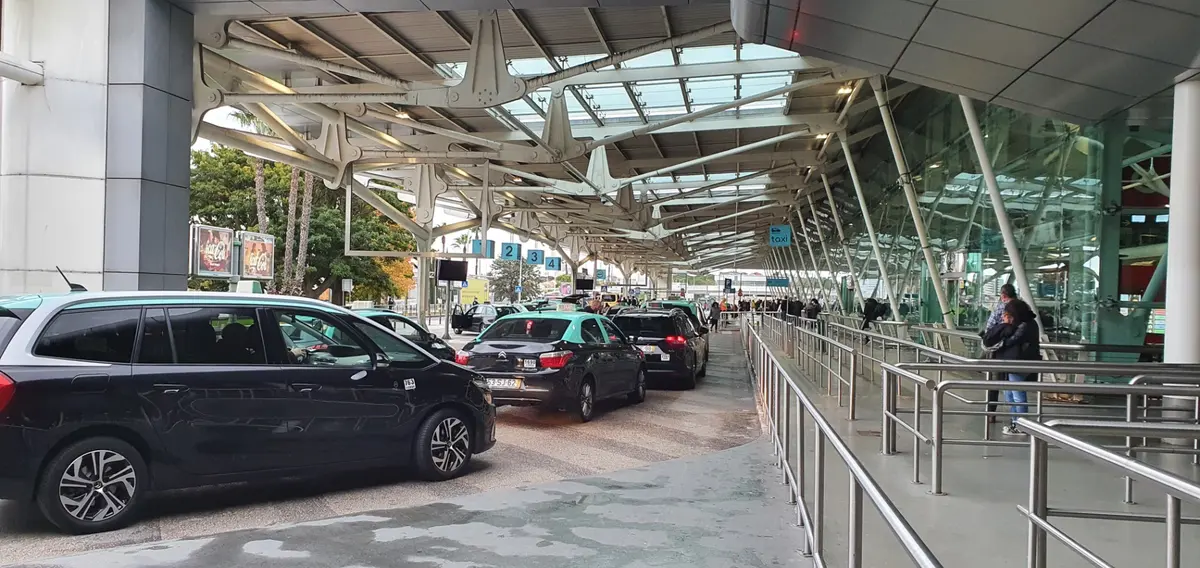
Head directly to the P2 parking structure — not the taxi rank directly outside arrivals. The former Kiss and Fly pickup zone was relocated to P2, and following outdated directions puts you in the wrong spot waiting up to 90 minutes. Once inside P2, request your ride only when you are physically standing at the concrete pillars where drivers queue.
Terminal 1: The one step most travelers get wrong
Exit baggage claim onto the Arrivals Level (Level 0) and turn immediately left. Follow the overhead signs marked Uber/Bolt and TVDE — look for them positioned above the Starbucks. Walk through the two sets of doors into the covered concrete corridor of P2 Parking. The blue “pre-reservas online” signs also mark the correct path.
Do not request your ride until you are physically standing at the concrete pillars where drivers queue. Requesting early causes drivers to cancel before they can reach you, which triggers the cancellation fee on your end.
The P2 structure is dimly lit and feels utilitarian. That is completely normal. You will see dozens of people scanning their phones under the same concrete pillars, so you will know you are in the right place.
Pro Tip: Cell service inside P2 drops badly. Connect to the free ANA airport Wi-Fi before you walk over so your app loads cleanly and your driver can track your pin.
Terminal 2: Ryanair, EasyJet, and Wizz Air arrivals
Terminal 2 has zero TVDE pickup infrastructure, so anyone reviewing all their Lisbon Airport transport options before landing should factor this in first. The app will throw errors if you try to pin a pickup here, and between 12:30 AM and 3:30 AM the terminal is nearly fully closed. Your only option is to take the free airport shuttle bus to Terminal 1. It runs every 12 minutes. Once at T1, follow the P2 directions above.
Uber, Bolt, or taxi — which should you actually take?
The right choice depends entirely on the time of day and destination. Bolt undercuts Uber on most mid-day city rides. Uber is more reliable for early-morning airport runs when you cannot afford a driver no-show. Municipal taxis have one genuine advantage that Uber never will: legal access to dedicated bus lanes during the evening rush between 5:00 PM and 7:00 PM.
Bolt is the dominant platform among locals. It runs more aggressive discount pricing and frequent promo codes, making it cheaper than Uber for most mid-day, short-distance rides in neighborhoods like Belém, LX Factory, or Príncipe Real.
Uber edges out Bolt on interface consistency and overall vehicle quality. This matters most when you have heavy luggage and an early-morning airport run where a driver no-show genuinely derails the day.
Traditional municipal taxis — cream-colored or the older black-and-green fleet — can use dedicated municipal bus lanes. During the evening rush on major arteries like Avenida da Liberdade, a taxi will reach your destination significantly faster than any ride-hailing vehicle sitting in general traffic.
Note: the Aerobus airport shuttle service was permanently cancelled and no longer operates. Any guide that lists it as an option is out of date, and any source quoting its fares is equally stale — verify current transfer pricing in our guide to Portugal travel costs.
| Mode | Best Scenario | Approximate Cost (Airport to City Center) |
|---|---|---|
| Uber / Bolt | Off-peak, standard luggage, non-ZER hotel | $9 – $27 |
| Municipal Taxi | 5:00 PM – 7:00 PM rush hour, bus lane advantage | $16 – $30 |
| Metro Red Line | Strikes, gridlock, solo traveler | ~$2.65 total |
| Private Transfer | Large families, maximum certainty | $25 – $50 |
Pro Tip: Install both Uber and Bolt before your plane lands. Near LX Factory or Sintra, running the two apps simultaneously and booking whichever quotes lower can save $6 to $10 on a single ride.
Why won’t your Uber reach your hotel door in Alfama or Bairro Alto?
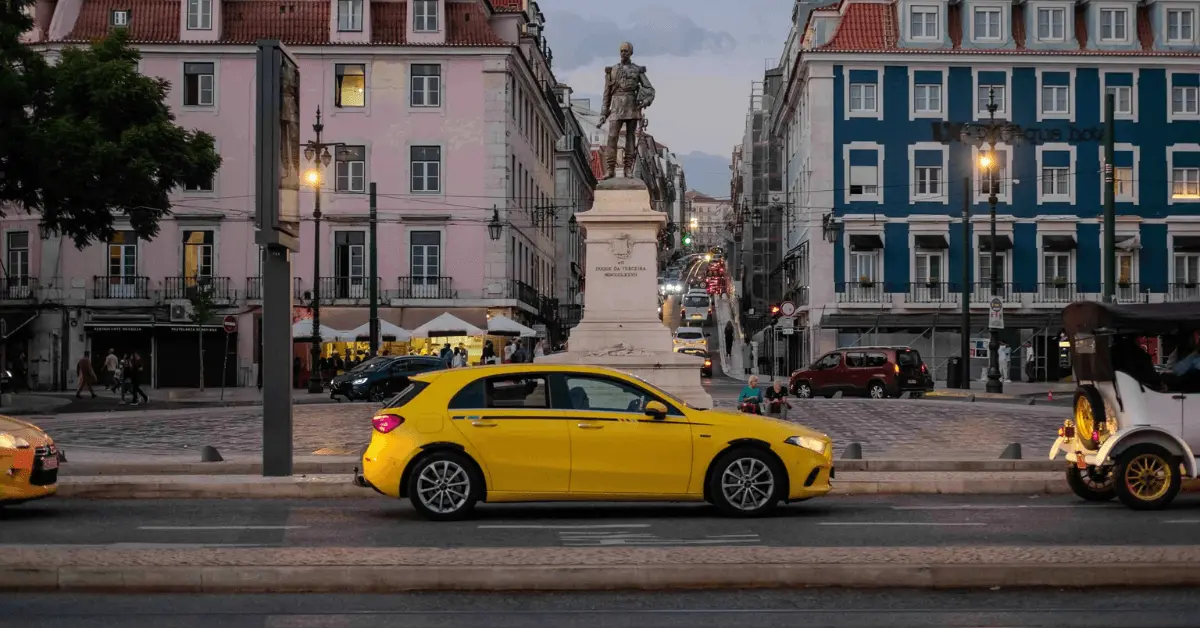
Lisbon enforces access-restricted zones — called ZER/ZAC — across the historic neighborhoods. TVDE drivers for Uber and Bolt are classified as commercial operators and face fines of €30 to €250 ($33 to $275) for entering during restricted hours. The result is that your driver drops you at the boundary line, and you walk the rest of the way on uneven hand-laid cobblestones that will destroy polycarbonate suitcase wheels within minutes.
| District | Restriction Hours | What Happens to Your Uber |
|---|---|---|
| Alfama | 10:00 AM – 8:00 PM; 1:00 AM – 8:00 AM | Boundary drop-off; steep cobblestone finish |
| Bairro Alto | 10:00 AM – 8:00 PM; 1:00 AM – 8:00 AM | No vehicle access to interior nightlife grid |
| Castelo de São Jorge | 10:00 AM – 8:00 PM; 1:00 AM – 8:00 AM | Steep uphill walk from lower perimeter |
| Santa Catarina / Bica | 10:00 AM – 8:00 PM; 1:00 AM – 8:00 AM | Conflict with funicular routes; perimeter stop only |
Before you finalize where to stay in Lisbon, pull up Google Maps satellite view and measure the walk from the nearest unrestricted road to your hotel entrance. Do this with your actual luggage weight in mind.
Pro Tip: The Carris-operated funiculars — Elevador da Glória and the Ascensor da Bica — alongside the Elevador de Santa Justa, cover the vertical distance the ZER restriction forces you to walk. A smart driver using Uber in Lisbon will drop you at the base of the relevant hill so you can ride up rather than haul luggage over cobblestones.

Why do rides stall inside Alfama and Graça?
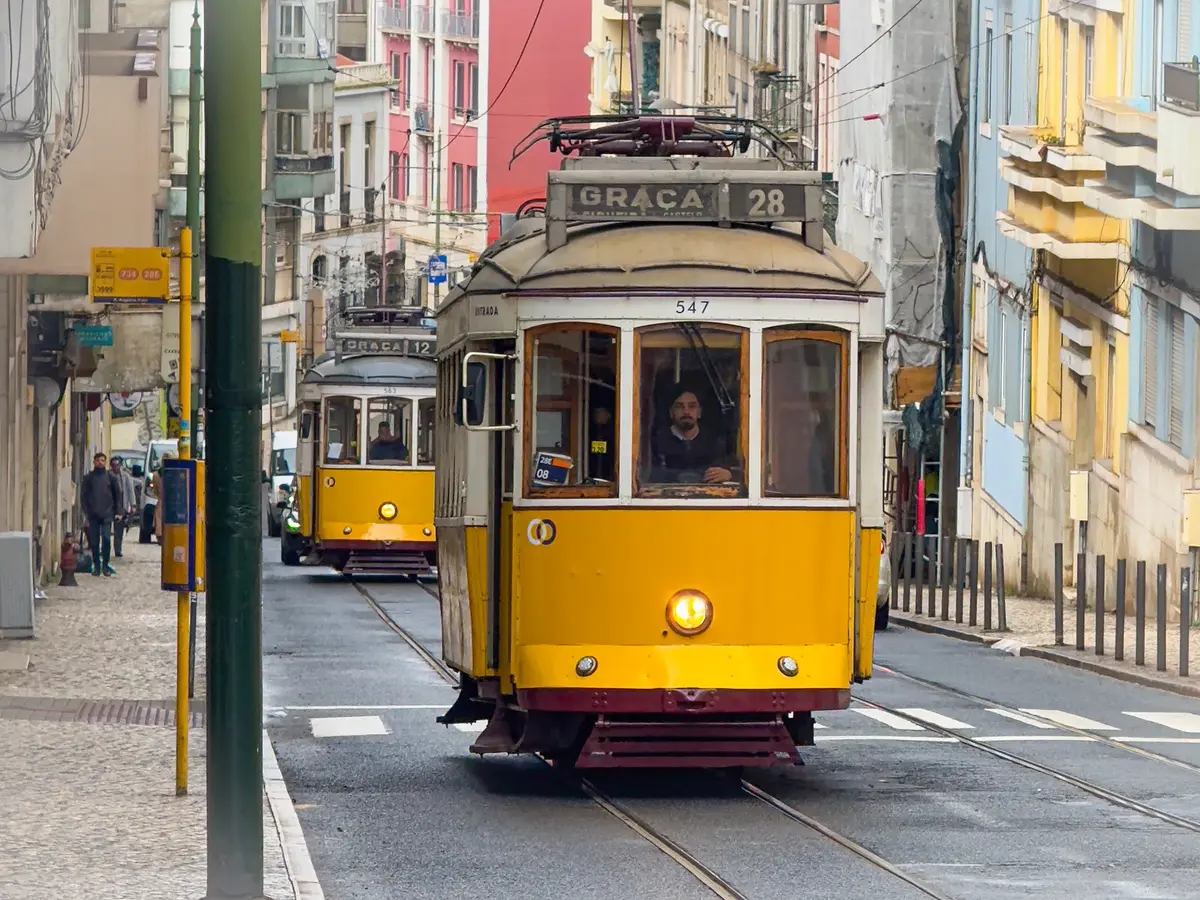
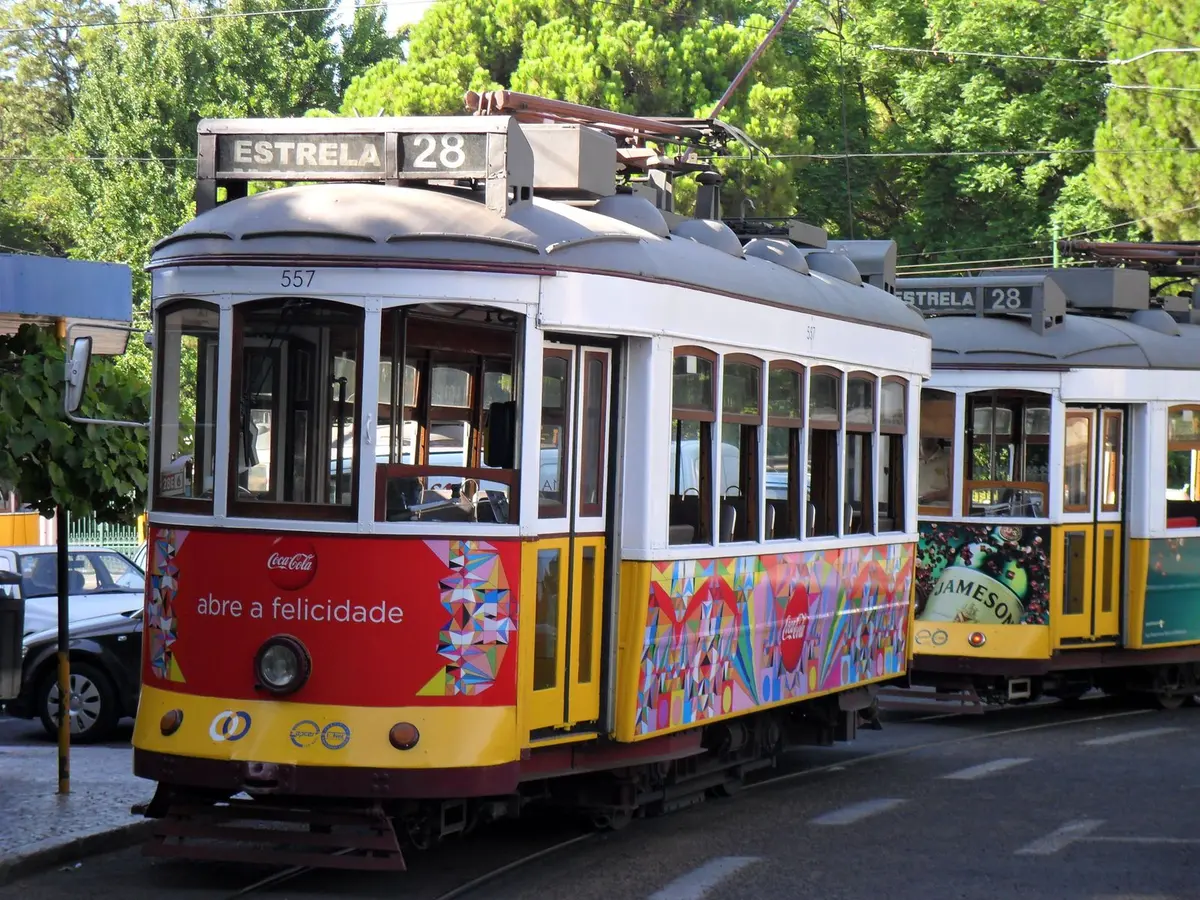
Even outside restricted zones, Tram 28 shares single-lane alleys with ride-hailing vehicles throughout Alfama and Graça. When any delivery van parks even a few inches over the embedded steel rails, the tram stops — and every vehicle behind it, including yours, goes nowhere. The alley is too narrow to reverse, and this can mean a 15 to 25-minute standstill on a route that should have taken 4 minutes.
You will hear the tram’s bell ring, the wheels grind to a halt on the steep incline, and then silence. The driver has no detour. You will sit there watching locals lean out of apartment windows with the patient disinterest of people who have seen this before.
The fix is tactical drop-off planning — a strategy mapped in full in our guide to accessible travel in Lisbon, which covers funicular routes relative to accommodation in the historic core. Ask your driver to stop at the top or base of the relevant hill rather than attempting the interior alleys, and use the Carris funiculars to cover the vertical distance. On my last visit, a driver who knew the area dropped me at Largo do Chafariz de Dentro, and the 6-minute walk to my guesthouse gate was considerably faster than any car could have managed from there.
What transportation scams are targeting visitors right now?
Four specific schemes operate at Lisbon’s airport and inside the municipal taxi network. The most financially dangerous is the Bluetooth card reader fraud, which has produced fraudulent charges exceeding €1,200 ($1,320) on a single airport trip. Knowing the countermeasure for each one before you land is the difference between a clean trip and a 3-week dispute with your bank.
The Bluetooth card reader scam targets municipal taxis only, and is part of a wider pattern documented in our guide to safety in Portugal. A rogue driver connects a concealed smartphone to the payment terminal via Bluetooth. The screen shows a normal fare — perhaps €14 ($15) — while the actual charge processed is dramatically higher.
Countermeasure: Pay municipal taxis in cash only. Agree on a ballpark fare before you get inside, or insist on the metered fare with a cash payment.
The parking fee demand targets Uber and Bolt pickups at P2. The driver claims a cash parking fee before moving the vehicle. This is explicitly prohibited — all airport fees are included in your upfront app fare.
Countermeasure: Refuse. State that all fees are handled inside the app. If the driver insists, report them immediately through the platform’s Trust and Safety channel.
The forced cancellation play involves the driver accepting your trip and then refusing to move — waiting for you to cancel so the penalty fee falls on you.
Countermeasure: Do not cancel. Open the safety reporting function and flag the driver for non-movement. Force them to cancel the trip, or wait it out.
The “app is down” ruse: the driver claims the platform has crashed and offers to take you for an inflated cash rate.
Countermeasure: Exit the vehicle immediately. Screenshot the driver name, license plate, and vehicle model before walking away. Book a new ride entirely.
Which in-app safety features are actually worth using?
Before getting into any vehicle, run a mandatory 3-point check at the curb: the license plate matches your app exactly, the vehicle make and model matches — because a Skoda Octavia is not a Ford Focus — and the driver photo matches the face of the person in the car.
Once inside, sit in the rear passenger seat. This gives you a safe exit distance from traffic and removes the physical proximity issue of sitting next to a stranger.
Use Share Trip Status to send your real-time GPS track to a trusted contact at home. The app masks your phone number when you communicate with drivers, keeping your real number private. If anything goes wrong, the emergency shield icon inside the app connects directly to Portuguese emergency services.
What vehicle will Uber actually send you in Lisbon?
Expect compact European hatchbacks, not the full-size sedans common in the US. UberX in Lisbon frequently dispatches a Renault Clio or Peugeot 208 — four adults with full transatlantic luggage will not fit. Book UberXL for any airport run involving more than basic carry-on bags. Uber Green is genuinely reliable here because Portugal’s EV infrastructure and high fuel costs have driven strong driver adoption of electric vehicles.
UberXL in Lisbon is often a Peugeot 5008 or Dacia Jogger. Still smaller than a Ford Explorer, but practical for two passengers with checked luggage.
Uber Black operates under stricter commercial licensing and requires premium vehicles like a Mercedes or BMW. Expect to pay $24 to $43 for airport runs. That premium is worth it when certainty and comfort matter more than the fare.
UberX Share and UberX Saver offer algorithmic carpooling and a wait-longer, pay-less model respectively. Both work well for solo travelers on non-urgent trips across the city.
How do TVDE strikes affect Uber service and pricing?
When TVDE drivers engage in rolling blockades or organized app boycotts to protest commission structures, surge pricing activates fast. Fares that normally run $11 spike to $33 or more within minutes, and driver availability drops hardest during the morning commute from 7:00 AM to 10:00 AM and the evening commute from 5:00 PM to 8:00 PM.
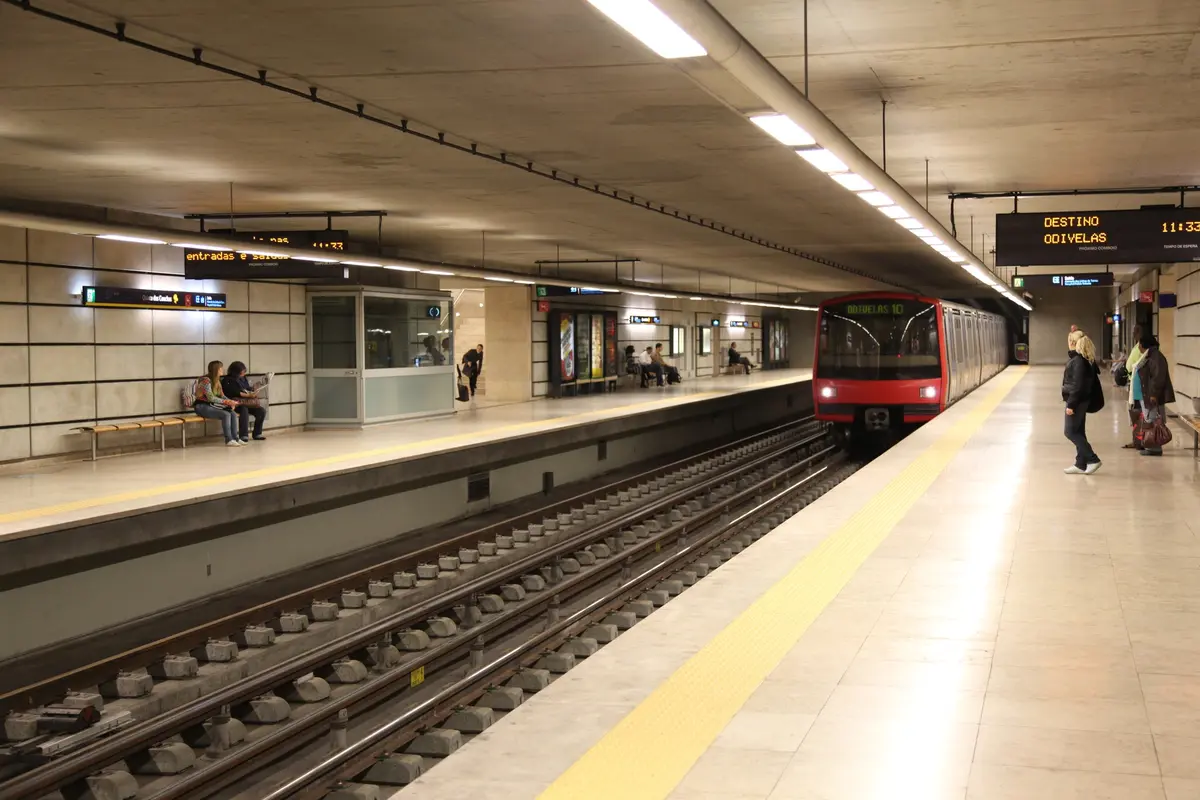
Your zero-cost fallback is the Lisbon Metro Red Line, one of the most practical options in the broader network of rail transit in Portugal. It departs from Terminal 1 and runs directly into the city center. The flat fare is approximately €1.90 (~$2.10) with a €0.50 (~$0.55) Navegante transit card, purchased at any airport ticket machine. Total first-time cost: roughly €2.40 (~$2.65). The metro bypasses all surface traffic, surge pricing, and every street-level blockade.
Pro Tip: Check the Correio da Manhã or RTP news apps the day before any major travel day. Portuguese law requires strike announcements to be published at least 5 days in advance.
The bottom line
TL;DR: Get to P2 parking at Terminal 1 — not the taxi rank. Install both Uber and Bolt before landing and use whichever quotes lower. If your hotel is in Alfama, Bairro Alto, or Castelo, check Google Maps satellite view to measure your walk from the ZER boundary to your door. Pay municipal taxis in cash only. Keep the Metro Red Line as your backup when surge pricing makes the apps unusable. For everything else about planning your time in the country, our Portugal travel guide covers every region, transport network, and logistics question you will face before and during the trip.
Are you staying in one of the ZER-restricted historic neighborhoods? Drop your hotel name in the comments below, and I will tell you exactly where your drop-off point will be and which funicular gets you closest to your door.