Wheelchair accessible Lisbon is one of Europe’s most rewarding — and genuinely punishing — travel challenges. Seven hills, centuries of polished cobblestones, and a string of temporarily closed landmarks mean the gap between a successful trip and a logistical disaster comes down almost entirely to pre-trip research. This guide gives you the verified logistics to make it work — pair it with our Lisbon travel guide for the full city picture once the accessibility planning is in place.
What’s currently closed or suspended — and when might it reopen?
Several major attractions and transport links are out of service. Missing this section and planning around them anyway is the single most common mistake wheelchair travelers make in Lisbon. Verify the current status of each item below directly with the venue before booking anything.
Funiculars (Glória, Bica and Lavra): All three of Lisbon’s traditional funicular lines remain suspended following a fatal accident on the Glória line. Do not plan around any of them until you confirm reopening directly with Carris, the city’s transport operator.
Belém Tower: Closed for a major restoration that began in spring of the prior year and was projected to run approximately one year. Reopening is expected around spring/May — confirm current status before your trip, as intermittent partial reopenings are possible.
National Tile Museum: Closed for renovation with reopening expected around mid-year. Check the museum’s official site before finalizing your itinerary.
Calouste Gulbenkian Museum: Confirmed closed for renovation until July. The gardens and concert hall remain open; the main collection is not accessible.
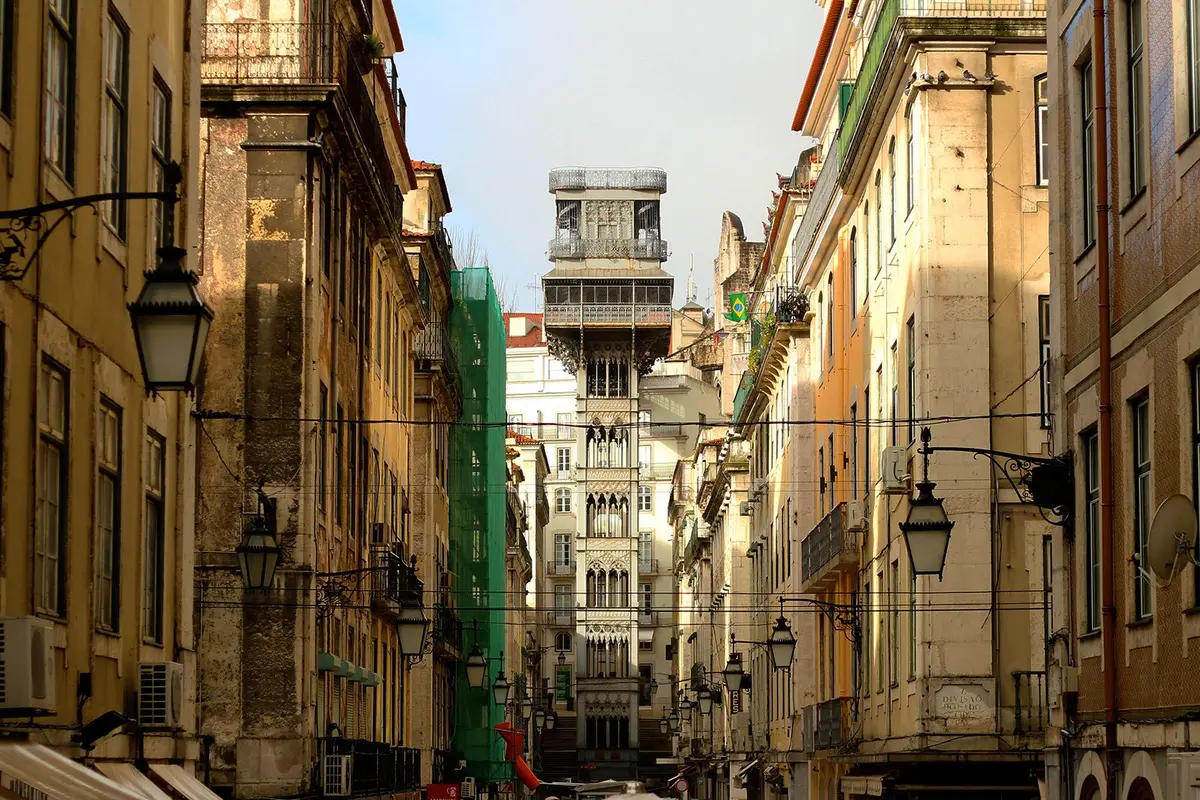
Santa Justa Lift: Currently out of service for maintenance. No reopening date has been announced. The workaround via Largo do Carmo (covered below) is now the only option for reaching the upper viewpoint.
Jerónimos Monastery: Open and operating. Entry requires advance booking at €18 (~$20) per adult. The church is free; the paid ticket covers the cloisters, refectory and exhibition areas.
Pro Tip: Cross-check attraction status on Visit Portugal’s official site or each venue’s own page in the week before you travel. Closures shift with little public notice, and the above list reflects conditions at the time of research — not necessarily the day you arrive.
What terrain are you actually dealing with in Lisbon?
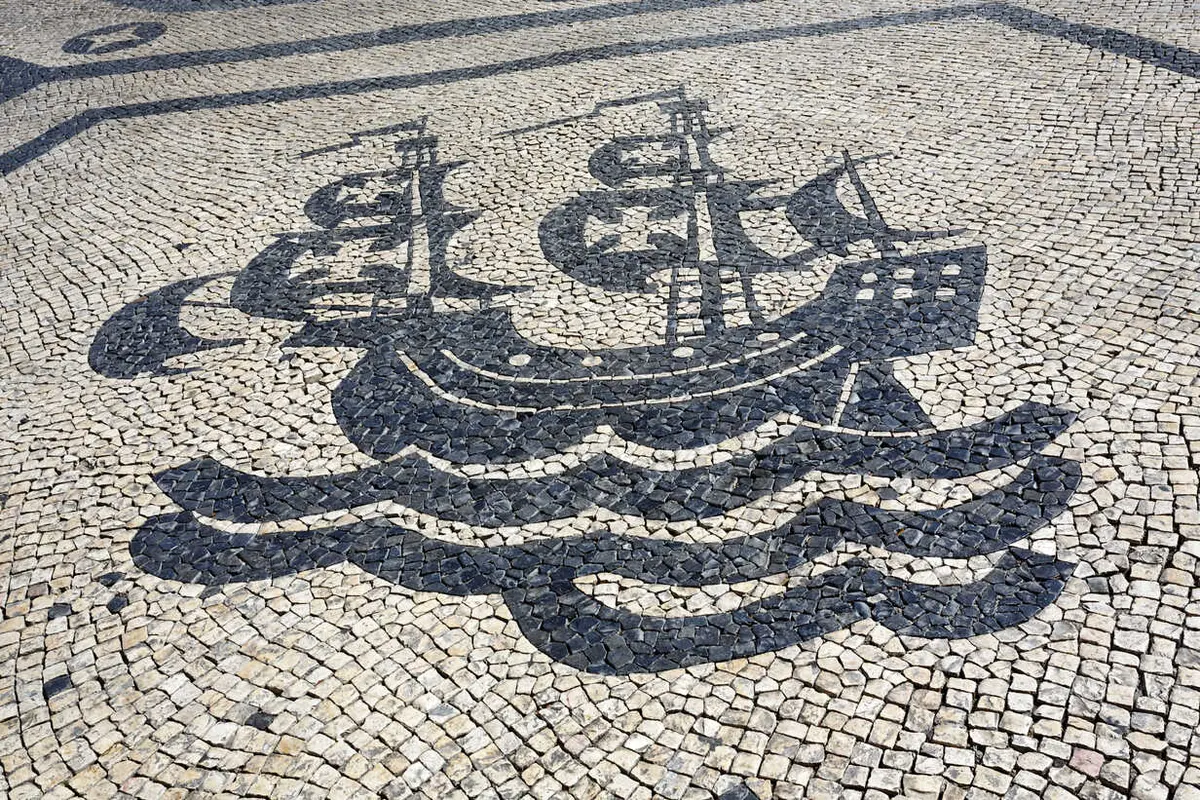
Wheelchair accessible Lisbon is best understood as two separate cities: the flat riverside zones, which are excellent, and the historic hillside districts, which are a genuine physical challenge. The city sits across seven steep hills, and nearly every historic street is paved with calçada portuguesa — polished limestone cobblestones that become almost frictionless when wet. Most older districts combine constant gradient changes, extremely narrow sidewalks, and unexpected single steps at every business entrance. This guide tells you exactly which zones to focus on and which to skip. If you are also planning stops beyond the capital, our Portugal travel guide covers terrain and transport considerations across the country.
Surviving the calçada portuguesa in wet conditions
The calçada portuguesa is a genuine physical hazard in wet weather. The limestone surface gives rear wheelchair tires almost nothing to grip, and even a mild incline can send a chair sliding backward without warning. Make sure your wheelchair has hard rubber or textured tires — soft tires will fail on wet polished stone. If renting locally, specifically request firm, narrow tires before you accept the chair.
Always have a companion positioned to physically brace the chair on any descent during or after rain. This is not optional caution — it is the standard operating practice for anyone who has spent a morning in Alfama after a shower.
Pro Tip: Atlantic weather in Lisbon changes fast. Pack a lightweight rain cover for yourself and the seat, and check the forecast before heading into any hilly district. The flat riverside areas are always safe to roll regardless of rain.
Manual vs. power wheelchair — which one actually works here?
A manual wheelchair with an able-bodied companion is the smarter choice over a heavy power chair for Lisbon’s historic areas. Power chairs handle inclines well but struggle with the narrow doorways and unexpected single steps that appear at almost every entrance in Alfama and Mouraria. A manual chair can be lifted over obstacles and turned in spaces that would completely trap a 300-lb power unit.
If you use a power chair at home, consider renting a lightweight manual chair specifically for this trip. You lose independence on the flat sections but gain access to far more of the city. Travelers using walkers or canes, or those planning broader Portugal for seniors trips, face the same terrain trade-offs throughout the country.
Which transport options genuinely work for wheelchair users?
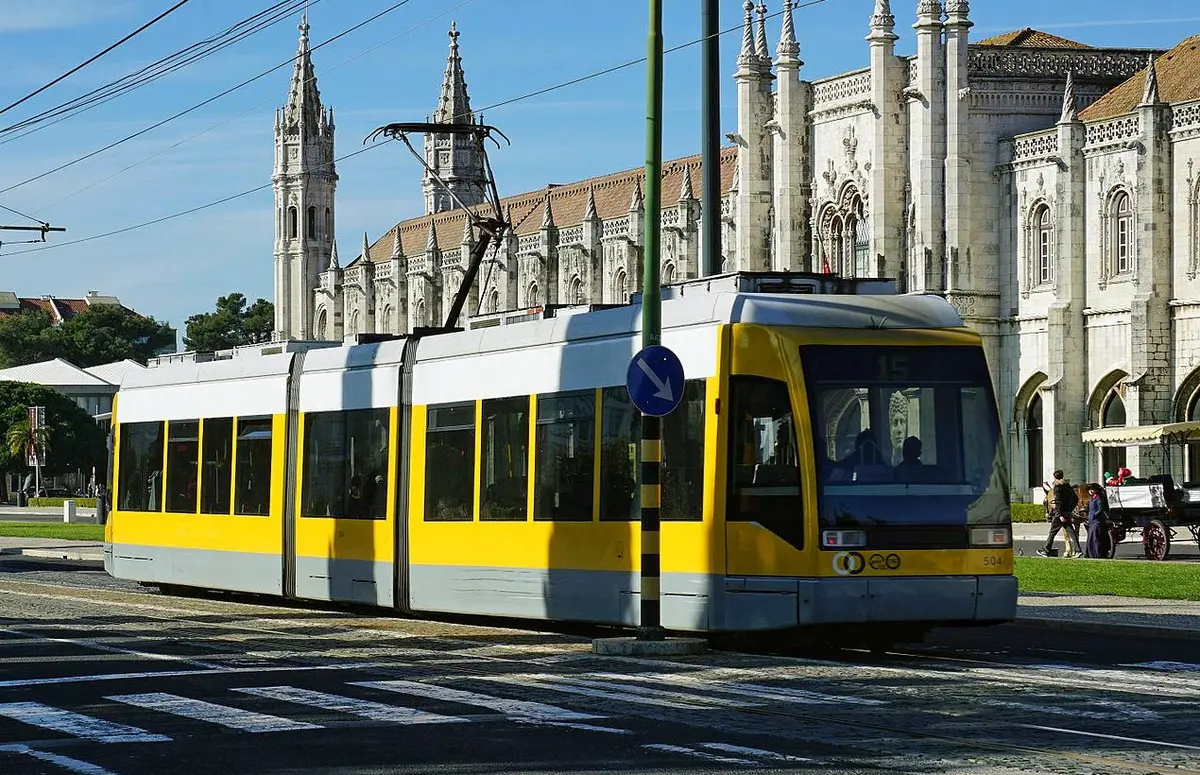
The modern Tram 15E, adapted taxis, and verified metro stations are the core of any workable wheelchair accessible Lisbon transport plan. Getting around without a car requires knowing which options are genuinely usable and which will waste your limited energy and patience.
| Transport | Accessibility | Approx. Cost | Key Notes |
|---|---|---|---|
| Adapted taxis / Uber Access | High | $4–$8 city center | Best for hill climbs; drivers handle folding chairs easily; heavy electric chairs require advance booking |
| Modern Tram 15E | Moderate–High | Included in Lisboa Card | Step-free boarding via specific doors; key link to Belém |
| Historic Tram 28 | None | ~$3.50 on board | Three steep entry steps; completely inaccessible for wheelchair users |
| Lisbon Metro | Variable | ~$1.85/ride | Elevators frequently out of service — verify live status before every trip |
| Funiculars (Glória, Bica, Lavra) | Suspended | N/A | All three out of service following fatal accident; do not plan around these |
The Lisboa Card (24-hour: ~$34) covers metro rides and many monument entries. For wheelchair users who cannot stand comfortably in long queues, the time saved at ticket desks alone makes it worth the cost — particularly at São Jorge Castle and the Jerónimos Monastery.
Pro Tip: Before committing to any metro route, check the Lisbon Metro’s online portal for live elevator status. Discovering an out-of-service elevator at the bottom of a staircase is one of the most common — and most preventable — disasters of accessible travel in Lisbon.
How do you avoid the Belém highway trap?
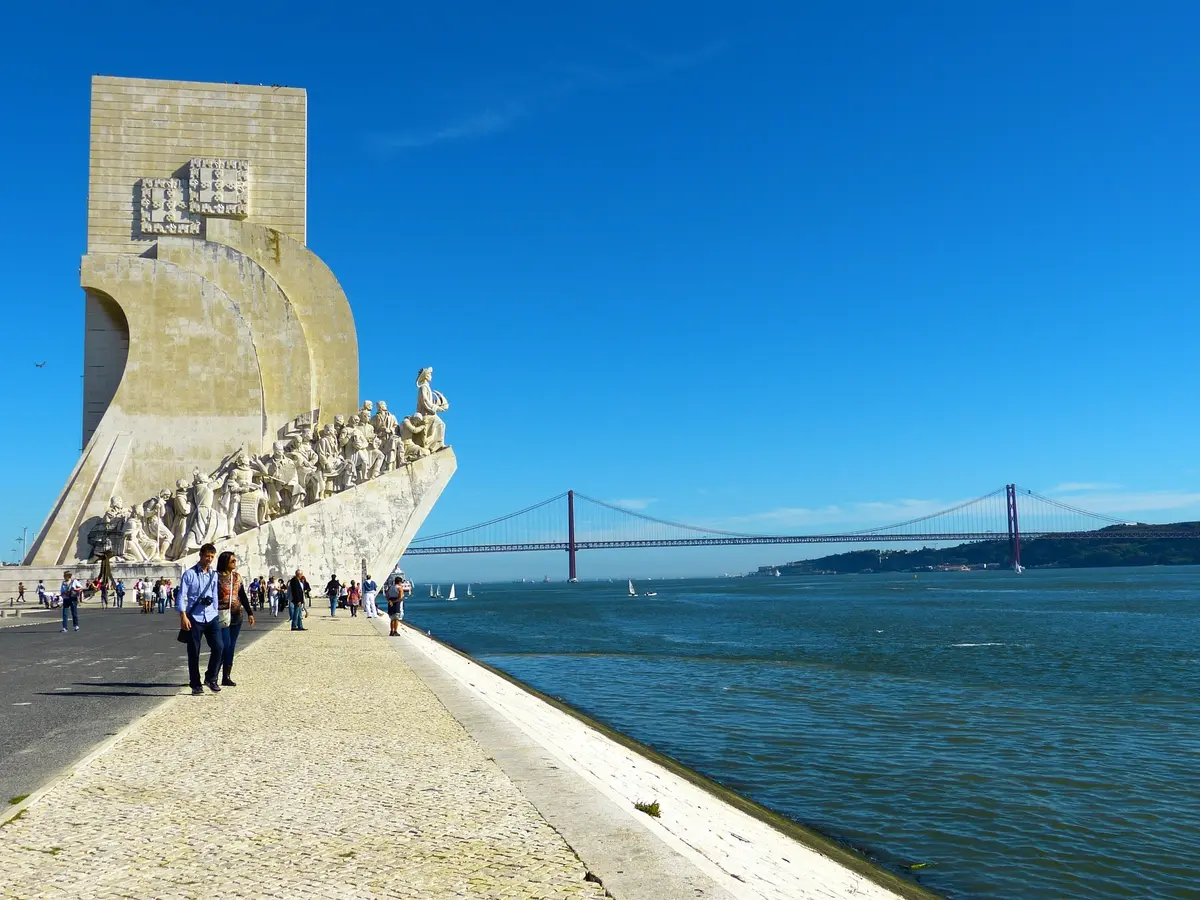
This is the most common logistical failure point for wheelchair users in Lisbon, and almost no travel guide addresses it clearly. You take the accessible Tram 15E to Belém, step off on the town side of the highway, and look across at the Monument to the Discoveries less than 300 feet (90 m) away. Then you discover that both the pedestrian overpass and the underground tunnel crossing the highway have nothing but stairs.
The fix is simple: do not try to cross on foot. Pre-book an adapted taxi to drop you directly on the waterfront side at the start of your Belém day. This puts you right next to the monument and the flat riverside promenade before you have taken a single step, and it costs about $6. For pricing guidance and tips on booking accessible vehicles across the city, our Uber in Lisbon guide covers Uber Access in detail.
Are there public elevators that bypass Lisbon’s steepest hills?
Yes — and most visitors never find them. These free municipal elevators (ascensores) cut through the city’s worst inclines and are open to everyone. Elevador do Castelo connects the lower Baixa district at Rua dos Fanqueiros 170 to the upper streets near São Jorge Castle. The entrance is an unmarked doorway that is easy to miss. It eliminates a brutal uphill push that would wear out most companions.
Pro Tip: Save “Rua dos Fanqueiros 170, Lisbon” in Google Maps before your trip. The elevator entrance is genuinely hard to spot from the street without the pin.
How do you reach the upper viewpoint without the Santa Justa Lift?
The Elevador de Santa Justa is currently closed for maintenance with no announced reopening date, making the workaround not just a money-saving tip but the only option. The upper observation deck — the same panoramic view over Baixa that the lift accesses — is reachable for free via Largo do Carmo, a short and relatively flat approach from the Chiado district.
Walk or roll from Chiado to Largo do Carmo and you arrive at the same level as the lift’s upper exit with zero queue and zero cost. Most wheelchair accessible Lisbon guides skip this entirely, which means this viewpoint is consistently less crowded than it deserves to be.
When the Santa Justa Lift does reopen, the tourist ride ticket costs €5.30 (~$5.75), and hour-long queues are standard during peak hours. The Largo do Carmo approach remains the better option even when the lift is running.
Where can wheelchair users actually sightsee in Lisbon?
Skip Alfama. Its medieval lanes are too steep and too narrow for safe wheelchair navigation — the streets that look navigable on a map become stairwells in practice. The three areas below are where wheelchair accessible Lisbon genuinely lives. A 3-day Lisbon itinerary built around these zones is entirely workable without touching Alfama at all.
1. Jerónimos Monastery
The finest piece of Manueline architecture in Portugal is, mercifully, genuinely accessible with the right preparation. The accessible entrance is on the side of the building — not the main door — so tell staff when you arrive and they will direct you to the portable ramp. Accessible restrooms are on-site.
On my last visit, the queue at the main entrance wrapped back toward the street by 10 a.m., while the accessible entry had no wait at all. Book online in advance; the ticket office queue is far longer and the accessible entrance is also faster.
- Location: Praça do Império, Belém
- Cost: €18 (~$20) per adult; free for children under 12; book online in advance
- Best for: Architecture and history travelers, couples
- Time needed: 1.5–2.5 hours
2. Parque das Nações
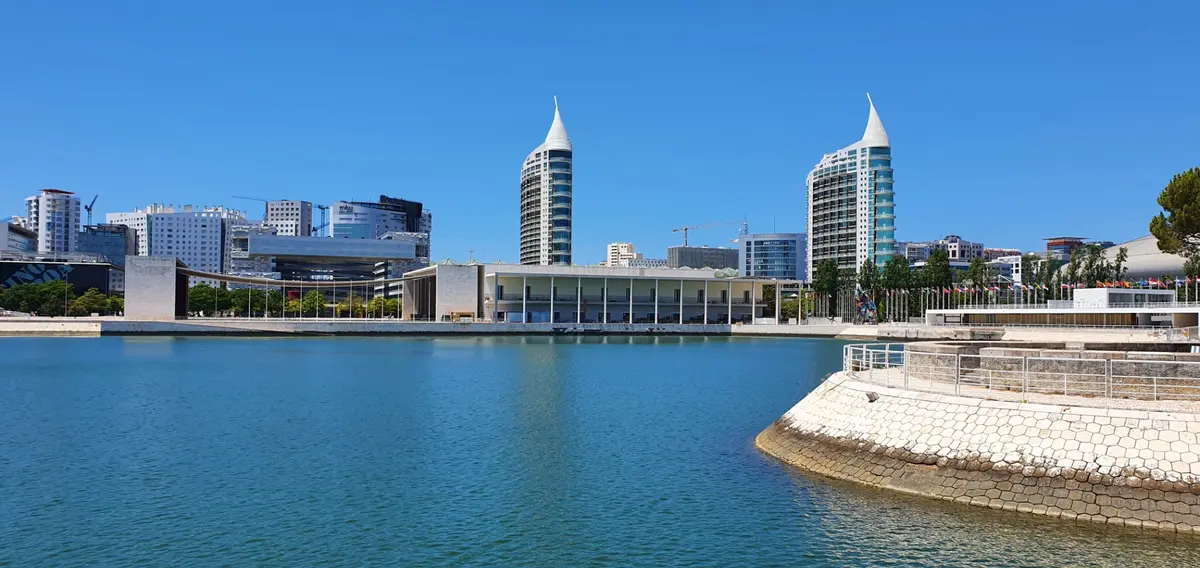
Built on entirely flat, reclaimed riverside land for the 1998 World Expo, Parque das Nações is a completely different Lisbon. Wide smooth promenades, modern buildings, and accessible cable cars make this the easiest full day in the city for wheelchair users — no hills, no cobblestones, no stress. The Oceanarium is fully accessible and covers more than 8,000 marine animals across four ocean habitat zones. Adult entry runs ~$27–34 depending on season; book online to lock in a timed slot and skip the queue.
The riverfront promenade covers over 2 miles (3.2 km) of smooth, flat surface, and the neighborhood’s cafés and restaurants were built to modern accessibility standards from the ground up.
- Location: Eastern waterfront; Metro to Oriente station (verify elevator status before traveling)
- Cost: Free to explore; Oceanarium entry ~$27–34 per adult
- Best for: Families, first-time visitors, anyone who wants a completely stress-free day
- Time needed: Half day to full day
3. Belém Waterfront Promenade
From the Jerónimos Monastery across to the riverside, Belém offers a largely flat, accessible corridor of around 1.5 miles (2.4 km). The famous Antiga Confeitaria de Belém — the original pastel de nata bakery — has a flat entry into its cafeteria section and a dedicated accessible restroom, making it one of the few genuinely traditional Lisbon cafés that works for wheelchair users.
Arrive before 10 a.m. to walk straight to a table. After 11 a.m., the café fills with tour groups and the aroma of warm custard and burnt sugar that drifts to the street is somehow even more intense when you are waiting in a compressed crowd.
- Location: Belém riverside, west Lisbon; Tram 15E or adapted taxi
- Cost: Free to walk; custard tarts ~$1.50–3 each; coffees ~$1.50
- Best for: Food lovers, couples, morning visits before the crowds build
- Time needed: 2–4 hours
How do you find a genuinely accessible hotel — not just a labeled one?
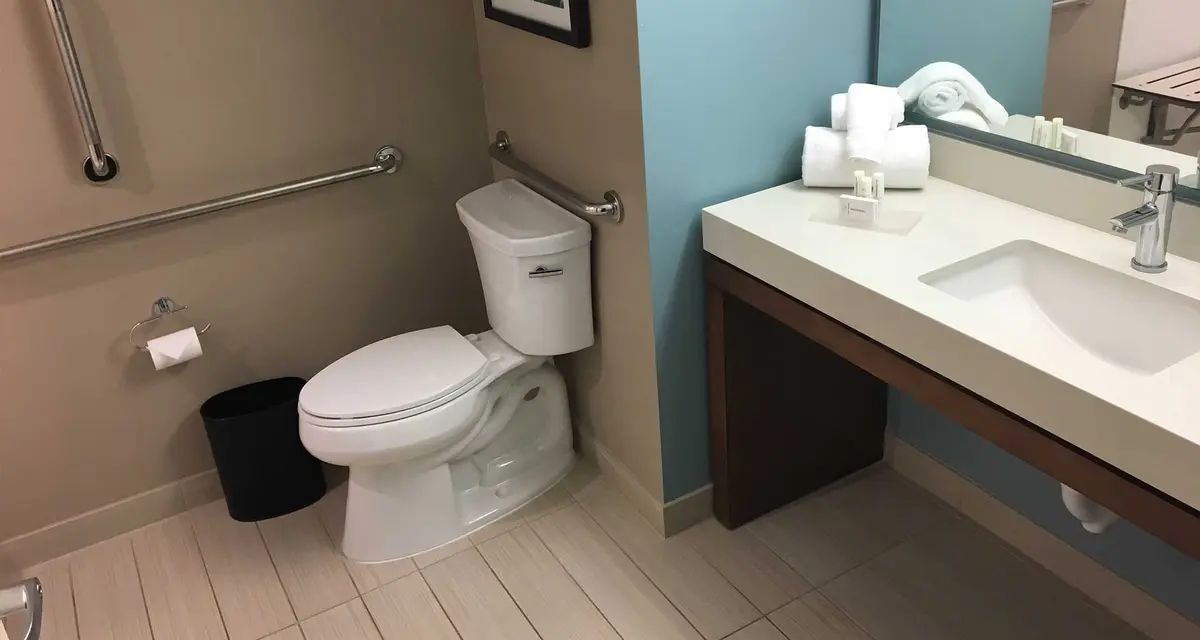
When researching where to stay in Lisbon, standard accessibility filters on Booking.com and similar platforms are nearly meaningless. A hotel can tick the “accessible room” box while the bathroom is physically unusable for your specific needs. The core issue is lateral transfer space — the clearance beside the toilet that you need to transfer from your chair.
Some rooms have grab bars but position the toilet against the wrong wall for your transfer direction. Always call the hotel directly and ask which side of the toilet has the transfer space and what the measurement is in inches. Any hotel that cannot answer that question does not have a genuinely accessible room.
Vila Galé Ópera Hotel
This is the most thoroughly accessible hotel in central Lisbon. Ten fully accessible rooms and a specialized pool hoist for wheelchair users — the hoist is rare anywhere in Europe, not just Lisbon. The location near Belém means the flat riverside corridor and the Jerónimos Monastery are within a short roll or adapted taxi ride.
- Location: Rua Tomás da Fonseca, near Belém
- Cost: From ~$160/night
- Best for: Wheelchair users requiring full-service accessibility, couples, longer stays
Martinhal Lisbon Oriente
Located in the flat, modern Parque das Nações district, Martinhal is particularly well-suited for families. The surrounding area was built to modern accessibility standards, which means zero hill navigation from the moment you step outside. The Oceanarium and the full riverfront promenade are within easy rolling distance.
- Location: Parque das Nações district
- Cost: From ~$180/night
- Best for: Families and travelers prioritizing flat terrain
Where can you eat without fighting a step at the entrance?
Lisbon’s traditional tascas (local eateries) are frequently one step up from street level — literally. Many have a single concrete step at the entrance that creates a hard stop. These two venues — Time Out Market Lisboa and the Antiga Confeitaria de Belém — do not have that problem.
1. Time Out Market Lisboa
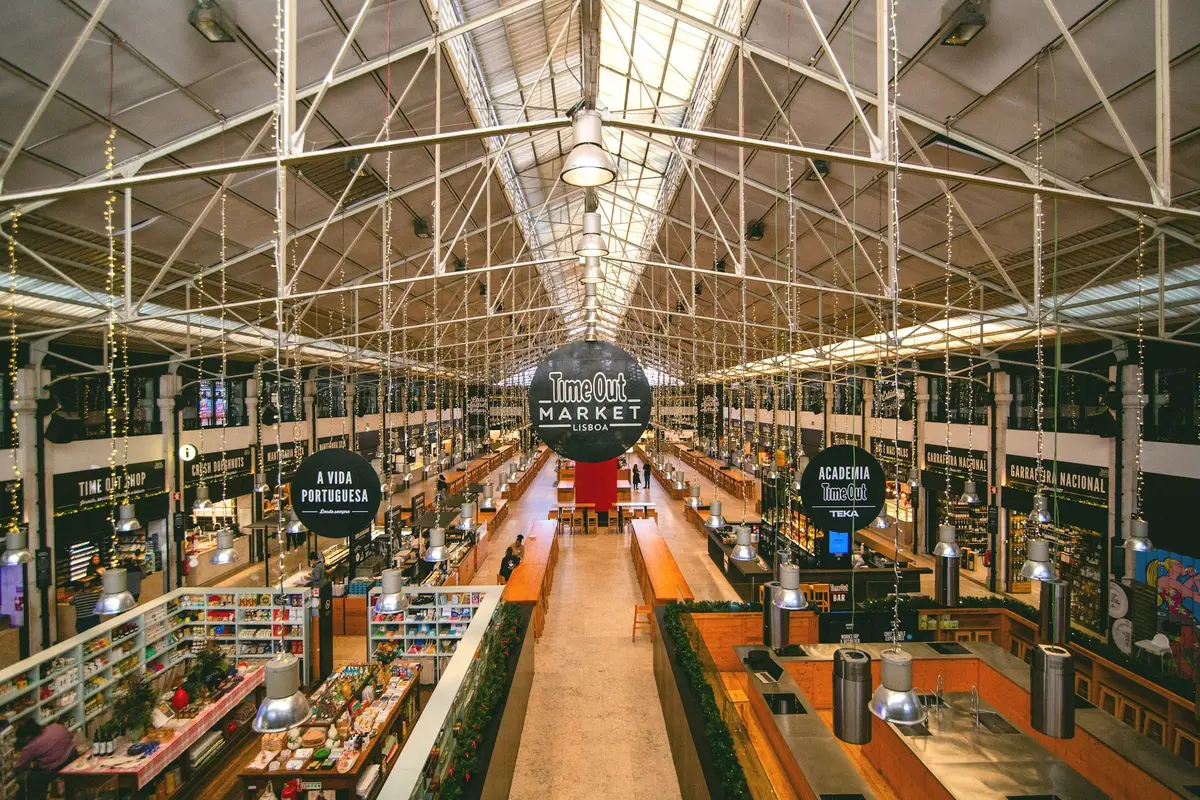
The most reliably accessible food venue in the city. The interior is flat, open-plan, and fully step-free, with wide communal tables that accommodate wheelchairs without maneuvering. Accessible restrooms are on the same floor as the dining area, so no elevator is required. The market covers everything from grilled fish to pastéis de nata in one space.
- Location: Mercado da Ribeira, Cais do Sodré
- Cost: $10–$20 per person
- Best for: Solo travelers, groups, and anyone wanting variety in one accessible space
- Time needed: 1–2 hours
2. Antiga Confeitaria de Belém
The original home of the pastel de nata. Flat entry into the cafeteria section, dedicated accessible restroom, and the kind of institutional calm that comes from a place that has been selling the same pastry for nearly two centuries. The recipe has not changed, the tiles have not changed, and the queue by 11 a.m. has absolutely not changed.
- Location: Rua de Belém 84–92, Belém
- Cost: ~$1.50–3 per pastry; coffees ~$1.50
- Best for: Food lovers and anyone building a morning itinerary around Belém
- Time needed: 30–60 minutes
Pro Tip: Many smaller Lisbon restaurants and cafés are cash-only. Carry €40–60 (~$44–66) in cash when heading into older neighborhoods, particularly if you want to try any of the tiny, family-run spots off the main tourist routes.
The bottom line
TL;DR: Wheelchair accessible Lisbon rewards preparation above almost any other European capital. The flat riverfront corridors of Belém and Parque das Nações are genuinely excellent. The historic hill districts are largely inaccessible and not worth the stress. A pre-booked adapted taxi for Belém, a manual chair instead of a heavy power unit, and a phone call to verify your hotel bathroom will do more for your trip than any amount of positive thinking. Our Portugal travel costs guide can help you build a realistic daily budget before you book.
What is the one piece of information you wish you had before your first wheelchair trip to a challenging European city?