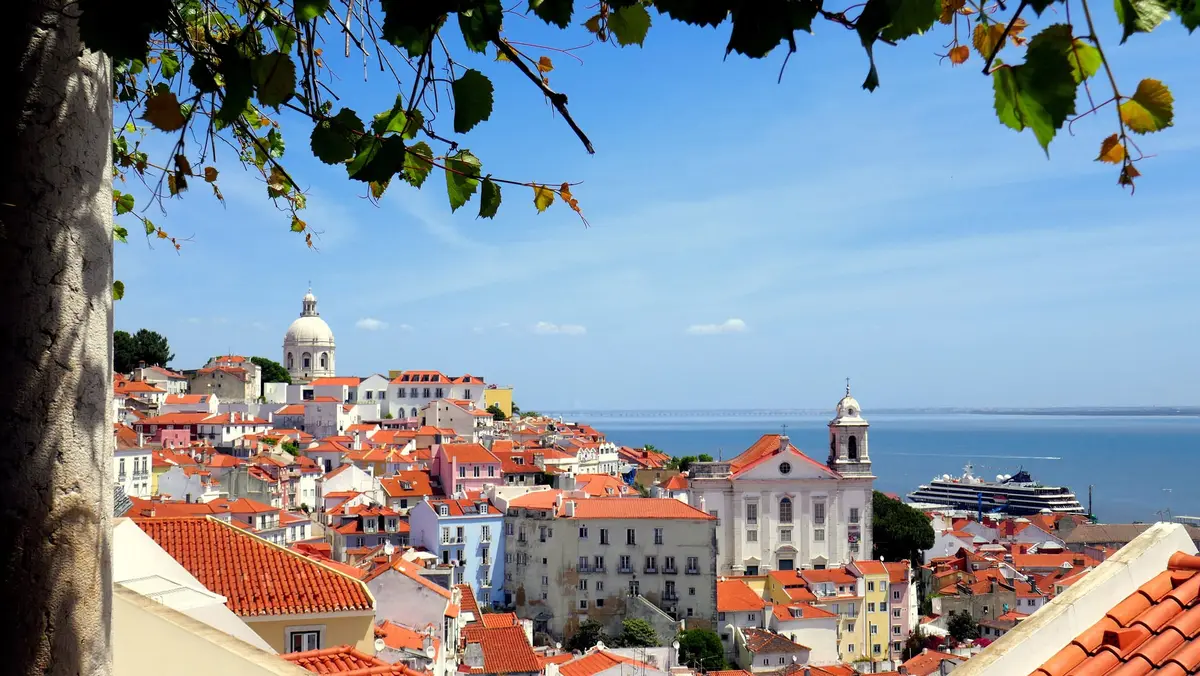
Portugal sounds like a dream until you realize Lisbon is built on seven punishing hills and the sidewalks are paved with polished marble that gets slicker when wet. Navigating Portugal for seniors requires a completely different strategy than the standard backpacker itinerary. This guide gives you the exact flat neighborhoods, private hospital networks, train discounts, and coastal towns that most Portugal travel guides gloss over — the information that actually makes the country manageable and genuinely worth the flight.
What do US tourists need to know about healthcare in Portugal?
Portugal runs a two-tier medical system: a residence-based public network (the Serviço Nacional de Saúde, or SNS) and a private hospital network built specifically for international visitors. As a US tourist, your primary target is the private network. Setting up access before you land — not after — is the move that makes every other part of this trip feel safer.
The Portugal Health Passport and private hospital networks
The Portugal Health Passport is a fixed-price healthcare program developed with Turismo de Portugal, and sorting it out before departure is the most important task on your pre-trip checklist. Register at portugalhealthpassport.com, which is free to join. The passport grants you access to urgent care and five types of health check-ups at three major private networks: CUF, Hospital da Luz, and Lusíadas. These facilities employ English-speaking staff, operate advanced diagnostic centers, and are internationally accredited. The urgent care package — covering consultation, basic lab tests, and x-ray if required — is priced at €230 (approximately $250 USD), with no appointment needed.
Pro Tip: Save these names in your phone before you fly. Hospital Lusíadas Albufeira in the Algarve offers 24/7 medical and surgical care year-round. Hospital da Luz in Lisbon is the flagship facility for complex cases in the capital.
Payment at private hospitals is handled via the Health Passport package, direct private travel insurance billing, or out-of-pocket payment upfront. Travel insurance for Portugal that covers international medical evacuation is non-negotiable for this trip.

How do public emergency rooms work for US tourists?
US tourists can legally access public emergency rooms at facilities like Hospital de São João in Porto or Hospital de Cascais near Lisbon. You will be required to pay the full cost of treatment at the time of service. Most public hospitals accept international credit cards, but not always. Hospital administrators will typically allow you to use an on-site ATM if your card is declined.
Always demand a fully itemized receipt. This document is required by virtually every US travel insurance provider to process a reimbursement claim. Without it, your claim will likely be denied.
What to set up on your phone before you fly
Program 112 into your phone right now. This is the universal European emergency number — operators speak English, and dialing it connects you to dispatchers who can send ambulances, police, or fire services.
If you plan to venture into rural areas like the Alentejo interior, the Serra da Estrela, or deep into the Douro Valley, carry a translated medical phrase card. English proficiency among older staff outside major cities can be inconsistent.
Key healthcare contacts and logistics at a glance:
- Private urgent care: CUF, Hospital da Luz, Lusíadas — register at portugalhealthpassport.com
- Emergency number: 112 (English-speaking operators, 24/7)
- Public hospitals: Pay upfront, demand an itemized receipt for reimbursement
- Essential insurance: International medical evacuation coverage is required
How do you get around Portugal without draining your energy?
Transportation in Portugal for seniors is not about atmosphere — it is strictly about energy conservation. Every step you save in the morning is a cultural experience you can still enjoy at 4 PM. The ride-hailing apps are not equal, the train discount is real and substantial, and Lisbon’s vertical transit infrastructure is more useful than most guides acknowledge.
Is Bolt or Uber better in Lisbon?
Both apps work throughout Portugal, but the difference matters when you are standing on a steep cobblestone street with a bad knee. Bolt charges drivers a commission of roughly 15 to 20 percent, compared to Uber’s flat 25 percent — that difference flows directly to you as lower fares, which is why local residents almost universally prefer Bolt for short city trips. Uber maintains a larger fleet, which typically means shorter wait times in suburban areas or during off-peak hours.
The critical problem with Uber in Lisbon is its GPS algorithm in the city’s historic districts. Standing on a narrow, one-way street in the Chiado, you will watch the pickup pin snap two blocks away — and down a flight of stairs — because the global routing system cannot process the city’s multi-tiered medieval street layout. For a mobility-challenged traveler, that reroute is a genuine problem.
Pro Tip: Download and set up Bolt before leaving the US. It offers more accurate pickup locations in the narrow historic alleys and will save you both money and unnecessary walking.
How do you claim the senior train discount in Portugal?
Booking train travel in Portugal through Comboios de Portugal (CP) unlocks a 50 percent senior discount when you select the senior citizen fare and present your passport as age verification — the discount applies to anyone aged 65 and older, regardless of nationality, meaning US tourists qualify in full.
The Alfa Pendular high-speed train between Lisbon and Porto completes the journey in approximately 2 hours and 40 minutes. At half price, a standard class ticket runs around €17 to €18 — dramatically cheaper and far more comfortable than renting a car and navigating aggressive Portuguese highway traffic. Book via the official CP app or at physical ticket offices. The international Celta train to Spain (Porto to Vigo) also offers a 25 percent discount for passengers aged 60 and older.
A summary of senior rail options:
- Alfa Pendular (Lisbon–Porto): approximately 2h40m; 50% off for ages 65+
- Intercidades (intercity express): slightly slower; same 50% senior discount
- Celta (Porto–Vigo, Spain): 25% discount from age 60
- Booking: CP app or ticket office; present original passport at travel time

Lisbon’s elevators, funiculars and the Navegante card
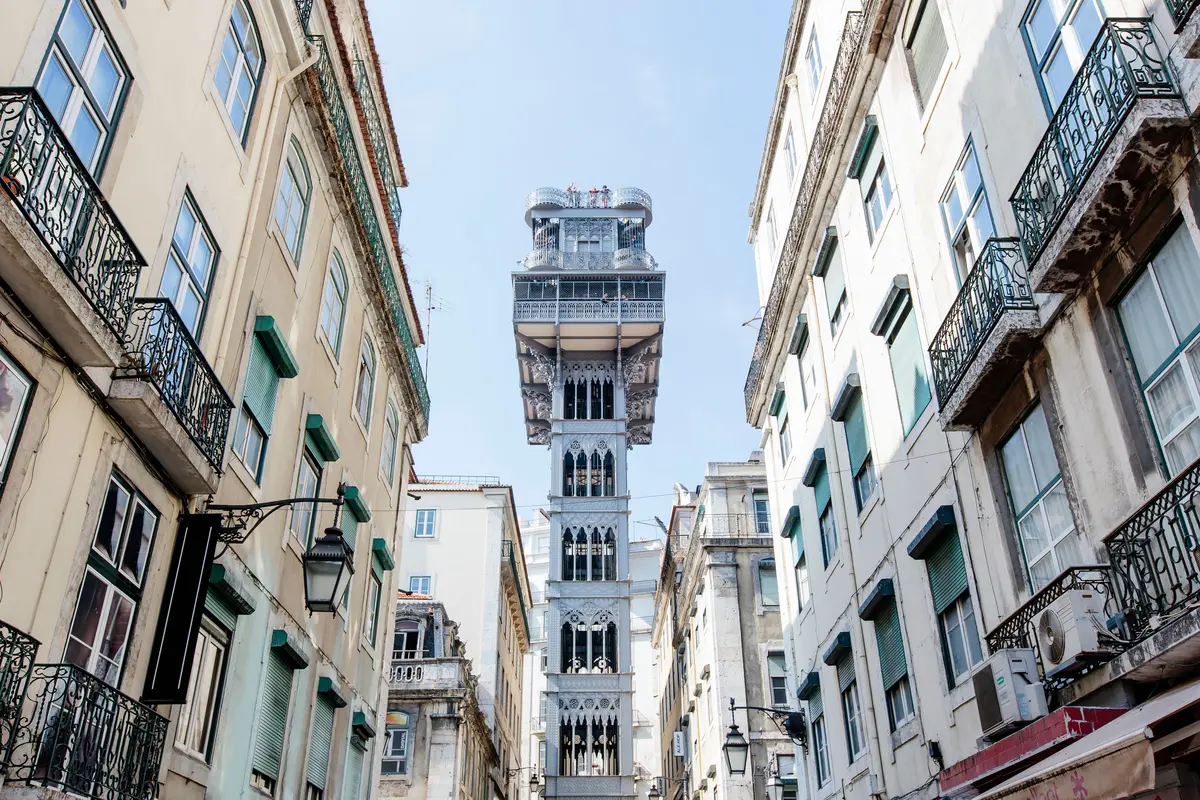
Lisbon’s public transit system includes some surprisingly clever vertical infrastructure, and most visitors walk right past it. The 24-hour unlimited Navegante ticket costs €7.25 (roughly $8 USD) and covers Metro lines, Carris buses, trams, and unlimited rides on the Elevador de Santa Justa and the Elevador da Glória. These are not tourist gimmicks — they are working vertical transit systems that spare you from brutally steep stair climbs between the city’s distinct tiers.
There is also a free public lift connecting the lower Baixa district directly to the Castelo area that most tourists never find. For severe mobility restrictions, tuk-tuk tours in Lisbon average $65 for a 90-minute circuit and provide a completely walk-free method of navigating the narrowest historic alleys.
Transit options for energy-conscious travelers:
- Bolt app: short city trips, door-to-door, typically cheaper than Uber
- CP trains (Alfa Pendular): Lisbon to Porto to Faro; 50% off for ages 65+
- Tuk-tuk tours: steep historic districts; fixed rate, zero walking required
- Lisbon funiculars and elevators: vertical climbs between city tiers; included in the €7.25 day pass
Which Lisbon and Porto neighborhoods are actually flat?
Booking the wrong neighborhood is not a minor inconvenience — it is a daily physical ordeal that will drain your energy before 10 AM. Choosing where to stay in Lisbon as a senior traveler is not a matter of preference; it is a practical decision that determines how much of the country you actually get to experience.
Lisbon — the flat neighborhoods to book
Avoid the Alfama and Bairro Alto entirely as a home base. The Alfama is Lisbon’s oldest district and genuinely beautiful, but exploring it means navigating a chaotic warren of steep, narrow streets with no modern sidewalks and centuries of polished limestone underfoot. The Bairro Alto is equally demanding.
Book your accommodations in Baixa or along Avenida da Liberdade. The Baixa sits at the bottom of the city’s gradient and offers a gentle, wide, manageable walk into the historic center. Avenida da Liberdade is one of the broadest streets in Portugal — flat, tree-lined, and easy to navigate on foot without planning every step.
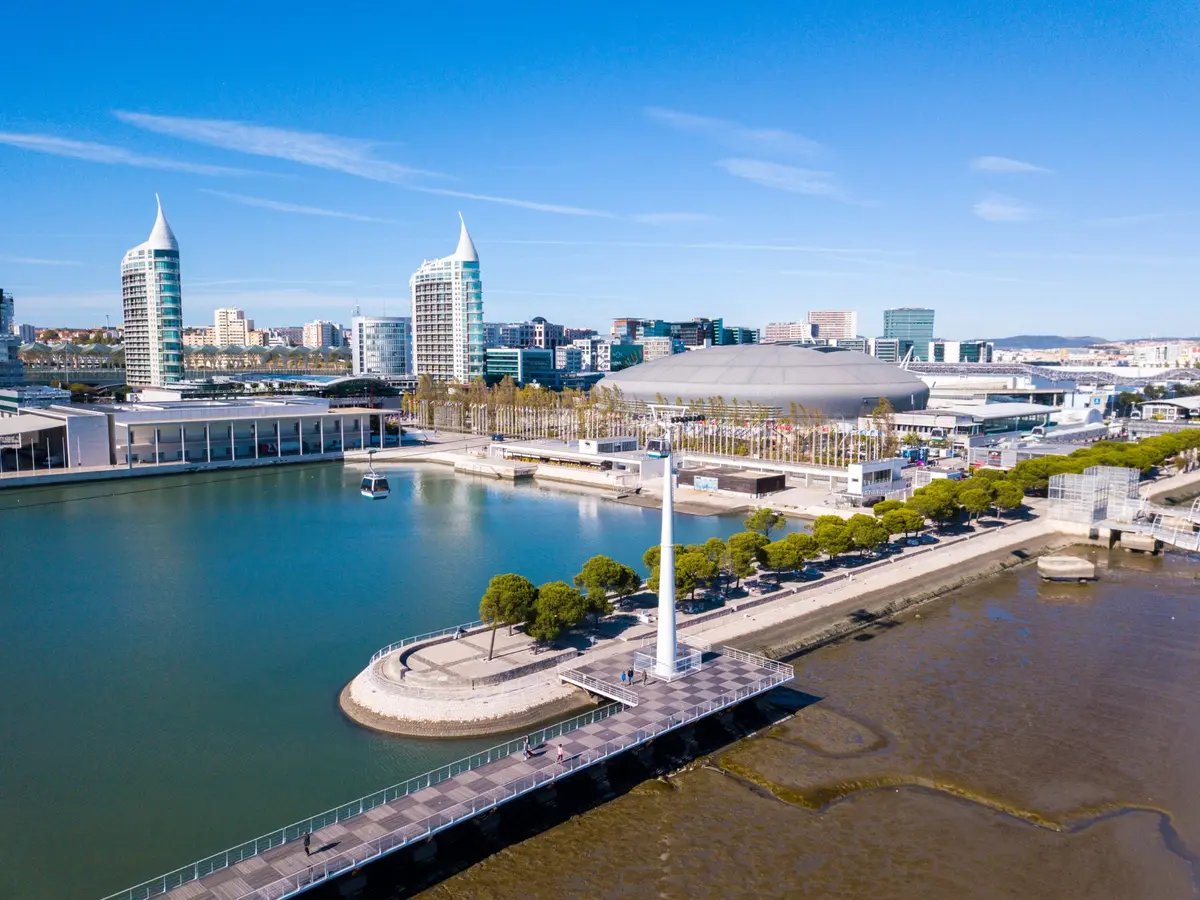
For the flattest possible terrain in the entire city, Parque das Nações is the answer. Built for the 1998 World Expo, it features wide modern sidewalks, zero hills, close proximity to private clinics, and excellent Metro access. The Alfama’s iconic views are still 20 minutes away by Metro — but your morning walk to breakfast will not destroy your knees. The Areeiro and Alvalade neighborhoods are solid secondary options: flatter than central Lisbon and well-connected by public transit.
Porto — where to base yourself without the knee pain
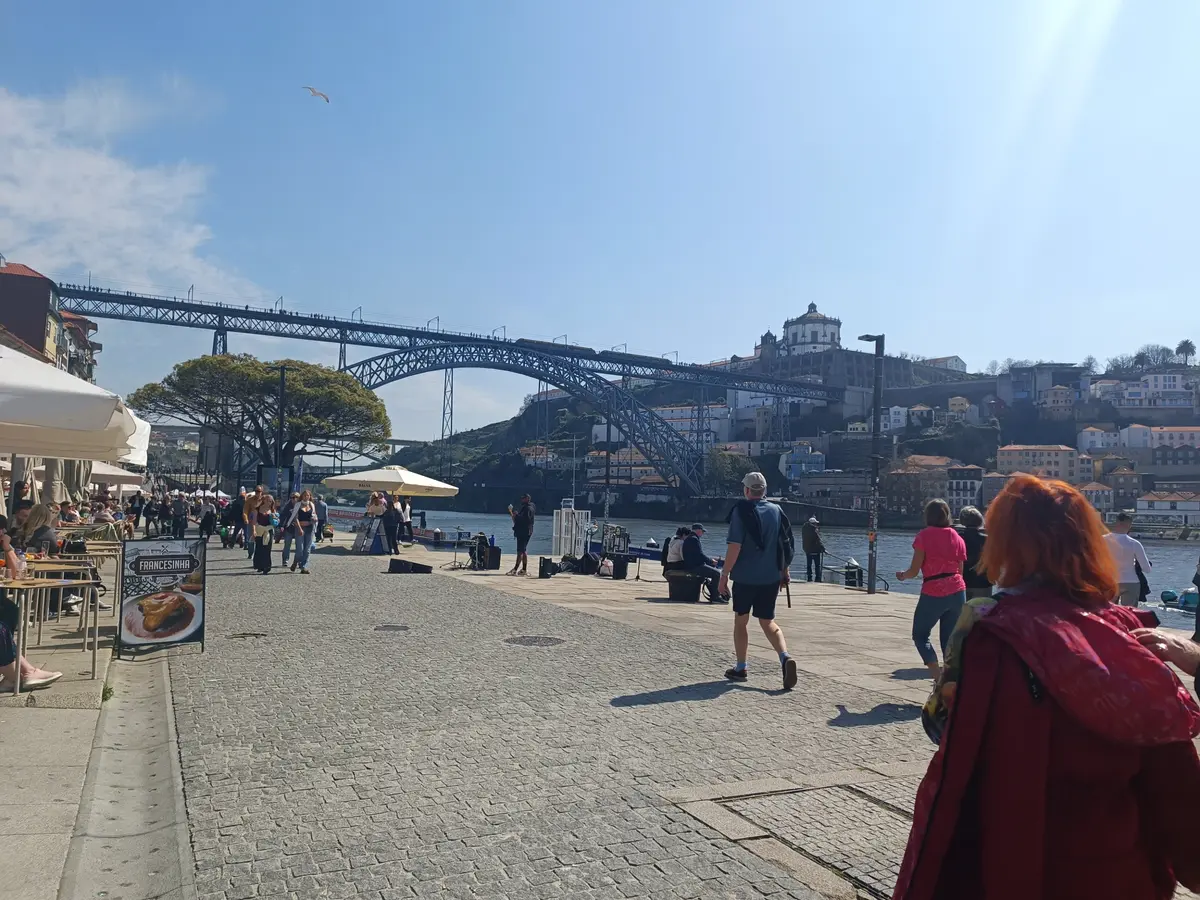
Porto’s Ribeira district, with its views of the Dom Luís I Bridge reflected in the Douro River, is one of the most photogenic scenes in Europe. It is also notoriously punishing to navigate on foot. The sharp, cobblestone descent to the water destroys knees on the way down and lungs on the way back up.
When deciding where to stay in Porto, Matosinhos — a flat coastal neighborhood slightly northwest of the historic core — is the right answer for senior travelers. It is completely flat, has wide oceanfront promenades, and is home to some of the best seafood restaurants in Portugal. Sleep and eat comfortably in Matosinhos, then use Bolt or the Metro for targeted, brief excursions into Porto’s steep historic center when you want the views.
Pro Tip: The specific reward of Porto is real. The exhausting medieval alleys suddenly open onto the flat Cais da Ribeira, where you can collapse into a riverside café chair and order a Porto Tonic — dry white port, tonic water, ice, and citrus — while watching traditional Rabelo boats pass under the bridge. It is worth the trip in, but not worth making it your home base.

Which towns in Portugal are easiest to walk?
If Lisbon and Porto sound like too much of a battle, they do not have to be your entire trip. Portugal for seniors works exceptionally well when you anchor part of the itinerary in a smaller regional town. These towns offer the most accessible, walkable terrain in the country paired with significantly lower daily costs.
Algarve towns with flat terrain
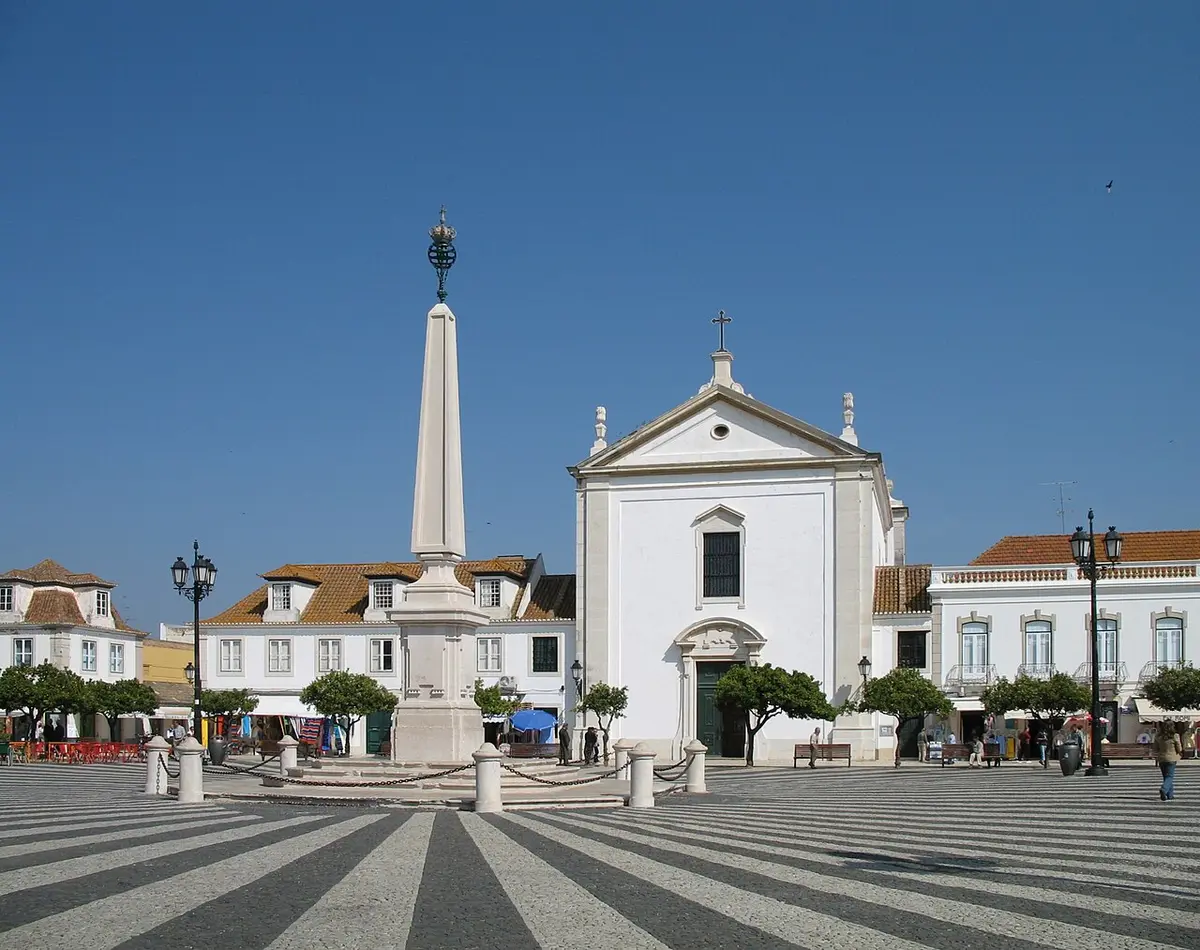
Vila Real de Santo António, located in the far eastern Algarve on the Spanish border, is the most genuinely flat town in the region. Despite its traditional cobbled streets, the terrain is completely level and manageable. It is also authentically Portuguese rather than a resort-built strip — real bakeries, real markets, real daily life.
Armação de Pêra offers a wide, flat boardwalk running the full length of the beach, making it excellent for walkers and wheelchairs. Stick to the boardwalk and the main strip, as the narrower streets behind town are less even.
São Brás de Alportel, north of Faro, trades coastal crowds for a quiet, typical small-town atmosphere on flat terrain. Because it is inland, there are no dramatic cliff descents, and it remains significantly less tourist-heavy than the coastal strip.
Pro Tip: The western Algarve features spots like Praia da Marinha, which have some of Portugal’s most photographed sea cliffs. Those cliffs also mean steep, uneven staircases to reach the water. They are spectacular from above but logistically punishing to descend.
Accessible coastal towns near Lisbon
Costa da Caparica sits just outside Lisbon with a long, flat beachfront boardwalk and wide pedestrianized sections. It offers a genuine escape from the capital’s topography without a long drive. Note that the side streets behind the main esplanade are narrower and less even.
Setúbal, roughly 1 hour south of Lisbon, delivers a full urban environment with good restaurants, local markets, and real daily life on significantly flatter streets than the capital. It works as a legitimate base for seniors who want cultural immersion alongside manageable terrain. You save 20 to 30 percent on accommodation compared to central Lisbon, though you will need Bolt or CP trains to reach Lisbon’s main sights.
Silver Coast and Alentejo options
Espinho, approximately 19 miles (30 km) south of Porto on the Silver Coast, is defined by a strict flat grid layout and wide streets. Its slightly cooler temperatures also make it a smart choice for those who find the southern Algarve heat difficult in warmer months.
In the Alentejo, Reguengos de Monsaraz is a geographic anomaly. The surrounding countryside rolls and climbs, but the town center itself is almost entirely flat. For travelers seeking a rural, slow-paced, authentically Portuguese experience near the Spanish border, it is a genuine find that most Portugal guides do not mention.
What should you verify about accessible hotels, beaches and airports?
Successfully managing accessible travel in Lisbon and elsewhere in Portugal means pressing hotels for specifics before you hand over your credit card. The phrase “accessible room available” on a booking website means almost nothing without dimensions. Ask the wrong questions and you will arrive to find a step at the shower threshold and a bathroom too narrow to turn in.
Wheelchair-accessible hotels in Lisbon and Porto
In Porto, the Vincci Porto and Grande Hotel do Porto are verified for true architectural accessibility. Both feature bathrooms with 59-inch (1.5-meter) turning circles, roll-in showers with zero thresholds, fixed shower chairs, and door widths exceeding 35 inches (90 cm). The Grande Hotel do Porto additionally offers desks that accommodate wheelchair positioning and lowered wall outlets.
In Lisbon, the Pestana CR7 is positioned in a flat riverside location with dropped curbs throughout the immediate area and can arrange mobile hoists for guests who require them upon request.
Pro Tip: When emailing hotels to confirm accessibility, ask specifically if the accessible bathroom has a roll-in shower with no threshold and if the turning radius is at least 59 inches (150 cm). A hotel that can answer that question precisely has actually thought about it.
Key questions to ask any hotel before booking:
- Shower: roll-in with no threshold — not a wet room with a 4-inch lip
- Turning radius: minimum 59 inches (150 cm) in bathroom and bedroom
- Door width: minimum 35 inches (90 cm) throughout accessible room
- Curb cuts: dropped curbs on the sidewalk immediately outside the entrance
- Hoist availability: ask if one can be arranged in advance, not on arrival
Accessible beaches and the MyWay airport program
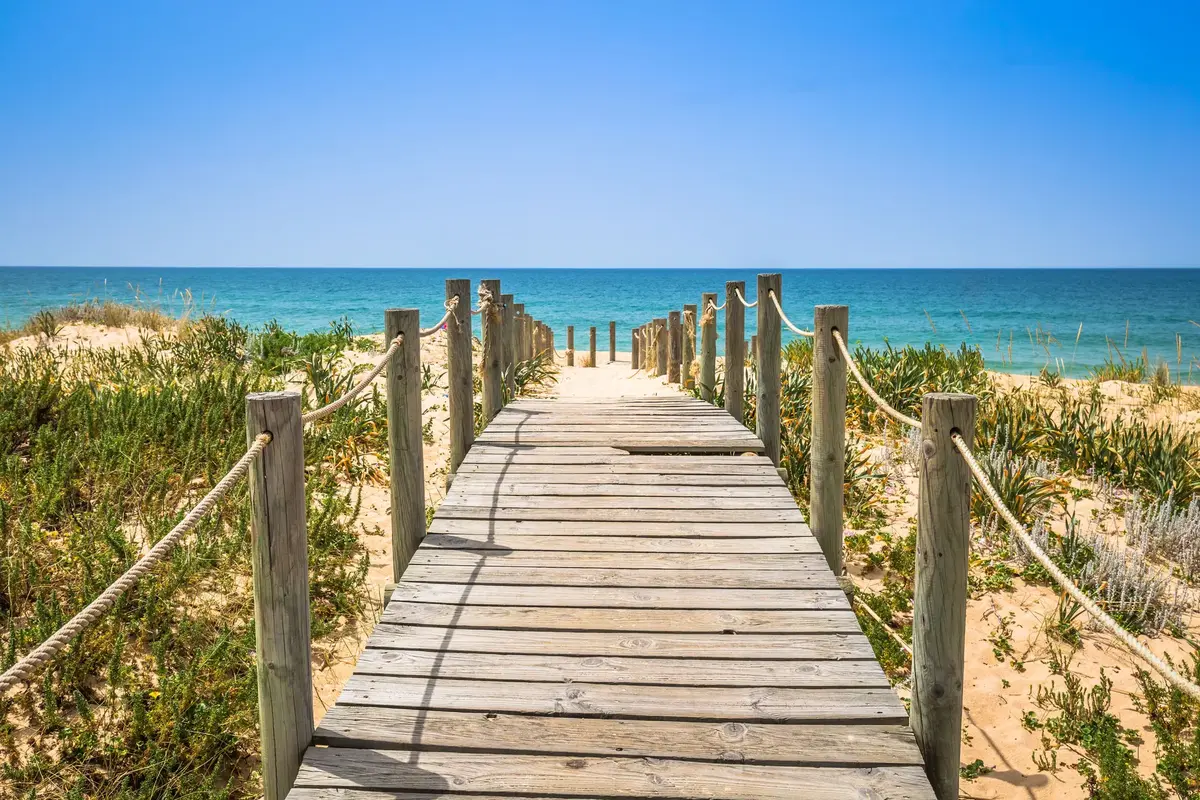
Portugal has over 240 fully accessible beaches along its coast and rivers. Look for the white flag bearing the blue and yellow accessible beach symbol. These locations guarantee reserved parking, continuous wooden walkways to the waterline, adapted toilet and shower facilities, and amphibious wheelchairs available for use at the water’s edge at no charge.
At Portuguese airports, the MyWay service provides dedicated boarding platforms, electric buggies, and mobility assistance from the check-in counter to your aircraft seat. Request it when booking your flight — not at the airport. Airlines require advance notice, and the service degrades significantly when requested on the day of travel.
What cultural experiences work best for a slower pace?
You do not need to sprint through museums to get full value out of Portugal for seniors. The best experiences here are often the slowest — and the country’s discount structure for older travelers means the financial math works even on a relaxed itinerary.
Age-based discounts at national monuments
Virtually all national museums, palaces, and monuments in Portugal offer 50 percent off admission for visitors aged 65 and older. This discount applies to non-EU tourists. Present your passport at the ticket counter — there is no special card or pre-registration required.
For high-volume sightseers, the Lisboa Card offers free, fast-track entry to up to 52 museums and UNESCO World Heritage Sites combined with unlimited transit access. Run the numbers based on your planned itinerary; it pays off quickly if you are hitting three or more paid attractions in a day.
Building a slow-travel day in Portugal
A private sunset sailing tour on the Tagus River puts the Belém Tower, the Jerónimos Monastery, and the full Lisbon skyline right in front of you — with a glass of white wine in hand, without the queues on land, and without a single hill to climb. On my last visit, the sail departed from the Cais do Sodré dock, and the Belém Tower was close enough at sunset to see the stonework detail without binoculars.
Cacela Velha, a tiny clifftop village in the eastern Algarve, delivers one of the most arresting views in the country with turquoise water threading through the sandbars of the Ria Formosa at low tide. It requires very little walking and virtually no physical effort to reach the viewpoint.
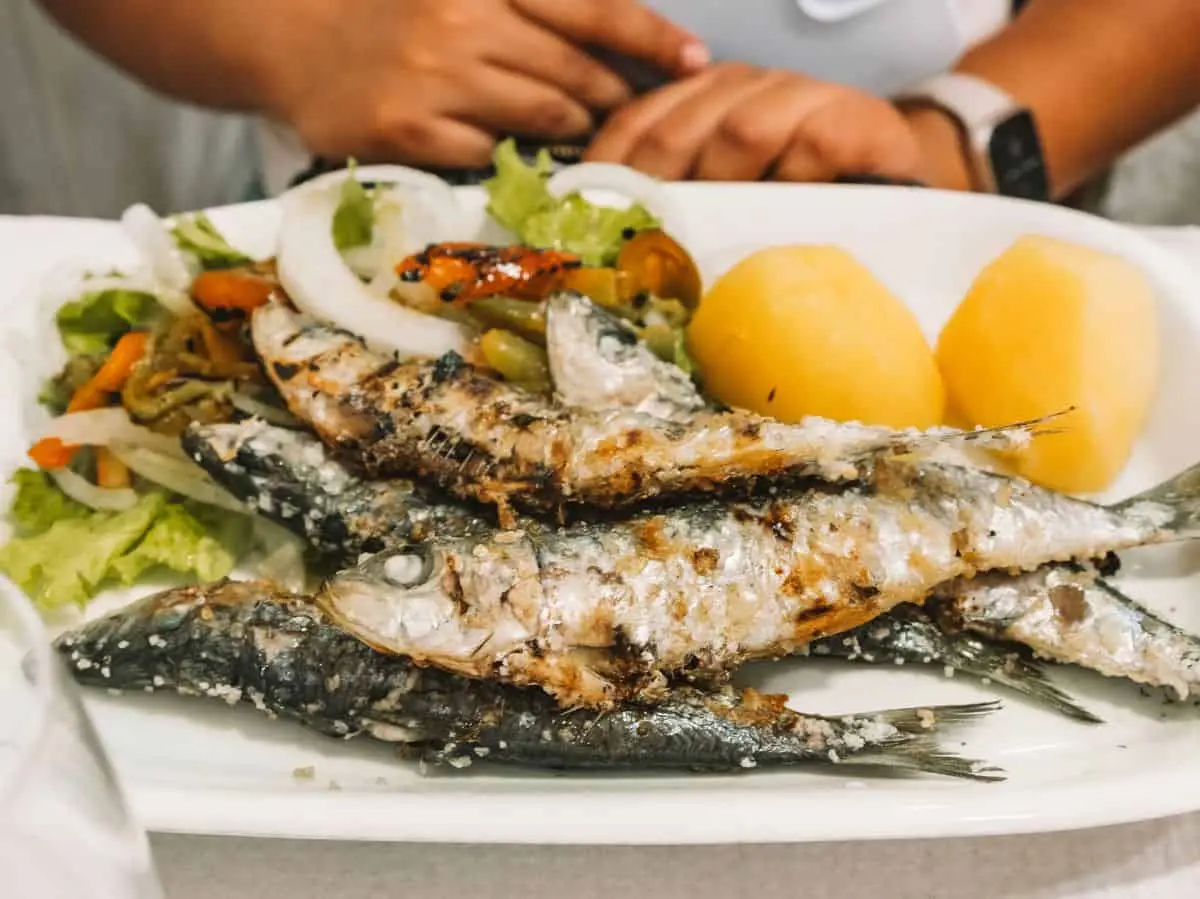
A long, unhurried seafood lunch in Matosinhos — fresh grilled linguado, cold Vinho Verde, no itinerary, no museum queues — is the kind of afternoon Portugal does better than almost anywhere else in Europe.
When is the best time to visit Portugal as a senior?
May, June, September, and October are the best time to visit Portugal for travelers aged 65 and older. Temperatures sit between 68°F and 82°F (20°C to 28°C) — warm enough for beach days and outdoor dining, but cool enough to walk without heat exhaustion. Avoid July and August entirely.
Heat in the Algarve regularly reaches 95°F (35°C) during peak summer, which is genuinely dangerous when combined with cobblestone streets and limited shade. School-holiday crowds overwhelm narrow sidewalks, restaurant capacity, and taxi availability. The physical strain is compounded by the heat, and the experience suffers in proportion.
The four best months and why they work
Spring and early autumn deliver the combination that makes Portugal work for seniors:
- Sidewalk space: European school-holiday crowds have either not arrived or gone home
- Elevator queues: Lisbon’s funicular and elevator lines are 10 to 15 minutes in May vs. 45 minutes in August
- Taxi pickup times: Bolt wait times in Lisbon drop from 12 minutes in peak season to under 4 minutes in May
- Hotel rates: the same five-star properties run 20 to 35 percent below their August rack rates in May and early June
- Health risk: walking Lisbon’s hills at 95°F (35°C) is a genuine cardiovascular risk; walking them at 72°F (22°C) is exercise
Pro Tip: Book Lisbon hotels in May or early June and you will find the same properties at 20 to 35 percent below their August rates. The city is at its most beautiful and its most navigable during these weeks.
The bottom line
Portugal rewards the traveler who does their homework. The hills are real, the cobblestones are genuinely slippery, and the old city of Lisbon is not flat by any measure. None of it is impassable with the right information in hand.
TL;DR: For Portugal for seniors, book Parque das Nações or Baixa in Lisbon. Base yourself in Matosinhos for Porto. Use Bolt for city rides instead of chasing a misplaced Uber pin. Claim your 50 percent train discount on the Alfa Pendular when you book your first intercity journey. Register for the Portugal Health Passport before you fly, and carry that itemized hospital receipt if you ever need it. The payoff — riverside sunsets, pastéis de nata still warm from the oven, white port by the Douro — is entirely worth it.
What has been your biggest logistical challenge navigating a European city with mobility in mind? Leave it in the comments — the answer might help the next traveler reading this.