On my last visit, I spent 40 minutes alone in a 20,000-seat Roman arena with only the sound of wind moving across the stone tiers. That is the Roman Hippodrome of Tyre — the second-largest chariot racing stadium the Roman Empire ever built, and the one almost nobody sees. This piece, part of our wider Lebanon travel guide, covers what you actually encounter on the ground, what it costs, and the security reality of getting there.
What is the Roman Hippodrome of Tyre?
The Roman Hippodrome of Tyre is a 2nd-century AD chariot racing stadium in South Lebanon, measuring 480 meters (1,575 feet) long by 160 meters (525 feet) wide. It sits inside the UNESCO-listed Al-Bass Archaeological Site — one of Lebanon’s most significant archaeological sites — and held more than 20,000 spectators. It is better preserved than Rome’s own Circus Maximus, built of durable limestone rather than brick-faced concrete.
- Location: Al-Bass Archaeological Site, Tyre (Sour), South Lebanon
- Cost: roughly $3-6 USD entry, paid in crisp dollars
- Best for: History travelers comfortable with complex security environments
- Time needed: 2-3 hours on site, full day from Beirut
The crowds here once roared for the Blues and Greens factions — the hooligans of the ancient world, organized enough to have their own clubhouses, private baths and political patrons. What remains is a raw, unfiltered encounter with antiquity: no velvet ropes, no ticket queues, no audio guide in six languages. You walk on the original stone and climb the original seats. That access is the whole point of coming here.
Pro Tip: Pack a flashlight. Some of the family tombs in the adjacent necropolis have interior chambers you can enter, and there is no site lighting.
Walking through the necropolis
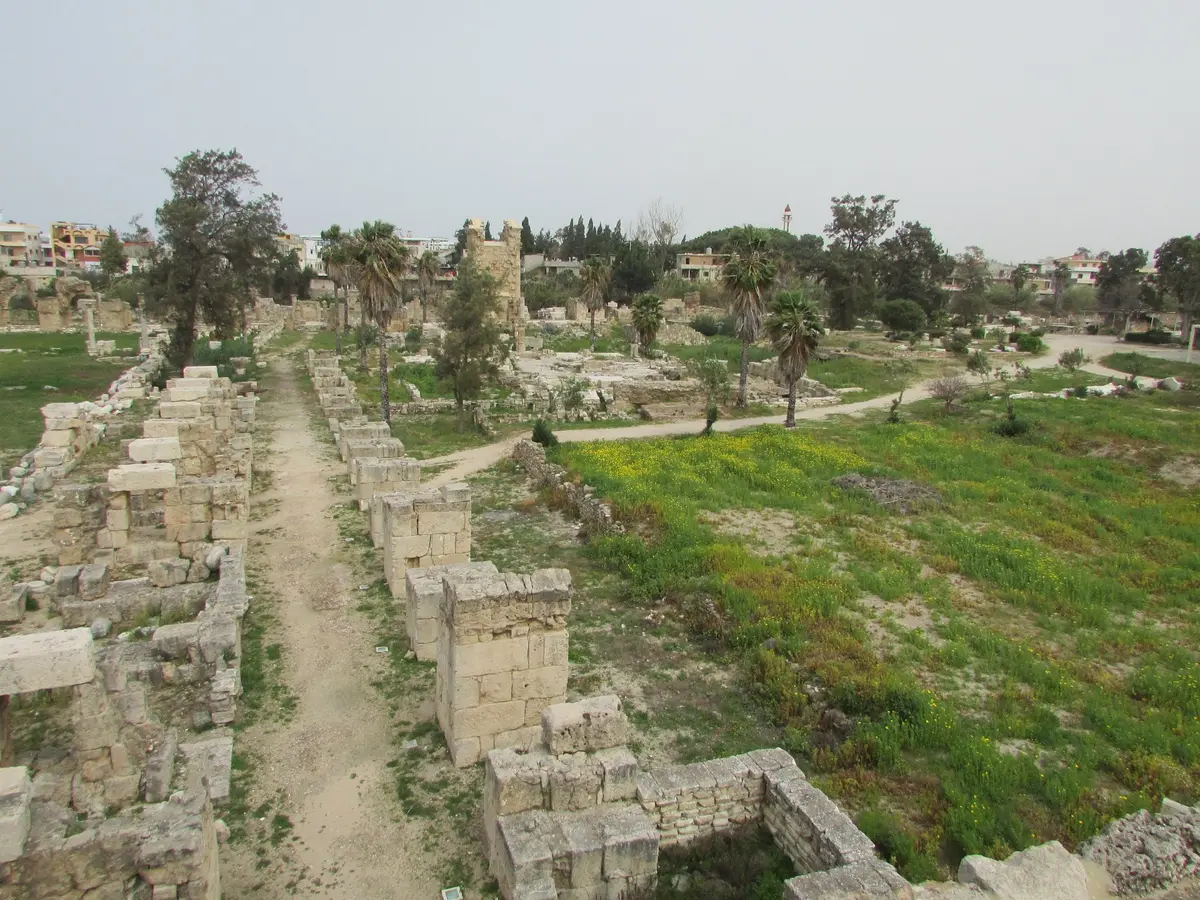
The journey into the arena begins with death. The entrance to Al-Bass leads down a 300-meter (984-foot) Byzantine paved road lined with hundreds of marble and limestone sarcophagi — a solemn procession that demands silence. This is not a side exhibit. It is the grand entrance, a city of the dead that rivals the living city in scale.
The sarcophagi range from plain limestone boxes to ornate marble pieces carved with garlands, Medusa heads and mythological scenes. Many lids lie pushed aside by centuries of grave robbers and earthquakes, lending a strange abandoned-film-set quality to the place. To your left, a multi-level columbarium — a dovecote-style family tomb with 12 burial cells stacked for efficiency — still carries traces of the reddish-brown paint that once covered it. Catch the stone at the right angle and you can still see the color.
In spring, wild poppies and cyclamen bloom between the tombs and lizards dart across sun-warmed stone. The silence runs deep. On a weekday you might be the only visitor for several square kilometers.
Why the Romans put the dead at the gate
Walking through a cemetery to reach a city center feels backward to modern sensibilities, but this was intentional Roman urban planning. The necropolis functioned as a memento mori — a constant reminder of mortality before you entered the entertainment district. For today’s visitors, the transition lands differently than a sanitized museum tour. You feel the weight of antiquity and the fragility of life before you see the speed of the track.
What does Hadrian’s Arch mark at the site?
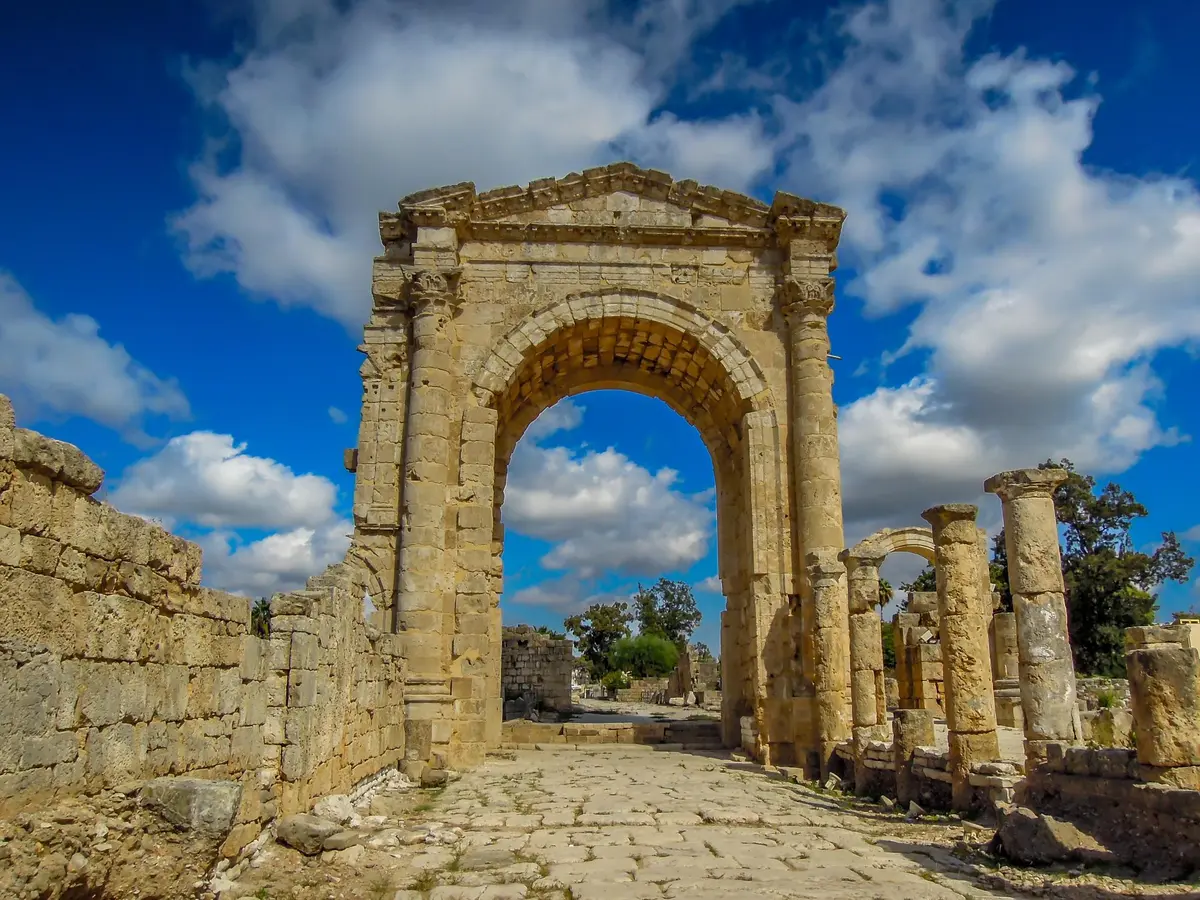
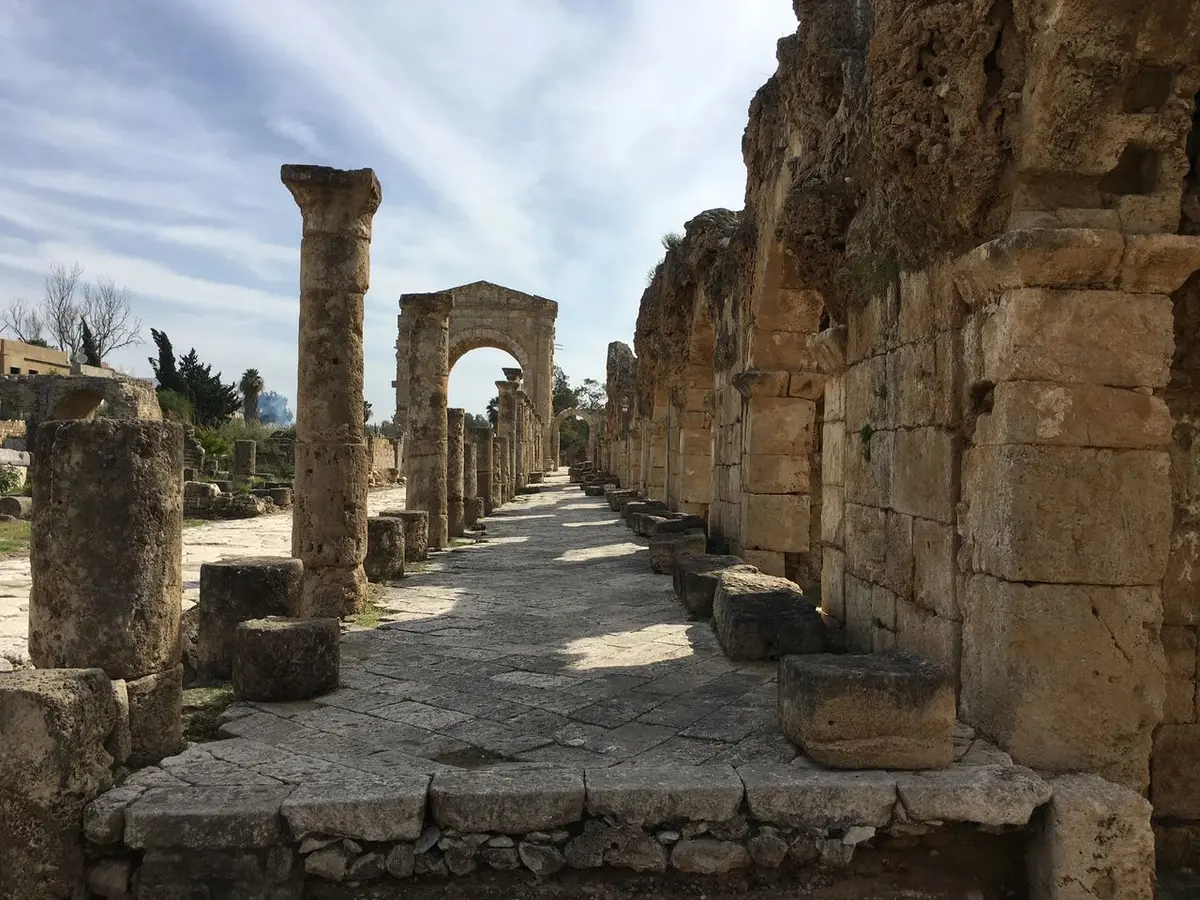
Hadrian’s Arch is a 21-meter (69-foot) sandstone triple-bay archway, likely built during Emperor Hadrian’s reign in the 2nd century AD. It marks the formal boundary between the necropolis and the entertainment district of Roman Tyre. The central portal carried chariots and dignitaries; the two smaller side passages handled pedestrians. Walking through it is the same physical threshold Tyrians crossed 1,800 years ago to enter the games.
The arch was originally coated in plaster to mimic expensive marble — a classic Roman cost-saving trick. The exposed golden sandstone you see today is the result of centuries of weathering, and it reads as a clean contrast against the deep blue Lebanese sky. Earthquakes in the 5th or 6th century brought it down; modern restoration pieced it back together, stone by stone.
Pro Tip: Step through the arch, then turn around and frame your shot looking back toward the necropolis. The sarcophagi lining the road behind the arch give a much stronger sense of scale than photos taken facing forward.
Inside the arena: architecture and scale
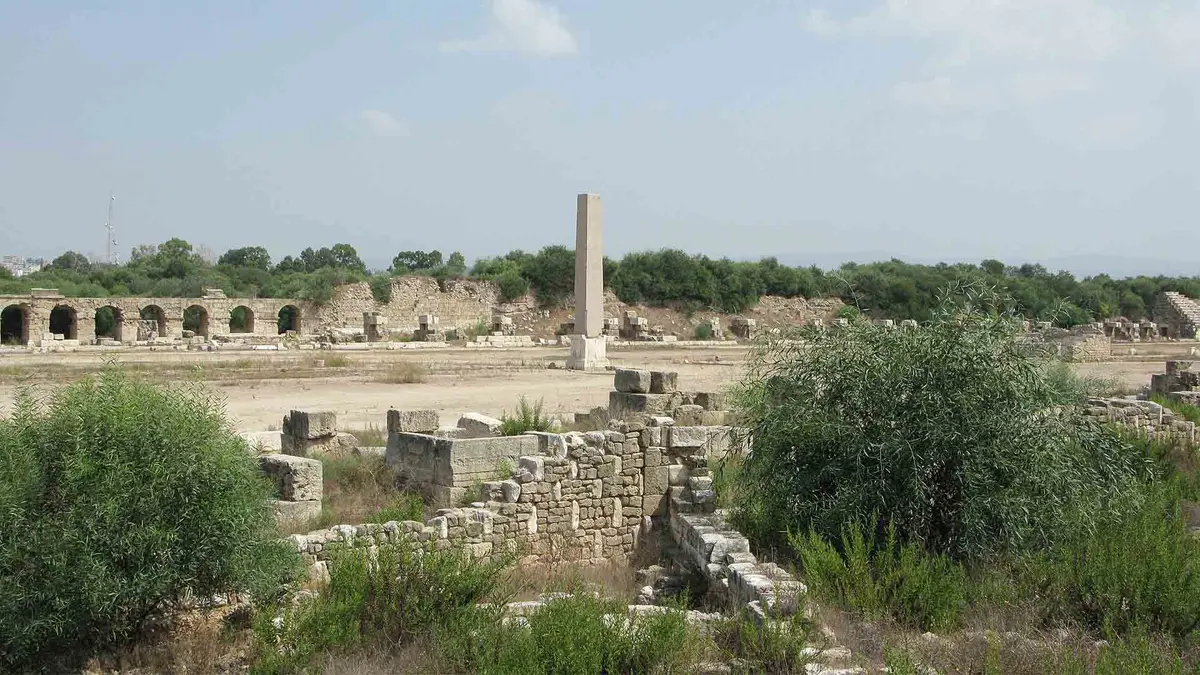
The numbers of the site are staggering. The full footprint runs 480 meters (1,575 feet) long and 160 meters (525 feet) wide. The racing track alone is 90 meters (295 feet) across — wide enough for 12 four-horse chariot teams to race simultaneously, with room to spare for the violent turns at the metae, or turning posts.
Standing on the track floor, you can walk the length of the spina — the central barrier around which chariots raced seven laps at full speed. At the center sits a re-erected granite obelisk, a solar symbol linking the games to sun worship and mimicking the Egyptian obelisks that once graced Rome’s own circuses. The turning posts at either end marked the most dangerous points of the race. Centrifugal force at these corners caused what Romans called naufragia — literally “shipwrecks,” their term for catastrophic chariot crashes.
Climbing the cavea
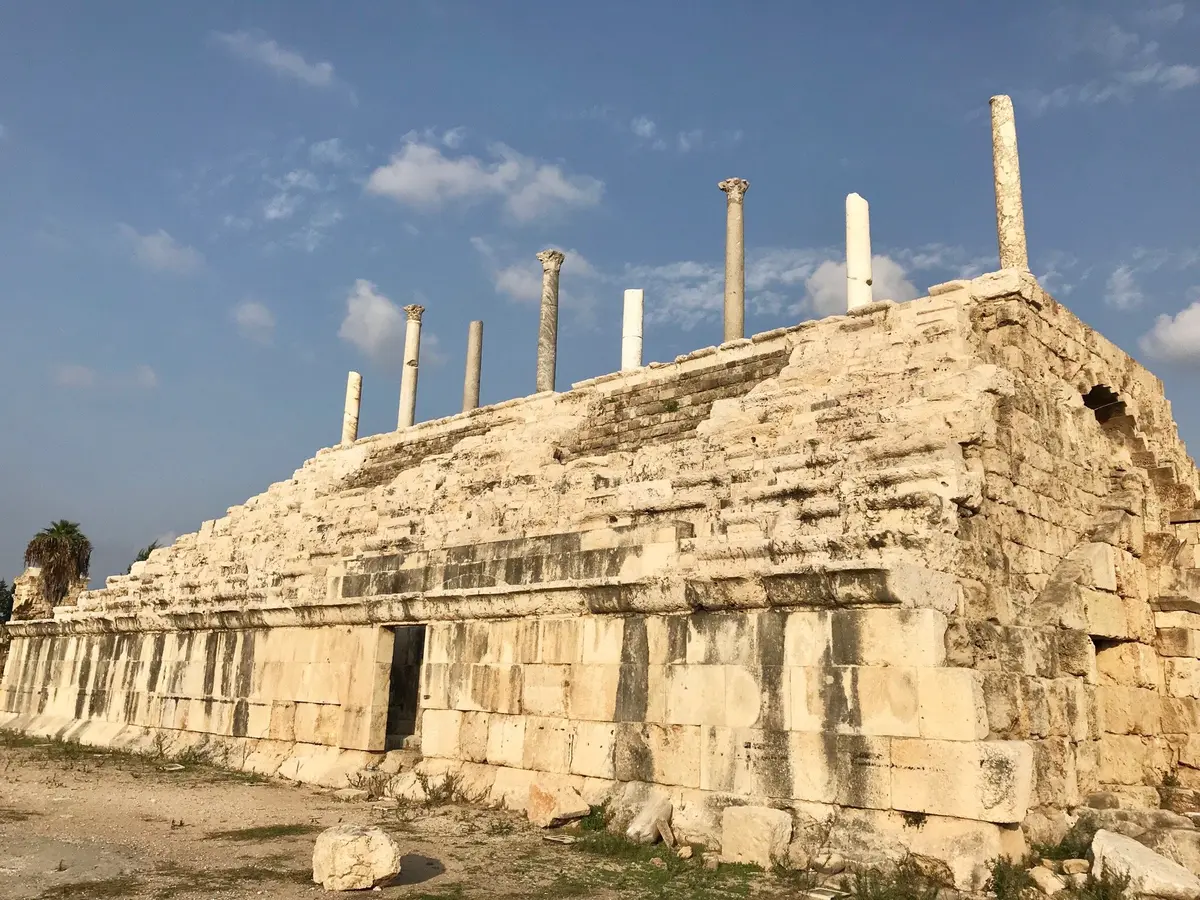
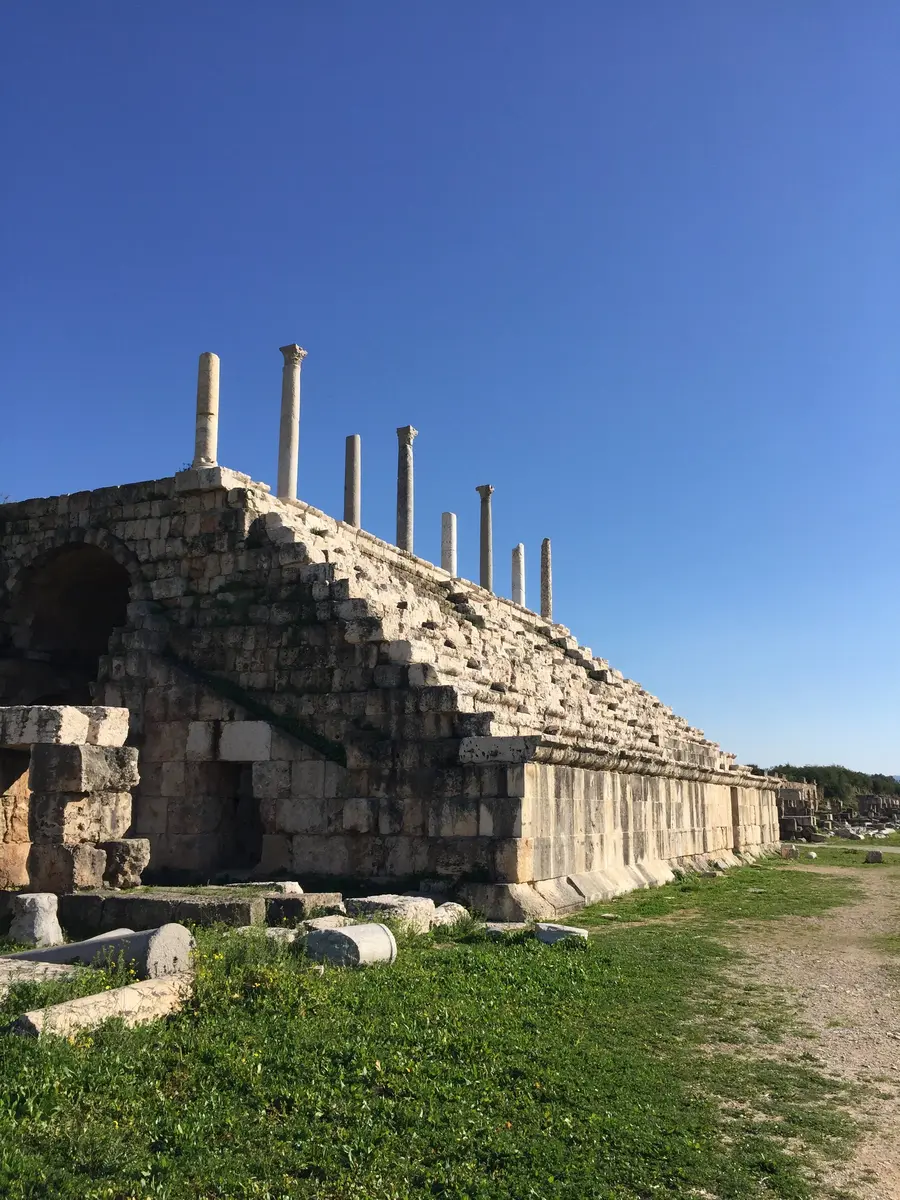
Here is where this site beats every European hippodrome. You can actually climb the stone seating, known as the cavea. Unlike sites where ropes keep you at arm’s length from history, the Roman Hippodrome of Tyre lets you scramble up the limestone tiers to the upper rows where the commoners sat. From the top, the scale finally registers — nearly half a kilometer (0.3 miles) of racing surface stretching below you, and the valley acoustics are clean enough that you can hear conversations on the opposite side of the track.
Archaeological work has identified specific structures on the east and west sides of the arena: clubhouses for the Blues and Greens racing factions. These were not simple locker rooms. They were equipped with mosaics and private baths — an indicator of how much wealth and political power the teams wielded.
The commercial aqueduct most visitors miss
Running alongside the arch is a remarkably preserved Roman aqueduct. It carried water from the Ras el-Ain springs 6 kilometers (3.7 miles) south. Here is the part most visitors walk past without noticing: those arches were not only water carriers. They sheltered shops and market stalls at street level.
This was a commercial corridor feeding the games, with vendors hawking food, souvenirs and faction merchandise to arriving crowds. Archaeological finds in the area include a water basin inscribed with “Victory for the Blue” — proof that even public infrastructure got politicized by the chariot racing teams. Think of it as ancient branded merch, built into the plumbing.
Why does the Roman Hippodrome of Tyre still stand today?
Two factors explain the preservation: building material and function change. Most Roman circuses elsewhere were built of brick-faced concrete, which crumbled faster. Tyre’s hippodrome was built of local sandstone and limestone — harder wearing and, crucially, less valuable to medieval builders looking for materials to scavenge. When its function changed under Christianity, the structure was partially reused rather than demolished.
According to the church historian Eusebius, the arena became a site of Christian persecution during Diocletian’s Great Persecution in the early 4th century. Five Egyptian Christians were documented as tortured to death here, adding a somber chapter to Lebanon’s history at this site.
As the empire Christianized, chariot racing fell out of favor due to its pagan associations. Rather than abandon the structure, early Christians made a statement: they built a Byzantine chapel directly on top of the spina. The ruins of that chapel still sit inside the track today. It is a physical manifestation of the new faith planting itself on top of the old games.
The Crusader graffiti
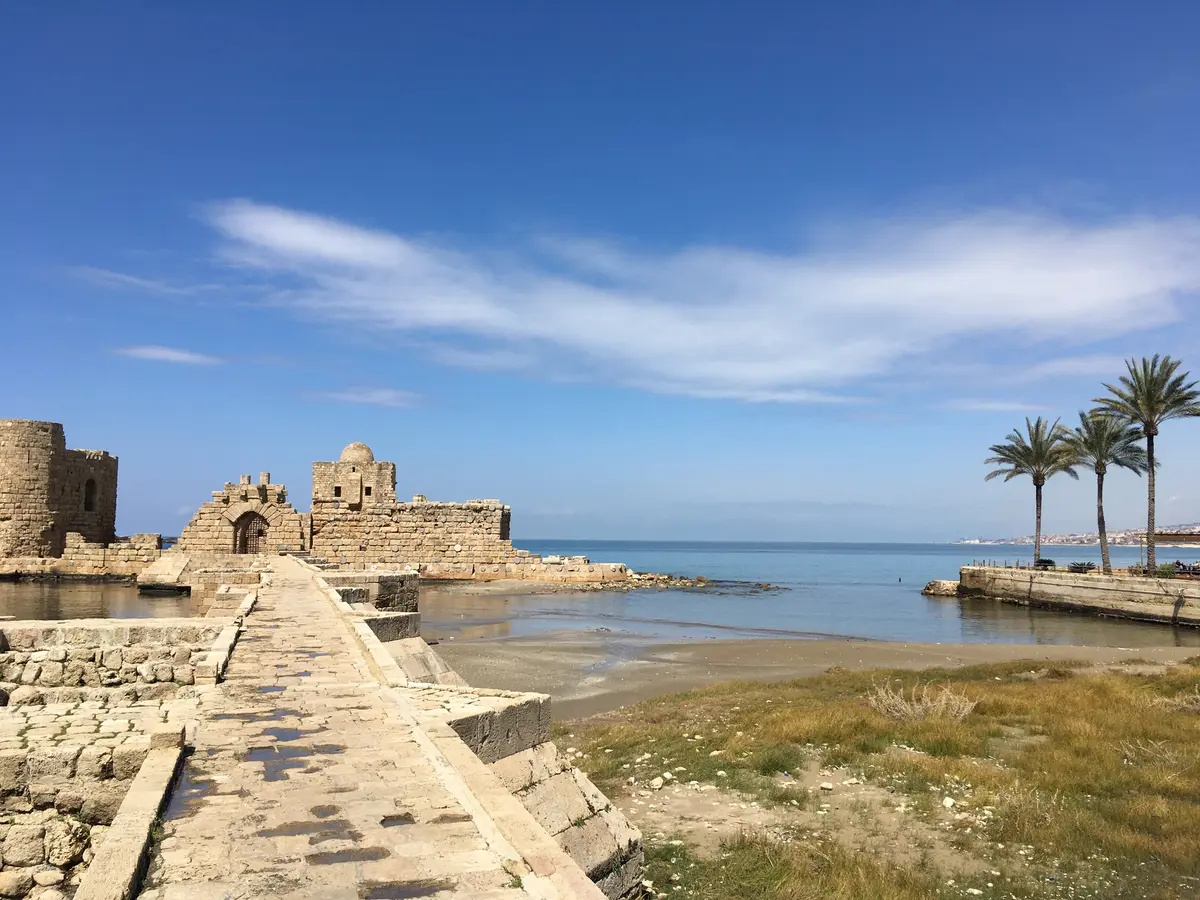
Centuries later, Crusaders passing through to the Holy Land left their marks too — similar to what you can see at the Sidon Sea Castle. The arena walls carry incised graffiti from medieval soldiers: shields, heraldic symbols and ships scratched into the stones. It turns the walls into a medieval guestbook spanning centuries.
How much does it cost to visit the Roman Hippodrome of Tyre?
The posted ticket price is roughly $3-6 USD in practice, paid at the gate. The Lebanese Pound has lost so much value that the original LBP price is worth pennies at current exchange rates, and site staff now typically accept US dollars directly. Carry small bills and do not try to pay in large denominations — change is limited.
- Entry fee: roughly $3-6 USD in cash
- Accepted currency: US dollars preferred, LBP accepted
- Bills required: “fresh dollars” — crisp, post-2013 design, no tears or ink marks
- ATM strategy: withdraw in Beirut before leaving; ATMs near the site are unreliable
“Fresh dollars” is not a tourist scam — it is a real local term. Damaged or older-design bills get rejected routinely by vendors, drivers and ticket counters across Lebanon. Plan the full day’s cash in small, clean notes before you leave your hotel.
Pro Tip: Bring $50-80 in small fresh dollars for the full day (entry, food, tips, drinks, small souvenirs). Anything over $20 notes will be a headache.
How do you get to Tyre from Beirut?
Tyre sits about 80 kilometers (50 miles) south of Beirut, typically a 90-minute to 3-hour drive depending on traffic and checkpoints. Two realistic options: the chaotic budget bus from Cola Intersection, or a private driver hired for the day. Given the security situation (see below), most foreign visitors go with a private driver for a guaranteed return before dark.
The budget option: buses from Cola
Buses leave from the Cola Intersection in Beirut — a chaotic underpass where drivers shout destinations from open vans. Listen for “Sour! Sour!” — the Arabic name for Tyre.
- Cost: $2-4 USD one way
- Duration: about 3 hours with traffic and stops
- Frequency: departures throughout the day, no fixed schedule
- Comfort: minimal — shared vans, hot, no A/C guaranteed
The comfort option: private driver
Hiring a private driver for the day is the standard approach for most Western tourists. It removes the uncertainty of finding a return van and lets you leave the area before sunset.
- Cost: $80-120 USD for the full day
- Duration: 90 minutes to 2 hours each way
- Includes: round-trip, waiting time at the site, ability to add stops (Sidon is a natural add-on)
- Booking: through your Beirut hotel is typically cheaper than online tour platforms
For travelers wanting full flexibility, renting a car is an option, though Lebanese traffic and checkpoint etiquette can be stressful for first-timers.
Is it safe to visit Tyre right now?
Short answer: the U.S. State Department classifies all of Lebanon as Level 4 “Do Not Travel,” and South Lebanon (everything south of the city of Saida, which includes Tyre) carries a stronger “Depart If You Are There” directive. The region has seen periodic military activity even after the November 2024 cessation of hostilities. Most insurance policies will not cover you here. Travel at your own informed risk.
This is the single most important logistical reality of visiting the Roman Hippodrome of Tyre, and it is worth reviewing whether Lebanon is safe for American tourists in detail before you commit. The site sits south of the Litani River, inside the area the UN Interim Force in Lebanon (UNIFIL) monitors. You will see white UNIFIL SUVs on the roads. You will see political portraits and faction flags. That is the operating landscape.
The city of Tyre itself is generally calmer than the border villages further south, but the situation can change with little warning. Check the news every morning before you travel, and be prepared to cancel. Specialized high-risk travel insurance for Lebanon is the only kind of coverage that will apply here — standard policies exclude this region by default.
What to actually do before you go
- Register with the Smart Traveler Enrollment Program (STEP) for embassy alerts
- Buy dedicated high-risk travel insurance (standard policies won’t apply)
- Share your driver’s phone number and license plate with someone at your hotel
- Leave Tyre by late afternoon — do not stay past sunset
- Skip the trip entirely if regional tensions have flared in the last 48 hours
Pro Tip: Talk to your driver before leaving Beirut about which route they plan to take. If they want to go via the coastal road through Sidon rather than inland, that is the right call — it is the more trafficked and more predictable route.
Before you book
TL;DR: The Roman Hippodrome of Tyre is one of the best-preserved and least-visited Roman sites in the Mediterranean. You can climb the seats, walk the track and touch original 2nd-century stone. It costs about $3-6 to enter and sits in a U.S. Level 4 security zone that most insurers will not cover. Go with a private driver, carry crisp dollars, and check the news daily before committing.
The trade is simple. You sacrifice the infrastructure of a European heritage site — signage, audio guides, cafeterias, safety nets — in exchange for the kind of unmediated access to antiquity that simply does not exist at the Colosseum or Pompeii anymore. For the right traveler, that trade is obvious. For the wrong one, it is a trip that should wait.
Have you been to the Roman Hippodrome of Tyre, or are you weighing whether to go? What’s the one logistical question you still can’t find a clear answer to online?