Salto de Malacatiupan is the only naturally hot waterfall in El Salvador — bathtub-warm water dropping into a turquoise pool on the edge of Atiquizaya. It’s also undeveloped, with mossy rocks and a real current. This guide covers how to get there, what it costs, when to go, and how to stay safe in the water.
What Makes Salto de Malacatiupan Worth the Trip
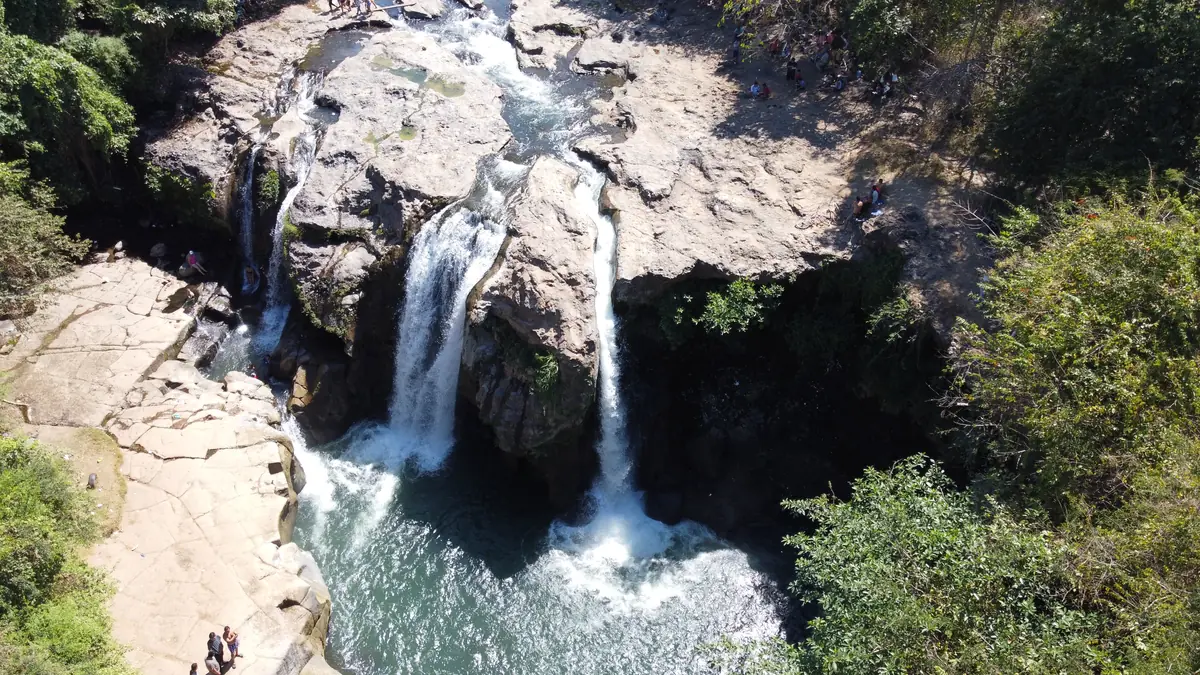
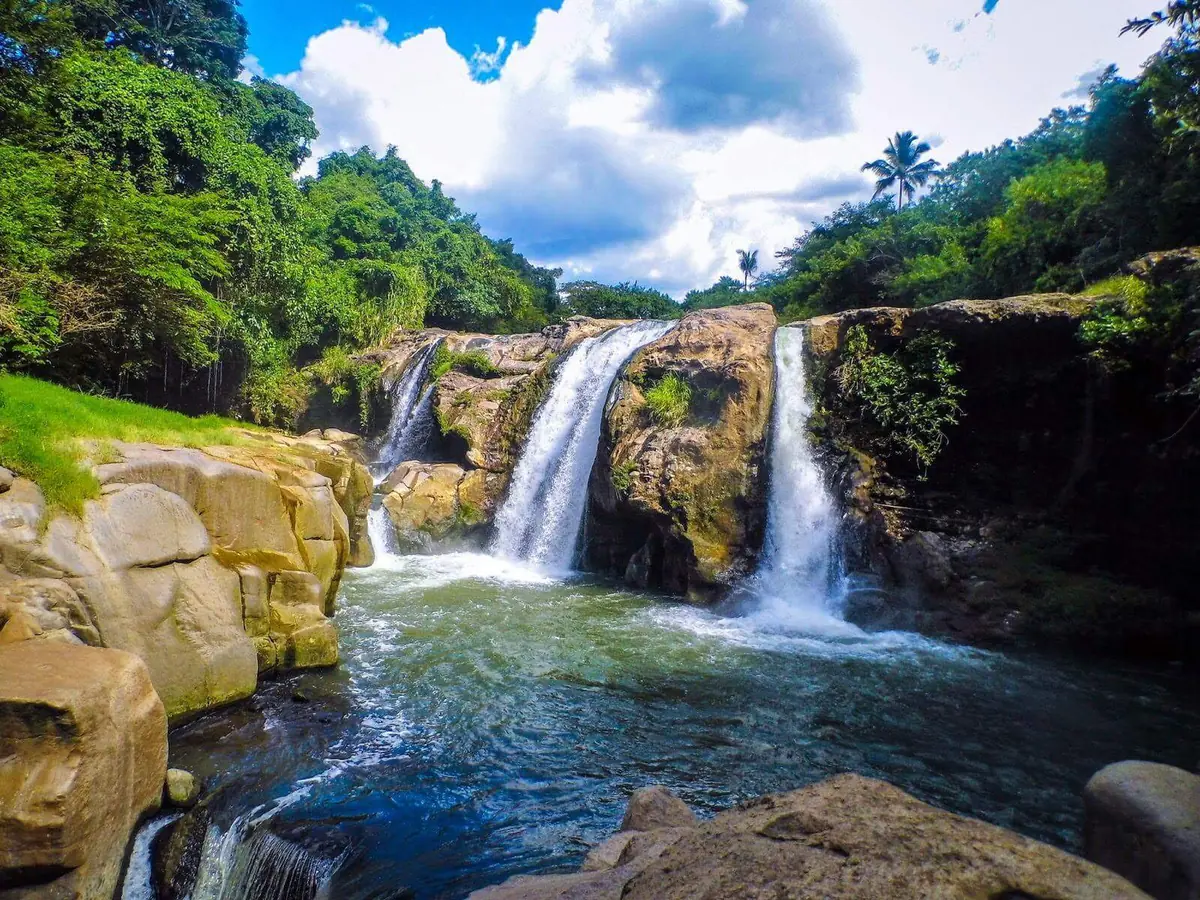
Salto de Malacatiupan is the only geothermally heated waterfall in El Salvador, with bathing water around 95–100°F (35–37°C). Three cascades, each roughly 39 ft (12 m), drop into a steamy turquoise pool near Atiquizaya. It stays uncrowded, entry runs about a dollar fifty, and the setting feels wild rather than resort-built.
Most hot springs in this part of the world are walled pools you lower yourself into. This is moving water — a river that happens to run hot, spilling over three ledges into a pool you can swim across. The heat is the whole point, and it catches people off guard, because nothing about a jungle river says “warm” until you’re standing in it.
The water glows a pale turquoise from the minerals, and steam lifts off the surface on cooler mornings. It rarely fills up, and entry costs about the price of a coffee.
How Hot Is the Water, Really, and Why
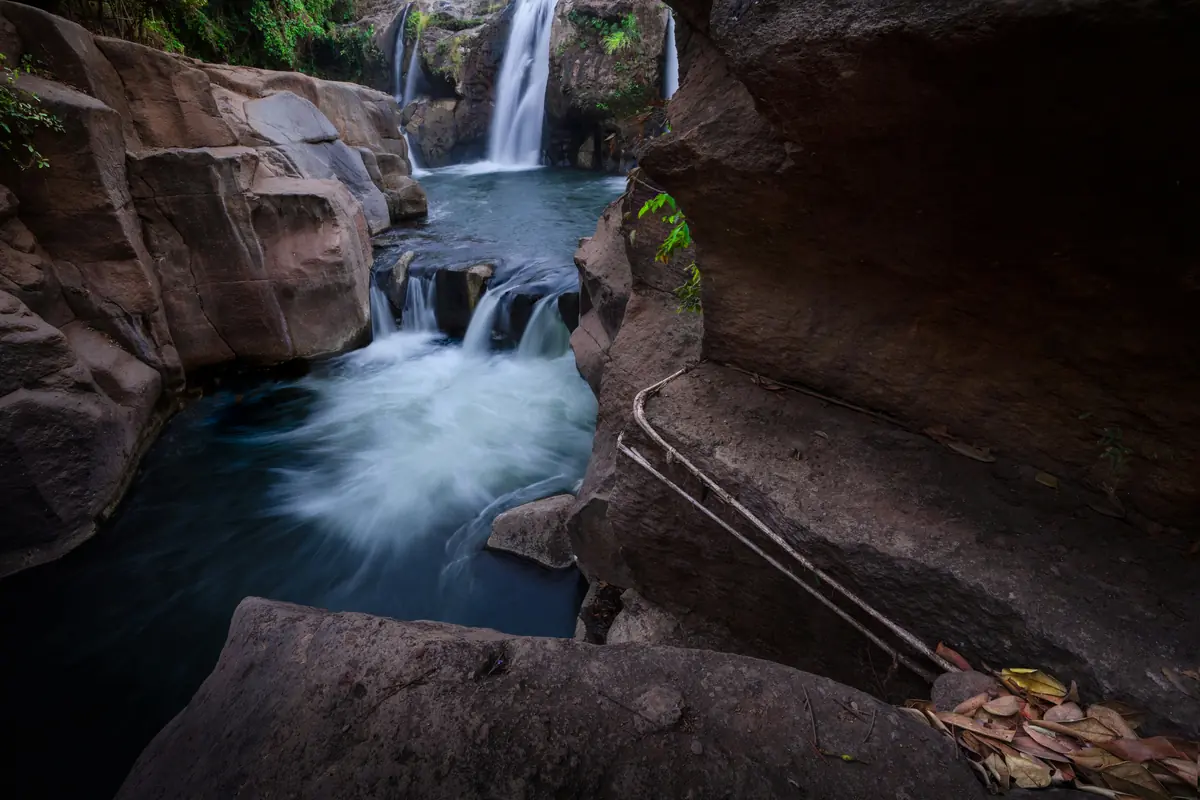
The bathing water sits around 95–100°F (35–37°C) — warm like a hot tub, not scalding. The heat comes from the Agua Caliente river, which surfaces underground near boiling at about 158°F (70°C), then mixes with a cooler river so it’s comfortable for soaking by the time it reaches the falls.
Different sources land on slightly different numbers. English-language guides put the bathing pool around 95–100°F (35–37°C); some Spanish sources cite a cooler 86–95°F (30–35°C). Either way it reads as a warm soak, not a hot one — closer to a heated pool than a sauna.
The source is what makes it interesting. The Agua Caliente surfaces near boiling, around 158°F (70°C), then sheds heat as it joins a cooler river before reaching the falls. Most official sources — including El Salvador’s national tourism site — name that cooler river the San Antonio. A few guides and the Spanish-language Wikipedia entry call it the Quiroz instead. The falls themselves sit in a community called Cantón Río Frío, “cold river canyon,” which only adds to the naming muddle.
One practical takeaway: the water is hottest closest to where the Agua Caliente surfaces, and it cools as it spreads. The smaller side pools tend to feel best, while the main channel below the falls runs cooler and faster.
Where It Is and How to Get There
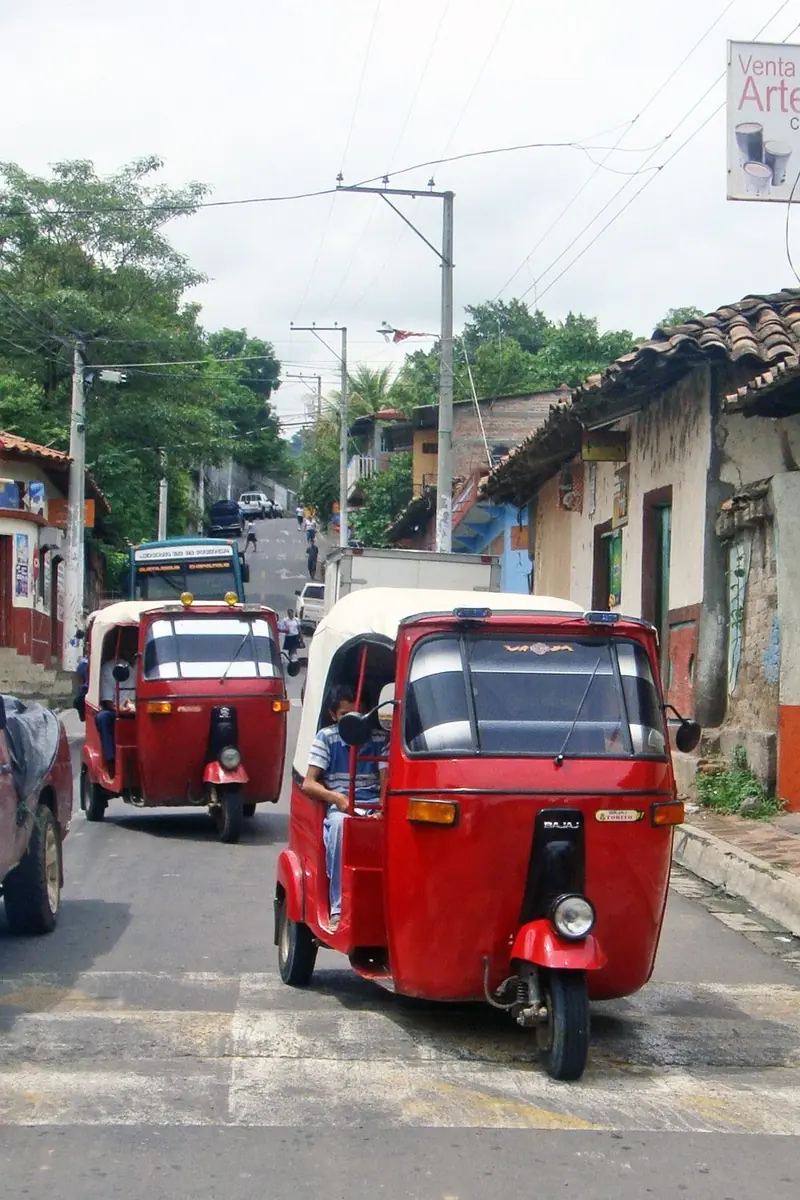
The falls sit about 3.7 mi (6 km) outside Atiquizaya, a small town in Ahuachapán department that locals call the City of Springs — 28 springs are said to run through it. Atiquizaya is the hinge for every route. You get yourself to its central park, then cover the last stretch by tuk-tuk.
Coming from the US, you’ll fly into Monseñor Óscar Arnulfo Romero International Airport (SAL) outside San Salvador. Round-trips from hubs like Houston, Miami, and Newark on Avianca, United, American, Volaris, or Spirit commonly run around $280–470, though fares move constantly.
| Origin | Bus | Bus time and fare | Final leg to the falls |
|---|---|---|---|
| Santa Ana | #210 or #214 to Atiquizaya | ~45 min, ~$0.50 | tuk-tuk ~15 min / 3.7 mi (6 km), ~$2–5 |
| Ruta de las Flores (Juayúa/Ataco) | #249 to Ahuachapán, then #210 toward Santa Ana, off at Atiquizaya | varies | tuk-tuk as above |
| San Salvador | #202 from Terminal de Occidente | ~$1.04 | tuk-tuk as above |
Driving from San Salvador takes about 1.5–2 hours over 51–58 mi (82–94 km) via the CA-1 highway. The final stretch to the falls is unpaved and bumpy. A standard car handles it in dry conditions, though some sources advise a 4×4, especially after rain. Parking runs $2 for a car, $1 for a motorbike.
Pro Tip: Tuk-tuk drivers expect to negotiate. Settle the round-trip price up front and arrange a pickup time, because the road out is remote and you don’t want to be stranded haggling at dusk.
Getting Back Before Dark (the Part Most Guides Skip)
The return trip, not the arrival, is the real logistical risk. Tuk-tuks don’t wait by default, so you either arrange a pickup over WhatsApp or agree on a return time before the driver leaves. Miss that, and you’re waiting on the unpaved road or flagging down a passing pickup.
One source notes the last bus from the area back toward Atiquizaya can leave by around 4 p.m. The road and the site are unlit, so visiting after dark isn’t a good idea regardless. Plan your exit before you even get in the water.
What It Costs to Visit
Entry is about $1.50 per adult, with children under 12 free, plus $2 per car or $1 per motorbike to park. Bring small US-dollar bills in cash — there’s no card payment at the gate, and no ATMs past Atiquizaya. Older guides that call the falls free are out of date.
Many travel pages describe the falls as free, or maybe a dollar. That’s no longer accurate. Entry is collected at the gate by the operator of the on-site restaurant, and it’s enforced.
| Item | Cost |
|---|---|
| Adult entry | ~$1.50 |
| Child under 12 | Free |
| Car parking | $2 |
| Motorbike parking | $1 |
| Microbus | $3 |
| Bus | $5 |
El Salvador runs on the US dollar, so there’s no currency math to do. Bitcoin is legal tender nationally and turns up at some businesses, but none of that helps you here — it’s cash only, and the last ATMs are back in Atiquizaya. Bring small bills so you’re not relying on the gate to make change.
When to Go for the Best (and Safest) Soak
Go in the dry season, roughly December through April, on a weekday morning or late afternoon. Midday air can climb into the high 90s°F, so early or evening soaks feel better, and weekdays stay close to empty. The rainy season brings real flash-flood and current risk.
Dry season gives you firmer roads and clearer water. Weekdays are nearly deserted; weekends and holidays draw local families. For comfort, aim for early morning or the hour before sunset — when the air is already in the high 90s°F, a hot soak loses some of its appeal.
There’s genuine disagreement about rainy-season access. Older reviews and blogs say the site closes or restricts entry from May through October because of flooding. The most recent official reporting says it stays open year-round, with no seasonal shutdown. The safe way to hold both: whatever the gate policy, don’t go within about 24 hours of heavy rain. The river floods fast, the current turns dangerous, and the descent gets treacherous.
Is It Safe? What to Know Before You Get In
Safe enough to enjoy, risky enough to respect. The hazard here isn’t crime — it’s water and rock.
The descent to the water comes first. The rocks are coated in moss and a film of water, with no engineered path. One Tripadvisor reviewer describes a visitor falling roughly two stories and fracturing a wrist on the way down. A local sometimes stands by with a rope to help people through the worst section.
- Slippery descent: mossy, wet rock with no railing — go slow and use your hands.
- Current and whirlpools: strong near the base of the falls; stay out of the main channel.
- Uneven depth: it isn’t uniformly deep or shallow, so don’t assume.
- Rainy-season flooding: the top hazard, and flash floods can arrive with little warning.
Tourist police from the national PNC tourism unit patrol the area at times, and a guard may be on hand, but treat this as a wild river rather than a supervised swimming hole.
Should You Do the Cliff Jump?
The headline thrill is the jump — about 33 ft (10 m) from the top, with lower ledges for the less committed. It’s also where the real danger lives. Deaths have been reported from people jumping in the wrong spot, where the pool isn’t deep enough or the current pulls. The rule is simple and non-negotiable: only jump where a local or guide has confirmed the depth that day, because it shifts with the river. Some reports suggest jumping is being restricted in places, so don’t assume it’s open.
Do You Need a Guide for Salto de Malacatiupan?
No, a guide isn’t required. Unlike the Tamanique waterfalls, you can reach and explore Salto de Malacatiupan on your own. First-time visitors, nervous swimmers, or anyone who wants hassle-free transport and depth guidance will get real value from a local guide or an organized day tour, especially on the slippery descent.
If you want one without booking a full tour, the Atiquizaya municipal tourism office can arrange a local guide. They earn their keep on the rope-assisted descent and on pointing you to the spots that are actually deep enough to swim or jump. For confident travelers who’ve read the safety notes above, going solo is straightforward.
Booking a Tour vs. Going Independent
Independent travel is far cheaper — a few dollars in buses and tuk-tuk fares against $70 or more for a tour — but it eats time and asks you to solve the return-trip puzzle yourself. A tour trades money for logistics handled.
Day tours from San Salvador or El Tunco usually fold Malacatiupan into a wider western El Salvador loop — often Concepción de Ataco, Café Albania’s bike zipline and rainbow slide in Apaneca, and the Termales de Santa Teresa hot springs, sometimes with the El Tazumal ruins added. A guided quad-bike or ATV run to the falls is listed from about $70–75. Full Ruta de las Flores thermal tours tend to run 8 hours or more with hotel pickup.
Go independent if:
- You’re based in Santa Ana or already on the Ruta de las Flores.
- You’re comfortable with chicken buses and a bit of haggling.
- You have a full day and want to spend close to nothing.
Take a tour if:
- You’re starting from San Salvador or the coast and short on time.
- You’d rather not arrange the tuk-tuk return yourself.
- You want to chain several stops into one day without planning each leg.
What to Pack and What to Expect on the Ground
Pack for a wild river, not a spa:
- Swimwear worn under your clothes — changing options are limited.
- Water shoes — the rocks are sharp and slippery.
- A quick-dry towel.
- Reef-safe sunscreen and insect repellent.
- Plenty of drinking water — hot water dehydrates you faster than you’d think.
- Snacks or lunch.
- A trash bag to pack out everything you bring.
- Small US-dollar bills in cash.
From the parking area, the walk in runs down a dusty path to a wooden plank bridge over the river, then a slippery rocky descent to the water. Once you’re down, you’ve got choices: the calmer upper-river pools, smaller shaded soaking spots off to the sides, or the big pool below the main falls. The side pools are the warmest and the least exposed to current.
There’s a restaurant on site, Rusti Canto — the same operation that collects the entry fee — and flush toilets near the entrance that visitors generally report as clean. Don’t count on the restaurant being open every day, so bring food just in case.
Reports conflict on changing facilities. Some visitors describe the bathroom areas as roomy enough to change in; others say there are toilets but no showers or changing rooms. Wear your swimsuit under your clothes and you sidestep the question entirely.
Pro Tip: A hot soak in 90-plus-degree air dehydrates you quietly. Carry more water than you think you need and sip between dips, not just after.
Combine It With These Nearby Stops
A soak at the falls fills half a day at most. Western El Salvador gives you plenty to wrap around it.
The Ruta de las Flores is the obvious pairing. Concepción de Ataco is the most painted town in the country, wall after wall of murals. Apaneca has Café Albania, with its bike zipline and rainbow slide. Juayúa runs a weekend food festival worth timing a visit around.
For more hot water, Termales de Santa Teresa has around 30 pools and sits beside Central America’s largest geyser field, the ausol. Daytime entry runs about $10 per adult and $5 per child, with a cheaper evening rate of roughly $6 per adult.
The Santa Ana (Ilamatepec) Volcano hike pairs naturally with nearby Lake Coatepeque if you’ve got an extra day and like a climb. The El Tazumal Mayan ruins are an easy add near Santa Ana. And for serious waterfall hiking, the El Imposible National Park and the Tacuba seven-waterfalls tour run about $6 entry plus a guide tip — note that a guide is mandatory there, unlike at Malacatiupan.
Frequently Asked Questions
How Hot Is the Water at Salto de Malacatiupan?
The bathing water at the falls is about 95–100°F (35–37°C) — close to a warm hot tub. It’s heated naturally: the Agua Caliente river emerges underground near 158°F (70°C), then cools as it mixes with a colder river before cascading over the three roughly 39 ft (12 m) falls into the main pool.
How Much Does It Cost to Visit Salto de Malacatiupan?
Entry is about $1.50 per adult, with children under 12 free, plus $2 per car or $1 per motorbike to park. Payment is cash only in US dollars, and there are no ATMs past Atiquizaya, so bring small bills. Older guides calling it free are out of date.
How Do You Get to Salto de Malacatiupan From Santa Ana?
Take bus #210 or #214 from Santa Ana to Atiquizaya — about 45 minutes for roughly $0.50. From Atiquizaya’s central park, hire a tuk-tuk or moto-taxi for the final 3.7 mi (6 km), about 15 minutes on an unpaved road, negotiating around $2–5 each way.
Is Salto de Malacatiupan Safe to Visit?
It’s generally safe but undeveloped. The rocks on the descent are slippery, and the current near the falls can be strong, with reports of whirlpools and at least one serious fall injury. Avoid the rainy season’s flash-flood risk (May–October), never jump where you can’t confirm depth, and follow local guidance.
Do You Need a Guide for Salto de Malacatiupan?
No. Unlike the Tamanique waterfalls, where a guide is mandatory, you can visit Salto de Malacatiupan independently. That said, a local guide or organized day tour — many bundle Ataco, Café Albania, and Santa Teresa hot springs — helps with transport, the rope-assisted descent, and finding safe, deep-enough spots to swim.
Before You Make the Drive
TL;DR: Salto de Malacatiupan is El Salvador’s only hot waterfall and worth the trip — bathtub-warm water, about $1.50 to get in, easiest reached from Santa Ana via Atiquizaya. Go early on a dry-season weekday, bring cash and water shoes, and treat the current and slippery rocks like the wild river they are.
The thing that trips people up isn’t getting there — it’s getting back, and getting in and out of the water safely. Sort your return ride before you soak, respect the descent, and you’ll have a hot waterfall mostly to yourself.