Salvadoran food runs on corn, and its most famous export — the pupusa — is only the front door. Behind it sits a table of banana-leaf tamales, fried cassava, seafood soups, and a nutty seed-based horchata most Americans never try. It’s mild, communal, and easier to find in US cities than you might guess.
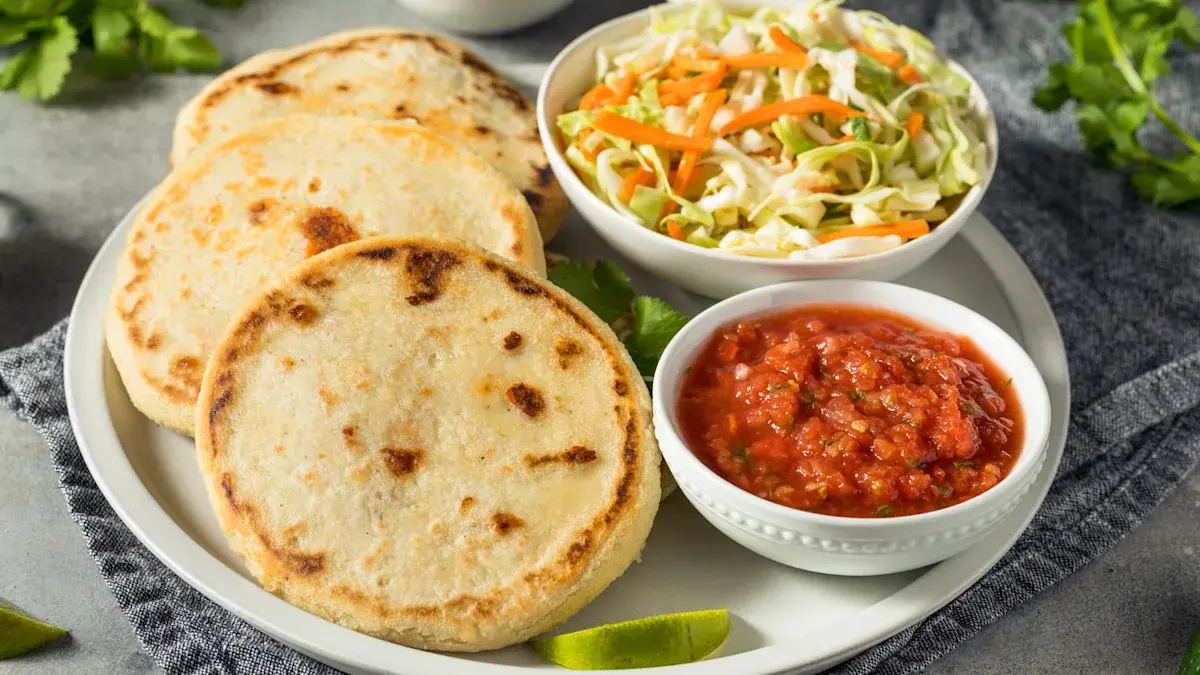
Salvadoran cuisine is the food of El Salvador — a mix of indigenous Pipil and Spanish cooking built on corn, beans, pork, cheese, and seafood. The national dish is the pupusa: a stuffed, griddled corn cake eaten with curtido (a tangy cabbage slaw) and mild salsa roja. The flavors are savory, not fiery.
What Is Salvadoran Food, Exactly?
Salvadoran food is the cuisine of El Salvador, built on the indigenous milpa of corn, beans, and squash grown by the Pipil and Lenca, then reshaped by Spanish pork, dairy, and rice. Corn is the backbone, pork and seafood carry the protein, and most dishes taste like home cooking rather than restaurant theater.
Corn here isn’t a side dish — it’s the structure. Salvadoran tortillas are thicker and smaller than the Mexican kind: about a quarter-inch thick (5 mm) and roughly 4 inches (10 cm) across. That heft is why they can hold a filling and become a pupusa in the first place.
The lineage shows up on the plate. The Pipil (who speak Nawat) and the Lenca cooked corn, beans, and squash together long before the Spanish arrived with pigs, cheese, and rice. The oldest direct evidence of pupusa-style cooking was found at Joya de Cerén, a Maya farming village buried by ash in what is now El Salvador.
Is Salvadoran Food Actually Spicy?
No. Traditional Salvadoran dishes are seasoned but mild, with flavor coming from cumin, achiote, garlic, allspice, and a spice blend called relajo rather than chili heat. When you want a kick, you add it yourself at the table using salsa, hot sauce, or pickled chilies called chiles encurtidos. That makes the food easy to enjoy if spice isn’t your thing.
This is the single biggest thing US diners get wrong going in. Nothing on a standard pupusería table arrives hot in the chili sense. The curtido is sour, the salsa roja is closer to a mild tomato sauce, and heat is a choice, not a default. If you order carefully at a Mexican place because of spice, you don’t need to here.
Pupusas: The National Dish to Understand First
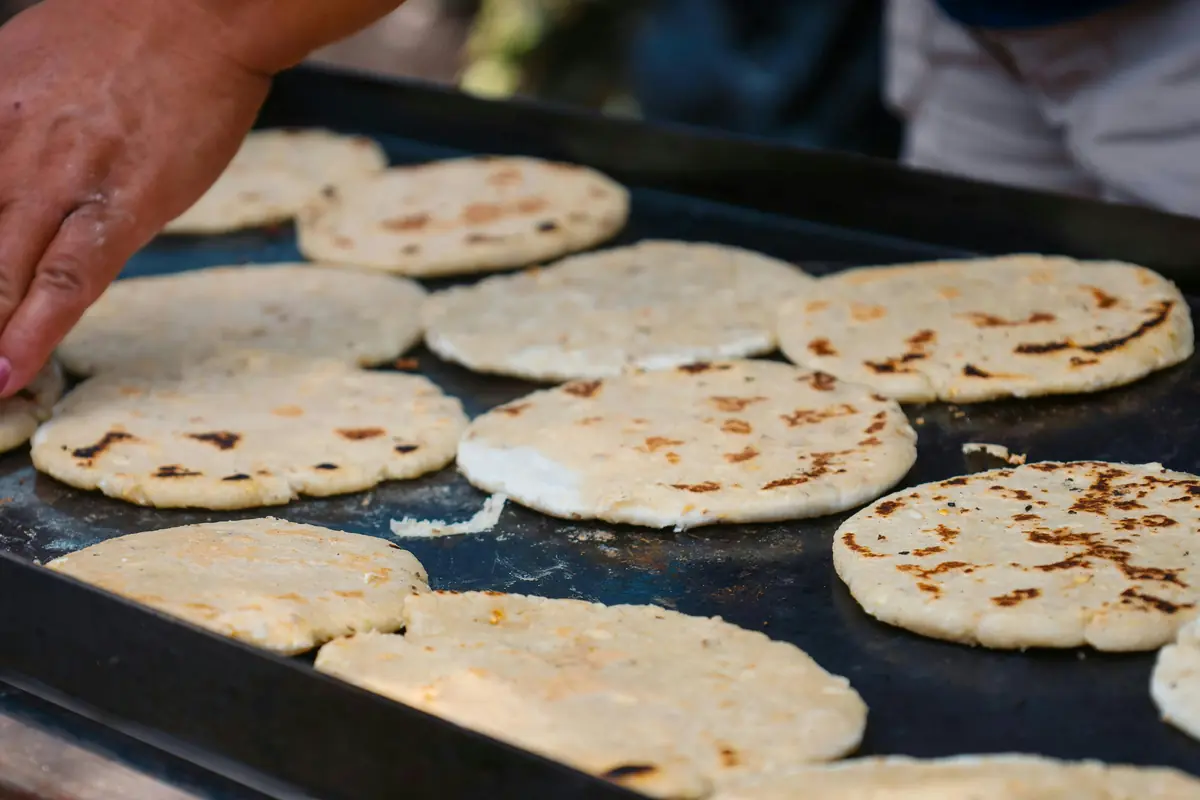
A pupusa is a thick, hand-pressed corn or rice tortilla stuffed with cheese, beans, chicharrón, or loroco, then cooked on a flat griddle called a comal. It arrives with curtido and salsa roja, and you eat it with your hands. It’s El Salvador’s official national dish, and each one lands around 350 calories.
The fillings are where you make decisions. The revuelta — cheese, beans, and chicharrón together — is the safe first order and the one that converts skeptics. In and around Olocuilta, the self-declared “city of pupusas,” you’ll also find pupusas de arroz, made with rice flour instead of corn masa.
Here’s a filling guide for your first few orders:
| Filling | What’s inside | Good for |
|---|---|---|
| Queso | Melted cheese (quesillo) | Vegetarians, first-timers |
| Frijol con queso | Refried beans and cheese | Vegetarians |
| Revuelta | Cheese, beans, and chicharrón | The all-in-one classic |
| Chicharrón | Ground seasoned pork | Meat-forward appetites |
| Loroco | Cheese and loroco flower buds | Tasting something local |
| Ayote | Cheese and squash | A lighter, vegetarian option |
| Camarón | Shrimp | Seafood fans |
| De arroz | Rice-flour dough (Olocuilta style) | Corn-free eaters |
The craft is faster than it looks. In El Salvador, an experienced pupusera can shape as many as 20 pupusas a minute at a busy stand. You’ll usually see this happen out front — the counter, the comal, the stack of masa — sometimes in a whole strip of stalls locals call a pupusódromo.
Pro Tip: Eat pupusas fresh off the comal. The cheese sets fast, and a pupusa that sat for five minutes is a lesser pupusa. Many spots also fire up the griddle heavier in the evening, which tends to be pupusa prime time.
What Is Curtido and Salsa Roja?
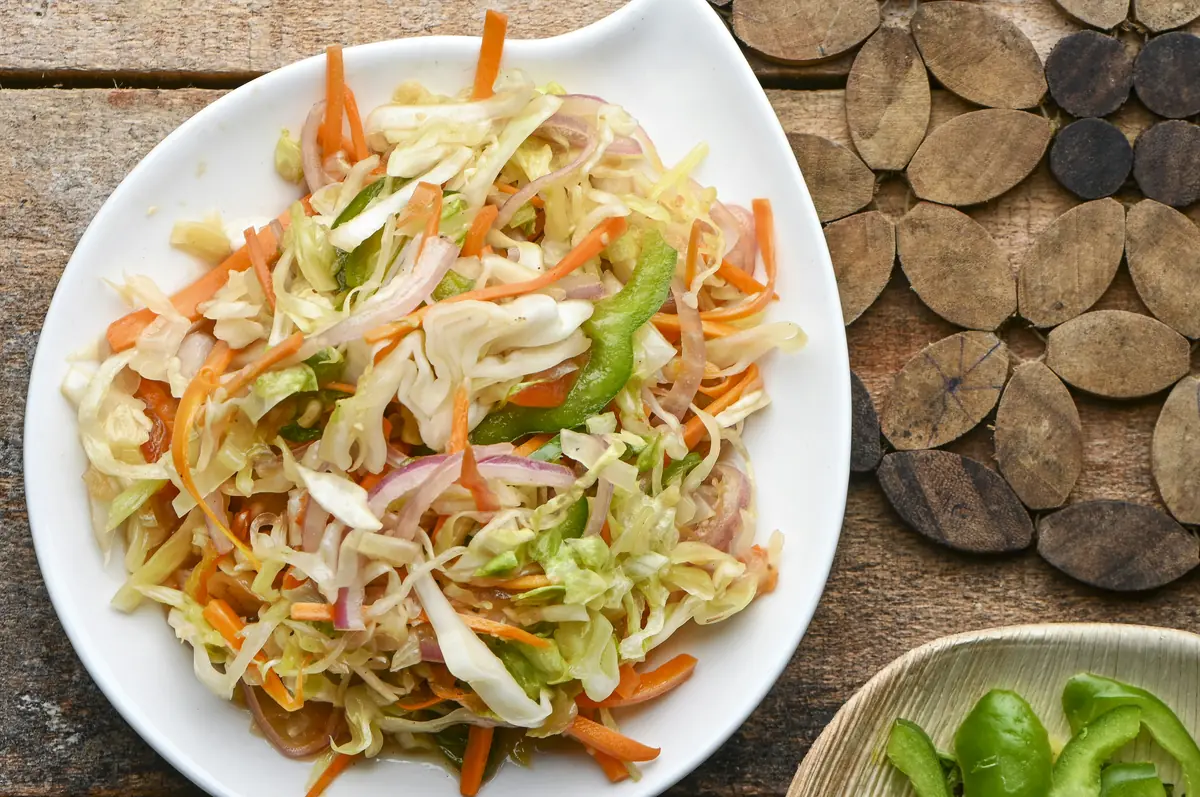
Curtido is a lightly fermented slaw of cabbage, carrot, and onion in vinegar with oregano — crunchy and sour, it cuts the richness of a cheese-heavy pupusa. Salsa roja is a smooth, mild cooked-tomato sauce. You pile the curtido on and spoon the salsa over the top, and neither one brings any real heat.
The pairing isn’t decoration. A pupusa is fatty and salty by design, and the acidity of the curtido is what keeps every bite from feeling heavy. Skip it and the food reads as one-note; add it and the whole thing clicks.
Pro Tip: Keep piling on the curtido. It’s meant to balance the fat and salt of the cheese, and most pupuserías keep a jar within reach so you can refill.
Are Pupusas From El Salvador or Honduras?
Both El Salvador and Honduras claim the pupusa, and the argument has gone international. During the CAFTA–DR trade negotiations, Honduran negotiator Melvin Redondo ceded the right to El Salvador, and the World Trade Organization later listed El Salvador as the pupusa’s denominación de origen — its recognized place of origin.
Not everyone agrees the matter is settled. Honduran academics still push back on the Nawat-etymology argument, and Salvadoran anthropologist Ramón Rivas has said the pupusa most likely came from Mesoamerica broadly rather than any single modern country. What isn’t in dispute is the age of the tradition: that ash-buried evidence at Joya de Cerén predates the border fight by more than a thousand years.
Salvadoran Dishes to Order Beyond Pupusas
Order pupusas first, then keep reading the menu. This is the part most US guides skip, and it’s where the cuisine gets deep — soups, seafood, sandwiches, and fried things that have nothing to do with a griddled corn cake.
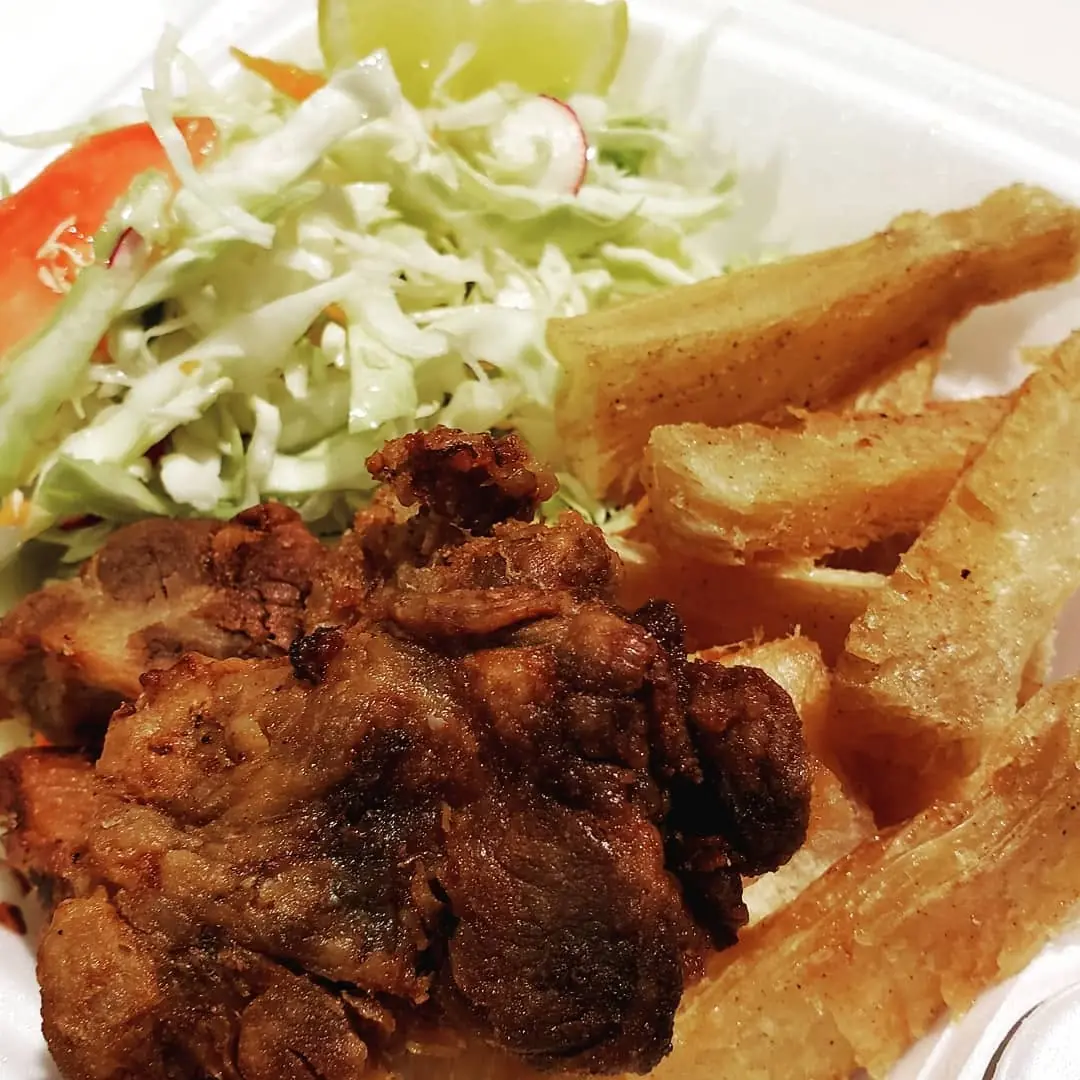
- Yuca con chicharrón: Boiled or fried cassava topped with fried pork and curtido, sometimes with pepesca (little fried baby sardines). A street-food staple that also shows up as a sit-down plate.
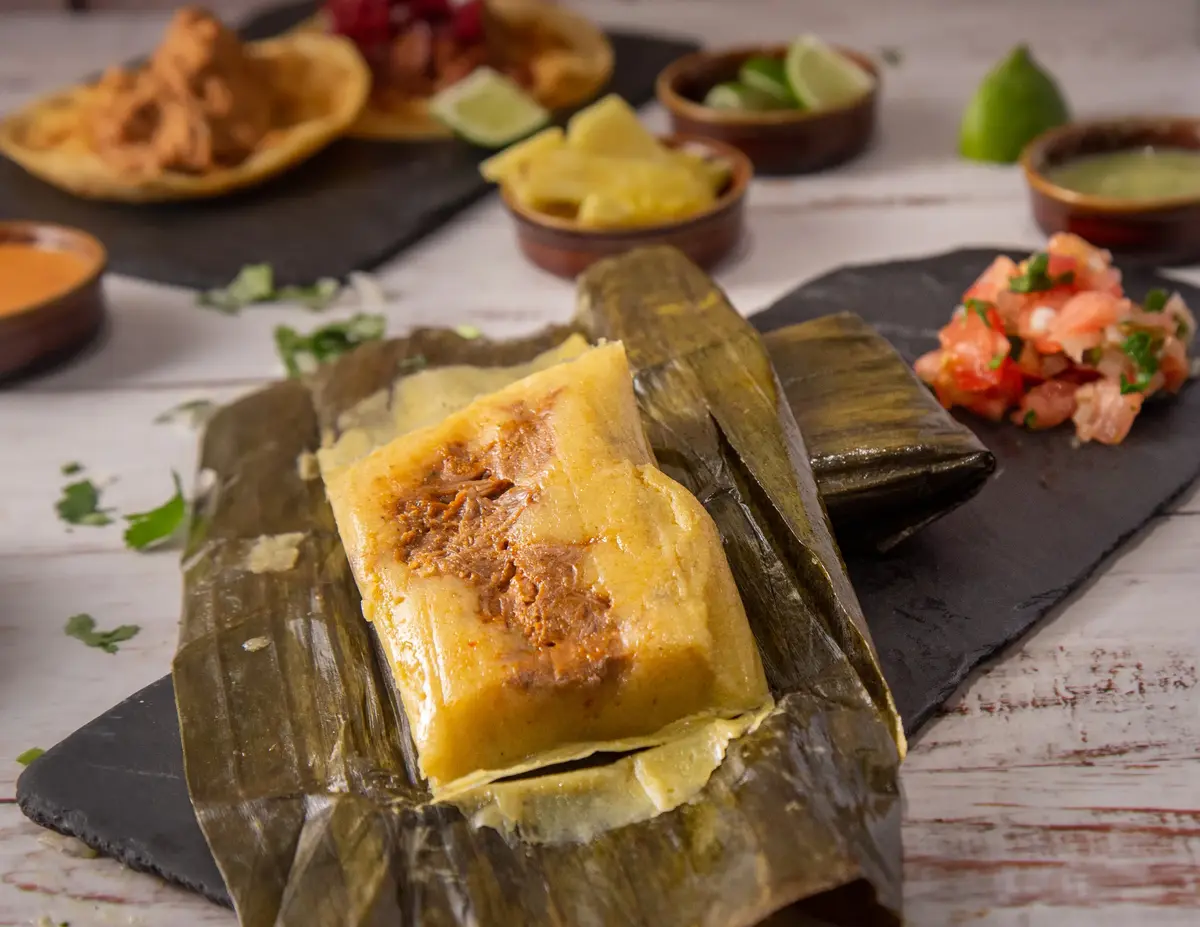
- Tamales: Wrapped in banana or plantain leaves instead of corn husks, with a softer, moister masa and no heat. Look for tamal pisque (bean-filled, vegetarian) and tamales de elote (sweet corn).
- Panes rellenos (panes con pollo or pavo): A warm turkey or chicken sub roasted with Pipil spices, then layered with watercress, radish, and cucumber. The San Miguel version, panes migueleños, is a Christmas favorite.
- Sopa de pata and sopa de mondongo: Cow’s-foot and tripe soups, respectively — weekend food with a long-standing reputation as hangover cures.
- Sopa de gallina india: Free-range hen soup, the classic Sunday comfort bowl.
- Mariscada: A rich seafood soup loaded with fish, clam, octopus, squid, shrimp, and crab.
- Casamiento: Rice and beans cooked together — the name means “marriage.” Vegetarian and on nearly every menu.
- Enchiladas salvadoreñas: Flat, crispy fried tortillas piled with toppings, closer to a tostada than anything rolled and sauced.
- Elote loco: “Crazy corn,” slathered with mayo, cheese, mustard, ketchup, and a little chili. Festival and street food.
If you order one thing beyond pupusas, make it panes rellenos or yuca con chicharrón. The first is a whole meal built around slow-roasted poultry and crisp vegetables; the second is the kind of plate that’s better than it has any right to be for the price.
The “False Friends”: Quesadilla and Enchilada Explained
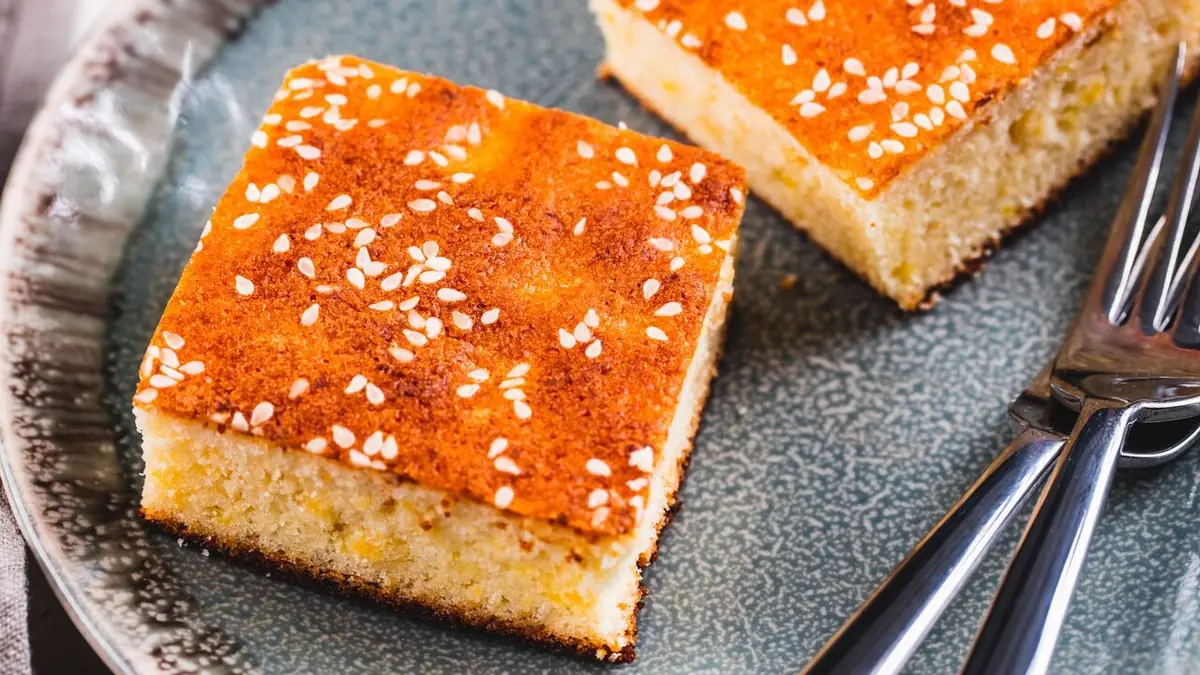
In El Salvador, a quesadilla is a sweet, dense cheese pound cake made with rice flour and queso duro blando, dusted with sesame and eaten with coffee — not a folded cheese tortilla. And a Salvadoran enchilada is a flat, crispy fried tortilla piled with toppings, closer to a tostada than the saucy rolled Mexican version. Same words, different food.
This trips up almost every first-timer who assumes the menu is speaking Mexican. Order a “quesadilla” expecting cheese and tortilla and you’ll get dessert. It’s worth ordering anyway.
The confusion goes beyond those two words. Here’s how the biggest overlaps actually break down:
| Item | Salvadoran version | Mexican version |
|---|---|---|
| Tamales | Banana or plantain leaf, moist masa, mild | Corn husk, often chili-based |
| Horchata | Ground morro (jícaro) seed, nutty | Rice and cinnamon |
| Quesadilla | Sweet cheese pound cake | Folded cheese tortilla |
| Enchilada | Flat crispy fried tortilla with toppings | Rolled tortilla in chili sauce |
| Heat level | Mild; heat added at the table | Ranges from mild to hot |
What to Drink and How to Finish a Salvadoran Meal
Salvadoran horchata isn’t the rice-and-cinnamon Mexican drink. It’s horchata de morro, ground from the seeds of the morro (jícaro) tree — Crescentia alata — with sesame, cacao, and spices for a nuttier, toastier taste. Sip it with atol de elote, a warm sweet-corn drink, or finish the meal with a sweet quesadilla or custard-filled empanadas de plátano.
The morro distinction matters if you think you already know horchata. The Mexican version is pale and creamy; the Salvadoran one is darker, earthier, and closer to a cold nut drink. If you like one, you won’t necessarily expect the other.
For dessert, you have range: empanadas de plátano stuffed with sweet milk custard, leche poleada (a Salvadoran take on custard pudding), and torrejas, a syrup-soaked fried bread that shows up around Semana Santa (Holy Week). And El Salvador grows serious coffee, so a cup at the end of the meal is a local move, not an afterthought.
Where to Eat Salvadoran Food in the US (and What It Costs)
You don’t need a plane ticket to eat this food well. An estimated 2.5 million people of Salvadoran origin live in the United States — the third- or fourth-largest Hispanic-origin group in the country, depending on whether you’re reading Pew Research or Census figures — and they brought the comal with them.
The community clusters in a handful of metros, and that’s where the pupuserías are thickest:
| Metro area | Approx. Salvadoran population | Where to look |
|---|---|---|
| Los Angeles | ~469,000 | Pico-Union and Westlake (the El Salvador Community Corridor) |
| Washington, DC (“the DMV”) | ~315,000 | Mount Pleasant, Adams Morgan, Columbia Heights |
| New York | ~250,000 | — |
| Houston | ~207,000 | — |
Dallas–Fort Worth, the San Francisco Bay Area, and Boston round out the map. Washington, DC is a special case: it’s the only US metro where Salvadorans are the majority among the local Hispanic population. As Iris Jimenez, culinary director of a DC pupusería, told NPR, “We’ve always called D.C. the District of pupusas.” By her count there are around 270 pupuserías across the DMV.
How to find a good one:
- Look for the word “pupusería” on the sign — that’s the clearest signal.
- Expect made-to-order cooking and a short wait; pupusas skew toward an evening food.
- Many US spots are Mexican-Salvadoran combos, listing pupusas next to tacos. The pupusas are usually still good.
Now the prices. Expect roughly:
- Single cheese pupusa: about $3.25 to $3.50
- Pupusa revuelta: about $4.49
- Yuca con chicharrón: around $12
- Salvadoran breakfast combo: around $16.49
- The same pupusa back in El Salvador: roughly $0.50 to $1
A US pupusa runs three to six times what it costs at the source — worth knowing before sticker shock hits, though it’s still cheap food by American standards. One caveat: those figures come from delivery apps, which typically run above what you’d pay standing at the counter.
Pro Tip: If a menu lists pupusas next to burritos, you’re likely in a Mexican-Salvadoran combo spot. Order the pupusas de arroz if you want the Olocuilta rice-flour style — a lot of combo kitchens only make the corn-masa kind unless you ask.
National Pupusa Day and the Giant Pupusa
National Pupusa Day (Día Nacional de las Pupusas) falls on the second Sunday of November, created by the same law — Decree 655 — that named the pupusa El Salvador’s national dish. November is peak corn harvest. It’s celebrated across El Salvador, especially in Olocuilta, and in US cities with festivals, eating contests, and record-setting giant pupusas.
The record itself lives in the US. The largest pupusa ever made measured 20 feet 2 inches (6.15 m) across, produced by the Fiesta DC festival in Washington, DC. The build took roughly 80 chefs, the DC mayor served the first pieces, and Guinness World Records certified the result. It’s a fitting trophy for the District of pupusas.
Common Questions About Salvadoran Food
What Is the National Dish of El Salvador?
The pupusa — a thick, hand-pressed corn or rice tortilla stuffed with cheese, beans, chicharrón, or loroco, then griddled and served with curtido and salsa roja. El Salvador’s Legislative Assembly made it the official national dish and created National Pupusa Day, held on the second Sunday of November.
Is Salvadoran Food Like Mexican Food?
They share a corn base but diverge fast. Salvadoran tamales use banana leaves instead of corn husks, horchata is made from morro seeds rather than rice, and a Salvadoran “quesadilla” is a sweet cheese cake, not a folded tortilla. Salvadoran food is also milder — heat gets added at the table, not cooked in.
What Is Loroco in Salvadoran Food?
Loroco (Fernaldia pandurata) is an edible flower bud from Central America with an earthy, herbal taste some compare to asparagus or artichoke. It’s a classic pupusa filling, usually paired with cheese, and it brings vitamins A and C, calcium, and iron along with the flavor.
Is Salvadoran Food Good for Vegetarians?
More than most people expect. Cheese, bean, loroco, and squash (ayote) pupusas are all meat-free, as is casamiento (rice and beans cooked together) and tamal pisque (a bean tamal). Curtido and salsa roja are vegetarian too. Ask about chicharrón or lard if you’re strict, since some beans are cooked with pork fat.
How Much Do Pupusas Cost in the US?
A single pupusa usually runs about $3.25 to $4.50 at US pupuserías, with a revuelta at the higher end. Delivery apps push prices above the in-store rate. For contrast, a pupusa in El Salvador can cost as little as $0.50 to $1.
Where to Start With Salvadoran Food
TL;DR: Salvadoran food is corn-based, mild, and built for sharing. Start with a revuelta pupusa and a pile of curtido, then branch into tamales, yuca con chicharrón, panes rellenos, and horchata de morro. Nothing is spicy unless you make it so. In the US, follow the word “pupusería” — Los Angeles and the DC area have the deepest scenes, with a single pupusa running about $3.25 to $4.50.
So which one are you ordering after your first pupusa — the seafood-loaded mariscada, or a sweet quesadilla with a cup of Salvadoran coffee?