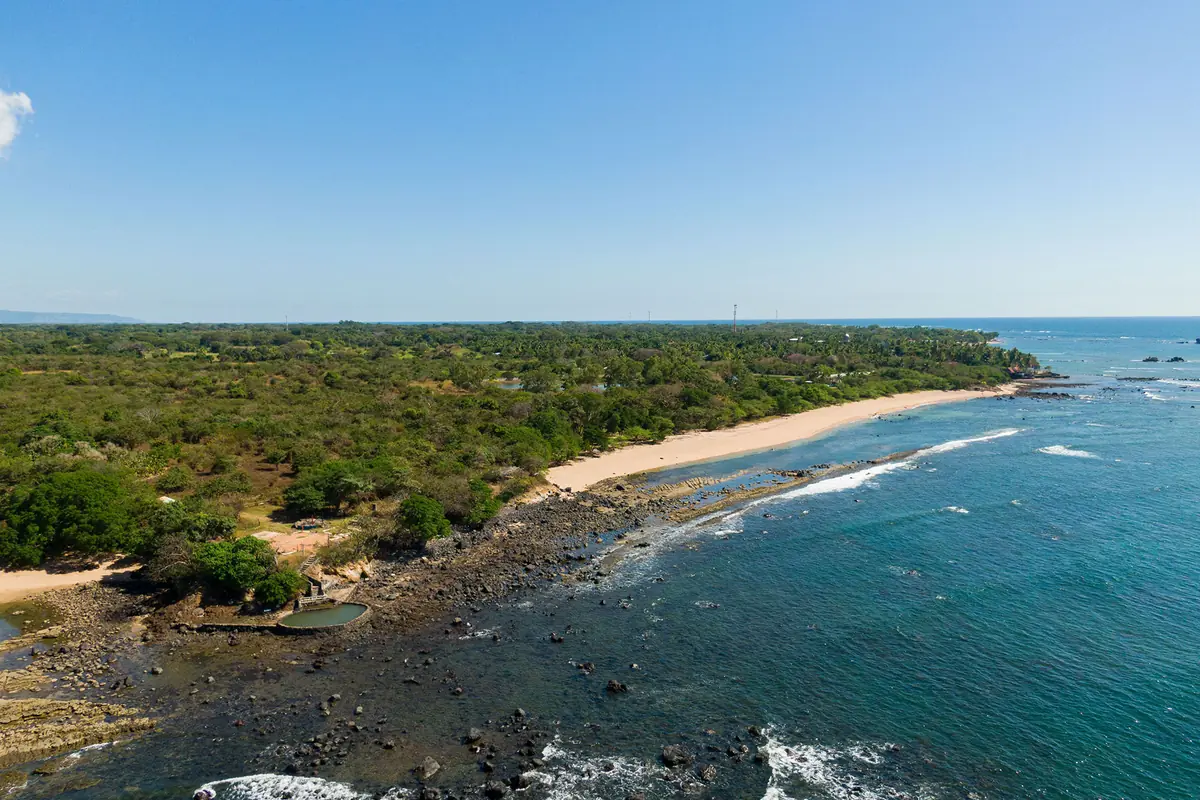
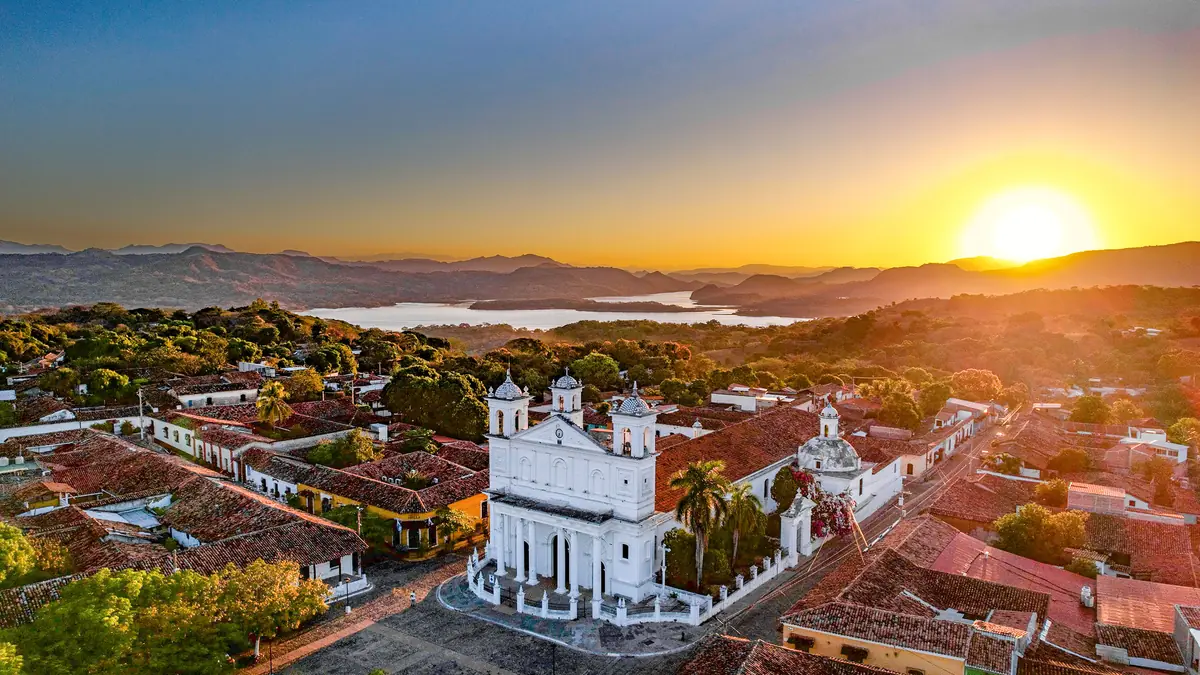
Suchitoto is the colonial town most El Salvador itineraries skip — and most travelers wish they hadn’t. Cobblestone streets, a white 19th-century church, boat tours over a flooded valley, and indigo dyed by hand, all about 90 minutes north of San Salvador. Here’s how to do it right, in a day or over a weekend.
Here’s the shape of a Suchitoto trip before we get into the details:
- Distance: About 29 miles (47 km) north of San Salvador, roughly 1.5 hours by car or bus
- Getting there: Direct bus 129 from Terminal de Oriente (Plaza Amanecer) for around $1 cash, or a private shuttle or Uber
- Time needed: A full day covers the center and a boat tour; overnight is better for the evening quiet
- Currency: The US dollar — no exchange, no conversion math
- Best season: The dry months, roughly November through April
- Safety: El Salvador carries a US State Department Level 1 advisory, the lowest of four tiers
Is Suchitoto Worth Visiting?
Yes. Suchitoto is El Salvador’s best-preserved colonial town and its unofficial cultural capital, worth at least a full day for the cobblestone center, the Santa Lucía church, hand-dyed indigo, and boat tours on Lake Suchitlán. Day-trippers can catch the highlights; slow travelers should stay overnight for the quiet after the buses leave.
The town holds around 24,800 people, and its name comes from Nahuatl — usually translated as “place of flowers and birds.” It’s older than it looks in a guidebook photo: the first Spanish settlement in the area, an early Villa de San Salvador, was founded on this municipal territory back in 1528 before being moved and abandoned.
What turned a quiet grid of houses into a cultural capital was a wave of artists and small NGOs that arrived in the 1990s, anchored by the filmmaker Alejandro Cotto. That’s why a town this size has a working theater, an indigo cooperative, and a couple of museums.
Who should day-trip and who should stay:
- Day trip: You’re on a tight El Salvador loop and want the center, the church, and one boat tour
- Overnight: You want the plaza at dusk, an indigo workshop, and Los Tercios or a civil-war tour without rushing
The white church tower is the first thing you see as the road drops toward town, bright against green hills. That first look is a fair preview of the whole place: small, walkable, and better in person than in the OTA thumbnails.
How to Get to Suchitoto From San Salvador
The simplest route is direct bus 129 from Terminal de Oriente (also signed as Plaza Amanecer) — around $1 in cash, about 1.5 hours, up to 2 with stops. Driving covers roughly 29 miles (47 km) with one highway toll near $1.50, and a private transfer or Uber trims the time for more money.
| Option | Time | Rough cost | Notes |
|---|---|---|---|
| Bus 129 (public) | 1.5–2 hr | ~$1 cash | Cheapest; leaves from Terminal de Oriente; keep an eye on your bag at the terminal |
| Private transfer / hotel car | 1–1.5 hr | ~$55 | Door to door; easiest to arrange through your hotel |
| Rental car | 1–1.5 hr | Fuel + ~$1.50 toll | Most flexible; paved, straightforward road |
| From Santa Ana | 3–4 hr total | Bus fares | No direct route — you transfer through San Salvador |
Pro Tip: Ask specifically for bus 129. Some maps and older guides still list the 140 microbus, which no longer runs from every terminal, and asking by number saves you a wrong platform.
The San Salvador terminal area is fine in daylight but deserves the same street sense you’d use around any big-city bus station. Once you’re on the road north, it’s an easy ride.
Getting Around Town and to the Sights
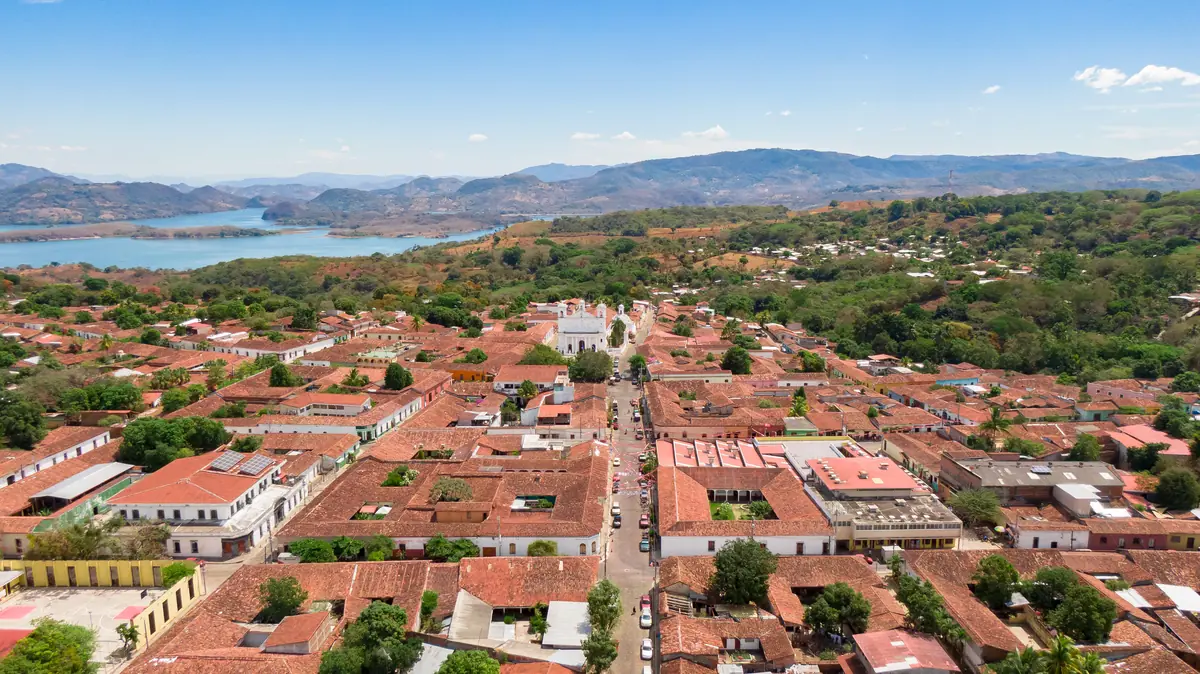
Suchitoto is a compact grid, maybe five streets by seven, and you can walk all of it. The one exception is the lake: Puerto San Juan sits at the bottom of about a 20-minute downhill walk from the center.
- Town layout: A walkable grid; nothing is more than a few blocks away
- To the lake (Puerto San Juan): ~20 min downhill on foot; a local bus runs about $0.35, and small three-wheel tuk-tuks wait on the plaza
- To Los Tercios: A guide or the free tourist-police escort is the smart way to go
Pro Tip: Walk down to the lake early. The descent is easy; the climb back up in midday heat is the part nobody warns you about, and Suchitoto runs hotter than the capital.
The Best Things to Do in Suchitoto
Start on foot. The center is small enough that you’ll loop past the plaza, the church, and half the galleries within an hour, then double back to the ones worth more time. Here’s what earns a stop, roughly in the order you’ll hit them.

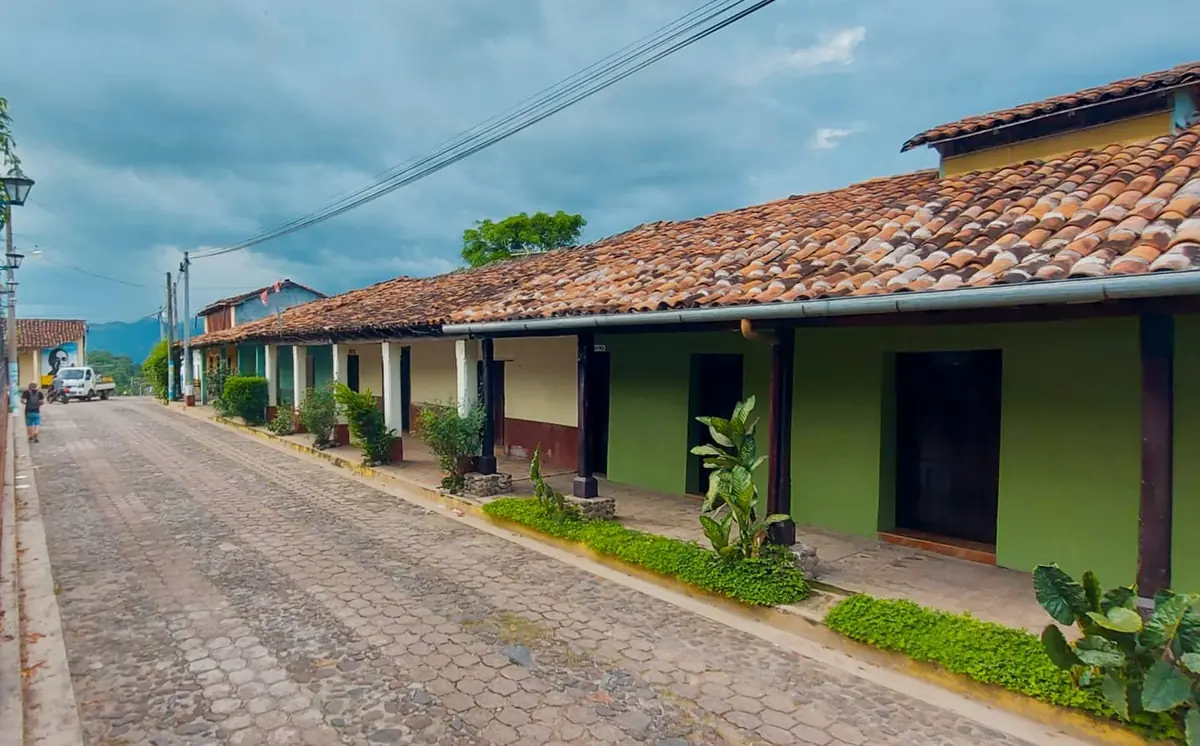
Wander the Cobblestone Center and Parque Central
The plaza is the town’s living room. On weekends and holidays it fills with market stalls, street food, and the occasional round of fireworks, and it’s the best spot to sit with a coffee and watch Suchitoto go about its day.
- Best time: Weekend mornings for the market and street food
- Cost: Free to wander
- Time needed: 1–2 hours with coffee stops
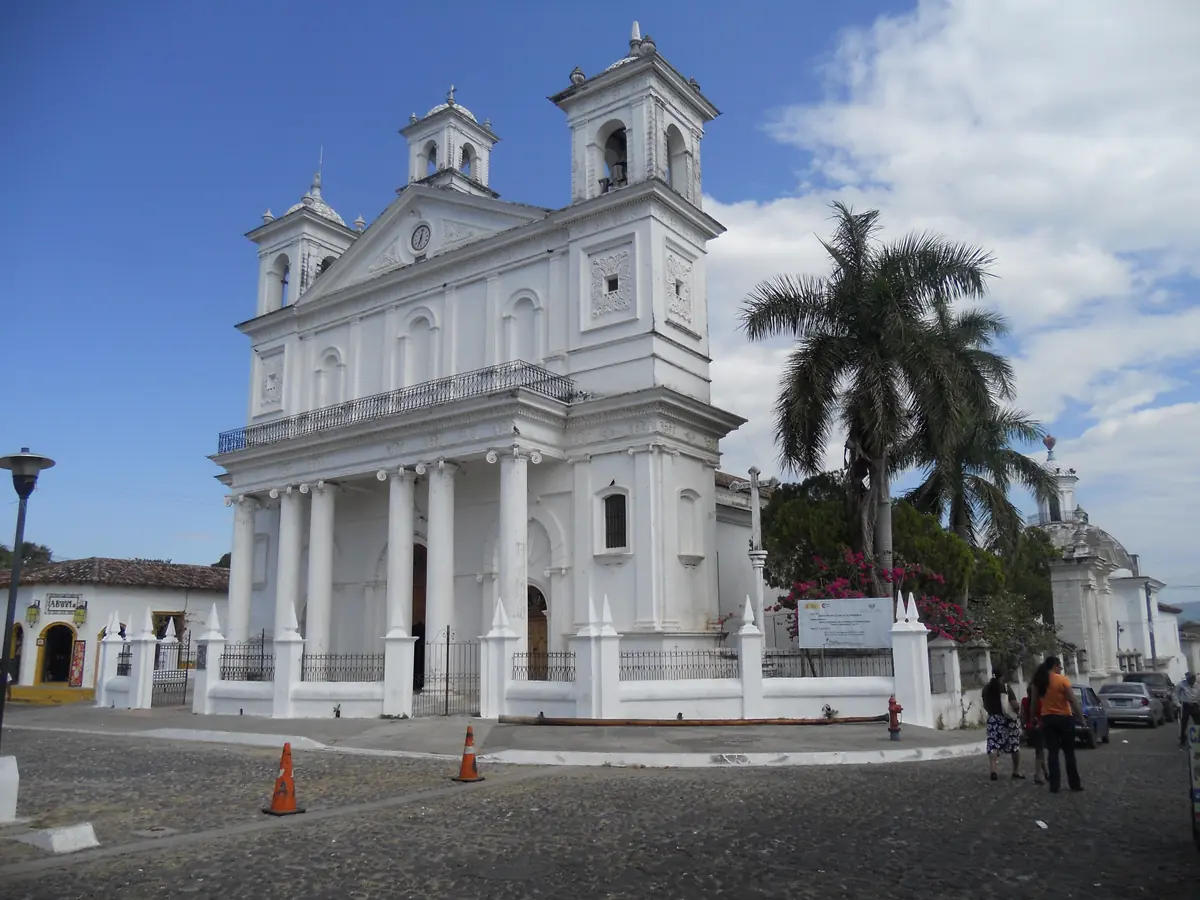
Iglesia Santa Lucía
The white church on the plaza took nine years to build and was finished in 1853. Step inside for the woodwork: a carved altar and 36 tall wooden beams running down the sides, restored with Spanish cooperation. There’s a small clock over the six-column entrance, topped by a silver plate that a grateful bride once donated.
- Cost: Free to enter (a donation is polite)
- Best light: Late afternoon, around mass times
- Time needed: 15–20 minutes
The wooden interior does something quiet in the late-afternoon light that a phone camera never quite catches. Sit for a minute even if you’re not the church-touring type.
Casa Museo de los Recuerdos — Alejandro Cotto’s Suchitoto
This is the home and collection of Alejandro Cotto (1928–2015), the filmmaker often credited with keeping the town alive through the war years. The house holds his art, a garden that curls down toward the lake on an S-shaped path, and some of the best views in town.
- Cost: Small entry fee
- Best for: History and art lovers, and anyone who wants the lake view without a boat
- Time needed: 45–60 minutes
Centro Arte para la Paz
Set in a former convent, the Peace Art Center documents the civil war honestly rather than glossing over it — worth an hour if you want context for everything else you’ll see in El Salvador.
- Hours: Roughly 7 a.m.–3 p.m.
- Cost: Free or a small donation
- Best for: Understanding the war’s local history
The Quirky Museums Worth a Quick Stop
Two small, odd collections round out a slow morning:
- The “1,000 plates” museum: A private collection of ceramics and curios; entry runs about $2–$3
- Museo de la Moneda: A money museum tracing El Salvador’s currency history
Lake Suchitlán and Los Tercios Waterfall
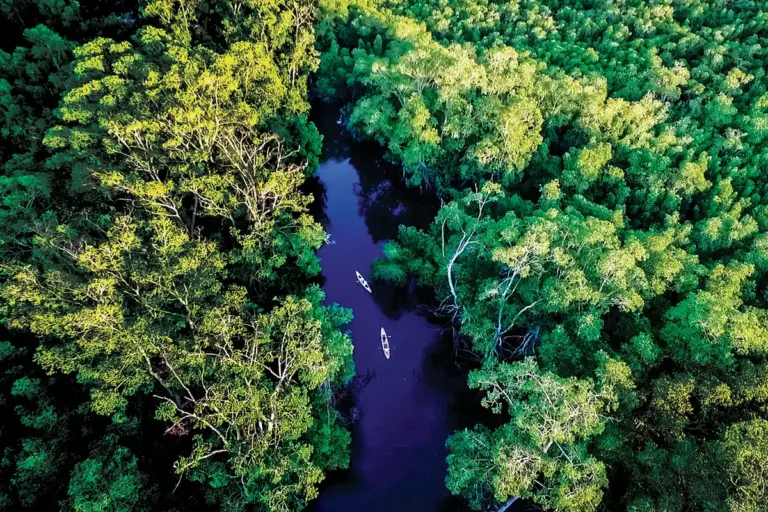
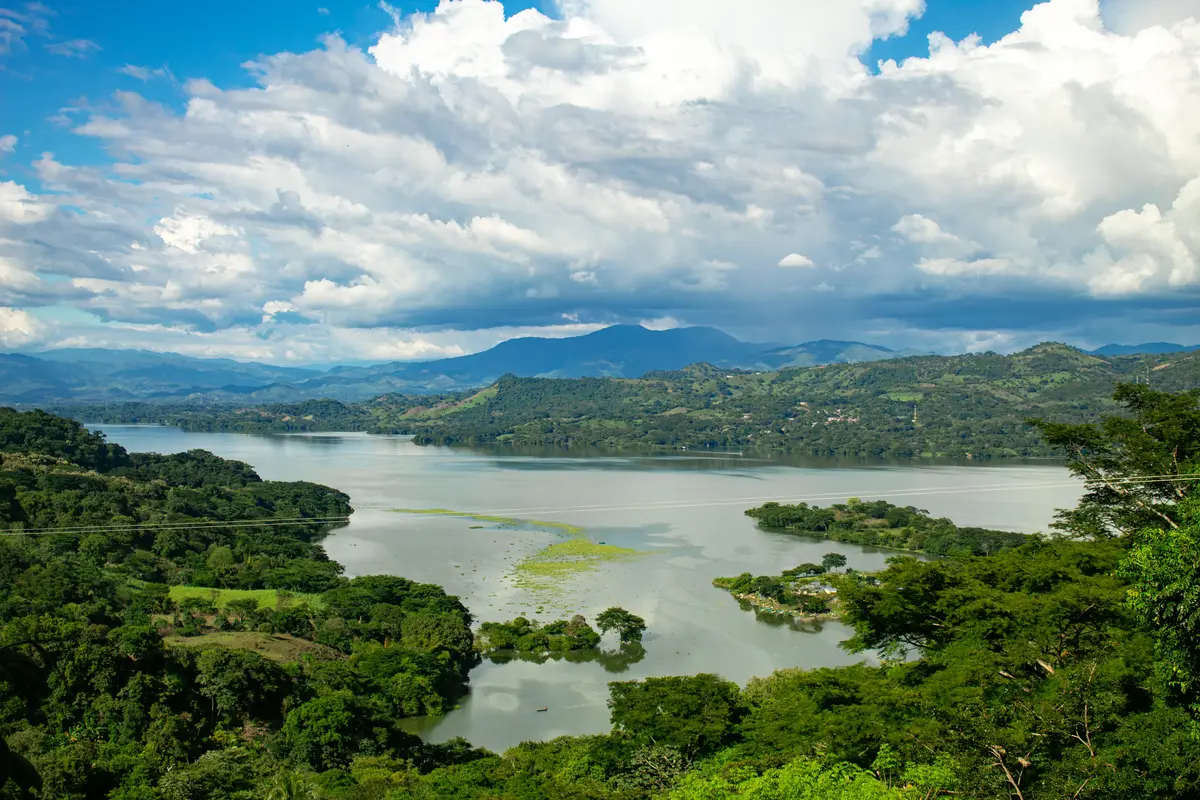
Lake Suchitlán is a reservoir filled behind the Cerrón Grande dam in the 1970s, and boat tours from Puerto San Juan run about $30 per boat — up to roughly 10 people, not per person. It’s prime birdwatching, with 30 to 60-plus species by season. Los Tercios is a basalt-column waterfall: striking rock, but usually dry outside the rainy months.
The lake covers about 52 square miles (135 km²) and, with its surrounding wetlands, was listed as a Ramsar Wetland of International Importance in 2005. When the water was rising in the mid-1970s, it swallowed an old village — the towers of a submerged colonial church still break the surface, which is the strangest thing you’ll see on the water.
Expect herons, cormorants, kingfishers, and ibis, especially at first light. One honest caveat competitors gloss over: the lake gets choked with water hyacinth (locals call it “lily”) and pollution at times, which can stop the ferries and rules out swimming. This is a boat-and-birds lake, not a swimming lake.
- Lake boat tour: ~$30 per boat (up to ~10 people), from Puerto San Juan
- Birdlife: ~30 species off-season, 60-plus during migration
- Don’t plan to swim: Water hyacinth and pollution make it a look-don’t-touch lake
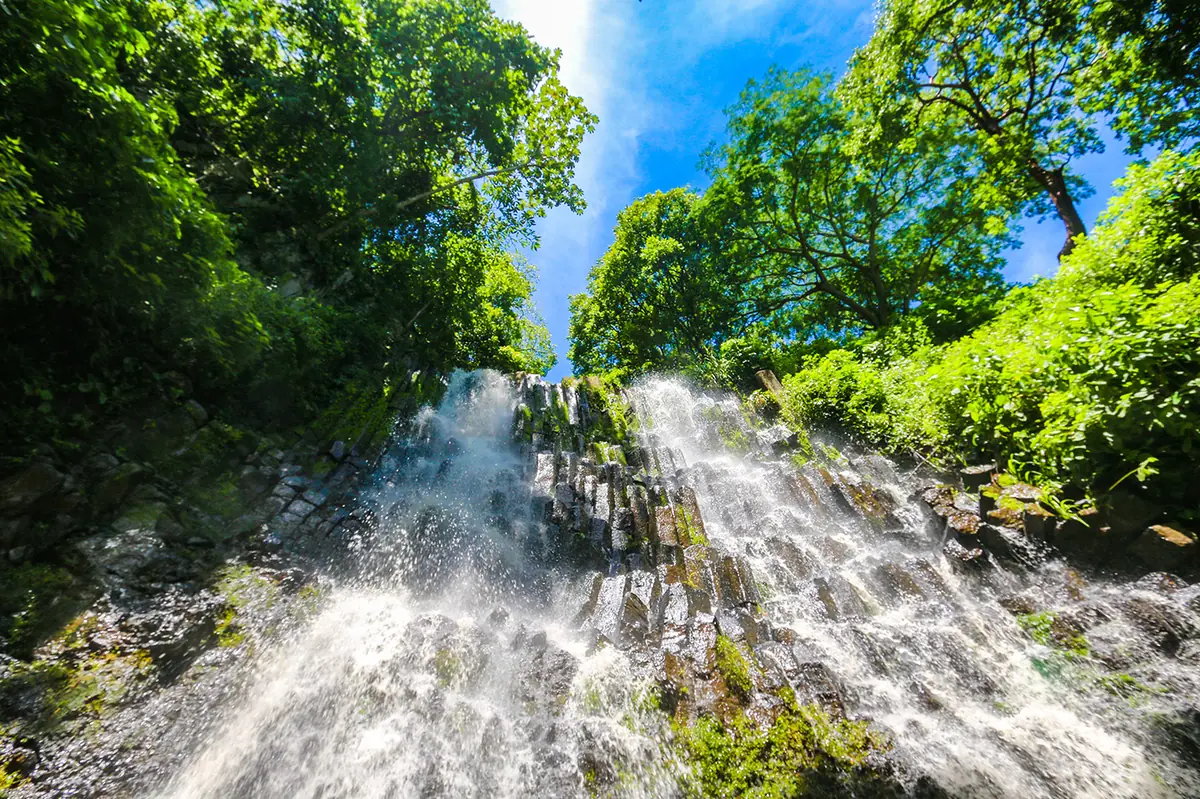
Los Tercios is the other headline sight, and it needs a reality check. The basalt columns stand over 33 feet (10 m) tall in tidy hexagonal shapes — genuinely worth the short, steep, rocky scramble down. But water only runs reliably from about July to November. The rest of the year you’re hiking to see rock, not a waterfall.
- Entry: ~$1 plus ~$1 parking
- Water flowing: Roughly July–November; dry stone otherwise
- Getting there safely: The free tourist-police escort from the station in town is the standard move
Pro Tip: Go to Los Tercios in the rainy months if you actually want water. Any other time, set expectations for the geology — the column formation is the draw, not a curtain of falling water.
Indigo, Arts, and the Cotto Legacy
Añil — indigo — was once El Salvador’s top export, the “blue gold” that built fortunes before synthetic dyes wiped out the market. In Suchitoto the craft is back, and you can do it yourself: dip a tied cloth, lift it out green, and watch it turn blue in the air as the dye meets oxygen. That color shift is the whole point, and it’s oddly satisfying every time.
Arte Añil, run by Irma Guadrón, is the best-known workshop, with sessions that turn out a hand-dyed scarf for roughly $25–$35 depending on size. It’s a rare souvenir you actually made.
The arts scene ties back to Alejandro Cotto, who founded the town’s arts festival in 1991. It still runs each February at the Teatro Alejandro Cotto, and it’s the busiest, most creative week of the local calendar.
- Indigo workshop: ~$25–$35 for a hand-dyed scarf (Arte Añil and a few others)
- Arts festival: Founded 1991; held around February
- Best for: Anyone who wants a hands-on souvenir instead of another fridge magnet
Where to Stay
Suchitoto punches above its size on hotels. You can sleep for backpacker money or book a restored colonial house with a pool, and several of the nicer places hide their courtyards behind plain street walls, so don’t judge by the façade.
| Where | Type | Rough nightly | Best for |
|---|---|---|---|
| Hostal Koltin, Hostal Raíces de Mi Pueblo | Budget / hostel | ~$15–$40 | Backpackers and solo travelers |
| Guesthouses around the plaza | Simple rooms | ~$25–$50 with breakfast | First-timers who want to walk everywhere |
| La Posada de Suchitlán | Mid-range, lake views | $$ | A view without top-end prices |
| Casa 1800 Suchitoto | Boutique, lake view | $$$ | A view-first splurge |
| Los Almendros de San Lorenzo | Boutique, restored ~200-year house, 12 rooms, pool | $$$ | A quiet courtyard oasis |
If you’re deciding between a day trip and a night here, the hotels are half the argument. The town empties of day-trippers by late afternoon, and having a courtyard and a pool to come back to changes the whole trip.
Where and What to Eat
Dinner in Suchitoto usually means a plaza pupusa stall at dusk, a plastic chair, and a cold beer from the corner tienda. That’s the local move, and it’s hard to beat. Beyond the standards, the town rewards travelers who order like a Salvadoran.
- Pupusas: The everyday dinner — thick corn cakes stuffed with cheese, beans, or pork, served with pickled curtido
- Ticuco: A Cuscatlán specialty most tourists miss — a tamale with beans and loroco herb
- Lake tilapia: Fried whole, best eaten near the water
- Chicha: A local fermented corn drink; ask before you assume it’s a soft one
- Atol de elote: A warm, sweet corn drink for the morning
Where to point yourself:
- Lake views: Casa 1800 and Restaurante Vista Hermosa for a table over the water
- Cheap and local: The upper floor of the municipal market, where canteen meals cost a few dollars
- People-watching: Plaza cafés, which double as the best free entertainment in town
<!– IMAGE 9 – Search: pupusas El Salvador cheese curtido – Source: Unsplash/Pexels/Pixabay (free, commercial-use, no attribution) – Alt: Salvadoran pupusas with curtido and salsa on a plate, a Suchitoto staple – File: salvadoran-pupusas – Caption: Pupusas are the standard evening meal — a couple of them make dinner at any plaza stall (representative dish). –>
When to Go and How Much It Costs
The dry season, roughly November through April, is the safe bet for weather, with February the driest month at around 2.4 mm of rain. Suchitoto is hot year-round — daytime highs of 88–95°F (31–35°C) and nights around 68–73°F (20–23°C) — and travelers consistently note it feels hotter than San Salvador or Santa Ana.
| Season | Months | Weather | Los Tercios | Worth knowing |
|---|---|---|---|---|
| Dry | Nov–Apr | Hot, little rain (Feb driest) | Usually dry rock | Reliable plans; February arts festival |
| Wet | May–Oct | Afternoon rain (Sep wettest, ~248 mm) | Flows Jul–Nov | Greener hills and the waterfall actually running |
There’s a genuine trade-off here. The dry season gives you clear plans but a dry waterfall; the wet season gives you a working Los Tercios and green hills, at the cost of afternoon downpours. Pick your priority.
A realistic daily budget:
- Backpacker: ~$15–$35/day with a hostel bed, pupusas, and the public bus
- Mid-range: Add a plaza guesthouse (~$25–$50), a boat tour ($30 per boat, split it), and an indigo workshop ($25–$35)
- Splurge: A boutique hotel, a private transfer (~$55), and sit-down meals over the lake
Is Suchitoto Safe?
Suchitoto is one of El Salvador’s calmer towns, and the country holds the lowest US State Department advisory tier — Level 1, “Exercise Normal Precautions” — after a steep drop in gang activity and violent crime. Use ordinary caution: watch your footing on the cobblestones, skip isolated spots after dark, and take the free tourist-police escort out to Los Tercios.
The upgrade to Level 1 followed a dramatic security turnaround, and El Salvador’s homicide rate has fallen to roughly 1.3 per 100,000 residents — among the lowest in the Americas. Suchitoto itself reads as tranquil, and solo-female-travel resources rate it low-crime.
- Advisory: US State Department Level 1, the lowest of four tiers
- On foot: Cobblestones are uneven — grippy shoes, especially after rain
- To Los Tercios: Take the free tourist-police escort from the station in town
- In San Salvador: Normal big-city caution around the bus terminals
If you’re a safety-anxious first-timer, this is a reasonable place to start an El Salvador trip. The precautions here are the same ones you’d take in any small town, plus a bit of care on the stones.
Frequently Asked Questions
How Do You Get to Suchitoto From San Salvador?
Take direct bus 129 from Terminal de Oriente (Plaza Amanecer) for about $1 in cash; the ride runs roughly 1.5 hours. Driving covers about 29 miles (47 km) in around an hour and a half with one toll near $1.50. Private shuttles and Uber are faster, and a hotel-arranged transfer can run about $55.
How Many Days Do You Need in Suchitoto?
One full day covers the center, the church, and a lake boat tour. Two to three days suits anyone who wants to add Los Tercios, an indigo workshop, a civil-war or Cinquera tour, and slow mornings in the cafés. Plenty of travelers end up staying longer because the pace is so relaxed.
What Is Suchitoto Known For?
Colonial architecture and cobblestone streets, its indigo (añil) dyeing tradition, a strong arts scene tied to filmmaker Alejandro Cotto, and Lake Suchitlán — a birdwatching reservoir filled in the mid-1970s. Its name comes from Nahuatl and is usually translated as “place of flowers and birds.”
What Does “Suchitoto” Mean?
The name comes from Nahuatl, the language of the region’s Pipil people, and is commonly translated as “place of flowers and birds.” It fits: the town sits above a reservoir that draws dozens of bird species, and the surrounding hills bloom through the wet season.
Is Suchitoto Safe for Tourists?
Suchitoto is considered one of El Salvador’s calmer towns, and the country holds the lowest US State Department advisory tier (Level 1) after a sharp drop in crime. Take normal precautions: watch your footing on the cobblestones, avoid isolated areas after dark, and use the free tourist-police escort when hiking to Los Tercios.
Day Trip or Overnight: The Verdict
TL;DR: Suchitoto earns a full day at minimum — the cobblestone center, the 1853 Santa Lucía church, and a $30 boat tour on Lake Suchitlán. Overnight if you can swing it: the plaza and the light after the day-trippers leave are the best part, and El Salvador’s Level 1 safety status makes lingering easy.
If your El Salvador trip is a tight loop, day-trip it and don’t feel shortchanged. If you have the time, give it a night, do an indigo scarf, and time Los Tercios to the rainy months so you get water instead of rock.
Are you leaning toward a quick day trip or an overnight — and is Los Tercios on your list even in the dry season? Tell us your plan in the comments.