Tamanique Waterfalls sit a 30-minute bus ride from El Tunco, and most visitors overpay to see them. A tour from Surf City runs $35-50 a head; the same day costs about $10 done independently. The catch: a local guide is mandatory. Here’s how to do it right, for less.
Should You Book a Tour or Go on Your Own?
Go on your own. From El Tunco, the public bus and an on-site guide run roughly $10-12 per person — versus $35-50 for a Surf City tour or $72-85 from San Salvador. Tours mostly buy transport and lunch, not better access. The one thing you can’t skip is the local guide, required for everyone.
Here’s the honest math, side by side.
| What you pay for | Independent from El Tunco | Guided tour |
|---|---|---|
| Transport | Bus #187, ~$0.50 each way (or ~$6 Uber) | Included |
| Park entrance | ~$2.50-3 per person | Usually included |
| Local guide | ~$7-8 per person in a group of 3+, or a flat ~$20 group fee | Included |
| Lunch | On your own | Often included |
| Typical all-in | ~$10-12 per person (group) / ~$22-25 solo | $35-50 (El Tunco) / $72-85 (San Salvador) |
The guide fee is effectively tiered, and this is where solo travelers get pinched:
- Groups of 3 or more: about $7-8 per person, plus the ~$2.50-3 entrance.
- Solo travelers and couples: you hit a flat group minimum of around $20, so a single hiker can pay $22-25 all in.
- Tip: customary and worth it — guides often carry your pack up the climb. Budget $5-10 for the group.
So what does the pricier tour actually get you? Transport from your hotel, a packed lunch, and beach time in El Tunco bolted onto the day. From San Salvador especially, the $72-85 ticket is mostly the two-hour round-trip drive — not closer or better access to the falls. If you want a cheap group option from the capital, Club de Mochileros runs hikes around $60 per group (roughly $10 each for six people), and you still pay the on-site entrance and guide.
Pro Tip: El Salvador uses the US dollar, and Bitcoin is legal tender — but neither cards nor BTC are reliable at the trailhead. Bring small-bill cash; ATMs near the town are scarce.
Do You Need a Guide for Tamanique Waterfalls?
Yes. A local guide used to be optional. It no longer is — every visitor must hire one at the town tourism office, a green building on the southwest corner of Tamanique’s central park. The office runs 7 a.m. to 4 p.m. You sign a visitor logbook, pay, and get assigned a guide. Most speak only Spanish.
The arrival can feel disorganized. Several guides may approach you at once, which reads as sketchy if you’re not expecting it. The rule that keeps you out of trouble: register at the office, then pay only the guide you’re assigned there. You do not need to bring an outside guide or pre-book anyone — the local guild handles everyone who shows up.
A few things travelers consistently report:
- Guides carry hikers’ backpacks down and back up. Tip generously.
- The town’s Red Cross runs on donations; a few dollars is a kind gesture.
- The fee structure varies. One common breakdown: $8 per person, half to the municipality and half split among the guides, with a police officer in the office handling the paperwork while you pay the guide directly.
There’s an honest tension here worth naming. The trail is now well-maintained, with stairs and railings on the worst sections, so a fit, experienced hiker could plausibly manage it alone. But the guide is legally required, the fee is small, and it puts money straight into a small town. The U.S. State Department’s own advice for El Salvador backs the rule: it tells travelers to use local guides certified by the tourist authority when hiking backcountry areas.
Pro Tip: Be first to sign the logbook. Reviewers who arrived right at opening had the trail to themselves; by mid-morning the descent backs up.
How Do You Get to the Falls From El Tunco?
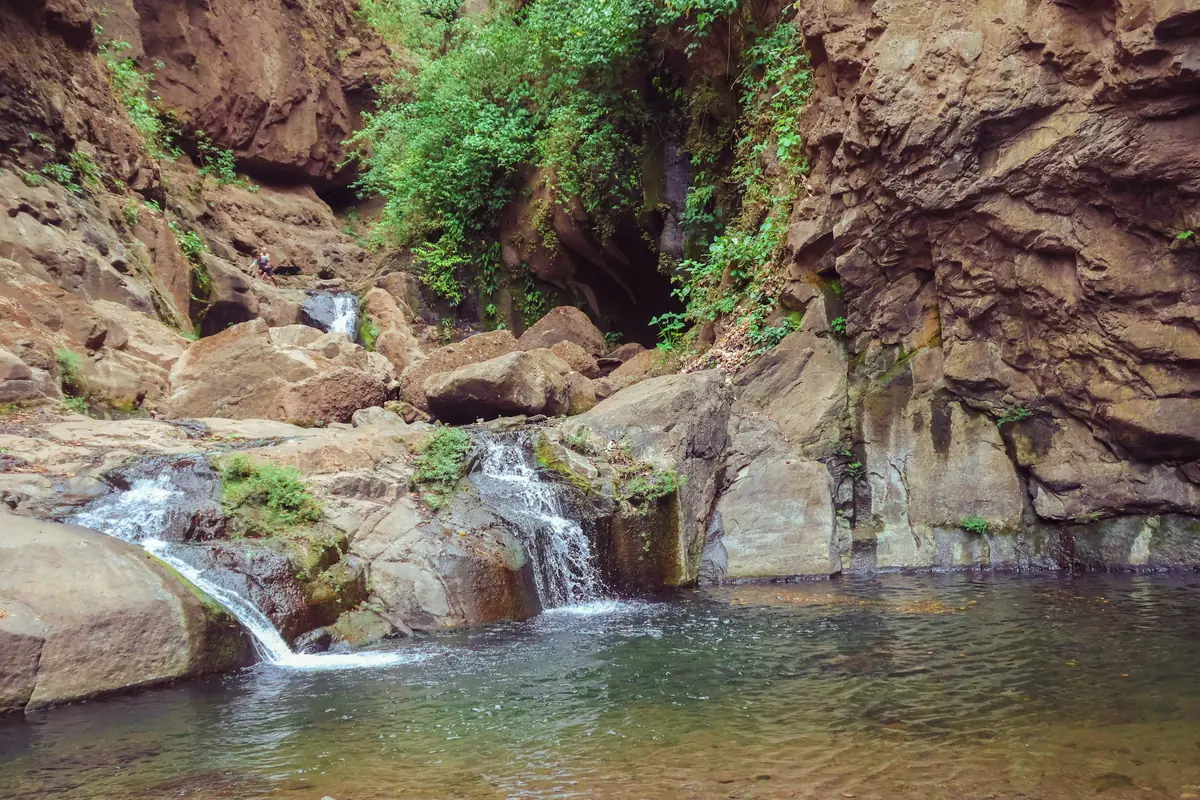
Tamanique town sits 10 miles (16 km) inland from El Tunco, up a winding road into the Cordillera del Bálsamo. Reaching the town is easy. The rough part is the rocky access road past it, toward the trailhead.
From El Tunco
- Bus #187: about $0.50 each way, roughly 30 minutes, running every 20-30 minutes.
- Uber: around $6 from El Tunco; about $13 from El Zonte (Bitcoin Beach).
- Shared ride: passing cars sometimes pick up hikers for about $1.
From San Salvador and the Airport
- From San Salvador: about 25 miles (40 km), roughly 1 hour via Comasagua or the coastal highway.
- From SAL airport: about 34 miles (55 km); some travelers take an Uber straight from arrivals.
- Self-driving El Salvador has become common, and the roads to Tamanique town are paved and decent. Mapping and parking near the trailhead can be patchy, so leave buffer time.
The Rocky Access Road — Where to Park
- The paved road ends at town. The access road into the park is rocky and frequently washed out.
- Some drivers push through; many park before the rough stretch to spare a rental car.
- In rainy season the road isn’t repaired, because it washes away again.
- A 4×4 isn’t needed to reach town — only to risk the access road.
How Hard Is the Hike Down to the Falls?
The trail database AllTrails logs the basics:
- Distance: 1.9 miles (3 km) out and back
- Elevation change: about 700 feet (210 m)
- Difficulty: moderately challenging
- Time: 45-60 minutes each way
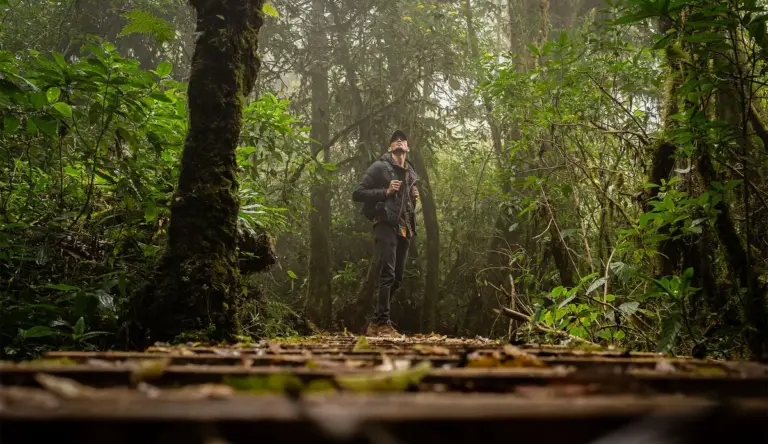
The shape of the hike is the thing to understand: down is short and easy, up is the punishment. The descent is steep, rocky, and muddy, with built stairs, cables and ropes to grip, and railings on the final drop to the tallest fall — plus some river and rock scrambling near the water. The climb back out, in tropical heat, is what wrecks people. One memorable review compared it to a scene from Cliffhanger and joked about climbing the equivalent of dozens of flights of stairs. Treat that as honest expectation-setting, not exaggeration.
This also clears up the biggest piece of tour-marketing fiction. Some operators advertise a “20-minute walk.” Reviewers who took those tours describe a 50-60 minute strenuous hike. Plan for a half-day round trip of about 3-4 hours with swimming time.
Pro Tip: Bring or grab a sturdy stick for the climb back up. Your guide will usually shoulder your pack, which makes the ascent far more manageable.
What Are the Four Waterfalls Like?
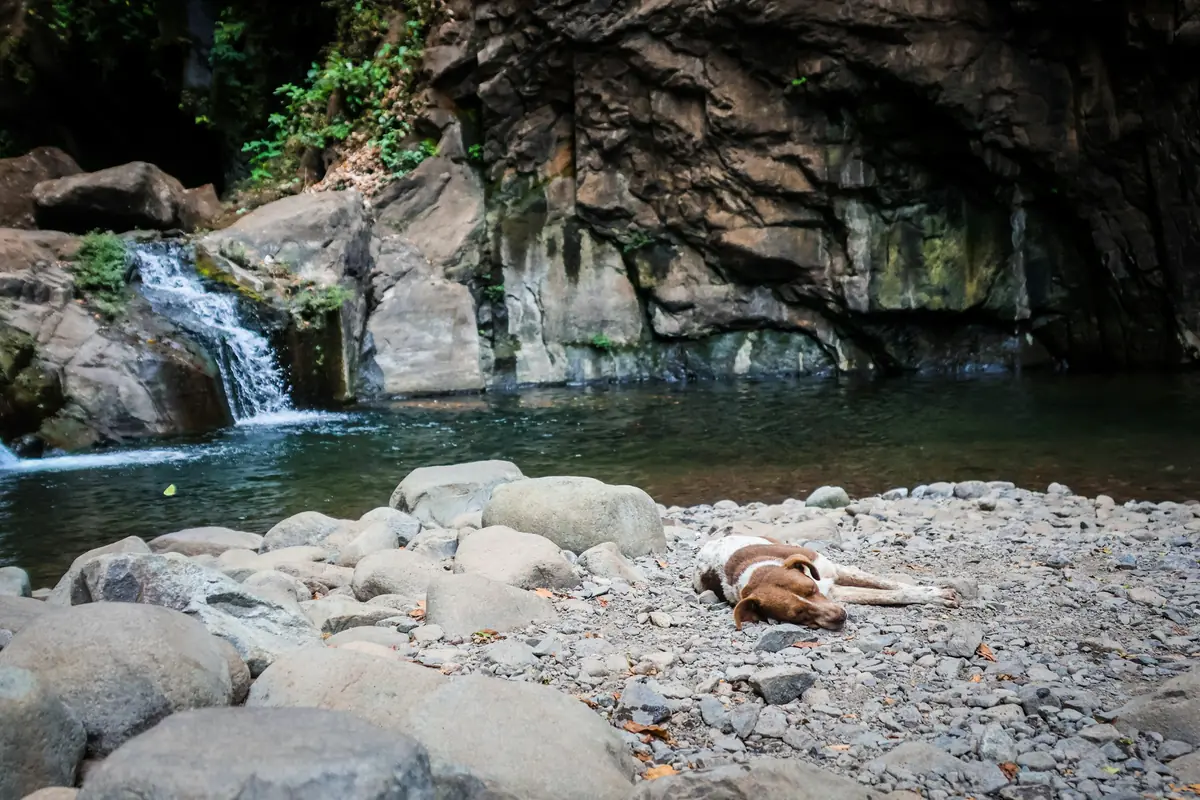
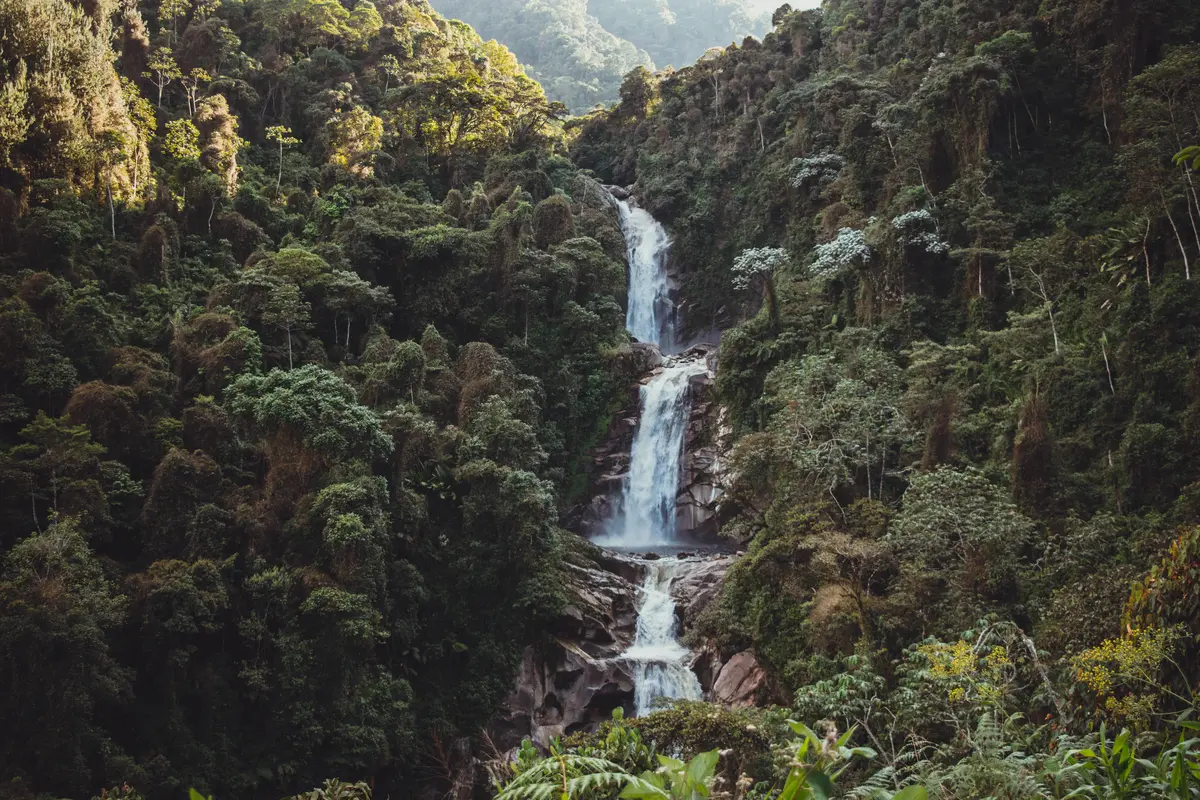
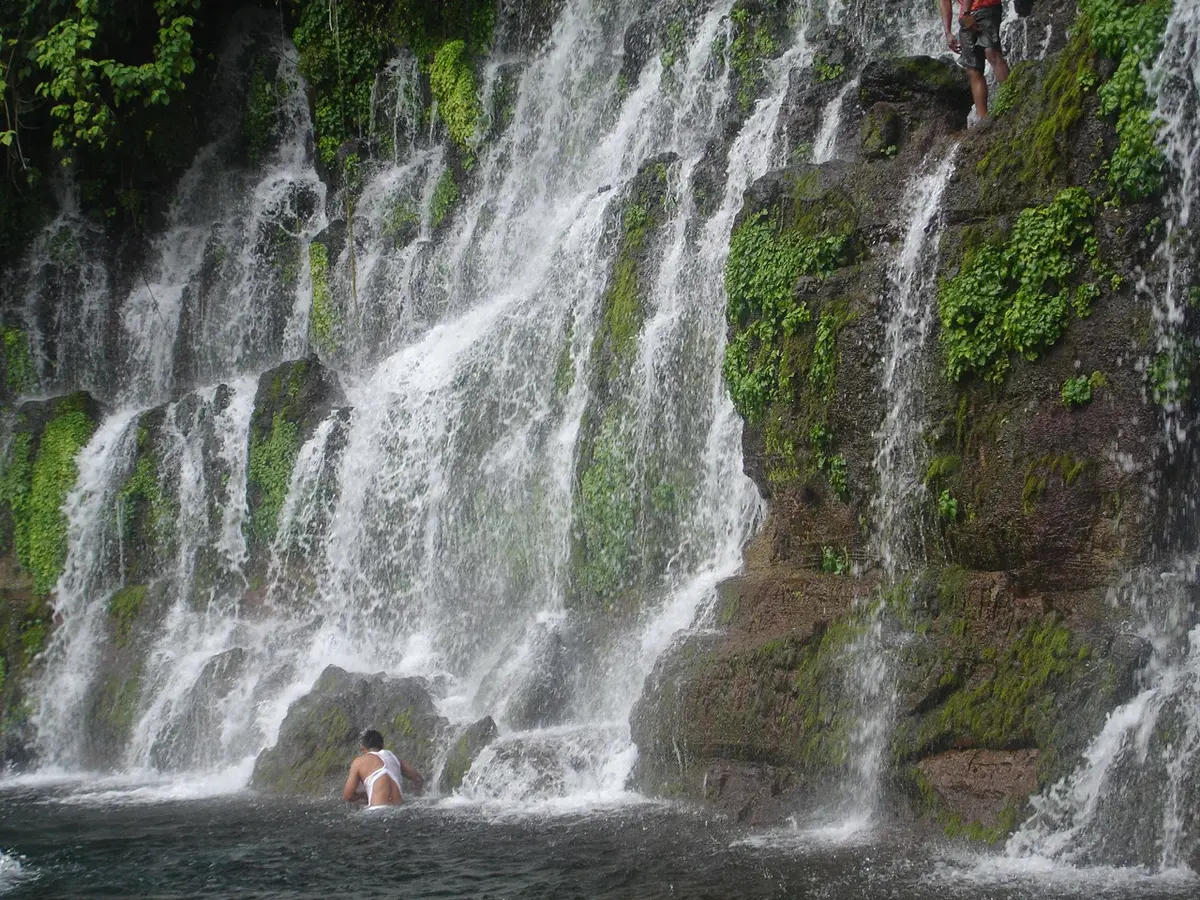
Picture a chain of pools stepping down a forested ravine, each louder than the last. Officially there are four main falls, though guides may show you three on a short visit or as many as six counting smaller cascades. The trail splits not far in: the first two falls are roughly straight ahead, while the third and fourth are off to the left.
Here’s what you actually do at each tier:
- Falls 1 and 2: the shallower, lower pools — these are the cliff-jumping spots.
- Falls 3 and 4: deeper pools built for swimming. The fourth is the tallest and the payoff, reached by a steep run of cables and wooden stairs.
How tall is that last one? The official tourism site calls it 130 feet (40 m). One tour operator lists it taller at 165 feet (50 m). The sources disagree, so go in expecting “very tall” rather than a precise number.
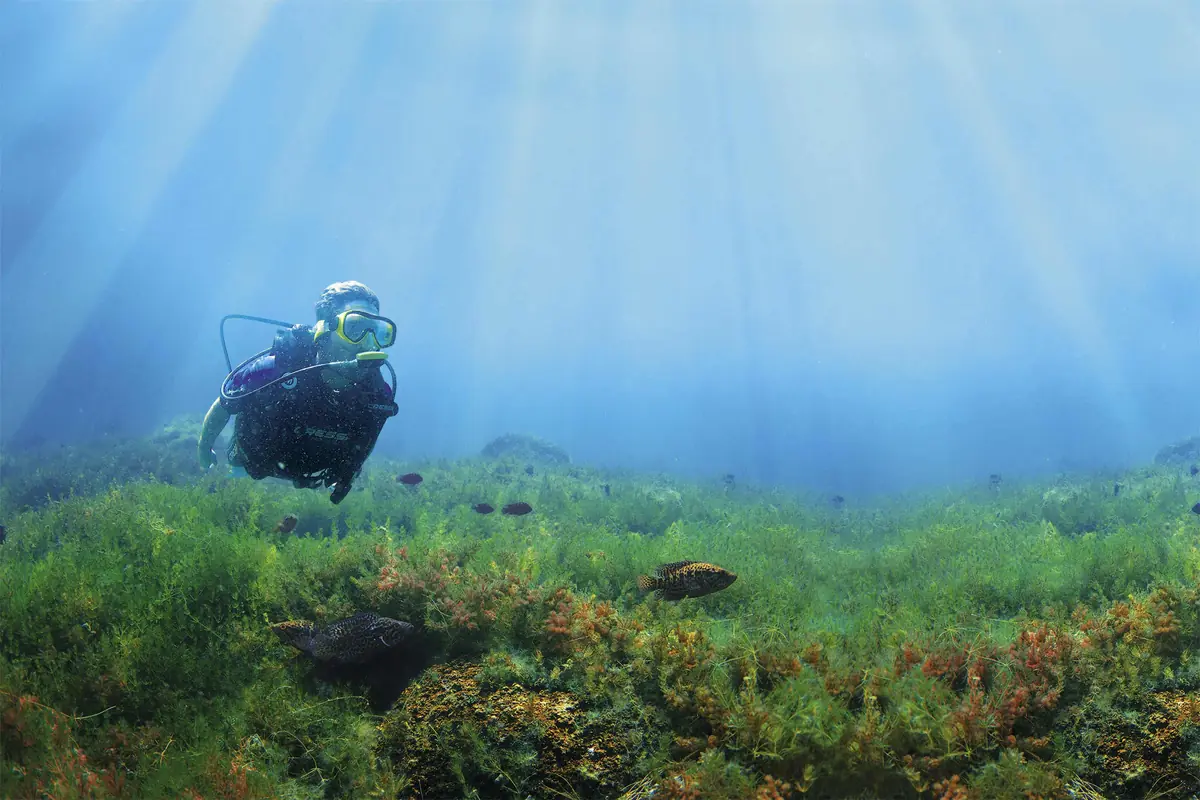
Two honest, sourced details no glossy guide mentions: there are large, hand-sized spiders near the main fall, and water clarity swings with the weather. After overnight rain the lower pools run brown; the upper falls usually stay clearer.
Can You Swim and Cliff Jump in the Pools?
Yes — the natural pools are the whole point. The lower two falls are the cliff-jumping spots; the upper two have deeper pools for swimming. Jump only where your guide points, because depth shifts with the season and there are hidden drop-offs. Non-swimmers have needed rescuing here, so know your limits before you leap.
A few realities to weigh before you commit:
- In rainy season the current strengthens and the water rises, which makes jumping riskier and the pools murkier.
- Water shoes give you grip on slick rock, but some hikers find bare feet less slippery between the falls — slower, but surer. Either beats flip-flops.
- Heat and humidity climb fast between 9 and 10 a.m., which is exactly why an early start pays off.
When’s the Best Time to Visit Tamanique Waterfalls?
Dry season — November through April — is the safest and clearest window. The trail is less slippery, the pools run clearer, and the route stays open. Go early: aim to arrive by 8 a.m. (guides are ready around 7:30) to beat the heat, the humidity, and the crowds. AllTrails marks January through April as the busiest stretch.
Rainy season runs May through October. It brings slick trails, higher and browner water, stronger currents, and the real possibility that local authorities close the trail for safety. The falls are at their most powerful then — and at their most dangerous. If you only have a wet-season date, hire the guide regardless and ask at the office whether the trail is open before you commit to the climb.
Is the Hike Safe — and Is El Salvador Safe?
The real risks here are on the trail, not in the town. The descent is steep and slippery, the water turns powerful in rainy season, and cliff jumping carries genuine injury risk with no waivers or warning signs. El Salvador the country, meanwhile, has become one of Central America’s safest: the U.S. State Department rates it at Level 1, its lowest advisory tier — the only Central American nation at that level.
The turnaround in the national picture is dramatic. The homicide rate fell from around 38 per 100,000 to under 2 per 100,000, a State of Exception remains in force, and the State Department notes that gang activity has dropped sharply. For a waterfall hike, that translates to a low-crime backdrop where your attention belongs on your footing.
On the trail itself, the precautions are basic but non-negotiable:
- Carry about half a gallon (2 L) of water per person.
- Wear sun protection and insect repellent.
- Watch for the large spiders near the main fall.
- Move carefully on the descent — most accidents are slips, and the worst ones happen at the tallest, most exposed fall.
Can Kids and Older Travelers Handle the Climb?
It’s doable across a surprisingly wide age range, with honest caveats. One couple aged 59 and 72 completed the full hike with a guide — Uber in, bus back, the mandatory $20 guide plus a $10 tip. So this isn’t a young-backpackers-only trail. But it earns its “moderately challenging” rating, and a few people should think twice.
Who tends to struggle:
- Bad knees: several hikers found the downhill harder than the climb, since the steep, uneven descent pounds the joints.
- Asthma or low fitness: the humid uphill return is the real test.
- Small kids: fine if they can manage stairs and light scrambling under close supervision — but skip it in rainy season, when the rock turns treacherous.
The guide carrying your pack helps everyone, and a trekking pole takes pressure off knees on the way down. If anyone in your group is on the fence, the dry-season early-morning slot — cooler, drier rock, empty trail — stacks the odds in your favor.
What to Pack for Tamanique Waterfalls
Keep it light; you’re carrying it down a cliff and back up.
- Footwear: water shoes or hiking sandals — no flip-flops.
- Water: about half a gallon (2 L) per person.
- Sun and bugs: sunscreen and insect repellent.
- Dry bag: to protect your phone and cash at the pools.
- Cash: small US bills for the guide, entrance, and tip — cards and Bitcoin aren’t reliable here.
- Trekking pole: or a sturdy stick, for the climb back.
- Towel and quick-dry clothes: you will get wet.
Is Tamanique Worth It Compared to El Salvador’s Other Waterfalls?
If you’re based on the coast, yes. It’s the best half-day waterfall trip from El Tunco or El Zonte, and the cliff jumping is the real draw. If you’re chasing the country’s most dramatic falls, though, the better scenery is west.
Honest comparisons, so you can choose:
- Juayúa’s 7 Waterfalls and Los Chorros de la Calera: guided, around $20-25, on the Ruta de las Flores — more adventurous (you rope-climb a roughly 130-foot fall), but about three hours west near Santa Ana.
- Salto de Malacatiupan: a rare warm-water waterfall, a curiosity worth a detour.
- Cascada Los Tercios: striking columnar basalt near Suchitoto, a different kind of photo.
- El Imposible National Park: remote, wild falls for serious hikers.
One naming trap to avoid: “Los Chorros” is ambiguous. A coastal site by that name near La Libertad has been reported closed or privatized — don’t confuse it with Juayúa’s Los Chorros de la Calera, which is the one you want. Tamanique’s edge over all of them is simple: it’s the closest real waterfall adventure to the El Tunco beach base, and the only one that pairs cliff jumping with a swim in a single half-day.
Before You Sign the Logbook
TL;DR: Skip the tour and take bus #187 from El Tunco for about $10-12 a person all in. A local guide is mandatory — hire one at the green tourism office on Tamanique’s central park, open 7 a.m. to 4 p.m. Go in dry season, arrive by 8 a.m., wear water shoes, and carry small-bill cash.
The case for Tamanique Waterfalls is straightforward once you strip away the tour markup: a cheap bus, a small mandatory guide fee, a steep but short hike, and four pools you can actually swim and jump in. Pay the locals directly, respect the climb back up, and you’ve got the best half-day on El Salvador’s surf coast for the price of lunch.
Done the independent way, what would you spend the savings on — a second day at the falls, or a pupusa feast back in El Tunco?