Getting a VAT refund in Portugal sounds simple on paper, and technically it is. But the massive gap between theory and the harsh reality of a 5:00 AM departure, a locked operator desk, and a flashing “Code Red” kiosk screen has cost countless travelers their entire refund. This guide goes deeper than a standard Portugal travel guide ever could, and makes sure you keep your money.
What is the minimum spend for a VAT refund in Portugal?
The single most common reason a VAT refund Portugal claim is denied at the airport is not paperwork — it is a misunderstood minimum spend. The €50 threshold advertised on store receipts refers to the base price before tax is added, not the total you see on your credit card statement. In practice, you need to spend more at the register than the marketing implies. The exact number depends on which region of Portugal you are shopping in and which category of goods you are buying.
Regional minimum checkout amounts
Portugal’s islands — Madeira and the Azores — operate under separate fiscal legislation, which directly changes how much you need to spend at the till to trigger the e-Taxfree system.
| Geographic region | Standard VAT rate | Minimum checkout spend |
|---|---|---|
| Mainland Portugal | 23% | €61.50 |
| Autonomous Region of Madeira | 22% | €61.00 |
| Autonomous Region of the Azores | 16% | €58.00 |
| Mainland — optics and glassware | 13% | €56.50 |
| Mainland — books and specific medicines | 6% | €53.00 |
Pro Tip: If you are shopping in the Azores, your minimum is a full €3.50 lower than in Lisbon. On a tight budget, that difference matters — especially for lower-cost category items like wine, ceramics, or linen.

Who qualifies for a VAT refund in Portugal?
You qualify for a VAT refund Portugal claim if you are a permanent resident outside the European Union, are at least 16 years old, and physically export the purchased goods within 90 days. British tourists are now fully eligible following the UK’s exit from the EU — check Portugal entry requirements if you hold any non-EU passport, as many legacy travel blogs still fail to mention this change prominently.
Two conditions frequently trip travelers up. You must be at least 16 years old to file independently, and the purchased goods must physically leave the EU within 90 days of the purchase date. Miss that window and the claim is void — no exceptions. At the retail register, present your passport, not a driving license, to establish non-EU residency. Dual citizens or digital nomads should use the passport that corresponds to their permanent address outside the EU.
How does the Portugal airport customs validation process work?
The validation process is not a single action. It is a sequence of dependent steps that must happen in a specific order — and that order changes entirely depending on whether your purchases are in your checked bag or your carry-on. Do not wear, use, or open the packaging of any item you intend to claim. Customs officers have the legal authority to deny a claim if goods show signs of wear, activation, or unboxing. This applies to designer clothing, electronics, and accessories alike.
The checked vs. carry-on luggage trap
This is the most catastrophic failure point in the entire process. If you pack your luxury goods in a checked suitcase and send it down the baggage carousel before visiting the customs kiosk, your refund is gone. The goods cannot be inspected and the system will not validate.
If your goods are in checked luggage:
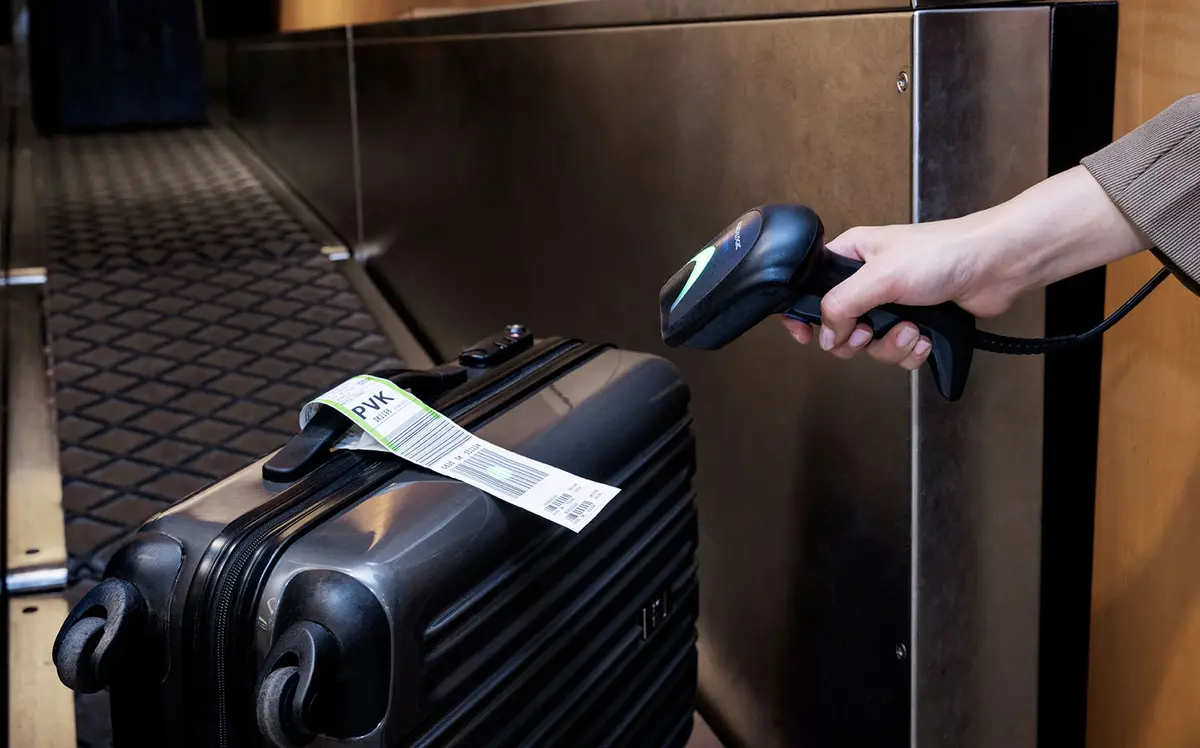
- Step 1: Approach the airline check-in desk and have your bag tagged but not yet surrendered to ground handlers.
- Step 2: Take your tagged luggage to the pre-security e-Taxfree kiosk or customs desk for digital validation.
- Step 3: Only after receiving a Code Green or physical stamp can you surrender the bag at the oversized drop.
If your goods are in carry-on luggage:
- Step 1: Check in and drop any checked bags normally.
- Step 2: Pass through standard security to the airside zone.
- Step 3: Use the airside e-Taxfree kiosks in the restricted departures area with items ready for physical inspection if requested.
Pro Tip: If your flight departs before 6:00 AM, operator desks will almost certainly be closed. Fill in your credit card details on the physical form the night before, photograph both sides of the completed document on your phone, then seal it in the provided envelope and post it in the branded drop-box at the kiosk. That photo is your proof of deposit, so guard it closely.
Decoding the e-Taxfree kiosk: Code Green and Code Red
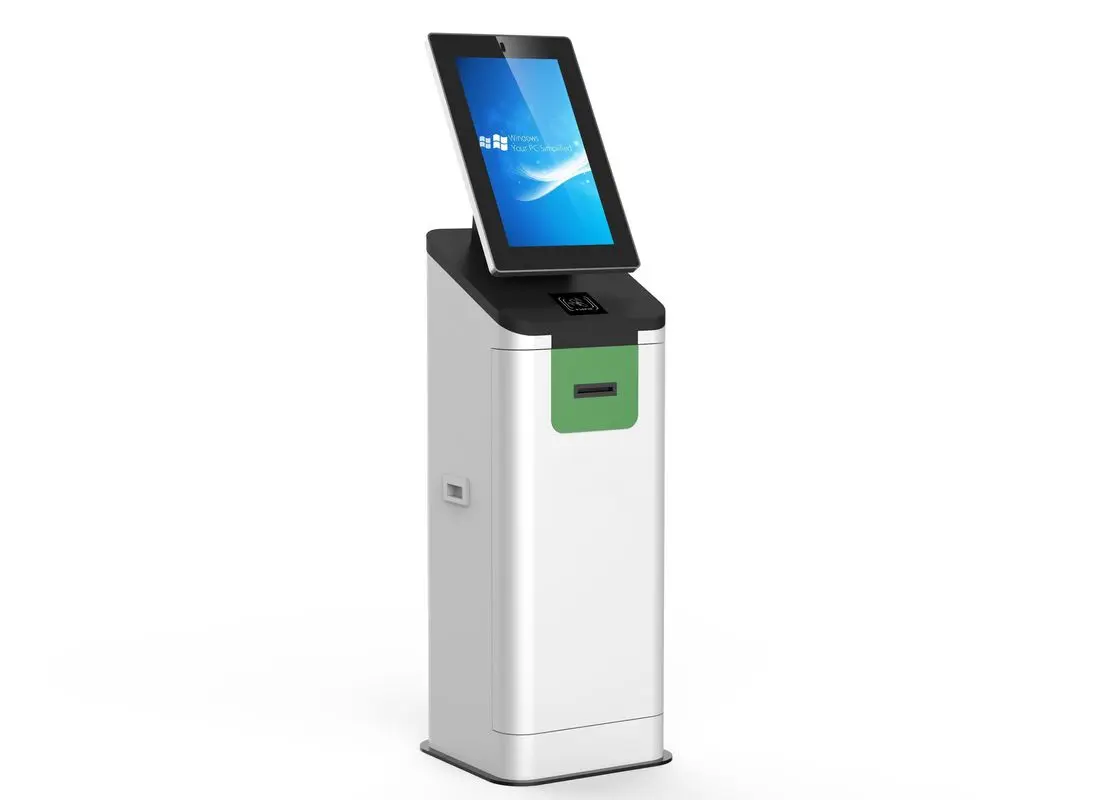
Hold your passport flat against the infrared scanner, then scan your boarding pass. The machine will process your forms and display one of two outcomes.
Code Green means successful digital validation. You are cleared to proceed directly to the refund operator’s desk or drop-box, and no interaction with a physical customs officer is required.
Code Red is not a denial. It is a randomized security trigger or a high-value purchase flag. Calmly pivot to the adjacent manned Customs desk with your goods available for physical inspection. You will receive a physical stamp and can then proceed to the drop-box or operator counter.
The cylindrical drop-boxes — sometimes called drums — at kiosk stations are for Code Green forms only. Placing an unstamped or uninspected form in a drop-box is an invalid claim — something worth keeping in mind when you finalize your Portugal packing list and decide which purchases to carry on versus check.
Which airport do you go to for each Portuguese city?
Generic advice fails once you are standing in a terminal with a boarding call starting. Each Portuguese airport has a different physical layout, and the kiosk-to-desk-to-drop-box sequence plays out differently in each one.
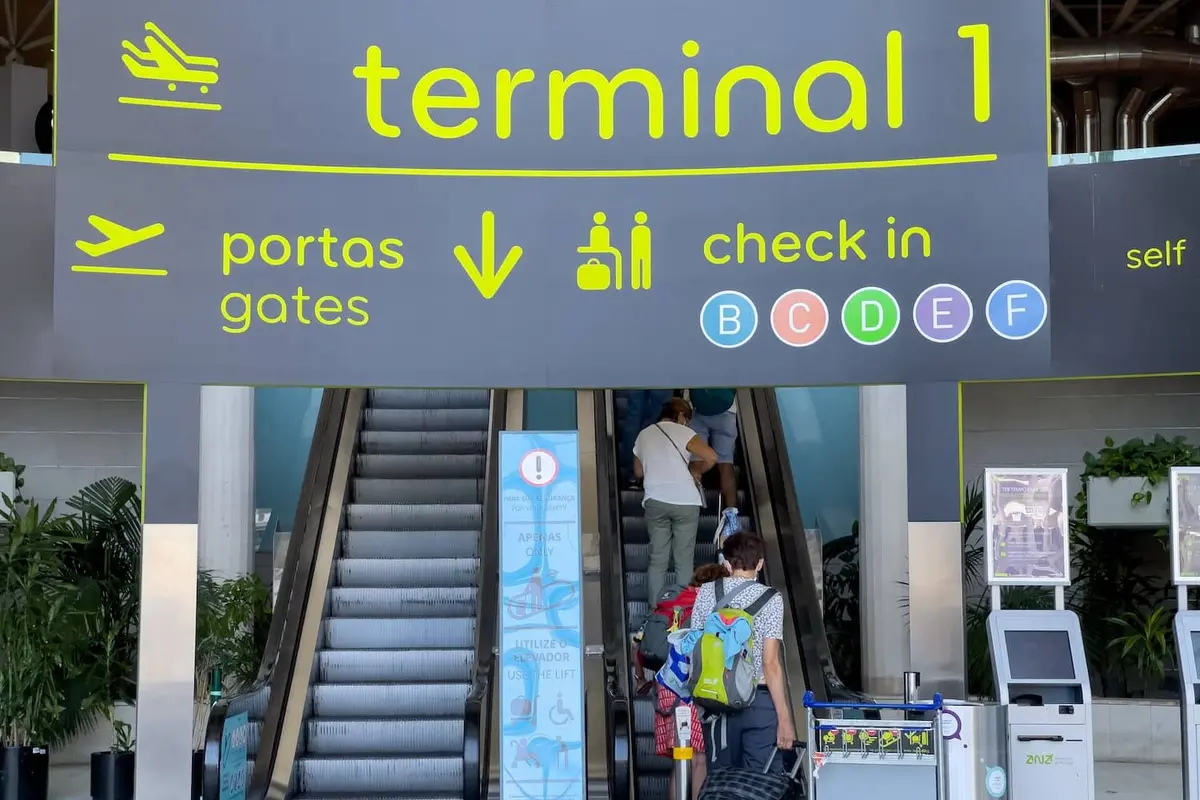
Surviving Lisbon Airport (LIS) — Terminal 1 and Terminal 2
Lisbon‘s airport is split between two terminals that operate almost independently. Getting this wrong costs you the refund.
Terminal 1 serves TAP, British Airways, American Airlines, and other legacy carriers. The e-Taxfree kiosks and Customs desks for carry-on validation sit airside in the restricted departures zone, immediately after the central security checkpoint. For checked luggage, pre-security kiosks are near the oversized bag drop-off in the main check-in hall. This station is not obvious from the standard check-in queue — you will need to deliberately pull your tagged luggage out of the bag-drop line and push it over to the glowing kiosk terminal before surrendering it to ground handlers.
Terminal 2 serves Ryanair, easyJet, Vueling, and other budget carriers. It is accessed via shuttle bus from the main building — the same route detailed in the Lisbon airport to city center guide if you are continuing into town after clearing customs. The e-Taxfree terminals are in the restricted non-Schengen area after passport control. Full-service operator desks are not available in T2, only kiosks and post-boxes. Queues during morning departures can be severe, so budget at least 30 extra minutes.
Pro Tip: Do not confuse the landside Global Blue kiosk near the Arrivals level with the real airside validation infrastructure. The landside kiosk is not a customs validation point. Multiple travelers have missed their refund entirely by getting a form processed at the wrong location.
- Location: Humberto Delgado Airport — two separate terminals (T1 and T2)
- Kiosk access: Pre-security for checked bags (T1 only); airside post-security for carry-on
- Best for: Long-haul departures on legacy carriers (T1); budget airline departures (T2)
Porto Airport (OPO)
Porto‘s layout is more forgiving. Self-refund kiosks sit in two locations: one cluster just prior to the security checkpoint, adjacent to the tax authority offices for checked luggage, and a second cluster on the south side of the restricted departures zone for carry-on. The manned Customs desk sits directly alongside both kiosk clusters, making Code Red pivots less stressful than in Lisbon.
- Location: Francisco Sá Carneiro Airport, single integrated terminal
- Kiosk access: Pre-security for checked bags; airside south side for carry-on
- Best for: Travelers on straightforward, single-stop EU departures
Faro Airport (FAO)
Faro carries significant tax-free volume from British and American tourists year-round. Global Blue self-service terminals and Planet drop-boxes are positioned in the restricted departures area directly next to the customs office, after security control. The compact layout works in your favor — everything is within 50 feet (15 meters) of each other. That said, morning departures on peak summer days generate long kiosk queues. Arriving 2.5 hours before your flight is not excessive.
- Location: Faro Airport, single terminal
- Kiosk access: Airside, post-security, adjacent to customs office
- Best for: Algarve-based British and American travelers
How do you handle a VAT refund Portugal claim on complex itineraries?
The governing rule for multi-country Schengen travel is the last point of EU departure principle. If you shop in Lisbon but fly home from Paris, the legal requirement is to validate at Charles de Gaulle, not in Portugal — with one critical exception that the e-Taxfree system introduces.
Multi-country Schengen transits: where to validate
If your goods are in checked luggage tagged all the way to your final non-EU destination, you must validate your VAT refund Portugal paperwork before checking those bags. The goods cannot be inspected at a transit hub when they are sealed in the cargo hold.
For carry-on goods transiting through Germany, you technically have until the final EU departure gate, but a 45-minute layover is not enough time to find the German customs office, complete inspection, and reboard. Validate in Portugal whenever possible to eliminate transit risk entirely.
Pro Tip: Not all Portuguese e-Taxfree kiosks can process forms where the boarding pass shows a transit leg. If the system cannot read your multi-leg itinerary, go directly to the manned Customs desk so they can process the validation manually.
Cruise terminals and train departures
Lisbon is a major port of call for transatlantic crossings, and the cruise terminal has no e-kiosk infrastructure. Passengers have two options: stop at one of the department stores covered in our Shopping in Lisbon guide to use their advance refund kiosks before boarding, or locate physical customs officers at the port terminal on departure day. Either way, a final customs stamp at the port is legally required — a pre-stamped city-center form alone is not sufficient.
For overland travelers exiting via the Spanish border by rail, no e-kiosks exist at border train stations. You must physically locate a customs agent at the final border station. This requires more advance planning than aviation routes and is genuinely time-sensitive depending on train schedules.
How much of your VAT refund will you actually get back?
The advertised 23% VAT rate is not what lands in your account. Once operators apply their administrative fee structures, the realistic net return sits between 12% and 15% of your total purchase price. Where you lose the rest depends entirely on how you choose to receive the money.
Cash payout vs. credit card refund: the real cost
Accepting cash at the airport counter feels satisfying. It is also the most expensive way to collect your money. Planet applies a tiered cash penalty schedule, and Global Blue applies a similar structure.
| Refund amount tier | Cash payout penalty fee |
|---|---|
| €10.00 – €49.99 | €4.00 flat |
| €50.00 – €99.99 | €5.00 flat |
| €100.00 – €499.99 | 6% of total refund |
| €500.00 and above | €30.00 flat fee |
On a €1,200 luxury handbag purchase, a cash refund at the counter costs you an immediate €30 flat fee on top of the operator’s standard administrative margin. Credit card processing avoids those flat cash penalties entirely, though it typically takes several weeks to appear on your statement.
Bypassing the Dynamic Currency Conversion trap
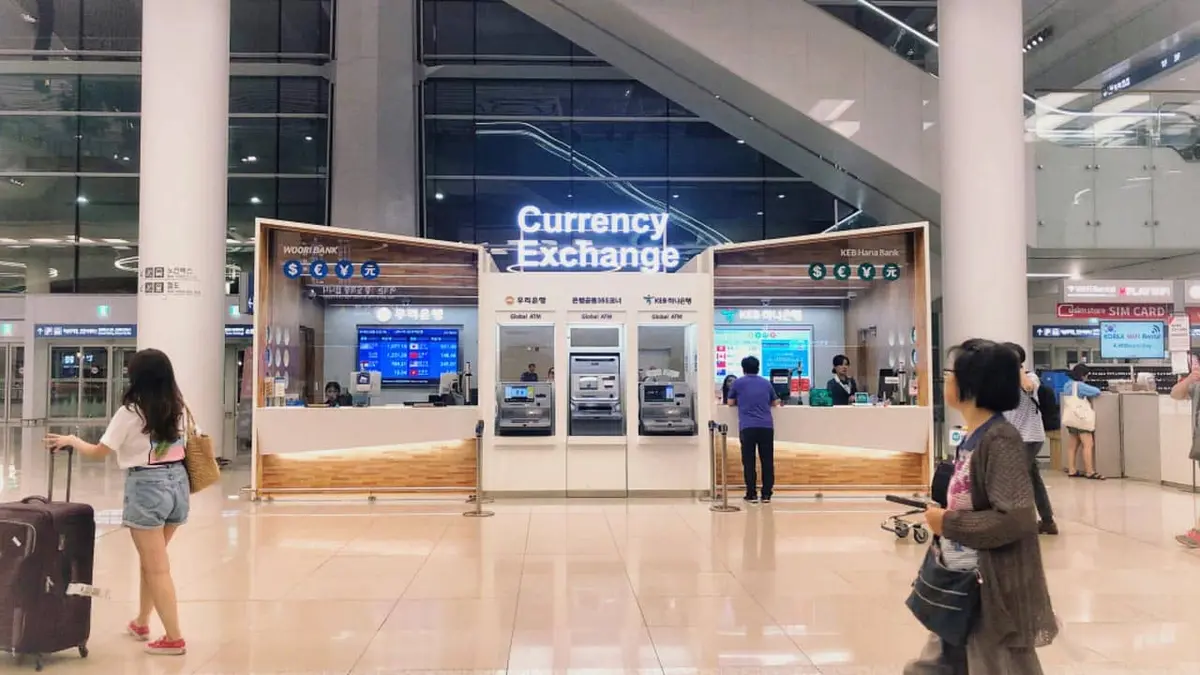
This is the most insidious fee in the process, and most travelers never notice it. If you allow Global Blue or Planet to refund your American credit card in US Dollars rather than Euros, the operator applies a proprietary exchange rate that carries a 3% to 5% markup above the mid-market rate.
The fix is simple: always request the refund in Euros. If you hold a multi-currency account — Wise being the most practical option for American travelers — receive the funds in Euros natively and convert at the mid-market rate yourself. The difference on a €300 refund can easily exceed $12 to $15, for nothing more than choosing a currency at the counter — a hidden drain worth factoring into your overall Portugal travel costs.
The bottom line
Securing a VAT refund in Portugal is genuinely worth pursuing if you have made significant purchases.
TL;DR: Know your regional minimum spend before you shop, pack strategically so customs can inspect what you bought, validate before you check any bag, and choose your payout method based on data rather than convenience. Done right, you can reclaim 12% to 15% of your purchase price on designer goods, electronics, and what to buy in Portugal — including quality Portuguese crafts.
Have you run into a Code Red situation or found a better workaround at one of the terminals? Drop your experience in the comments — the details matter here.