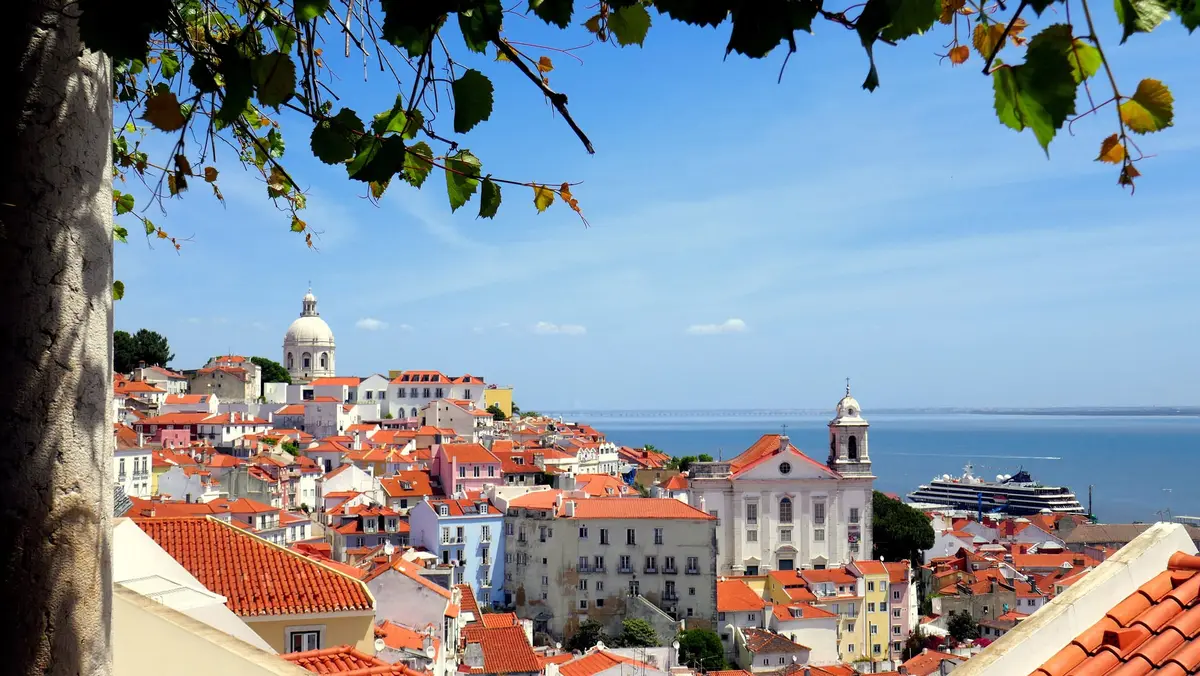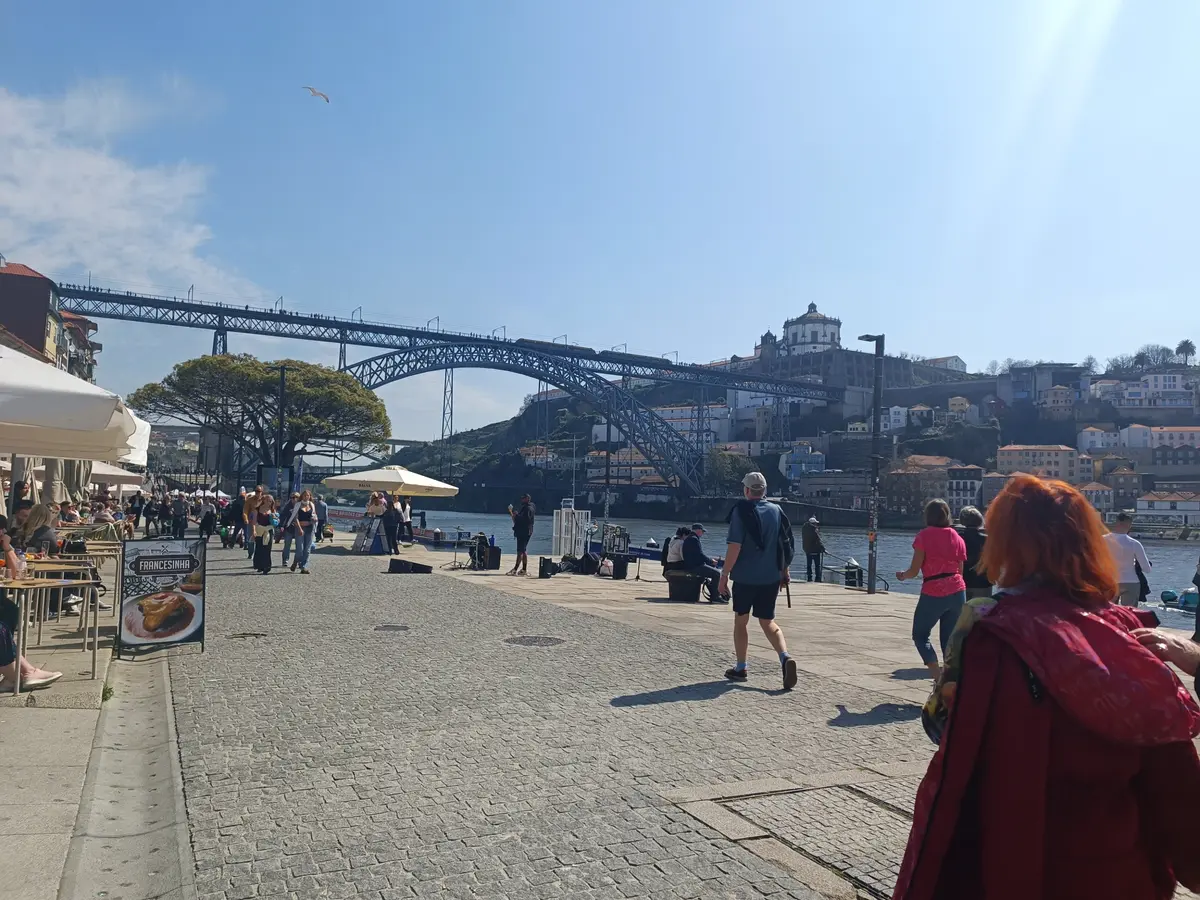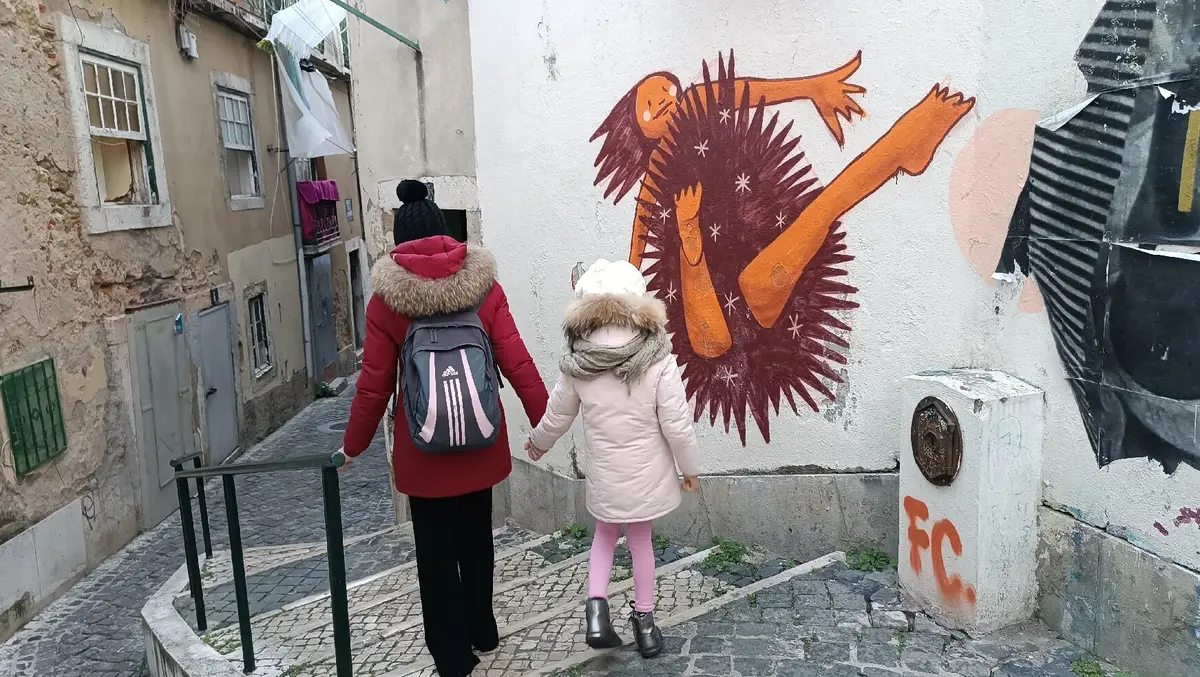
Knowing a handful of basic Portuguese phrases for tourists will earn you warmer service in Lisbon, faster help in Porto, and genuine smiles in Rio. This guide covers what every visitor actually needs — survival questions, food allergy vocabulary, coffee orders, and street slang — with clear flags wherever European and Brazilian Portuguese diverge.
What survival phrases do lost tourists need most?
The most critical survival phrases are short, direct questions that signal respect for the local language without requiring fluency. Learning six phrases — how to ask for help, how to admit you’re lost, and how to request slower speech — is enough to handle almost every airport, metro, or street crisis you will face — and if you’re wondering how widely English is spoken in Portugal, our dedicated guide covers what to expect in cities and smaller towns.
| English Intent | Portuguese | Context |
|---|---|---|
| Do you speak English? | Você fala inglês? | Ask this before firing off English questions |
| Can you help me, please? | Pode me ajudar, por favor? | The single most useful phrase in any country |
| I don’t understand. | Eu não entendo. | Honest, simple, and immediately disarming |
| I don’t speak Portuguese. | Não falo português. | Pair this with an apologetic smile |
| Can you speak slower? | Pode falar mais devagar? | Essential in Portugal, where speech is fast and consonant-heavy |
| I am lost. | Estou perdido (m) / Estou perdida (f) | Use when separated from your group or hotel |
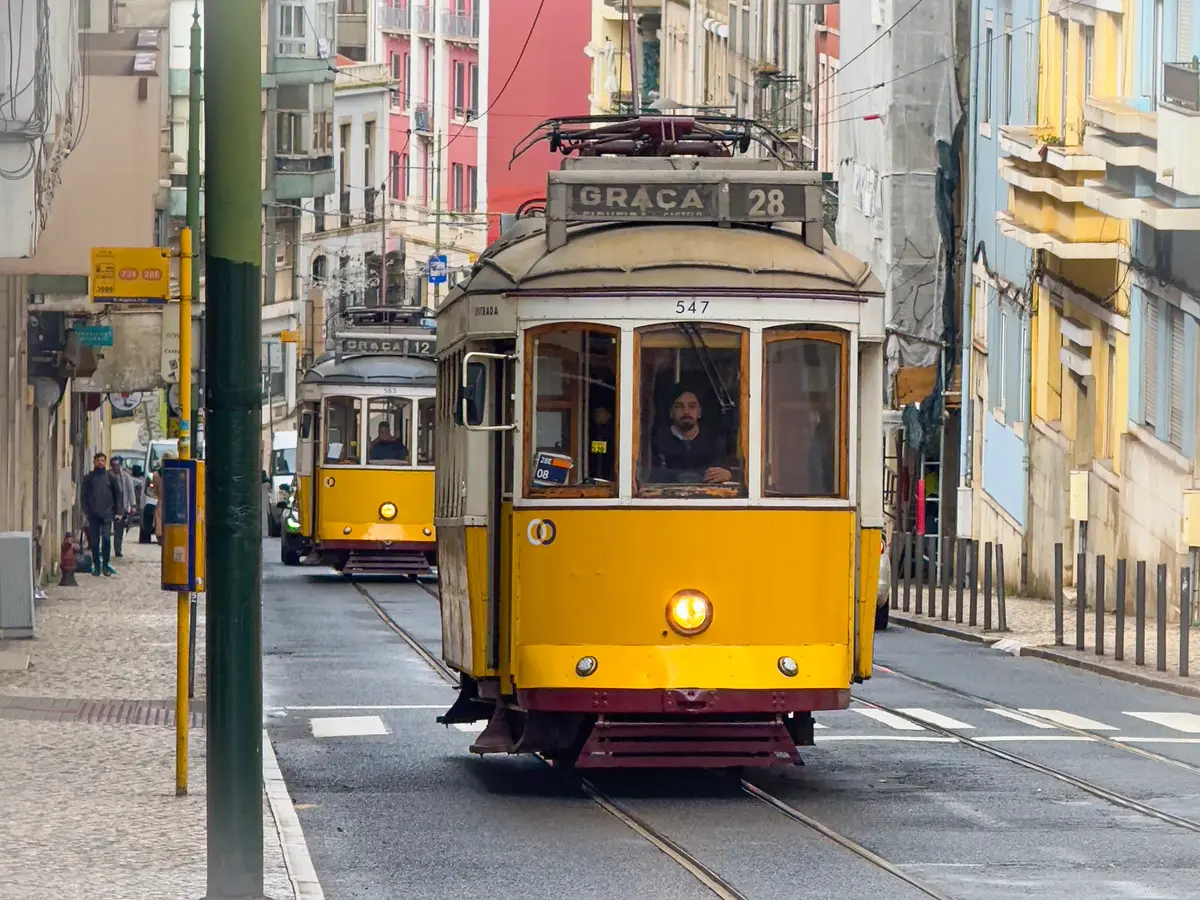
Pro Tip: In Portugal, speakers swallow consonants and fire through sentences at a pace that catches most visitors off guard. In Brazil, the same language opens up — vowels stretch out and the rhythm is far more musical. If you learned your phrases from a Brazilian YouTube channel, expect puzzled faces in Lisbon.
What is the biggest mistake tourists make with Portuguese?
The most common mistake is treating European and Brazilian Portuguese as interchangeable. They share grammar and vocabulary but diverge sharply in pronunciation, rhythm, and some everyday word choices. A phrase that sounds natural in Rio can land as oddly formal or outright confusing in Porto — and vice versa.
Think of it the way British and American English share a language on paper — until you ask for the “restroom” in a London pub and the bartender stares at you. Pronunciation, vocabulary, and social rhythm diverge significantly between the two countries. This guide flags the relevant distinctions at each section. Always know which country you are visiting before you practice your basic Portuguese phrases for tourists.
How do you ask for directions and pay the bill in Portuguese?
The foundation phrase for directions is Onde fica…? — “Where is…?” — which works for landmarks, rideshare pickup zones, and metro stops alike. For transactions, A conta, por favor is the single most important phrase at any sit-down restaurant, since in Portugal, your bill will never arrive at the table unless you ask for it — something worth pairing with a read on tipping etiquette in Portugal before your first dinner out.
| English Intent | Portuguese | Notes |
|---|---|---|
| Where is…? | Onde fica…? | Foundation phrase for everything — landmarks, rideshare zones, transit stops |
| How much does it cost? | Quanto custa? / Quanto é? | Use both interchangeably |
| How do I get to…? | Como chego a…? | For pedestrian or transit routing |
| Left / Right | Esquerda / Direita | Essential for confirming directions with a driver |
| The bill, please. | A conta, por favor. | In Portugal, your bill will never arrive uninvited. You must ask. |
| I would like to pay. | Queria pagar, por favor. | A softer, more polished alternative |
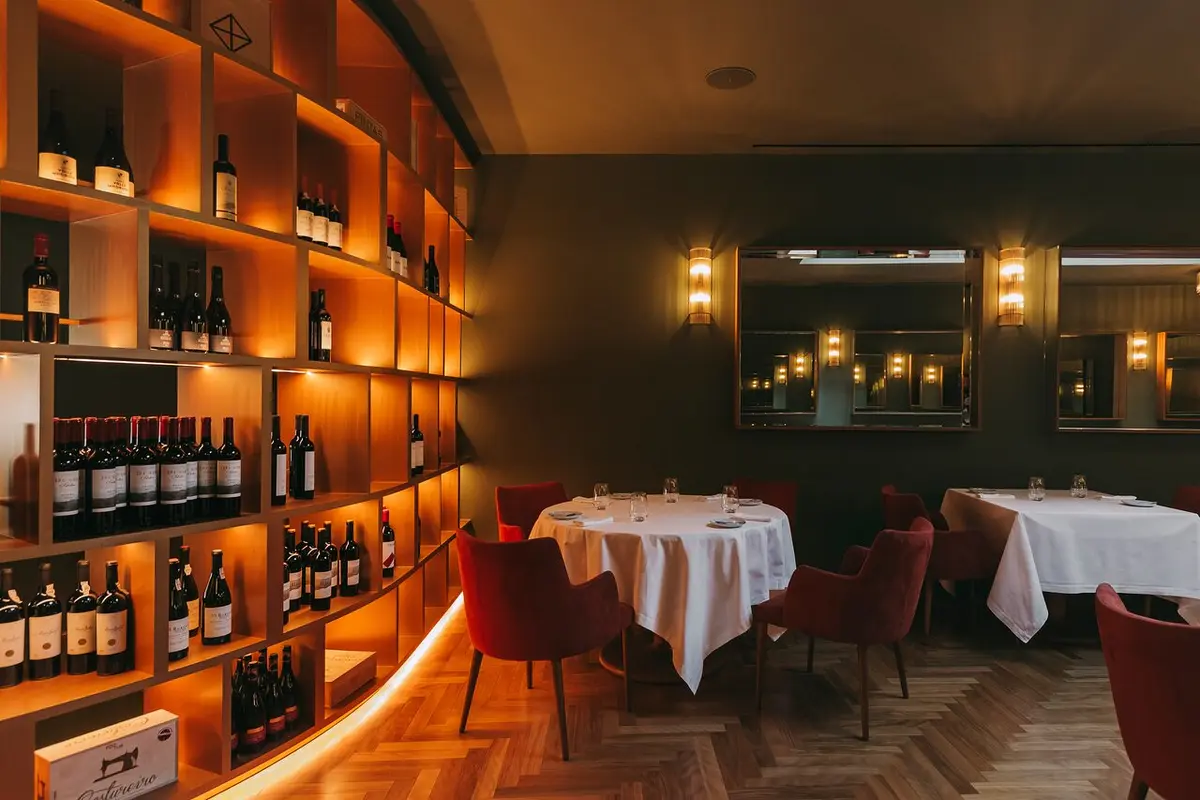
Pro Tip: Portuguese restaurant culture treats a rushed table as a genuine slight. The server not returning every ten minutes is not slow service — it is the point. Order dessert, finish your wine, and raise your hand when you are actually ready to leave.
How do you communicate food allergies safely in Portuguese?
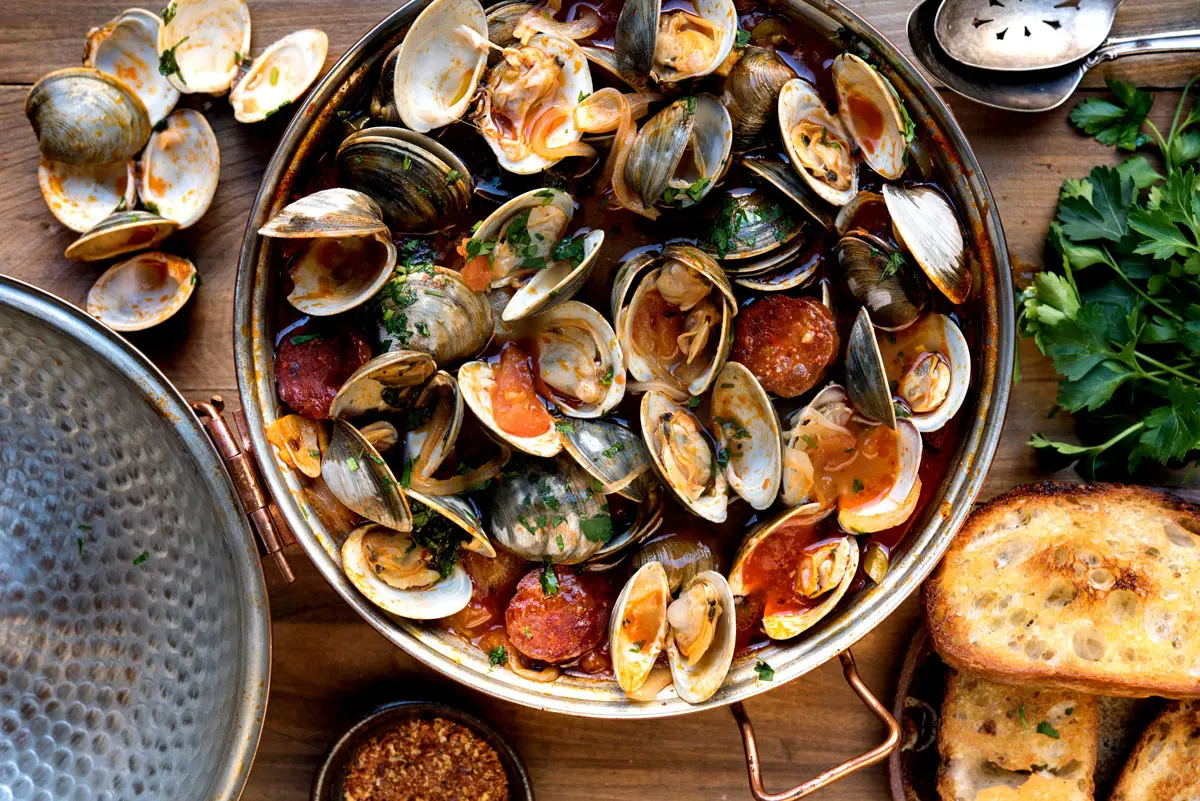
Communicate allergies using exact Portuguese terms rather than relying on translation apps. The stakes are too high for algorithmic guesswork, particularly in a country whose traditional Portuguese food is built around bread, pastry, and seafood. Screenshot the phrases below and show them directly to kitchen staff — do not attempt to pronounce allergy terminology in a noisy restaurant under pressure.
| English Requirement | Portuguese Translation | Safety Note |
|---|---|---|
| I am vegetarian. | Eu sou vegetariano (m) / vegetariana (f) | In coastal areas, always clarify your position on fish |
| I don’t eat meat. | Eu não como carne. | A clearer, unambiguous alternative to the above |
| I can’t eat gluten. | Eu não posso comer glúten. | Critical in a culture built around bread and pastry |
| I am allergic to tree nuts. | Tenho alergia a frutos de casca rija. | Covers almonds, cashews, and walnuts — use this exact formal term with kitchen staff |
| I am allergic to peanuts. | Tenho alergia a amendoim. | Peanuts are classified separately from tree nuts in Portuguese. You need both phrases if you have both allergies. |
| I am allergic to seafood. | Tenho alergia a marisco. | Non-negotiable vocabulary along any coastline — the Algarve, coastal Brazil, anywhere |
| What ingredients does it have? | Quais são os ingredientes? | Ask this before ordering mixed stews or traditional dishes |
How does gendered gratitude work in Portuguese?
In Portuguese grammar, gender applies to the speaker, not the recipient. A man always says obrigado; a woman always says obrigada — regardless of who they are thanking. This is the single most common mistake English-speaking tourists make, and getting it right earns immediate, visible warmth from locals — a small but meaningful signal of genuine engagement with Portuguese culture.
| English Intent | Portuguese | The Rule |
|---|---|---|
| Thank you (male speaker) | Obrigado | Used exclusively by men, regardless of who you are thanking |
| Thank you (female speaker) | Obrigada | Used exclusively by women, regardless of who you are thanking |
| Thank you very much | Muito obrigado / Muito obrigada | Match the ending to your own gender, as above |
| You’re welcome | De nada | Universal across Portugal and Brazil |
| It’s nothing (warm variation) | Não há de quê | A cultural detail in Portugal — locals are genuinely surprised when tourists use this |
| Please | Por favor | Soften every single request with this phrase |
What are the correct greetings by time of day in Portuguese?
Portuguese culture treats time-specific greetings as a mark of basic social awareness. Bom dia runs until noon, Boa tarde covers midday to 6 PM, and Boa noite handles everything after that — doubling as both a greeting and a farewell. Using the right one signals genuine effort and usually softens service staff immediately.
| English Intent | Portuguese | When to use it |
|---|---|---|
| Hello | Olá | Universal. Safe in every setting, any hour |
| Hi (casual) | Oi | Standard in Brazil; increasingly common in casual settings in Portugal |
| Good morning | Bom dia | From waking until 12:00 PM |
| Good afternoon | Boa tarde | From 12:00 PM until 6:00 PM |
| Good evening / Good night | Boa noite | From 6:00 PM onwards — works as both a greeting and a farewell |
| Excuse me (to pass) | Com licença | When asking someone to physically move so you can get by |
| I’m sorry / Excuse me | Desculpe | For bumping into someone, or to get a waiter’s attention |
How do you order coffee in European Portuguese?
Ordering coffee in Portugal requires knowing specific names for milk-to-espresso ratios and glassware. Ask for a generic coffee and you will receive a short, strong espresso by default — which may be exactly what you want. The naming system varies slightly by city and diverges entirely on the island of Madeira.
| Coffee Order | What you actually get | When to order it |
|---|---|---|
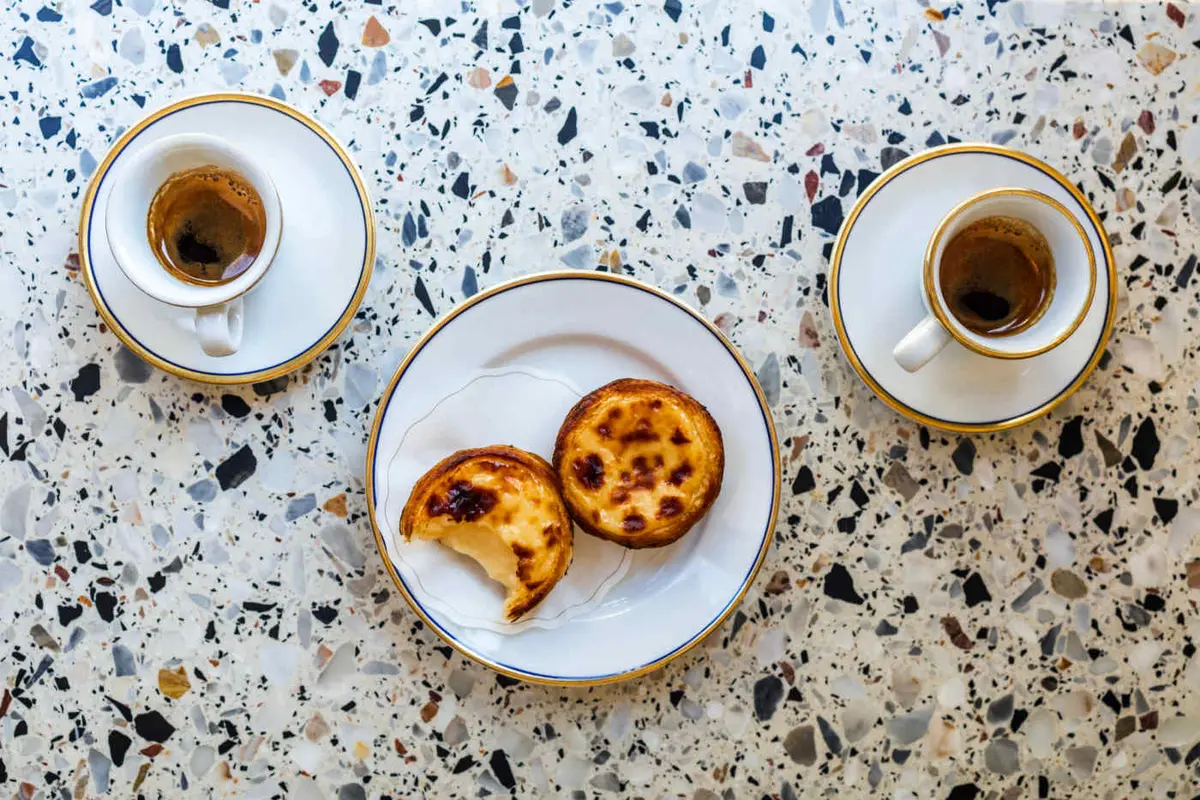
| Bica (or Café) | A short, strong espresso in a tiny porcelain cup. In Porto, the same drink is called a Cimbalino | After lunch or dinner, or whenever you need an immediate energy jolt |
| Meia de leite | Half espresso, half hot milk, in a standard handled ceramic cup | The classic Portuguese breakfast — pair it with a thick, buttered torrada |
| Galão | A small espresso topped with a large pour of hot milk, served in a tall glass | Breakfast for those who prefer something milky and mild — the closest local equivalent to a latte |
| Chinesa | Coffee with milk, called this exclusively on the island of Madeira | Use this term any time you want milk in your coffee while visiting Madeira |
| Café pingado | A standard espresso with a tiny drop of milk to cut the acidity | A mid-afternoon compromise between a full black espresso and a milky drink |
Your coffee will almost always arrive with a sugar packet or two on the saucer. This is standard hospitality, not a hint. Use it, ignore it, or pour half in. No one is watching.
How does Brazilian coffee culture differ from Portugal?
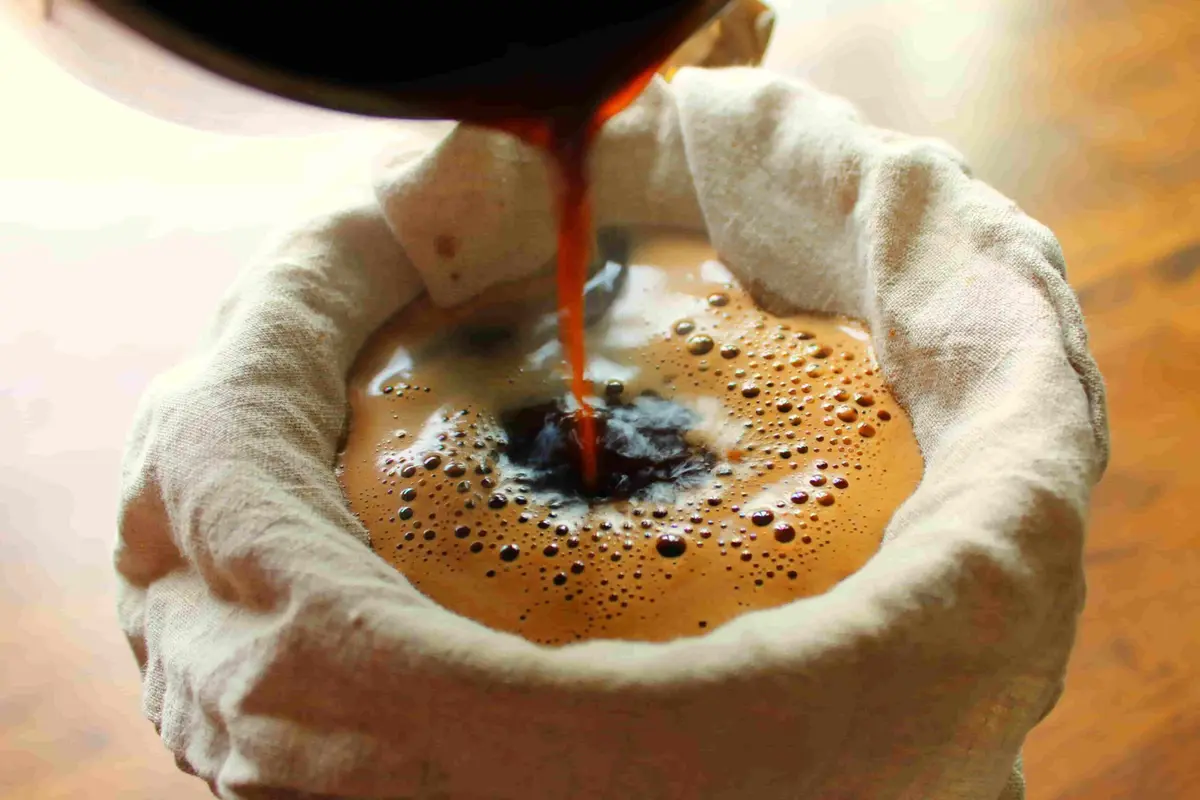
Brazilian coffee culture treats the beverage as a social gesture before a caffeinated one. The cafezinho — a small, intensely strong, pre-sweetened black coffee — functions as a daily handshake of hospitality and will be offered constantly in shops, offices, and private homes alike.
| Brazilian Coffee Term | What it means | Cultural context |
|---|---|---|
| Cafezinho | A small, intensely strong black coffee, very often pre-sweetened | Not just a drink — the daily handshake of Brazilian hospitality. Expect it constantly |
| Café com leite | Coffee with milk — the natural, standard phrasing | Always use this phrasing. The inverted “leite com café” sounds strange to native speakers |
| Pingado | Mostly hot milk with a tiny splash of coffee, served in a glass | The opposite of Portugal’s pingado. In Brazil — especially São Paulo and Minas Gerais — this is a milk-forward morning drink |
| Média | A milk-heavy coffee, functionally identical to a pingado | Useful when traveling outside major tourist areas |
Pro Tip: Do not walk into a Brazilian padaria expecting a menu of iced drinks and alternative milks. Brazilian coffee culture is built on simplicity, warmth, and speed. Order a cafezinho, lean against the counter, and let the morning happen.
What European Portuguese street slang should tourists know?
A handful of casual filler words will shift you from sounding like a translation app to sounding like someone who has actually spent time in Lisbon. These phrases are low-stakes to attempt and high-reward when they land — particularly fixe and giro, which you will hear on any Alfama side street within ten minutes of arriving.
| Slang Phrase | What it means | How to use it |
|---|---|---|
| Fixe | “Cool” / “Nice” / “Awesome” | When a waiter recommends a local wine and it sounds good: “Fixe.” |
| Giro / Gira | “Cute,” “lovely,” or “aesthetically sweet” | Wandering through Alfama and admiring the tiles: “Muito giro.” |
| Tudo bem? | “All good?” / “How are you?” — and also the standard positive response | The owner asks “Tudo bem?”, you reply “Tudo bem!” |
| Pão pão, queijo queijo | “Bread bread, cheese cheese” — meaning something is clear and direct | Confirms you understood directions perfectly |
| Táss cull | A phonetic slang adaptation of the English “cool” | A casual way to wave off a minor inconvenience |
The Portuguese concept of saudade (pronounced sah-oo-DAH-deh) has no true English equivalent. It describes a deep, nostalgic longing for something absent — a defining emotional thread of the Portuguese soul, and one that surfaces most powerfully at a live Fado performance. Acknowledge it in conversation and you will earn a level of connection that no phrase list can fully replicate.
What is the most common Brazilian street slang?
Brazilian street slang revolves around rhythmic filler words that set the warmth and pace of a conversation before literal meaning arrives. Stack them naturally — E aí, beleza? in place of “How are you?” — and interactions shift immediately from transactional to genuinely warm.
| Slang Phrase | What it means | How to use it |
|---|---|---|
| Beleza? | “All good?” / “How’s it going?” | Replaces Tudo bem? in almost every casual street interaction |
| E aí? | “What’s up?” (pronounced ee-eye-ee) | Often stacked: “E aí, beleza?” |
| Mano / Cara / Véi | “Bro” / “Dude” — rhythmic conversational filler | Used regardless of gender — purely a sentence-punctuation device |
| Falou! | “Later!” / “Said.” — an informal goodbye | Replaces Tchau in casual departures |
| Fica à vontade. | “Make yourself at home.” | You will hear this the moment you walk into any shop in Brazil |
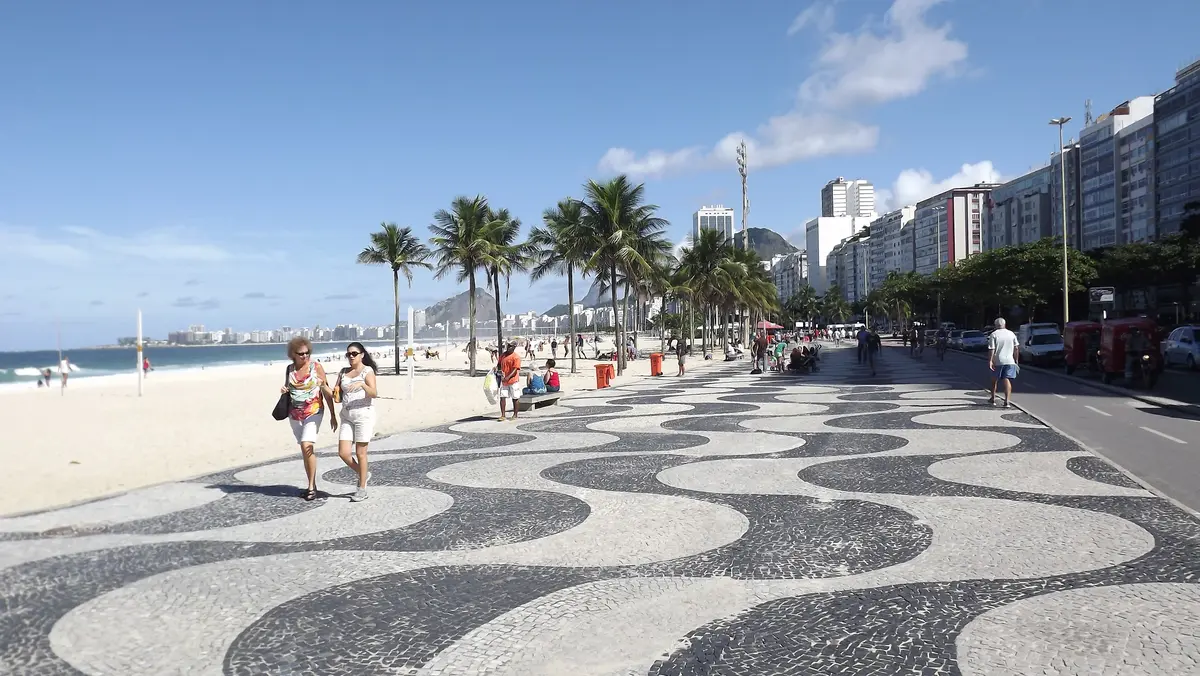
| Rolê | A casual outing, stroll, or hangout | “Vamos dar um rolê pela Copacabana?” — “Want to take a stroll along Copacabana?” |
| Bora | “Let’s go!” — compressed from Vamos embora | Enthusiastic agreement to any proposed plan |
How do you say goodbye properly in Portuguese?
Not all Portuguese goodbyes carry equal weight. Adeus implies finality — reserve it for meaningful departures. Tchau, borrowed from Italian, handles casual everyday situations. Até logo signals warmth and continuity when you expect to see the person again.
On my first week in Lisbon, I said adeus to a café owner and she looked momentarily alarmed — it landed closer to “farewell forever” than “see you around.” Tchau is almost always the right call for any routine tourist interaction.
What to save before you land
TL;DR: Get your gendered thank-you right (men say obrigado, women say obrigada), ask for the bill with “A conta, por favor,” and know which country you are visiting before you practice pronunciation. Brazilian and European Portuguese diverge enough that the wrong version confuses as often as it communicates.
Locals in both countries respond to effort, not perfection. Order your coffee by its Portuguese name, show the allergy table directly to kitchen staff, and you will move through Lisbon and Rio like someone who earned their place there. When you’re ready to plan the trip itself, the Portugal travel guide is the place to start.
Which part of this guide are you saving before your trip — the coffee table or the allergy phrases?