East Coast hiking gets dismissed next to the West, and that is a mistake. The same worn-down ranges hide alpine ridges in New Hampshire, mile-high grassy balds in the South, and surf-battered granite in Maine. This guide ranks the trails by region, difficulty and season — with verified fees, drive times and elevations, plus the tourist traps worth skipping.
Where Should You Hike on the East Coast?
The best East Coast hiking splits into three hubs. New England — the White Mountains, Acadia and the Adirondacks — delivers alpine ridges and coastline. The Mid-Atlantic — Shenandoah’s Old Rag and the Catskills — offers big scrambles near cities. The Southern Appalachians — the Great Smoky Mountains, Blue Ridge and Roan Highlands — hold the highest peaks east of the Mississippi.
The Appalachian Trail threads all three together. Its official length is 2,197.9 miles (3,537 km) across 14 states, and the Appalachian Trail Conservancy re-measures and republishes that number every year as sections get relocated — so the round “2,190” you see in older guides is a snapshot, not a constant.
If you want the shorthand: the White Mountains are the most rugged, Acadia is the coastal pick, and the Smokies are the highest and most visited.
Is East Coast Hiking Actually Worth It?
Yes — emphatically. The East Coast holds the most-visited national park in the country (Great Smoky Mountains, more than 11.5 million visits a year, more than double the runner-up), the highest peak east of the Mississippi (Mount Mitchell, 6,684 ft / 2,037 m), and the world’s most famous footpath, the Appalachian Trail.
These are ancient, forested mountains, not jagged young giants, but that geology is the point. You get exposed alpine ridges above treeline, hundreds of waterfalls, and open grassy balds — most of it within a short drive of a major city. Franconia Ridge sits about 2.5 hours from Boston. Old Rag is roughly 1 hour 45 minutes from Washington, D.C.
The biodiversity is the part people underrate. The Smokies alone have catalogued more than 22,000 species, and the southern stretch of the AT runs through forest so dense the canopy closes overhead — hikers call it the “green tunnel,” and at midday it can feel like dusk.
Pro Tip: If you only know the West, recalibrate your distance-to-payoff math. A 4-mile (6.4 km) East Coast trail with 2,500 feet of gain will work you harder than many longer Rocky Mountain switchback trails.
Best East Coast Hikes by Region
Searchers decide by region, so that is how this breaks down — with a stat block for every named trail. Here is the at-a-glance comparison before the detail.
| Trail | Region | Distance | Elevation Gain | Difficulty | Time |
|---|---|---|---|---|---|
| Franconia Ridge Loop | White Mountains, NH | 8.9 mi (14.3 km) | ~3,900 ft (1,189 m) | Strenuous | 6–8 hrs |
| Devil’s Path | Catskills, NY | ~24 mi (39 km) | ~9,000 ft (2,743 m) | Brutal | 2 days |
| Old Rag Loop | Shenandoah, VA | 9.4 mi (15.1 km) | ~2,400 ft (732 m) | Strenuous | 5–7 hrs |
| McAfee Knob | Blue Ridge, VA | ~8 mi (12.9 km) | ~1,800 ft (549 m) | Moderate | 4–5 hrs |
| Beehive Trail | Acadia, ME | 1.4 mi (2.3 km) | ~450 ft (137 m) | Moderate (exposed) | 1–1.5 hrs |
| Kuwohi Summit Path | Smokies, NC/TN | 1.3 mi (2.1 km) | ~330 ft (101 m) | Easy (paved) | 30–45 min |
New England: The White Mountains, Acadia and the Adirondacks
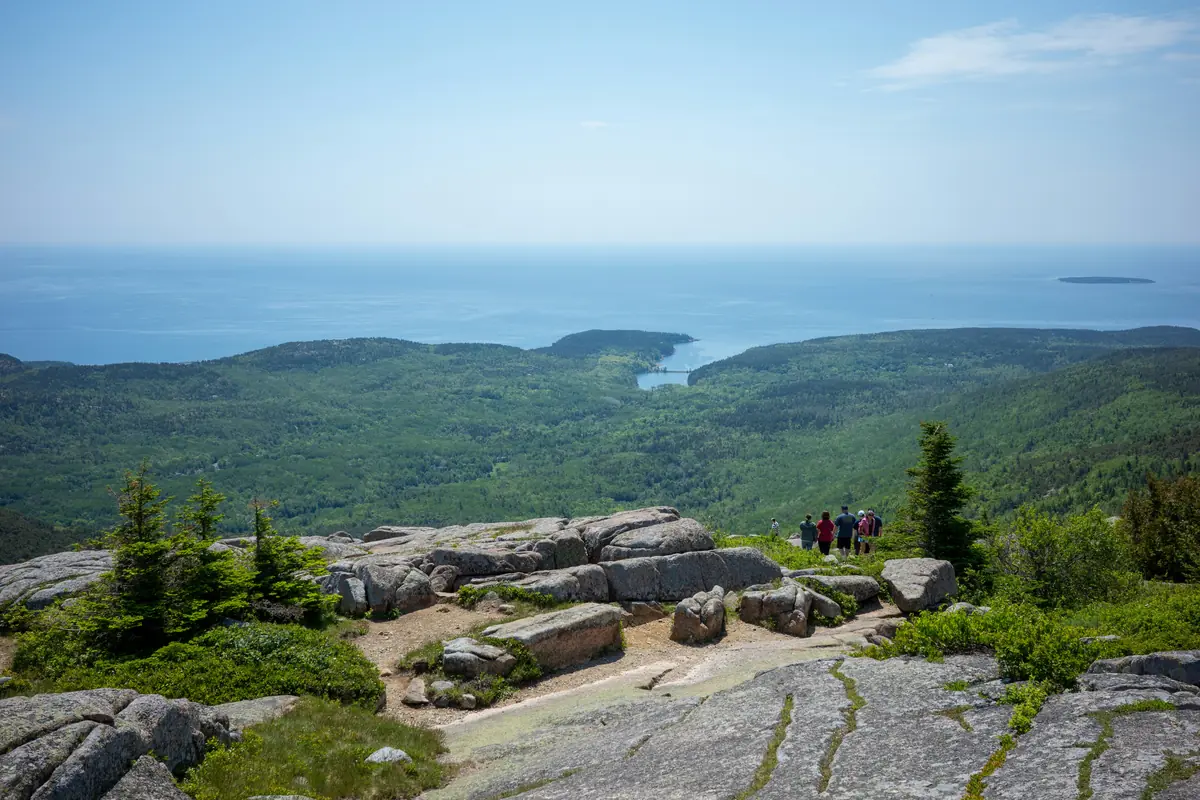
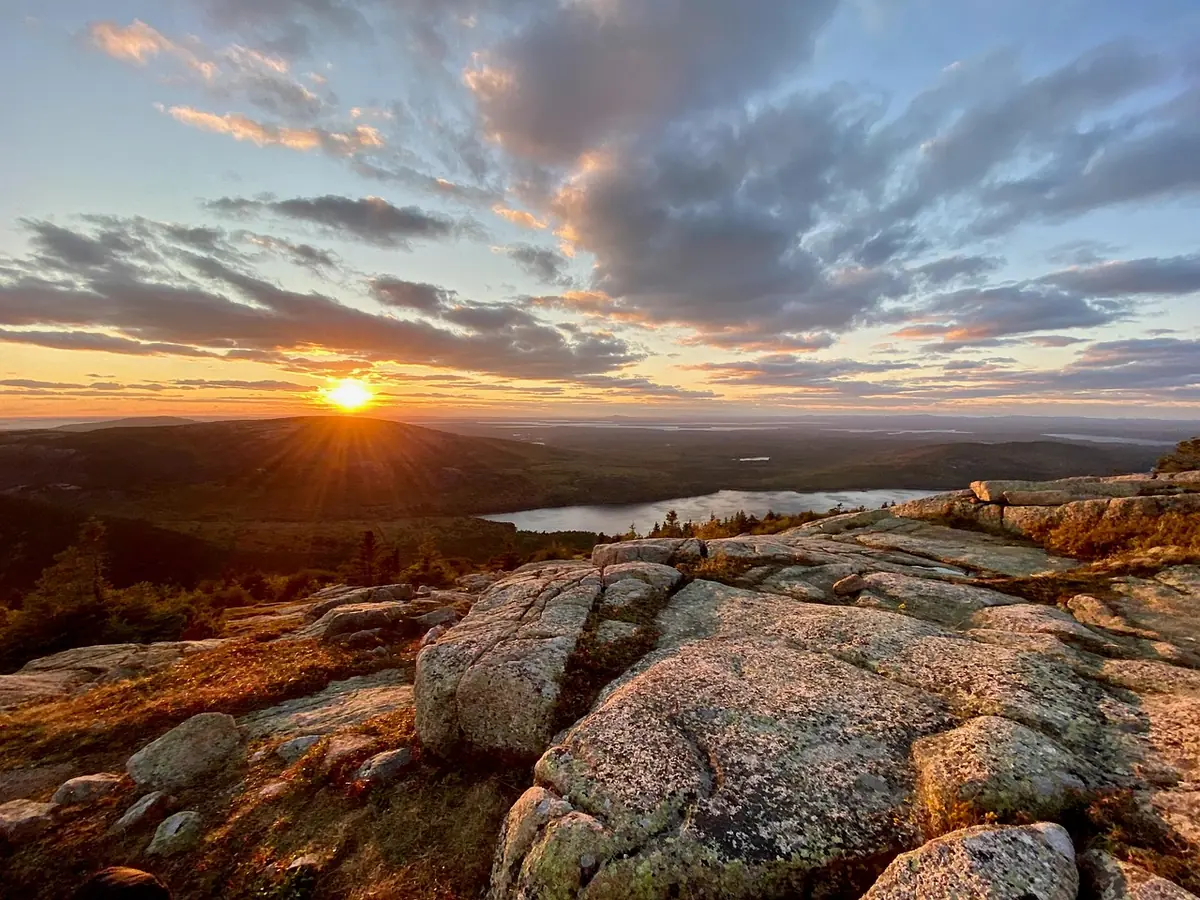
New England owns the East’s most dramatic hiking. New Hampshire’s Franconia Ridge Loop (8.9 miles / 14.3 km, about 3,900 ft / 1,189 m of gain) traverses an exposed alpine spine. Maine’s Acadia pairs the iron-rung Beehive (1.4 miles / 2.3 km) with Cadillac Mountain (1,530 ft / 466 m), the first place in the U.S. to catch sunrise from early October to early March. New York’s Adirondacks hold 46 peaks above 4,000 feet.
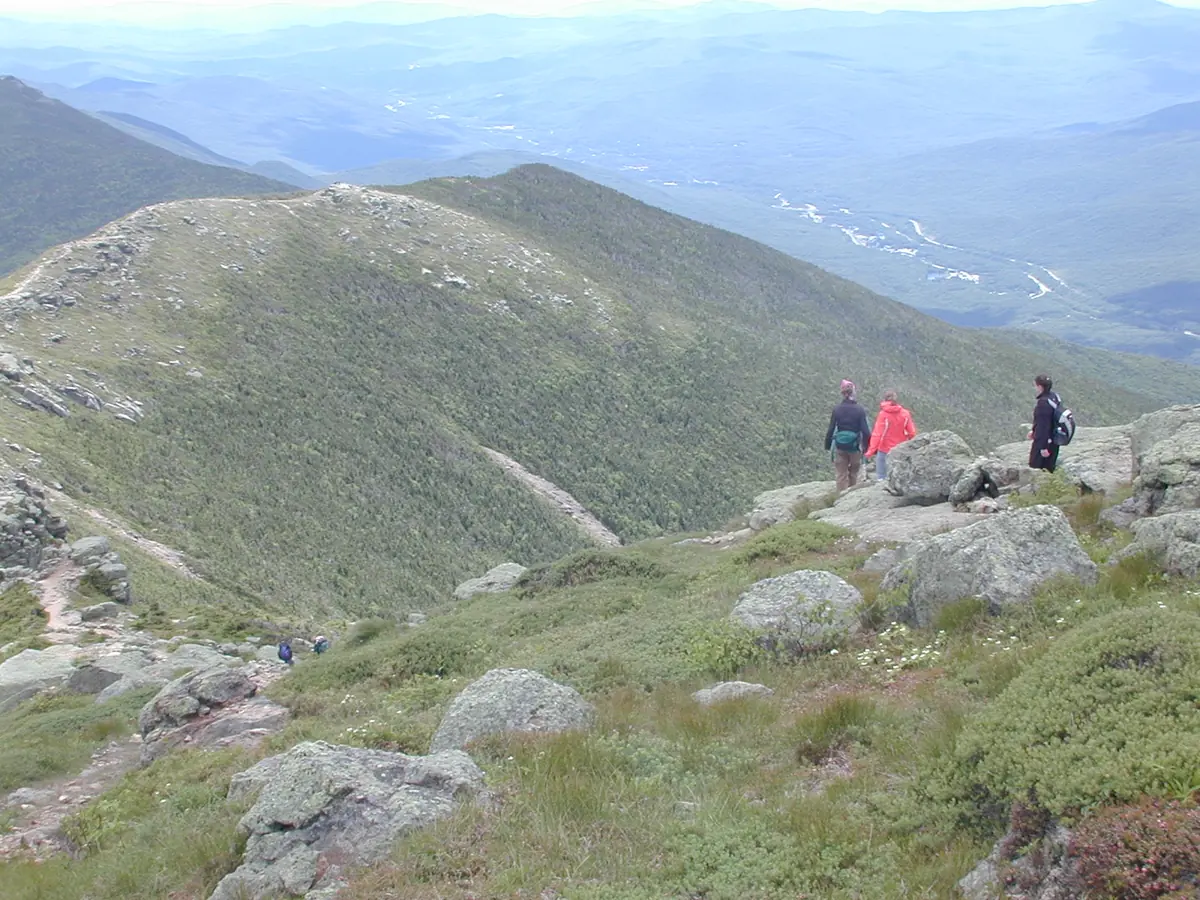
Franconia is the trip most people remember. The loop strings together Little Haystack (4,760 ft / 1,451 m), Mount Lincoln (5,089 ft / 1,551 m) and Mount Lafayette (5,249 ft / 1,600 m) along roughly 1.5 miles of open ridge. Above treeline the wind shoves you sideways even on a clear day, and the rock smells faintly of lichen and cold.
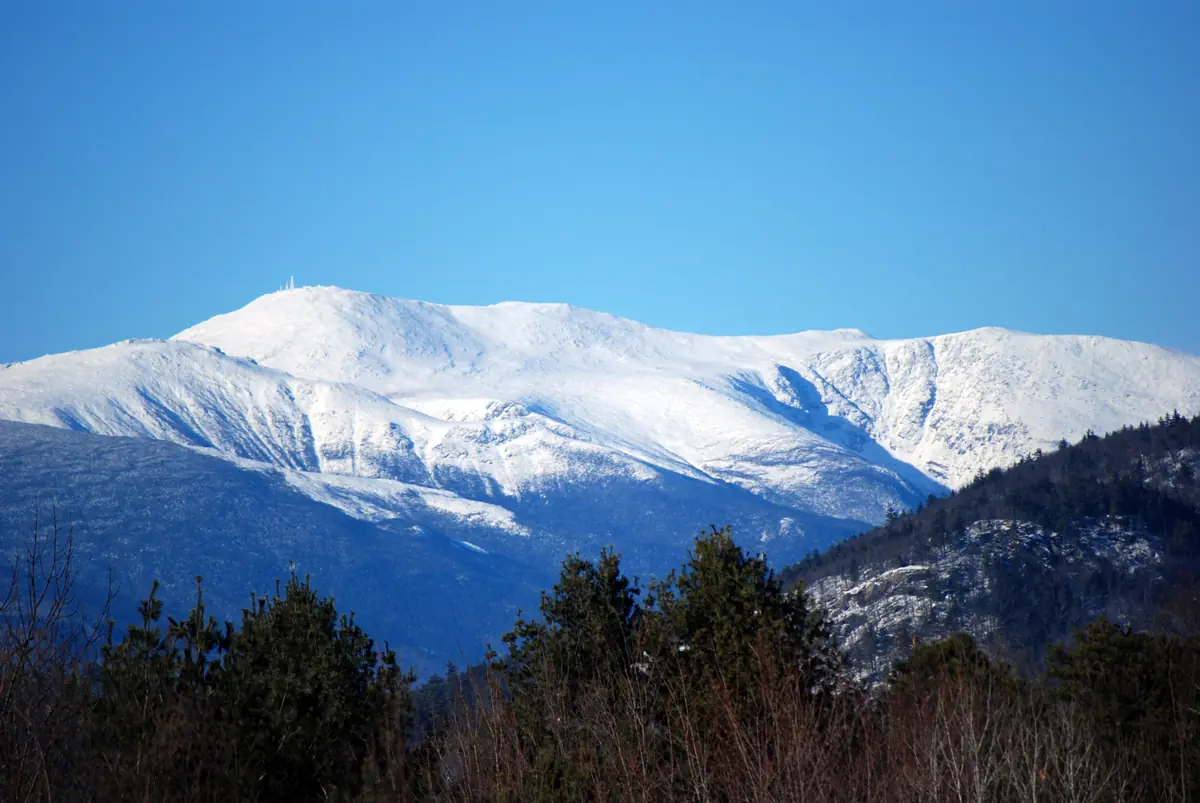
Further north, Mount Washington (6,288 ft / 1,917 m) anchors the Presidential Range, and Maine’s Mount Katahdin (5,267 ft / 1,605 m) crowns the AT with the airy Knife Edge. Vermont’s contribution is Mount Mansfield (4,395 ft / 1,340 m), the state’s high point, sitting on the 272-mile Long Trail.
Acadia is the soft landing. The Beehive’s iron rungs and ladders feel exposed but cover only about 450 feet of climbing, and the Ocean Path runs flat along the surf.
New England quick facts:
- Gateway cities: Boston (Whites ~2.5 hrs), Portland, ME (Acadia ~3 hrs), Albany (Adirondacks ~2 hrs)
- Signature trail: Franconia Ridge Loop
- Best for: Strong day hikers chasing alpine exposure
- Parking: Many White Mountain National Forest trailheads require a recreation pass; day passes come from self-serve stations, and the America the Beautiful pass is accepted
- Best season: Late June through early October (snow lingers up high into spring)
- Don’t miss: A clear-day sunrise from Cadillac’s summit area
Pro Tip: Most visitors never reach Cadillac’s true summit. The actual high point is a five-minute walk down the South Ridge Trail from the parking lot, away from the crowd at the overlook.
Mid-Atlantic: Shenandoah, the Catskills and the Hudson Valley
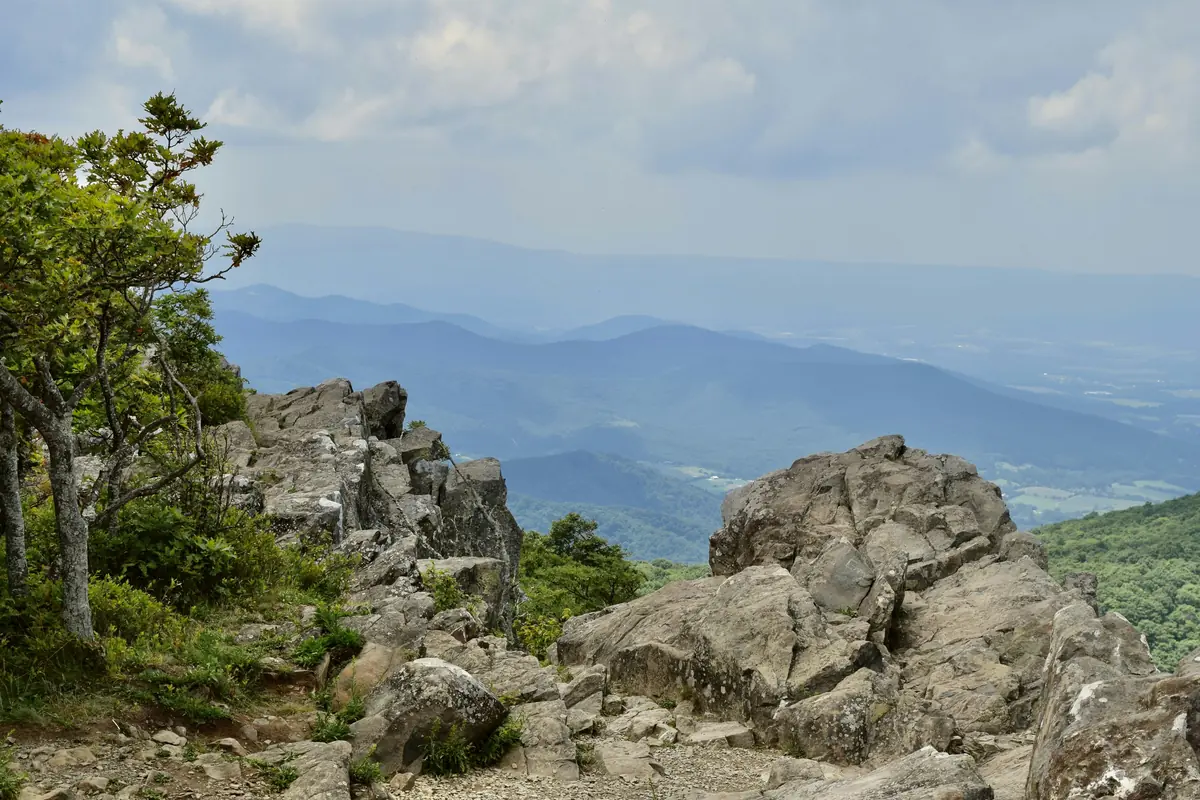
The Mid-Atlantic delivers big scrambles within reach of cities. Shenandoah’s Old Rag (9.4-mile / 15.1 km loop) is Virginia’s classic granite rock scramble and requires a $2 day-use ticket from March through November. New York’s Devil’s Path (about 24 miles / 39 km, roughly 9,000 ft / 2,743 m of gain) is widely called the East’s hardest trail. Breakneck Ridge sits a train ride from Manhattan.
Old Rag earns its reputation honestly. The rock scramble section is a real hands-on maze of granite boulders and chimneys, and on a summer weekend it becomes a slow conga line. The official loop is 9.4 miles even though some apps list it as 8 — budget the extra hour. Shenandoah’s true high point, Hawksbill Summit (4,049 ft / 1,234 m), is a far gentler 1.5-mile alternative if scrambling isn’t your thing.
The ticket system trips people up more than the granite does. Every person needs their own $2 ticket, one buyer can hold a maximum of four, and only 800 go out per day: 400 released 30 days ahead and 400 released five days ahead. The ranger scans a QR code at the trailhead and checks the buyer’s photo ID against the purchase, and there is effectively no cell signal there — so print or screenshot before you leave home. Trailhead construction has also been reshaping the main lot, cutting roughly 100 spaces and pushing hikers to Lot 2 and the grassy overflow on Nethers Road. Check the lot status before you commit to a 5 a.m. drive.
The Catskills are the region’s quiet brute. Beyond Devil’s Path, Slide Mountain is the range’s high point, and the whole area stays an easy day trip from New York City — no permits, no entrance booth, just a parking lot that fills early.
Mid-Atlantic quick facts:
- Gateway cities: Washington, D.C. (Old Rag ~1 hr 45 min), New York City (Catskills/Breakneck ~1.5–2.5 hrs)
- Signature trail: Old Rag Loop
- Best for: City-based hikers who want a hard day without a long drive
- Permits: Old Rag day-use ticket ($2 per person, March–November, capped at 800 per day)
- Best season: April through November
Pro Tip: The Old Rag lot fills by 7 to 8 a.m. on weekends, and the scramble becomes a line by 9. Be parked before sunrise or save it for a weekday.
Southern Appalachians: The Smokies, Blue Ridge and Roan Highlands
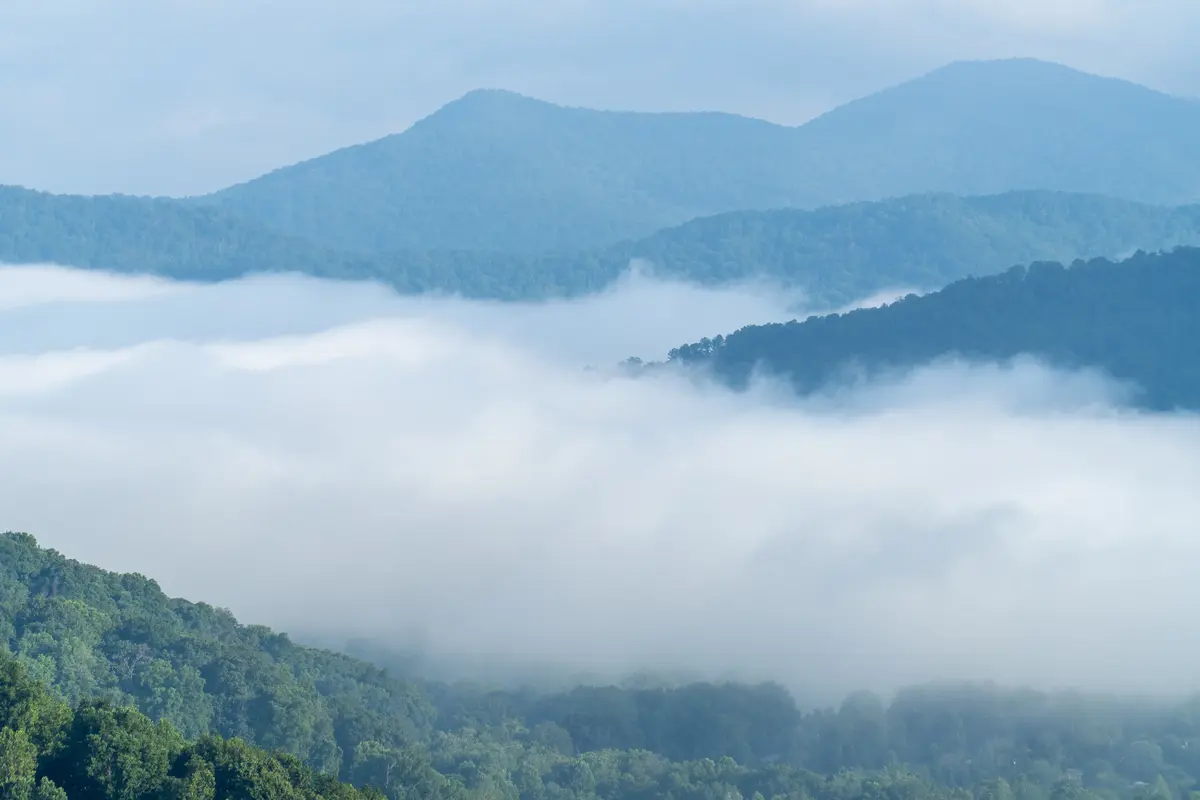
The South holds the East’s highest ground. Great Smoky Mountains National Park is free to enter and crowns at Kuwohi (6,643 ft / 2,025 m), reached by a paved 1.3-mile (2.1 km) round-trip path to an observation tower. Nearby Mount Mitchell (6,684 ft / 2,037 m) is the highest peak east of the Mississippi, and Virginia’s McAfee Knob is the AT’s most photographed view.
A note on the name: many guides still say “Clingmans Dome.” The Cherokee name Kuwohi, meaning “mulberry place,” was officially restored after a petition by the Eastern Band of Cherokee Indians. It is the same peak — just the correct, current name.
Two things about Kuwohi that most roundups skip. The road to it closes to vehicles from December 1 through March 31, which turns a 45-minute walk into a 7-mile one; and the advertised 100-mile view is a best-case number. Haze routinely cuts visibility to 20 miles or less, which is exactly why the 650,000 people who go each year cluster at sunrise.
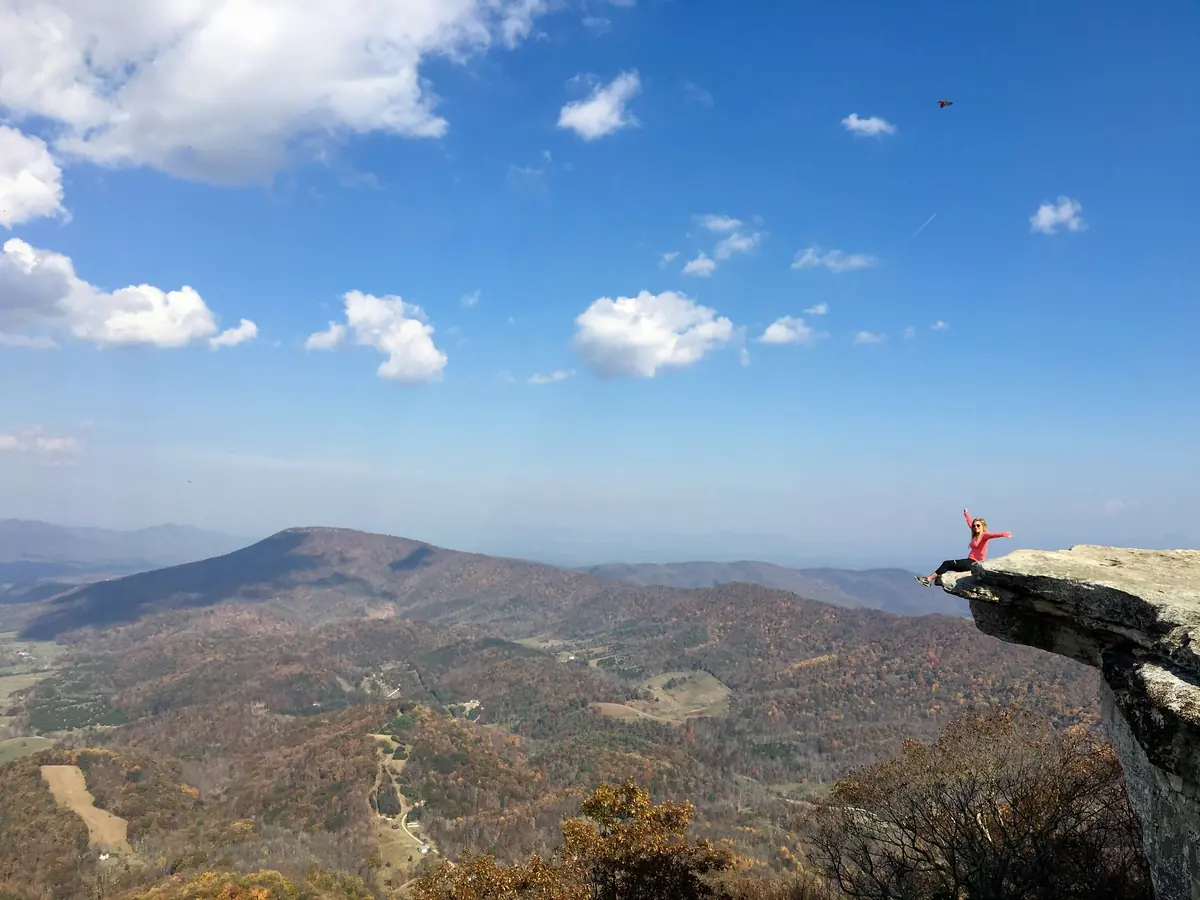
This region runs on grassy balds and long blue ridges rather than alpine rock. Max Patch and the Roan Highlands give you open, treeless summits you can walk across; Pisgah National Forest and Linville Gorge add waterfalls and a genuine canyon. McAfee Knob, about 8 miles (12.9 km) round-trip with roughly 1,800 ft (549 m) of gain, ends at a flat ledge jutting into open air — the diving-board view that made the AT famous well before Bill Bryson wrote about it.
Southern Appalachians quick facts:
- Gateway cities: Asheville, NC (Mitchell/Smokies ~1–1.5 hrs), Knoxville, TN (Smokies ~1 hr), Roanoke, VA (McAfee Knob ~30 min)
- Signature trail: Kuwohi Summit Path (easy) or McAfee Knob (moderate)
- Best for: Beginners through experienced hikers; the widest range of difficulty
- Fees: Smokies free to enter; parking tag required ($5/day, $15/week, $40/year)
- Best season: April through early November; peak foliage runs late
Pro Tip: At Kuwohi’s tower the air can run 10 to 20°F (6 to 11°C) colder than the valley below. In July you’ll still want a fleece at the top.
What Is the Most Difficult Hike on the East Coast?
New York’s Devil’s Path in the Catskills is widely considered the East Coast’s hardest day hike — roughly 24 miles (39 km) with about 9,000 feet (2,743 m) of gain over relentless, ledge-laden terrain. For a single brutal traverse, New Hampshire’s Presidential Traverse (about 23 miles / 37 km, nearly 9,000 ft of gain over ten summits) and Katahdin’s exposed Knife Edge are its only real rivals.
What makes these trails punishing isn’t the mileage — it’s the vertical and the footing. Devil’s Path has almost no graded switchbacks; you climb straight up rock ledges and drop straight down the other side, over and over. On the Presidentials, long stretches of “trail” are open boulder fields where you make a mile an hour, not three, and weather can turn while you’re fully exposed.
For something nearly as hard but better known, the Pemigewasset Loop (“the Pemi,” about 31 miles / 50 km) and the Franconia Ridge exposure both deserve respect. None of these are first-timer days.
Which East Coast Hikes Suit Kids and Beginners?
For families and beginners, the best East Coast hikes pair short distances with a big payoff. Top picks: Kuwohi’s paved 1.3-mile (2.1 km) summit walk, Acadia’s flat 3.6-mile (5.8 km) Ocean Path, Shenandoah’s 1.5-mile (2.4 km) Hawksbill Summit, and Grayson Highlands in Virginia, where a sub-one-mile trail reaches wild ponies grazing the open balds.
A few more that reward small legs:
- Watkins Glen Gorge Trail (NY): ~2 miles (3.2 km) past 19 waterfalls and through stone tunnels; 800-plus steps, so it’s a workout despite the distance
- Grayson Highlands (VA): wild ponies on the balds; short loops from Massie Gap
- Bash Bish Falls (MA): ~2 miles (3.2 km) to the state’s tallest single-drop waterfall
- Lums Pond (DE): flat, stroller-viable loop, good for the youngest hikers
- Ocean Path, Acadia (ME): flat coastal walk with constant water views and easy turnarounds
Pro Tip: The Grayson Highlands ponies will work your pack for snacks. Keep food zipped away and hands to yourself — they’re wild animals, not petting-zoo stock.

When Is the Best Time to Hike the East Coast?
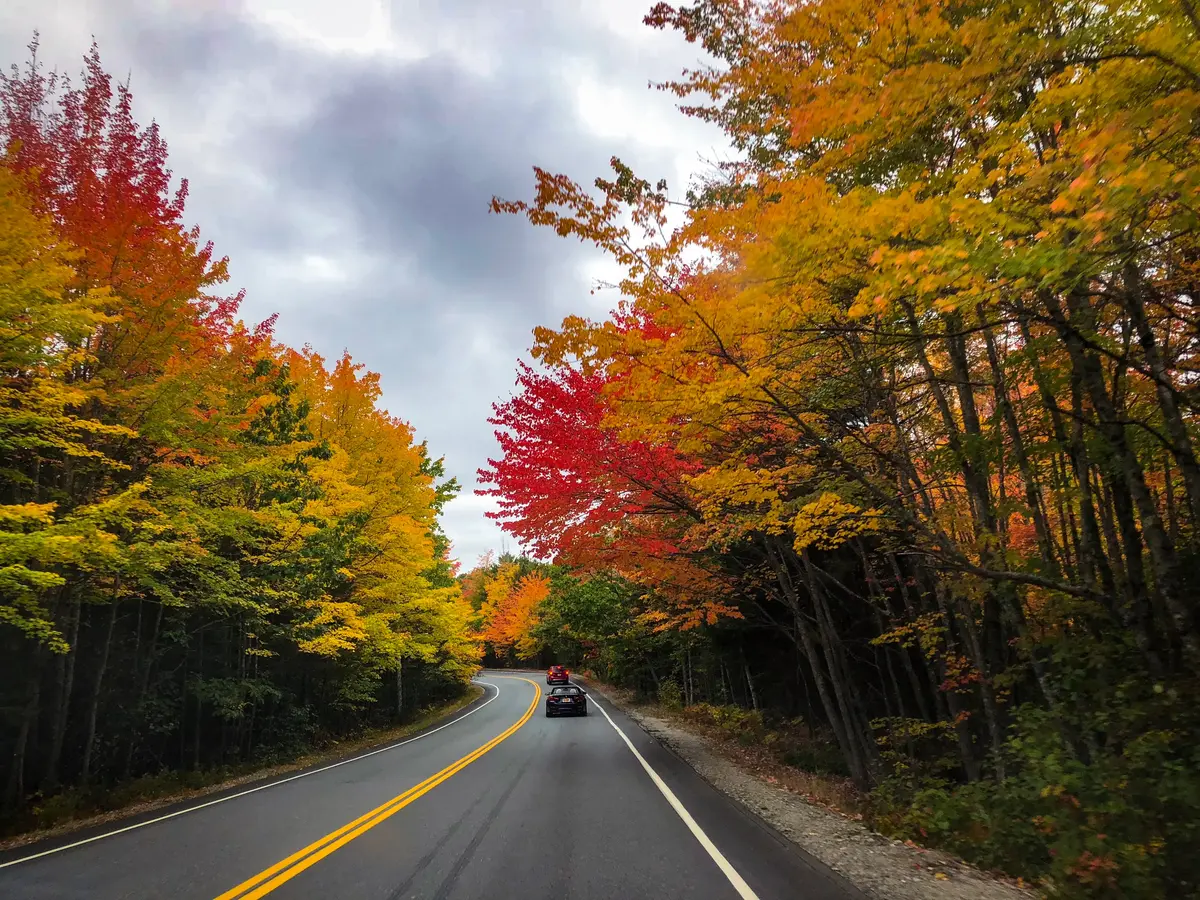
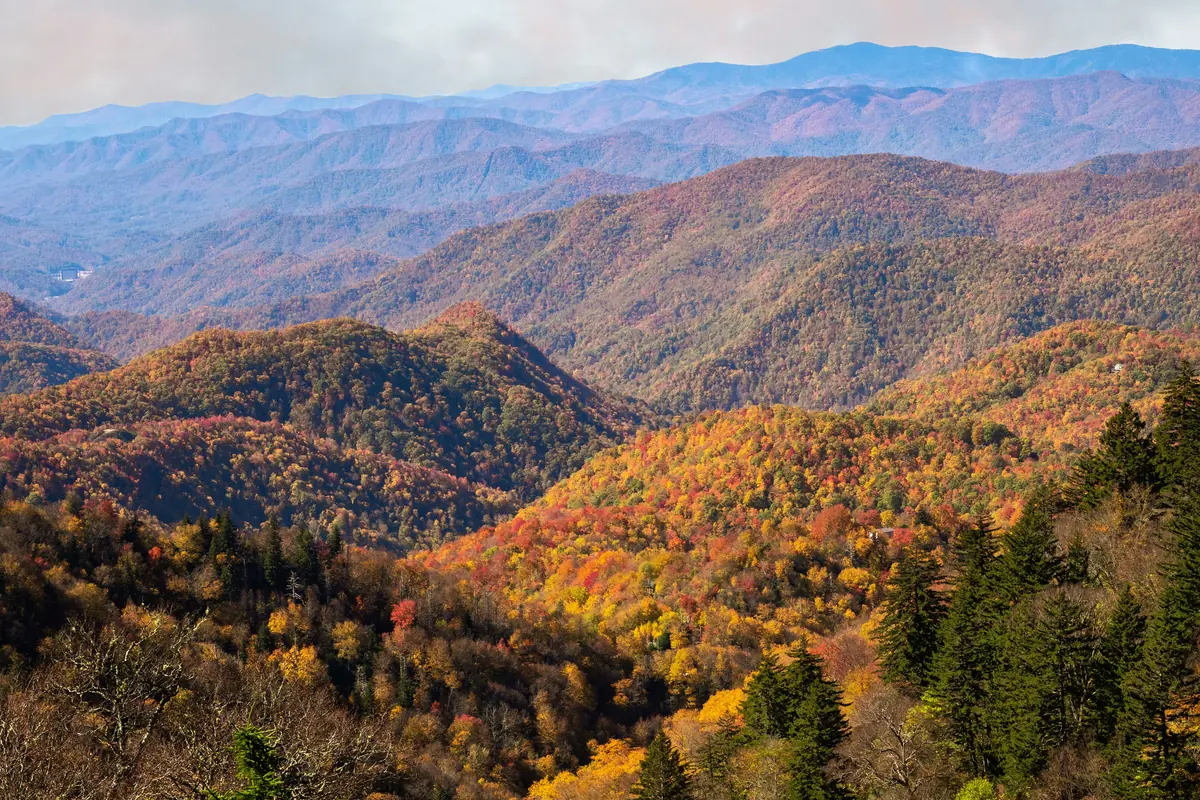
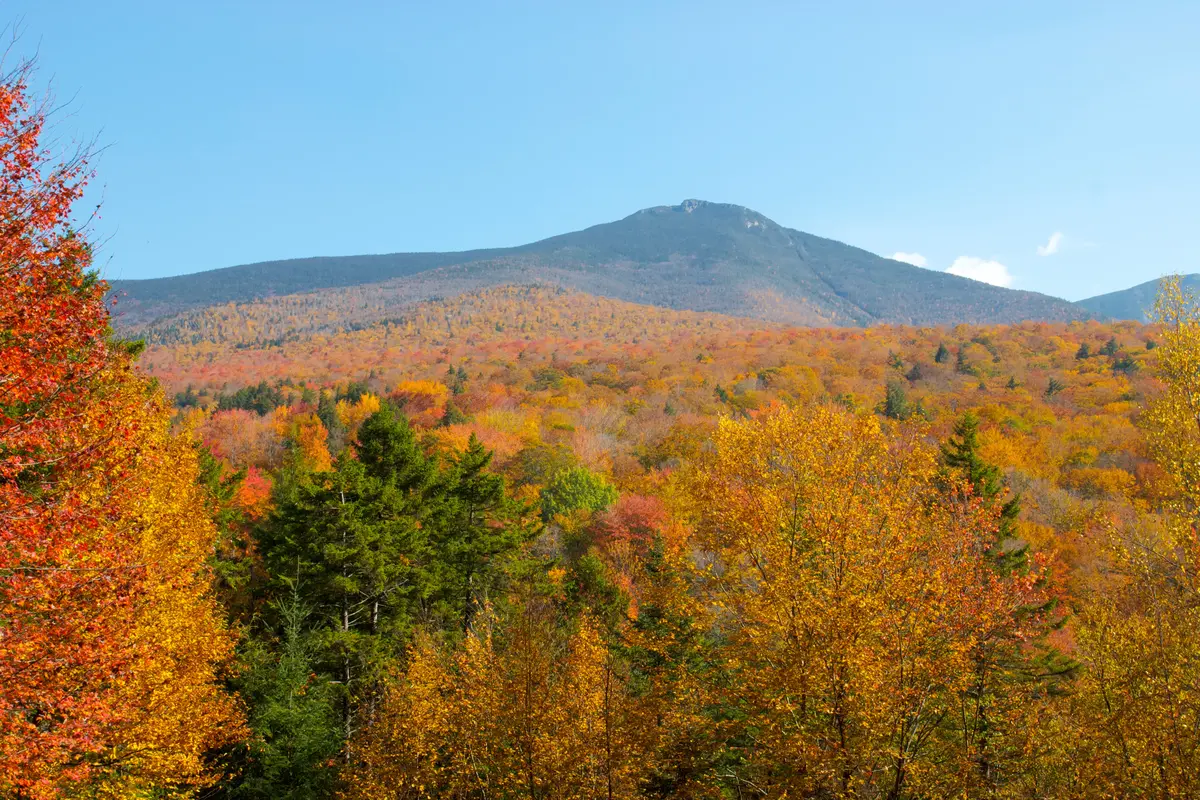
The prime East Coast hiking window is May through October, and September into October is the standout for crisp air and fall color. Peak foliage sweeps north-to-south: northern New England turns in late September, southern New England and the Mid-Atlantic in mid-October, and the Southern Appalachians from mid-October into early November.
| Region | Peak Color Window |
|---|---|
| Northern New England (White/Green Mts, Adirondacks) | Late September to early October |
| Maine coast (Acadia) | Early to mid-October |
| Southern New England and the Catskills | Mid-October |
| Mid-Atlantic (Shenandoah, Blue Ridge crest) | Mid- to late October |
| Southern Appalachians (Smokies, Roan) | Late October into early November |
Two practical warnings. Summer brings afternoon thunderstorms across the whole range — plan to be off exposed summits by early afternoon. And the White Mountains can ice over by November, so a “fall” hike up high in late season can turn into a winter climb without warning.
Pro Tip: Acadia’s blueberry barrens flare scarlet about a week before the maples peak. It’s an underrated early-color window if you want Maine foliage without the mid-October crush.
What Does East Coast Hiking Cost in Fees and Permits?
Costs vary widely, and this is where most guides go quiet. Great Smoky Mountains is free to enter but requires a parking tag ($5/day). Acadia charges $35 per vehicle for seven days. Shenandoah’s Old Rag needs a $2 day-use ticket on top of the park entrance fee. An $80 America the Beautiful pass covers entry to every national park for a year and pays for itself fast — with two exceptions worth knowing before you buy.
Park Fees, Parking Tags and Passes
| Park / Trail | Entrance Fee | Parking / Permit | Reservation Needed? |
|---|---|---|---|
| Great Smoky Mountains | Free | Parking tag: $5/day, $15/week, $40/year | No |
| Acadia NP | $35 per vehicle (7 days) | Included | Cadillac Summit Road only |
| Shenandoah NP | $30 per vehicle (7 days); $55 park annual | Old Rag day-use ticket $2 per person | Old Rag (March–November) |
| White Mountain NF | Free | Recreation pass at fee trailheads | No |
| America the Beautiful pass | $80/year (U.S. residents), $250 (non-residents) | Covers entry, not the Smokies tag | No |
The two exceptions. First, the America the Beautiful pass buys you nothing in the Smokies: the park charges no entrance fee, and the parking tag is a separate requirement that interagency passes do not cover. Second, the annual tag must be a physical tag displayed on the windshield — a phone screenshot gets you a citation.
The Costs Most Guides Leave Out
- Acadia non-resident fee: Non-U.S. residents aged 16 and up pay $100 per person on top of the $35 vehicle fee. For a family of four arriving in a rental car, that is $435 at the Sand Beach booth. A $250 non-resident annual pass covers it and pays for itself in two or three parks.
- AMC huts: the Appalachian Mountain Club’s White Mountain huts run roughly $175 to $375 per person per night in full-service season, with dinner and breakfast included and about 20 percent off for members. Bunk rooms, wool blankets, no showers.
- Shenandoah goes cashless: entrance stations take cards and mobile payment only. If you’re carrying cash, buy the pass in advance or from a third-party vendor in Luray, Front Royal or Waynesboro.
- Appalachian Trail thru-hike: budget closer to $8,000 than the old $5,000 rule of thumb.
- Cadillac Summit Road: a timed vehicle reservation through Recreation.gov, required roughly May through October, separate from the entrance fee. You don’t need one to hike, bike or walk up.
Pro Tip: Buy the Acadia pass online and print it before you go. The Sand Beach entrance booth line can eat 30 minutes at peak, and there’s no reason to sit in it.
How Do You Stay Safe on East Coast Trails?
The biggest East Coast hiking hazard is weather, not terrain. Mount Washington once recorded a 231-mph wind gust — long the record for a directly measured surface wind in the Western Hemisphere — and sees hurricane-force winds on an average of 110 days a year. Carry layers, start early, and turn back at the first thunder.
Weather Is the Real Hazard, Not the Terrain
The summit’s reputation is earned. It has logged a wind chill near −108°F (−78°C), when roughly −47°F air met 100-mph-plus gusts. Conditions can swing from sun to whiteout in 20 minutes, and the warning signs near the top are not decoration. Check the current forest alerts and road status before you drive up, not after.
Bears, Snakes and Food Storage
Wildlife is a smaller, manageable risk. Black bears live across most of these ranges — the Smokies alone hold around 1,500, roughly two per square mile — so store food properly and never leave a pack unattended. Timber rattlesnakes and copperheads favor sunny rock ledges; give them room and they’ll do the same.
A short safety baseline for any East Coast hike:
- Carry the 10 Essentials: layers, water, food, headlamp, map, first aid, fire, knife, sun protection, shelter
- Download offline maps: cell service is spotty to nonexistent on most ridgelines
- Check the summit forecast, not the valley forecast: they are often two different days
- Start early: beat both the afternoon storms and the crowds
How Long Is the Appalachian Trail, and Can You Section-Hike It?
The Appalachian Trail runs 2,197.9 miles (3,537 km) from Springer Mountain, Georgia, to Mount Katahdin, Maine, crossing 14 states. A full thru-hike takes most hikers five to seven months — surveyed hikers average about 153 days — and now costs closer to $8,000 than the old $5,000 estimate. But you don’t need to commit. Day and section hikes through the Smokies, Shenandoah and the White Mountains capture the best of it.
That budget shift is real, and it catches people out. Recent thru-hiker surveys put average total spending near $7,700, of which roughly $2,100 goes on gear before anyone takes a step. Towns are the leak: a shower, a bunk, a burger and a beer clears $100 in an afternoon, and the AT crosses a road every few days.
The completion stats put the scale in perspective: only about one in four thru-hike attempts finishes, and there are more than 23,000 recorded completions in total. That’s a small club for a trail millions step onto each year — and “millions” is now a measured figure rather than a guess, with the trail logging roughly 16.9 million recreation visits and ranking among the ten busiest units in the national park system.
For a taste without the half-year commitment, the strongest section hikes are the Roan Highlands balds, the White Mountains’ Presidential and Franconia ridges, and the rolling stretch through Shenandoah. Backcountry permits apply in the Smokies, Shenandoah and Baxter State Park, so check each before you go.
One more thing section hikers keep learning the hard way: several stretches are still on detour. Hurricane damage in the Southern Appalachians closed the Nolichucky River crossing outside Erwin, Tennessee (a 3.6-mile road walk, or shuttle around it), forced a roughly 6-mile reroute at Iron Mountain Gap, and shut the section along the Virginia Creeper Trail. In New Hampshire, a failed bridge sends hikers on a 6.4-mile Great Gulf detour, though thru-hikers can ride the AMC shuttle for free instead. The ATC posts these on its trail updates page — read it the week you leave, not the month before.
Pro Tip: Standing on McAfee Knob’s ledge, you’ll understand the obsession — but the parking lot fills early and the round trip runs about 8 miles. Start by 7 a.m. on weekends or use the trailhead shuttle.
Start Here if You Only Have One Weekend
If it’s your first real East Coast trip, base in Acadia or Shenandoah. Both give you high-reward trails on a short leash, and both let you bail to an easy alternative when the weather turns. If you want the hard version, go straight to Franconia Ridge or the Smokies’ high peaks. And if you want the long version, section-hike the Appalachian Trail rather than trying to swallow it whole.
The rest is logistics, and the logistics are simple: hike May through October, go midweek, be parked before sunrise, and sort out fees and permits before you drive — because the $2 Old Rag ticket and the $5 Smokies tag are the two cheapest things that will ruin your day if you skip them.
Match the trail to your legs and the season to the region, and the ridges, balds and coastline out here stack up against anything out West — usually with a shorter drive from home. The one group this coast won’t satisfy: anyone who needs a guaranteed view. Fog wins here more often than it does in the Rockies, and the people who love these mountains have made their peace with that.