A northeast road trip packs more variety into a week than almost any drive in America: six small New England states, the rocky Maine coast, mountain byways that catch fire in October, and a lobster roll at nearly every harbor. This guide gives you the exact routes, drive times, costs, and the one reservation to book first.
Northeast Road Trip at a Glance
The classic northeast road trip is a 7-to-10-day loop from Boston through coastal Maine — Portland, Camden, and Acadia — then west into New Hampshire’s White Mountains and Vermont’s Green Mountains, returning through the Berkshires. Allow 10 to 14 days for all six New England states. Go late September to mid-October for peak foliage, June to August for beaches.
- Hub airport: Boston Logan (BOS) — central, and usually the cheapest fares
- Total distance: roughly 775 to 960 miles (1,250–1,545 km) for the full Maine loop
- Rental car: essential; transit between towns is limited
- Mid-range lodging: around $150–250/night off-peak, $250–400+ in foliage season
Pro Tip: Book your Acadia entrance and Cadillac Mountain reservation before anything else. They sell out faster than the hotels do.
Where Is “the Northeast,” and Which States Should You Drive?
The Northeast covers New England — Maine, New Hampshire, Vermont, Massachusetts, Rhode Island, and Connecticut — plus the Mid-Atlantic states of New York, New Jersey, and Pennsylvania. For a first road trip, focus on New England’s six states, all drivable in 10 to 14 days. History-focused travelers can extend south along the Boston–New York–Philadelphia corridor.
The whole New England region is about the size of Arizona, or Great Britain, which is why the driving stays manageable. Most guides quietly assume “New England” without ever saying so, then leave Mid-Atlantic searchers wondering where New York and Philadelphia fit. Lead with the six-state loop; treat the corridor south of Boston as an add-on, not the main event.
One small thing that marks you as a visitor versus a local: people here call highways by number — “the Pike” (I-90), “95,” “93” — and nobody says “freeway.”
How Many Days Do You Need for a New England Road Trip?
Plan 7 to 10 days for a satisfying New England road trip covering Maine, the White Mountains, and Vermont. You need 10 to 14 days to comfortably hit all six states, or just 3 to 5 days for a focused coastal-Maine or fall-foliage long weekend. Because the states are small, no smart daily leg exceeds about three hours of driving.
- 3 to 5 days: a coastal-Maine or fall-foliage long weekend
- 7 days: coast and mountains — Maine, the White Mountains, and Vermont
- 10 days: the full six-state loop at a relaxed pace
- 12 to 14 days: all six states plus a Mid-Atlantic add-on
The single biggest pacing mistake is changing hotels every night. Basing in two or three spots — Bar Harbor for Acadia, Stowe or Woodstock for Vermont — and doing day trips out from each beats hopping between a new bed every night, which is the fastest way to burn out on a trip like this.
What’s the Best Northeast Road Trip Route From Boston?
The best route loops clockwise from Boston: north to Portland and Acadia in Maine, west to New Hampshire’s White Mountains and the Kancamagus Highway, into Vermont for Stowe and Woodstock, then south through the Berkshires to Mystic, Newport, and Cape Cod before returning to Boston. It balances coast, mountains, and historic towns with short daily drives.
| Leg | Distance | Drive Time |
|---|---|---|
| Boston → Portland, ME | 108 mi (174 km) | ~1h 50m |
| Portland → Bar Harbor (I-95 via Bangor) | ~175 mi (282 km) | ~3h 30m |
| Portland → Bar Harbor (coastal Route 1) | ~155 mi (249 km) | slower, ~4h+ |
| Kancamagus Highway (Lincoln → Conway) | 34.5 mi (55.5 km) | 45 min nonstop, 2–3h with stops |
| Boston → New York City | 215 mi (346 km) | ~3h 40m–4h 30m |
| Full Maine loop (round trip) | ~775–960 mi (1,250–1,545 km) | spread over 7–14 days |
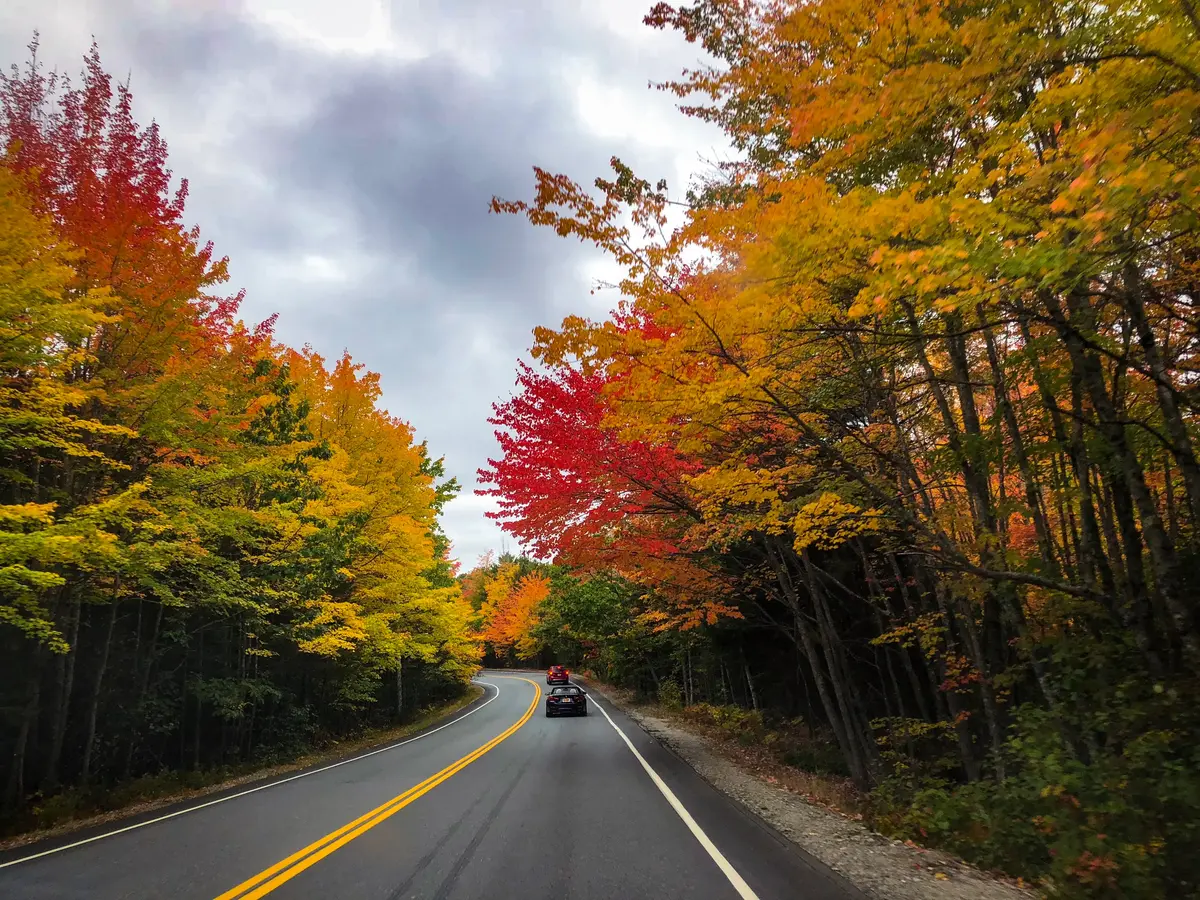
Google Maps will reroute you around the Kancamagus to shave 20 minutes off the day. Ignore it — that byway is the whole point of the drive, not the obstacle.
The 7-Day Coast-and-Mountains Version
- Day 1: Boston — walk the Freedom Trail, then drive north to a Portsmouth or North Shore overnight
- Day 2: Portland, ME — the Old Port, lighthouses, and the food scene
- Days 3–4: Bar Harbor and Acadia National Park
- Day 5: the White Mountains and the Kancamagus Highway
- Day 6: Stowe and Woodstock, Vermont
- Day 7: back to Boston through the Berkshires or down I-93
The 3-to-5-Day Fall-Foliage Long Weekend
- Boston to Lincoln or North Conway via the Kancamagus
- Franconia Notch State Park and Flume Gorge
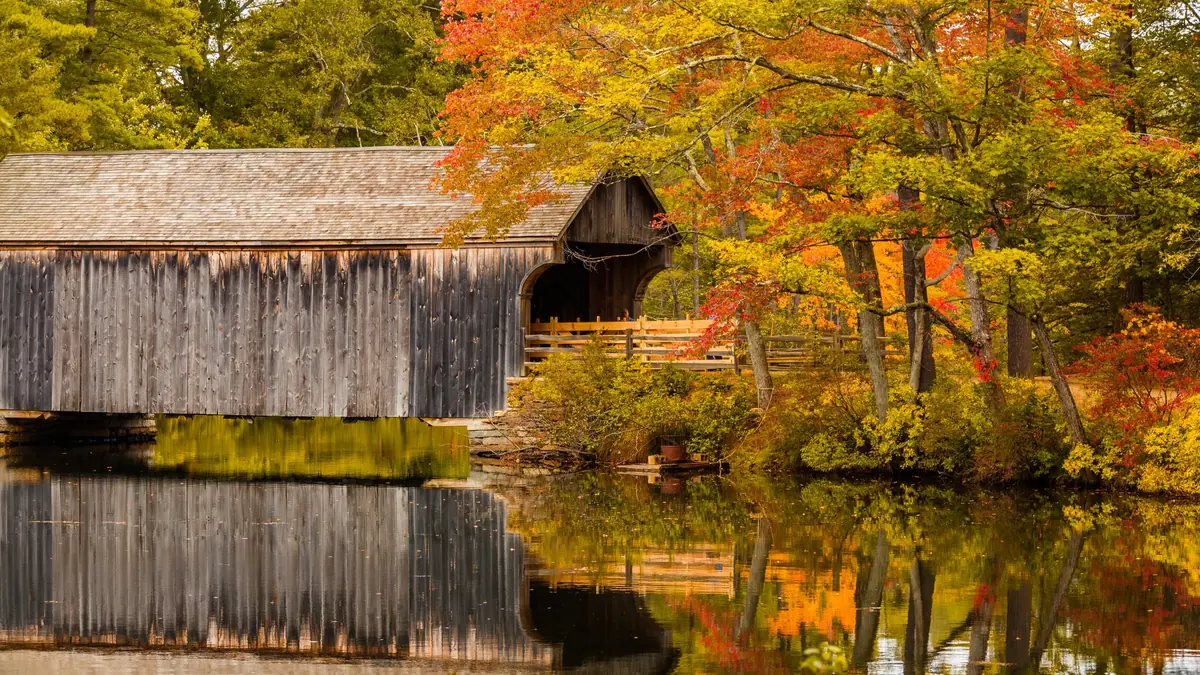
- Stowe and Woodstock for covered bridges and maple farms
- Best window: the first two weeks of October
When Is the Best Time for a Northeast Road Trip?
October is the standout month for a northeast road trip, when fall foliage peaks across New England. Late September to mid-October delivers the best color, while June through August suits beaches, hiking, and lobster season. May and late October bring fewer crowds and lower rates. Winter favors Vermont skiing but makes mountain driving slower and trickier.
- Summer (June–August): warm coast, 70–80°F (21–27°C); best for beaches and lobster shacks
- Fall (late September–mid-October): foliage peak; highs ~58–66°F (14–19°C), lows ~40–50°F (4–10°C)
- Spring (May): quiet, mud season inland, lower rates
- Winter (December–March): Vermont ski season; mountain roads need caution
Temperatures slide about 15°F across October, so pack layers even if your first day is mild. And ignore the hype around one specific weekend: Columbus Day weekend gets mythologized as “peak,” but color depends on elevation and the year, and northern Vermont often turns a week earlier.
When Does Fall Foliage Peak in Each State?
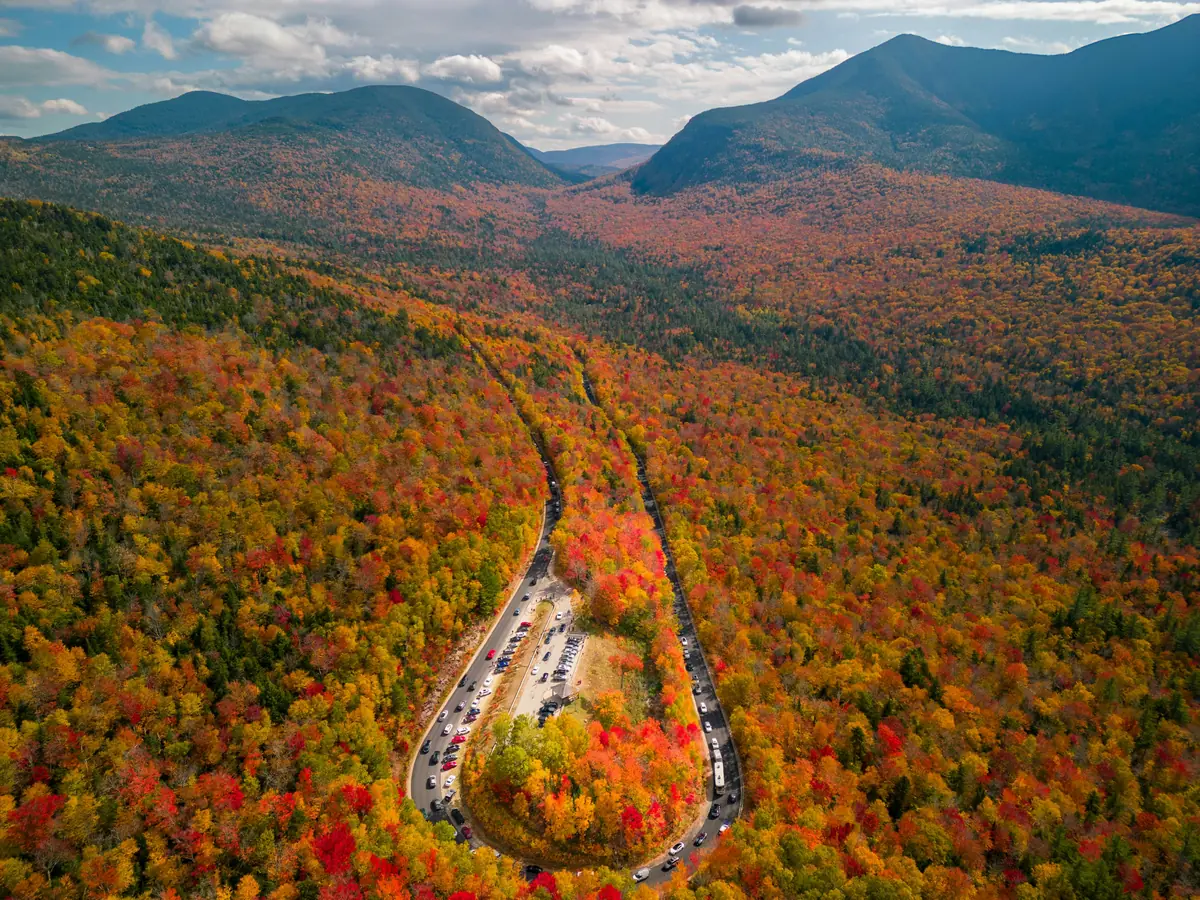
New England foliage peaks north to south. Northern Vermont, New Hampshire’s White Mountains, and northern Maine turn first, from late September to early October. Central areas like Massachusetts and the Berkshires peak in mid-October, while coastal and southern New England — Acadia, Rhode Island, Connecticut — often hold color into late October. Each location stays at peak about 7 to 10 days.
| Region | Typical Peak Window |
|---|---|
| Northeast Kingdom VT, Great North Woods NH, northern Maine | Late September–early October |
| White Mountains, central NH/VT | Early–mid-October |
| Berkshires, Pioneer Valley (MA) | Mid-October |
| Acadia and the Maine coast | Mid–late October, into the third week |
| Boston, Rhode Island, Connecticut | Mid–late October |
Here’s the trick most guides miss: Acadia holds color a week or two later than inland Vermont because the ocean moderates the temperature. If you miss peak in the mountains, you can still catch it on the coast. Aim to reach each region a few days after its historical peak — color often runs a touch behind the old calendar dates, and arriving slightly late beats arriving early.
How Much Does Acadia National Park Cost, and What Do You Reserve?
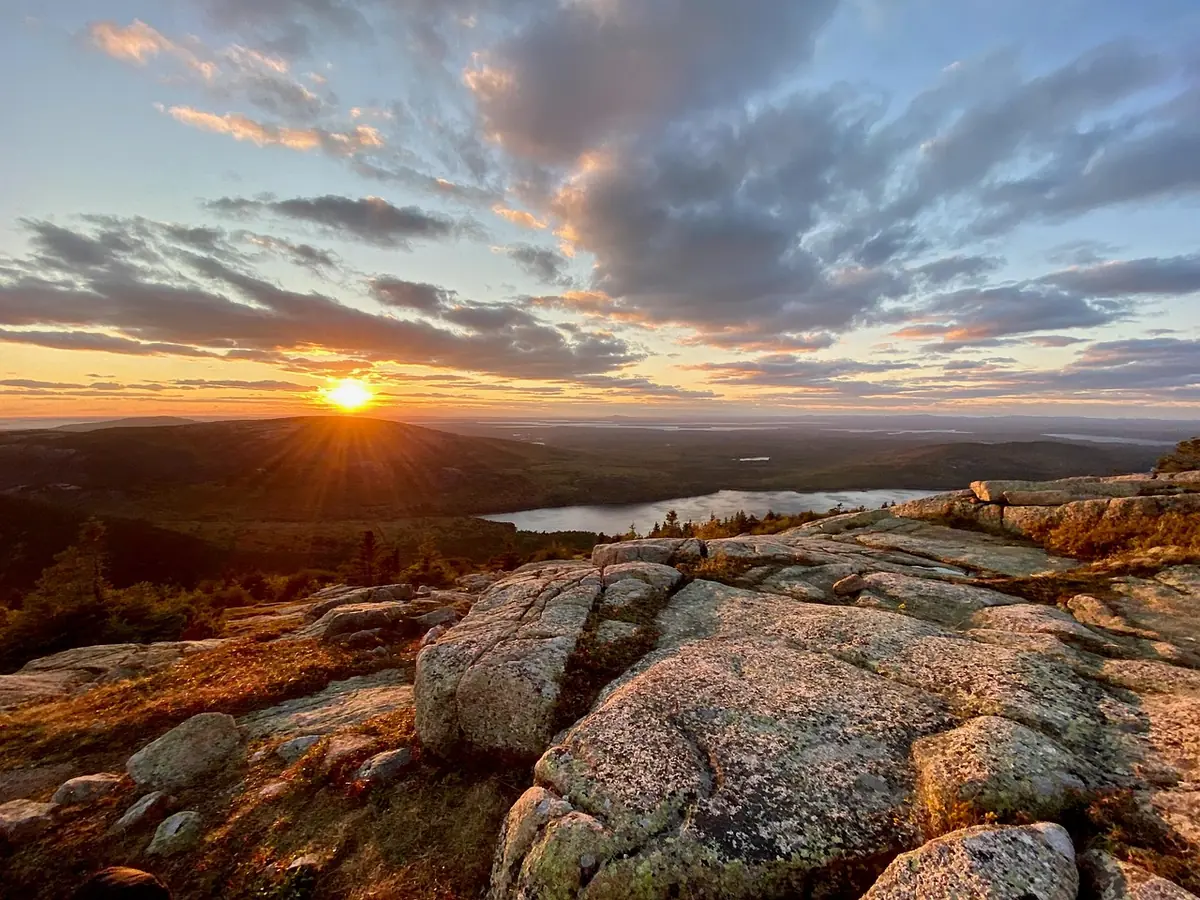
Acadia charges $35 per private vehicle for a 7-day pass, and the system is cashless. Driving Cadillac Summit Road from late May to late October requires a separate $6 vehicle reservation booked on Recreation.gov, and sunrise slots sell out fastest. Hiking, biking, or taking a taxi to the summit is free and needs no reservation. Full current fees are on Acadia’s official NPS fee page.
- Entrance pass: $35 per vehicle, $30 per motorcycle, or $20 per person; valid 7 days
- Annual passes: $70 Acadia annual, or $80 America the Beautiful (covers every national park)
- Cadillac Summit Road reservation: $6 per vehicle, not discounted for pass holders
- Reservation release: about 30% of slots 90 days out, the rest two days out at 10 a.m. ET
- Vehicle limit: no vehicles over 21 feet (6.4 m) on the summit road
- Non-US residents: an added $100 per person (age 16+) on top of the entrance fee; a non-resident annual Acadia pass runs $250
- Portland to Acadia: about 3 to 3.5 hours
- Park Loop Road: 27 miles (43 km)
- Island Explorer shuttle: free, but it does not serve the summit
- Annual visits: roughly 4 million
The non-resident surcharge is the one recent change that catches families off guard: for a family of four arriving in a rental car, it pushes the cost of driving through the entrance station to roughly $435 rather than $35. If you hold a valid pass from home, factor the extra $100 per adult in before you cross the line.
Pro Tip: Save the reservation QR code to your phone offline before you arrive. Cell service in the park is unreliable, and a ranger has to scan it at the gate.
If the sunrise reservation is gone by the time you book, don’t pay a reseller. Walk Bar Harbor’s east-facing Shore Path or hike the North Ridge Trail for a free, uncrowded sunrise over the water.
Is the Kancamagus Highway Worth Driving?
Yes — the Kancamagus is the single best stretch of the whole trip in October, and the detour Google Maps wants to route you around is the reason you came. Route 112 runs 34.5 miles through New Hampshire’s White Mountain National Forest between Lincoln and Conway, climbing to the 2,855-foot Kancamagus Pass, with no gas stations anywhere along it.
Allow 45 minutes nonstop, or 2 to 3 hours if you stop at Sabbaday Falls and Rocky Gorge — and you should stop.
- Byway length: 34.5 miles (55.5 km); the full Route 112 runs 56.39 miles (90.7 km)
- High point: Kancamagus Pass, 2,855 feet (870 m)
- Parking: a $5 seven-day pass for the Forest Service lots, or a White Mountain National Forest annual pass ($30 individual / $40 household)
- Stops: Sabbaday Falls (~0.5-mile walk), Lower Falls, Rocky Gorge
- Nearby: Mount Washington Auto Road, summit 6,288 feet (1,917 m)
Pro Tip: Fill the tank in Lincoln or Conway first. There is genuinely nowhere to buy fuel on the Kanc, and the climb eats range faster than you expect.
In early October the forest here smells of pine and wet leaves, and the Swift River runs glass-clear beside Rocky Gorge. It’s the kind of detail you only catch once you’ve parked and walked down to the water.
Vermont’s Green Mountains: Stowe, Woodstock, and Route 100
Vermont delivers the classic New England fall. Route 100 threads about 180 miles through the Green Mountains past ski towns, general stores, and maple farms, while Stowe and Woodstock add covered bridges and the Ben & Jerry’s factory in nearby Waterbury. Vermont peaks first thanks to its elevation, so aim for the first week of October.
- Route 100: about 180 miles (290 km) top to bottom
- Book ahead: Stowe and Woodstock lodging fills months out in foliage season
- Ben & Jerry’s factory tour: in Waterbury, just off I-89
- Billings Farm & Museum: a working dairy farm in Woodstock
- Sleepy Hollow Farm: the famous photo spot just outside Woodstock
- Local treat: creemees, Vermont’s maple-tinged soft-serve
Sleepy Hollow Farm gets so mobbed at peak that the town has clamped down on access. Arrive at sunrise or skip it entirely — by mid-morning the shoulder of the road is a parking lot, and you’ll spend more time finding a spot than taking the photo.
Historic New England and the Mid-Atlantic Extension
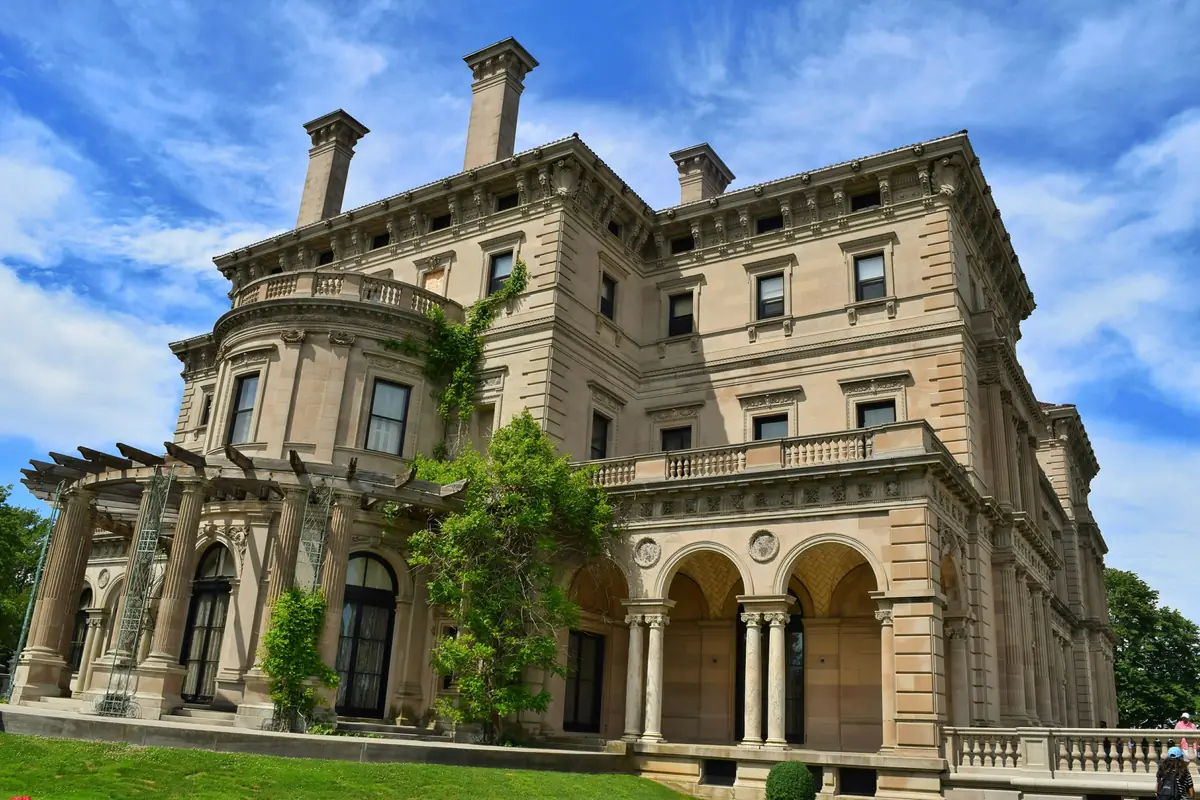
History-minded travelers can build a Northeast route around four centuries of American history: Boston’s Freedom Trail, Salem’s witch-trial sites, Mystic’s seaport, Newport’s Gilded Age mansions, and Plymouth’s Pilgrim landmarks. To go further, extend south along the Boston–New York–Philadelphia corridor for a Mid-Atlantic add-on. Boston to New York City is about 215 miles and roughly four hours.
- Freedom Trail (Boston): 2.5 miles (4 km) past 16 historic sites
- Salem: witch-trial history and museums, an hour north of Boston
- Mystic Seaport (CT): a re-created 19th-century maritime village
- Newport (RI): the Breakers and other Gilded Age mansions along the Cliff Walk
- Hartford (CT): the Mark Twain House and Harriet Beecher Stowe’s home
One firm piece of advice: don’t drive in Boston. Park the car and ride the “T” — it’s one of the worst cities in the country to park in, and any local will tell you the same.
What Will a Northeast Road Trip Cost?
Budget roughly $150 to $250 per night for mid-range lodging off-season, and $250 to $400 or more in peak summer and foliage season. A Maine lobster roll now averages around $36, and Acadia entry is $35 per vehicle. Add a rental car, gas at roughly $3.85 a gallon in Maine, and modest tolls. Budget travelers can spend far less with motels and picnics.
| Traveler Type | Lodging per Night | Daily Spend (Excl. Lodging) |
|---|---|---|
| Budget (motels, picnics) | $90–150 off-peak | ~$40–70 |
| Mid-range (3-star hotels, restaurants) | $250–400+ peak | ~$80–150 |
| Luxury (inns, fine dining) | $500+ | $200+ |
- Lobster roll: around $36 on the Bangor Daily News price index (roughly $27 to $41 depending on the shack — Red’s Eats in Wiscasset opened at $41, the highest it’s ever charged); Cape Cod runs higher, about $39 to $50
- Bar Harbor lodging: mid-range averages around $346/night, climbing to roughly $646 at peak; October is the single priciest month, when averages can push past $560
- Flights to Boston: about $500 to $800 round trip in high season
- Gas: around $3.85 a gallon in Maine, up sharply from about $3.08 a year earlier — it swings with oil prices, so check the AAA state average before you budget
You can trim the food bill noticeably by buying breakfast and picnic lunches at supermarkets. Three restaurant meals a day in Maine adds up fast, and a single grocery stop in Portland can fund two days of harbor-side picnics for the price of one sit-down dinner.

Driving Logistics: Tolls, E-ZPass, Rental Cars, and EVs
Most Northeast toll roads use E-ZPass, accepted across a 19-plus-state network. The Massachusetts Turnpike is fully cashless — E-ZPass or Pay By Plate by mail — while the Maine Turnpike still takes cash or E-ZPass. A full Mass Pike run costs about $7.45 with an in-state E-ZPass, or $9.35 with an out-of-state transponder. Rental cars often bundle one in. The state lays out every toll payment option on Mass.gov.
- Massachusetts: the 138-mile (222 km) Pike is fully cashless, with no toll booths
- Maine Turnpike: accepts cash or E-ZPass, about 4.9¢/mile by E-ZPass
- Out-of-state E-ZPass: pays the higher rate in Massachusetts (about $9.35 vs. $7.45 in-state)
- One-way rentals: expect a drop fee for returning the car in a different city
- EV charging: Maine Turnpike plazas at Kennebunk and Gray have fast chargers
Pro Tip: In a rental, confirm the transponder is active before you hit a gantry. Unpaid Mass Pike tolls mail a Pay By Plate invoice with a small per-toll fee, and it often catches up with you weeks after the trip ends.
The One Stop to Skip (and What to Do Instead)
Plymouth Rock is the most overhyped stop in New England. It is, literally, a fairly small rock behind a columned canopy, and most visitors stand there for ten minutes feeling vaguely cheated — shrug, take the photo, drive on.
Give it 10 to 15 minutes if you’re passing, then reinvest the time. Salem, an hour north, is worth a full afternoon for the witch-trial history and the waterfront. Portsmouth, NH, is another strong swap: a walkable colonial port with better food than its size suggests.
And here’s a free wildlife warning no guide mentions: wild turkeys regularly stop traffic in New England, and honking does nothing. No power on earth makes them hurry. Build in a buffer and enjoy the show.
Northeast Road Trip: Common Questions
How Many Days Do You Need for a New England Road Trip?
Seven to ten days covers coastal Maine, the White Mountains, and Vermont at a relaxed pace. Stretch to 10 to 14 days if you want all six states; a tighter coastal-Maine or foliage trip works in 3 to 5. Daily legs stay under about three hours either way.
What Is the Best Month for a Northeast Road Trip?
October, for foliage — peak color runs from late September to mid-October. June through August is the pick for beaches and lobster season, and shoulder weeks in May or late October trade some color for thinner crowds and softer rates.
How Much Is the Entrance Fee for Acadia National Park?
$35 per private vehicle for seven days, paid by card or phone since the park is cashless. Cadillac Summit Road needs a separate $6 vehicle reservation from late May to late October; walking or biking up costs nothing. Non-US residents pay an added $100 per person.
What Is the Best Scenic Drive in New England?
The Kancamagus Highway in New Hampshire — a 34.5-mile run through the White Mountains with no gas stops and the best October color of the trip. Vermont’s 180-mile Route 100 and coastal US Route 1 in Maine are the close runners-up.
Do You Need E-ZPass for a Northeast Road Trip?
Not strictly, but it helps. The Mass Pike is cashless (E-ZPass or a mailed Pay By Plate invoice), while the Maine Turnpike still takes cash. One transponder works across 19-plus states, and most rentals include one.
Before You Book the Trip
For most travelers the sweet spot is a 7-to-10-day loop from Boston through coastal Maine, the White Mountains, and Vermont, timed for the first two weeks of October, with daily drives kept under three hours and two or three base camps instead of a new hotel every night.
The route rewards planning more than speed. Lock in the two things that actually sell out — Acadia’s entrance pass and the Cadillac sunrise reservation — then let the days fill in around your base camps, price the newer costs honestly (gas near $3.85, a lobster roll near $36, and $100 per non-resident adult at Acadia’s gate), and rent a car with an active E-ZPass.
If you have a week, drive the coast-and-mountains version. If you have three days, drive the Kancamagus at foliage peak and don’t look back. Either way, book the park before the bed.