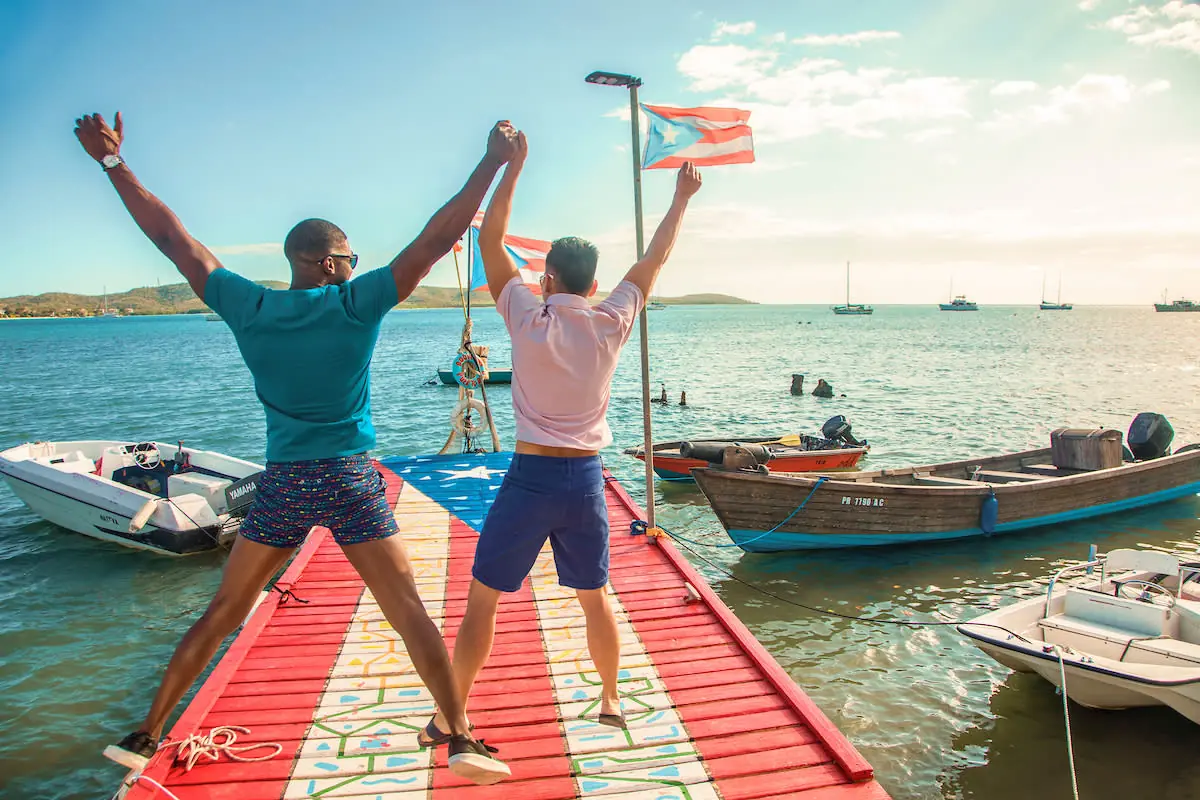
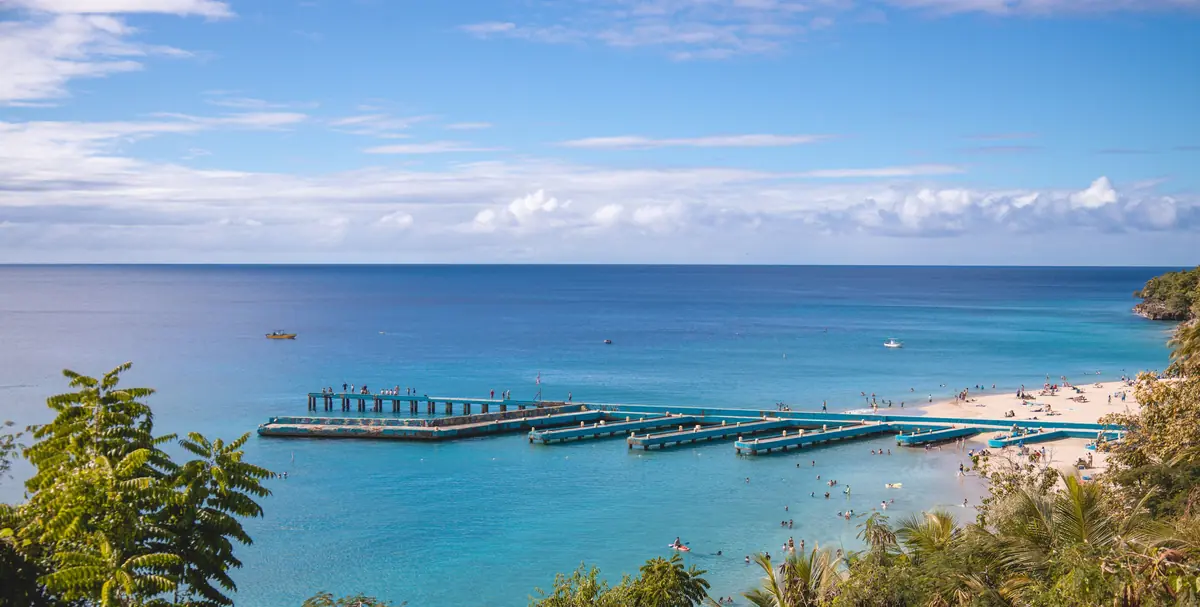
Most travelers land in San Juan, rent a car, and never leave the tourist circuit. This Aguadilla & Isabela travel guide is for the ones who want raw coastline, real food, and zero pretense on Puerto Rico’s northwest coast.
Why does the northwest coast need a different plan than San Juan?
Puerto Rico’s northwest coast — locally called Porta del Sol — has no public transportation, and Uber and Lyft work reliably only in San Juan. A rental car booked before your flight is the single non-negotiable of any Aguadilla & Isabela travel guide. Show up without one at 1:00 AM and you will be stranded at the airport. For the bigger picture on how the region fits into a full trip, our Puerto Rico travel guide lays out the essentials.
This region rewards independent travelers who do the logistical work upfront. Those who come prepared get raw surf breaks, sea turtle coves, humpback whale sightings from the cliffs, and waterfall rope swings. Those who wing it get frustration.
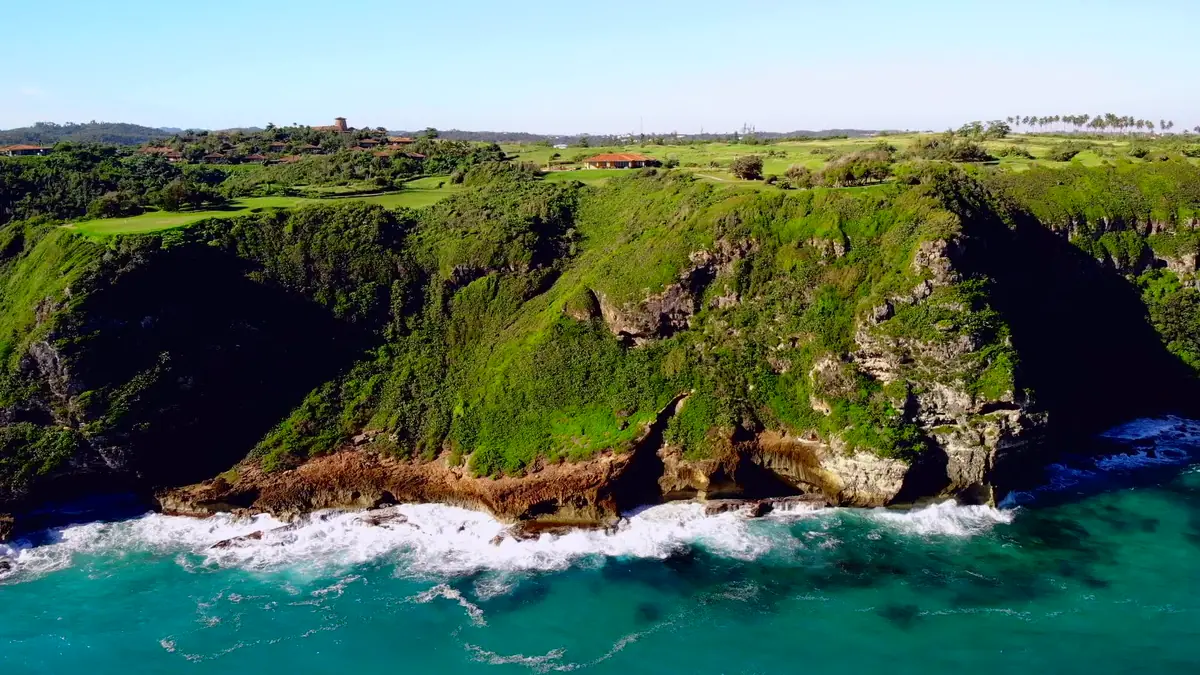
How do you handle midnight arrivals at BQN?
Book a rental car at Rafael Hernández International Airport (BQN) in advance because walk-up availability is non-existent at 2:00 AM. BQN is a former military installation — Ramey Base — and many of the cheapest mainland flights arrive between midnight and 2:00 AM. Enterprise, Hertz, and Avis all operate 24/7 at the counter, but reservations are the only way in. Our full breakdown on renting a car in Puerto Rico covers insurance quirks, toll tags, and the island-specific fine print worth reading before you confirm.
Pro Tip: Book through Costco Travel for upgrade pricing that often beats the direct rate. On departure, use the after-hours drop-box at Enterprise or Avis if your flight leaves before the desk opens — it eliminates the morning scramble entirely.
Is it safe to drive Route 107 late at night?
Route 107 is safe after dark if you slow to a near-stop at every red light, check all directions, then proceed. The moment you exit BQN you are on a pitch-black, winding stretch of coastal asphalt with lights swaying in the Atlantic wind. Locals treat red lights as yields at 2:00 AM to avoid being rear-ended on an unlit road — and you should too.
Route 107 to Route 2 is your primary corridor from the airport to most coastal accommodations. Save your hotel’s GPS coordinates offline before landing. Cell signal drops hard in transition zones between the airport and Route 2.
When should you visit — whale season or snorkeling season?
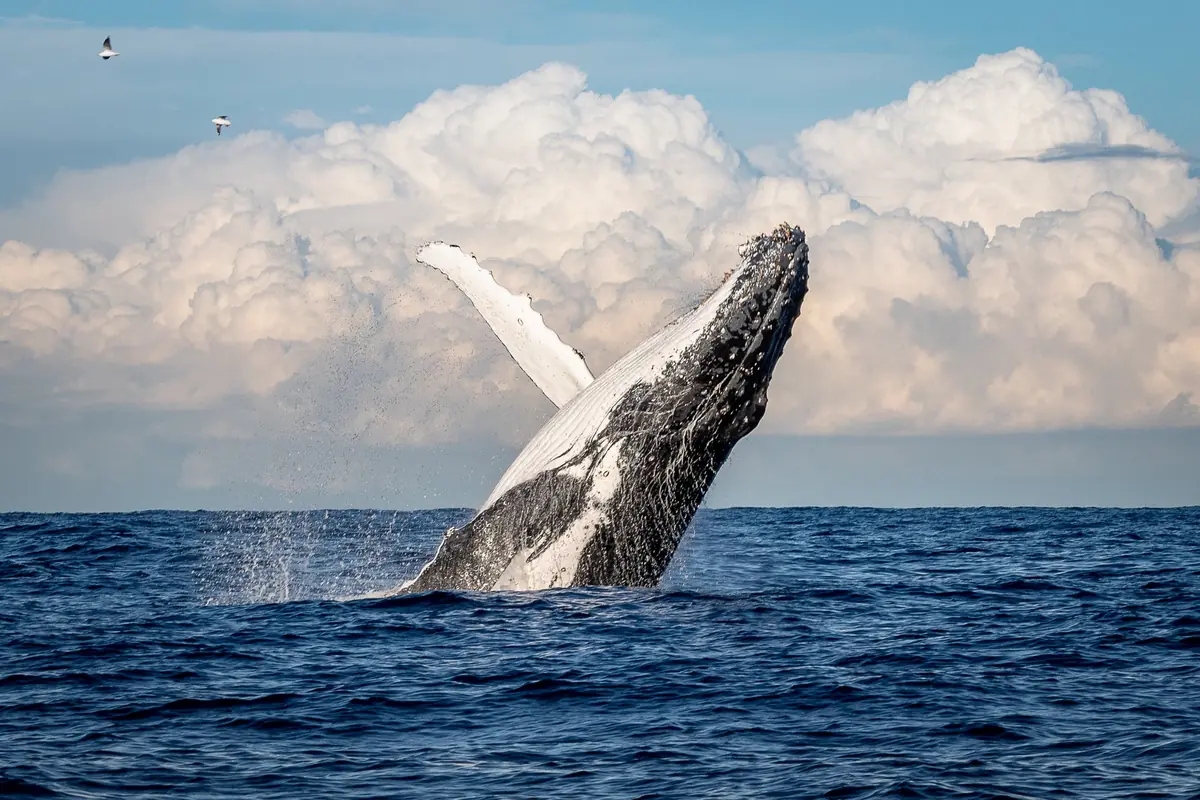
The Atlantic runs a radically different program depending on when you show up. Winter (December through March) brings heavy swells, professional surfers to Tres Palmas in nearby Rincón, and humpback whales close enough to spot from the cliffs without a tour boat — but most swimming beaches are unfit for casual bathers. Summer (June through August) flattens the ocean, visibility underwater skyrockets, and Isabela’s natural pools peak for shore snorkeling. The caveat: sargassum seaweed can wash onto northern shores in summer, so check reports before a snorkel-heavy trip.
- Winter (Dec–Mar): Best for whale watching, surfing, cliff views. Rough surf, not safe for family swimming.
- Spring (Apr–May): Mild conditions, fewer crowds. Variable swells.
- Summer (Jun–Aug): Best for snorkeling, pozas, paddleboarding. Possible sargassum.
- Fall (Sep–Nov): Quieter coastline, good diving. Hurricane season — monitor forecasts.
Should you base in Aguadilla or Isabela?
Base in Aguadilla if you want nightlife and central highway access; base in Isabela if you are traveling with small children or want direct access to the pozas. Aguadilla is the regional hub — denser, louder, food trucks clustered around main corridors, a bar scene that runs late. Isabela is quieter, more residential, and physically closer to the limestone formations that create the protected natural wading pools.
If you are traveling with toddlers, book Isabela. The pozas — seawater pools shielded by rock ledges — are accessible from short walking paths, and the atmosphere is calm enough to let kids roam near the shoreline without constant anxiety. Our dedicated guide to Puerto Rico with kids goes deeper on which beaches, activities, and logistics work best for family travelers.
Pro Tip: Beachfront Airbnbs in Isabela along Route 466 offer the fastest access to the pozas. Look for listings that explicitly mention pool or poza access in the property description to cut significant daily driving.
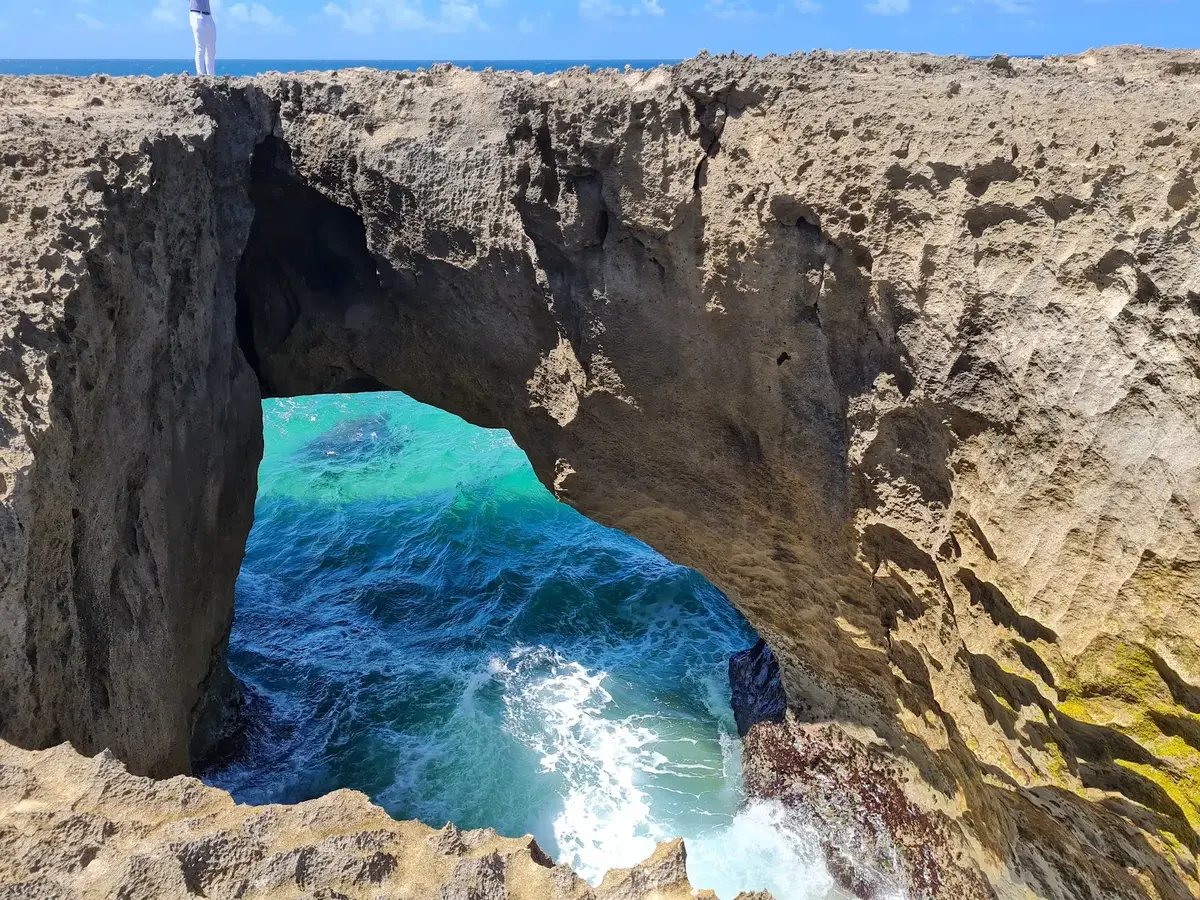
Which Aguadilla beaches are worth your time?
The Aguadilla coastline is not one experience — it is five distinct ones compressed into a few miles. It runs from highly commercialized and loud at Crash Boat to completely isolated and amenity-free at Peña Blanca, with a rugged athletic challenge at Survival Beach in between. For context on how these compare with the rest of the island’s coast, see our roundup of the best beaches in Puerto Rico. Plan your days high-energy first, exploration later.
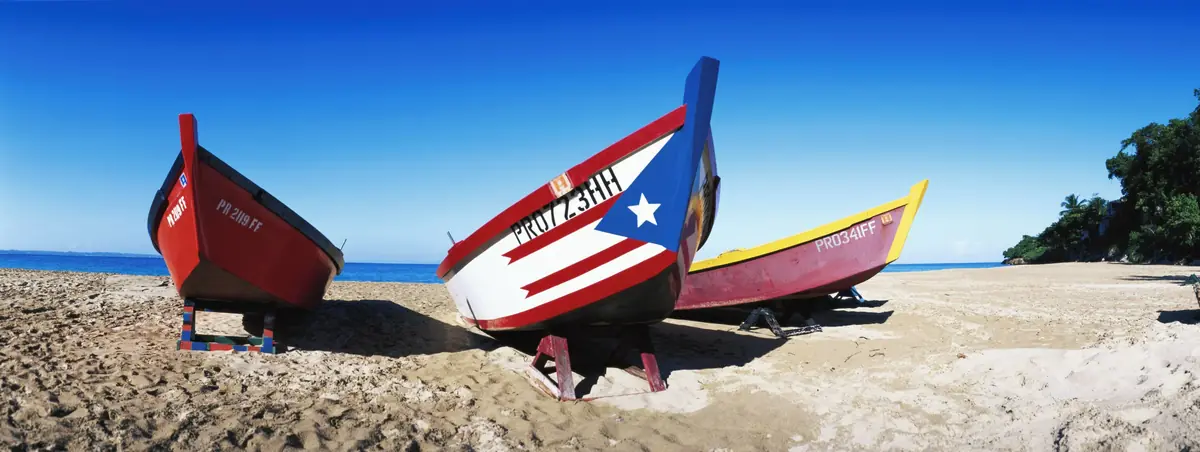
1. Crash Boat Beach — loud, social, and the best snorkeling near the pier
Walk toward Crash Boat expecting silence and you will have a bad day. Walk toward it expecting full-volume Puerto Rican beach culture and you will have the best afternoon of the trip. The beach anchors on an old US Air Force pier with pylons thick with algae and marine life. Locals blast music from parked trucks, food kiosks line the entrance, and kids cannonball off the pier into clear water.
For snorkelers, stay left of the pier and explore the algae-covered pylons where fish congregate in dense schools. Advanced divers should know that a sunken Superfortress B-29 bomber lies in deeper water beyond the pier — an extraordinary scuba diving site most tourists never learn about.
Pro Tip: Arrive before 9:00 AM to claim parking near the kiosks. By 11:00 AM on a weekend the lot is full and the beach is shoulder-to-shoulder.
- Location: Crash Boat Beach, Aguadilla
- Cost: Free entry; parking fills quickly, arrive early
- Best for: Snorkelers, divers, families comfortable with crowds
- Time needed: 3–5 hours
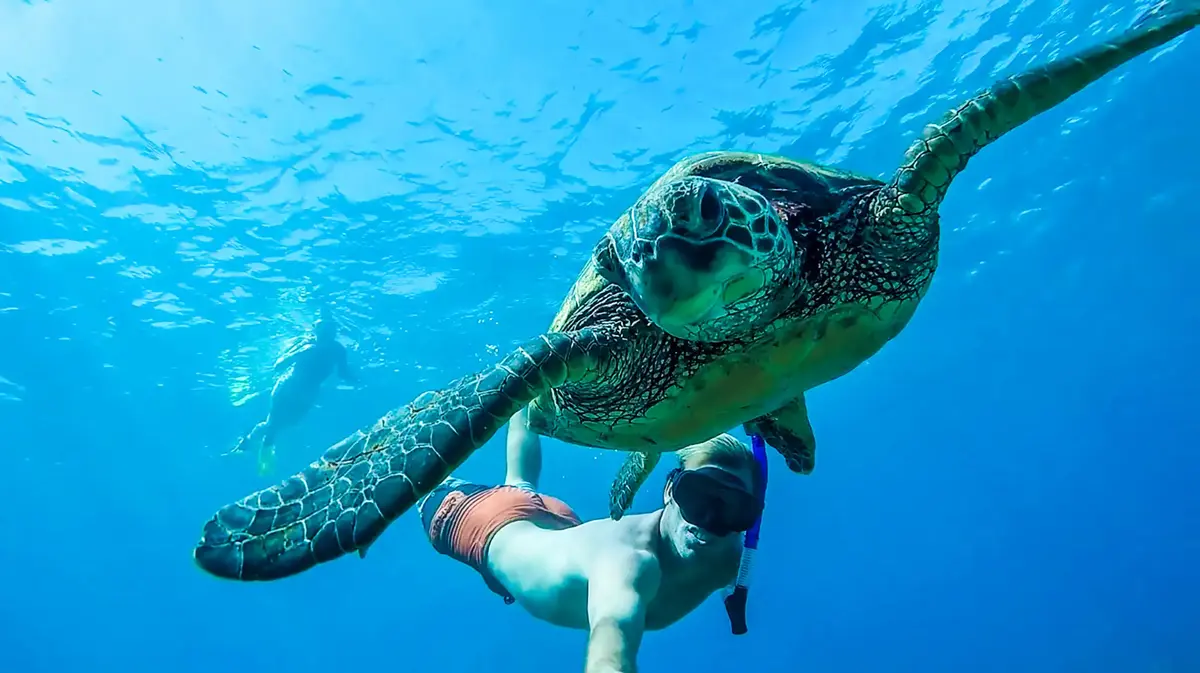
2. Peña Blanca Beach — free sea turtles, but watch the parking
Peña Blanca is one of the most rewarding beaches on the coast, and the one most likely to cost you money if you are not warned. A local runs an unofficial dirt lot near the entrance and will call the police on any car parked legally on the adjacent street. Your options: pay the lot, find genuinely public parking further up the road and walk, or arrive very early.
Past the parking mess, the payoff is exceptional. Swim past the immediate shoreline in calm conditions and you will frequently find resting sea turtles hovering near the bottom of the shallow cove. There are zero amenities — no bathroom, no kiosk, no shade. Pack water and food before you arrive.
- Location: Playa Peña Blanca, Aguadilla
- Cost: Free beach access; unofficial parking charges vary
- Best for: Snorkelers, wildlife seekers, self-sufficient travelers
- Time needed: 2–3 hours
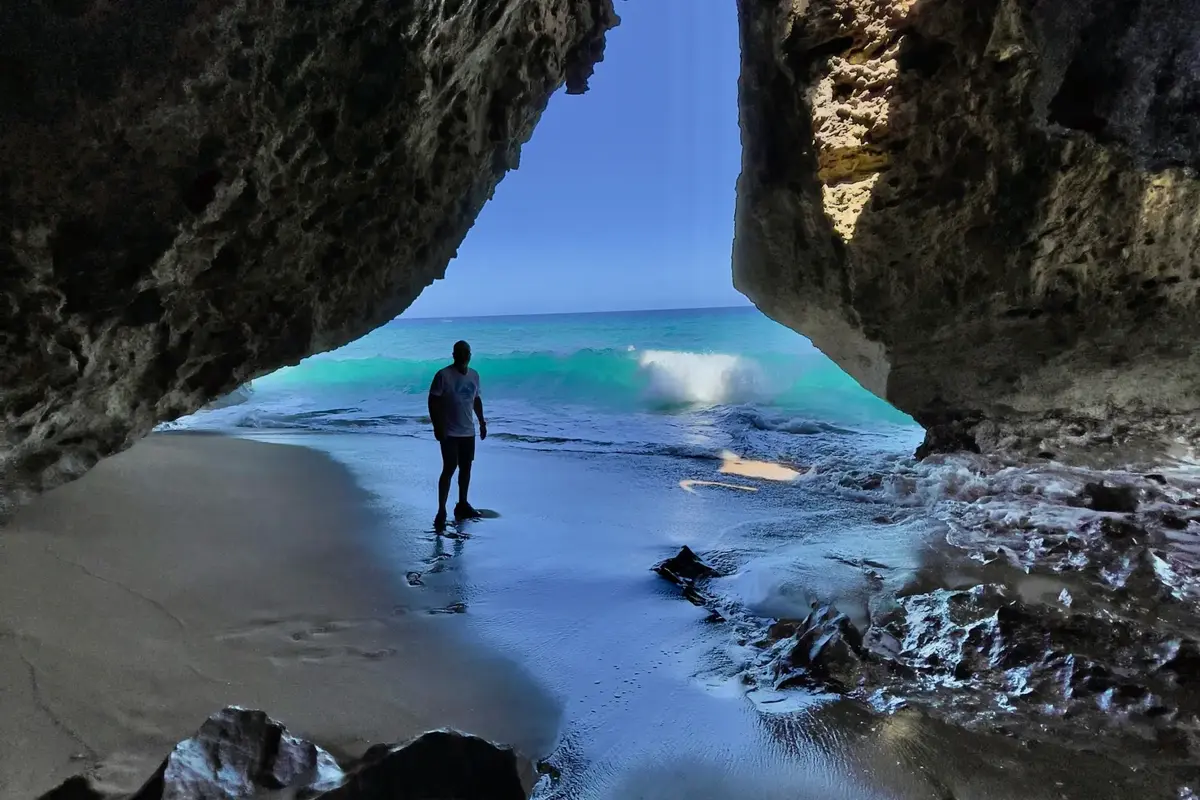
3. Survival Beach — a hike, not a walk
This is not a beach walk. Clarifying that upfront prevents real injury. The 1.15-mile (1.85 km) trail begins at Surfer’s Beach and crosses exposed volcanic limestone karst that is razor-edged and indifferent to poor footwear. On my last attempt, the rocks grabbed at my shoe soles on every step, and tropical humidity made the intertwining tree roots slick enough that I used my hands to scramble over boulders multiple times.
Flip-flops will end your hike within 200 feet (60 m). Mandatory gear: closed-toe hiking shoes with a hard sole, a hands-free backpack for water, and a checked tide chart. When high tide rolls in, it eliminates the return path entirely and traps hikers on loose pebble zones with no safe exit. If you like this kind of terrain, our hiking in Puerto Rico guide lists other coastal and mountain trails that reward proper footwear.
Pro Tip: Start no later than 90 minutes before high tide. The trail is spectacular on a low-tide morning but genuinely dangerous on a rising tide.
- Location: Trailhead at Surfer’s Beach, Aguadilla
- Cost: Free
- Best for: Fit hikers with proper footwear — not children or casual walkers
- Time needed: 2.5–3 hours round trip
4. Wilderness Beach and the lighthouse ruins
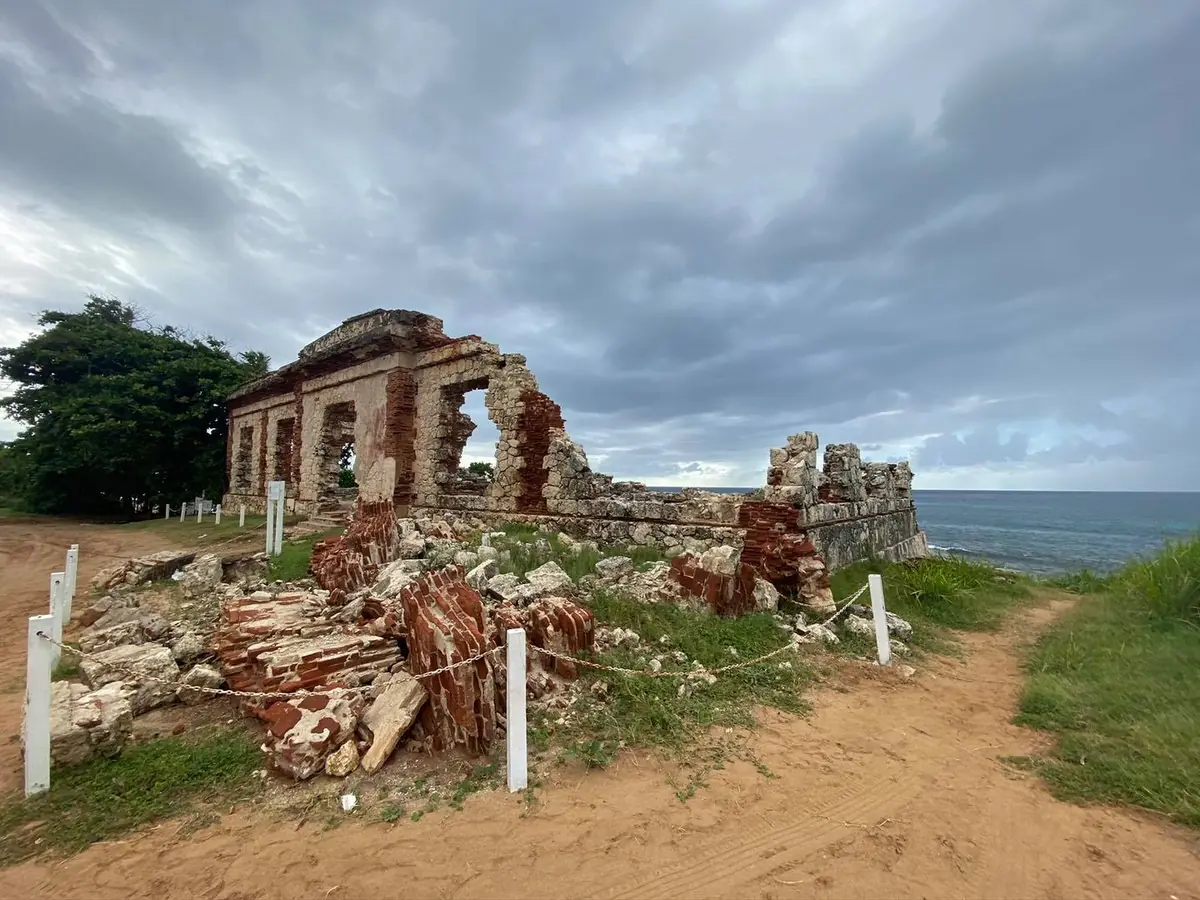
When every beach on the Aguadilla strip feels packed, this is your escape valve. Reaching Ruinas del Faro Punta Borinquen requires a pothole-dense unpaved dirt track where a standard sedan will protest audibly — a high-clearance SUV or pickup makes the drive a non-event. The reward is crumbling colonial-era lighthouse walls standing against a wide-open Atlantic backdrop, adjacent to a quiet beach with no vendors, no music, and no crowds.
This is where photographers and couples disappear for the afternoon while everyone else fights for Crash Boat parking.
- Location: Ruinas del Faro Punta Borinquen, Aguadilla
- Cost: Free
- Best for: Couples, photographers, travelers with high-clearance vehicles
- Time needed: 2–4 hours
Which Isabela beaches are actually safe for kids?
Isabela is the only reliable family option during winter swell season because massive limestone ledges run parallel to the shore along Route 466, acting as natural breakwaters. Behind them, seawater collects into shallow pozas calm enough for toddlers even when the open ocean 50 feet (15 m) away is unswimmable. The ocean does not get gentler in January — the rocks just redirect it.
5. Playa Jobos and Montones
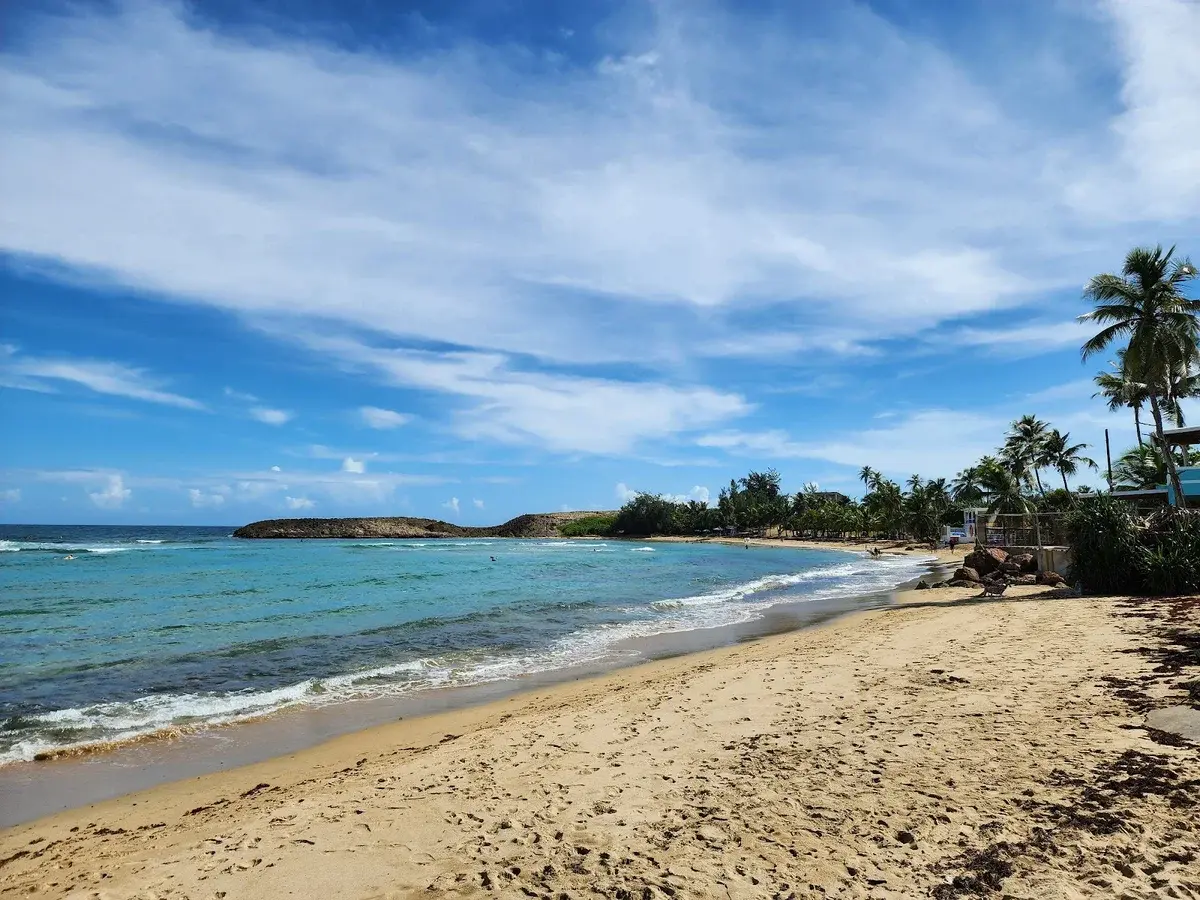
Playa Jobos is Isabela’s most popular beach, and it earns the attention only if you know which section to use. To the right of the main rock formation, natural pools run 1 to 6 feet (0.3–1.8 m) deep, sheltered from the primary rip current. Small fish dart between your ankles — the ideal first snorkeling environment for kids. To the left of the rock, a pronounced longshore current runs consistently. Do not send children into that zone.
Montones, near Villas Del Mar Hau, is the single most toddler-friendly beach on the northwest coast. The water is exceptionally calm, entry is gradual, and bathrooms and food are within easy reach.
- Location: Playa Jobos & Montones, Isabela
- Cost: Free
- Best for: Families with children, beginner snorkelers
- Time needed: 3–5 hours
6. Shacks Beach — summer-only snorkeling
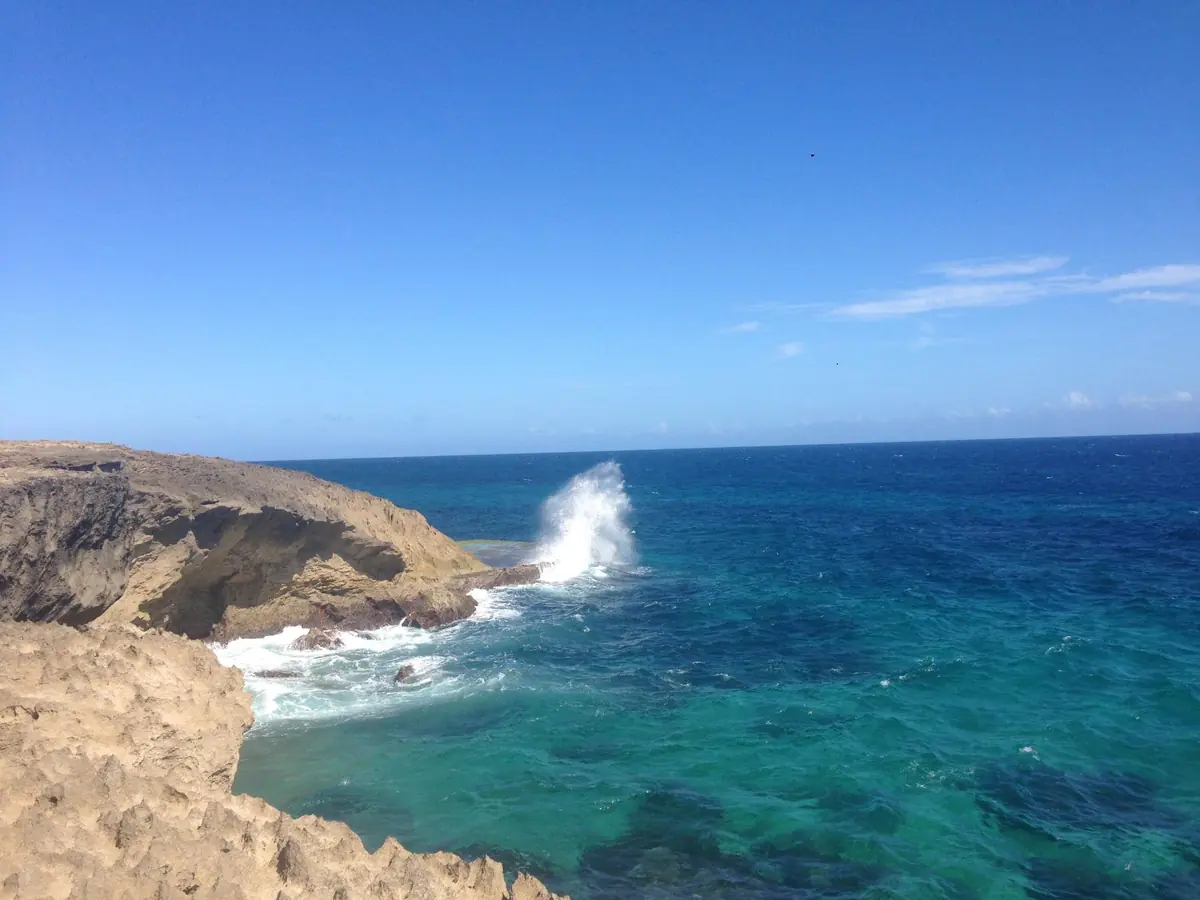
Shacks is not a family swimming beach. That sentence is missing from most guides and it needs to be in every Aguadilla & Isabela travel guide. Access is a small, easily-missed side road off Route 4466. The beach is unremarkable from shore because the experience lives underwater at the distant offshore reef — complex coral, underwater caves, extraordinary clarity in summer.
Reaching the reef requires a considerable swim from shore. In summer, the effort pays off in some of the best snorkeling on the island. In winter swells, do not attempt it — severe rip currents have caught experienced swimmers off-guard.
- Location: Shacks Beach, Isabela (off Route 4466)
- Cost: Free
- Best for: Experienced snorkelers and divers in summer only
- Time needed: 2–4 hours
Poza de las Mujeres is not in Isabela — here is where it actually is
Dozens of travelers have wasted a full day searching for a beach that is not where the internet says it is. Poza de las Mujeres is located in Manatí, a 45-minute drive east along the north coast. Mislabeled social media posts embedded the wrong location so thoroughly that it shows up in searches as an Isabela beach. It is not.
The beach sits inside the Hacienda La Esperanza natural reserve and requires a short hike through a somewhat swampy access path. It opens into clear water with real historical weight — a colonial-era bathing spot designated for upper-class women.
Pro Tip: Plan Poza de las Mujeres as a stopover on the drive from San Juan to Aguadilla, not as a day trip from your west coast basecamp. The geography makes it a logical midpoint, not a local excursion.
What should you do inland when you need a break from the beach?
After three days of sun, sand, and salt, beach fatigue sets in. The interior resets it. Bosque Estatal de Guajataca covers over 2,350 acres (950 hectares) of dense karst forest where the temperature drops noticeably as you drive south from the coast, and the trails are legitimately shaded — a critical feature when your sunscreen tolerance is gone.
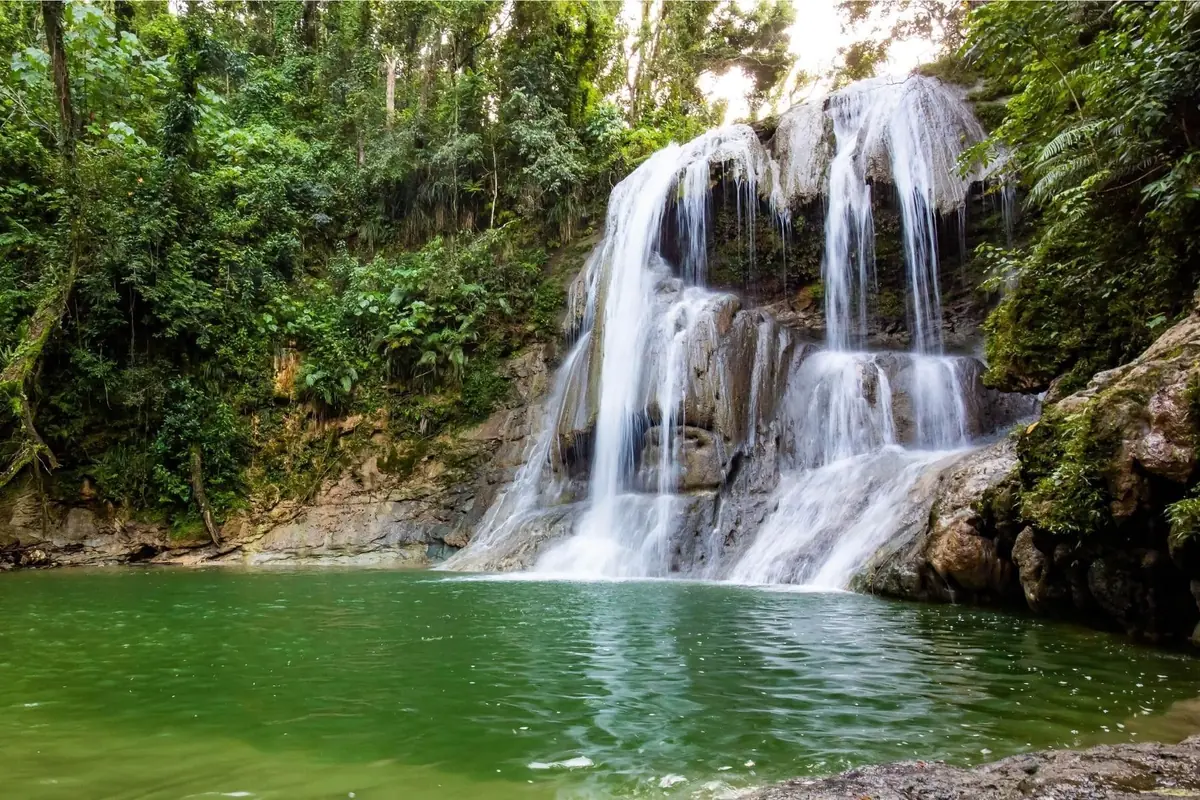
The premier inland day trip is Gozalandia Cascadas in San Sebastián, one of the most accessible waterfalls in Puerto Rico. Parking runs about $5–$10 per car, collected at a grassy lot by attendants. Descend the concrete steps and you reach the main lower waterfall with its natural pool and rope swing. Most visitors stop here — you should not. Continue up the dirt trail to the upper waterfall for a second natural pool, another rope swing, and far fewer people. The extra 10–15 minutes of hiking separates the average visitor from the one who comes back with better photos.
Pro Tip: Combine Gozalandia with the hammock museum in San Sebastián town center. It is a genuinely distinct cultural stop that rounds out the inland day without significant extra driving.
Where should you eat on the northwest coast?
The best food on the northwest coast is not in a hotel dining room. Puerto Rico’s daily food culture runs through the panadería, the roadside food truck, and the unmarked kiosk that does not need a sign because everyone already knows it is there. Chasing the formal restaurant circuit while ignoring these institutions is a significant error.
Morning: Coffee and pastries before 7:00 AM
Surfers and hikers hit the road before 7:00 AM, so plan your coffee the night before. The Coffee Spot in Aguadilla handles the espresso need with consistent quality and early hours. For pastries, Levain Bakery near the old Ramey Base produces artisanal breads worth the detour before a long beach day.
The non-negotiable cultural stop is a traditional panadería like Erick’s Bakery. Order a quesito — a flaky cream-cheese-filled pastry that is the definitive pre-beach fuel of the Puerto Rican west coast. One is rarely enough.

Lunch: Order a tripleta and commit
After four hours in the ocean, you will be aggressively hungry. The correct response is a tripleta from a food truck — a Puerto Rican street sandwich loaded with three meats (typically chicken, pork, and beef) and dressed with an aggressive condiment stack. Los Gapo Sandwich is the reference point for this experience, and the portion size is not subtle.

Dinner: The modern west coast dining boom
The evening scene has evolved considerably beyond what legacy guides still recommend. In Aguadilla, Zazones, Cinco, Vittata Gastropub, and Khalan Thai represent the contemporary direction — craft cocktails, locally-sourced menus, and ambiance that makes a late dinner feel like a deliberate choice. In Isabela, The Eclipse delivers cliffside dining with premium Atlantic views. It is the occasion restaurant of the northwest coast, so book ahead and arrive before sunset.
Before you book
TL;DR: The northwest coast of Puerto Rico rewards preparation and punishes assumptions. Reserve your BQN rental car before you book the flight, pick Isabela for kids and Aguadilla for nightlife, and check the tide chart before attempting Survival Beach or the Shacks reef swim. Travelers piecing together a longer loop can fold this region into our Puerto Rico road trip itinerary for a full-island plan. Do that and this Aguadilla & Isabela travel guide will lead you to a week most Puerto Rico visitors never experience.
Which stop would you put at the top of your list — the Peña Blanca sea turtles, the Gozalandia upper waterfall, or a tripleta from Los Gapo? Drop your pick in the comments.