Aveiro Portugal rewards the traveler who shows up with clear eyes: a flat, canal-laced city of painted boats, candy-striped beach houses, and egg-yolk sweets you can cover in a single day. It is not a Venice stand-in. Here is exactly how to reach it from Porto, what it costs, and whether it earns an overnight.
Is Aveiro Worth Visiting? The Honest Verdict First
Yes — Aveiro is worth visiting, but as a half-day to full-day stop, or a relaxed overnight, rather than a multi-day base. It is a small, flat, walkable canal city known for painted moliceiro boats, Art Nouveau facades, working salt pans, and ovos moles sweets. Skip it only if your Portugal trip is genuinely short.
The city is home to about 81,000 people, which makes it the second most populous in Portugal’s Centro region after Coimbra. It sits squarely on the Lisbon–Porto main rail line, which is the single biggest reason it works as a stop: you can fold it into a journey you’re already taking.
What surprises most first-timers is the scale. The canals reveal themselves within a couple of minutes of leaving the station, and the whole center is coverable on foot. There’s no climb, no sprawl, no need for transit inside the city itself. That compactness is the whole pitch — Aveiro is a place you absorb quickly, not a place you ration over days.
Pro Tip: If your trip is under five days and split between Lisbon and Porto, Aveiro is a better mid-journey break than a dedicated day trip. Get off the train, store the Venice expectation at the door, and give it four or five hours.
Why Everyone Calls It the “Venice of Portugal” (And Why That Sets You Up for Disappointment)
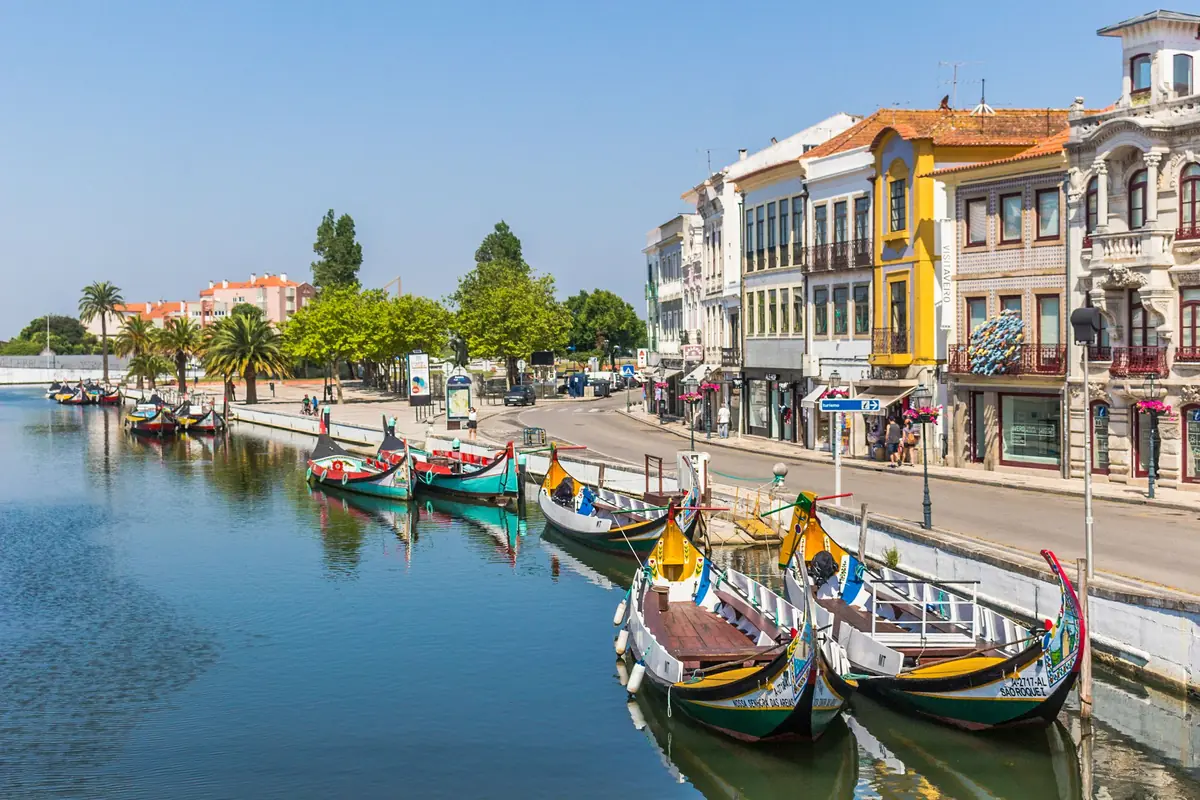
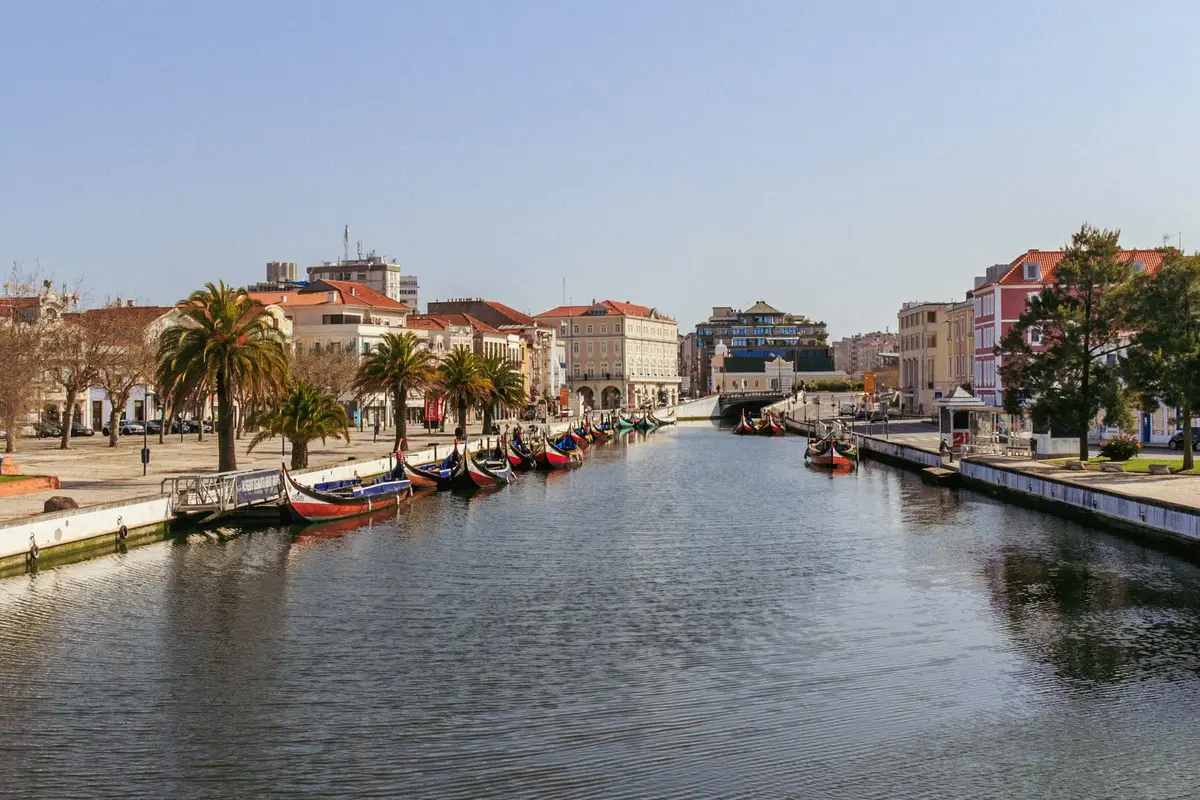
Aveiro is nicknamed the “Venice of Portugal” because canals run through its center and gondola-like moliceiro boats glide along them. But the resemblance ends there. Aveiro has a handful of wide, working canals, not a city built on water. Arrive expecting Portuguese character rather than a Venice substitute, and you’ll come away happy.
The comparison oversells the reality, and that gap is where disappointment creeps in. Plenty of people who’ve made the trip admit to a flicker of letdown in the first ten minutes — the canals are pretty, but they’re a feature of the town, not the town itself. The visitors who love Aveiro are the ones who stop measuring it against Venice and start taking it for what it is.
It helps to know what the canals were actually for. These were working waterways, used to move salt and to harvest moliço, the lagoon seaweed that gave the boats their name. Salt has been produced around the lagoon for more than a thousand years, and the moliceiros were 19th-century workhorses long before they carried tourists. The “Venice” label mostly lives in brochures. The salt-and-seaweed history is the real story.
How to Get From Porto to Aveiro (The Part Most Guides Get Wrong)
The train from Porto to Aveiro takes about 30 minutes on the fast Alfa Pendular and roughly an hour to 75 minutes on the cheaper Urbano regional service. Trains run frequently all day. The slow Urbano leaves from central São Bento; the faster Alfa Pendular and Intercidades trains leave from Campanhã, on the city’s edge. A single Urbano fare is cheap.
Here’s the part competitors routinely muddle. Porto has two stations that matter, and they serve different trains:
- São Bento: central, beautiful, and where the regional Urbano train departs. Slower ride, lowest fare.
- Campanhã: the main intercity hub a short hop east, where the Alfa Pendular and Intercidades trains depart. Faster ride, higher fare.
The Urbano single fare runs about €3.95 (about $4.25) for adults and around €2.00 for children, loaded onto a reusable Siga smart card that costs about €0.50 (about $0.55) on its own. There are no return tickets on the Urbano — a round trip is simply two singles — so keep your Siga card and top it up for the way back. The full Porto–Aveiro distance is about 35 miles (56 km).
| Mode | Duration | Approx. cost (one way) | Departs Porto | Best for |
|---|---|---|---|---|
| Urbano regional | ~1 hr–1 hr 15 | ~€3.95 (about $4.25) | São Bento (central) | Budget, central departure |
| Alfa Pendular | ~30–35 min | higher, varies by booking | Campanhã | Speed |
| Intercidades | ~40–60 min | mid-range | Campanhã | A middle option |
| FlixBus | ~55 min | budget | bus terminal | Backup if trains are full |
| Uber / Bolt | ~40 min | from ~€50 (about $55) | anywhere | Groups, door-to-door |
Pro Tip: For a day trip, the Urbano from São Bento is the move — it’s cheap, leaves from the prettier central station, and the half-hour you’d save on the Alfa Pendular rarely justifies the fare gap or the trip out to Campanhã.
Coming From Lisbon? Here’s the Realistic Plan
From Lisbon, Aveiro is about a 2-hour to 2.5-hour direct train on the Alfa Pendular or Intercidades from Oriente or Santa Apolónia stations. A same-day round trip is possible but long. Treat Aveiro as a stop on a Lisbon-to-Porto journey rather than a Lisbon day trip.
The numbers make the case. The distance is about 135 miles (218 km), the fastest direct train runs around 2 hours 4 minutes, and fares swing widely depending on how far ahead you book. The bus is cheaper but slower at roughly 3.5 hours; driving takes about 2 hours 40 minutes via the A1. None of that adds up to a relaxing day trip out and back from Lisbon.
The smart version: board a Lisbon–Porto train, get off at Aveiro for a few hours, then continue north. If you’re doing this with luggage, plan ahead — don’t assume station lockers will be available, so either travel light that day or confirm storage before you arrive.
How Long to Spend in Aveiro: Half Day, Full Day, or Overnight
| Time you have | Best plan | Overnight? |
|---|---|---|
| Half day (4–5 hrs) | Canals, a moliceiro ride, the old town, ovos moles | No |
| Full day | Add Costa Nova’s striped houses or the salt pans | Optional |
| Two days | Beaches, São Jacinto dunes, Ílhavo, slow evenings | Yes |
A half day of roughly 4 to 5 hours covers the canals, a boat ride, the old town, and a stop for ovos moles. A full day lets you add Costa Nova or the salt pans. Stay overnight only if you want beach time, a slower evening after the tour groups clear out, or you’re breaking up a Lisbon–Porto trip anyway.
The five-hour figure isn’t a guess — it’s where most first-hand accounts of the center converge. The reason an overnight pays off has nothing to do with running out of sights and everything to do with rhythm: the day-trip crowds thin by early evening, and a city this small feels noticeably different once they’re gone.
Riding a Moliceiro: What the Canal Boat Tour Is Really Like
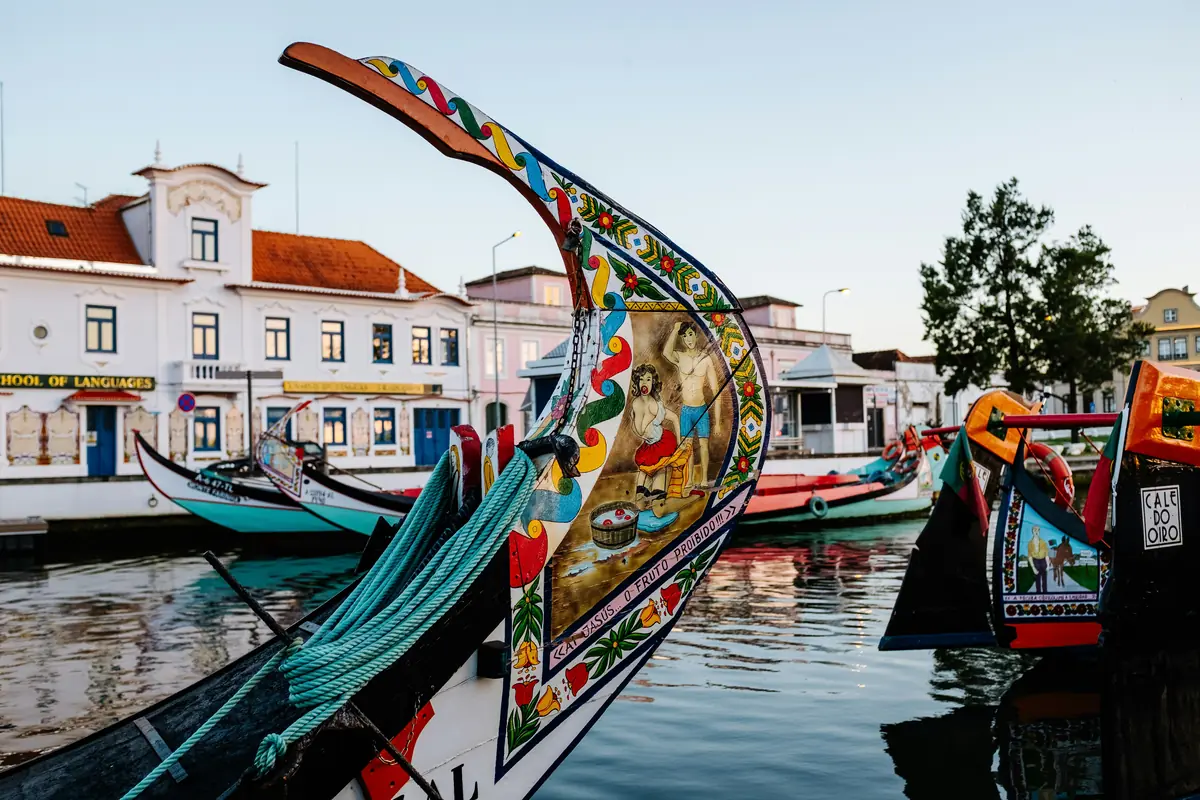
The moliceiro is Aveiro’s signature painted boat, and a ride is the city’s defining experience: about 45 minutes through the central canals past Art Nouveau facades and salt pyramids, with a guide narrating along the way. Tickets run around €13 (about $14) per adult at canal-side kiosks. It’s touristy, but the route is genuinely scenic — go early or late for the best light.
The boats glide along four main canals — Central, São Roque, Côjo, and Pirâmides — and the guides typically narrate in some mix of Portuguese, English, Spanish, and French. The flat-bottomed design isn’t decorative: these are the same shape once used to rake moliço seaweed out of the shallow lagoon. The painted panels on the prow are the part worth leaning in for, since they’re traditionally cheeky and the guides enjoy explaining them.
- Location: canal-side kiosks along the Canal Central, near Praça do Mercado
- Cost: around €13 (about $14) per adult; around €6 (about $6.50) per child
- Best for: first-timers and anyone after the signature Aveiro photo
- Time needed: about 45 minutes, plus a short wait at peak hours
Pro Tip: Tour buses tend to land mid-morning, so the kiosk lines and the boats are at their calmest before about 10 a.m. or in the last light of the afternoon — which is also when the canal photographs best.
Costa Nova’s Striped Houses: The Day Trip Within the Day Trip
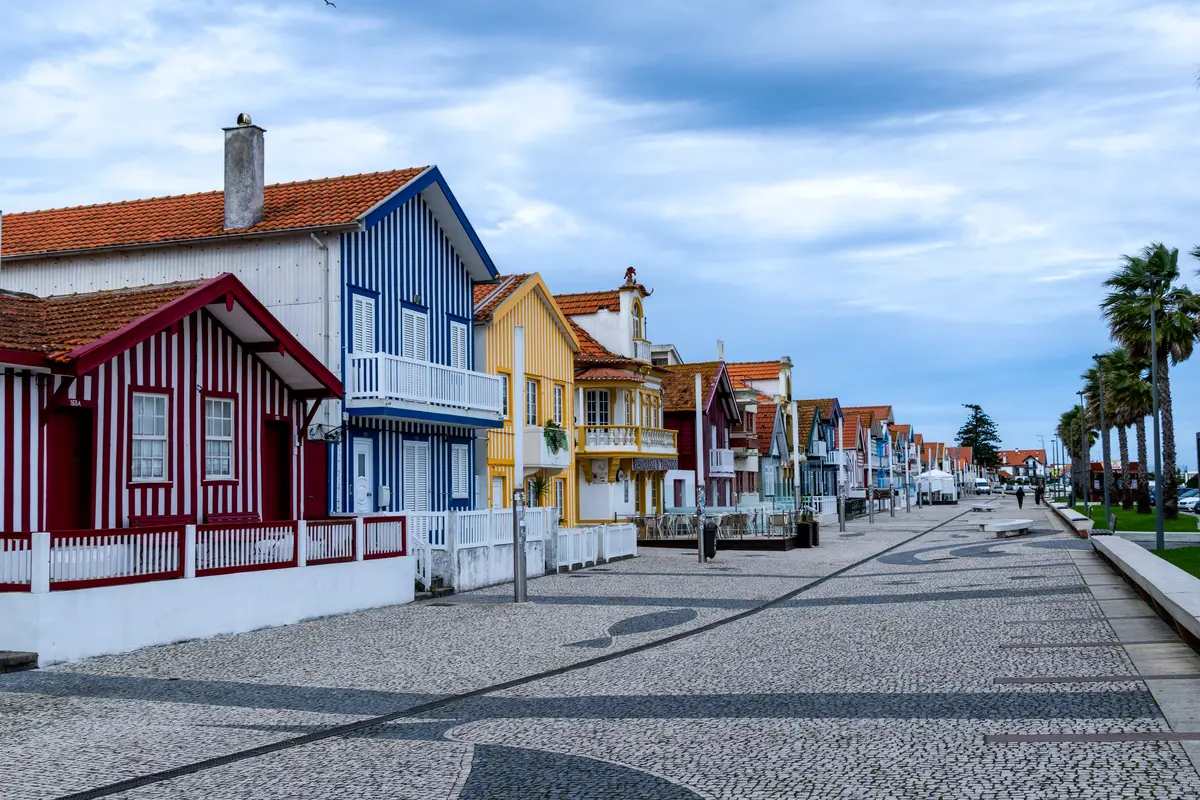
Costa Nova, about 7 miles (11 km) west of Aveiro, is famous for its palheiros — candy-striped former fishermen’s huts lined up along Avenida José Estêvão. Reach it by Transdev bus from the terminal beside Aveiro’s train station (about 25 to 40 minutes, under €3), or by bike, taxi, or Uber. Pair it with the lighthouse at neighboring Praia da Barra.
The palheiros started as humble structures where fishermen stored gear, and the bold stripes had a purpose: they made the huts visible in the lagoon fog. Today they’re holiday homes, cafés, and shops, and the row photographs as well in person as it does online. Just past them, Praia da Barra faces the open Atlantic, which means cold water and serious waves rather than a gentle swim.
- Location: Costa Nova, along Avenida José Estêvão, about 7 miles (11 km) west of Aveiro
- Getting there: Transdev bus from the terminal beside the train station, ~25–40 min, ~€2.60–€3.10 (about $2.80–3.35)
- Best for: beach lovers, photographers, and families
- Time needed: 2–3 hours, more if you add Praia da Barra
Pro Tip: The Costa Nova bus packs out at peak times in warm weather. Buy your fare from the driver if the machine line is long, and aim for an off-peak departure so you’re not standing the whole way.
Climbing Farol da Barra, Portugal’s Tallest Lighthouse
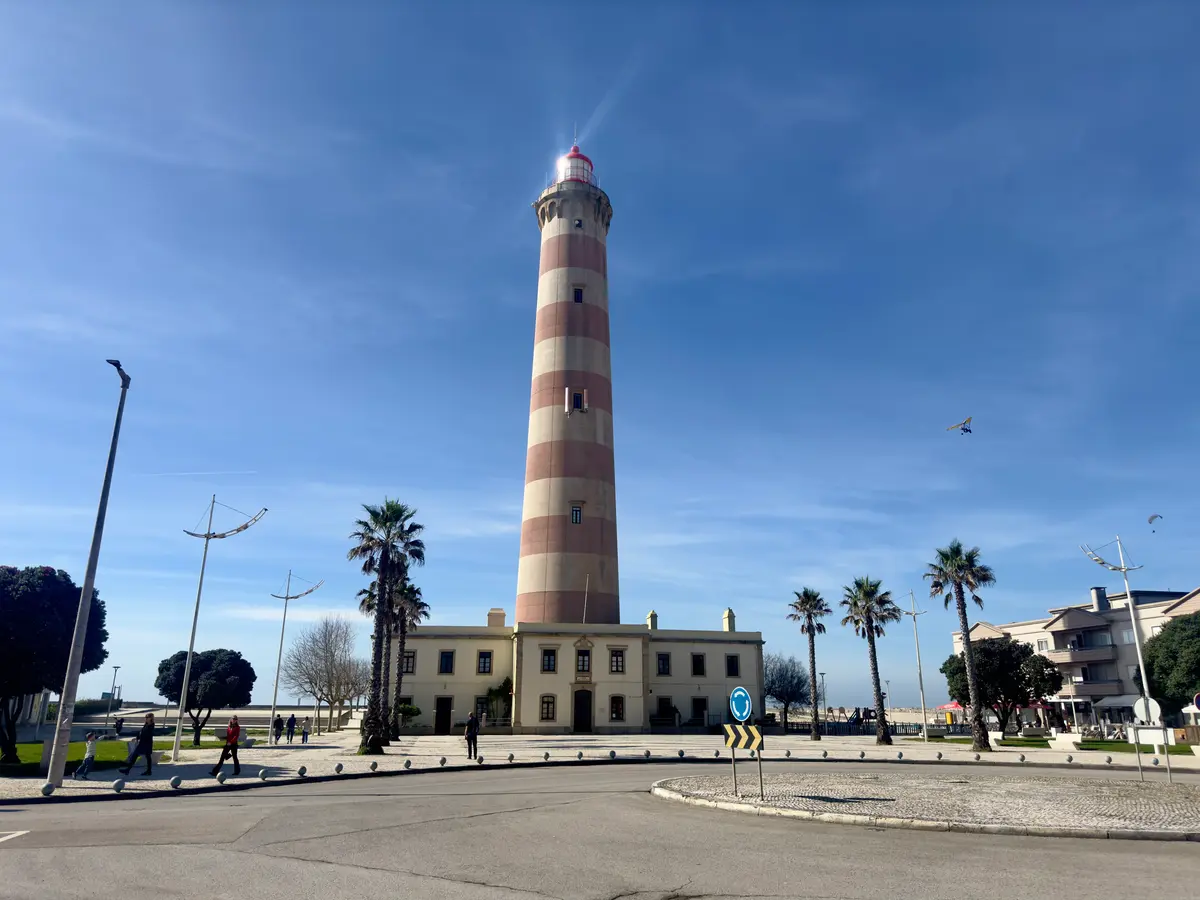
The red-and-white Farol da Barra is Portugal’s tallest lighthouse at 203 feet (62 m), standing since 1893. You can climb it — about 288 steps — for a wide view over the lagoon, Costa Nova, and the Atlantic. The catch: it opens to the public only on Wednesday afternoons, with no advance booking.
That Wednesday-only rule is the single thing most guides bury, and it’s easy to lose half a day to. The climb is free, the steps number around 288 (mostly stone, with a short metal stretch near the top), and the lighthouse sits in Gafanha da Nazaré, in the Ílhavo municipality just past Costa Nova. Visiting hours shift slightly with the season, running roughly early-to-mid afternoon, so arrive at the start of the window to get on the list.
- Location: Praia da Barra, Gafanha da Nazaré (Ílhavo municipality)
- Cost: free to climb
- Open: Wednesday afternoons only, no advance booking
- Time needed: 30–45 minutes including the climb
Ovos Moles and Aveiro’s Sweet-and-Salty Food Scene
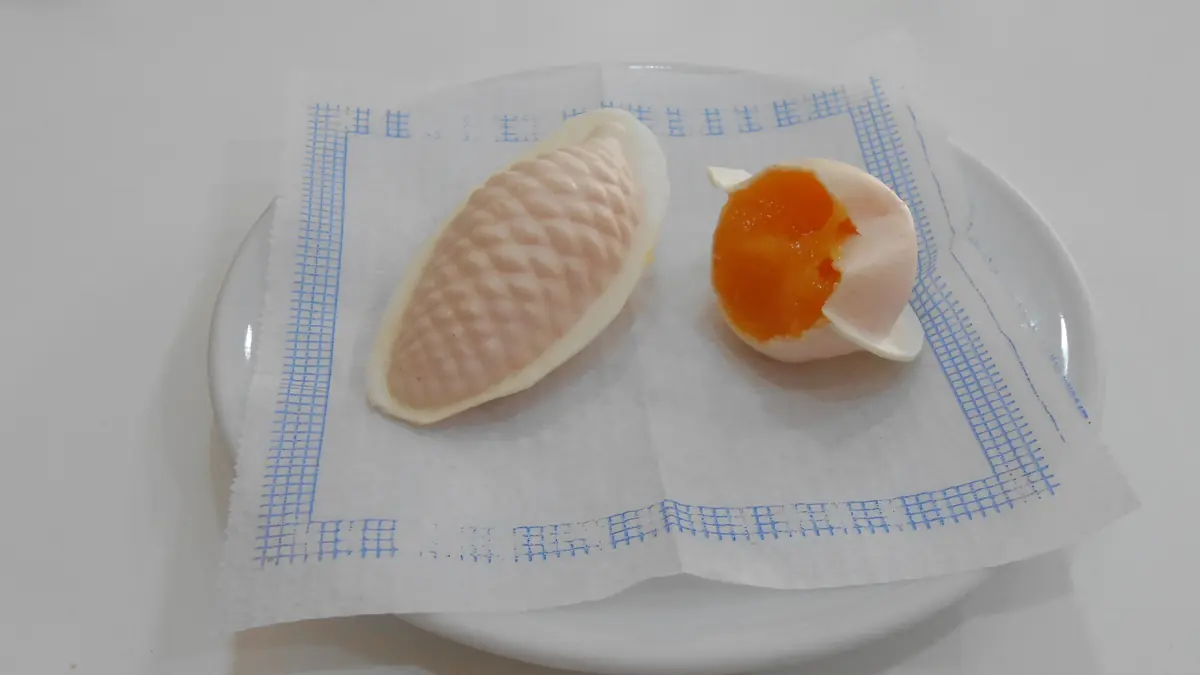
Ovos moles — a soft egg-yolk-and-sugar filling sealed in thin wafer shells shaped like fish, shells, and barrels — are Aveiro’s signature sweet and the first Portuguese conventual sweet to earn EU Protected Geographical Indication status. Try them at Confeitaria Peixinho, the oldest ovos moles house, founded in 1856. Then go savory with caldeirada de enguias, the local eel stew, near Praça do Peixe.
The recipe traces back to the nuns of the Convent of Jesus, and the PGI history is worth getting right, because guides often confuse the two key dates: the application was filed in 2006, but the registration came through on 8 April 2009. Confeitaria Peixinho, at Rua de Coimbra 9, describes itself as the oldest ovos moles house in Aveiro and has been at it since 1856.
Beyond the sweet, the food scene leans into the lagoon. The eel stew is the dish locals point to, best found around the fish-market square at Praça do Peixe. Don’t confuse tripa de Aveiro — a sweet, foldable crepe — with Porto’s savory tripe; they share nothing but a name. Wash it all down with Bairrada wines from the surrounding region, known for structured Baga reds and sparkling espumante.
Pro Tip: Ovos moles are sweeter than they look. Buy a small mixed box to share rather than committing to a dozen — the novelty fades faster than the sugar.
The Art Nouveau Trail, the Tiled Station, and Aveiro’s Museums
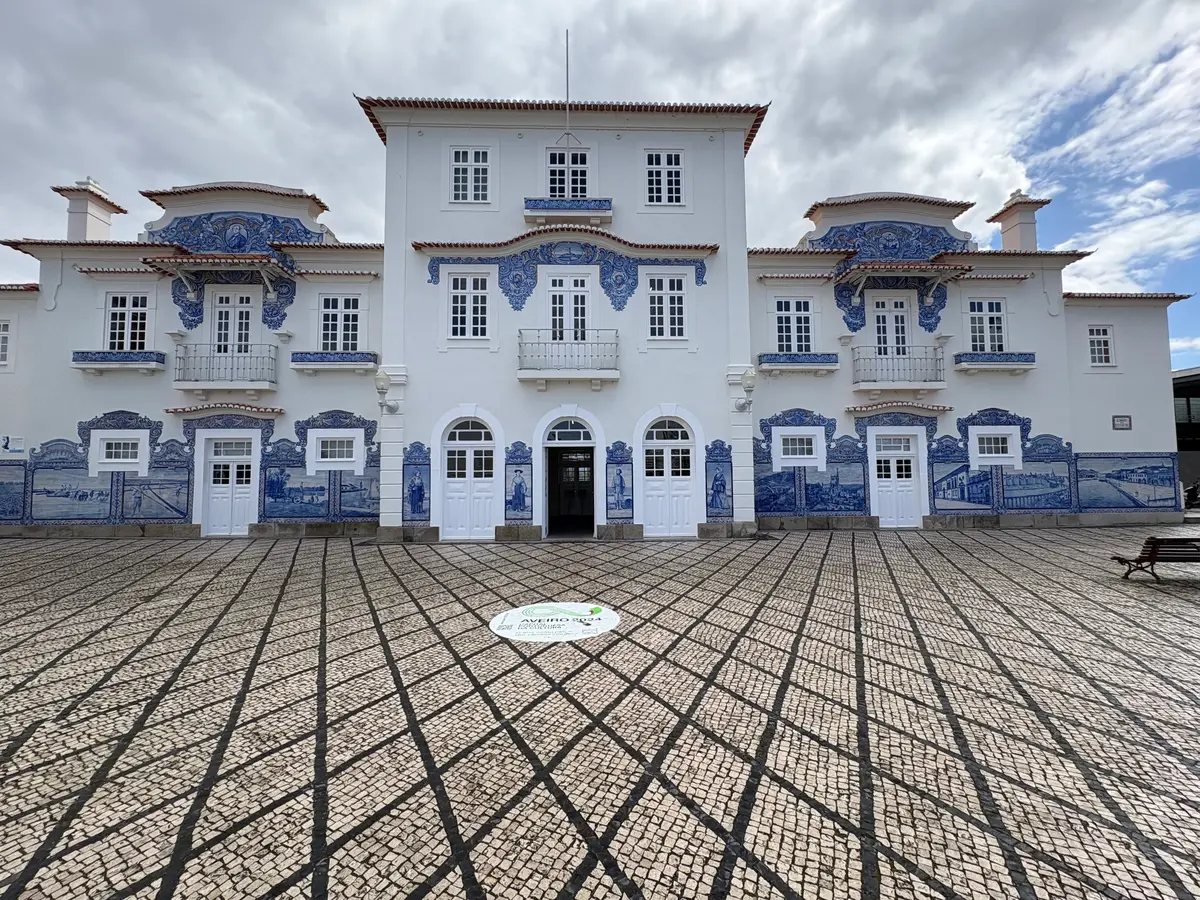
Aveiro holds one of Portugal’s best concentrations of Art Nouveau architecture, built by returning Brazilian-emigrant families in the early 20th century and walkable along the Canal Central and Rua João Mendonça. Start at the azulejo-tiled old train station, then work through the Museu de Arte Nova and the Museu de Aveiro / Santa Joana in the former Convent of Jesus.
The old station facade is clad in azulejo panels from 1916 that picture regional life, and there’s a large brick mural by the Portuguese artist Vhils nearby that rewards a short detour. The Museu de Arte Nova occupies a landmark building of the style it documents. The Museu de Aveiro / Santa Joana, set in the former convent, holds the tomb of Princess Saint Joana along with gilded baroque woodwork.
- Admission: around €7 (about $7.50) adult; a combined Bilhete Único for all city museums runs about €10 (about $11)
- Hours: Tuesday–Sunday, roughly 10:00–12:30 and 13:30–18:00
- Closed: Mondays
Pro Tip: That €7 figure is current at the museum itself — some aggregator sites still quote an older, lower price. Check the official municipal listing before you build a tight museum-day budget around stale numbers.
Salt Pans, the Lagoon, and Getting Out on the Ria de Aveiro
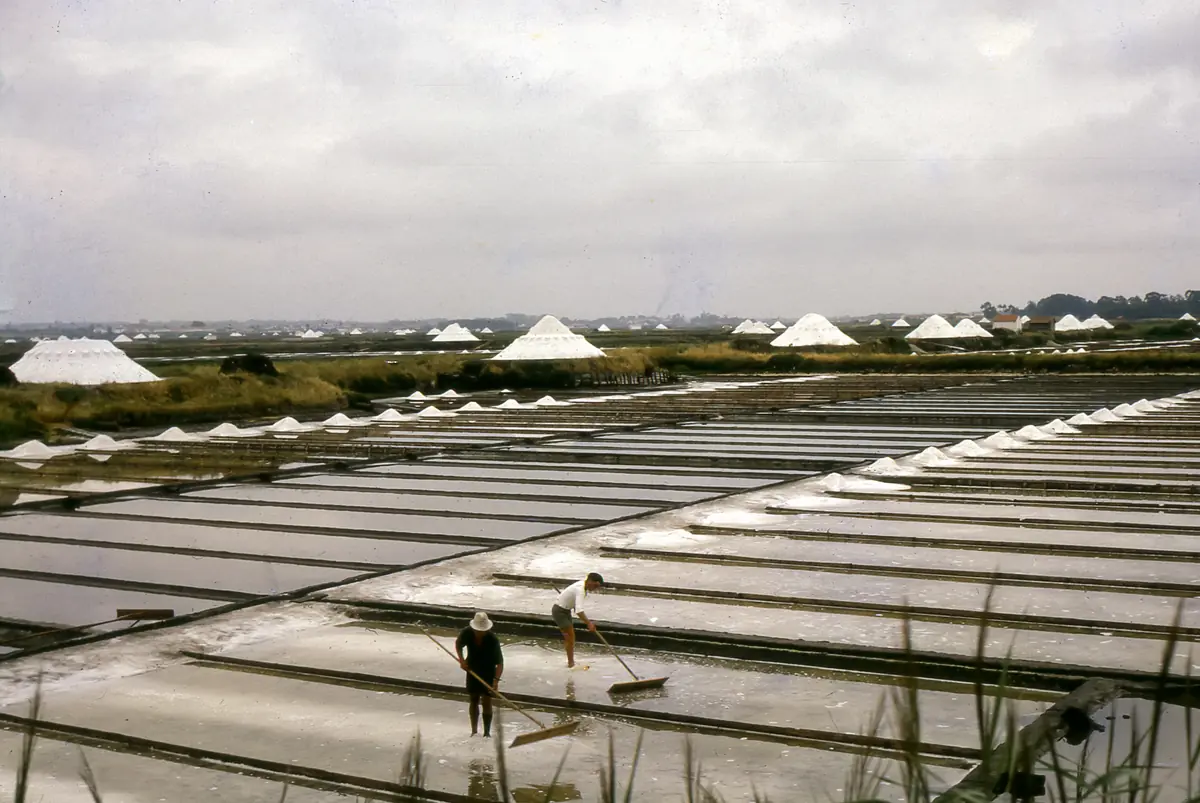
The part of Aveiro that gets reduced to a single line in most guides is the one that explains the rest of it: the Ria de Aveiro, the shallow lagoon the whole city grew up around. Salt has been worked here for over a thousand years, and the open-air Ecomuseu Marinha da Troncalhada lets you walk right up to the pans where it still happens.
During harvest season, which runs roughly from spring into mid-September, some salt pans operate a seasonal mud spa — a genuinely different way to spend an afternoon than ticking off canals. Beyond the salt, the Passadiços de Aveiro boardwalk and the São Jacinto Dunes Nature Reserve open up the lagoon’s quieter edges, with flamingos and herons for anyone who slows down to look.
The terrain is flat and the city runs a free bike-share called BUGA, which makes the lagoon fringes and the boardwalk far more reachable than they first appear. If you’ve got a full day and the weather holds, trading one museum for an hour on the water’s edge is the trade most people don’t regret.
A Side Trip to Vista Alegre, Portugal’s Royal Porcelain House
In nearby Ílhavo, the Vista Alegre complex pairs a porcelain museum with a working factory, an outlet store, and a baroque chapel. The brand has produced fine Portuguese porcelain since 1824, and the museum holds more than 30,000 pieces. Reach it by a short bus or drive from Aveiro; you can watch artists hand-painting and even book a workshop.
The backstory gives the place weight: it was founded in 1824 by José Ferreira Pinto Basto under a royal license from King João VI, and the on-site museum opened in 1920. It sits about 6 to 7 miles from Aveiro, roughly 15 minutes by car or a bus ride via Ílhavo. Alongside the museum and factory tour, there’s the outlet, a Bordallo Pinheiro shop, and the Montebelo Vista Alegre hotel if you want to stay close.
Few US-facing guides give Vista Alegre more than a passing mention, which is exactly why it’s worth knowing about. If porcelain or craft of any kind interests you, the hand-painting demonstration alone justifies the short trip out.
When to Go: Weather, Crowds, and Festivals Worth Timing Your Trip Around
Aveiro has a mild Atlantic climate: highs around 48°F (9°C) in January and about 77°F (25°C) in August, with rain heaviest from November to March. Late spring and early fall give you warm days without peak crowds. If you can align your trip, aim for January’s cavaca-throwing Festa de São Gonçalinho or July’s Festival dos Canais.
| Season | Avg high | Crowds | Worth timing for |
|---|---|---|---|
| Winter (Dec–Feb) | ~48–55°F (9–13°C) | Lowest | Festa de São Gonçalinho (January) |
| Spring (Mar–May) | ~59–68°F (15–20°C) | Building | Warm, uncrowded shoulder days |
| Summer (Jun–Aug) | ~73–77°F (23–25°C) | Peak | Festival dos Canais (July) |
| Fall (Sep–Nov) | ~63–72°F (17–22°C) | Easing | Warm sea, thinning groups |
The two festivals are the real reason to time a trip. The Festa de São Gonçalinho lands on the weekend nearest January 10 in the old Beira-Mar fishing quarter, and its signature act is genuinely strange in the best way: around 10 tonnes of hard sugar cavacas get hurled from the chapel roof to the crowd below. The Festival dos Canais takes over the waterways in July with free arts performances. July is also the driest month, which makes it the easiest weather bet if you don’t mind the company.
Where to Stay if You Decide to Linger
If you overnight, base yourself in the city center or Beira-Mar to stay near the canals, the fish market, and the boat tours. Choose Glória for Art Nouveau and museums, Rossio for somewhere central but quieter, or Costa Nova if you want beach access and the striped-house charm. Aveiro is compact and flat, so most central stays leave you within walking distance of the sights.
The trade-off worth naming: Costa Nova is the most atmospheric place to wake up, but it’s a bus ride from the center, so you’ll commute for the canals and the food. The city center keeps everything on foot. Summer rates in the center or Costa Nova tend to run roughly €90 to €140 per night (about $95 to $150), with the usual seasonal swings.
Practical Tips for US Travelers
A few logistics for planning a wider Portugal trip that competitors scatter or skip, gathered in one place:
- Schengen rule: US passports get 90 days of visa-free travel within any 180-day period across the Schengen Area — Aveiro counts against that clock.
- Money: the currency is the euro; cards are widely accepted and ATMs are easy to find in the center.
- Water: tap water is safe to drink.
- Tipping: not expected the way it is in the US — rounding up, or 5–10% for good service, is plenty.
- Museums: most close on Mondays, so plan culture-heavy days for Tuesday through Sunday.
- Language: English is widely spoken in tourist-facing spots.
- Safety: Aveiro is very safe, with petty theft the main thing to watch; the general emergency number is 112.
- Getting around: the city is flat, walkable, and served by the free BUGA bike share.
Pro Tip: That closed-on-Mondays rule trips up more travelers than anything else here. If your only window in Aveiro is a Monday, lean into the canals, the food, and Costa Nova, and save the museums for another stop.
Before You Book
TL;DR: Aveiro is a half-day-to-overnight stop, not a Venice substitute and not a multi-day base. Take the cheap Urbano train from Porto’s São Bento (about €3.95, or $4.25), ride a moliceiro for around €13 ($14), eat ovos moles, and add Costa Nova’s striped houses if you have a full day. Come for the canals, salt pans, and Art Nouveau — not for a city built on water.
The travelers who leave Aveiro happiest are the ones who never expected Venice in the first place. Set the bar at “a compact, pretty canal town with great sweets and an easy train ride,” and Aveiro clears it every time.
What’s your plan — squeezing Aveiro into a Porto day trip, or giving it an overnight to catch Costa Nova at sunset? Tell me how much time you’re working with and I’ll help you shape the day.