Whether people speak English in Albania depends on where you stand. In a Tirana cafe it feels effortless; on a rural bus it can vanish. Albania went from Europe’s most isolated country to one of its fastest-growing destinations, pulling in more than 12.5 million foreign visitors a year. Here’s where English works — and where it won’t.
Do people speak English in Albania?
Yes, many Albanians speak English, especially younger people in cities and tourist areas. About 40% of Albanian adults speak English, making it the country’s most popular foreign language. In Tirana, proficiency reaches “high” levels by EF’s measure. Older generations are more likely to speak Italian. Rural and mountain regions have limited English, but Albanian hospitality bridges the gap.
What percentage of Albanians actually speak English?
About 40% of Albanian adults aged 25 to 64 speak English, according to Eurostat’s adult education survey — making it the country’s most common foreign language, ahead of Italian and Greek. A separate Albanian Barometer survey found that 57.6% of multilingual Albanians name English as their strongest foreign language.
Those two numbers are the honest headline. The “70% of Albanians speak English” claim that circulates on travel blogs is not backed by any primary source I could find, so ignore it.
Here’s the rest of the data picture:
- Eurostat foreign language ranking: English 40%, Italian 27.8%, Greek 22.9%
- EF English Proficiency Index: Albania ranks 42nd of 123 countries with a score of 532, placing it in the “moderate” band
- EF skill breakdown: Reading 550, Listening 529, Writing 503, Speaking 478
- Tirana city-level EF score: 557, which crosses into the “high” proficiency band
- Schoolchildren: roughly 65% reach functional English
- Monolingual rate: 59.9% of Albanians speak no foreign language — the 4th highest rate in Europe
Pro Tip: The reading and listening scores matter more than the speaking score for travelers. Most Albanians understand you perfectly even when they hesitate to speak back.
Why do the numbers feel misleading once you arrive?
Statistics capture averages, but travelers experience extremes. In a Tirana cafe or a Saranda beach bar, English proficiency feels closer to 80%. In a mountain village or a rural bus station, it drops to near zero. Age, location, and tourism exposure matter far more than any national average.
On my last trip, a conversation with a Blloku barista flowed in perfect English about her semester abroad in Dublin. Forty minutes later, a furgon driver on the way to Berat and I communicated entirely through hand gestures and a shared Google Maps screen. Both interactions happened in the same country on the same afternoon.
Where is English spoken in Albania, and where does it fade?
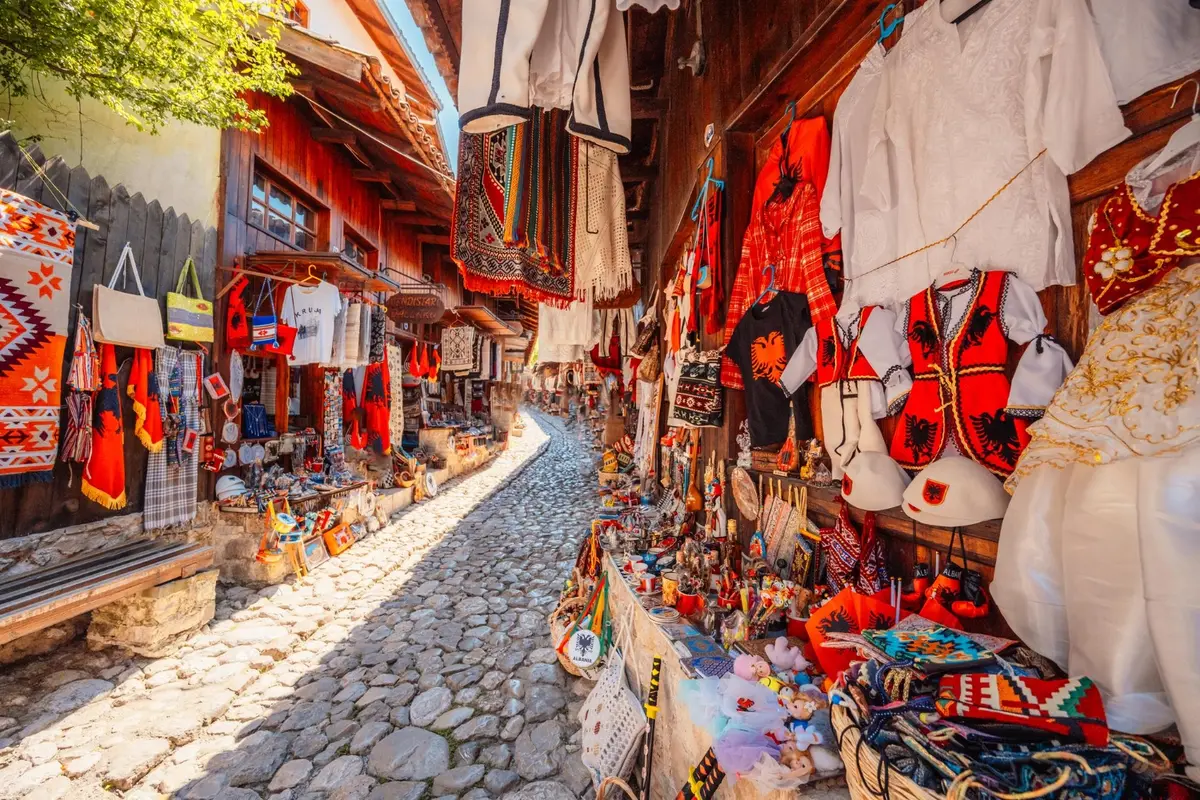
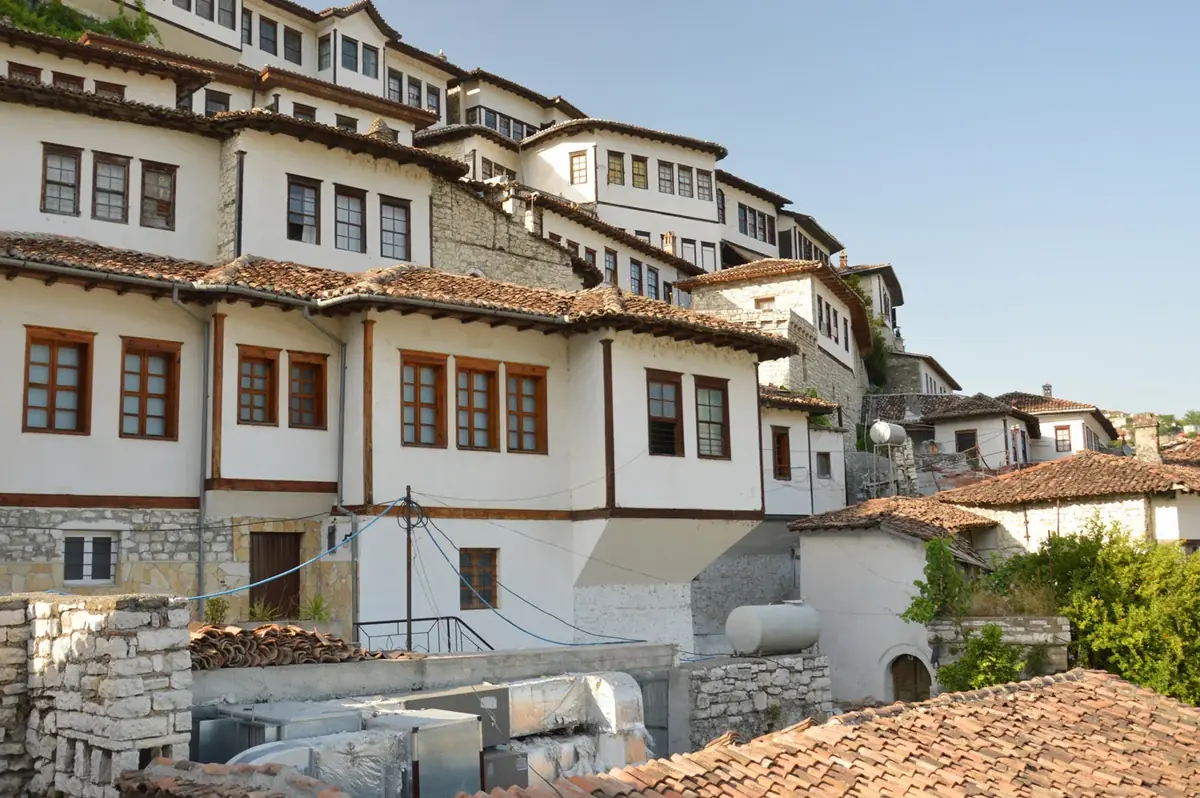
English proficiency in Albania varies dramatically by location. Tirana operates almost bilingually in tourist-facing businesses. Coastal towns along the Albanian Riviera cater to English speakers with bilingual menus and English-speaking staff. UNESCO cities like Berat and Gjirokaster are catching up fast. But venture into rural mountain villages and English becomes genuinely rare.
Tirana speaks English better than you’d expect
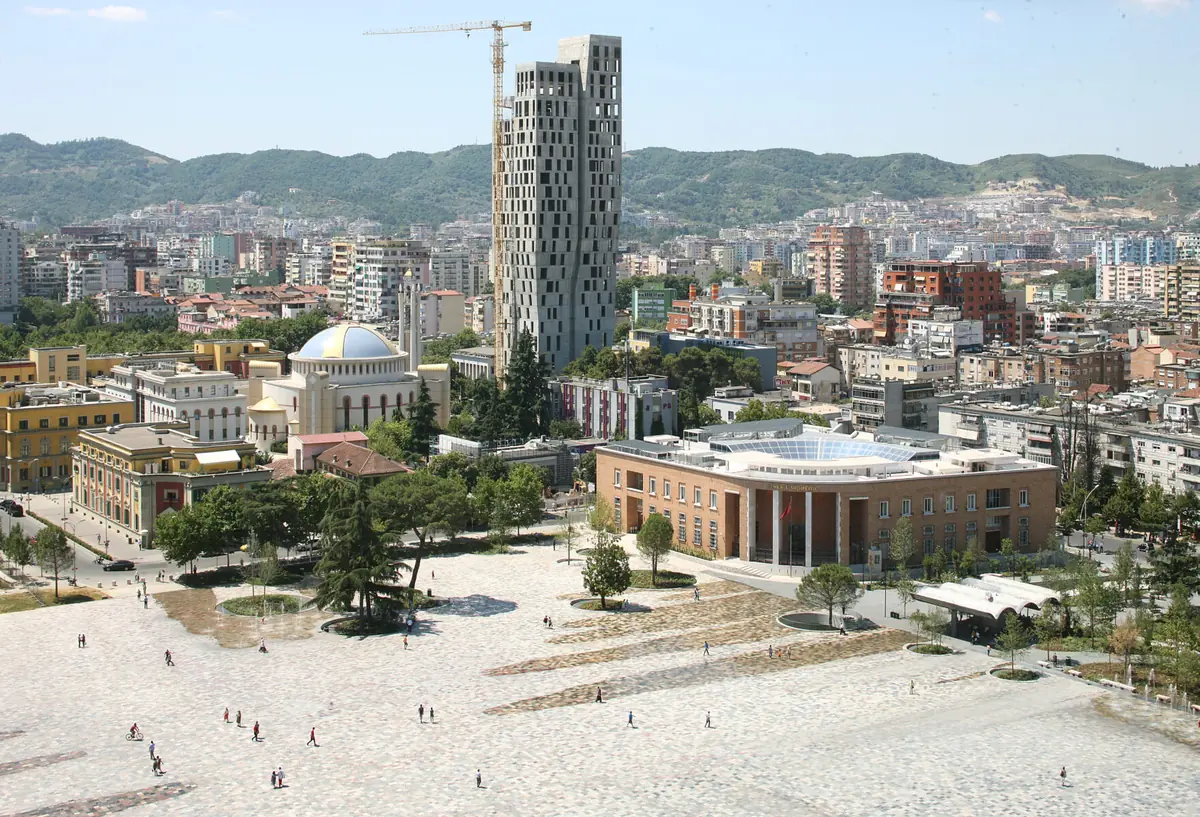
Tirana’s EF English Proficiency city score of 557 puts it in the “high” band, 25 points above the national average. In Blloku, around Skanderbeg Square, at the New Bazaar, and up the Dajti Ekspres cable car, English is the default language for any interaction involving visitors. Menus are bilingual. Ride-hailing apps all run in English.
- Most English-friendly neighborhoods: Blloku, Pazari i Ri (New Bazaar), the area around Skanderbeg Square
- Airport transfer: Patoko or Vrapon app, ~3,000 Lek ($36) fixed from Rinas to central Tirana
- Best backup language: none needed in the center
Saranda, Ksamil, and the Albanian Riviera run on tourism English
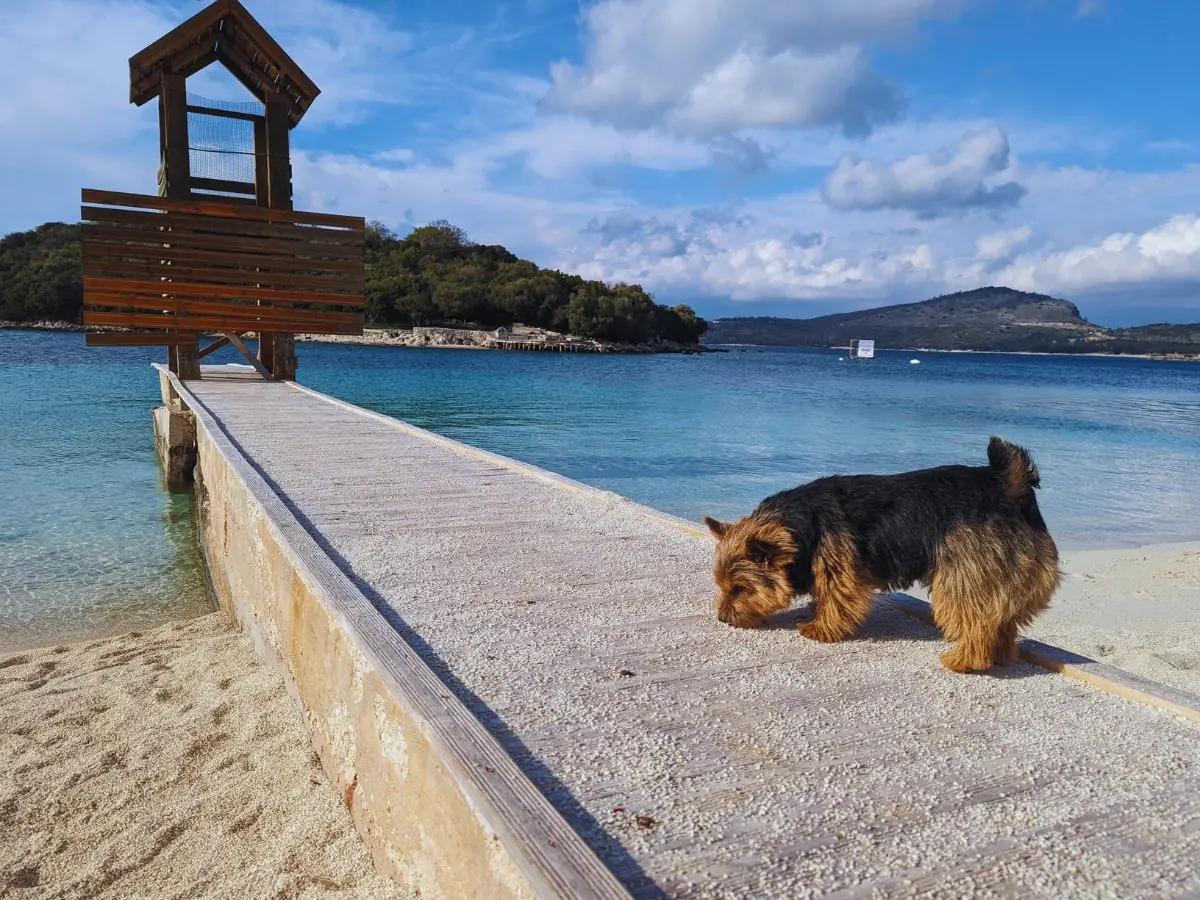
Along the Ionian coast from Vlore down to Saranda, English is the working language of tourism. Hotel staff, boat operators, beach bar managers, and restaurant servers communicate confidently in English. Saranda’s 30-minute ferry link to Corfu and the steady flow of British tourists reinforce this.
- Ksamil beach clubs: English and Italian both work, staff often speak three languages
- Butrint National Park: English signage, English-language tours
- Dhermi and Himara: slightly less English than Saranda but enough for full trip logistics
- Best backup language: Italian for older restaurant owners
Berat, Gjirokaster, and Shkoder are catching up fast
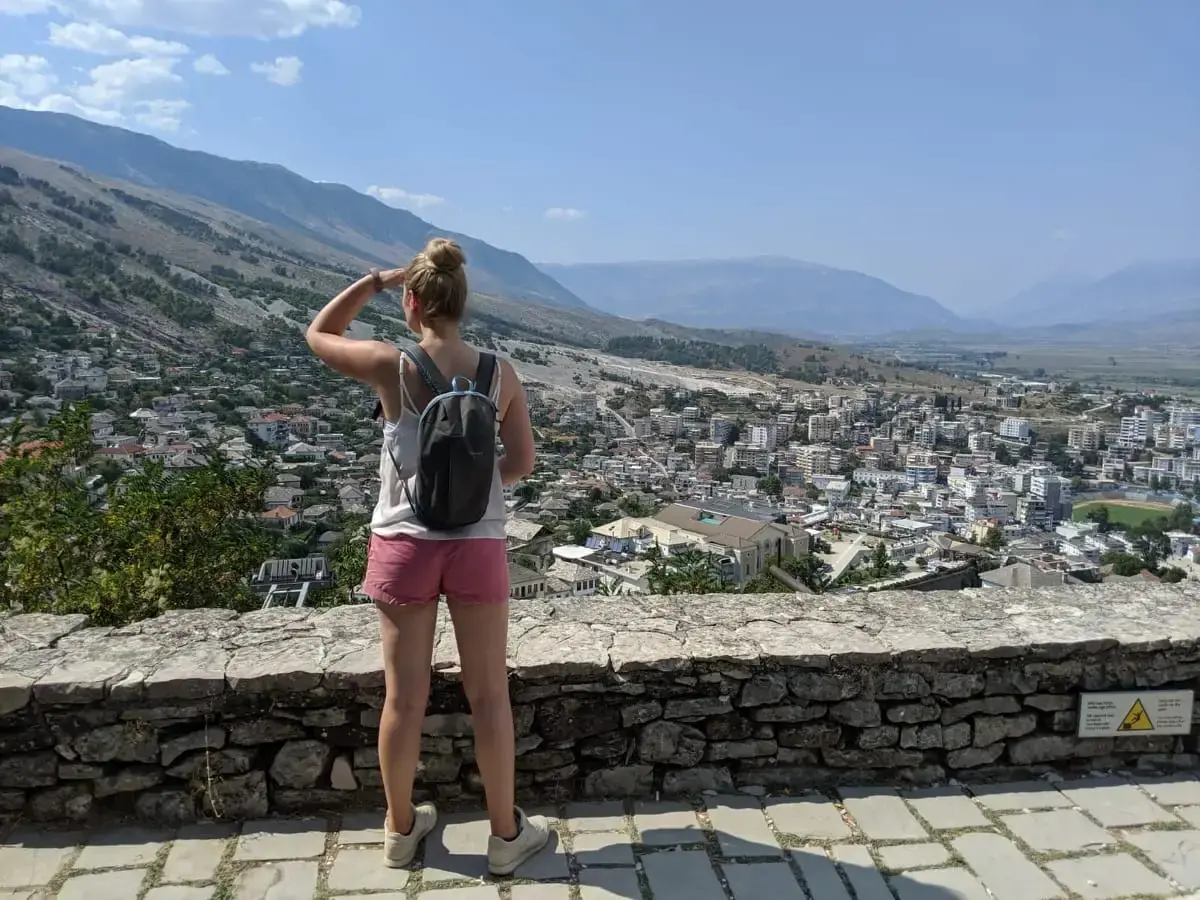
UNESCO-listed Berat and Gjirokaster have ridden a tourism boom — Berat now pulls in roughly four times the visitors it once did, and Gjirokaster around six times. That growth has pushed English proficiency forward quickly among young guides, guesthouse owners, and hospitality workers. Shkoder, the northern gateway to the Albanian Alps, is following the same trajectory.
A 20-something guide walked me through Berat Castle in better English than some London Airbnb hosts I’ve had. She learned it from YouTube, Netflix, and two years working at a Tirana hostel. That’s the pattern across heritage Albania right now.
Rural villages and mountain trails test your phrasebook
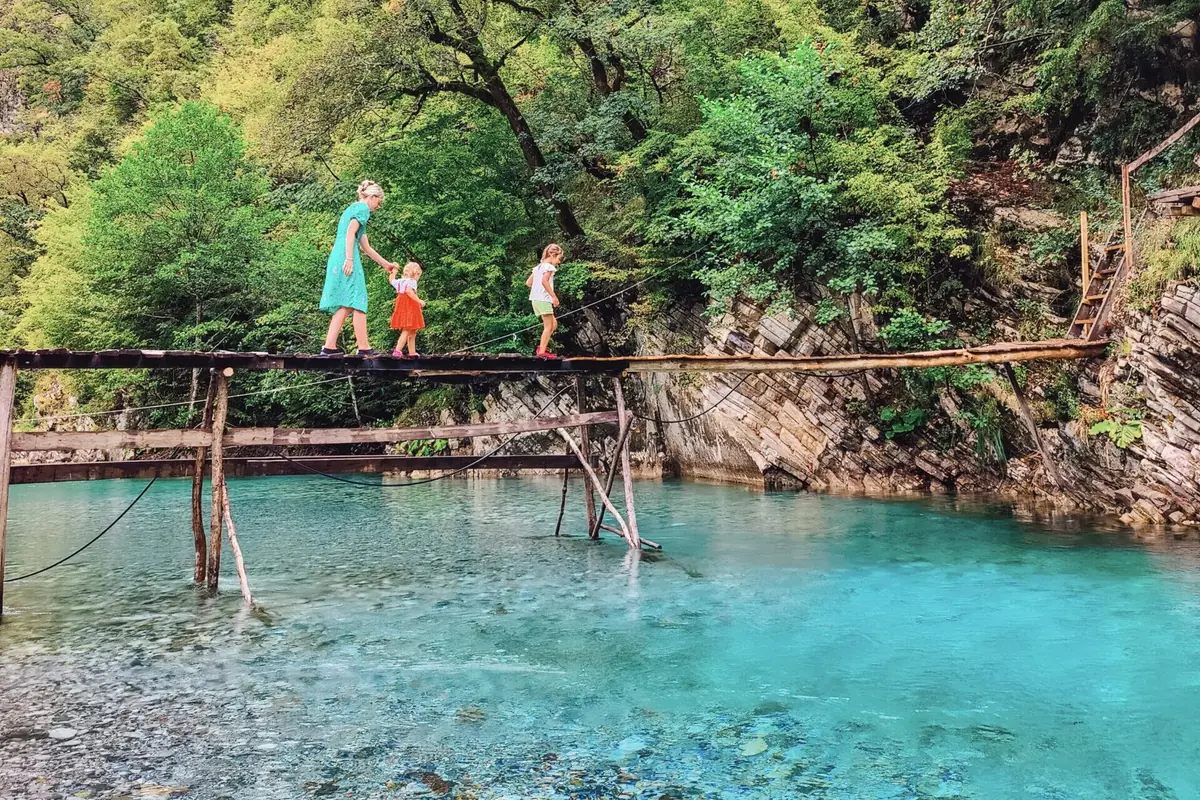
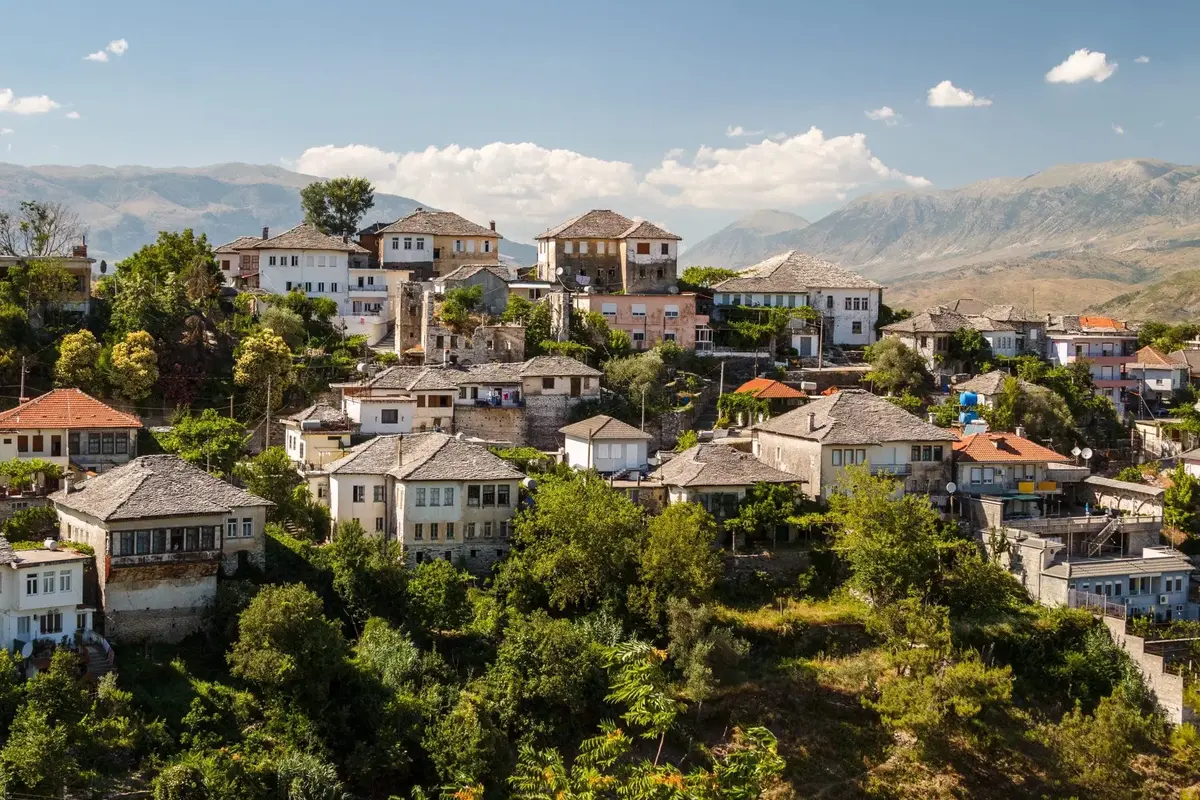
In the Albanian Alps around Theth and Valbona, in small inland towns, and anywhere far from tourist routes, English is genuinely rare. Older villagers may speak only Albanian or some Italian. Guesthouse owners along popular hiking routes usually know basic English because they host Americans and Germans every week, but furgon drivers and village shopkeepers typically do not.
- Theth–Valbona hiking corridor: guesthouse English is basic but functional, trail communication is gesture-based
- Korce region: French is more common than English thanks to the historic lycee
- Furgon (minivan) drivers: assume zero English, just say the destination name clearly
- Best backup: Google Translate offline and a Google Maps pin
Why does your waiter speak English but the bus driver speak Italian?
Albania’s language mix is shaped by a generational divide rooted in history. During the communist era under Enver Hoxha, coastal Albanians secretly rewired their televisions to pick up Italian broadcasts, making Italian the dominant foreign language for anyone over 50. After communism fell, English flooded in through schools, the internet, and Western pop culture, claiming the younger generation almost entirely.
The result is a country where a 25-year-old waiter and his 60-year-old father speak different foreign languages, fluently, for completely different reasons.
- English: compulsory in schools from 3rd grade, reinforced by Netflix, TikTok, and music
- Italian: 27.8% of adults, learned from pirated RAI broadcasts during communism
- Greek: 22.9%, concentrated in southern Albania and among returnees from Greece
- German: growing fast thanks to the Albanian diaspora in Germany and Switzerland
- French: small pocket in Korce, a legacy of the French lycee where Hoxha himself studied
- Russian: taught during the Soviet alliance, now almost extinct
On a bus from Tirana to Berat, trying English with the driver got me nothing. Switching to “Quanto costa?” produced an immediate grin and a clear answer from a man who grew up watching Italian cartoons on a rewired TV.
How do you handle restaurants, taxis, and emergencies without Albanian?
Even when English isn’t an option, communication in Albania rarely becomes a real problem. Between translation apps, picture menus, universal gestures, and Albanian hospitality that goes beyond language, travelers navigate daily situations without difficulty. The key is preparation: download the right apps and learn five essential phrases before you fly.
Restaurants and cafes decode faster than you think
Bilingual menus are standard in tourist areas. For Albanian-only menus in smaller places, Google Lens translates instantly through your phone camera. Pointing at dishes works everywhere. Coffee culture is universal: “nje makiato” gets you an espresso macchiato in any village in the country.
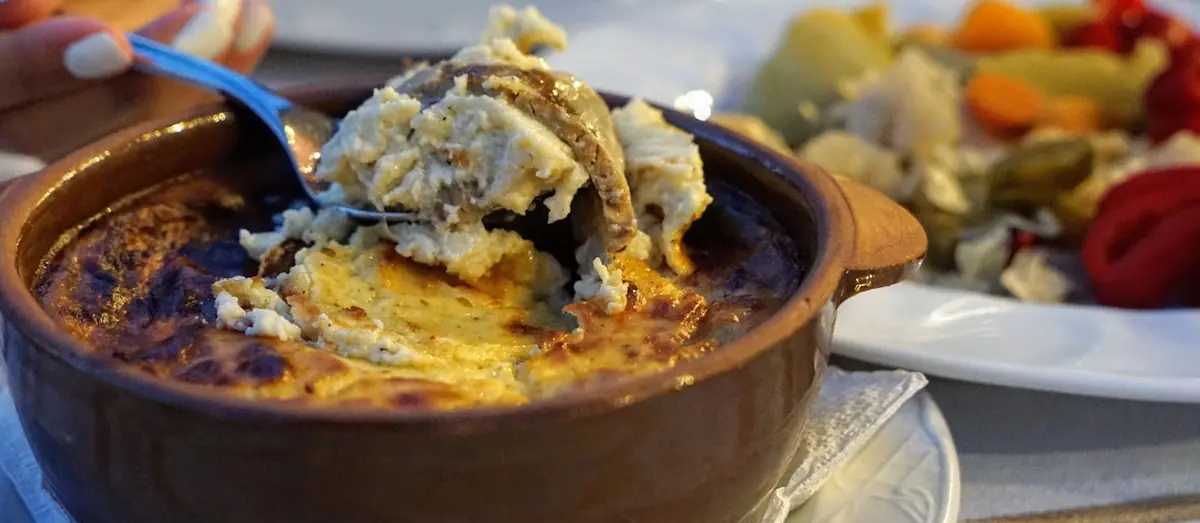
Pro Tip: Scanning an Albanian-only menu with Google Lens once saved me from accidentally ordering tripe soup in Gjirokaster. I landed on fergese instead — baked peppers, tomato, and cottage cheese — and still think about it.
Taxis and transport without saying a word
Ride-hailing apps eliminate verbal negotiation entirely. Patoko, Vrapon, and SpeedTaxi all run in English, use GPS destination entry, and set fixed prices.
- Traditional taxis: show the destination on Google Maps, agree on price by typing into a calculator
- Furgons: say the destination name clearly, fellow passengers almost always help direct you
- Airport taxi to Tirana center: ~3,000 Lek ($36) fixed
- Tirana short rides by app: 500–800 Lek ($6–10)
- Before you fly: download Google Maps offline for Albania
Emergencies when nobody around you speaks English
- Emergency number: 112, operators in Tirana increasingly handle English
- “Ndihme!” (nn-DEEH-muh) means “Help!”
- Private hospitals in Tirana: American Hospital and Hygeia have English-speaking doctors
- Pharmacists: in cities, often speak some English
- US Embassy in Tirana: provides English consular services
- Travel insurance: one with a 24/7 English hotline is non-negotiable
Ten Albanian phrases that unlock a warmer welcome
Learning a handful of Albanian phrases transforms how locals treat you. Albanians light up when foreigners try their language, and the warmth you get back is worth more than any survival utility. Albanian is phonetic, so words are pronounced exactly as written.
| English | Albanian | Pronunciation | When to use |
|---|---|---|---|
| Hi / Bye (casual) | Tung | TOONG | Default greeting, works everywhere |
| Good day | Miredita | meer-uh-DEE-tah | Slightly more formal greeting |
| Thank you | Faleminderit | fah-leh-meen-DEH-reet | After any interaction |
| Please | Ju lutem | yoo LOO-tem | Ordering, requesting |
| How much? | Sa kushton? | sah koosh-TON | Markets, taxis, shops |
| Delicious | E shijshme | eh shee-SHMEH | Compliment the chef |
| Cheers | Gezuar | guh-ZWAHR | Toasting with raki |
| Excuse me | Me falni | muh FAHL-nee | Getting attention politely |
| Do you speak English? | Flisni anglisht? | FLEES-nee ahng-LEESHT | Opening line with strangers |
| The bill, please | Llogarine, ju lutem | lyoh-gah-REE-nuh yoo LOO-tem | Restaurants |
Pro Tip: In parts of Albania, nodding means “no” and shaking your head means “yes” — the opposite of American body language. This Ottoman-era habit has caught me off-guard in markets more than once. Watch the face, not the head.
Say “Faleminderit, e shijshme!” after a meal of tave kosi in Berat and you’ll likely see the owner’s hands go up in delight, followed by a free shot of raki appearing on the table.
How does Albania’s English compare to its neighbors?
Among its Balkan neighbors, Albania sits in the middle tier for English proficiency. North Macedonia and Greece both score “high” on the EF English Proficiency Index, while Albania scores “moderate.” In practice, Albania’s English in tourist areas feels comparable to mainland Greece, and the hospitality factor compensates for any statistical gap.
| Country | EF EPI rank | Score | Band |
|---|---|---|---|
| North Macedonia | 17 | 595 | High |
| Greece | 20 | 592 | High |
| Albania | 42 | 532 | Moderate |
| Montenegro | Not ranked | N/A | Insufficient data |
A cafe interaction in Saranda and one in Corfu — a 30-minute ferry apart — feel almost identical in English level. The coffee in Saranda costs about one-third of the price.
Pro Tip: Albania is not in the Schengen Area, so days spent there don’t count against the 90-day Schengen limit. If you’re piecing together a longer Balkan trip, Albania is where you park during “Schengen cooldown” weeks.
Five apps to download before you land in Tirana
The right apps on your phone eliminate most language anxiety before it starts. Google Translate’s offline Albanian pack, an Albanian ride-hailing app, and Google Lens for menus handle the vast majority of situations where English fails. Do this at home on Wi-Fi, not at Rinas airport.
- Google Translate: download the Albanian offline pack, use conversation mode and camera mode
- Google Lens: point at any Albanian menu, sign, or label for instant visual translation
- Patoko or Vrapon: Albanian ride-hailing apps with English interfaces and fixed pricing
- Google Maps: download the Albania offline map so you can always show a driver a pin
- Maps.me: better trail mapping for hiking in the Albanian Alps, especially the Theth–Valbona route
Can you visit Albania speaking only English?
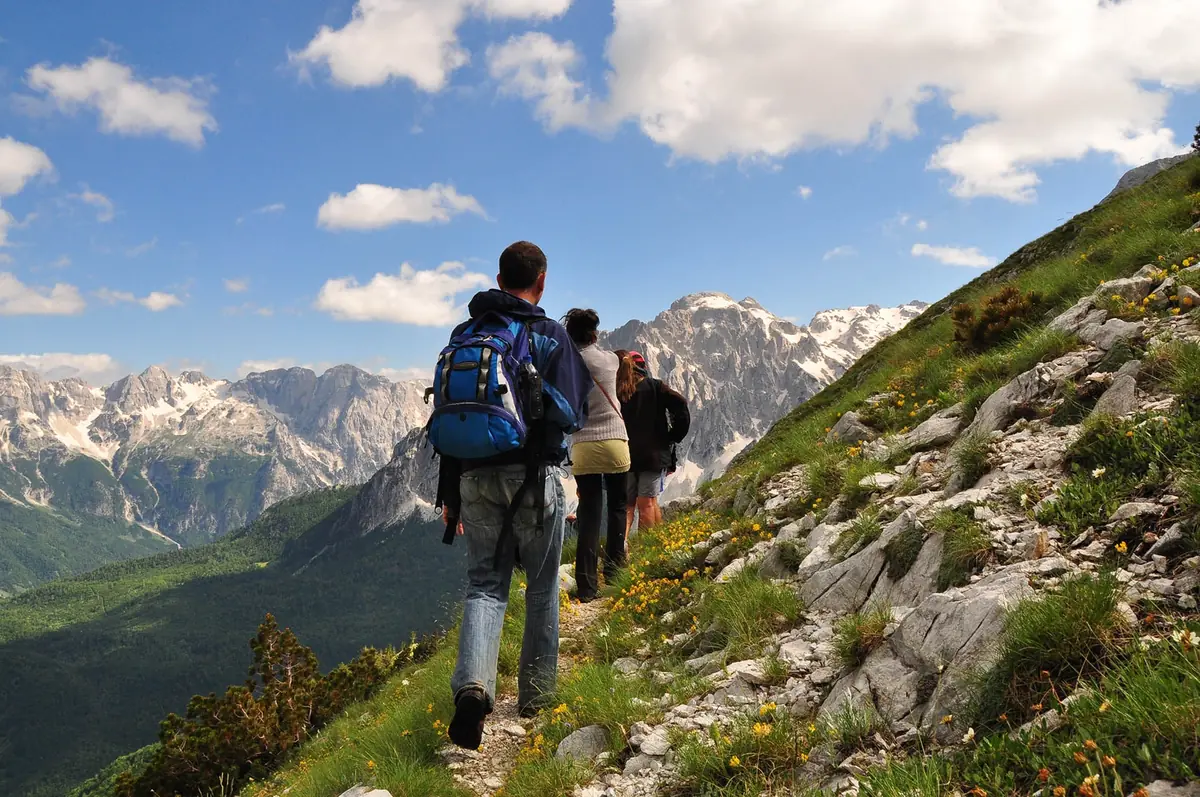
Yes, and thousands of English-only travelers do it every month. Albania now draws more than 12.5 million foreign visitors a year, the vast majority of them without speaking a word of Albanian. In Tirana, the Albanian Riviera, and at major tourist sites, English-only travel is seamless. Rural detours require more creativity but stay manageable.
Albania is also one of the most openly pro-American countries in Europe. Combined with Besa — the Albanian code of honor around hospitality — you’ll find that people go out of their way to help you even when they don’t share a single word with you. A grandmother in Theth once walked me 15 minutes down a trail to point at the right guesthouse because her English and my Albanian both failed.
Is English widely spoken in Tirana?
Tirana has the highest English proficiency in Albania. Its EF EPI city score of 557 puts it in the “high” band. University students, hospitality workers, tech professionals, and essentially anyone under 30 in the capital communicates in English with confidence. You can spend a week in Tirana without needing a single Albanian word.
- Most English-friendly zones: Blloku, Skanderbeg Square, New Bazaar, Dajti Ekspres cable car
- Coworking and digital nomad scene: concentrated in Blloku and Pazari i Ri
- Restaurants: nearly all have bilingual menus in the center
Do taxi drivers speak English in Albania?
Most traditional taxi drivers in Albania speak limited or no English, especially outside Tirana. But this is a solved problem. Ride-hailing apps like Patoko and Vrapon let you enter destinations in English, set prices automatically, and navigate by GPS. No verbal communication is required to get where you’re going.
- Airport (Rinas) to Tirana center by app: ~3,000 Lek ($36)
- Short rides within Tirana: 500–800 Lek ($6–10)
- Traditional taxi tip: agree on price before the car moves, always
- Furgon drivers: assume zero English, just say the destination
The bottom line for English-speaking travelers in Albania
TL;DR: Albania is fully accessible for English-speaking travelers, especially in Tirana, along the Albanian Riviera, and at major tourist sites. About 40% of adults speak English, and the rate climbs sharply among anyone under 30. Download Google Translate and a ride-hailing app, learn five Albanian phrases for warmth, and expect a country that tries harder than most to make you feel welcome.
The moments where English fails are the ones you’ll remember longest — the grandmother who fed you without sharing a word, the furgon passenger who stepped in to translate, the guesthouse owner pouring raki and telling stories through his teenage daughter. Don’t sanitize those out of your trip.
Which part of Albania are you most nervous about communication-wise — the rural Alps, the bus network, or somewhere else? Drop it in the comments.