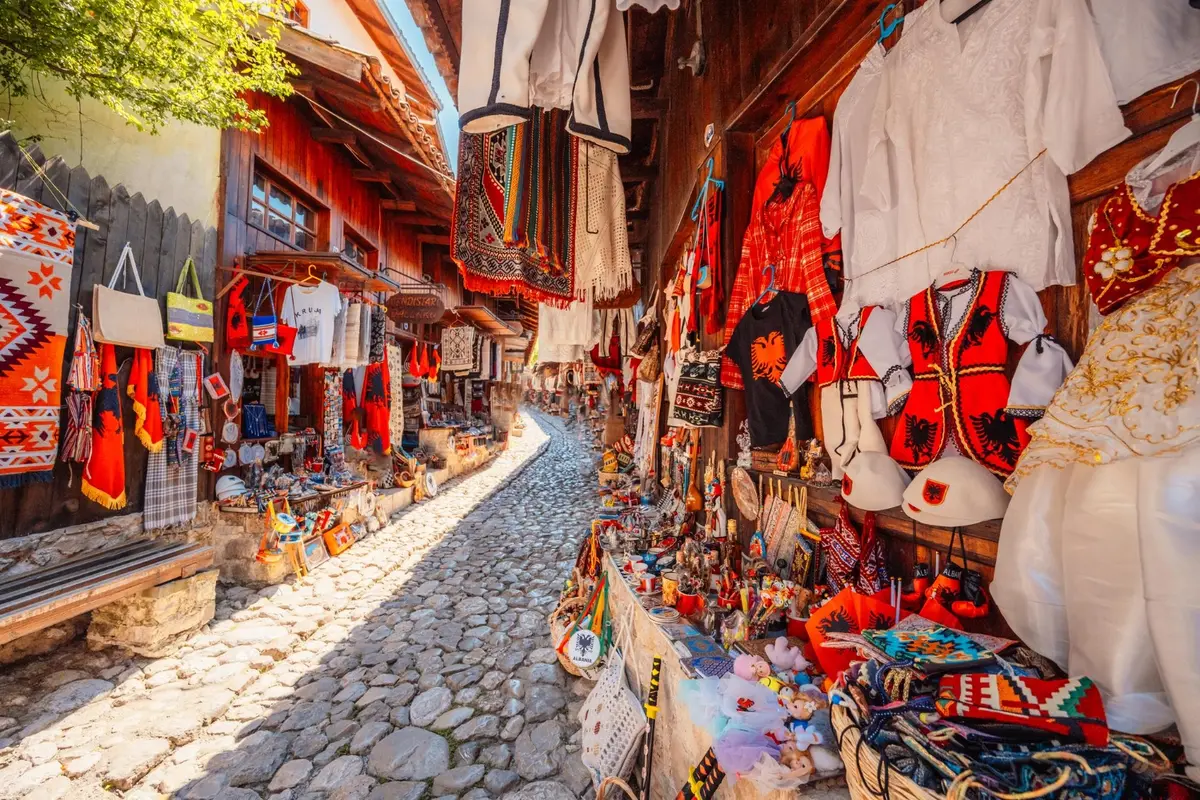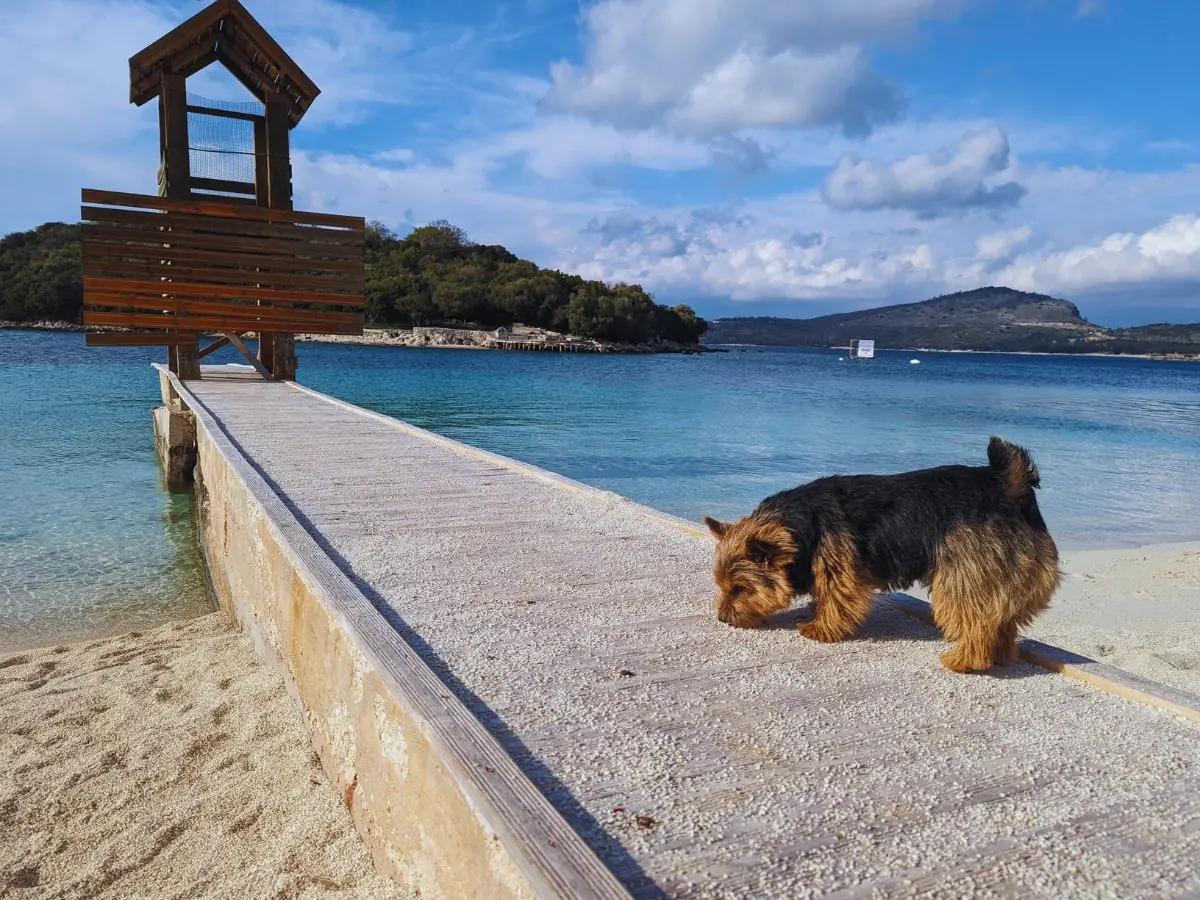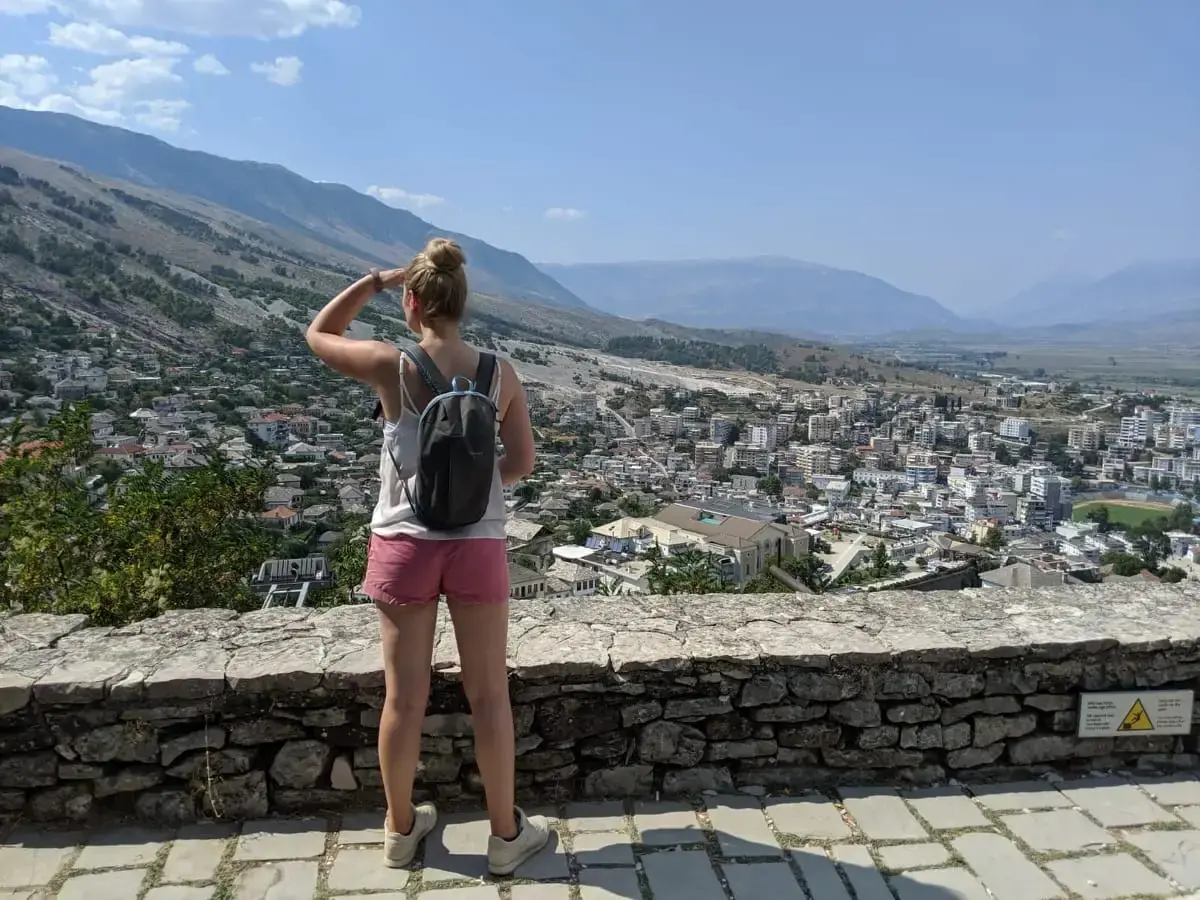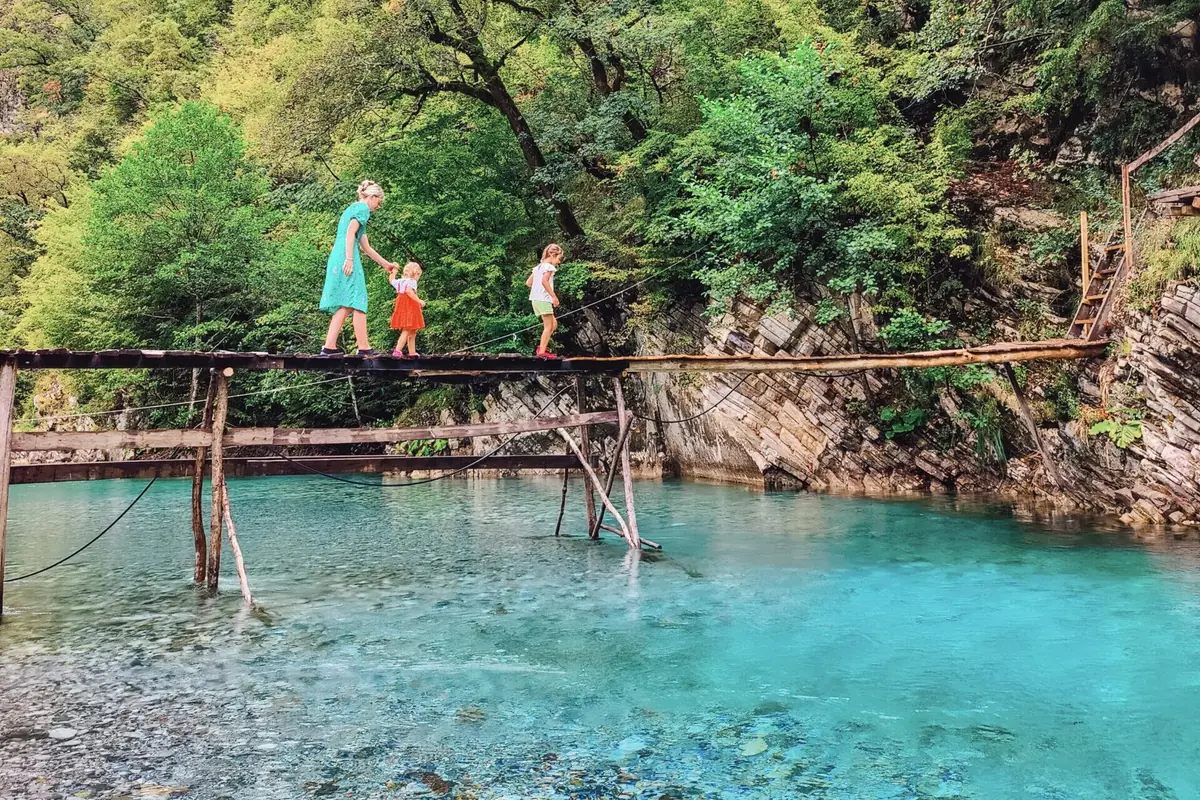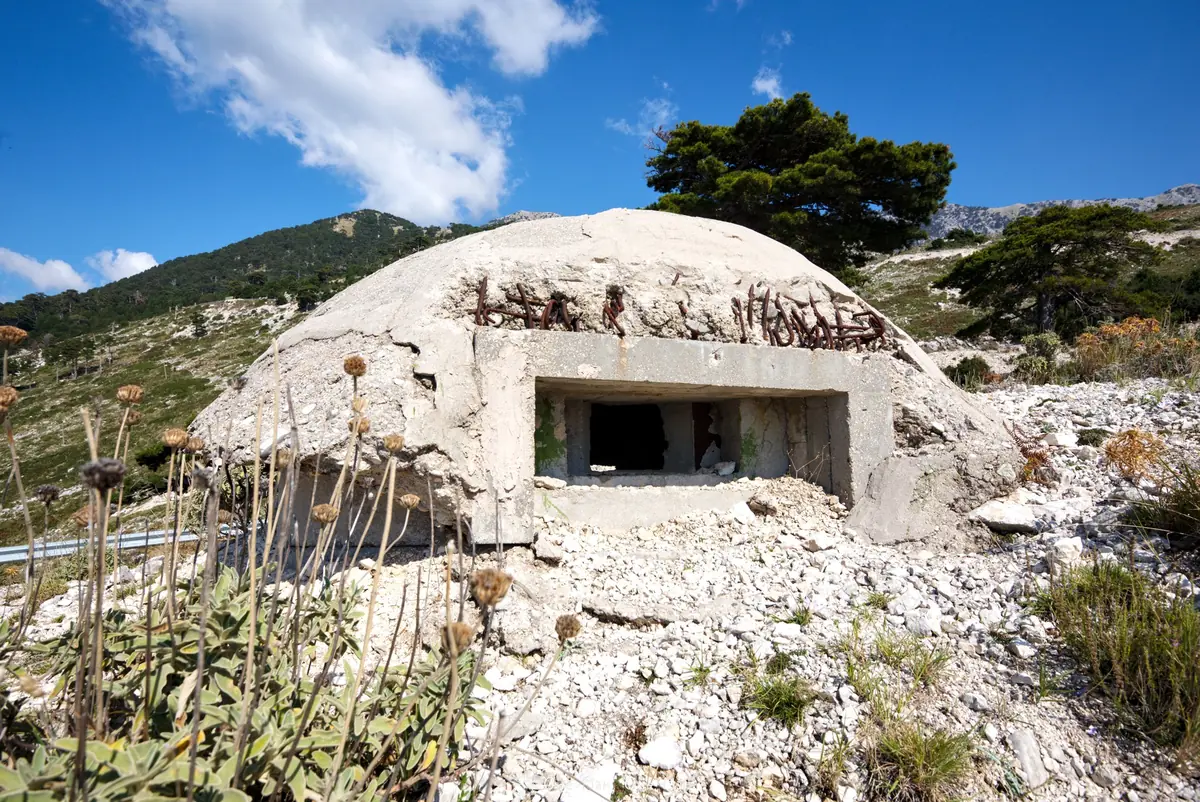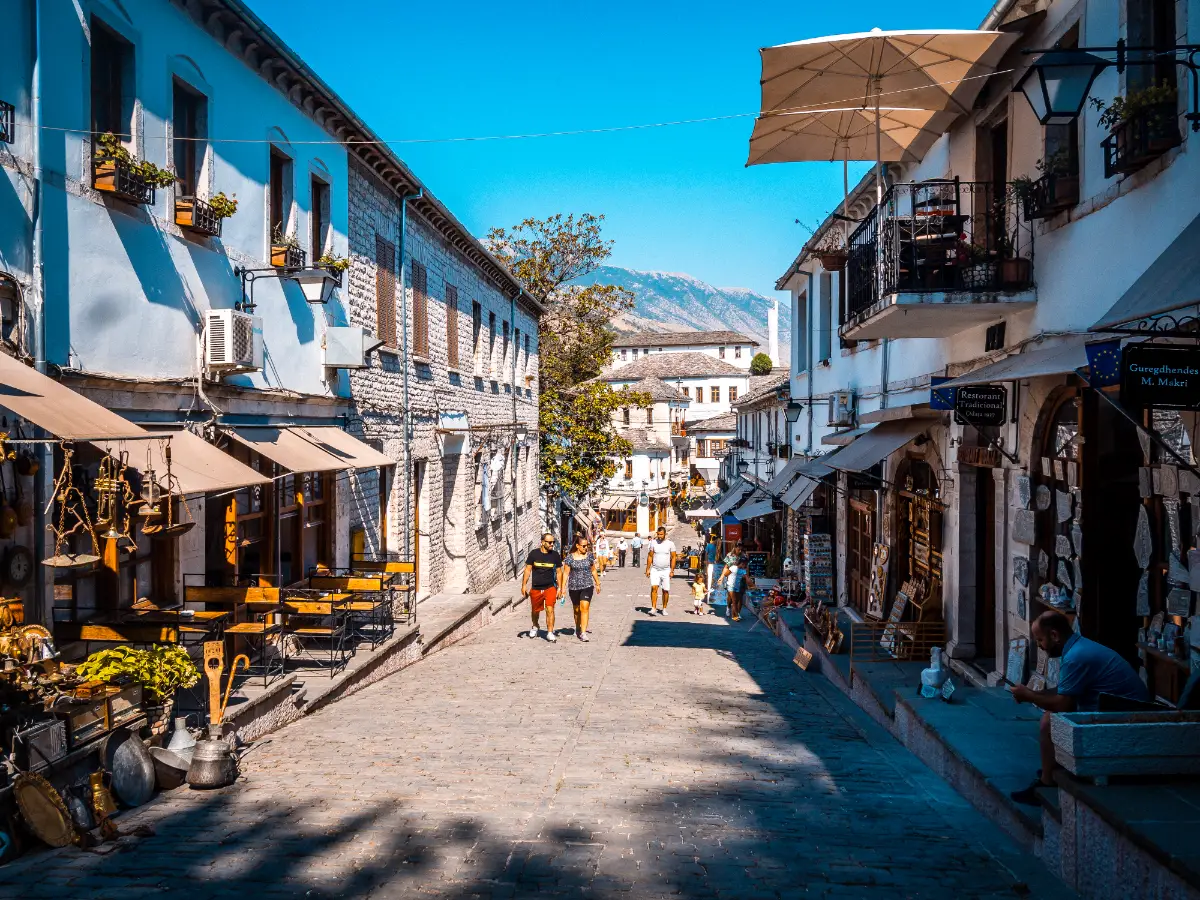
This Albania packing list comes from four trips across the country’s wildly different terrain — Ionian beaches, Alpine passes, and Ottoman stone cities. It skips the generic advice and focuses on what each region actually demands — the adapter that fits, the cash you must carry, the shoes that survive cobblestones — while our full Albania travel guide covers the wider trip.
What should be on your Albania packing list?
Pack a Type C/F plug adapter (Albania runs 230V), sturdy rubber-soled walking shoes, a packable rain jacket, reef-safe SPF 50, a filtered water bottle (tap water isn’t safe to drink), a 20,000mAh power bank, and Albanian lek in cash. Add swimwear, lightweight layers, and insect repellent based on your route.
Here are the 15 items every US traveler should have in the bag before flying into Tirana:
- Type C/F plug adapter (Albania runs 230V/50Hz — US plugs do not fit)
- Sturdy walking shoes with thick rubber soles (cobblestones will end thin-soled fashion sneakers)
- Packable rain jacket (useful in any season)
- Reef-safe sunscreen SPF 50+ (the Ionian sun is harsher than it looks)
- Filtered water bottle like LifeStraw or Grayl (tap water is not potable)
- 20,000mAh portable power bank (rural villages have nightly outages)
- Albanian lek in cash plus a no-foreign-fee debit card
- Daypack, 20-25L (for trail days, beach days, and city days)
- Lightweight cotton scarf (mosque cover, sun shield, beach sarong)
- Insect repellent with DEET or picaridin
- Quick-dry travel towel
- Packing cubes (organize by region: beach, hiking, city)
- Passport valid 3+ months beyond entry, plus a color photocopy
- Travel insurance with medical evacuation coverage
- Offline maps (Maps.me or Google Maps offline) downloaded before arrival
The single item I reached for most often in Albania was that power bank — three villages I stayed in had nightly outages lasting two to four hours.
What should you wear in Albania, and where must you cover up?
Albania has no formal dress code. Western-style casual clothing works everywhere from Tirana cafes to Riviera beaches. The one real exception is mosques: women should cover shoulders, knees, and hair, and men should wear long trousers. Pack one lightweight scarf that doubles as mosque cover and beach sarong and you’ve solved it.
Albania is officially secular despite a Muslim-majority heritage, and the dress culture in cities like Tirana skews fashionable and modern. In Blloku — Tirana’s nightlife and cafe district — younger Albanians dress in ways that would look at home in Milan. On the Riviera, standard European bikinis and swim trunks are the norm, though topless sunbathing is rare.
Pro Tip: Bring socks even if you plan to wear sandals. Mosques require shoe removal, and stepping barefoot onto a stone floor that 200 other tourists have walked across is something you only do once.
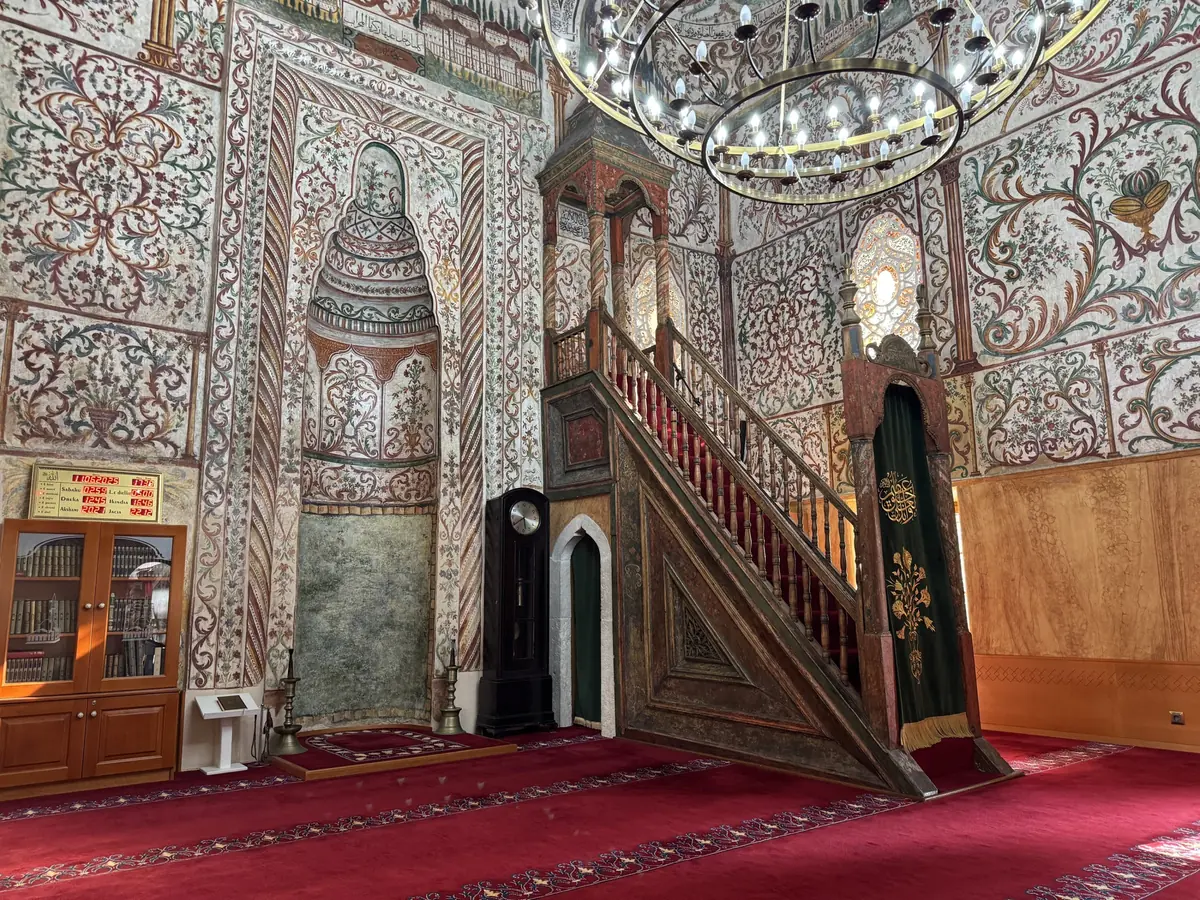
What women should pack for Albania
- 2-3 sundresses or midi dresses (cotton or linen for summer)
- 1 lightweight cotton scarf (mosque cover plus beach sarong)
- 1 light cardigan or long-sleeve layer
- Closed-toe sandals or low-heel walking shoes for evenings
- A button-down or nicer top for Blloku district nightlife
- Modest swimsuit cover-up for walking from beach to lunch
What men should pack for Albania
- 2 pairs of lightweight chinos or travel pants
- 3-4 breathable t-shirts plus 1-2 button-downs
- Decent sneakers (not athletic-looking running shoes for nice restaurants)
- Swim trunks (board shorts are fine)
- One light merino or cotton sweater for mountain evenings
Gjirokaster’s steep cobblestone lanes chewed through my friend’s ballet flats by day two. Pack shoes with actual rubber soles, not fashion flats.
How should you pack for Albania by season?
What you pack depends entirely on when you visit. Albania’s coast reaches 90°F (32°C) in July while the northern Alps can drop below freezing by November. Spring (April through June) and early fall (September through October) are the best time to visit Albania — warm enough for beaches, cool enough for mountain hiking, with minimal rain.
| Category | Spring (Mar–May) | Summer (Jun–Aug) | Fall (Sep–Nov) | Winter (Dec–Feb) |
|---|---|---|---|---|
| Coast temp | 50–68°F (10–20°C) | 72–95°F (22–35°C) | 50–79°F (10–26°C) | 37–57°F (3–14°C) |
| Rainfall | Moderate | Very low | Rising in Oct–Nov | High |
| Base layer | Cotton tee + light long sleeve | Linen tee, lightest fabrics | Cotton tee + merino long sleeve | Thermal base layer |
| Outer layer | Rain jacket + light fleece | Sun shirt only | Packable insulated jacket | Heavy waterproof coat |
| Footwear | Walking shoes | Sandals + walking shoes | Walking shoes | Waterproof boots |
| Swimwear | Optional | Essential | Yes for September | No |
| Alps hiking | Late May possible | Peak season | Peak through mid-Oct | Closed (snow) |
Packing for Albania in peak summer
July and August on the Riviera are no joke — Tirana asphalt regularly hits 95°F (35°C) by 2 p.m., and the inland heat island in old town pushes higher. Pack the lightest fabrics you own:
- Linen and cotton only (denim becomes torture)
- SPF 50+ sunscreen in adequate volume (small tubes at Saranda pharmacies run about $15)
- A wide-brim hat with a chin strap (Riviera wind will take a baseball cap)
- Electrolyte packets (Liquid IV, LMNT) for the heat
- Reef shoes for the Ionian’s pebble beaches
In August the Tirana asphalt radiates stored heat well past sunset. Locals escape on the xhiro evening walk, and you will want breathable shoes that are not rubber-soled sandals sticking to softened pavement.
Packing for Albania’s shoulder season
April–May and September–October require a layering strategy. Mornings in Berat can be 55°F (13°C) while afternoons hit 80°F (27°C). The system that worked for me across three trips:
- Merino wool base layer (regulates temp, resists smell)
- Light fleece or grid mid-layer
- Packable rain shell (stuffs into its own pocket)
This combo handles a 50°F (10°C) mountain morning and a 78°F (26°C) coastal afternoon without changing clothes.
How does packing change by region — Riviera, Alps, or UNESCO cities?
Pack for your itinerary, not for a generic “Albania.” The Albanian Riviera demands beach gear and reef shoes. The Alps demand hiking boots, cash, and warm layers. The UNESCO cities of Berat and Gjirokaster demand sturdy walking shoes for punishing cobblestones. The terrain shifts radically within a few hours of driving, so your bag should too.
| Need | Albanian Riviera | Albanian Alps | UNESCO Cities |
|---|---|---|---|
| Footwear | Reef shoes + sandals | Ankle-support hiking boots | Thick-soled walking shoes |
| Key clothing | Swimwear, sun shirt | Merino layers, rain jacket | Modest layers, light scarf |
| Critical gear | SPF 50, beach towel | Headlamp, trekking poles | Daypack, camera |
| Cash needs | ATMs in Saranda only | Bring all cash from Shkoder | ATMs widely available |
| Local supplies | Conad/Spar in Saranda | None — stock up in Shkoder | Pharmacies, markets in town |
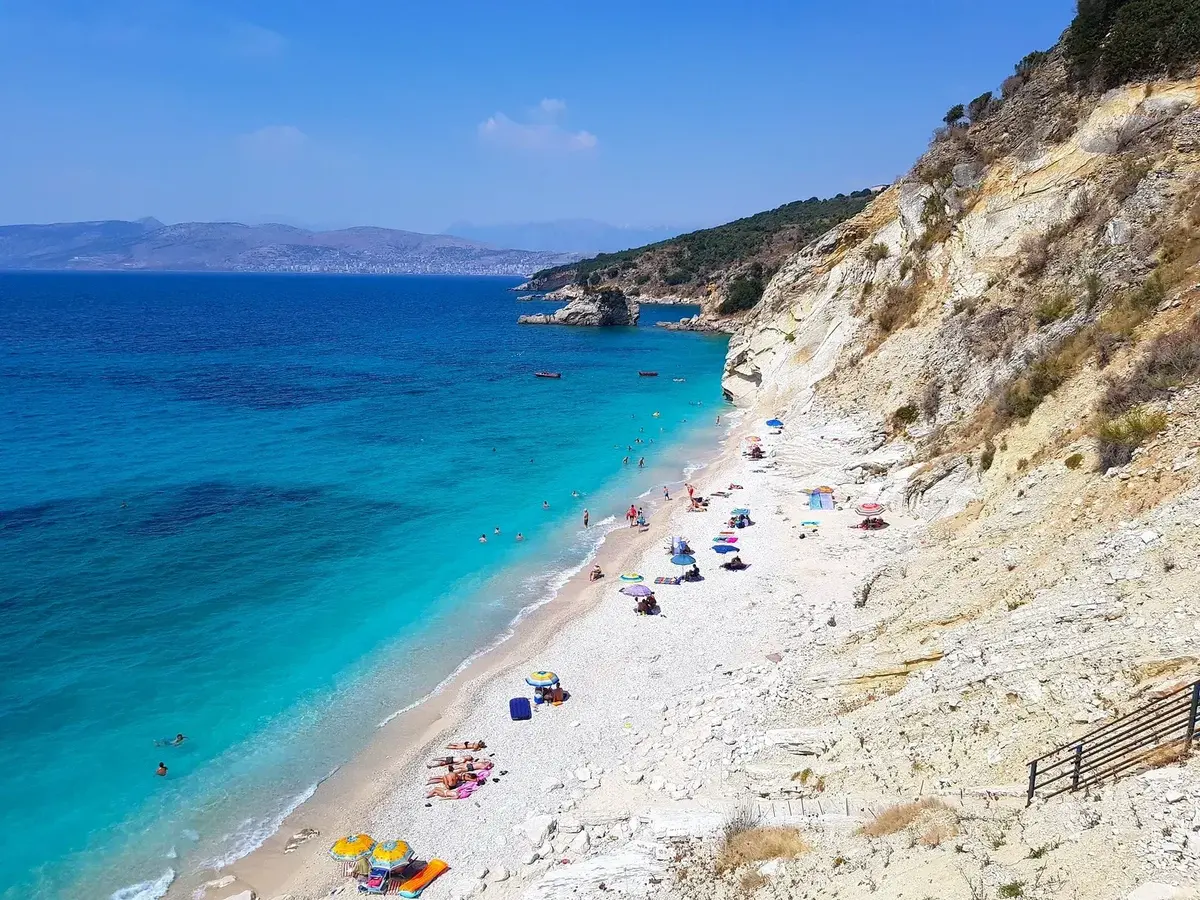
What to pack for the Albanian Riviera
The Ksamil-Saranda-Himara coastal strip is Albania’s beach country. Pebbles, not sand, dominate most coves:
- Reef shoes or water sandals (non-negotiable for Himara, Dhermi, and Palasa)
- Quick-dry beach towel or sarong
- Waterproof phone pouch
- Snorkel mask (the Ionian water clarity is genuinely exceptional)
- Dry bag for boat trips to Grama Bay
What to pack for the Albanian Alps
Theth, Valbona, and the Accursed Mountains run on a completely different rulebook:
- Broken-in hiking boots with ankle support (trail runners are risky on the Valbona Pass scree)
- Trekking poles (the descent from the pass eats knees)
- Headlamp (some Theth guesthouses run generator-only and shut down at 10 p.m.)
- 2-3 liter water capacity (bottle plus reservoir)
- All your cash — withdraw lek in Shkoder before you leave, because there are zero ATMs in Theth or Valbona
What to pack for Berat and Gjirokaster
The UNESCO cities are about cobblestones, history, and climbing:
- Walking shoes with thick rubber soles (the polished stones in Gjirokaster’s bazaar are slick when dry and lethal when wet)
- A backpack — never a rolling suitcase
- Light scarf or shawl for mosque entry
- Camera with a wide-angle lens (Berat’s “thousand windows” do not fit in a phone frame)
Do you need a travel adapter for Albania?
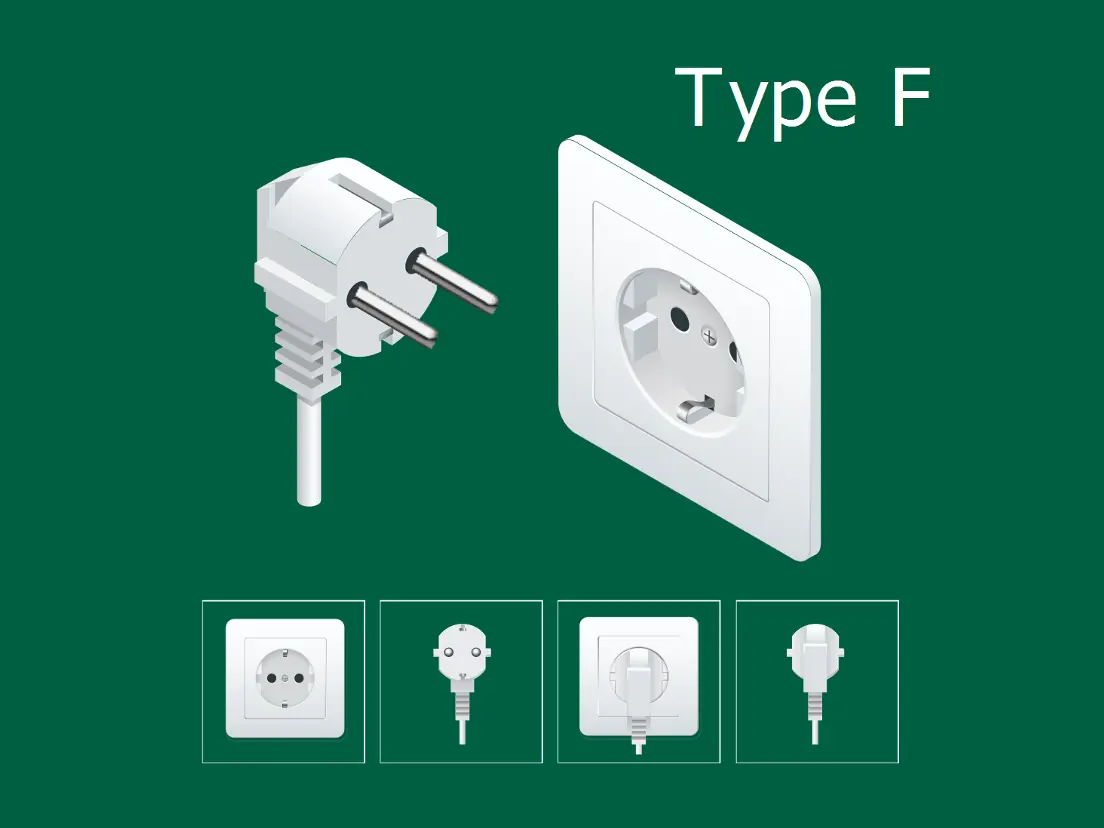
Yes. Albania uses Type C and Type F (Schuko) outlets at 230 volts and 50 Hz. US plugs (Type A/B, 120V) will not fit, so pack a Type C/F plug adapter. Most phone and laptop chargers are dual-voltage (100–240V) and only need the adapter — not a voltage converter.
To check whether your device is dual-voltage, find the small print on the charger brick. If it reads “INPUT: 100-240V, 50/60Hz,” you are safe with just an adapter. Single-voltage US appliances — many hair dryers, curling irons, and electric toothbrush chargers rated 120V only — will fry the moment you plug them in without a step-down voltage converter.
I plugged a US-only hair dryer into an Albanian outlet in Saranda without a converter. The burning-plastic smell hit instantly, and the dryer was dead in three seconds. Check your labels.
Pro Tip: Buy a universal adapter with two USB-C and two USB-A ports. One plug, four devices charging at once, and you skip fighting your travel partner for the single bedside outlet.
How do you get mobile data in Albania?
Albania has just two mobile operators — Vodafone Albania and One Albania (which absorbed Albtelecom). Both run counters in the Tirana International Airport (TIA) arrivals hall, open 24/7, where a tourist pack with 40GB and 1,000 minutes runs about $24, and a 100GB pack runs about $29, each valid 21 days. You’ll need your passport to register.
The airport counter is the convenient option, not the cheap one. The same plan in a city-center One Albania or Vodafone shop can cost roughly a third less. The cheapest route is an eSIM bought before you fly: providers like Airalo or SimOptions sell around 10GB for about $12–13, and you land already connected with no kiosk queue.
Pro Tip: A local Albanian SIM also works at home rates across the Western Balkans roaming zone — Kosovo, North Macedonia, Montenegro, Serbia, and Bosnia. If your trip crosses borders, that beats a single-country eSIM.
How does money work in Albania, and why is it cash-first?
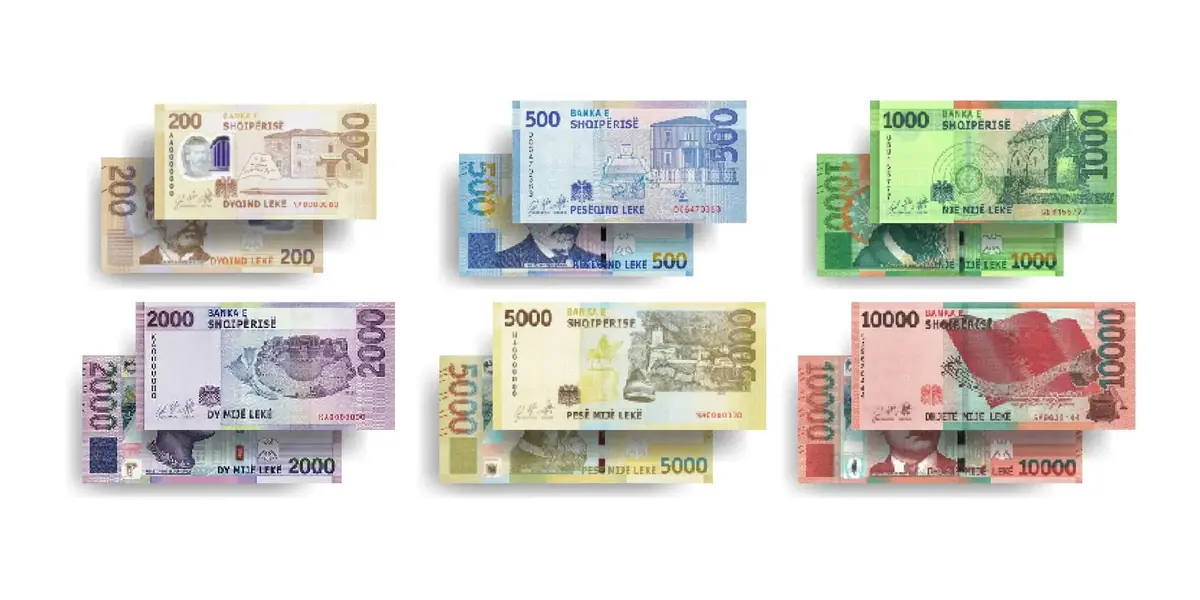
Albania’s currency is the Albanian lek (ALL), and the country runs on cash. The exchange rate hovers around 83 lek to $1 USD — call it 1,000 lek to roughly $12. Credit cards work at upscale hotels and restaurants in Tirana and Saranda, but almost nowhere else. Carry a no-foreign-fee debit card, withdraw lek from ATMs in cities, and keep cash for furgons, guesthouses, and markets.
The single weirdest money thing in Albania is the “old lek” trap. The currency was redenominated decades ago, but plenty of older Albanians and rural vendors still quote prices in old lek — which is exactly 10 times the real price. If a coffee sounds like it costs $10, divide by 10. The phrase to ask is “Leke te reja apo te vjetra?” (New or old lek?).
Cash logistics every US traveler should know:
- ATM withdrawal fees: 500-800 ALL ($6-10) per foreign card transaction
- Best banks for ATMs: Credins, Raiffeisen, BKT
- No ATMs in Theth or Valbona: withdraw enough lek in Shkoder before heading north
- Ksamil ATMs can run dry in peak August: get cash in Saranda first
- Euros: widely accepted in tourist areas, but you lose value vs. paying in lek
- Typical mid-range day: $70-120 (hotel $40-60, food $20-30, transport $5-15, sightseeing $5-15)
The furgon driver from Shkoder to Theth stared blankly at my Visa card, then pointed to a hand-painted “CASH ONLY” sign in the windshield. Every minibus, every trail-side cafe, every village guesthouse in the north — all cash, all lek.
Pro Tip: Bring a $100 USD or EUR cash reserve as emergency backup, separate from your wallet. If your card gets eaten by a Saranda ATM on a Sunday afternoon (it happens), you have a fallback.
The complete Albania packing checklist, category by category
Below is the full checklist organized by category. Every item earns its place based on Albania-specific needs — not generic travel advice. Adjust quantities based on your season, region, and trip length.
Clothing essentials
- 3-5 lightweight tops (moisture-wicking or cotton/linen)
- 2 pairs of pants or shorts (quick-dry travel pants work for cities and trails)
- 1 light long-sleeve layer (sun protection plus mosque visits)
- 1 packable rain jacket
- 1 light fleece or sweater (mountain evenings, air-conditioned buses)
- Underwear and socks (merino wool socks for hiking)
- 1-2 swimsuits
- 1 modest cover-up or cotton scarf
- Sleepwear (Alps guesthouses get cold)
Footwear — the most important packing decision
- Sturdy walking shoes with thick rubber soles (non-negotiable)
- Hiking boots with ankle support (only if visiting the Alps)
- Reef shoes or water sandals (for Riviera pebble beaches)
- Lightweight evening sandals
- Skip: brand-new shoes, flip-flops as your only beach shoe, wheeled luggage
Toiletries and health
- Reef-safe sunscreen SPF 50+ (full supply — local prices are steep)
- Insect repellent with DEET or picaridin
- Filtered water bottle (LifeStraw or Grayl)
- Personal medications in original packaging with a doctor’s note
- Basic first aid kit (band-aids, antiseptic, blister patches, ibuprofen, anti-diarrheal)
- Electrolyte packets
- Hand sanitizer
- Lip balm with SPF
- Sunglasses (UV is intense on the Riviera)
Electronics and tech
- Type C/F plug adapter
- 20,000mAh portable power bank
- Smartphone with offline maps downloaded
- Camera (optional but Albania is exceptionally photogenic)
- Headlamp or small flashlight
- Waterproof phone case
- E-reader (Tirana to Saranda is a 5-hour bus ride)
Documents and money
- Passport (valid at least 3 months beyond entry; US citizens are visa-free)
- Color photocopy of passport stored separately
- Travel insurance documentation with medical evacuation coverage
- No-foreign-transaction-fee debit card
- Backup credit card
- ~$100 USD or EUR cash as emergency reserve
- Printed accommodation confirmations
- International driving permit (required if you rent a car in Albania)
Bags and organization
- Carry-on-sized backpack, 40-50L (preferred over rolling suitcase)
- Packable daypack, 20-25L
- 3-4 packing cubes
- Dry bag for beach days and boat trips
- Reusable tote bag (Albanian supermarkets charge for plastic)
The furgon from Tirana to Berat had exactly enough overhead space for a 40L backpack. The couple behind me spent ten minutes wrestling a full-size Samsonite into the aisle.
What should you pack for the Theth-to-Valbona hike?
The Theth-to-Valbona trail covers about 11 miles (17 km) over a mountain pass at 5,900 feet (1,800 m) and takes six to nine hours. Pack broken-in hiking boots, a 2-3 liter water supply, a rain jacket, warm layers, snacks, cash in lek (no ATMs exist in either village), a headlamp, and trekking poles for the steep descent.
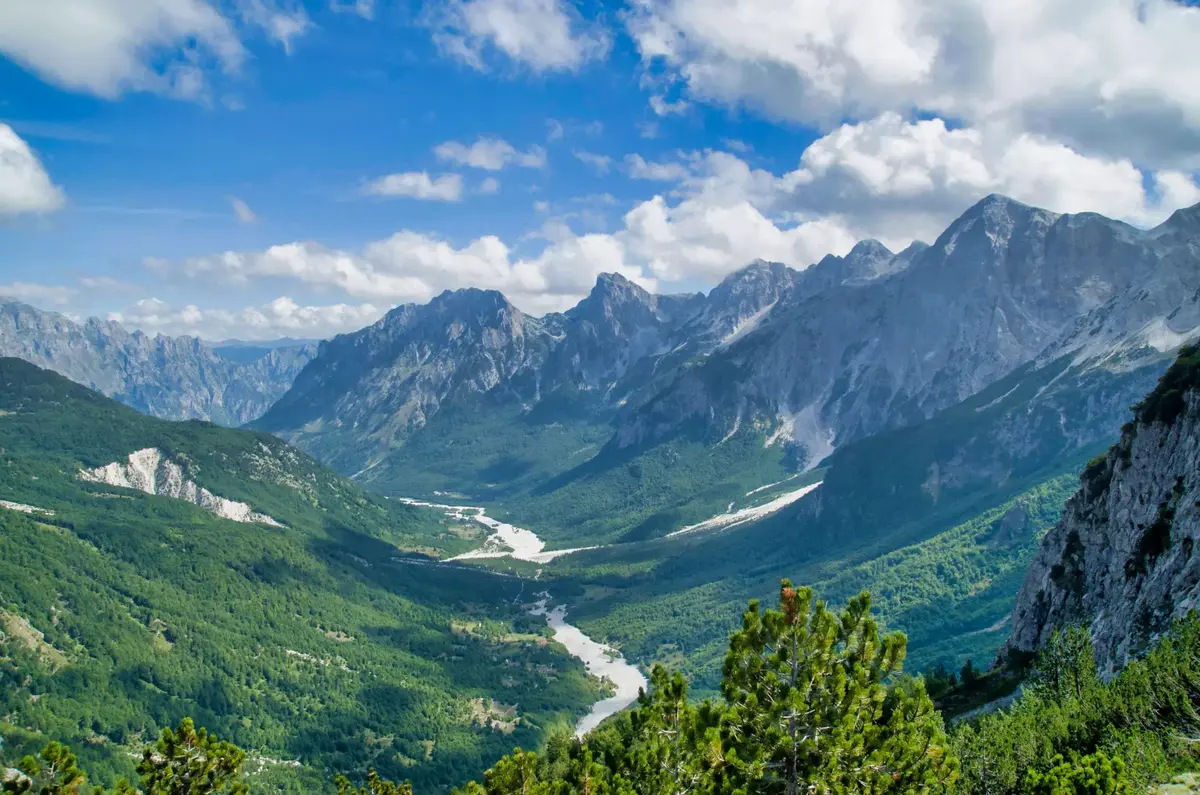
Trail logistics worth knowing before you load your daypack:
- Distance: ~11 miles (17 km) point to point (shorter if you start from the Rrogam trailhead by 4×4)
- Elevation gain: ~3,300 feet (1,000 m) from Theth to the pass
- Terrain: rocky riverbed, forest paths, steep switchbacks, loose scree near the pass
- Trail markers: red and white blazes, generally well-maintained
- Phone signal: none for most of the route — download Maps.me offline
- Trail cafes: 3-4 along the way (Simoni Cafe and others) selling coffee, water, beer, and raki for cash
- Water: refillable from mountain springs if you have a filter
- Guesthouse cost: $25-45 per person per night including meals
- Season: June through October; peak July-August; snow possible early June and late October
The Theth-Valbona hiking pack list:
- Hiking boots (broken in — do not arrive in Tirana with brand-new boots)
- 2-3L water capacity (bottle plus bladder)
- Rain shell
- Warm mid-layer (mornings near the pass can be 40°F / 4°C even in July)
- Trail snacks (energy bars, nuts — village shops are basic)
- Headlamp (in case the descent runs long)
- Trekking poles (game-changer on the Valbona side scree)
- Cash in lek for cafes and your guesthouse
- Small first aid kit with blister care
- Sun hat and SPF (no shade on the pass)
The final 300 yards before Valbona Pass is loose gravel and scree at a 30-degree incline. Every step slides back half a step. Trekking poles turned this from miserable to manageable.
Pro Tip: Leave your main backpack at your guesthouse in Theth or Valbona. They will hold it for free and it gets shuttled around to the other side via the Koman Lake ferry route or the road. You only need a daypack for the hike itself.
What can you buy in Albania so you can pack lighter?
Plenty. Albania has well-stocked supermarkets and pharmacies in every town of moderate size. Spar runs a large store network nationwide, and Conad carries Italian and European brands. You can buy sunscreen, toiletries, SIM cards, basic clothing, and over-the-counter medication locally — so skip packing a six-month supply of shampoo.
What is easy to find in Albanian cities and tourist towns:
- Toiletries: Nivea, European cosmetics, toothpaste, deodorant
- Bottled water: 1.5L for about $0.60 anywhere
- Phone chargers and basic tech accessories
- Beach gear: flip-flops, towels, snorkels, basic sunscreen
- Pharmacy items: most over-the-counter meds without a prescription
- Western clothing: Zara, Bershka, Pull and Bear at Tirana’s TEG and QTU malls
What is harder to find or pricier than at home:
- Reef-safe sunscreen and high-SPF American brands
- DEET-based insect repellent (European versions tend to be lower concentration)
- Specific prescription medication brands
- US-style stick deodorant
- Wide-width shoes
- Gluten-free or specialty dietary items outside Tirana
The Conad in Saranda had everything I needed after my checked bag was delayed two days — a swimsuit, flip-flops, toothpaste, sunscreen, and a cheap beach towel for under $25 total.
What should you NOT pack for Albania?
Skip the rolling suitcase (cobblestones will destroy it), the US-voltage hair dryer (most accommodations provide one, and yours will fry without a converter), excessive toiletries (buy locally at Spar or Conad), and formal clothing (Albania is casual even in its nicest restaurants).
The full skip list:
- Rolling hard-shell suitcase (Berat, Gjirokaster, and rough furgon storage will end it)
- US-only voltage hair dryers, curling irons, and flat irons
- Large amounts of US dollars (you cannot spend USD in Albania — exchange or withdraw lek)
- Beach umbrella or chair (rentable everywhere on the Riviera for $5-25/day)
- Bulky paperback guidebook (offline maps replace it)
- Heavy jeans for summer (denim is misery in 95°F / 35°C heat)
- A six-month supply of toiletries (Spar and Conad have you covered)
- Full hiking kit if you are not actually going to the Alps
A woman on our Gjirokaster walking tour dragged a hard-shell Samsonite up the castle road. The wheels caught between every cobblestone, and one caster popped off before she reached the top.
Is Albania safe, and what should you pack for it?
Albania is generally safe for tourists. The US State Department rates it Level 2 (exercise increased caution) — the same level as France and the United Kingdom. Violent crime against tourists is rare, though petty theft can happen in crowded areas. Pack a money belt or neck wallet, keep digital copies of documents, and buy travel insurance with medical evacuation coverage.
The actual safety risk in Albania is not crime — it is the road. Albania has one of Europe’s higher road fatality rates thanks to aggressive driving, mountain switchbacks, and the occasional cow on the highway. If you rent a car, get the maximum insurance coverage and drive defensively.
Security and safety items worth packing:
- Neck wallet or hidden money belt for passport and emergency cash
- RFID-blocking card sleeve
- Travel insurance documentation (medical evacuation coverage is the priority)
- Photocopy of passport stored separately from the original
- Digital backup of all key documents in cloud storage or email
- Doorstop alarm if you are a solo traveler in budget accommodation
- Small padlock for hostel lockers
Useful numbers:
- Emergency: 112 (EU-wide)
- Ambulance: 127
- Police: 129
- Ride-hailing: Bolt is widely used in Tirana; Merr Taxi is the local taxi app
In three separate trips covering Tirana, the Riviera, and the Alps, the most “unsafe” moment I experienced was a bus driver overtaking a truck on a blind mountain curve outside Gjirokaster. Pack your nerves for Albanian roads, not Albanian people.
Frequently asked questions about packing for Albania
Can you drink the tap water in Albania?
Do not drink the tap water in Albania. Both the US CDC and UK FCDO advise against it. Bottled water costs about 50 ALL ($0.60) for 1.5 liters and is available everywhere. Pack a filtered water bottle to reduce plastic waste, especially in the Alps where mountain spring refills are practical.
Do US citizens need a visa for Albania?
No. US citizens enter Albania visa-free for stays up to one year. Your passport must be valid for at least three months beyond your entry date with at least one blank page. Albania is not in the Schengen Area, so days spent there do not count toward your Schengen 90-day limit.
When is the best time to visit Albania?
The best time is April through June and September through October. These shoulder months bring warm coastal weather (65-82°F / 18-28°C), open hiking trails in the Alps, lower prices, and fewer crowds. July and August deliver peak heat above 95°F (35°C), packed Riviera beaches, and inflated prices. November through March is rainy on the coast and snowy in the mountains.
How much does a trip to Albania cost per day?
A mid-range Albania trip costs roughly $70-120 per day per person: $40-60 for a comfortable hotel, $20-30 for three meals with drinks, $5-15 for local transport, and $5-15 for sightseeing. Budget travelers can manage on $40-50 per day using hostels and local eateries. Reference prices: espresso $1-1.50, byrek under $1, restaurant beer $2-3, Butrint National Park entry about $12, bus from Tirana to Saranda $12-28.
What plug type does Albania use?
Albania uses Type C and Type F (Schuko) plugs at 230V and 50Hz. US travelers need a European plug adapter. Most modern phone and laptop chargers are dual-voltage (100-240V) and only need the adapter, not a voltage converter. Single-voltage US appliances like older hair dryers will burn out without a step-down converter.
Before you book
TL;DR: If you pack nothing else for Albania, pack these ten items — a Type C/F plug adapter, sturdy walking shoes, a packable rain jacket, reef-safe sunscreen SPF 50, a filtered water bottle, a 20,000mAh power bank, Albanian lek in cash, a daypack, a lightweight scarf, and travel insurance with medical evacuation. Everything else on this Albania packing list is fine-tuning.
After four trips to Albania across three seasons, those are the ten items I check first every single time I zip my bag shut. The country rewards travelers who arrive prepared for the actual conditions — pebbled beaches, generator-powered guesthouses, cash-only minibuses — rather than the glossy Instagram version.
What is the one item you always forget to pack for a trip like this? Drop it in the comments and I will tell you whether you can buy a replacement at the Saranda Conad.