Albania vs Greece comes down to one fact: both sit on the same Ionian Sea, but one costs roughly three times more. This guide breaks them down across cost, beaches, transport, luxury, and safety — so you can stop debating and start booking.
How much does a Mediterranean vacation actually cost?
A trip to Albania runs 40 to 70 percent less than a comparable trip to Greece at every spending level. Budget travelers can get through a full day in Albania for around $40. A luxury sea-view suite in Saranda averages $100 a night. The equivalent room in Greece typically starts at $300 and climbs well past $1,000 at the top end.
The hostel gap alone tells most of the story: a dorm bed on the Albanian Riviera costs $9 to $11 per night. In Greece, the same standard runs $28 to $35. That difference compounds fast over a two-week trip.
| Category | Albania | Greece | Savings |
|---|---|---|---|
| Hostel dorm bed | $9–$11/night | $28–$35/night | ~65% |
| Mid-range sea-view hotel | $53/night | $160/night | ~67% |
| Luxury suite | from $100/night | $300–$1,000+/night | 60–90% |
| Seafood dinner for two | $27–$38 | $76–$130+ | ~65% |
| Digital nomad apartment | $25/night | $55/night | ~55% |
| Daily budget (all-in) | from $40/day | from $110/day | ~60% |
Two beach loungers and an umbrella in Ksamil cost around $10 for the day. The identical setup at a beach club in Halkidiki runs $40 to $60 — before drinks. Across every category, the cost gap simply isn’t close.
Pro Tip: Carry Albanian Lek (ALL) for rural areas and local buses. Card terminals exist in Saranda and Tirana but fail regularly outside city centers. Pull cash at an ATM in Saranda before heading north along the coast — fees are low and machines are plentiful near the port.
Are the beaches in Albania as beautiful as the Greek islands?
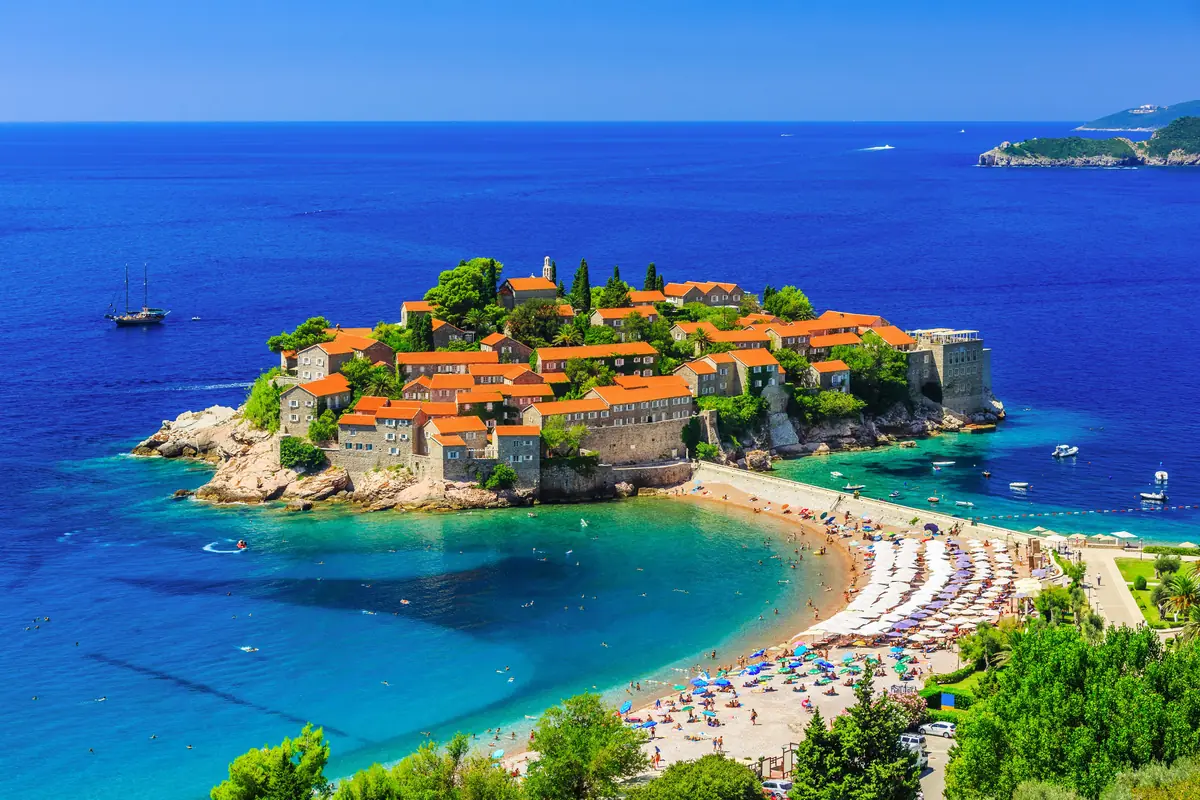
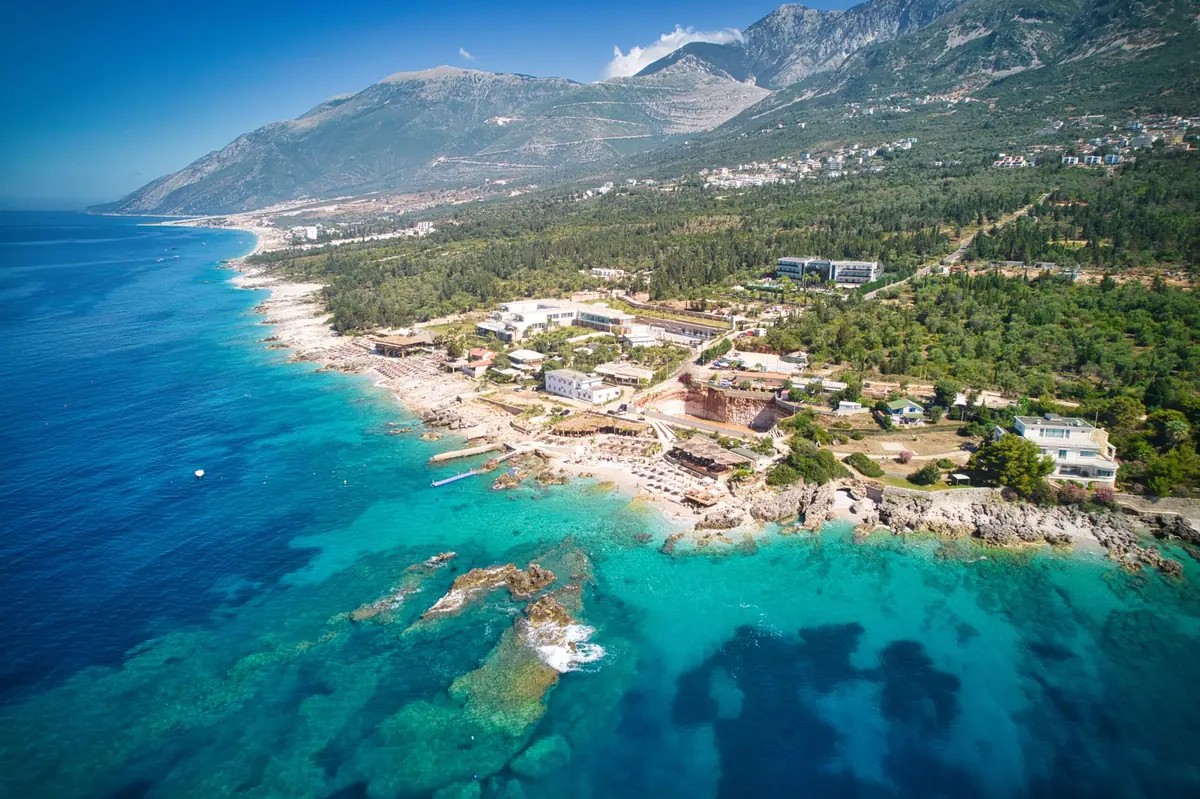
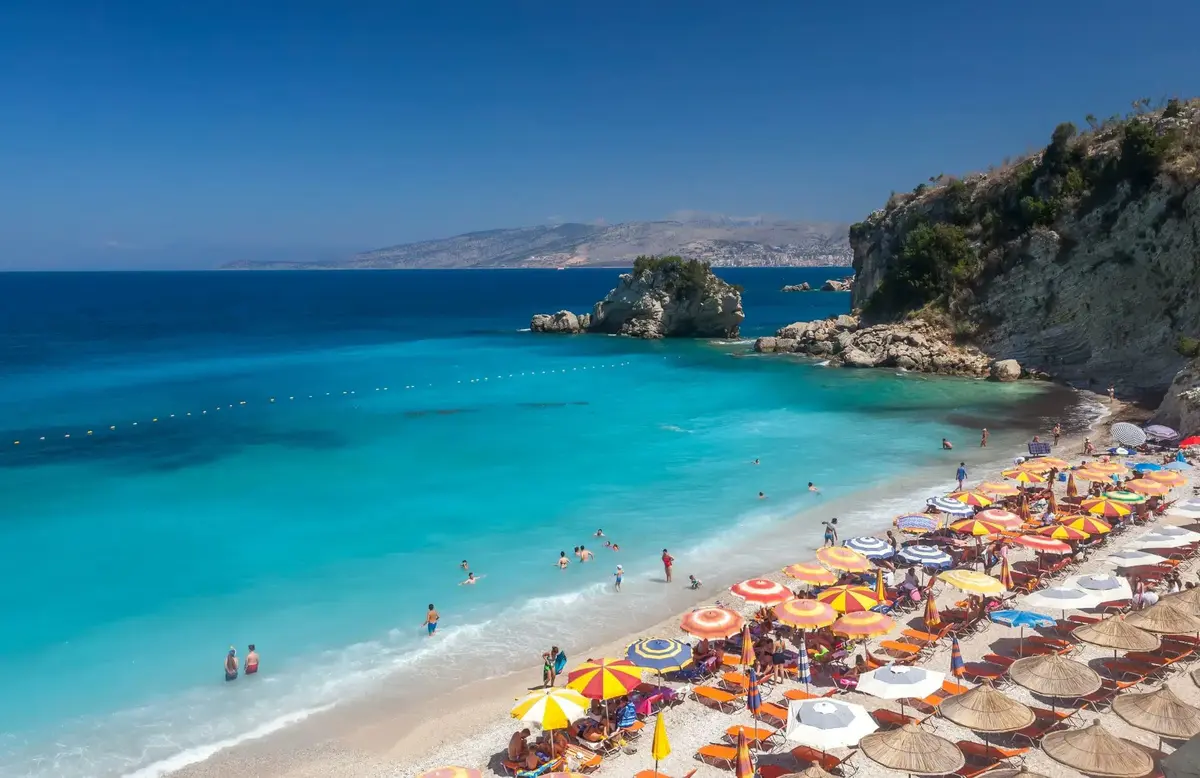
The Albanian Riviera and the Greek islands share the Ionian Sea, so the water color, clarity, and temperature are nearly identical. What differs is the shoreline. Greece offers more sandy beaches and far more consistent infrastructure. Albania counters with some of the clearest water on the coast — around Himare and the quieter stretches south of Dhermi — often with fewer people and lower prices.
The critical distinction is texture. Ksamil has soft sand and fills up before 10 a.m. from late June through August. Most of the Albanian Riviera — Dhermi, Borsh, Llamani, Gjipe — is pebble. The stones are white and the water is cold and clear, but you’ll want water shoes unless you enjoy a slow, painful shuffle to the waterline.
The water off Himare carries a slightly stronger pull than the calmer resort bays in Greece — rawer, less managed. For some travelers, that’s the appeal. The beaches at Gjipe and Llamani take either a boat or a 30-minute hike down an unpaved trail. The payoff is a beach with no vendors, no music, and no one renting you an inflatable at a markup.
Pro Tip: Avoid Ksamil between late June and early September unless you’re going before 9 a.m. The beach gets genuinely crowded — wall-to-wall loungers, loud music, lines for everything. Head 15 miles (24 km) north to Dhermi or 30 miles (48 km) north to Himara for a noticeably quieter stretch of the same sea.
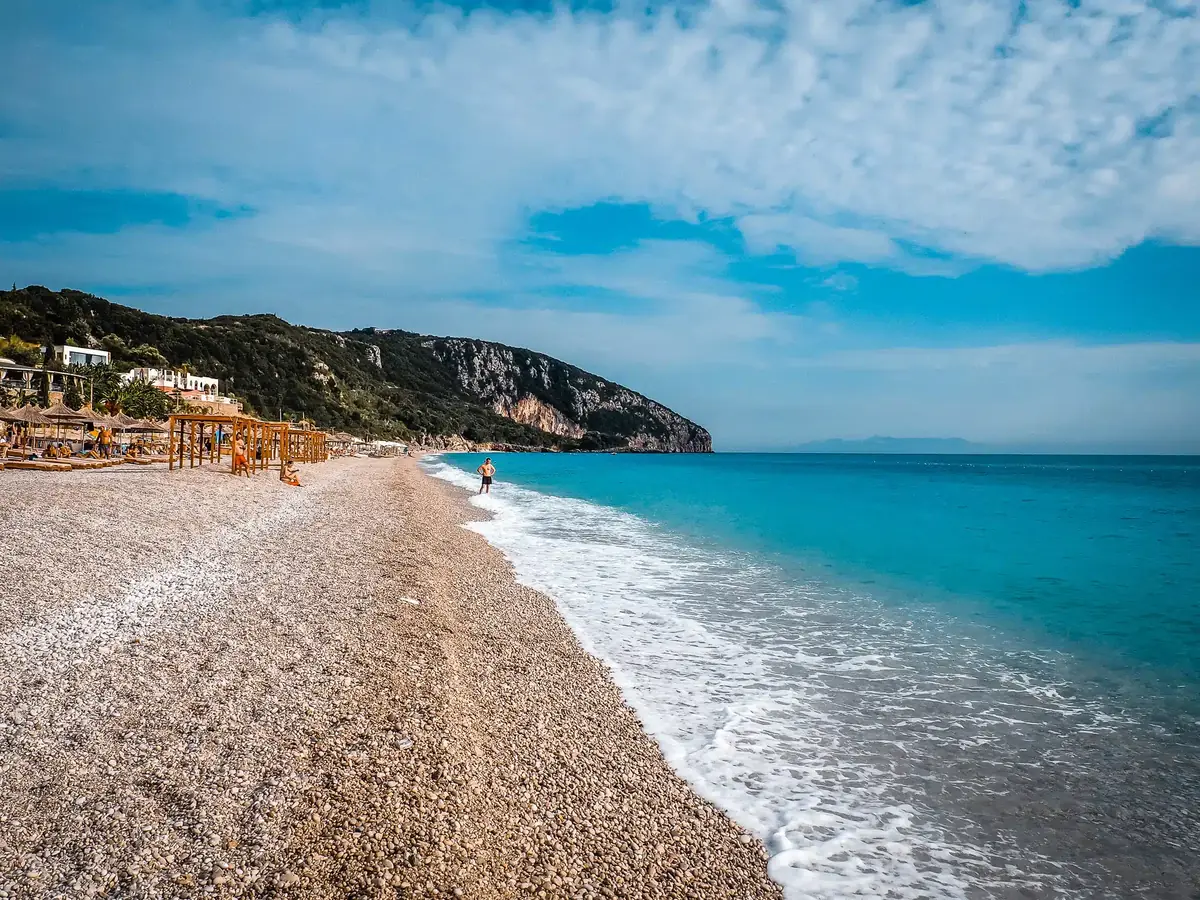
Ksamil vs Corfu — the same water, a different experience
Corfu and Ksamil sit across a narrow stretch of the Ionian Sea. Water quality at both is excellent. Corfu offers better beach infrastructure — parking, water sports, consistent English-language service — and noticeably higher prices at every turn. Ksamil gives you the same water for a fraction of the cost, as long as you arrive early in peak season and accept that the facilities aren’t Corfu-level polished.
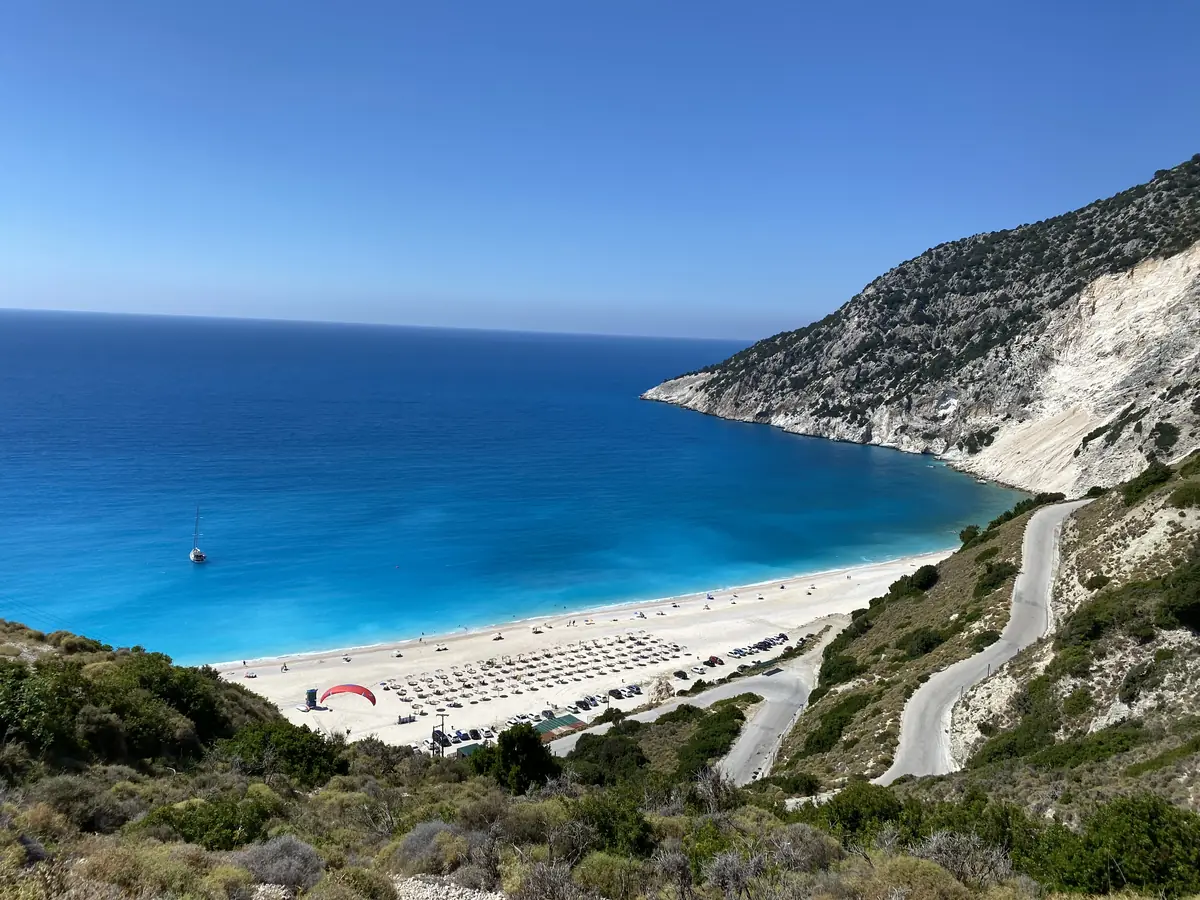
How easy is it to get around Albania vs Greece?
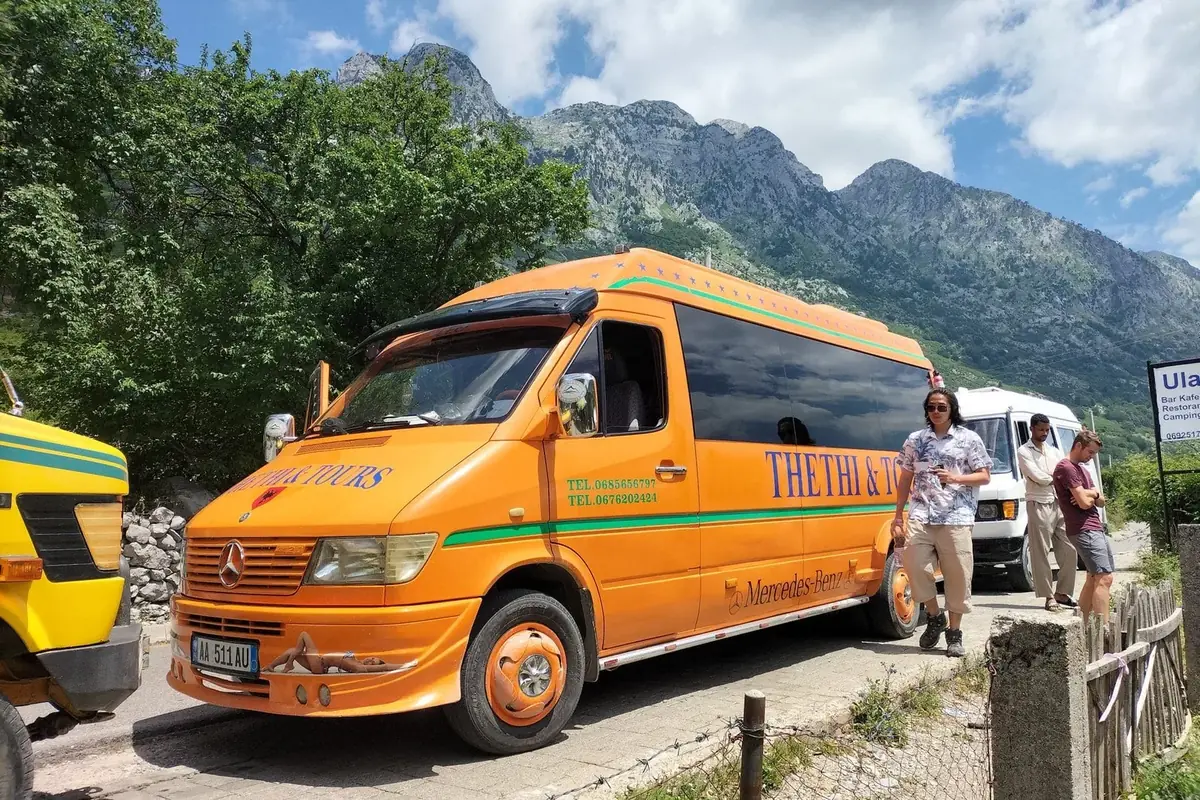
Greece has a significantly stronger transportation network than Albania across every category. Ferry island-hopping is straightforward, punctual, and bookable weeks ahead. Albania has no domestic coastal ferry system, the SH8 coastal highway varies sharply in quality, and much of the minibus network still runs on a cash-friendly, show-up-and-go model. Greece is easy to navigate. Albania rewards preparation.
The Tirana to Saranda bus covers 164 miles (264 km) in about 4 hours and 15 minutes, though some services take closer to 5 hours. Fares run roughly $15 to $21 (€12–€17). Several operators — including Tisa Travel and RivieraBus — run scheduled daily departures from Tirana’s southern bus terminal, with the first buses leaving around 5:30 a.m. and the last near 10 p.m.
A real shift worth knowing: the main Tirana–Saranda coaches can now be booked online in advance through operators like RivieraBus and platforms like Gjirafa, so the old “show up and wait for it to fill” routine no longer applies to the primary route. Smaller furgon minibuses on side routes still run cash-only and leave when full.
The SH8 coastal highway through the Llogara Pass is one of the most dramatic drives in the Balkans — steep switchbacks, long drops, and stretches where guardrails are either missing or purely decorative. The views over the Ceraunian Mountains and down to the coast are extraordinary. The road demands full concentration, especially in an unfamiliar rental car.
In Greece, you book a ferry on your phone, show up 20 minutes early, and scan a QR code. The contrast with the Albanian furgon reality on rural routes — carrying exact cash, waiting for the van to fill, negotiating your luggage into the back — is stark and worth knowing in advance.
Pro Tip: If you rent a car in Albania, buy full coverage and inspect the vehicle thoroughly before leaving the lot. The descent from Llogara Pass toward Dhermi is steep and narrow, with oncoming trucks that do not slow down for passing.
Getting from Tirana to Saranda by bus — what to expect
- Operators: Tisa Travel, RivieraBus (online booking available)
- Duration: about 4 hours 15 minutes (up to 5 hours on some services)
- Distance: 164 miles (264 km)
- Cost: roughly $15–$21 (€12–€17); cash still useful, but advance online booking now exists
- Departures: Tirana southern bus terminal; multiple daily, roughly 5:30 a.m. to 10 p.m.
- Note: smaller furgon minibuses on side routes leave when full and take cash only
Is Albania safe for tourists compared to Greece?
Both countries are safe for tourists, but safe in different ways. Greece has modern hospitals, drinkable tap water in major cities, and tourist infrastructure built over decades. Albania has almost no violent crime against visitors and a strong culture of local hospitality — but tap water outside Tirana isn’t safe to drink, and road safety takes real attention. The main risk in Albania isn’t crime; it’s the mountain roads.
Do not drink tap water in Albania outside of Tirana or large hotel chains. This applies to rural guesthouses, beach towns along the SH8 corridor, and most of the coast south of Himara. A liter of bottled water costs less than $0.50. Buy a case at a supermarket in Saranda and carry it.
Albanian hospitality toward foreigners is not a marketing phrase. On a recent drive down the coast, a guesthouse owner in Himara sent me off with a plastic bottle of homemade raki and refused payment. A farmer gave three of us a free lift between Borsh and Dhermi without being asked. These interactions happen with real regularity. In Greece, particularly on heavily visited islands in peak season, local interactions can feel transactional — a natural consequence of handling hundreds of thousands of arrivals per year.
Pro Tip: Download Google Maps or maps.me offline before driving the SH8. Mobile signal cuts out frequently between Llogara Pass and Dhermi, and English road signage is essentially nonexistent through the mountain section.
Does Albania have luxury hotels to rival Greece?
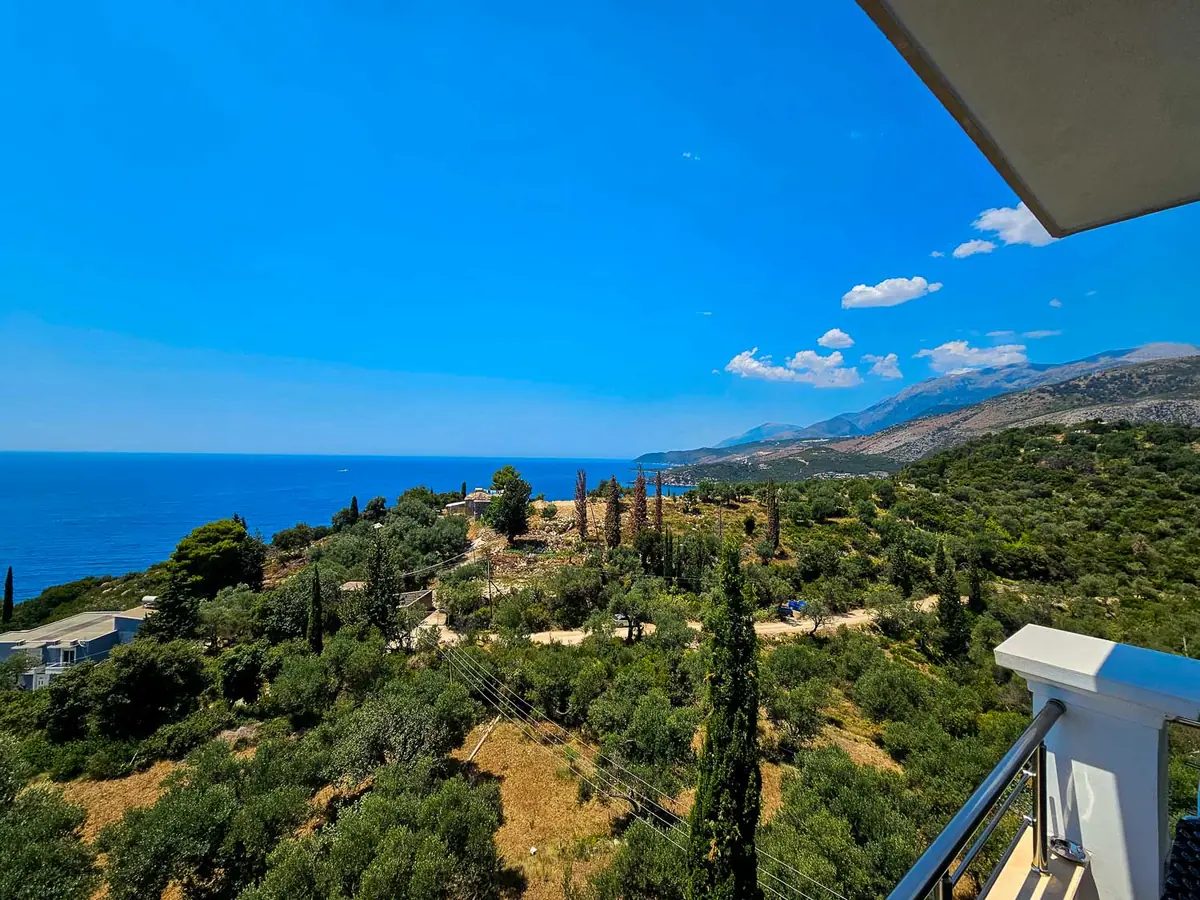
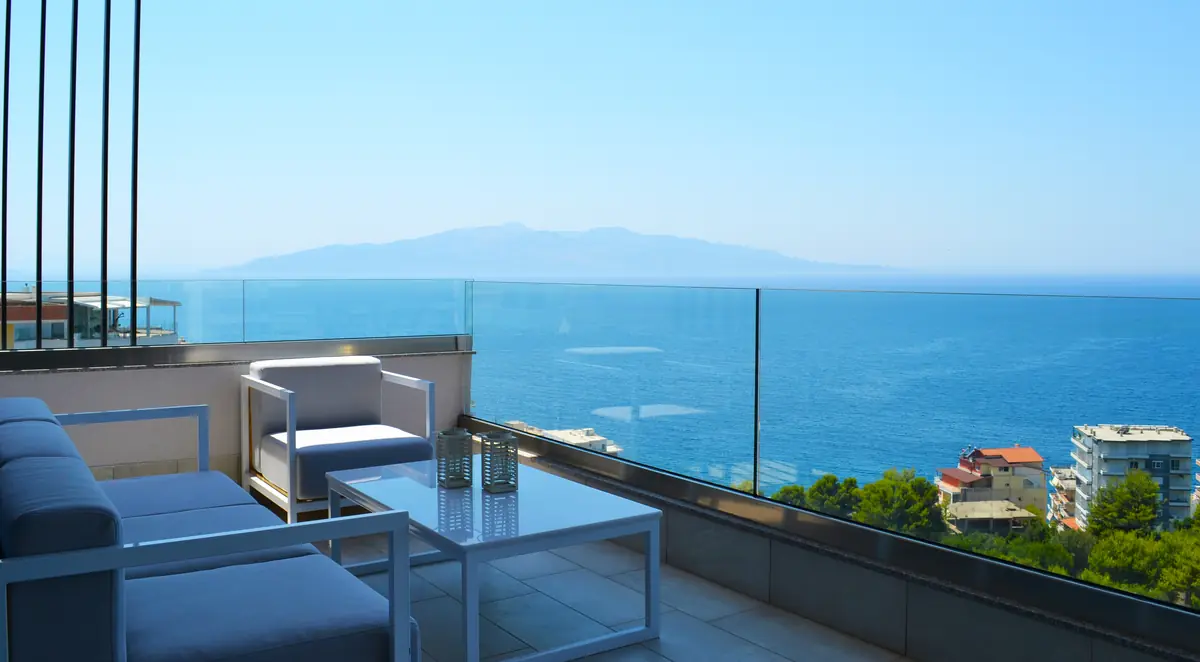
Albania is no longer a budget-only destination. The luxury sector along the Riviera has expanded fast, with boutique hotels in Saranda offering jetted tubs, private terraces, and direct Ionian sea views at prices that would count as mid-range in Santorini. A premium suite in Saranda averages $100 to $150 a night. On Santorini, the same tier starts at $300 and climbs past $1,000 for caldera cave rooms.
Standout Saranda properties include ArtNest Boutique Hotel & Suites, La Fe Boutique Hotel, and Elar Hotel. The design — whitewashed walls, structured terraces, sea-facing rooms — draws obvious visual comparisons to Greek island architecture without the price premium attached to the address.
Dhermi’s beach club scene has also shifted upscale. Several operators run full-service clubs with lounge seating, food, and cocktails at prices that stay well below comparable Greek island equivalents. You’re paying for the experience, not the postcode.
The honest ceiling remains at the ultra-luxury end. If you want a celebrated spa brand, a Michelin-level dining scene, or the specific prestige of a Santorini caldera hotel, Greece has it and Albania does not yet have a direct equivalent. But for premium comfort, a private balcony over the Ionian Sea, and breakfast delivered to your room for $100 to $150 a night, Albania closes the gap entirely.
Pro Tip: Contact boutique Saranda hotels directly by email before booking through OTA platforms — many owners offer better room categories and rates when you cut out the middleman. Response times are usually fast, and breakfast is often included when you ask.
What can you see beyond the beaches in Albania?
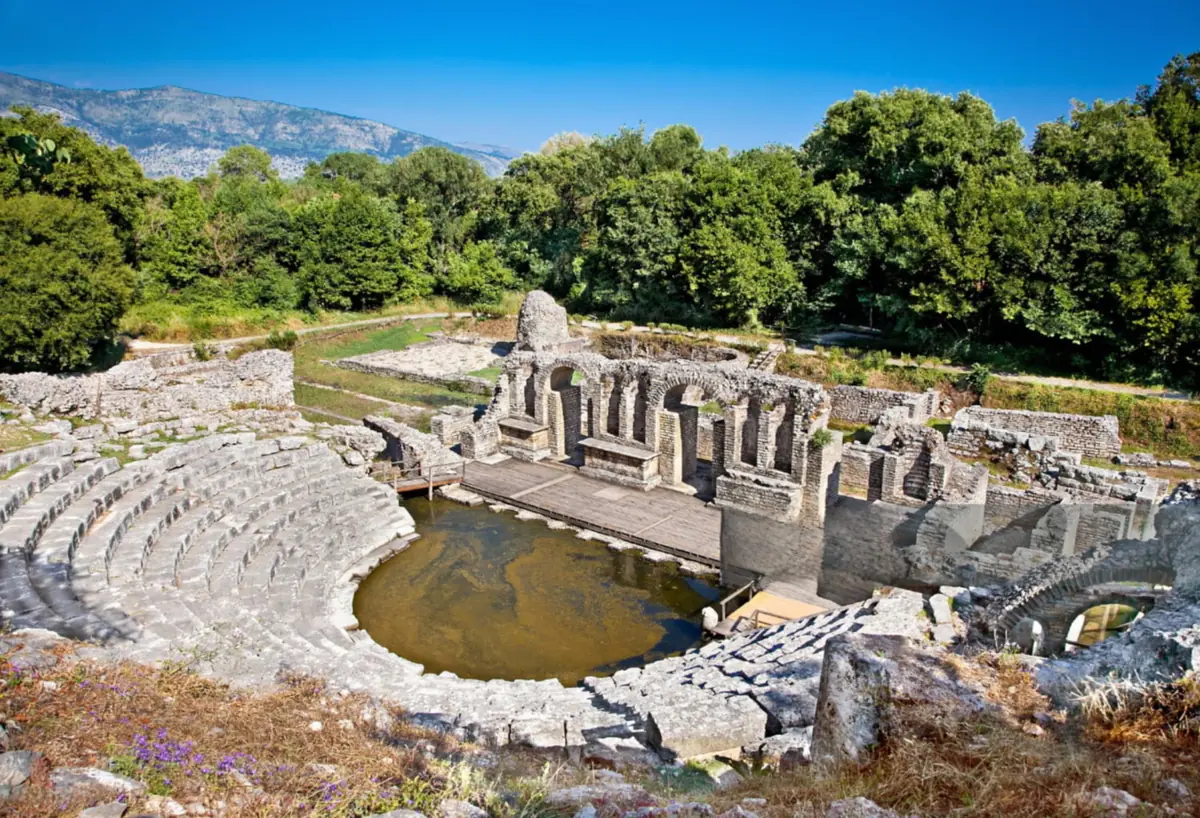
Albania’s historical depth surprises most first-time visitors. Butrint National Park sits 11 miles (18 km) south of Saranda and layers Greek, Roman, Byzantine, Venetian, and Ottoman ruins on a single site. Entry costs about 1,000 Lek (around $10). It rarely crowds, even in summer — you can walk the full circuit in about two hours and find yourself alone with the ruins for long stretches.
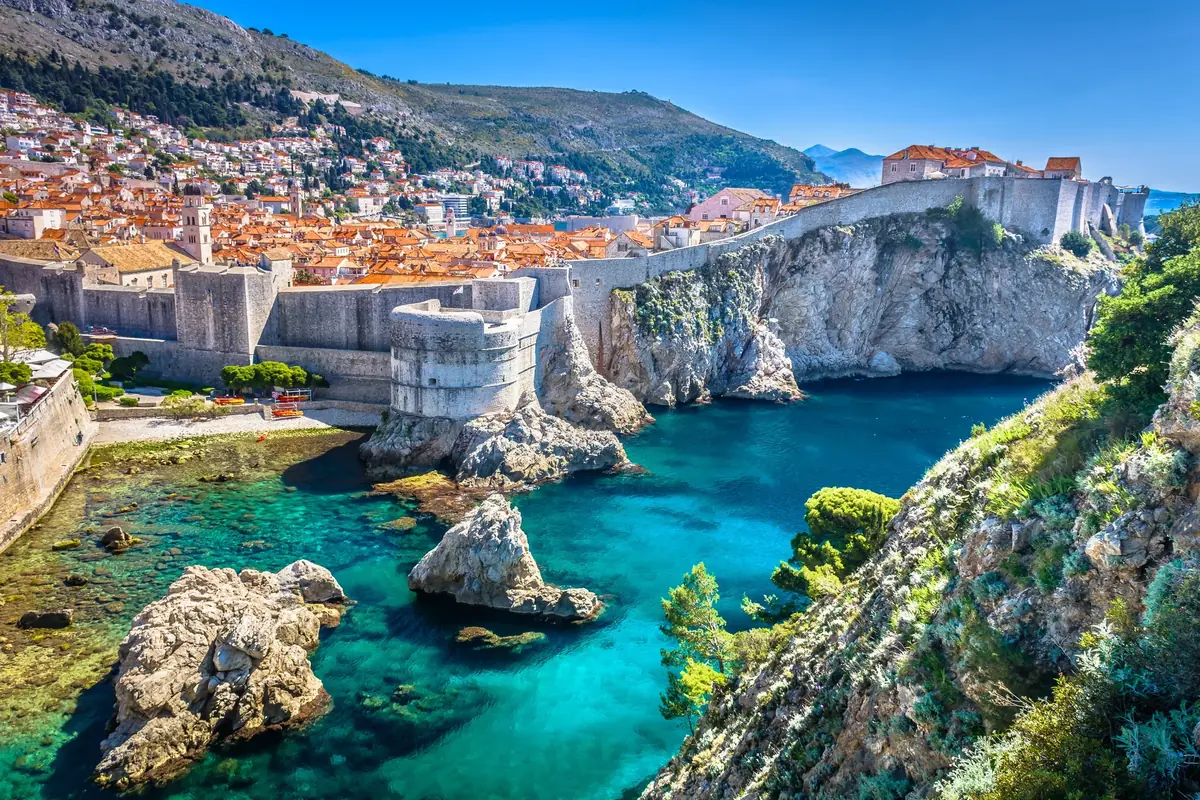
Greece offers the most celebrated classical antiquity on the planet — the Acropolis, Delphi, Olympia, Knossos. The depth and global recognition of the canonical Greek sites is not something Albania matches outright. But Albanian history reaches somewhere Greek island itineraries typically don’t: straight through the communist Cold War.
Bunk’Art 1 in Tirana is a converted Cold War nuclear bunker built to shelter the communist government in the event of a strike. The tunnels run for hundreds of yards underground, the temperature drops several degrees the deeper you go, and the acoustics are unsettling in a way no photograph captures. It’s one of the more original cultural experiences anywhere in the Balkans.
The UNESCO cities of Berat and Gjirokaster offer Ottoman-era architecture at a scale that rivals anything in Turkey or Bosnia. Berat — called the “City of a Thousand Windows” for its stacked, multi-windowed hilltop houses — sits about 80 miles (130 km) north of Saranda and is worth a dedicated day.
Pro Tip: Visit Butrint before 9 a.m. The light is better for photos, the temperature is cooler, and the tour groups haven’t arrived yet from Saranda. After 11 a.m. on a summer weekday, the main paths get busy.
Gjirokaster and Berat — two cities most itineraries skip
- Gjirokaster: 36 miles (58 km) northeast of Saranda; UNESCO-listed fortress city with a surviving Ottoman bazaar and Ali Pasha’s castle
- Berat: 80 miles (130 km) north of Saranda; hilltop UNESCO castle district still inhabited by local families
- Getting there: furgon or rental car; no direct tourist shuttle from the coast
- Time needed: a full day for each; overnight in Berat if you can
Can you visit both? How to travel from Corfu to Saranda
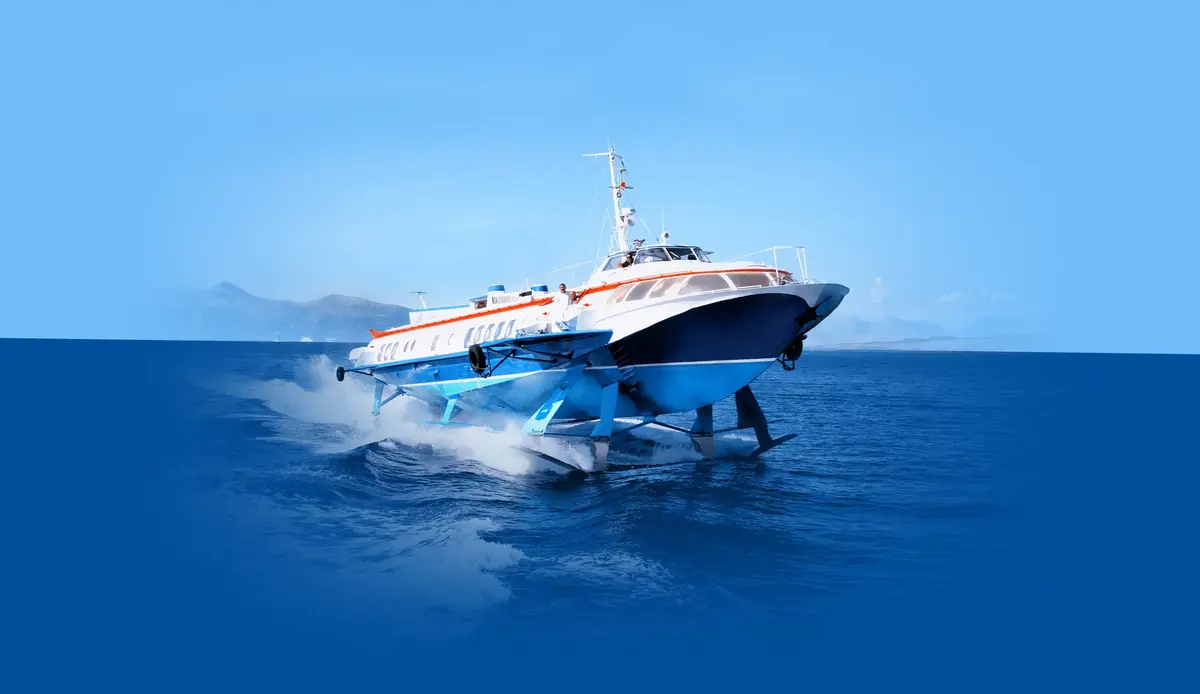
You don’t have to choose between the two countries. A high-speed ferry runs daily between Corfu, Greece and Saranda, Albania. The crossing covers about 22 nautical miles (25 miles / 40 km), takes 30 to 60 minutes depending on the vessel, and costs roughly $24 to $33 per foot passenger. That makes a two-country Albania vs Greece trip practical within a standard two-week itinerary.
The main operators are Ionian Seaways, Finikas Lines, and Albania Luxury Ferries, which now also runs the route and carries vehicles on some sailings. High-season foot fares run about €25–€30, dropping to roughly €19–€20 off-season. The first departures from Corfu leave around 8:00–8:30 a.m., so an overnight in Corfu town makes the crossing far less stressful than an early-morning scramble.
The visual transition is worth the ticket alone. Corfu’s resort-lined coast fades within minutes, and the dark silhouette of the Albanian mountains rises almost immediately on the horizon. The two coastlines look nothing alike from the water — part of what makes the crossing worth doing even if you have no plans to stay long.
- Operators: Ionian Seaways, Finikas Lines, Albania Luxury Ferries
- Duration: 30–60 minutes
- Distance: about 22 nautical miles (40 km)
- Cost: ~$24–$33 per foot passenger (€19–€30, seasonal)
- First departure from Corfu: around 8:00–8:30 a.m.
- Port of arrival: Port of Saranda (central; accommodations within walking distance)
- Documents: passport required; no visa needed for most Western passport holders
Pro Tip: Book your Corfu–Saranda ferry online at least 48 hours ahead in July and August. Foot-passenger spots sell out on weekend crossings, and walk-up availability isn’t guaranteed.
Why are travelers going to Albania for dental work?
Albania has become a serious destination for medical tourists, especially for major dental work. All-on-6 implant procedures in Tirana start around €5,400 (about $5,900) versus €11,500 (about $12,500) in Greece — a 53 percent cut. All-on-8 procedures run roughly €7,600 (about $8,300) in Albania against €11,700 (about $12,700) in Greece. Clinics use European-certified implant systems, and care at top Tirana practices matches Western European standards.
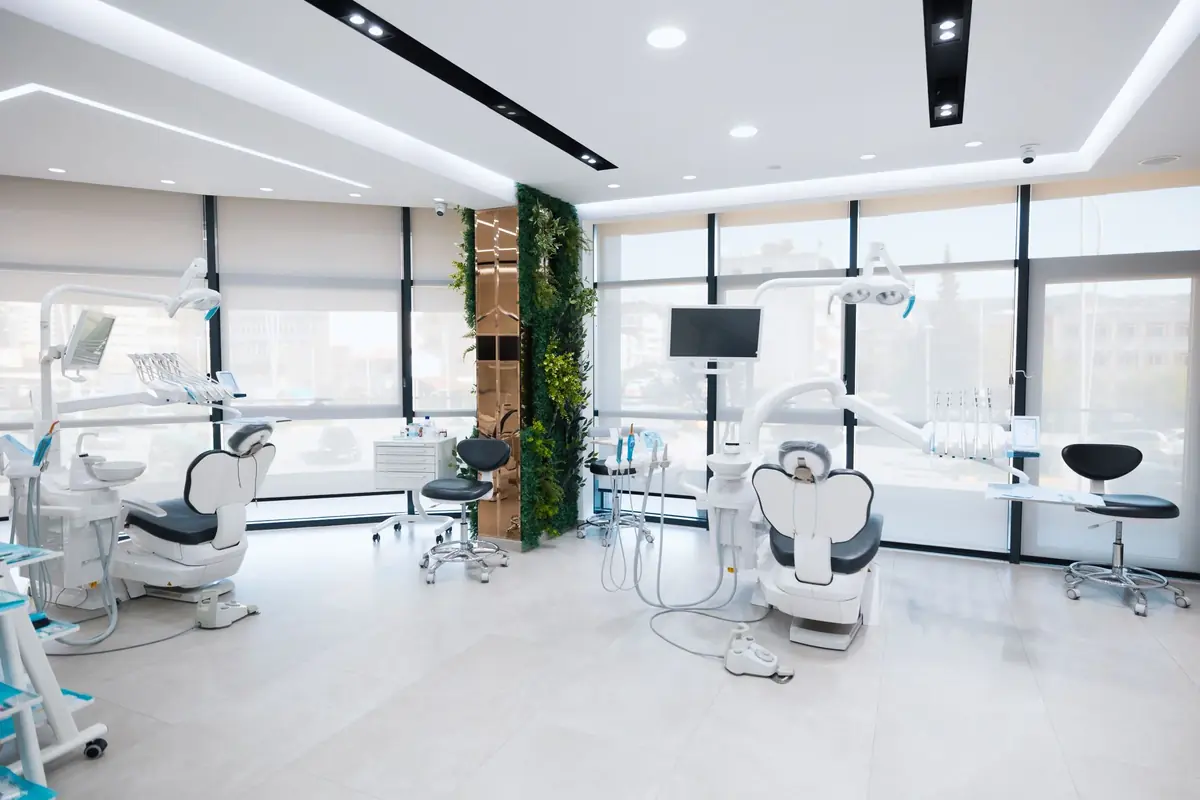
The clinics don’t feel like the budget facilities the price suggests. Reception areas are modern, consultation rooms are clean and well-equipped, and staff at patient-facing practices typically speak English at a high level. Several Saranda clinics specifically market combined treatment-and-recovery packages that pair dental work with a few days on the coast.
- All-on-6 implants: €5,400 ($5,900) in Albania vs €11,500 ($12,500) in Greece (53% savings)
- All-on-8 implants: €7,600 ($8,300) in Albania vs €11,700 ($12,700) in Greece (~35% savings)
- Full-mouth restoration savings: typically €6,000–€10,000 ($6,500–$10,900) vs Greek clinic pricing
- Materials: European-certified implant systems across reputable Tirana practices
- Location: most established clinics are in Tirana; Saranda has options for combined beach-recovery trips
Pro Tip: Request a remote consultation and a fully itemized treatment plan before booking flights. Reputable Tirana clinics handle this by video call and provide written cost breakdowns — if a clinic resists, move on.
What most guides won’t tell you
TL;DR: Greece wins on polished infrastructure, celebrated classical history, and a frictionless luxury experience. Albania wins on cost, raw coastline, and cultural authenticity — at 40 to 70 percent savings across every spending tier. If you want ease, prestige, and things that simply work, book Greece. If you want the same Ionian Sea with fewer crowds at a fraction of the cost, the Albanian Riviera is the sharper choice.
The real variable is your tolerance for friction. Albania rewards travelers who show up prepared — with cash, an offline map, and flexible timing. Greece rewards travelers who just want things to work without thinking about it. Both are worth it. They’re just different types of trip.
Have you crossed from Corfu to Saranda, or done both sides of the Ionian in one trip? Drop your take in the comments — especially if the reality matched what you expected.