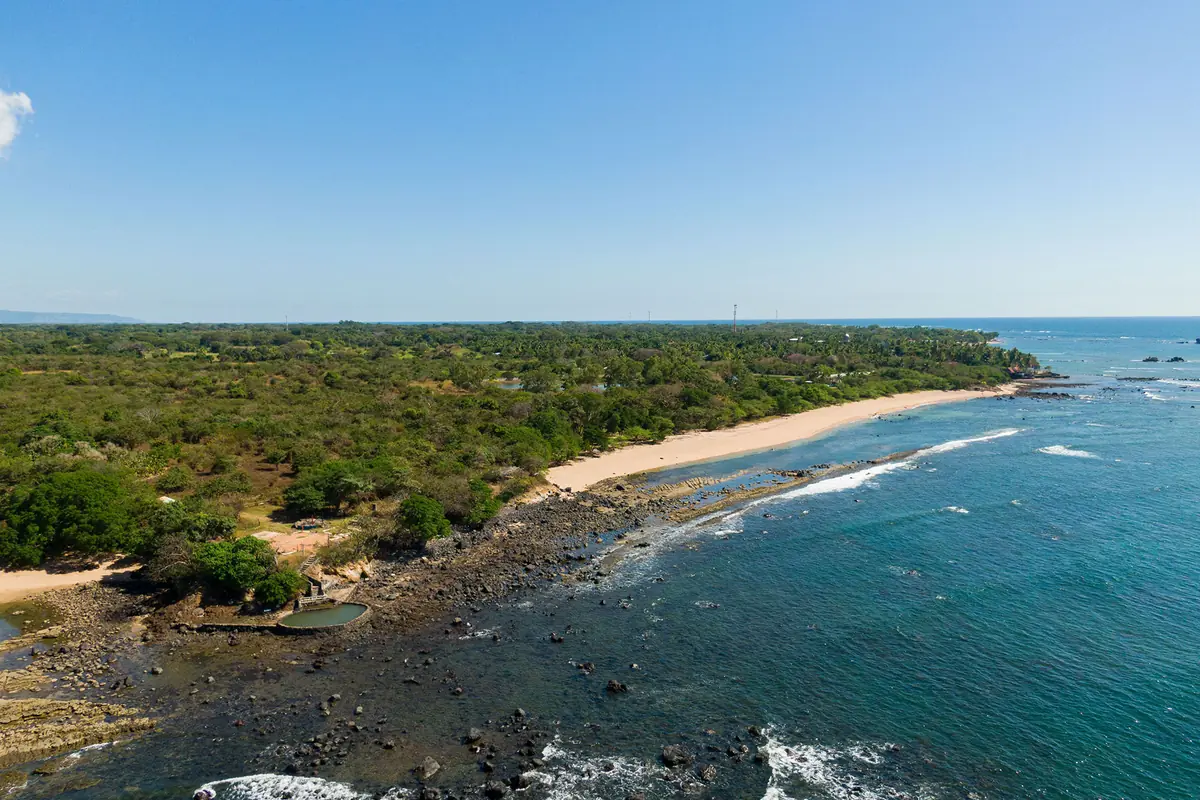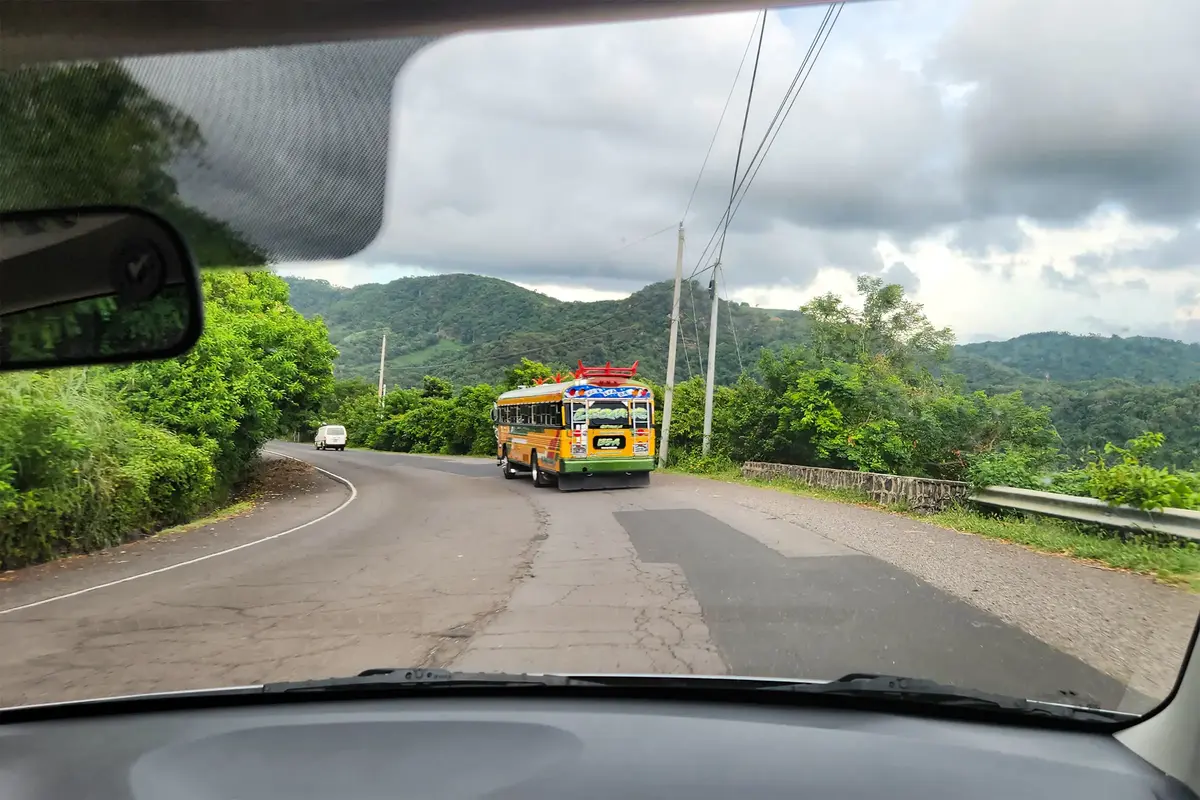
Driving to El Salvador means one of two very different trips: an overland haul from the US through Mexico and Guatemala, or a cheap rental picked up at the airport for a coast-and-volcano loop. This guide covers both — the real costs, the border paperwork, the safety reality, and where to actually point the car.
Is it safe to drive in El Salvador?
Yes. El Salvador holds the US State Department’s Level 1 rating — Exercise Normal Precautions — its first ever and the only one in Central America. The homicide rate fell from among the world’s highest to under 2 per 100,000. Drive in daylight, stick to main highways, and lock your doors.
This is the single biggest thing that has changed about driving here, and most guides haven’t caught up. A country once labeled the murder capital of the world sits at the same advisory tier as France or Japan, while its neighbors Guatemala, Honduras and Nicaragua remain at Level 3.
That turnaround came with a cost worth knowing. It coincides with a state of exception that suspended some civil liberties and led to mass arrests — a policy that has drawn real human-rights criticism. The context matters for an honest picture, though it almost never touches a tourist driving the main routes.
The driving-specific cautions that still apply:
- Drive during daylight for any intercity trip. Rural roads go dark and unlit fast, and that’s where the old advice about avoiding night driving still holds.
- Stay on the main highways — the CA-1 (Pan-American) and CA-2 (coastal). The paved corridors are in good shape.
- Keep doors locked and windows up in stop-and-go traffic in San Salvador.
- Carry your passport and car documents. Police and military checkpoints are routine and usually wave tourists through in under a minute.
Tourist police, known as POLITUR, are stationed across the main destinations, which adds a layer of reassurance on the routes most travelers actually drive.
Pro Tip: Don’t trust Google Maps to keep you on safe roads. It will sometimes route you through neighborhoods locals avoid, and off the main highways it invents roads that dead-end at a cornfield. Waze is the standard here, and Maps.me works offline when signal drops in the mountains.
On my last drive between the coast and Santa Ana, I hit three checkpoints. Each one was a glance at the passport, a nod, and a wave through — total delay under two minutes. The one place I actively avoid driving is central San Salvador: the traffic is aggressive, lane discipline is theoretical, and motorcycles thread the gaps at speed.
Should you drive your own car or rent at the airport?
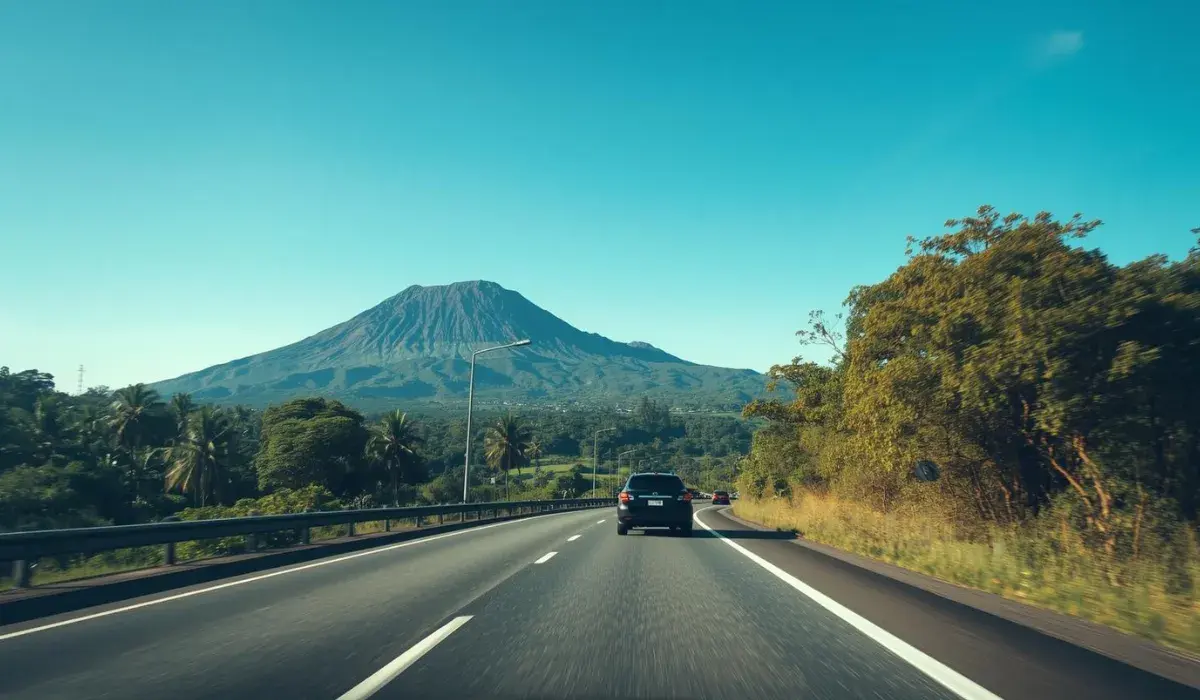
Rent locally unless you specifically want the overland adventure or need your own vehicle long-term. A rental from the airport starts around $12 a day and skips thousands of miles of driving and a stack of border paperwork. Driving your own car from the US takes three to six days each way.
Here’s the decision in one table:
| Factor | Rent at the airport | Drive your own car from the US |
|---|---|---|
| Time to wheels | About an hour after landing | 3–6 days each way |
| Cost | From ~$12/day plus insurance | Fuel, lodging, 1,300–2,950 miles of driving |
| Paperwork | License and a credit card | TIP, FONAT, CA-4, multiple borders |
| Best for | Surf and volcano trips of 1–3 weeks | Relocators, long stays, the journey itself |
| Main downside | Deposit holds of $1,500+ | Border touts, vehicle wear, days on the road |
For the vast majority of US travelers — a week or two chasing surf and volcanoes — renting wins easily. The airport sits close to the coast, so you can be on the coastal highway within an hour of landing. The overland drive is for people who want the trip to be the point, or who are moving down with their own car.
Driving to El Salvador from the US: the overland route
You can drive to El Salvador from the US along the Pan-American Highway through Mexico and Guatemala. From the closest Texas border city it’s roughly 1,300 miles (2,100 km) and about 30 hours of driving; from Los Angeles, closer to 2,800 miles (4,500 km). Plan four to six days with stops and border crossings.
Mapping the route through Mexico and Guatemala
The standard line drops south from a Texas border crossing such as Brownsville or Reynosa, runs down through Veracruz, continues to Tapachula near the Guatemala border, crosses Guatemala, and enters El Salvador — most often at La Hachadura on the Pacific side. Guatemala City to San Salvador alone is about 145 miles (235 km), roughly four hours.
Realistic nonstop driving distances and times:
| From | Distance | Nonstop drive time |
|---|---|---|
| Brownsville, TX | ~1,320–1,440 mi (2,125–2,322 km) | ~28–30 hrs |
| San Antonio, TX | ~1,575–1,850 mi (2,535–2,975 km) | ~33–36 hrs |
| Houston, TX | ~1,669–1,727 mi (2,686–2,779 km) | ~36 hrs |
| Los Angeles, CA | ~2,770–2,950 mi (4,460–4,749 km) | ~51–56 hrs |
Two rules separate a good overland trip from a bad one. Don’t drive at night in Mexico, where the risk profile is different from El Salvador. And if you’re nervous about any leg, run it as part of a caravan — overland forums regularly coordinate group crossings.
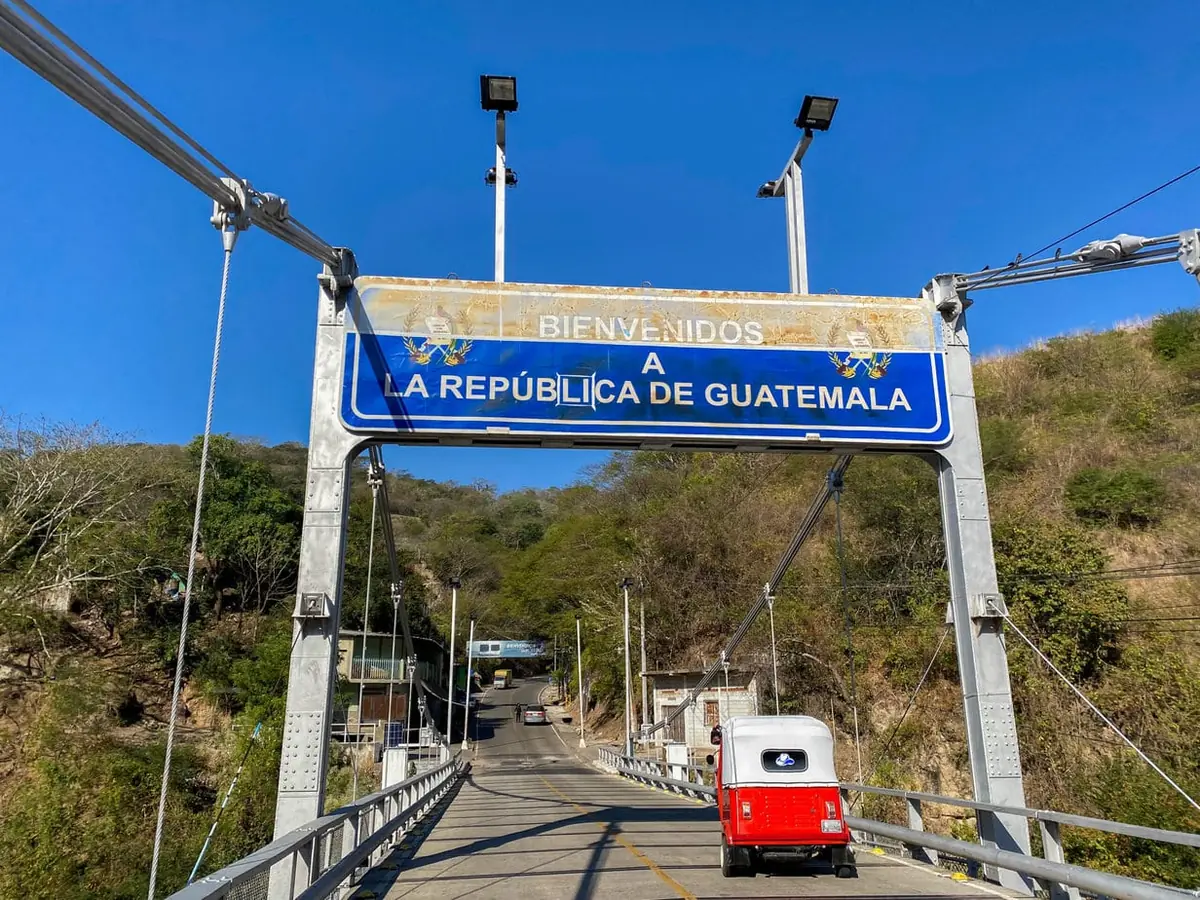
Bringing your car across the border: the TIP and FONAT
Two documents matter most when you bring a foreign vehicle into El Salvador:
- Temporary Import Permit (TIP): free. Issued at the border. Bring your passport, vehicle title, registration, and driver’s license (front and back). Keep the original — replacing a lost TIP on exit reportedly runs around $100.
- FONAT card: $10 for 30 days, mandatory for foreign vehicles, bought at an office near customs.
- Tourist card: $12, often waived on a land crossing if you already hold a valid CA-4 stamp.
- La Hachadura community road fee: $5, with a receipt provided.
The CA-4 agreement links El Salvador, Guatemala, Honduras and Nicaragua under a shared 90-day stay, so your time is counted across all four. One hardware note: right-hand-drive vehicles aren’t permitted without a special letter, so a standard US car is fine.
If you transit Honduras on the way in, budget for a Honduras vehicle permit of about $35 (700–900 lempira), an entry fee of around $3 per person, and a fumigation charge of $1–3 that’s sometimes skipped.
Pro Tip: The crowd of helpers swarming your car at the border isn’t customs staff. You can wave them off and handle the paperwork yourself, and there’s a copy shop right beside the aduana for the photocopies you’ll need. Done solo, the El Salvador side takes about 40 minutes.
One thing nobody warns you about: the truck lines can stretch for what looks like a mile. Overlanders routinely drive up the empty oncoming lane to reach the front of the queue — it’s expected practice for cars, not rude.
Shipping your car instead of driving it
If the drive through Mexico worries you, ship the car from a US port and fly down to meet it. Roll-on/roll-off or container shipping costs more and adds customs steps on arrival, but it removes the legs most people are anxious about.
This matters for the audience no guide serves well: Salvadoran-American families bringing a vehicle down to keep or sell. If you’re importing to keep, El Salvador limits permanently imported vehicles to roughly eight years old. A car older than that generally can’t be brought in for good, regardless of how you get it there.
Which border crossing should you use?
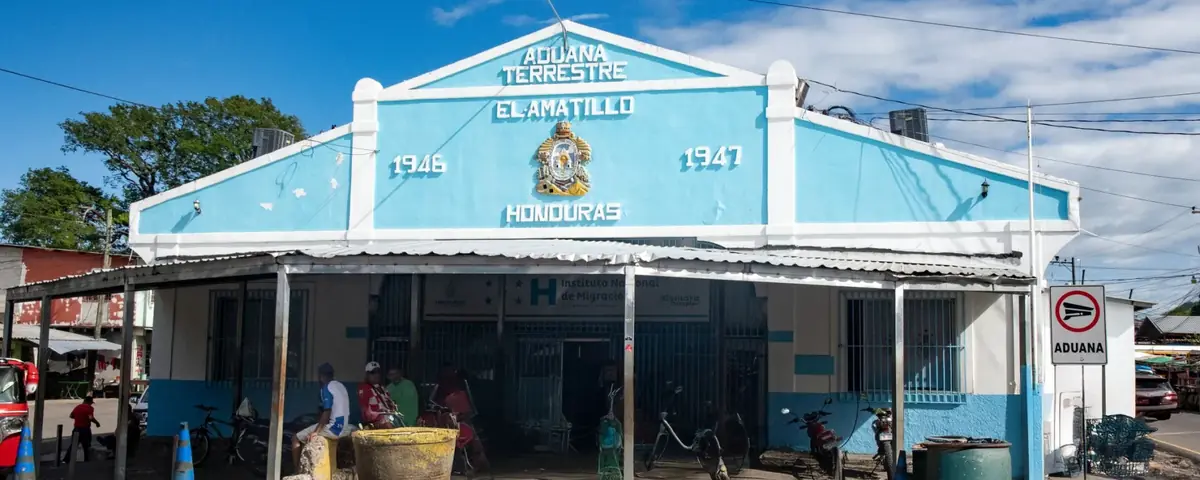
The best crossing depends on where you’re headed. La Hachadura (from Guatemala’s Pacific coast) is closest to the surf beaches; Las Chinamas is closest to the Ruta de las Flores; El Amatillo (from Honduras) serves the east. Most run 24 hours, except Las Chinamas, which typically operates about 6 a.m. to 10 p.m.
| Crossing | Border with | Nearest destinations | Hours |
|---|---|---|---|
| La Hachadura | Guatemala (Pacific) | El Tunco, El Zonte, coast | ~24 hrs |
| Las Chinamas | Guatemala | Ruta de las Flores, Ataco | ~6 a.m.–10 p.m. |
| San Cristóbal | Guatemala (CA-1) | Santa Ana, central highlands | Varies |
| Anguiatú | Guatemala (north) | Metapán, Lago de Güija | Varies |
| El Amatillo | Honduras (CA-1) | San Miguel, eastern surf | ~24 hrs |
| El Poy | Honduras (north) | Chalatenango, Suchitoto | ~24 hrs |
Drive times from the two busiest crossings:
- La Hachadura to San Salvador: ~77 mi (124 km), about 2 hours.
- El Amatillo to San Salvador: ~118 mi (190 km), about 3 hours.
El Amatillo operates as a single integrated post, which speeds things up, but waits of one to two hours are still typical there. Cross in the morning — afternoons back up at every crossing on the list.
How much does it cost to rent a car in El Salvador?
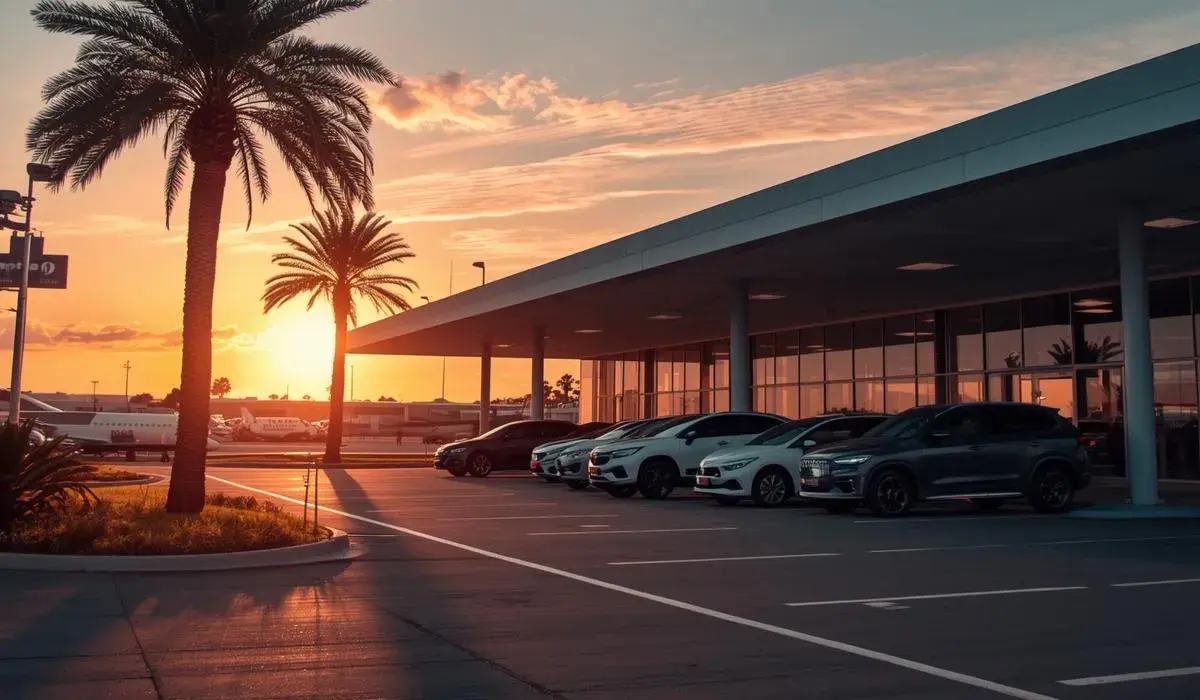
Economy rentals start around $12 a day, with the market average near $29. Compact SUVs run about $45 and full-size cars $50 to $80. The catch is mandatory liability insurance (about $17 a day) and a refundable deposit hold of $1,500 to $2,000 — sometimes far higher — placed on your credit card.
Typical daily rates by class:
| Vehicle class | Daily rate (USD) |
|---|---|
| Economy | $12–25 |
| Compact | $16–30 |
| Midsize | $25–40 |
| Compact SUV | $45 |
| Full-size | $50 |
| SUV / premium | $55–80 |
| Truck | $60 |
| Van | $70 |
The fine print is where rentals get expensive, so read this before you book the cheapest online rate:
- Third-party liability: required by Salvadoran law, about $17/day, covering up to $5,000. It’s often left out of third-party online prices and isn’t covered by US credit cards — the most common traveler complaint.
- Deposit hold: $1,500–$2,000 typical, up to $5,000–$10,000 at some companies.
- Deductibles: collision damage runs around $3,000; theft up to $7,000.
- Age rules: minimum 21, an under-25 surcharge, and a maximum age near 75 at some agencies.
- Cross-border to Guatemala: where allowed, expect about +$100 plus a $50 permit.
The full lineup is at San Salvador’s airport: Alamo, Avis, Budget, Hertz, Enterprise, National, Dollar, Thrifty, Sixt and Europcar, plus local outfits like Economy and Carvi.
Fuel costs and how stations work:
- Gasoline: around $3.50–4.00 per gallon depending on grade and zone.
- Diesel: around $3.30–3.55 per gallon.
- Stations are full-service — no self-pump, and tipping isn’t expected. Larger ones take cards.
- Prices reset every two weeks and vary by region.
Pro Tip: El Salvador runs on the US dollar, so there’s no currency to exchange. Bring a stack of small bills — $1s, $5s and $10s. Outside the cities, breaking a $50 or $100 at a gas station or pupusería is genuinely hard.
The budget move that works: book about two weeks out, rent from an off-airport location to dodge surcharges, and split a $35-a-day car among hostel travelers. That beats every shuttle and every per-person tour.
What are the rules of the road?
Drive on the right. Seatbelts are mandatory, phones must be hands-free, and the drink-driving law is zero tolerance — any measurable blood alcohol level is a criminal offense carrying two to five years in prison. Speed limits run about 30 mph (50 km/h) in town and 50–55 mph (80–90 km/h) on highways.
| Rule | Detail |
|---|---|
| Side of the road | Right |
| Seatbelts | Mandatory for all passengers |
| Phone | Hands-free only |
| Alcohol | Zero tolerance — any level is criminal (2–5 yrs prison) |
| Urban speed | ~30 mph (50 km/h) |
| Highway speed | ~50–55 mph (80–90 km/h) |
| Documents to carry | License, passport, registration, insurance |
The alcohol law trips up travelers because older guides still cite a 0.05% blood-alcohol limit. That law is gone. One beach beer before driving can mean a 72-hour detention, a $150 fine and a one-year license suspension, with prison on the table for higher levels. Treat it as absolute zero.
The bigger daily hazard isn’t the police — it’s túmulos, the speed bumps that appear without warning, often unpainted, right where you’ve finally gotten up to speed. Hit one at 40 mph and you’ll feel it in your spine. Slow through every town, watch for animals on rural roads, and give a wide berth to the aggressive overtaking that’s normal on two-lane highways.
One myth to drop: you don’t need an International Driving Permit if your license is in English or Spanish. It’s a useful backup, not a requirement, for the first 90 days.
Coast or mountains: where should you drive first?
Two routes deliver the most for the least driving: the coastal highway to the surf beaches, and the Ruta de las Flores mountain loop. Both start within a couple hours of the airport, and you can link them across a long weekend. The coast is hot and laid-back; the mountains are cool and slow. Pick by mood.
Surf City and the coastal highway
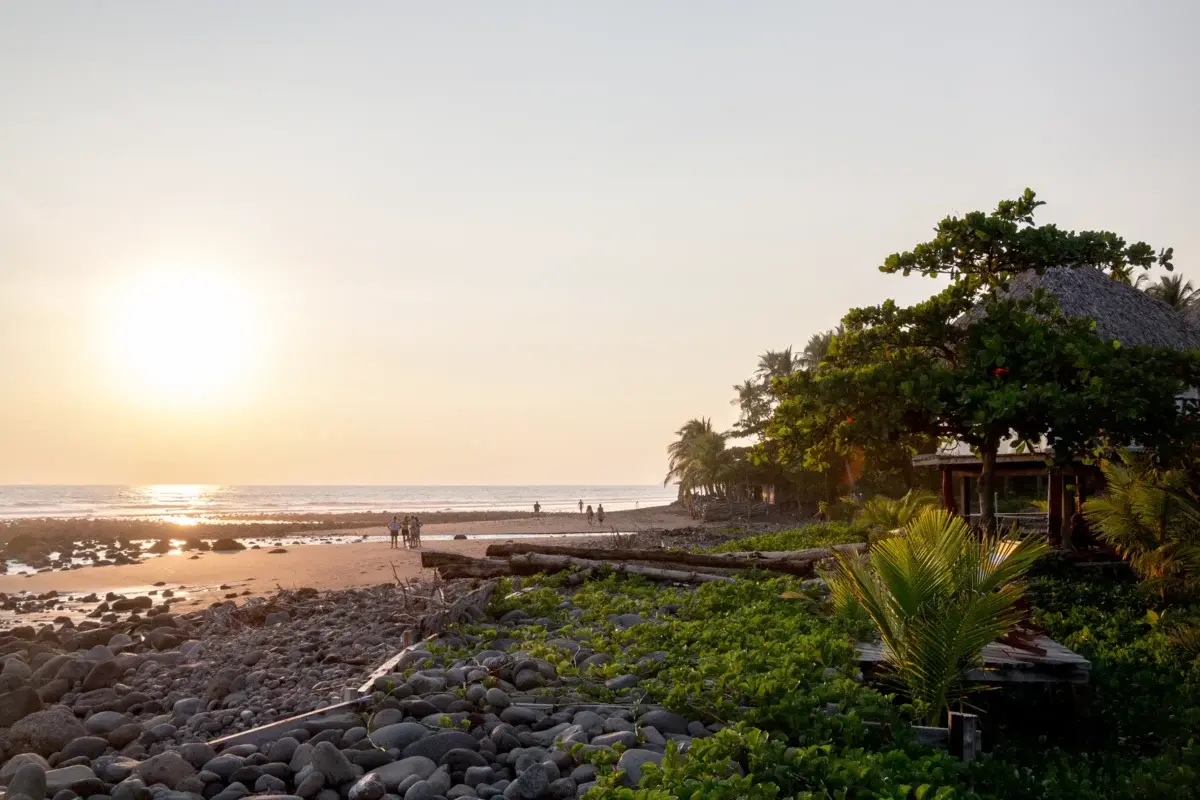
The coastal highway (CA-2, the Carretera Litoral) strings together the surf towns, and the airport sits closer to them than to the capital:
- SAL airport to El Tunco: ~25 mi (40 km), 35–60 minutes.
- San Salvador to El Tunco: ~26 mi (42 km), 40–60 minutes.
El Tunco is a single dusty strip of surf shops, pupuserías and bars that runs down to a black-sand beach. The real draw is the point break at nearby Punta Roca — long, consistent right-handers that pull surfers from across the region. El Sunzal next door is the mellower beginner wave.
Because the airport sits so close to the coast, you can land at noon and be in the water by late afternoon. I tell first-timers to skip the San Salvador hotel night entirely and drive straight to the beach.
Watch for lane-closure roadwork on the El Tunco–El Zonte stretch of the coastal highway, where weekend traffic can back up; build in buffer time on Saturdays and Sundays. Farther east, a newer coastal road has opened up the Punta Mango and Las Flores surf zone, which used to be a slog to reach.
El Zonte is the village that started El Salvador’s Bitcoin Beach experiment. You can still pay in Bitcoin at a handful of spots, but the dollar runs everything — Bitcoin’s stint as legal tender didn’t last, and acceptance is voluntary.
Ruta de las Flores: the mountain loop
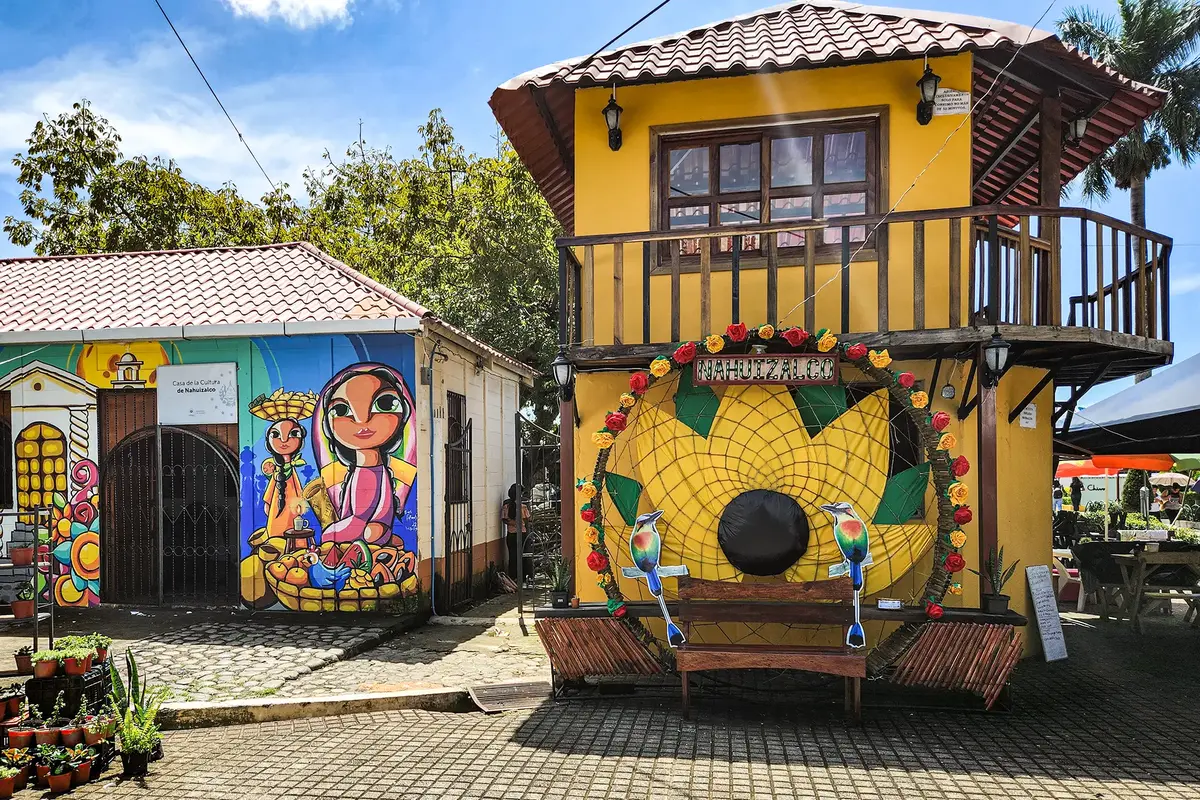
The Ruta de las Flores links a chain of coffee-country towns — Concepción de Ataco, Apaneca, Juayúa and Salcoatitán — along a single mountain road in the western highlands. Ataco’s streets are painted wall to wall with murals, and the air at about 4,000 feet is cool enough for a jacket at night, a relief after the coast.
Juayúa runs a weekend food fair (the feria gastronómica) that’s worth timing your drive around. For overlanders, Las Chinamas is the nearest border to this loop, which is why it appears on the crossing comparison above.
Three more drives worth the gas
If you have extra days, three short drives round out a trip:
- San Salvador to Santa Ana: ~40 mi (64 km), about 1 hour. The base for the Santa Ana (Ilamatepec) volcano hike and Cerro Verde National Park.
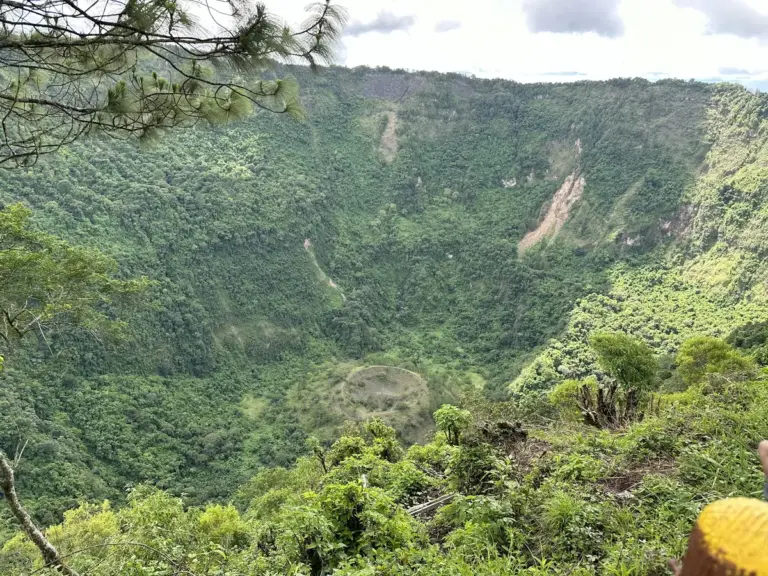
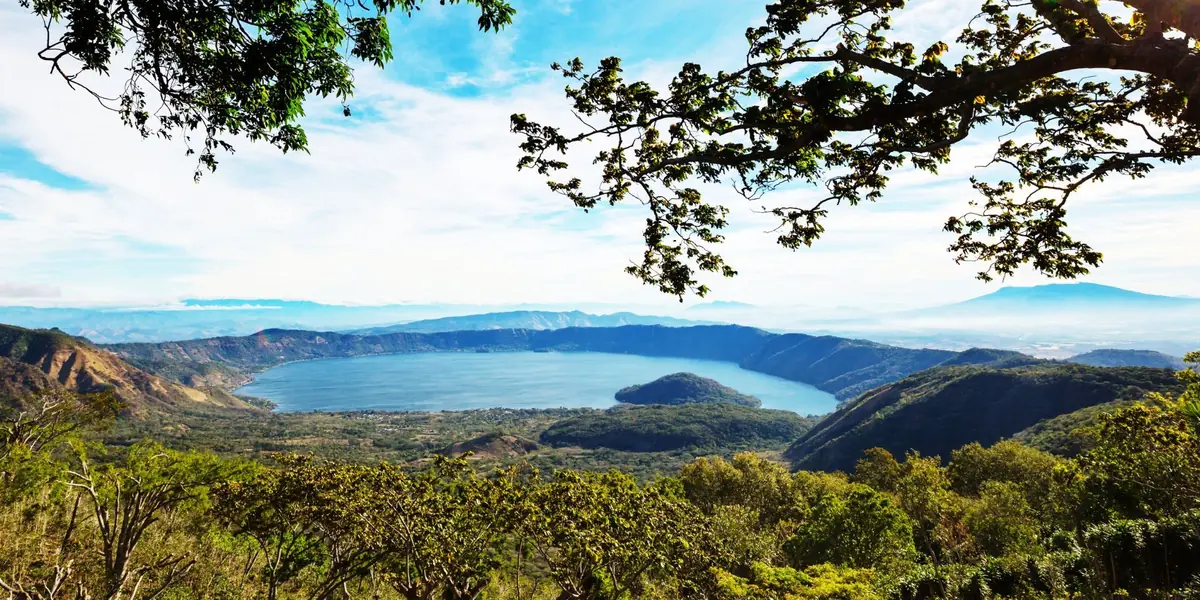
- Lake Coatepeque: a flooded volcanic crater near Santa Ana, roughly an hour west of the capital, good for a swim-and-lunch detour.
- San Salvador to Suchitoto: ~31 mi (50 km), about 1 hour 15 minutes. A cobblestone colonial town above Lake Suchitlán.
When is the best time to drive — dry or rainy season?
The dry season, November through April, is best for driving. Roads are clear, you get about eight hours of sun a day, and rain falls only a few days a month. The rainy season, May to October, brings intense afternoon downpours, flooding and slick rural roads where a 4×4 helps.
What to expect by region:
- Coast: highs around 90–93°F (32–34°C).
- San Salvador: highs around 86–91°F (30–33°C).
- Highlands: cooler all day, with mountain nights dropping near 55°F (13°C).
Locals call the dry months verano and the wet months invierno, which can confuse first-timers since the calendar runs opposite to the northern seasons. You don’t need a 4×4 for the main highways or the coast — a compact is fine. A 4×4 only earns its cost if you’ll tackle rough rural or mountain roads, and mostly in the wet months.
What most guides won’t tell you
TL;DR: Driving to El Salvador is far easier and safer than its old reputation suggests — it now holds a Level 1 advisory. Most US travelers should rent at the airport from about $12 a day and drive the coast and the Ruta de las Flores; go overland from the US only if you want the journey itself. Respect the zero-tolerance alcohol law and navigate with Waze, not Google Maps.
The honest verdict is that El Salvador has quietly become one of the easiest countries to drive in this part of the world, and the content ranking for it hasn’t caught up. The roads on the main corridors are smooth, the airport is a short hop from the surf, and the checkpoints are a non-event for tourists. The two things that will actually get you in trouble are a single drink before driving and blindly following Google Maps off the main highways.
Are you flying in to rent a car, or making the overland drive down from the US? Tell me your starting point in the comments and I’ll point you to the right border crossing.