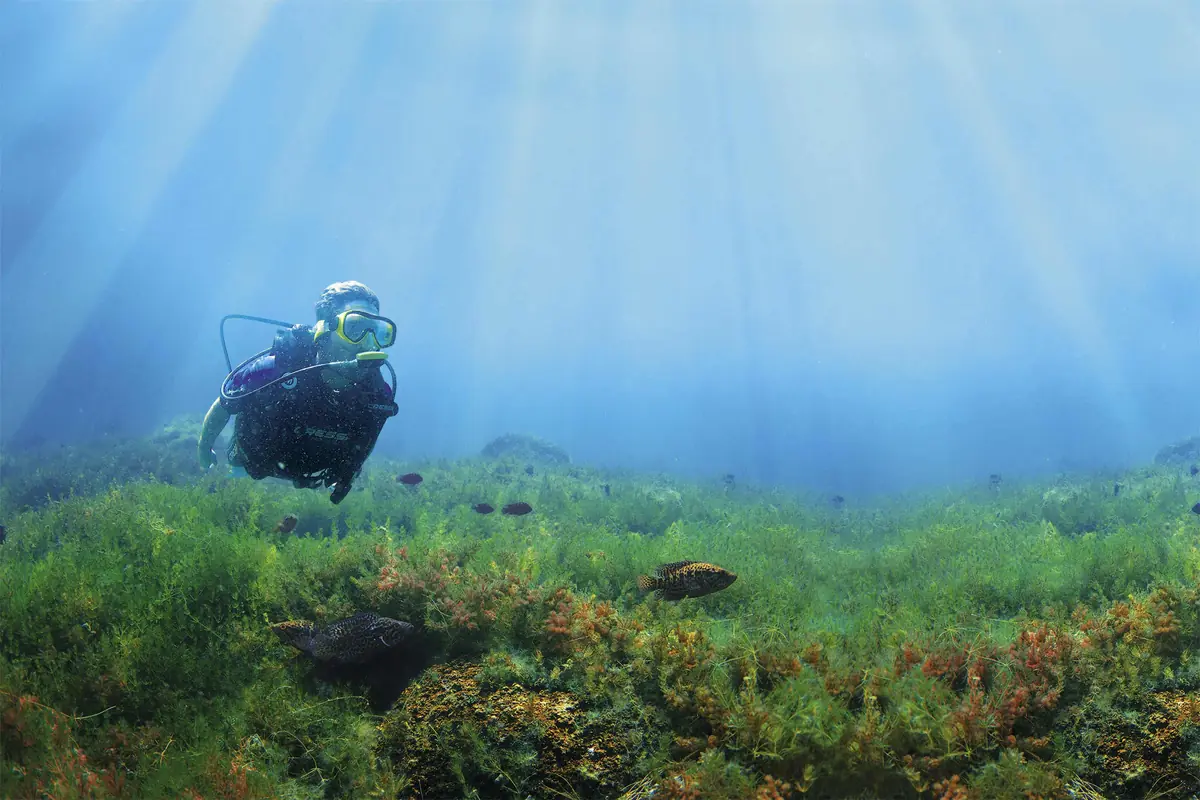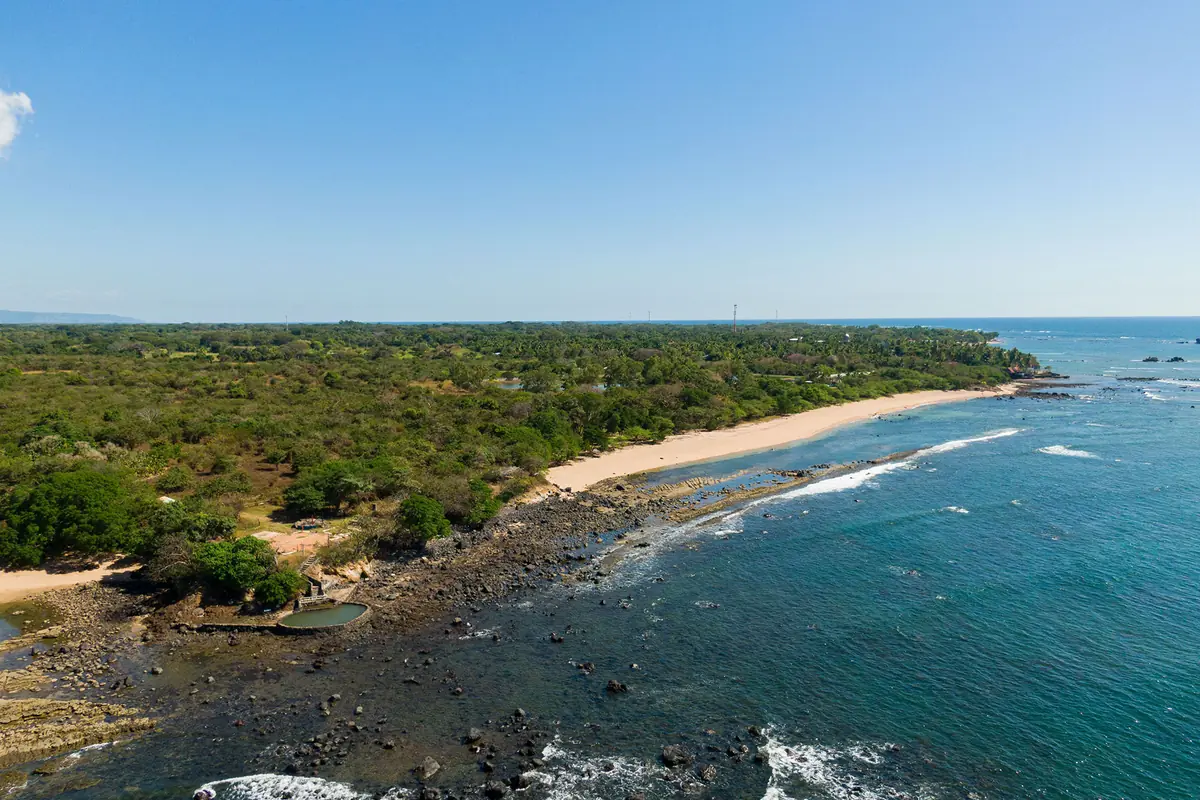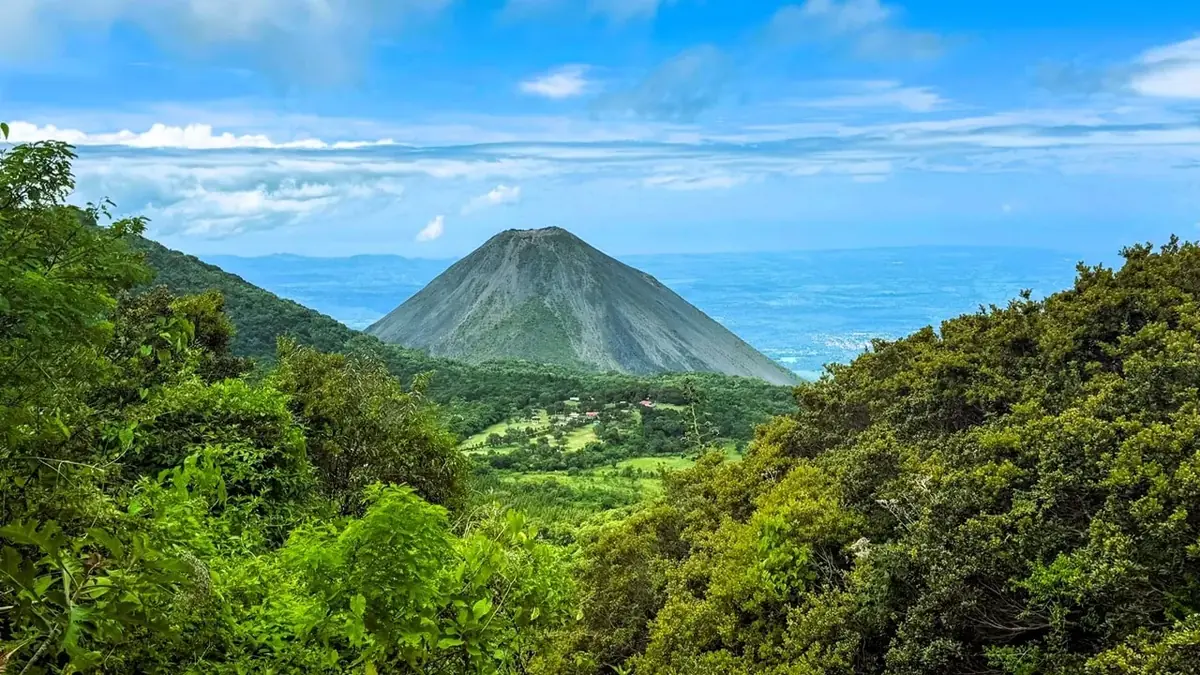
El Salvador doesn’t match its old reputation. The country went from the world’s highest murder rate to a US State Department Level 1 advisory in under a decade — the same tier as France, Japan and Italy. This El Salvador travel guide covers what’s worth your time, what to skip, and what older blogs still get wrong about the smallest country in Central America.
Is El Salvador safe to visit?
Yes. The US State Department downgraded El Salvador to Level 1 — Exercise Normal Precautions — in November 2024, putting it at the same advisory level as France, Japan and Italy. The 2025 homicide rate was 1.3 per 100,000, lower than the US figure of 5.0 per 100,000 for the same year. Petty theft on buses remains the main practical concern.
The trajectory is hard to overstate. In 2015, El Salvador recorded roughly 106 homicides per 100,000 — one of the highest rates ever measured anywhere in the world. By 2018, the figure was 53.1. By 2023 it dropped to 2.4. The 2024 number was 1.9 per 100,000, with 114 total homicides for the entire year. In 2025 the country logged just 82 homicides total — a rate of 1.3 per 100,000. Security Minister Gustavo Villatoro publicly called El Salvador “the safest nation in the Western Hemisphere,” and the FBI’s 2024 Crime Data report shows the US sitting at 5.0 per 100,000 over the same period.
That comparison reframes the conversation. The US homicide rate of 5.0 per 100,000 is roughly four times El Salvador’s. The “murder capital of the world” label has been outdated by close to a decade.
Pro Tip: The older guides that still warn US travelers to avoid Soyapango, Apopa and Mejicanos are recycling pre-2022 advice. Those are residential suburbs of San Salvador, not places tourists would visit anyway. The current concern isn’t gang territory — it’s pickpocketing on chicken buses.
What you actually need to worry about as a US visitor:
- Pickpocketing on the chicken bus network, especially routes through downtown San Salvador
- ATM-skimmer risk — withdraw cash inside bank branches, not from outdoor machines
- Walking alone on isolated beaches after dark, even on the Surf City coast
- Driving between cities at night on unpaved rural roads (US Embassy personnel are restricted from doing so, with exceptions for the SAL airport corridor and the La Libertad coast)
- Catcalling and street harassment for solo female travelers in larger cities — annoying, not dangerous
What is no longer a real concern: random gang violence against tourists, extortion at restaurants, or being caught in cartel crossfire. None of those map to what US visitors are actually reporting from the ground.
When is the best time to visit El Salvador?
The best time to visit El Salvador is November through April, the dry season, with November and February as the sweet spots. Skies are clear over the volcanoes, the Pacific has consistent waves for beginners, and accommodation isn’t as packed as it gets around Christmas or Semana Santa.
Two seasons run the country:
- Dry season (November–April): Highs of 86–93°F (30–34°C) in San Salvador, cleaner air, sharper volcano views, predictable surf
- Rainy or green season (May–October): Afternoon thunderstorms, lush jungle, bigger surf swells for advanced surfers, lower hotel prices, some parks closed
The wettest months are September and October. The hottest stretch is March and April, when San Salvador can hit 95–97°F (35–36°C) in the afternoon. Highlands like Apaneca and Cerro Verde stay 15–20°F cooler than the coast.
If you have to pick a single week, go in late November. The rains have ended, the landscape is still green, prices haven’t spiked yet, and the surf is forgiving enough for first-timers at El Sunzal.
Specific seasonal hooks worth timing a trip around:
- Sea turtle nesting: May–November, with hatchling releases July to December at Bahia de Jiquilisco
- Humpback whale watching: November–April off the Los Cobanos reef
- Coffee picking season: December–March in the Apaneca-Ilamatepec mountains
- National Pupusa Day: November 13 — every cooperative in the country sets up a tent
Pro Tip: Avoid Semana Santa (Holy Week, late March or early April) unless you specifically want to see the colored sawdust alfombras in Sonsonate. Hotel prices double, El Tunco fills with Salvadoran families wall to wall, and the Santa Ana hike hits capacity by 9 a.m.
How many days do you need in El Salvador?
Five to seven days is enough to see the main highlights — San Salvador, the Santa Ana volcano, Ruta de las Flores and the Surf City coast. Ten days is the sweet spot if you want to add Suchitoto and the Joya de Ceren ruins without rushing. Two weeks lets you include the eastern coast, Conchagua and Bahia de Jiquilisco.
Distances are short — this is the smallest country in Central America. You can drive coast to capital to volcano in under three hours. That means you can pack a lot in without long-haul driving days.
If you only have a long weekend (3–4 days), pick one base and stay put. The realistic minimum to leave with a sense of the country is 5 days.
Where to go in El Salvador
These are the destinations worth your time, roughly ranked by what they deliver versus what they cost to reach. San Salvador anchors the entry, El Tunco and El Zonte own the surf coast, Santa Ana holds the country’s signature volcano, the Ruta de las Flores offers the coffee circuit, Suchitoto adds the colonial cultural layer, and Joya de Ceren is the Maya ruin to prioritize.
San Salvador and the capital region
San Salvador is not a destination on its own — it’s a base for day trips and the place you fly into. Plan one night, two at most, and use the time to see the Centro Historico, eat at a serious sit-down restaurant, and take the half-day trip up to El Boqueron crater.
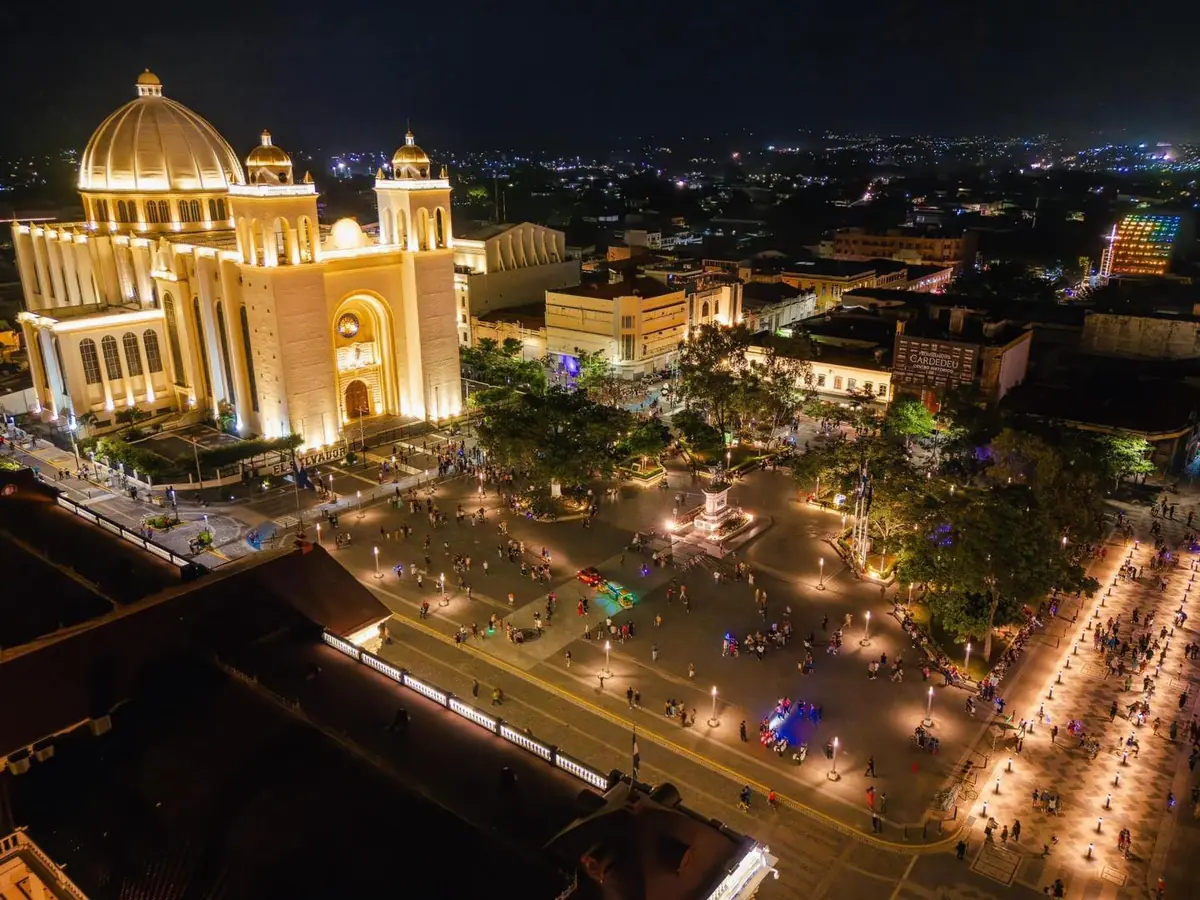
The Centro Historico had a major overhaul through the early 2020s. Plaza Barrios, the Catedral Metropolitana (where Saint Oscar Romero is buried in the crypt), and the Palacio Nacional all sit within a five-minute walk of each other. The new BINAES national library is open 24 hours a day and is worth a walk-through for the architecture alone.
The single most visually striking building in the country is Iglesia El Rosario, two blocks east of the cathedral. The exterior looks like a concrete bunker. The interior is a rainbow of stained-glass light from end to end. The walls still show bullet holes from the 1979 protester massacre that helped trigger the civil war — they were left intentionally.
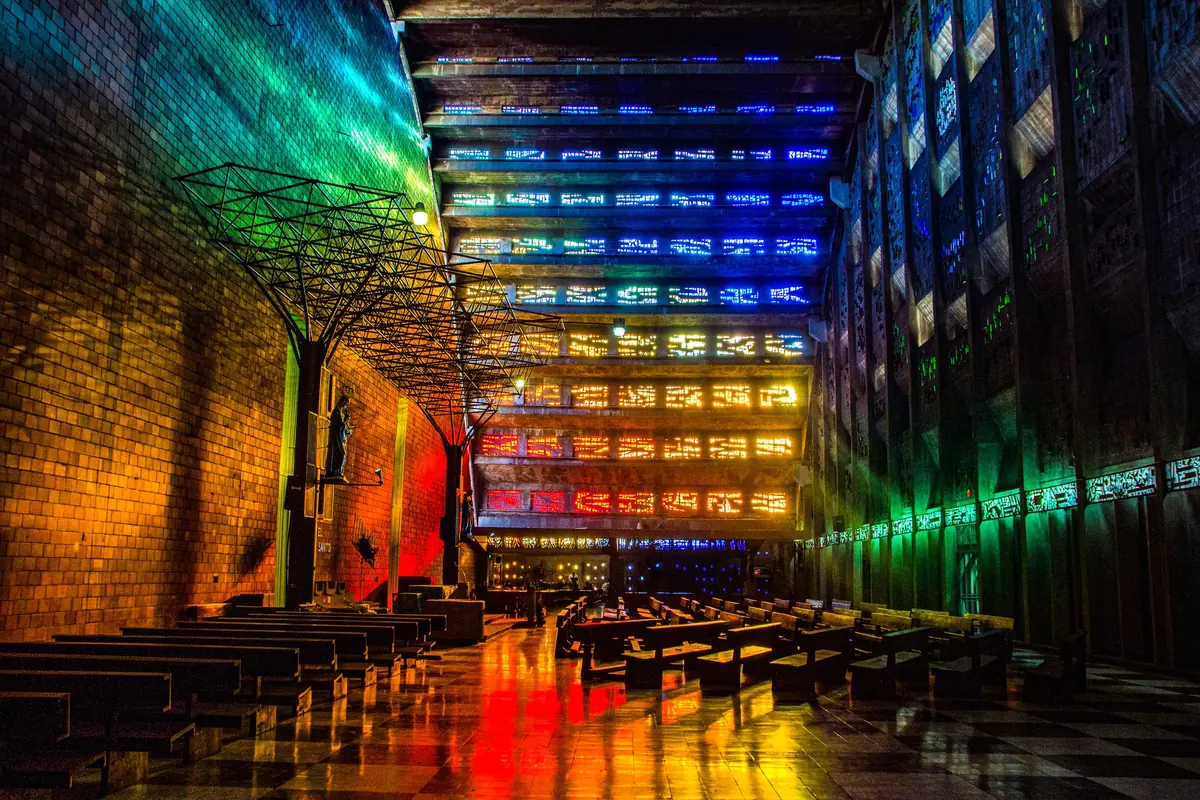
For your base, stay in Zona Rosa or Colonia San Benito — this is where the embassies are, where Uber arrives in three minutes, and where the better restaurants cluster. Avoid hostels near Terminal de Occidente.
- Location: Departments of San Salvador and La Libertad
- Cost: Mid-range hotel $80–150/night in Zona Rosa
- Best for: First-night base, history and food
- Time needed: 1–2 nights
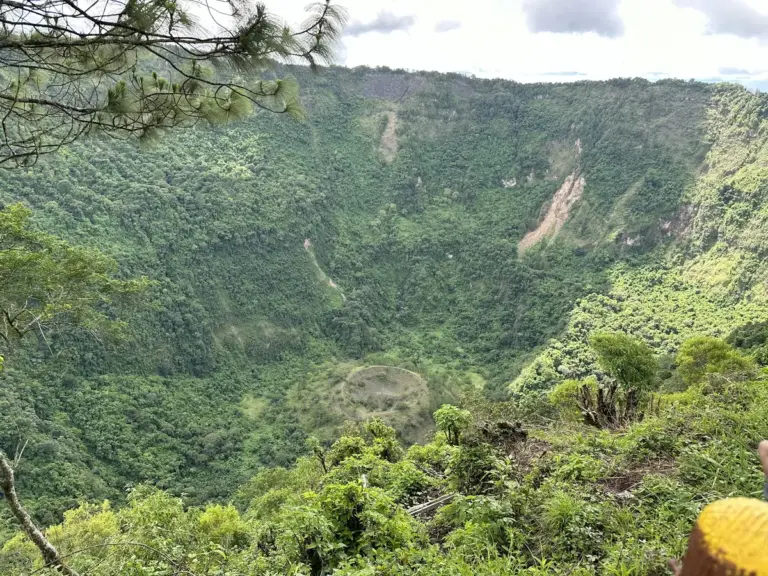
El Boqueron is a 30-minute drive from Zona Rosa and worth the half day. The crater on Volcan de San Salvador is roughly 800 years old, the air at the rim is 15°F cooler than the city below, and the cafes on the access road serve some of the best coffee in the country at $2 a cup.
El Tunco, El Zonte and the Surf City coast
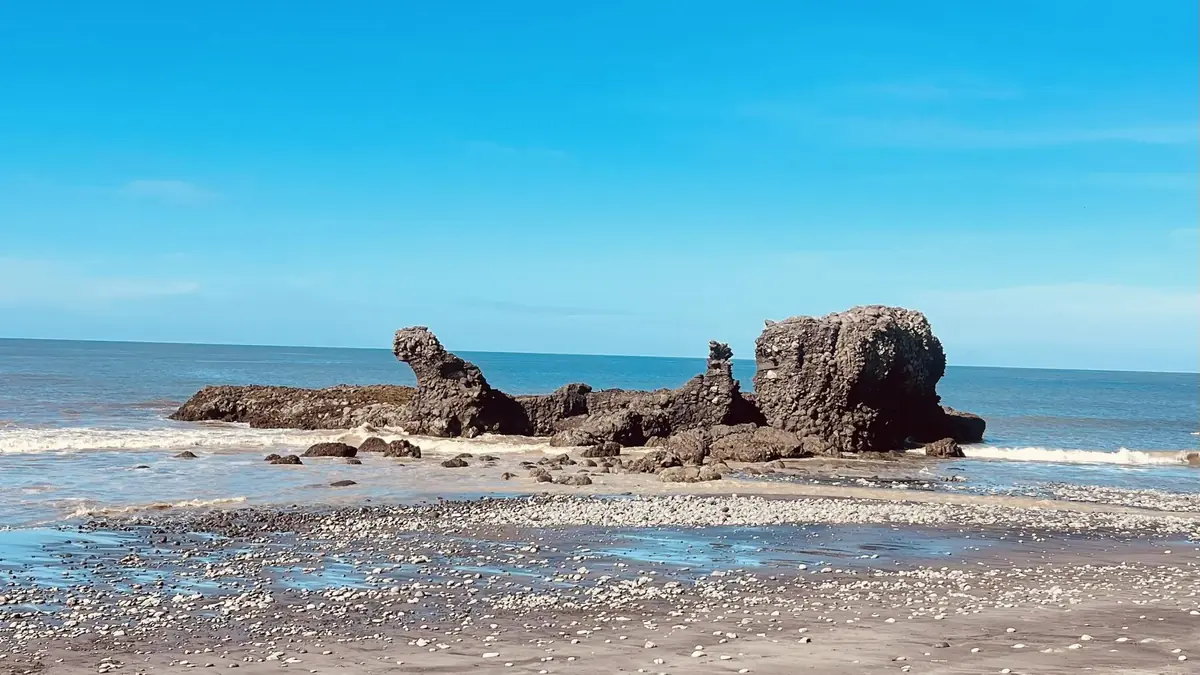
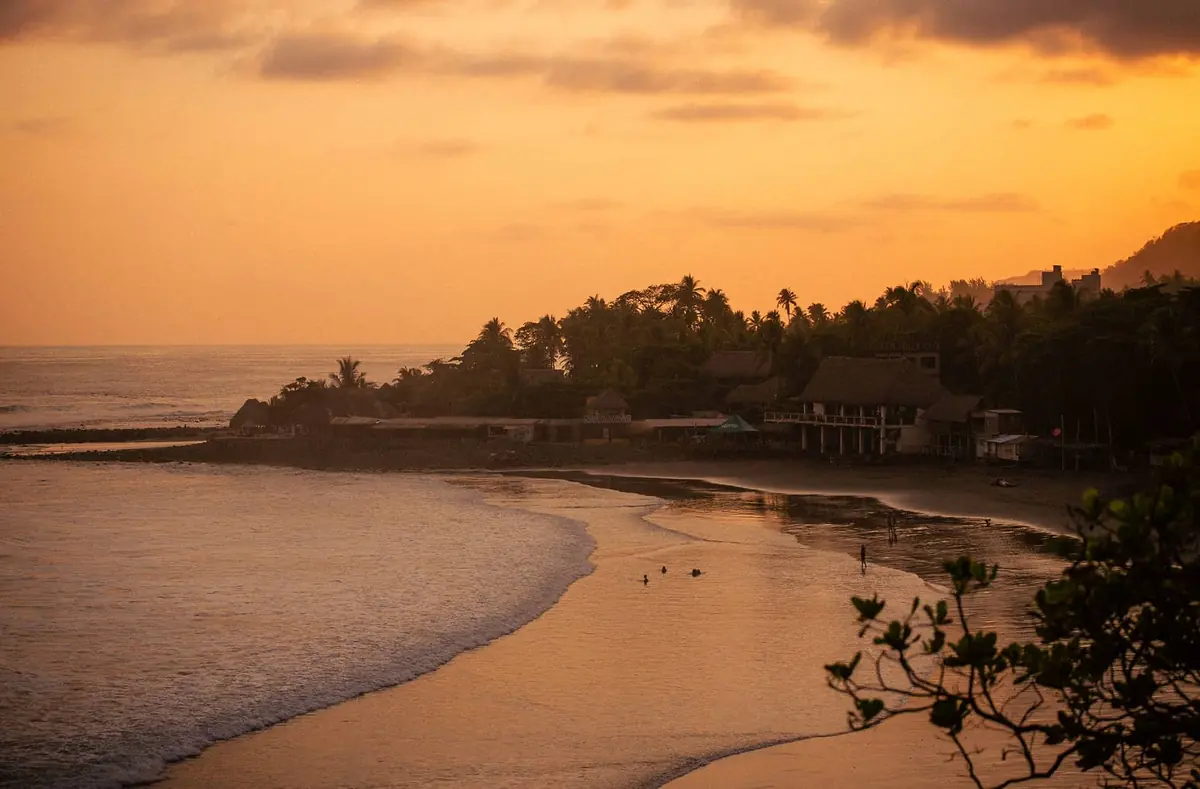
The Pacific coast is the heart of the trip. El Tunco is the social hub — surf hostels, beach bars, fish tacos, and lineups for the famous pig-shaped rock that gave the town its name. El Zonte is mellower, 15 minutes west, and is the original Bitcoin Beach. La Libertad is the working port and where Punta Roca, the country’s most respected wave, lines up.
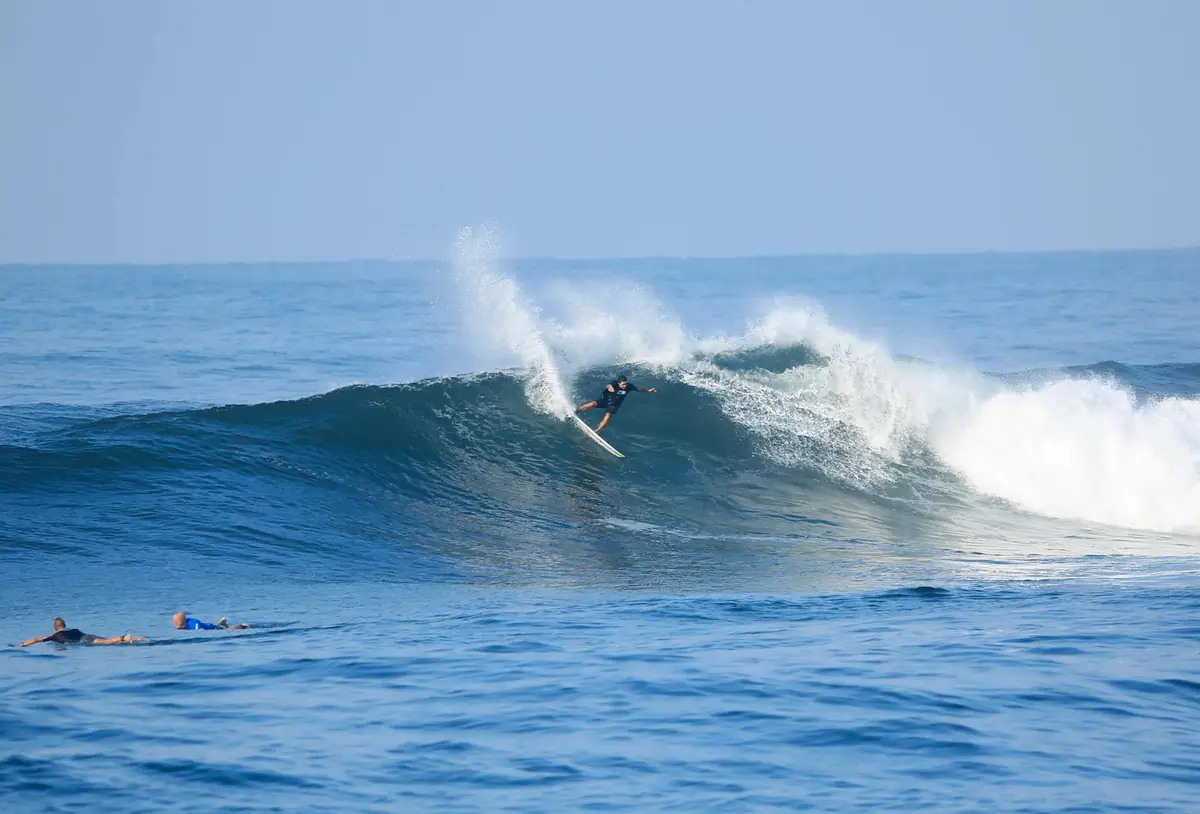
If you’ve never surfed, base in El Tunco and take lessons at El Sunzal. The Sunzal break is a long, slow right-hand point that’s about as forgiving as a wave can be for a first-timer. A 90-minute lesson with board rental runs $20–30 at El Tunco shops and around $30–40 at Puro Surf in El Zonte.
The serious surfers go elsewhere:
- La Bocana: River-mouth A-frame on the east side of El Tunco. Both directions, fast and shifty. Hosted the ISA World Surfing Games in 2021 and 2023, along with El Sunzal
- Punta Roca: The long right-hand point off La Libertad. A top-tier wave on a south swell. Crowded with locals; respect the lineup
- K59 and K61: North of El Tunco. Right-hand points with fewer people
- Mizata: 45 minutes west, almost empty mid-week, mix of beach, reef and point
- Las Flores and Punta Mango: Way east near El Cuco. Needs a bigger swell. Designated as a World Surfing Reserve
When I took my first lesson at El Sunzal, the line of beginner longboards in the lineup at 8 a.m. was already 15 deep. Go at 7 a.m. or wait until after 11.
El Tunco’s actual beach is rocky and sticky from black volcanic sand. Don’t come here for a sand day — come for the surf, the bars and the cheap pupusas at 11 p.m. If you want sand, head east to El Cuco or hire a boat from La Libertad to one of the Los Cobanos coves.
El Zonte is where the Bitcoin Beach experiment started. In 2019, an anonymous donor sent roughly 40 BTC to a local NGO that began circulating it among small businesses. By 2021, El Salvador had passed a law making Bitcoin legal tender nationwide. The Legislative Assembly repealed that law in January 2025 under IMF pressure, but BTC is still widely accepted in El Zonte — at the Bitcoin Hardware Store, several beach restaurants, surf rentals, and most accommodation via the Lightning Network.
- Location: Department of La Libertad, Pacific coast
- Cost: Hostel dorm $8–15, mid-range $30–80, boutique surf lodge $150–250
- Best for: Surfers, sunset crowds, anyone who wants beach-town nightlife
- Time needed: 3–4 nights
Santa Ana, the volcano and Lake Coatepeque
Volcan Santa Ana — also called Ilamatepec — is the marquee hike in the country and the experience that converts skeptics. The 4.4-mile out-and-back route ends at the rim of a turquoise sulfur crater lake at 7,811 feet (2,381 m). On a clear morning you can see the Pacific from the summit.
The logistics are tighter than they look. Park rangers only allow one guided group up per day, and the start window is between 9:30 and 10 a.m. Miss it and you don’t summit.
How to do it without a tour:
- Get to Santa Ana the night before. Stay at Casa Verde Hostel or Pool House Hostel for $20–35
- Bus #248 leaves Santa Ana’s La Vencedora terminal at 7:30 a.m. for about $0.80
- Arrive at Cerro Verde park entrance by 9:15 a.m. Pay the $3 park fee, then walk to the volcano kiosk for the $6 entrance and $1–4 group guide fee
- The hike begins around 9:45 a.m. with an armed police escort — mandatory
- Allow 2 hours up, 30 minutes at the rim, 1.5 hours down
- Return buses to Santa Ana leave at 1 p.m. and 4 p.m. (the 4 p.m. only goes to Puente El Congo — transfer to bus #59 for the last leg)
Total cost for a foreigner doing it independently: $9–13 USD, including parking if you drive. A private guide runs $25–40 if you want the whole route to yourself.
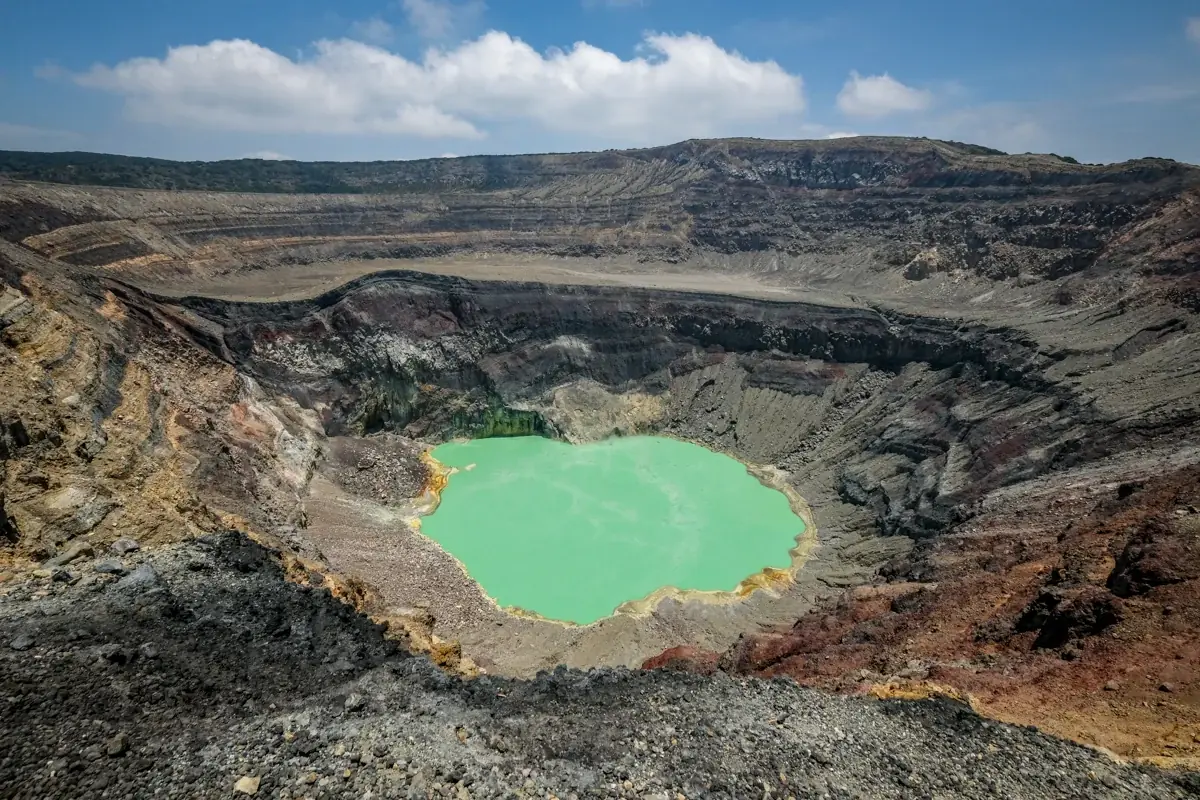
On my last dry-season hike up Santa Ana, the rim was crystal clear by 10:30 a.m. and socked in by 12:15. The morning window is real — start late and you’ll summit into fog.
Pro Tip: Don’t start this hike if there’s heavy cloud cover at 9 a.m. The crater is the whole point, and by April afternoons the rim is fogged in by 11. Dry-season mornings are nearly bulletproof. Skip rainy-season hikes unless you get a freak clear morning.
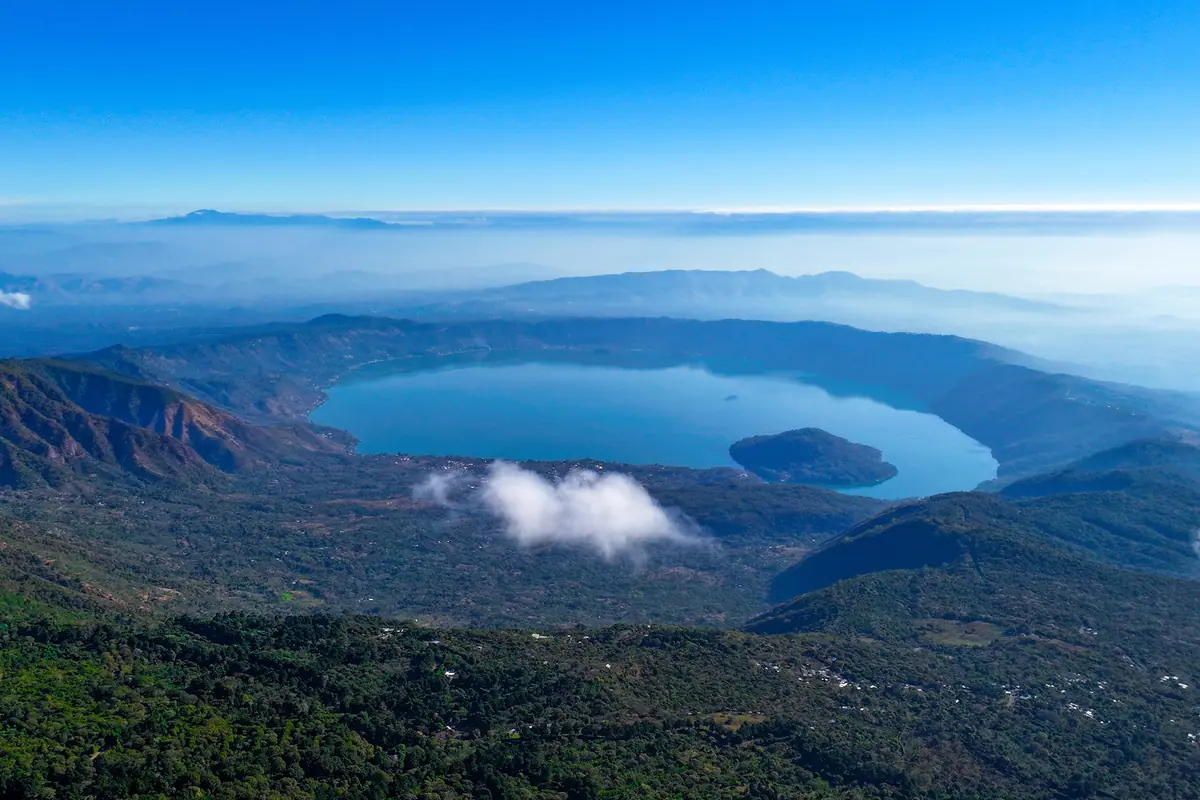
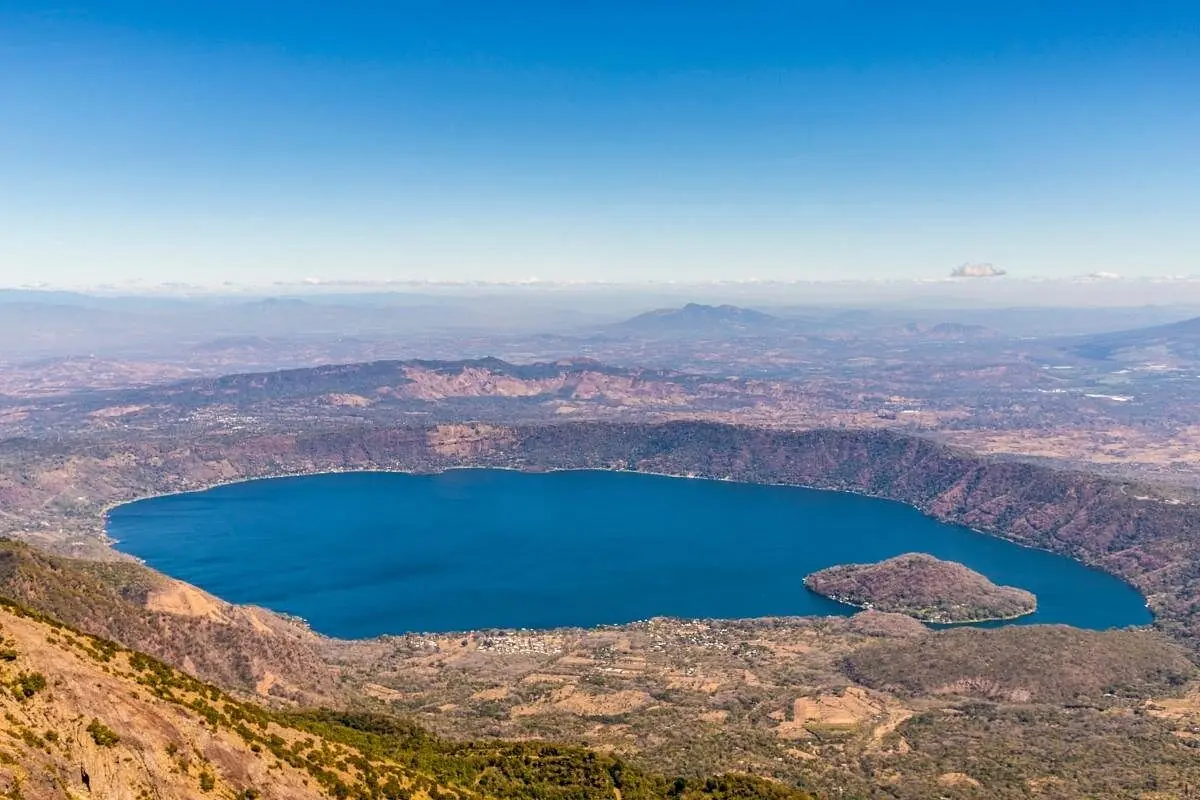
Within the same national park sit Volcan Izalco (1,958 m, the “Lighthouse of the Pacific”) and Volcan Cerro Verde (2,030 m). Lake Coatepeque, a 15-minute drive from the trailhead, is a flooded volcanic caldera that’s now the country’s most photographed lake. Stay in one of the Airbnbs perched on the crater rim for under $80 a night and swim straight off the dock.
- Location: Department of Santa Ana, western highlands
- Cost: Hike total $9–13, Coatepeque lakeside lodging $60–120
- Best for: Hikers, photographers, anyone who wants the country’s signature view
- Time needed: 2 nights — one in Santa Ana, one on the lake
Ruta de las Flores coffee circuit
The Ruta de las Flores is a 35-kilometer (22-mile) loop through five colonial coffee towns in the western highlands: Nahuizalco, Salcoatitan, Juayua, Apaneca and Concepcion de Ataco. The road climbs through coffee farms with views down to the Pacific on clear days. Allow a half day at minimum, a full overnight if you want to slow down for the food festival.
The unmissable stops:
- Juayua: Hosts the weekend food festival (Saturday and Sunday, 11 a.m.–4 p.m.) — open-air stalls grilling everything from rabbit to frog. Also the starting point for the Seven Waterfalls hike ($10 with a required local guide, 3.5–4 hours)
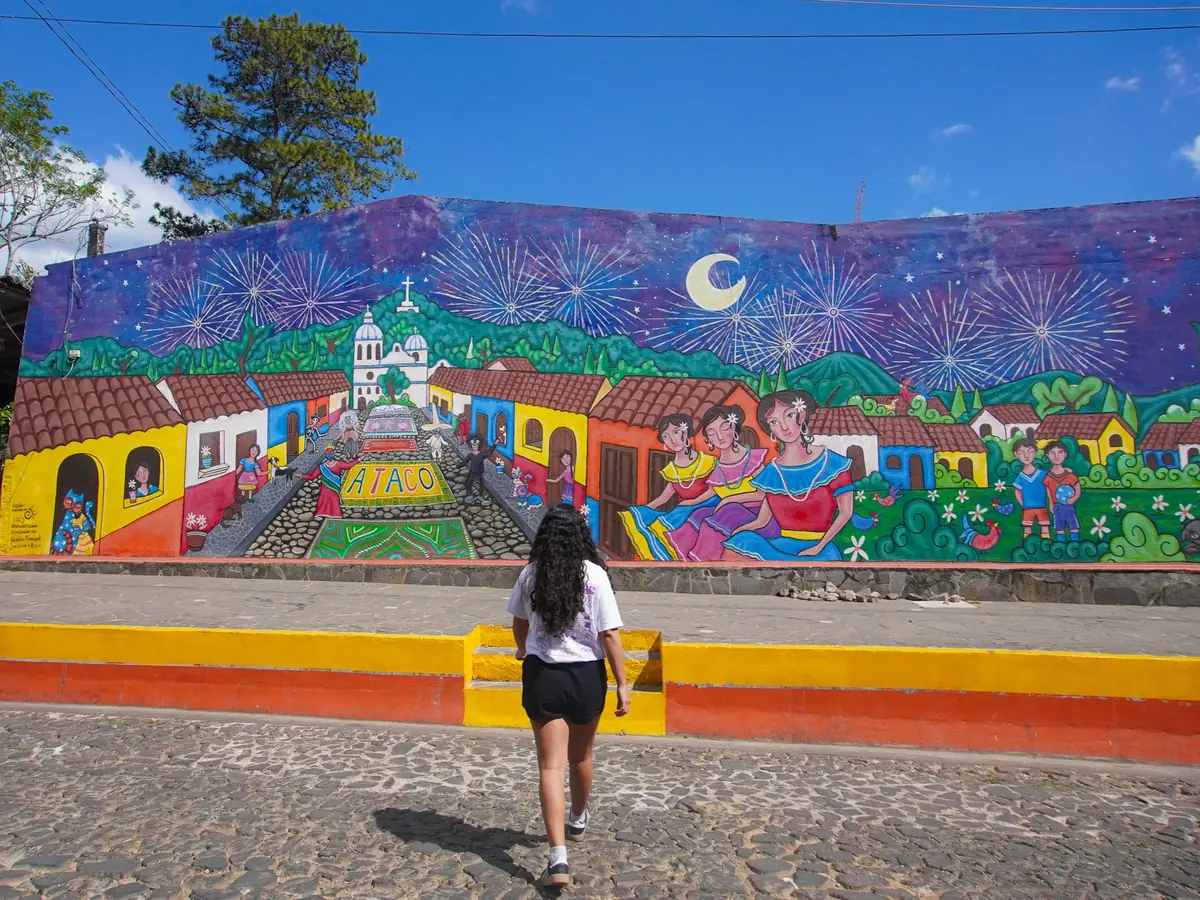
- Concepcion de Ataco: Cobblestone streets, bougainvillea everywhere, and murals on roughly half the building facades. The mural tour is self-guided
- Apaneca: Highest of the towns at 4,800 feet. Cooler air, coffee farms you can tour, and Cafe Albania if you specifically want a $5–10 ride down the rainbow slide
Skip the rainbow slide at Picnic Steakhouse — $5 for 30 seconds of slide is not a memory you’ll keep. Skip Cafe Albania for the same reason unless you’re traveling with kids who specifically want it.
- Location: Departments of Sonsonate and Ahuachapan, western highlands
- Cost: Day trip from Santa Ana under $25 with bus and lunch
- Best for: Coffee, colonial architecture, food festival weekends
- Time needed: 1 full day with stops, or 1 overnight in Juayua or Ataco
Suchitoto, the colonial cultural capital
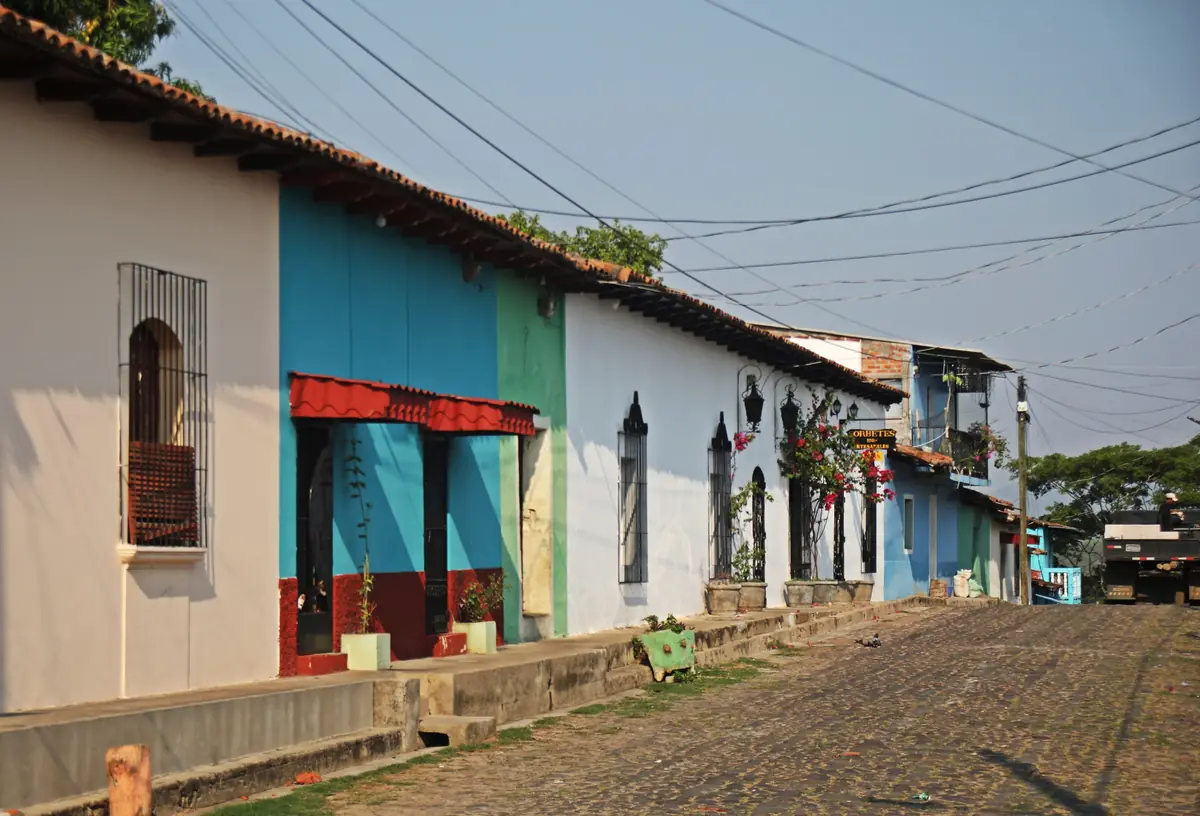
Suchitoto is the cultural anchor of the country — a cobblestoned colonial town 50 kilometers (31 miles) northeast of San Salvador, perched above Lake Suchitlan. It was briefly named the country’s first capital in 1528 before Pedro de Alvarado moved the seat. Today it’s the center of El Salvador’s indigo (anil) heritage, with workshops where you can dye your own cloth for $25–40.
The town itself is small enough to walk in 30 minutes. The highlights:
- Iglesia Santa Lucia on the central plaza — white-on-white colonial facade
- Centro Arte para La Paz — civil-war memory center in a former convent
- Cascada Los Tercios — a 30-foot waterfall over hexagonal basalt columns, 15 minutes outside town
- Sunset boat tours on Lake Suchitlan — $10–20 per person, heavy on birdlife
This is the town that gets left out of most fast itineraries — and that’s exactly why it’s worth slotting in. Stay one night at Los Almendros de San Lorenzo ($120–160) or Posada Suchitlan ($55–80) and the experience is closer to rural southern Mexico than the rest of El Salvador.
- Location: Department of Cuscatlan, 50 km (31 mi) northeast of San Salvador
- Cost: Mid-range hotel $55–120
- Best for: History, indigo workshops, lake views
- Time needed: 1 night
Joya de Ceren and the Maya ruins
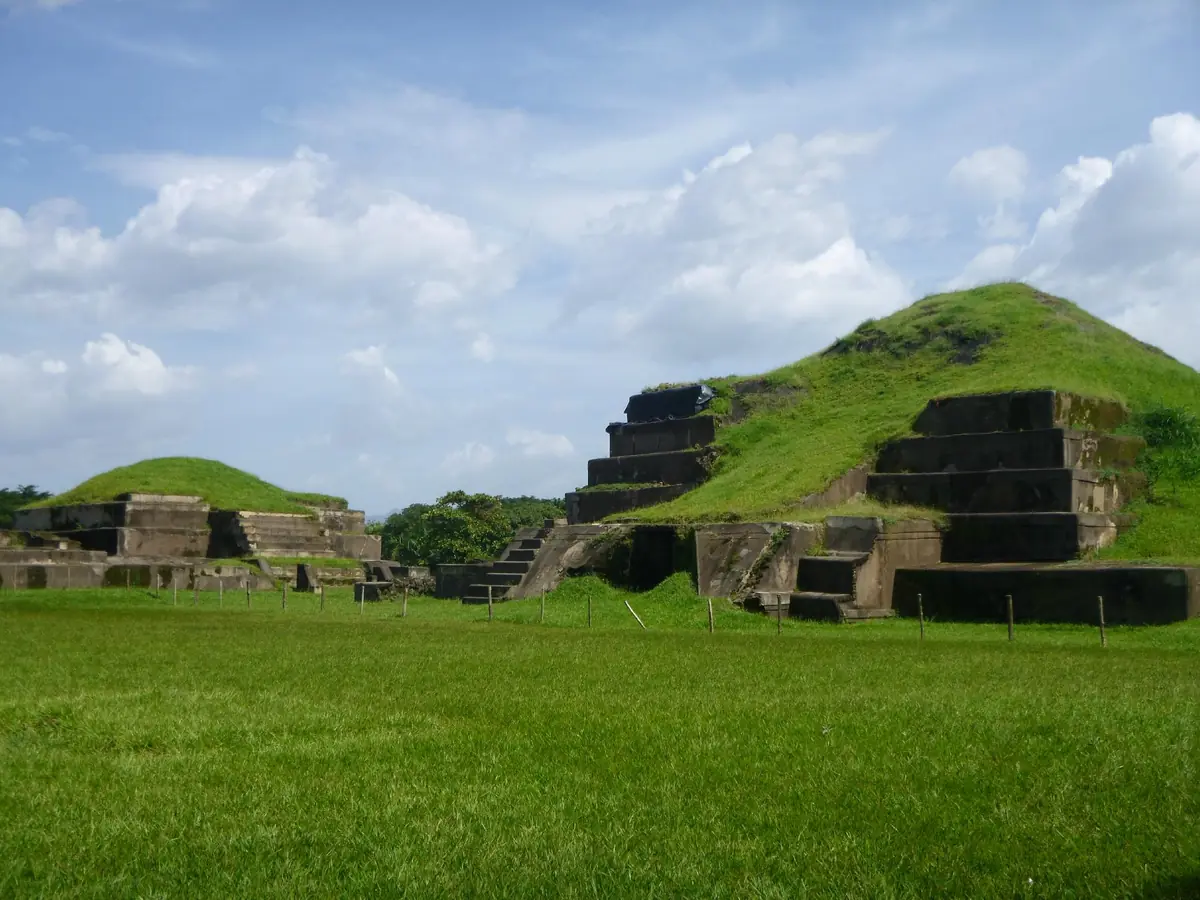
Joya de Ceren is El Salvador’s only UNESCO World Heritage site and the most important Maya farming village ever excavated. The Loma Caldera eruption buried the site under volcanic ash around 600 AD, preserving everyday objects, gardens and cornfields exactly as the residents left them. Researchers call it the “Pompeii of the Americas.”
The entry fee was raised from $3 to $10 after a French-funded renovation in 2022. Bilingual signage (Spanish/English/French) makes self-guiding easy, though hiring an on-site guide for a $5–10 tip gives you context the panels don’t.
- Location: San Juan Opico, 35 km (22 mi) from San Salvador
- Cost: $10 entry for foreigners, $1 parking
- Best for: Anyone interested in Maya life, easy half-day stop
- Time needed: 1–1.5 hours on site, longer if combining with Tazumal
- Hours: Tuesday–Sunday, 9 a.m.–4 p.m. (closed Mondays)
Pair it with Tazumal — the largest pyramid in El Salvador, 50 minutes west in Chalchuapa. Entry is $5. The pyramid itself is more impressive than Joya de Ceren visually, but the historical significance runs the other way.
El Salvador itinerary: 5, 7 and 10 days
Three road-tested loops, all starting and ending at SAL airport (Monsenor Oscar Arnulfo Romero International, the only international airport in the country — and yes, the IATA code is SAL, not MSY).
5-day itinerary: long-weekend highlights
Day 1: Arrive SAL. Pay the $12 tourist card on arrival. Drive 40 minutes to El Tunco. Sunset dinner at La Bocana.
Day 2: Surf lesson at El Sunzal in the morning, fish tacos for lunch at Tunco Vieja Escuela, afternoon at Mizata or El Zonte. Sunset on El Tunco’s main strip.
Day 3: Drive to Santa Ana (about 90 minutes via the CA-1 from El Tunco). Stay at Casa Verde Hostel or 1800 Hostel.
Day 4: 7:30 a.m. bus #248 to Cerro Verde. Hike Volcan Santa Ana. Late lunch at Lake Coatepeque, swim, return to Santa Ana for the night.
Day 5: Drive the Ruta de las Flores (Ataco, Juayua, Apaneca) en route back to SAL. Allow 4 hours of driving plus stops. Catch an evening flight home.
7-day itinerary: the classic loop
Day 1: Arrive SAL. Drive to San Salvador. Check into a Zona Rosa hotel.
Day 2: Morning at Iglesia El Rosario and the Catedral Metropolitana in Centro Historico. Lunch at Mercado Cuscatlan. Afternoon up to El Boqueron crater.
Day 3: Drive to Suchitoto (1.5 hours). Walk the town, see Cascada Los Tercios, sunset boat tour on Lake Suchitlan.
Day 4: Drive to Santa Ana via the Pan-American Highway (2.5 hours). Overnight in Santa Ana.
Day 5: Volcan Santa Ana hike. Afternoon at Lake Coatepeque. Stay lakeside.
Day 6: Drive the Ruta de las Flores. Overnight in Ataco or Juayua. Time the trip for a Saturday or Sunday to hit the Juayua food festival.
Day 7: Drive to the coast (2–3 hours from Apaneca to El Tunco). Surf lesson or sunset at El Zonte. Drive to SAL the next morning, or take a red-eye out of the country.
This is the route I’d run for a first-timer with a week. It hits the volcano, the colonial towns, the coffee region and the coast without backtracking.
10-day itinerary: depth without rushing
Days 1–4: Follow the 7-day plan from arrival through Suchitoto and Santa Ana.
Day 5: Volcan Santa Ana hike. Overnight at Lake Coatepeque.
Day 6: Ruta de las Flores. Overnight in Ataco.
Day 7: Drive to El Tunco (3 hours). Surf lesson at El Sunzal.
Day 8: El Zonte day — coffee at Garten, surf, self-guided Bitcoin tour, sunset.
Day 9: Joya de Ceren and Tazumal day trip (1.5 hours each way from El Tunco via San Salvador). Return to El Tunco.
Day 10: Easy morning. Drive 40 minutes to SAL for an afternoon flight.
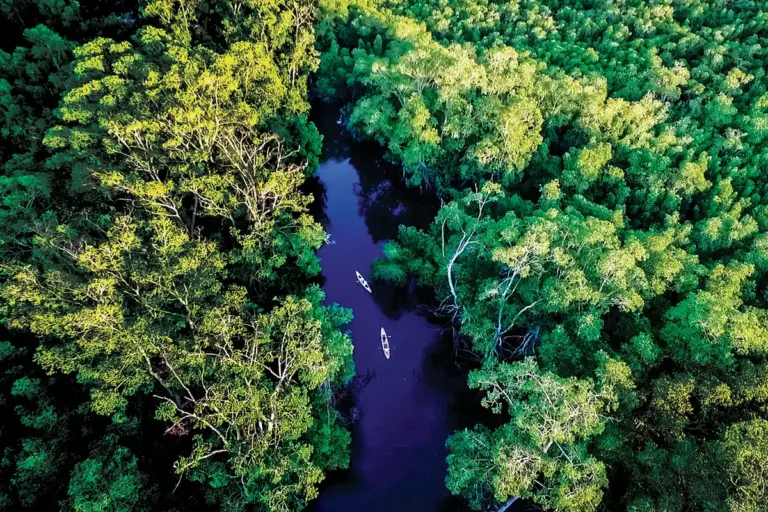
If you have two weeks, add Conchagua and the Gulf of Fonseca for an off-the-beaten-path eastern coast leg, plus a night at Bahia de Jiquilisco for the mangroves and hawksbill turtle nesting (May–November).
How much does a week in El Salvador cost?
A realistic week in El Salvador costs $400–700 per person on a mid-range budget, not counting flights. Budget travelers manage on $200–300 a week; boutique-lodge travelers spend $1,200–2,000. Daily expenses split into three tiers — $20–30 backpacker, $50–100 mid-range, $150–300 boutique. Accommodation and surf lessons drive most of the spend, not food.
Granular price benchmarks that won’t shift much:
- Pupusa from a street stall: $0.35–1.00 each, 3–4 is a meal
- Comedor lunch (rice, beans, protein): $2.50–5
- Tourist restaurant main: $6–15
- Local Pilsener, Suprema or Regia beer: $1.50–3 at a bar
- Surf lesson with board: $20–30 in El Tunco, $30–40 at Puro Surf in El Zonte
- Surfboard rental: $10–15/day
- Uber from El Tunco to Sunzal: $3–5
- Uber from SAL airport to El Tunco: $25–40
Where the cost surprises hit:
- Joya de Ceren entry jumped from $3 to $10 for foreigners after the 2022 renovation
- Boutique surf lodges (Las Flores Resort, Mizata by AntiResort) run $150–250 a night and book out 3+ months ahead in dry season
- Rental cars start at $35–50/day but the insurance markup is steep — budget $60–80/day all-in
Getting to El Salvador and getting around
The only international airport is SAL — Monsenor Oscar Arnulfo Romero International (often listed as El Salvador International or its older name Comalapa). It sits in San Luis Talpa, about 40 kilometers (25 miles) southeast of downtown San Salvador and roughly the same distance from El Tunco. Several older blogs and even one major task brief I’ve seen list the code as “MSY” — that’s wrong. MSY is Louis Armstrong New Orleans. Always book SAL.
Direct flights from the US:
- Miami (MIA) to SAL: 2 hours 45 minutes, 67 weekly flights on American, Avianca and Volaris. One-way from $34–71, round-trip averages around $348
- Houston (IAH) to SAL: ~3 hours, 38 weekly flights, United dominant. Round-trip from $237
- LAX, JFK: Usually requires a connection in Houston, Dallas or Miami. Round-trip $300–600
Avianca and Volaris El Salvador have the most schedule depth. American and United split the US-direct routes.
Tourist card and entry:
- US citizens do not need a visa. Pay $12 USD in cash for the tourist card on arrival
- Valid 90 days. Passport must have 6 months validity remaining
- The CA-4 agreement (El Salvador, Guatemala, Honduras, Nicaragua) lets you move between those four countries for the same 90-day total
Getting around inside the country:
- Uber: Works in San Salvador, Santa Ana, El Tunco and El Zonte. Cheap and reliable. Use it instead of street taxis in cities
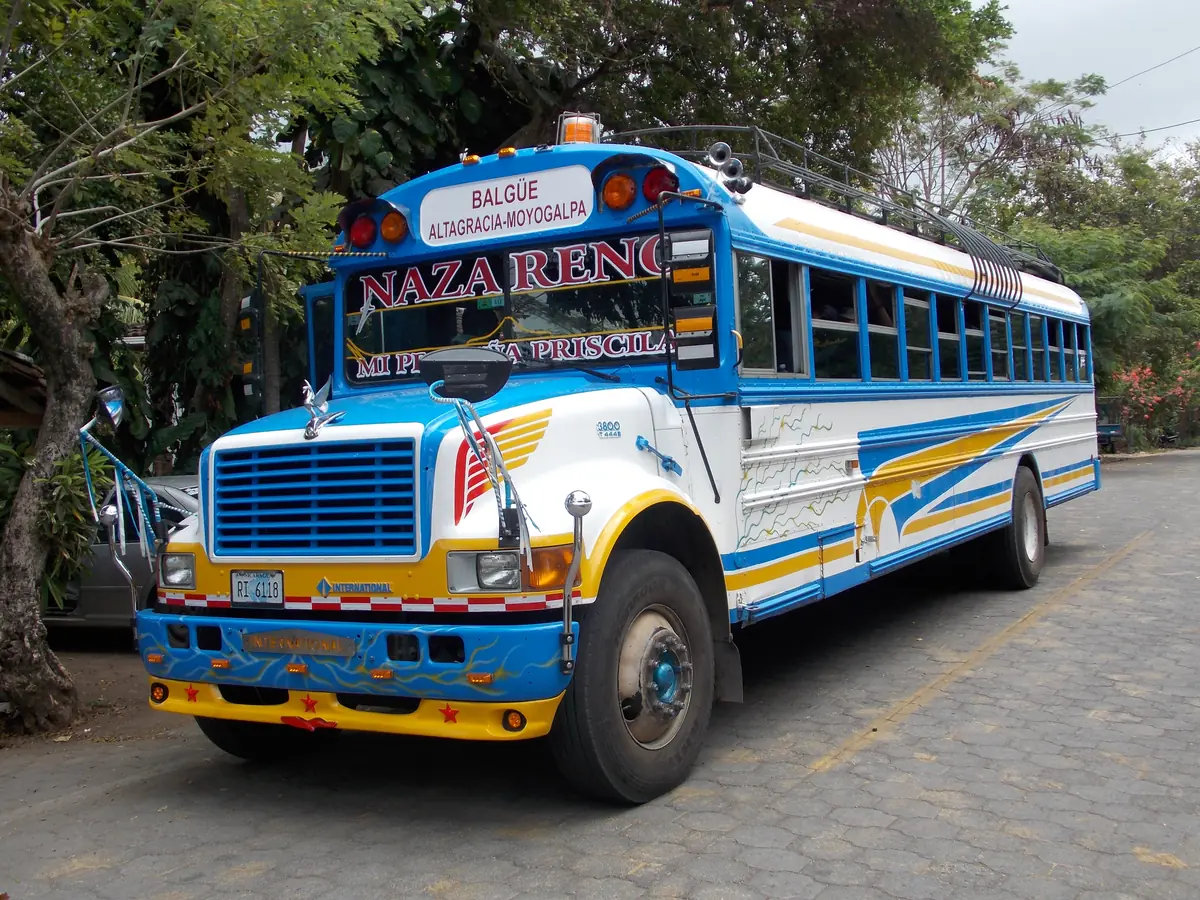
- Chicken buses: $0.30–2 for almost any route. Adventurous, hot, and the main pickpocketing risk. Routes #192/192A/192B run between San Salvador and El Tunco for $2
- Rental car: Best for the Ruta de las Flores loop, Suchitoto detour, and coast-to-Santa Ana drives. Stick to daytime driving on rural roads
- Private shuttles: Tunco Life and Sunzal.com run SAL-to-El Tunco transfers for $25–30. Larger groups can get $85–120 per van
- Public bus SAL to El Tunco: $2 with one transfer at San Benito. Takes 1.5 hours
The currency is USD — El Salvador adopted the dollar in 2001 and has used it ever since. Bitcoin was legal tender from 2021 to January 2025, when the Legislative Assembly repealed that status under IMF pressure. BTC is still accepted by many merchants, especially in El Zonte and at a few San Salvador restaurants, but you should not plan to travel without USD cash.
Pro Tip: Bring small bills. Pupusa stands, comedores and chicken bus drivers don’t break $20s easily. Hit a bank ATM at SAL airport or in Zona Rosa and pull tens and twenties before you head to the coast.
What to eat in El Salvador
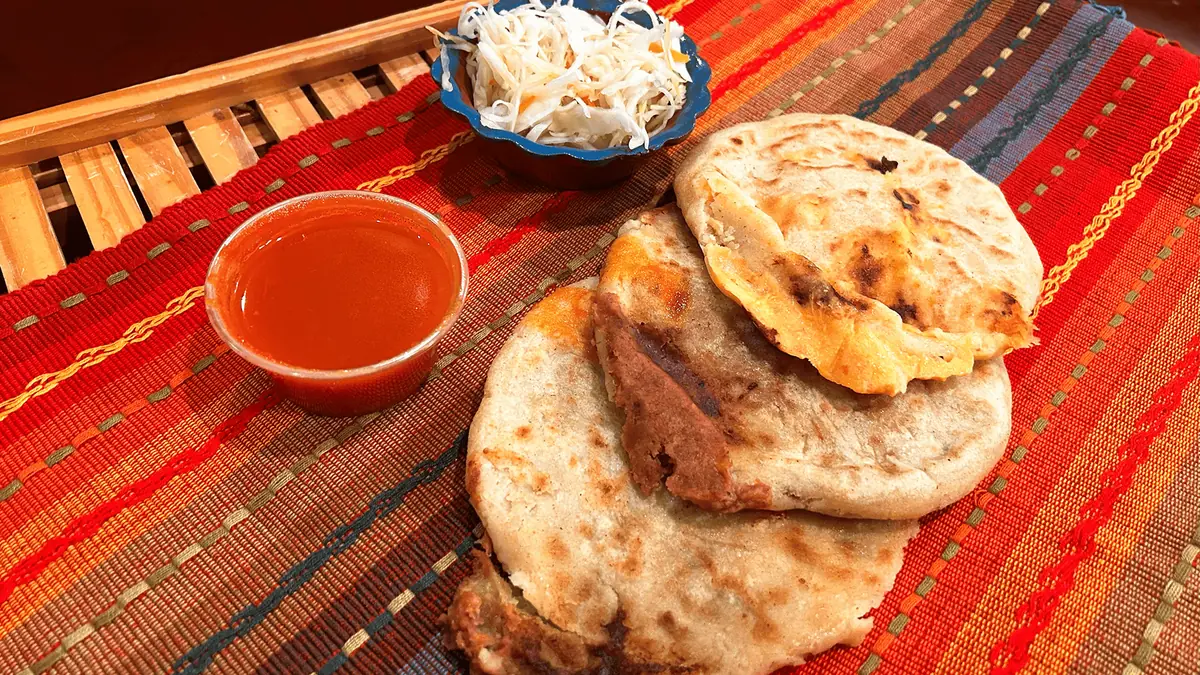
Pupusas are the national dish and the cheapest way to eat well in the country. A pupusa is a thick corn or rice cake stuffed with cheese, beans, chicharron, loroco, ayote or shrimp — then griddled until the filling oozes from the edges. Three or four make a full meal for under $4, served with curtido (pickled cabbage slaw) and a thin tomato sauce that you spoon on yourself.
Beyond pupusas, the dishes worth ordering:
- Yuca frita con chicharron: Fried cassava with crispy pork
- Tamales: Banana-leaf wrapped, denser and softer than Mexican versions
- Atol de elote: Sweet corn drink, often hot, served street-side in the highlands
- Ceviche: Pacific shrimp and conch, $8–15 at coastal stands
- Sopa de res: Beef-and-vegetable soup, the Salvadoran comfort food
- Elote loco: Grilled corn slathered in mayo, mustard, ketchup, cheese — sounds awful, tastes great
- Nuegados: Yuca dough fritters in dulce de panela syrup, a worthwhile dessert
Where to actually eat:
- Mercado Cuscatlan in San Salvador: Best food court in the country for under $5 a plate
- La Pampa Argentina in San Benito: $20–40 splurge if you want a serious steak
- Don Carlos Tunco Beach in El Tunco: Best fish tacos on the coast
- Cafe Garten in El Zonte: Coffee, breakfast, and Bitcoin-accepting from day one of the Bitcoin Beach project
- Skip Cafe Albania on the Ruta de las Flores — tourist trap with mediocre food
Pro Tip: National Pupusa Day is November 13. Every pupuseria cooperative in the country sets up a public tent — some neighborhoods turn the holiday into a competition for the longest pupusa or the most stuffed. If you can time a trip to that week, do it.
The Bukele question — what the safety story leaves out
The safety transformation is real. So is the controversy that produced it.
President Nayib Bukele declared a State of Exception (regimen de excepcion) on March 27, 2022, after a single weekend in which gangs killed 87 people. The decree suspended several constitutional rights — including the right to a lawyer during the first 15 days of detention and the right to be told the reason for arrest. The Legislative Assembly has renewed the exception monthly ever since.
The numbers that come with that decree:
- More than 88,000 people have been detained since March 2022, per the Inter-American Commission on Human Rights (July 2025)
- Roughly 8,000 of those have been released after review
- At least 400 deaths of people in custody have been documented since the regime began, per a CEJIL joint statement (July 2025)
- The CECOT mega-prison opened in 2023 with a 40,000-prisoner capacity
For a US tourist, none of this maps to the day-to-day experience. You will not be stopped, profiled or detained. The State Department’s Level 1 advisory reflects that reality.
What the news coverage rarely captures: the Salvadorans who lived through 2015 — when the murder rate was 106 per 100,000 — overwhelmingly support the trade-off. Bukele won re-election in 2024 with roughly 85% of the vote.
A responsible guide should put both facts on the page. The safety improvement is verifiable. So are the human-rights concerns. A traveler can hold both true.
El Salvador travel FAQ
Is El Salvador safe for solo female travelers?
For the most part, yes. Recent first-person accounts from solo female travelers — across multiple blogs from the last two years — all report feeling safer in El Salvador than in Guatemala, Honduras or Nicaragua. Catcalling and street harassment in San Salvador and Santa Ana are common but rarely escalate. Use Uber after dark, dress modestly at religious sites, and skip isolated beach walks at night.
Can you drink the tap water in El Salvador?
No. Tap water is not considered safe for foreign visitors. Stick to bottled water (about $0.50 for 600 ml), and ask for sin hielo (no ice) at smaller restaurants. Mid-range and boutique hotels filter their own water — ask the front desk before you brush your teeth from the bathroom tap.
What language is spoken in El Salvador?
Spanish, with a distinct Salvadoran dialect that borrows loanwords from Nahuat (the indigenous Pipil language). Limited English is spoken in tourist zones — El Tunco, El Zonte, Zona Rosa hotels and SAL airport. A few hundred words of Spanish go further here than in most Latin American countries, since tourist English is shallow outside the surf coast.
Is El Salvador cheaper than Costa Rica?
Yes — by a wide margin. A mid-range day in El Salvador runs $50–100 against $120–200 in Costa Rica. Hostel dorms are $8–15 vs. $20–30. Pupusas are $0.50 vs. $8–12 casado plates. The volcano and surf experiences are comparable; the Salvadoran versions are roughly half the price.
Do I need to speak Spanish to travel in El Salvador?
You can get by without it, but you’ll have a much better trip with a working hundred words. Restaurant orders, taxi negotiations, hostel check-ins and bus routes outside the tourist corridor all happen in Spanish. Download Google Translate offline before you fly.
Is San Salvador worth visiting?
Worth a day, not more. The Centro Historico (Iglesia El Rosario, the cathedral, Plaza Barrios, BINAES library), El Boqueron crater and a serious dinner in Zona Rosa are enough to anchor 24 hours. Past that, the city is more useful as a logistics hub than a destination.
What is El Salvador famous for?
- Pupusas — the national dish and the cheapest great meal in Central America
- Surf — Punta Roca, El Sunzal, La Bocana, the ISA-recognized breaks
- Volcanoes — 23 of them, with Santa Ana the marquee hike
- The Bukele safety transformation — from the world’s highest homicide rate to the safest country in the Western Hemisphere by 2025
- Bitcoin Beach — the first country to make Bitcoin legal tender (status repealed January 2025)
How do I get from SAL airport to El Tunco?
Three options:
- Uber: $25–40, 35–50 minutes
- Private shuttle (Tunco Life, Sunzal.com): $25–30, can pre-book online
- Public bus: $2 total via one transfer at San Benito, about 1.5 hours
The public bus is the cheapest but inconvenient with a surfboard. Most first-timers default to Uber or the private shuttle.
Before you book
El Salvador is the Central America trip US travelers keep skipping based on news that’s almost a decade out of date. The reality on the ground is a country with a Level 1 advisory, the lowest homicide rate in the hemisphere, top-tier surf at half the price of Costa Rica, and a Maya site that competes with anything in Mexico or Guatemala. The catches are minor: don’t drink the tap water, don’t drive rural roads at night, and budget for the $12 tourist card in cash.
TL;DR: Fly into SAL (not MSY). Spend 5–7 days, longer if you want to add Suchitoto and the east. Lead the trip with the Santa Ana volcano and the Surf City coast. Bring small bills, learn a hundred words of Spanish, and time the trip for November or February if you can.
What’s keeping you from booking — the safety question, the language, or something else? Drop it in the comments and I’ll get back to you with specifics.