Portugal’s azulejos are everywhere — and so are the fakes. If you’re shopping for Portugal crafts to bring home, azulejos are the most culturally significant choice you can make — and the market is a minefield of ethics, legality, and outright theft. This guide covers where to buy legally, what the export law actually requires, and which workshops and vendors are worth your time.
What are azulejos and why does Portugal claim them?
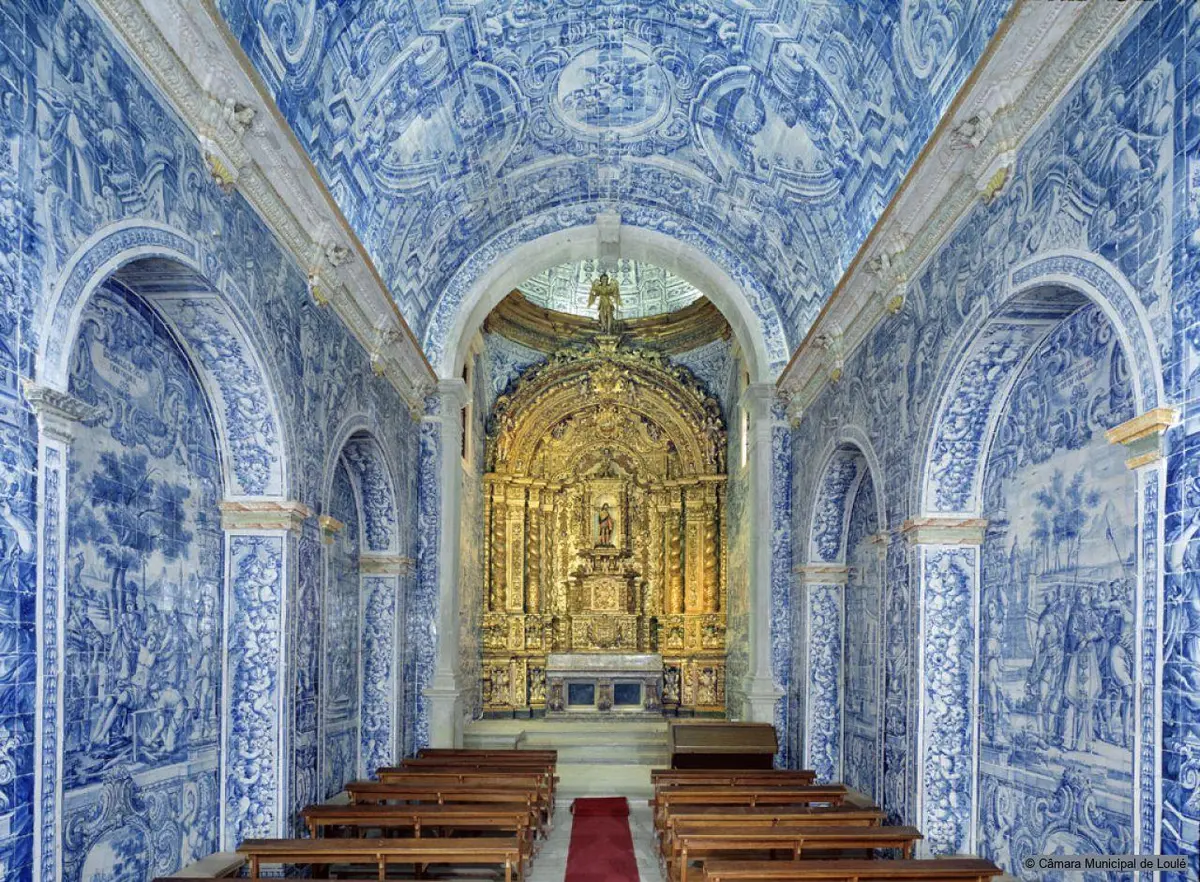
Azulejos are glazed ceramic tiles that have covered Portuguese walls, churches, and train stations for over 500 years. The word traces to the Arabic al-zuleique — “small polished stone” — not to azul (blue), as most people assume. No other country uses tiles at this architectural scale, and that is the result of five centuries of deliberate cultural patronage.
What started as borrowed Islamic geometry evolved into something distinctly Portuguese: monumental wall-sized narratives, blue-and-white compositions stretching 75 feet (23 meters) across a church interior, and eventually an entire city clad in glazed ceramic for waterproofing. Understanding azulejos in this context puts them alongside Portugal food and fado as one of the living pillars of the country’s national identity — not decorative exports, but cultural documents.
Why does buying antique azulejos carry real legal risk?
Rising international demand triggered widespread theft in the early 2000s — tiles were pried off historic facades to feed the global market. Portugal’s Polícia Judiciária (judicial police) responded with the SOS Azulejo Project, a multi-agency intervention that cut registered tile thefts by roughly 80%. The black market still exists, and buying from it exposes you to customs seizure and cultural heritage charges under Portuguese law.
How to spot a stolen tile before you buy
Three physical signs distinguish a legally sourced tile from a looted one.
- Mortar on the back: Flip every tile over. Chunks of lime mortar or cement stuck to the verso are a primary warning sign that the tile was forcibly removed from a wall — not sourced from a legitimate demolition.
- An “orphan” panel: Baroque narrative panels were designed for specific architectural spaces. A single coherent scene for sale with no documented building history is statistically suspicious and legally problematic.
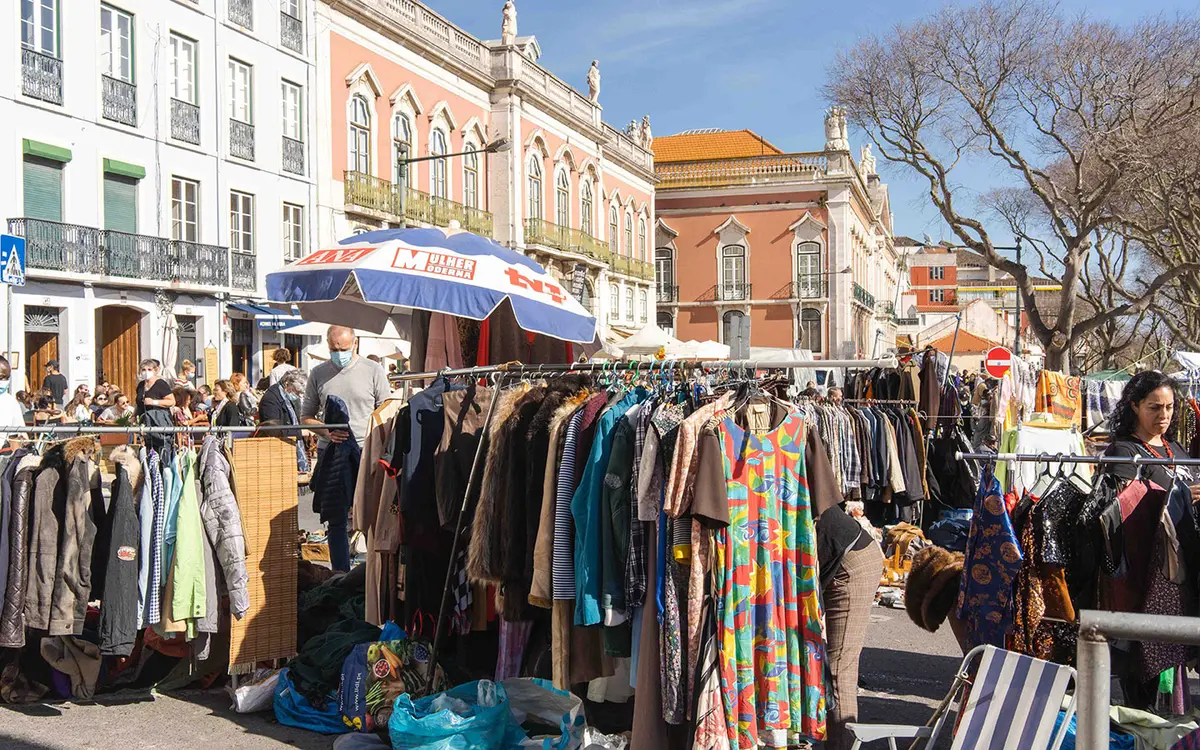
- The market location itself: Feira da Ladra, Lisbon’s famous flea market, is a known surface point for looted tiles. The idea of finding a legitimate deal here carries serious heritage risk — a sobering reality for anyone visiting Portugal under the assumption that flea markets are safe sourcing grounds.
Pro Tip: Portuguese law now prohibits demolishing tile-covered façades in Lisbon without express government permission. This means the legitimate antique supply is finite and shrinking — which is exactly why provenance documentation has become the single most important factor in a tile’s long-term value.
Can you legally export azulejos from Portugal?
Yes — but the paperwork is real, and ignoring it can mean customs seizure. The Direção-Geral do Património Cultural (DGPC) governs all cultural goods exports as part of a legal framework embedded in Portugal culture and patrimony law — among the strictest in Europe. Outside the EU, an export license is mandatory for cultural goods above certain age and value thresholds, and DGPC approval takes two to four weeks.
Within the EU, movement is freer, but “National Treasures” still require notification and authorization. Outside the EU — to the US, UK, or anywhere else — an export license is mandatory for cultural goods above certain age and value thresholds. Plan for two to four weeks for DGPC approval; you will not be flying home the next day with a 17th-century panel.
What do US buyers owe at customs?
Antiques over 100 years old fall under HS Chapter 97 (Antiques) and may enter the US duty-free — provided you can prove the age through DGPC documentation. Newer glazed tiles fall under HS 6908 and are treated as standard ceramics. The dealer typically files the export license application, not the buyer — but confirm this before you pay.
Pro Tip: Ask your dealer for the export license application receipt before paying in full — a reputable shop like Solar Antiques will have this built into their standard workflow, and can clarify whether your purchase qualifies for a VAT refund in Portugal as a non-EU buyer.
How do you transport azulejos from Portugal without breaking them?
Tiles are denser and more brittle than most buyers expect, and breakage during transit catches even experienced travelers off guard. For small quantities, a proper carry-on packing method works well, though tiles require different treatment from anything else on your Portugal packing list. For panels or larger purchases, custom crating and a freight forwarder experienced in cultural goods are the only reliable options. Checked luggage is a statistical gamble due to automated baggage handling.
Carry-on method for small quantities
Wrap each tile individually in bubble wrap, then tape the tiles together into a solid “brick.” Place that brick inside a stiff cardboard box. Float that entire box inside your carry-on, surrounded by at least 3 inches (7.6 cm) of soft clothing on every side. Be aware: ceramics appear almost opaque on X-ray scanners. Pack accessibly — TSA manual bag checks are common.
Freight for panels and larger purchases
For anything significant, skip checked luggage entirely:
- Require custom wood crating with expanding foam injection to prevent tiles from shifting.
- Use freight forwarders experienced in cultural goods — they can also handle DGPC export filing and the US ISF (Importer Security Filing) for ocean freight.
- Clarify Incoterms before purchase. “Ex Works” (EXW) means you bear all breakage risk from the moment the tile leaves the shop.
Where to buy azulejos in Portugal: the only vendors worth trusting
Four vendors cover the full market: Solar Antiques for investment-grade antiques with full provenance, Cortiço & Netos for ethical mid-century industrial tiles, Fábrica Sant’Anna for hand-painted new production, and Viúva Lamego for contemporary-meets-traditional design. For context on the broader shopping in Lisbon landscape, tiles sit at the premium end of what the city’s specialty retailers offer. Skip anyone who cannot produce documentation for antique pieces — and treat that as non-negotiable.
1. Solar Antiques — Lisbon
Recognized as the largest antique tile dealer in the world, Solar maintains a cataloged inventory spanning the 15th through 19th centuries. Their provenance documentation and in-house export support set the benchmark for the industry. Photography is forbidden inside the shop — signs make this clear within seconds of entering, and the owner reads immediately whether you are a serious buyer or a tourist. Arrive knowing what period and price point you want.
- Location: Rua Dom Pedro V 68-70, Príncipe Real, Lisbon
- Cost: From ~€35 (~$40) per single tile; panels priced on inquiry
- Best for: Serious collectors seeking 17th–18th century pieces with clean legal title
- Time needed: 30–60 minutes
2. Cortiço & Netos — Lisbon
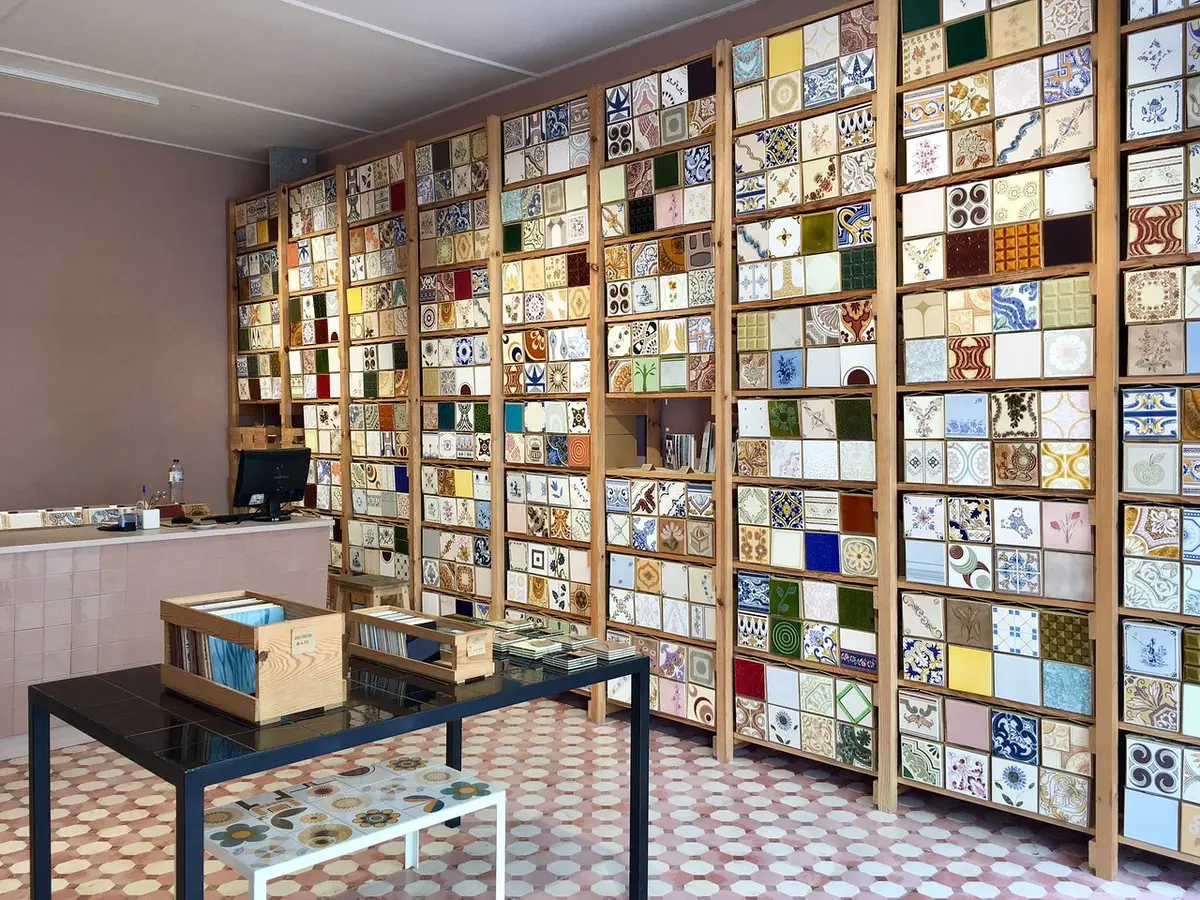
This Lisbon shop occupies a genuinely original niche. They do not sell antiques, and they do not produce new tiles. Instead, they acquired the discontinued inventory of industrial tile factories that closed between the 1960s and 1990s — authentic to their era, with zero ethical risk. Tiles are stacked in drawers and displayed in geometric arrangements; flipping through them feels like browsing vinyl records. Most tiles run €4.50–€6.50 (~$5–$8), with rarer patterns priced higher.
- Location: Calçada de Santo André, Mouraria, Lisbon
- Cost: From €4.50 (~$5) per tile; varies by rarity and quantity
- Best for: Design-forward buyers, mid-century modern interiors, architecture enthusiasts
- Time needed: 20–40 minutes
3. Fábrica Sant’Anna — Lisbon
Operating since 1741, Sant’Anna produces hand-painted tiles using the same majolica techniques as the 18th-century masters. Every piece carries a factory mark. Custom commissions are available, and the factory in Ajuda is open to visits if you want to watch the painters at work — the Chiado showroom is the more convenient stop for most visitors.
- Location: Rua do Alecrim 95, Chiado, Lisbon
- Cost: Mid-to-high range; custom work priced on scope
- Best for: Anyone who wants a museum-quality new tile with no DGPC export complications
- Time needed: 30–45 minutes
4. Viúva Lamego — Lisbon
Founded in 1849, Viúva Lamego bridges traditional craft and modern design through ongoing collaborations with contemporary artists. They produced tiles for several Lisbon Metro stations and the facade of Rossio train station. Their facade on Largo do Intendente is worth seeing even if you do not buy — it is one of the most photographed buildings in the city.
- Location: Largo do Intendente, Lisbon
- Cost: Varies widely by piece and quantity
- Best for: Design collectors and anyone interested in the contemporary evolution of the craft
- Time needed: 20–30 minutes
How did azulejos evolve over 500 years?
Portuguese tile history breaks into five distinct phases: Islamic geometric origins in the 13th through 15th centuries, Italian majolica technology in the 16th century, Dutch-influenced golden age compositions in the 17th and 18th centuries, post-earthquake Pombaline standardization after 1755, and a modernist revival that continues today. Each phase maps almost exactly onto a major turning point in Portugal’s history — which makes azulejos as much a political archive as an artistic one.
13th–15th century — Islamic roots
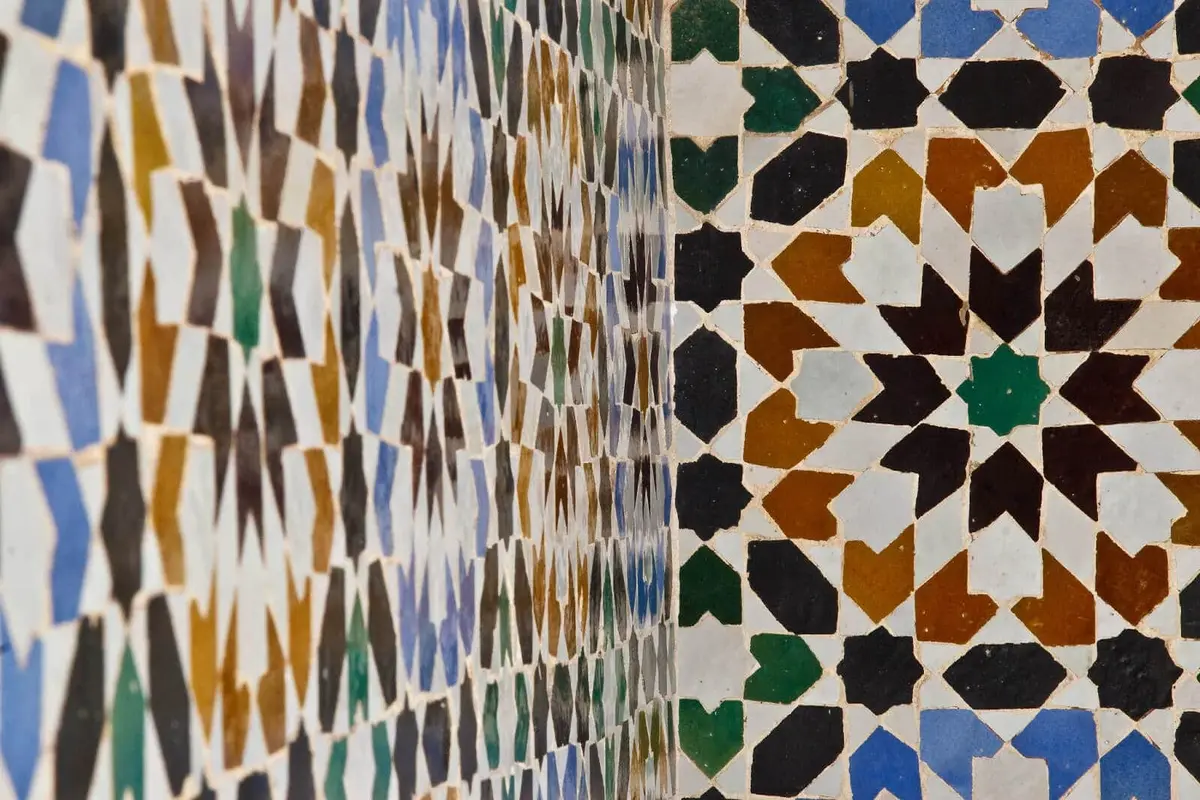
The earliest technique (alicatados) involved cutting geometric shapes from clay slabs, imported directly from Islamic traditions in Seville and North Africa. No human representation, pure mathematical geometry.
16th century — The Italian breakthrough
Majolica technology arrived from Italy, introducing a white tin-oxide glaze that turned the tile into a canvas. King Manuel I saw the technique in Seville in 1503 and made it a royal priority. Suddenly tiles could depict saints, battles, and Mannerist narratives.
Late 17th–18th century — The golden age
The Dutch brought blue-and-white Delftware to Europe (itself inspired by Chinese Ming porcelain), and Portuguese workshops responded with something far more ambitious: monumental “carpet” compositions designed to cover entire church and palace walls. Artists like Gabriel del Barco and António de Oliveira Bernardes defined this era.
Post-1755 — Pombaline utility
The Great Lisbon Earthquake forced rapid rebuilding. The Marquis of Pombal standardized tile production, using stencils and geometric patterns instead of hand-painted narratives — and moved tiles from interiors to exterior facades for waterproofing. This is why Lisbon‘s streets look the way they do today.
20th century — The modernist revival
By the early 1900s, azulejos were considered outdated. Artist Maria Keil reversed this by decorating the new Lisbon Metro with bold abstract geometric patterns in the 1950s, proving the tile could carry contemporary art. That legacy continues with urban artist Add Fuel (Diogo Machado), whose street murals deconstruct traditional patterns into modern compositions.
Where can you see azulejos in Portugal right now?
The National Tile Museum in Lisbon is closed for renovation with no confirmed reopening date announced. In the meantime, São Bento Station in Porto, the Palácio da Fronteira in Benfica, the Chapel of Souls on Rua de Santa Catarina, and the Lisbon Metro stations offer the full range of tile history — free or low-cost, all currently open.
National Tile Museum (Museu Nacional do Azulejo) — Lisbon [currently closed for renovation]
This is the essential stop for anyone serious about azulejos in Portugal — once it reopens. Housed in a former convent in the Xabregas district, the building itself is the first exhibit: Portuguese Baroque where gold leaf woodcarving competes directly with blue-and-white tile panels. The centerpiece is the Grande Panorama de Lisboa, a 75-foot-long (23 m) tile panel depicting the Lisbon skyline before the 1755 earthquake — a forensic document of a lost city.
The museum is closed for renovation with no confirmed reopening date announced. Check the museum’s official website or Instagram (@museunazulejo) before planning your visit.
Pro Tip: When it reopens, do not miss the refectory — most visitors walk straight past it. Its panels of hunting scenes and suspended fish show that tile art had a secular life well beyond church commissions. Transport from the nearest metro stop passes through an industrial area; a taxi or Uber saves 20 minutes of walking on a route that Google Maps consistently underestimates.
Palácio da Fronteira — Lisbon (Benfica)
The best in-situ experience of 17th-century tiles in a residential setting. The “Tank of the Knights” — equestrian portraits of Portuguese nobility reflected in the water of a garden tank — is a composition unlike anything you will see elsewhere in the country.
Pro Tip: The glazed surface creates severe glare in midday sun. Visit in the early morning for saturated cobalt blue without blown-out highlights. Interior rooms, including the Battle Room, require a guided tour — book ahead, as this is a private residence.
São Bento Railway Station — Porto
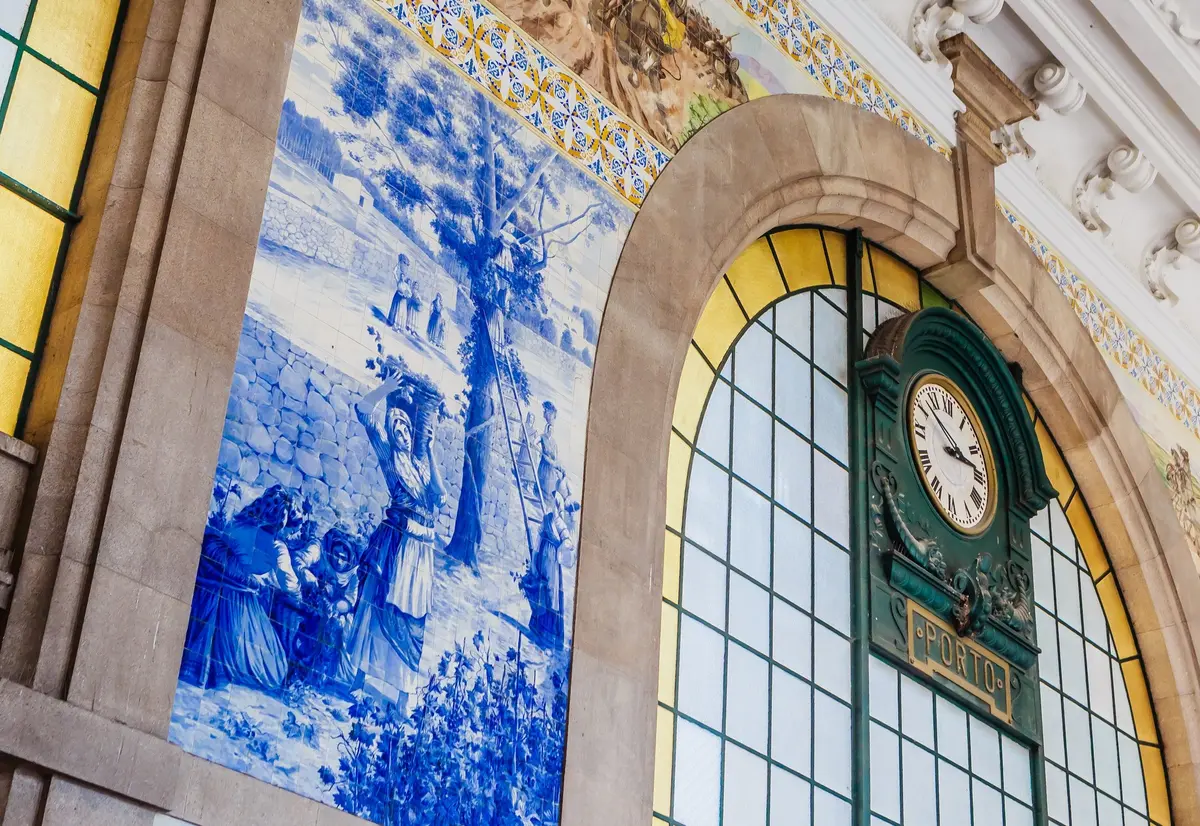
Twenty thousand tiles. One atrium. Painted by Jorge Colaço between 1905 and 1916, the panels narrate the history of Portuguese transportation and critical battles. The station atrium is loudest between 9 and 10 AM when commuter trains dump crowds onto the platform below — arrive at 8 AM if you want the panels to yourself for five minutes. Everyone looks at the battle scenes first; look higher. The top frieze traces the entire history of transport from ox carts to the steam train, a meta-commentary on the building’s own function that most visitors walk straight past.
Capela das Almas — Porto
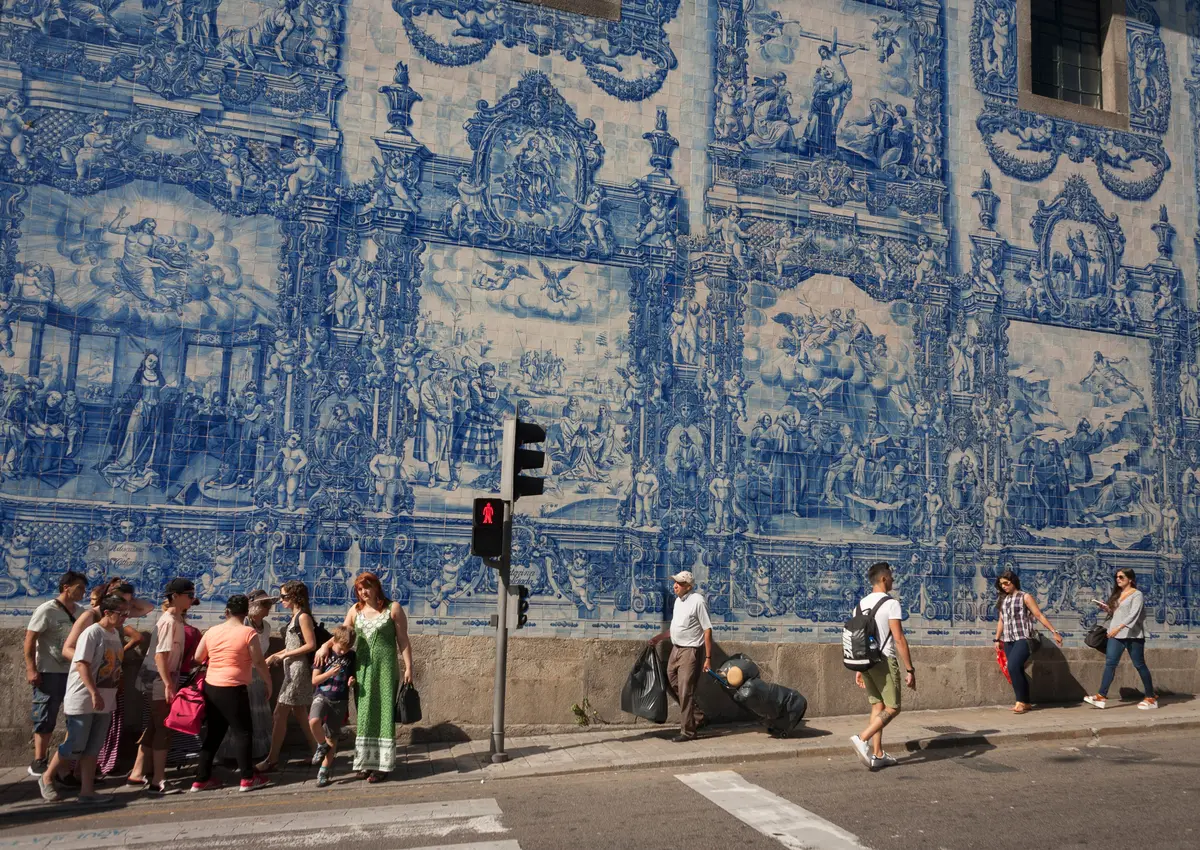
Completely encased in 15,947 blue-and-white tiles on Rua de Santa Catarina, Porto’s main shopping street. No ticket required. Accessible at any hour. The tiles are a 1929 revivalist addition by Eduardo Leite — technically not antique, but visually indistinguishable from 18th-century work. It is the most friction-free tile experience in Porto.
The Lisbon Metro
One of the largest underground art galleries in the world. Parque station is Maria Keil’s masterpiece of geometric abstraction. Oriente station features international artists including Hundertwasser. Campo Grande shows Eduardo Nery’s figurative work. A single metro pass gets you through decades of tile history.
Add Fuel Mural — Avenida Infante Santo, Lisbon
For the contemporary bookend, find Add Fuel’s mural on Avenida Infante Santo. It sits on the same avenue as Maria Keil’s original Metro-era work, creating an open-air timeline from Modernism to urban art — free, outdoors, and readable at any time of day.
Which azulejo workshop is right for you in Portugal?
Two technique-based options dominate: stencil workshops like Gazete Azulejos in Porto teach the fast, repeatable industrial method used to build the city’s facades. Freehand majolica workshops like those at Fábrica Sant’Anna in Lisbon teach the slow, unpredictable process behind the great church panels. Both explicitly teach participants not to buy antique tiles from street vendors.
Stencil workshops — Gazete Azulejos, Porto
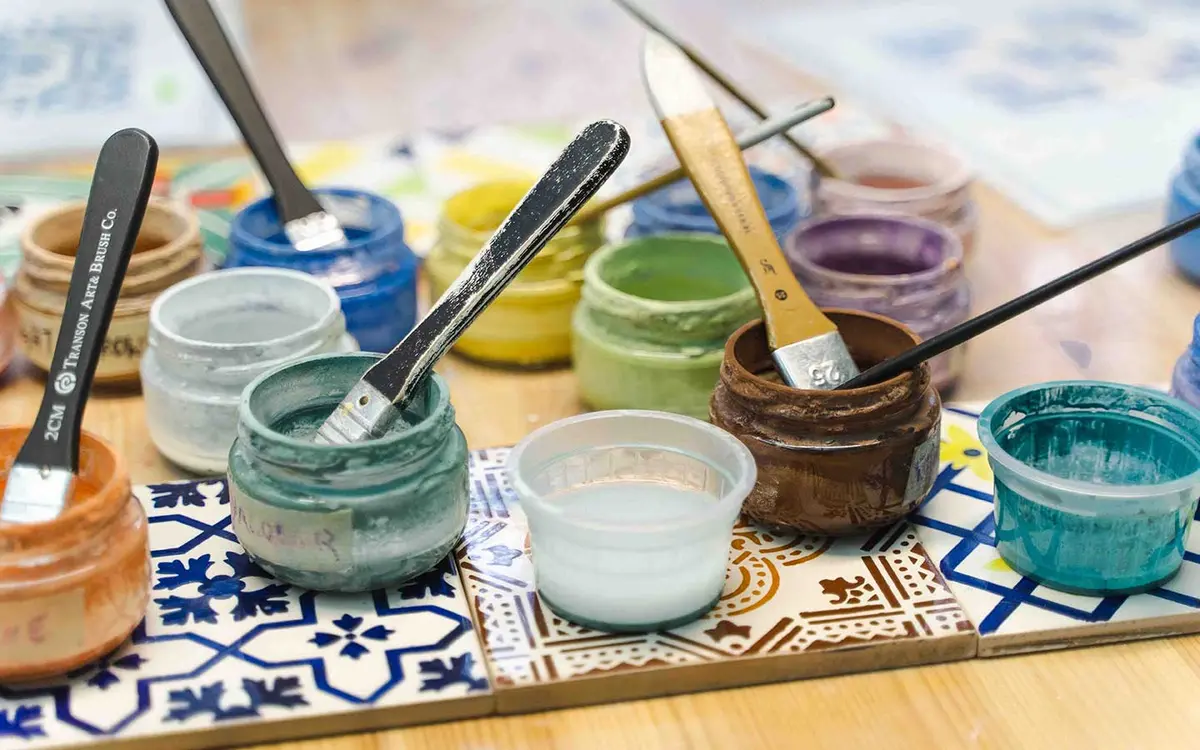
Gazete teaches you how Porto’s facades were actually built. You paint two tiles chosen from a catalog of real Porto patterns documented from buildings across the city — the studio fires them overnight. Pick them up the following afternoon between 4 and 5 PM, so plan your last day in Porto accordingly.
- Location: Rua Duque de Palmela 230, Bonfim, Porto
- Cost: €38 (~$44) per person + online booking fee; includes 2 tiles, materials, tools, and firing
- Best for: Anyone who wants to understand how Porto’s tiled streetscape was built
- Time needed: 2 hours (plus return the following day between 4–5 PM to collect fired tiles)
Gazete Azulejos books out two to three weeks ahead during peak season in Portugal; reserve before you arrive, not the day before.
Freehand majolica workshops — Fábrica Sant’Anna, Lisbon
Fábrica Sant’Anna teaches how the great church panels were painted — slow, skilled, and unpredictable on wet glaze. Best for anyone who wants to understand the artistic process behind the masterpieces rather than the industrial one.
- Location: Rua do Alecrim 95, Chiado, Lisbon
- Cost: Varies by session; inquire directly with the shop
- Best for: Anyone serious about the hand-painted technique behind 18th-century tile art
- Time needed: Varies by session
Pro Tip: Painting a new tile is not a consolation prize — it is an act of conservation that extends the craft rather than depleting it.
The bottom line on buying azulejos in Portugal
Azulejos are not decoration — they are a 500-year archive written in cobalt and tin. They belong to the same category of irreplaceable Portuguese craft as Portugal wine — traditions refined over centuries and inseparable from the places that produced them. Every cracked facade tells a chapter. Every stolen tile erases one. The travelers who get the most from this art form go in armed: they know a mortar-covered back is a red flag, they have booked a DGPC-compliant dealer, and they have spent an hour in a workshop understanding what actually goes into making one of these things.
TL;DR: Buy new tiles from Fábrica Sant’Anna or Viúva Lamego for zero legal complications. Buy mid-century industrial tiles from Cortiço & Netos for design credibility and low prices. Buy antiques only from Solar Antiques, with full provenance documentation and DGPC export paperwork. Skip anything without documented provenance. The National Tile Museum is closed with no confirmed reopening date — fill that gap with São Bento Station in Porto and a workshop session at Gazete Azulejos.
What’s on your list first — the equestrian panels at Palácio da Fronteira, or a workshop seat at Gazete Azulejos?