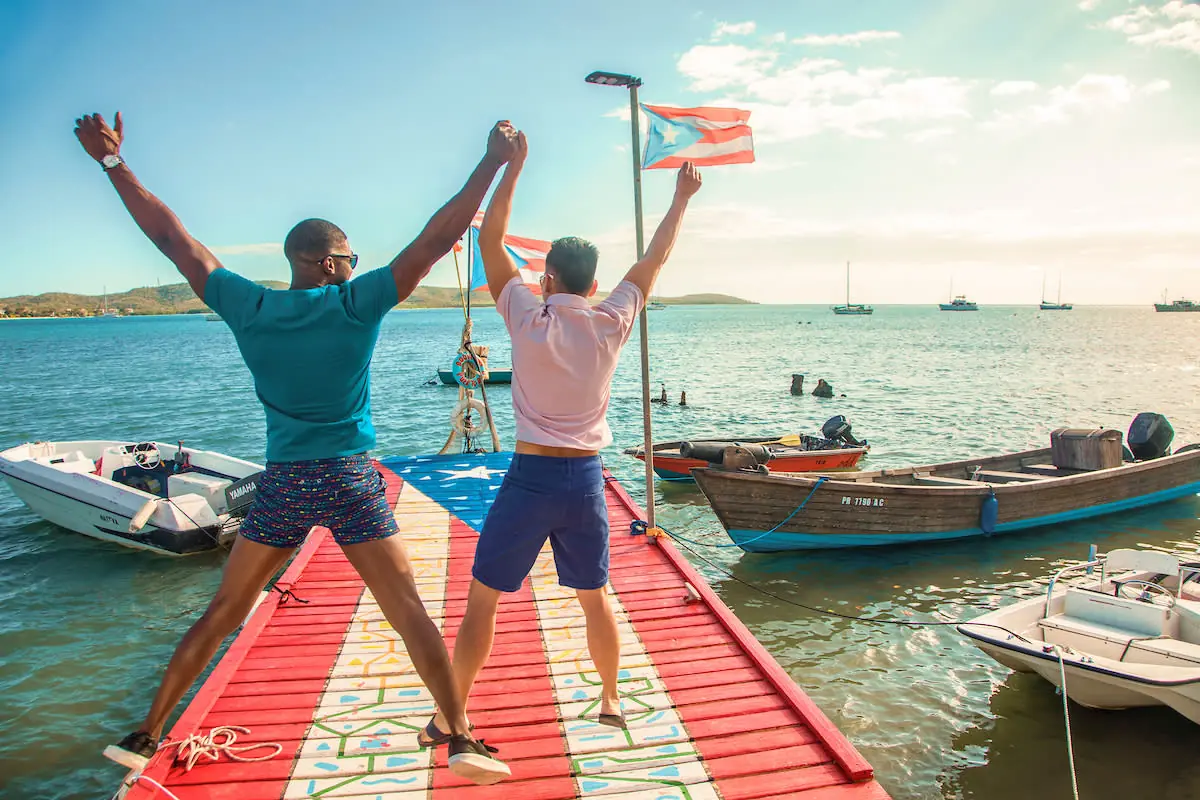
Cabo Rojo Puerto Rico rewards travelers who show up prepared and punishes the ones who don’t. This guide skips the brochure language and gives you the logistics, the local timing, and the warnings most travel sites refuse to publish about the southwest corner of the island.
Do you need a rental car in Cabo Rojo Puerto Rico?
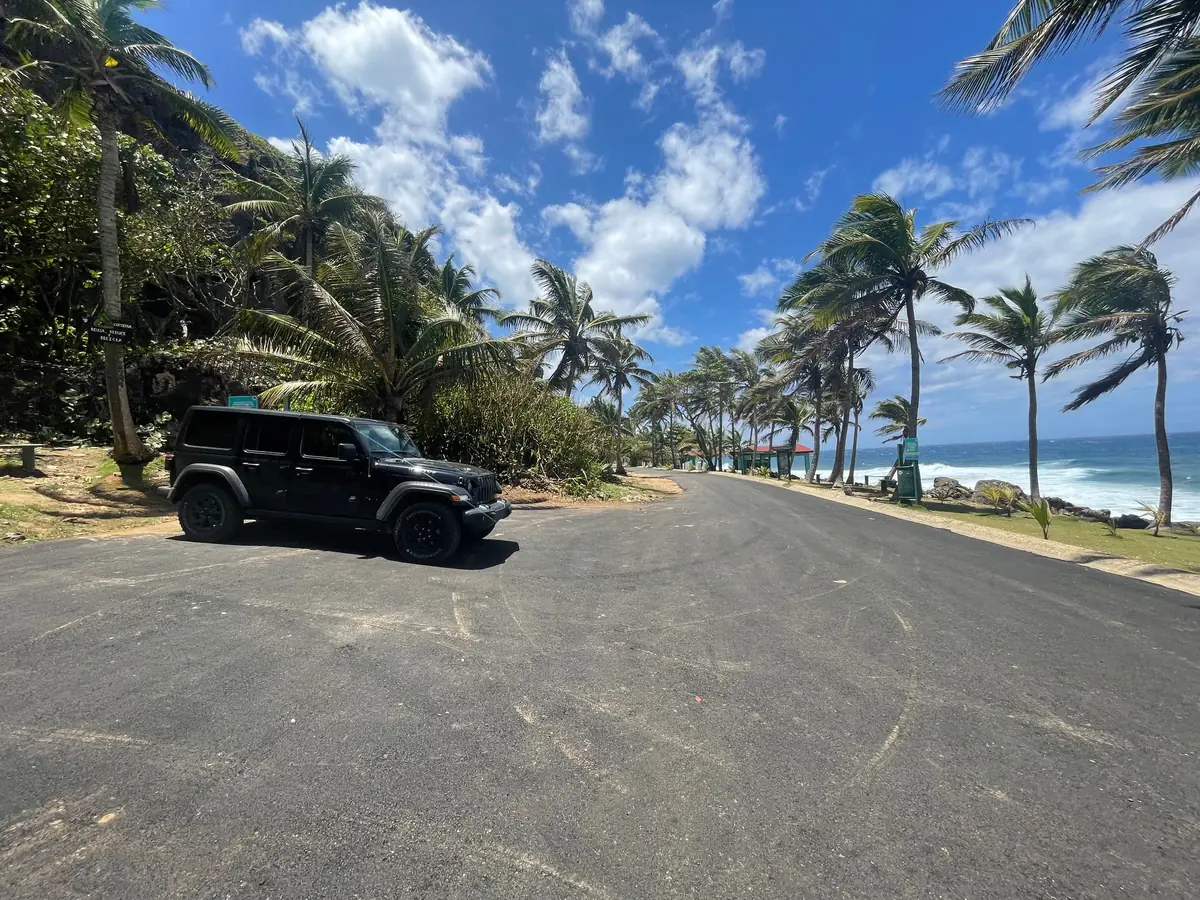
Yes — a rental car is mandatory for Cabo Rojo Puerto Rico. Uber and Lyft are essentially non-existent once you leave the San Juan metro area, there is no public transit connecting the beaches, refuge, and restaurants, and taxis are scarce. If you arrive without a reserved vehicle, you are stranded.
Plan for a 2 to 3 hour drive from Luis Muñoz Marín International Airport (SJU) in San Juan. The drive stretches much longer on weekends when highway traffic builds near Ponce.
Pro Tip: Book your rental car before you book your accommodation. Weekend inventory disappears fast, and last-minute rentals at the airport cost significantly more than advance bookings.
Is driving in Cabo Rojo Puerto Rico safe?
Driving here is safe for visitors who understand one unwritten local rule. Between midnight and 5:00 AM, red lights are treated as stop signs across Puerto Rico — a widely accepted practice for personal security, not reckless driving. Slow down, check for cross-traffic, and proceed. It will feel strange the first time.
On safety more broadly, the area is calm for solo travelers and families. The real threat is petty theft from parked cars. Remote parking lots, especially near the lighthouse trailhead, are targeted by opportunistic break-ins.
Never leave a bag, wallet, or phone visible inside your vehicle — not under a seat, not in the center console. Take everything with you or lock it in the trunk before you arrive at the parking area.
What is the Cabo Rojo National Wildlife Refuge?
The Cabo Rojo National Wildlife Refuge covers 1,836 acres (743 hectares) of subtropical dry forest and coastal wetlands on the extreme southwestern tip of Puerto Rico. It protects a rare dry-forest ecology and is the reason most visitors make the long drive down here. Three separate draws pull people in: the lighthouse cliffs, the crescent beach below, and the pink salt flats to the north.
Each of the three requires a different plan of attack, and trying to rush all of them into one afternoon is how most first-timers burn out.
Faro Los Morrillos and Playa Sucia — what guides won’t tell you
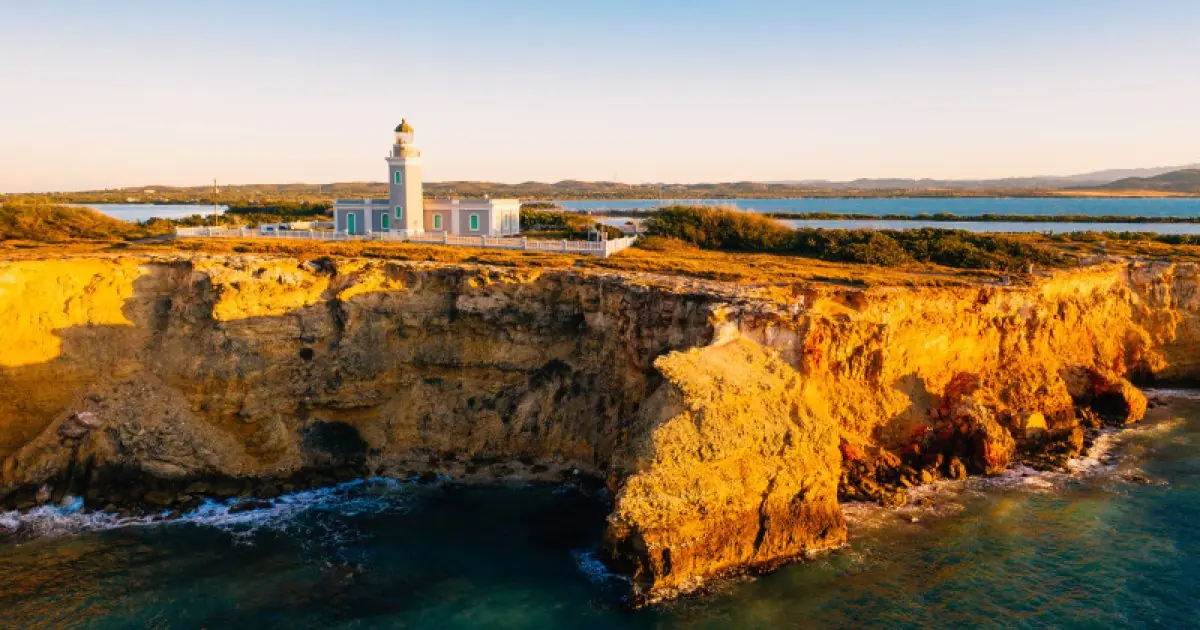
The vehicle gate is closed to public traffic. You cannot drive to the lighthouse. You park at the trailhead and walk 1.25 miles (2 km) each way along a pothole-riddled, completely unshaded dirt road — roughly 25 to 30 minutes of exposed hiking in each direction.
On a clear day, the sun reflects off the pale caliche surface and the heat is brutal. Fine dust coats your shoes within the first five minutes.
Then you crest the final rise and the trade winds hit you with a sudden, roaring gust off the Atlantic that drops the air temperature by what feels like 10°F (6°C). The 200-foot (61 m) limestone cliffs fall straight into turquoise water with no safety barriers of any kind. The contrast between the grueling walk and the massive visual payoff is legitimately dramatic.
What you need to know before you go:
- Footwear: Closed-toe shoes or sturdy sandals are required. Flip-flops on that road will wreck your feet.
- Water: Bring more than you think you need. There is no shade and no vendors on the trail.
- Gate closure: The gate closes at 5:00 PM sharp. A sunset visit will lock you out — arrive no later than 3:30 PM.
- Car break-ins: The trailhead parking area has a documented history of vehicle break-ins. Remove everything from view before you lock up.
Pro Tip: Go on a weekday morning. The trail is nearly empty before 10:00 AM, the light on the cliffs is sharper for photos, and you beat the midday heat entirely.
Quick Stats — Faro Los Morrillos & Playa Sucia:
- Location: End of PR-301, Cabo Rojo (park at the gate)
- Cost: Free
- Best for: Photographers, adventurous travelers, couples without young children
- Time needed: 2 to 3 hours round trip including the walk
How do you see the pink water at Las Salinas?
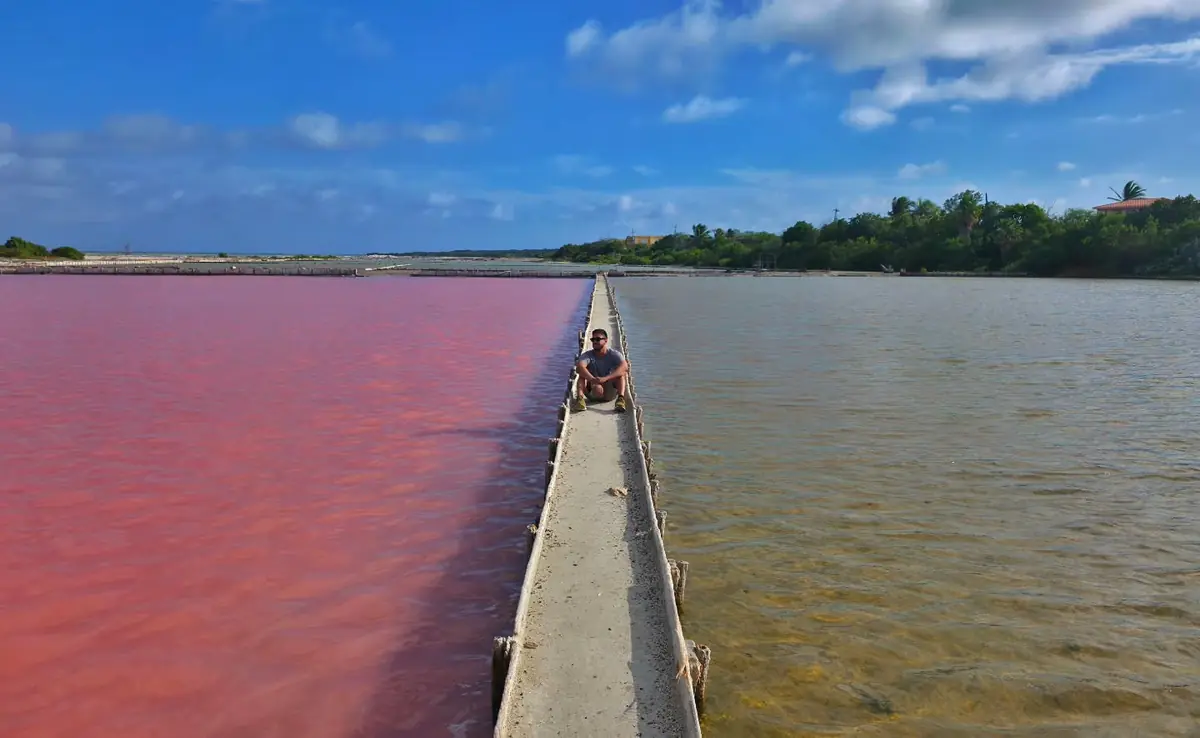
The pink water at Las Salinas shows up most reliably during the dry season (December through March) on a cloudless afternoon. The color comes from halobacteria, microorganisms that thrive in high-salinity water and produce a vivid carotenoid pigment. You need high salinity plus direct sunlight for the cotton-candy effect to appear.
During the rainy season from April through November, rainfall dilutes the flats and the color shifts to a muted reddish-brown. The ecosystem stays active — sea monkeys and migratory birds use the flats — but it will not photograph the way social media promised.
One detail no one mentions: the salt concentration in the air is tangible even from the roadside. A faint, sticky residue settles on camera lenses and skin within minutes of stopping, so bring a lens cloth.
Pro Tip: Check the weather forecast the night before. Heavy cloud cover flattens the color almost entirely regardless of the season.
Quick Stats — Las Salinas:
- Location: PR-301, north of the lighthouse road junction
- Cost: Free for roadside viewing
- Best for: Photographers, nature enthusiasts, ecotourists
- Time needed: 30 to 45 minutes
Which rare birds and wildlife live in the refuge?
The refuge is the last stronghold for several species that exist nowhere else at this density. The yellow-shouldered blackbird (Agelaius xanthomus) is highly endangered and breeds within the refuge limits. The snowy plover nests here too — the Cabo Rojo salt flats are the only known nesting site for this plover on the entire island.
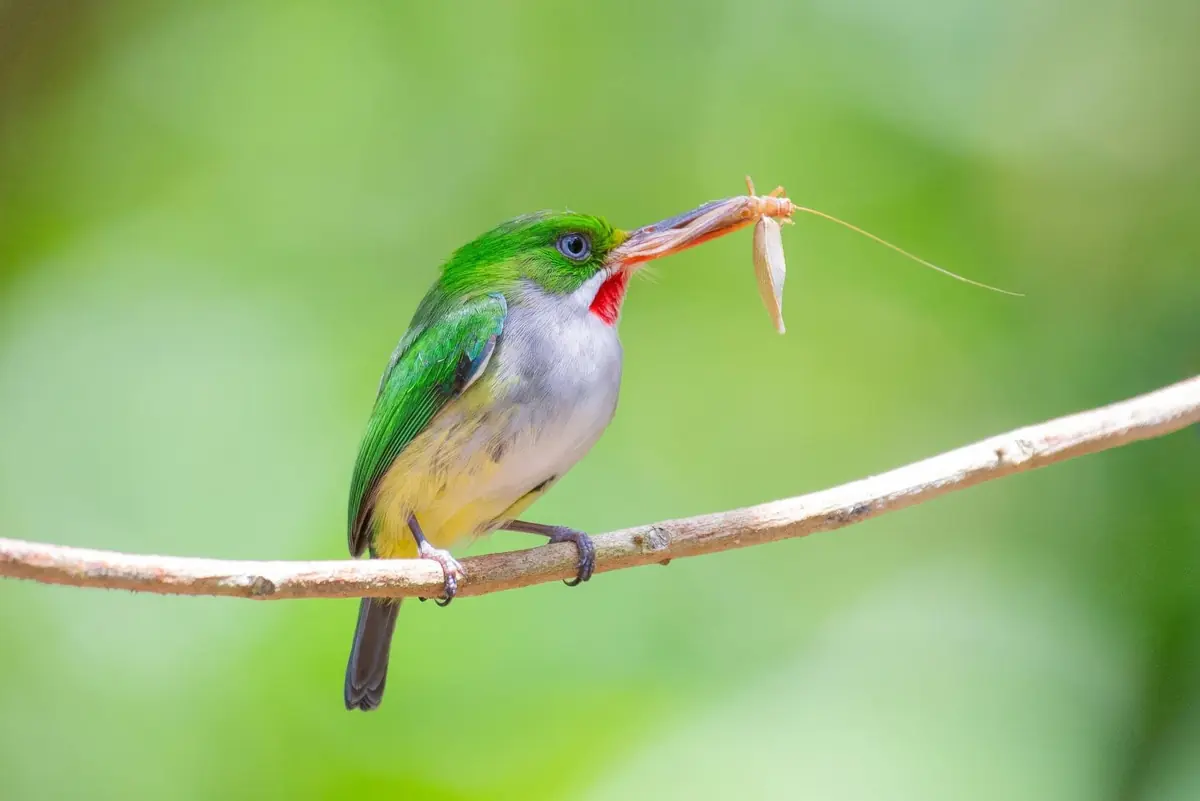
You might also spot the Puerto Rican Tody, a tiny jewel-toned bird found nowhere else on Earth. It inhabits the dry forest scrub between the salt flats and the cliffs. You do not need to be a hardcore birder to appreciate them — you just need to slow down and actually look.
Which are the best beaches in Cabo Rojo Puerto Rico?
The best beaches in Cabo Rojo Puerto Rico for swimming are Playa Combate, Balneario de Boquerón, and Playa Buyé — all flat-water Caribbean stretches with calm, warm conditions. This is not a surf destination. Rincon, about 40 miles (64 km) north, handles that demographic. Down here the water is gentle and the crowds are manageable if you time your visit right.
1. Playa Combate
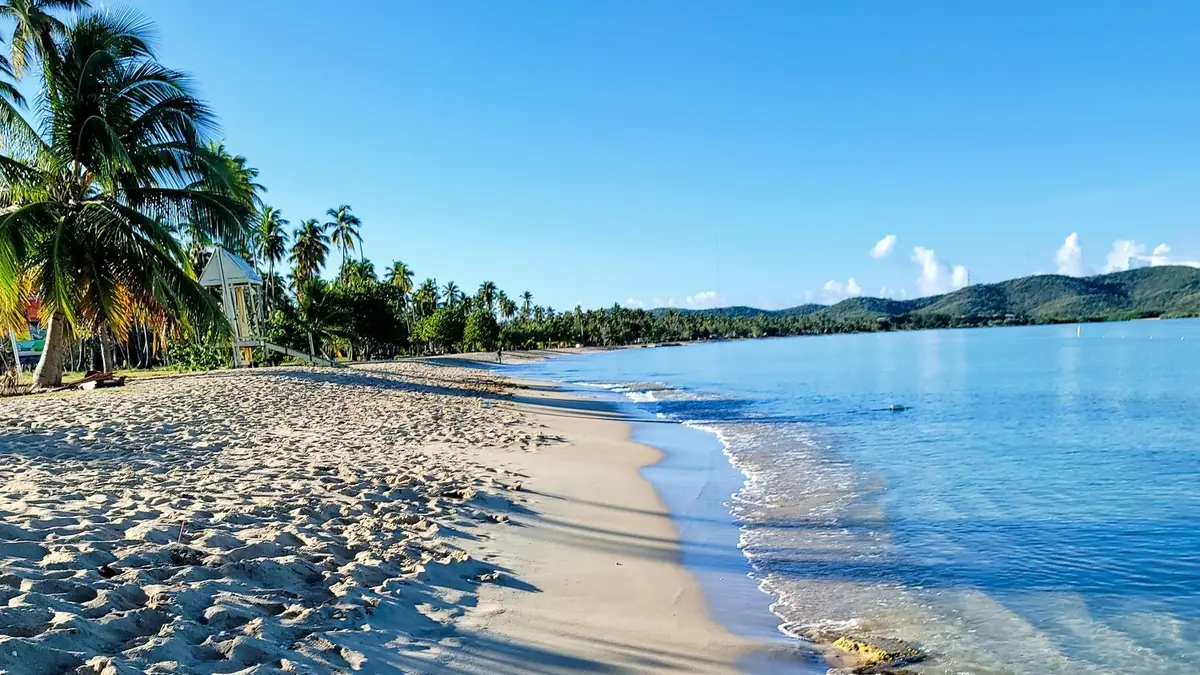
Playa Combate is the most accessible stretch of sand on the western coast. The water stays shallow for a long distance offshore, making it well-suited for children and casual swimmers. The main entrance gets heavily crowded on weekends, so walk to the far end away from the parking lot and the food kiosks. You will find more space, better natural shade from the mangrove fringe, and noticeably fewer people.
- Location: PR-3301, Cabo Rojo
- Cost: Free parking
- Best for: Families, budget travelers, casual swimmers
- Time needed: Half a day
2. Balneario de Boquerón
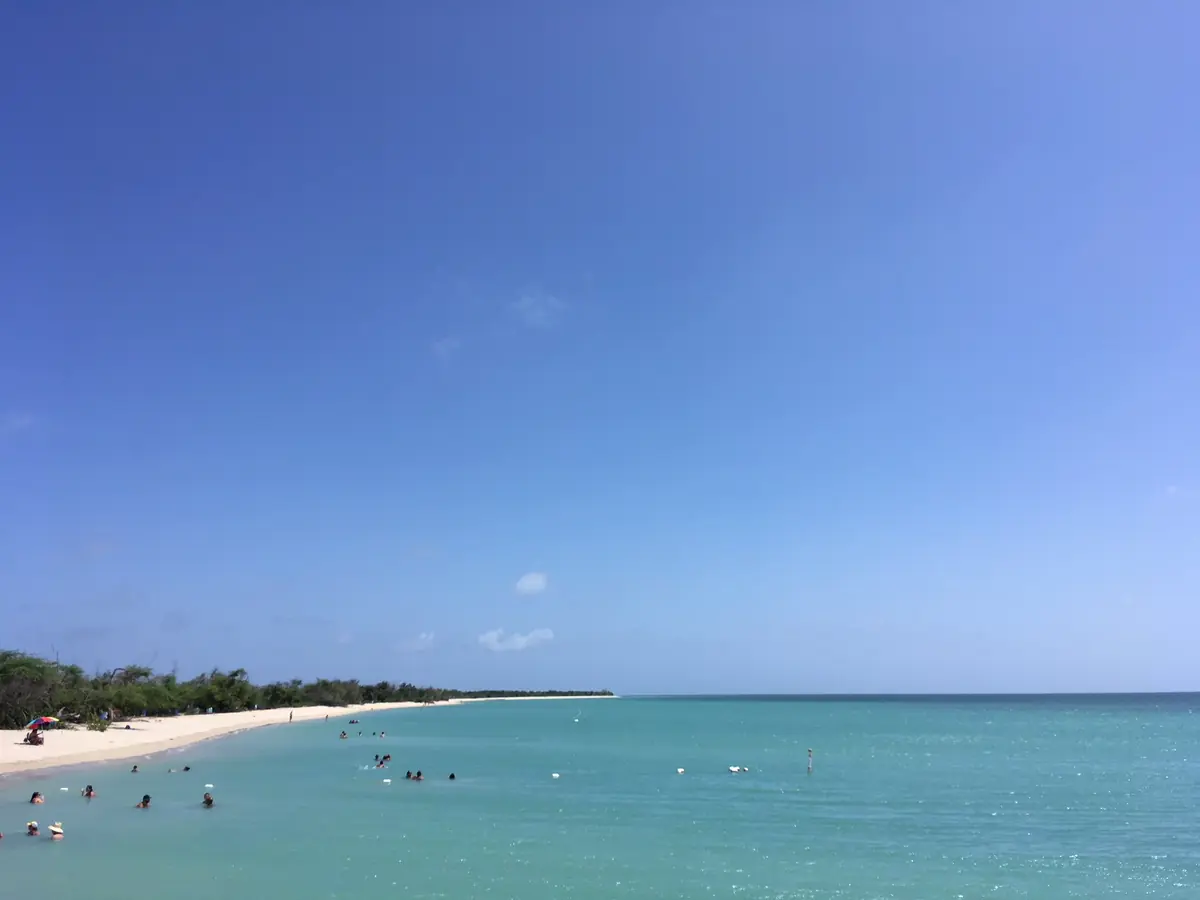
Boquerón’s main public beach carries a Blue Flag certification — an international designation for superior water quality, safety management, and environmental stewardship. It is one of the few formally managed beaches in the municipality. You get paid parking, clean facilities, lifeguard coverage on active days, and thick coconut palm shade. The water is reliably calm and clear, and the village is a five-minute walk away.
- Location: PR-101, Boquerón
- Cost: Parking under $5; beach access free
- Best for: Families, first-time visitors, travelers who want real infrastructure
- Time needed: Half a day to a full day
3. Playa Buyé — and the secret coves north of it
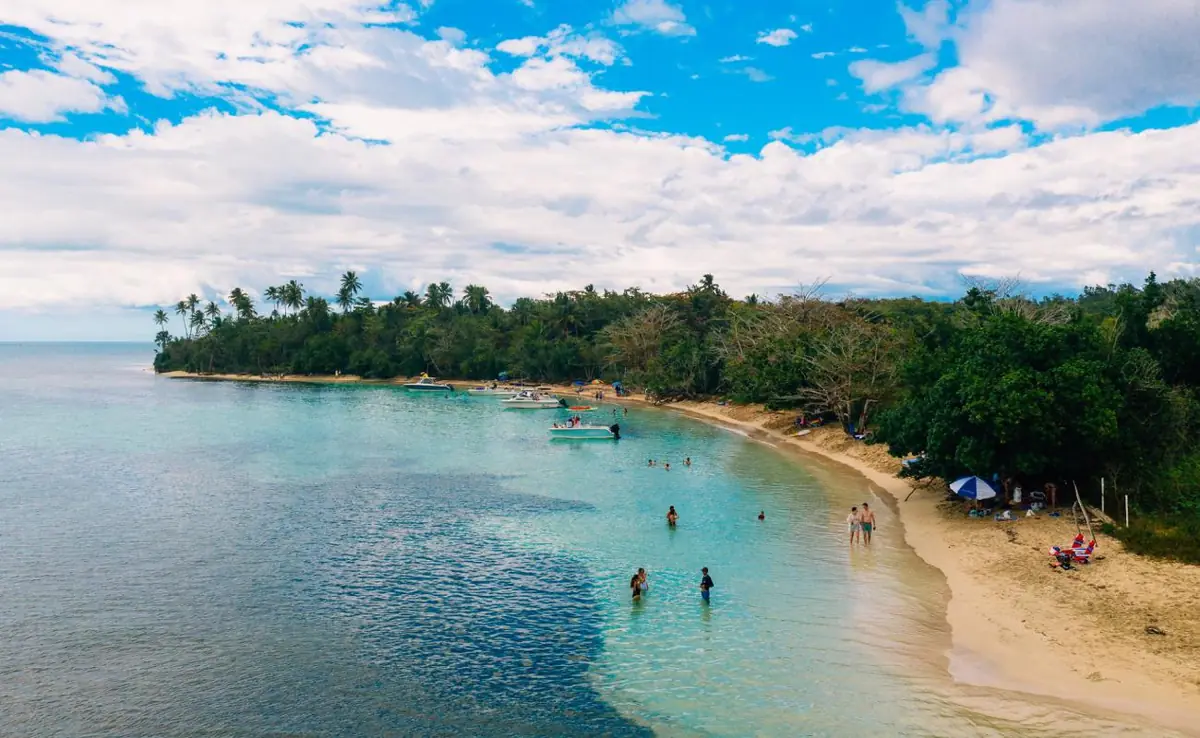
Playa Buyé is a beautiful stretch of white sand paired with calm, clear water. It is also well-known, which means weekend crowds build by mid-morning. Here is what most guides do not tell you: walk north from the main beach until the path ends, then wade into the shallow water along the shoreline and continue past the rocky point.
The ocean stays at ankle-to-knee depth. After roughly 10 to 15 minutes of wading, you reach a series of completely secluded coves — no vendors, no music, often no other people. Bring a dry bag for your phone and wallet because you will get wet to your thighs, but it is worth every step.
- Location: PR-307, Cabo Rojo
- Cost: Free
- Best for: Couples, solo travelers, anyone who wants a private beach without a resort price
- Time needed: Half a day
Where should you eat on the Joyuda Seafood Mile?
The Joyuda Seafood Mile runs along PR-102 north of Boquerón and is where the serious eating happens in Cabo Rojo Puerto Rico. The standard to hold any restaurant to is simple: does the mofongo come to the table still crackling? If it does, you are sitting in the right place. Skip restaurants that lead with words like “artisan” or “organic” — those are marketing to tourists, not feeding locals.
Walk right past the place with the decorative driftwood and the QR code menu that reinvented mofongo into a cup.
Recommended spots on the Joyuda strip
Varadero is locally respected for its massive seafood-stuffed mofongo. The plantain base is dense and well-seasoned, and the shellfish filling is generous and fresh. It is consistent, which in a heavy tourist corridor actually means something.
Costa Brava earns its reputation through sunset views over the water and reliable kitchen execution. The outdoor seating faces the water directly and the menu stays disciplined. Valmar and Nautica by Poly’s both hold strong local followings for fresh catch preparations — order your fish grilled, not fried, especially if the catch came in that morning.
Pro Tip: Arrive at Joyuda before 7:00 PM on weekends. By 8:30 PM, wait times at the better restaurants stretch past an hour and parking becomes chaotic.

What is Boquerón village like on weekends?
Boquerón runs on a dual personality schedule. On a Tuesday afternoon, the Poblado de Boquerón main strip is quiet to the point of being empty — shutters down, a few locals on plastic chairs, maybe a stray cat. On a Saturday night it transforms into a completely different town.
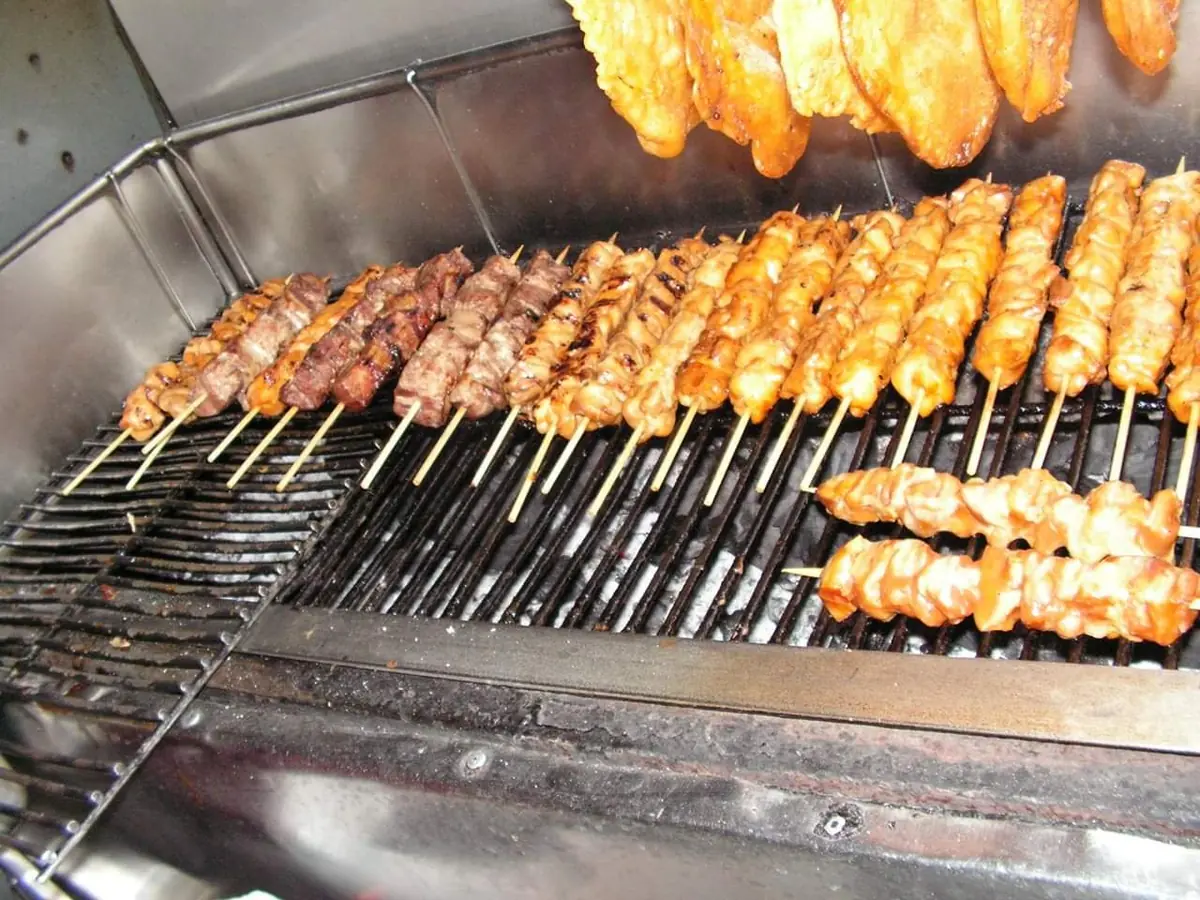
Street vendors appear out of nowhere selling raw oysters shucked to order, locally harvested clams, and pinchos (charcoal-grilled meat skewers) smoking on roadside grills. Loaves of pan de agua from the Boquerón Bakery sell by the half-pound, still warm. The plaza fills fast and salsa plays loudly from somewhere you cannot immediately identify.
Boquerón is also recognized as a welcoming, LGBTQ+-inclusive destination, hosting the annual Orgullo Boquerón festival. The crowd on weekend nights reflects that openness and it remains one of the more relaxed party atmospheres in southwestern Puerto Rico. Do not plan your nightlife for a weeknight, or you will be the only person on the street.
How do you visit the bioluminescent bay from Cabo Rojo?
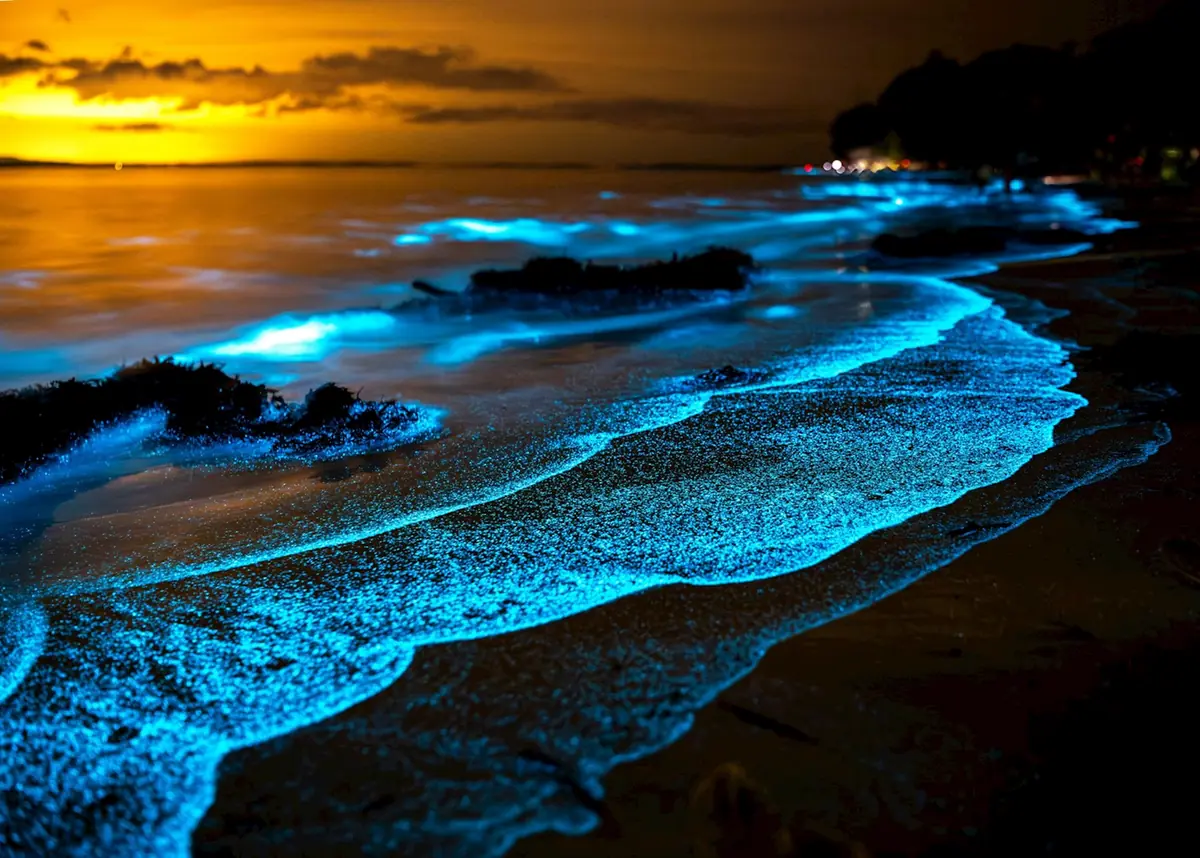
Cabo Rojo Puerto Rico does not have a bioluminescent bay within its municipal limits, but it sits 30 minutes and 19 miles (30 km) south of La Parguera — one of three glowing bays remaining on the island. The optimal day structure for a visitor based in Cabo Rojo looks like this:
- Afternoon: Hike to Faro Los Morrillos. Arrive by 3:30 PM, clear the gate before 5:00 PM
- Early evening: Eat dinner at Joyuda, arriving before 7:00 PM
- After 9:00 PM: Drive south to La Parguera for a kayak or motorboat tour
La Parguera kayak tours typically run $30 to $50 per person and last about 60 to 90 minutes. The bioluminescence is brightest on moonless nights, so check the lunar calendar before committing to a tour date.
Pro Tip: Book the La Parguera tour well in advance, especially on weekends. Operators fill up fast and do not hold open spots.
The rhythm of the southwest at a glance
| Location | Weekday (Tue–Thu) | Weekend (Fri–Sun) |
|---|---|---|
| Boquerón village | Quiet; most vendors closed | Full street food scene; live music; packed until midnight |
| Joyuda Seafood Mile | Short or no wait; relaxed | 45–90 min waits after 7 PM; arrive early |
| Playa Buyé | Near-empty by 9 AM | Busy by 10 AM; go north for solitude |
| Playa Combate | Reliably calm | Crowded at main entrance; walk to the far end |
| Las Salinas | Accessible any day | Same crowds as beaches on weekends |
Before you book
Cabo Rojo Puerto Rico is not a resort destination. It has no massive all-inclusives, no swim-up bars, and zero shuttle service from the airport. What it has instead is a lighthouse on 200-foot limestone cliffs, pink salt flats inside a federal wildlife refuge, the best mofongo on the southwest coast, and a village that throws a proper party on Saturday nights. For broader trip planning, see our full Puerto Rico travel guide.
TL;DR: Rent a car in advance, pack closed-toe shoes for the lighthouse trail, bring a dry bag for the secret coves north of Buyé, and lock down a Joyuda dinner before 7:00 PM. Visit the pink flats December through March for color, and pair your Cabo Rojo trip with a La Parguera bio bay tour after dark.
Which part of Cabo Rojo Puerto Rico are you most nervous about — the lighthouse walk, the driving, or finding the pink water at the right time? Drop a comment and I’ll help you plan around it.