A Cayo Icacos catamaran day trip is the cleanest escape from San Juan’s crowded beaches — a short sail east into La Cordillera Nature Reserve where the water runs 80°F (27°C) and the only neighbors are parrotfish. This guide covers every cost, every transit trap, and what tour operators leave out of their listings.
What should you expect on a Cayo Icacos catamaran trip?
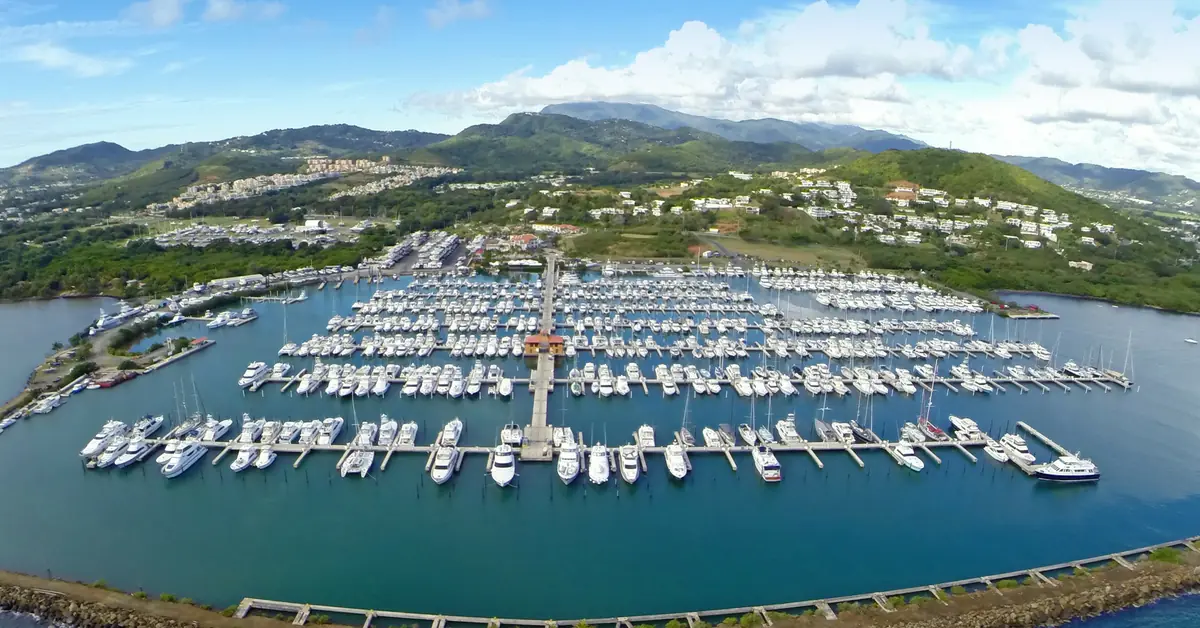
A Cayo Icacos catamaran day trip lasts five to six hours, departing from Fajardo’s Marina Puerto del Rey or Villa Marina. Tickets run $110 to $140 per adult and generally include a deli-style buffet lunch, rum cocktails, snorkel gear, and shaded seating. The boat ride takes 20 to 50 minutes depending on vessel type.
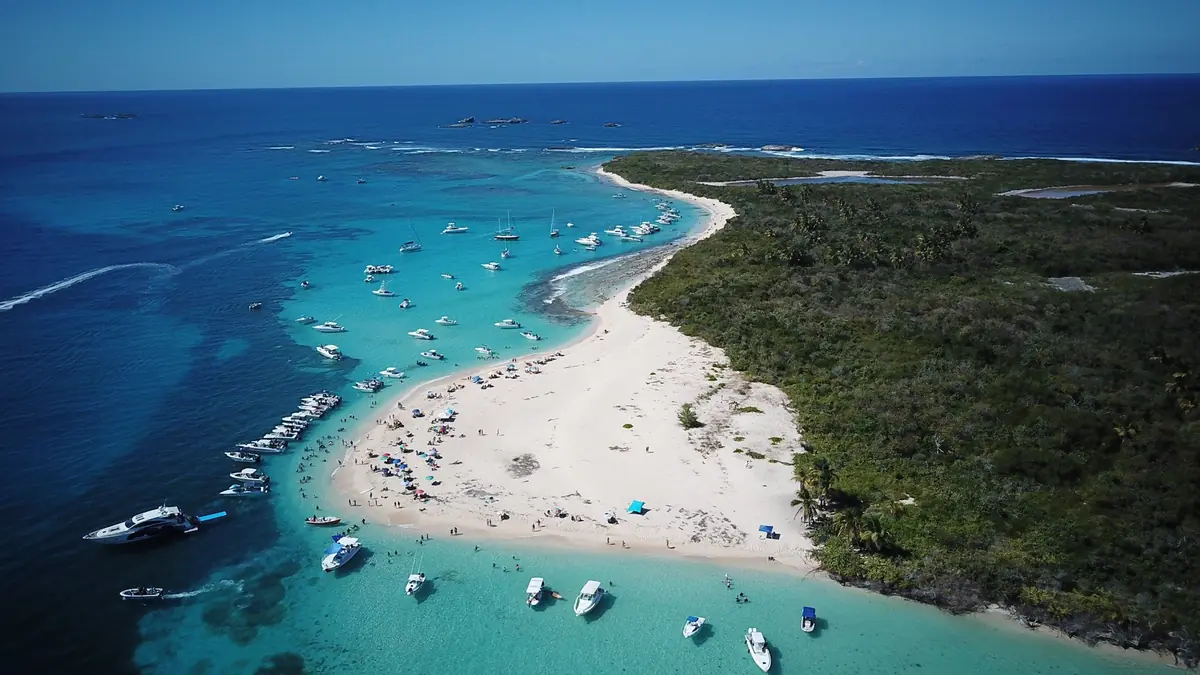
The island itself is a protected, uninhabited cay within La Cordillera Nature Reserve — no restaurants, no vendors, no shade structures, no bathrooms on shore. What you get is white sand, clear water, and whatever your operator brings onboard.
One detail almost every OTA listing buries: the mandatory $3.00 per person DRNA (Department of Natural and Environmental Resources) ecological fee, collected in cash at the dock. Bring small bills.
Getting here from San Juan means a 62-mile (100 km) drive east to Fajardo — roughly 60 to 90 minutes depending on morning commuter traffic. The moment the vessel clears the marina breakwater and hits open water, the ocean breeze drops the perceived temperature by a full ten degrees. Whatever tension remained from the drive dissolves immediately.
Catamaran or water taxi: which Cayo Icacos trip is right for you?
A catamaran charter is the higher-value choice for almost every traveler. While a water taxi runs $50 to $60 round-trip versus $110 to $140 for the catamaran, Cayo Icacos has zero facilities — meaning water taxi passengers must haul their own shade, coolers, food, and snorkel gear. Catamarans include onboard marine toilets, unlimited food and drinks, and offshore reef access.
The budget travel blogs that recommend the water taxi as a “hack” never do the math. Rent a beach umbrella, buy a Styrofoam cooler, fill it with ice, buy food and drinks for two, and rent snorkel gear at the Las Croabas dock. You’ve spent the same amount as an all-inclusive catamaran ticket — and you’re still stuck on an island with no bathrooms.
| Feature | Catamaran Charter | Water Taxi |
|---|---|---|
| Average price | $110–$140/person | $50–$60 round-trip |
| Food & drink | Buffet lunch + open bar | Bring your own |
| Bathrooms | Marine toilet on board | None on the island |
| Shade | Covered deck seating | Rent or bring your own |
| Snorkeling access | Offshore reef via vessel | Shoreline only |
| Snorkel gear | Included | Rent separately |
The physical reality of the water taxi option hits around hour two. The blistering Caribbean sun reflects off raw limestone and white sand — without an umbrella the heat becomes genuinely unbearable after midday. And hauling a full cooler through the narrow Las Croabas port, then lifting it onto a low-sided water taxi with no ramp, is not the relaxed vacation anyone pictured.
Pro Tip: If you’re traveling with anyone under 10 or over 60, skip the water taxi entirely. The catamaran’s covered deck, marine toilet, and stable platform put it in a different category of comfort.
Which Cayo Icacos catamaran operator should you book?
The three established operators departing from Fajardo are East Island Excursions, Castillo Tours, and Sail Getaways. The first choice is between power catamarans — reaching the island in roughly 20 minutes — and traditional sailing catamarans, which offer a leisurely 45 to 50-minute cruise. That single decision determines the entire atmosphere.
East Island Excursions — high-energy, high-speed
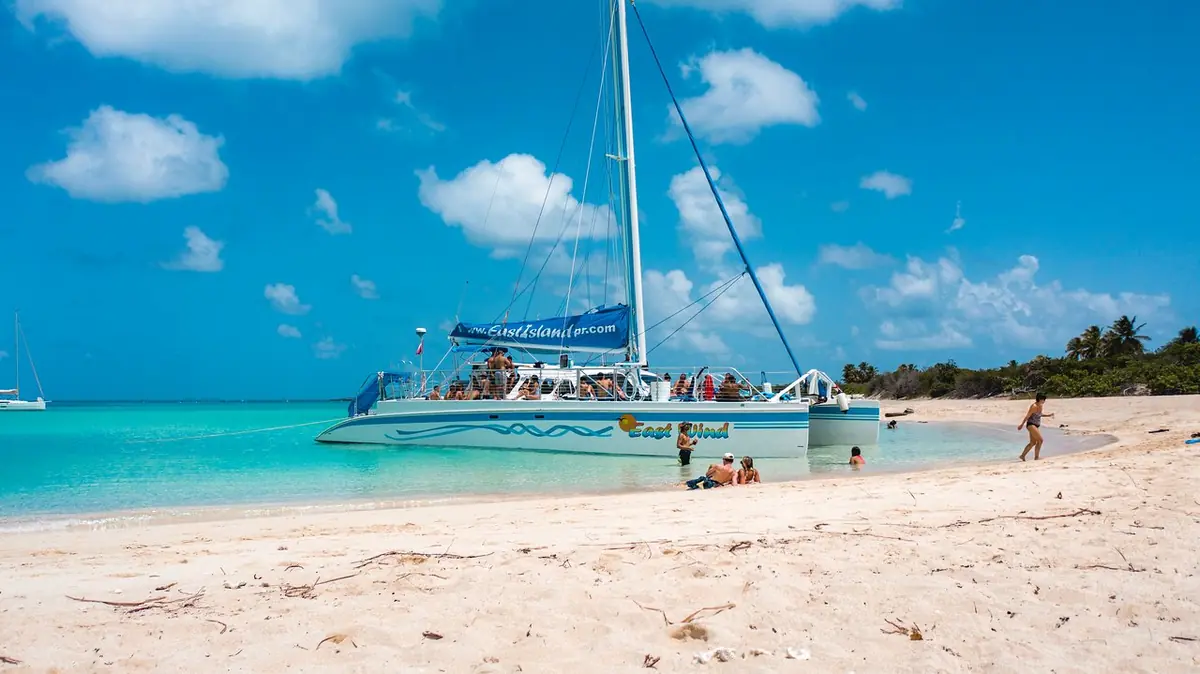
East Island Excursions runs two distinctly different vessels. The Eco Isleño is a high-speed power catamaran — twin engines, significant deck vibration, and reggaeton at full volume from the speakers. It reaches Icacos in 20 minutes flat. Their East Wind is the sailing option: slower, quieter, canvas snapping overhead when the captain cuts the engines.
- Vessel types: Eco Isleño (power catamaran), East Wind (sailing catamaran)
- Capacity: Up to 70+ guests on the East Wind
- Vibe: Social, high-energy; water slide on select vessels
- Best for: Groups and solo travelers who want a party atmosphere
Castillo Tours — mid-size, Coast Guard-certified comfort
The Barefoot IV is a 47-foot catamaran certified for around 44 guests — a noticeably smaller group than the large East Island vessels. Fewer passengers means more deck space per person and shorter lines at the snorkel gear bin. The atmosphere skews calmer and slightly older.
- Vessel: Barefoot IV (47-foot catamaran)
- Capacity: Around 44 guests
- Vibe: Relaxed, family-friendly, mid-range
- Best for: Couples and small families who want less crowding
Sail Getaways — premium sailing experience
The Getaway Too is a 54-foot luxury sailing catamaran serving a premium market. The vessel is quieter, the crew-to-guest ratio is higher, and the emphasis is on sailing — not DJ sets. Pricing reflects this.
- Vessel: Getaway Too (54-foot sailing catamaran)
- Vibe: Premium, quiet, sailing-focused
- Best for: Travelers who want space, silence, and a more intentional pace
The acoustic difference between vessel types matters more than most people expect. The heavy, sustained hum of twin engines on the Eco Isleño vibrates through the deck for the entire crossing. On the East Wind or Getaway Too, once the engines cut and the sails fill, the boat goes nearly silent — just the snap of canvas and the slap of water against the hull.
How do you get to the Fajardo marinas from San Juan?
Fajardo sits approximately 62 miles (100 km) east of San Juan, requiring a 60 to 90-minute drive. Travelers without a rental car must rely on tour operator shuttle add-ons, which run $25 to $35 per person, or on rideshares that frequently exceed $80 to $100 each way. This transit leg is the single most underplanned part of the trip.
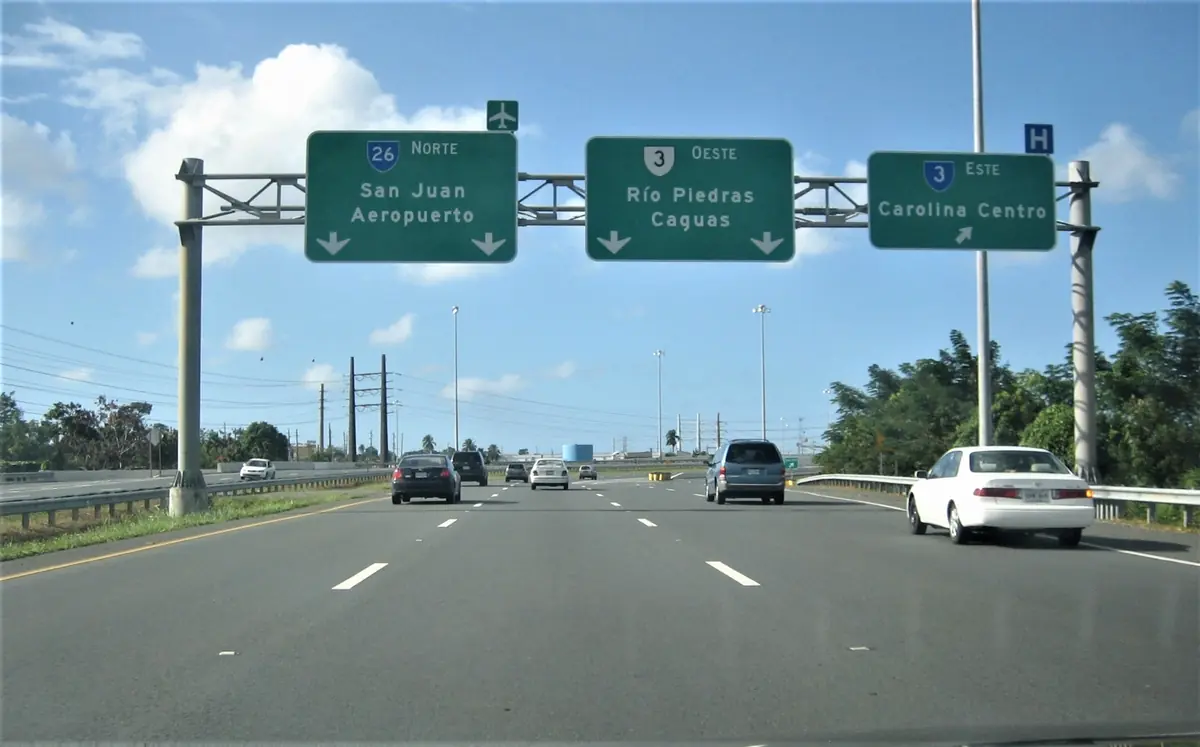
Driving east via Route 3 and Route 66
Leave San Juan no later than 7:00 AM to avoid morning commuter traffic backing up on Route 3 heading east. Route 66 is the faster toll option from the metro area — worth the small toll to cut 20 to 30 minutes off the drive. As the highway curves east, the dense green foothills of El Yunque National Forest rise on the right side of the road. That’s the visual confirmation you’re on track, roughly 20 minutes from the marina.
Parking at both Marina Puerto del Rey and Villa Marina is generally secure and free for chartered guests. Keep your booking confirmation accessible at the gate.
The Uber trap: why the return trip is the real problem
Getting an Uber from Condado or Isla Verde to Fajardo in the morning is straightforward and costs roughly $80 to $100 each way. Getting one back from the marina at 4:00 PM is a different situation. Driver availability in Fajardo at that hour is extremely thin, and the few who accept will surge-price immediately.
The reliable solution: book the round-trip shuttle directly through your tour operator for $25 to $35 per person. It meets you at the dock after the trip and doesn’t leave without you.
Pro Tip: If you’re driving, screenshot your parking spot location before boarding. After six hours in the sun with two rum punches, the marina lot looks identical in every direction.
What is the boat ride from Fajardo to Cayo Icacos actually like?
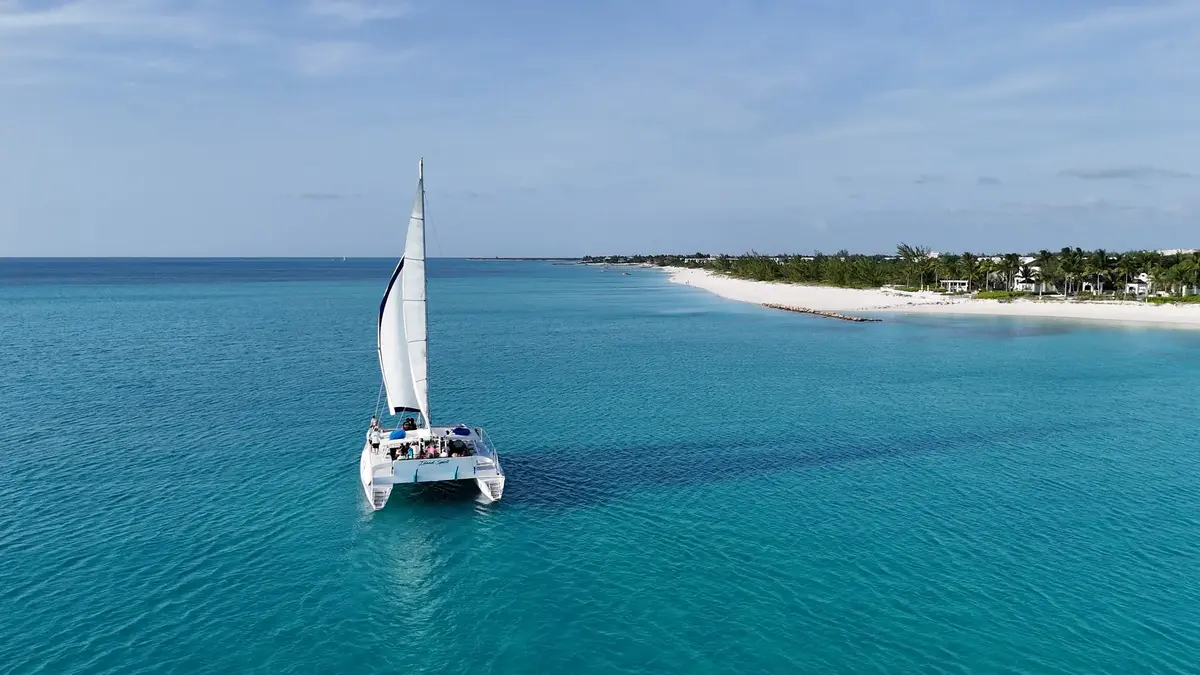
The crossing from Fajardo to La Cordillera Nature Reserve runs through protected waters, making it significantly smoother than the notoriously rough deep-water passage to Culebra. Power catamarans complete the run in 20 to 25 minutes. Sailing catamarans take 45 to 50 minutes. Both crossings are manageable for most travelers, including those with mild motion sickness concerns.
The key word is “mild.” Anyone with a serious history of motion sickness should still take a non-drowsy over-the-counter remedy — Dramamine or Bonine — with a real meal at least one hour before departure. An empty stomach makes everything worse, and there are no refunds for seasickness.
All Coast Guard-certified vessels carry floating belts, life rings, and noodles for weak swimmers. The water temperature averages 80°F to 84°F (27°C to 29°C) year-round, so there’s no cold-water shock on entry.
On a sailing catamaran, the suspended bow netting is the best seat during the crossing. Lying face-down on the mesh, watching deep blue Caribbean water accelerate beneath the weave while ocean spray hits your arms — it’s a physical experience the marketing photos never quite capture. The color shifts from deep indigo to pale aquamarine as the reef shallows approach.
How is the snorkeling at Cayo Icacos?
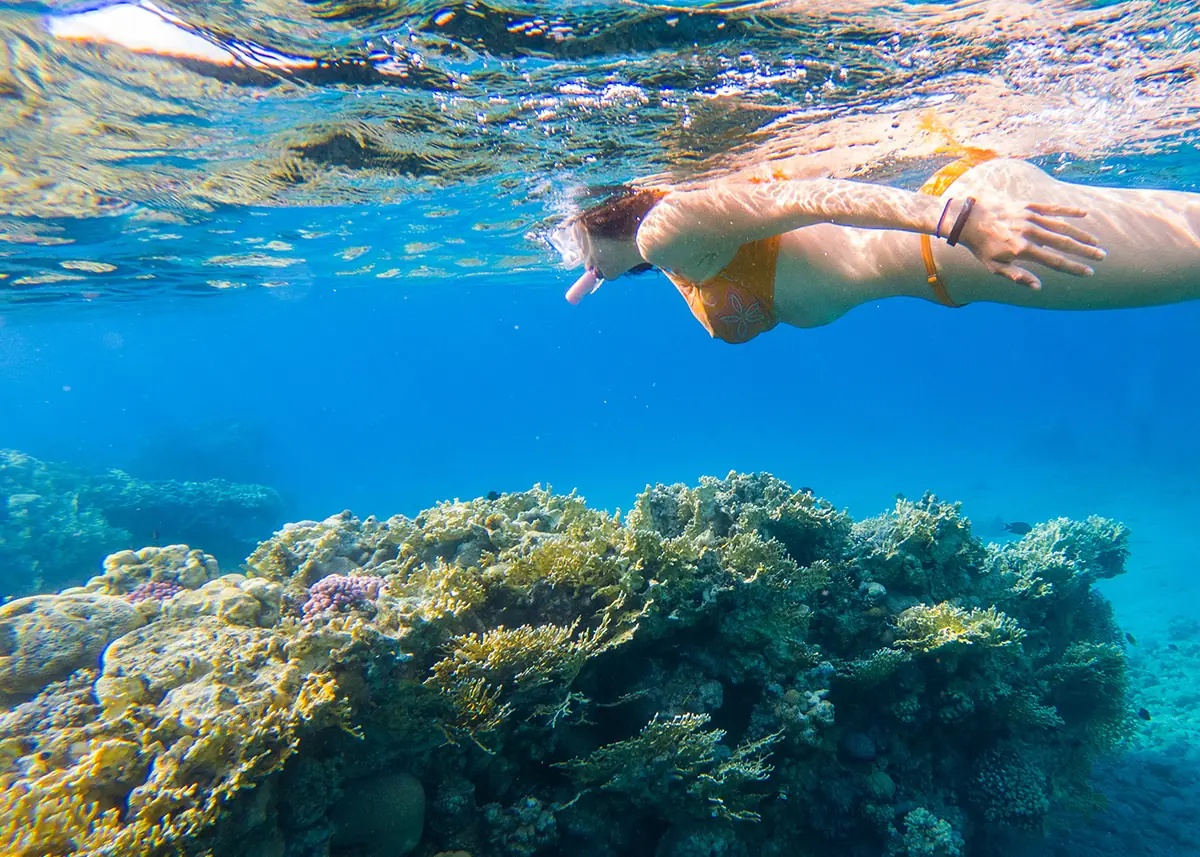
Cayo Icacos offers excellent snorkeling when accessed via a vessel anchoring over the deeper offshore reefs. Marine life regularly includes parrotfish, blue tang, yellowtail snapper, and green sea turtles. Snorkelers must stay cautious of abundant fire coral throughout the reserve waters and occasional moon jellyfish, particularly in calmer, shaded areas near the hull.
The shoreline coral immediately adjacent to the beach is largely dead. Years of heavy foot traffic from swimmers who don’t know where to step have degraded it beyond recovery. Catamarans bypass this entirely by anchoring 50 to 100 yards offshore over healthier sections, including spots near Tortugas Reef. This is one of the concrete logistical advantages of booking a charter over a water taxi: the water taxi drops you at the shore; the catamaran takes you directly to where the fish actually are.
Marine life to look for
- Parrotfish (audible — they crunch coral as they feed, a sound you can hear underwater)
- Blue tang (abundant throughout the reserve, schools of them in shallow water)
- Yellowtail snapper (clusters in the mid-water column between reef sections)
- Southern stingrays (resting flat on sandy bottom patches between corals)
- Green sea turtles (surface occasionally near the boat — do not chase them)
- Spiny lobsters (tucked under ledges in deeper sections, mostly invisible during the day)
Fire coral and sea urchin warnings
Touching fire coral feels exactly as the name implies — an immediate, burning rash that develops within minutes and can ruin an entire afternoon. It looks like a regular coral fan or branching structure, often with a yellowish hue. Sunscreen provides essentially no protection. A full-coverage UV performance rash guard is the only reliable barrier.
Sea urchins concentrate in the shallows where visibility drops. Shuffle your feet rather than stepping flat when moving through water under 4 feet (1.2 m) deep. One wrong step ruins the rest of the day.
Pro Tip: Ask your captain to point out the safe snorkel entry and exit points before anyone hits the water. The crew navigates the same reef daily and knows exactly where the urchin patches are sitting.
What food and drinks are served on board?
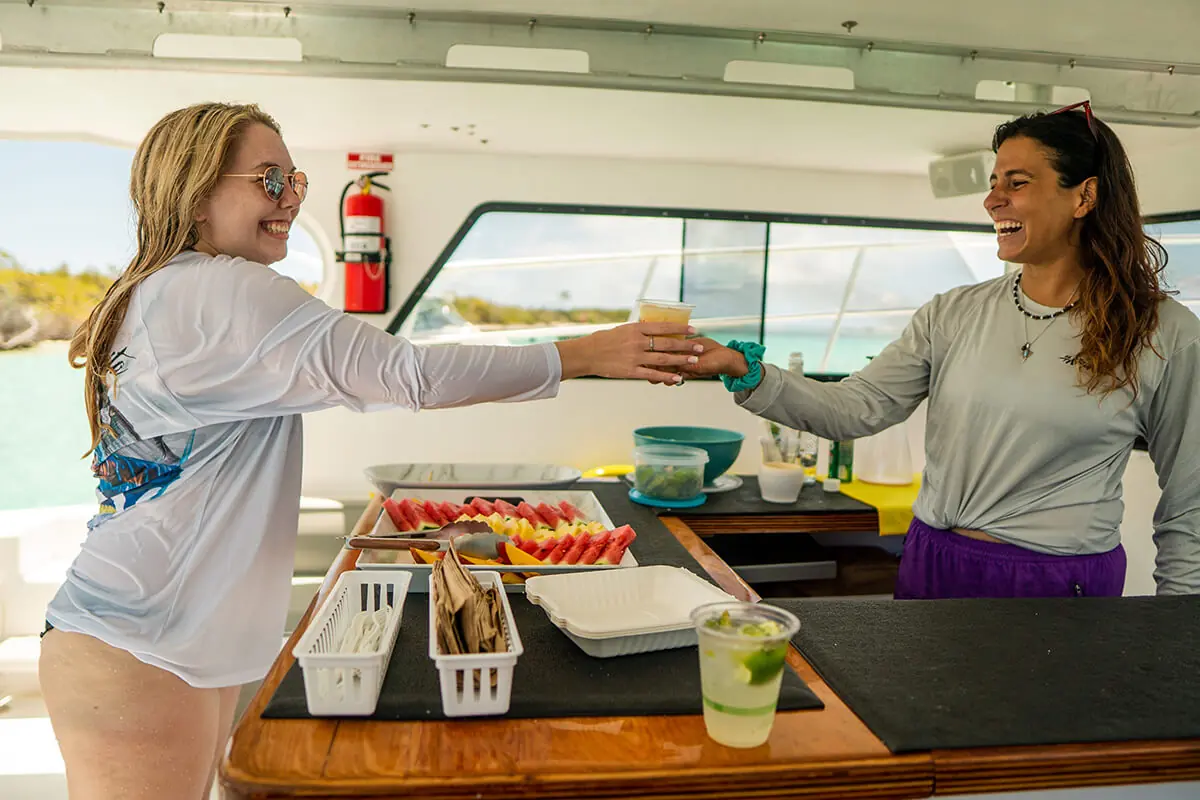
Catamaran excursions to Cayo Icacos feature a deli-style lunch buffet assembled on a fold-out table in the stern. The standard menu includes fresh local pan de agua bread, assorted cold cuts including turkey and pastrami, gourmet pasta salad, and fresh fruit. The open bar runs local rum punch, piña coladas, and Medalla beer throughout the day.
The format is interactive — guests build their own sandwiches at whatever pace they want. Pan de agua is a Puerto Rican cultural staple: a soft, slightly sweet water bread that absorbs the residual salt and sea-air taste after a long swim in a way that standard sandwich bread simply doesn’t replicate.
Non-alcoholic options include iced tea, assorted sodas, and filtered water. Most operators accommodate a mocktail version of the rum punch for guests who don’t drink alcohol — ask the crew at the bar rather than waiting to be offered.
One strict universal rule: glass bottles and outside hard liquor are prohibited by the Coast Guard and enforced by every commercial operator without exception. Don’t test this at the dock boarding check.
There is a specific, highly particular pleasure in a freshly poured rum punch — sweet, strong, served in a sweating plastic cup — consumed in the afternoon sun while still damp from the snorkel. It’s worth accounting for in your hydration plan.
Will sargassum seaweed ruin a Cayo Icacos trip?
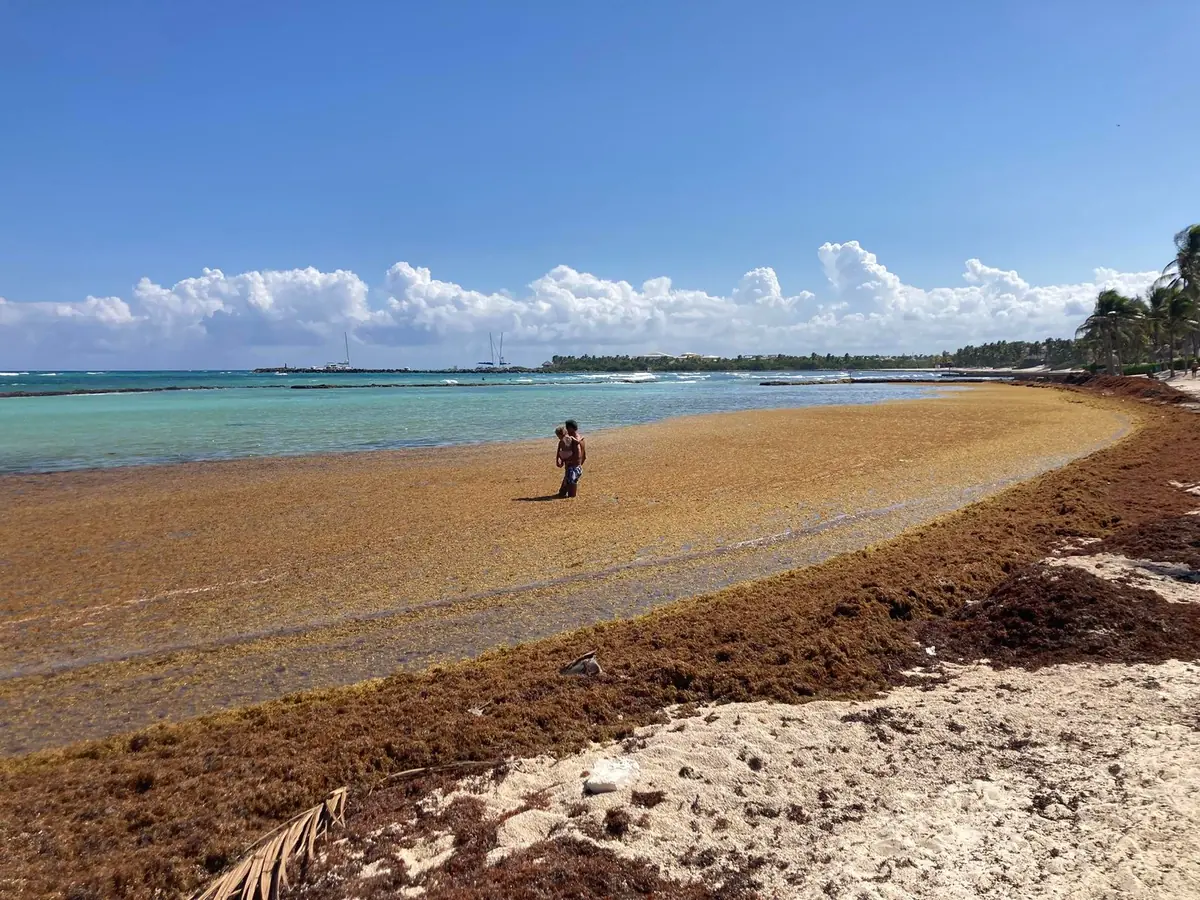
Sargassum is a brown holopelagic macroalgae that periodically washes up on Puerto Rico’s eastern shores, including Cayo Icacos, driven by shifting Atlantic currents and seasonal wind patterns. Thick accumulations produce a strong sulfur odor as they decay. Reputable operators monitor conditions daily and may reroute trips to alternative cays when blooms are severe.
Sargassum is not a pollution indicator — its presence depends entirely on prevailing currents, making it essentially unpredictable week to week. Operators like Castillo Tours post sargassum disclaimers prominently in their booking terms. That transparency is the mark of an honest operator, not a bad one. If yours doesn’t mention it at all, ask directly before finalizing the booking.
The smell at stagnant marina docks in the early morning, when seaweed has been sitting in warm, still water overnight, can be genuinely overwhelming. The sulfur odor completely disappears the moment the boat accelerates into open, circulating water. By the time you clear the breakwater, it’s gone entirely.
On heavy-bloom days, operators sometimes reroute to nearby Palominitos or other cays within La Cordillera. Water clarity varies, but the snorkeling conditions are comparable. Ask about current sargassum status when you check in at the dock on the morning of departure.
What should you pack for a Cayo Icacos catamaran trip?
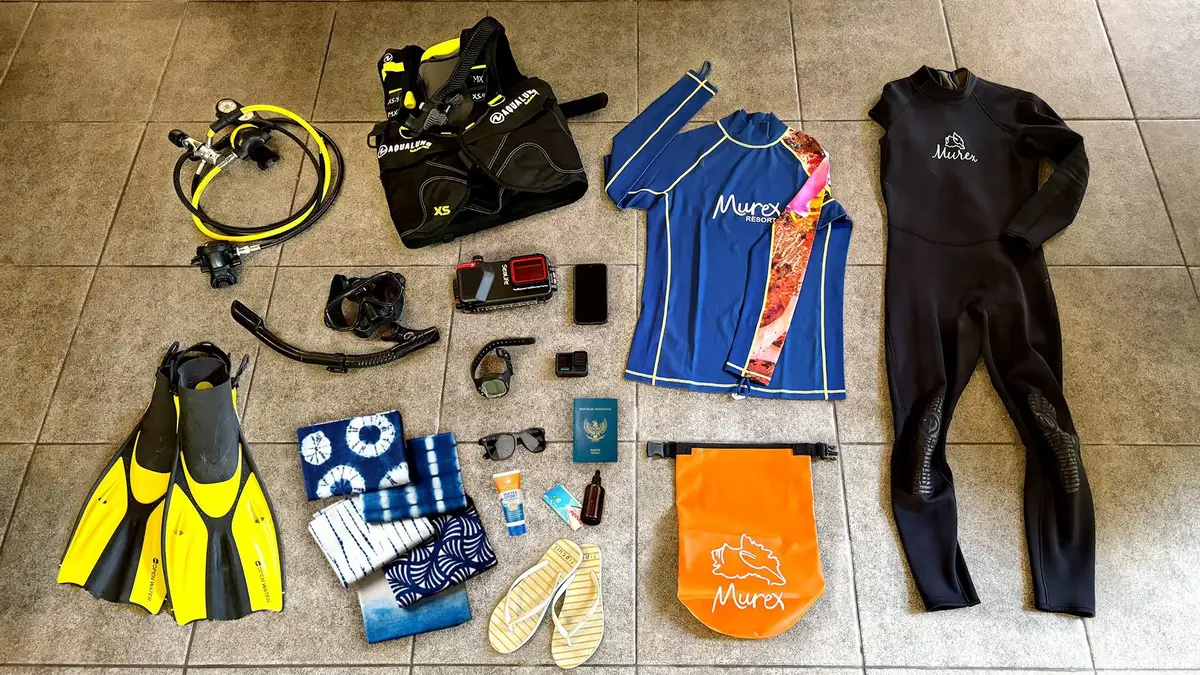
Packing efficiently for a Cayo Icacos catamaran trip means packing almost nothing. Because the charter provides all food, drinks, and snorkel gear, guests should focus exclusively on sun protection and water safety. The essentials are reef-safe mineral sunscreen, a UV-protective rash guard, polarized sunglasses, a waterproof phone pouch, and a compressible microfiber towel.
| Item | Why it matters |
|---|---|
| Reef-safe mineral sunscreen | Chemical aerosols with oxybenzone damage coral and are banned by many operators |
| UV rash guard (long-sleeve) | Fire coral protection; also handles full sun during the crossing |
| Polarized sunglasses | Eliminates surface glare during snorkel entry and exit |
| Waterproof phone pouch | Keeps the phone accessible without risking a drop over the railing |
| Microfiber towel | Standard cotton beach towels eat three times the space in a dry bag |
One logistical note that seems minor but matters significantly: arrive at the marina already wearing your swimsuit under your street clothes. Marine heads — the bathroom on a boat — are notoriously cramped and rock with the vessel’s motion underway. Trying to change into a wet swimsuit inside one is an experience worth avoiding.
Aerosol chemical sunscreens are the other friction point. The reef-safe requirement is environmental and increasingly enforced. Bring a mineral lotion or stick formula and apply it at least 20 minutes before boarding so it absorbs properly before you enter the water.
Pro Tip: Leave the large beach bag behind. A single dry bag or compact backpack is all that fits comfortably on a crowded catamaran deck. The umbrella, cooler, and beach chairs stay in the car.
Cayo Icacos vs Culebra: which island day trip is better?
Choosing between Cayo Icacos and Culebra depends entirely on transit tolerance and group composition. Cayo Icacos requires a smooth 20-minute boat ride and suits families and first-timers and anyone with motion sickness concerns. Culebra offers Flamenco Beach — one of the finest stretches of sand in the Caribbean — but demands a rough, hour-long open-ocean crossing that frequently causes severe seasickness and is regularly cancelled mid-route.
Culebra’s Flamenco Beach earns its reputation: exceptional sand, turquoise water with genuine depth and clarity, and actual municipal infrastructure — restaurants, jeep rentals, boutique hotels, cold beer on shore. For a full-day commitment with a cast-iron stomach, it delivers a superior beach experience to Icacos’s narrower shoreline.
But here’s what most travel guides consistently omit: the deep-water channel between the Puerto Rican mainland and Culebra is genuinely rough. Swells roll in from the open Atlantic with nothing to break them, and the crossing regularly induces vomiting in passengers who’ve never experienced seasickness before. Captains frequently abort the Culebra route mid-channel for safety and reroute — which means seasick passengers who booked Culebra often end up at Icacos anyway, minus $40 in extra ticket cost and plus a ruined morning on the foredeck.
If anyone in your group gets carsick on winding roads, book Icacos directly. The protected waters of La Cordillera are a fundamentally different passage. Culebra’s infrastructure also only helps you if you’re staying overnight — for a day trip, the restaurants and jeep rentals are irrelevant.
| Factor | Cayo Icacos | Culebra |
|---|---|---|
| Boat ride | 20–25 min (protected water) | 60 min (open Atlantic) |
| Beach quality | Small, untouched cay | Flamenco Beach — exceptional |
| Facilities on island | None | Restaurants, rentals, bathrooms |
| Seasickness risk | Low | High |
| Best for | Families, half-day trips, sensitive stomachs | Overnight stays, serious beach days |
| Operator reroute risk | None | High when Atlantic swells are elevated |
The bottom line on Cayo Icacos
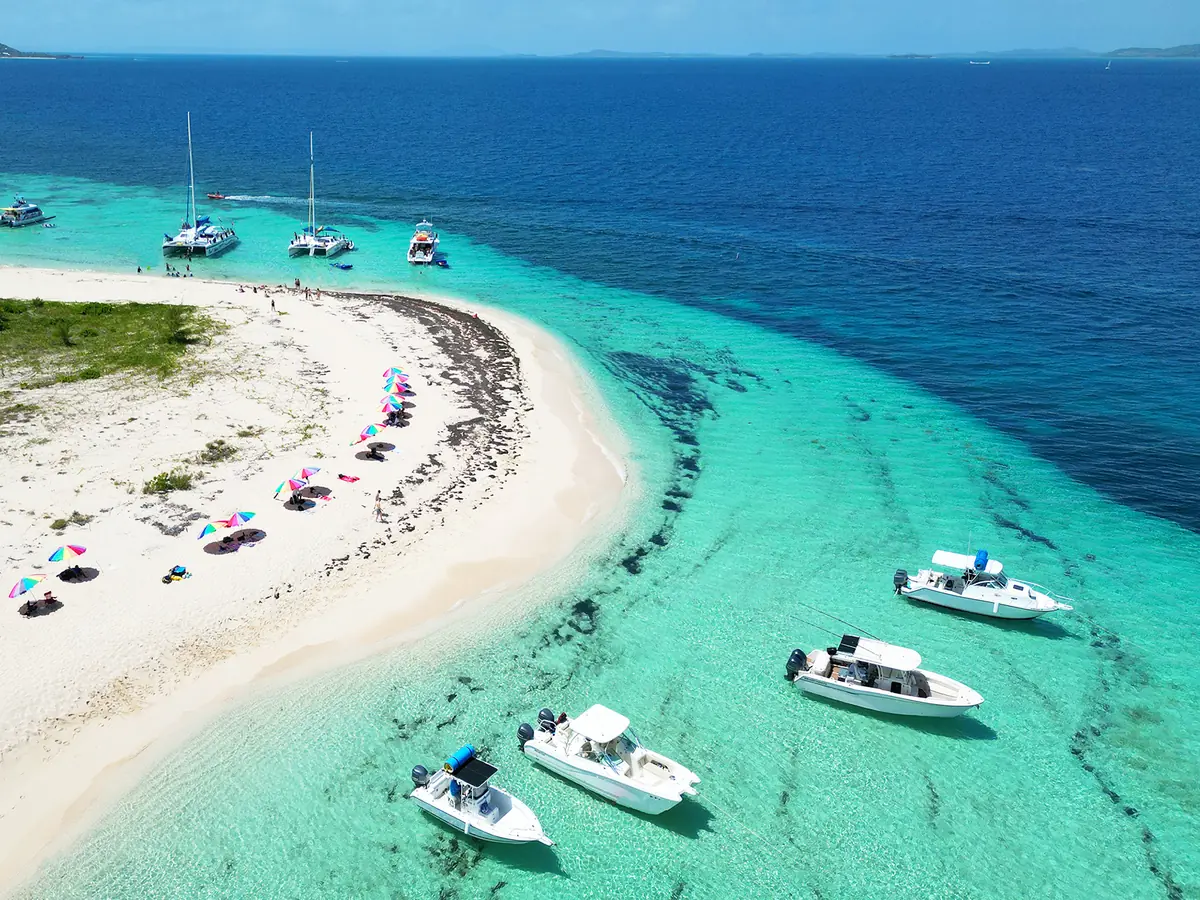
A Cayo Icacos catamaran day trip is the highest-value marine excursion on Puerto Rico’s east coast. For roughly $130, travelers bypass the logistical headaches of water taxis and gain direct access to offshore reefs, unlimited tropical drinks, and the unobstructed quiet of La Cordillera Nature Reserve — without the rough open-ocean crossing required to reach Culebra.
TL;DR: Book the catamaran, not the water taxi. Leave San Juan by 7:00 AM and pre-book the round-trip shuttle. Bring $3.00 cash for the DRNA fee, a rash guard, and reef-safe mineral sunscreen. Skip the cotton beach towel. Arrive already wearing your swimsuit. Weekend spots fill two weeks out — book early.
What’s your biggest concern about this trip — logistics from San Juan, choosing the right operator, or snorkeling conditions at the reserve? Drop it in the comments and I’ll answer directly.