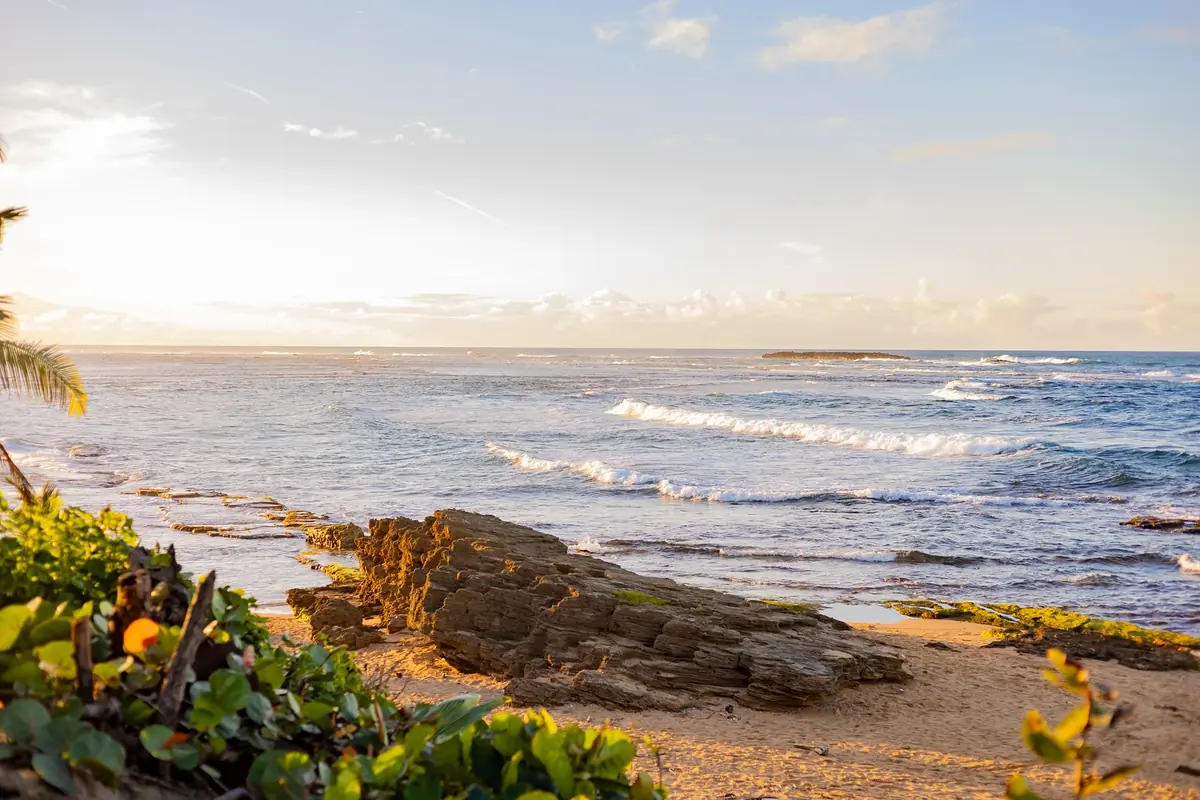
The smell hits you before the scenery does — charcoal smoke, frying plantain dough, and salt air rolling off the Atlantic. Piñones Puerto Rico is the part of the island the resort corridor pretends doesn’t exist, and that’s exactly why you should go. This guide covers how to get there, what to eat, which beaches are safe for kids, and the one mistake every first-timer makes with San Juan parking.
For a day trip to Piñones, rent a car or take a short rideshare from San Juan via Route 187. Arrive before noon on weekends to beat traffic. Bring cash to sample alcapurrias and bacalaítos from the local kiosks, and head to La Pocita beach for calm, family-friendly swimming.
Where is Piñones and how do you get there from San Juan?
Piñones sits in the municipality of Loíza, roughly 7 miles (11.5 km) east of San Juan International Airport (SJU). The drive takes 15 to 20 minutes via Route 187 under normal conditions. Rideshare apps like Uber are the most reliable way to get there without a rental car, typically costing $15 to $25 each way depending on demand.
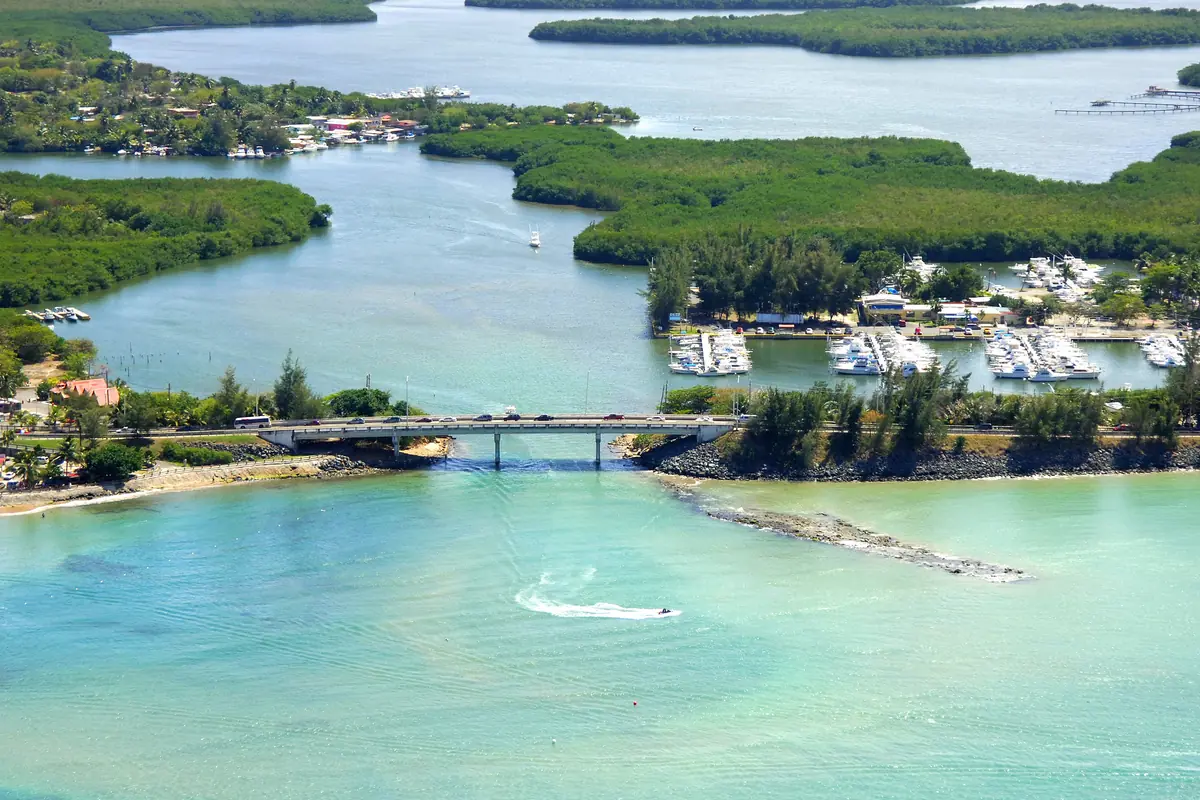
The route from Isla Verde or Condado follows Route 187 east until you cross the Boca de Cangrejos bridge. That bridge is your marker — the moment you cross it, the high-rise hotels and chain restaurants vanish. The road narrows to two lanes, coconut palms crowd the shoulder, and the first roadside kiosks appear within a quarter mile.
Pro Tip: Do not rely on the T5 or D45 municipal bus routes for a tight day-trip schedule. Service is infrequent and unpredictable. Budget for a rideshare or look into renting a car in Puerto Rico from the San Juan metro area.
If you’re driving, Route 187 is the only road in and out. There are no alternate routes, no shortcuts, and no highway bypass. This matters on weekend afternoons when traffic backs up for over a mile approaching the bridge from both directions.
- Distance from SJU Airport: 7 miles (11.5 km)
- Drive time: 15-20 minutes (normal conditions)
- Rideshare cost: $15-$25 each way
- Bus routes: T5 and D45 (unreliable schedules)
- Access road: Route 187 (PR-187), single two-lane road
Is Piñones Puerto Rico safe for tourists?
Yes, Piñones is safe for tourists during the day. The kiosk strip and boardwalk are filled with local families, cyclists, and beachgoers, especially on weekends. However, the area is geographically isolated and poorly lit at night, which raises the risk of petty crime after dark. Plan to leave before sunset.
The daytime atmosphere is relaxed and family-oriented. Kids splash in La Pocita, older couples dominate the shaded tables at the seafood restaurants, and groups of cyclists pedal the boardwalk trail in both directions. There is a visible local police presence on busy weekends near the main kiosk cluster.
Nighttime is a different reality. The two-lane road has no streetlights for long stretches, the beaches go completely dark, and the bars that stay open late attract a rougher crowd. Several travel forums and local advisories specifically warn tourists against bar-hopping here after midnight. For broader context on island-wide precautions, see our overview of whether Puerto Rico is safe for visitors.
Pro Tip: Park your car directly in front of an active restaurant or at the Corporación Piñones se Integra (COPI) facility. Do not pull off into secluded sand patches along Route 187 — opportunistic vehicle break-ins target isolated rental cars with visible bags or electronics.
- Daytime: Safe, family-friendly, well-trafficked
- Nighttime: Poorly lit, isolated, higher petty crime risk
- Parking: Use active restaurant lots or the COPI facility
- Valuables: Never leave bags or electronics visible in your car
The food kiosks of Piñones and the art of chinchorreo
The main draw of this coastal stretch is the dense cluster of open-air food kiosks that line both sides of Route 187. Locals call the experience chinchorreo — the tradition of hopping from stall to stall, sampling different fried snacks, sipping Medalla beer or coco frio, and letting the afternoon unfold with no fixed plan. Most kiosks operate on weekends only, and the action peaks between noon and 4 p.m.
Chinchorreo is not sitting at one restaurant. It’s walking the strip with a cold drink in hand, stopping wherever the food looks freshest, listening to whatever salsa or reggaeton is loudest, and moving on. On a packed Sunday afternoon, you’ll hear competing sound systems from parked cars overlapping with live Bomba drumming from one of the larger kiosks. The air is thick with charcoal smoke and the sharp, sweet smell of masa frying in kettles of oil.
Most smaller shacks are strictly cash-only. A few of the larger sit-down restaurants accept credit cards or ATH Móvil (Puerto Rico’s local payment app), but assume you’ll need bills. Come with small denominations — ones, fives, and tens.
Pro Tip: Handing a busy kiosk cook a $50 bill for a $3 pincho will grind the line to a halt and annoy everyone behind you. Break your larger bills at a sit-down restaurant first, then hit the shacks.
Must-try Afro-Puerto Rican street food
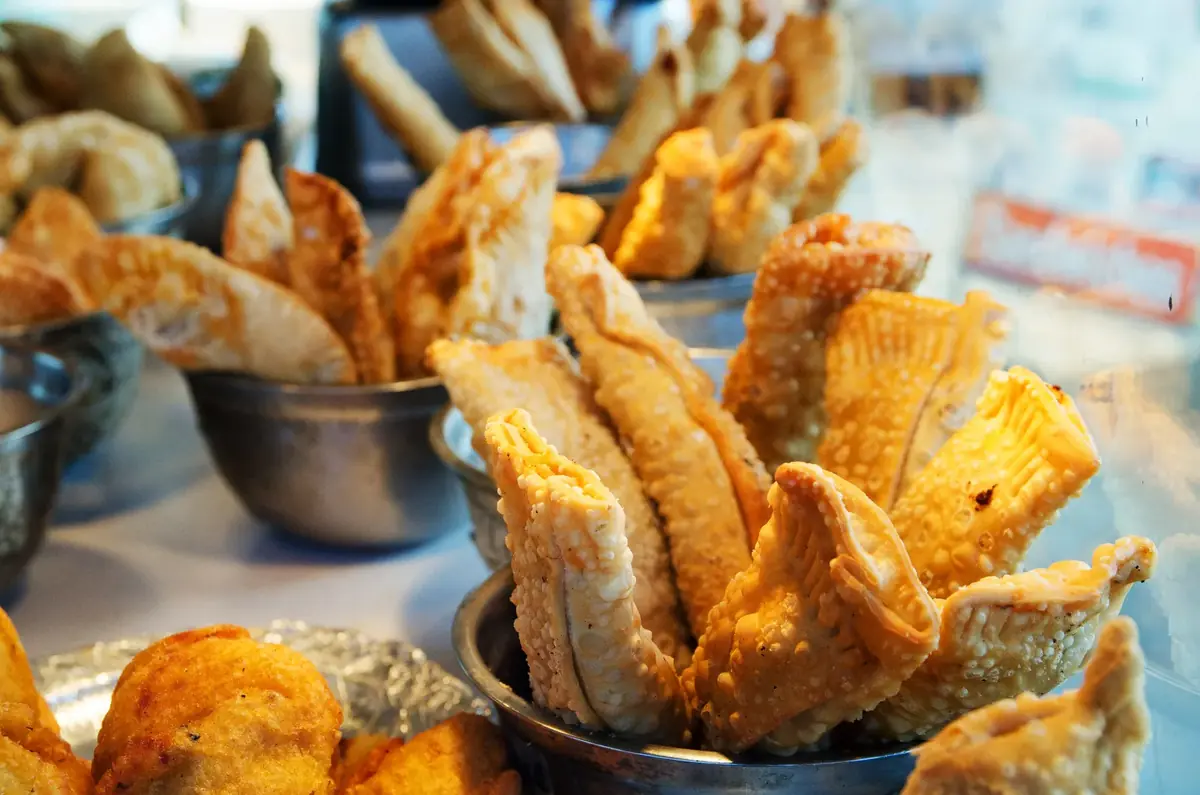
The local cuisine is rooted in Afro-Puerto Rican culinary traditions, and the menu revolves around frituras — fried snacks made from plantain, root vegetables, and seafood. These staples of traditional Puerto Rican food cost between $1 and $4 per item, making a full afternoon of eating remarkably cheap.
Here’s what to order and what you’re actually eating:
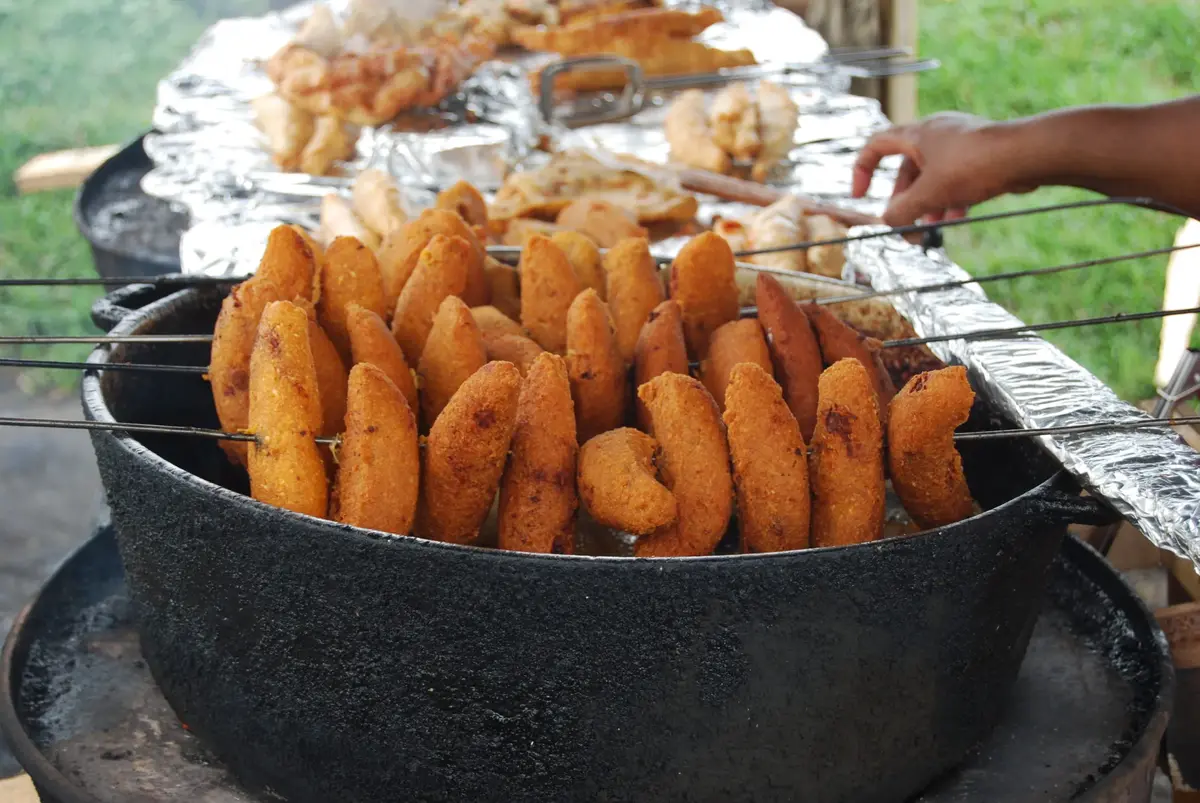
- Alcapurrias: A torpedo-shaped fritter made from grated green plantain and yautía (taro root), stuffed with seasoned ground beef or crab meat, then deep-fried until the shell cracks when you bite through it. The crab version is the local specialty. Expect to pay $2 to $3 each.
- Bacalaítos: Giant, paper-thin codfish pancakes with lacy, crispy edges. They’re dropped flat into oil and puff up slightly, creating a cracker-like texture. Around $1 to $2 each.
- Pinchos: Chicken or pork skewers glazed with a sweet BBQ sauce and served with a piece of toasted bread wedged onto the stick. $2 to $4 depending on size.
- Pastelillos: Crescent-shaped turnovers with a thin, flaky crust, stuffed with crab, beef, or cheese. $1 to $2 each.
- Piononos: Ripe plantain slices rolled into cylinders around seasoned ground beef, then fried. Sweeter and heavier than most frituras. $2 to $3 each.
- Coco frio: Cold coconut water served straight from a machete-chopped green coconut. $2 to $3 each.
Pro Tip: Seek out the stalls where an older local cook is actively dropping raw dough into boiling oil to order. That’s where the freshest food is. Avoid the larger stalls where pre-made items sit in heated glass display cabinets — the texture goes limp within minutes.
Top-rated restaurants and kiosks to visit
While chinchorreo is about wandering, a few named spots consistently deliver the best food on the strip. They range from bare-bones roadside shacks to mid-range sit-down seafood restaurants with plastic chairs and ocean views.
1. El Kiosko Boricua
This cash-only roadside stand on Route 187 is the most frequently recommended spot for alcapurrias, and for good reason — the portions are generous, the dough-to-filling ratio is right, and the turnaround is fast. The setup is bare bones: a counter, a fryer, and a line. No tables, no frills.
That said, the fly situation on humid afternoons can be aggressive, and the lack of shade means you’re standing in direct sun while waiting. If the line is more than ten people deep, walk 200 feet in either direction and try the smaller, unnamed shacks where locals are queued up — the food is often just as good or better.
- Location: Route 187, Piñones (roadside)
- Cost: $1-$4 per item
- Best for: Budget travelers wanting the classic alcapurria experience
- Time needed: 15-20 minutes
2. El Nuevo Acuario
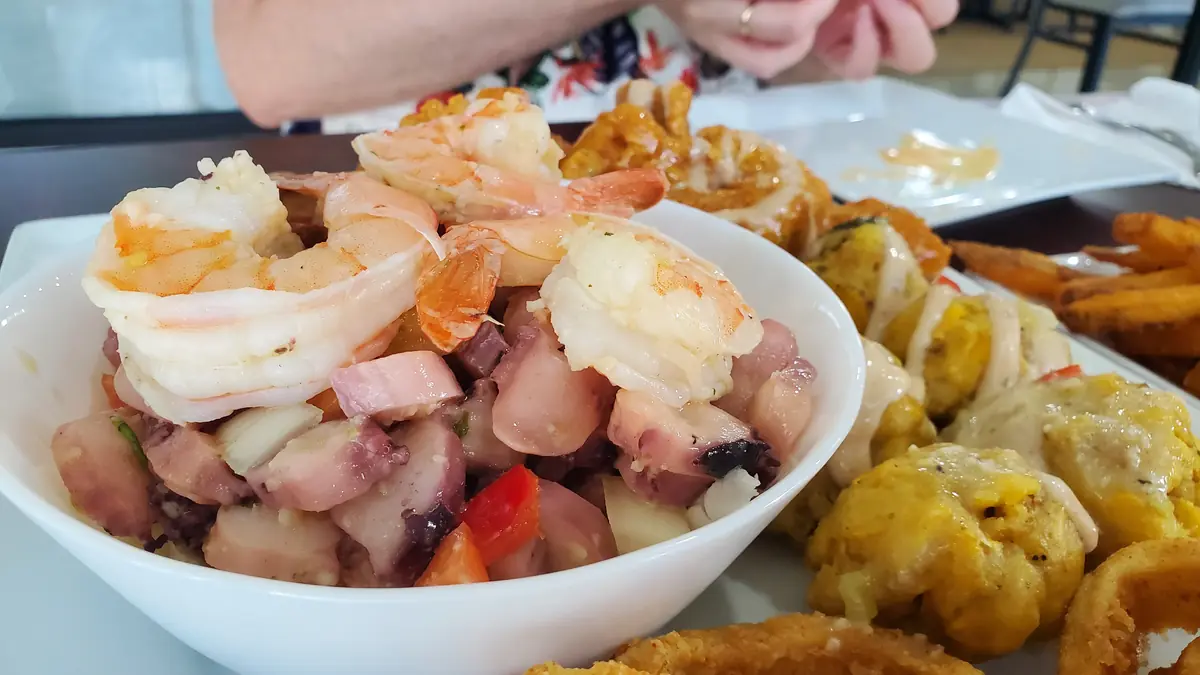
For a proper sit-down seafood meal, El Nuevo Acuario delivers fresh fish at reasonable prices with an unbeatable setting right at the water’s edge in Punta Cangrejos. The whole fried snapper is a standout — head on, crispy skin, served with tostones and a side of rice. The contrast between the plastic-chair, paper-plate ambiance and the quality of the seafood catches first-timers off guard.
- Location: Punta Cangrejos, Piñones
- Cost: $12-$25 per plate
- Best for: Couples or small groups wanting a sit-down seafood lunch
- Time needed: 45-75 minutes
3. El Parrilla
Known for its asopao, a thick Puerto Rican seafood stew loaded with shrimp, lobster, and root vegetables, El Parrilla draws a loyal local crowd on weekends. The vibe is louder and more festive than El Nuevo Acuario, with music playing and families sprawled across the open-air seating.
One critical detail: El Parrilla is closed Monday through Thursday. Do not plan around it on a weekday visit.
- Location: Route 187, Piñones
- Cost: $10-$22 per plate
- Best for: Groups wanting a hearty meal with a lively atmosphere
- Time needed: 45-90 minutes
Which beaches in Piñones are safe for families and swimmers?
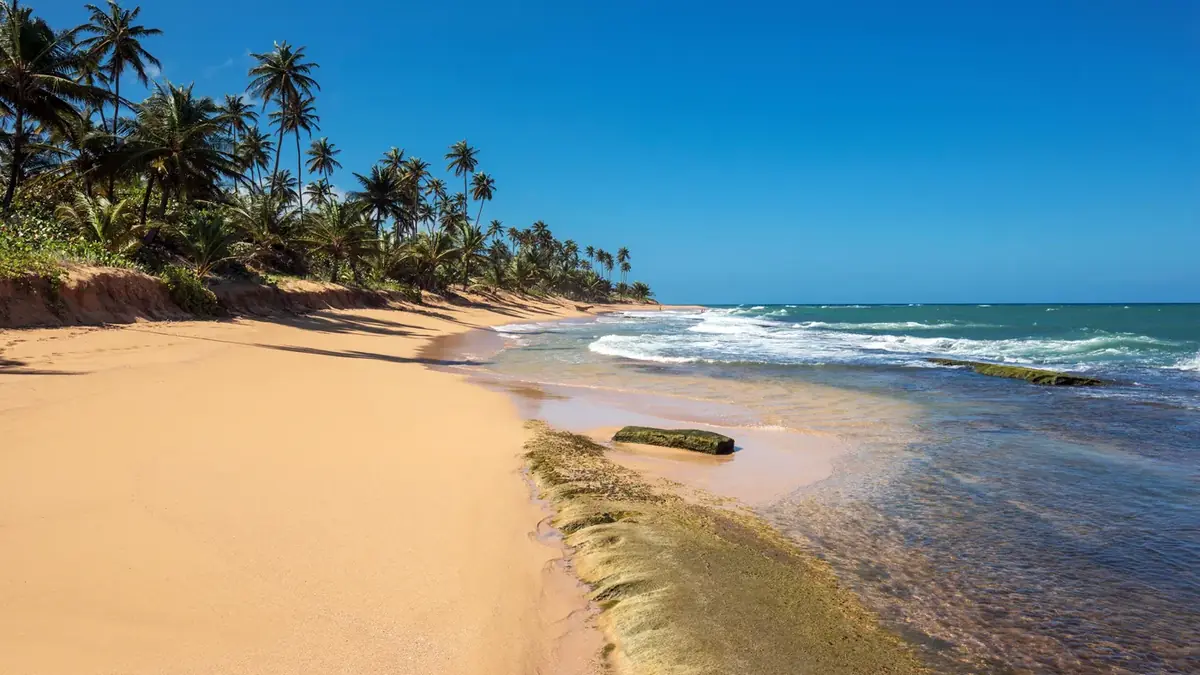
The Piñones coastline offers three distinct beach environments within a 2-mile (3.2 km) stretch. La Pocita is the only beach safe for small children due to its natural rock barrier, while Vacía Talega and Aviones Beach face open Atlantic swells with no protection. For a wider look at swim-friendly options across the island, our guide to Puerto Rico’s beaches breaks them down by region and conditions.
La Pocita (Terraplén La Posita de Piñones)
This is the family beach. A massive natural rock wall creates a barrier reef that blocks the full force of the Atlantic, leaving a wide, calm wading pool on the inside. The water rarely exceeds waist height on an adult, and the bottom is mostly sand with some rock. On a typical Sunday, a dozen families traveling with kids are camped out in the shallows.
The visual contrast is dramatic — you can watch heavy waves crash violently against the outer reef wall while standing in water as still as a bathtub three feet away.
- Location: Off Route 187, marked by a small parking area
- Cost: Free (no facilities or lifeguards)
- Best for: Families with toddlers, non-swimmers, wading
- Time needed: 1-3 hours
Vacía Talega Beach
A crescent-shaped stretch of sand with scenic sunset views and a more secluded feel than La Pocita. The surf here is unprotected and can be rough, with strong currents pulling laterally. Not recommended for casual swimming, but excellent for photography, long walks, and watching local surfers in the late afternoon.
- Location: West of the main kiosk strip, off Route 187
- Cost: Free (no facilities or lifeguards)
- Best for: Couples, photographers, sunset viewing
- Time needed: 1-2 hours
Aviones Beach
Named for the low-flying planes departing SJU airport overhead, Aviones is popular with local surfers and bodyboarders. Tide pools form along the rocky shoreline at low tide, making it interesting for exploration, but the open Atlantic swells make swimming dangerous for anyone not experienced in rough surf.
- Location: Eastern end of the Piñones strip, near the airport flight path
- Cost: Free (no facilities or lifeguards)
- Best for: Surfers, tide pool exploration, plane-spotting
- Time needed: 1-2 hours
Is the Paseo Piñones boardwalk worth biking?
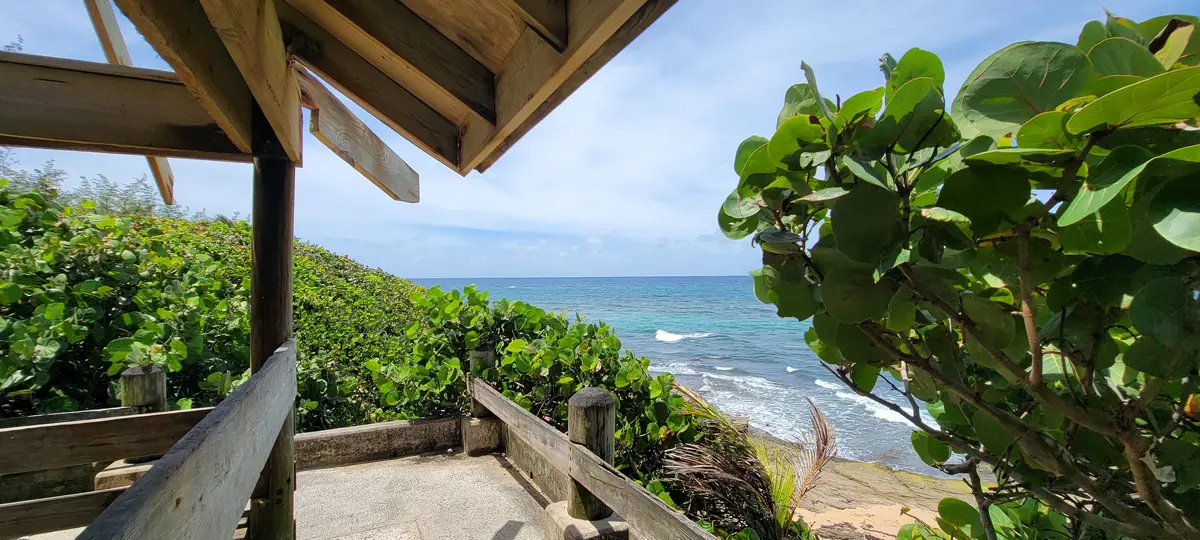
Yes — the Paseo Piñones is a 7-mile (11 km) shared-use trail that winds through Puerto Rico’s largest mangrove forest and along the Atlantic shoreline. The path is paved and shaded by coconut palms for most of its length, and bike rentals at the COPI facility cost $10 per hour with a helmet included. Sections of the wooden boardwalk have sustained hurricane damage, so stick to the paved stretches.
The trail has two distinct moods. The ocean-facing stretches are open, breezy, and cool, with Atlantic spray misting the path on windy days. The moment the trail cuts inland through the dense mangrove forest, the breeze dies, the air turns heavy and humid, and the mosquitoes arrive in force. This transition happens fast — within about 200 feet (60 meters) of leaving the coastline section.
Bicycles and kayaks rent at the Corporación Piñones se Integra (COPI) facility near the trailhead at the eastern end of the Boca de Cangrejos bridge. COPI is open 9 a.m. to 5 p.m. daily, but the last bike rental goes out at 4 p.m. The bikes are basic single-speed cruisers — functional but not high-performance, and condition varies. If you want a higher-quality ride, mobile rental companies based in Condado will deliver a better bike directly to your hotel.
Pro Tip: Bring heavy-duty insect repellent with DEET. The ocean-side portions of the trail are fine, but the mangrove sections are swarming — a few minutes without repellent will leave you covered in bites from ankle to knee.
- Trail length: 7 miles (11 km)
- Surface: Paved path with wooden boardwalk sections (some damaged)
- Wheelchair access: Boardwalk sections over mangrove areas (where intact)
- Bike rental: $10/hour at the COPI facility (helmet included)
- Kayak rental: $10/hour at the COPI facility
- COPI hours: 9 a.m. to 5 p.m. daily; last rental at 4 p.m.
- Best time: Morning, before midday heat peaks
What is the Afro-Puerto Rican history of Loíza?
Piñones sits within the municipality of Loíza, widely recognized as Puerto Rico’s Capital of Traditions. The area holds the densest concentration of Afro-Caribbean heritage on the island and is one of the most important sites in Puerto Rican culture, with roots tracing back centuries to descendants of the Yoruba tribe brought from West Africa during the colonial slave trade. This history is not a museum exhibit — it’s alive in the food, the music, and the masks.
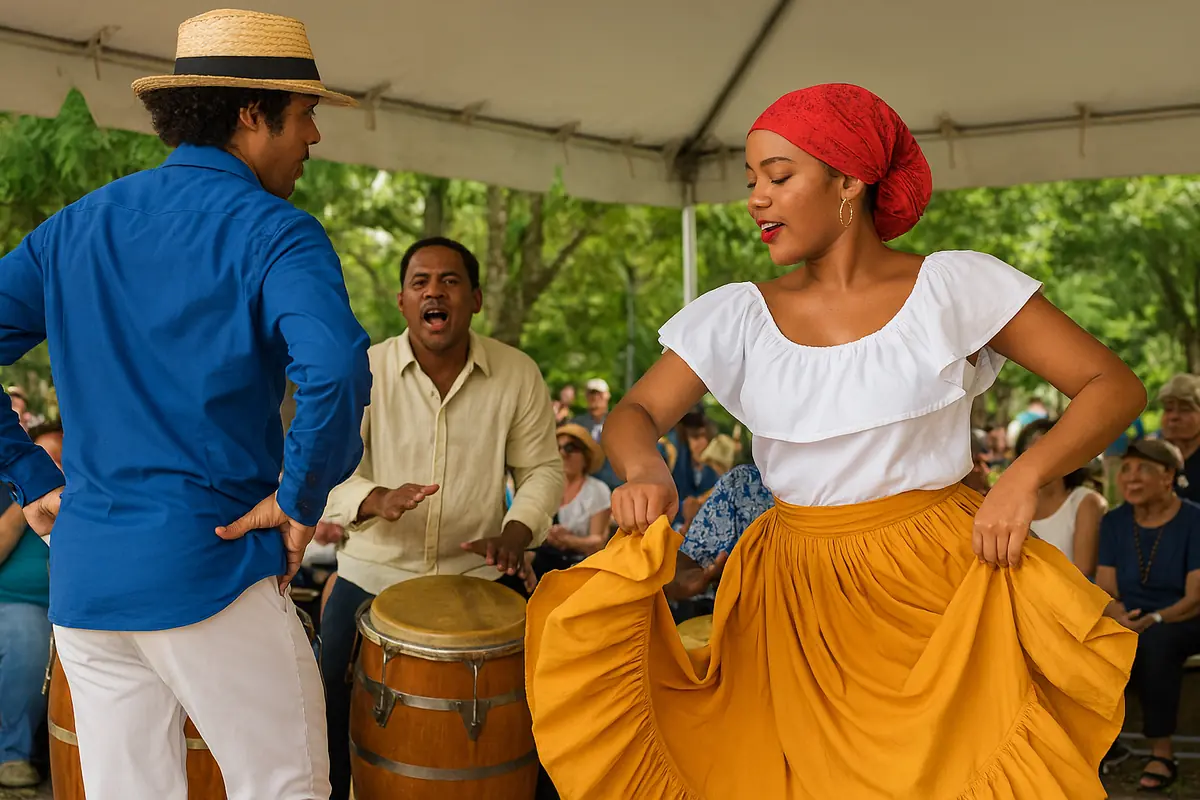
The Taíno people inhabited this coast long before European contact. The area takes part of its historical identity from Cacique Luissa, a Taíno chieftain. But the dominant cultural layer today is Afro-Puerto Rican, visible in the rhythmic Bomba music and dance traditions that anchor weekend gatherings at kiosks and community events.
Bomba is not a performance you watch passively. The lead drummer and a solo dancer engage in a direct call-and-response — the dancer’s improvised footwork dictates the rhythm of the drum in real time, creating a feedback loop where neither leads and neither follows for long. When the exchange clicks, the surrounding crowd reacts viscerally, and the energy builds exponentially.
The Vejigante masks, traditionally carved from coconut shells and painted in vivid colors, are another signature of Loíza’s cultural identity. They appear prominently during the annual Fiestas de Santiago Apóstol, but smaller versions are sold year-round at shops and stalls in the area as both art pieces and souvenirs.
Piñones vs Luquillo kiosks: which one should you visit?
Travelers frequently debate between Puerto Rico’s two famous kiosk strips. Piñones is closer to San Juan and more culturally immersive, focused on traditional Afro-Puerto Rican street food. The Luquillo Kiosks sit further east but offer a more structured, commercialized experience with over 60 numbered stalls and diverse sit-down options. The right choice depends on what you prioritize.
| Factor | Piñones | Luquillo |
|---|---|---|
| Drive from San Juan | 15 minutes | 45 minutes |
| Food focus | Authentic frituras, street food | Diverse sit-down meals, international options |
| Atmosphere | Rustic, local, open-air | Paved, structured, tourist-friendly |
| Number of stalls | ~20-30 scattered along Route 187 | 60+ numbered, contiguous stalls |
| Parking | Limited, informal lots | Large paved parking area |
| Cash requirement | Mandatory at most shacks | Most stalls accept cards |
| Beach access | La Pocita, Vacía Talega nearby | Luquillo Beach (Balneario) adjacent |
| Best paired with | San Juan day trip | El Yunque rainforest day trip |
On my last visit, I ate at both on consecutive days. Piñones wins on authenticity and price — a full afternoon of eating and drinking costs under $20 per person if you stick to the shacks. Luquillo wins on comfort and variety — paved walkways, labeled menus in English, and a wider range of cuisines beyond Puerto Rican. If you only have one day and you’re staying in the San Juan metro area, Piñones is the obvious call because of proximity alone.
Pro Tip: Luquillo is excellent for a comfortable sit-down meal after a morning hiking El Yunque rainforest, which is nearby. Piñones is the better option for grabbing a $2 alcapurria and eating it on the sand with your feet in the water.
What is the best time of day to visit Piñones?
Arrive before 11:30 a.m. on a Saturday or Sunday. This guarantees available parking, lets you bike the boardwalk in cooler morning air, and gives you first pick of freshly prepared food as kiosks fire up their grills. By mid-afternoon, the single-lane Route 187 backs up with heavy traffic, and finding a parking spot near the main kiosk cluster becomes a genuine struggle.
The transition from beach day to social scene happens around 3 p.m. Music gets louder, Medalla beer starts flowing faster, and the crowd shifts from families to groups of friends. This is the liveliest period, but also the most congested for both parking and road traffic.
Here’s a timeline that avoids the worst friction:
- 9:00-10:00 a.m.: Arrive, park easily, rent bikes at the COPI facility
- 10:00-11:30 a.m.: Ride the Paseo Piñones boardwalk before the heat peaks
- 11:30 a.m.-1:00 p.m.: Hit the kiosks for fresh alcapurrias and bacalaítos as they open
- 1:00-3:00 p.m.: Swim at La Pocita or walk Vacía Talega
- 3:00-5:30 p.m.: Final round of food, cold drinks, enjoy the afternoon energy
- 5:30-6:00 p.m.: Leave before sunset to avoid the poorly lit road after dark
One crucial warning: many kiosks and restaurants close entirely on Mondays, Tuesdays, and sometimes Wednesdays. A midweek visit means you’ll find a ghost strip with shuttered shacks and empty parking lots. Always go on a weekend.
What should you pack for a Piñones day trip?
A day trip here requires a handful of specific items you won’t think to bring unless someone tells you. The combination of limited shade, dense mangrove ecosystems, and cash-only commerce creates needs you won’t encounter at a typical resort beach. For a broader rundown beyond this stop, see our full Puerto Rico packing list.
- Small-denomination cash: Ones, fives, and tens. Many kiosks cannot break a $20 for a $2 order. If possible, set up ATH Móvil (Puerto Rico’s local payment app) as a backup.
- Heavy-duty insect repellent: DEET-based spray is essential for the mangrove boardwalk sections. Standard resort-grade repellent won’t cut it in the swamp portions of the trail.
- Reef-safe sunscreen: Shade is scarce on the beaches and the open boardwalk stretches. Average daytime temperatures hover near 85°F (29°C), and the sun exposure is relentless between 10 a.m. and 3 p.m.
- Wide-brimmed hat and sunglasses: The kiosk lines have no overhead cover.
- Lightweight, casual clothing: This is not a dress-up destination. Swimsuit, cover-up, and sandals are the local uniform.
- Reusable water bottle: Hydration options at the shacks are limited to coco frio and bottled drinks. Bring your own water for the boardwalk trail.
- Towel and a dry bag: If you’re moving between the beach and the kiosks, you’ll want somewhere to stash your phone and cash away from sand and salt spray.
Pro Tip: Leave your nicest clothes and jewelry at the hotel. This is a place where you eat with your hands, sit on the sand, and get splashed by passing waves. Dress for the experience, not the photo.
The bottom line on Piñones
TL;DR: Piñones delivers the most authentic Afro-Puerto Rican food and culture experience on the island, and it’s only 15 minutes from San Juan. Go on a weekend morning with cash in small bills, eat everything fried, bike the 7-mile boardwalk, swim at La Pocita, and leave before dark. The traffic hassle on Route 187 is a small price for the best $2 alcapurria you’ll ever eat. For trip-planning context beyond this single stop, our full Puerto Rico travel guide covers itineraries, regions, and logistics.
The one thing most guides skip: this is not a polished tourist attraction. The shacks are rough, the parking is chaotic, the road is narrow, and the flies are real. That’s exactly what makes it worth the trip. You’re eating the same food, at the same counters, alongside the same families who’ve been doing this for generations. No velvet ropes, no reservation apps, no dress code — just fritters and the Atlantic.
What’s the first thing you’d eat at the Piñones kiosks — alcapurrias or bacalaítos?