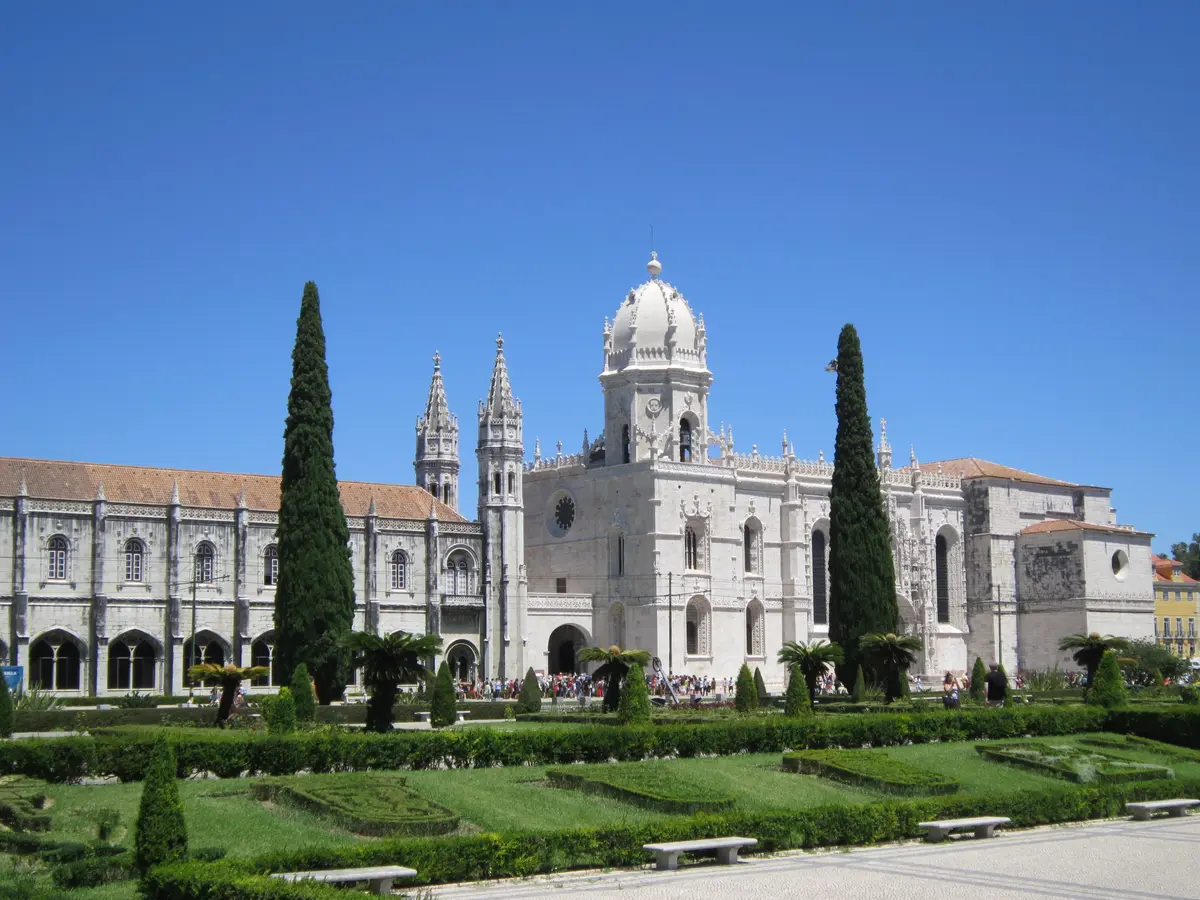
Portugal’s four UNESCO monasteries are not museums you move through — they are arguments in stone about a country that once controlled half the world’s trade routes. This guide covers Jerónimos in Lisbon and the central triangle of Batalha, Alcobaça, and Tomar: what each one actually feels like from the inside, what most travelers miss, and how to visit without losing half a day in a ticket line.
How should you plan a Portugal monastery visit?
Split your time into two routes. Jerónimos pairs naturally with a full day in Lisbon‘s Belém district. The central triangle — Batalha, Alcobaça, and Tomar — are within 45 minutes of each other by car and deserve two days, not one. Individual tickets cost €6 per site; the Heritage Trail combo covers all three for €15 (valid seven days — confirm availability at the first site you visit).
For the central triangle, the most logical driving order is Alcobaça first (closest from Lisbon), then a 30-minute drive northeast to Batalha, then 40 minutes east to Tomar. Alcobaça and Batalha together take three to four hours. The Convent of Christ alone needs half a day — all good reasons for renting a car in Portugal rather than depending on infrequent bus connections between the sites. If you arrive at Batalha after 1 PM, save Tomar for the following morning.
For Jerónimos, buying tickets online through the official Património Cultural portal is non-negotiable in high season. The on-site queue regularly stretches 90 minutes or more by mid-morning. Book at least two to three days ahead from May through September. Morning slots before 10 AM and weekday visits (Wednesday and Thursday specifically) see the shortest wait times.
Pro Tip: The Lisboa Card covers Jerónimos admission plus more than 50 other Lisbon attractions, with unlimited public transport included. If you are spending two or more days in Lisbon visiting paid sites, it almost always saves money.
1. Jerónimos Monastery — Manueline masterpiece of the Age of Discovery
The first thing you notice inside the Church of Santa Maria de Belém is scale: six octagonal columns, impossibly slender relative to their height, branch outward into vaulted ceilings 25 meters (82 feet) above your head. The limestone is honey-colored in morning light and shifts toward amber by early afternoon. The air carries the faint cold mineral smell that old stone churches hold when they have been absorbing centuries of incense.
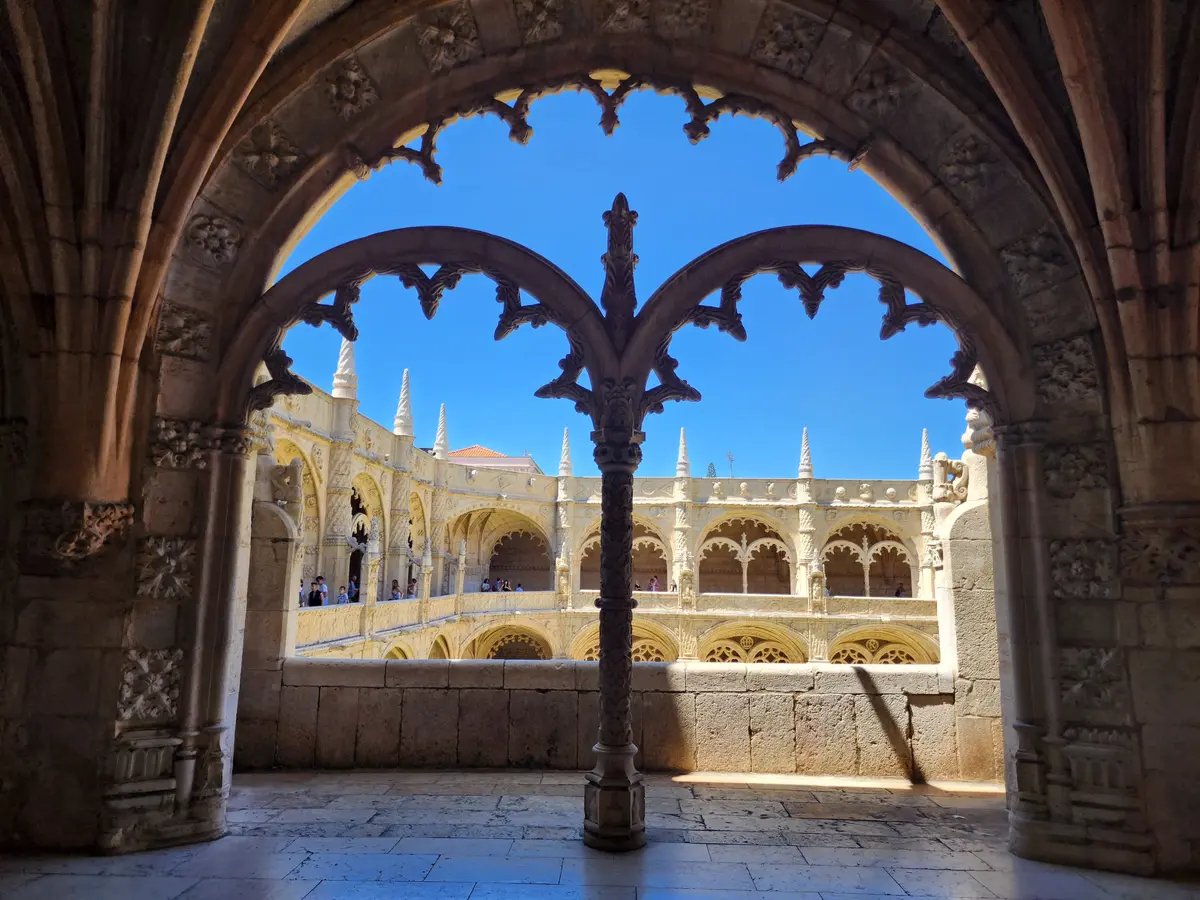
Jerónimos was funded by a 5% levy on the spice trade — a direct product of Portugal’s Age of Discovery — and built on the spot where Vasco da Gama reportedly spent his final night before sailing to India. The South Portal — nearly 105 feet (32 meters) tall and displaying close to 40 carved figures, including Henry the Navigator — is the most photographed facade in Lisbon. The two-story cloister wraps maritime motifs around every arch: twisted ropes, anchors, coral formations, and the Cross of the Order of Christ that decorated the sails of Portuguese ships.
The tombs of Vasco da Gama and poet Luís de Camões are in the church. Fernando Pessoa rests in the cloister’s lower level — a detail most visitors miss entirely because they spend the lower cloister looking straight up.
Honest friction: crowds between 10 AM and 3 PM are dense enough to make the atmosphere feel more like a transit hub than a monastery. I arrived at 9:45 AM on a Thursday in late May and counted well over 100 people already queuing outside. Pre-booked tickets took me through a separate entrance in under four minutes.
Pro Tip: The church itself is free and has no ticket line — if you only have 30 minutes, walk straight in and look up. The paid ticket covers the cloister, refectory, and exhibition areas; that is where the architectural detail really concentrates.
- Location: Praça do Império, 1400-206 Belém, Lisbon
- Cost: €18 adults (cloister, refectory, museum); church entry free; free for all on Sundays until 2 PM
- Hours: 9:30 AM–6:30 PM (May–Sept); 10 AM–5:30 PM (Oct–Apr); closed Mondays, January 1, Easter Sunday, May 1, June 13, December 25
- Best for: First-time Portugal visitors, architecture enthusiasts, anyone interested in the Age of Discovery
- Time needed: 1.5–2 hours for church and cloister
- Getting there: Tram 15E from Cais do Sodré (about 30 minutes); train from Cais do Sodré to Belém station (7 minutes) then a 10-minute walk along the waterfront
2. Batalha Monastery — Gothic born from a battle vow
Batalha reads darker than Jerónimos. The stone is a cooler grey, the spires are sharper, and the gargoyles above the Royal Cloister look genuinely menacing from ground level. The whole complex, set in the heart of central Portugal, feels like it is still processing the shock of the 1385 battle that created it — when King João I’s army beat back a Castilian force three times its size and locked in Portuguese independence for generations.
The Founder’s Chapel is the emotional center: the joint tomb of João I and his English wife, Philippa of Lancaster, lies beneath an eight-sided star vault that took more than 40 years to complete. Their sons are buried around the perimeter, including Prince Henry the Navigator.
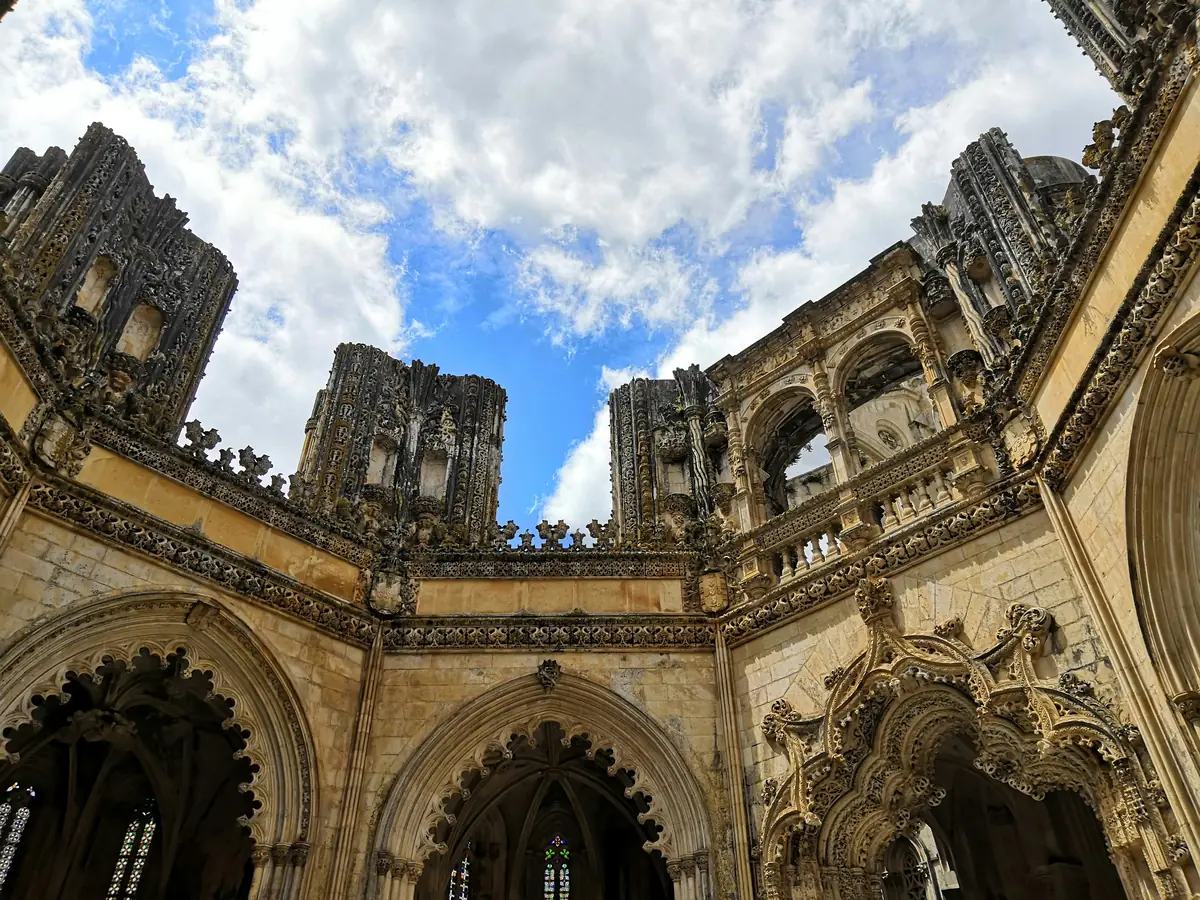
The Unfinished Chapels behind the main church — open to sky, their soaring portal dense with late Manueline carving — are more affecting than any finished room in the complex. There is something more honest about a monument that shows its own incompletion.
The Chapter House impresses for a different reason entirely: its 62-foot (19-meter) vaulted ceiling spans the space without a single interior support column. The engineers who built it were apparently so uncertain it would hold that only convicted criminals were employed in its construction. It now holds the Tomb of the Unknown Soldier and an eternal flame, with two guards standing in complete silence. It is one of the quietest rooms I have sat in anywhere in Europe.
- Location: Largo do Mosteiro, 2440-484 Batalha
- Cost: €6 adults; free on Sundays until 2 PM
- Best for: History-focused travelers; visitors with mobility concerns (most accessible site of the four, with wheelchair loans available)
- Time needed: 1.5–2 hours for the full complex
- Best photo spot: Largo do Mosteiro for the exterior; inside the Unfinished Chapels for scale
3. Alcobaça Monastery — a love story carved in Cistercian stone
The nave at Alcobaça stretches 106 meters (348 feet) from door to altar — the longest church interior in Portugal — but what hits you is the silence of it. The Cistercians wanted zero distraction from God: no painted ceilings, no gold ornamentation, stone that looks like it belongs to the ground it came from. After Batalha’s Gothic drama, the austerity takes a moment to settle into.
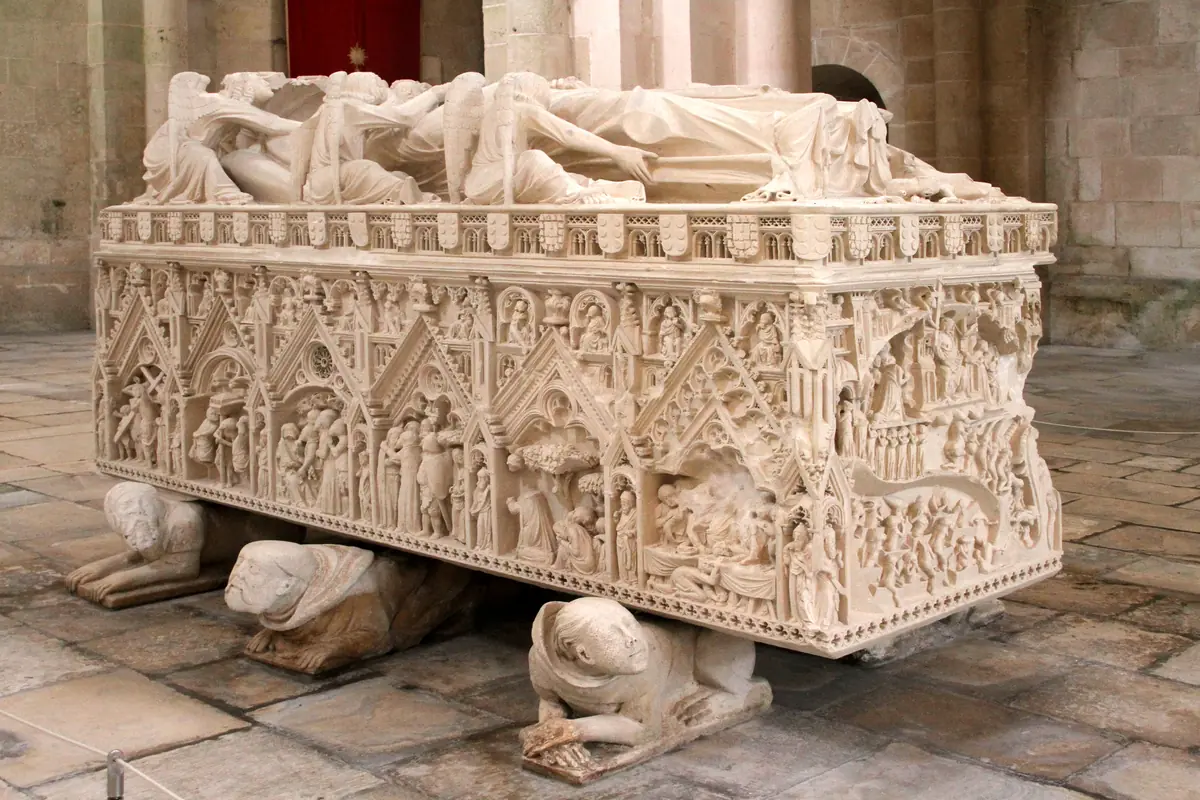
The tombs of Pedro I and Inês de Castro stand foot-to-foot at the ends of the transepts, positioned so that on Judgment Day, the first thing each would see is the other’s face. The carving on both sarcophagi is extraordinary — scenes from the life of Christ on Pedro’s; apostles, angels, and the wheel of fortune on Inês’s. Pedro had her posthumously crowned queen after he took the throne. The story of the forced kiss of her exhumed hand by the full royal court is the darkest footnote in a story already full of them.
The 18th-century kitchen is the quirky counterpoint: a stone channel diverts water from the River Alcoa directly through the room, which provided fresh fish and running water to the monks. The central chimney rises large enough to stand inside.
The cafés immediately in front of the monastery charge tourist prices for average food. The streets two blocks back have smaller local places with half the markup and actual Portuguese cooking.
Pro Tip: Entry to the church, the nave, and both royal tombs is free. The paid €6 ticket covers the Cloister of Silence and the adjoining rooms. Do not skip it — the cloister is where Alcobaça’s architecture actually shows what it can do.
- Location: Praça de Dom Afonso Henriques, 2460-018 Alcobaça
- Cost: €6 adults (Cloister of Silence + adjoining rooms); church and tombs free; free on Sundays until 2 PM
- Hours: 9 AM–7 PM (Apr–Sept, last entry 6:30 PM); 9 AM–6 PM (Oct–Mar, last entry 5:30 PM); closed January 1, Easter Sunday, May 1, August 20, December 25
- Best for: Travelers who prefer atmosphere over spectacle; anyone drawn to medieval Portuguese history or Gothic architecture
- Time needed: 1–1.5 hours
- Accessibility: Ground-floor ramp access; contact the site directly for specific mobility needs
4. Convent of Christ, Tomar — the Knights Templar’s fortress-city
Tomar does not feel like a monastery. It feels like someone built a castle, then a church, then six more cloisters over six centuries, connected them with corridors that dead-end into spiral staircases that open onto terraces that drop back into more corridors — and then called it finished. It is the least organized, most physically demanding, and most historically dense Portugal monastery of the four.
At Tomar‘s heart lies the Charola — the original 12th-century Templar oratory — a 16-sided rotunda built to echo the Church of the Holy Sepulchre in Jerusalem. The walls carry 16th-century paintings added during a later renovation by the Order of Christ, the organization that took over the Templar assets and financed Portugal’s Age of Discovery under Henry the Navigator. The legend that Templar knights heard mass here on horseback is almost certainly myth, but the interior’s scale makes it plausible.
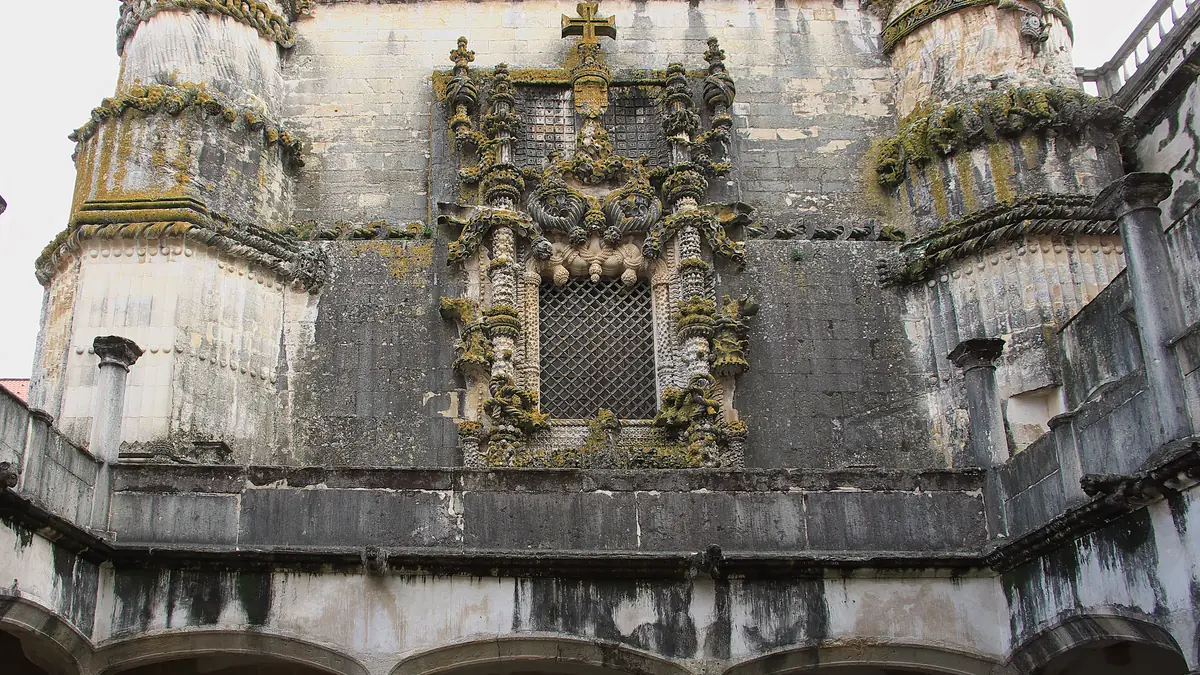
The Manueline Window on the exterior of the Chapter House is the image everyone leaves with: twisted ropes, armillary spheres, coral formations, and the Cross of the Order of Christ carved into a frame so dense that every new look finds something the last one missed. The best angle is from the middle level of the Main Cloister of João III, directly opposite.
Practical note: the walk from the street-level car park to the entrance is steep and takes about 12 minutes. Wear shoes with grip. The upper cloisters and most staircases are not accessible to visitors with limited mobility — ground-floor access only, via the north facade entrance.
Pro Tip: Most guided day tours spend 90 minutes at Tomar. The complex genuinely needs three hours minimum to see without feeling rushed. If you are combining all three central sites, put Tomar on its own day.
- Location: Convento de Cristo, 2300-000 Tomar
- Cost: €6 adults; free on Sundays until 2 PM
- Hours: 9 AM–6:30 PM (June–Sept, last entry 6 PM); 9 AM–5:30 PM (Oct–May, last entry 5 PM); closed January 1, Easter Sunday, May 1, December 25
- Best for: History enthusiasts, travelers comfortable with staircases and long walks, anyone interested in the Knights Templar or the Age of Discovery
- Time needed: 2.5–4 hours minimum
- Accessibility: Ground floor only via north facade; upper cloisters and staircases are not accessible
What nobody tells you before booking
The contrarian take worth stating plainly: Batalha is the most underrated Portugal monastery of the four. It carries no internationally recognized narrative like Vasco da Gama’s tomb or the Templar legends, but the Unfinished Chapels and the unsupported Chapter House vault are technically more remarkable than anything in Jerónimos — and you can move through them at your own pace without a crowd pressing against your back.
For first-time visitors plotting a Portugal road trip, the central triangle gives the most complete historical picture: Portugal’s founding (Alcobaça), its independence (Batalha), and the religious-military engine that built its empire (Tomar). Jerónimos is the spectacular single monument that works when Lisbon is already on the itinerary.
TL;DR: Book Jerónimos online and arrive before 10 AM. Use the €15 Heritage Trail combo for the central three, and verify availability at your first site. Spread Batalha and Alcobaça across day one, leave Tomar its own morning. Batalha deserves more of your time than most Portugal travel guides allow for.
Have you done the central triangle in two days, or managed to fit Tomar justice into a single afternoon? What worked?