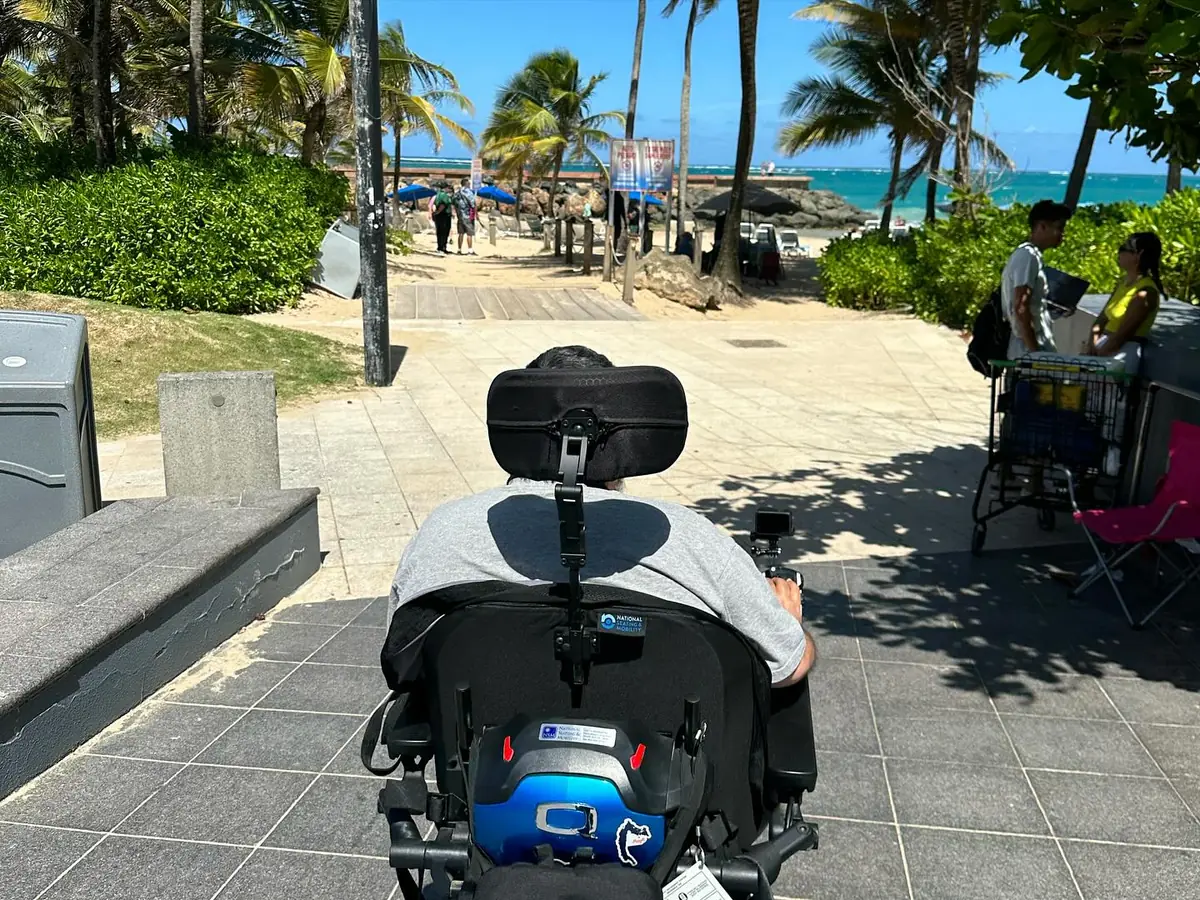
Getting around Puerto Rico trips up more travelers than the actual planning. Rent a car too early, skip the ferry booking, or trust your phone in the wrong town, and you lose hours and cash. This guide covers exact costs, the apps that work, and the mid-trip rental strategy that saves most visitors hundreds on their Puerto Rico travel budget.
How do you get from SJU Airport to your hotel?
The fastest SJU airport transfer is a rideshare, not a taxi. Uber runs $8 to $15 to the Condado and Isla Verde resort strips and $15 to $25 to Old San Juan. Traditional taxis use fixed zone pricing and start at $20 to $25 for those exact same routes.
When you exit baggage claim, walk to the right toward the designated rideshare pickup zone. Look for the concrete pillars numbered 15 through 30 on the ground floor to find your exact meeting point.
Before you walk outside, type your specific terminal (A or B) into the Uber app for a precise driver match. This single step eliminates the vast majority of airport pickup confusion.
- Uber to Condado/Isla Verde: $8–$15
- Uber to Old San Juan: $15–$25
- Taxi to Condado/Isla Verde: $20–$25
- Taxi to Old San Juan: $20–$25
Pro Tip: Uber wins on price when there is no surge. Taxis win during major events when dynamic pricing spikes, so check the app before you commit. Lyft availability in Puerto Rico is limited and inconsistent — download Uber before you land.

What is the best rental car strategy in Puerto Rico?
The best rental car strategy is the mid-trip rental, where you only pick up a vehicle when you leave the San Juan metro area. Renting a car for your entire trip is the single most expensive mistake visitors make when getting around Puerto Rico.
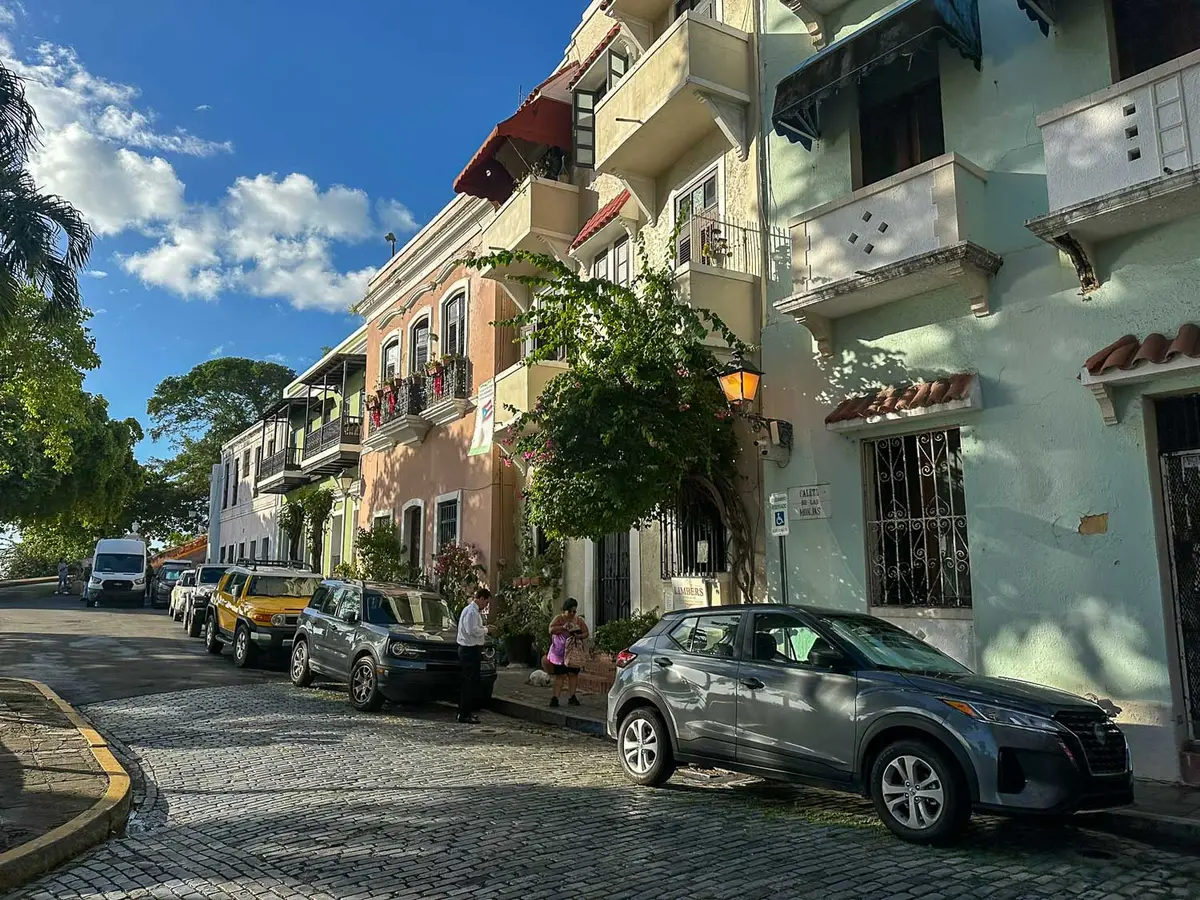
If you are spending your first few days in Old San Juan or Condado, you do not need a vehicle. Both neighborhoods are entirely walkable, and Uber in Puerto Rico covers the gaps for a fraction of a daily rental fee.
Use Uber for your first few days in the capital, then pick up a rental car on the morning you head to El Yunque, the western coast, or Ponce. This approach saves you daily rental fees and eliminates the nightmare of parking a full-size vehicle on colonial streets built for horses.
Rules to know before you sign
- The 4WD myth: 4WD is unnecessary on the main island’s paved roads and is only worth considering for the satellite islands.
- The ferry ban: Rental cars cannot be transported on the municipal ferries under any circumstances. This is buried in every contract and enforced strictly.
- The location hack: Pick up your car off-airport property in neighboring Carolina to avoid steep terminal surcharges and save real money.
Pro Tip: Book a compact or subcompact vehicle. The mountain roads on the Ruta Panorámica are narrow enough that a smaller car is genuinely safer — and cheaper on gas through the highlands.
How do toll roads work in Puerto Rico?
Toll roads in Puerto Rico are almost entirely cashless and require an electronic AutoExpreso transponder to use. There are no physical toll booths where you hand over a dollar bill on the major highways.
The following routes are strictly electronic: Route 52, Route 22, Route 66, Route 20, Route 5, Route 53, and the Moscoso Bridge. If you drive any of these without a transponder, the toll charge gets billed directly to your rental agency, and the agency will add a daily administrative fee that dwarfs the toll itself.
At the rental counter, explicitly request the AutoExpreso electronic toll pass. Do not assume it is included.
- Toll range per plaza: $0.75–$5.00
- Penalty per missed toll: $25+ admin fee from the rental agency, plus the toll
- How to pay: AutoExpreso transponder (left lanes) or MóvilCash prepaid card (right “R” lanes at select plazas)
Pro Tip: Ask the rental agent to confirm the toll pass is activated before you leave the lot. Get this confirmation in writing on your actual rental agreement. An unactivated tag is functionally identical to no tag at all.
What are the unspoken rules of driving in Puerto Rico?
Driving in Puerto Rico requires a rapid mental recalibration if you want to stay safe. Local conventions are different from the mainland, and nobody warns you about them at the rental counter.
Local police routinely patrol with their blue roof lights continuously flashing, even when not responding to an emergency. If a cruiser pulls up close behind you at midnight with lights blazing, do not panic or pull over unless a siren engages. Local drivers ignore the lights entirely, which constantly trips up mainland visitors.
Stop signs are frequently treated as yield signs at local intersections. Seeing multiple cars trail through a freshly turned red light is common practice, so drive defensively regardless of who technically has the right of way.
Mountain and rural road hazards
On the Ruta Panorámica and rural highland passes, the roads are steep, often missing guardrails, and riddled with deep potholes. Crack your windows on blind, single-lane ascents so you can hear oncoming drivers honk before they appear around the curve.
If you pull off a remote coastal road and notice apple-shaped fruits on the ground, stay entirely clear. The manchineel tree (Hippomane mancinella) drops deceptively sweet-smelling fruit and produces a toxic milky sap. Contact with its bark or leaves causes severe burning, so keep your distance.

Where do rideshare apps actually work in Puerto Rico?
Rideshare apps work reliably only in the San Juan metro area and along designated coastal resort strips. Most travel blogs claim they are a cheap and easy method for getting around Puerto Rico everywhere, but that is dangerously misleading once you leave the capital.
- SJU Airport to coastal resorts: High availability, dedicated pickup zones
- Condado and Old San Juan: High availability, expect evening surge pricing
- El Yunque corridor: Near-zero availability — plan transit ahead
- Fajardo marina / Ceiba ferry terminal: Massive stranding risk, almost no drivers
- Rincón and western surf towns: Non-existent to negligible
- Ponce and southern municipalities: Very limited service
The classic stranding scenario
A traveler takes an Uber from San Juan to the Fajardo marina for the day. They enjoy the area, open their app to get home, and find zero drivers available. Getting back requires expensive pre-arranged private transit or a frantic search for a local cab dispatcher. On my last visit, I watched three separate groups learn this lesson at the Fajardo dock around 4 p.m.
How do you book Culebra and Vieques ferry tickets?
You book Culebra and Vieques ferry tickets through the Puerto Rico Ferry website (puertoricoferry.com) or the City Experiences app, and you need to secure dates weeks in advance. The Ceiba ferry system is the most logistically complex part of getting around Puerto Rico.
The booking system runs through a third-party operator currently managed by Hornblower. Do not plan to book at the physical terminal for future dates. Create your account and download the app before you start searching.
If future dates show a blank calendar with no availability, the schedule likely has not dropped yet. Ticket blocks are released erratically, often just weeks before departure, so set reminders to check the app frequently.
The majority of passenger capacity on every departure is legally reserved for island residents. What you see as a tourist in the app is only a small fraction of the actual vessel capacity.
- Adult fare (one-way): $2.00–$2.25
- Advance booking: Weeks ahead recommended; releases are erratic
- Arrive at Ceiba terminal: 60 minutes before departure
- Boarding closes: Exactly 10 minutes before departure, no exceptions or refunds
- Pets: Non-service animals must be crated
- Rental cars: Prohibited on the ferry — your insurance is voided and the contract bans it
Pro Tip: The ferry books out fast during peak travel periods. If this route is central to your itinerary, treat ticket acquisition as your highest priority and book the moment availability drops.

Should you fly to Culebra or Vieques instead?
If your schedule is tight and the ferry system feels too stressful, a regional flight from San Juan reaches Culebra or Vieques in 25 to 30 minutes and eliminates a five-hour ground-and-sea ordeal. For many travelers, the time savings make the math strongly favor flying.
Cape Air flies from Luis Muñoz Marín International Airport (SJU), with one-way fares typically starting around $109 and climbing to $199 during peak periods. Vieques Air Link and Air Flamenco operate from the smaller Fernando Luis Ribas Dominicci Airport (SIG) in Isla Grande, roughly 15 minutes from SJU, with fares starting around $109.
- Flight time: 25–30 minutes
- Cape Air from SJU: from $109 one-way
- Vieques Air Link from SIG: from $109 one-way
- Ferry alternative time cost: 60 miles (97 km) drive to Ceiba + ferry crossing = 5+ hours round-trip
These are small regional planes that fill quickly, so check availability early and book as soon as your dates are firm. If you are flying from SIG, factor in the transfer between airports.

Where can you park in Old San Juan?
You can park in Old San Juan at the Doña Fela, Ballajá, Covadonga, or La Puntilla municipal parking structures. Do not attempt to drive directly into the historic core looking for street parking.
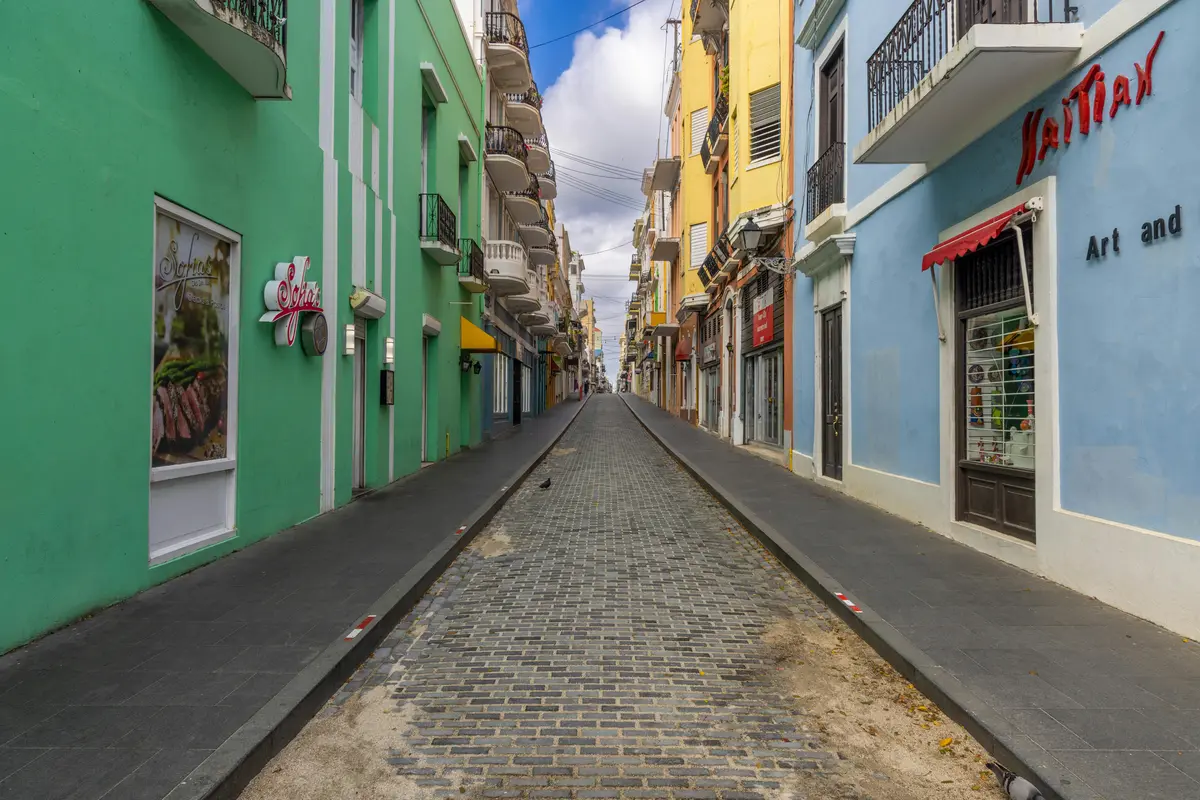
The streets were built for horses and foot traffic in the 1500s. Modern enforcement of resident-only permit zones is aggressive and will result in expensive citations.
Park your vehicle on the perimeter and walk in.
Doña Fela (default choice for most visitors)
Sits on the southern perimeter near the cruise piers, offering central access to shopping and dining.
- Location: Calle Recinto Sur, southern perimeter
- Rates: Hourly rates apply; overnight flat rate (4 p.m.–6 a.m.) around $4–$5
- Hours: 24/7
- Best for: Budget-conscious visitors, multi-day parking
- Note: Clearance is only 6’2″ — larger SUVs may not fit
Ballajá
Handles the northwestern perimeter near the cemetery. Ideal for Castillo San Felipe del Morro and ocean views.
- Location: Off Calle Norzagaray, under Plaza del Quinto Centenario
- Hours: 24/7
Covadonga
Covers the eastern perimeter of Old San Juan.
- Location: Calle de la Luna / Calle San Francisco
- Hours: 24/7
La Puntilla
Serves the southwestern promenades and Paseo de la Princesa.
- Location: Calle Presidio and Paseo de la Princesa
Doña Fela remains the default choice for the vast majority of visitors. The combination of cheap overnight pricing, 24-hour operation, and security makes it the lowest-risk option in the city.
Can tourists use the Tren Urbano and public buses?
Tourists can use the Tren Urbano and public buses, but neither connects to the places most visitors actually want to go. The Tren Urbano is a clean, reliable public rail line that runs from Bayamón to Sagrado Corazón in San Juan, covering 16 stations along 10.7 miles (17.2 km) of track.
- Fare: $1.50 per trip
- Hours: 5:30 a.m. to 11:30 p.m. daily
- Stations: 16, spanning San Juan, Guaynabo, and Bayamón
The critical caveat is that the rail line bypasses Old San Juan, Condado, the beach strips, and the airport entirely. It functions strictly as a commuter line serving universities, inland neighborhoods, and the Coliseo arena.
The Metropolitan Bus Authority (AMA) routes exist but carry a massive warning for travelers. Wait times of 30 to 60 minutes are standard, and daily schedules are notoriously erratic. For time-sensitive plans, buses are not a viable primary option.
Pro Tip: The Tren Urbano is genuinely useful if you are visiting the University of Puerto Rico at the Río Piedras station or attending an event at the Coliseo. For everything else, budget for Uber or plan your rental car days properly.
What are públicos and should you use them?
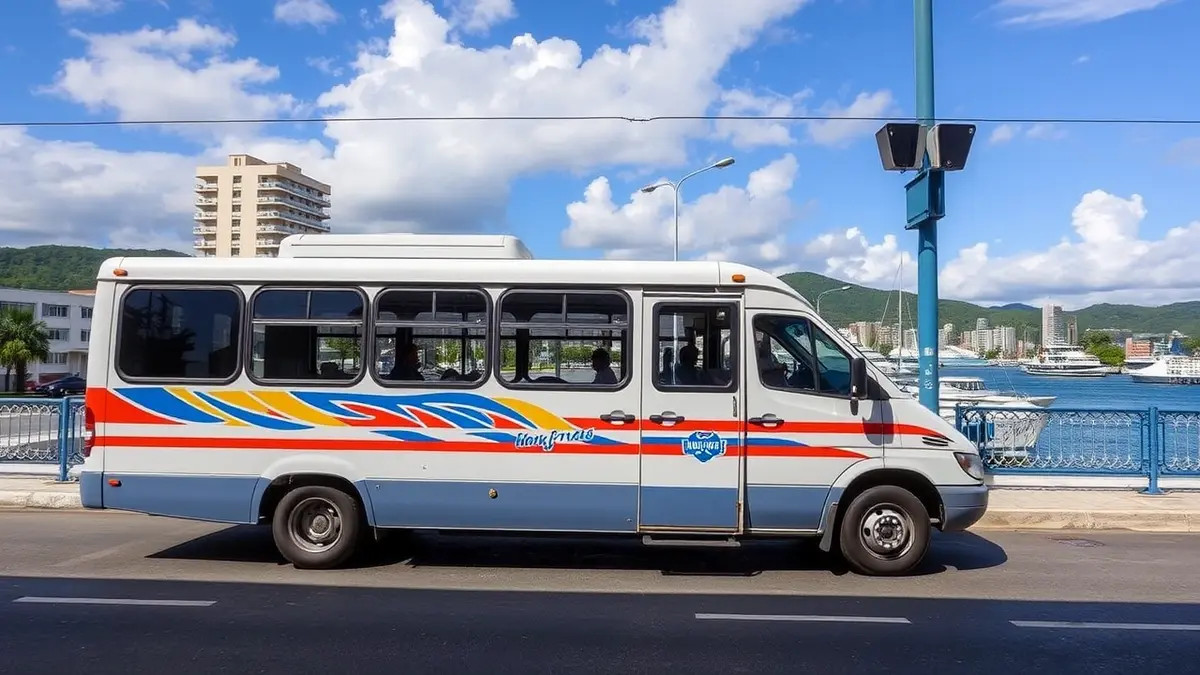
Públicos are shared passenger vans that connect rural towns, mountain villages, and regional hubs across the island on a cash-only, fill-every-seat basis. They are the cheapest way of getting around Puerto Rico outside the metro area, but they are not designed for visitors on a tight schedule.
They do not run on fixed schedules. Each van leaves the station the moment every single seat is filled. You will usually find the destination written in marker directly on the front windshield.
- Main terminal in San Juan: Río Piedras university district
- Main terminal in the south: Terminal de Transportación Pública Carlos Garay, Ponce
- Payment: Cash only — credit cards are never accepted
- Schedule: No fixed times; departs when full
- Best for: Budget travelers with flexible schedules who want an unfiltered local experience
Públicos are not meant to be fast or efficient for tourists on a tight itinerary. But they connect places that no rideshare app will ever reach, and they cost almost nothing.
The bottom line on getting around Puerto Rico
Getting around Puerto Rico rewards deep preparation and punishes lazy assumptions. The travelers who struggle are almost always the ones who rented an SUV for a full week or assumed their phone would summon a ride anywhere on the island.
TL;DR: Use Uber in San Juan for your first few days. Pick up a rental car only when you leave the metro area. Book ferry tickets to Culebra and Vieques weeks in advance through the City Experiences app or puertoricoferry.com. Get the AutoExpreso toll pass written into your rental contract before you drive off the lot. Follow those rules, and the logistics of your Puerto Rico trip disappear.
What tripped you up on your last visit — or what part of the logistics are you still trying to figure out?