After months traveling this country — from Lisbon‘s Baixa to remote Alentejo villages — the real answer to “do they speak English in Portugal” is more useful than a simple yes. It depends on who you’re talking to, where you are, and whether you’ve wandered past the invisible line where Portuguese tourism ends and actual Portuguese life begins.
Why does Portugal rank so far above its neighbors for English?
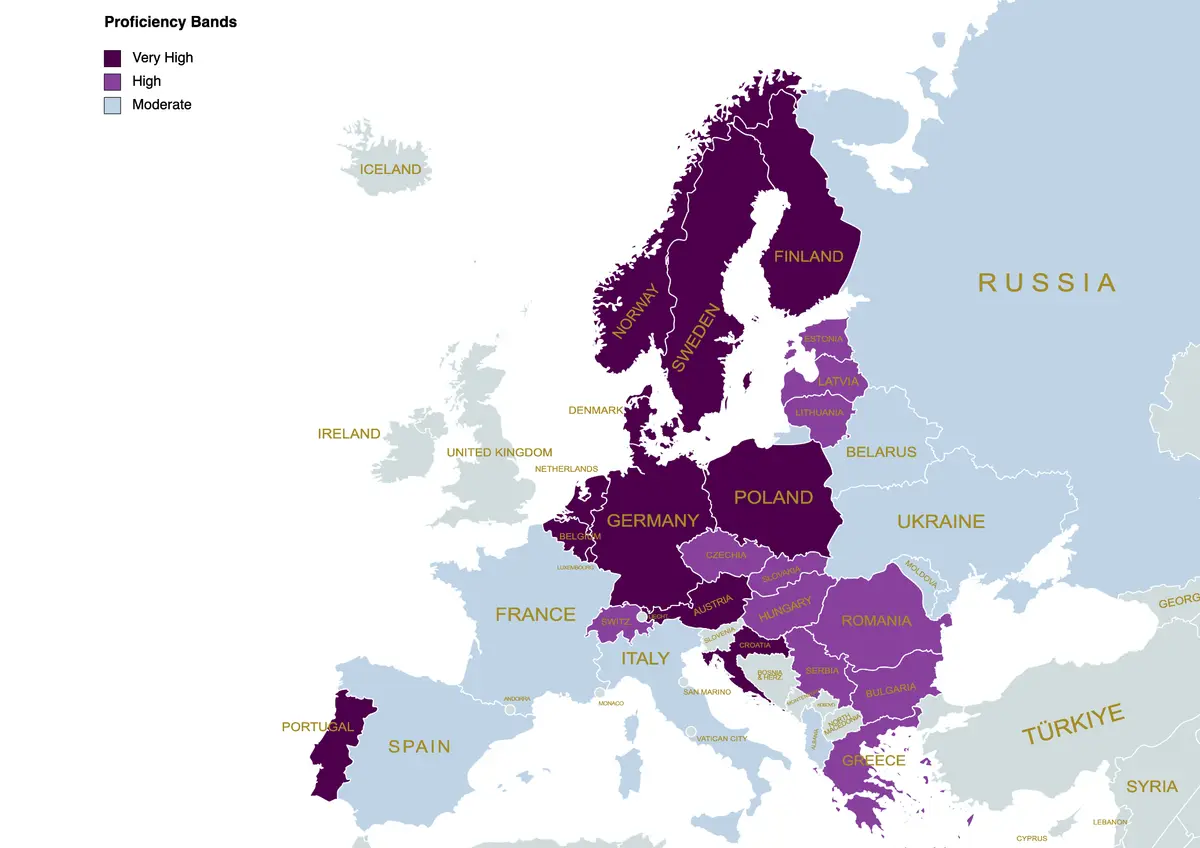
Portugal scores 612 on the EF English Proficiency Index, placing it sixth globally out of 123 countries — in the “Very High Proficiency” category. That puts it ahead of Greece (592) and well above Spain, France, and Italy, which all fall in the moderate proficiency band. The Netherlands, Croatia, Austria, Germany, and Norway rank above Portugal, but Portugal remains the clear outlier of Southern Europe.
The margin matters. When France, Spain, and Italy cluster well below Portugal’s 612, the practical difference is not subtle — it is the gap between a restaurant where you can describe a food allergy and one where you point at a neighboring table and hope for the best.
How subtitles did what classrooms couldn’t
Portugal subtitles foreign films and TV instead of dubbing them. Spain, France, and Italy dub almost everything. That single policy decision created generations of Portuguese who grew up hearing native English audio in every American film and British series — from sitcoms to every Hollywood blockbuster. They learned cadence, slang, and vocabulary before they ever sat in a language class.
What those reading vs. speaking scores mean on the ground
The EF EPI data shows a 130-point gap between Portugal’s reading score (632) and its speaking score (502). In practice, locals will follow complex English with ease — they understand what you are saying — but may pause before responding, choosing words carefully. Do not mistake that pause for confusion. It is usually precision, not a knowledge gap.
Does age change whether you’ll get an English response?
Yes, dramatically. A generational divide runs through Portuguese society at roughly 55 years old, separating people who learned English through subtitled media and modern schooling from those who grew up with French as the primary foreign language. Understanding this divide is the single most useful piece of information a first-time visitor can carry into any interaction.
Under 35 — near-fluent and unafraid to use it
Among adults under 30, proficiency scores on the EF EPI cluster around 650 — close to the C1 level that EF defines as near-fluent. An estimated 55.8% of Portuguese aged 15 to 34 are highly fluent, with vocabulary that includes current slang. Every hostel receptionist, specialty coffee shop worker, Airbnb host, or tour guide under 35 handles conversation without difficulty.
On my last visit to Porto, I watched a barista switch mid-sentence from English to Portuguese and back while taking three different orders simultaneously. It was entirely unremarkable to everyone involved.
Over 55 — try French before Spanish
Only around 8% of Portuguese over 55 speak conversational English. During the Estado Novo era, French was the compulsory foreign language in schools, and many older Portuguese emigrated to France or Switzerland for work. Their second language is French, not English.
If communication stalls with an older person at a rural market or neighborhood café, try basic French — you may get further than you expect.
Pro Tip: Download Google Translate with Portuguese saved for offline use before you land. The camera translation function handles handwritten menus, which you will encounter regularly in neighborhood tascas. Standard data roaming does not always reach remote inland areas.
Where in Portugal does English actually work?
English is reliable in Lisbon, Porto, and along the Algarve coast. It becomes unreliable about 20 minutes (12 miles) inland from any coastal tourist zone. The dividing line is sharper than most guides suggest, and crossing it unintentionally is easy when you have a rental car and curiosity.
Lisbon and Porto — where locals switch languages automatically
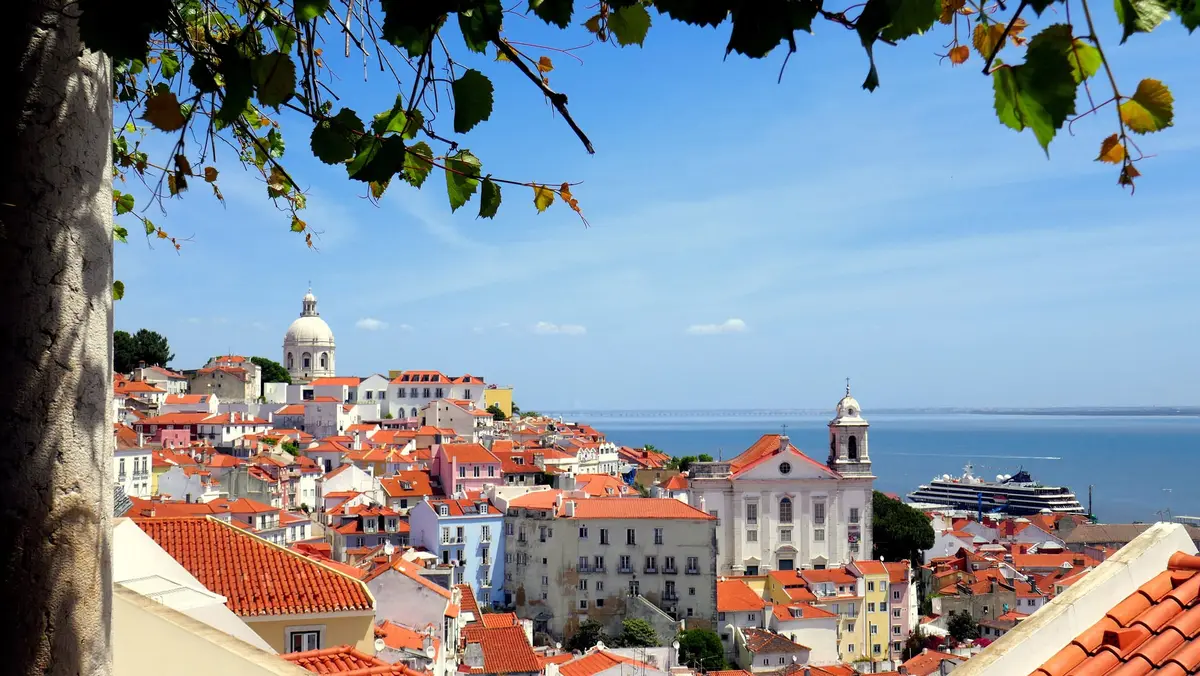
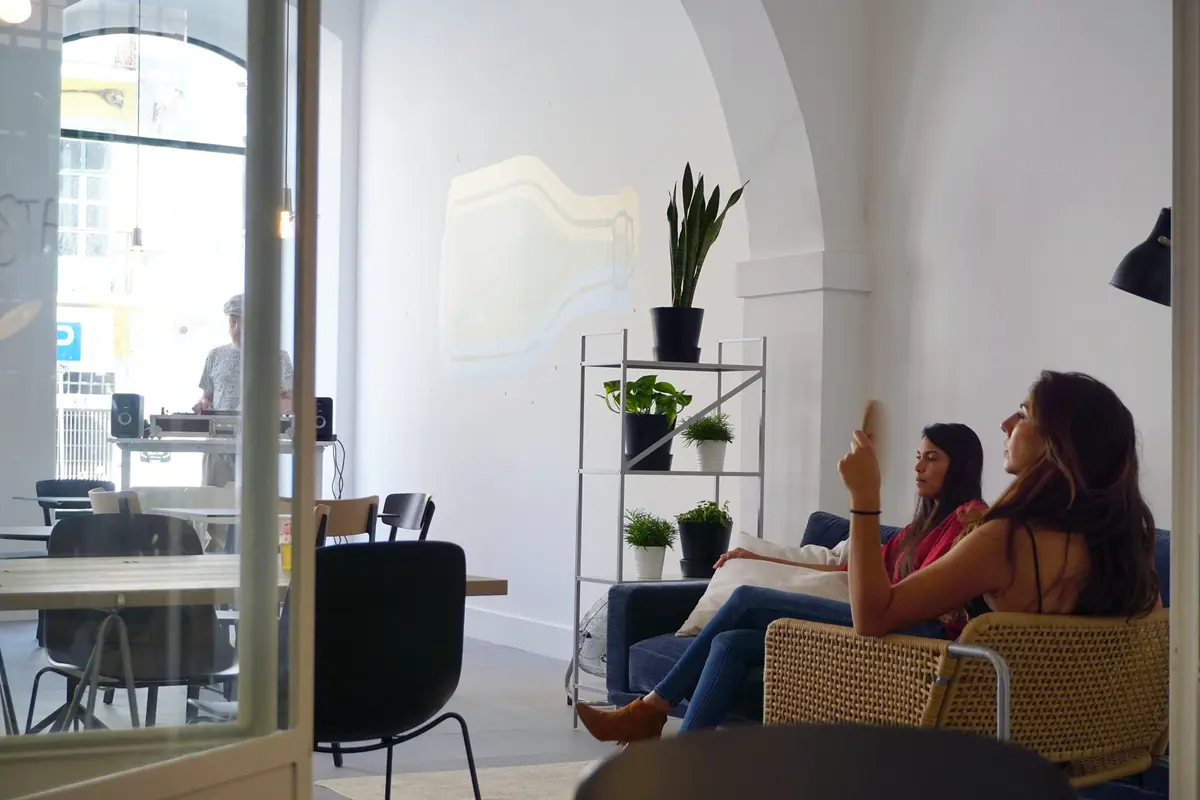
In Lisbon’s Baixa, Chiado, and Príncipe Real neighborhoods, English so thoroughly dominates that expat residents complain they cannot practice their Portuguese — locals detect a foreign accent and switch languages before you finish your first sentence. Menus appear in English first, museum signage is bilingual, and most service workers in the tourist core are comfortable enough in English to carry a real conversation.
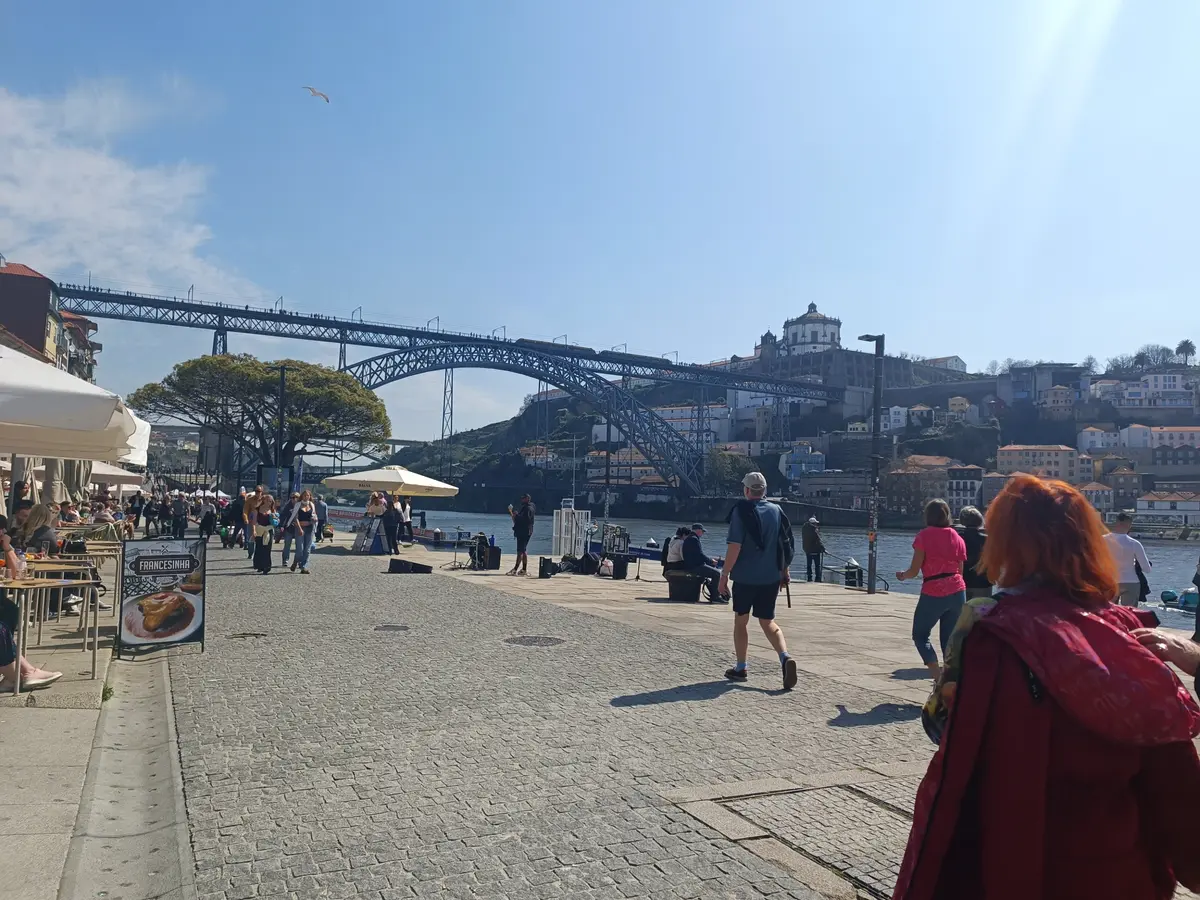
Porto and the northern university corridor poll higher than Lisbon for proficiency, driven by a dense student population. Coimbra, Portugal’s historic university city, scores 639 on the EF EPI — the highest of any Portuguese city.
City government services are the exception. Dealing with local councils, SNS health clinics, or permit offices, you will likely encounter staff who do not speak English. Bring a Portuguese-speaking contact or use official translation services if documents are involved.
Algarve coast vs. the Alentejo interior
The Algarve has absorbed decades of British mass tourism. In Albufeira, Lagos, and Vilamoura, English functions as the default commercial language — menus often list it before Portuguese. Hospitality workers here have become bilingual by occupational necessity.
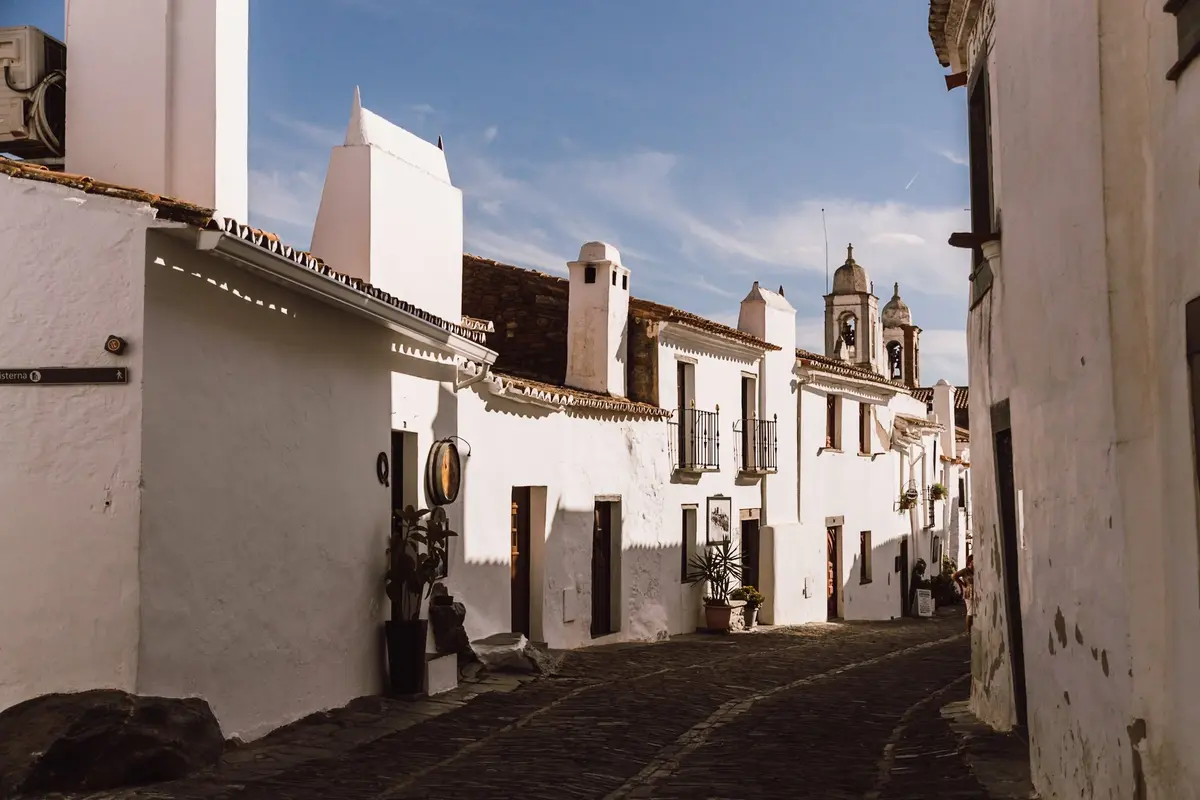
Drive 12 miles north toward the Serra de Monchique or east toward the Alentejo border, and that safety net disappears. The woman running the village café likely speaks only Portuguese. This is not a problem. It is an invitation to slow down, use the phrase list below, and let the interaction take the time it needs.
Pro Tip: Restaurants in the Monchique hills charge roughly half what you’d pay in Albufeira for the same grilled chicken and salad. Get off the coast for lunch whenever you can. A translation app and the willingness to point at things is all you need.
How do you order at a traditional tasca without speaking Portuguese?
You do not need Portuguese to eat well at a tasca, but you need to understand how they operate. English fluency in these family-run neighborhood eateries tops out at single words: “Meat?” or “Fish?” Knowing two rules — how to decline the couvert and how to order the prato do dia — gets you through the entire meal.
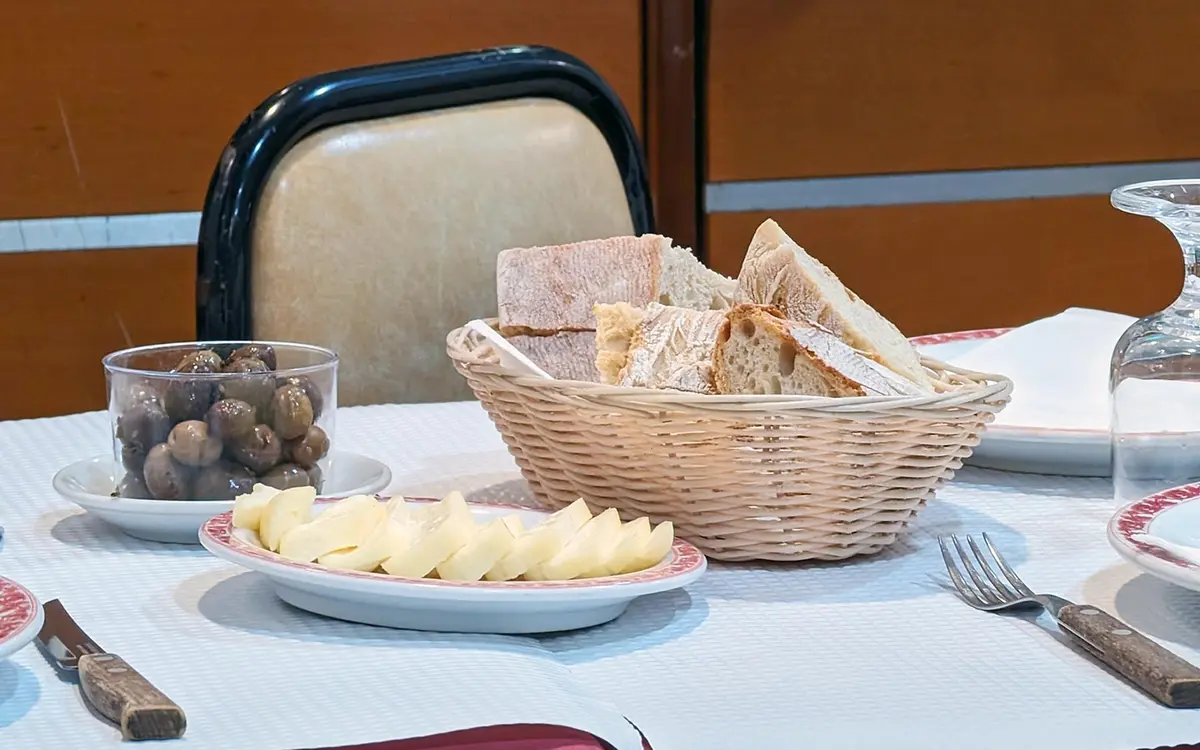
When you sit down, the waiter will place bread, olives, cheese, and sardine pâté on the table. These are not complimentary. This is the couvert, and you will be charged for whatever you touch. Say “Não, obrigado” immediately if you do not want them, and they will be removed without drama.
Order by asking for the prato do dia — the dish of the day. It is fresh, inexpensive, comes out fast, and requires exactly one phrase to request. Point at a neighboring table’s plate if that fails.
Skip asking for customizations. The menu is often handwritten and rarely translated. The kitchen is not set up for substitutions. The prato do dia rewards exactly the amount of effort you’re capable of making with no Portuguese at all.
Pro Tip: Lunch at a tasca runs significantly cheaper than dinner. A prato do dia with a glass of house wine rarely exceeds $12 at noon. The same restaurant charges noticeably more in the evening. Go before 1 p.m.
Why does speaking Spanish in Portugal backfire?
Addressing a Portuguese person in Spanish reads as assuming Portugal is an annex of Spain — a perception the country has spent centuries actively resisting. It is the one cultural misstep that reliably sours an otherwise warm interaction. Locals will understand you perfectly, since Portuguese speakers generally follow Spanish without difficulty. The response, however, tends to come in Portuguese or English — a polite but clear signal.
The correct sequence: attempt a Portuguese greeting first. If communication breaks down, ask “Fala inglês?” If that also fails, asking “Fala espanhol?” — requesting permission to use Spanish — is far better received than opening with it.
The linguistic reality reinforces this. Portuguese speakers understand Spanish, but Spanish speakers struggle with Portuguese because of its complex phonetics and swallowed vowels. When tourists open in Spanish, locals understand everything and choose to reply in Portuguese anyway. The power dynamic is clear to both parties.
What Portuguese phrases will actually help you on the ground?
A handful of basic Portuguese phrases for tourists produces a measurable change in how locals respond to you — not because they need you to speak Portuguese, but because the attempt signals respect. Portuguese hospitality responds to that. These are worth learning before you arrive:
- Bom dia: Good morning (use until noon)
- Boa tarde: Good afternoon (noon until dark)
- Obrigado / Obrigada: Thank you — men say obrigado, women say obrigada
- Não, obrigado: No, thank you (your first line of defense at any tasca table)
- Fala inglês?: Do you speak English?
- Prato do dia?: What is the dish of the day?
- A conta, se faz favor: The bill, please
Pronunciation note: European Portuguese swallows final vowels more aggressively than Brazilian Portuguese. “Obrigado” sounds closer to “oh-bree-GAH-doo” than it looks on the page. Get the first syllable of “bom dia” (roughly “bong dee-uh”) and you will get a smile.
What happens if you need medical help and cannot communicate?
In a medical emergency in Portugal, you will find English-speaking doctors at both private and public hospitals. The gap appears in support staff and administration, not in clinical care. Private hospitals — CUF, Hospital da Luz, and Lusíadas — serve a heavily international patient population, and English-speaking doctors are standard at every touchpoint from intake to discharge.
Comprehensive travel insurance for Portugal that covers private hospital access removes the biggest practical obstacle: out-of-pocket costs at a private facility. Without it, a non-emergency condition that belongs at a private clinic may end up at a public SNS hospital, where clinical care remains excellent but administrative communication can be harder to navigate.
For public SNS hospitals: attending doctors almost universally speak English at a professional level. Receptionists and ward support staff may not. For non-urgent issues, private is the cleaner path. For major trauma or emergencies, the ambulance takes you to the nearest public hospital, where the medical team will have the English capability that matters.
The bottom line
TL;DR: Portugal ranks sixth globally for English proficiency, with near-universal fluency among anyone under 35 and very limited English among those over 55. Lisbon, Porto, and the Algarve coast function as effectively English-speaking environments. Rural areas and traditional neighborhood tascas do not — and that is where the most rewarding travel happens. Three phrases cover most situations where English fails: “Fala inglês?”, “Não, obrigado,” and “Prato do dia.”
What surprised you most about communicating in Portugal — and where did English completely stop working?