Europe’s Entry/Exit System (EES) has been mandatory at every Schengen external border since April 10, and no legal delay is in effect. The problem is that the system still works unevenly from one airport to the next. The emergency provision that let border officers pause fingerprint and facial scans during long queues expired on September 6. Airlines are lobbying to bring it back, and the related ETIAS travel authorization has slipped to 2027. If you’re flying to Europe this fall or winter, plan on a slower first trip through passport control.
Where things stand right now
Six months into full operation, the EES is live across all 29 participating countries. Travel and immigration specialists still describe it as inconsistent. In mid-September, Christine Sullivan, a partner at the immigration firm Fragomen, pointed to uneven implementation across member states and advised travelers to make sure each entry and exit is actually recorded, since a missed exit record could make it look like you overstayed.
The European Commission sees it differently. At a press briefing on September 1, a Commission spokesperson said the system had largely worked well over the summer, while acknowledging that “some adjustments are needed at certain border crossing points.”
No formal extension of the flexibility rules has been adopted. Trade and regional outlets report that nine countries (Belgium, France, Germany, Greece, Italy, Malta, the Netherlands, Portugal, and Switzerland) wrote to Internal Affairs Commissioner Magnus Brunner on July 7 asking to keep the option of partial suspension past September 6. Some of those countries appear to be using informal leeway, and regional reports indicate Spain wasn’t among the nine. None of this has been confirmed by major wire services or written into EU law, so treat enforcement in any given country as fluid.
What the EES is and how it works
The EES is an automated border registration system run by eu-LISA, the EU agency that manages large-scale IT systems for the bloc. It digitally logs every entry, exit, and refusal of entry for non-EU citizens making short stays in the Schengen Area.
It covers 29 countries: 25 EU member states (every member except Cyprus and Ireland) plus Iceland, Liechtenstein, Norway, and Switzerland. The scale is large. According to the Commission’s latest State of Schengen Report, published in May, member states registered more than 66 million entries and exits in the system’s first six months and refused entry to about 32,000 people who had no right to be there.

What gets recorded at your first crossing
The first time you enter a participating country, a border officer or kiosk captures your passport data, a facial image, and four fingerprints. The system also logs the date, time, and place of every entry and exit. Your record is kept for three years after your last crossing, or five years if you overstay.
Why passport stamps are gone
Since April 10, the EES has fully replaced manual stamping in Schengen countries. Your crossing is logged digitally, and the system counts your days in the Schengen Area automatically. The EU’s argument is that faded, smudged, or missing stamps no longer create confusion, and overstays are far easier to catch.
How the EES rollout kept slipping
The EES has a long history of missed dates, which is why “EES delay” is still such a common search. Here’s the short version:
- The Commission proposed the system in April 2016, and the regulation was adopted on November 20, 2017.
- Target launch dates between 2020 and 2022 came and went because of IT readiness problems.
- A single nationwide switch-on planned for November 10, 2024, was scrapped. In December 2024, the Commission proposed a phased start instead.
- The phased rollout began on October 12, 2025, with each country required to use the EES at a growing number of crossings.
- The system became fully operational at all Schengen external borders on April 10.
- A temporary flexibility period let countries partially suspend biometric checks during severe congestion. It expired on September 6.
Why the September 6 deadline matters
Under the EES rollout regulation (Regulation (EU) 2025/1534), a country could suspend biometric registration at a single crossing for up to six hours at a time when queues became unmanageable. Officers could fall back on faster manual processing, and many in the industry credit that option with preventing the worst gridlock over the summer. As of September 7, it’s gone.
Airlines and airports reacted quickly. Ryanair asked the Commission to restore the suspension option until at least April 2027, and chief operating officer Neal McMahon called the rollout “a shambles from start to finish.” IATA, the global airline trade group, wants the flexibility kept through the end of the winter season. It says four things should be in place before the safety valve goes away: enough border staff, stable hardware and software, fully working self-service kiosks, and wider use of pre-registration tools. ACI Europe, which represents airports, is also calling for the mechanism to stay available.
Missed connections are a big part of the argument. The Financial Times reported in early September that missed flight connections had doubled under the EES, with some airlines seeing much larger increases. The Commission’s view is more positive. Its State of Schengen Report said most Schengen countries implemented the system effectively and used the suspension powers only on a limited number of occasions.
On the ground, enforcement after September 6 looks uneven. Reports from the UK suggest border officials in some popular destinations, Greece most often mentioned, have quietly waved some British travelers through at peak times. For US travelers, the practical point is that you can’t predict which version of the border you’ll get, so plan for the slow one.
What the border looks like for Americans now
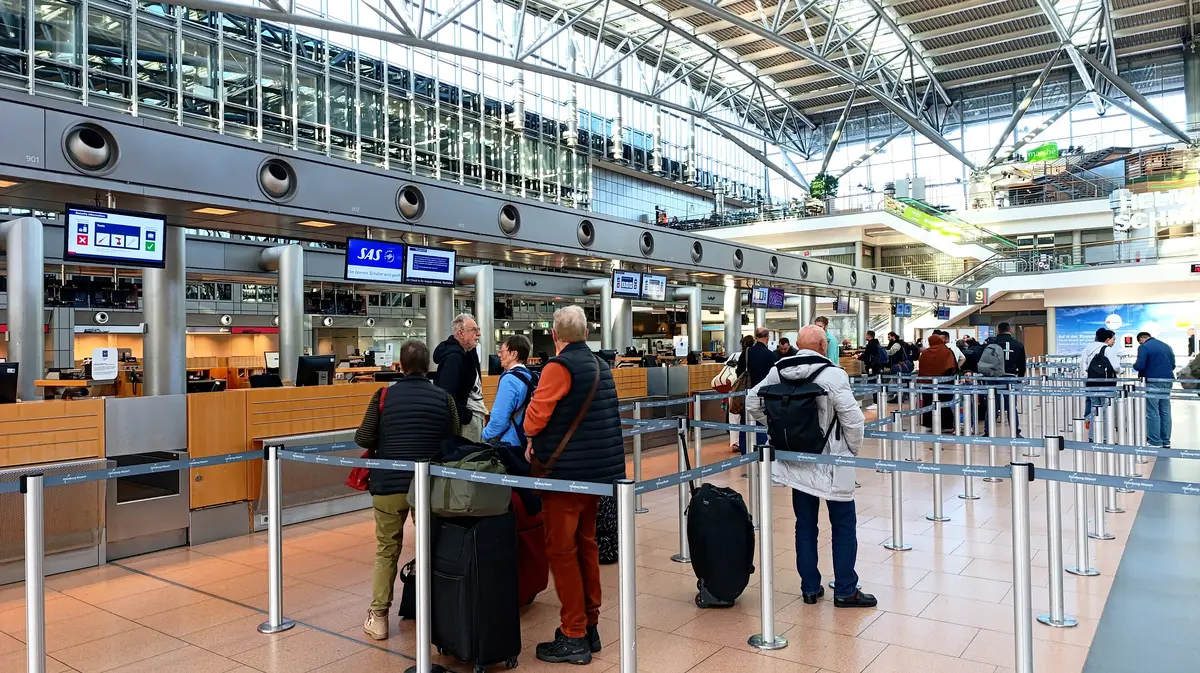
First-time registration takes noticeably longer than a passport stamp did. Scanning your passport, capturing four fingerprints, and taking a facial image can add several minutes per traveler, and that time multiplies quickly when a few widebody flights land at once. Once you’re in the system, later crossings within the three-year window are much quicker.
Summer queues were long at several major hubs. A Financial Times analysis of Qsensor data, reported by Euronews in August, found that average waits in Frankfurt reached 120 minutes in July, double the same month a year earlier, and that maximum waits in Amsterdam rose from 80 to 120 minutes. ACI Europe reported peak queues of up to five hours at some European airports. Paris Charles de Gaulle’s Terminal 2E, where many US flights arrive, was reported to be processing 35% fewer travelers per hour than forecast in early April, with average waits of around two hours.
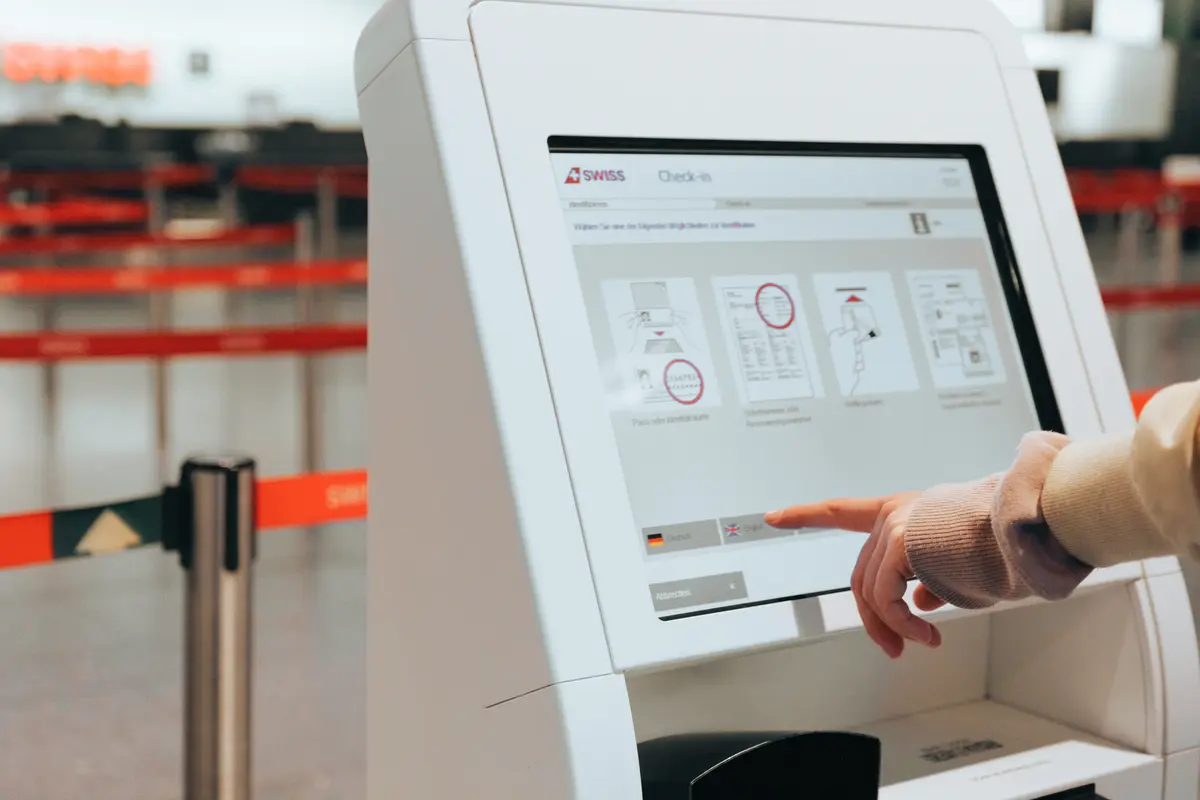
Those figures are snapshots from specific days and sources. Off-peak waits have often been much shorter. A few habits have made a real difference for travelers: using self-service EES kiosks where they’re available, using family lanes if you’re traveling with kids, and making sure your passport chip isn’t damaged (a faulty chip pushes you to a slower manual check).
Who has to register and who doesn’t
The EES applies to every non-EU national making a short stay of up to 90 days in any 180-day period, whether they need a visa or not. That includes travelers from the US, Canada, the UK, Australia, and New Zealand.
You’re exempt if you’re a citizen of an EU country, Iceland, Liechtenstein, Norway, or Switzerland. The system also doesn’t apply to holders of long-stay national visas or EU residence permits, diplomats, NATO status-of-forces personnel, or citizens of Andorra, Monaco, San Marino, and Vatican City. If you’re a US citizen who also holds an EU passport, enter on your EU passport and you’ll skip the EES entirely.
Kids and families
Children under 12 aren’t fingerprinted, but their facial image and passport data are still recorded. Many large airports now have dedicated family lanes to keep things moving.
Cruise passengers
If you fly into Europe to board a cruise, you’ll complete EES registration at the airport like any other passenger. Cruises that stay within Schengen ports generally don’t trigger a new entry at each stop, and ABTA, the UK travel trade association, says passengers don’t need EES checks for day visits that are part of the itinerary. Itineraries that call at a non-Schengen country such as Turkey involve extra exit and entry checks. Many major cruise ports have installed kiosks, and some lines handle registration on board, so check with your cruise line before you sail.

Crossing from the UK into France
If you’re adding a London leg to your trip, this is the most complicated piece. Under an arrangement known as juxtaposed controls, French border police handle Schengen entry checks on British soil at the Port of Dover, the Eurotunnel LeShuttle terminal in Folkestone, and the Eurostar terminal at London St Pancras. That means your EES registration happens before you leave the UK.
As of early September, the fingerprint kiosks at all three sites still weren’t working because of problems with French EES software, and drivers at Dover weren’t yet going through EES checks. The UK government has committed funding to add kiosks and processing capacity, but readiness has shifted from week to week. Check with Eurostar, Eurotunnel, or your ferry operator a few days before you travel.
The 90/180-day rule is now much harder to get wrong
The EES doesn’t change how long Americans can stay in Europe. It enforces the existing limit much more strictly. You can spend up to 90 days in any rolling 180-day period across the whole Schengen Area combined, not per country. Both your arrival day and departure day count, and the 180-day window moves forward one day at a time.
Because your record is tied to your biometrics, getting a new passport won’t reset your count, and a missing stamp can no longer be used as an excuse. An overstay creates an automatic record that can cause problems on future trips and visa applications. Some older bilateral agreements between individual European countries and the US have historically allowed extra time, but they’re applied inconsistently, so don’t count on one without written confirmation from that country’s embassy.

ETIAS is delayed until 2027
The EES and ETIAS are separate systems that are often confused. The EES happens at the border. ETIAS (the European Travel Information and Authorization System) is an online pre-travel authorization, much like the US ESTA program, that visa-exempt visitors will need before boarding a flight to Europe. It was always designed to launch after the EES was working properly.
The EU had been aiming for the last quarter of this year. In July, the Financial Times reported that eu-LISA had concluded that timeline was no longer achievable, and the official ETIAS site dropped the date. It now says only that the system is not in operation and isn’t accepting applications. Most reporting points to 2027. A revised timeline was expected after a September eu-LISA board meeting, but no such meeting appears on the agency’s public calendar. The next confirmed board meeting is November 17 to 19 in Dublin, and the Commission, not eu-LISA, formally sets the launch date. The EU has promised several months’ notice before launch.
The terms are already set. ETIAS will cost €20 (a bit more than $20), and it’s free for travelers under 18 or over 70. It will be valid for three years or until your passport expires, whichever comes first, and it allows multiple entries. The EU has also said a transition period of at least six months will follow the launch, during which travelers who meet every other entry requirement won’t be turned away just for lacking an ETIAS.
Until then, Americans need only a valid passport. Any website that claims to be taking ETIAS applications right now is a scam.
How to prepare for your next trip to Europe
A few steps can save you a lot of time and stress at the border:
- Check your passport. For Schengen entry, it should have been issued within the last 10 years and be valid for at least three months after your planned departure date. Replace it if the chip or photo page is damaged.
- Allow an extra 30 to 90 minutes for your first EES crossing, and more at peak times such as holiday weekends and late afternoon arrival banks.
- Avoid tight connections after your first entry, especially at Paris Charles de Gaulle, Frankfurt, and Amsterdam Schiphol. A separate ticket with a short layover is particularly risky.
- Use kiosks and family lanes when you see them, since they’ve generally moved faster than staffed booths.
- Look at Frontex’s official “Travel to Europe” app, but don’t count on it yet. It lets you submit passport data and a facial image up to 72 hours before arrival, but as of late summer it only worked at a small number of crossings in Sweden and Portugal. You’ll still give fingerprints in person.
- Track your days with the EU’s official short-stay calculator, since the system now does the math for border officers too.
- For crossings between the UK and France, contact your operator before you go.
- Skip any ETIAS application for now, and follow only official EU channels for the launch announcement.