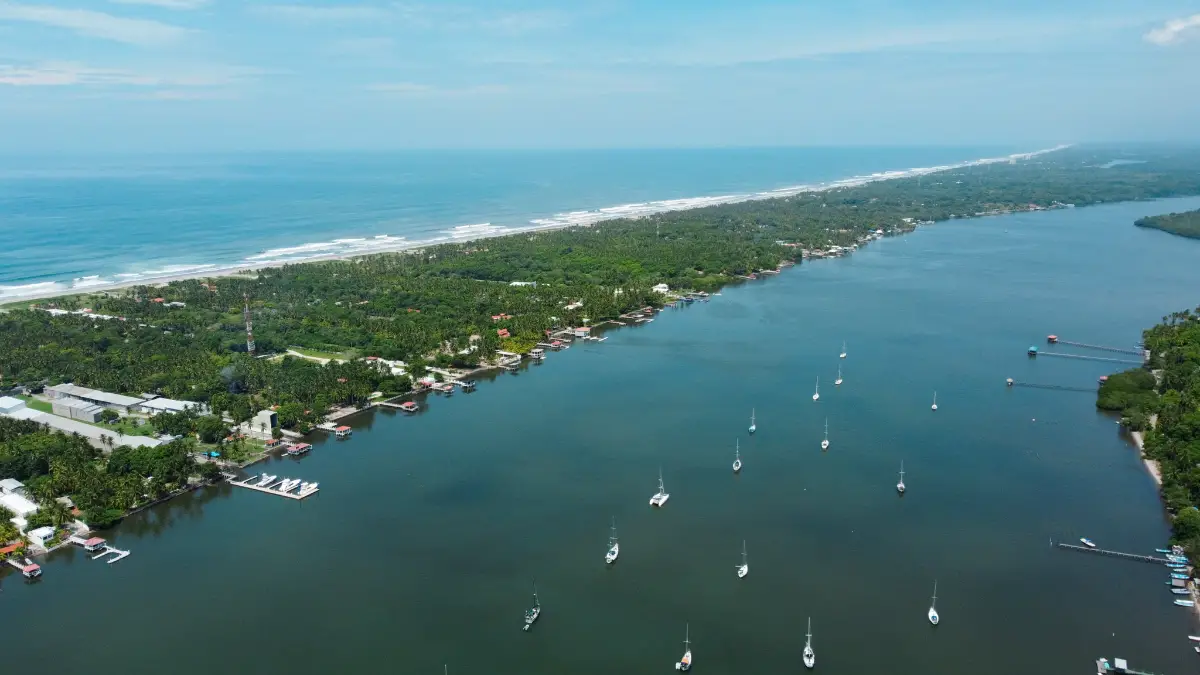
Playa Costa del Sol is a nine-mile sandbar in El Salvador’s La Paz department, with the Pacific on one side and the Estero de Jaltepeque mangrove estuary on the other. It sits 30 to 45 minutes from the international airport, which makes it the easiest ocean swim in the country to reach. The sand is grey-brown volcanic grit, not white. The water is warm and unusually calm for this coast, though estuary sediment keeps it cloudy. Come for flat water, mangrove boat trips, and sportfishing. Do not come expecting a beach town or a turquoise postcard.
Where Playa Costa del Sol is, and why the name trips people up
Type “Costa del Sol” into a search bar and you will get Málaga, Spain. The Salvadoran one is a different animal entirely: a low, narrow strip of land in the department of La Paz, running southeast from the town of San Luis La Herradura to a point called La Puntilla, where the estuary meets the ocean.
Everything on the peninsula sits along one road, the Bulevar Costa del Sol. Salvadoran coastal addresses are given by kilometer marker, so hotels and restaurants list themselves as Km 65.5 or Km 78 rather than by street number. Your GPS will use those markers too, and so will anyone giving you directions. The Parque Recreativo Costa del Sol, the public beach park, is in Cantón San Antonio Los Blancos, about 40 miles from San Salvador according to the Instituto Salvadoreño de Turismo (ISTU), the agency that runs it.
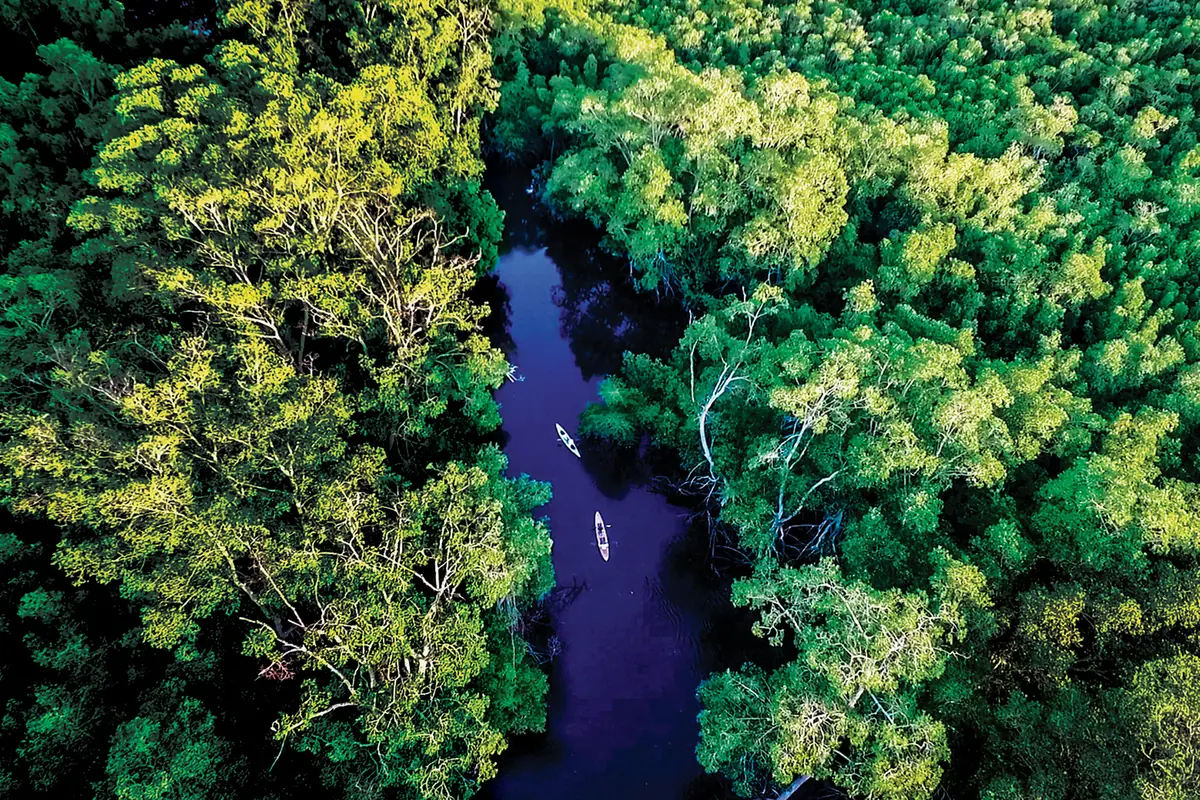
The estuary side matters as much as the ocean side. Estero de Jaltepeque has been a Ramsar-listed wetland since 2011, with roughly 17 miles of mangrove channels, and it is the reason half the good things about this place exist: the boat trips, the island communities, the floating seafood restaurants, the birdlife.
Getting there from San Salvador or the airport
Monseñor Óscar Arnulfo Romero International Airport (airport code SAL) is closer to Costa del Sol than the capital is. That is unusual and genuinely useful: you can land, pick up a car, and be on the sand before your bags stop feeling heavy.
| How you go | Time | What to know |
|---|---|---|
| Rental car | 30 to 45 min from SAL; about an hour from San Salvador | The road is paved and signposted the whole way. No four-wheel drive needed. Fuel for the trip runs a few dollars. |
| Private transfer or hotel shuttle | Same | Most hotels on the strip will quote a flat rate. Easiest option if you are not driving. |
| Ruta 495 bus | From Terminal del Sur in San Marcos, San Salvador, down the full boulevard to La Puntilla | The cheapest way by a wide margin. Schedules list the direct run at around an hour; budget more. |
| Bus from the airport | Not direct | You would transfer at El Pedregal. Most travelers skip this and take a taxi or rideshare instead. |
Two things worth flagging before you pick. The State Department prohibits its own personnel in El Salvador from using public buses, and it restricts them from traveling between cities or departments after dark because of road conditions, unlit highways, and rainy-season landslides. Neither rule binds you. Both tell you something about how a professional risk assessment reads the same roads you are about to drive.
If you rent, get to your hotel before sunset. Rideshare apps work well in San Salvador itself, less reliably out on the peninsula, so arrange your return trip in advance rather than assuming you can summon one at 9 p.m. from a dark stretch of boulevard.
What the beach is actually like
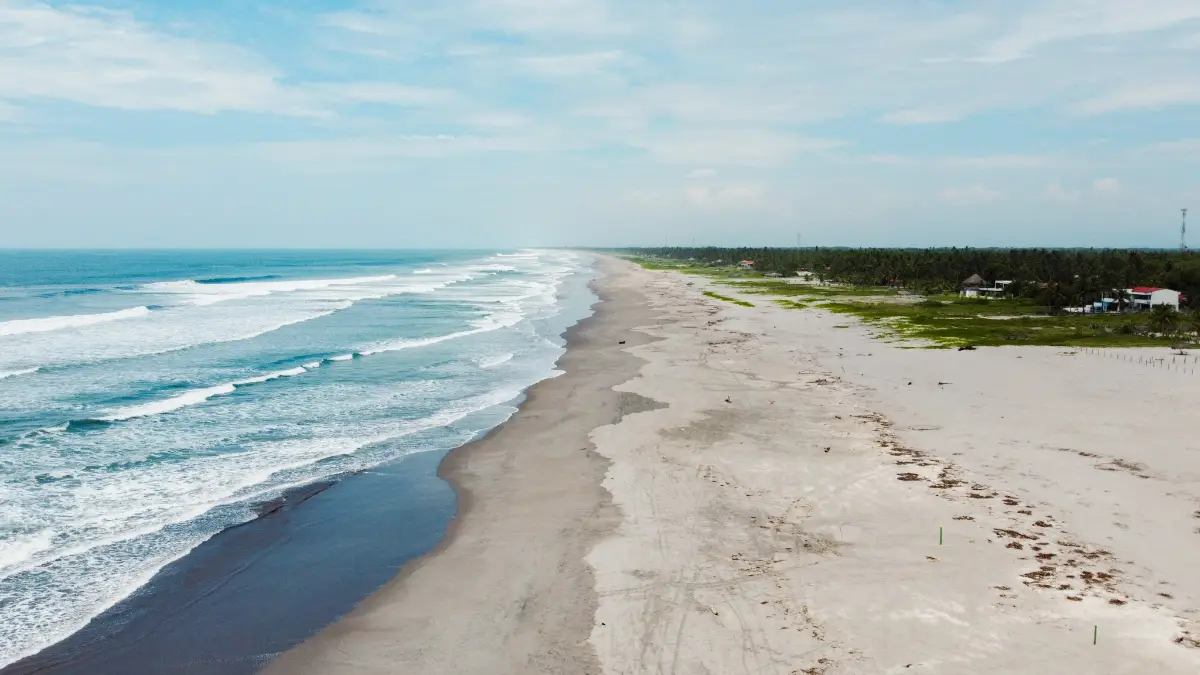
The sand is grey-brown, sometimes closer to charcoal where the tide has just gone out. It is volcanic, which is normal for the entire Salvadoran Pacific coast, and by midday in the dry season it gets hot enough that you will want sandals for the walk from the palapa to the water.
The water is the real draw. An offshore sandbar knocks down the big Pacific swell before it reaches shore, so the surf here is small and the wading is gentle in a way that El Tunco and El Zonte simply are not. Families who have written off Salvadoran beaches as too rough usually change their minds here. What you do not get is clarity. The estuary dumps sediment, the sand is dark, and the result is warm, brownish-green water that reads as murky in photos and in person.
Frommer’s puts the mismatch bluntly, noting that the beach’s reputation is better than its reality and that high walls block the shoreline from the region’s private homes. That is accurate, and it is the single most important thing to know before you book: there is no boardwalk, no cluster of beachfront cafés you can wander between, no town center. The public access points are the ISTU park and a handful of hotel and beach-club entrances. Between them, you are looking at concrete walls.
The beach itself is wide and flat, which makes for a genuinely good long walk at low tide. Cleanliness varies. Near busier access points, especially after a heavy weekend, you will see litter.
Rip currents are the real risk here
Calm is relative. This is still the open Pacific, and the State Department’s guidance on El Salvador is direct about it: beaches on the Pacific coast are dangerous for swimming because of strong currents and undertows, even for strong swimmers. Public beaches often have lifeguards, but coverage depends on the season and how busy the beach is; quieter stretches and private beaches may have none at all.
Follow the flags. Red or black means stay out, and if there is no flag system at all, treat that as its own warning. The ISTU park has lifeguard towers and a staffed infirmary, which is one practical argument for basing your beach day there rather than on an unwatched stretch. Never swim after drinking, and keep small children within arm’s reach in the shallows.
The estuary side: boats, islands, and turtles
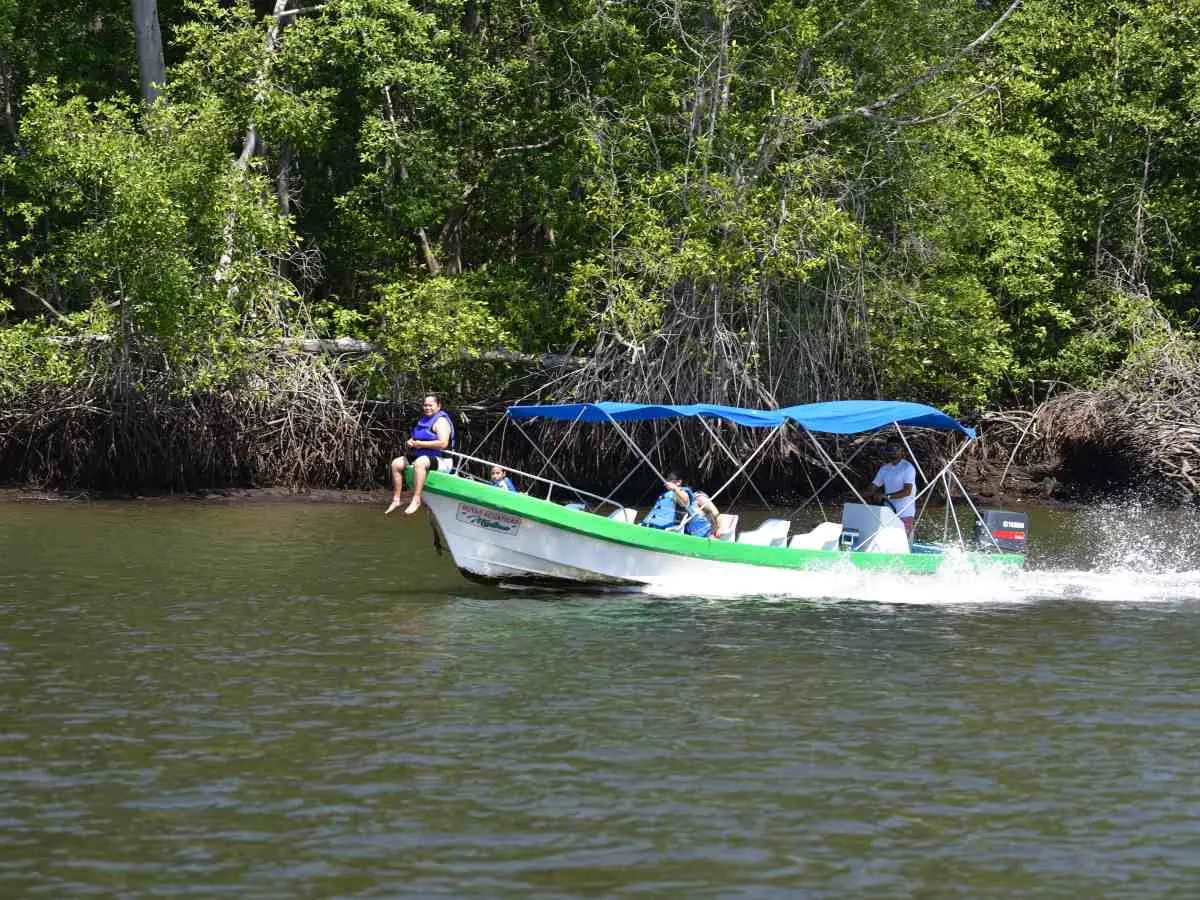
Book a lancha and the trip becomes something different. Operators run out of Puerto San Luis and the Bahía del Sol marina, and a standard estuary tour lasts about three hours.
What you see on it:
- Mangrove channels narrow enough that the branches close overhead
- Isla Tasajera, where the community at San Rafael Tasajera runs its own small-scale tourism
- Isla El Cordoncillo and the sandbars near La Bocana, where the estuary breaks through to the sea
- Floating restaurants you can only reach by boat, which is exactly as good as it sounds
- Bird life that runs past 120 species, best in the early morning
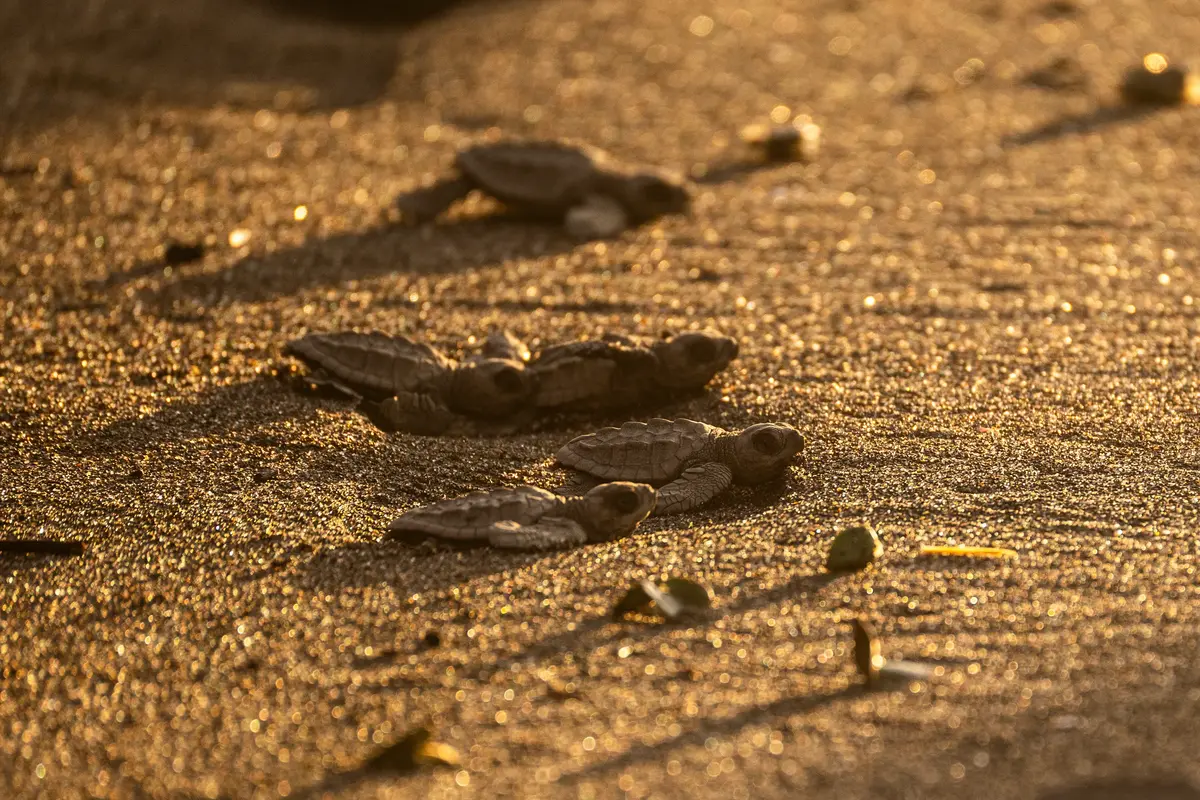
November through April is the better window; the water is calmer and the light is cleaner. Several coastal communities also run seasonal sea turtle hatchling releases, or tortugarios. Ask your hotel or the boat operators whether a release is scheduled during your stay rather than counting on it, since timing depends on the nesting season and on how the hatchery’s clutches come in.
Sportfishing out of Bahía del Sol
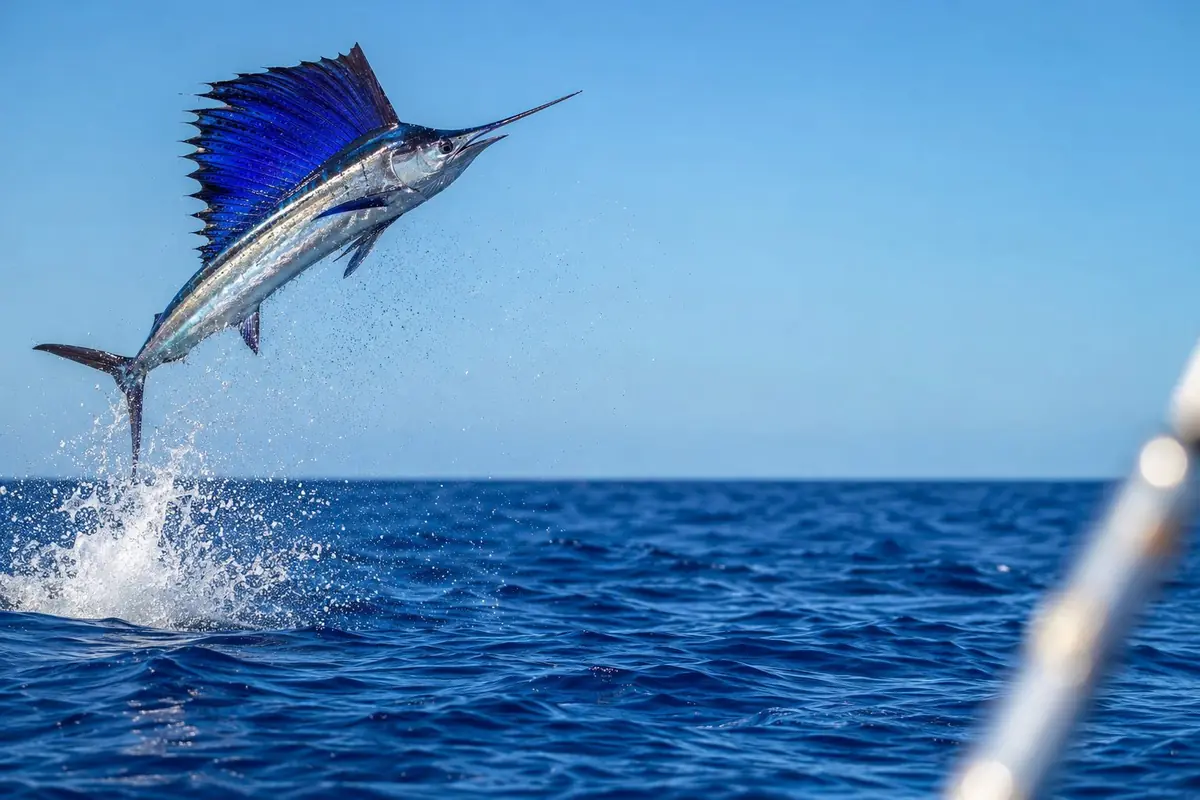
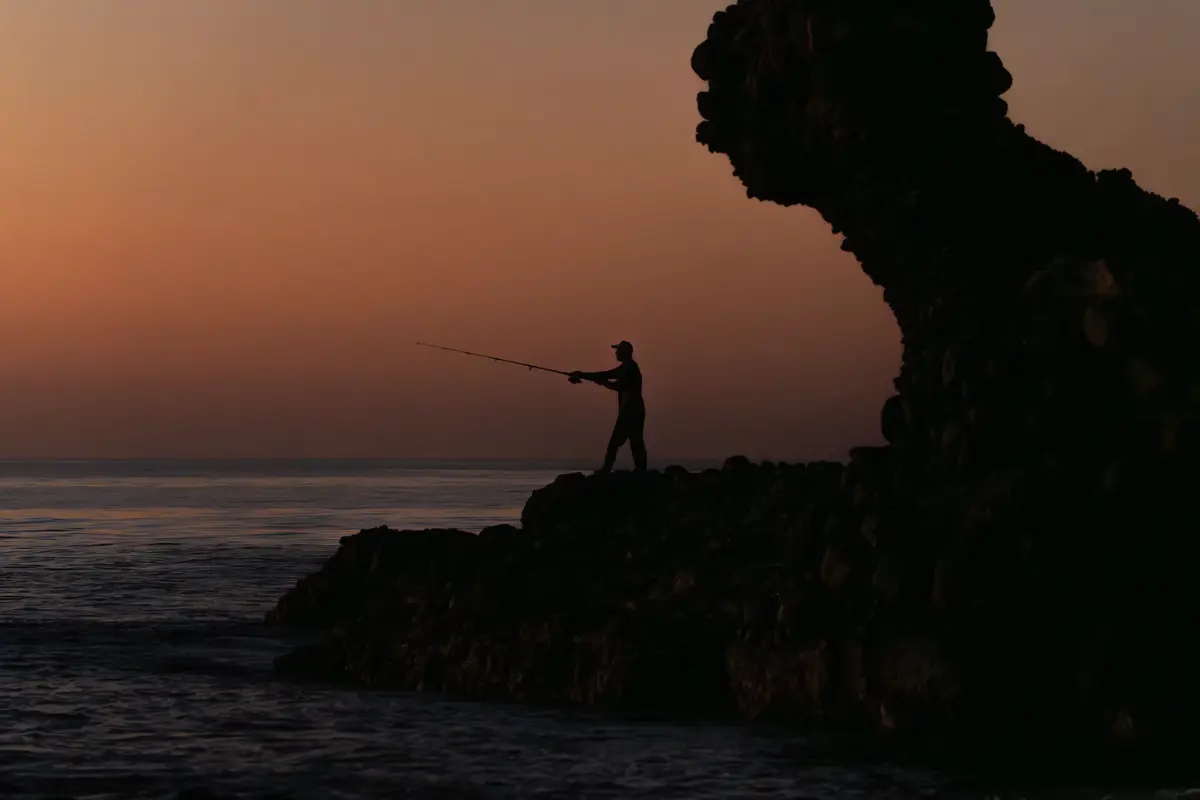
This stretch of coast sits near the Central American Dome, a nutrient-rich upwelling that pulls in billfish, and Costa del Sol has quietly become one of the more serious sailfish and marlin destinations in the region. The Bahía del Sol marina hosts a tournament and is where most charters are based.
Rough pricing, current at the time of writing: inshore charters run about $200 to $400 for the day, offshore trips $400 to $1,000, with listings on booking platforms starting near $250. Sailfish and marlin season runs November through May. Dorado and tuna show up during the wet months. A sport fishing permit costs around $15 and is usually folded into the charter price, but confirm that, along with what the boat provides in the way of tackle, ice, food, and drinks. Prices at the marina are negotiable in a way that online listings are not.
Day passes and beach clubs
You do not need to stay overnight to get onto the sand comfortably.
Parque Recreativo Costa del Sol reopened at the end of October 2025 after an $8 million ISTU renovation covering more than 40,000 square meters. It is the best-value option on the peninsula by a distance, and the current published rates are:
| What | Price |
|---|---|
| Day pass, foreign visitors | $5.00 |
| Day pass, Salvadoran nationals | $2.50 |
| Children under 7, seniors, visitors with disabilities | Free |
| Parking, standard vehicle | $2.00 |
| Beachfront palapa (includes a lounger) | $8.00 |
| Poolside rancho (table and four chairs) | $12.00 |
| Beachfront rancho (table and four chairs) | $15.00 |
Open daily, 8 a.m. to 8 p.m. Cards and cash both accepted at the gate. There is a food court with eleven vendors in the $5 to $15 range, and you are allowed to bring your own food and drinks for a picnic. The park also rents 17 new cabañas: $50 poolside and $75 beachfront Monday through Thursday, rising to $60 and $85 Friday through Sunday, with a 3 p.m. check-in and noon checkout. Reservations go through 7519-3648.
Private clubs are the pricier alternative. La Hola Beto’s sells a day pass around $25 that you spend down on food and drinks. Hotel Pacific Paradise runs roughly $39 for adults and $25 for children. Both prices move, so call ahead.
Where to stay along the Bulevar Costa del Sol
Set your expectations correctly and you will be fine: this is a resort-and-villa coast, not a hotel village. You pick a property and you mostly stay in it.
| Property | Location | What you are getting |
|---|---|---|
| Bahía del Sol | Km 78, La Herradura | 86 rooms, a marina, two pools, private beach, all-inclusive options. The hub for fishing trips and weddings. Reviews are split, with room condition and maintenance the recurring complaint. |
| Hotel Tesoro Beach | Bulevar Costa del Sol | The property most foreign visitors end up at. Sunsets, the beach frontage, and the seafood get consistent praise; value for money does not. |
| Izalco Hotel & Beach Resort | Km 65.5 | Mid-range and quieter, with the Nammu restaurant on site. |
| Hotel Pacific Paradise | Bulevar Costa del Sol | Also sells day passes, which is handy if you want to test it before booking. |
| Comfort Inn Real, Astra, Mar y Sol, Bahía Dorada, Estero y Mar | Spread along the strip | Smaller and cheaper; quality varies property to property. |
| Airbnb villas and condos | Throughout | Often the best value on this coast, particularly for groups who want a kitchen and a private pool. |
Check current review scores before you commit rather than trusting a star rating in an article. The gap between the best and worst rooms inside a single property here can be large.
What to eat
Seafood, and it is good. The dishes to look for:
- Coctel de conchas, a blood cockle cocktail served in a cup with lime, cilantro, and hot sauce. It is the local benchmark, and it is not for everyone.
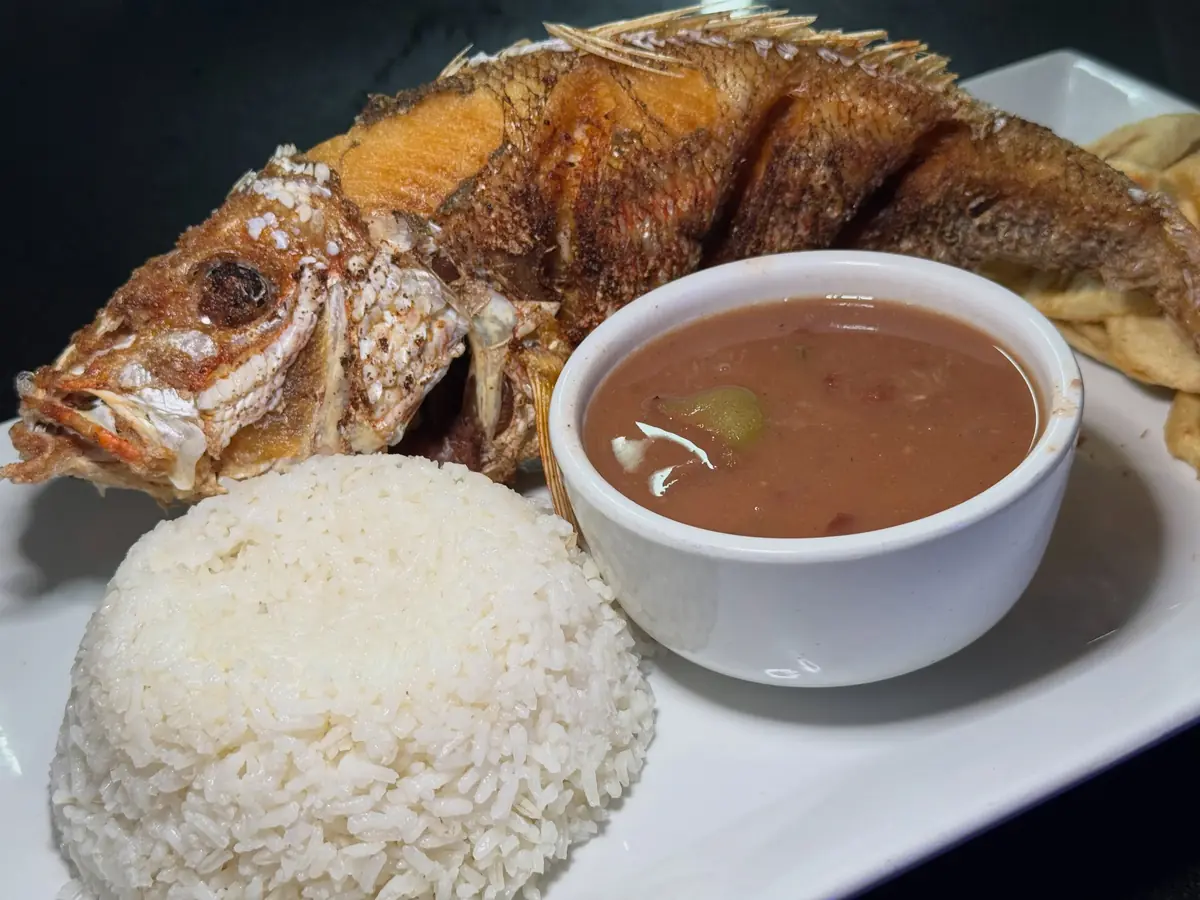
- Pescado frito, a whole fried fish, usually with tortillas and curtido on the side
- Mariscada, a thick cream-based seafood soup that eats like a meal and a half
- Camarones al ajillo, garlic shrimp
- Langosta jumbo rellena if you are splurging
- Pupusas, everywhere, and they are cheaper than anything else on any menu
Restaurante Acajutla at Km 66.5 is the upscale pick, with estuary views. La Hola Beto’s and Kikos sit closer to the middle. Nammu is inside the Izalco. The floating restaurants out in the estuary are the ones people remember; you get there by lancha and nowhere else. Roadside stands and food trucks along the boulevard handle cheap lunches.
Bring cash. Mid-range and upscale places take Visa and Mastercard, American Express less often, and the small marisquerías and vendors take nothing else.
When to go
Dry season runs November through April. Clear skies, calmer water, the best fishing, and the highest hotel rates. Wet season, May through October, means sunny mornings with afternoon downpours, fewer people, lower prices, and strong dorado and tuna fishing. Hurricane season officially spans June through November, and El Salvador is exposed to tropical storms during it.
Temperatures barely move: highs in the upper 80s and low 90s year-round, humid, with the ocean warm enough that nobody hesitates walking in.
The crowd calendar matters more than the weather here. Weekdays are close to empty. Weekends bring Salvadoran families down from the capital, along with music and ATVs on the sand. Semana Santa and the August Fiestas Agostinas are the two peaks; the beach is packed, the mood is festive, and rooms need booking well in advance. Pick your side of that trade deliberately.
Safety, money, and entry rules for US travelers
The advisory, and the part underneath it
The US State Department has El Salvador at Level 1, Exercise Normal Precautions, its lowest tier, first assigned in April 2025 and reaffirmed since. The advisory’s own summary attributes it to a dramatic drop in gang activity since 2022 and the resulting fall in violent crime. For context, the Congressional El Salvador Caucus cited a homicide rate falling from 104 per 100,000 in 2015 to 2.4 in 2024, though independent monitors have noted the official counts exclude certain categories of death. Advisory levels change; check travel.state.gov before you book.
Level 1 is not the whole picture. The State of Exception declared in March 2022 remains in effect. It suspends several constitutional protections, including the right to a speedy trial and access to counsel, and tens of thousands of people are imprisoned under it awaiting trial. Several US citizens have been detained under it and have not yet faced trial. In practice, foreign tourists are not the target and the street environment is calm, but carry ID, cooperate with police, and understand that legal protections you take for granted at home are currently suspended in this country.
Petty theft still happens in tourist areas. POLITUR, the tourist police, operates in 19 destinations. Leave the good watch at home.
Money
The US dollar is the official currency, which removes an entire category of travel friction. Bring small bills. Breaking a $50 or a $100 at a beach comedor or with a lancha operator is genuinely difficult, and $1, $5, $10, and $20 notes will cover almost everything you do here.
On bitcoin: a legislative reform passed in January 2025 and effective May 1 that year removed the requirement that businesses accept it. Acceptance is voluntary now and rare in practice, so plan on dollars and treat any crypto payment option as a bonus rather than a plan.
ATMs from Banco Agrícola, BAC Credomatic, and Davivienda are the reliable ones, with international withdrawal fees around $2 to $4. The State Department notes that ATMs are frequently out of order, so do not arrive on the peninsula with an empty wallet and a plan to find a machine.
Entry requirements
US citizens need a passport valid at the time of entry. No visa is required for stays of 90 days or under.
The old $12 tourist card is the one loose end. Reporting on a migration law reform indicates the fee was eliminated for visa-exempt nationals, and the State Department’s current El Salvador page no longer lists it. Carry $12 in cash anyway and check the US Embassy in San Salvador’s travel requirements page shortly before you fly. El Salvador is part of the CA-4 agreement with Guatemala, Honduras, and Nicaragua, which caps your combined time across all four at 90 days; immigration may ask for proof of onward travel.
Health, and a few local laws
No vaccinations are required for arrivals from the United States. The CDC recommends hepatitis A and typhoid for all travelers here, plus routine vaccines. Dengue is present, so pack repellent, and take it seriously during the wet season. Do not drink the tap water and skip ice at smaller places.
Buy travel insurance with medical evacuation coverage. The State Department is candid that El Salvador’s tourism industry is lightly regulated, that safety inspections are rare, and that serious injuries usually require transport to a major city for adequate care. That is worth remembering before you get on a jet ski.
Two laws that catch visitors out: since December 2024 El Salvador has enforced zero tolerance for drinking and driving, where any measurable blood alcohol level is a criminal offense carrying two to five years, and products containing THC, including most CBD, are illegal.
Costa del Sol compared with El Tunco and El Zonte
Most people planning an El Salvador trip are choosing between these three, and they are not substitutes for one another.
| Costa del Sol | El Tunco | El Zonte | |
|---|---|---|---|
| Sand | Grey-brown, wide, flat | Dark grey, rocky in places | Dark grey, small cove |
| Water | Calm, cloudy, genuinely swimmable | Strong shorebreak | Strong shorebreak |
| Surf | Weak | Consistent point and beach breaks | Consistent point break |
| Scene | Resorts, private villas, Salvadoran weekenders | Bars, hostels, nightlife | Small, slow, surf-focused |
| Walkable town | No | Yes | Yes, tiny |
| Best for | Families, swimming, fishing, mangroves | Surfers who want a scene | Surfers who want to stay a while |
| From SAL airport | 30 to 45 min | About an hour | About 75 min |
If you are building one El Salvador itinerary, the two coasts complement each other: a few days at Surf City for the waves and the walkable towns, one or two nights at Costa del Sol for flat water, boats, and fish.
What it actually costs
A cheap beach day, per person: $5 park entry, $2 parking split across the car, $8 for a palapa, and $5 to $15 for lunch at the food court. Under $30 without trying.
Mid-range, for two: a hotel at $60 to $150 a night, sit-down seafood plates at $10 to $20 each, and an estuary tour at $30 to $50 per person. Call it $150 to $250 for a full day including the room.
At the top end, a resort night plus a private airport transfer plus an offshore charter at $400 to $1,000 puts a single day comfortably past $600.
The thing that surprises US visitors is how cheap the good version of this trip is. The estuary tour, which is the best thing to do here, costs less than dinner.
The downsides nobody puts in the brochure
Stacked in one place, so you can decide with clear eyes:
- The sand is grey-brown. Every page promising white sand is describing a beach that does not exist here.
- The water is not clear. Sediment and dark sand mean it never will be.
- There is no town. Private walls block the shoreline for long stretches, and you cannot stroll from your hotel to a strip of restaurants.
- Weekends are loud, with music from the ranchos and ATVs running the sand.
- Hotel value is inconsistent. The two best-known resorts both draw regular complaints about upkeep relative to price.
- The surf is poor by Salvadoran standards, which is a high bar to fail.
- Litter turns up near the busier access points.
None of that makes it a bad trip. It makes it a specific trip.
Two itineraries that work
The day trip from San Salvador
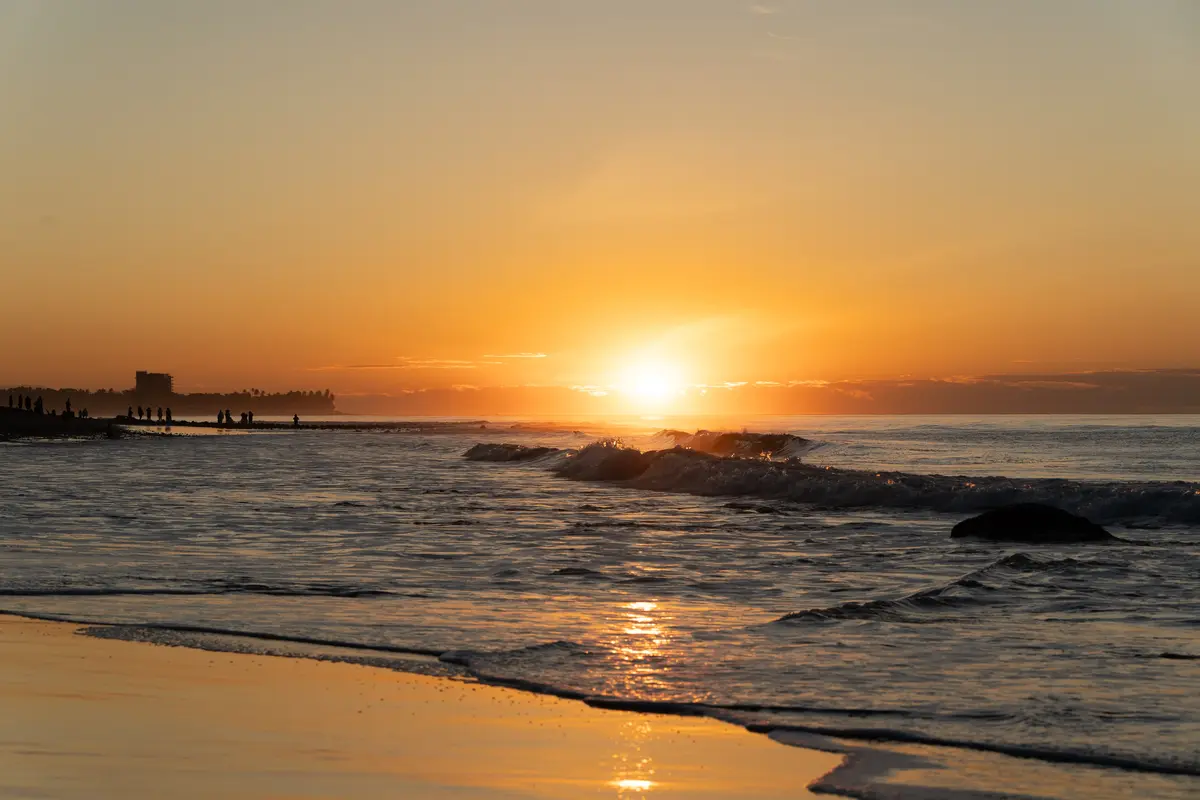
Leave the capital by 8 a.m. Drive to the Parque Recreativo Costa del Sol, pay the $5, rent a beachfront palapa for $8, and swim through the morning while the sand is still bearable underfoot. Lunch at the food court or drive up the boulevard to Restaurante Acajutla at Km 66.5 for something better. Walk the beach toward La Puntilla in the late afternoon when the heat breaks, watch the sunset, and be back on the highway before dark.
Two nights, ocean and estuary
Fly in, pick up a car, and be at your hotel within 45 minutes. Spend the first afternoon doing nothing but swimming. Book a three-hour lancha tour for the following morning, early, when the birds are active and the light is good, with lunch at one of the floating restaurants. Use the second afternoon for a nap and a long beach walk. On day three, either take a charter out of Bahía del Sol or drive up to Surf City on your way to whatever is next.
So, is Playa Costa del Sol worth it?
Yes, for three kinds of traveler. Families with kids who need water they can actually get into. Anglers, because the sailfish grounds off this coast are the real thing and the marina makes them accessible. And anyone flying in or out of SAL with a spare day, because no other decent beach in El Salvador is this close to the terminal.
No, if you came for a beach town. El Tunco and El Zonte have the walkable streets, the bars, the surf, and the backpacker energy, and Costa del Sol has none of it by design. This is where Salvadoran families spend a Sunday and where the capital’s wealthy keep walled beach houses. Book it for the estuary, the fish, and the flat water, and it delivers well beyond what you pay. Book it expecting a Caribbean postcard and you will spend the whole drive home wondering what everyone was talking about.