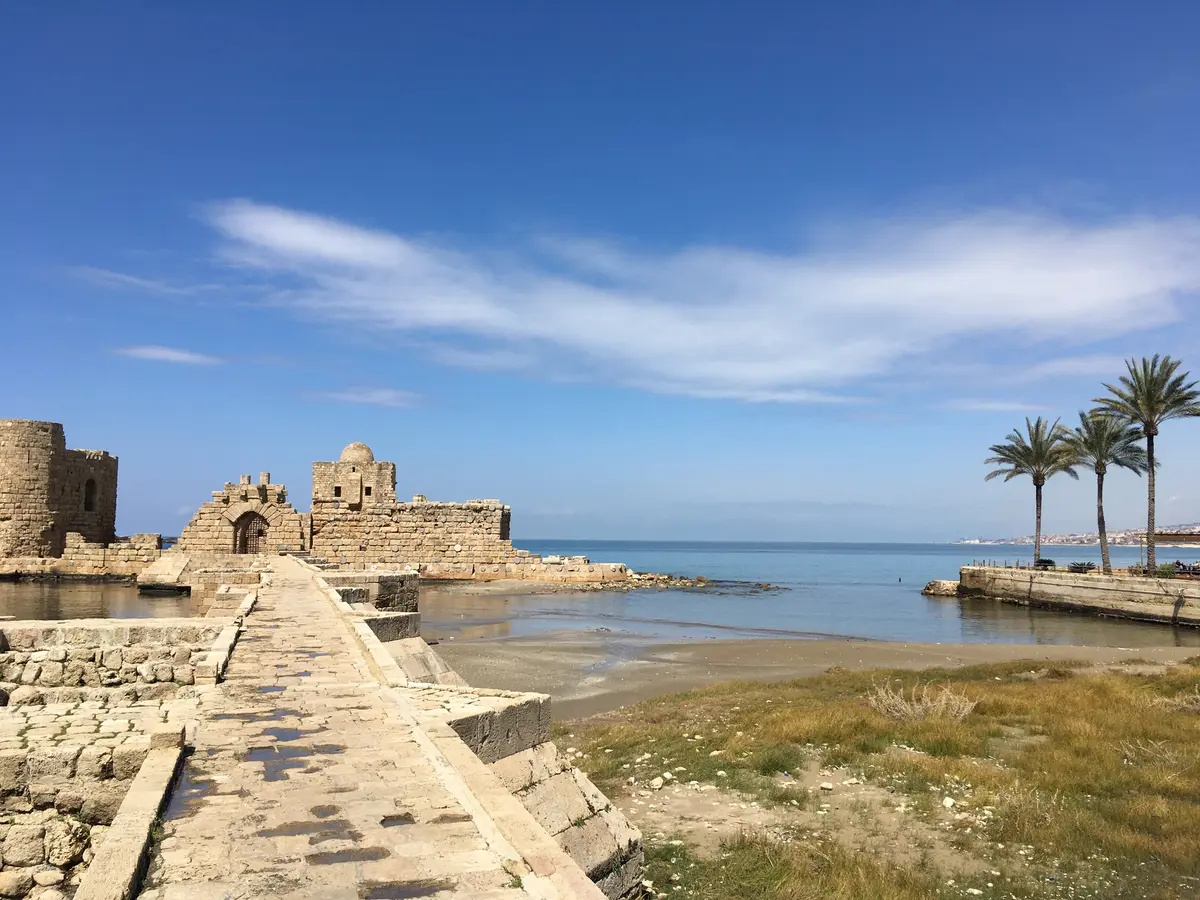
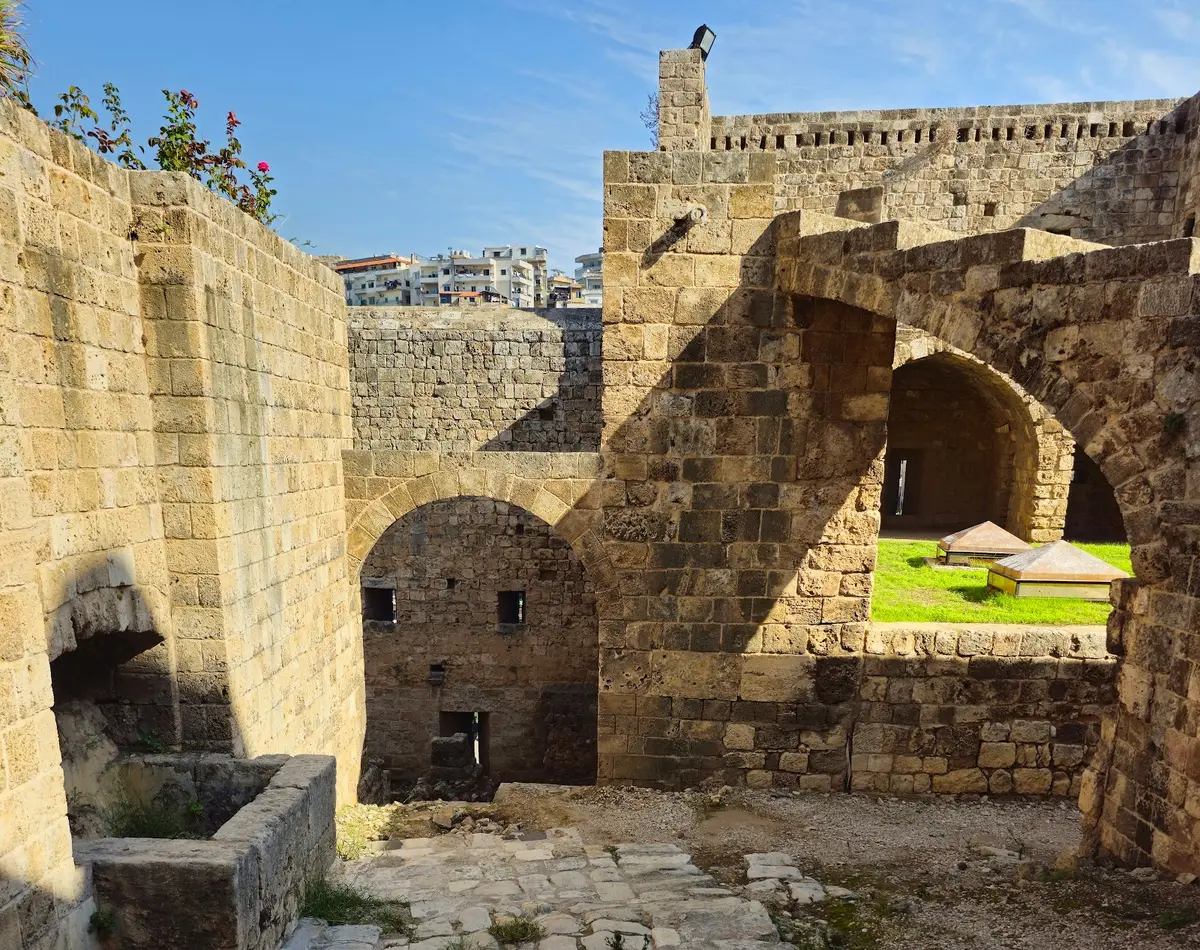
Lebanese street food is built on garlic, acid, charcoal smoke and bread pulled from neighborhood ovens — a cuisine that defines the country far more than any monument does. This guide covers the institutions that matter in Beirut, Bourj Hammoud and Tripoli, what a meal actually costs in the dollarized economy, and — before any of that — whether you should be going at all right now.
Is it safe to travel to Lebanon right now?
No. The US State Department maintains a Level 4 “Do Not Travel” advisory and in February 2026 ordered the departure of non-emergency embassy staff. The UK, Canada and Australia issue equivalent warnings. Airstrikes have hit Beirut, the Bekaa and southern Lebanon; consular support is severely limited. Treat this guide as reference for when the safety picture for American tourists improves, or for diaspora and food-culture research.
The UK FCDO also advises against all travel to Tripoli, Baalbek-Hermel, the South, Nabatiyeh and Beqaa governorates specifically — meaning three of the four regions this guide covers are formally off-limits even for travelers willing to ignore blanket advisories. Beirut’s southern suburbs (Dahiyeh) are an active target. Most standard travel insurance is void for travel against a government warning.
Pro Tip: If you are already in the country, check the US Embassy Beirut security alerts and the FCDO Lebanon page the same morning you plan to move. Conditions change inside 24 hours and Middle East Airlines is currently the only consistently operating carrier out of Rafic Hariri International.
How does the dollarized economy affect eating out in Lebanon?
Lebanese street food now runs almost entirely on US dollars under Lebanon’s dollarized currency system. The Lebanese lira is pegged around 89,500 LBP to $1 and has held roughly flat for over a year, but vendors quote in dollars, reject worn notes and often cannot make dollar change. A shawarma sandwich at the benchmark spots runs $4-6; a full meal with sides and a drink lands at $10-15 per person.
The cash rules are strict and non-negotiable at street level:
- Bills accepted: Post-2013 design US dollars only, in pristine condition. Torn, marked or pre-2013 notes get waved off.
- Small change: Exchange $20 into lira at a licensed exchange (never a hotel) for coffee, juice and tips. Most vendors cannot break a $20 for a $2 manousheh.
- Cards: “Fresh dollar” cards — linked to accounts funded after October 2019 — work at mid-range restaurants, almost never at the street counters you actually want to eat at.
- ATMs: Unreliable. Dispense lira at poor rates. Do not count on them.
Prices for the classics sit in a narrow band: manousheh zaatar $2-3, falafel sandwich $2-3, shawarma sandwich $4-6, a box of Hallab sweets by weight around $15-20 per pound.
What is the forn, and why does it anchor Lebanese food?
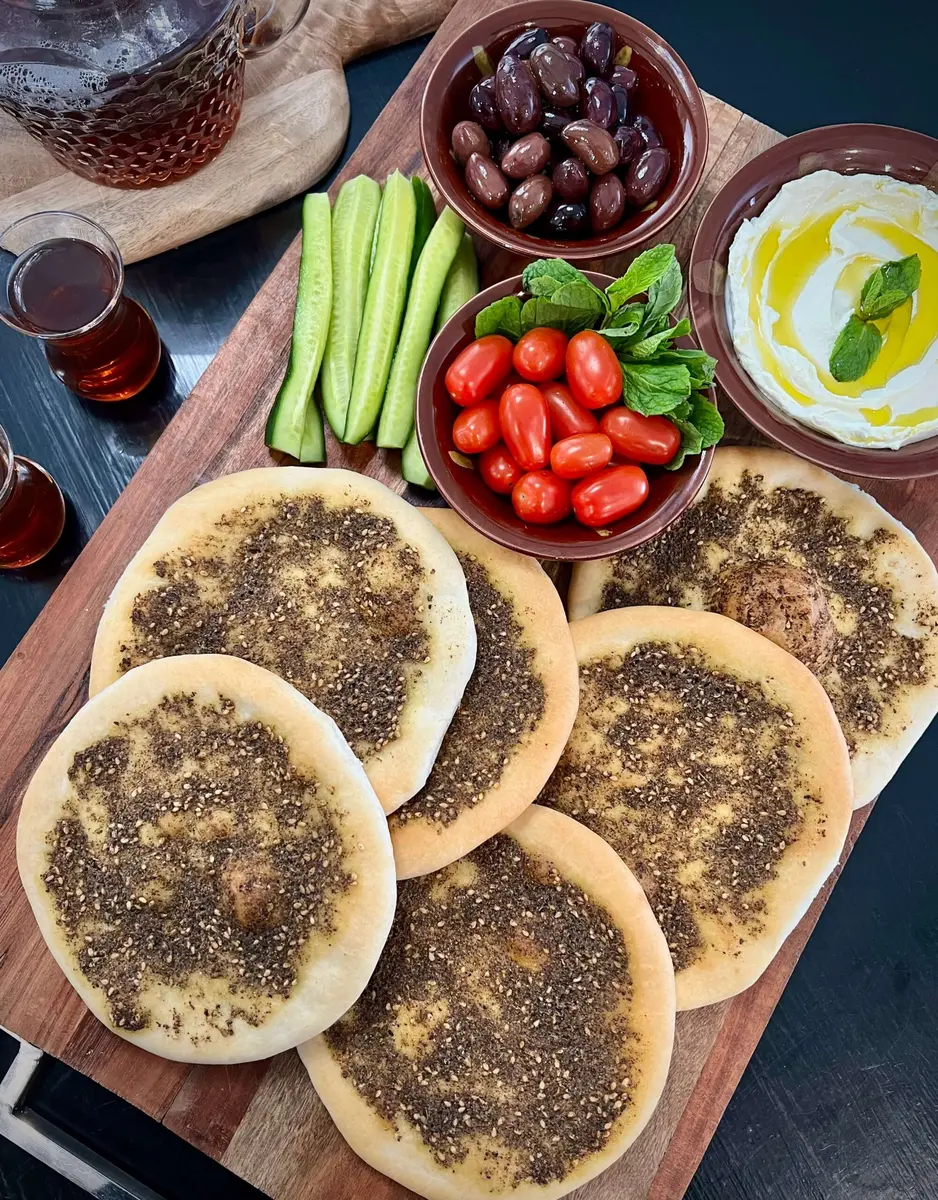
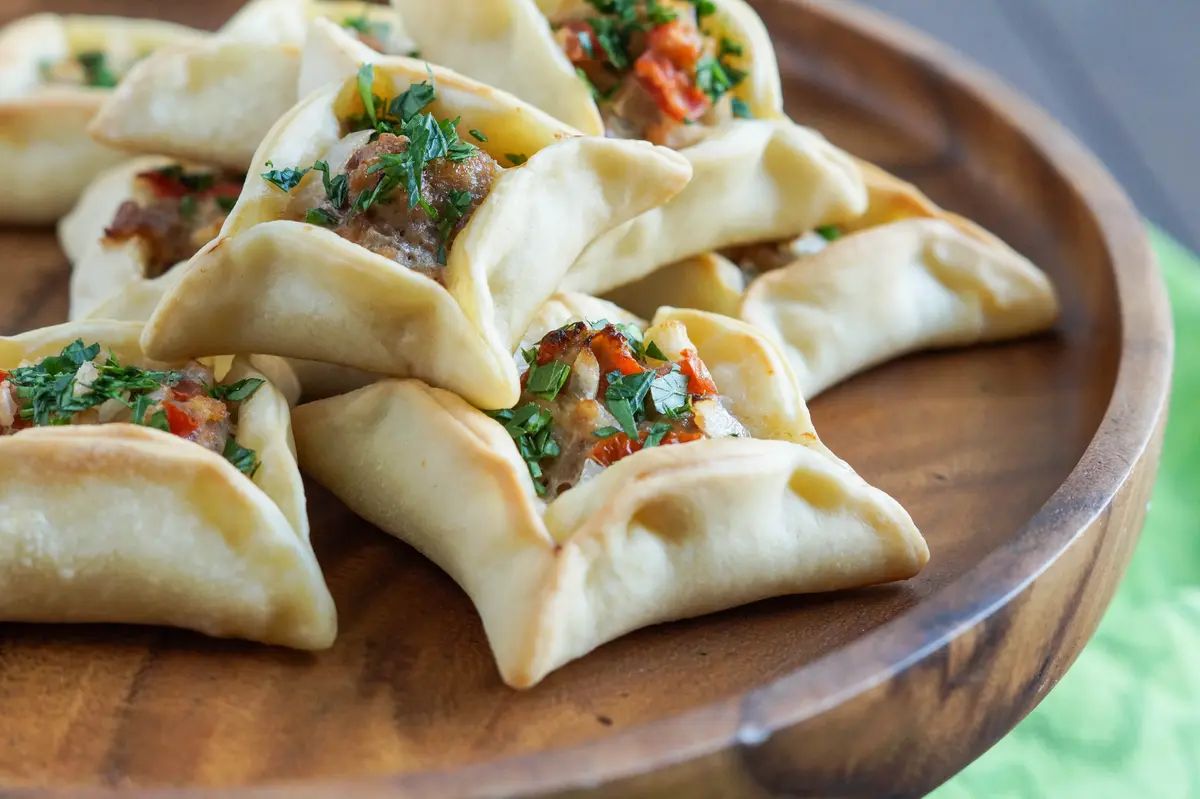
The forn is the neighborhood bakery with a wood- or gas-fired oven, and it is where locals eat breakfast in Beirut and everywhere else in the country. Historically families brought their own rolled dough to be baked; today the forn sells manousheh — disk flatbreads dimpled by fingertips to hold toppings — off the counter from roughly 6 a.m. until the dough runs out, usually early afternoon.
The three orders that cover 90% of what locals eat:
- Zaatar: Wild thyme, sumac, sesame and olive oil. The default breakfast. Order it with cucumber, tomato, mint and olives on the side.
- Jebneh: Akkawi cheese, sometimes with zaatar layered under it. Richer, saltier, better at 10 a.m. than at 7.
- Lahm bi ajin: Spiced minced meat with pomegranate molasses. A meal, not a snack.
Fold it in half, eat it walking. The good ones cost $2-3. The very good ones are indistinguishable from the regular ones — this is a cuisine where small neighborhood forns often beat named chains.
Where should you eat Lebanese street food in Beirut?
Beirut’s street food canon is narrower than most guides pretend. Four spots do the heavy lifting: a 24/7 shawarma complex in Hamra, a meat shawarma specialist in a nondescript suburb, the disputed falafel corner on Damascus Road, and a mastic ice cream parlor in Achrafieh. You can hit all four in a long day with a rideshare between stops.
Barbar (Hamra) — the 24/7 shawarma complex
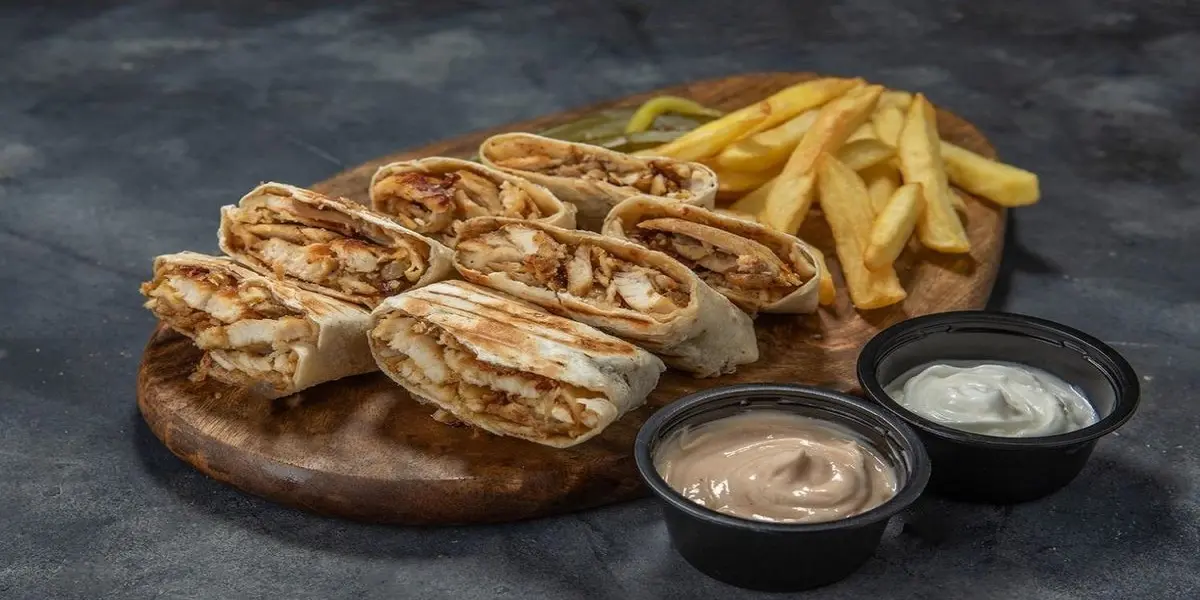
Operating on Spears Street and Piccadilly Street since 1979, Barbar is a cluster of specialized counters — shawarma, falafel, juice, ice cream, grill — wrapped around a dine-in room. At 2 a.m. the place is louder than most Beirut clubs, and the chicken shawarma arrives fast, compressed into pillowy bread with a heavy slick of toum (whipped garlic sauce). The beef version is smaller, drier, and not what you came for.
The Verdict: The chicken shawarma is the benchmark for accessible shawarma anywhere in the world — genuinely. The complaint locals have is price creep (a platter for two is around $25 with drinks) and occasional over-salting. Order the chicken sandwich, not the platter. Skip the ice cream; it is mediocre next to what you can get in Achrafieh.
- Location: Spears Street and Omar Ben Abdel Aziz Street (Piccadilly), Hamra, Beirut
- Cost: Sandwich $4-6, platter for two around $25
- Best for: Late-night arrivals, first shawarma of a trip, solo eaters
- Time needed: 20-30 minutes
Joseph (Sin El Fil) — the meat shawarma benchmark
Joseph Snack is a low-ceilinged room in Sin El Fil, 3 miles (5 km) east of central Beirut, and it routinely tops international shawarma rankings despite having no sign worth photographing. The meat version here is the point: beef and lamb, sliced thin, dressed with nothing but parsley, white onion and tahini. No toum, no pickles, no fries inside the wrap.
The Verdict: It is a different animal from Barbar — cleaner, quieter on the palate, the fat-to-lean ratio calibrated so the bread stays dry. The friction point is location; you need a rideshare in both directions, about $5-8 each way from Hamra. It is worth it exactly once per trip.
- Location: Elias El Helou Street, Sin El Fil
- Cost: Sandwich $5-7
- Best for: Shawarma purists, anyone disappointed by heavy garlic versions
- Time needed: 15-20 minutes
Falafel M. Sahyoun (Damascus Road) — the brothers’ feud
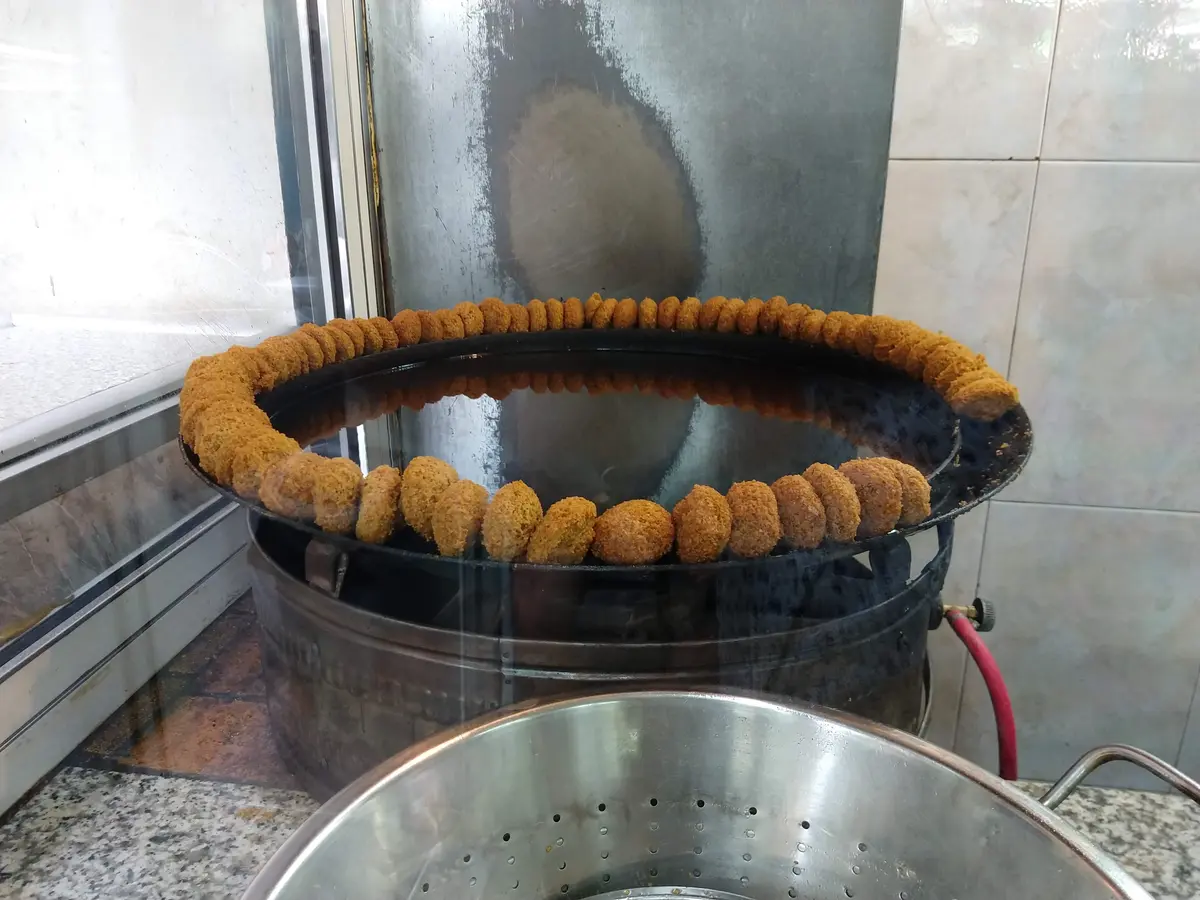
On Damascus Road in Basta, two of Beirut’s best falafel counters sit shoulder to shoulder with near-identical green-and-white signage. The original Sahyoun family split decades ago, and the brothers have been competing across ten feet of sidewalk ever since. Both fry to order. Both serve the same format: a stack of golf-ball falafels, tahini, pickled turnip, spicy pepper paste, mint, tomato, rolled in thin markouk bread.
The Verdict: Order from both, eat one sandwich on the sidewalk between them, and decide for yourself — this is the honest answer. The falafel is lighter and crunchier than the Egyptian style, and the sandwiches cost $2-3 each, so there is no reason to pick a side before trying. Most locals have a preference; most visitors cannot tell them apart.
- Location: Damascus Road, Basta al-Fawqa, Beirut
- Cost: Sandwich $2-3
- Best for: Vegetarians, anyone curious about a culinary feud
- Time needed: 15 minutes
Hanna Mitri (Achrafieh) — mastic ice cream worth finding
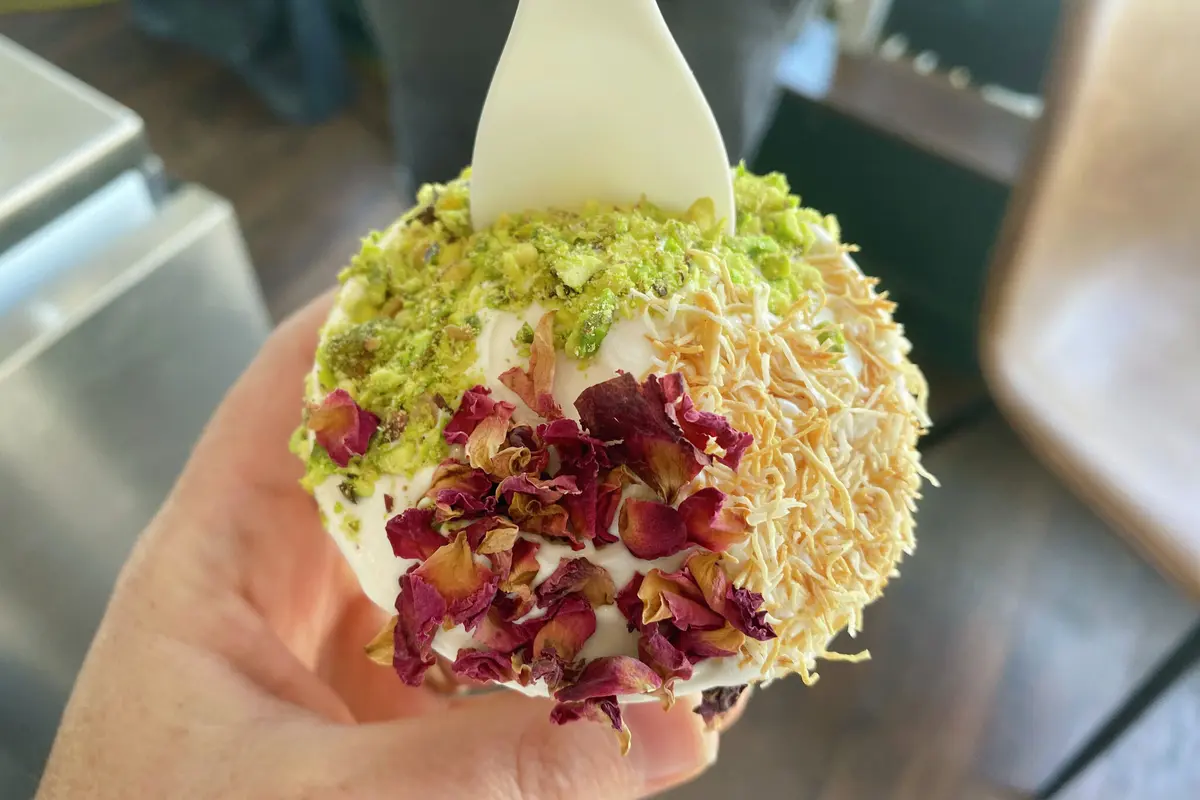
Hanna Mitri is a hole in a wall in Achrafieh with no sign, which is why the address and a Google Maps pin matter more than any description. The specialty is booza — Arabic ice cream stretched with mastic resin and salep, pounded in a metal drum until it resists melting and pulls off the spoon like soft taffy. The flavors rotate with the season.
The Verdict: The texture is genuinely unfamiliar if you have only eaten Western ice cream — denser, chewier, less sweet. The rose-pistachio and apricot-pine-nut flavors are the two to order. Asking a shopkeeper nearby where Hanna Mitri is will almost always work; asking a younger resident on the street usually will not.
- Location: Sursock Street area, Achrafieh, Beirut
- Cost: Scoop $3-4
- Best for: Dessert after Barbar or Joseph, booza curiosity
- Time needed: 10 minutes
What makes Bourj Hammoud’s Armenian food different?
Bourj Hammoud is the Armenian quarter immediately northeast of central Beirut, built by refugees who arrived in the 1920s and brought a distinct spice profile with them. The food here leans on fermented meats, pomegranate molasses, aleppo pepper and garlic in quantities that would be considered aggressive even by the standards of traditional Lebanese cuisine. It is a denser, noisier eating experience than Hamra.
Mano vs. Bedo — the sujuk showdown
Mano builds its reputation on sujuk shawarma — fermented, aleppo-spiced sausage meat, shaved hot and wrapped with toum. Bedo leans on basterma, air-cured beef coated in fenugreek and garlic paste, sliced thin and rolled with pickles. Neither is subtle.
- Sujuk (Mano): More fat, more garlic, more heat. Order this first if you like salumi.
- Basterma (Bedo): Drier, more complex, an acquired taste for the fenugreek crust.
- Cost: Sandwiches $4-6 at both.
Ghazar Bakery — lahmajoun with pomegranate molasses
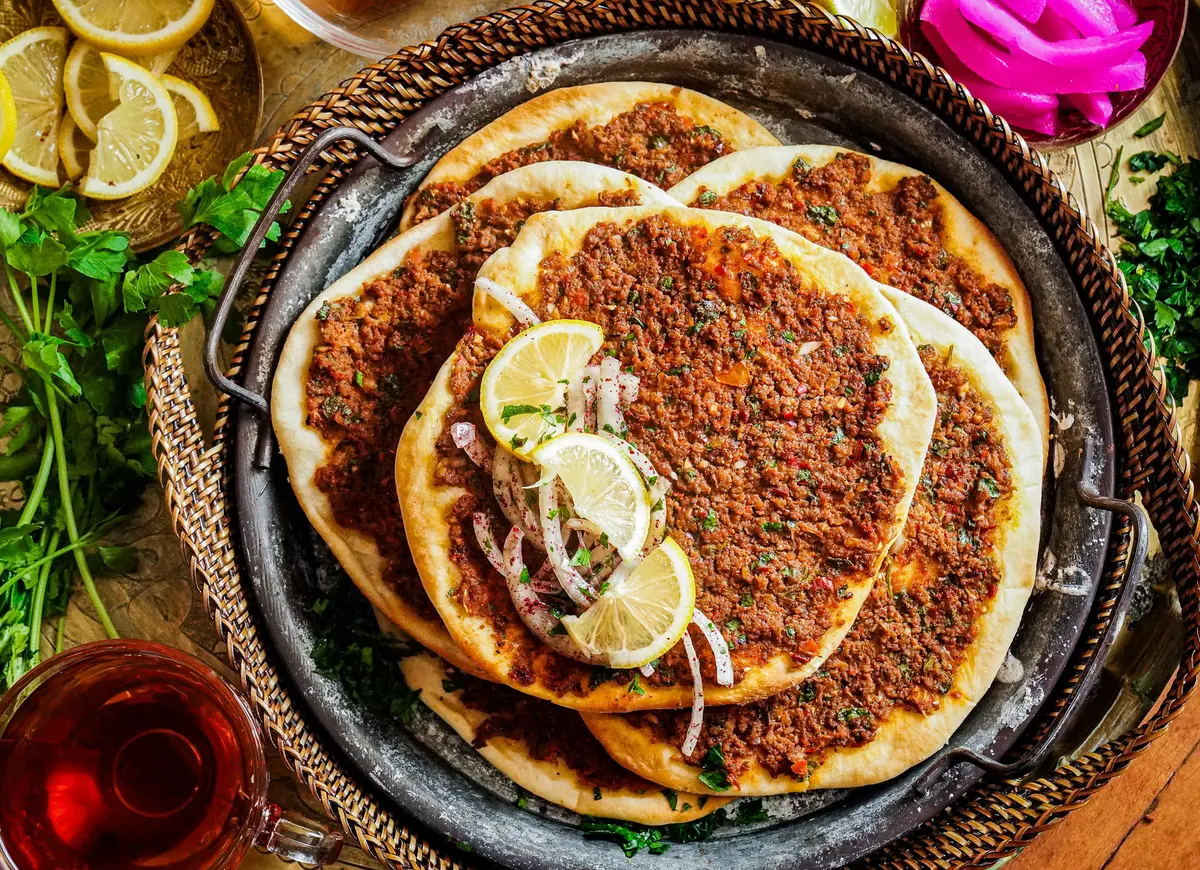
Ghazar makes lahmajoun — sometimes called Armenian pizza — on dough thin enough to roll. The topping is minced meat, onion, parsley, pepper paste. Locals drizzle pomegranate molasses across the surface, roll it tight, and eat it in four bites standing up. Around $2 per piece; order three.
Varouj — the no-menu chef’s table
Varouj is a tiny room with maybe six tables and no printed menu. Whatever came in fresh that morning becomes the order. This is either the best meal of a Lebanon trip or a wasted hour, depending on whether you trust the cook. Reserve. Say “chef’s choice” and stop negotiating.
- Location: Arax Street, Bourj Hammoud
- Cost: $20-30 per person, drinks extra
- Best for: Adventurous eaters, couples, people who hate menus
- Time needed: 90 minutes
Pro Tip: Bourj Hammoud gets dense and disorienting. Pin Mano, Ghazar and Varouj in advance; the streets are narrow and signage is mostly Armenian.
Why is Tripoli the capital of Lebanese sweets?
Tripoli — 50 miles (80 km) north of Beirut — has the country’s deepest dessert tradition, anchored by the 140-year-old Hallab dynasty and a medieval souk that still operates as a working market. The sweets are more honey-forward and less overtly sugary than what you find in Beirut, and the savory street food (fatteh, moghrabieh wraps) runs at a different price point. Note: Tripoli is currently on the UK FCDO “do not travel” list.
Dabboussi — the moghrabieh wrap
Dabboussi claims to have invented the moghrabieh wrap: spiced giant couscous, caramelized onions and sometimes chicken, folded into markouk bread. It is heavy in the way a good breakfast burrito is heavy — carb-on-carb, deliberately so. Around $4-5. The old souk setting does more work than the food does, which is saying something.
Akra — fatteh at breakfast
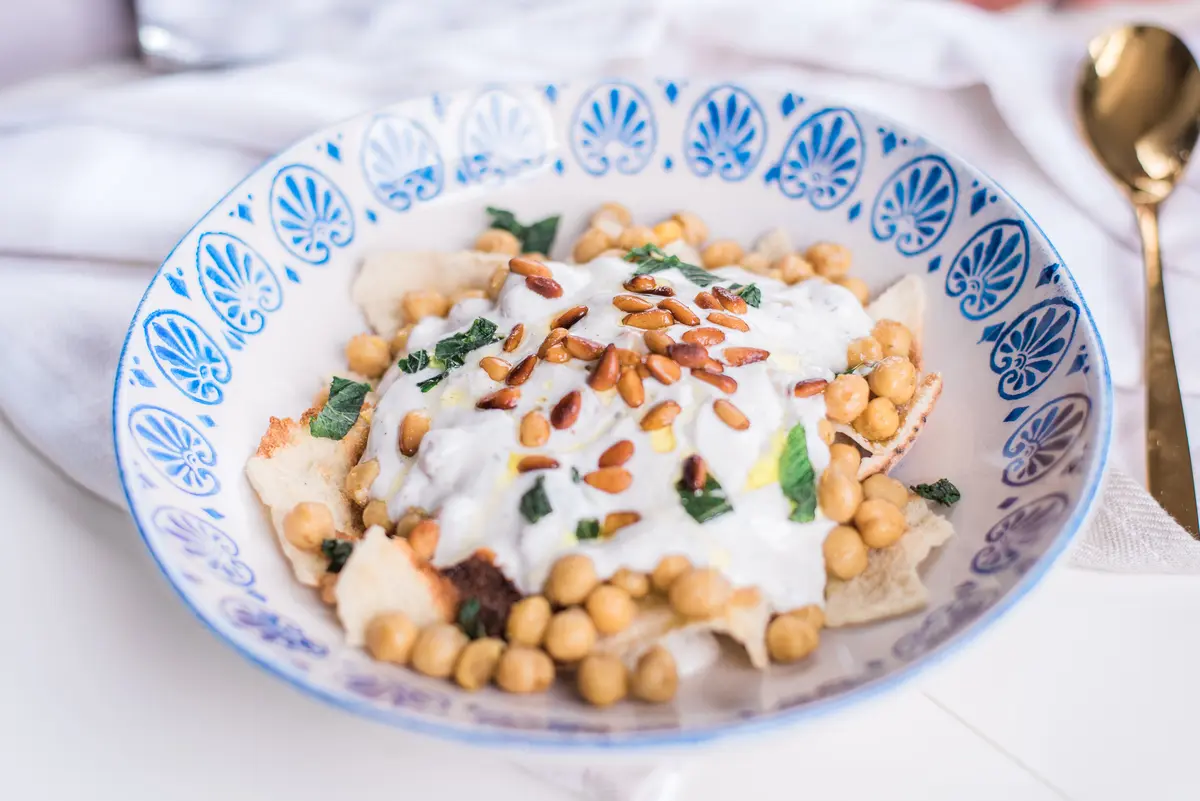
Akra serves fatteh: toasted bread, chickpeas, tahini-yogurt, a drizzle of browned butter, sometimes pine nuts. The room is loud and the turnover is fast. Arrive before 9 a.m. on a weekend or the first batch of bread is gone and they are serving the second-best version. Around $5-7.
Hallab 1881 — the sweets palace
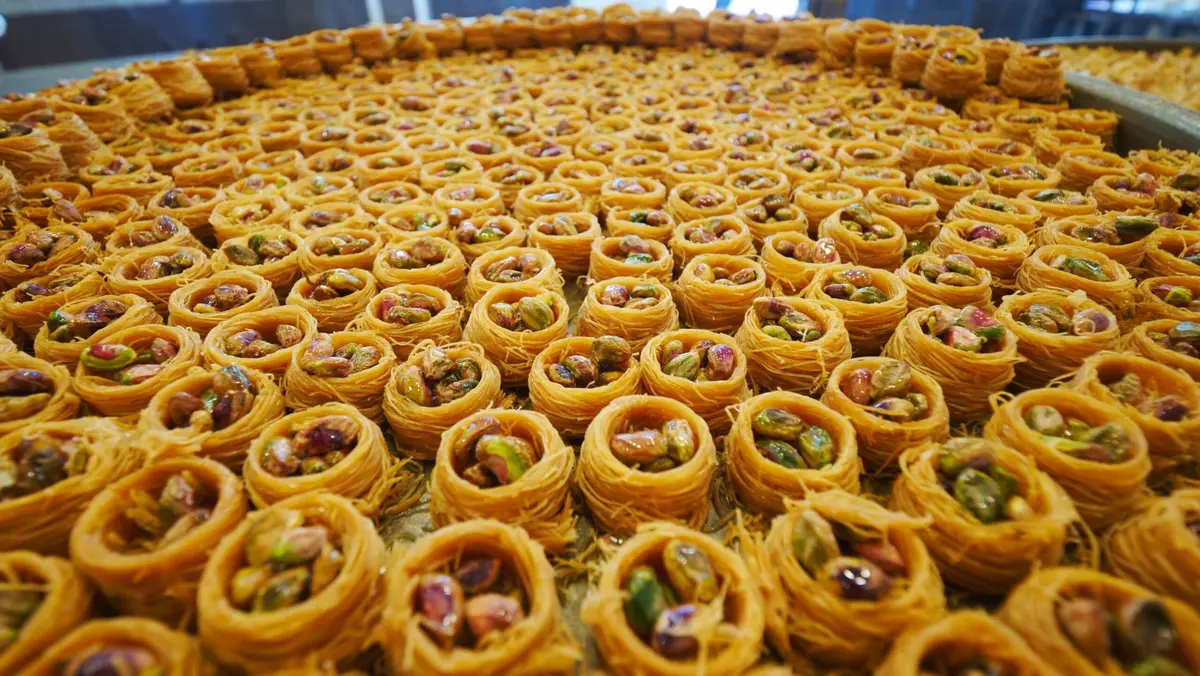
Abdul Rahman Hallab & Sons is a multi-story operation where you can actually watch baklava being tray-assembled behind glass. Order by weight at the counter; $15-20 per pound gets a mixed box big enough for eight people. The specialties to prioritize:
- Halawet el jibn: Sweet cheese rolls with ashta cream inside and orange blossom syrup on top.
- Maamoul bi ashta: Shortbread stuffed with clotted cream. Eat within an hour.
- Osmalieh: Shredded kataifi dough around ashta, doused in syrup.
Skip the chocolate-dipped pieces. They exist for tourists and degrade the texture.
What else is worth eating outside the big cities?
The coastal stretch between Tripoli and Saida, plus the Bekaa Valley, carry regional specialties that do not travel well into Beirut. This is where some of the best single-dish meals in Lebanon happen, but every one of these areas currently sits inside a “do not travel” advisory zone.
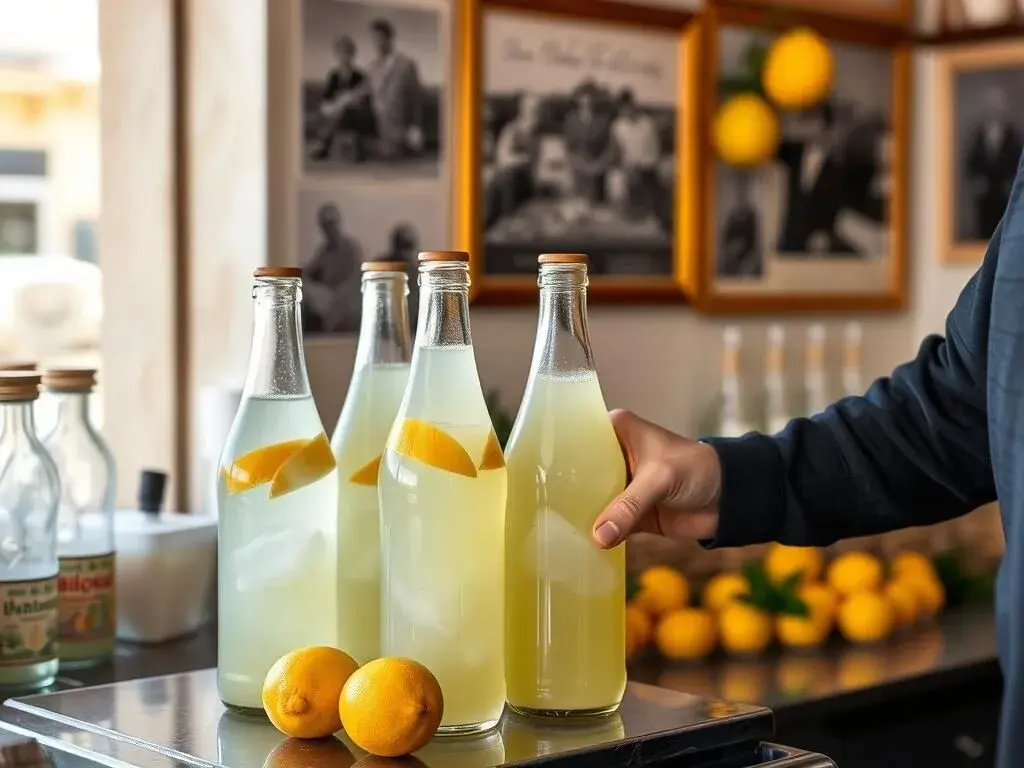
- Batroun (coast, 34 miles / 55 km north of Beirut): White lemonade made with cold-pressed fresh lemon essential oils from groves 2 miles inland. $2-3 a glass on the seawall.
- Chez Maggie (Batroun): Rustic seafood on the water. Whole fish by weight, mezze, arak. Around $30-40 per person.
- Falafel Akkawi (Saida): Falafel with house-pickled spicy peppers that are the actual reason to go. $2-3 a sandwich.
- Lakkis Farm (Bekaa, near Baalbek): Farm-to-table meat pies and goat yogurt, eaten under vines. $15-20 per person.
Which guided food tours actually deliver?
Three operators run the bulk of serious Beirut food tours, each with a distinct angle. All were operating pre-conflict; availability now is intermittent and depends on the security picture that week. Expect $60-100 per person for a half-day tour, lunch included.
- NoGarlicNoOnions: Run by Anthony Rahayel, a veteran food critic. High energy, dense itinerary, leans toward newer and more experimental spots. Best for a second visit.
- Souk El Tayeb: Built around the Saturday farmers’ market of the same name. Focuses on heritage producers, rural Lebanese cuisines, social-impact framing. Best for travelers who want context, not just calories.
- Taste of Beirut: Smaller, more flexible, owner-led. Willing to build a route around what you care about (sweets, meat, vegetarian). Best for first-time visitors who want a friendly pace.
Pro Tip: Whoever you book, tell them the four spots in this guide you most want to hit. A good operator will route around your list instead of running their default circuit.
What is a sobhiyeh, and why should you join one?
A sobhiyeh is the mid-morning coffee-and-conversation ritual that anchors Lebanese culture and social life — held in homes, cafes, bean shops and on plastic stools outside forns between roughly 9 and 11 a.m. It is the opposite of a grab-and-go culture: you sit, you argue about politics, you drink two or three small cups of cardamom coffee, you eat something small.
The etiquette is simple and rarely explained to visitors:
- Sit down. Do not order to-go. Taking a manousheh in a bag is legal but marks you immediately.
- Accept the second coffee. Refusing reads as rude. Refuse the third if you need to.
- Pay when leaving, not on arrival. In most bean shops you flag the owner, not a waiter.
- Do not split the check at a table you were invited to. If a Lebanese host has brought you, they are paying. Reciprocate the next day somewhere else.
This is the part of Lebanese food culture no guide tour can manufacture. On my last visit, an hour at a fuul bean shop in Gemmayzeh with three strangers did more to explain the country than three days of sightseeing before it.
Before you book
TL;DR: Lebanese street food is worth planning a trip around — once Level 4 advisories are lifted. Bring crisp post-2013 US dollars, eat manousheh at a forn before 10 a.m., hit Barbar for chicken and Joseph for meat, cross to Bourj Hammoud for sujuk, and go to Tripoli for Hallab sweets and fatteh. Skip the tourist-facing chocolate baklava and anything that arrives in a glossy bag.
For now: monitor your home country’s travel advisory, save this guide alongside a full Lebanon travel guide for broader context, and follow the three tour operators listed above on social media — when they restart regular schedules, that is the earliest reliable signal that the food-tourism circuit is functioning again.
What’s the one Lebanese dish you would plan a trip around — and where did you first eat it?