The best falafel in Beirut isn’t one shop — it’s a five-way argument locals have been having for a century. From a sidewalk feud between estranged brothers on Damascus Road to a fava-bean recipe older than modern Lebanon, here are the five spots worth skipping your hotel breakfast for.
I ate through all five in 36 hours on my last trip. My arteries haven’t forgiven me, but my notes are honest: paper-thin bread that dissolves in three bites at one shop, pillowy loaves at another that soak up tahini like a sponge, and one fava-only recipe that tastes completely unlike the chickpea version most of the world calls falafel. Prices below are in USD because Beirut is now a cash-dollar city — more on that further down.
1. Falafel M. Sahyoun — the feuding brothers on Damascus Road
Standing on Damascus Road eating a Sahyoun sandwich means you’re literally on what was once a sniper’s alley along Beirut’s old Green Line — the demarcation that split the city during the civil war. The shop opened here in 1933 and has been feeding Beirutis ever since. After a 2006 family falling-out, two brothers split the business and opened storefronts separated by a single tiled wall. They share a founding recipe, a grandfather, and a last name. They do not speak.
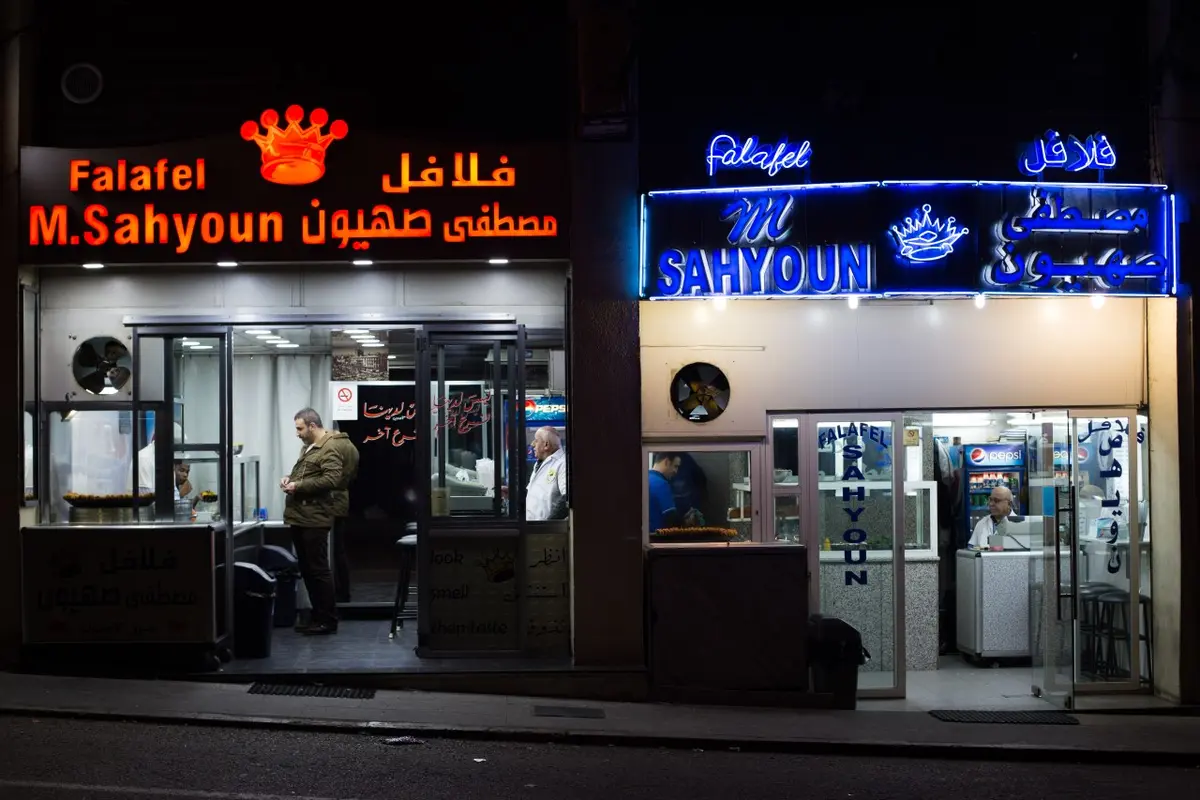
The blue-signed “M. Sahyoun” on the right is the original 1933 shop, run by Zouheir. The red-neon “Falafel M. Sahyoun” on the left is Fouad’s, opened in 2006. Locals debate which is better with the same conviction reserved for politics. In blind tastings — and I’ve done two — they come out nearly identical.
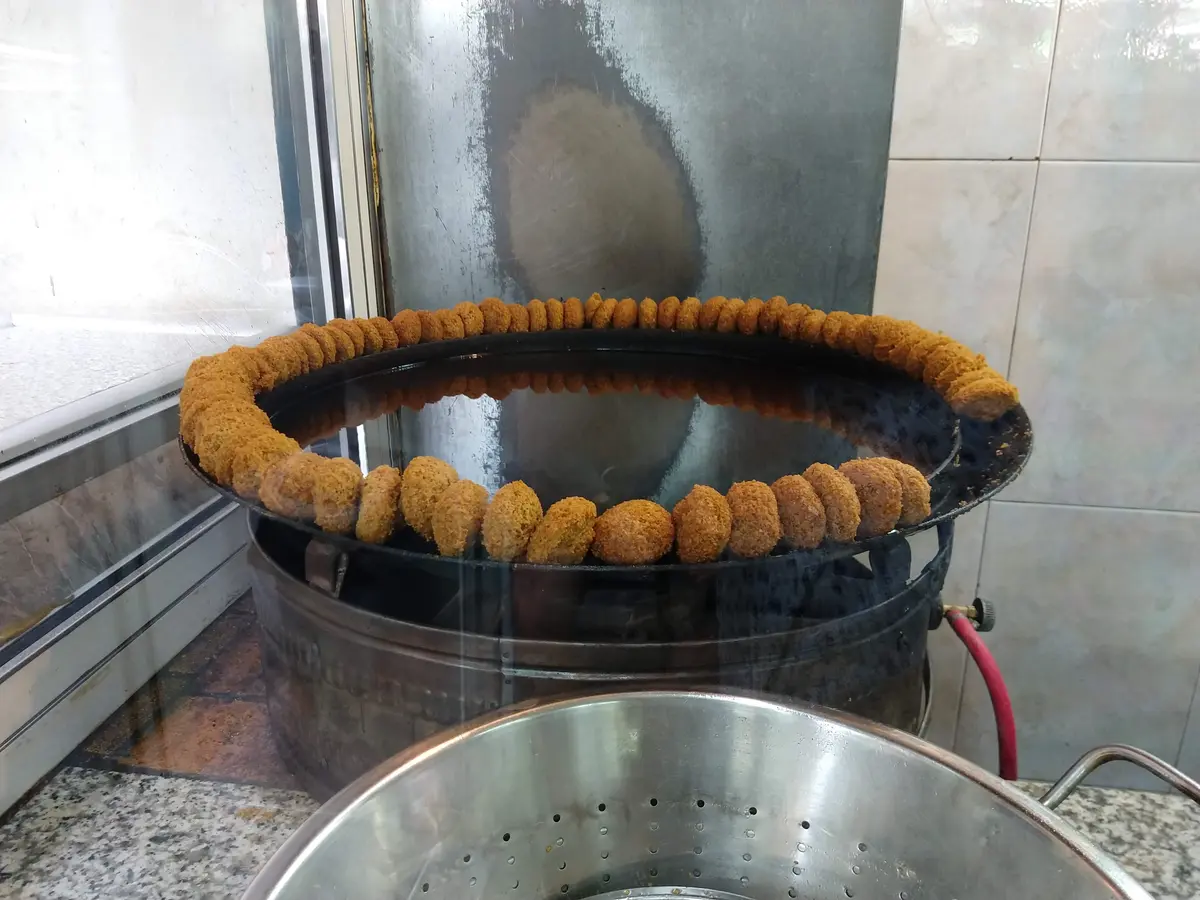
The bread is the giveaway: paper-thin Arabic flatbread that almost disappears as you eat, so the falafel carries the sandwich instead of the carb. The balls shatter on the first bite with a crust so crisp it sounds like breaking glass, and the interior is steam-hot and light. Both shops skip the pickle, letting the pure roasted-chickpea flavor come through. Ask for the spicy version and they’ll smear a slow-burn chili paste directly onto the bread.
Honest friction: sandwiches are small — you’ll want two. There’s no seating, so you’ll eat on the sidewalk leaning against parked cars. The block is industrial and gritty, which is the charm for some and the turn-off for others.
Pro Tip: Order one from each brother on the same visit and eat them side by side. Neither brother will acknowledge the other exists, and the staff will happily ignore that you just came from next door. It’s the most Beiruti lunch you’ll ever have.
- Location: Damascus Street, Bechara el-Khoury / Ras el-Nabeh, Beirut
- Cost: $3-4 per sandwich (cash USD strongly preferred)
- Best for: Falafel purists, history buffs, budget travelers
- Time needed: 15-20 minutes, standing
2. Restaurant Joseph — the Sin El Fil pilgrimage
Tucked into the residential eastern suburb of Sin El Fil, Joseph is the spot Beirutis send you to when you ask a second time. Opened in 1972 and still family-run, the shop went global after its chicken shawarma won London-based FoodieHub’s “Tastiest Sandwich in the World” title, beating 4,000 nominees across 150 cities. The falafel counter sits a few meters up the road from the shawarma spit, facing Saydeh church near the Saloumi roundabout.
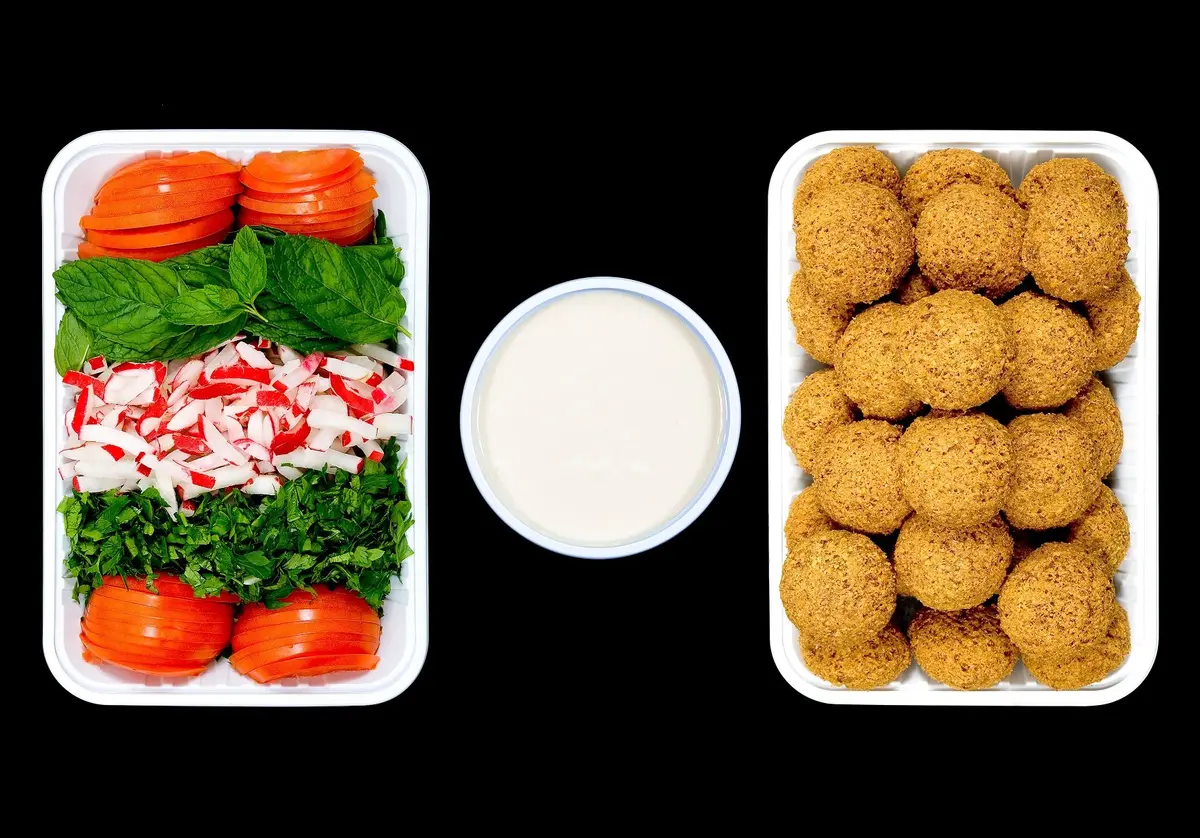
If Sahyoun wins on history, Joseph wins on texture. The bread is fresh, thick and pillowy — a soft, chewy counterpoint to the crust that holds up to sauce without going soggy. The recipe uses a blend of fava and chickpea that produces a crunchy exterior and a dense, light interior at the same time. Like Sahyoun, Joseph skips pickles entirely, relying on radish, parsley, tomato and a heavy hand with garlicky tahini.
Honest friction: the garlic is intense — truly intense. Several reviewers (and me, the morning after) describe the after-effects as “memorable.” Sin El Fil is a 15-20 minute drive from central Beirut with no metro alternative. The roundabout out front turns into double-parked chaos at lunchtime; don’t drive yourself.
Pro Tip: Order the shawarma-falafel combo on one trip. The shawarma counter and the falafel counter are technically separate shops fifty meters apart but run by the same family. One taxi, two sandwiches, no guilt.
- Location: Mar Elias / Saydeh Street, Sin El Fil (facing Saydeh church, near Saloumi roundabout)
- Cost: $4-6 per sandwich
- Best for: Texture obsessives, garlic tolerators, anyone doing a shawarma-falafel combo
- Time needed: 20-30 minutes on site, plus 15-20 minutes of transit
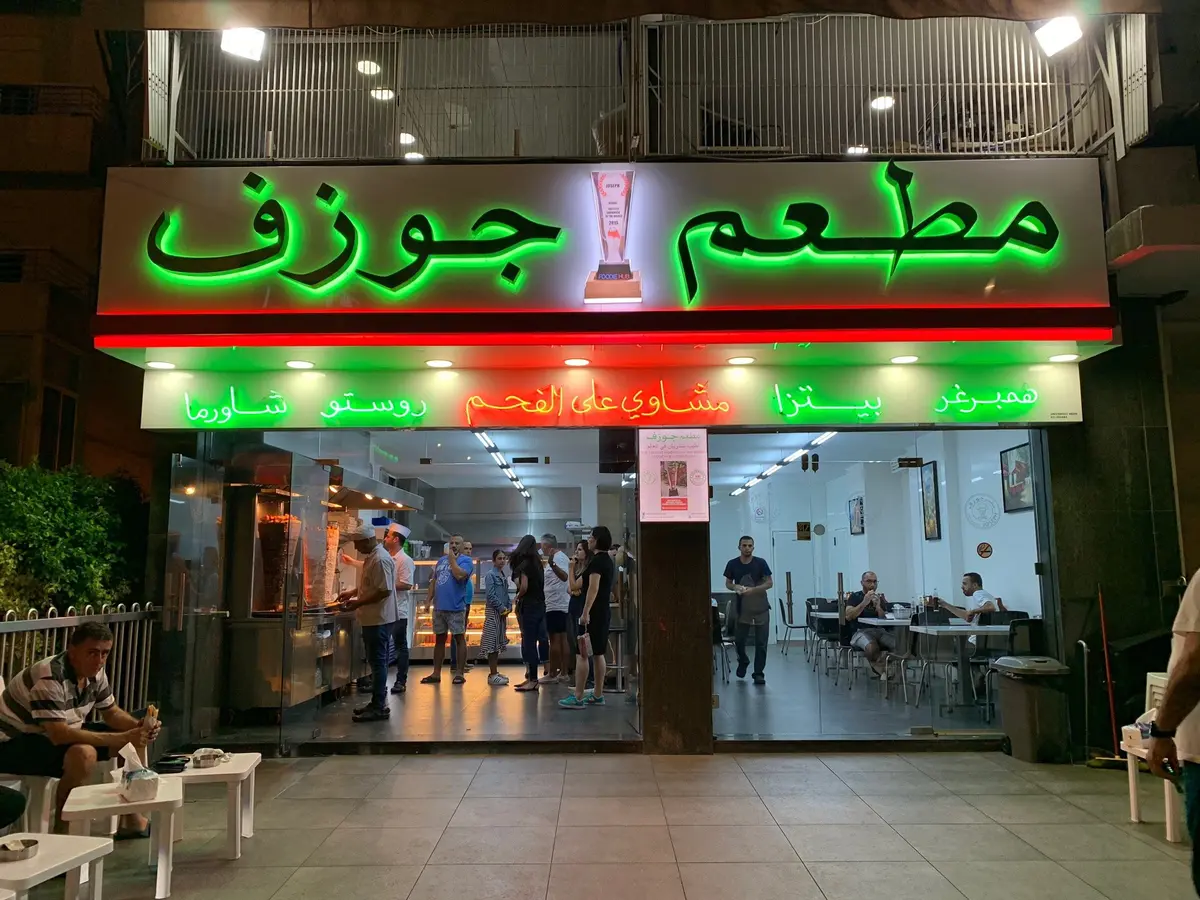
3. Falafel Tabbara — older than modern Lebanon
Tabbara has been frying since 1914 — six years before modern Lebanon existed as a state. The family opened the first shop in downtown Beirut’s Bab Idriss quarter back when the region was part of the Ottoman Empire, and moved to its current Snoubra location near Hamra in 1979. The business is now in its fourth generation, and the Hajj usually running the counter has been making these sandwiches for more than sixty years. Google Maps is essential — the shop is off the main drag on a quiet side street.
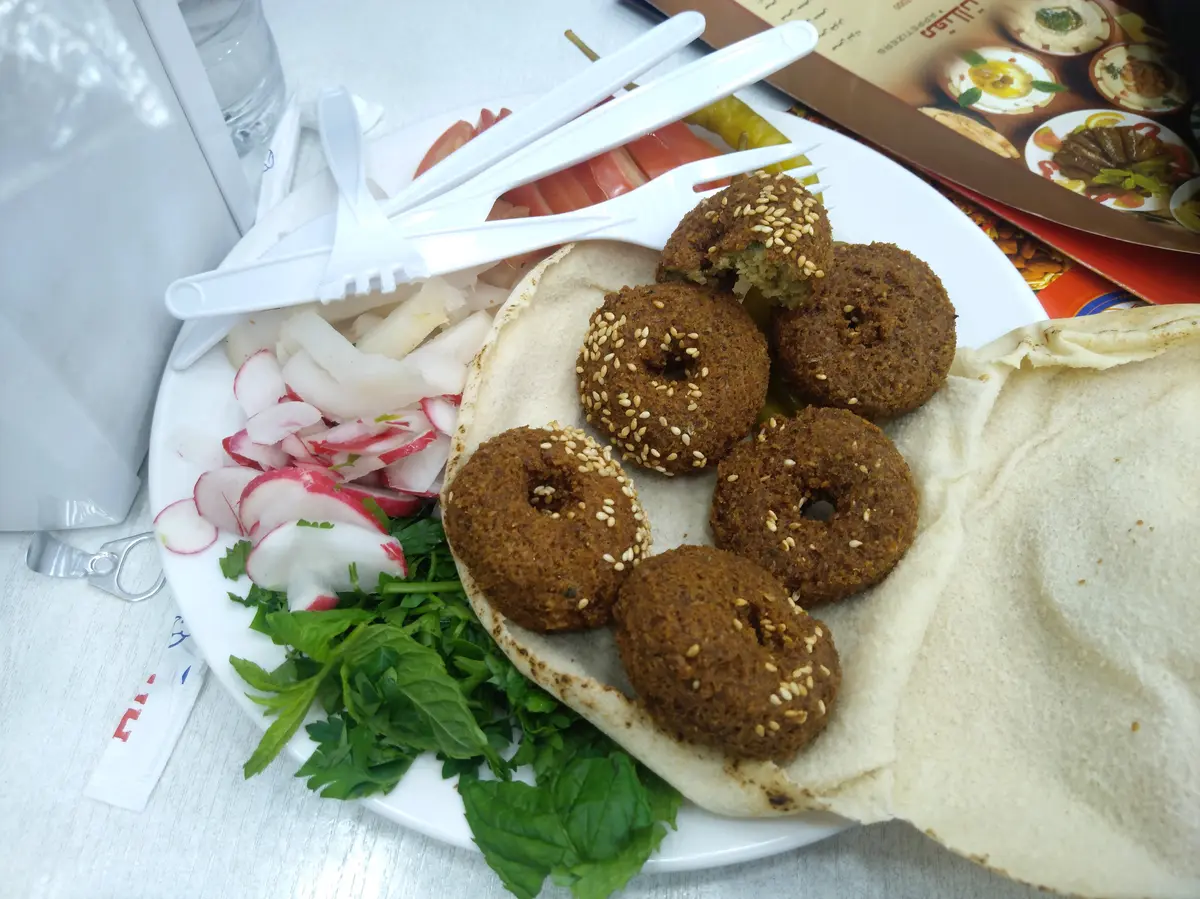
Here’s what sets Tabbara apart: the recipe uses pure fava beans, no chickpeas. The result is a darker, earthier, meatier ball with a slight bitterness that fans call classic and skeptics call heavy. A small amount of garlic goes in, barely perceptible. Some batches come rolled in sesame seeds before frying, which adds a nutty layer you won’t find at the chickpea-based shops. The tarator is thick and creamy, and the homemade chili sauce is worth asking for.
Honest friction: if you grew up on the lighter, nuttier Levantine chickpea style, the fava flavor can feel intense — almost savory-sour. It’s polarizing on purpose. The shop is tiny, but has a few chairs, which is a luxury in this category.
Pro Tip: Ask them to split your order into two sandwiches with different toppings — one with chili, one without. It’s the fastest way to figure out whether the fava recipe is your thing before you commit to a second trip.
- Location: Snoubra, off Hamra’s main streets, Ras Beirut
- Cost: $3-4 per sandwich
- Best for: Fava-bean converts, history seekers, anyone who’s already tried Sahyoun
- Time needed: 15-20 minutes
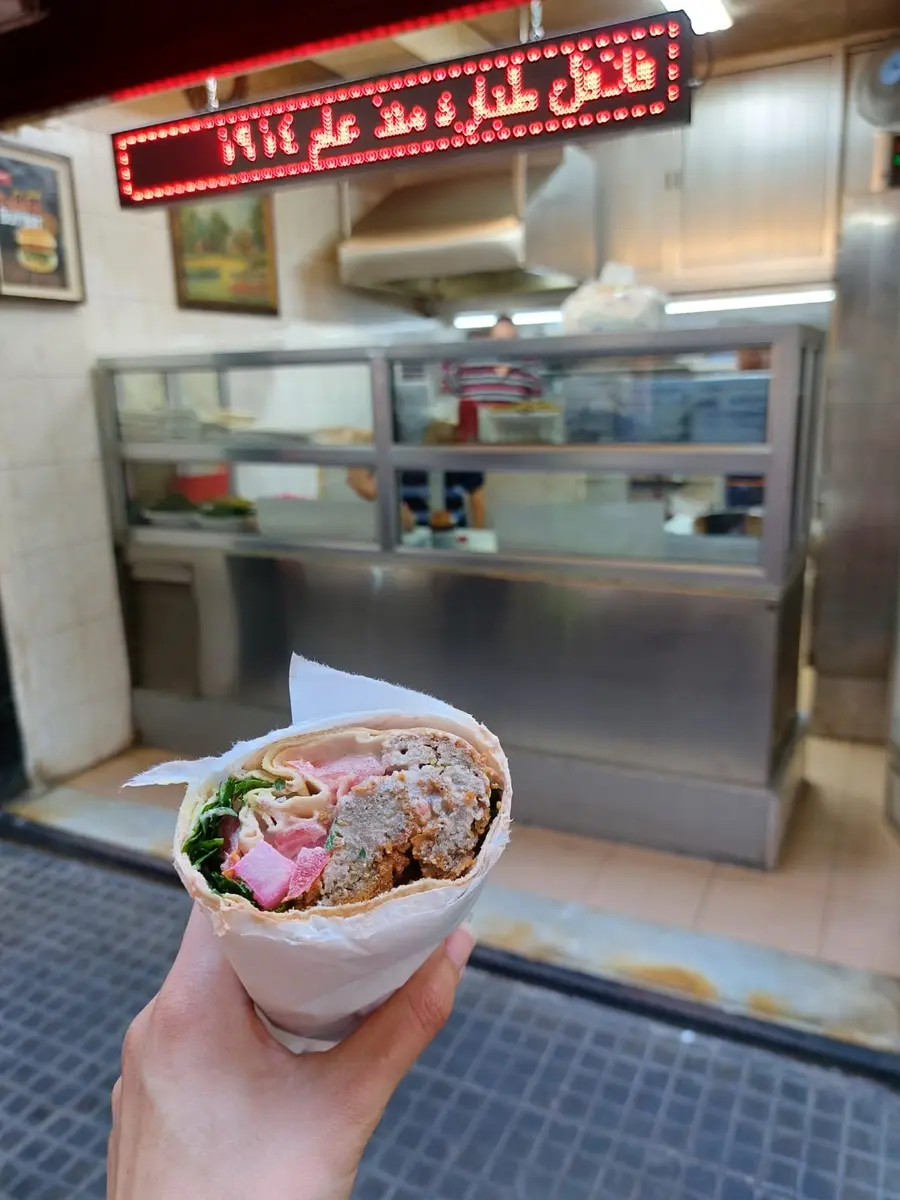
4. Falafel Freiha — the Achrafieh standard
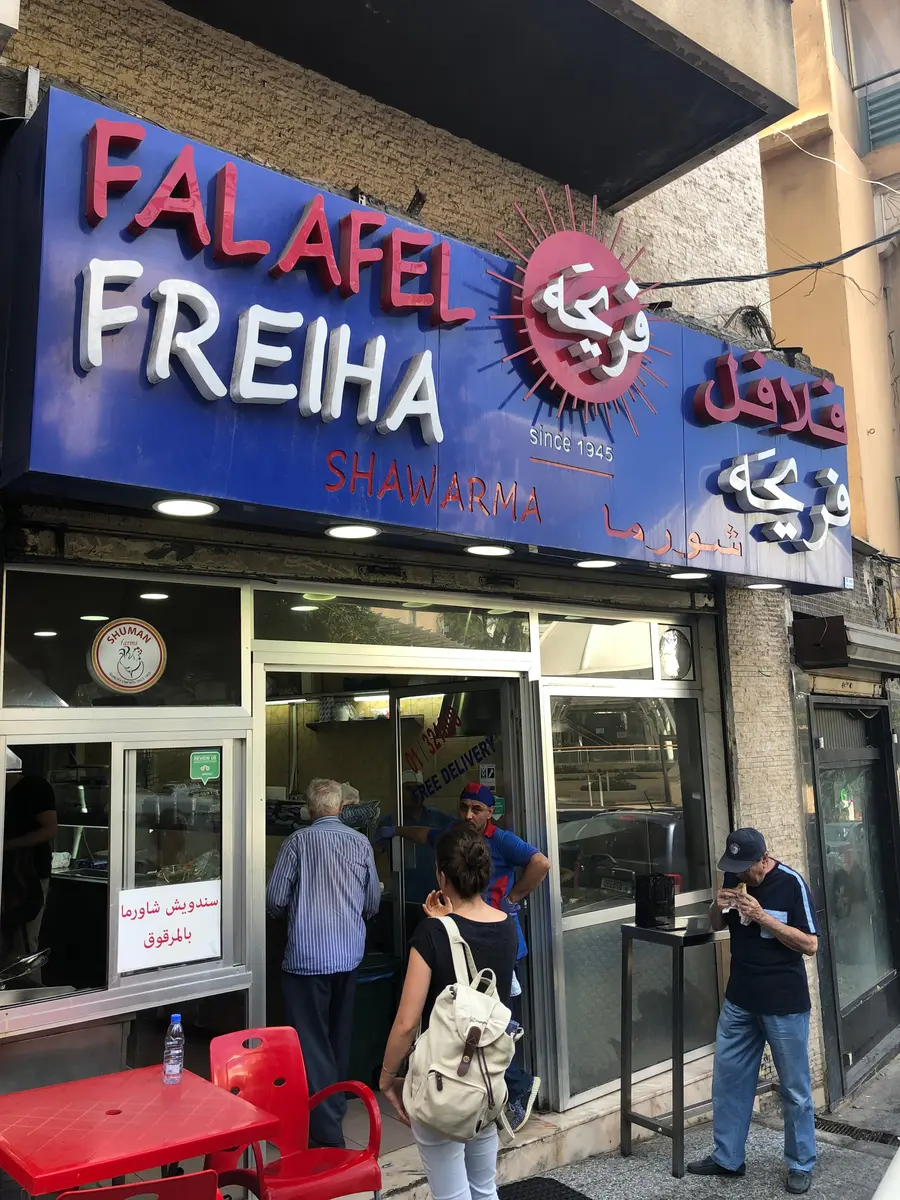
Freiha started in 1945 near Martyrs’ Square, moved during the civil war, and landed in Achrafieh in 1979, where it’s been part of the Furn el Hayek streetscape ever since. The shop sits directly across from ABC Mall, a few meters from Sassine Square — which makes it the easiest to slot into a day of sightseeing on the east side of the city. The same family still runs it, now into the third generation.
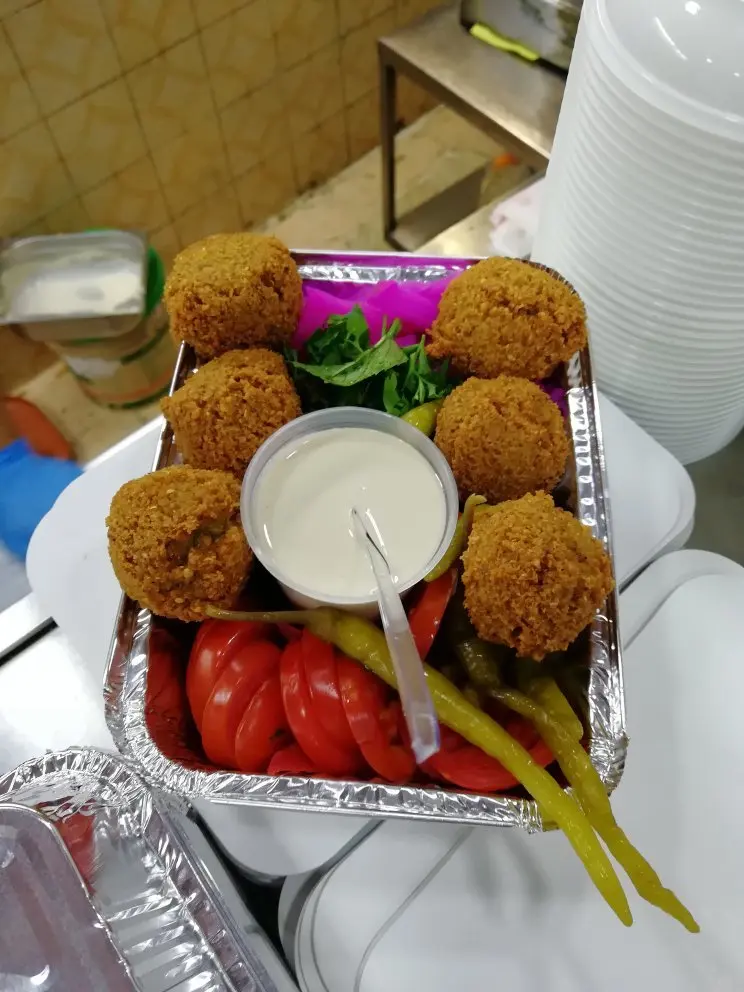
The sandwiches are famously small, which produces a near-perfect ratio of crust-to-filling in every bite. Unlike the Sahyoun purists, Freiha commits to the pink pickled turnip — the vivid fuchsia strip that shows up in most Lebanese sandwiches. That vinegar acid cuts the fried bean beautifully, though the Sahyoun faithful will tell you it masks the spices underneath. The falafel itself is made from a chickpea-fava blend, smaller and more uniform than Tabbara’s, and comes with tahini, radish, tomato, mint and parsley.
Honest friction: a handful of recent reviewers have flagged oil issues on particular visits, which suggests quality control varies day to day — likely tied to how busy the fryer is running. Achrafieh is hilly; if you’re coming from the port or downtown, expect an uphill walk or a short taxi ride.
Pro Tip: Freiha delivers. If you’re staying anywhere in Achrafieh or downtown and don’t feel like going out, the delivery app gets you the sandwich in 20-30 minutes — rare among the legacy shops, most of which are cash-and-carry only.
- Location: Furn el Hayek Street, Achrafieh (facing ABC Mall, 3 minutes’ walk from Sassine Square)
- Cost: $3-5 per sandwich
- Best for: East-Beirut sightseeing days, delivery orders, anyone who wants the pickled turnip
- Time needed: 10-15 minutes
5. Barbar — the 24/7 Hamra machine
Barbar isn’t a single falafel shop — it’s a cluster of small stalls on a Hamra intersection, plus a second hub on Spears Street, run by the Ghaziri family since 1979. It opened as a manouche bakery during the civil war, added shawarma in 1985, and didn’t introduce falafel until 1993. What it lacks in specialist pedigree it makes up for in two things: it never closes, and it feeds you after every other shop in the city has locked up. At 3 a.m. in Hamra, the line is still moving.
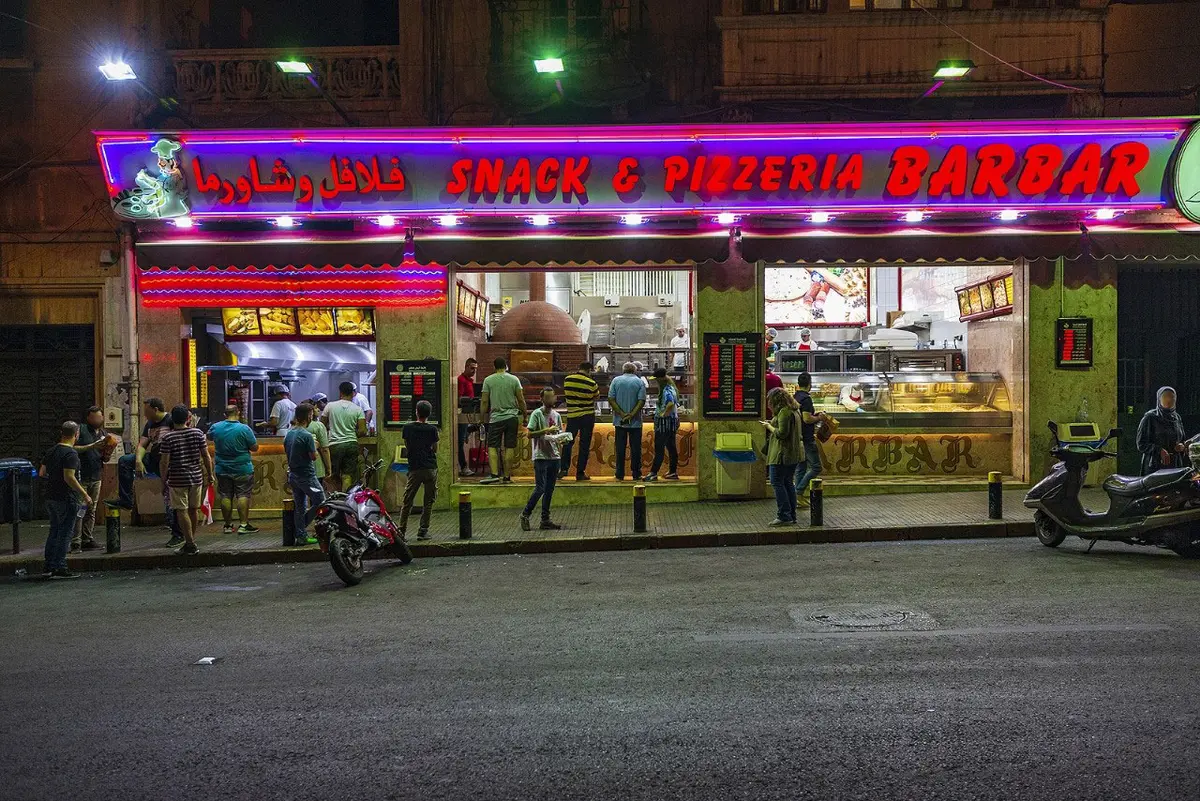
This is Lebanese comfort food at industrial scale — bigger, heavier and saltier than the delicate Sahyoun or Tabbara sandwiches. The falafel comes fully loaded: pickles, lettuce, tomato, tahini, plenty of volume, generous bread. It will fill you up in a way a Sahyoun never will, which is the point at 2 a.m. when you’re drunk and in a cab with four friends. Multiple locations mean you can usually find one within a five-minute ride from wherever you’re staying.
Honest friction: recent reviews increasingly flag oiliness and inconsistency. The scale that makes Barbar work against hunger also flattens the artisanal touch you get at smaller spots. The falafel is fine — not memorable. You’ll crave it at 3 a.m. and forget it at 3 p.m.
Pro Tip: Barbar’s real move isn’t the falafel — it’s the beef shawarma, which CNN Travel and the Washington Post have both ranked among the region’s best. If you’re there, order one of each and eat while comparing notes.
- Location: Hamra (cluster of stalls at the main intersection) and Spears Street, Beirut
- Cost: $3-5 per falafel sandwich; $5-7 for shawarma
- Best for: Late-night hunger, groups with mixed cravings, delivery to your hotel
- Time needed: 20-30 minutes (or 5, if you take it to go)
How do you order falafel in Beirut like a local?
Walk up, tell the master how many sandwiches you want, and specify “spicy” or “not spicy” — that’s the whole transaction. Don’t ask for substitutions; these shops don’t do custom orders. At the busiest counters, the master might hand you a single hot ball dipped in tahini while you wait. Accept it, eat it, smile, don’t hold up the line.
A few details that separate tourists from regulars at any Lebanese street food counter: order at least two sandwiches per person (one is a snack, not a meal); don’t request extra sauce (the ratio is already calibrated); eat standing up unless there are chairs (there usually aren’t); and listen for the violent hiss of the scooper hitting the oil — that’s how you know the batch is fresh.
Pro Tip: If the falafel hasn’t been fried in the last three minutes, politely wait. The difference between a ball that just came out of the oil and one that’s been sitting under a heat lamp is enormous — and at these shops, a fresh one is always three minutes away.
How do you actually pay for street food in Beirut right now?
Lebanon’s economy is now heavily dollarized, and almost every street-food shop prefers US dollars in cash. Carry small bills — ones, fives and tens — because vendors rarely give change in USD and will either short you or hand back a wad of lira. The official exchange rate sits around 89,500 LBP to the dollar, and it’s been stable there for more than a year, but the parallel rate on the street can drift a few percent either way.
Cards almost never work at the shops on this list. Sahyoun, Tabbara, Joseph and the small Freiha counter are cash-only. Barbar takes cards at the larger sit-down branches but not the street stalls. Uber works in Beirut but accepts cash payment only as of recent updates, so plan to have physical currency on you regardless of how you move around.
Pro Tip: Bring a stack of twenty $1 bills specifically for street food. A typical falafel day — three shops, two taxis, one coffee — runs about $25-30 in small USD, and you’ll never once need to calculate the exchange rate.
How do you get between these falafel shops efficiently?
The five shops span three parts of Beirut: Sahyoun is downtown-adjacent on Damascus Road; Tabbara and Barbar are in Hamra / Ras Beirut on the west side; Freiha is in Achrafieh on the east; Joseph is in Sin El Fil, a suburb 15-20 minutes east of central Beirut. You cannot walk between all five — Joseph alone requires a dedicated trip.
Use Uber (cash only) for longer rides and the service-taxi system (shared cabs, flag them down, say your destination, expect to share the car with strangers) for short hops within neighborhoods. A typical in-city service run costs 100,000-200,000 LBP (about $1-2); an Uber across town runs $6-10. Ignore the price estimate the Uber app shows in your local currency — always check the USD equivalent before confirming.
Pro Tip: The efficient order is Sahyoun first (it closes earliest, usually around 4 p.m.), then Tabbara in Hamra for a mid-afternoon comparison, then Freiha in Achrafieh for an early evening stop. Save Joseph for a dedicated lunch on a different day — the trek earns its own slot — and keep Barbar for a late-night backup.
The bottom line on the best falafel in Beirut
TL;DR: If you can only eat one falafel in Beirut, make it Sahyoun — either brother — for the historical, purist version. If you have three days, add Joseph for texture and Tabbara for the fava-bean shock. Freiha and Barbar are convenience plays, not destinations.
The search for the best falafel in Beirut isn’t really about which ball is crispiest or which bread is softest. In a city defined by divisions — political, religious, geographic — this one fried chickpea is the great equalizer. During the civil war, these shops became neutral zones where people from every faction stood in the same line. Eat at any of the five and you’re standing in that line too.
Which falafel did you eat first — and which one did you actually finish first? Tell me below; I’ll keep scoring the brothers.